
La Maraquita, a Streamer for Golden Dorado
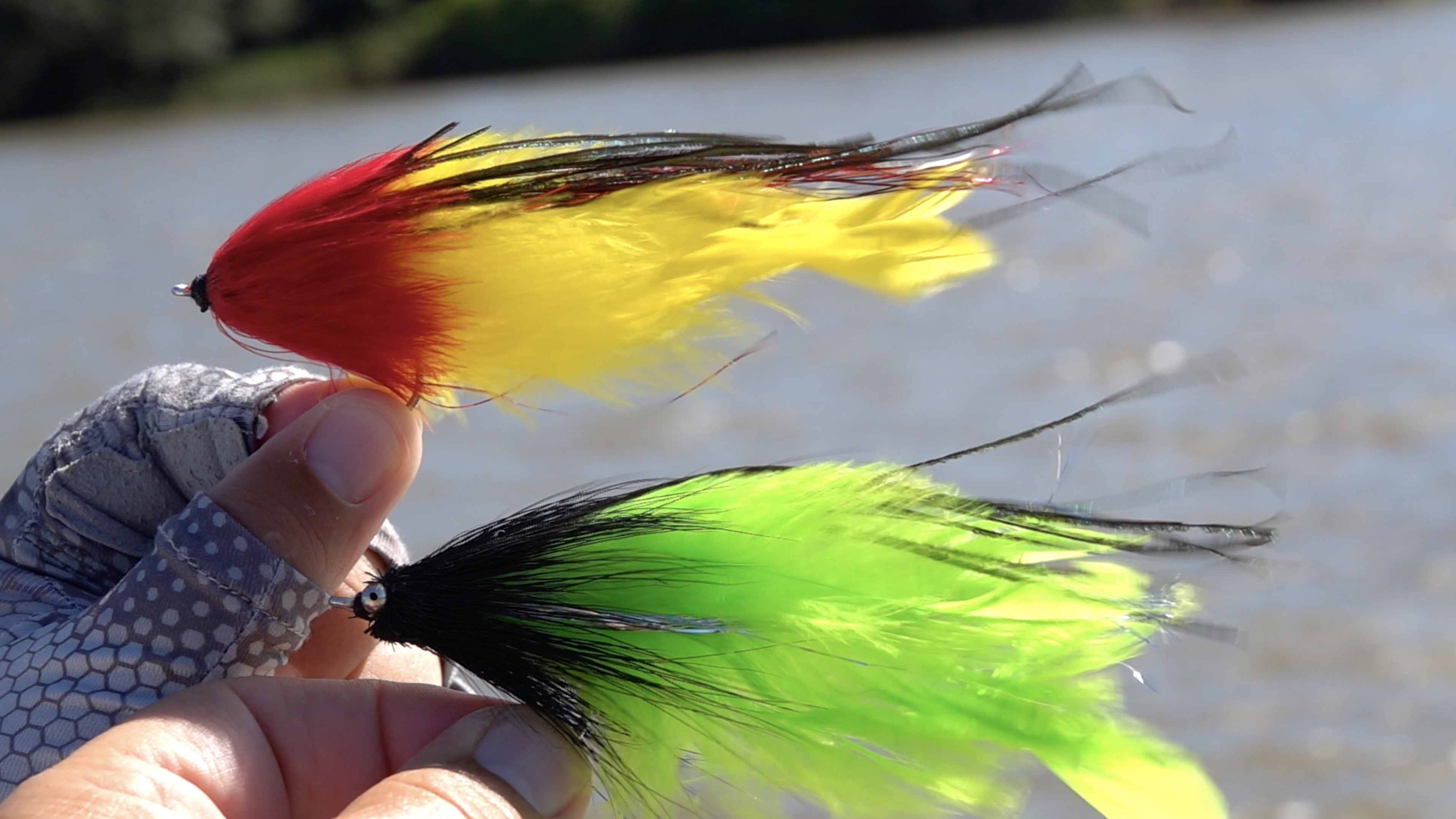
The Maraquita streamer looks like one thing, casts like another.
The name is hilarious, if you speak Spanish. If you don’t, ask someone who does. I’ll give this much of a hint. It’s what they used to call Andy when his favorite fishing shirt was pink. La Maraquita looks like one thing but acts like another.
What makes this fly so effective is it’s bulky profile and it’s ability to shed water when cast. Built almost completely from schlappen, this fly weighs almost nothing. It makes accurate casting a breeze while pushing enough water to get the attention of a hungry dorado.
Pay close attention as Andy ties the fly. The secret is that all of the materials are tied in at the same spot, creating a huge thread dam for the palmered schlappen head to be built on. Look at the photo and you will see how large the head is next to a traditional hair head. It’s a brilliant design and it works.
WATCH THE VIDEO AND LEARN TO TIE LA MARAQUITA
Read More »Cuda Up in My Grill

JUST SO EVERYONE KNOWS I’M SUPER PROUD OF MY NEW SLIM AND TRIM STATUS.
Louis has been on me a while now to drop some serious LB’s. I’ve really been stacking them on from my wife’s fantastic cooking. He says there’s a reason he doesn’t take photos of me anymore, and I really can’t blame him 🙂
Unfortunately, I’ve not lost the weight in reality. I ran across these two photos from four years ago, fishing down in the Florida Keys with Capt. Joel Dickey. He guided me to this behemoth barracuda on the fly. To this date, it’s probably one of my most memorable saltwater moments I’ve experienced on the flats. The take and battle were epic, particularly since my arms were already complete jello from the prior twenty minutes of stripping hand over fist as fast my arms would go.
Numerous barracuda prior had given us promising chases but as they so often do, they let off the gas and lose interest at the last second. About the time I was ready to yell uncle, Joel shouted in his famous southern accent, “DUDE, look at that giant cuda at two 0’clock”. I some how managed to lay out a good cast, and I was about five strips into my retrieve when this guy hammered the fly and took off faster than I’ve ever witnessed a fish swim. That’s when the “shit hit the fan”.
Read More »Don’t Ride the Brakes During Your Fly Casting
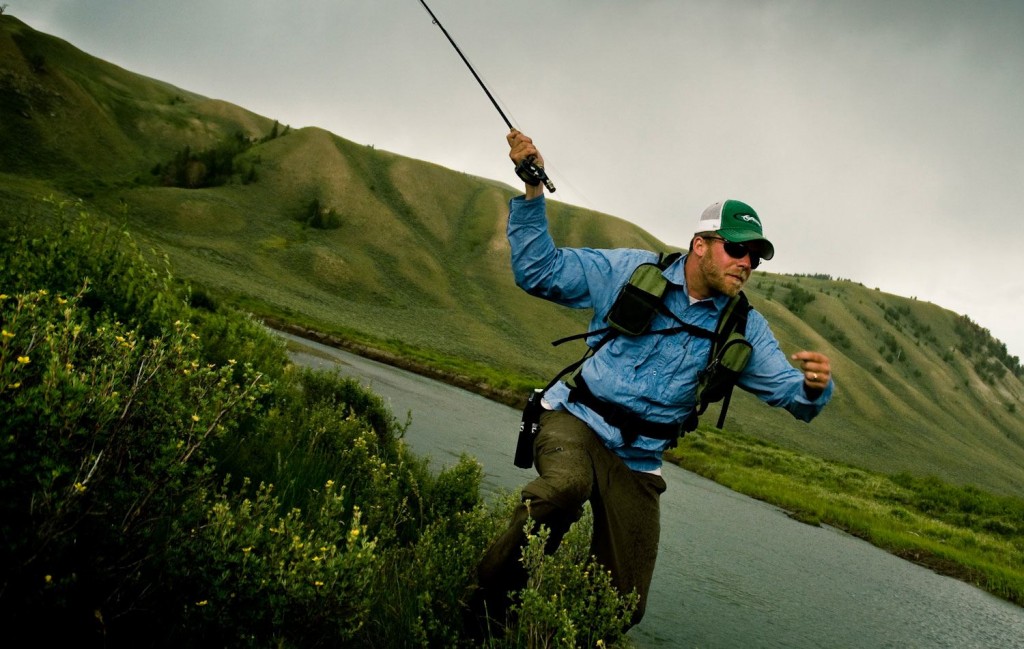
Are you finding that you’re lacking distance and falling short of your target with your fly casting?
Is your power and line speed insufficient? If the answer is yes, I bet you’re also getting a fair amount of tailing loops or dreaded wind knots aren’t you? Come on, be honest. There’s absolutely nothing to be ashamed of if you’re periodically falling into this category with your fly casting. Believe me when I say, you’re not at all alone. I see it regularly on the water guiding, and most of the time anglers struggling with these problems usually are only doing one thing wrong with their fly casting. Nine times out of ten, in this scenario, anglers are decelerating their fly rod during their forward cast, back cast, or even both, in some cases. What you need to be doing to fix this problem is smoothly accelerating your fly rod during your casting stroke, making sure you’re stopping the rod at it’s fastest point. This will allow your fly rod to distribute the energy loaded during your cast efficiently, and you’ll have plenty of power (line speed) to reach your targets.
DECELERATION DURING YOUR CASTING STROKE: SHORT STORY & CASE STUDY
This past fall I was fishing big attractor dry flies with a client of mine. There were plenty of big fish willing to rise to our offerings, but to get them to eat, we had to stay far back and make long casts to them. Otherwise they’d spot us and spook. My client, a capable fly fisherman with strengths in short presentations and roll casts, developed a weakness for distance, when a head wind picked up. No matter how hard he tried, he couldn’t get the distance needed to present his dry fly ahead of the fish. Several minutes we worked a prime piece of water that I knew had some eager fish looking up, but we got no takes. My client turned to me and said, “They must not like this fly pattern”. I replied, “You may be right man”, and I handed him the nymph rig and pointed upstream to our next fishing spot. But what I really wanting to say is, “No, the fly pattern is good, you’re just not getting the fly anywhere close to your target”.
There are times when the best thing you can do guiding is to go along with your clients and not voice the complete truth. Now it’s important to understand that I had already explained to him a couple different times, that the problem he was having is that he was slowing down his fly rod to a stop during his casting stroke, and it was sucking his power and distance out of his cast. If I would
Read More »Fill Flash For Cooler Photos
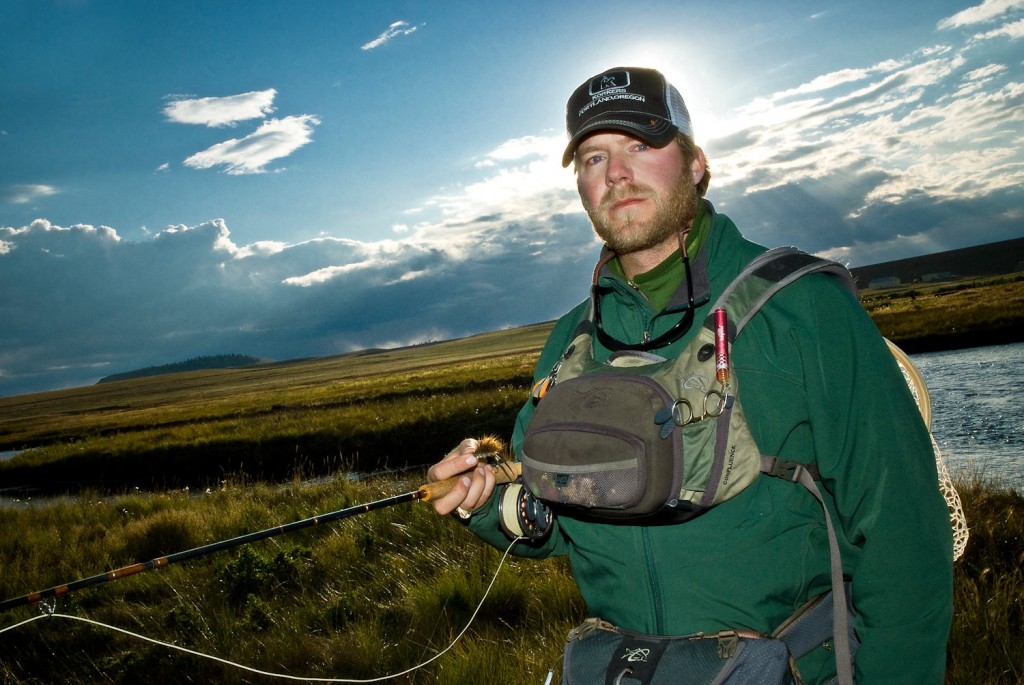
WHEN SHOOTING IN NATURAL LIGHT YOU CAN OFTEN CREATE DRAMATIC AND BEAUTIFUL EFFECTS WITH FILL FLASH.
If you have a dedicated flash for your camera, it can be pretty easy. Here’s how to start. Most DSLR cameras have a flash output adjustment. It allows you to turn up and down the flash power in thirds of stops: -.3 being one-third stop darker than a normal exposure, – 1 being a full stop darker. There is a similar adjustment for ambient light exposure. If you’re not sure how to set these functions check you manual. For a nice natural fill flash look, set your flash in TTL mode and start with a setting of +1 for ambient exposure and -2 for flash exposure. Check the results on the view screen and adjust up for a brighter image or down for a darker image. Experiment and see how the image changes. Your first
Read More »Use Side Pressure To Avoid Breaking Off On Snags
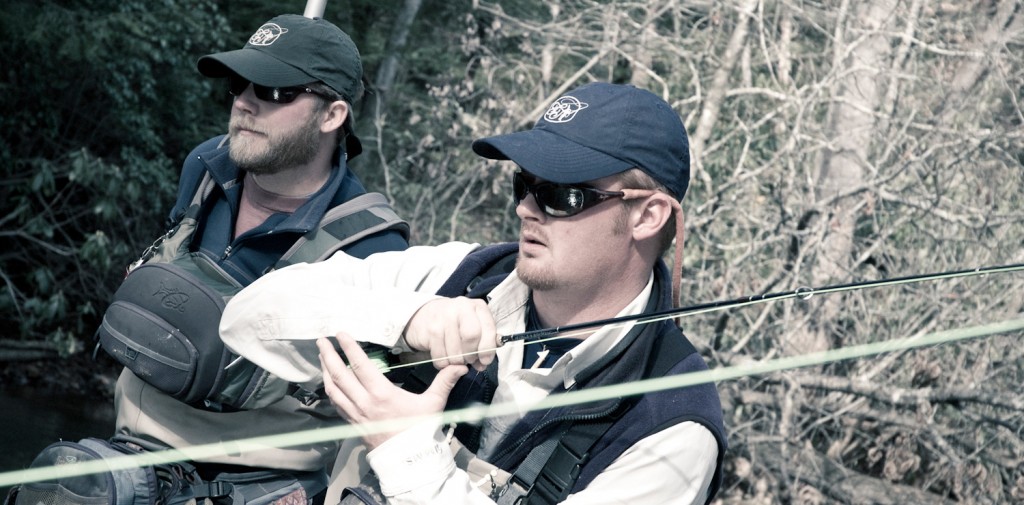
You’ve got a big fish on and it’s making a screaming run straight for a big snag on the far bank. What should you do to decrease your chances of breaking off?
Your best bet is to apply low side pressure with your rod while keeping a perpendicular position between you and the fish at all times. Doing so you can put twice as much pressure on the fish than you normally can when your fly rod is in the overhead fighting position. Secondly, it’s much easier for you to steer the fish’s head and turn its direction using low side pressure. Always follow the fish up and down the river during the fight. The closer you stay to the fish the more leverage and power you can apply to steer and control the fish. Lastly, don’t tighten down on the fish trying to stop its run towards a snag, because nine times out of ten you’ll end up breaking the fish off. The harder you pull on a big fish the harder it generally going to pull back. If you find playing the fish aggressively makes the fish fight harder
Read More »Wind in Saltwater is Your Friend Not Your Enemy
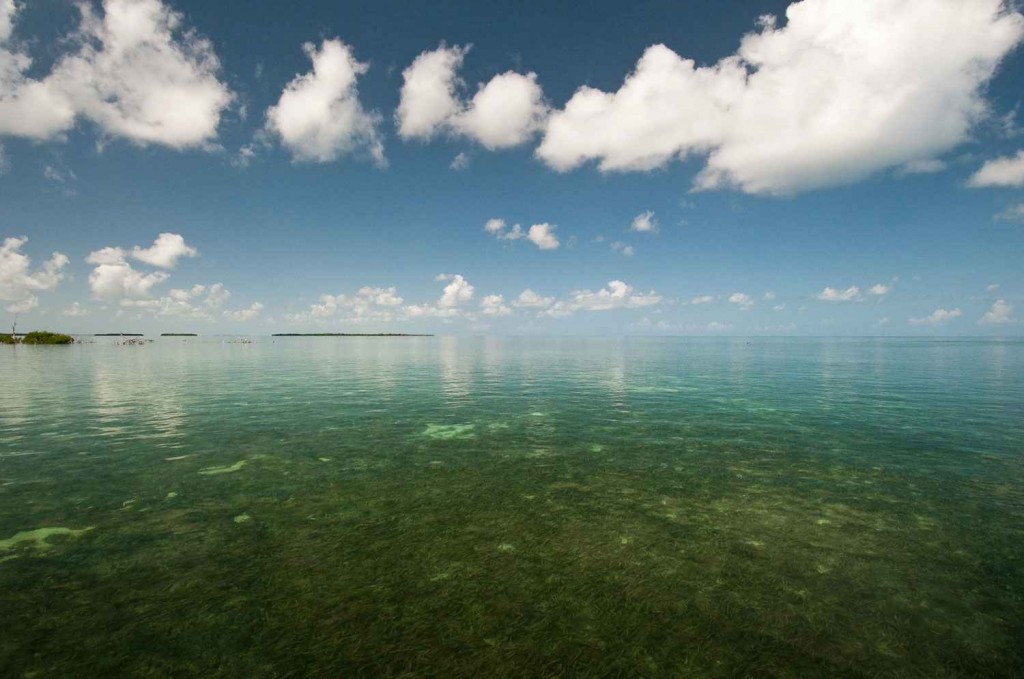
Its 6:30am in the morning when we arrive at the boat launch in Big Pine Key, FL.
Within minutes of stepping out of the car the stagnant humid air begins to suffocate my body. The North Georgia mountain weather that I’ve grown so accustomed to, feels like air conditioning compared to this, and my body is still in shock from the drastic climate change. As I walk down to the boat ramp to help unload the boat, I feel the first drops of sweat rolling down my back. I think to myself, are you freaking kidding me? The sun isn’t even up yet. There’s absolutely zero breeze this morning, so calm you could spot a fish rolling on the surface three hundred yards away. My eyes seem confused at what their witnessing. If you had blindfolded me, and taken me here, there’s a good chance I’d guess I was on a freshwater reservoir. Call me crazy, but I was under the impression there’s always supposed to be at least some wind in the saltwater. I’d know better, but I’ve spent very little time in the Florida Keys during the late summer. Apparently, it’s quite common to go days without any wind during the months of July, August, and September. Awww, it makes total sense why I saw all those sailboats anchored up now.
You always overhear fly fishermen complaining about too much wind on the saltwater flats, but you rarely hear fly fisherman begging for it. To much or too little of either can spoil your fly fishing on the saltwater flats, making fishing conditions extremely tough. Believe it or not, wind is your friend and can at times, be an asset for fly fishermen. For starters,
Read More »A Flybrary for Anthony
By Mark Greer,
WHEN MY SON, ANTHONY, SUDDENLY DIED IN MARCH 2011 IT WAS BEYOND DEVASTATING.
His loss was the most excruciating pain that I’ve experienced during my life time. Anth was a talented fly fisherman and a Green River Outfitters Guides Association (GROGA) certified guide on the famed Green River below Flaming Gorge Reservoir. He was a college student, he tied his own flies, and he fished every waking moment that he could. He was also the kind of angler that would walk up to another angler on the water, strike up a conversation, offer them a secret tip for that specific spot, and then leave them with a couple of flies which he’d been successful with that day. He was also a fly-fishing evangelist, as everyone that expressed an interest in fly-fishing, Anth would take them out with him – teach them to cast, and give them the needed gear to get them started and off on the right foot.
In an effort to cope with the loss of my son, I did two things. I kept a journal where I’d write my thoughts and what I was struggling with, and I started a (picture) scrapbook of all his fishing adventures. I also decided during that first year of his passing that I’d do a special remembrance project for each year for 10-years. These projects, along with the journal and scrapbook, became my makeshift-therapy for dealing with my son’s death. Here’s a list of those projects.
Read More »Flood Tide Redfish

By Owen Plair
I ALWAYS TELL MY CLIENTS THAT THE FLOOD TIDES ARE A GIFT, TO ANGLERS, FROM MOTHER NATURE.
Targeting tailing redfish on flood tides, from Northern Florida all the way to North Carolina, is one of the most unique opportunities for fly anglers. Something about seeing a tail slowly cut through the top of the water column, surrounded by short spartina grass, on a flat that is only covered by water a few times a month is simply special. Watching these fish casually tail their way through the flat, digging their noses in the mud looking for fiddler crabs is almost as fun as watching them at the end of your fly line.
This is a simple and short explanation of this unique style of redfish and will be the introduction to more articles on flood tide redfishing, which will be more detailed on characteristics of flats, fishing, presentations, fly selection, and equipment.
What is a flood tide?
A flood tide is a larger than normal tide that pushes water onto short spartina grass flats, allowing redfish to feast on the thousands of fiddler crabs that live there. In areas where flood tides occur, there is a lot more tidal flow than most redfisheries in the US. For example, here in Beaufort our average tide is between 6-7 ft, but your flood tides would be 7.5-8.5 ft which pushes enough water on these short grass flats for the redfish to move in.
On average we get around 10-15 of these tides per month, depending on moon phases, and only fish the floods from the middle of March till the end of November, depending on weather patterns. Once the water temp gets below 65 the fiddlers go down and the redfish stop tailing. No food means no tails. Tide charts are your best friend when it comes to flood tides and I seem to find myself always looking forward to the next set of floods!
How do you fish a flood tide?
When fishing the flood you usually want to start around
Read More »Land More Bonefish By Safely Clearing Your Line: Video
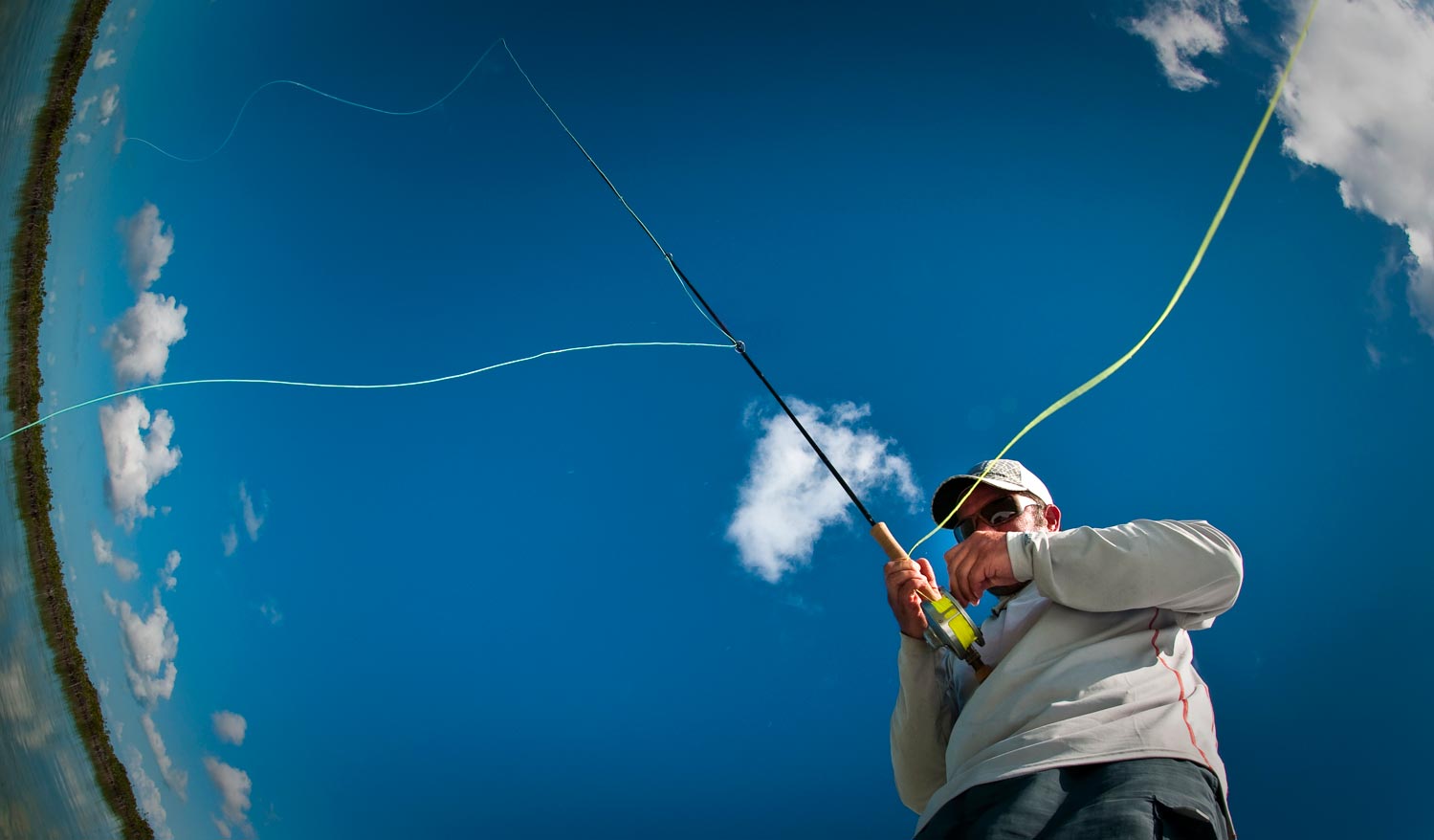
A lot of bonefish are broken off in the first few seconds of the fight.
One of the most common problems for new bonefish anglers is managing the whirlwind of fly line created by the fish’s first blistering run. If left to its own devices that line will find something to wrap around. Maybe your real seat or reel handle or even your head. Whatever it finds, these powerful fish will break off immediately when the line comes tight.
It’s a situation that’s easy to avoid, once you know how. Once you strip set on a fish, just separate your hands by at least three feet and let the line slip through your fingers, keeping pressure on the fish, until all of the line is all out. Then you can use the reel to really put some pressure on the fish.
WATCH THIS VIDEO TO SEE HOW IT’S DONE.
Read More »Getting in Bed With Bass, Part 2
By Justin Pickett
It’s time to get serious about catching that trophy bass.
In part one we covered the when, where and how of fishing to bass on beds. Now we’re going to talk about the get, flies and presentations that make for success.
The Presentation
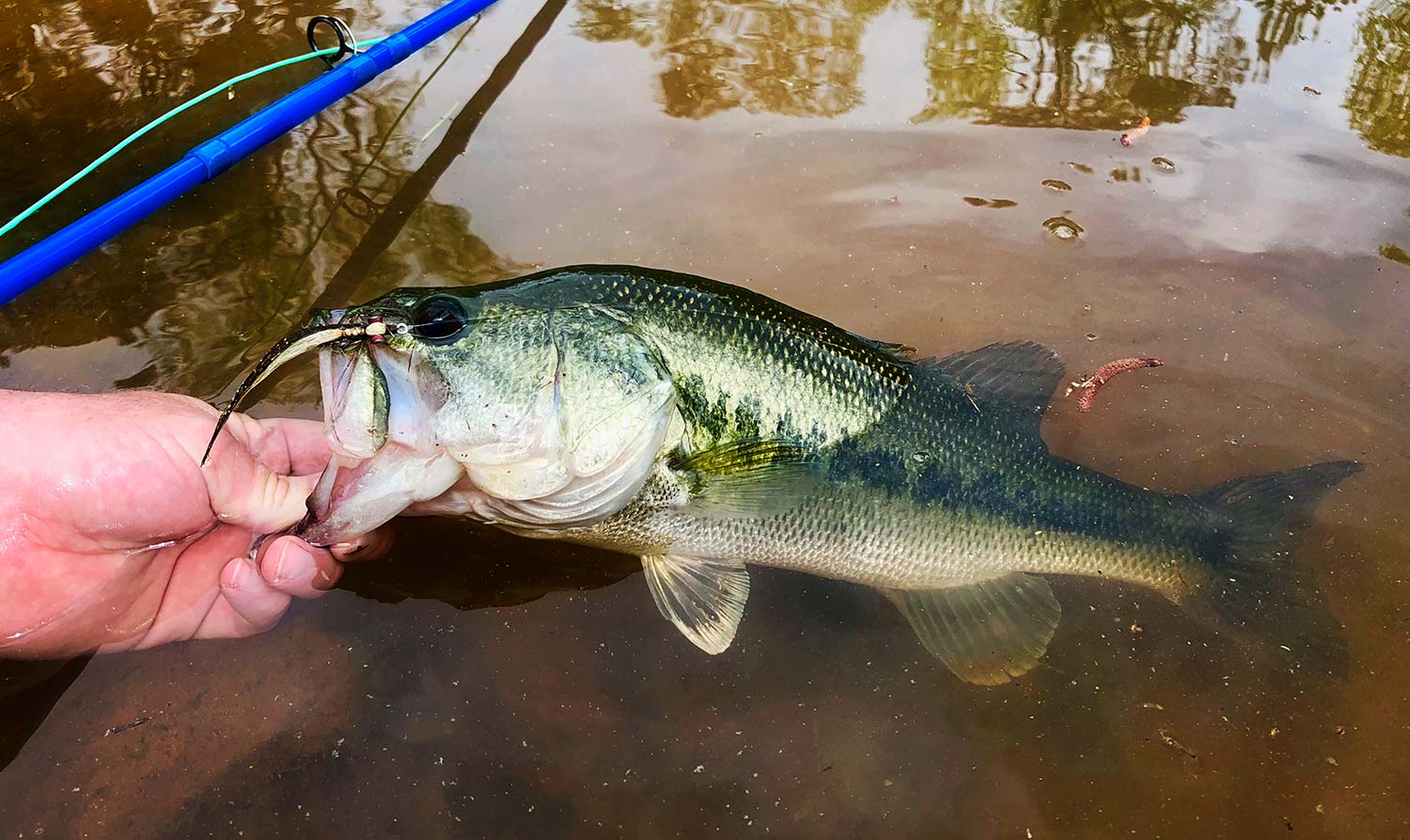
So, you’ve found Ms. Piggy sitting just off of her bed, seemingly staring intently towards her nest and chasing bluegill away from her vicinity. It seems as though she’ll likely eat anything dropped near or onto her bed. What’s next?
First, let’s address your setup. I recommend swinging a 7-9 weight, fast-action rod with an aggressive weight-forward floating line. You’ll need the power in the ass of a beefier rod to help set the hook solidly. I don’t stress so much on reels for bass, as they do a lot more jumping and thrashing than they do any kind of running. I do make sure to hunker down on my drag though, just in case once tries to take me into some trouble nearby. I throw short, beefy leaders when fishing to bass on beds. I need my flies to turn over quickly because I’m doing a lot of close up work in shallow water, so I typically stick with 7.5ft leaders and 12-15lb tippet.
The second thing we’re going to touch on is your timing. When you decide to hunt for these fish is going to play into your success rate. Your chances are best in the early morning and evening hours. Low light can make these fish a little harder to spot (another reason to always wear polarized sunglasses), but that’s when fish begin to drop their inhibitions and feel less threatened by predators. High sun is a great time for spotting beds and fish, but also makes it a lot easier for the fish to spot you as well. ShadowsI’ve had the glare from a raising fly rod spook many fish in my experience. I’m not saying don’t try during the middle of the day, but the odds aren’t as great. When planning your stalking, try to plan fishing during the first and last few hours of the day, or on overcast days. The other reason for fishing first thing in the morning is the fact that they have had all night to settle in and chill by their bed. This is especially true for bass that see heavy angling pressure.
Thirdly, let’s talk fly patterns. I kind of have a system that I go through when I find a fish on a bed that’s aggressively protecting the bed. My initial presentations are done with
Read More »