
My Spey Debacle/Two Handed Conundrum
By Brian Kozminski
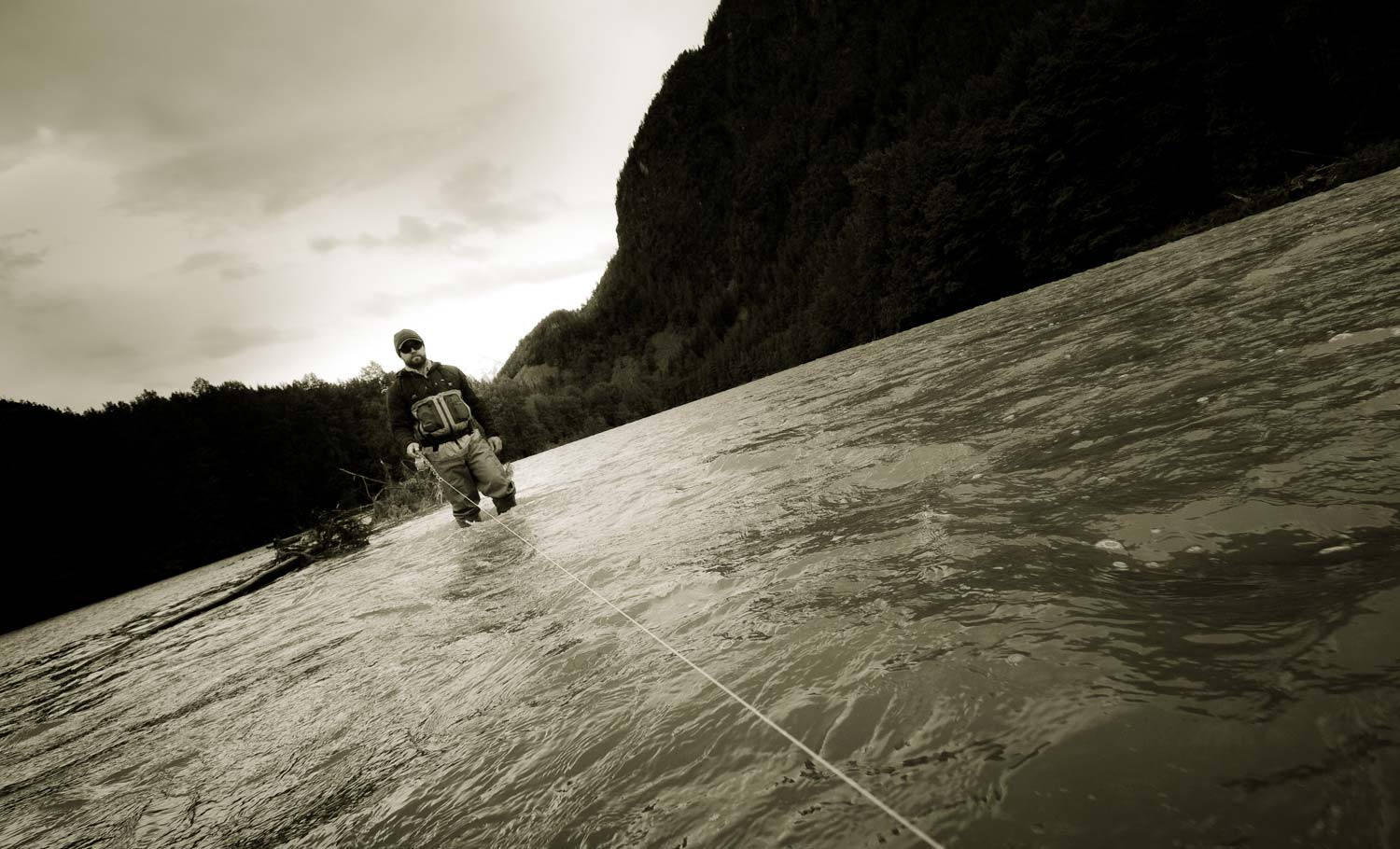
I am a newbie. As in I have only cast a two handed rod a few times for Steelhead on the lower Manistee River.
Completely foreign and looking to establish at least some credibility in the Spey Casting World of Fly Rods. I have decided this was a perfect opportunity to ask friends who are two handed experts and share this experience with others who may be in the same boat as myself. Some of the terminology is intimidating- OPST, LASAR, MOW, Skagit, a huge variety of lengthy and weighted rods which are to be paired with even more variety of leaders and weighed line from yet even more line manufacturers. Spey Rods and Switch Rodshave evolved and even come together in a streamlined category- either a Long Two handed rod(Spey)- over 12 feet, or short- less than 12 feet- two handed rod(Switch).
To understand the rod and it’s capabilities, we can look at the origin in Scotland on the River Spey, where Atlantic Salmon were often targeted species, yet tall banks along the river thwarted traditional backcasts. The 13-14′ long rod has been in use in Scottish rivers for nearly a century, providing a common goal- to get a fly out in a wide river without backcast. The Spey approach keeps the line on the water and the fly in the targeted zone longer than a traditional line that would rise and pull a salmon fly out of the desired depth.
The use of two-Handed rods has spread, from the Pacific Northwest for Steelhead where it has obvious benefits, to break-lines in the east coast for Stripers and for myself in northern Michigan where freshwater Steelhead migrate in many of our rivers that connect to the Great Lakes. The dilemma is similar, my rivers may be smaller, but deep cut clay/shale banks or densely wooded cedar/pine forests don’t allow for great casting and the speed of rivers only allows my fly a momentary glimpse in the prime target zone of these silver bullets. So I asked my friend, Spey casting Guru Jimmy Chang what direction should I be looking for specific rivers northern Michigan has to offer.
“First you have to evaluate what river your fish- wide or narrow? Then what species- Trout or Steelhead?”
Read More »Sunday Classic / Dickey’s Tarpon Muddler
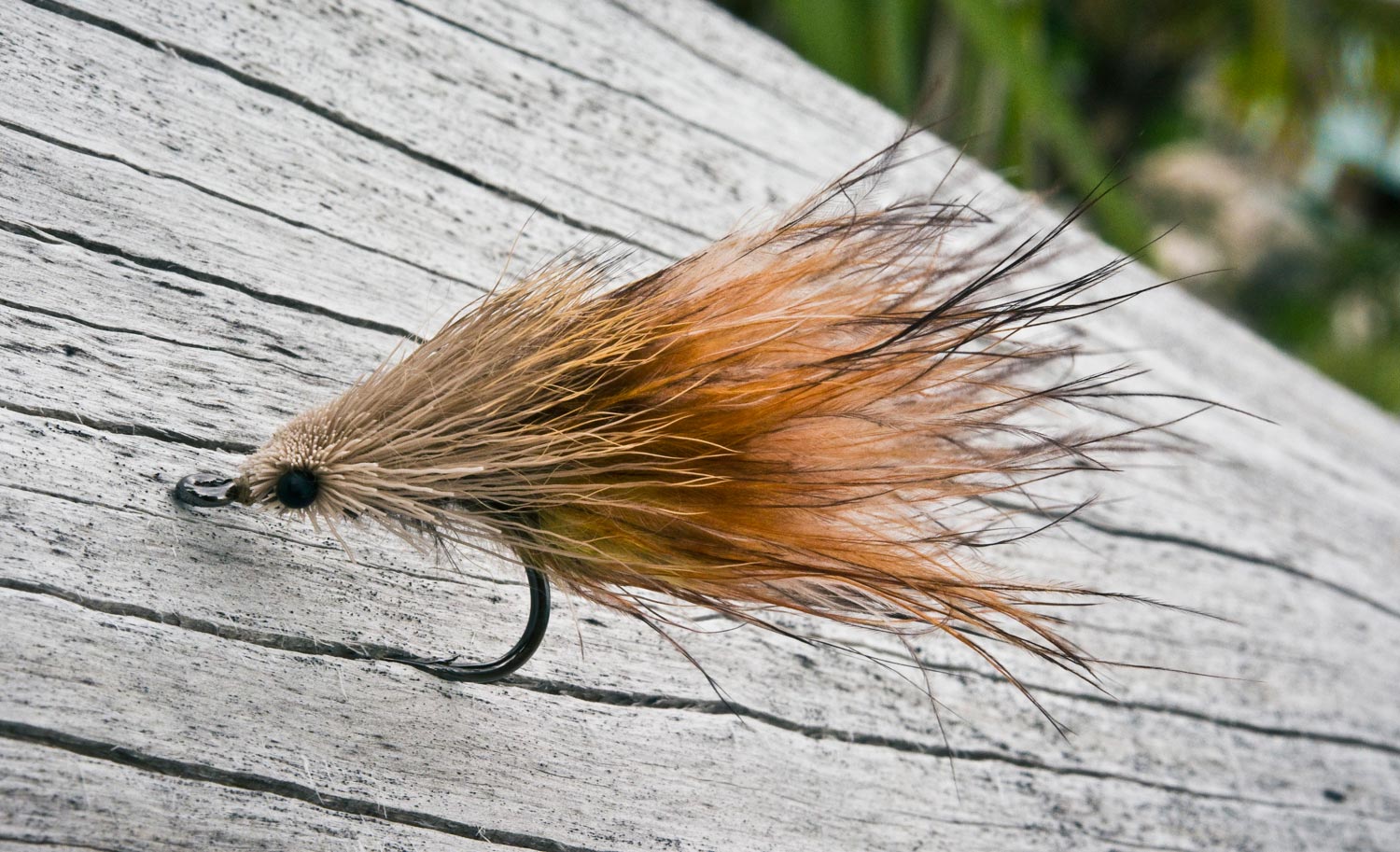
IS THERE ANYTHING MORE SATISFYING THAN CATCHING A FISH ON A FLY THAT YOU TIED YOURSELF? WHAT ABOUT WHEN THAT FISH IS A BIG, LAID UP TARPON?
Where going to spend a little time helping you do just that. A couple of my good friends are going to share some of their favorite saltwater patterns with you. Joel Dickey is going to kick it off with this great pattern of his. Dickey’s Tarpon Muddler.
This is a fly that Joel uses with great results for laid up tarpon and for rolling tarpon in the early morning. It’s a simple tie that uses some sexy materials and some traditional techniques. It has a great profile and an enticing action.
Watch the video and learn to tie Dickey’s Tarpon Muddler. It might just put you on the fish of a lifetime.
Read More »Saturday Shoutout / Notes From The Road
If you’ve ever fantasized about hitting the road in a Volkswagen van and fly-fishing your way across the country, this is the film for you.
Chase and Aimee Bartee chronicle their trip from Massachusetts to Idaho and back. Fly fishing, camping, #vanlife and #vandeath along the way. Notes from the Road is lovely, soulful and restful.
ENJOY: “NOTES FROM THE ROAD.”
Read More »A Short Quick Cast
By Bruce Chard
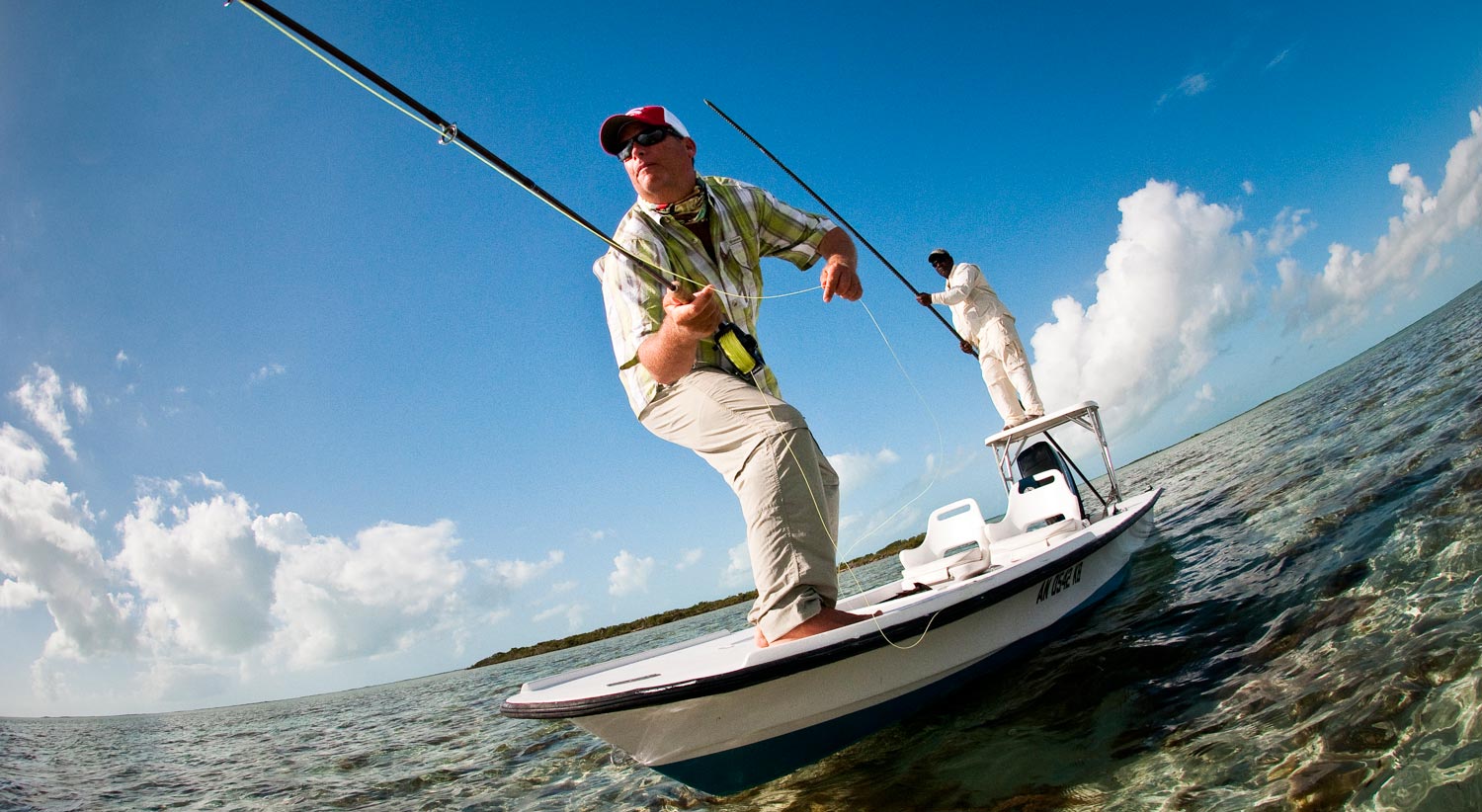
MANY FLY ANGLERS THINK, IN ORDER TO BE SUCCESSFUL IN THE SALT, YOU NEED TO HAVE A GREAT DISTANCE CAST.
That can be true on a calm day when all fly anglers struggle to add another 5-10ft on their cast. But in reality the anglers that can get the fly where it needs to be within 50ft take advantage of a large number of their opportunities. Not only is accuracy a huge part of success in the salt, the most valuable asset is speed. If you can get the fly there fast with minimal movement, your odds of a hook up go through the roof.
Seeing and spotting fish for most fly anglers is challenging. Taking longer to find or see a fish frequently leaves anglers with a close shot. The problem that we run into here is lack of time. By the time the angler finally can get a visual on the fish, the amount of time left to act is simply not enough.
This is when a short quick cast is a must. You might be wondering, how hard can it be to make a short cast? You might be surprised how hard it is to lay out a 12-13ft leader with a heavy fly into a stiff 25 knot wind at 25ft.
The main reason for short shots not laying out straight is the lack of line or weight outside the end of the rod tip. Since you have to make a close shot, you can’t get enough line outside the tip to load the rod and make the cast.
SO HOW DO WE EFFECTIVELY AND EFFICIENTLY MAKE THIS CAST?
Loading only the Tip
Start by loading just the section of the rod that you need, to make your cast. One of the key essentials
3 Dynamite 4 Weight Rods for Small Stream Fly-Fishing
By Louis Cahill
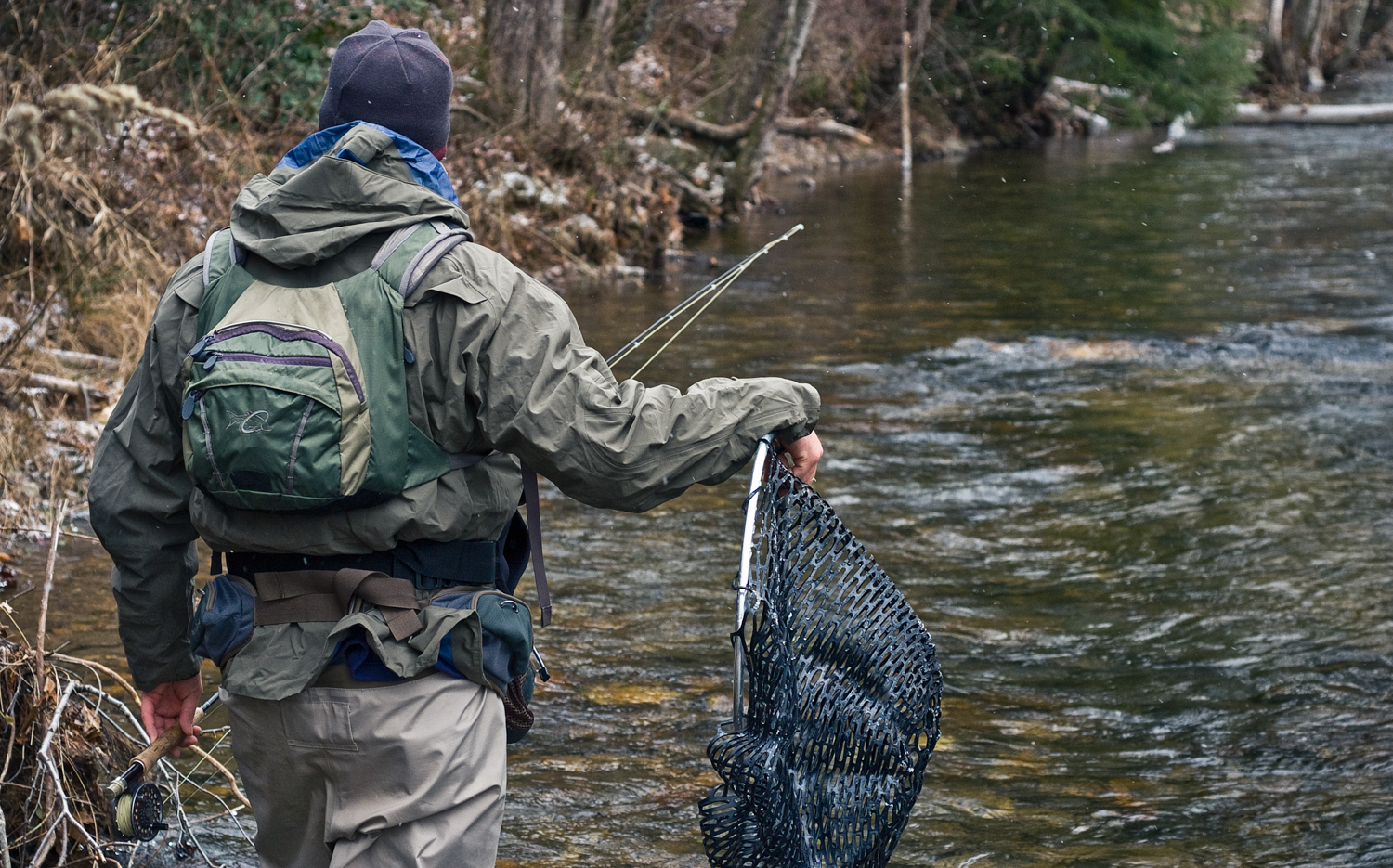
Spring is right around the corner and that means trout fishing on small streams, but what’s the best fly rod for the job?
It’s been a really wet winter here in the Southeast and it shows no sign of drying up any time soon. That’s ok, I’ll always take the rain and, while the bigger rivers are all blown out, the small headwater streams are fishing their best. This time of year a little hiking can put you on some great fishing but small streams require a different approach and maybe a different fly rod.
Sure, you can get the job done with your 9 foot 5 weight most of the time, but if you are going to do a lot of small stream fishing it makes sense to have a rod thats built for the job. Depending on the stream, I’ll fish rods as light as a 2 weight on tiny creeks and will often break out a bamboo rod for the occasion, but if I had to pick one rod for all of my small stream fishing, it would be a short 4 weight.
The 4 weight is light enough to make a really soft presentation with a dry fly, but should still have the backbone to fish heavier nymph setups when needed. A shorter rod, in the 7 1/2-8 1/2 foot range, is easier to get through the brush. It’s also easy to make a tight loop with a shorter rod, as the tip tends to stay on a straighter path. This is helpful for putting the fly in tight spots under vegetation and also for keeping your backcast out of the trees.
There are a lot of short 4 weight fly rods on the market, and this is not going to be a shootout style review. There may be rods you love that I don’t talk about. I encourage you to list them in the comments. What I am going to do is tell you about 3 of my favorites. If you bump into me on a small stream this season, I will likely have one of these rods in my hand.
Read More »Sunday Classic / What Does The Trout See?
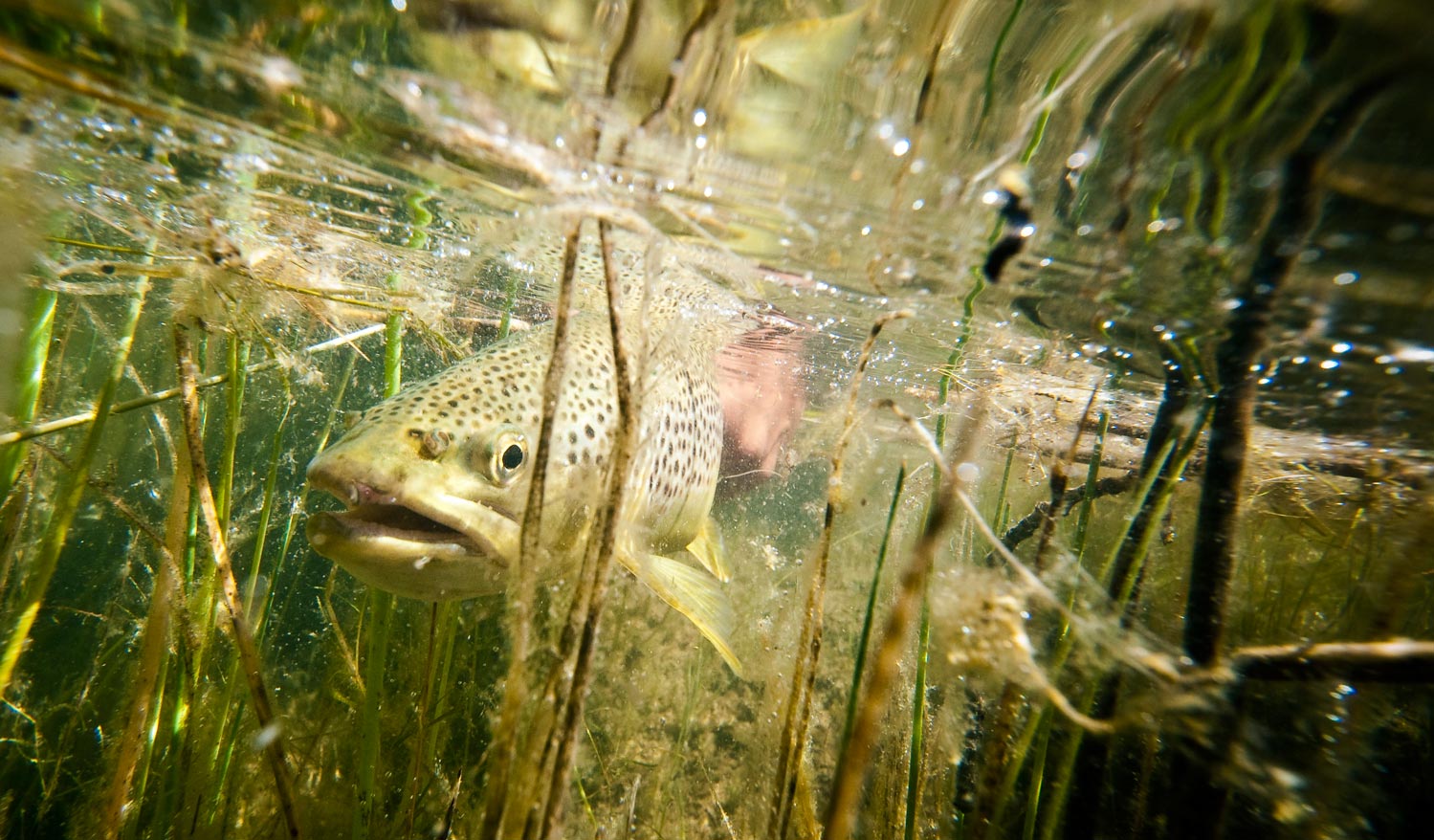
DID YOU EVER WONDER WHY FISH EAT BRIGHT PINK WORM PATTERNS, OR THINGAMABOBBERS FOR THAT MATTER?
Ever watch a trout refuse your dry fly and wonder what he saw that he didn’t like? A trout’s eye serves the same purpose as ours but it functions in a very different way. The subject of how trout see the world is a complicated one but the basics are well worth your time. Understanding how the fish eye works can help you imagine the watery world they see, and it may give you some insight that will help you catch them. The following are some simple principals to keep in mind.
WATER AS A VISUAL MEDIUM
Water is a poor conductor of light at its best. It affects the way fish see color as well as their visual acuity. Water absorbs light at different rates depending on its wavelength or color. Long wavelength light, colors like red and orange, are absorbed quickly while short wavelengths like blue and violet are absorbed more slowly. This means that as light passes through more and more water, warm colors fade to black while cooler colors fade more slowly. Overall, as a fish moves into deeper water his environment becomes darker, at which point the biology of the fish’s eye affects his perception of color as well.
It is not necessary however for a fish to be in deep water for its vision to be affected by the absorption of light. The rules hold true for a fish in shallow water, viewing an object at a distance. A red streamer, for example, that is running at a depth of one foot, where there is plenty of red light, will appear black to a fish viewing it from fifteen feet away. As the fish closes on the fly, however, the red will become vivid. The same would not be true at a depth of fifteen feet. At that depth the fly would remain black to the fish, even at close range.
Ultraviolet light, which we do not see but trout do, is scattered in water. Colors like white and reflective materials like flash are visible to fish at long distances but may appear blurred by this effect. These flies will get a fish’s attention from a distance and become sharper as the fish draws near.
Color perception and visual acuity are both affected by the chemical composition of the water as well as what foreign matter is present. Tea stained water, which is present in many mountain streams, absorbs UV light quickly, changing the rules dramatically. In these conditions warmer colors become more important and while fish may see less color overall their visual acuity will improve. When water is dirty, light is scattered by foreign particles and the fish’s environment becomes darker with little visual acuity.
THE BIOLOGY OF A TROUT’S EYE
The biology of a trout’s eye is similar to ours in some ways and very different in others. Their eye has an iris, a lens and a retina with both cone cells and rod cells, much like our eyes, but
Read More »Saturday Shoutout / Paul
If you needed a reason to live, what would it be?
For one young man, who faced death not once but twice, it turned out to be fly fishing.
PAUL
Read More »A thought about bonefish flies
John Byron
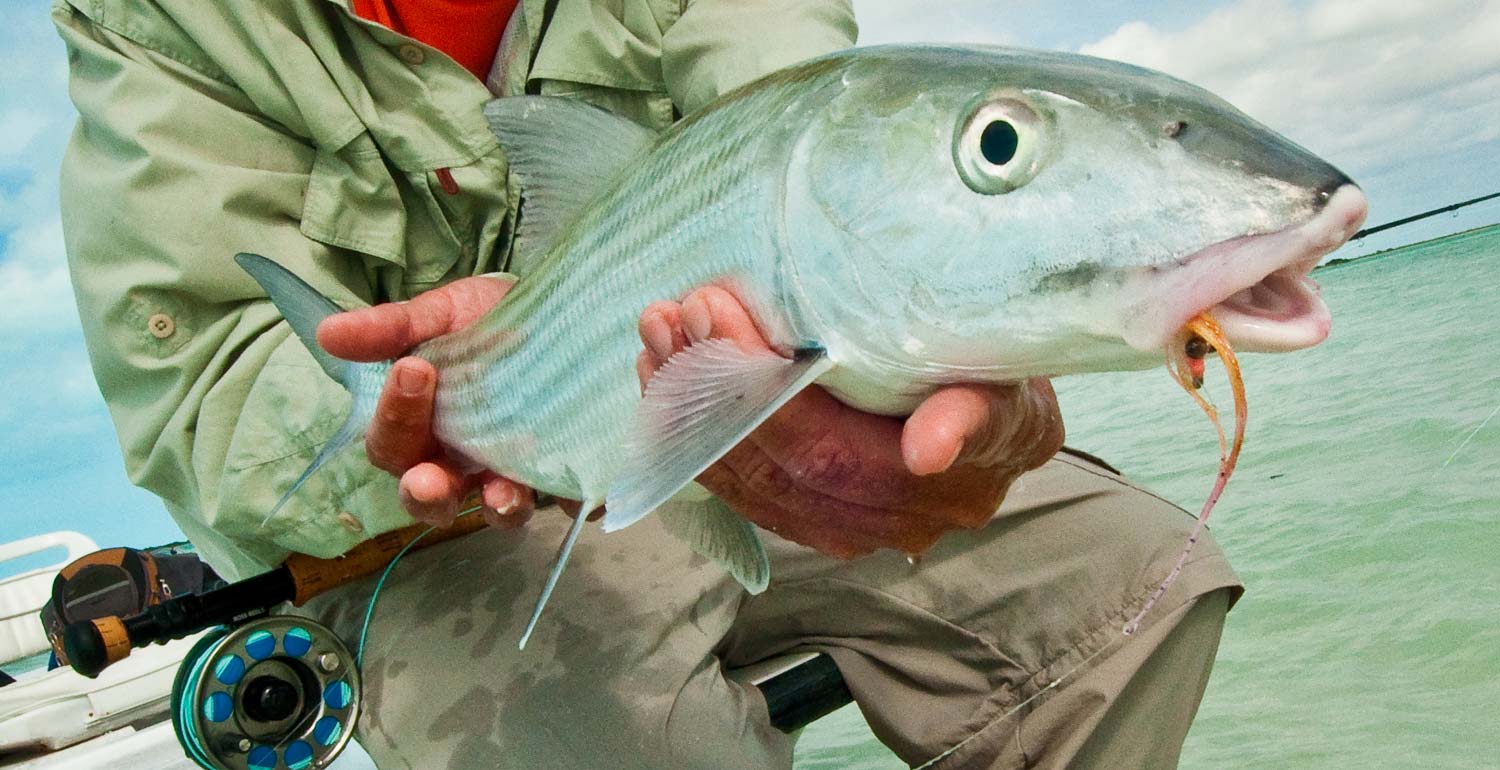
I think we’re seeing bonefish flies all wrong. We look at them from the beam most times, side view. Or directly from the bow, dead on the front of the fly.
But that’s not the bonefish’s view.
The properly presented bonefish fly is viewed by its intended prey from dead astern. Deep quarter at best.
Pick up a “good” bonefish fly and judge it from how it looks viewed from the back. That’s what the fish sees.
Just a thought…
Editor’s note: I like John’s point. That’s exactly what was on my mind when I came up with the Sugar Foot. Here’s a video on how to tie that fly. It works!
Read More »Fear And Loathing On The Water
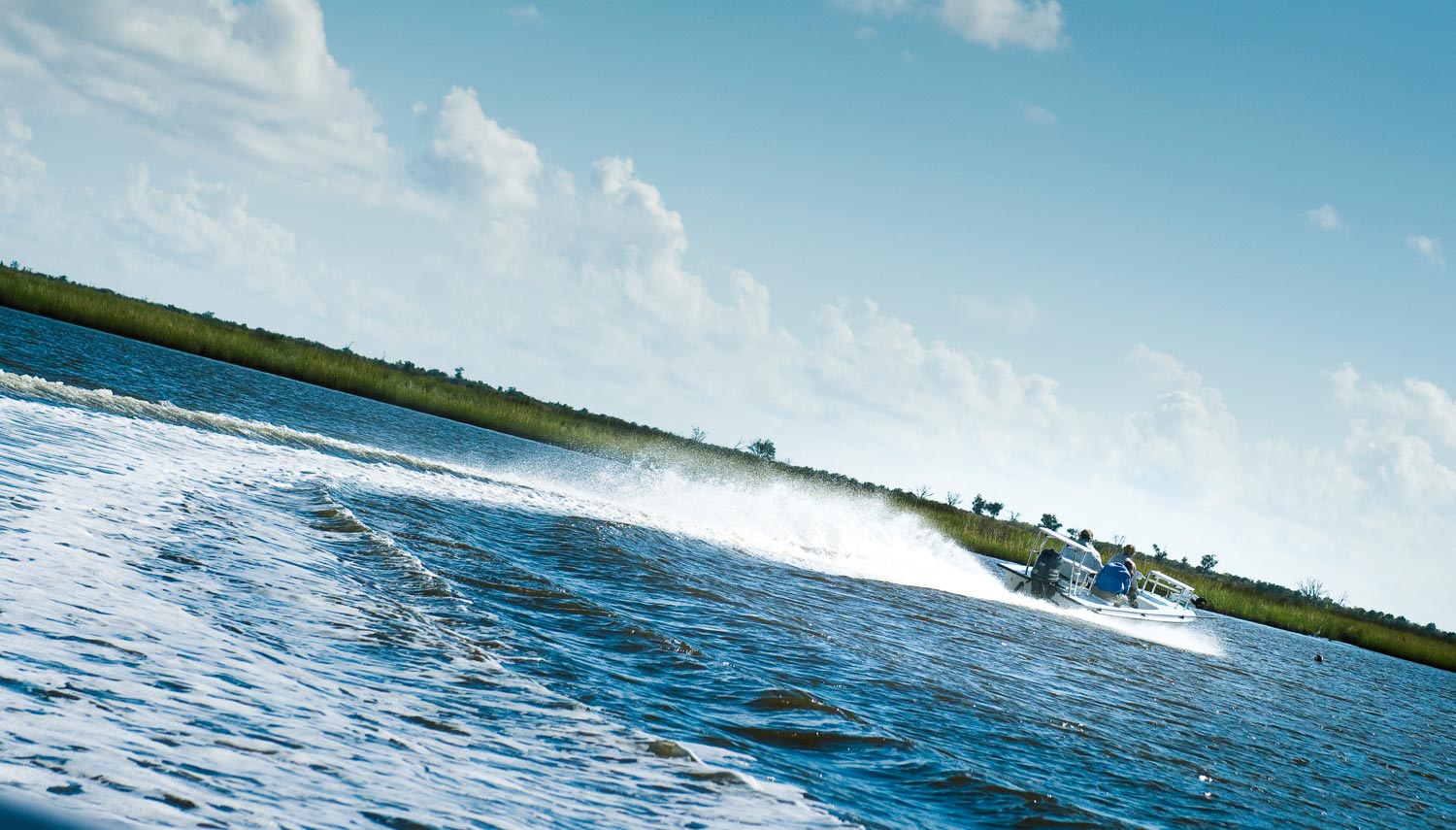
WHEN THINGS GO BADLY, YOU’VE GOT TO STAY POSITIVE AND TURN YOUR TRIP AROUND.
The sky is clear. Mangrove leaves glow in early morning sun. Dirty brown water floods the mud flats of Delacroix, Louisiana. I take in the view from the poling platform while struggling to move the boat against a twenty MPH wind. The last few days have been challenging, to say the least. We’ve battled the thunderstorms and wind, poor light and water clarity, and today the water temperature has dropped ten degrees. We were chased out of Venice when the Mississippi rose nine feet and landed here, where at least we know a couple of spots. The whole trip has been a mess and I’ve spent most of it on the platform. On the morning of this, the third day, I have only landed one redfish and I’m looking to turn things around.
I pole the boat into a sweet looking spot where the lee of a small island meets the mouth of a creek. It looks too good to not hold fish. My buddies Scott and Daren have given up on their fly rods and gone over to the dark side, throwing spoons and jigs on gear rods. Daren fires a cast into the creek and Scott casts to the island. Both lines come tight and we have a legitimate double in the first thirty minutes of fishing. My shoulders relax and I think that today things just might turn around. I spin the push pole in my hands and sink the point into the soft bottom to hold the boat while my friends land their fish. That’s when I hear a loud snap and the pole is suddenly free in my hand.
There’s no managing a flats boat in strong wind with a broken push pole. We spend most of day three riding back to the dock, driving a half hour to the nearest hardware store and fixing the pole. By afternoon, when we return to the flats, things have changed and there isn’t a redfish to be found. I blind cast wildly to fishy looking water while a pounding rises in my ears. My frustration becomes palpable and my casting sloppy. We call the day around 3:30 when the boats wiring starts acting up. I ride back to the dock in a state of self loathing. Voices of negativity singing choruses in my head. Feeling sorry for myself like a little bitch.
Just a week earlier I was swinging flies for steelhead on the Deschutes river in Oregon. Conditions were tough there too. I’d taken my friend Andy Bowen for his first west coast steelhead trip, to learn how to cast a two hander and swing flies from Jeff Hickman, who taught me. Andy was on the board early with two nice fish. His first, a wild buck, handed him his ass early in the fight, almost spooling him. The look on Andy’s face was priceless. He kept his cool and, with constant coaching from Jeff, landed the fish.
It was a perfect first steelhead experience. I always choose my words carefully when
Read More »It’s Time To Book Your Deschutes Steelhead Adventure
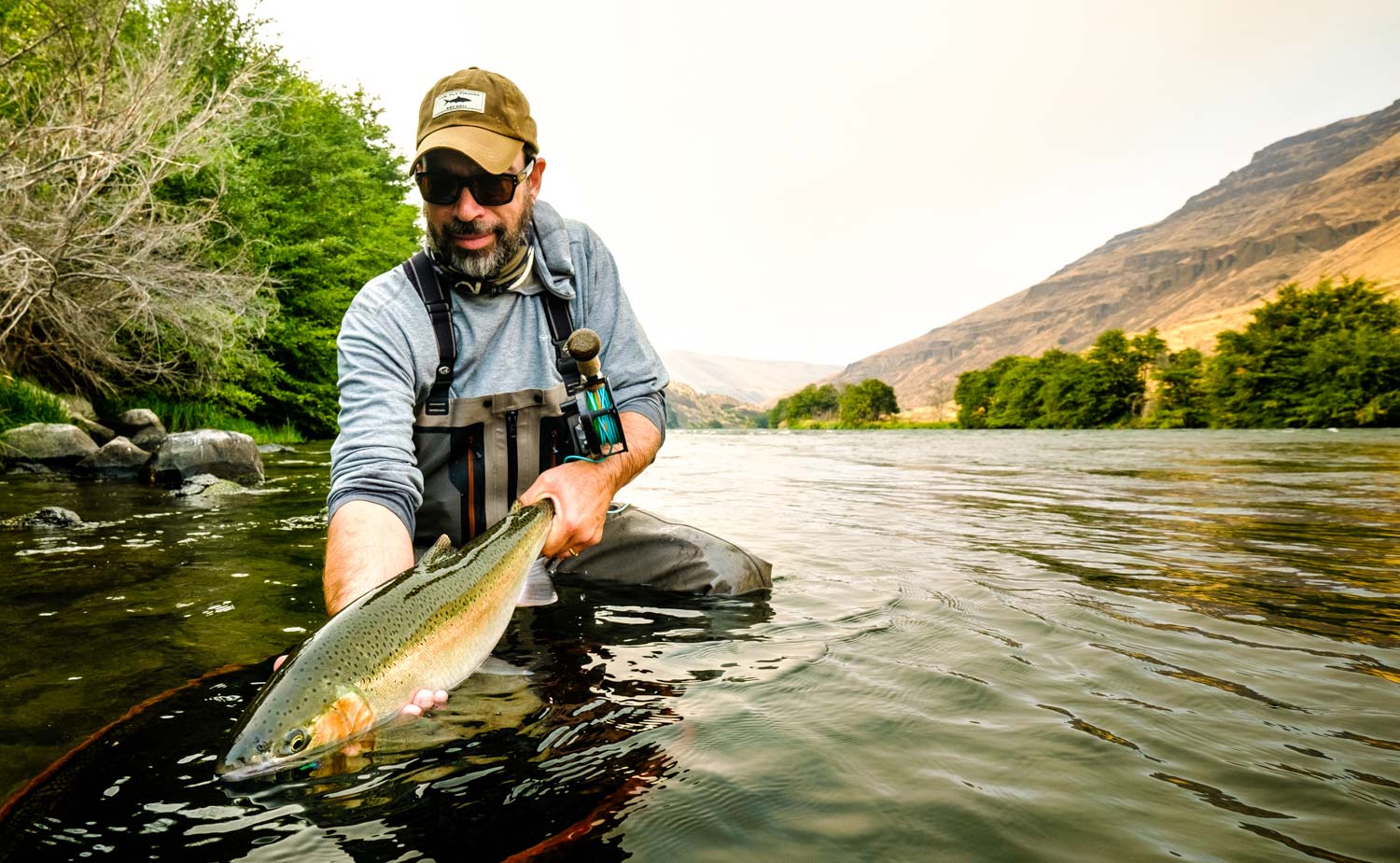
Join us for this year’s Deschutes River Steelhead Camp!
Always one of my favorite trips, the Steelhead Camp on the Deschutes is just a blast. Great people, great fishing and one of the best outdoor experiences you’ll ever have. Check out the info below and drop me a line at hookus@ginkandgasoline.com to learn more or to reserve your spot. I hope you can join us!
The Deschutes Steelhead Camp, operated by Jeff Hickman’s Deschutes Steelhead Adventures, is one of our most popular trips. The cost for this 3 day session is $2200 and includes guided fishing, instruction, lodging and chef-prepared meals.
The Deschutes steelhead camp is a blast. Jeff’s operations, both here in the states and at his lodge in BC, have a fun mellow vibe. Just good times and good fishing, no attitude or pressure. The Deschutes is a beautiful river and has a fantastic steelhead run. We fish the lower river. The Deschutes is a major cold water tributary of the mid-Columbia, so steelhead bound for all of the rivers of the upper system stray into the lower Deschutes to take advantage of the cool oxygen rich water. You have a chance to catch steelhead that are headed for Idaho there.
The Deschutes is one of the best rivers anywhere to catch a steelhead on a floating line. Casting a dry line is a real pleasure, but when a big steelhead rockets up through eight feet of fast water to eat a small traditional fly, it’s anything but relaxing. The steep canyon walls offer us
Read More »