
Review of PostFly Box
By Justin Pickett
Box subscriptions. Little packages of awesomeness delivered to your door monthly.
Everything from cosmetics, survival gear, dog treats, coffee, and exotic foods can be shipped to you every month with the swift click of a mouse. And, thankfully, there is a box for fly anglers as well.
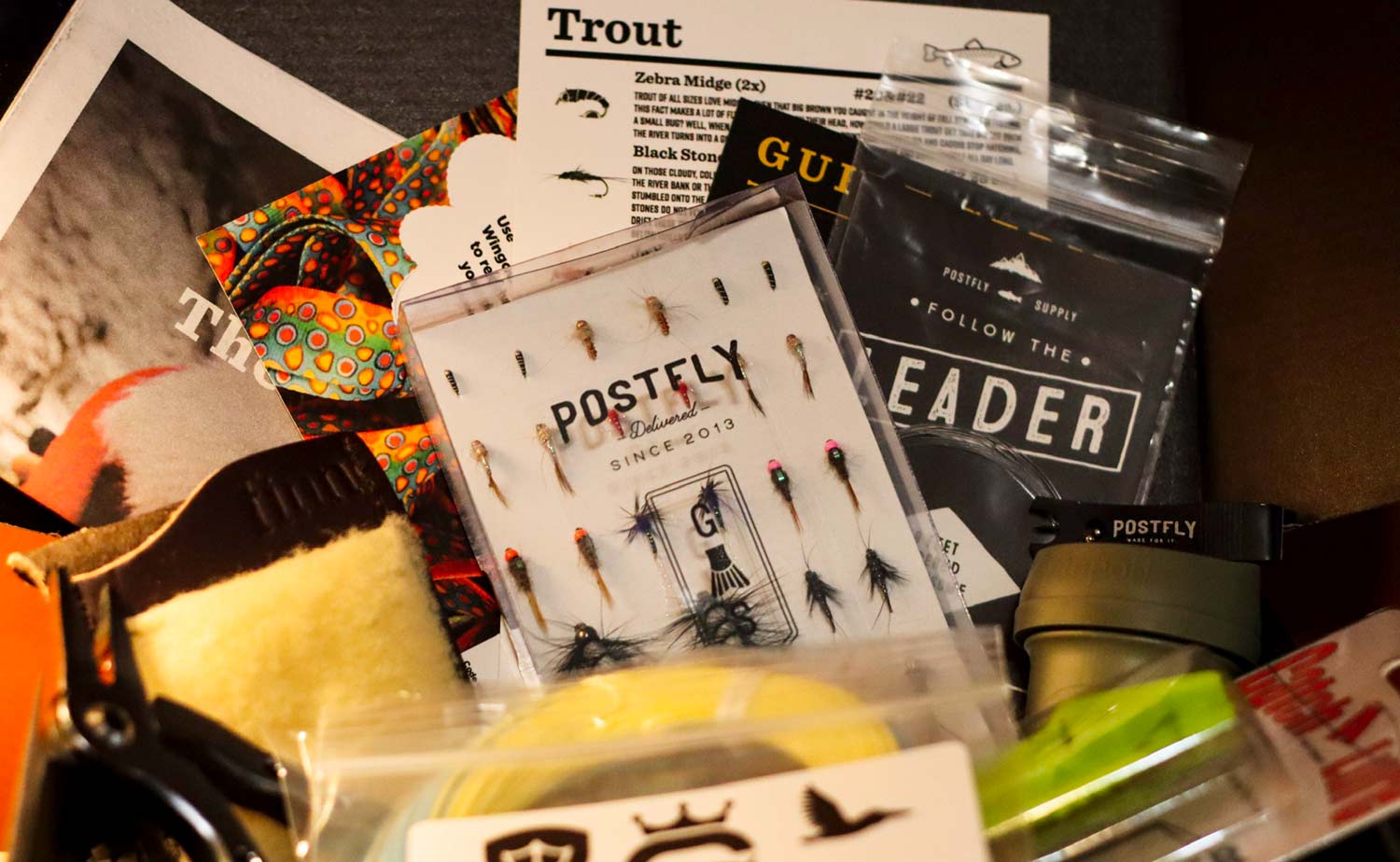
Post Fly began its journey a few years ago as the first (that I know of) subscription box for those looking for some monthly fly fishing swag. Concentrating mainly on flies, Post Fly would deliver a sweet little box of goodies every month for nineteen bucks. You could count on getting at least a dozen trout flies, as well as a few other goodies like a leader, tippet, a coupon, and a sticker or two. When they first debuted their subscription program I was hooked. Take My Money! My wife had already bought into a couple of these subscriptions and, quite frankly, I was a little jealous every month when her box full of goodies would arrive. But, now I had one of my own!
I remember getting my first little black box of goodness in the mail. After running back inside, I dissected the box and spilled its contents on to my kitchen table. There were the aforementioned extras and a small, plastic container containing this month’s flies. Popping the top, I peered into the cup to see a mangled mess of flies… hmmmm. I poured them out onto the table and sorted the flies by pattern. There were definitely some interesting… ummm… patterns amongst this lot of flies. One in particular that was surely meant to emulate a popular pattern, but in a way that was hard to describe. The flies were the kind that you would likely find in a clearance bin or on a sales rack at Big Lots. I’m not trying to kick ‘em in the balls about it. I recognized that this was a young company with a great idea. I still saw the value and enjoyed getting that box every month.
Fast forward a couple years and those boxes are still flooding mailboxes on a monthly basis, however things are different for Post Fly. They have been working smart and hard. They have obviously developed some great relationships within the fly industry, and their members are getting some serious bang for their buck. Post Fly has grown from a trout fly subscription into
Read More »Sunday Classic / Check Your Rig For Tangles and Unwanted Debris
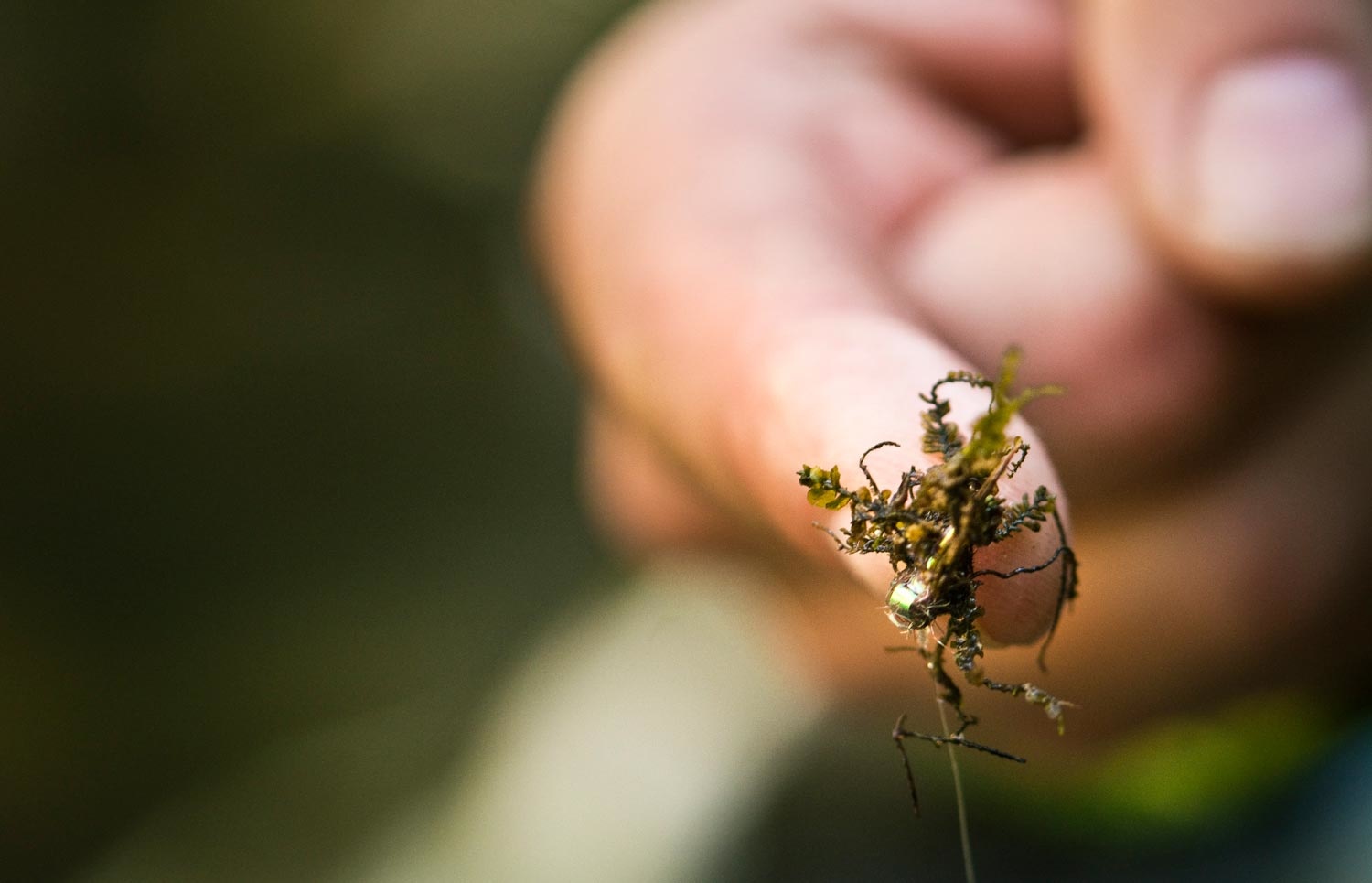
The other day, guiding two anglers, I learned a valuable lesson of how important it can be to regularly check fly rigs throughout the day. One of my clients had just landed a nice trout, so I told him to wade up and fish the next spot upstream, while I spent a few minutes instructing his buddy. About 15 minutes later, I returned to the client I had left, and asked if he’d gotten any action while I was gone. He responded, “No, but I made some really good presentations and drifts.” Surprised that the spot didn’t produce any trout (as it usually does), I requested him to bring in his rig for me to inspect his flies, and I immediately noticed the problem. There was a big glob of debris attached to his fly. It was evident that the nymph rig had snagged the bottom early on, grabbed some debris, and the trout had ignored the salad covered fly the remainder of his drifts.
It’s really easy for us to get lackadaisical on the water fly fishing, especially when we’re enjoying our time away from work and the beauty of the outdoors. Failing to take the time throughout the day to inspect and perform rig maintenance on the water, can have you in the penalty box without even knowing it. The two most common causes are rigs tangled (dry/dropper rig or tandem nymph rig) and flies that are carrying unwanted vegetation. Next time you’re on the water and you’re not getting bites when you think you should be, stop and check your rig for problems. It could very well, be the only reason why you’re not getting your rod bent. For all you guides, make a point to inform your novice clients of the importance of doing these maintenance checks before you leave their side. It’s a valuable lesson many beginners will overlook if you don’t point it out to them.
Read More »Saturday Shoutout / SCOF and the Island of the Damned

Things are getting scary at Southern Culture on the Fly.
This issue of SCOF gets a littler weird, even for SCOF. It’s not for the faint of heart, and it’s not to be missed. You might say it’s, DAMNED good!
CHECK OUT SCOF AND THE ISLAND OF THE DAMNED.
Read More »Q&A With David Danforth of REEL LOCAL
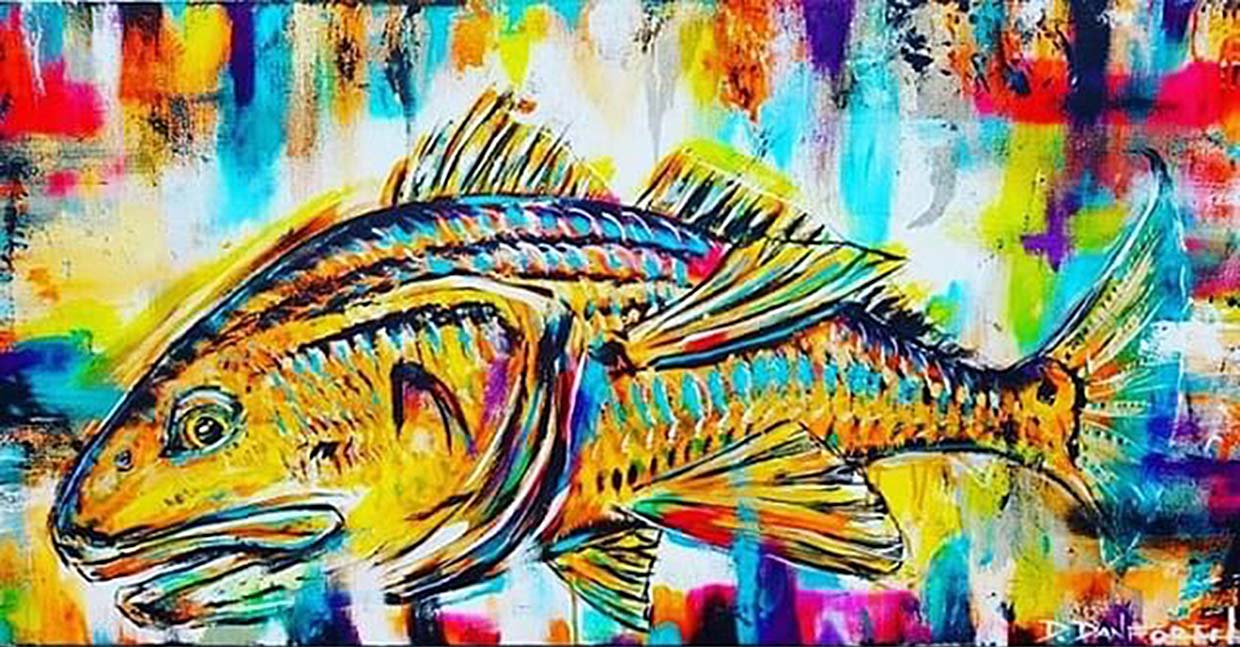
DAVID DANFORTH IS A TALENTED ARTIST RESIDING IN TAMPA, FLORIDA AND IS KNOWN FOR BOLDLY COLORFUL RENDERINGS OF FISH SPECIES FEATURED ON HIS WEBSITE REEL LOCAL (WWW.RELOGEAR.COM).
Owning a piece of his art myself, it is one of the most complimented pieces hanging on my walls. I was able exchange some words with David recently in order to learn a little more about his art and where he came from. As with many artists, the road to David’s success hasn’t been easy, but eventually zig-zagged to where he is today.
Give us a little background about yourself. Where are you from? When did you first become interested in art and how was Reel Local conceived?
I’m a Tampa Native. Third generation Florida angler. Rare, I know to talk to a Florida non-transplant, but there are some of us around! As soon as I was able to hold something to draw with, I have always enjoyed art. It is just part of my personality to design and create. Reel Local actually started as a joke on a napkin between me and my wife. I got back into fishing after taking a break and wanted a sun protective shirt to keep me from charring on the water. After shopping around, I was a little unimpressed with what the market had to offer, especially at their prices. I said to my wife, “I want something Real, and Local. Not a Big Name that charges you $65.” So it began, a UV Protective Shirt, for anglers, by anglers. From apparel company to also branching out as an umbrella company called Danforth Art where we also license the art to other brands for use in their product lines.
How did you develop your artistic skills?
It was just trial and error. I never had an art school degree or any formal training. I usually just imagine an image and then make it come to life. From a youngster I would tattoo with markers on kids in elementary school for their lunch money. It was probably then that I realized you can make money off of drawing. I wish I would have pounced on it faster instead of working in the corporate world for ten years, although the nine-to-five sales world did teach me a lot about customer interaction, marketing, sales, how to run a business, and what not to do to be successful. I did do a stint of Cad design in high school for Yacht Designing and Architecture. I realized that art school was not reachable for me at the time, so I painted motorcycles in Texas for a few years. There may have also been some street art mixed in there that helped me grow a passion for the bright colors I use in my art now.
It’s apparent that you draw a lot of your inspiration from saltwater fishing… How long have you been fishing? Are you a “fly-or-die” angler?
I have been fishing since I was a little kid just like a lot of other fishing nuts. I spent my childhood spending many nights on isolated islands, sleeping in hammocks, cooking our catch all the while watching my dad and his buds eat oysters, play guitar by a fire and tell fish stories. When I first started fly fishing
Read More »Is Carrying A Gun On The Water Ever The Right Thing To Do?
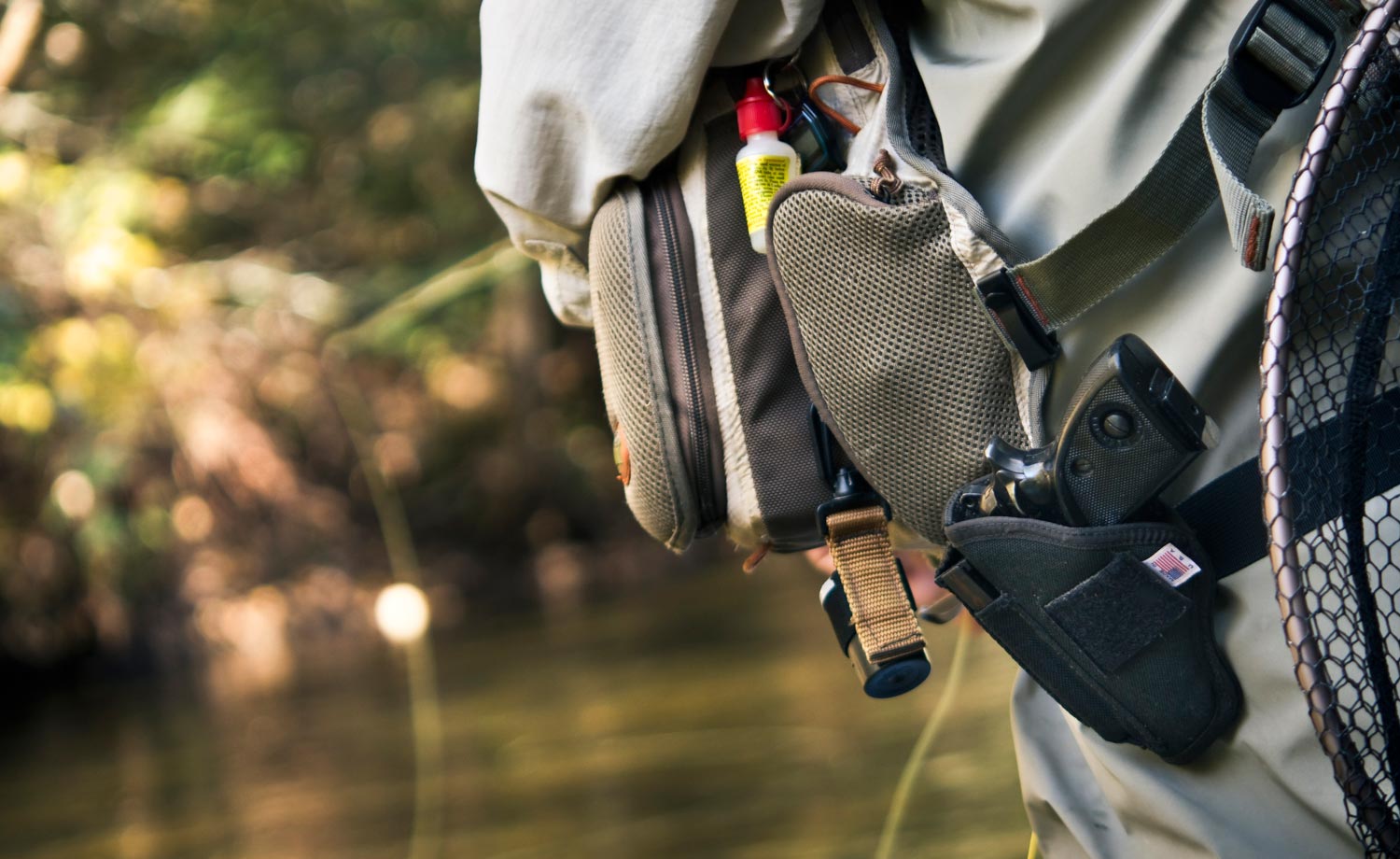
I HONESTLY HAD NO IDEA WHAT A HOT BUTTON ISSUE THIS WAS.
Until I posted a link on Facebook the other day to the new Fishpond sling pack and commented that it was designed to carry a pistol. Man, did that post ever light up. The discussion got pretty heated with anglers on both sides of the issue having very strong opinions. It made me think a little harder about my own views and I thought it was worth opening the topic here.
I’m not looking to start a gun control debate. Let’s save that conversation for another forum. I just want to address the idea of carrying a gun while fishing. In the interest of disclosure, I will say that I own a fair number of guns. Handguns, shotguns and rifles. I strongly believe in the right to own them and I believe that the vast majority of gun owners are quite responsible. I also do not carry a weapon, other than to and from shooting it.
The reason I don’t carry a gun is simple. I don’t want to shoot anyone. I don’t want it on my conscience and I don’t want to deal with the ramifications. I generally don’t believe in the unnecessary taking of life. By leaving my guns at home I greatly reduce the chances of having to make hard decisions under pressure. Come in my house uninvited while my wife and I are in bed and we’ll have a very different discussion.
I should also say that these are my personal decisions and I do not judge others who make different choices. I just ask, very politely, that they not shoot me or my loved ones and I try not to give them reason.
These choices are in no way academic or untested. I’ll not go into the stories here but I have found myself looking down the barrel of a gun on almost a half dozen occasions, knowing that the person on the other end had no problem, or every intention of pulling the trigger. So far I have a pretty good track record with crisis management.
I have, on two occasions however, carried a gun when fishing.
Once was for protection from animals. I am an animal attack magnet. I’ve been attacked by just about everything with fur and one day while fishing a favorite stream I was attacked by an
Read More »Umpqua Mini Lt Fly Boxes
By Bob Reece
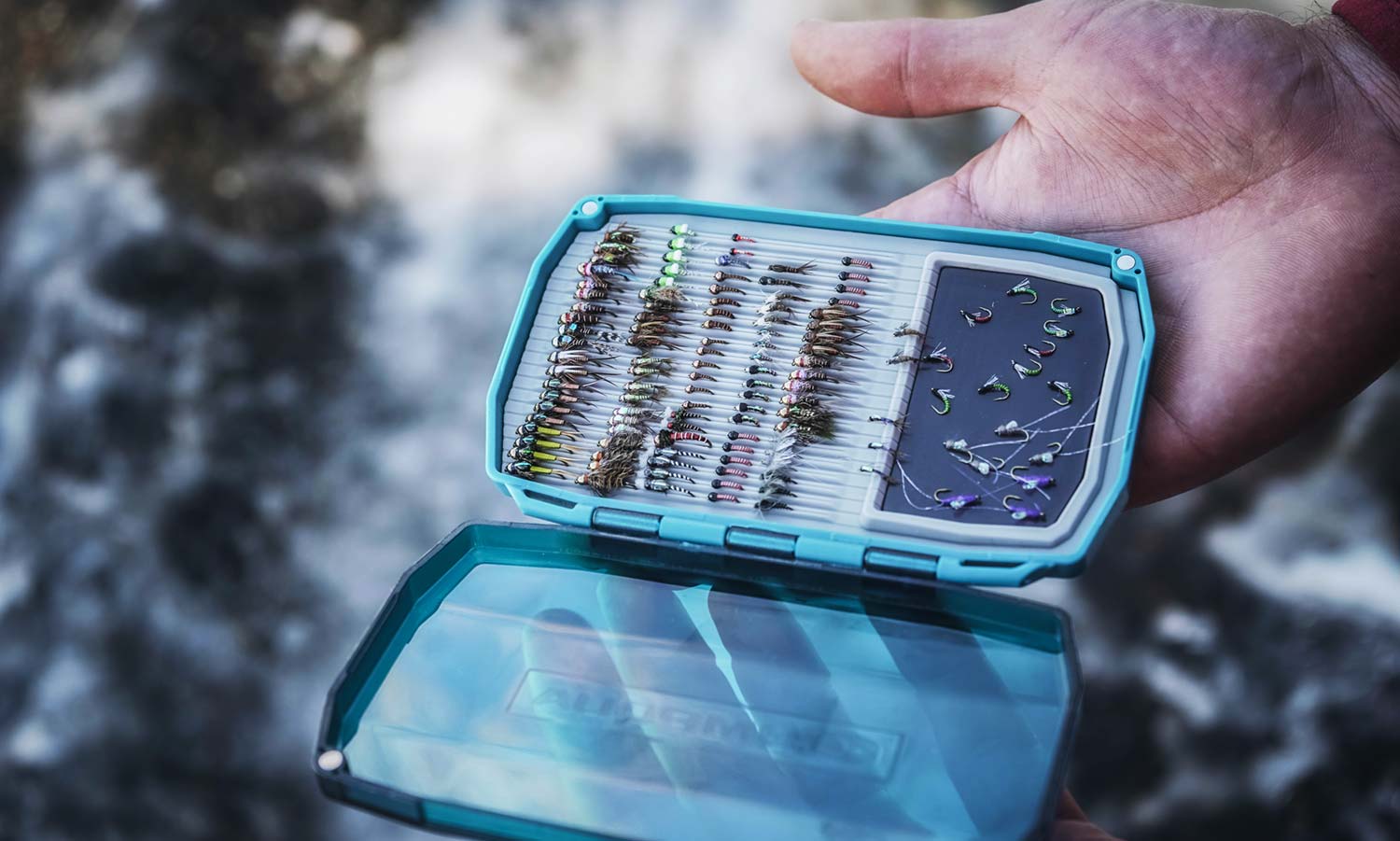
While some people love large fly boxes, others prefer a reduced footprint.
In acknowledgement of this, Umpqua has created their line of Mini UPG LT fly boxes. These downsized homes for your flies are the perfect complement to their larger counterparts.
For the time that I spend on the water each year, durability is a top priority for me when selecting fly boxes. More often than not, I forget to roll or zip my pack shut. As a result of this my fly boxes often take unintended trips to the sand, gravel and rocks below. In the past, I’ve had several boxes fail to withstand this test by partially or completely shattering on impact. Even with their petite size, my Mini LT boxes have survived my intended and unintended impact tests without damage.
Equally important to its external durability, is a fly boxes grip of the goods. With the fly boxes that I’ve had in the past, a firm drop or a day spent bouncing around in my pack resulted in dislodged flies. As a guide my flies are an essential element of my client’s success. I need a box that holds them safely in pace, whether they’re in my pack or reaching the bottom of a trip to the ground below. The new Umpqua Mini boxes have proven themselves in both of these aspects.
Lastly and maybe most importantly are the benefits of
Read More »3 Reasons Not To False Cast
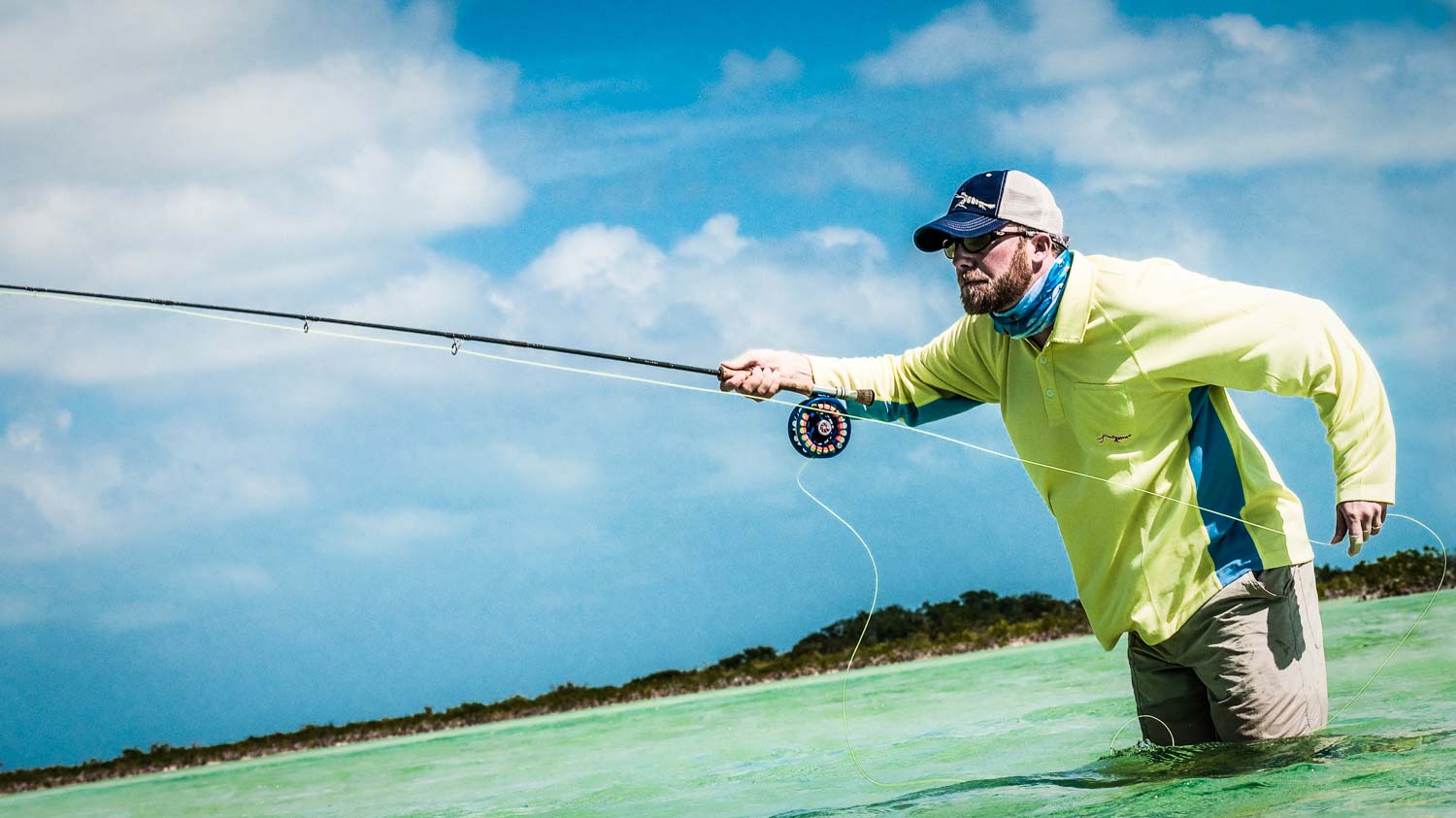
Most fly anglers do too much false casting.
False casting is almost a nervous habit for many fly fishers. It’s also a bad habit. Excessive false casting is not only unnecessary, it will cost you fish. Although I’m thinking specifically about saltwater fly fishing, the same ideas hold true in freshwater. It’s a bad idea to false cast any more than absolutely necessary.
In saltwater fly fishing, false casting serves one purpose, to work out enough line to reach a fish. To be successful, you should practice doing this in as few false casts as possible. The golden rule is, never more than three. By shooting line in both the forward and back cast, it’s completely possible you work out eighty or ninety feet of line in three false casts. Any more is asking for trouble.
HERE’S WHY.
False casting wastes time.
There is a slim window of opportunity for making your best presentation to any fish. Timing is key. Waste too much time false casting and you’ll miss your shot.
Read More »Sunday Classic / Respect Thy Tarpon Guide
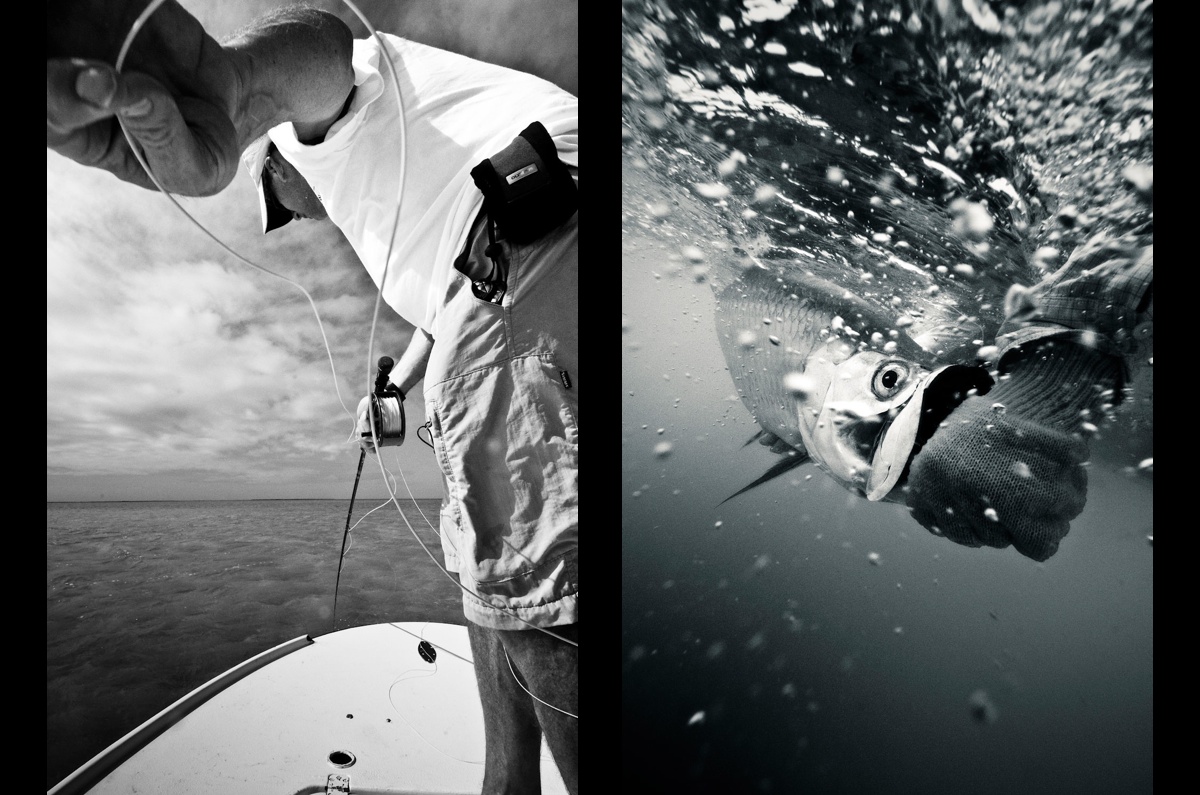
I respect tarpon guides a great deal.
As a trout guide, I run into many of the same struggles they do on the water, but tarpon guides have to deal with managing them at the extreme level. They spend their days on the water guiding in some of the most demanding and technical fly fishing conditions on the planet, and to make things worse, many of their clients have never experienced the saltwater fishing conditions before in their life. Getting the job done, day in and day out, is rarely easy for a tarpon guide. I imagine there’s plenty of silent prayers being made on those poling platforms, begging for a starving fish to show itself at just the right angle, and that a good presentation follows.
Friends that guide for tarpon tell me of occasional periods where the skunk doesn’t leave the boat for days at a time. Hookups that are short lived, are the only thing that keep them sane and focused on the prize. It’s not that they aren’t spotting fish and getting plenty of opportunities during the day. Most of the time, their hands are clean and the skunk falls on the operators standing on the bow. It’s hard to hit your targets if you haven’t taken the time to sight-in your fly rod before you begin the hunt (pre-trip casting preparation). Consequently, a large percentage of the fish catching opportunities witnessed by tarpon guides fizzle out before they can materialize, from presentations missing their intended targets. And don’t get me started on the unstable emotions that plague newcomers to chasing tarpon on the fly. That’s a whole-nother can of worms. I’ve been on the bow many times, where I completely fell apart after locking eyes with a 100+ pound poon.
They also tell me that many times when they’re fortunate enough to get an experienced fly caster on the bow of their boat, they often get dealt the shitty weather card. A cold front will show up out of no where and most of the fish will run for their lives to deep water. When a cold fronts aren’t the problem, strong winds blowing the wrong direction, end up depriving them access to prime water. Focus, patience, and persistence are three attributes you better have if you want to hack it guiding in the salt. For myself
Read More »Saturday Shoutout / Rosenbauer Bares All

If you think you know Tom Rosenbauer, you need to hear this podcast.
Tom is an icon in the world of fly fishing. It’s hard to think of anyone who has done more to introduce new anglers to the sport. We all listen to his Orvis Guides Podcast. We’ve seen him on TV, and we’ve read his books. But do we really know Tom Rosenbauer?
G&G contributor Dan Frasier sat down for an interview with Tom to find out. What he uncovered is no less than shocking. Unless you consider hilarious less than shocking, in which case, it’s far, far less than shocking.
LISTEN AND LEARN WHAT TOM ROSENBAUER HAS BEEN UP TO OFF THE WATER.
Read More »Alice’s Angle, Catch of a Lifetime
By: Alice Tesar
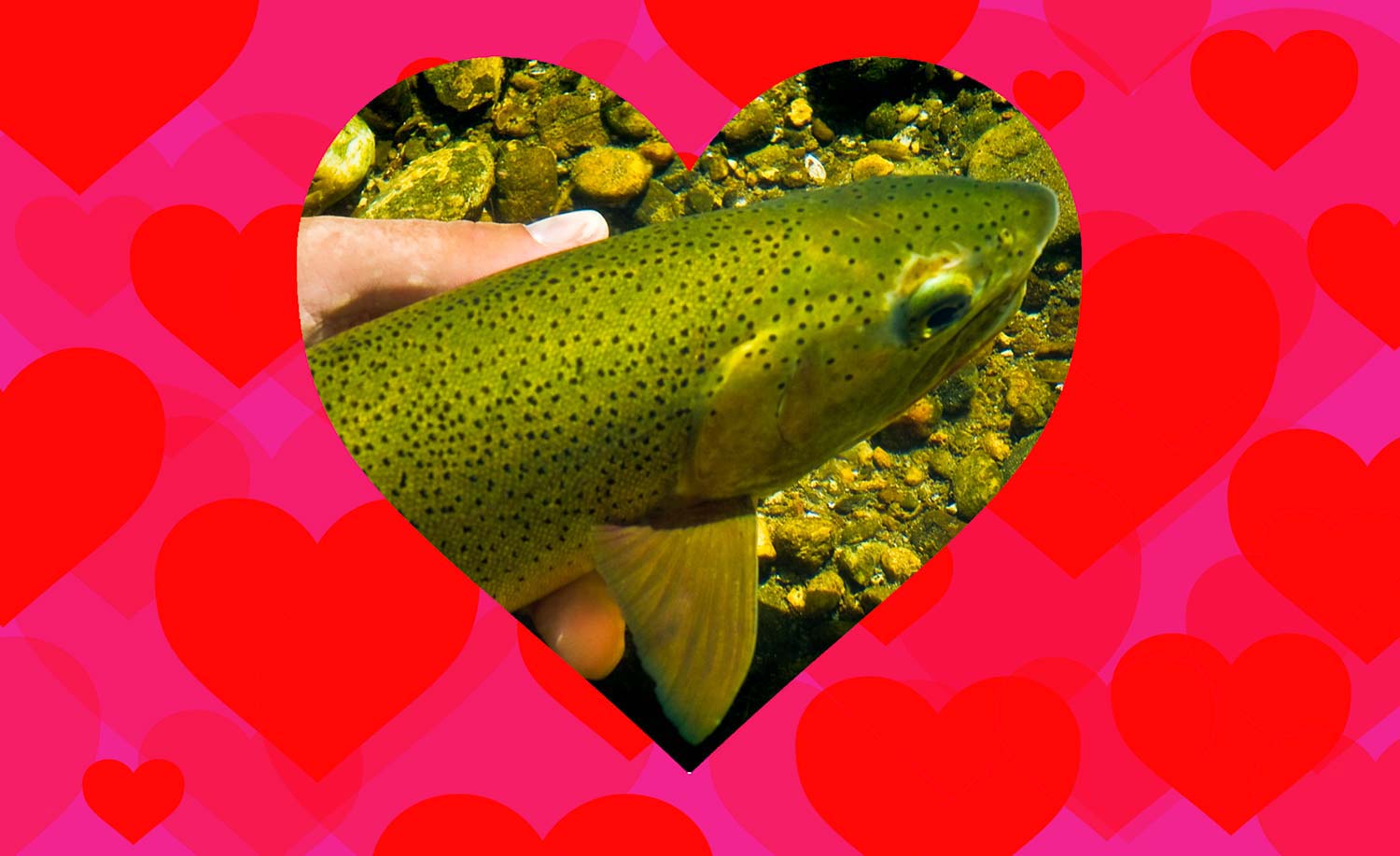
FLY FISHING IN ITS ESSENCE, IS A SOLO SPORT. EVEN FOR ANGLERS IN LOVE, IT’S A TRICKY ROUTE TO NAVIGATE.
I’ve observed two types of romantic relationships in the all-consuming world of fly-fishing: relationships that allow one individual to obsess over fishing individually and relationships that share a deep personal love of the sport. The first type seems to occur when two people love and enjoy completely different hobbies and thus spend little to no time sharing their passions, except the occasional holiday family event or ‘date night’. Typically, the angler in this duo opts for an evening on the river over said ‘date night’ causing a riff which will be closed up the next time the other wants to partake in their own sport of choice. This relationship usually involves a significant number of gifts (in the form of flowers or clean dishes) left for the lover as a sign of affection and gratitude for the mutualistic relationship.
The second form of love in fly-fishing occurs when two people mutually obsess over the sport but in their own ways and so rarely take time on the water together. In my own experience ‘date-night’ usually is time on the river but we inevitably end up with stretches of river between us, each taking our own approach and listening to the yelps of the other’s excitement over misses and catches from around the bend. Our certainty of our differing methods is so strongly linked to our egos that the distance between us on the river is increased. Fortunately, there is usually a beer or a flask to smooth things over when the angling has ended.
I’ve illustrated two extremes and maybe your partnership falls somewhere on this spectrum. While I’m making large assumptions about what it is like to be in-love with an angler I know that love is dynamic and requires attention to what seems like a trivial detail, just like what it takes to be a good angler. If we went out and plopped a Royal Wulff on the surface every time we hit the river we may have a few lucky strikes, but we’d get into more trout if we looked closer at currents and bug life. Still more trout would be caught if we started to see where the fish were holding, at what point in the water column the trout are eating, and what bugs were coming off when. Effective anglers pay attention to weather in the past and forecasted, they know how the water temps affect bug life and trout feeding habits, and they keep track of the smallest changes and adapt accordingly. Effective lovers adapt to shifts in the metaphorical wind also.
Read More »