
Sunday Classic / Scent attractor in fly fishing?
I RECENTLY DID A PHOTO-SHOOT FOR ATTRAXX, A COMPANY WHOSE NAME MAY BE FAMILIAR TO SOME OF YOU.
Attraxx makes soft plastic baits for gear fishing in both fresh and saltwater. These aren’t your grandfather’s rubber worms. The plastics are infused with five patented attractors that stimulate fish into striking. It’s apparently far more complex than just scent or taste and frankly I don’t totally understand all of the details. These guys have a handful of PhDs to my none, but I spent a few days watching these high tech baits in action and I can tell you they work insanely well.
I’m not a gear fisherman. I don’t say that because I feel like I’m above it. Gear fishing takes a lot of skill and knowledge, it’s just not my thing. I don’t do it so I’m not good at it and I don’t understand it. Doug Long, the man behind Attraxx, does understand it. I’ve known Doug for years as a skilled fly fisherman and we’ve wetted our boots together on plenty of occasions so I was surprised to hear that he was now running a plastic bait company.
I was even more surprised to hear that Attraxx is considering new products for fly fishermen. Imagine that, flies tied with materials that release neural stimulators into the water, whipping fish into a feeding frenzy. A couple of years ago I’d have said, “no way! Nobody will buy it,” but these days, I’m not so sure. Let’s look at the trend.
People raised a fuss when
Read More »Saturday Shoutout / Echo Casting Tips
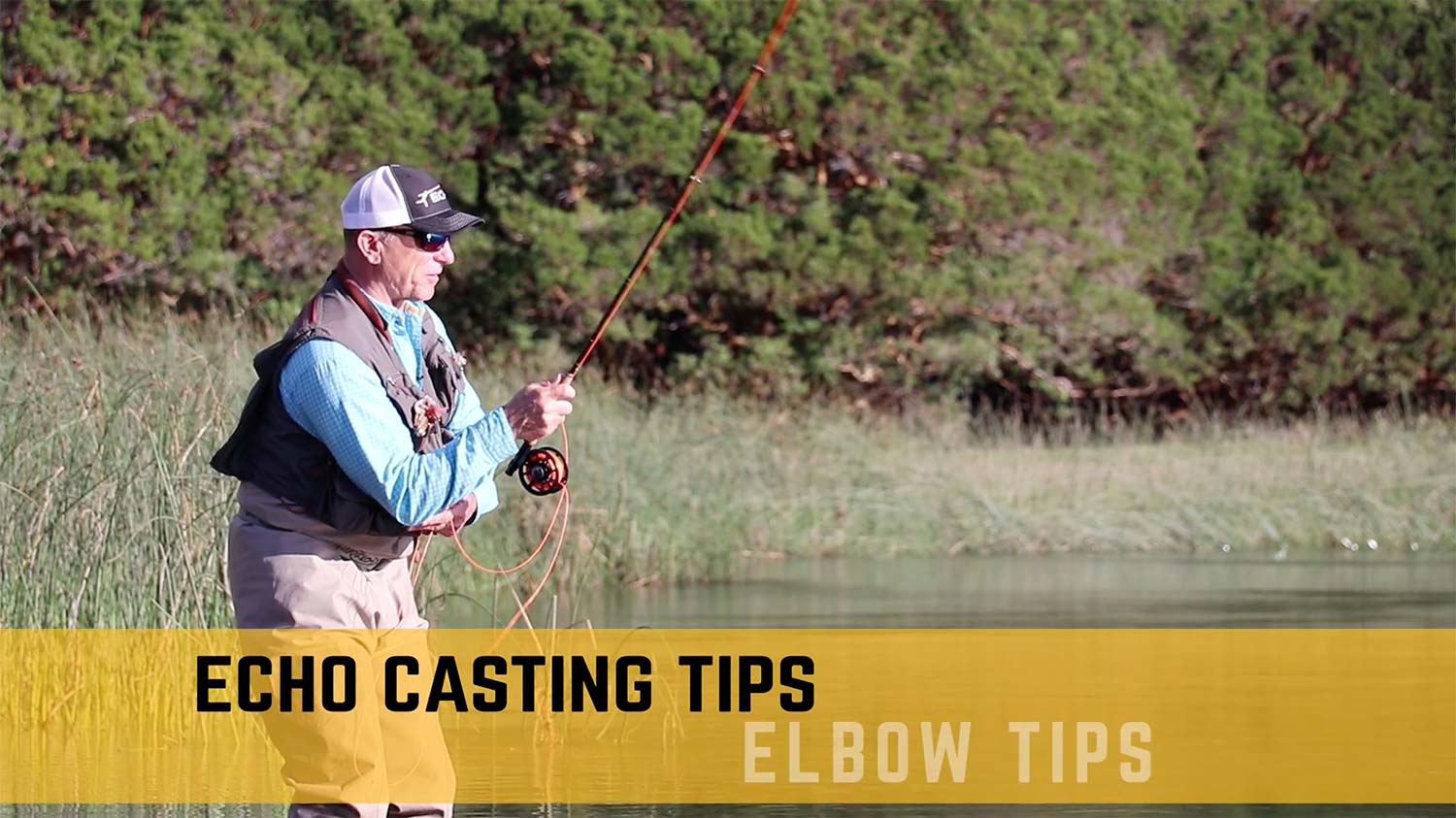
No one knows more about fly casting than the Echo Man, Tim Rajeff.
I can watch Tim cast for hours. It’s just a thing of beauty, but in addition to being one of the worlds best casters, Tim is also the best casting instructor i know. He is able to explain the most technical aspects of the fly cast in ways that anyone can understand. that’s a rare gift.
Part of Tim’s mission at Echo is making fly fishing accessible for everyone. That starts with making performance oriented fly fishing gear at affordable prices but it doesn’t stop there. Tim and the staff at Echo also produce a lot of great educational content, which is free on their web site. That’s just part of Tim’s generous spirit.
Below are three great fly casting instruction videos from the Echo Casting Tips page.
Read More »Wind in Saltwater is Your Friend Not Your Enemy

ITS 6:30AM IN THE MORNING WHEN WE ARRIVE AT THE BOAT LAUNCH IN BIG PINE KEY, FL. WITHIN MINUTES OF STEPPING OUT OF THE CAR THE STAGNANT HUMID AIR BEGINS TO SUFFOCATE MY BODY.
The North Georgia mountain weather that I’ve grown so accustomed to, feels like air conditioning compared to this, and my body is still in shock from the drastic climate change. As I walk down to the boat ramp to help unload the boat, I feel the first drops of sweat rolling down my back. I think to myself, are you freaking kidding me? The sun isn’t even up yet. There’s absolutely zero breeze this morning, so calm you could spot a fish rolling on the surface three hundred yards away. My eyes seem confused at what their witnessing. If you had blindfolded me, and taken me here, there’s a good chance I’d guess I was on a freshwater reservoir. Call me crazy, but I was under the impression there’s always supposed to be at least some wind in the saltwater. I’d know better, but I’ve spent very little time in the Florida Keys during the late summer. Apparently, it’s quite common to go days without any wind during the months of July, August, and September. Awww, it makes total sense why I saw all those sailboats anchored up now.
You always overhear fly fishermen complaining about too much wind on the saltwater flats, but you rarely hear fly fisherman begging for it. To much or too little of either can spoil your fly fishing on the saltwater flats, making fishing conditions extremely tough. Believe it or not, wind is your friend and can at times, be an asset for fly fishermen. For starters, wind disturbs the waters surface, which can make fish
Read More »Get A Better Grip On The Spey Rod
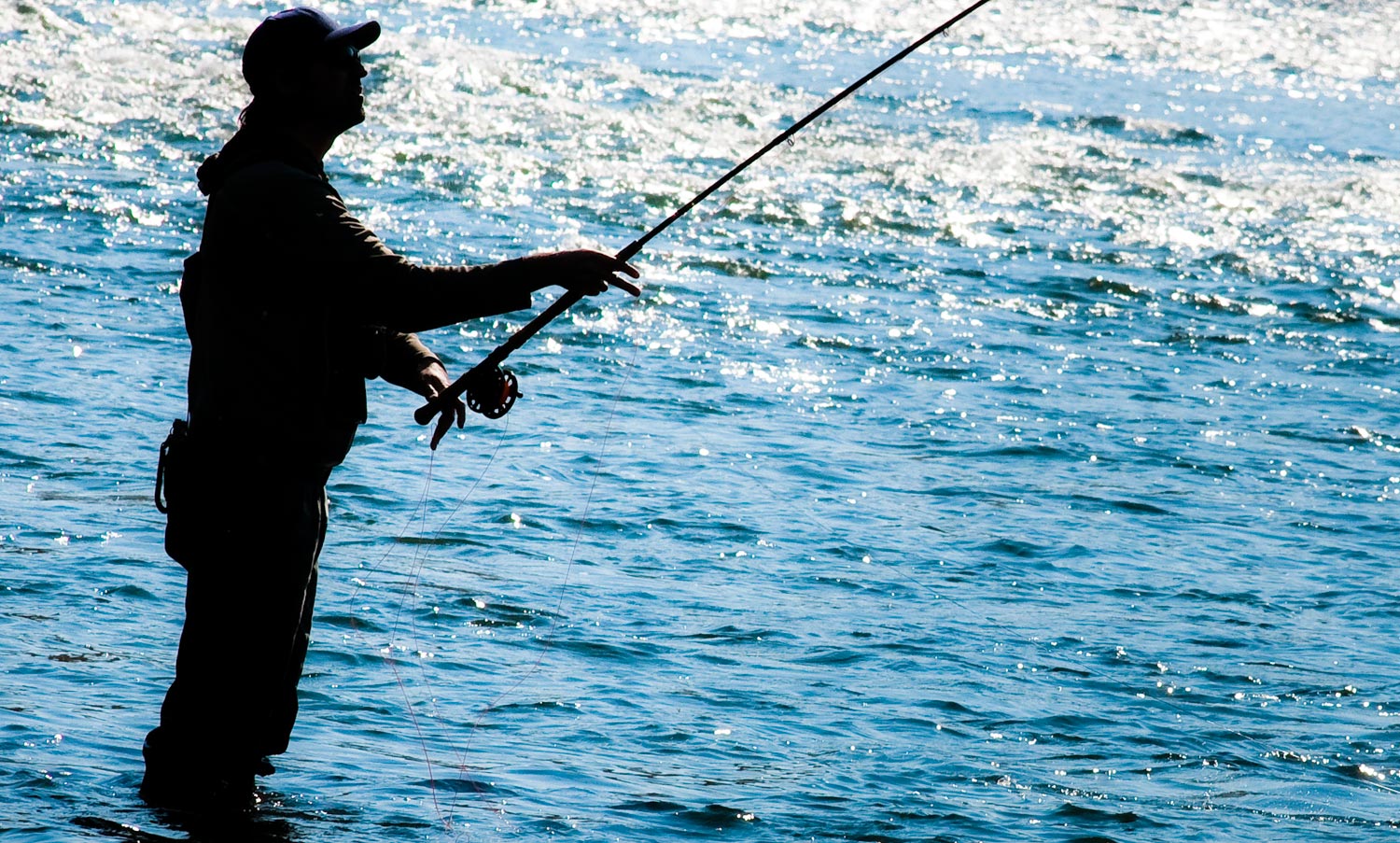
ALL FLY CASTING IS ABOUT CONTROL AND TIMING, NOT POWER.
This is never more true than in Spey casting. Perhaps because there are more moving parts to a Spey cast, rod and line control are crucial. This is especially challenging for the beginner whose muscle memory is only just developing. Often a cast will “break” for no reason. That is to say that, all of a sudden that double Spey you’ve been throwing all morning just doesn’t work any more. Often the reason is a loss of control.
Here’s a tip that will help those of you who are new to two-handed casting maintain control. The first step in a controlled cast is the proper grip. It’s something that doesn’t get talked about enough. Most anglers who are new to the Spey rod think of it like holding a golf club or baseball bat. A familiar tool for most of us, but the Spey rod is quite different and so is the proper grip.
Hold the rod with your finger tips. A gentle grip is all that’s necessary. Using your fingertips accomplishes two things. It keeps your arms relaxed, as you are not tempted to put a death grip on the rod. A relaxed posture is important for fluid movement. Gripping with your fingertips also engages a different set of muscles. Muscles, which are tuned to fine motor skills like writing.
The result is a casting stroke that
Read More »Sunday Classic / Choosing Flies for Tandem Nymph Rigs
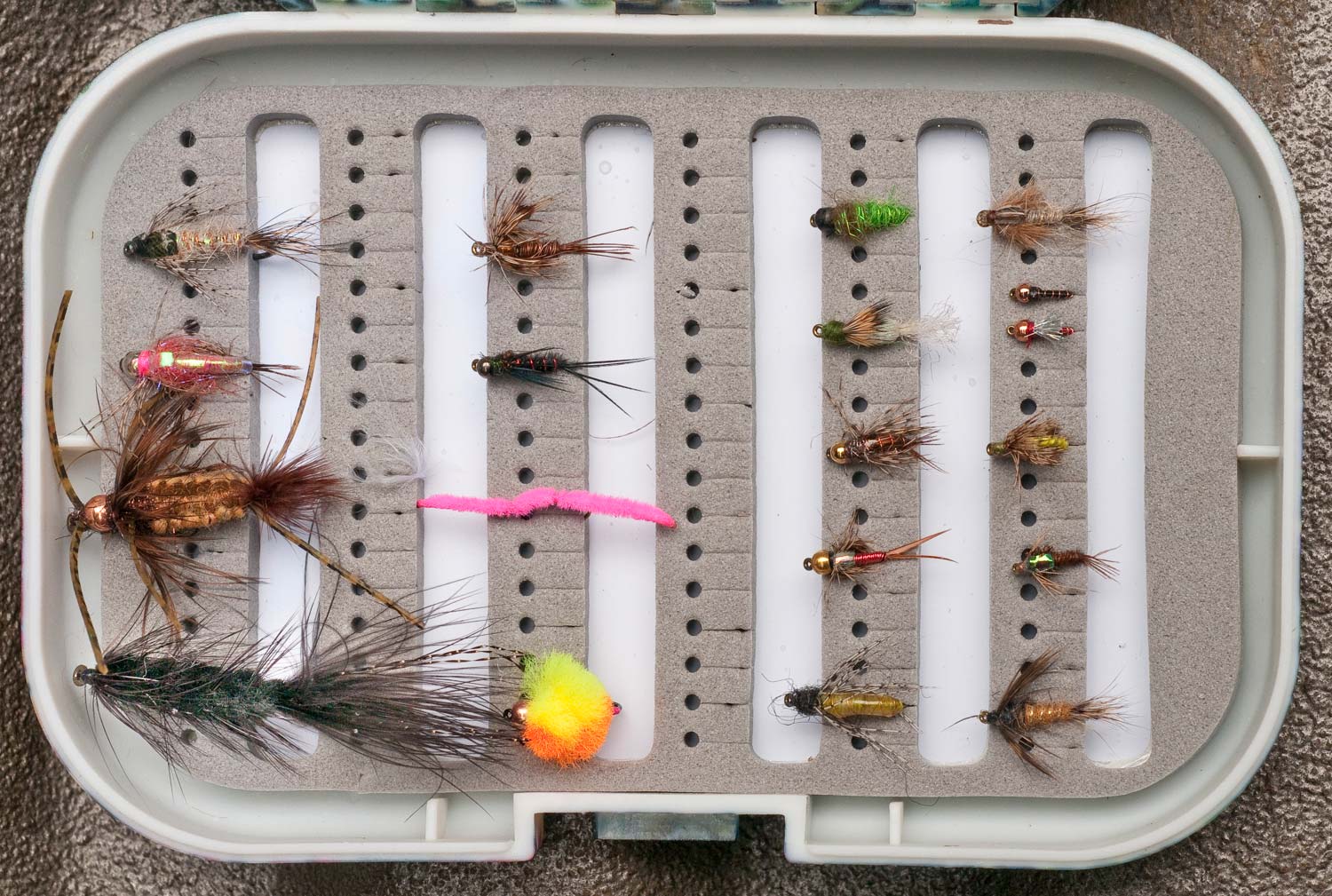
Today’s post is intended for beginner and intermediate fly anglers that struggle with choosing what fly patterns to tie on when they’re fishing a tandem nymph rig. Because most of our fly boxes are stocked with dozens of different fly patterns, it can be difficult at times to know where to start. I get the question all the time, “how do I know what flies to tie on?” The answer to that question is I don’t. Sometimes I can get a good idea by doing some bug sampling or observing the conditions on the water, but generally, I have to experiment with fishing different flies just like everyone else does until I figure out what the trout want. However, the key to my consistent success is treating my two-fly rig like it’s a buffet of food choices for the trout, and always fishing flies that imitate different types of food sources that the trout forage on. This increases the chances that the trout will like one of the food imitations in my rig and I’ll catch fish.
To make things easier for me, I categorize my nymphs into four different categories: Big flies, small flies, bright colored flies and natural colored flies. When I start out my day on the water, I begin rigging my two-fly rig with combinations of these.
Read More »Saturday Shoutout / African Tigers
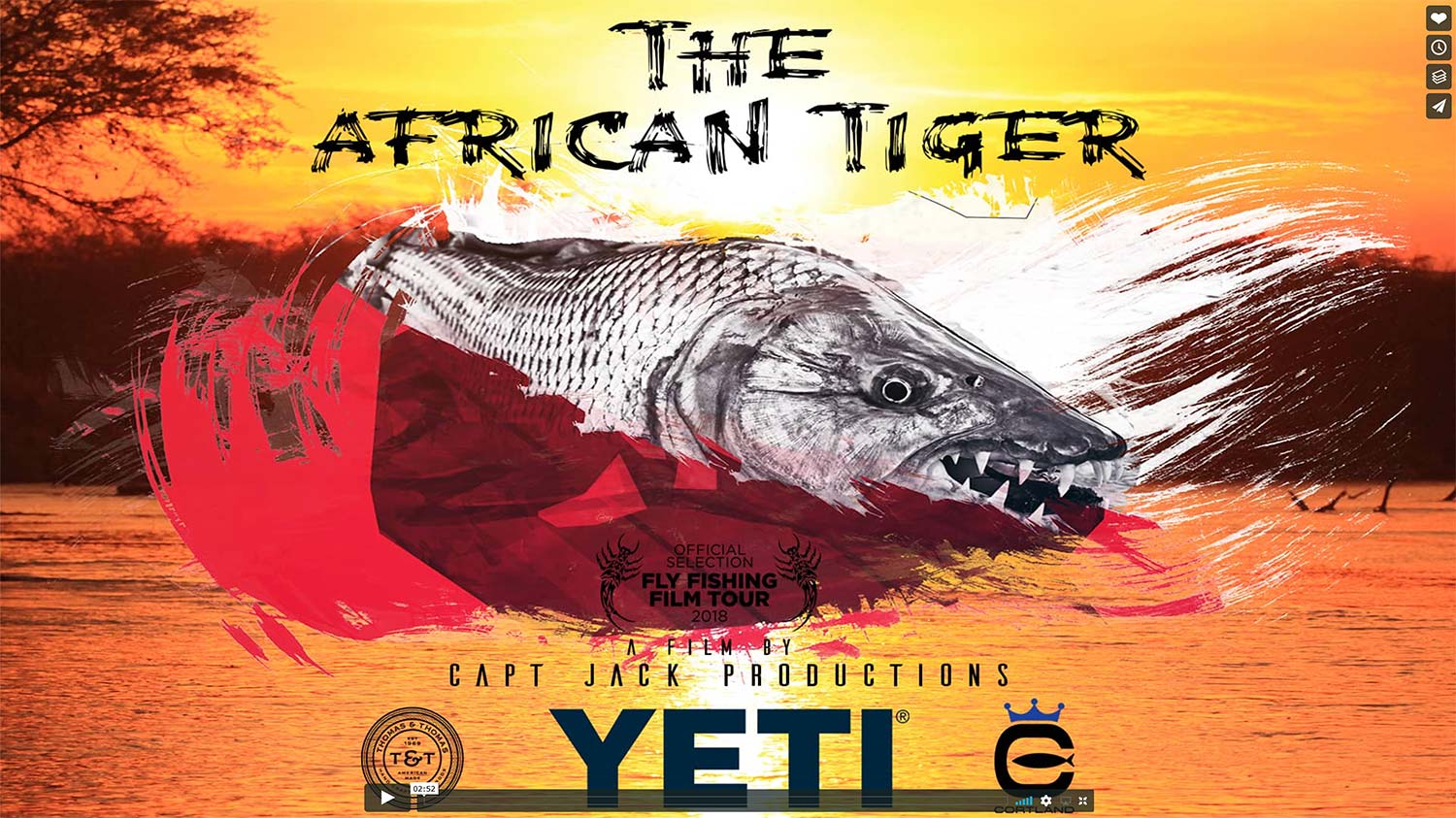
It’s hard to imagine anything more exciting than chasing tiger fish in the wilds of Africa.
Just the wild beauty of the place and the remoteness of the rivers is enough to be excited about. Add to that an aggressive apex predator eager to crush a fly and it’s a bucket list trip for sure. Of course, if you’re Jaco Lucas of Captain Jack Productions, it’s just another epic day on the water.
Check out this trailer for Jako’s new film “The African Tiger” and check out the full film at this year’s F3T Film Festival.
Enjoy, “The African Tiger”
Read More »Bruce Chard’s Double Haul Drill
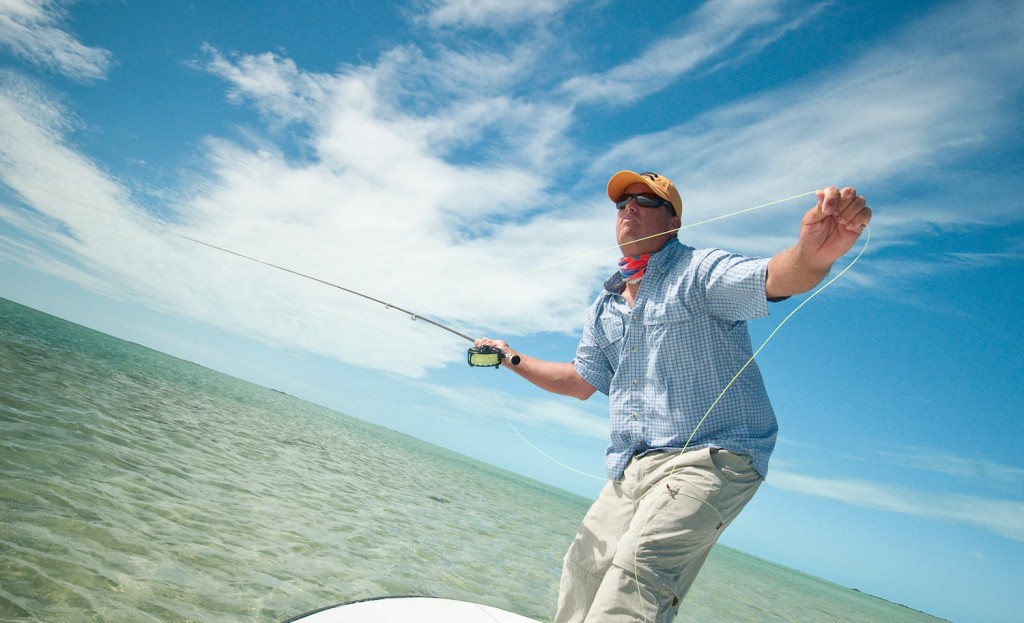
Today begins a special five part video tutorial on building blinding line speed. Line speed is the most important component in successful salt water fly fishing. There’s plenty of finesse involved but line speed is the cost of admission. If you can’t build the speed you need, you can’t catch the fish you want.
My good friend Bruce Chard is a certified master casting instructor and a truly inspiring caster. The first time, hell the first hundred times, I saw Bruce unload my jaw dropped. It’s humbling to watch what this guy can do with a fly rod. Bruce has a rare blend of skills. The technical know how of an engineer and the physical prowess of an athlete. With that in mind I asked him to help me create a set of videos that can take you from beginner to rock star. We’re calling it the Ultimate Line Speed Series. There’s a lot to cover but we’re starting here with everything you need to know about line speed.
We’re going to start slow, with the double haul. The basic building block of a dynamic cast. By day five we will be into some seriously advanced technique that is going to take serious practice. Follow along and in between videos practice what you learn and at the end of two weeks your going to be a lot better caster.
So to start, put down that fly rod
Read More »Don’t Cut Corners With The Spey Rod
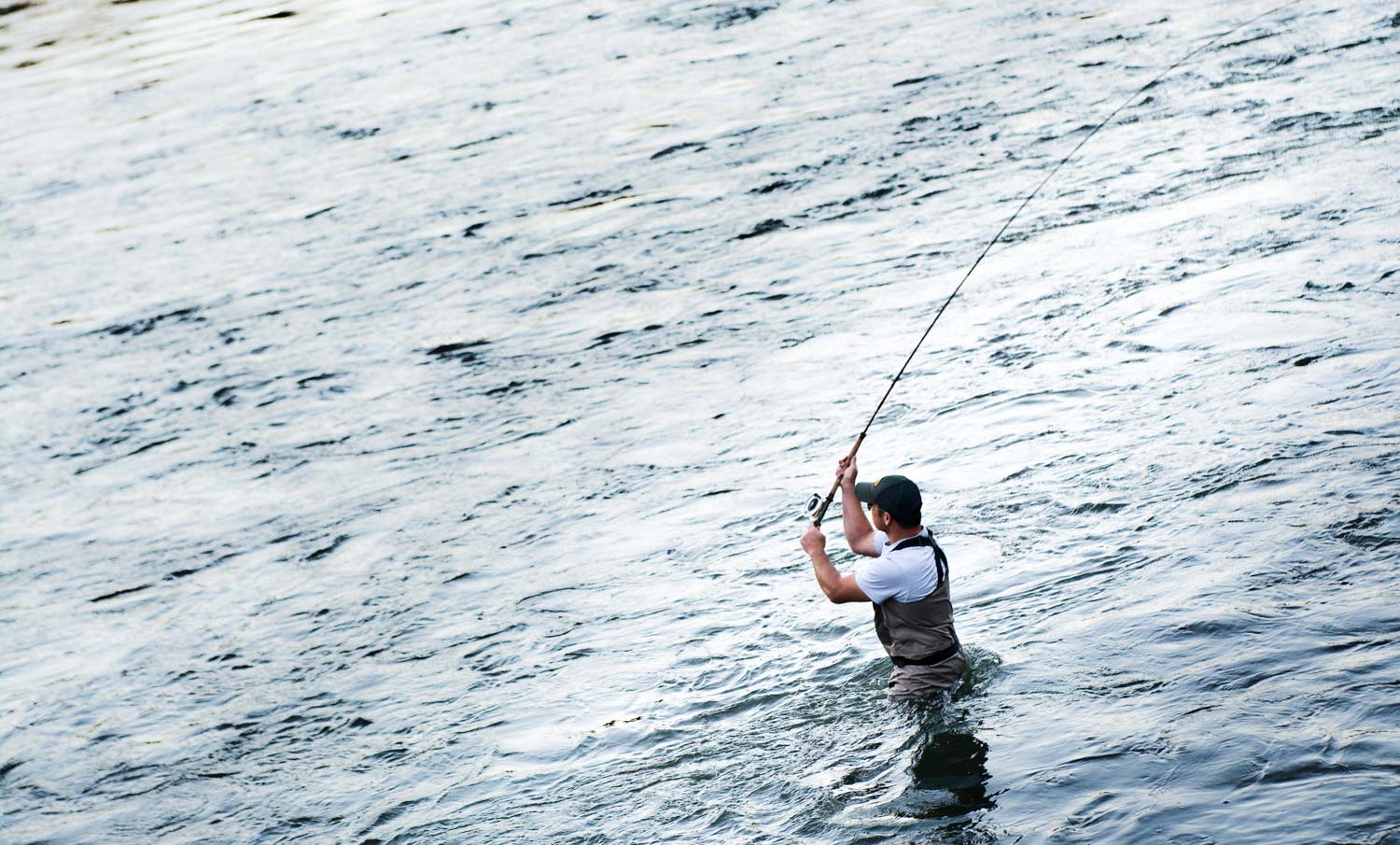
Rounding the corner is one of the most common problems in Spey casting.
Anglers who are learning to spey cast will often rush the casting stroke. They will start forward with the rod without finishing their sweep. By rounding the corner at the end of the sweep they introduce a curve into their casting stroke and, of course, into their cast. The result is that the line does not land straight, which makes getting a good swing much harder. When spey casting, straight is better than long.
The solution to this problem can be hard to visualize. Since rounding the corner happens behind the caster, it’s hard to see what’s going on and focusing your mental energy on something you can’t see is challenging. Fortunately, there is a simple visual cue right out in front of you. The butt of the rod.
When casting you can simply point the butt of the rod at your target before coming forward with the casting stroke. By doing this, you insure that your rod is lined up for a nice straight casting stroke before you apply power to the cast.
This way your line will
Read More »Nymph Fishing, There’s Nothing Wrong With It
By Kent Klewein
It seems like every where I look, I see blog posts all over the place chastising and bad mouthing nymph fishing.
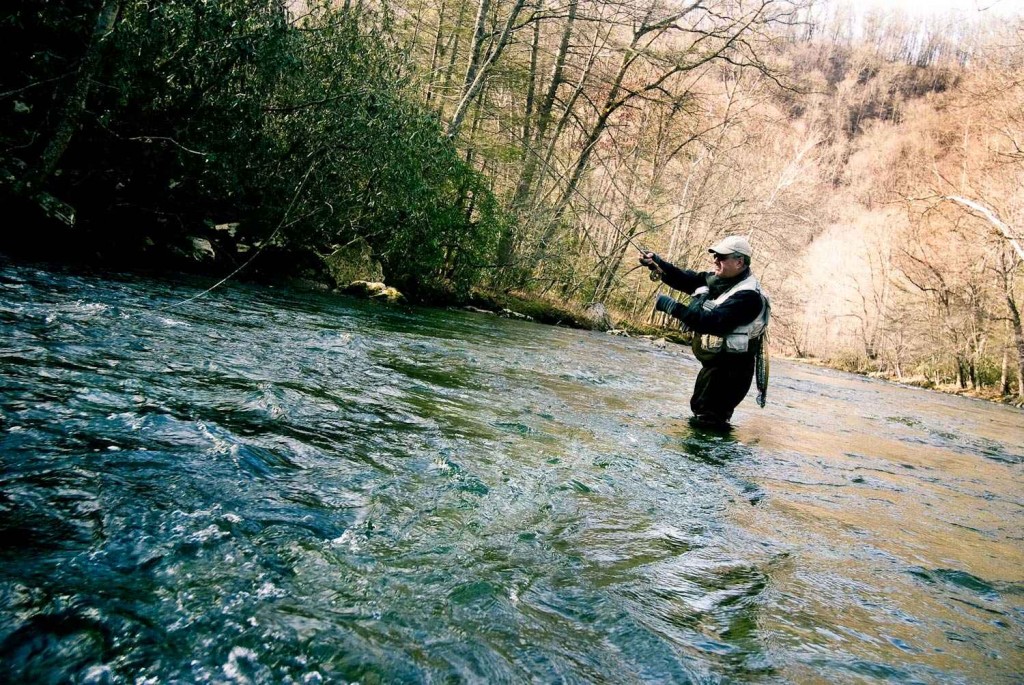
I hear comments claiming nymph fishing is nothing more than mindless fly fishing. That watching indicators floating down the river all day is boring. So let me ask you this, does it make since to instead fish a dry fly if your chances of catching fish are slim to none? To me, that’s what’s boring and ridiculous. My objective on the water is always to decipher what the fish are predominantly feeding on, and then fish the appropriate rig and fly that allows me to imitate it to my best ability. Whether or not the fly pattern is a wet or dry fly has no bearing to me at all. All that matters is that it’s the right choice for the moment. To frown upon nymph fishing and purposely avoid it, even when it’s obvious it’s an anglers best bet for success, is like a golfer choosing to putt with a driver instead of a putter. It will work but it’s obviously not the best gear choice.
We don’t go through life purposely choosing to take the most difficult path in the off chance we’ll find success. Just as in fly fishing, it doesn’t make any sense to fish one method of fly fishing over another just because it feels more pleasing to the soul. I can stomach doing it every now and then, but to ignore fish behavior and throw away my adaptive fishing tactics, just because I dislike nymph fishing or any other method, seems to go against all the teachings that our fly fishing pioneers have worked so hard to pass down to all of us.
It doesn’t matter what type of fly pattern your fishing, whether it sinks or floats, they are all
Read More »Orvis Recon 10ft 3wt Review
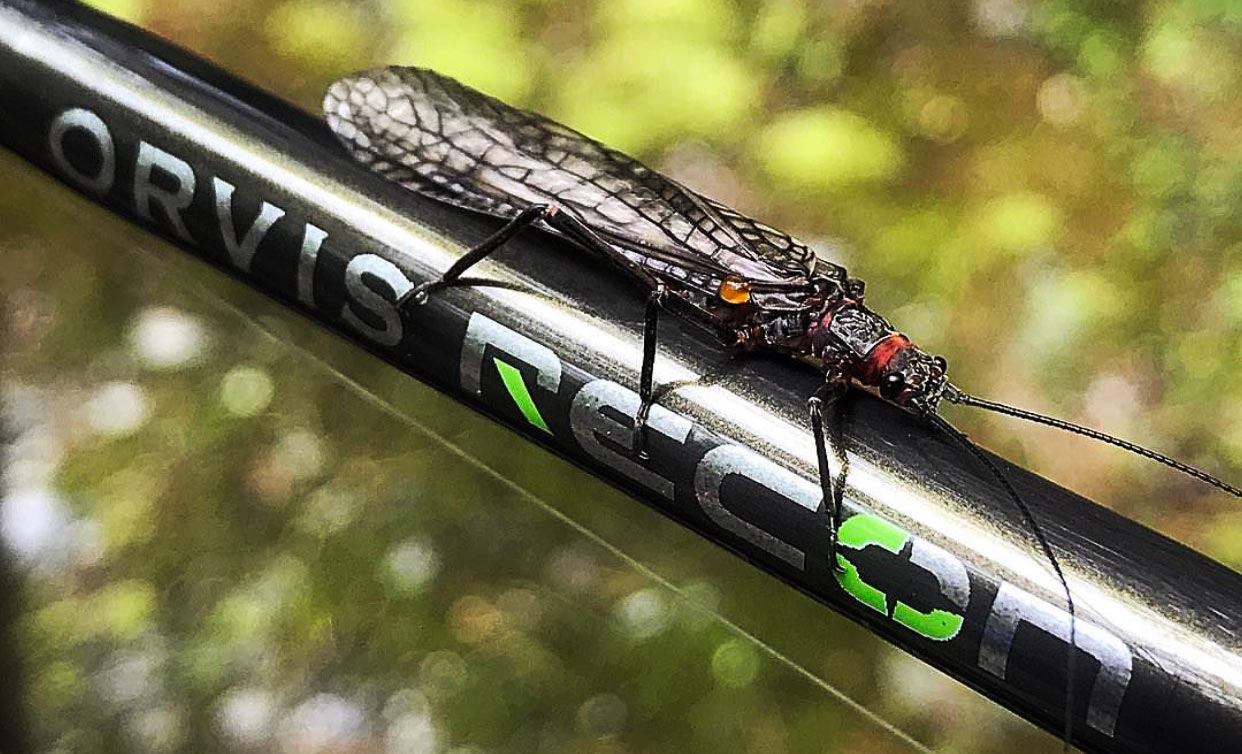
By Justin Pickett
I never leave the house without a ten-foot rod.
Big water. Small streams. No matter the size of the water, I have found that a versatile ten-footer can serve me well in a multitude of situations when fishing for trout. This past year Orvis developed their own nymphing rod. Built from the ground, the newest edition to the Recon family was made for the angler that demanded a versatile rod that excelled in euro-style nymphing techniques. Enter the Recon 10ft 3wt. And for the past several months, this rod has been hitting the water with me everywhere I go.
What It Is
The Orvis Recon 10ft 3wt is the only stick of its kind in the Recon family of rods. While the ten-footer wears the same coat of grey paint and trimmings, this Recon’s taper and action is completely different from any other rod wearing the Orvis name. The rod is finished with a reverse wells grip and fighting butt, a burl wood reel seat, and black nickel snake guides that line the four-piece blank. I love having fighting butts on my nymphing rods. For me, it provides me with a great anchor point while fighting larger fish. The rod comes with a divided rod sock inside of an aluminum rod tube with Recon graphics and is backed by a twenty-five year warranty.
Performance
Setup –
Reel – Orvis Hydros SL III
Line- Airflo SLN Euro Nymph fly
Backing – 150 yds of 20# Dacron
Leader – Custom hand-tied leader/Appalachian Furled Leaders Euro Hybrid
Weight and balance
I’ve mentioned in prior writings that having a light rod that is well-balanced with your reel is super important. Fly rods are getting lighter. Even with the longer rods, weight is becoming less and less of a concern when comparing rods at the shop. This rod is super light, and, at the time of this writing, is still the lightest ten-foot rod on the market. At only
Read More »