
Rigging Tube Flies: Video
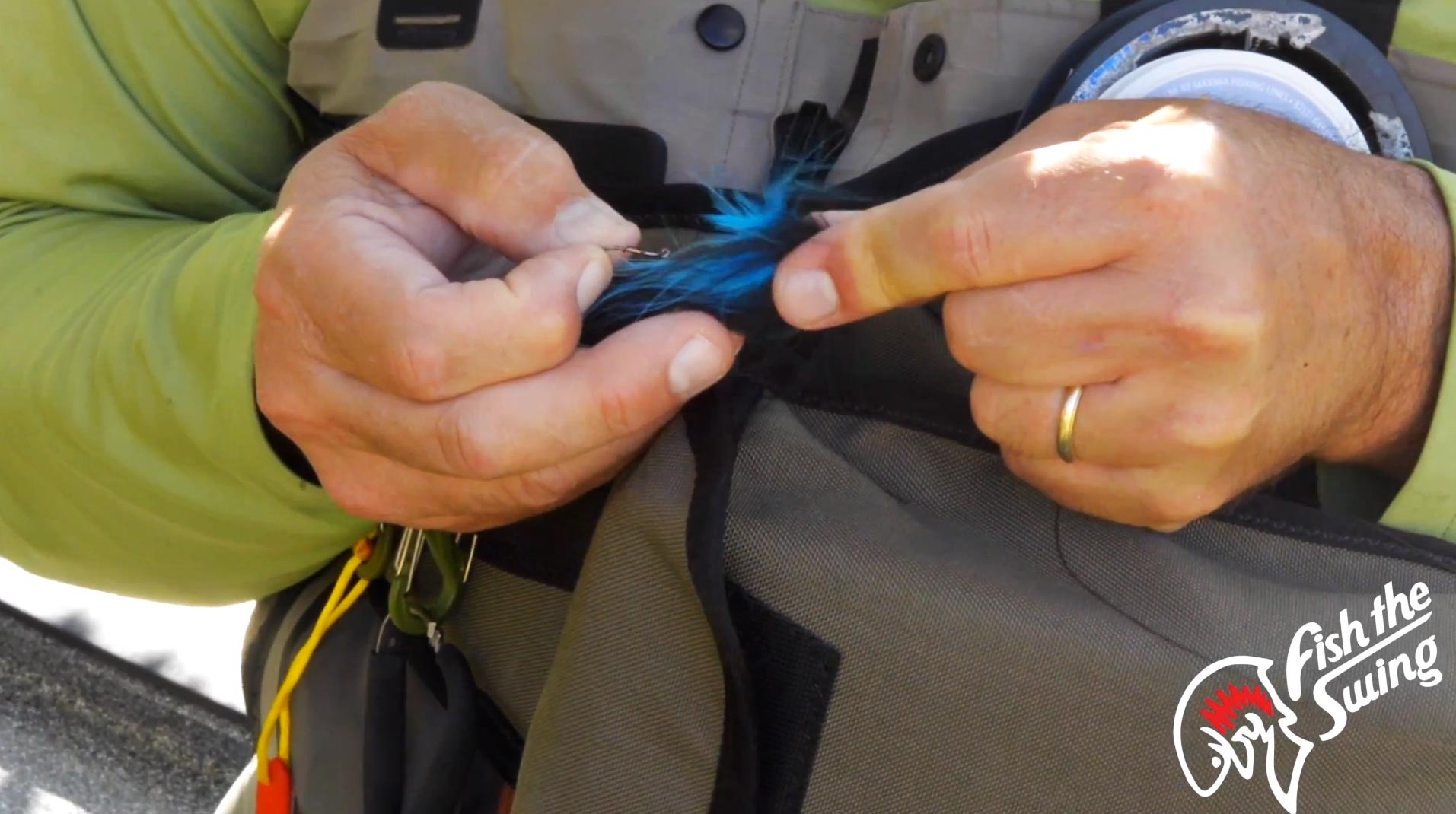
By Louis Cahill I love tube flies and I fish them almost exclusively when I’m after steelhead. Tube flies are a powerful tool. They are the most versatile flies you can tie and the most economical. The secret is that there’s no hook. The fly is tied on a hollow plastic tube, which slides over the leader. The hook is added to the end of the leader. It’s a brilliant system and it’s extremely effective, especially for steelhead. Here are a couple of reasons you should be fishing tube flies. They work The key to the effectiveness of a tube fly is the hook placement. It’s very easy to control the placement of the hook so that, if a fish nips at your fly, the hook is the first thing he gets. They’re affordable The most expensive part of a fly is the hook. You can tie a limitless number of tube flies without using a single hook. On my last steelhead trip I changes flies over a dozen times, but I only used 2 hooks. They’re versatile The coolest thing about tube flies is that they are modular. You can stack tubes on your leader to get the exact size and color combination you’re looking for. You can add cone heads or eyes, tied to small tubes, on the spot. Tube flies let you create the fly for the conditions at the minute. You do need some special equipment to tie tube flies but it’s not expensive. You can get a set of mandrills for as little as $16.99 (HERE) or a dedicated tube fly vice for $130 (HERE), if you like. Either will pay for itself pretty quickly with what you save on hooks. You can tie any fly on a tube, but they have become the gold … Continue reading
Read More »Downstream Presentation Video
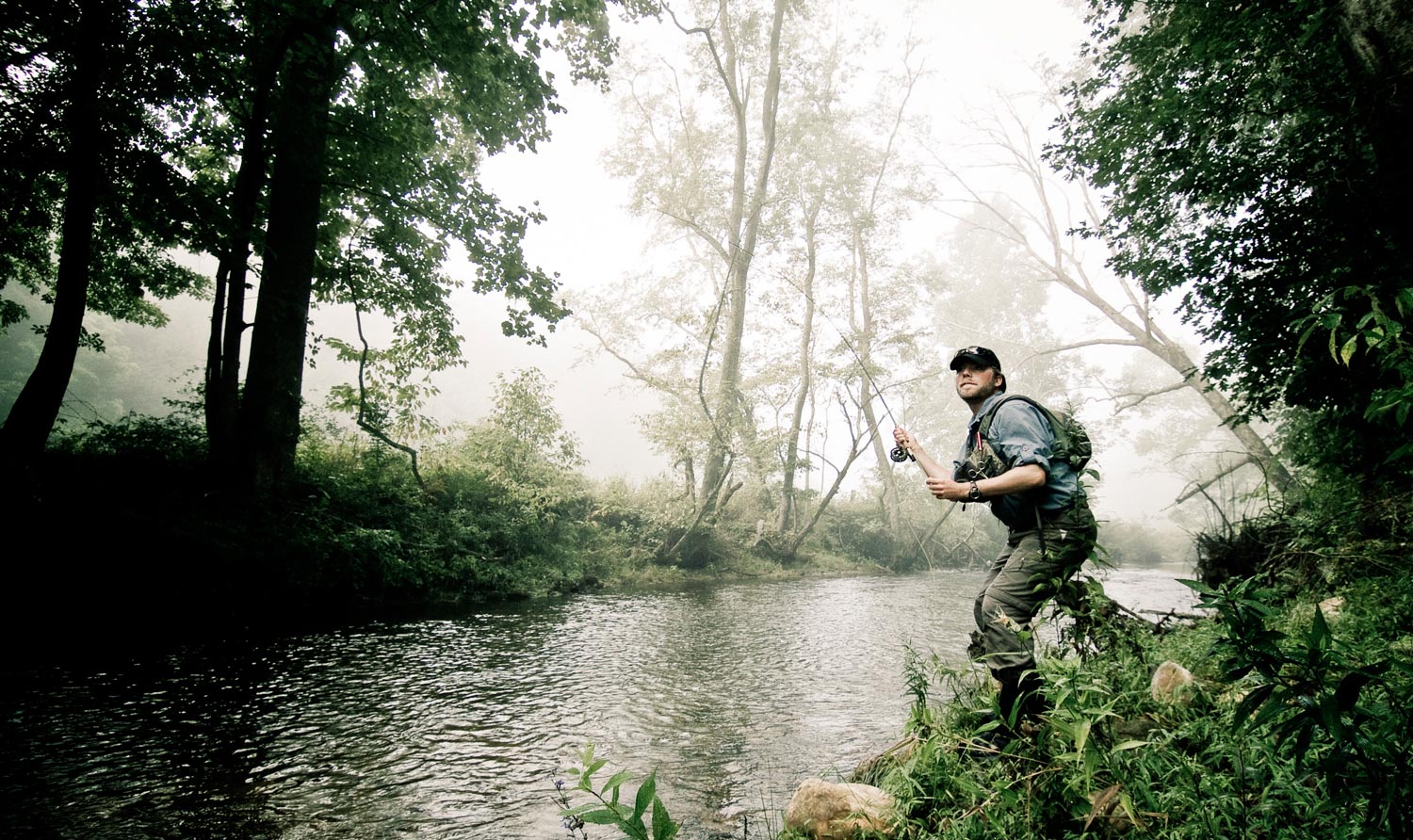
Sometimes your best presentation to a fish is directly downstream.
Often, it’s just a matter of position. Maybe the water is too heavy to wade across or there’s no room for a clean cast from the far bank. Other times a downstream presentation is the only way to fool a well-educated trout. Making a downstream presentation shows the fish the fly first, before he has a chance to see the line or leader. For whatever reason, it’s important to know how to make a downstream presentation and still get a perfect drag-free drift.
Too many anglers have been taught to shake line out of their rod tip as the fly drifts down stream. This method is never ideal. It puts too much energy into the line and pays out slack too slowly. It’s an uncontrollable method, which usually ends in a poor drift.
A better way to pay out line is to use a mend. Start with all the line you need off of the reel. As the fly drifts, use a mending motion to pay out about two feet of line at a time. This not only gives you a more controlled presentation, it helps you be ready to set the hook.
WATCH THIS VIDEO AND LEARN TO MAKE A PERFECT DOWNSTREAM PRESENTATION.
Read More »Reece’s Fusion Nymph
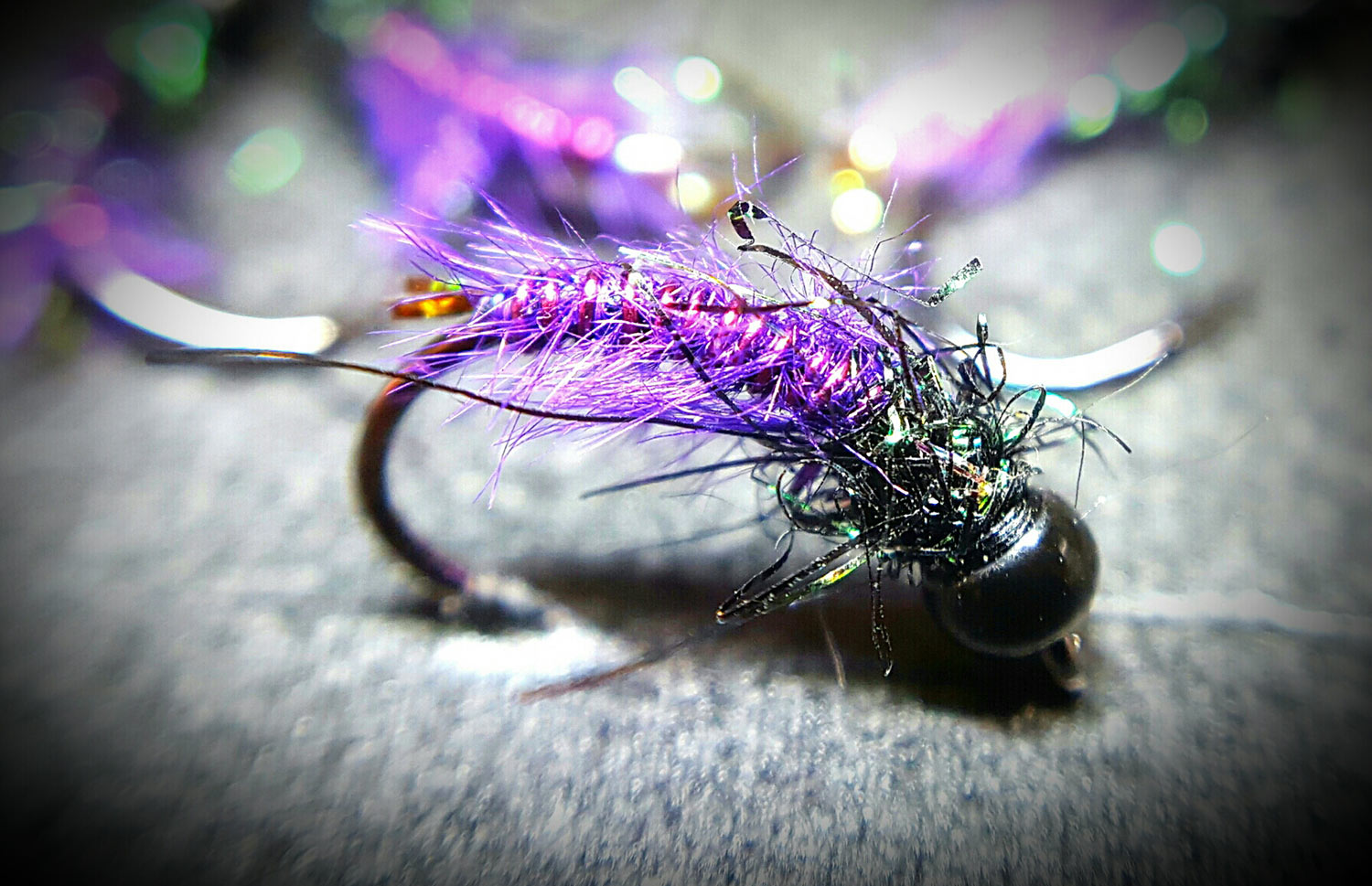
Bob Reece
Wire body nymphs sink quickly but their rigid structure produces no added movement.
Dubbed nymph bodies provide excellent movement but do not sink quickly and lack durability. Reece’s Fusion nymph combines these elements, allowing it to sink quickly, display enhanced movement and sport excellent durability.
Versatility of application and ease of creation are appealing payoffs for the investment of time at the vise. The process and materials used to create this pattern, check both of the above mentioned boxes. With the variety of available colors of Ultra Wire, Ostrich Herl and Ice Dub, the color combinations for this fly are nearly endless. The size range is also highly flexible. By adjusting the wire diameter and portion of the herl used, this nymph can be tied from a size twenty up to a size six. A size twenty, for example, would be tied using extra small Ultra Wire and the fine tip portion of the herl. Conversely, a size six would incorporate large Ultra Wire and the widest portion of the herl, found from mid stem down to the base. The optional inclusion of various sizes of MFC Sexi-Floss for rubber legs, can be used to increase the already present element of movement. Over the past three years this pattern in its plethora of sizes and color combinations has brought fish to net on numerous still waters, freestones and even the highly pressured tailwaters of Cheesman canyon, Gray’s Reef and the Miracle mile. Its applications are not limited to trout. It has proved itself as an effective pattern for other species ranging from grayling to pan fish.
With regard to process, the simplicity of this patterns makes for an easy creation for tiers at all skill levels. Its fundamental steps of construction are frequently used in the creation of other patterns and should become part of the repertoire of any aspiring tiers. Due to the small number of steps, the overall time for creation is minimal. This serves as another benefit in a world of constant busyness and demands for our free time.
There are several rigging options for this pattern depending on the type of water that is being fished. When using the Fusion on still waters, I rig it as the bottom fly on a suspended nymph rig under an indicator. This same set up is also applicable on moving water. Additionally the Fusion nymph makes for a great dropper in the widely used dry dropper rigging. It’s important to note that the high density of its construction requires a large foam terrestrial to float it in its larger sizes. If used as a dropper below a traditional dry fly, the Fusion nymph size should fall into the sixteen to twenty range. Moving beyond more traditional setups, this patterns serves as a solid foundation at the bottom of a tight line rig. In an even more atypical setup, I’ve had great success trailing this bug two feet behind a small streamer pattern in clear water conditions.
Watch this video and learn to tie Reece’s Fusion Nymph
Read More »Strategies for Streamer Fishing High Water on Tailwaters
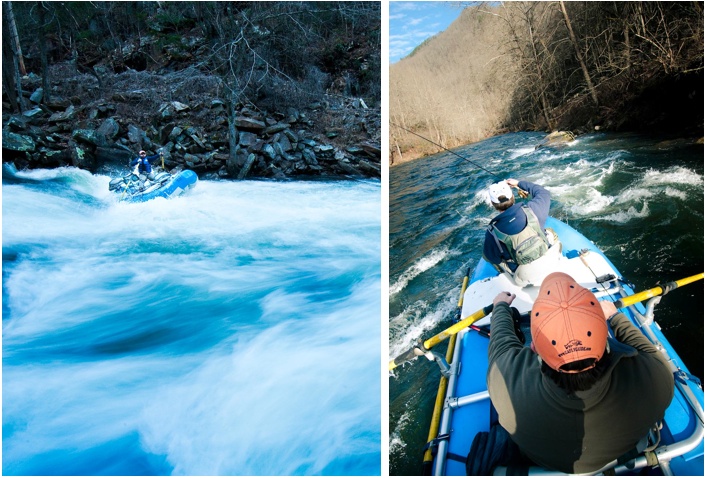
IT’S REALLY HARD TO BEAT STREAMER FISHING HIGH WATER ON TAILWATER’S FROM A DRIFT BOAT, ESPECIALLY WHEN YOUR WANTING TO TARGET TROPHY CLASS FISH.
Although numbers of trout caught during high water flows usually are lower than fishing during low water flows, the size of your catches generally are much larger. In my opinion, the biggest fish in the river prefer to feed during high water because it’s easy for them to ambush their prey, and they feel camouflaged and protected by the high water flows.
For those of you that fish tailwater’s you probably understand water flows change significantly during generation and non-generation periods. Some tailwaters during minimum flow periods have water releases under 100 cubic feet of water per second (CFS), and when generation is taking place, water flows can be 10-20 times higher. Because of this, it’s very important for anglers fishing high water to outfit themselves correctly, otherwise they may find themselves coming off the water fish-less. Below are some tips and strageties I use on tailwaters when I’m fishing high water conditions.
Tip 1. Leave your 4-5 weight fly rods at home and pack your 7-9 weight fly rods.
Your best bet for going after the big boys during high water flows is fishing streamers. There are some tailwater’s out there where you can still dry fly and nymph fish effectively, but most of the time, if you want to target the largest trout in the river, you’ll want your flies to imitate the larger food sources. Some examples of these food sources are:
Don’t get yourself caught in a tight spot!
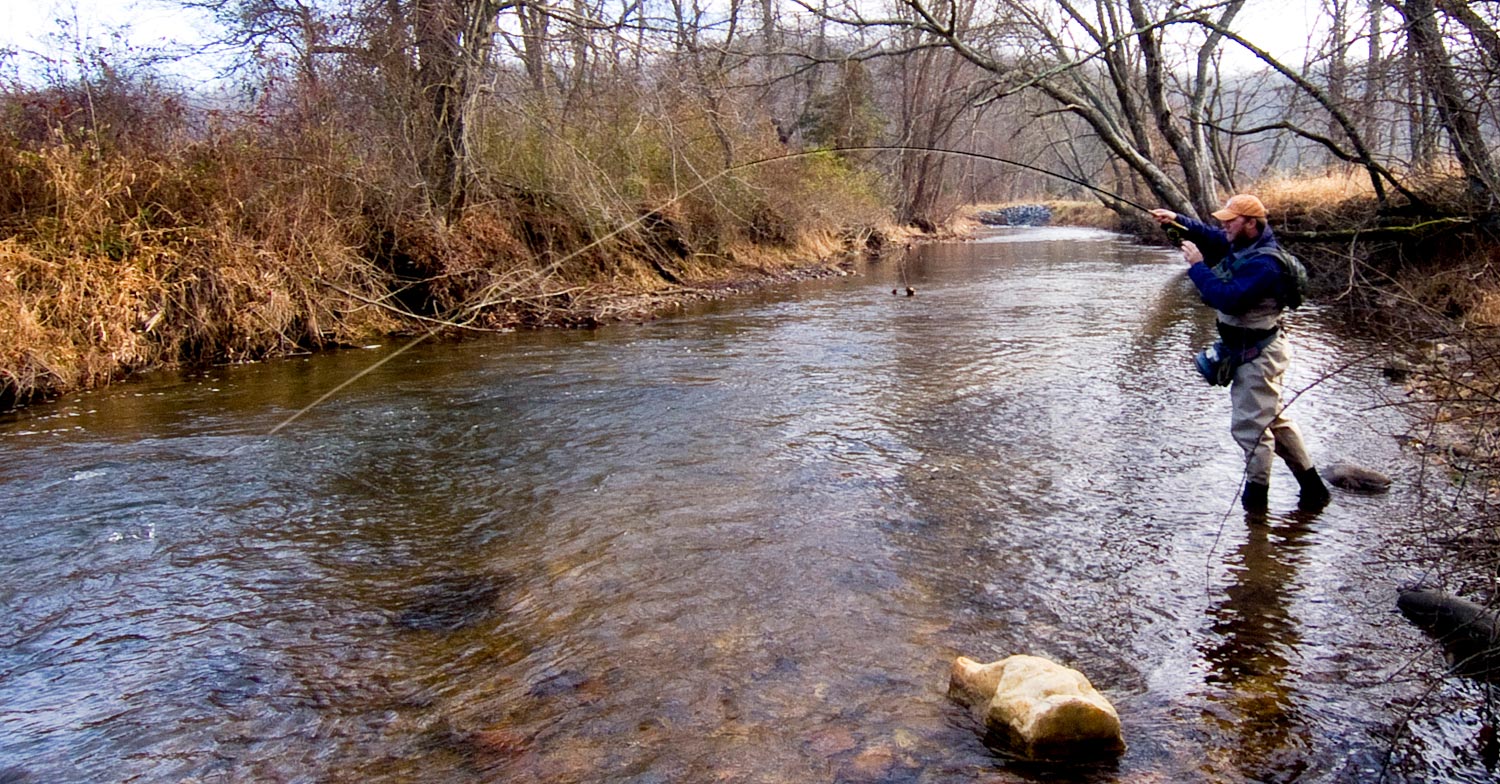
By Justin Pickett
“MY MOUTH SPEWED WITH EXPLETIVES. MY BUDDY’S FACE WAS BLANK. I KNEW THAT IT WAS THE RESULT OF SEVERAL POOR DECISIONS.”
Recently, I headed up north with a great friend of mine to fish a small stream in north Georgia. Over the past couple of years this destination had become one of our favorite pieces of water. The main reasons being the number of large brown trout found there, and how it seemed one of us would hook up with one these large residents every time we wet a line in its waters.
That Spring day was perfect. Cool temps. Cloudy skies. The water was just a bit stained from the rain the night prior.
We headed straight for the section of stream where, historically, we’ve had the best luck hooking up with some nice brown trout. Fishing our way up through this section, we were coming up empty handed. Only a couple of eager rainbows had bent our rods during the first couple of hours.
We typically fish together with alternating casts and different rigs. This has always proven successful, but today I decided to depart from our usual method and jump ahead of my fishing buddy. Straying further upstream, I figured we’d just holler at each other should we need help with something.
I approached a run that just looked fishy as hell. A shallow section of water dumped into a deep bucket and then cut under the far bank, which was lined with rhododendrons. At the tail of the run a tree branched out over the water providing shade and cover. It had trophy trout sanctuary written all over it.
My euro-rig that day consisted of a #6 black stonefly nymph, trailed by a #6 Vladi worm, and I had them tied to 3x and 4x fluoro tippet respectively. To say, I have confidence in this tandem on days where the water is stained, is an understatement.
On the second drift through the meat of this run, my rod translated a solid thump in the line. I lifted the rod tip and set the hook hard, and immediately I can feel
Read More »Winter Fishing: Keeping Warm and Safe
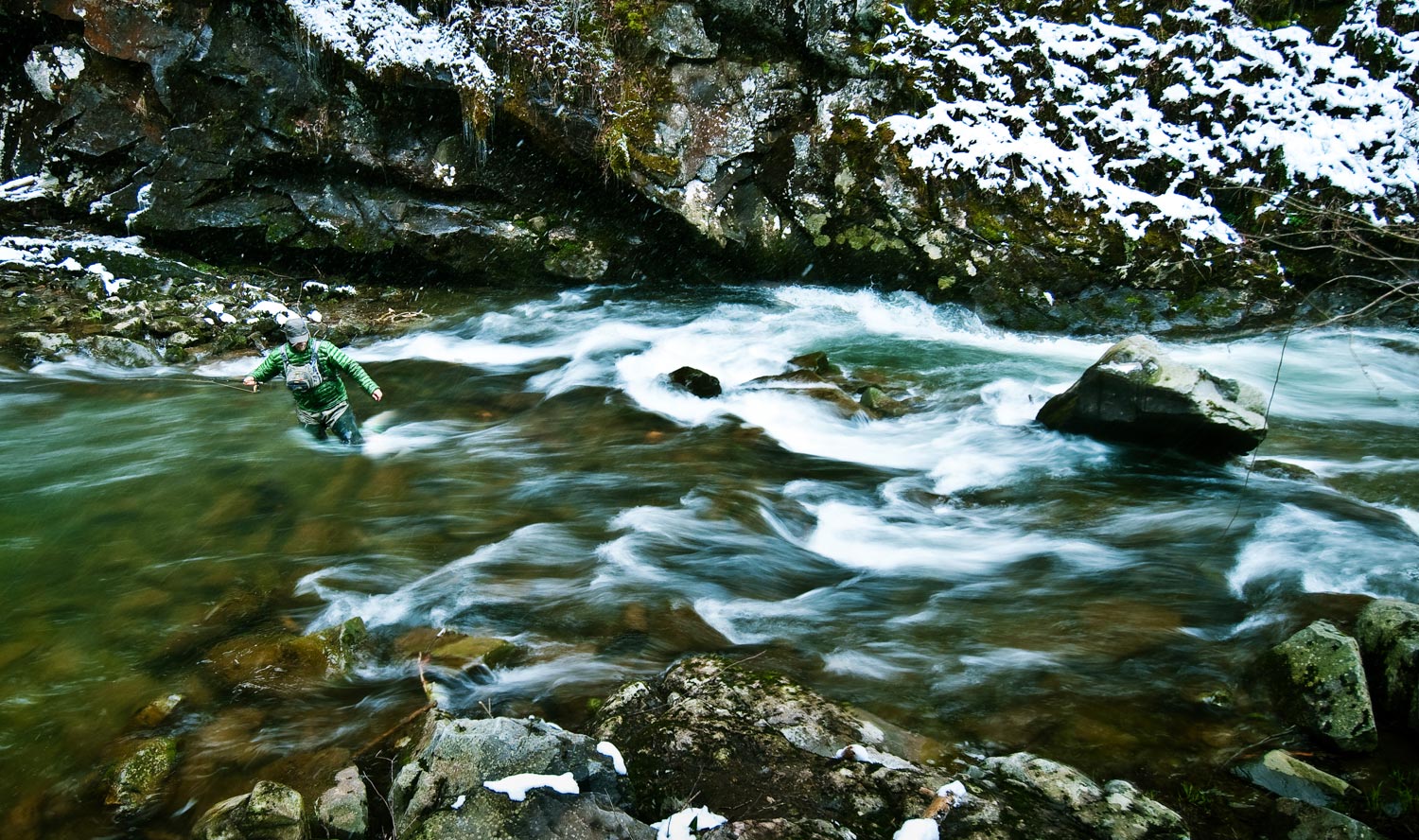
Winter can be a beautiful and exciting time for fly-fishing, but not without its risks.
“How important is it to carry a change of clothes?” a reader asked me the other day. “Well,” I thought, “I guess that depends on whether or not you fall in.” It’s been a long time since I carried a change of clothes for a day of fishing. I’ve spent some pretty soggy and miserable days on the water but I guess I don’t care that much. Still, there are times when being prepared for the worst just makes good common sense. I’ll give you a couple of examples.
Years ago, I was visiting friends in Colorado during February. A friend of a friend had told me about a good piece of water that didn’t get much attention, as it was about a five-mile hike down some railroad tracks to access it. The river was open and I was pretty excited to give it a go. That is, until the weather turned the night before.
The high that day turned out to be ten below. We never see temperatures anywhere close to that here in the south. I don’t mind the cold, but it got me thinking. I don’t know this water at all and there are some pretty tricky wading spots in Colorado. If I took a spill at ten below, five miles from the car or any heat, I’d probably die of hypothermia before I made it. I still fished that day, but I went to the Blue River and fished out back of the outlet mall. I figured in the worst case I could run into the Gap, throw on some dry clothes off the rack and worry about the public indecency charges later. It turned out I didn’t need that option but when I picked my foot up out of the water and watched it freeze before putting back down, I felt like I’d made a good choice.
I couldn’t help but think of a story I read years ago, I think it was in the Drake, about a fellow fishing Clear Creek, in Colorado again, one October. Late in the afternoon, he was hopping across a bolder-strewn bank when a big stone rolled and pinned his leg.
Read More »The Salt Water Quick Cast
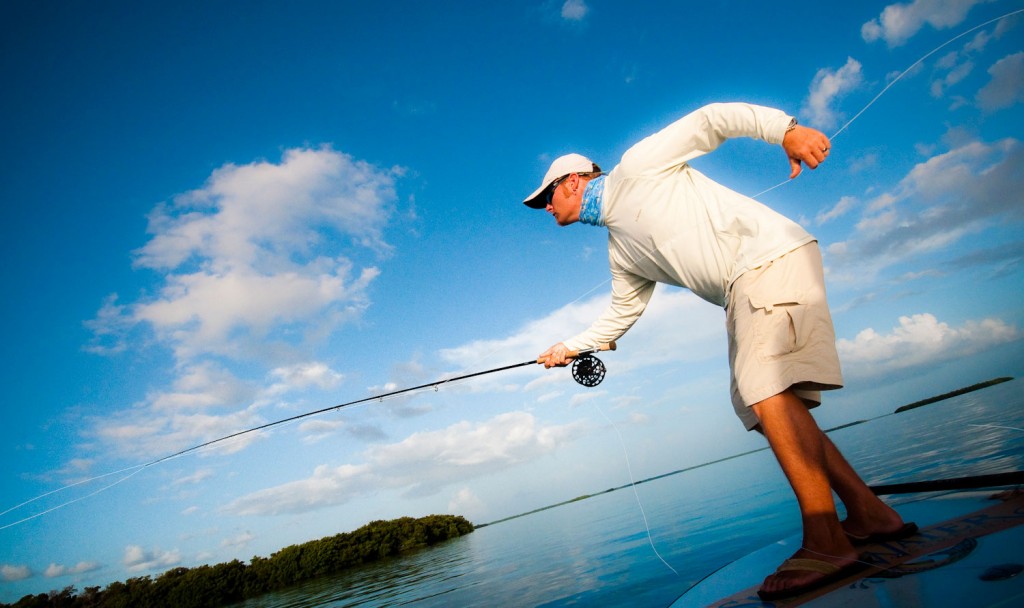
One of the most crucial skills in salt water fly fishing is shooting line.
Everything happens quickly on the flats and the angler who can put is fly on a fish sixty feet from the boat with only two false casts will have a distinct advantage.
It’s important to get the fly to the fish in a hurry but that’s not the whole story. In salt water the most effective presentation is one where the angler shoots line on the delivery. This keeps the fly line from spooking the fish during false casting, which is so important on calm days, and also helps in making a soft presentation. Because the tension from the line hand is released during the delivery the energy of the heavy salt water line dissipates much quicker. No big splash right in front of the fish when the fly lands.
To master the quick cast you will need a few skills in your bag. You must have an efficient double haul to generate the necessary line speed. You also must develop an aggressive back cast so you can shoot line behind you as well. Once you’ve mastered these techniques you’re ready to put your quick cast to work and you’ll catch a lot more salt water fish.
Here’s Capt. Joel Dickey to show you how it’s done.
Read More »Changing Your Mind About The Off Shoulder Spey Cast
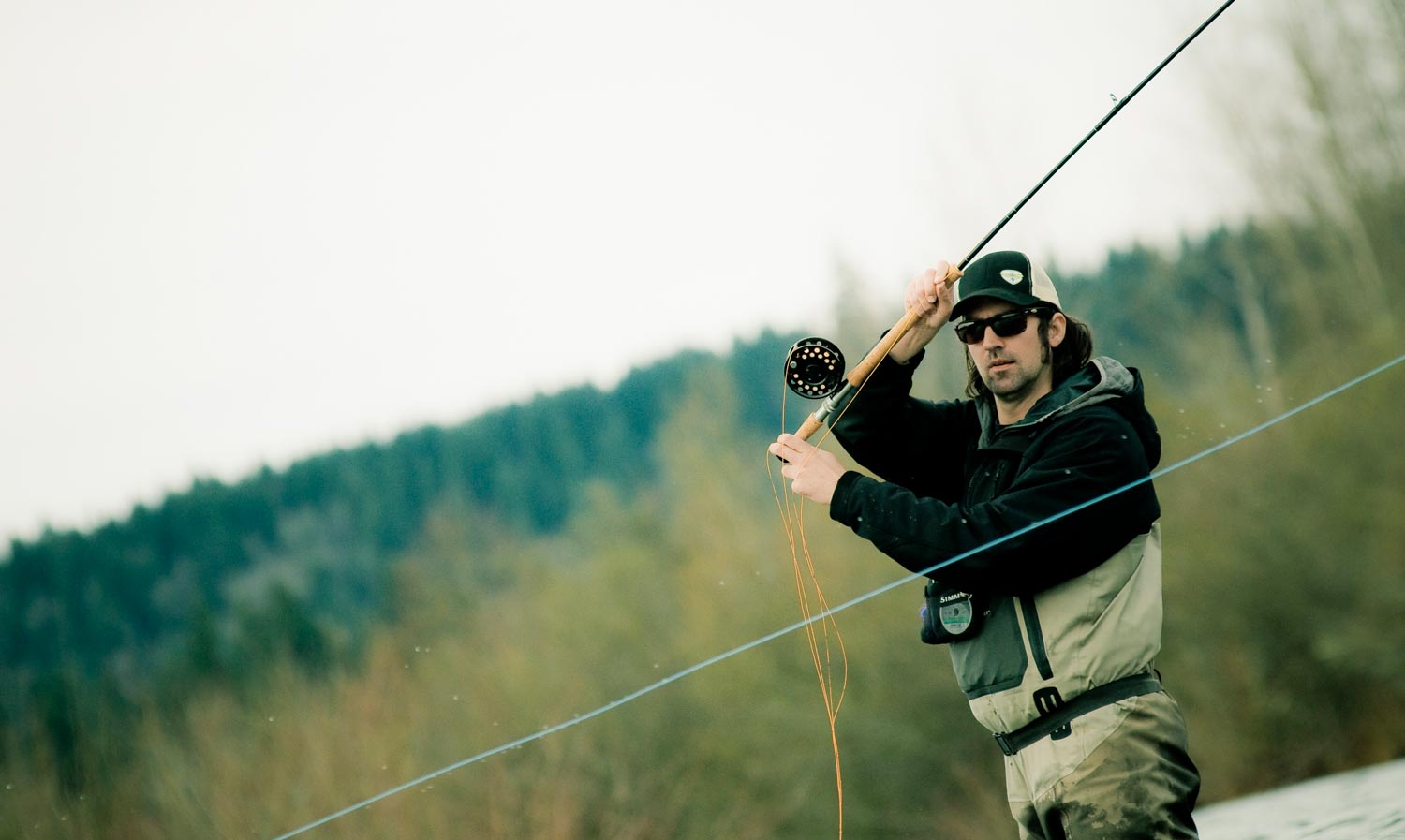
By Louis Cahill
Most anglers, myself included, struggle with making a spey cast off their non-dominant side.
As a right-handed caster, it has always felt unnatural for me to cast off my left shoulder. It’s almost the two-handed equivalent of casting left handed. Because it feels awkward, I’ve never gotten quite as much distance off my left shoulder. I was fishing with guide Barrett Ames, on the Deschutes, recently when he mentioned that his off shoulder cast was his strongest. This peaked my curiosity so I asked for some details. Barrett’s answer was so simple, it made me realize that the problem, like so many, was in my head and not my hands.
“The off shoulder cast just puts my bottom hand in the right position naturally. Everything just lines up and the cast comes off great.”
If this doesn’t immediately make sense to you, pick up a spey rod, or a broom stick for that matter, and walk yourself through it. You’ll see quickly that when you make a cast off your dominate shoulder your bottom hand, which provides the power for the casting stroke, crosses your body, which limits its range of motion. When you cast off of your non-dominant shoulder, your bottom hand lines up perfectly with the elbow and the shoulder, making for a nice full range of motion. The rod naturally falls in very straight plane, which helps your cast land straight.
This simple piece of information made me realize that
Read More »Facebook, A Matter of Life and Death
“Gone Fishing! Great way to start the New Year with a little father / son outing.”
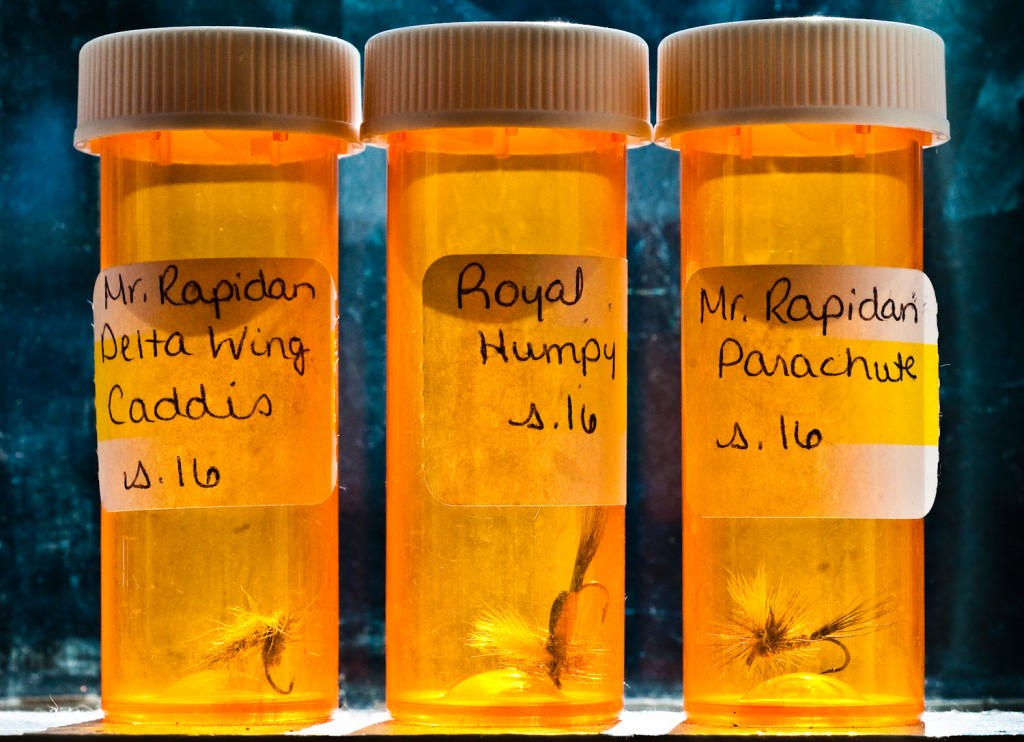
That’s what Harry Murray’s Facebook status read on New Year’s day. I was thrilled, and confused. You see, I had heard through the fly fishing grapevine the Harry had passed away. For those of you who do not know, Harry is the Dean of Virginia fly fishing. Although I don’t know Harry personally we have a lot of connections. His fly shop in Edinburg, VA opened in 1962, the year I was born. My grandfather knew Harry and frequented his shop back when it was a pharmacy. (Harry is a pharmacist who ended up in the fly fishing business.) I still have some of Harry’s flies in the old pill bottles he used to pack them in. It was Harry who introduced my good friend Gary Lacey to bamboo rod making. Gary is now one of the best rod makers in the world and taught me to make rods fifteen years or so ago. When I heard that he had passed I couldn’t believe it. I just wasn’t ready for a world without Harry Murray.
It made me think of the morning last year when I answered my phone at eight a.m. To hear my good friend Andrew Bennett, breathless on the other end. He wasn’t really talking and it was clear something was wrong. It spooked me because Andrew is as tough a guy as you are likely to meet. Not easily shaken up. “Are you alright?”
Read More »Hook Sets Are Free
By Justin Pickett
A FLUFFY, WHITE INDICATOR IS DRIFTING MERRILY ALONG THE CURRENT WHEN SUDDENLY IT IS YANKED FROM SITE, ONLY TO EMERGE A SECOND LATER TO CONTINUE ITS VOYAGE DOWNSTREAM BEFORE BEING LIFTED FROM THE WATER’S SURFACE.
Surprised, I look back at my buddy. “What was that?”
To which he replies, “What?”
“Why didn’t you set the hook?”
He came back at me with what many anglers often do in this situation, “I thought it was bottom.”
He THOUGHT he had just been momentarily stuck on the bottom of the streambed, so he didn’t feel the need in ruining his drift by setting the hook, when, in reality, he likely just missed out on hooking up with a trout.
Thinking and knowing are two very different things. Unless you can physically see your fly/flies drifting through the column, you certainly can’t assume that your fly is snagged on the bottom each time your indicator bobs under the water. So what should you do?
Set the hook!
Read More »