Fly Feature: Stealth Bomber

_DSC5960

By Justin Pickett

It dives and it gurgles. It sputters and it bubbles. And it just plain catches fish!

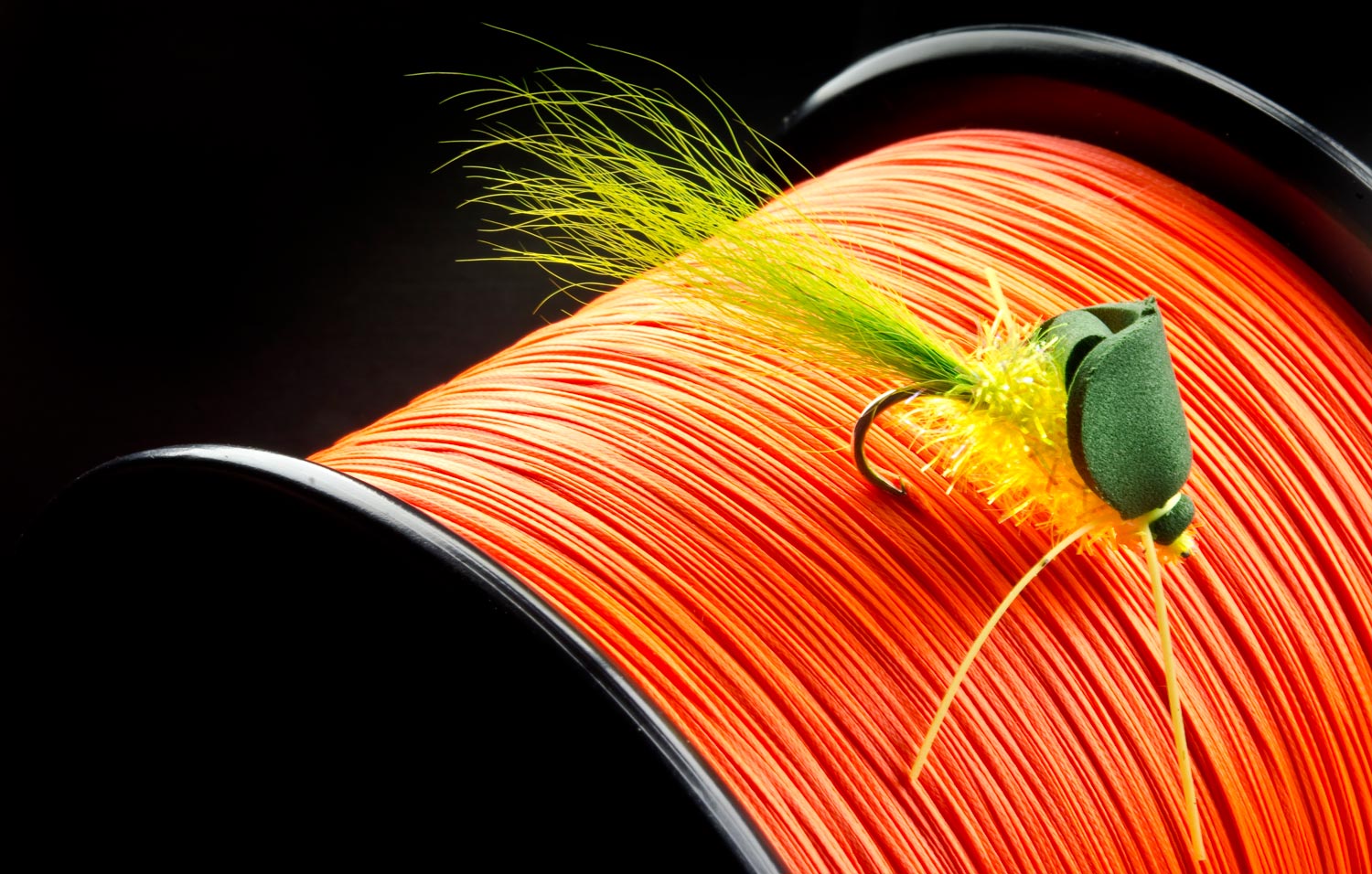
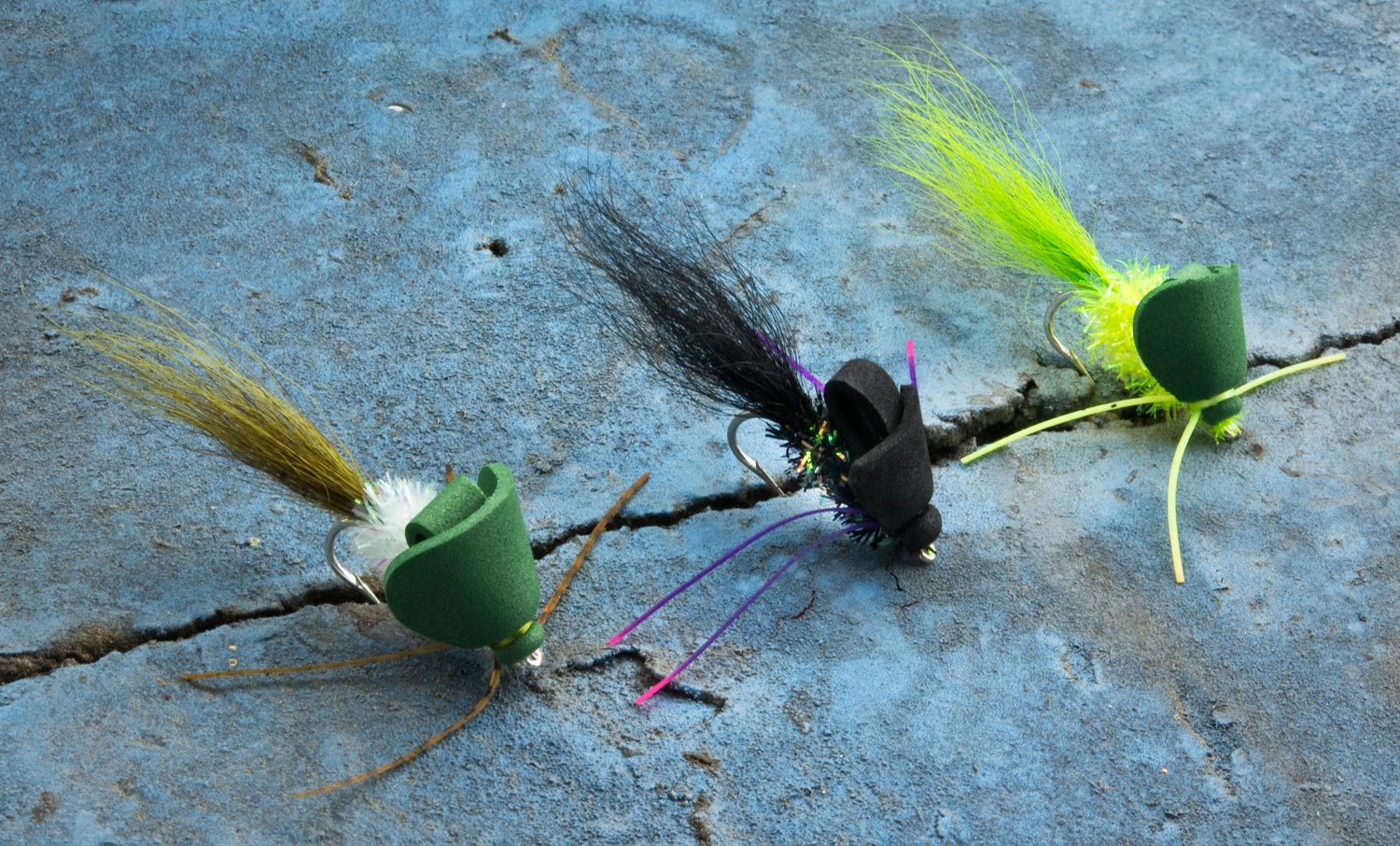
The Stealth Bomber is by far my number one topwater fly pattern for warm water species. Whether I’m after smallmouth or largemouth bass, or targeting bluegill, it’s always in my box and typically gets tied onto the end of my tippet at some point during my outings. I typically carry them in 3 different color schemes to match different conditions. Check ‘em out! It’s an easy tie. And if you ever fished with a Pop-R as a kid, then you’re good to go! Either tie ‘em or buy ‘em in sizes #2-#6 depending on the fish you’re targeting. Fish this bad boy around floating grass, weed lines, lily pads, or any other submerged structure where bass and panfish like to hide. Vary your retrieve to find out what the fish are liking that day and wait for that take!

_DSC5964Want to add a fish-catching twist to this successful pattern? Tie on 18-24” tippet onto the bend of the hook of the stealth bomber. Add your favorite lightweight streamer/baitfish pattern and increase your chances of hooking up with a popper/dropper rig. My favorite dropper for this rig is the gummy minnow. It’s light, easy to cast, and bass and bluegill crush it on the fall!

Take the Stealth Bomber for a spin on your next warm water outing! It might become your next favorite topwater bug!

Justin Pickett
Gink & Gasoline
www.ginkandgasoline.com
hookups@ginkandgasoline.com
 
Sign Up For Our Weekly Newsletter!
 

Are We Being The Best Ambassadors For Fly-Fishing?

Photo by Louis Cahill

Photo by Louis Cahill

By Louis Cahill

Are you proud of how you represent fly-fishing?

I sat in a meeting the other day, a discussion really, with a group of fly fishing guides. Most of them are guys I like and respect. I was very quickly stoked at, from my perspective, how they all got it wrong. The experience left me frustrated and angry for about twenty-four hours. After a cool-down period I’m ready to discuss it here. If what I have to say makes you angry or defensive, you should take a hard look in the mirror.

By any measure, guides are the gateway to the sport. They are the educators, informants and even the evangelists of fly fishing. They, and the guys at the fly shop, are the most common point of contact for the angler new to fly fishing. They are skilled, hard working, motivated individuals with a passion for what they do. If they weren’t, they’d have washed out of the business. Many of my best friends are guides and some of them are the best examples of what guides should be. So what’s my beef?

The first question put to this group of guides was, “Who are your clients?”

What followed was about a half hour of bitching and moaning with the common thread being, “our clients suck.”

To my ears this is inexcusable on every level. To be fair, I don’t think most of these guys are prone to thinking that way, but it only took one toxic personality to pipe up and they all piled on with comments about their clients being idiots, not being able to cast or tie knots or follow instructions. They also agreed that most of their clients did not want to be told they were doing something wrong, an important point I will return to.

I get it. There is no shortage of unskilled anglers out there. Many of them, as the group described, are business tycoons who are not accustomed to be told they are wrong. Still, I think there are a couple of very important points being overlooked.

If you are a fishing guide, you are in a service industry. You are being paid for your time and as long as you are treated with basic human respect, it’s up to the client how that time is spent. I have spent my entire career in service to clients who don’t understand my job and are often completely unreasonable and I have never complained about having a job. If that job allows me to spend my days on the water doing something I love, that goes double.

The root of much of this is ego, pure and simple. Fishing guides, and for some reason especially trout guides, can be a wildly egotistical lot. If this stings, it’s likely true. I heard comments like, “He’s a surgeon, you’d think he could tie a knot.” I’ll be the first to admit that doctors can be a pretty egotistical bunch as well. They say the difference between God and a doctor is that God doesn’t think he’s a doctor. Regardless, anyone with that degree has made a commitment to mastering something far more challenging than catching a trout. Perhaps the reason he’s not a great angler is because his job has left him little time for it, and when the time comes that I need surgery, I damned glad his priorities are not the same as mine.

If you expect to be respected for putting in the time, and making the sacrifices, necessary to master the art of fly fishing, then you’d better first learn to respect the choices of your clients. Everyone has skills. To think that being a good fisherman, or even a great fisherman, makes you better than anyone else is childish.

Now I’m going to get to what really raises my hackle.

This idea that clients don’t want to be told they are doing something wrong. This makes me angry because I think I have a pretty good idea where this comes from. First, I’ll admit that some folks out there are just A-holes. A few, but not all. Second, a fishing guide should understand presentation. Most people don’t like being told they are doing something wrong, but many don’t mind being told there is a better way to do it. That’s an important distinction. Still, that’s not the root of the problem, in my opinion.

It’s pretty common to talk to any fly angler, and pretty quickly, get the idea that they think they know everything. Let’s be honest, it’s a pretty universal characteristic. We are know-it-alls, and the reason is pretty simple.

We, the fly fishing community, teach new anglers to be know-it-alls.

Have you ever had the chance to teach a person who knows nothing about fly fishing? It’s amazing! They are sponges. They ask questions, they listen, they learn quickly. It’s exactly what learning should be. But try to teach the average angler with a few years experience. It’s a completely different endeavor. Why?

Because we model bad behavior. Not just guides, all of us. We teach new anglers that to be a fly fisher is to be egotistical. We bolster our egos by tearing down others with comments like, “Our clients suck.” Nobody wants to be told they suck and, even more, nobody wants it said behind their back. These kinds of comments make people defensive and impossible to teach. What’s worse, it makes them behave the same way to others.

We, as a community, have a culture problem. We are putting up barriers to entry by new anglers, and in the process we are hurting the sport.

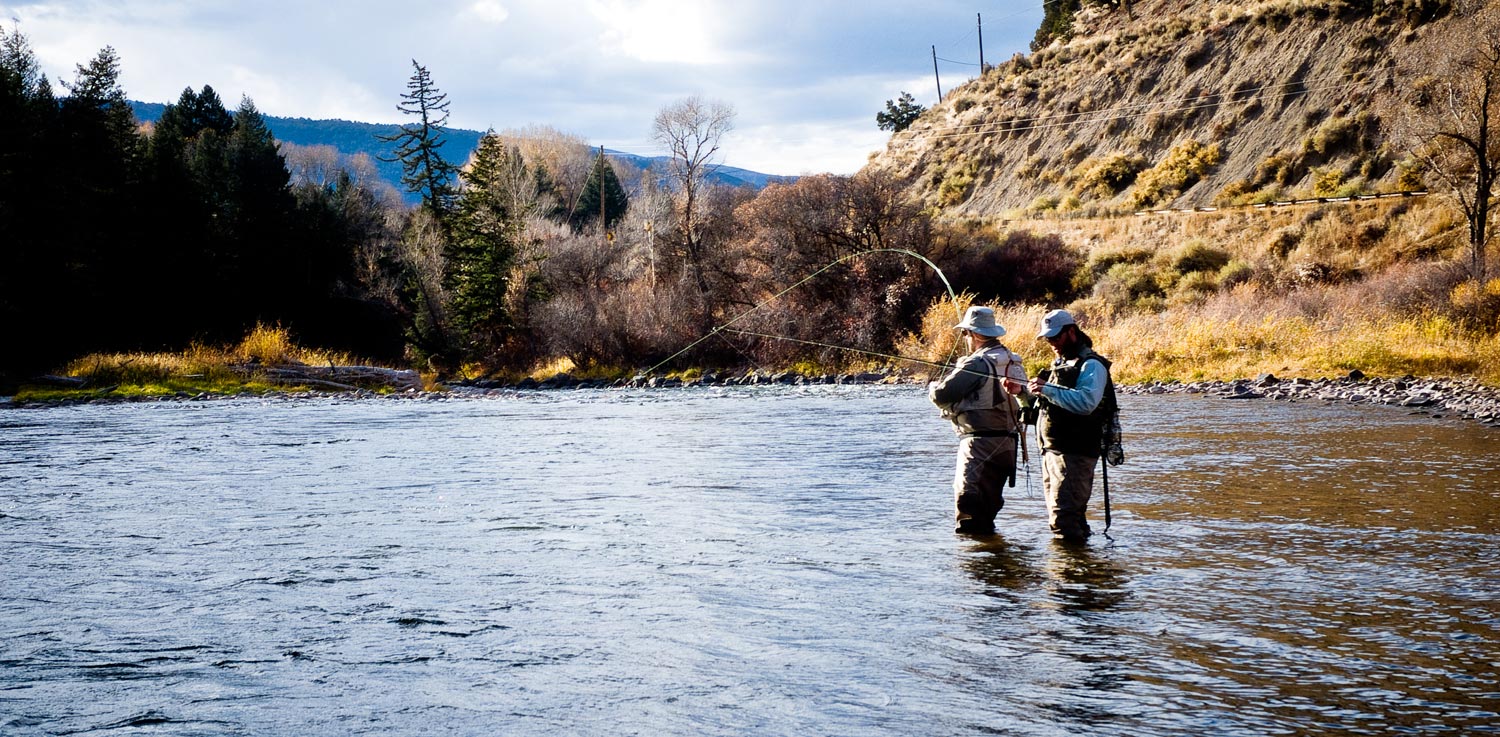
I had an interesting experience the other day. I was fishing streamers from a boat with a young guide. At one point I was admittedly getting a little worked up over trying to hit every pocket, and I didn’t have quite as heavy a rod as I would have liked. My guide quips over his shoulder,

“You know Louis, you actually have to pause on your backcast.”

The smart-assed tone didn’t sit well, and for a second I thought about putting a hook in his neck for his trouble. But you know what, he was right. I was rushing my cast. I slowed down and fished better. Still, he handled it poorly and my initial reaction was just as poor. None of us are immune to our training. We have been taught to be assholes.

A very wise friend of mine, Tim Rajeff, once told me, “I never offer advice unless I am asked.” I was shooting video with Tim about two years ago and I did ask him to help me with a casting issue. In spite of having two companies to run, you’d think he had nothing to do but work with me on my casting. I am a much better caster after that afternoon. If I’d been too proud to ask, or Tim had been less generous, I’d still be struggling with the problem. That’s what fly fishing should be.

It’s not my intention to come down on anyone, or to place blame, especially on fishing guides.

I have great respect for the folks who do that job. It is not easy. I do, however, want to make everyone who reads this think about how they can be a better ambassador for fly fishing. I want us all to think of ways we can build doors instead of walls. How we can make new anglers feel positive and welcome, rather than self-conscious and judged. It’s on each of us to set an example for folks who want to learn, and for those who are already experienced. If we can create a positive culture in fly fishing, we will all benefit.

Louis Cahill
Gink & Gasoline
www.ginkandgasoline.com
hookups@ginkandgasoline.com
 https://www.ginkandgasoline.com/hosted-trips/
Sign Up For Our Weekly Newsletter!
 

Fly Fishing Bass: Take Advantage of Late-Winter Warming Trends

Louis Cahill Photography

On the bass lake early to take advantage of the warm weather. Photo Louis Cahill

This past month, most of us found ourselves having to deal with insanely cold weather, and in many cases, record snow fall on top of that.

It was so cold for such an extended period of time, Lake Superior froze over solid, and that hasn’t happened for decades. Even our cold water trout seemed to especially feel the deep freeze. At least the ones that I visited on my home streams, as I struggled to catch them in-between de-icing my rod guides and fly line every other cast. You could catch some trout, but it was hard going, numbers were down, and the trout sure as heck weren’t moving any more than they had to. It seemed all they truly cared about was just taking in enough food to weather the storm. For all you bass fly junkies out there, there’s no question that you were shit out of luck during the last 30 days or so. That is, of course, unless you had an auger handy and were willing to go ice fishing for bass.

On a positive note, it looks like we’ve probably made it past the worst of the bitter cold weather this season. In fact, things really starting looking up this past week, particularly in the Southeast, where many of us southerners saw consecutive sunny days, that warmed the air well into the 60s. When I saw this, I immediately hit some bass water to take advantage of the strong warming trend, and “Wow” were the bass aggressive. They had really turned on quick with the rapidly warming water temperatures. I landed some really nice bass on the fly, and even better, I did it all while most of my peers were still stuck inside trying to de-thaw. Late-winter warming trends, that provide a couple days or more of above average temperatures, are prime times to chase bass on the fly. I learned this bass fact, as a young kid, where I regularly landed some of my largest winter bass on neighborhood ponds. The key was getting on the water and fly fishing hard during those stretches of sunny and warm weather after long stretches of cold.

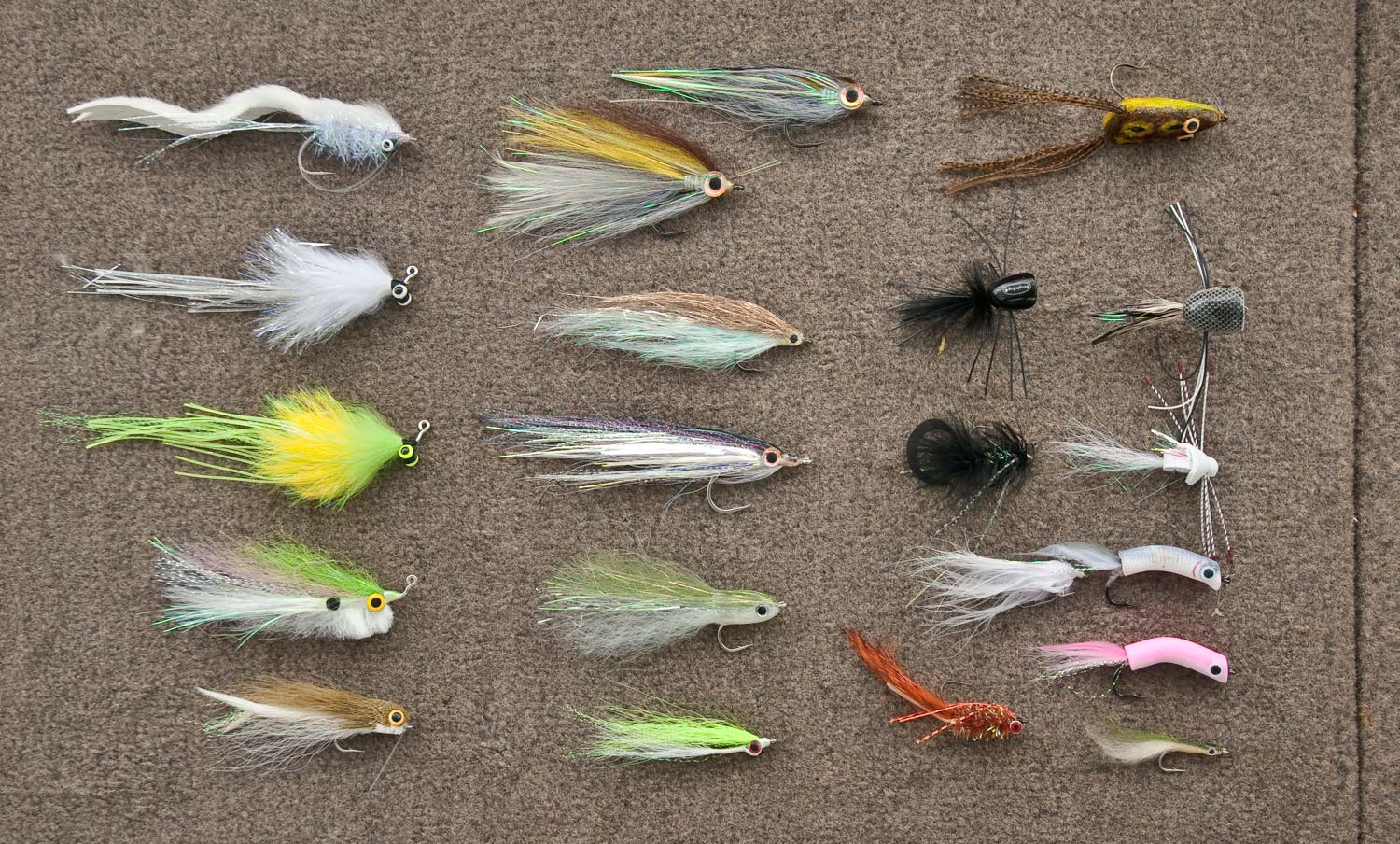
Below is a snapshot of some of the flies I was using during my time on the water chasing bass. The assortment of bass flies represented is a good collaboration of proven bass patterns that will get you into bass, just about anywhere in the country. I purchased most of them from Cohutta Fishing Co., a local fly shop about an hour away from me, in Cartersville, Georgia. They’ll be glad to set you up and tell you all the names of the bass flies showcased.

bass-flies

Cohutta Fishing Company’s bass fly assortment. Photo Louis Cahill

February and March are fantastic months of the year to go fly fishing for bass. As the water temperatures continue to warm and the days get longer, the forage food (shad, bream and crayfish) and predatory bass, will be moving up from their deep water sanctuaries and into the shallower areas of the lakes to pack on some weight prior to the spawn. If you can’t get out on the lakes because you don’t have a boat, no worries, just go visit one of your local bass ponds. The bass fishing should be just as hot there, and in many cases, you’ll even find it easier to catch more numbers and probably even one or two of those lunker bass you’ve been after with your fly rod.

Keep it Reel,

Come fish with us in the Bahamas!

Kent Klewein
Gink & Gasoline
www.ginkandgasoline.com
hookups@ginkandgasoline.com
 
Sign Up For Our Weekly Newsletter!
 

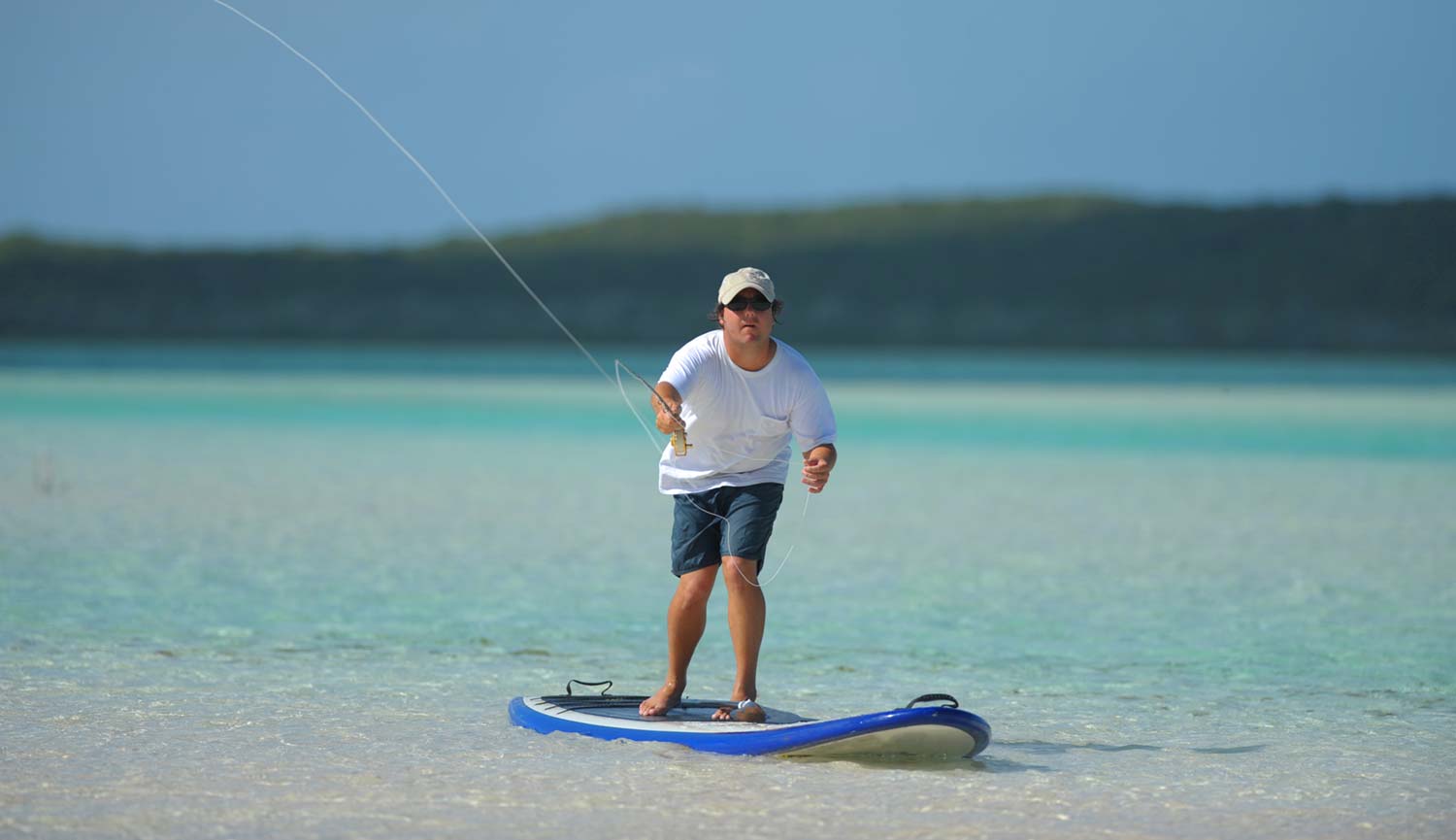
7 Reasons Why SUP Fly Fishing Is Here to Stay

Photo by Jason Paul

By Jason Paul

As anglers are increasingly searching for creative ways to get on the water, the sport of SUP fishing continues to grow in popularity with each passing year. 

But did you know that SUP fishing is a relatively new twist on something that actually goes back thousands of years? While the modern-day SUP fishing movement began approximately twenty years ago, the anglers of Peru were paddling around thin fishing canoes made of reed at least three thousand years ago.

In reality, this form of fishing has been around in some form or another for centuries because of the many advantages it offers over fishing from a boat or land. In this article, we’ll take a look at seven key reasons why SUP fly fishing is here to stay.

#1. Portability and Convenience

When compared with boats, stand up paddle boards are incredibly convenient to get on the water and inflatable fishing SUPs can even be deflated, rolled up, and brought along with you wherever you go. While traditional fishing boats have many obvious limitations in terms of where they can and can’t go, a lightweight paddle board and your fly fishing gear can be easily packed up and brought anywhere, opening up a whole new world of exciting opportunities and spots to fish.

#2. Accessibility

Everyone knows just how important it is to find the fish and there’s no easier way to reach the perfect fishing holes than on a SUP. Paddle boards are far more agile than boats and even kayaks, giving you an unfair advantage by allowing you to easily go where others can’t.

#3. You Can See the Fish Better

Something that’s especially helpful when it comes to fly fishing, the elevated vantage point that you’ll enjoy while standing on a paddle board provides an unmatched view of the waters around you… and the fish that live there. This means there’s no guessing about whether or not you’ve found the perfect hole and spotting target fish is all the easier.

#4. Shhhhh!

It’s a cold, hard fact of the fly fishing life — the louder you are, the fewer fish you’ll catch. SUP fishing is incredibly stealthy, allowing you to keep a low profile while out on the water.

#5. No Obstructions

With no boat seats, motors, or canopies to obstruct your movement, fishing from the deck of a paddle board will allow you to effortlessly cast in any direction.

#6. Room to Move About

Another major advantage to SUP fishing that many don’t realize is the freedom you have to move around. Once you’re accustomed to standing on your board, you can walk around, sit, or even lay down. While boats also offer a similar amount of freedom, this is a big advantage that paddle boards have over kayaks.

#7. It’s Good for You

The more you fish from a paddle board, the better it is for your health. While it’s obviously not the primary reason why anglers are drawn to SUP fishing, it is a great form of exercise that helps to improve your sense of balance, strength, and flexibility. It’s even beneficial for heart health.

Final Thoughts

As you can see, paddle boards are a great platform for fly fishing and they offer a wide variety of advantages for serious anglers. While there are a few minor challenges you’ll face on a paddle board such as the ability to deal with high winds and tippiness, the pros of SUP fishing far outweigh the cons in our book.

Jason Paul
Gink & Gasoline
www.ginkandgasoline.com
hookups@ginkandgasoline.com
Jason Paul edits inflatableboarder.com
Sign Up For Our Weekly Newsletter!
 

Is Your Steelhead Fly fishing Or Just Swinging?

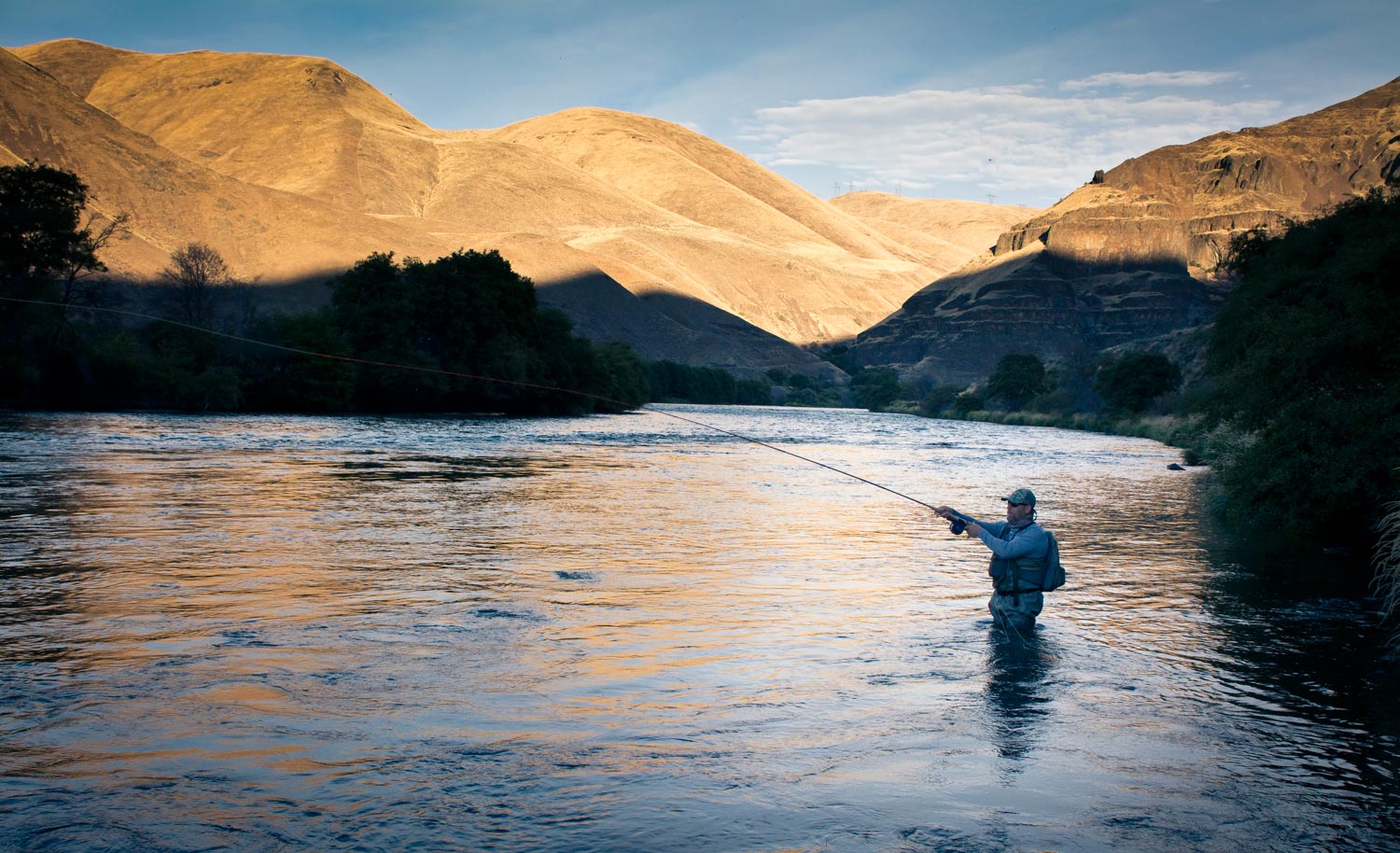
Andy Bowen Swinging on the Deschutes Photo by Louis Cahill

Andy Bowen Swinging on the Deschutes Photo by Louis Cahill

By Louis Cahill

Is your fly fishing for the entire swing?

Many anglers who successfully swing flies for steelhead could be catching even more fish by improving their swing. Steelheading is all about taking advantage of every opportunity and it’s pretty common for anglers to waste as much as half their fishing time with a poorly swung fly. I include myself among them. It’s technical business and requires constant attention.

The key to a good swing is keeping the fly moving at just the right speed and angle. That buttery slow swing that gives the fish time to see the fly and react. The gentle motion that entices the attack. It’s a hard thing to visualize and even harder to describe. Fortunately there’s a reliable visual cue that will help you determine when you fly is swinging well and when it isn’t. The belly of your line.

Before we talk about what the belly of the line tells you, let get some terms straight.

The belly is the part of the line which is swept by the current causing an arch in the path of the line. When swinging flies the belly determines the speed at which the fly moves across the current.

Picture yourself fishing from river left. You cast directly across a swift current, which flows from your left to right. Your line bellies down stream so that the middle of your line is down stream of your fly. We will call this a convex belly.

Now, picture yourself on the same side of the river but casting across a slow moving current with your fly landing in faster current on the far side. Your fly moves down stream and hangs below your line, which curves to follow. We will call this a concave belly.

Picture a swing where your line makes the shape of an L. Your fly and leader point in a direction perpendicular to your rod. We will call this a 90% belly. A 45% belly would have less curve in the line and a 100% belly would have more. A straight line swing or 0% belly would have no curve in the line.

When the fly is swinging at a good pace and angle, we will say it’s fishing. Not fishing means the speed and angle are wrong.

Now that we have our terms, what’s the swing we are looking for?

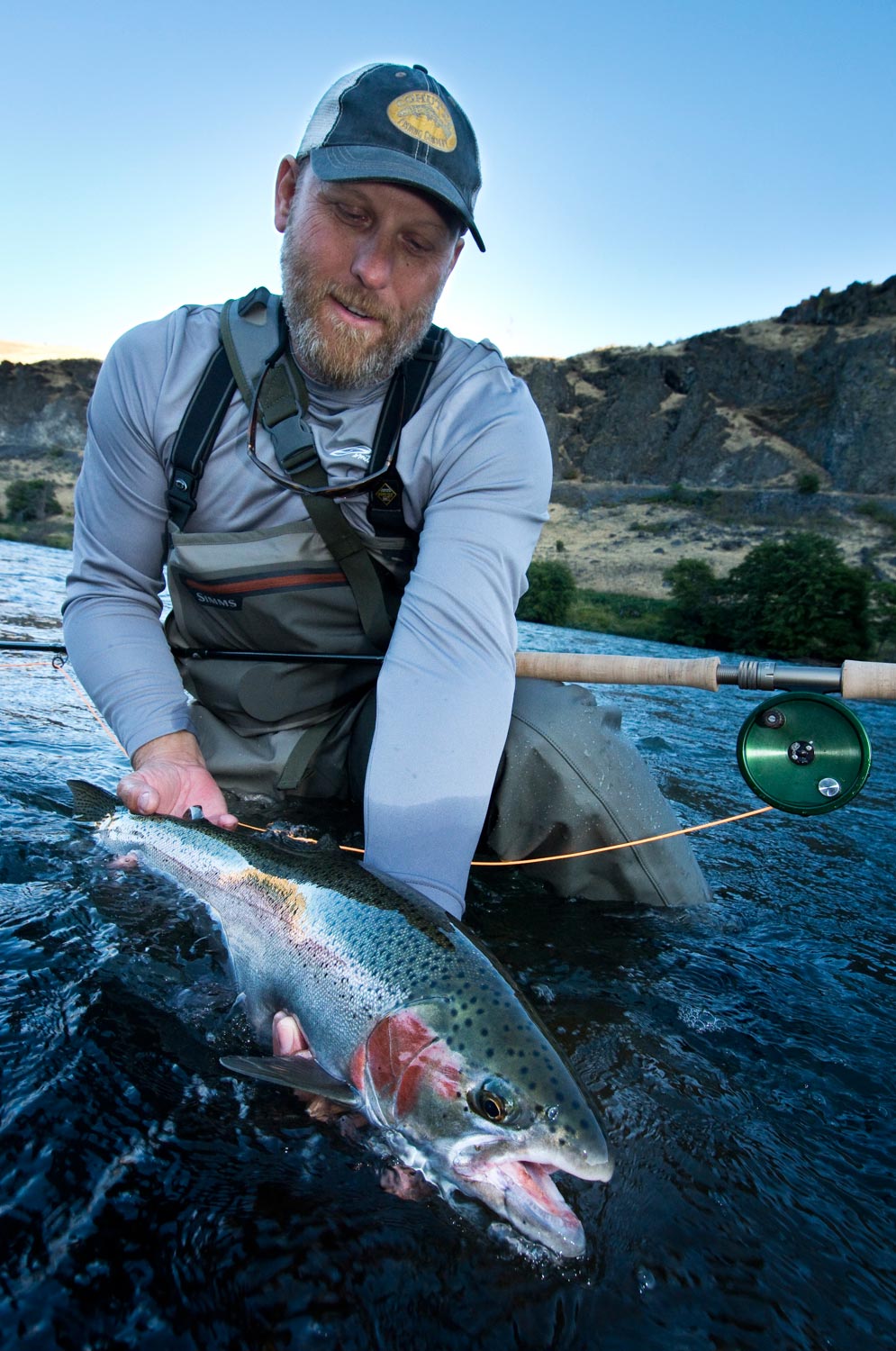
Andy gets a nice one

Andy gets a nice one

For starters, a concave belly isn’t a good thing. When the line curves out and down, rather than down and across, the fly moves too slowly and the angle presents only the tail of the fly to the fish. This is not to say that a steelhead will never eat a fly swung in this way. It’s happened to me. Fish do crazy things, but it’s not your best presentation.

A good swing presents a convex belly of 90% or less. Any more than 90% and you’re not fishing. The closer you are to a straight line or 0% swing the better your chances of getting a fish.

A belly that looks like a J with the line pointing up stream does not fish. The fly is ripped through the water so fast the fish will not waste the energy chasing it.

My buddy Jeff Hickman explains this well.

“If your line is pointing up stream, you’re not in the game. If it’s pointing across the current, it’s a lottery. The further downstream it’s pointing, the better the odds.”

The lost zones

Most folks get a swing that fishes at some point during its progress across the river. Usually through the middle of the swing. The parts of the swing where the most trouble occurs are at the beginning and the end of the swing. I call these the lost zones. If you are catching all of your steelhead in the middle of your swing, this may be why. There are a couple of things you can do to help.

It starts with a good cast.

A good Spey cast delivers a nice tight loop which allows the entire system, fly, leader, head and running line to land on the water at the same time. When this happens, the swing is instantly under the angler’s control. A common problem is for the head to land on the water before the leader, fly and sink tip if you’re fishing skagit style. When this happens, the current takes the line downstream before the fly even lands. The J belly of over 90% is already in place when the angler gains control of the line.

The most common cause for this casting malfunction is wood chopper’s syndrome. That’s when the caster’s top hand moves forward during the casting stroke, creating a downward arch in the line. Remember, the casting stroke is powered by the bottom hand.

And then a good mend

In most cases, even when you’ve made a great cast, it still needs to be followed up by a good mend. A good mend is one where the entire head is realigned. If you’ve made a good cast and a good mend, your fly should be the part of the system which is farthest down stream.

Then you slow it down

The first part of the swing is always the most challenging. Your line is usually crossing swift current and the tendency is for the fly to move too quickly across the river. To slow the fly down, keep the tip of your rod held high and pointed straight across the current. As the fly swings down stream, lower the rod tip and draw the rod closer to your body then slowly start to turn it down stream. This will keep the fly moving at a slow and tempting pace in the fast water.

Leading it in

The end of the swing is another matter. There are a lot of steelhead to be caught on the hang down. The problem is that too many anglers never get the fly to them. A fly takes a surprisingly long time to reach the very end of the swing and it needs some help getting there.

Lead the fly into the soft water by pointing your rod tip toward the bank and touching it to the water. Be patient. It takes longer than you might think for it to make the journey. The best way to get a feel for it is to swing dry flies. When you see the dry fly on its course, you realize how aggressively you must lead the fly in and how long it takes.


Next time you’re swinging flies, pay close attention to the belly of your line. It will tell you a lot about whether or not your fly is actually fishing. Try a few of these techniques and see if you don’t catch more steelhead.

Louis Cahill
Gink & Gasoline
www.ginkandgasoline.com
hookups@ginkandgasoline.com
 
Sign Up For Our Weekly Newsletter!