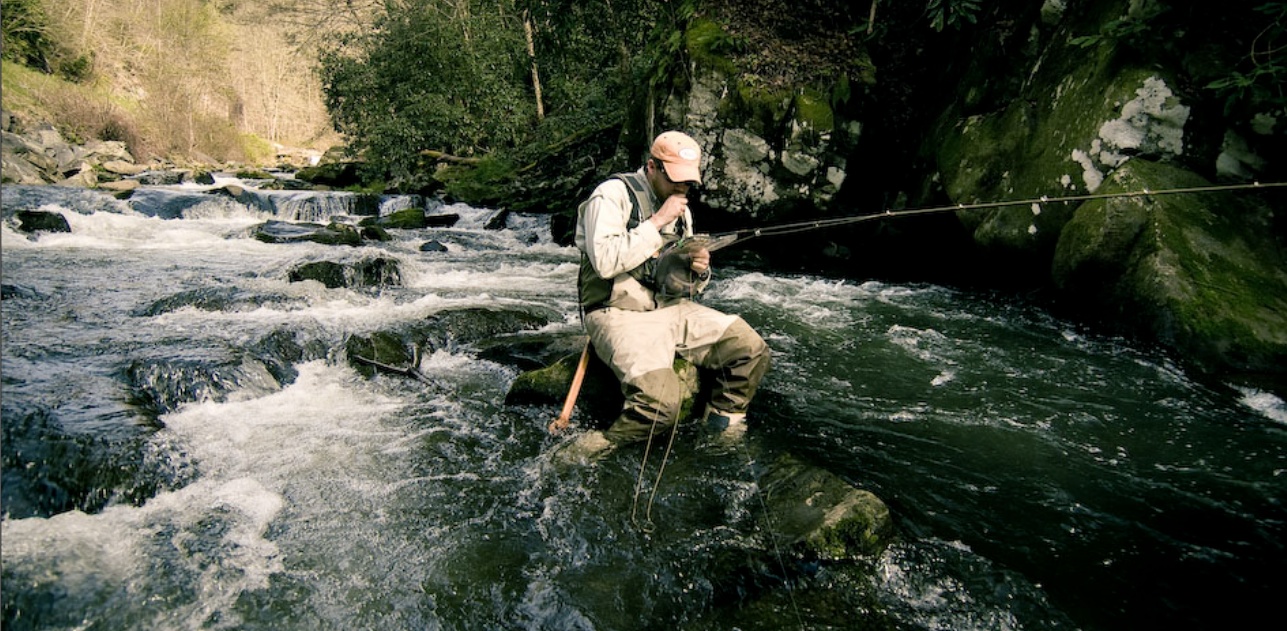
It’s The Little Things

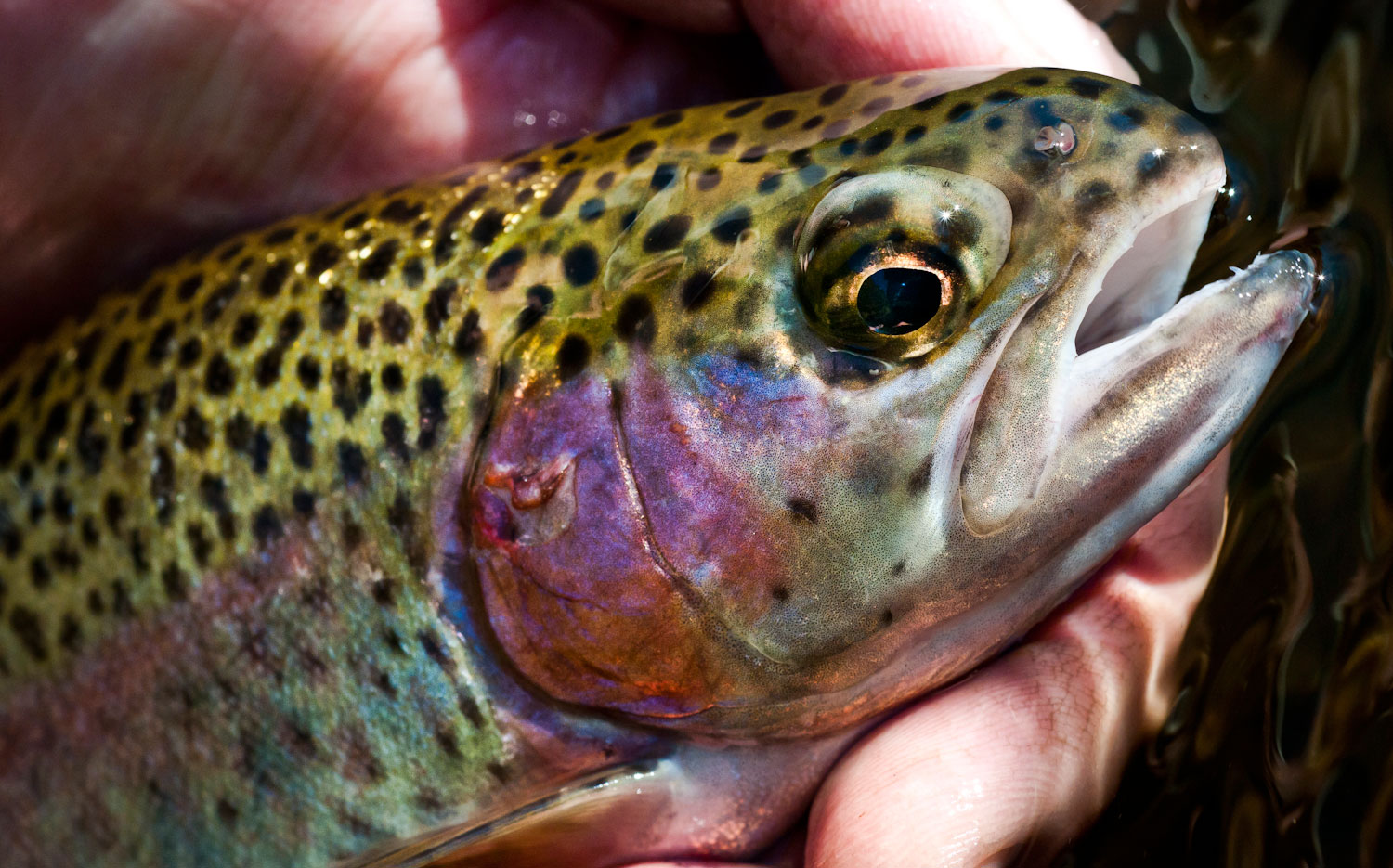
The Sign of Good Things To Come Photo Louis Cahill

“I know it when I see it!”

Kent and I were doing a presentation at a fly shop the other day and after showing a couple of hundred fishing photos, during the Q&A part of the program, a fellow raised his hand and asked “do you guys catch any small fish?”

I guess I’m as guilty as anyone for perpetuating the idea that size is all that matters in fishing. I sure don’t feel like that’s true but when you look through my photos you, sort of, start to get that feeling. It’s easy to go too far the other direction too and get all moist and sloppy about tiny wild fish. I really do love tiny wild fish but that’s not all there is to me either. I just want to catch a great fish.

I guess I’ll define a great fish this way. When asked how he would define pornography Sen. Jessie Helms replied, “I know it when I see it!” I guess that goes for fish porn too.

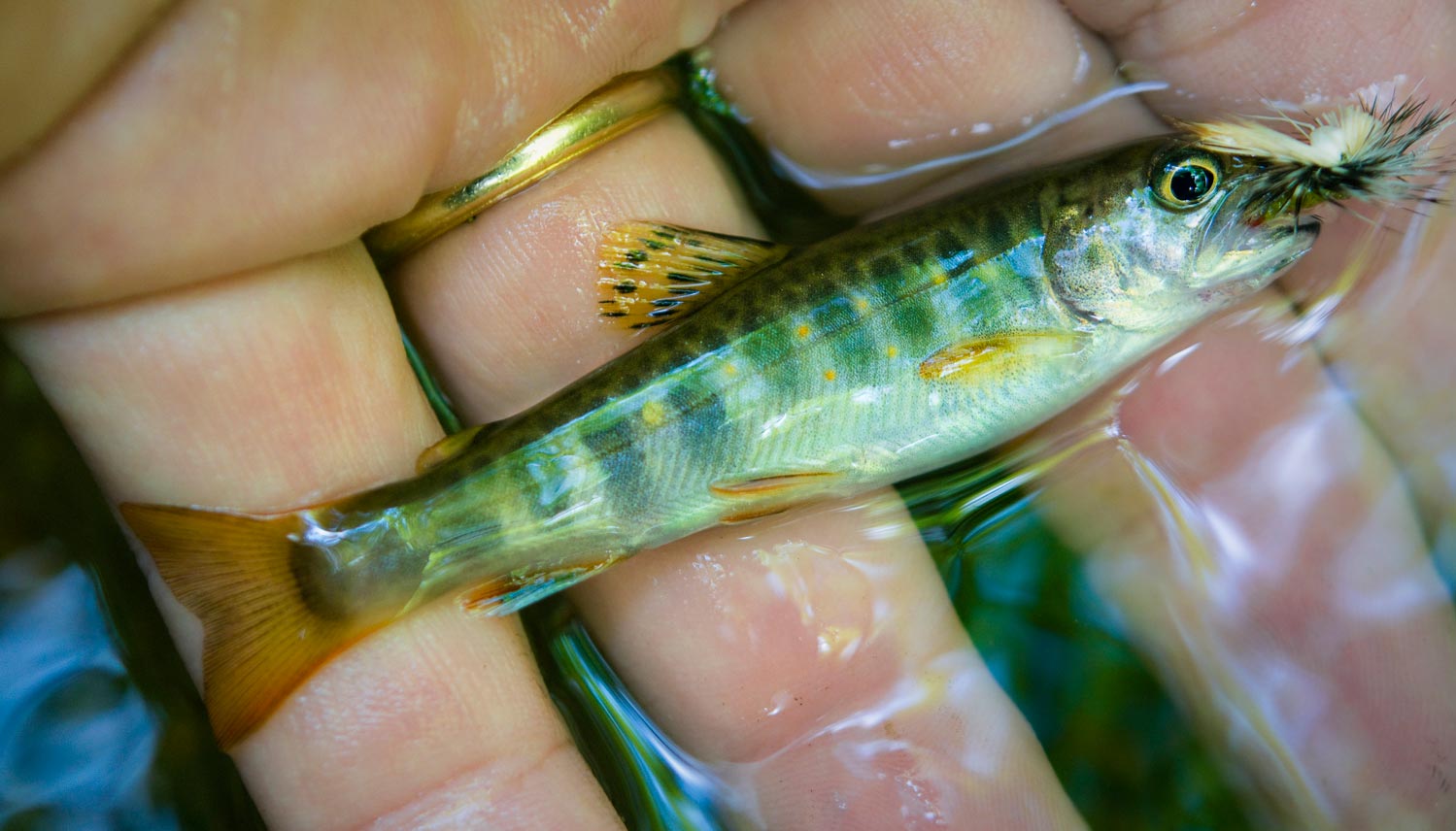
The average size fish in the stream where this little guy was caught is around eighteen inches and I caught plenty of those fish the day this photo was taken, but this beautiful little guy that my buddy Dan landed is the one I’m going to show you. In my opinion he was the fish of the day. Partially because he belongs there, as much as anything other than brook trout belong in Georgia. He’s a local anyway but mostly because he is the future. He is the sign that in spite of a great many factors working against her, Nature is still doing her job in one of my favorite little streams.

One day, if we are both very lucky, I’ll catch this little guy again and maybe he’ll be eighteen inches. If I do, I doubt he’ll remember me but I’ll take another photo and we’ll see if you remember him.

That’s enough romance for now. I’ll show you something big and dirty next time.

 
Louis Cahill
Gink & Gasoline
www.ginkandgasoline.com
hookups@ginkandgasoline.com
 
Sign Up For Our Weekly Newsletter!
 

6 Tips for Executing a Proper Figure-Eight Retrieve

figure-eight-for-musky

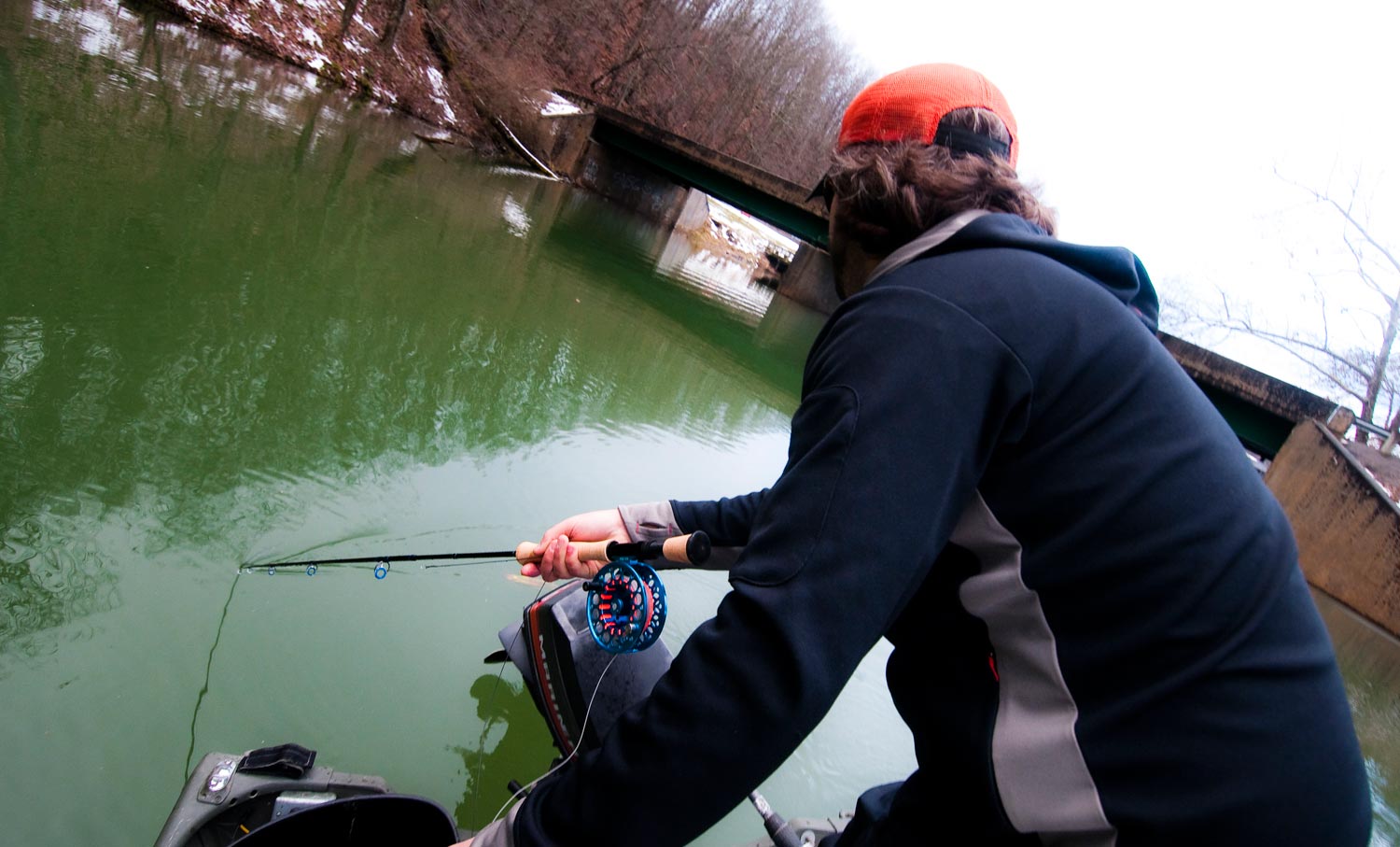
Charlie Murphy demonstrates a figure-eight retrieve. Photo Louis Cahill

For the first time, this year, I got to experience the thrill of watching a musky devour my bucktail streamer right at the boat during a figure-eight retrieve.

I had dreamed of witnessing this first hand for years, and I have to say, it live up to all the hype. You get a huge adrenaline rush every time you lure a musky into following or eating your fly during a figure-eight retrieve. I think this one aspect of musky fishing alone, is why so many anglers fall in love with musky. Although I’ve heard of anglers catching trout, striper and other species with a figure-eight retrieve, musky by far, provide the highest success rate of all game fish for using it. Musky seem to spook far less than other game fish when they’re in hot pursuit after prey, and that’s the main reason this niche retrieve works so well for them. I totally screwed the pooch on my first couple opportunities to use the figure-eight retrieve for musky. This unorthodox retrieve takes a while to get used when you don’t regularly practice it. Done wrong, a figure-eight retrieve will fail to trigger eats. Luckily, during my trip, I had my good friend Charlie Murphy, a genuine musky bum, give me some pointers. Below are six tips to get you executing a figure-eight retrieve like a pro.

Tip 1: You have to consistently use the figure-eight retrieve for it to work.

Charlie told me, point blank, “if you don’t follow up every cast with a figure-eight retrieve, you’re giving away opportunities to catch musky.” Many times, musky will be following your fly just out of sight, and your only chance for catching these fish, is to trigger a bite with a figure-eight retrieve. I watched Charlie musky fish for four straight days, and there wasn’t one time, where he didn’t finish up his retrieve with a figure-eight. It took me a while to follow his lead, but when it was all said and done, Charlie proved his point by getting the most follows and eats during the trip. The best thing you can do if you’re serious about catching musky, is get in the routine of consistently using a figure-eight at the end of every retrieve.

Tip 2: A proper figure-eight retrieve starts with your fly at the correct distance from your rod tip.

I found out real quick, if your fly is too far away from your rod tip during a figure-eight retrieve, it’s impossible to execute it properly. Charlie explained to me, that ideally, all you want is a foot or less of leader out the end of your rod tip. Anymore, and you’ll find slack becomes a real issue. Slack will cause your fly to slow down or even stop momentarily during a figure-eight retrieve, resulting in your fly looking unnatural and causing musky to lose interest. It’s critical that you’re always making your fly look like prey fleeing for its life. By keeping your fly at the correct distance from your rod tip during a figure-eight retrieve, you’ll find it much easier to keep your fly moving, and it will provide you with the greatest control and range of motion.

Tip 3: Speed and depth change are very important with a figure-eight retrieve.

Most anglers would agree that when you’ve got a fish following your streamer and it’s not committing, you generally want to speed up your retrieve to trigger a bite. Most of the time, when prey are getting chased by a predator, they will change direction and sprint for short bursts to avoid capture. When a predator sees this, its instincts generally take over, and the predator will counter by increasing its speed also. Fly anglers need to keep this in mind when they find themselves with a musky following their fly during a figure-eight retrieve. If the musky is following but not committing your goal is to get the fish to pick up speed and commit. Usually the best way to do this, is to speed up your fly. Charlie recommends that you should begin speeding up your fly right as your coming through and out of the first turn of your figure eight. The theory is, it mimics prey making and abrupt direction change and then fleeing away. During the trip, I noticed that almost all the muskies ate our fly during the turn of a figure-eight or shortly after, and increasing the speed of the fly was the key variable in triggering a bite.

Depth change is also very important during your figure-eight retrieve. Anglers need to pay close attention to the depth of the following musky, and try to match it with their fly. Charlie says that it’s also important to change the depth during the retrieve, and that you should also focus on the depth change being made from the turn of the figure-eight through the straightaway. Charlie says, “I strive for a one to two foot depth change in-between each turn of my figure-eight retrieve.”
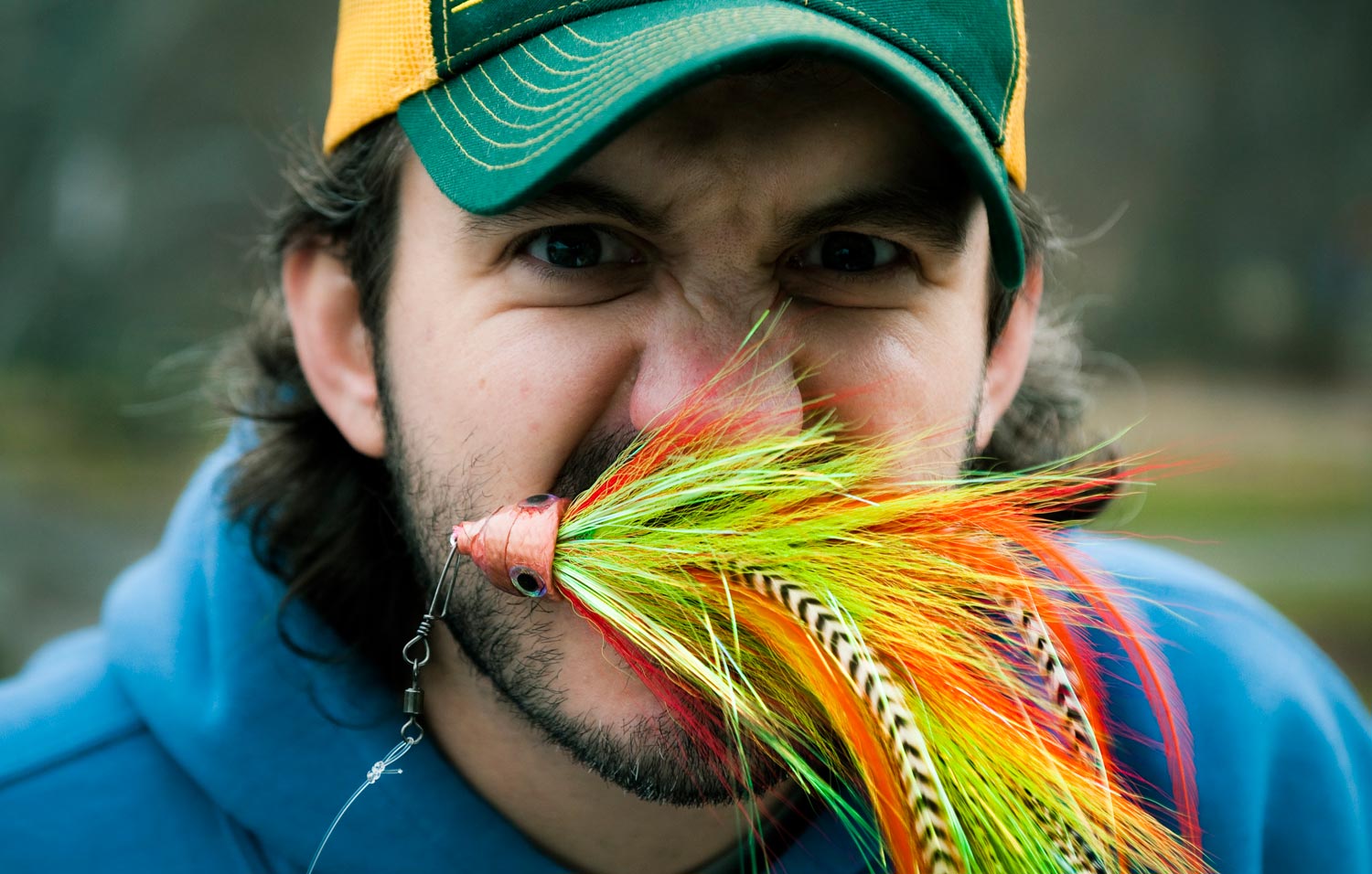
murphy-musky-mouth

Charlie Murphy provides us some musky humor on the water. Photo Louis Cahill

Tip 4: Don’t give up on your figure-eight retrieve prematurely.

I’ll never forget how astonished I was to see Charlie make five or six figure-eights with his fly in a row, and finally get a following musky to eat. Whatever you do, don’t prematurely give up on a musky if you lose sight of it, because they often will drop out of sight for a minute, and then come right back and eat your fly. I’m not sure why musky do this, but I personally think they’re trying fool their prey into thinking they’ve escaped, so they can come back moments later and ambush them off guard. Think about, if you were that unlucky fish swimming your ass off trying to keep from being eaten by a musky, and then you looked back and the musky was gone, it seems pretty easy to believe that you’d think you had escaped and the threat was gone.

Tip 5: Always move your fly away from the musky.

It seems pretty obvious that you should aways move your fly away from a musky during a figure-eight retrieve, but you’d be surprised how the intensity during a figure-eight retrieve will have you thinking otherwise. Prey never swim towards the mouth of predator, so make sure that you’re thinking about the next turn in your figure-eight so you choose the right direction. Choose wrong, and it may result in you missing a fish. Charlie also recommended that anglers should try to keep their fly moving away from the boat when possible. He likes to begin his figure-eight retrieve by taking the fly past the bow of the boat first, instead of towards and alongside the boat. The later can result in spooking a fish.

Tip 6: Set the hook in the opposite direction you’re moving the fly.

Most musky eats are lost during the hookset of a figure-eight retrieve. No upright trout hooksets here folks, nor should you set the hook away from the fish. This usually end with you pulling the fly out of a musky’s mouth. Always try to set the hook in the opposite direction of your tracking fly. Another way to look at it is, always set the hook towards the musky. This usually will result in you hooking the fish in the corner of the mouth.

There you go, there’s six tips for executing a proper figure-eight retrieve. I pretty much learned how valuable each one of these tips were during my musky trip with Charlie. Thank you Charlie for guiding me to my first musky on the fly and teaching me the tactics needed to be successful.

For more tips from Charlie Murphy about fly fishing for musky click here.

Keep it Reel,

Kent Klewein
Gink & Gasoline
www.ginkandgasoline.com
hookups@ginkandgasoline.com
 
Sign Up For Our Weekly Newsletter!

 

4 Types of Trout Water to Target During the Summer

Flyfishing-tips-for-summer

During the summer I often search out water with the highest oxygen levels. Photo Louis Cahill

Are you finding that the dog days of summer are limiting the time you have success on the water trout fishing?

Generally, the best time to trout fish in the heat of the summer is the first and last couple hours of the day. This is when the air and water temperatures are the coolest and the oxygen levels in the water are at there highest. That being said, there are a few things you can do to help you buy yourself a couple extra hours of good fishing. Below are four types of trout water I target during the summer.

1. Fish the Upper Sections of your streams and rivers

Targeting the upper sections of your streams and rivers during the summer often will provide anglers better trout fishing than on the lower sections. This is usually true because the water temperatures fluctuate less and are significantly cooler than on the lower. The water closest to the outflowing source will be cooler because the warm air and sun will not have time to heat the water. So during the summer, stick to fishing the first few miles of river on your tailwaters and fishing the upper sections of your spring creeks (spring creeks flow out of the ground at consistent temperatures year round).

2. Target Turbulent Water

Not all trout will migrate huge distances upriver to search out cooler water as long as the water temperatures do not get high enough to threaten their survival. When this is the case, trout will often just migrate to areas of the stream or river where there’s higher oxygen levels. Such places will be your more turbulent water like pocket water and riffles. When the sun gets high and the air temperatures are in the 80s and 90s, I search out sections of trout water that have a drop in elevation. That’s where you’ll find increased levels of oxygen and the highest concentrations of waterfalls, pocket water and riffles.

3. Target Heavily Canopied Sections of Water

Trout water that’s protected from the sun by a thick overhead canopy will always hold water temperatures slightly cooler than stretches of water exposed to the sun because of the shade it provides. Try targeting these areas once the sun gets high in the sky, and you’ll find the trout will be more active. It also will be a plus that you’ll also be much more comfortable fly fishing in the shade and out of the sun.

4. Dredge Deep Pools

The deeper down you go in the water column the cooler the water temperatures are going to be. If you can find deep pools in the summer and dredge them with nymphs, you usually will be able to find some success targeting the trout holding on the bottom in the cooler water. It can be tricky at times getting that perfect drift but it usually will pay off with persistence.

Try targeting these four types of trout water next time you hit the water this summer and you should be able to catch a few more fish, and extend your fishing a couple of hours before they shut down.

Keep it Reel,

Come fish with us in the Bahamas!

Kent Klewein
Gink & Gasoline
www.ginkandgasoline.com
hookups@ginkandgasoline.com
 
Sign Up For Our Weekly Newsletter!
 

What The Little Fish Are Saying

The Best Fish I Caught This Year Photo by Louis Cahill

The Best Fish I Caught This Year Photo by Louis Cahill

This post has a soundtrack. Take a second to start the video below.

Maybe your stature as a fly fisherman isn’t determined by how big a trout you can catch, but by how small a trout you can catch without being disappointed. — John Gierach

Like it or not, I am in the big fish business.

I hate admitting it, but that’s how it started. I carried a camera to take photos of fish and the small ones were not the fish who got photographed. Eventually folks started to buy the photos I took and I found there was a simple equation. The bigger the fish, the faster the sale. That’s a pretty hard-nosed view of fly fishing and I’m not especially proud of it.

Call it skill or luck or hard work, a lot of big fish have come my way. I’m grateful for each of them. I hope there will be many more but I no longer measure myself in inches or pounds of fish. Not because I’m above it or used to it or jaded about it. I still like to catch big fish but I’ve come to understand my place in the equation.

Sometimes I choose the fish. I plan, I strategize, I stalk and pursue. Often, by force of will, I bring the fish to me. Sometimes I choose the fish, but every time the fish chooses me. I think about this when I am swinging a fly for steelhead. Like a practitioner of tai chi, I mind my swing. Seeking always the perfect presentation. Mindful and empty, dreaming not of what was or what may be, simply present in what is.

It is in that moment that the fish chooses me. I accept that all I have done is to make myself available to him. It is not done without skill or planning. It is not an accident. It is the culmination of years of effort but I recognize that it is a culmination for him as well. It is not a thing I have done alone. I have not brought the fish to me, something larger has brought us together.

In that convergence there is something that defies explanation. Among the thousands of fish that have passed in and out of my hands, some are special. I can not always say why. Once in a while a fish connects with me in a way that is deeper than either of us can grasp. There is a convergence of place and time, of hand and heart the sum of which is greater than the two of us.

One of these fish is worth a year of my life. That is, at least, about what I spend for them. This year there have been two. Both trout. One was the largest trout I have yet to catch, the other the smallest. Two fish sent to me like a message in a bottle. A note cast to the waves in search of a reader and finding its way to me.

Each fish was special. Each was wild. Each was native. Each a perfect example of its kind. A steelhead from British Colombia and a Southern Appalachian Brook Trout from North Georgia. Each came to me at a special time and in a special place. Each fish chose me.

Maybe an inch and a half in length, this little brook trout is the one I want to show you. Not because he’s big, not because he was a challenge. Not because of what he says about me, but because of what he says to me. Perfect and beautiful, this rare native fish is a reminder to all of us to be thankful for what we have. Thankful for the days we have to spend on the water. Thankful for the beautiful places where we fish. Thankful for the friends we share them with. And thankful for the fish that choose us.

I may never catch a fish this small again. I may never catch another fish at all. I may never again step foot in the stream. Each of our futures is untold. Mine, his and yours. In the moment we spent together this is what was shared. This was the message. This is what the little fish told me.

“Be present, be mindful, be grateful. If we are both lucky, I will see you again.”

Come fish with us in the Bahamas!

Louis Cahill
Gink & Gasoline
www.ginkandgasoline.com
hookups@ginkandgasoline.com
 
Sign Up For Our Weekly Newsletter!