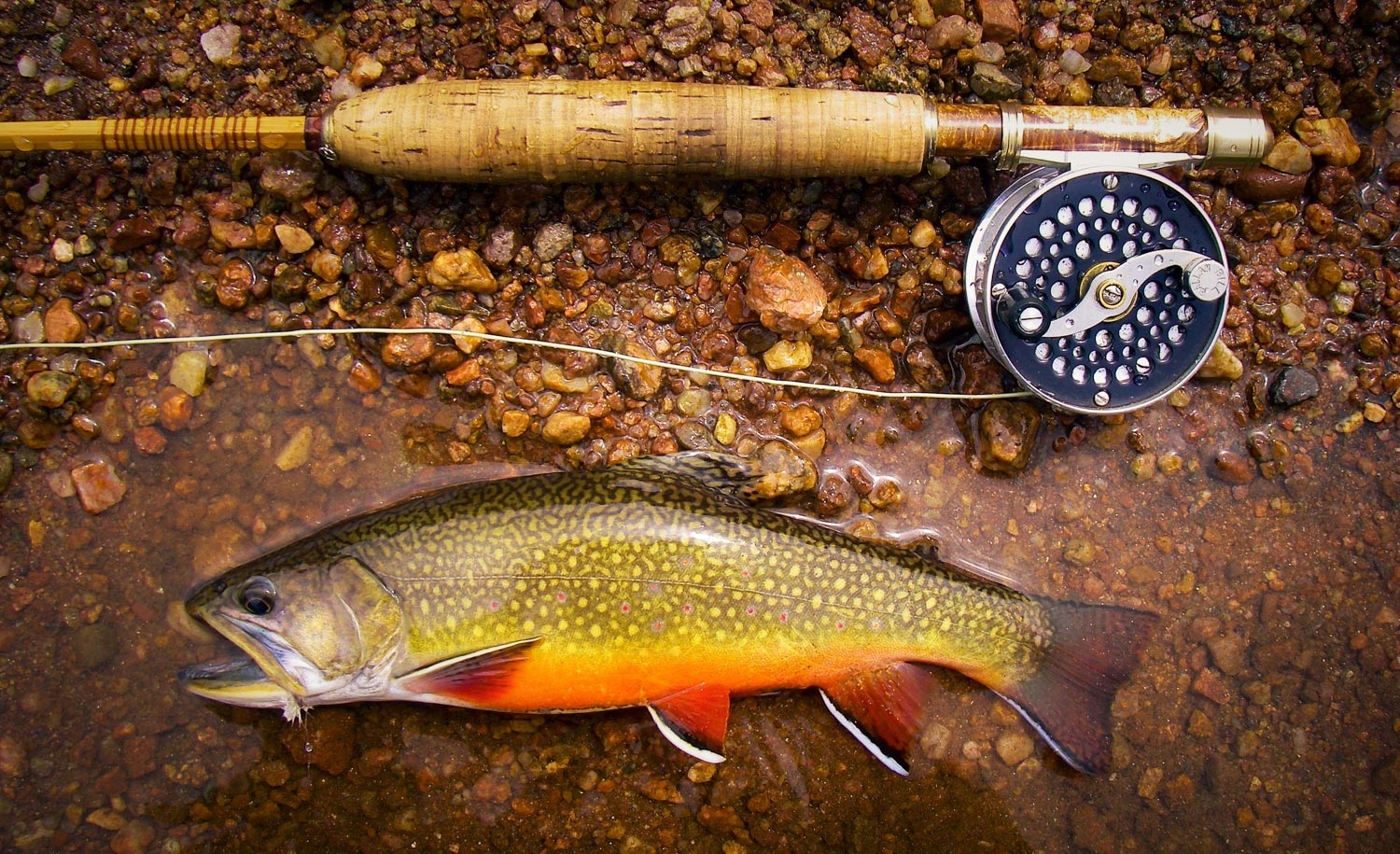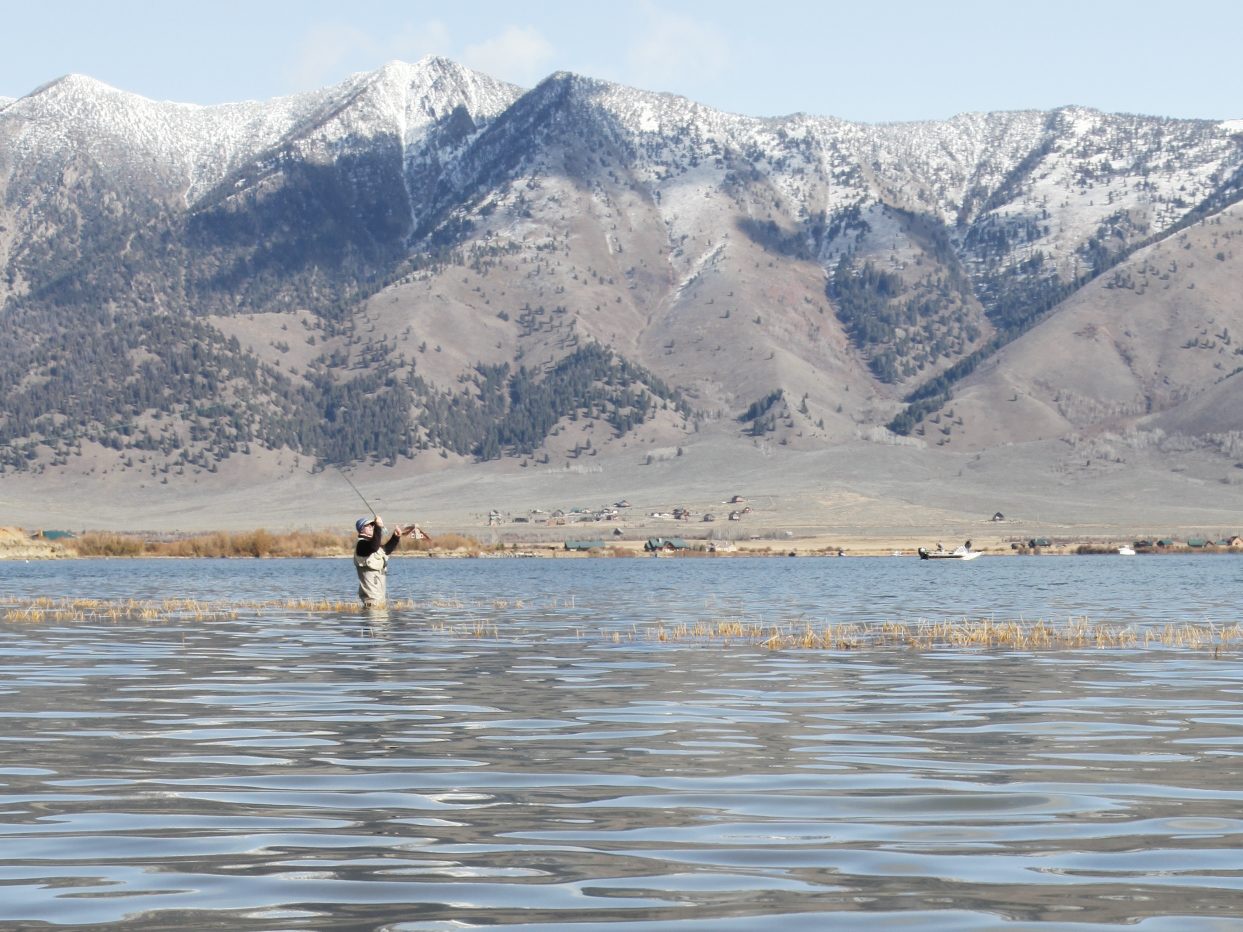
Gareth Jones from Airflo, talks Stillwater Fly Fishing on Henrys Lake.
The Other Henry’s
Mention to any flyfisher that you’re heading for Island Park, Idaho and they’ll immediately think you’ll be packing a selection of CDC and biot creations intended to deceive the wonderfully selective leviathans of the Henry’s Fork.
However, my latest visit to see Rene Harrop and the boys at the TroutHunter, was all about fly fishing the incredible Stillwater’s of the region, and more specifically, Henry’s Lake. The plan was to see how fishing UK flies and techniques would work on the great Cutthroat and Hybrids that inhabit the lake. This wasn’t the first time I fished the lake. I’d visited it ten years earlier, and I remembered enjoying some wonderful sport-fishing from a float tube, fishing damsels through the gaps in the summer weeds. Needless to say, I was fairly confident that some of my own fly patterns and techniques would produce on this trip, and I was excited to hit the water.
Being mid-October, It’s always a little risky with the weather, but the fishing gods were in a kind mood and when I arrived at the county boat dock on the eastern side of the lake, I was greeted by a gentle breeze and mild temperatures. This certainly put the fish in the mood to eat.
Starting from the shore, I waded carefully into the water, and immediately saw a fish swim right by me. It was a nice cutthroat trout of about 18 inches, a prime target for settling me into the swing of things. I quickly made a short cast to the fish, then paused for the fly to sink, and like clock work, the cutthroat took my ‘Minkie” streamer on the drop. One cast, one fish–I really couldn’t ask for anything better than that.
With Henry’s being such a shallow lake, a good cast was only putting my flies in about six feet of water. Add to this, the extensive remains of summer weed growth, and my set up needed to have my flies fishing just over the weeds. This would put them right into the path of any cruising trout between them.
I chose to fish a 10′ 7 weight fly rod matched with a 7 weight intermediate fly line for two reasons. First, it gave me the ability to cast a long line, and two, it also allowed me to keep my flies high and out of trouble during my back cast. With a sink rate of only 0.5″ per second, the intermediate fly line eliminated any wake on the otherwise calm surface and it also helped to keep me in direct contact with my flies.
At the business end, my leader held a team of three flies, each spaced 5′ apart, with a further 8’ of level 3X fluorocarbon tippet looped directly to the fly line. When fishing with this multi-fly rig, the point or tail fly is generally the largest, with the smaller flies placed on the dropper to help with turnover.
Having the olive and brown Minkie streamer tied on in the tail position seemed to be the ticket for me, with the cutthroats, hybrids and even brookies, regularly hitting it like a ton of bricks. Tied with a very find layer of lead, this fly sinks slowly and more importantly, it sinks level. The Minkie is tied with Mink and it provides the fly with a great snake-like movement in the water. And unlike flies tied with rabbit strips, mink maintains its shape even when the fly is paused between strips.
It’s fairly common that once you’ve caught a few fish form a short section of shoreline that fish in the immediate area will seem to go off the feed, but with regular changes in retrieve and showing the flies at a slightly different angles of cast, you can often continue to catch fish. As the day wore on, the fish started to get a little more tricky to catch, and it was then, that some of the subtleties of UK Stillwater techniques started to have an impact. The first thing that I noticed was the takes were becoming more gentle and harder to detect. By holding my rod tip 12 inches above the water and watching the movement of the fly line as it swung up and down on my retrieve, I was able to visualize the takes before I actually felt it at the hand. With a firm strip strike at that point, I was able to hook and land several more lively cutthroats, some of which measured over twenty inches.
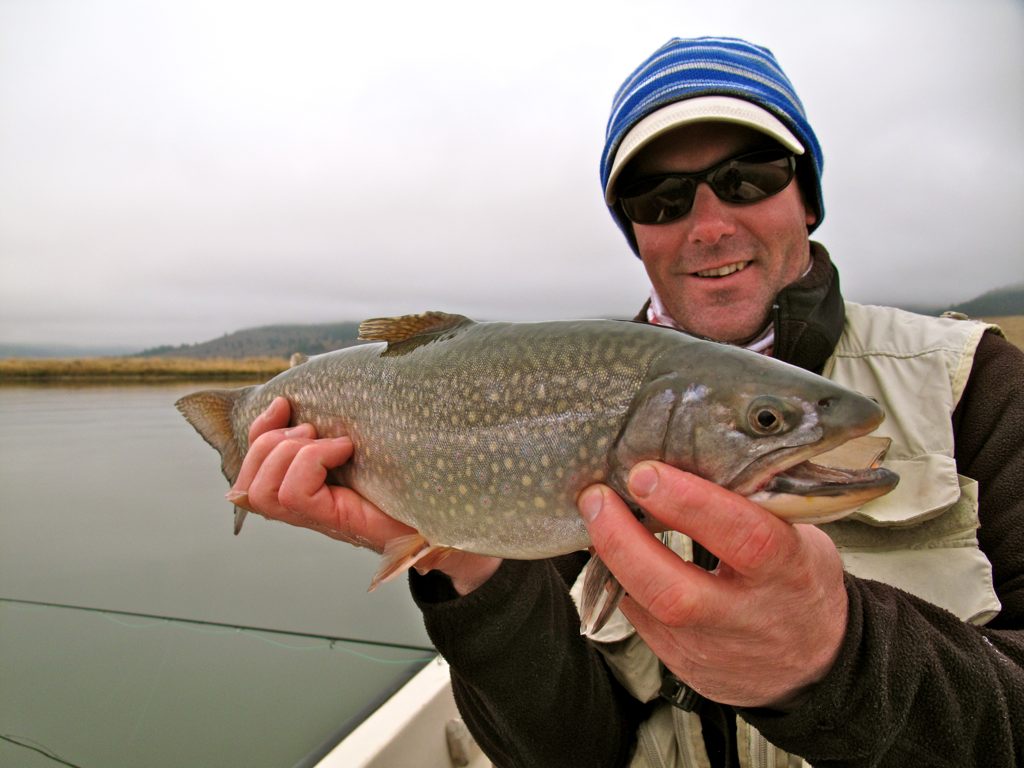
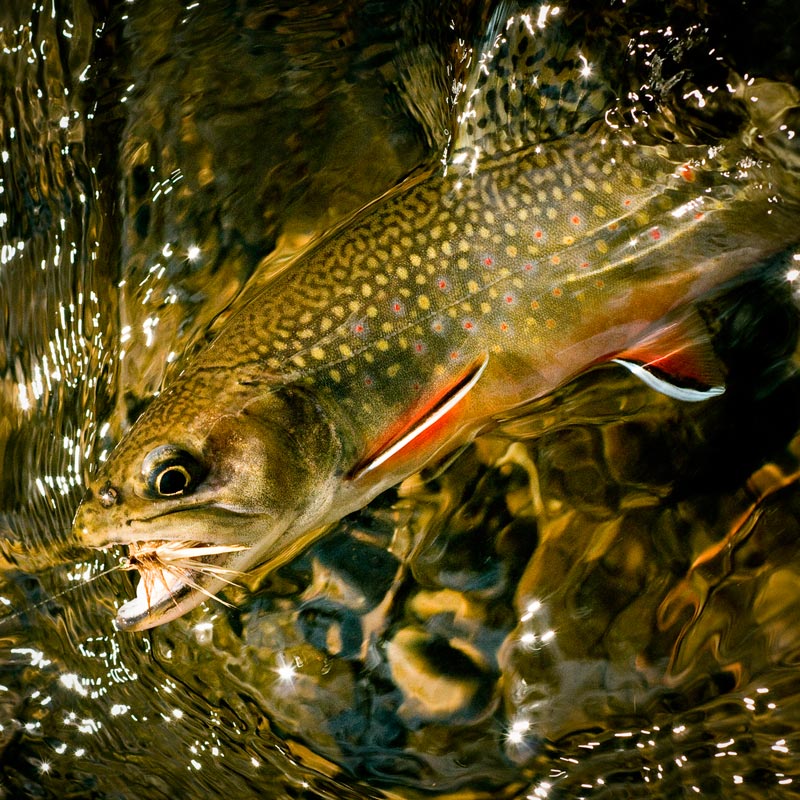
Gareth Jones with a nice Henrys Lake brookie.
The other factor that became important was to constantly change my retrieve speed and style to help induce strikes. The best way to explain this is to imagine a cat chasing a piece of string. A cat will quickly become bored and lose interest if you move the string at the same pace on each pass. However, a change in the speed or direction, will have the cat pouncing on the string once again. The same proved true with the fish on Henry’s Lake. By constantly varying the flies path and speed through each cast, many additional takes were induced.
Another small, but subtle technique that I found effective was to hold the flies briefly in the water before each recast. At the end of each retrieve, instead of the usual roll cast into a back cast, with about 20′ of fly line still in the water, I would slowly sweep the rod upwards and then stop it at about 50 degrees. Then with the fly line hanging down in an arc, I would watch this for up to ten seconds for any signs of a following fish taking the fly. Known as fishing the ‘Hang’, this short pause has been responsible for catching many additional fish over the course of my fishing seasons. Just think how many times a good fish has boiled at the surface when you go to make a recast. Try this technique and you’ll convert quite a few of those into hooked fish.
To be successful fly fishing on Stillwater, you really need to develop a sixth sense for what is happening below the surface. To help me, I constantly imagine that a fish is following my fly and I truly expect a hit on each and every cast. Doing so, when I get a hit, I’m not surprised and i tend to not miss very many strikes.
Our last day fly fishing Henry’s Lake, cold weather hit us and whilst we knew where fish were holding from the previous days fishing. Their interest in chasing streamers had diminished like the weather, however, the fish were still catchable. Local anglers proved it by hooking a few fish with #12 bead head midges, suspended about 4′ below the surface using a strike indicator. Not wanting to miss a spot of midge fishing I set up with a system that’s known in the UK as the ‘Washing line’. It’s named that because of the way it hangs your flies in the water column. Using the same three-fly rig cast on a floating fly line, the tail fly is now replaced with a buoyant eyed booby fly, which acts as a float and helps suspend the midges at the correct level. By mending slack line into the cast, the midges free fall on the slack line, then by applying tension, you can hold the flies at a constant depth. Then with a long slow pull on the line or raising the rod tip, you can lift the two dropper midges almost vertically. Red and Claret Superglue Midges worked like a charm, catching several fish during the day’s tough fishing conditions. It also proved that the ‘Washing line’ technique can be a great alternative for those who prefer to not fish with indicators.
Stillwater Fly Patterns Used
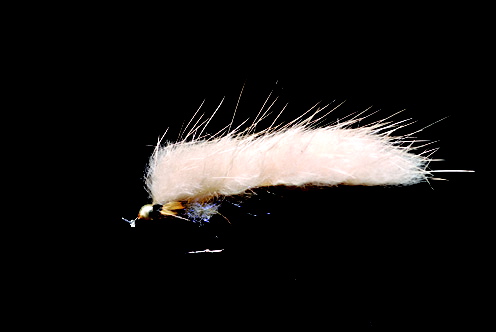
Minkie
This simple pattern has worked for me from Lake Otamangaku in New Zealand to Lake Akan in Hokkaido, Japan. It remains my go-to Stillwater stream pattern. You can tie it in many color combinations and unlike beadhead flies, it sinks level. This is a feature that I feel significantly helps improve hookups.
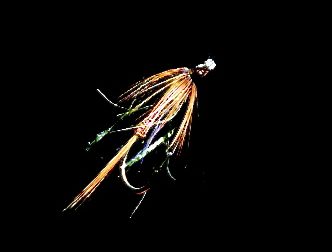
Cruncher
A popular nymph/wet fly in the UK can be tied in various color combinations and it’s a great general pattern to use when you are unsure of what the fish may be feeding on. It just looks like fish food.
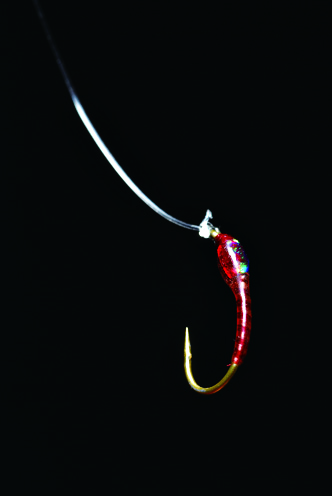
Super Glue Midge
This pattern is easy to tie, looks extremely realistic and is incredibly durable. Just match the size and color to the midges found hatching. If you cannot see any, try black or red, because these two colors will catch fish even when fish are feeding on other colors of midges.
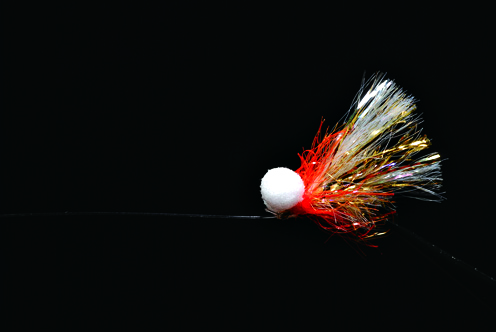
Boobies
Originally designed to be fished on a short leader and fast sinking line, UK anglers have found out in recent years how versatile this style of fly can be. It works from a surface disturbance pattern, to a float to help keep your other flies at the correct depth.
Lake History
Located just 15 miles west of Yellowstone National Park, this high mountain lake is the kind of place fly fishermen dream about. The state park, named after the explorer Major Andrew Henry, opens the Thursday before Memorial Day and closes October 31st, weather permitting. The park offers campfire programs and a Junior Ranger program. Anglers fish for cutthroat, brook and rainbow-cutthroat hybrid trout. Information on Henrys Lake can be obtained by calling TroutHunter.
We’d like to give many thanks to Gareth Jones, BVG Sales Director at Airflo for taking the time to provide us with this great stillwater fly fishing article. Gareth Jones is highly a decorated European fly fisher that’s fly fished all over the world. His great wealth of fly fishing knowledge is complimented by his modest and down to earth personality. You’d feel quite comfortable walking up to him as a stranger and and having an in-depth conversation. There’s nothing better than modest fly fishing experts that are easy to talk to and learn from. We need more people like Gareth Jones in the industry. Check out all the great fly lines at Airflo products that Gareth Jones helps design.
Keep it Reel,
Come fish with us in the Bahamas!
Kent Klewein
Gink & Gasoline
www.ginkandgasoline.com
hookups@ginkandgasoline.com
Sign Up For Our Weekly Newsletter!

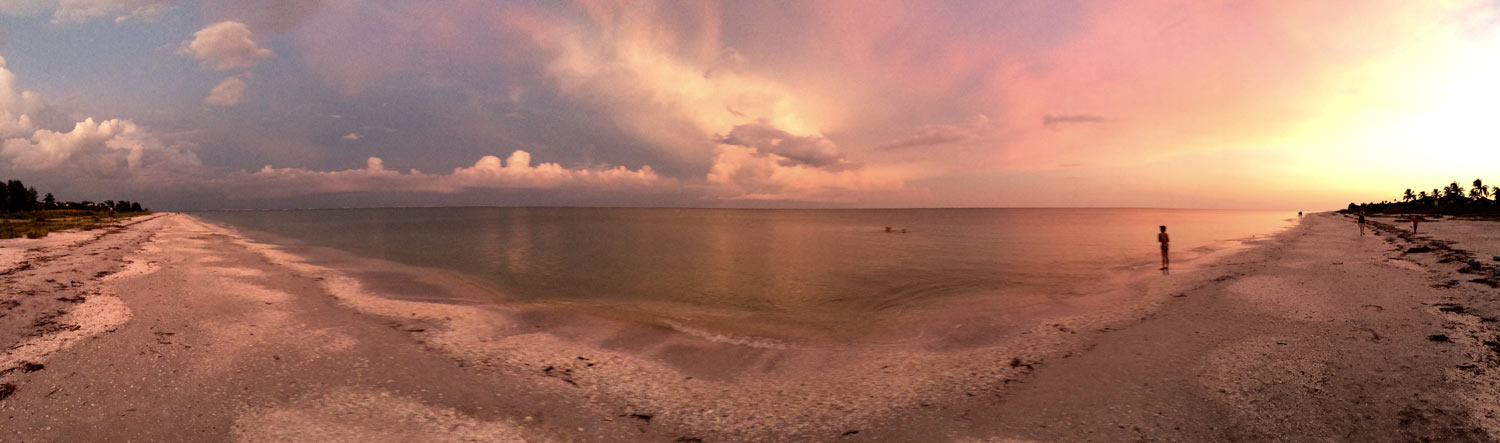 Last summer I was sitting under an umbrella on a Florida beach with my wife and a rum drink when I noticed something moving along the edge of the water. A nice snook was making its way along right by the soaking Midwesterners and splashing kids. Again I sprinted for the truck.
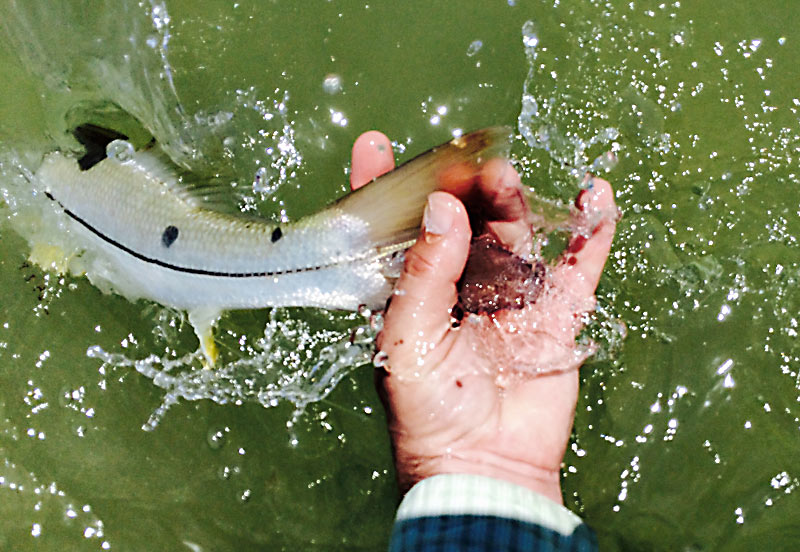 I leaned my rod up against the umbrella and went back to my drink. Before long another snook came along and I strolled down and made a cast. It only took seconds for some jackass to realize what I was up to and start yelling for his kids to splash over and see the fish. The snook wanted no part of that. I reeled up and followed him down the beach and before long he was looking for a snack again and found my fly. I caught four that way.
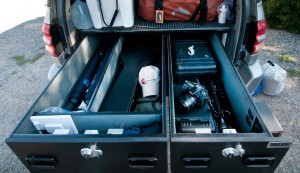 I have my truck outfitted with a TruckVault which houses a selection of rods, reels and flies to cover just about any situation. If I happen to stop to see a man about a dog, and there are bonefish tailing, I’m ready. But a simple setup is all you need. A medium weight rod and a box of flies that cover a range of possibilities is easy to stash in any vehicle. One of my favorite roadside assault weapons is a tenkara rod. It takes no time to set up and you can keep a fly on the line while stored.