Sunday Classic / Bruce Chard’s Double Haul Drill

In It For The Long Haul Photo by Louis Cahill

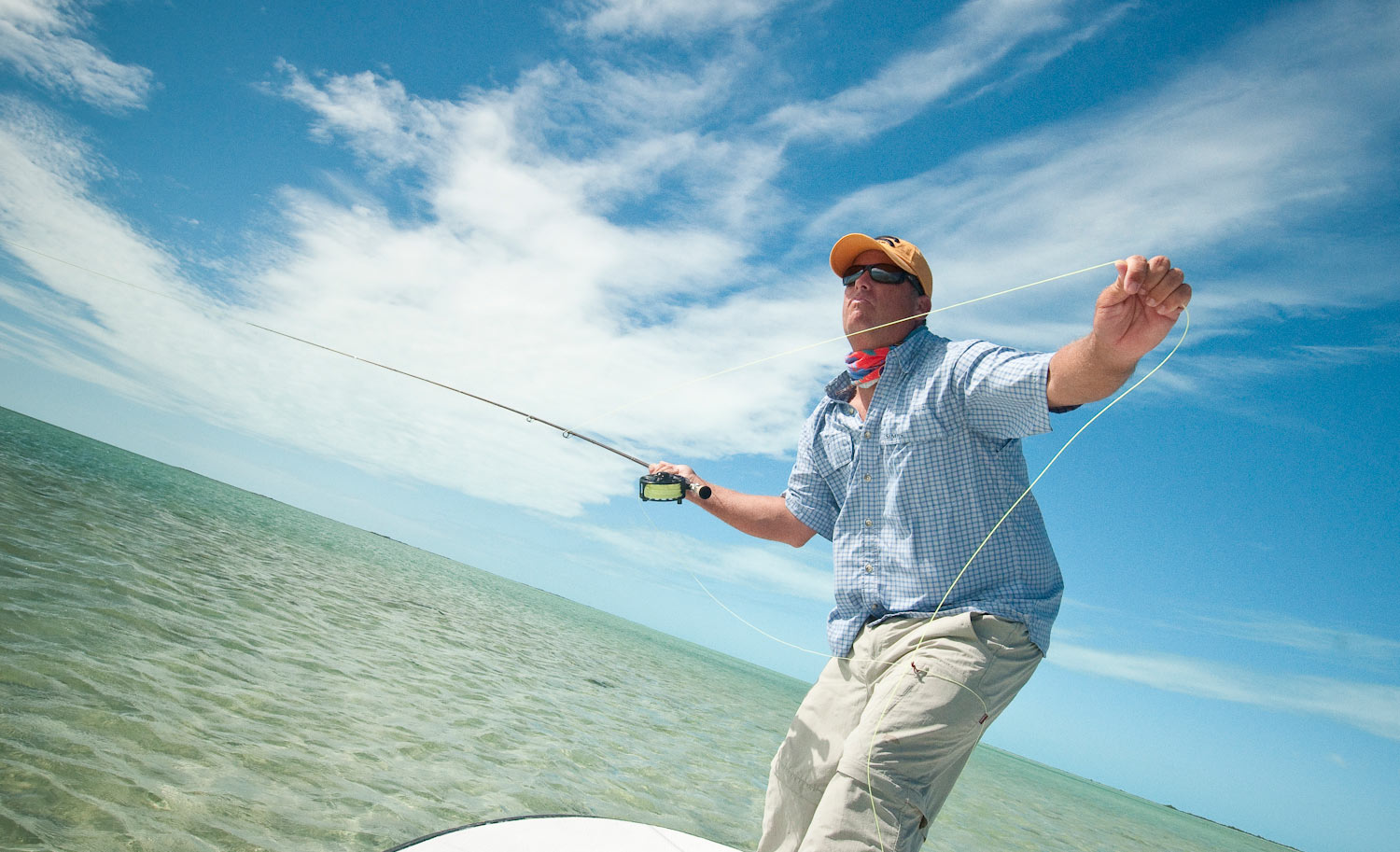
Today begins a special five part video tutorial on building blinding line speed. Line speed is the most important component in successful salt water fly fishing. There’s plenty of finesse involved but line speed is the cost of admission. If you can’t build the speed you need, you can’t catch the fish you want.

My good friend Bruce Chard is a certified master casting instructor and a truly inspiring caster. The first time, hell the first hundred times, I saw Bruce unload my jaw dropped. It’s humbling to watch what this guy can do with a fly rod. Bruce has a rare blend of skills. The technical know how of an engineer and the physical prowess of an athlete. With that in mind I asked him to help me create a set of videos that can take you from beginner to rock star. We’re calling it the Ultimate Line Speed Series. There’s a lot to cover but we’re starting here with everything you need to know about line speed.

We’re going to start slow, with the double haul. The basic building block of a dynamic cast. By day five we will be into some seriously advanced technique that is going to take serious practice. Follow along and in between videos practice what you learn and at the end of two weeks your going to be a lot better caster.

So to start, put down that fly rod, turn on the TV and get comfy on the couch and practice Bruce’s double haul drill.

At this point you should take a few minutes and review Joel Dickey’s videos on the double haul and building line speed as we will build on the techniques he demonstrates here.


I’d like to thank the good folks at Deneki Outdoors for their help with this project.  It’s awfully nice to have the worlds best bonefishing and bonefish guides on hand, even if we’re just talking about casting.

Come fish with us in the Bahamas!

Louis Cahill
Gink & Gasoline
www.ginkandgasoline.com
hookups@ginkandgasoline.com
 
Sign Up For Our Weekly Newsletter!

 

Saturday Shoutout / Silver Linings

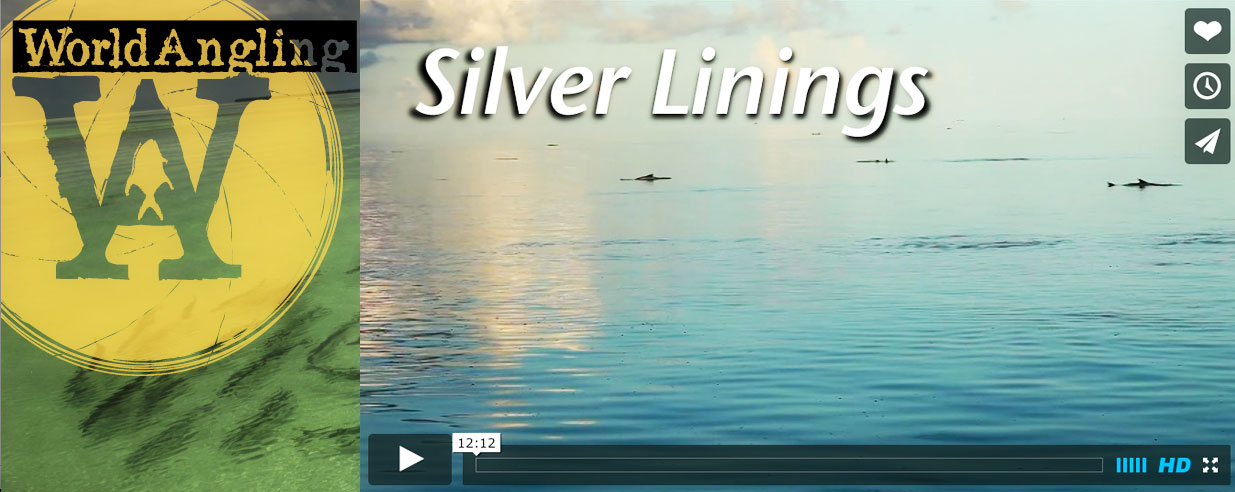
Silver-Linings

Even if you’ve never lifted a fly rod in pursuit of a tarpon, Silver Linings will make your heart skip a beat.

Silver Linings is a film from the good folks at World Angling. It showcases some great Key West tarpon fishing and sheds light on issues that put it in peril. See some amazing fish and the work that’s being done to protect them from the new Royal Caribbean Panmax cruse ships.

Watch Silver Linings and REFUSE TO CRUSE PANMAX!

Come fish with us in the Bahamas!

Louis Cahill
Gink & Gasoline
www.ginkandgasoline.com
hookups@ginkandgasoline.com
 
Sign Up For Our Weekly Newsletter!
 

Fly Fishing: Why Tippet Size Can Be More Important With Nymphs

choosing-tippet-size

(Left to Right Tippet Size in Picture) 2X, 4X, 6X – Photo by: Louis Cahill

Many of us like to think it’s all about fly pattern choice when it comes to catching trout. Sometimes it is, but there’s many times when the key to getting the tough bites, lies not in what fly pattern you’re fishing, but rather in what size tippet you’ve chosen to attach your fly to. If you asked me what fly type (streamer, dry or nymph) is most important when it comes to tippet choice, I’d quickly respond that tippet size is most critical when an angler is trout fishing with nymphs. You’re probably thinking, “Thanks for your opinion Kent, but what’s the theory behind your reasoning?” For starters, trout don’t tend to be very tippet shy with streamers—in most moving water situations. A trout generally will see your big meaty streamer coming through its kitchen, and it will either pounce on it for territorial reasons or because it provides an opportunity for a large meal that it can’t afford to pass up. I’ve got buddies that regularly fish 15 pound tippet when they’re streamer fishing, hell, sometimes even 20 pound, and they have great success. And a good portion of them, aren’t pounding the banks on the river from a drift boat, but instead wade-fishing on small to mid-size trout streams. In many cases, anglers tend to fish tippet too light when streamer fishing. Fishing beefy tippet will aid in efficient leader turnover, decrease the amount of false casting needed between presentations, and lastly, it will help anglers make accurate casts more consistently at varying distances.

Dry fly fishing, makes for a much closer call, but I still stand by my belief, that tippet size is more important with nymphs. Largely because the two most important factors in dry fly fishing success, are an accurate presentation and a drag free drift. In certain situations, timing can be critical as well, for instance, when an angler is fishing to a trout actively feeding on the surface during a hatch. That being said, I wouldn’t go so far as to say tippet has no bearing in dry fly fishing. It’s just more common that the problem lies with a presentation off target (out of the target zone), a dry fly looking unnatural because of drag, or the dry fly was drifted over the trout when it wasn’t ready (repositioning after a recent feeding). If you’re certain you have all of the above correct, you’ve tried a few different patterns, and you’re still not getting bites, there’s a good chance your tippet is too large and needs to be downsized.

Nymphs, on the other hand, tend to provide a greater number of challenges to the fly angler, because they often are happening all at the same time. Not only do anglers need to worry about trout being tippet shy, they also have to worry about managing conflicting underwater currents (differing speeds and directions), and it’s critical that they have the nymph/nymphs drifting at the correct depth. With streamers and dry flies, you usually don’t have to worry about dealing with all of these challenges all at once, and that’s why I feel tippet size with nymphs is most important. Downsizing tippet will combat tippet shy trout, provide a higher level of suppleness or flexibility, which will make it easier to maintain a natural drag free drift, and help wet flies sink quicker into the desired water column.

In conclusion, I’d like to state that there’s times on the water when the choice of tippet size can be just as critical from one type of fly pattern to the next, and that goes for a fly on or below the surface. The main purpose for me writing this post was to help anglers from misdiagnosing the real problem at hand for why they aren’t catching fish. Catching trout is always about identifying the key variables and prioritizing them correctly in the eyes of the trout.

Keep it Reel,

Come fish with us in the Bahamas!

Kent Klewein
Gink & Gasoline
www.ginkandgasoline.com
hookups@ginkandgasoline.com
 
Sign Up For Our Weekly Newsletter!
 

Sunday’s Classic / Who Says You Should Only Fish Short Fly Rods On Small Streams

10 Foot fly rods may become the next big thing. Photo By: Louis Cahill

My good friend Dave Grossman decided to trade in his 9 foot boat rods for 10 footers this year. So far, this fishing season he claims the extra foot of graphite has been working wonders for his clients on the water. Dave says, “I find that the ten foot fly rods make it much easier for my clients to mend their fly line, especially when they need to mend a lot of line. That translates into them consistently getting longer drag-free drifts. The longer rods shine when we need to high-stick across multiple currents, and they also allow my novice clients to squeak out a little more distance in their casts.”

After hearing those positive comments from Dave, I decided to give them a shot with my own clients, but I’d take it a step further. Instead of just incorporating them on float trips on the big rivers, I’d experiment using them on small to mid-size streams. The first trip out was a real eye opener and success with the ten foot fly rod on one of my 30′-40′ wide trout streams. To my amazement, the longer rod outperformed my standard 8 1/2-9 foot fly rods in almost all fishing scenarios in my clients hands. The only area the ten foot rod underperformed, were spots where the stream narrowed drastically or when it was really tight and cramped. The surprising thing about that, is it actually happened a lot less than I thought it would, and when it did, I’d just handed over the shorter rod I was carrying to my client. The key was positioning my angler in the correct spot, reminding him he had a longer rod in his hand, and then choosing the appropriate fly cast to present our flies.

I continued the experiment for several more guide trips, and it quickly became apparent, that all the fly fishing literature I’d previously read about matching the length of your rod to the size stream you were fishing, was actually just one way of looking at it. If there’s one thing I’ve learned over the years with fly fishing, it’s that there’s almost always multiple options (types of casts, types of rigs, types of gear, ect.) that are feasible for anglers to use when fishing any given situation. Most of the time we end up going with the status quo, which is the obvious and most popular method for the fly fishing situation at hand. Sometimes, however, if we’re not afraid to think outside of the box, and open to use an unorthodox approach, it has the potential to end up performing even better for us on the water.

benefits That I noticed with my clients when I put a longer fly rod in their hands.

– Ten foot fast action rods usually have a slightly softer tip, perfect for setting the hooks and fighting big fish on light tippet and small flies. My clients broke off less and landed more fish.

– In many cases, ten foot rods can make it easier for anglers to land big fish solo, because they have more rod to help them bring the fish in closer to net.

– You can often be stealthier with a longer rod because you can position yourself farther away from the fish without jeopardizing your presentation and drag-free drift.

– If a fish takes off down river or upstream of you, the longer rod can help maintain a sufficient angle on the fish, minimizing the chances of the hook dislodging.

Are there some small streams where fly fishing with a ten foot rod won’t be feasible? Yes, there are lots, but the point of this post was to demonstrate you shouldn’t automatically think just because you’re fishing a small stream that you need to grab your short 6′-8′ fly rod. If you fish with friends like I do most of the time on small streams, it can really be an asset for the team if you pack different length rods. Since it’s typically best to fish one angler at a time so you don’t spook fish, you’ll usually only have one rod fishing at a time, and that will allow you to choose the best rod for the location your targeting.

Keep it Reel,

Come fish with us in the Bahamas!

Kent Klewein
Gink & Gasoline
www.ginkandgasoline.com
hookups@ginkandgasoline.com
 
Sign Up For Our Weekly Newsletter!
 

Saturday Shoutout / Kirk Deeter Talks Sight-Fishing to Trout in Eddies

sight-fishing-trout

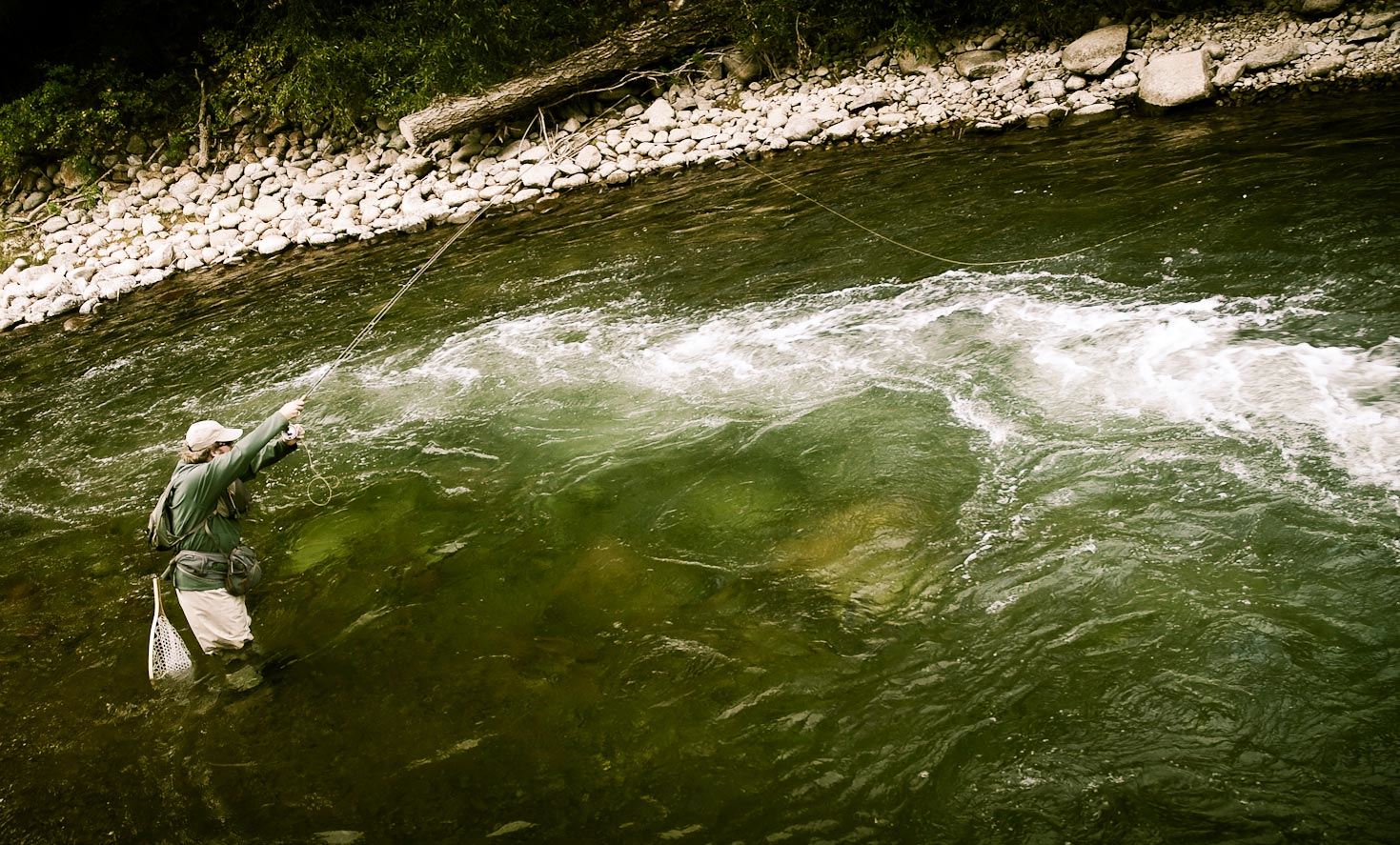
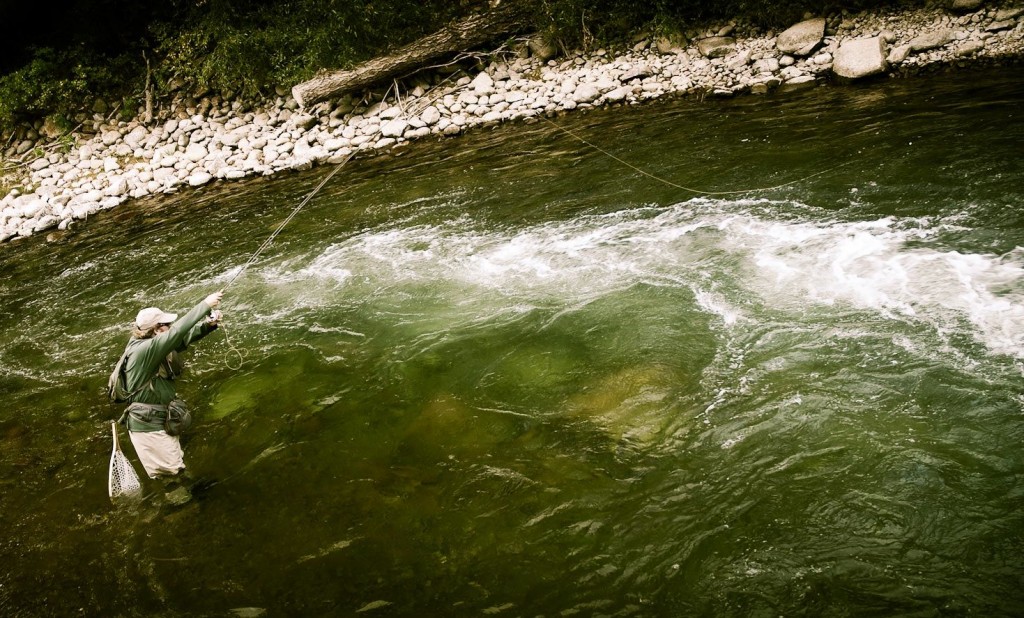
Every now and again, Kirk Deeter snaps a photograph on the water of a place he recently got back fly fishing, and then brings it back to Fly Talk asking everyone the question, “How would you fish this spot?”. He’s usually on the water with another guide or veteran fly angler at the time, and they both approach and fish the spot in different ways. I always find these posts by Kirk very interesting and informative, and I usually walk away thinking, “Hmmm, I’ll have to try that approach next time I find myself fly fishing a spot like this.

The thing I like most about this how-to series of articles that Kirk writes, is the fact that it just a great job of pointing out there’s always multiple ways of doing things when you’re on the water fly fishing. Point being, there’s usually more than one way to find success on the water. I also like that it showcases how much you can learn from fishing with other anglers as well. Everyone has a unique eye in the way they pick out, approach and fish water.

Click the link below to read Kirk Deeter’s full strategizing article:

Sight Fishing to Large Rainbow Trout in an Eddy

Have a great Saturday everyone. Thank you for tuning into Gink & Gasoline.

Keep it Reel,

Come fish with us in the Bahamas!

Kent Klewein
Gink & Gasoline
www.ginkandgasoline.com
hookups@ginkandgasoline.com
 
Sign Up For Our Weekly Newsletter!