
Is Your Steelhead Fly fishing Or Just Swinging?
By Louis Cahill
IS YOUR FLY FISHING FOR THE ENTIRE SWING?
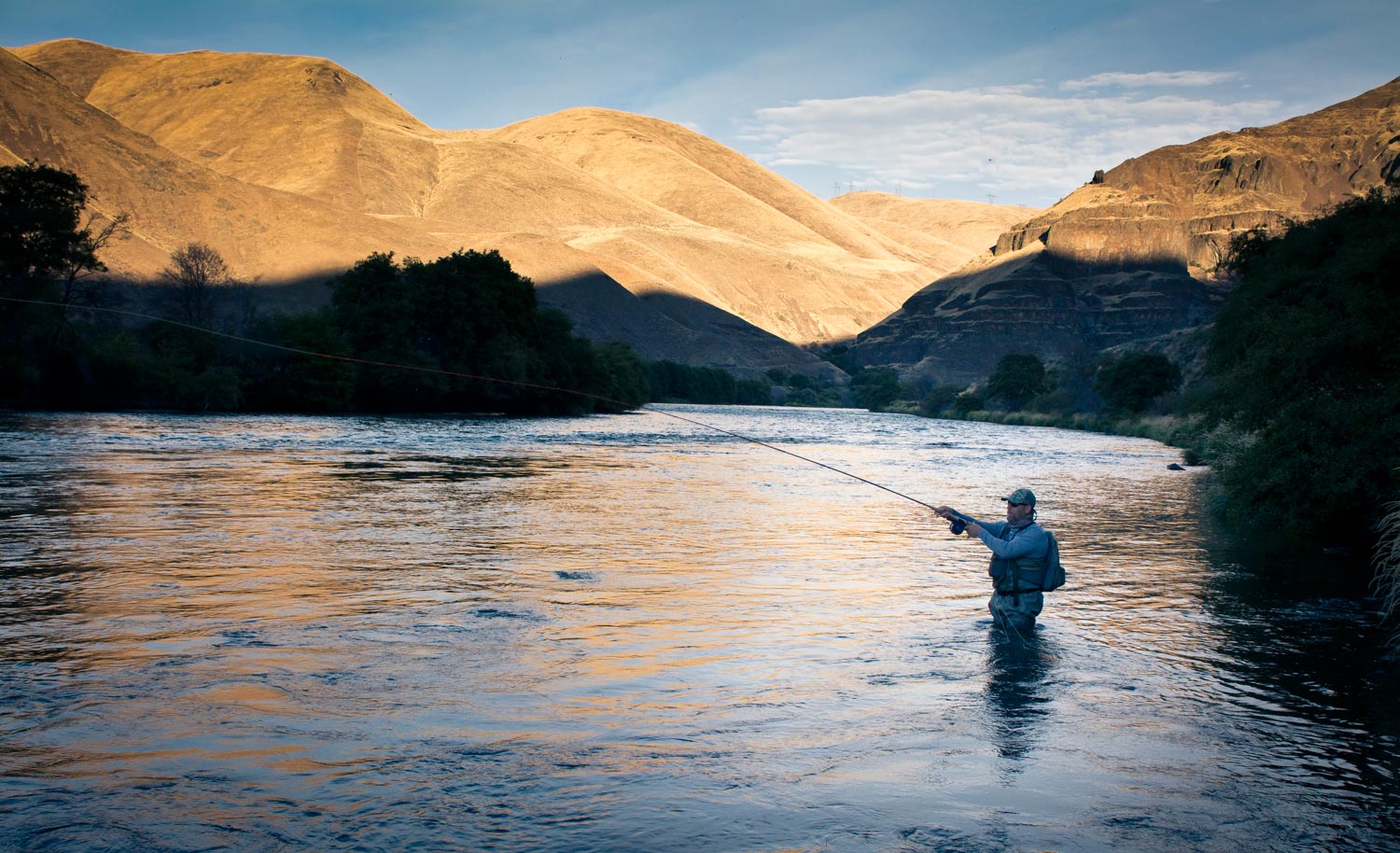
Many anglers who successfully swing flies for steelhead could be catching even more fish by improving their swing. Steelheading is all about taking advantage of every opportunity and it’s pretty common for anglers to waste as much as half their fishing time with a poorly swung fly. I include myself among them. It’s technical business and requires constant attention.
The key to a good swing is keeping the fly moving at just the right speed and angle. That buttery slow swing that gives the fish time to see the fly and react. The gentle motion that entices the attack. It’s a hard thing to visualize and even harder to describe. Fortunately there’s a reliable visual cue that will help you determine when you fly is swinging well and when it isn’t. The belly of your line.
Before we talk about what the belly of the line tells you, let get some terms straight.
The belly is the part of the line which is swept by the current causing an arch in the path of the line. When swinging flies the belly determines the speed at which the fly moves across the current.
Picture yourself fishing from river left. You cast directly across a swift current, which flows from your left to right. Your line bellies down stream so that the middle of your line is down stream of your fly. We will call this a convex belly.
Now, picture yourself on the same side of the river but casting across a slow moving current with your fly landing in faster current on the far side. Your fly moves down stream and hangs below your line, which curves to follow. We will call this a concave belly.
Picture a swing where your line makes the shape of an L. Your fly and leader point in a direction perpendicular to your rod. We will call this a 90% belly. A 45% belly would have less curve in the line and a 100% belly would have more. A straight line swing or 0% belly would have no curve in the line.
When the fly is swinging at a good pace and angle, we will say it’s fishing. Not fishing means the speed and angle are wrong.
Now that we have our terms, what’s the swing we are looking for?
Read More »Tie An Effective Fly-Fishing Leader for Bonefish
By Louis Cahill
This fly-fishing leader will out perform anything you can buy.
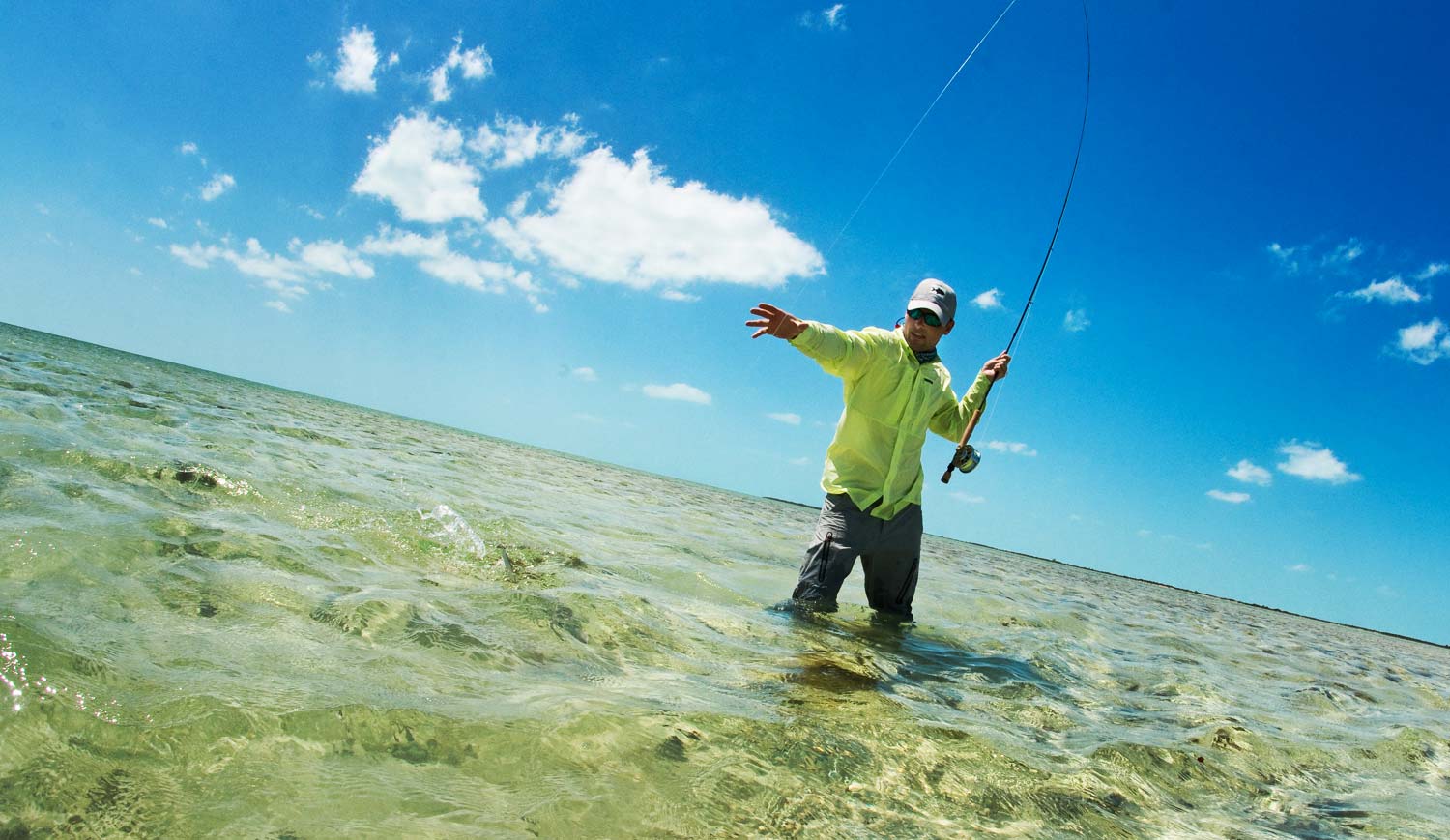
I have used this leader for most of my saltwater fishing for fifteen years. I learned it from my buddy Bruce Chard and have changed it very little in all that time. It offers the angler more control over their presentation than any commercially made leader. The leader has amazing turnover, especially in windy conditions, and also works well for other species like permit and redfish.
WATCH THE VIDEO AND LEARN TO TIE AN EFFECTIVE BONEFISH LEADER.
Read More »3 Tips for Swinging Flies for Trout & Other Species

A couple weeks back, for one of my Saturday Shoutouts, I showcased a great fly fishing article on MidCurrent titled, Beyond the Swing by John Likakis.
It was a fly fishing techniques piece packed with tons of information about the how-tos of swinging flies. It’s a great read for any angler wanting to become more competent and effective at swinging flies for trout and other species. If you happened to miss reading this one, please check it out after today’s post. After I read John’s article, it inspired me to share three swinging fly tips of my own. Each tip is meant to help the anglers out there who’ve just recently started swinging flies on the water.
Read More »The Karma of Broken Trailers

Today we are proud to share an excerpt from Chris Santella’s new book, “The Tug Is The Drug.” You may know Chris as the author of “Fifty Places To Fly Fish Before You Die.” His new book is a collection of thirty essays. We know you will enjoy this one!
THE KARMA OF BROKEN TRAILERS BY CHRIS SANTELLA
Every generation or so, the subject of paving the Deschutes River access road from Sherars Falls to Mack’s Canyon is brought up for discussion. The notion is always quickly shot down, with the guide community leading the charge. “The crowds will be unbearable on an already crowded river,” is the sentiment. Prospects for a paved road are tabled for another 10 or 20 years, and some of its opponents proceed to drive the roughly 17-mile stretch at twice the posted speed limit—especially during the steelhead season—leaving the already marginal gravel road a washboard hell.
One that can be very hard on trailers.
I own a one-third share of a drift boat, and consequently am sometimes asked to donate a trip for a school auction or assist friends with overflow guests. One weekend last September, I was slated for two such trips, back-to-back, both floating from the Beavertail campground to Mack’s. Prior to the adventure, I had my tires rotated and checked, knowing the travails that waited. I picked up the boat from my friend’s driveway and proceeded to Maupin.
At 4:30 the next morning, my friend (and his sturdy Tacoma Supercab) began the drive north to Beavertail. When we left the paved road at Sherars, my Subaru was engulfed in his dust; but soon his taillights were out of sight. That’s because I drive very slow on the access road, hoping to get my rig down and back in one piece. There was a blush of pink above the rimrock as I descended from the road to Beavertail. Reaching the bottom, I could see my friends at the put-in, wadered up and waiting. I circled the campground and rounded the final bend to approach the put-in. As my wheels straightened, there was an abrupt thud. I stopped, expecting I’d hung up on a rogue rock or popped one of my recently rotated tires. My eyes drifted to my passenger-side mirror. There, I spied one of my trailer tires rolling toward some brush.
Fixing Line Twist: Video

A day floating the river can turn into frustration when your running line starts to tangle.
There are lots of reasons fly lines get twisted. The most common is being rolled under foot in the bottom of the boat. However it happens, it’s a mess of tangles and knots that make fishing frustrating. There’s nothing worse than landing your fly just short of the strike zone because your running line is tangled.
Fortunately there is a simple trick to fix line twist. I learned this trick from my buddy Zack Dalton of ROI Products and it changed my life. I promise you will love it.
WATCH THE VIDEO AND NEVER SUFFER WITH A TWISTED LINE AGAIN.
Read More »Flynn’s Stonefly Nymph: Video
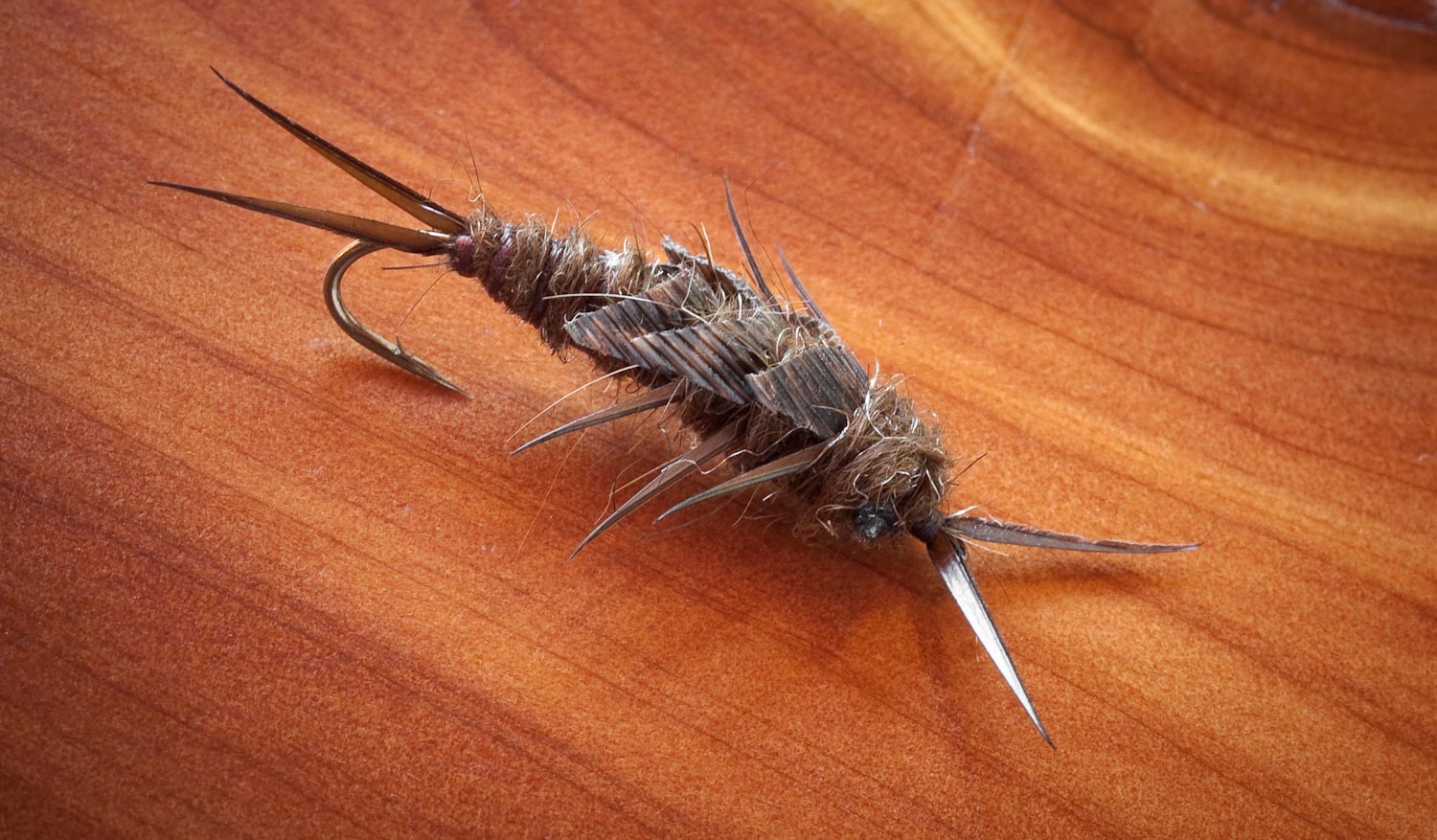
I HAVE SAID ON MANY OCCASIONS THAT, I DON’T CARE TO LIVE IN A WORLD WHERE TROUT DON’T EAT STONEFLIES.
My good friend Dan Flynn shares my obsession with the noblest of insects. Dan is a great tyer with an impressive repertoire of classic patterns. I have always admired his meticulous stonefly nymphs. I’ve also spent many days watching him crush trout on them.
C&R Tips & Gear for Musky & Other Toothy Critters
I’ll never forget the first musky I landed on fly.
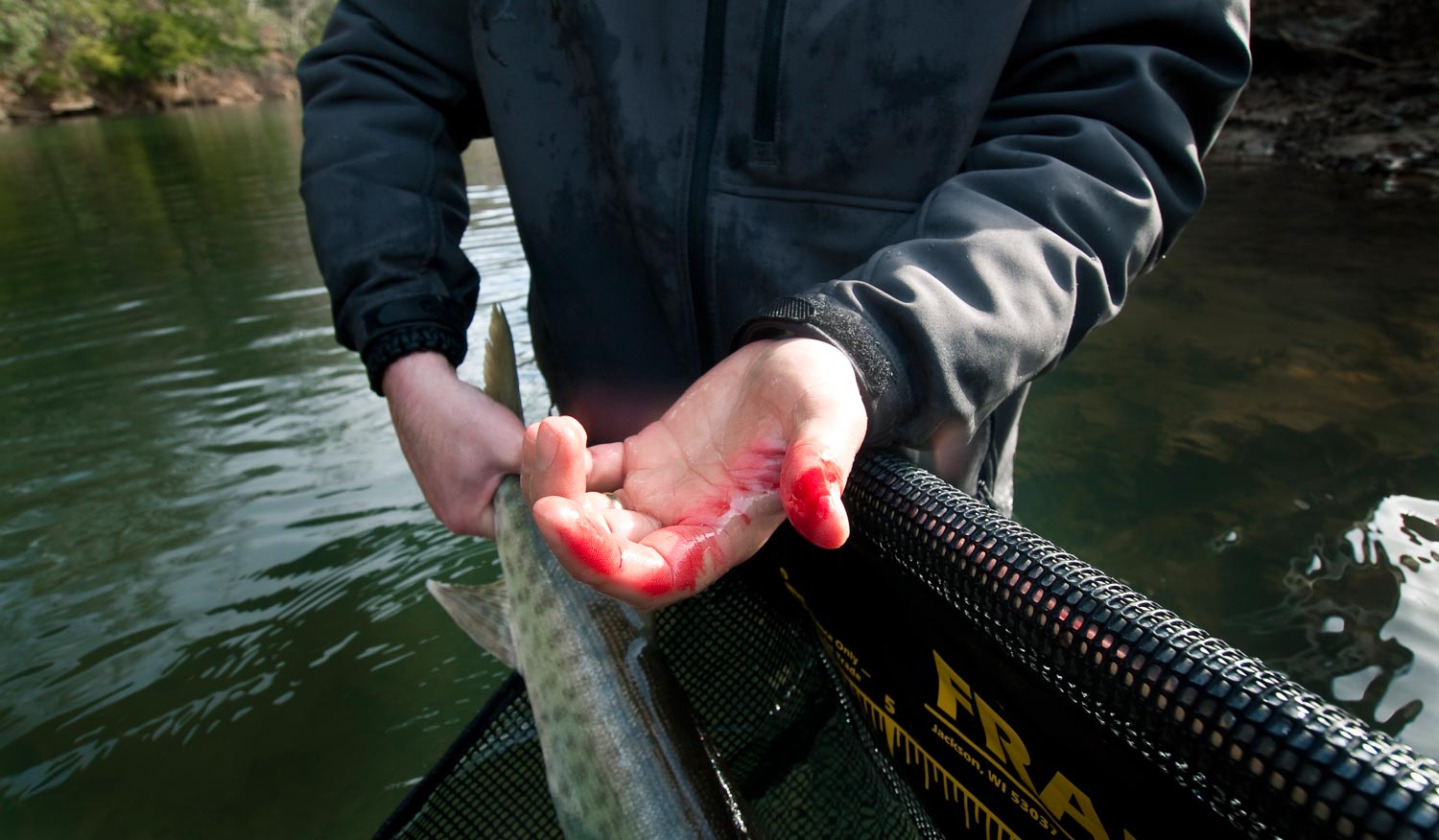
It was an extremely proud moment for me, but it quickly turned into a stressful situation after I got the musky to the boat. I had serious problems removing the deeply hooked fly. The musky had its mouth slammed shut and would not open it more than a couple seconds at a time. After a few minutes without making any progress, I became desperate, and used my hand to pry the mouth open (dumb I know, but the health of the fish was more important to me) and I ended up badly cutting my hand on the razor sharp teeth. The entire hook removal process took far too long, and that made it extremely difficult for us to revive and release the fish. It was an organized team effort to say the least. I held the fish in the water, Louis stabilized the net, and Murphy ran the trolling motor upstream to keep water running over the gills until we got the musky green again. Talk about a bummer that ended up overshadowing a proud angling moment. That’s not how I wanted my first catch and release of a musky to go down.
If you’re planning on going fly fishing for musky or any other toothy critters for the first time, I highly encourage you to read over these organized catch and release handling tips and gear recommendations. They’ll keep you and the fish safe, and you’ll greatly decrease the chances of ruining a great moment on the water like I did.
Read More »Don’t get ripped off!

By Louis Cahill
The only thing worse than paying too much for your fly fishing gear is having it stolen.
I woke up this morning to a pile of glass by my truck. One of the worst things about living in a big city is the constant presence of crime. Car break-ins are common and, in the scheme of all the horrible stuff that can happen to you, really just an inconvenience. Don’t waste your time telling me that I need to move to Montana. Believe me, I already know but my wife has the best job of her life and is very happy, so we are here for a while, and while we are, we will have to deal with this kind of thing.
You would think that with the ever-present threat of robbery, I would have better sense than to leave thousands of dollars worth of fly fishing rods and reels, and various photo gear in my truck. You’d be wrong. There were at least a dozen fly rods, half a dozen reels and some photo gear in the truck last night when I, and everyone else on the street, got hit. Hear’s the part you might not expect. It’s all still there.
I leave that stuff in my truck for a reason. It’s the safest place I have, because I have a Truckvault.
Read More »Fly Tying: Working With Wire
By Bob Reece
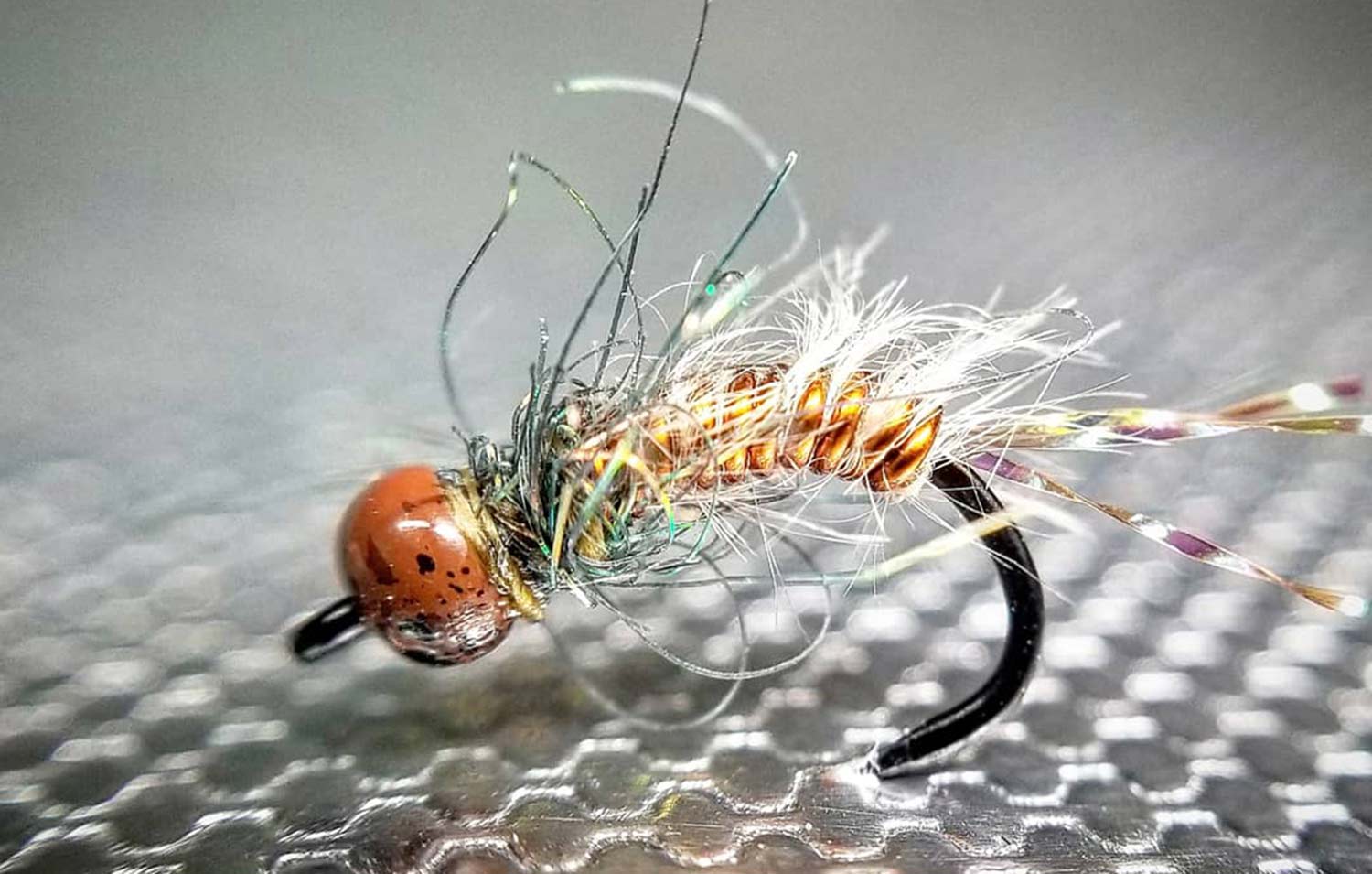
Wire is a common ingredient in nymph patterns.
Whether in the form of ribbing or full body segments, this material adds the important elements of segmentation, durability and weight. Yet, because of its fairly rigid nature, it can be a difficult material to work with.
When attaching wire to the hook shank, it’s important that it lands on one of the lateral sides of the hook shank. This means that is should be tied in on the side of the hook either closest to your or the side opposite of that. This ensures that the nymph pattern is widened horizontally and not vertically. This matters because most natural nymphs have horizontally widened bodies. Using this tying method helps to mimic that profile when constructing nymphs.
In addition to the tie in location, the consistency of the thread wraps that are laid down matters for two different reasons. If the wraps are laid down without consistent firm tension, the wire will shift position when the tier wraps it forward. Equally important is the spacing of thread wraps laid down on the surface that the wire will be wrapped over. If the wraps are not evenly spaced and create an uneven surface, that same uneven layout will be reflected in the overlying wire wraps.
Read More »13 Proven Streamer Patterns for Trout
13 Big streamer patterns that get big results!
I wrote an article stressing about the importance of experimenting with different streamer retrieve speeds and stripping lengths, until you find a winning combination that the trout find the most enticing. Generally, when you’re paying close enough attention when your streamer fishing, you’ll notice one type of streamer retrieve that works hands down better than the rest. If you don’t find this to be the case and you’re not catching fish with streamers, it probably isn’t the best tactic for the day you’re fishing. My testimony and theories provided in my previous post were gathered from many years of streamer fishing for trout, but were validated and backed up further from guide trips as recent as this past week. We had several comments on the post, with one of our followers requesting I write a follow up post showcasing some of my favorite streamer patterns. Here you go Matt.
Read More »