
Mora’s Dorado Streamer: Video
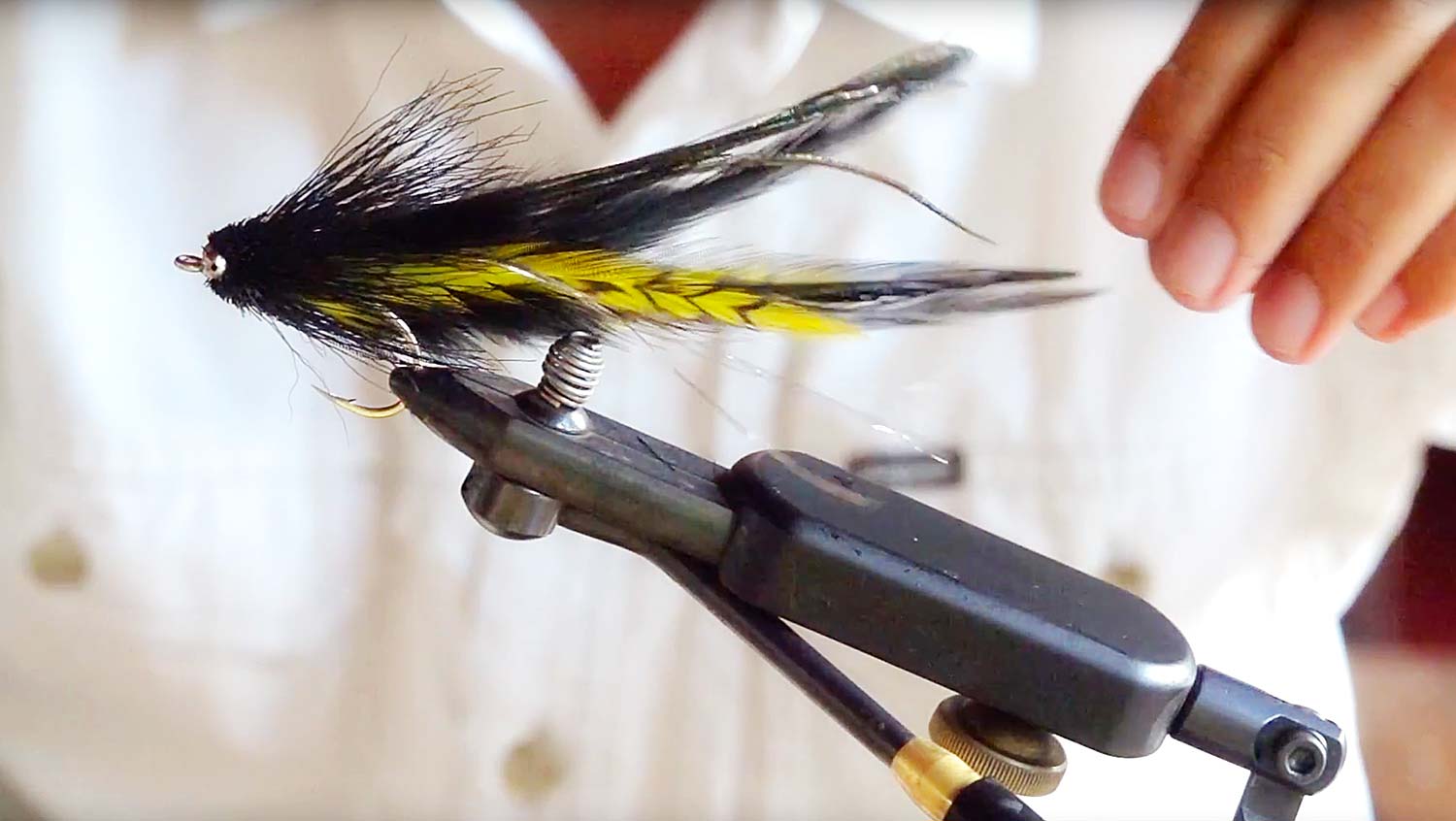
Dorado streamers are an exercise in elegance.
The first time I tries tying streamers for golden dorado I made a mess of it. I imagine that is a pretty common experience for anglers tackling this apex predator for the first time. Coming from a background of tying streamers for species like trout, pike and musky, my instinct was to put way too much material on the hook. The flies looked great, but they were impossible to fish in the way they need to be fished.
Dorado fishing is intense. There is no explaining it. You just have to experience it for yourself. It’s streamer fishing at it’s absolute best and most demanding. You have to make accurate cast, quickly, and you have to do it all day. Your ability to accurately cover structure is key. It’s like tactical shooting with a fly rod. If your fly is too heavy, you’ll be toast at the end of the day when your chance of hooking a kraken are their best.
The most important thing in tying any fly is to understand the target species, how they feed and the triggers that make them eat.
Dorado flies don’t need to run deep. The fish is not afraid to come to the surface, or of anything else for that matter. They also do not need to push a ton of water. They do need a sizable profile, great action and high contrast. Effective dorado patterns deliver these elements with the bare minimum of materials.
The guides at Parana on the fly, where I host my annual dorado trip, tie every day. These guys know dorado and are masters at crafting effective patterns. Don’t be fooled by their simplicity. It’s exactly that simplicity that makes them effective.
HERE’S PARANA ON THE FLY GUIDE LUCAS MORA TYING A CLASSIC DORADO STREAMER.
Read More »The Fusion Warrior
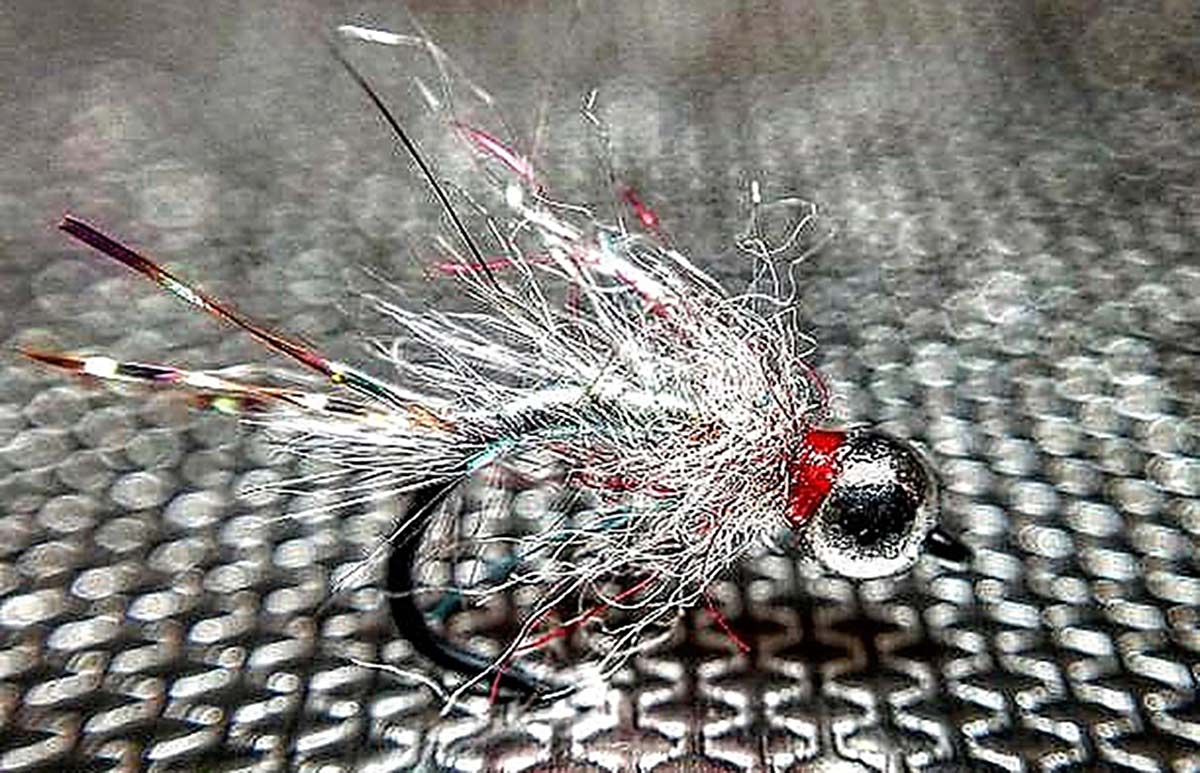
If Lance Egan’s Rainbow Warrior and my Fusion hooked up and had a beautiful baby, what would it look like?
Wyoming winters are long, really long. These conditions can be challenging to endure, yet they provide ample time for creation behind the tying vise. After posting a tying video for Lance Egan’s Rainbow Warrior I couldn’t help but wonder. I was curious what a combination of my Fusion and his Warrior would look like.
I’m a huge believer in the combination of a little flash and a lot buggy when it comes to nymph. The combination of these two patterns fills that niche wonderfully. The use of grey ostrich herl in the abdomen provides ample movement and a subtle veil to the flash of the underlying tinsel. The application of the Rainbow Sow Scud dubbing provides mottled coloration and a soft hackle like movement when applied with a dubbing loop. Tied on the Tiemco 2499BL in black, the pattern supports a significant gap that helps to increase the odds of hooking and holding fish.
When fishing this pattern I use it as
Read More »Aquamarine, A Permit Tale
“Now! Now is the time! Hurry!”
I am perched on the bow of a rocking Hell’s Bay Waterman, on the flats of Abaco, squinting through my bifocals and trying in vain to find the opening in a figure 8 knot. I’ve cut off six different crab flies and lucky number seven is waiting for me to finish this damned knot, while a forty-pound permit feeds in front of the boat. Ashron, my guide, is trying to help. I know this, but it’s not working. Sweat is running into my eyes and I’m starting to get tunnel vision.
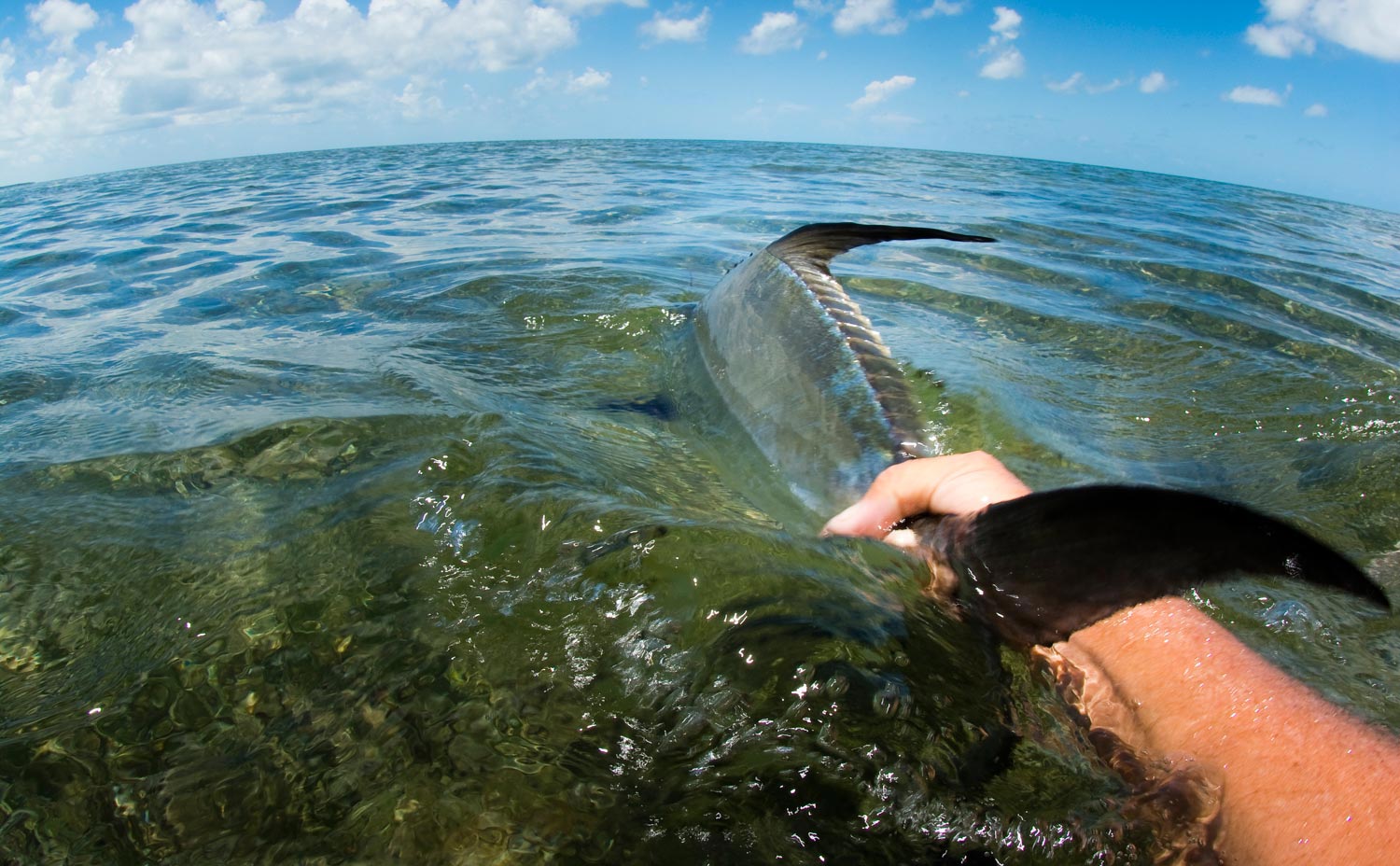
The permit stops feeding and I’m finally able to finish the knot. Now we have to wait again. This big permit is doing what’s called “riding a ray.” It’s hovering over a manta ray about six feet across and picking up the scraps the ray misses. It’s sort of the Holy Grail of permit shots. As long as they stay together, the permit will focus on the ray and eat happily. We pole along about seventy-five feet behind them waiting for the ray to stir up the mud by feeding. Drop a crab pattern in that little puff of mud and you stand your best possible shot at hooking up on the permit.
Six different crab patterns have failed to get the desired reaction. I’ve had looks, swirls, follows and charges but no eats. Lucky number seven is a tiny Mop Crab no bigger across than my pinky nail. There is no eighth pattern in my box. There was, in fact, no seventh pattern. This fly came from Ashron’s hat. I’m already kicking myself for that. I’m kicking myself for making some bad casts early on, for not having practiced more before I came, for not calling my mother more often and any other shortcoming I can think of. This is what happens in your head when permit fishing and I know full well that the nagging voice in my head must be quieted before that ray muds again. That’s the devil F-ing with you. Permit ride rays and the devil rides permit.
“Now!” Ashron tells me. I see the puff of mud, I let go of my fly and sweep back my rod and tell the devil, “Watch this.”
Read More »Labrador Bound
By Jason Tucker
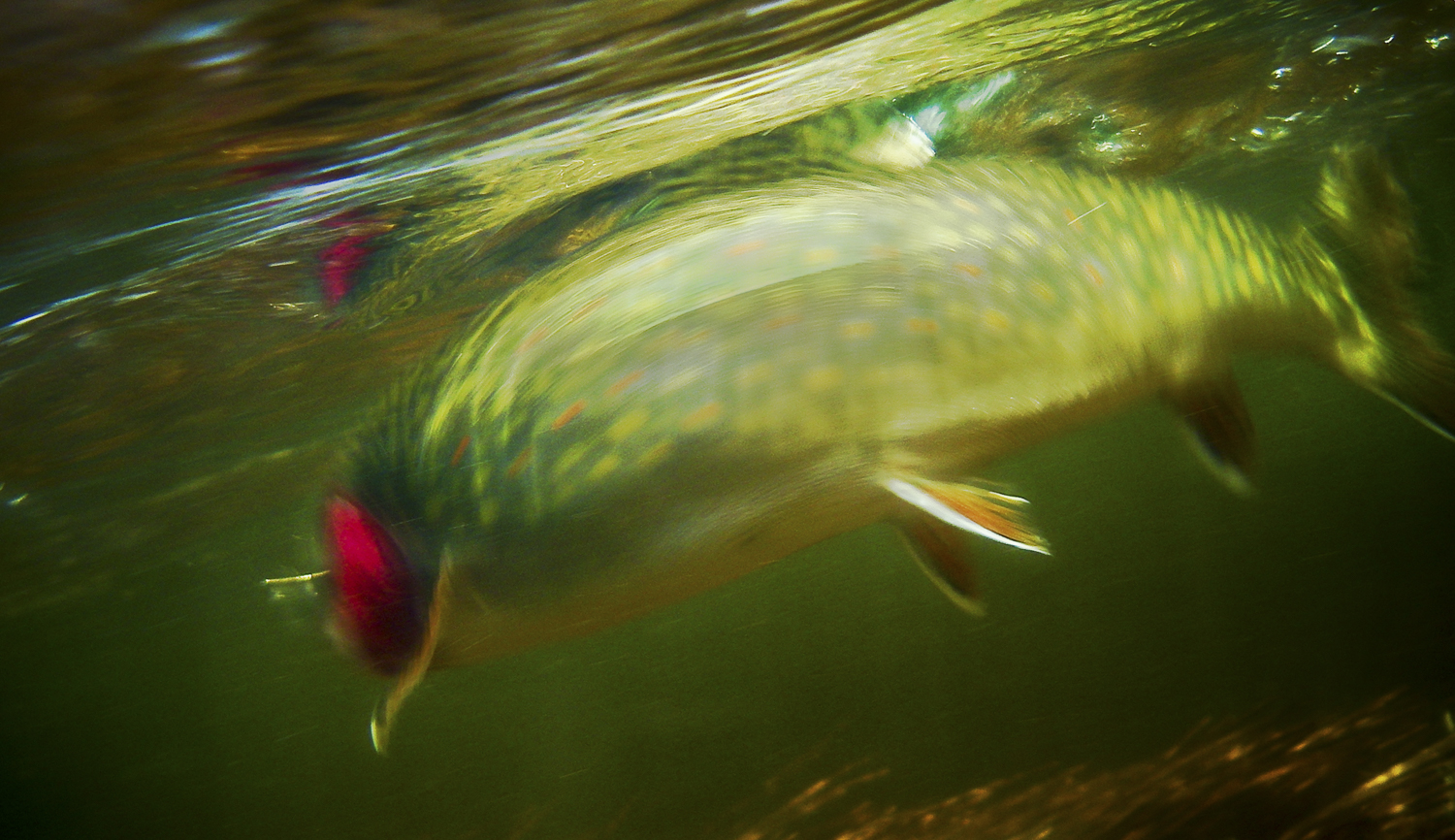
It’s no secret that I love brook trout, and thus the name of my blog, Fontinalis Rising.
Size doesn’t matter. From 4-inch little gems to behemoth monsters the size of respectable brown trout, I find them all fascinating and exciting. When I was a boy, my grandfather took me down to the river and showed me two fish in the 24-inch range that had staked out the area as home.
Most of our fish were in the 6- to 8-inch range, and 12 inches was considered a good fish. To see two fish that had doubled that mark was incredible. Ever since then, I’ve wondered what made those two fish get so big.
I spent as much time as possible fishing for brook trout in Northern Michigan and its Upper Peninsula, and after many years I finally caught a 16-inch fish, which was my personal best for some time.
Since then I’ve gone to Nipigon, where a 12-inch fish is considered small. I caught one fish that was 22 inches, and lost several fish that were much bigger. (Brook trout tend to pack on the pounds once they reach about 22 inches. A 20-inch fish may weigh 3 pounds while a 23-incher may weigh 7 pounds.)
A few years later I was invited to go fish with the Sault Gang. We caught 38 fish that averaged 18-20 inches and 1.5 to 3 pounds, and got one big male that was over 4 pounds. I also took a trip to Isle Royale with a distinguished group of gentlemen. The fish there average 3-5 pounds. With research I’ve discovered that
Read More »Eye Surgery #8 Update
By Louis Cahill
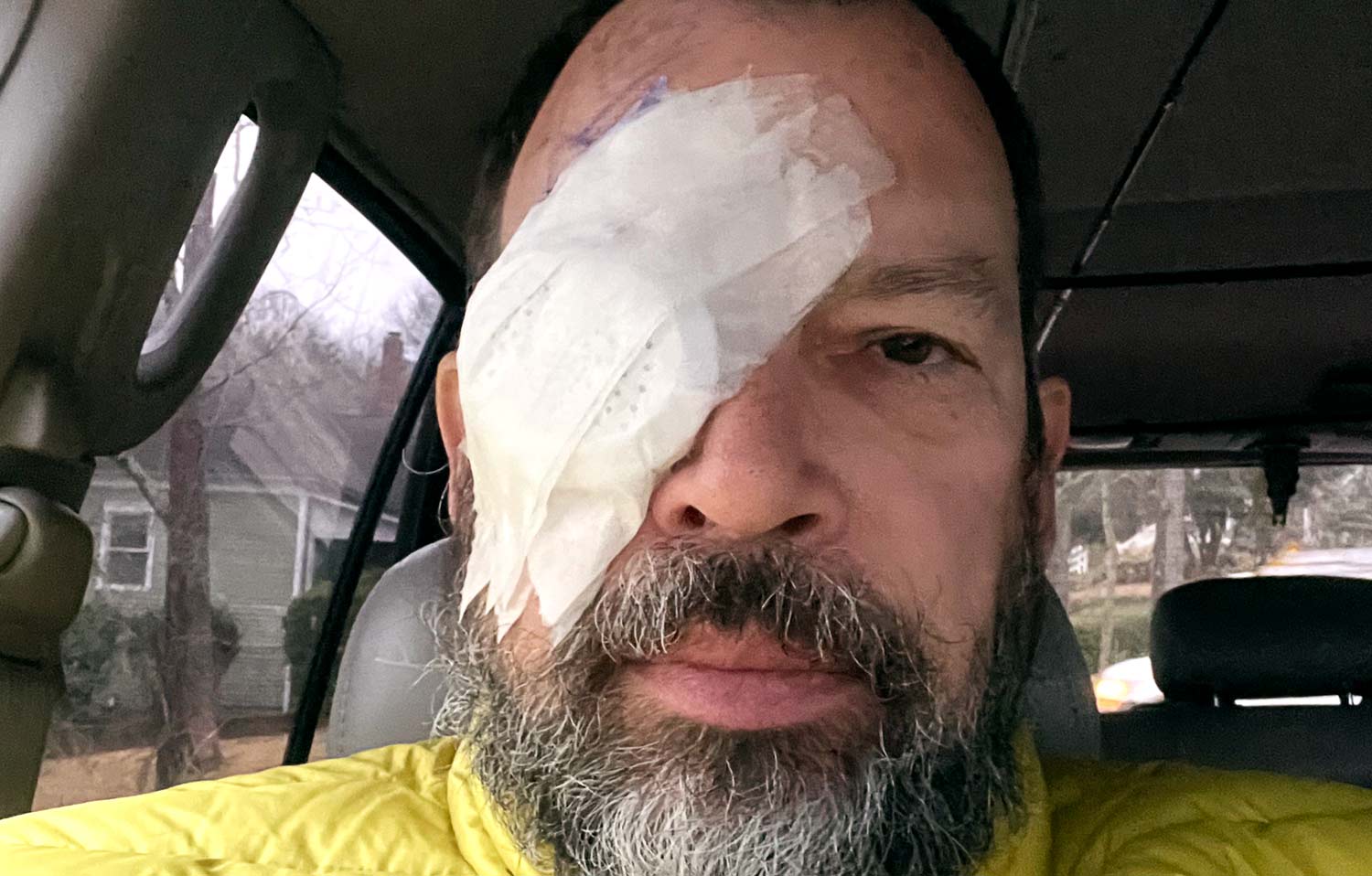
I’m two weeks Post-op and things are going well.
I hate talking about my medical issues, but lots of you are asking for updates, so I’ll keep it short. That should be easy since, as of now, all the news is good. A lot went on in the run up to the surgery but I’ll just hit the high points.
Things were feeling a little sketchy the week before my surgery. The oil in my eye had completely turned to muck. Like spring run-off inside my eye. As a result, I developed glaucoma. Rising eye pressure threatened to damage my optic nerve. There was no choice but to remove the oil, however, the murky oil prevented my doctor from seeing the condition of the retina. He was going in blind and not happy about it. I won’t lie, it was scary.
Fortunately the surgery went well. Dr Alurkar flushed two liters of solution through my eye cleaning it out and the retina stayed attached. Statistically, the majority of folks in my situation, who do experience another detachment, do so during surgery. The vast majority experience it during the first week. I’m two weeks out now and my doctor says the retina looks fantastic! After a couple of truly awful days, my pressure has returned to normal so it appears I dodged the glaucoma bullet with no apparent nerve damage. I will not be in the clear for 60-90 days but things look really promising right now.
It will take at least 90 days to really know what I can expect for vision. It’s a mess right now but the double vision caused by the oil is gone and as of just last night my eyes have started trying to focus again. That’s very encouraging. Whatever I end up with, I’ll be very happy to have it. I’m struggling to keep my expectations in line. I’m just superstitious enough to worry about jinxing myself, but I’m starting to feel truly optimistic. I am sooooooo ready to get on with my life!
Thank you all for your continuing support throughout this nightmare. I can not tell you how good it feels to have so many people in my corner. I can’t imagine how difficult this would have been without that support. Hopefully I’ll be checking in with more good news in a couple of weeks.
Thanks!
Louis Cahill
Read More »Carp on the Fly – 12 Q&A’s to Get You Ready
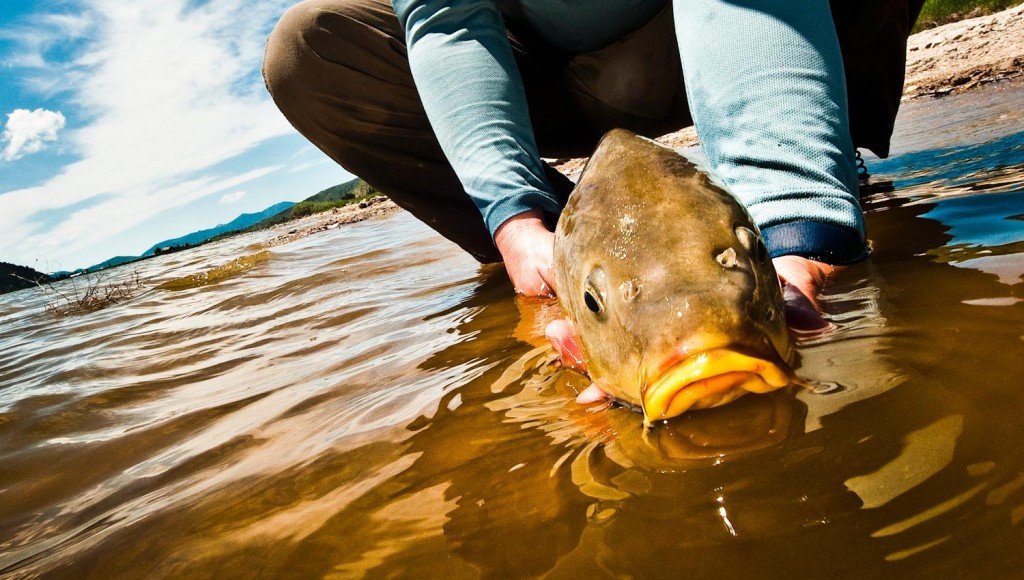
Good friend and fly fishing guide, Ryan Dunne has been capitalizing on the growing carp buzz by fly anglers lately.
Ryan commented, “I’ve seen a significant increase in carp fishing inquiries the last two years, and when the dog days of summer arrive and the trout fishing bite goes south, I now opt for poling my skiff and guiding my clients to carp on my local rivers and lakes”. Thank you Ryan for taking the time to sit down with Gink & Gasoline to answer twelve frequently asked questions about fly fishing for carp.
Have you found certain colors of fly patterns to be more effective than others?
I find that the water conditions and ambient light conditions dictate which color is more effective. I typically stick to four different colors when tying carp flies. They are black, brown, olive, and orange. Although the majority of my flies are tied in the aforementioned colors, I do tie with other colors as well.
Have you found certain fly tying materials (synthetics or natural) that carp seem to dislike?
I haven’t noticed a difference in carp behavior towards either type of material. However, most of my fly patterns contain a combination of both synthetic and natural fly tying materials.
What are a couple of your favorite go-to carp flies?
My two favorite patterns are the Carp Carrot and Carp Dragon.
Is the weight of your fly patterns critical and if yes, when do you prefer heavier flies?
Weight is definitely a key part to my subsurface carp patterns. Feeding carp rarely stay in one place, so you want to get your fly in the feeding zone as quick as possible. Water depth will dictate the weight of my patterns. I find that bead-chain and dumbbell eyes in various sizes are ideal for carp patterns.
When would you say is the most consistent time to go carp fishing?
Read More »Trout Deformities

I SPOTTED THIS LITTLE GUY IN A HATCHERY SUPPORTED STREAM IN NORTH CAROLINA AND FISHED TO HIM UNTIL I CAUGHT HIM SO I COULD GET A PHOTO.
While not common exactly, deformities like this are not unusual in either hatcheries or in the wild but you seldom see a ‘special’ fish like this in a wild stream. Nature deals with this sort of thing in short order. In a hatchery, however, a fish like this will do fine and grow to maturity.
This brook trout would have been a solid 16 inches if he were normal. A buddy suggested I bank him. There was no need. This kind of deformity stems from injury to the fish’s spine early in life. There are no defective genes or disease to pass along so I released him. After all, he plays an important role in the ecosystem, at least from the otter’s perspective.
There can certainly be problems with hatchery raised fish. Disease and poor genetics can wreak havoc on wild populations. On the whole, I think North Carolina does a good job and it’s important to remember that this is a regional issue that is best evaluated by region. What’s right for a trout stream in North Carolina is not right for a steelhead river in Oregon. That’s another topic worth some considerable ink, but not just now.
It did get me thinking about some more troubling fish deformities. Specifically Idaho’s two-headed trout. There was a little bit of excitement about it when the New York Times published photos, in February of 2012, of the deformed fish which were
Read More »Concentration, Relaxation and Communication Equal Better Bonefishing
By Louis Cahill
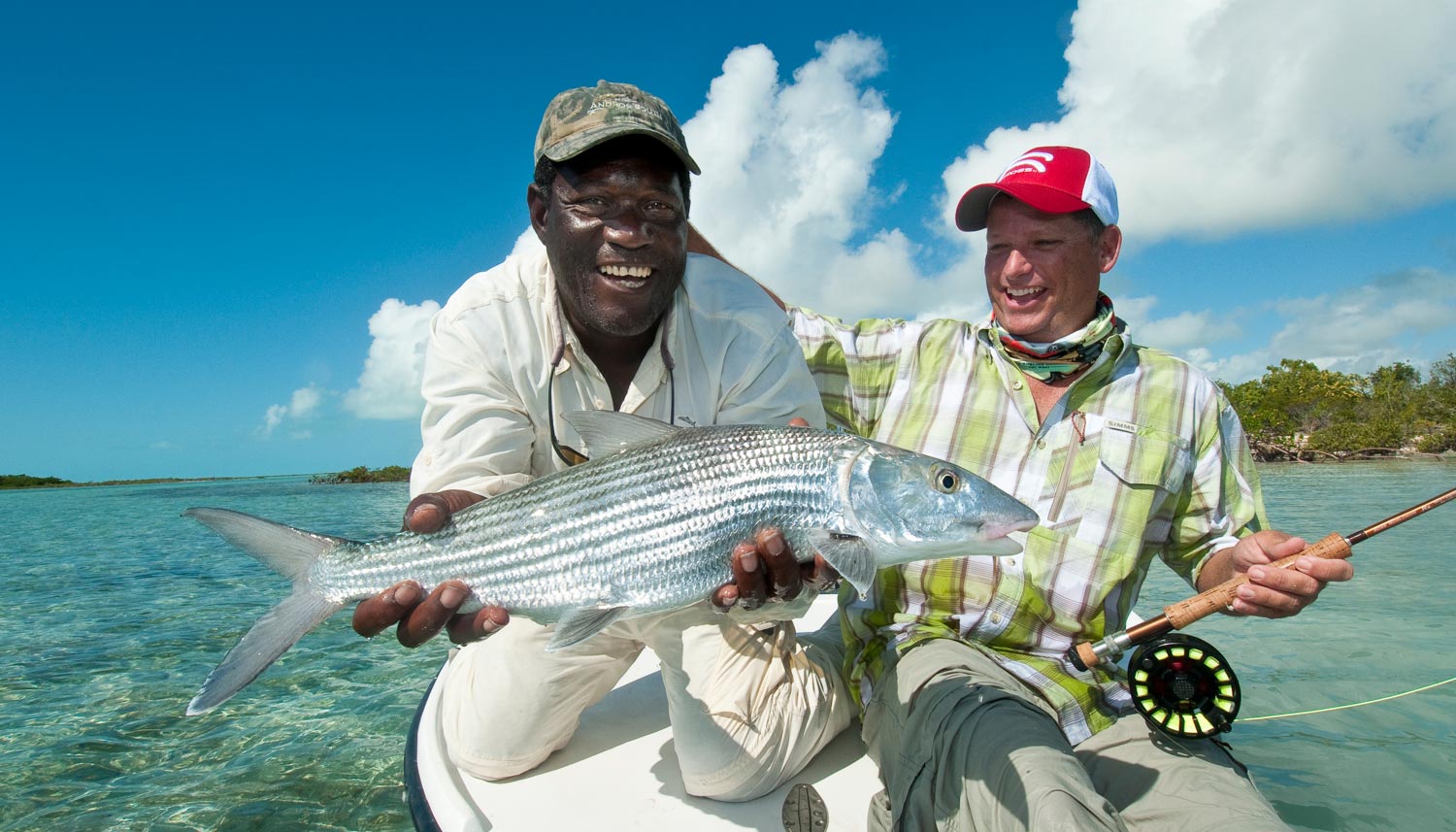
Concentration, Relaxation and Communication. I wish I could claim those words.
I’m quoting Jose Sands, bonefish guide at Andros South Bonefish Lodge. That was his answer when I asked what he thought was the key to successful bonefishing. As usual, he nailed it.
Plenty of anglers are frustrated or intimidated by bonefish. Bonefishing is a complex game with a lot of moving parts and all too often what should be a simple formula breaks down completely. When that happens it’s usually because one or more elements in Jose’s recipe are missing. It’s easier said than done but if you can accomplish these three things, the pieces start to fall into place.
COMMUNICATION
Most saltwater fishing is a team sport. Whether fishing with friends or a guide, you are generally depending on someone else to help you find fish and make a good presentation. Things happen quickly and everyone needs to be on the same page and communicating efficiently to make it work.
There are some universal ideas that everyone needs to understand in order to have good communication. Understanding the bow clock, for instance. When your guide tells you there is a fish at eleven o’clock, forty feet, moving right, it should be a simple thing to find that fish. You learn pretty quickly however, that everyone’s forty feet is not the same and even your guide will occasionally lose track of where eleven o’clock is.
It pays to take a minute at the start of the day to pick an object like a mangrove sprout and decide how far away it is. That helps you calibrate for the day. I find that guides often call out distances that seem much farther than I think is realistic. Not because they don’t know how far away the fish is, but because we are looking at it from very different perspectives. Mine on the bow, and there’s, from the platform at the back of the boat. It’s also worth the time it takes to look at the bow of the boat and confirm where twelve o’clock actually is before you waste a lot of time looking for fish in the wrong spot.
Guides will also use terms like “drop the fly” and “shoot the fly,” to indicate how it should be presented. Drop means you are already carrying enough line for a good presentation, while shoot indicates that you need to let some line go on your delivery. These kinds of directions vary from guide to guide, so take the time to ask early on. It’s impossible to over emphasize the importance of good communication.
I have about a 40% hearing loss and it’s a huge challenge for me. I remind my guide several times during the start of the day that I am deaf as a post. No guide likes to shout in the presence of bonefish but if I can’t hear their direction we both wind up frustrated.
CONCENTRATION
The thing I enjoy the most about bonefishing is the same thing that makes it so difficult.
Read More »Cobia on the Fly
By Owen Plair
ONE THING I ABSOLUTELY DESPISE ABOUT THE SPRING IS POLLEN.
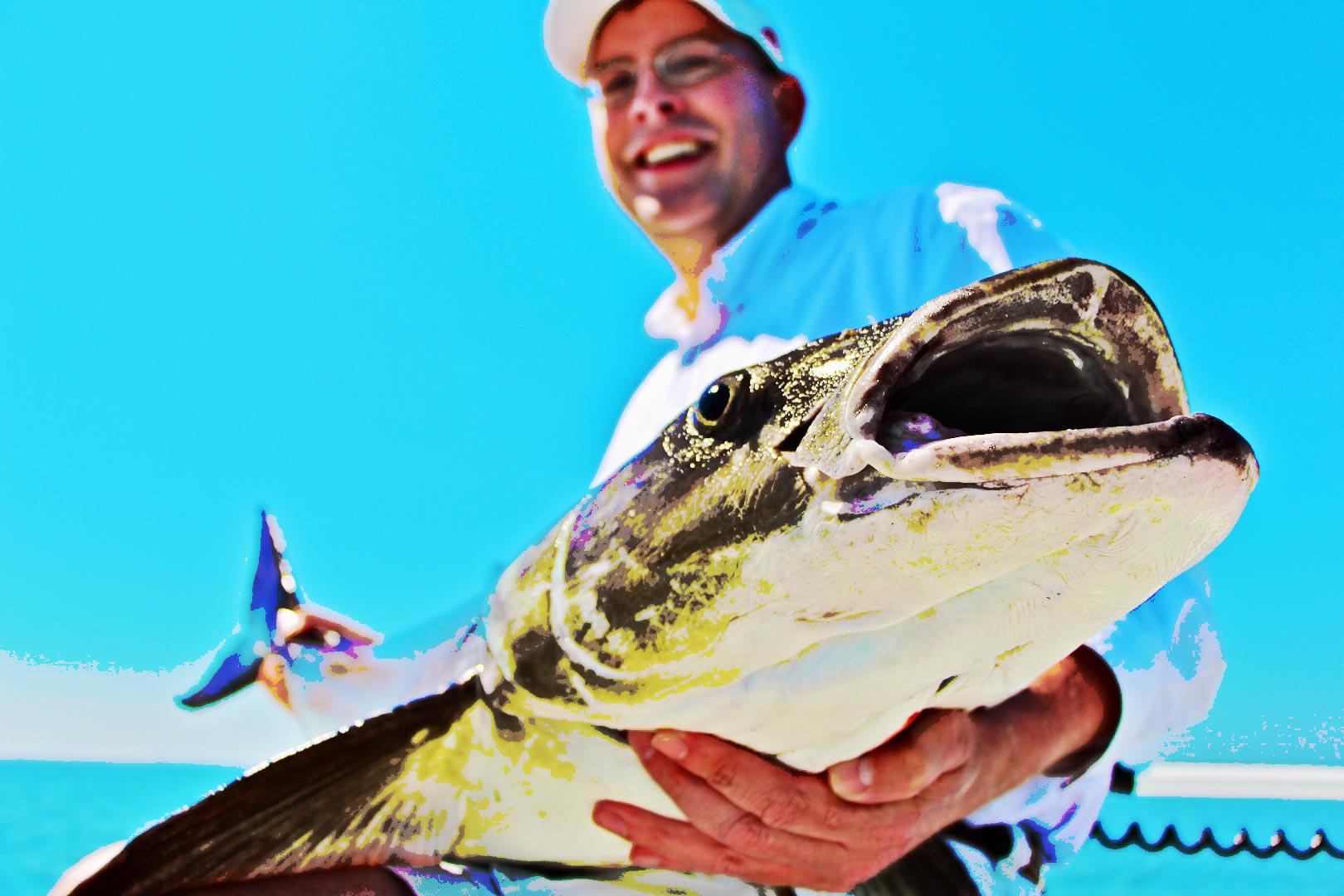
It seems like every time I wash the skiff, in just a matter of minutes it’s tainted by the yellow crap we call a sign of spring. There is one thing, and one thing only, that I do like about all the damn pollen. It means it’s only a matter of weeks before I start packing the 11 and 12 weights on the skiff for the big brown Cobia as they start to show up here in the Broad River.
I was born and raised on this river and have been fishing it since I was 3 years old. What makes this river special to me is, in addition to being an excellent fishery for Redfish, it hosts other species through out the year including Tarpon, Triple Tail, Sea Trout, Flounder, Jacks, Spanish, Blues, Lady’s, and very well known Cobia.
Around the last week of April, or when the water temperature hits around 68 degrees, the Cobia start to move into the Broad River here in Beaufort, SC. What’s cool about these Cobia is, they come inshore 8-10 miles to spawn. Cobia are an offshore species and can be found on near-shore wrecks or off the beaches from Key West all the way up to the Chesapeake Bay.
IMG_5446_2Most places, you catch Cobia swimming under rays, jigging them up from the bottom, or cruising the surface looking for bait. Here, they offer some really great sight fishing on the fly and put up quite a fight, being between 10-80 lbs on average. They’re also a very popular species for the dinner table.
What makes our Broad River Cobia unique is that they are their own strain of Cobia. The fish that come inshore every year to spawn in the Broad have their own unique genetics, compared to all the other Cobia. This was discovered a few years ago by scientists from the South Carolina Department of Natural Resources. So, the Cobia we target on fly in the River are from a long line of fish that have been coming into this river to spawn for who knows how long.
I started Fly Fishing for these fish about 7 years ago and it’s still one of my favorite seasons to guide, because of how special it is targeting this offshore species so far inshore. When the water temperature hits around 68 degrees the Broad River turns into an vibrant estuary filled with various different bait fish, sea turtles, jelly balls, spanish, blues, in blueish/green water similar to the Gulf of Mexico.
HERE’S HOW YOU TARGET COBIA SIGHT FISHING ON FLY?
Read More »Catching Air

By: Alice Tesar
My outdoor gear is always put to the test when I take it for a spin with my toddler. Recently my partner and I were fishing with him at a local spot that has a wide rocky bend. We let him play around, eat a few rocks, and investigate sunbathing snakes while we got some casts in. I paused to tie on a new fly and he hobbled over to me to inspect my choice. He gestured to hold my rod and while I repeatedly offered him to hold my net instead, he insisted on the rod and began to throw a tantrum. In a moment of trust or parental weakness — it is all a blur — I let him hold the rod. In a split second, he had run two-rod lengths down the shoreline and was jamming my 4 wt. Winston Pure under the water, bent in a right angle, back-and-forth in the freestone river bed. As fast as he got away, I was bear hugging him, the rod, the net, and, well…the fly was hugging my thumb with its barb. To my surprise, the rod and all its guides were still intact. Everyone talks about the Winston Feel but I think the Winston “Durability” also needs some credit. The three of us regrouped, removed the barb from my thumb, the tantrum prone toddler went back in the pack and we cast on.
I was relieved to see that the rod was casting fine given its recent assault. The Pure is a dry fly rod made for precise presentations and light flies and it is spring in the Rockies which means deep nymph rigs. Nevertheless, it was a new rod and I was looking to put it to the test. With some effort it cast my weighted nymph rig sufficiently but the true magic of a rod like the Pure is its presentation of a dry fly. Feeling the flex in my palm, the nearly weightless rod shoots a size 18 CDC Midge to the top of the riffle. A long, slow drift made effortless by the rod’s flick-of-the-wrist mending capacity. We did cast dries to a few rising fish as the morning went on, but as happens more frequently now due to the wandering toddler, I’m not paying as close attention to the river’s hints nor the trout’s take. We left skunked but with our rods intact.
When we became a family of three, we were gifted a book that we condemned to the shelf immediately.
Read More »