
Garner’s White Trash Bass Fly
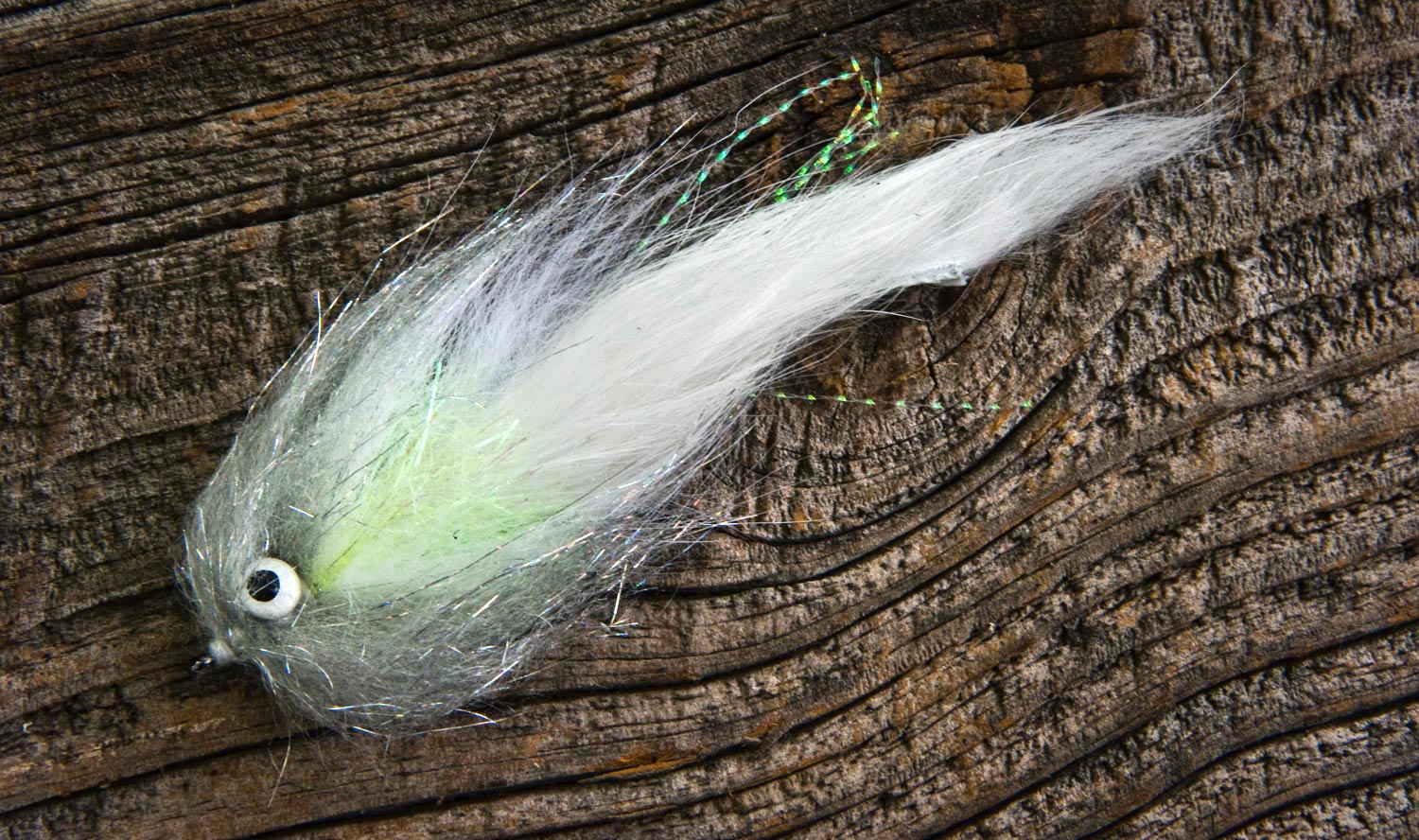
WANT TO CATCH BIG BASS?
How about really big bass? Striper fishing rivers in the south during the summer can be off the hook but it can also be challenging. Those big bruisers can get pretty damned selective and you a pattern that will get them moving.
Nobody knows this game better than Garner Reed. Today Garner is going to share a pattern he developed for catching big striped bass and spotted bass on the Etowah River. He calls it Garners White Trash and it gets the job done.
Watch the video and learn to tie this great bass fly.
Read More »Eleven Tips to Increase Your Sight Fishing Success
By Devin Olsen
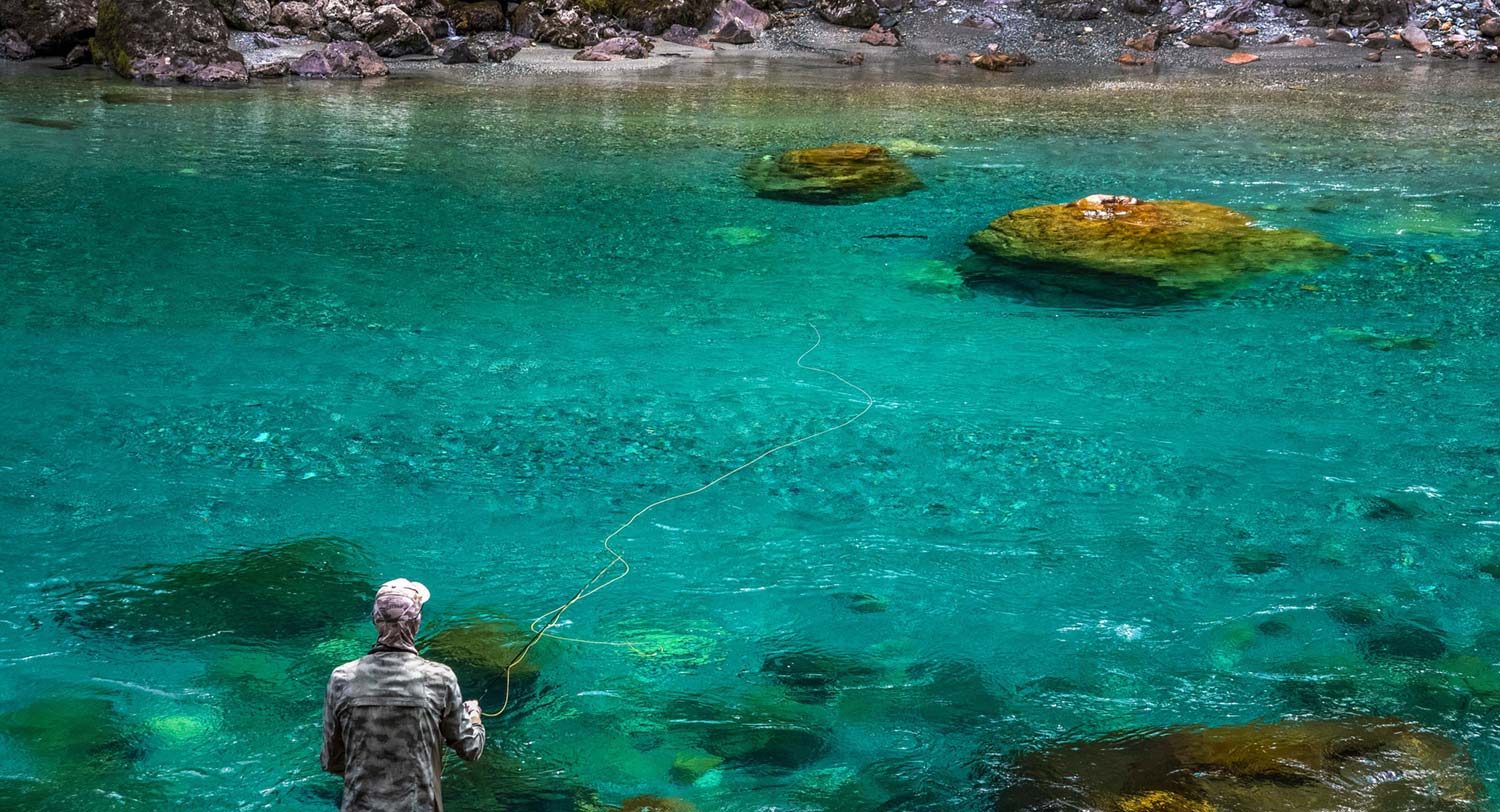
Last December I took a fly-fishing trip to the South Island of New Zealand.
It’s a trip I’ve been wanting to make since I was 14 years old. New Zealand is certainly not a secret destination for untouched wilderness fishing anymore. The lure of big brown trout and decades of promotion has seen to that. These days you’ll find difficult fish which must be spotted, stalked, and carefully targeted if you have any hope of success. I’ve had plenty of other challenges to tackle in over a decade of competitive fly fishing but the unique challenge of hard-won brown trout in exceptionally clear water is what drew me to New Zealand. If you are planning a trip to New Zealand, or if you have local waters where you can sight fish, here are some tips to help you spot more fish and be more successful on your trip. If you would like to read more about my trip, you can find the rigs I used in this post and read about a couple of days I had on the water in this post.
HERE ARE 11 TIPS THAT WILL HELP YOU SPOT MORE TROUT AND CONVINCE MORE OF THEM TO TAKE YOUR FLY.
Color is everything. A lot of anglers I’ve fished with have asked me how I can spot fish which they can’t see when we’re standing side by side. For me, it’s all about looking for inconsistencies in color. Trout are certainly capable of matching their surroundings with chameleon like camouflage. However, if you pay close attention to the river bottom, with training you will spot colors or contrasts on the river bottom which seem out of place. These differences can be subtle, but over time fish can be spotted fairly easily with repetition. Regional or species-specific patterns in trout coloration can help inform your color search. For example, if you are fishing in a river with rainbow trout, their pink or red lateral flanks will often show in the water. In New Zealand, the brown trout regularly exhibit a greenish hue on their back and silvery or orange flanks. Looking for those stacked color patterns helped me spot a lot more fish on my trip.
Learn to read water better and you’ll be able to spot fish more easily. If you are capable of predicting where fish will hold when you are blind fishing, these same predictions will help inform your sight fishing. Sure, you can spot fish by looking at every inch of the river methodically but you’ll be more consistently effective if you focus most of your visual effort on target rich areas of the river. If you’d like some more information on how to read water based on variables like water temperature and hatches, pick up a copy of my new book Tactical Fly Fishing: Lessons Learned from Competition for All Anglers or our instructional film Modern Nymphing Elevated: Beyond the Basics.
Pay attention to the background. Incident glare is made far worse if the bank on the far side of the river is light colored and reflects a lot of light. If there is something dark colored, like a tree, you’ll notice a lane corresponding to that object with much less glare that lets you see more clearly into the water. If you can line up that darker lane of water with the target area you are trying to spot fish in, you’ll have a much easier time spotting fish.
There is a reason for the phrase “a bird’s eye view.”
The Water Haul Cast – Slow Your Roll
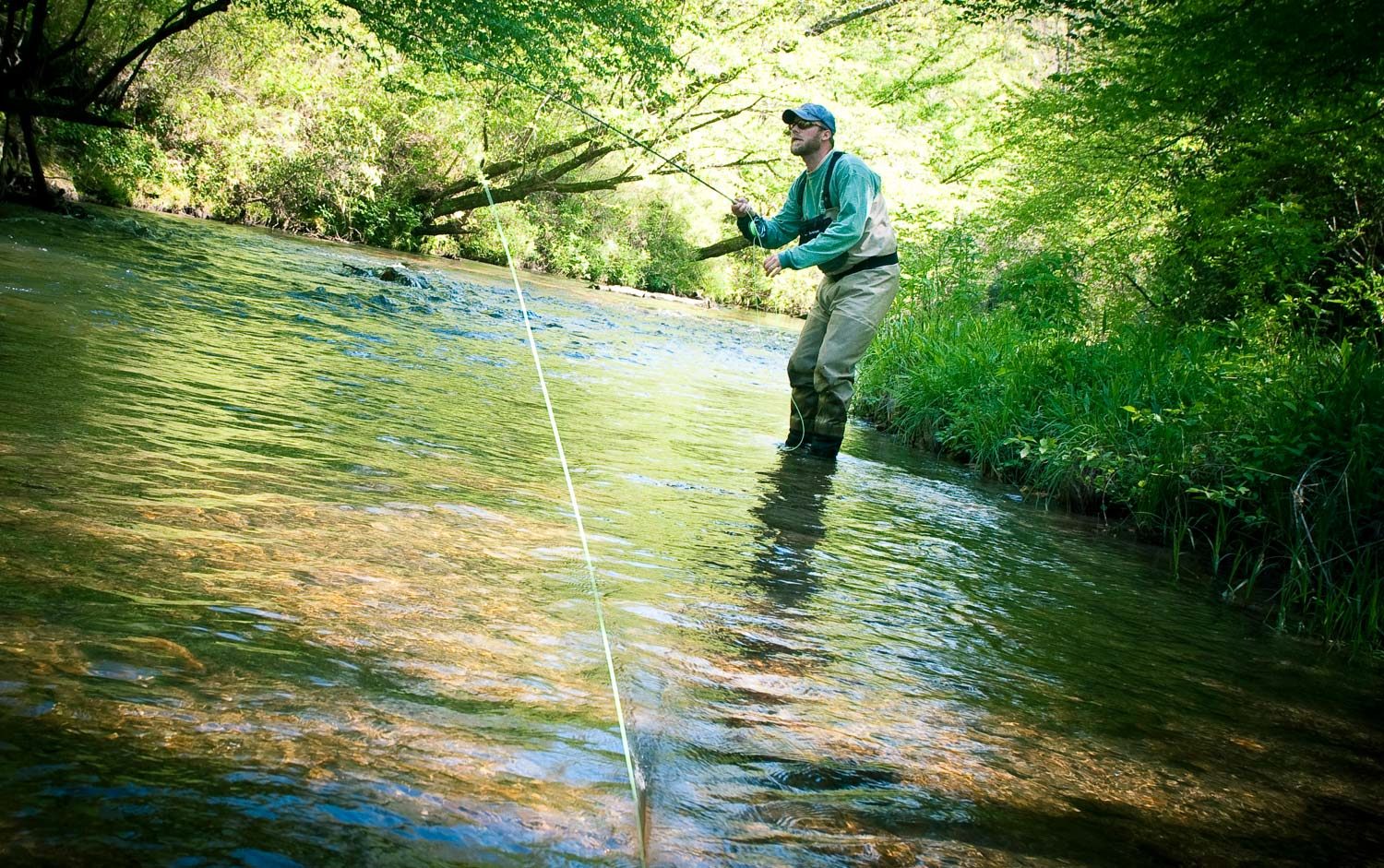
The water haul cast is phenomenal for fly fishing small trout streams.
I love it for a few reasons. First, because it allows you to make a presentation without false casting over the fish. This is done by you using the water and fly line to load your fly rod and present your fly/flies in one cast. On highly technical water, where you have spooky fish, this niche cast can significantly increase your catch rates. Second, the water haul works great for tight quarters where you don’t have a lot of room to cast. The biggest mistake I see fly anglers make when they’re water hauling, is rushing the cast. You want to slow your roll when you’re performing this fly cast on the water. The water haul cast takes about twice as long to make a presentation with your fly than a traditional fly cast, and that is because you combine the pick up and the water haul together. If you’re having problems getting the distance or straightening out your leader and fly when your water hauling, try slowing down and you should see your cast improve. A proper setup is key before you begin a water haul cast. I like to roll cast my flies down stream so I can get them straight below me and get the necessary amount of fly line out to reach my target. I then drop my rod tip to the water and smoothly accelerate my rod through the casting stroke to a quick stop. Anglers wanting to increase their line speed and get extra distance with this cast can also apply a smooth single haul with their stripping hand as the rod begins to load during the water haul. It takes a while to get used to it, but after you get the hang of it, you’ll be surprised how effortless it makes your water haul cast. I use this cast myself and with my clients all the time. It’s perfect for beginners who are not yet comfortable casting traditionally in tight quarters or who have problems with getting tangles. Less false casting,
Read More »The Finer points Of the Client Guide Relationship
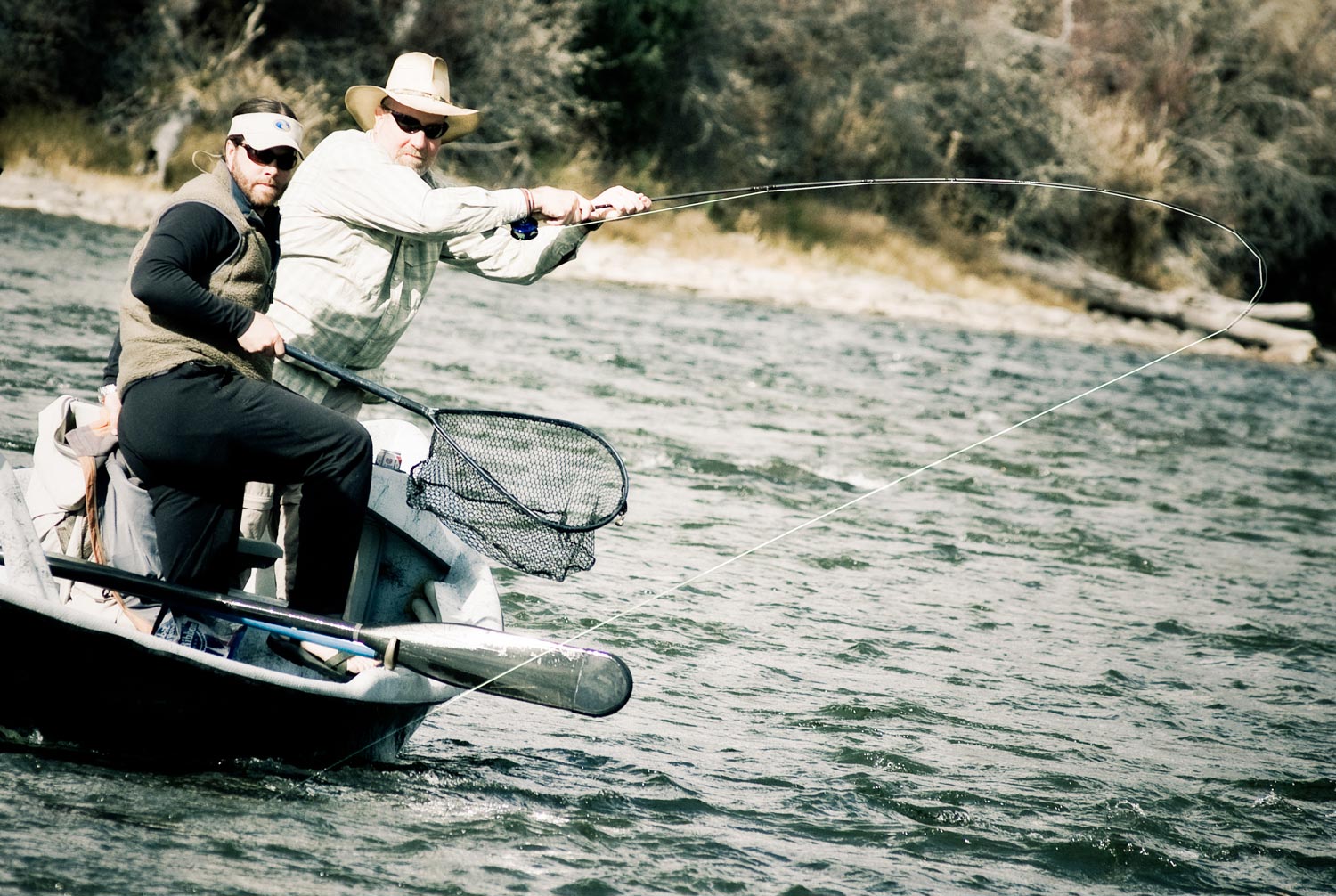
There’s not much better than the feeling you get when angler and fishing guide work together like a well oiled machine.
Regardless of which role you play in that relationship, it’s in your best interest to work together toward a common goal. Unfortunately that’s not always the way it works. Often the relationship is strained and stressful for both parties. If you have a regular guide you fish with, it’s probably not an issue, but getting to know a new guide, or client, can be tricky.
Since I do a lot of saltwater fly fishing, I do a lot of fishing with guides, both as a client and just swopping turns on the bow with a friend. I’ve had good and bad experiences and learned how to get along fishing with just about anybody.
I’ll try and share a few thoughts that might make your days on the water more productive and pleasant, whether your the angler or the guide.
COMMUNICATION
Most human relationships boil down to communication. I mentioned working together to achieve a common goal. All too often flies hit the water with guide and angler having different goals in mind. It’s worth having a conversation about early on, and it should be a conversation. If the angler has a goal in mind that just isn’t realistic, a good guide will give them some perspective on the challenges. A good angler will listen to the guide and decide if they are willing to accept the risk of failure.
It’s important to be realistic about your needs. If you are an angler who needs to catch fish to be happy, don’t fight your guide when they try to put you on fish. If as a guide, you have an angler who is truly more interested in the challenge than the numbers, respect that. Never bullshit your guide about your skill level. They will find out soon enough exactly what kind of angler you are.
RESPECT
The foundation of any good relationship is mutual respect. It has nothing to do with who’s a better caster or who’s paying who. It’s the kind of basic respect due any good person and it will make your day a whole lot better. A good guide never assumes his client is an idiot, even if the last hundred were and a good angler never judges his guide on his bank account. Always remember that a boat only has one captain and in the end, especially where safety is concerned, his word is final.
ACCEPT THE LEVEL AT WHICH YOU’RE OPERATING
It’s important for the guide and angler to each understand their strengths and weaknesses. I’ll give you an example of what I mean.
I recently spent a very windy day on a flats boat with a guide I’d never fished with before. The first bonefish I had a shot at was
Read More »Bonefish Don’t Dance
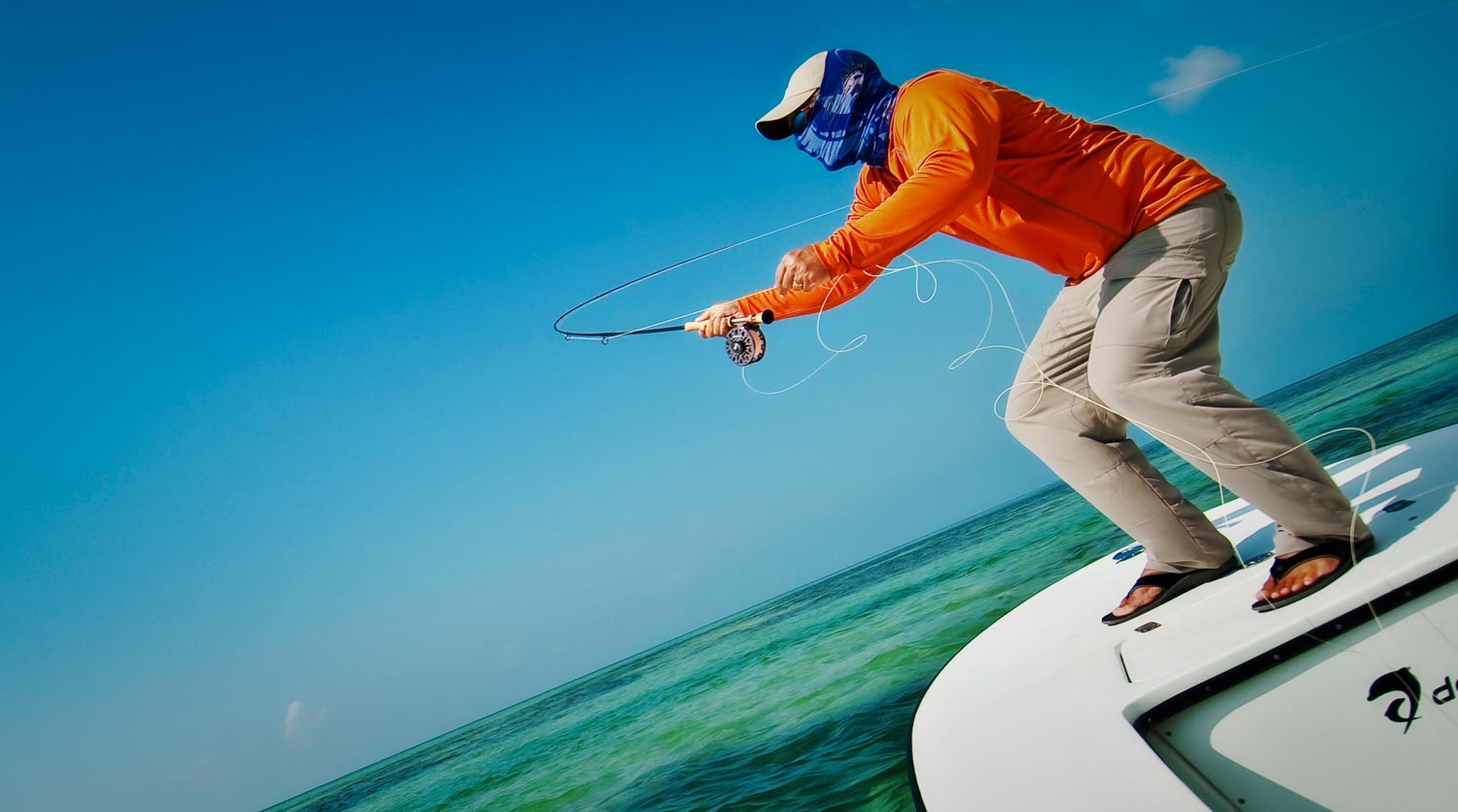
DANCING ON THE BOW IS A BIG TURN-OFF.
I had the pleasure of doing a little bonefishing with a good friend the other day. We were poling the flats on the west side of South Andros and the wind was howling. The sky was full of popcorn clouds and their shadows were moving quickly across the flats. My buddy was getting a lot of shots at big westside bones but they all spooked before his fly landed.
We had fished to spooky fish for the last few days and were getting used to the sight of fleeing bonefish. My buddy assumed that he was spooking fish by lining them or landing them too hard. That might have been the case on one of the flat calm days we’d seen earlier in the week, but today the problem was one of footwork.
Like I said, the wind was howling. Thirty to thirty-five miles per hour. In an effort to turn over his fly my friend was casting like a warrior Hun. His casting was so violent that his left foot would come off the deck with each cast. He wasn’t even aware of it but every time that foot landed the bonefish would vanish.
Wind is frustrating but it can be your friend. The broken surface of the water will hide a lot of mistakes. Fish can’t see the shadow of your fly line or hear your fly hit the water but the sound of anything contacting the hull of the boat is instantly telegraphed, alerting them of danger. Fish don’t know how hard it is to cast a fly rod in the wind but they know an unnatural sound when they hear it and it doesn’t make them happy. Even the sound of feet pivoting on the deck can cause them to spook.
Fortunately, dancing on the bow is not part of a good fly cast.
Read More »Snap Your Wrist For Line Speed
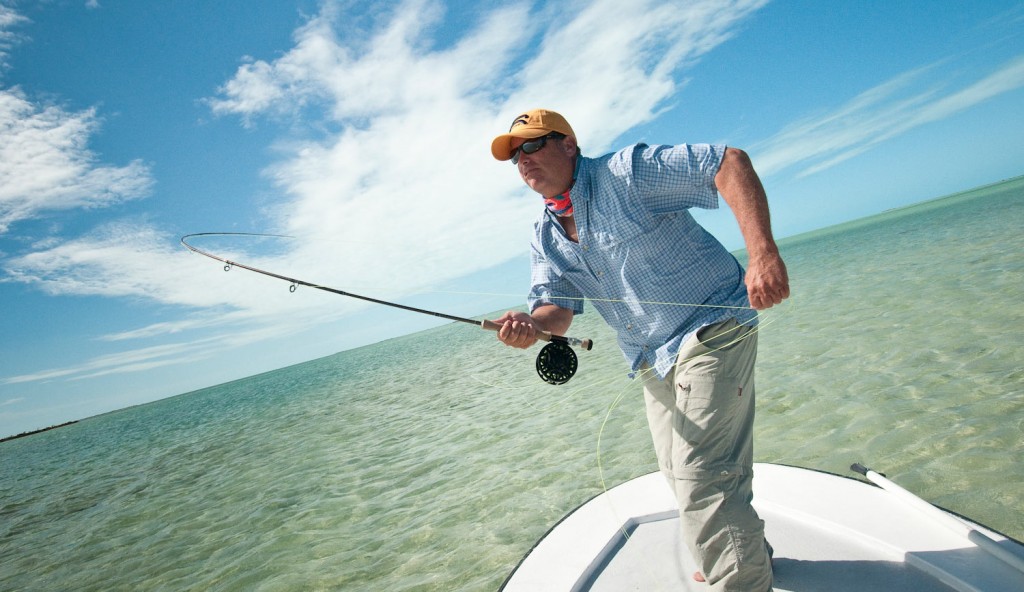
Today Bruce is going to get a little closer to that fly rod and talk about the roll your wrist plays in fly casting.
Watch closely. Bruce has great mussel memory from thousands of hours of casting. Watch the subtlety of his wrist movement. The snap and push that happens. Don’t forget that, as in all fly casting, this requires a smooth application of power to be successful. This will take some practice to master and in the next two videos Bruce will build on this technique so get out in the yard and give it a try.
heck out the video!
Read More »The Video Doesn’t Lie

By Bob Reece
Over the numerous years that I played football, I watched countless hours of practice and game film. One truth always reigned. Your performance was never as good or as bad as you believed it would be.
After a recent back packing trip I sat down at my computer to review some of my footage. One of the clips was a side shot of me casting. While the rear portion of my casting range was sound, the forward portion of that particular cast was flat out sloppy. My forward plane of motion traveled down instead of parallel to the water. In addition to this, my stopping point prevented my rod from effectively loading into my back cast. Having seen video of myself casting on numerous occasions, I was a little surprised and disappointed. However, it was helpful to be reminded that when I lose focus on the water, my cast is not always what I assume it to be.
You may not carry camera gear with you on your fishing journeys. Chances are though, that you have a cell phone with you at home and on the road. Taking a moment to record a few minutes of your casting motion can provide valuable feedback. While it’s no substitute for
Read More »Fly Fishing: Searching for That Needle in a Haystack
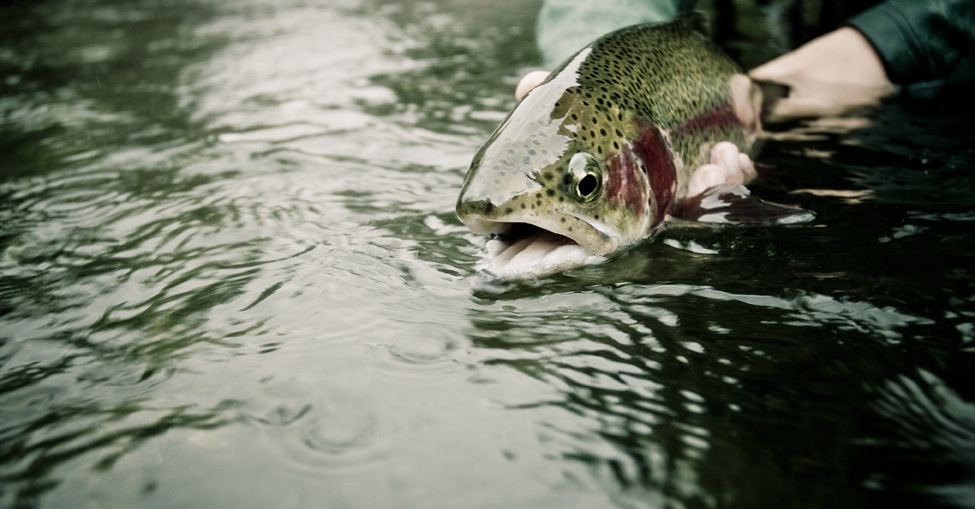
I really enjoy catching big wild trout on a fly rod. Even more though, I enjoy the challenges that come with having to hunt them down in places where they are few and far between. I’m talking about trout streams where there’s not supposed to be any truly big trout living there. The places where catching a 12-incher normally gets you tickled to death, and where most fly anglers, if asked, would tell you point blank, “I guarantee you there’s nothing swimming in that trout stream large enough for a grip and grin.” These are the places I like to visit on my days off from guiding. I get deep satisfaction searching for that extra special fish. The fish that’s 99% confident no fly angler thinks he or she even exists.
Read More »Tarpon of Cuba: 3 Tips For Success
By Dan Frasier
I think what surprised me most was that they still looked like fish.
The dark shapes sliding below the surface were intimately familiar despite their legendary status, but the vastness of the flats and channels of Jardines de la Reina off the coast of Cuba seemed to put their size into perspective. The sabalo, Spanish for tarpon, looked natural. Why this surprised me, I don’t know. Perhaps it was the hours of videos I’d watched with monster fish exploding from the water. Or the gallons of ink I’d poured over about the silver king. The grandness of these fish left me anticipating something otherworldly. Where I’d expected to find a tiger in my living room, I’d instead found it in the jungle, where it fits.
From the bow I see the shape quartering toward the boat from 2 o’clock and all of the advice I’d sought in the previous weeks just sloughed away. Eighty feet and moving lazily toward us was simply another cruising fish. One false cast and I shot line to intersect it’s path at 70 feet. A few strips and the fly is in position and very slowly sinking. As the tarpon approached I give it two slow pulls. The calm and lazy shape tenses and snaps its head to the side and all of a sudden I’m holding a live wire and thinking, “Hit him as hard as you can.”
The entire process was strangely familiar to me. Despite having never chased tarpon before, the situations were much like I’d experienced in other saltwater situations and in my carp fishing. See the fish (something that takes training), cast quickly because you may only get one shot, intersect the fish, and don’t make it work too hard or do anything unnatural to eat your fly. Simple, but not easy.
Now don’t get me wrong, I’m still nothing more than a Middle School level tarpon fly fisherman. In the long calls I’d had with real tarpon Phd’s, I’d been given all kinds of tips, information, and strategies on how to address these fish in all of the more difficult situations. This was the kind of information that allows the experts to hook them when you can’t, or hook a higher percentage of his shots than anyone else on the water. Great stuff and extremely helpful when you are trying to take you tarpon game to the next level. But as a rank amateur, I was trying to take my tarpon fishing to ANY level and remembering and implementing these PhD level techniques in the heat of the moment was more than my tiny brain and lack of muscle memory could handle. And yet, I still managed to catch a number of fish, by leaning on what was familiar to me. Here are a few things I learned.
1. They are still fish and it’s still flats fishing.
I had built the idea of chasing tarpon up so much in my head that it felt like I was attempting to do the impossible. Go catch one of the baddest ass fish in the world on a fly rod with no prior experience and in a limited number of days. I’d put so much pressure on myself to convert on this opportunity that I’d nearly psyched myself out. I called everyone I knew with insight into tarpon fishing, talked to people about fishing Cuba (like it was fishing on Mars or in zero gravity), and read and studied like a madman.
All of this preparation was good. It helped in a lot of ways, but
Read More »The Original Eyewear For The Flats
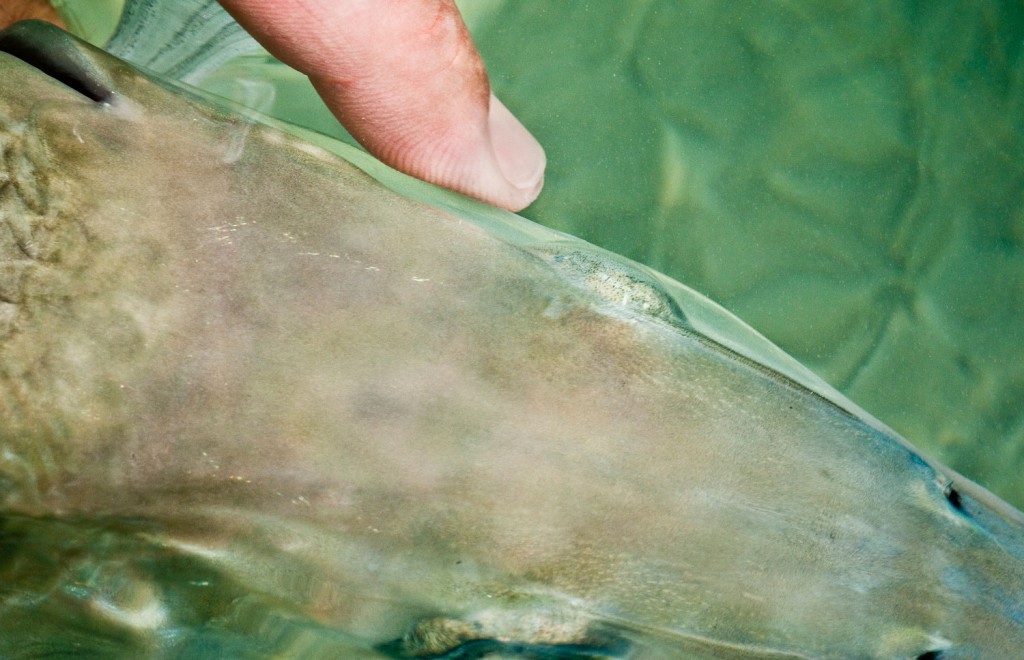
Bonefish are just cool. They never cease to amaze me.
Like all fish, they are perfectly adapted to their environment and in their environment you need a competitive edge. Right in the middle of the food chain, the bonefish has to get in, get fed, and get out in a hurry, before he becomes somebody else’s lunch. To do that, he needs keen eyesight, a hard nose, a turbo charged tail stroke and some high-tech eye wear. I handled hundreds of bones before I ever noticed the eye glass, and a few more before I captured a good photo of it. It’s so clear and flawless that the light and the angle you look at the fish need to be just right to see it. It is a slick outer lens that covers a good portion of the bonefishes face and encapsulates it’s eye. If you study it’s profile you will see that it turns the bonefish’s already sleek profile into a perfectly hydrodynamic projectile. The equivalent of cycle racers shaving their legs.
No doubt, this aids in the bone’s remarkable speed, but that’s just part of the story. The eyeglass serves a much larger purpose. The bonefish has a fairly unique style of feeding. When he spots a crab or a shrimp and makes his charge his prey seeks cover in the coral, or deep in the mud or sand bottom. The bonefish gives chase by
Read More »