
12 Tips For Hike-In Fly-Fishing
By Louis Cahill
Every angler knows that the further you walk, the better the fishing.
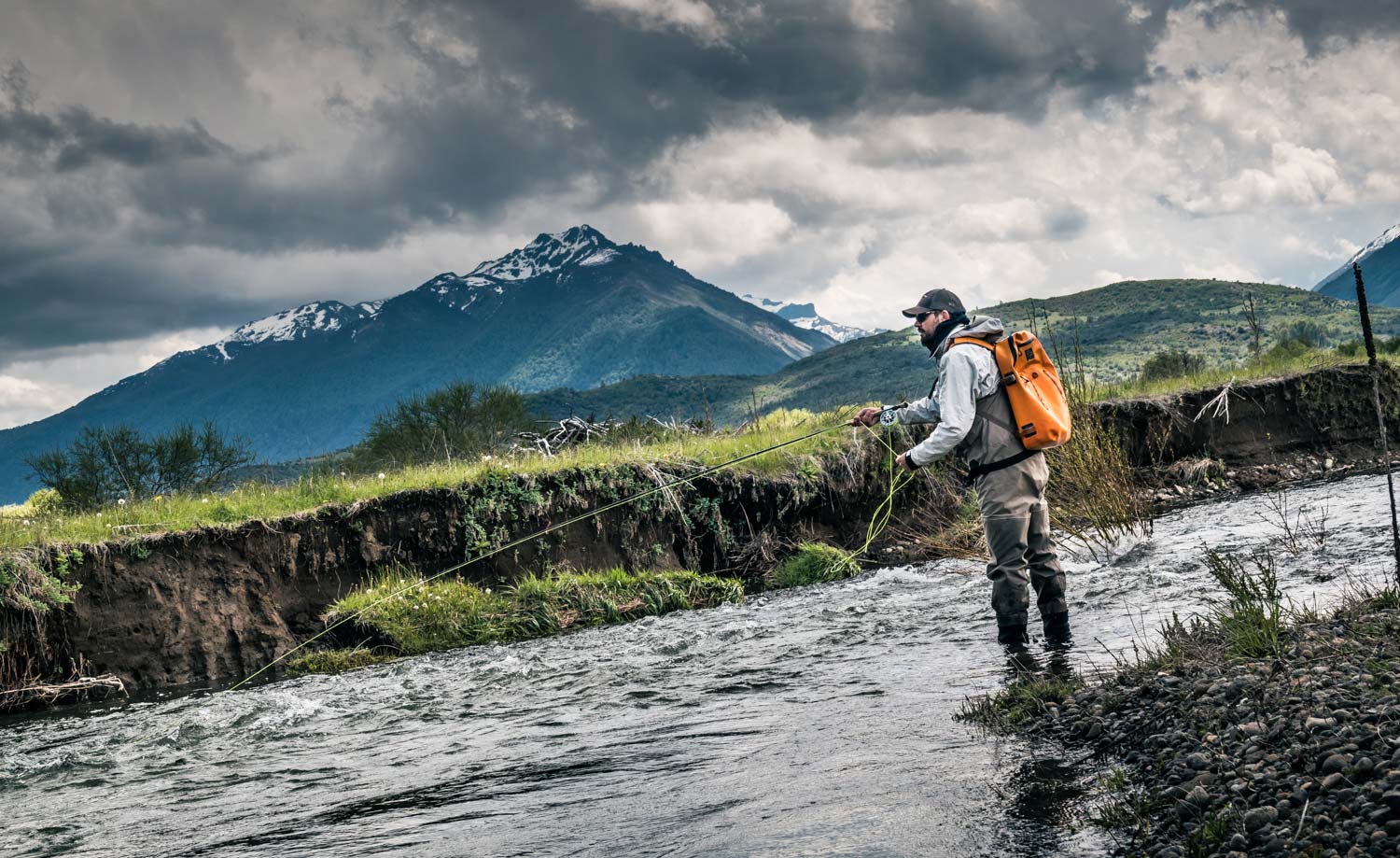
Keep that in mind when I tell you, I recently had some of the best trout fishing of my life in the Andes mountains of Patagonia. That should give you some idea how much we walked. The rewards where big. The rivers we fished were pristine and without a trace of humans, the views and wildlife were stellar and the trout were big and plentiful. That’s worth the walk seven days a week.
I did have to spend some time thinking through my gear and necessities for the trip. Hike in fishing requires a little more preparation, even when you are just day-hiking. Simple stuff you might run back to the truck for can turn into a big deal miles up the trail. Most of this is common sense but I will try to be thorough for the uninitiated.
Here are 12 tips for a day of hike-in fly-fishing.
Boots, Wading vs. Hiking
I’ve broken both my feet several times. Good boots are important to me. I want something that gets good traction, gives me good arch support and good ankle support. Most wading boots make poor hiking boots so, given the choice, I’ll hike in hiking boots and change to wading boots. Sometimes the hiking takes you through the river and then, wading boots are the ticket. It helps to know the trail you’ll be taking.
Whether I’m hiking in them or not, my first choice is the Simms Intruder boots. They are actually pretty good for hiking and they are very lightweight, which is nice if you’re carrying them. A good trick is to carry a plastic bag and stash your hiking boots somewhere out of sight and safe from rain in their bag, while you’re fishing.
Camping towel and dry socks
If you are changing boots, a lightweight camp towel and a fresh pair of dry socks are really nice to have. Even if you are fishing in waders you can end up with wet socks that might cause blisters.
Day pack
A good waterproof backpack is a must have. I use the Fishpond roll top, but the new model with the T-Zip is a nice upgrade. In addition to keeping your gear dry and together, I have used these packs as flotation devices for sketchy river crossings.
Extra pockets
Pockets for frequently used gear let me fish from my backpack, without carrying a fishing pack too. It’s a good idea to pair down your gear to just the essentials. Extra gear is just extra weight to carry. The hiker’s saying, “Ounces make pounds and pounds make pain,” is true.
Rod in the sock
It’s a pain hiking with your rod put together and a tube is just extra weight. A rod sock is usually all you need to keep your rod safe. If I feel like I’m going to need more protection, I have a couple of carbon fiber rod tubes I’ll use for their light weight.
Filter bottle
A good filter bottle is absolutely necessary. Hydration is super important, but carrying water is crazy. Carry an empty bottle and drink from the river. The Katadyn Be Free is the best I’ve used. It weighs nothing and fits in a pocket.
Read More »10 Yellow Sally Fly Patterns That I Love
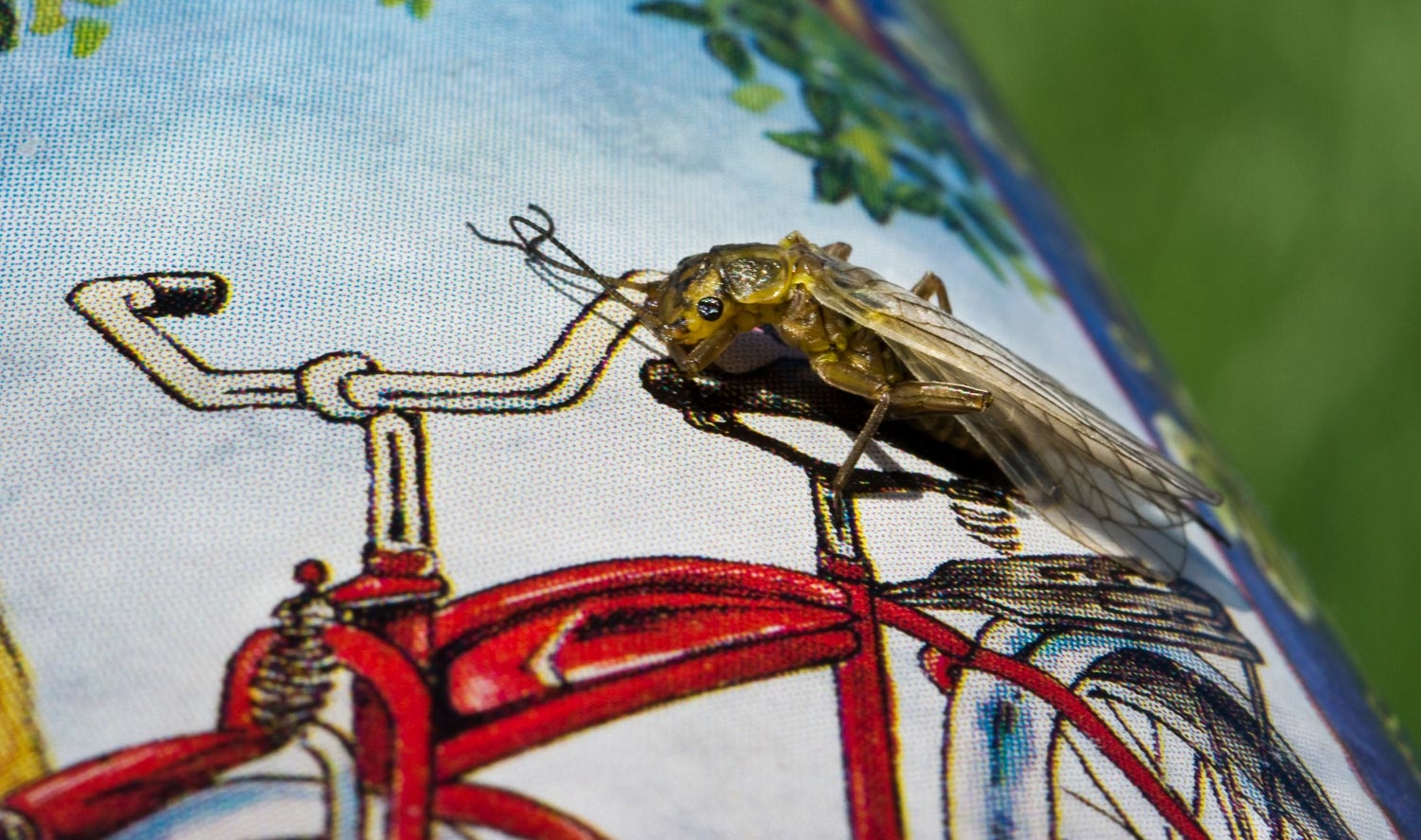
When I think back on all the times I’ve fished Yellow Sally stonefly hatches over the years, I honestly can’t remember ever having a bad fishing experience.
If I can find them on the water, I usually have no problem getting trout to take my imitations. Yellow Sally stoneflies hatch from coast to coast. Depending on where you live, they usually show up the month of May and in some areas will stick around until the end of August. You’ve got to love an aquatic insect that has a hatch period that lasts not weeks, but months. Even in the dead of terrestrial season, or when other aquatic bug hatches such as caddis or mayflies are in progress, trout will regularly forage on Yellow Sallies if they’re available. For that fact alone, fly anglers should always have a handful of Yellow Sally fly patterns stowed away in the fly box at all times. Trout love them and so should you.
With the gargantuan number of fly patterns out there these days, it can be a challenge at times to pick out the real rock stars amongst all the other players in the fly bins. Below are ten Yellow Sally patterns that I’ve personally fished and had great success with. Four are nymphs and six are dries. My hopes for this post is simply to help point fly anglers in the right direction whether it’s at the vise or at a local fly shop for stocking up on proven Yellow Sally stonefly patterns.
Read More »Fly Fishing Fast Water Chutes for Trout
WHY TROUT LOVE FAST WATER CHUTES
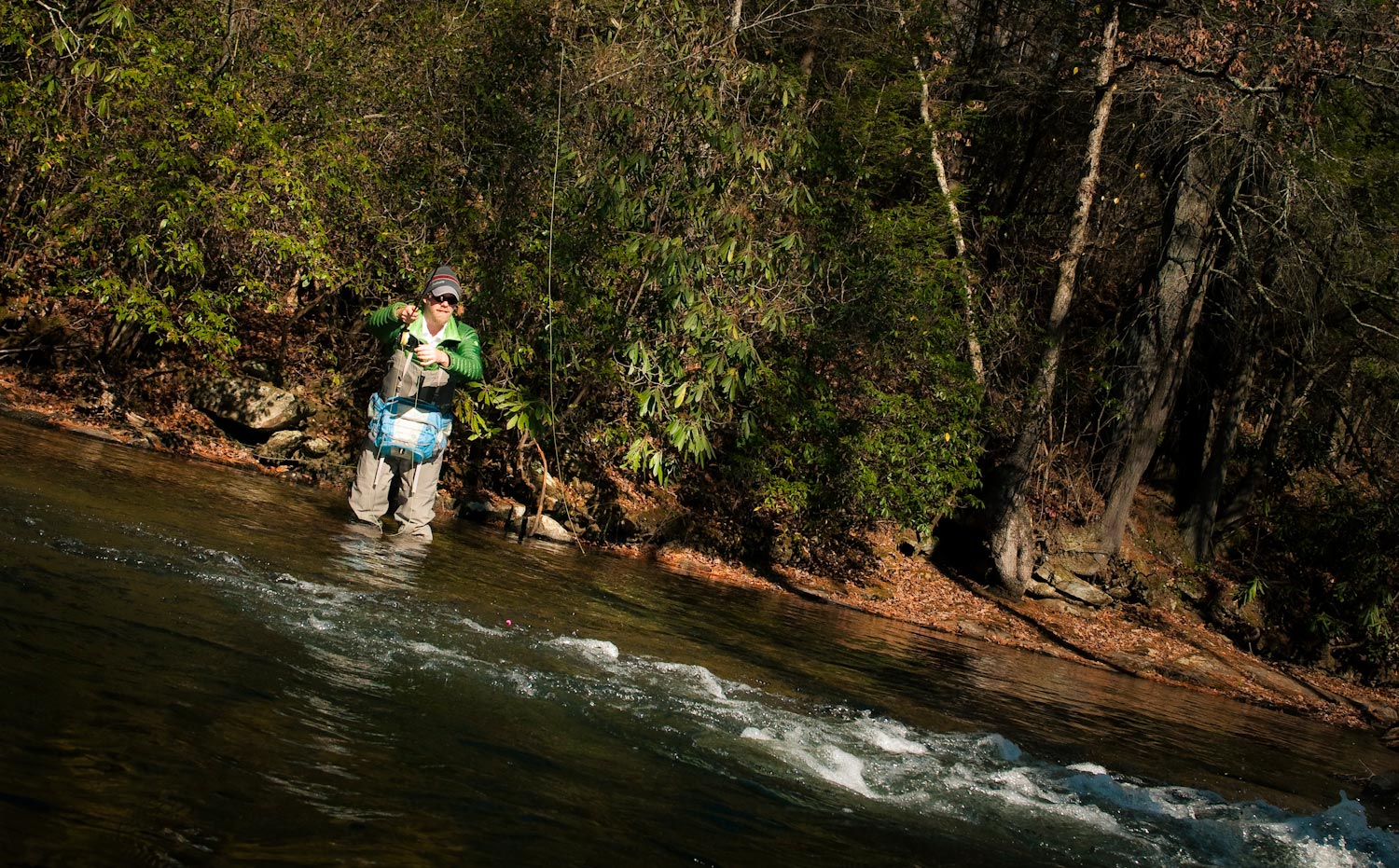
Fast water chutes are great habitat for trout to set up residence around. Most of them provide everything a trout needs to survive, and fly fisherman should take the time to fish them because they almost always hold fish. Fast water chutes provide overhead cover that trout can quickly utilize by swimming into the chute if they feel threatened. The well defined current from the chute also acts as a food conveyor belt, supplying trout with a constant trickle of food 24/7. Furthermore, the turbulent waters created by chutes increase oxygen levels in the surrounding waters, and this is an added bonus and reason for trout to set up shop in and around chutes in streams and rivers. Lastly, chutes generally offer feeding lanes on each side that trout can take advantage of to feed effortlessly. These are the edges of the chute, where the fast and slow water come together and meet. Trout often gravitate towards the edges because it requires less energy to hold there, it’s very close to the conveyor belt of food and extremely close to their fast water overhead cover. Focus on drifting your flies along the edges of the chute first. After you’ve fish the edges, then work your flies through the main current of the chute.
There are multiple ways for anglers to fly fish fast water chutes, but most of the time, I find it most effective to wade to the sides of the chutes, and fly fish perpendicular to them. Doing so, it gives me better control of my drifting flies and improves my line management. Positioning to the side of a chute also improves my stealth, because I’m able to present my flies in front of the trout with just my leader, keeping my fly line out of sight. It also allows me to work with the current when drifting my flies, instead of fighting against it.
Check out the video below that demonstrates how I prefer to fish fast water chutes.
Read More »Alice’s Angle: January
By: Alice Tesar
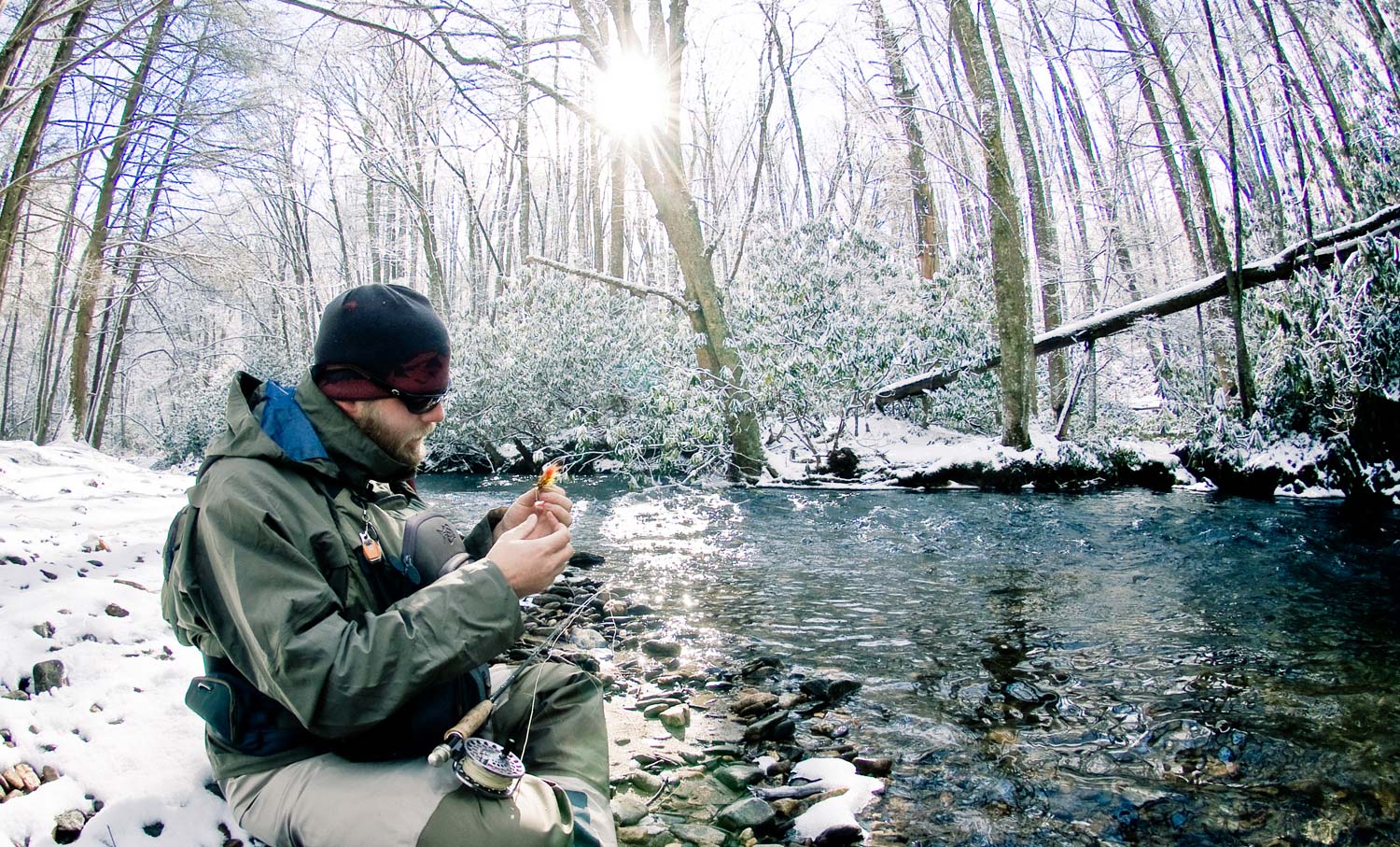
It’s cold out there and mid-winter fishing is reserved for the intrepid angler.
If you get skunked in January most of us would not return home and say, “eh, it was a great morning standing in mostly frozen water and icicles only formed on half my nose hairs.” Let’s talk about getting into fish without learning too many new tricks so you can be efficient on the water this time of year. If you live in Northwest Colorado you’ve been waking to sub-zero temperatures and the air rises to zero degrees around 9:30 AM. Pick a day when temperatures are warming, say above 15 degrees. As I’ve mentioned before within this series, trout are slow moving in the winter and their metabolisms are slow too causing them to eat less. Consistent with low bug activity they will often look for easy bait fish meals over hatching midges. That’s right, these bitter and cold months are the only times I really enjoy fishing streamers. I’ve been told I’m not normal before.
Why is fishing streamers different in mid-winter than mid-summer? One hyphenated word: dead-drift. Dead-drifting streamers under an indicator can be effective in shallow water and deeper pools throughout the winter. However, I lean toward fishing deeper pools this time of year. If you catch the bottom a few times you’re fishing the correct depth. Deep and slow is key. I prefer olive and copper zonkers, mayers mini leeches, and will often add a trailing copper john or bead head midge. I find that in this set up, a small streamer in a
Read More »American Potcake
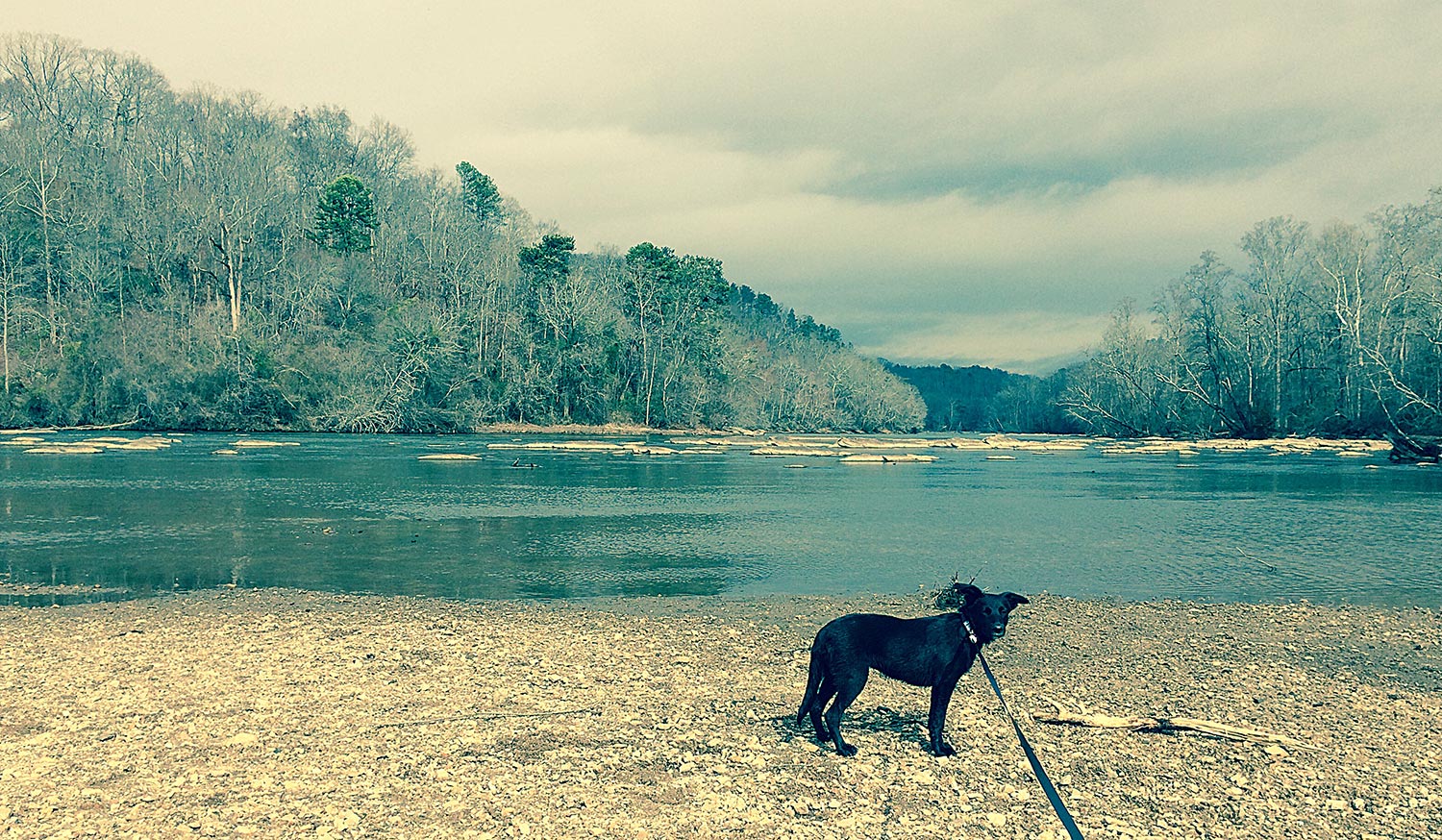
A GROUP OF UNIFORMED US CUSTOMS OFFICIALS HAS ASSEMBLED TO INSPECT THE CONTENTS OF MY CARRY-ON LUGGAGE BEFORE I AM ALLOWED TO LEAVE THE BAHAMAS FOR HOME.
They each peer inquisitively through the zippered opening of the black tote and repeat, “Oh my God! She’s adorable.”
I have known for years that I wanted a Bahamian Potcake for my next dog. These bright eyed, slender dogs, common throughout the Bahamas, stole my heart. The Potcake, only recently recognized as a breed, is a kind of super-mutt made up of the working dogs that colonists brought to the islands to work the plantations. They are wicked smart, hardy and, once bonded to a human, fiercely loyal. They, in many ways, exhibit the traits I admire in the Bahamian people. Not surprisingly, as they, without meaning to be insensitive, share a very similar backstory. Each has carved out a life for themselves under harsh circumstances, maintaining strong family structures, and living by their wits. The Bahamians and the Potcakes, not only exist but thrive, against all odds, and in doing so have developed a strength of character which is both admirable and endearing.
I’ve been fishing at the Andros South Bonefish Lodge for many years. The staff and guides there have become friends and the island of South Andros a place of refuge where I feel an uncommon sense of well being. There is a small family of potcakes there, who I have become attached to, the eldest being a female named Brownie. Although these dogs enjoy the adoration of anglers from around the world, they are not exactly domesticated. They are not exactly feral either but some of them, especially the puppies, are untouchable. Brownie, however, is one of the best natured dogs I have ever known and, from each litter, at least a couple of her pups has her sweet disposition. While all potcakes are great dogs, this family line is truly special to me.
South Andros is a poor island. Its people, for the most part, have big hearts and small wallets. There is no veterinarian on the island and few folks have the money to fly a dog to Nassau for medical care. Certainly not for non-essentials like spay and neuter. As a result, a huge population of feral potcakes fight for limited resources. The name potcake comes from the traditional Bahamian dish of peas and rice, which leaves a burned matt in the bottom of the pot, called the potcake. These are thrown out for the dogs and beyond that their diet is random lizards, bugs and whatever washes up on the beach. Many of them starve, or are killed for hunting livestock.
This year, things lined up for me and I decided it was time for a dog. I could adopt a dog easily at home, but what I wanted was one of the Andros potcakes. There are always fresh puppies and I found myself drawn to one in particular. A little black puppy, the runt of the litter, who the guys at the lodge named Permit because she was impossible to catch.
Read More »In The Dark of Night
By Johnny Spillane
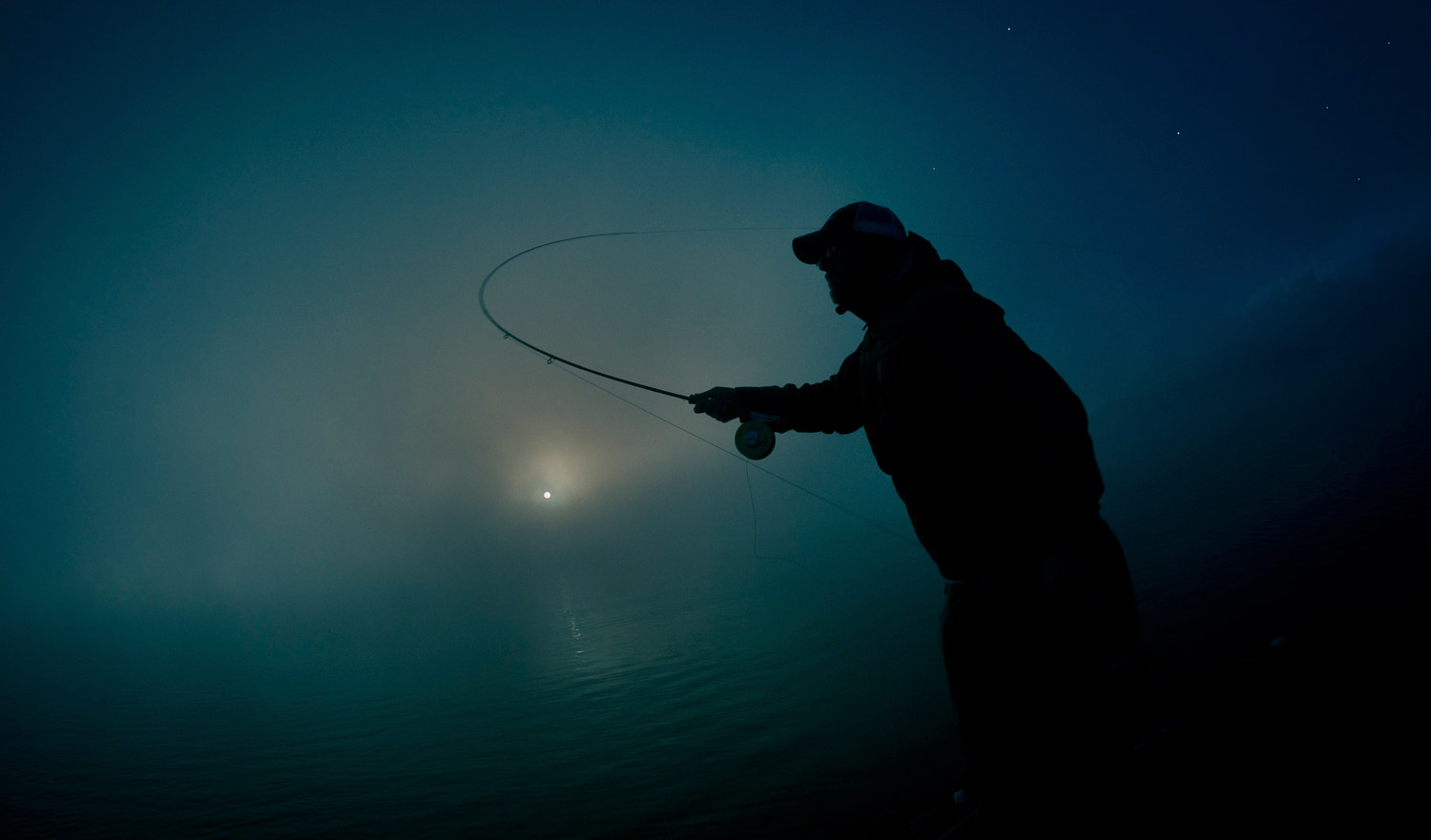
SOME OF THE MOST FUN I HAVE EVER HAD FISHING HAS BEEN AFTER THE SUN GOES DOWN. THE BIGGEST FISH IN THE RIVER COME OUT AFTER DARK AND THERE ARE SOME REALLY FUN WAYS TO FISH FOR THEM.
If you are anywhere there is a prolific caddis hatch, which is almost everywhere, swinging and skating caddis can be deadly. My favorite caddis pattern for fishing at night is the Goddard Caddis. It floats really well and skates across the surface with ease.
Typically when fishing at night I use much heavier tippet then I would use during the day because fish tend to slam flies harder and a lot of times you wont know there is a fish until you feel the tug. If the moon is bright enough, often you can still see the take as you would during the day, but if not, your going to have to rely on your sense of feel. Try using 2x first, and if that proves to be too heavy, switch to 3x but very rarely do you need to go any finer than that, even in areas that are heavily fished.
I like to fish the runs the same way I would fish a streamer. Starting at the top I’d make a cast towards the far bank, throw in a quick down stream mend and then let the fly skate across the surface. After each cast, take a step downstream so that you are covering all the water.
Another really fun option is to
Read More »Shutter Speed for Freezing Action
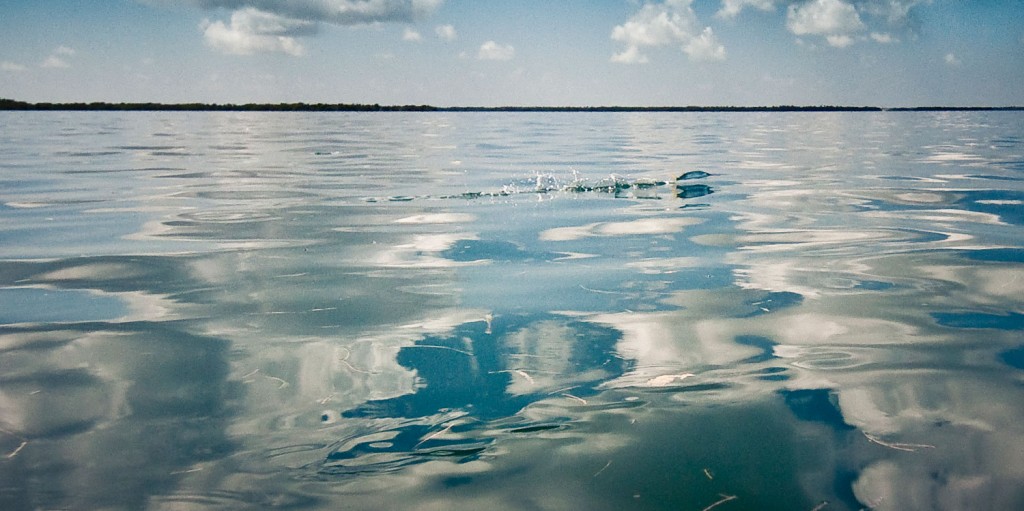
THINGS HAPPEN FAST IN FLY FISHING.
Line whistles through the air, fish leap out of the water, guides swoop in with the net. It’s fun to capture these moments of action with the camera but often we fail and end up with a shot that is blurred beyond recognition. The solution is shutter speed. Today’s DSLR cameras are capable of amazingly fast shutter speed. A shutter speed on 1/8000 of a second will take crisp shots from a speeding flats boat. When you know you need that kind of speed there are a few things to keep in mind. You may find yourself needing an ISO setting as high as 800 in bright sun to get the shutter speed you need. In most cases
Read More »Tiger Trout
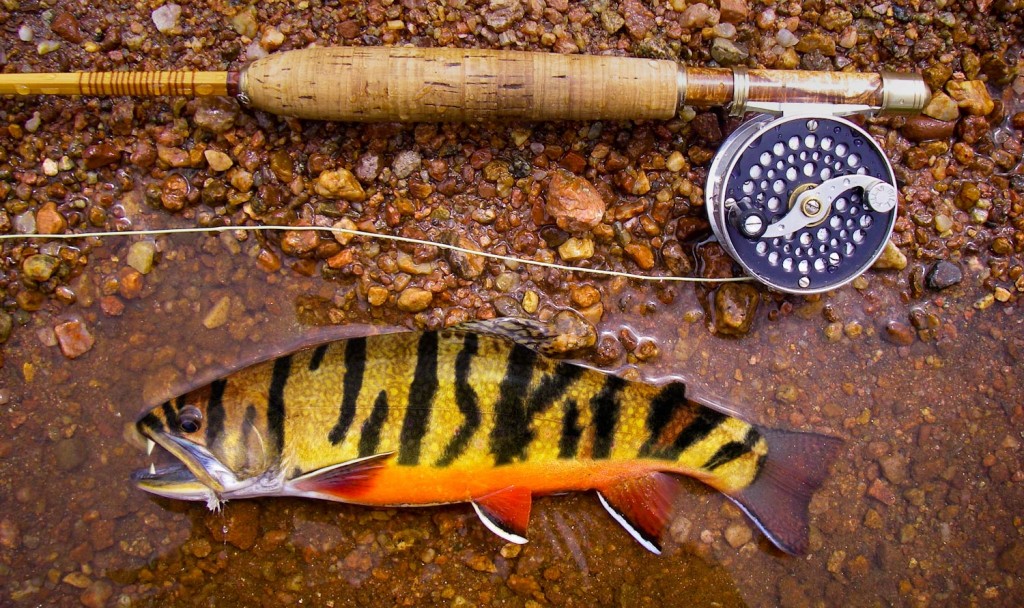
Wild tiger trout may be the rarest of the trout family.
They are a hybrid of a female brown trout and a male brook trout. They are distinctive, the dark modeled pattern of a brook trout’s back extending down their sides to their belly. This bold pattern won them the name tiger trout. The pattern more closely resembles the coat of an ocelot but I suppose ocelot trout sounds silly.
Browns and brooks are both fall spawners so it’s bound to happen that some big beautiful brown trout catches the eye of an eager brookie but getting a tiger out of the deal is still tricky. A brook trout, being a char, has 84 chromosomes and a brown trout only 80. A fertilized egg will yield a fry only 5% of the time. The resulting tiger trout is sterile so there is no tiger trout to tiger trout reproduction.
The science guys have figured out how to make tiger trout in the lab. They fertilize the brown trout eggs with brook trout milt and then shock them with heat which causes the eggs to mutate adding a chromosome pair and boosting the success rate to 85%. A pretty cool trick but why would you do it?
Well, it turns out that the tiger isn’t just in the stripes. Tiger trout have the attitude to boot. They are aggressive piscivores and grow quickly, eating every smaller fish they can. For that reason they have proven to be an effective tool for controlling invasive species. Since they are sterile, there is
Read More »3 Tips for Catching Giant Bonefish
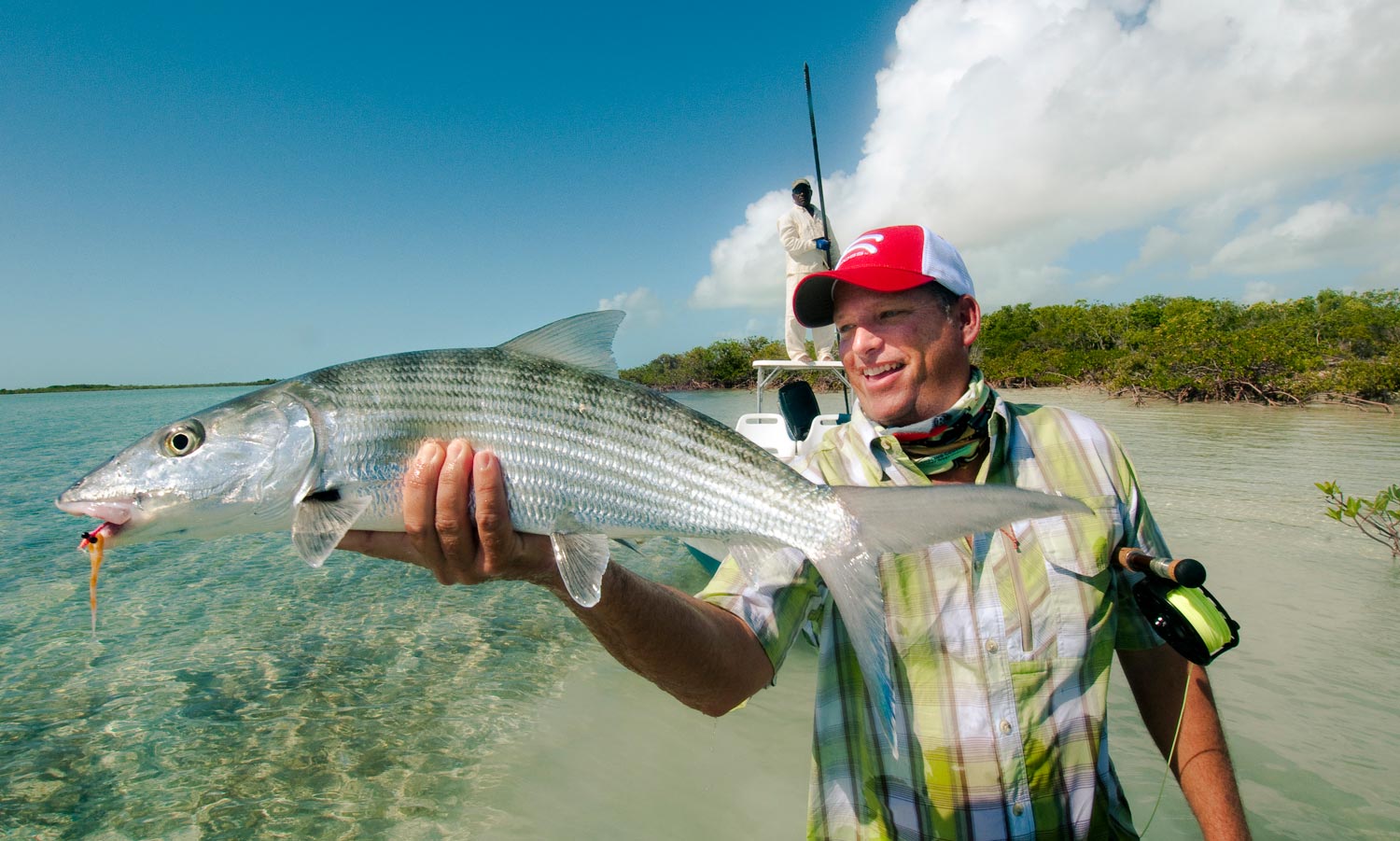
By Bruce Chard
There’s only one thing better than catching bonefish. Catching huge bonefish!
It doesn’t happen by accident, it’s a cold-blooded calculation. Even if you have the perfect fly and can make the perfect presentation and even fight a perfect fight, you have to find that giant bonefish to have a shot. The Florida Keys are a great place to do just that. When you head down to the Keys for some bonefishing, here are 3 tips to help you find and land the fish of a lifetime.
#1) CHECK THE BOTTOM
Softer mud bottoms often hold large bones during the winter months. Warmer water from the mud holds larger food so BIG bones come in. Shallow rocky points are also great during the summer months. Rocks around points offer great places for bigger crabs to live and still get great water flow. Big bones know this and will frequently return to these places, scavenging for larger meals.
#2) USE THE RIGHT FLIES
When you open your fly box
Read More »The Legend of El Dorado
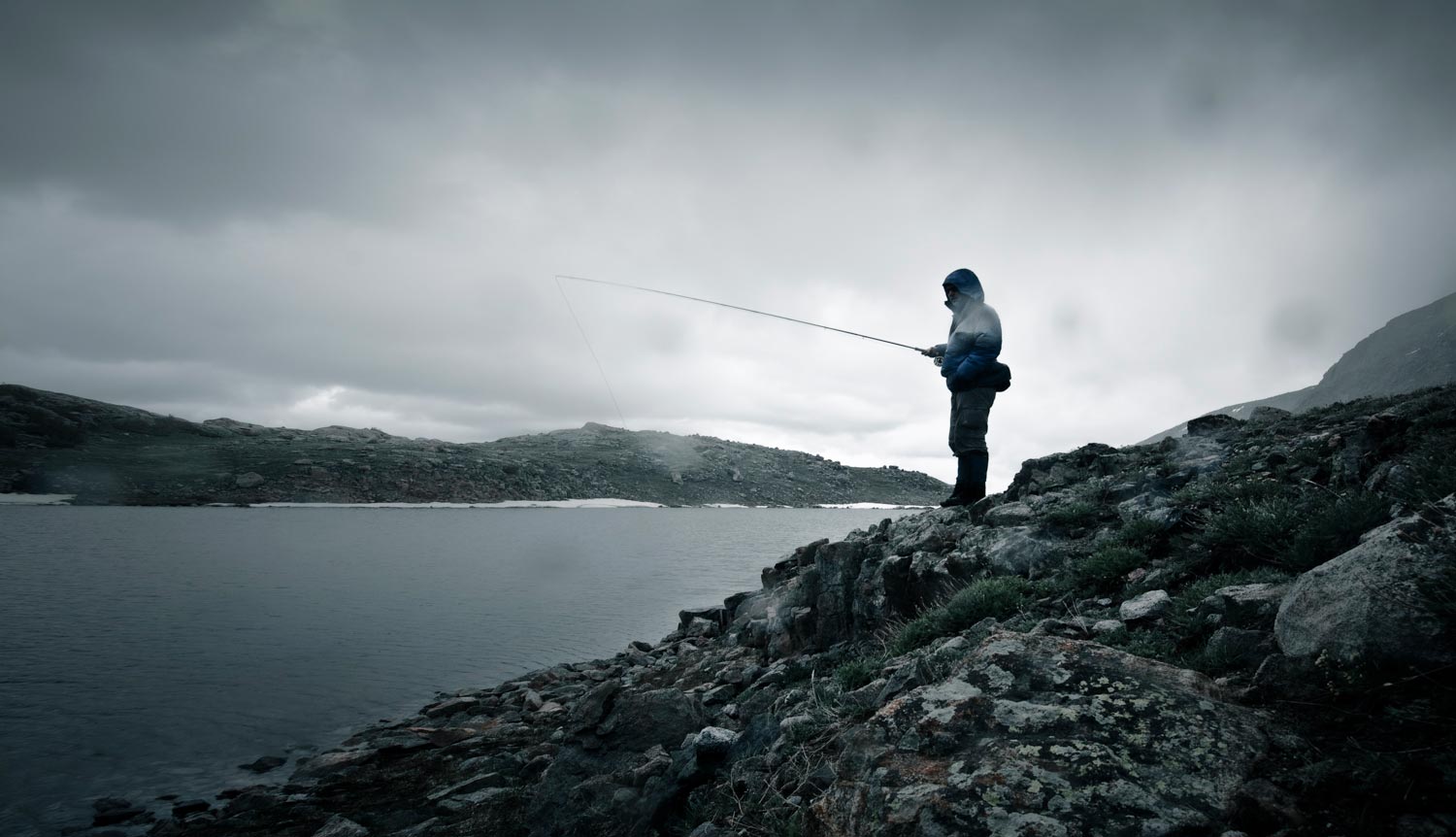
Golden trout of the Wind Range
For as long as I have been aware of their existence, the golden trout of the Wind Range have loomed large in my imagination. For years, hell decades, I’ve dreamed of hiking into those mountains to catch one of the worlds rarest trout.
I had honestly given up. I learned that no one is going to tell the guy from Georgia where the golden lakes are and it seemed impossible for me to do the leg work to find them. I thought that holding a golden trout in my hand would remain a dream, until I mentioned it to my buddy Steven Brutger, of Stalking The Seam.
“Really?” He said. “I do it every year. I’d be happy to take you up there.”
Steven and his partner, Matt Copeland, made all of the arrangements. The plan was to arrive as close as possible to ice-out. Golden trout are notoriously difficult to catch. It’s entirely possible to hike ten or twenty miles in and get skunked. Being there as soon as the ice melts is your best shot.
In June we hiked in, with llamas carrying our gear, to a base camp at 10,000 feet. We then went on our own to a lake I will call El Dorado at 11,500 feet. The environment was beyond harsh. High winds and an icey precipitation called gropple stung every inch of exposed skin. We arrived with half of the lake still covered in ice. What followed was pure magic.
Working with videographer Murphy Kane, the newest member of the G&G team, we it together this video. I’m very proud to share it with you and very thankful to Steven, Matt and Murphy for making it happen.
Editor’s note: This video is pretty trippy. We at Gink and Gasoline would never suggest any illegal behavior on the part of our readers. Residents of CO and WA, however, should consider exercising their rights before viewing! Enjoy.
The Legend of El Dorado
Read More »