
Reece’s Glo Worm
By Bob Reece
Whether you like it or not, fish eat worms.
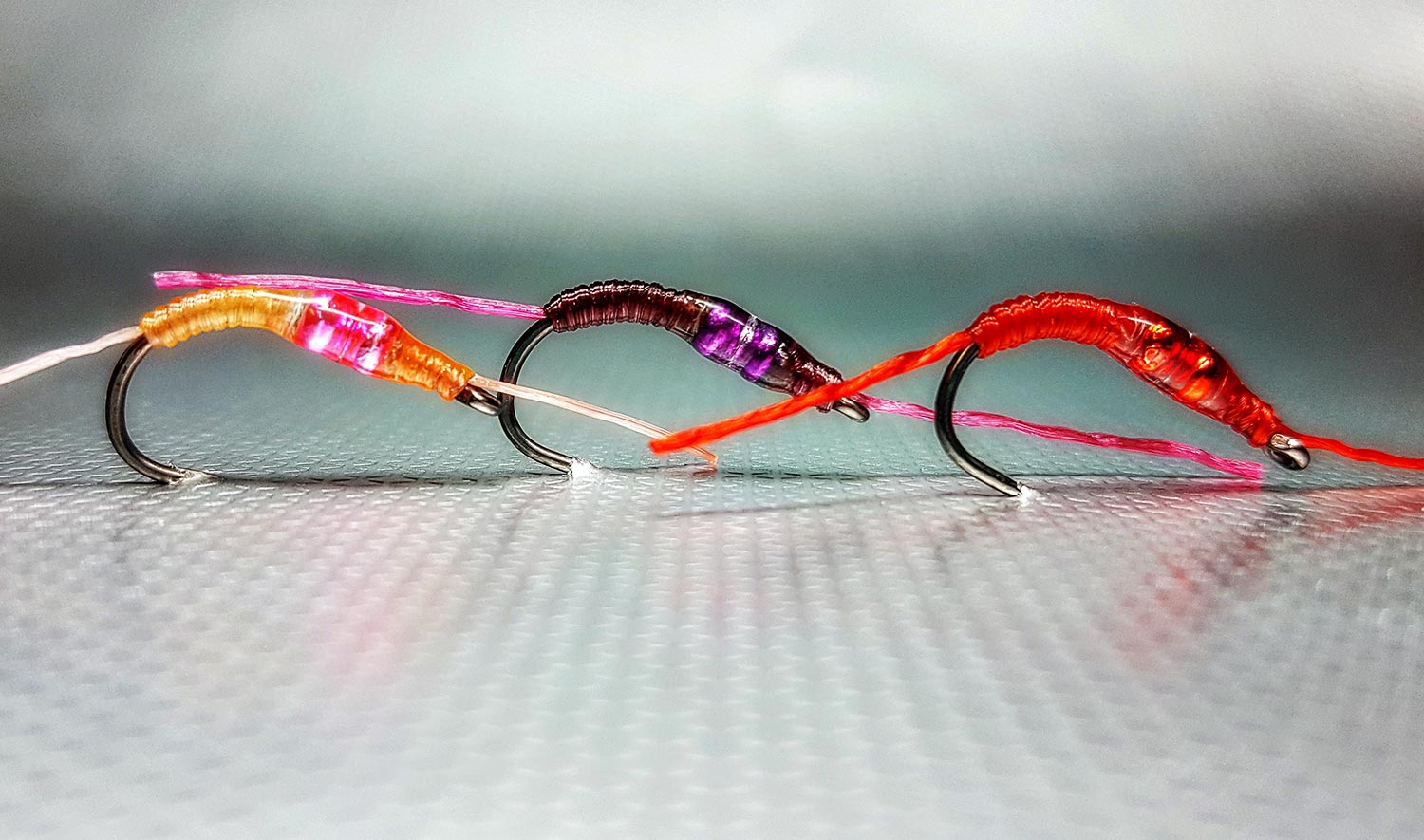
This wiggly addition to fly boxes is adored by some and scorned by others. If you happen to be a fly fisher that embraces the application of annelids, this pattern is worth its weight.
When tying the Glo Worm, I use either the Tiemco C500BL or the 2499BL. Both hooks sport the slightly upturned hook point and strength required to hook and hold large fish. The addition of two tungsten beads rockets this pattern to the bottom, where it belongs. This quick descent puts and keeps the fly in the strike zone for longer periods of time. The combination of MFC Sexi-Floss and UV coat creates a natural translucency.
Worms work and some work better than others. Even among great simplicity, diversity and improvement exist. If you’re looking to step up your annelid game, light up your box with some Glo Worms.
Read More »The Bobber Conundrum
THE OTHER DAY I RECEIVED THIS EMAIL FROM A READER.
***
“Just wanted to bring up an issue that has been eating at my soul for years! I just can’t wrap my arms around the thought of using a bobber. That being said, I know that when nymphing on some streams that the use of an indicator is almost mandatory for your success and without one you have doomed yourself to failure but I can’t bring myself to apply this method.
Why?
I would love to here your thoughts on this issue from both sides. I have always said it’s not about the catching of fish it’s about just being there. I mainly swing flies for steelhead with my two handers and would never ever think of using an indicator for those majestic creatures but I do at times go trout fishing and find myself absolutely bored out of my mind plugging water and getting very few strikes.”
***
This has come up frequently and I thought it would be a good topic for a post. I’ll give you my thoughts and maybe you can share yours.
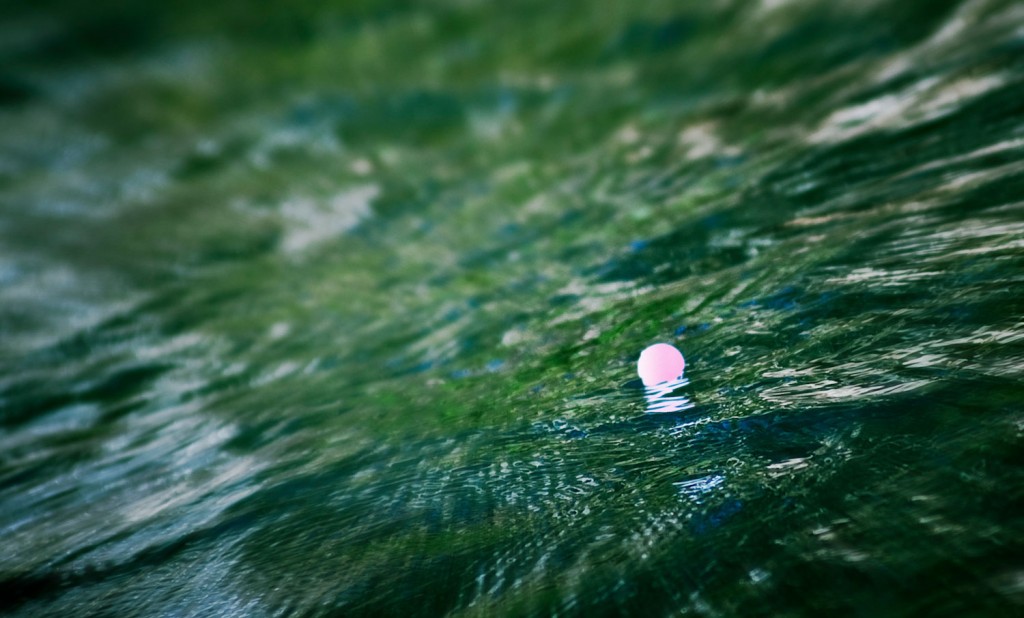
How does the lowly strike indicator generate so much controversy? Be it yarn, foam, a plastic bubble or a dry fly, an indicator is a tool. Like a hook or a line it is meant to help an angler catch a fish. Where is the controversy in that? How does a fellow, like our friend here, find that “eating at his soul?”
The tools you use say a lot about how you see your craft. Hopefully you’re not the guy who reaches for the hammer on every job. The old saying goes, “If the only tool you have is a hammer, everything starts to look like a nail.” Not exactly the definition of craftsmanship, on the other hand, once in a while a nail needs driving.
There is a time to drift a dry fly on 6X, a time to swing a tube fly, a time to rip a streamer and even a time to use a bobber. That’s what makes fly fishing the rich and wonderful pursuit that it is. There are always new techniques to learn and master, new puzzles to solve, new waters or fish to figure out. It is a lifelong pursuit.
The art of angling is in coming to the fish, not in having the fish come to you. It is getting into the slimy little fellow’s head. Figuring out what he expects to see and showing it to him. Whether it’s a nymph, a dry, a streamer or whatever, the art is in presenting the fly to the fish in a way that he can appreciate. It is a chess game between you and the fish and when he makes a conscious decision to eat your fly, that’s checkmate.
Well, check at least, there’s still the business of landing him, if that matters to you. It does, doesn’t it? We have all had the experience of hooking a tough fish only to see him unbutton and I’m willing to bet we’ve all said the same thing, “At least I got him to eat, that’s all that matters.” But is it? Be honest, you wanted to land that fish, right? Or was it just about being out there?
Being out there is great but if that’s what it was about we’d be hikers. Hiking is about being out there. Fishing is about catching fish. We are there with a purpose. We are anglers, we want to catch fish and there is no shame in that. If an indicator facilitates that, where’s the problem? Perhaps not with the bobber.
What we are really talking about is not technique. It’s not the catching of fish or the being out there. It’s cloaked in aesthetic and bolstered by rationalization and perceived as identity but what it is
Read More »You Can Mouse Just About Anywhere
Eight years ago, I got fed up with reading articles about people all around the country and abroad fly fishing with mouse patterns and landing truly giant trout.
It seemed every medium I read or watched, there were people showcasing how productive mouse fishing could be. The only problem was, where I lived in North Georgia, as well as the majority of my neighboring states, I heard very little about anyone fishing mouse patterns. You’d find a few patterns here and there in the fly bins at the local fly shops, but in actuality, I think most of those were being fished on farm ponds for bass not for trout. I couldn’t take it any longer, so I decided to go on a mousing binge, strictly fishing mouse patterns on my days off. I really wanted to figure out if mouse patterns would work just as well on my home waters as they did on blue ribbon caliber trout streams.
My first big brown trout fishing a mouse pattern.
It didn’t take long to find success. My second trip out I landed a 26 1/2″ wild brown trout on my home tailwater. It was one of the biggest documented fly caught brown trout on the surface that anyone could remember for quite some time. I then moved on to some of my favorite small mountain streams where I’d never heard of anyone tying on and fishing a mouse pattern. Again, my mouse experiment yielded incredible success, and I quickly turned into a mouse fishing enthusiast. I didn’t know if I was having luck because no other anglers were fishing these big mouse patterns, or if it was simply that very few anglers in my area were willing to accept mice were regularly being preyed upon by our local trout. I didn’t know for sure, but in all honesty, I didn’t really care. Success was success, and I was going to milk it before everyone caught on.
Here’s What I learned about Fishing Mouse Patterns that first year.
Read More »10 Tips For Catching Big Bonefish

Catching a bonefish is always a challenge, but to catch a big bonefish, you have to do everything right. Bonefishing is a little like playing the guitar. It doesn’t take long to be good enough to have a lot of fun but it takes a lifetime to master. I’ve been doing it for a long time and I still regularly have revelations about it. I suppose that’s why I love it so much. Over the years, I’ve learned a lot about what it takes to catch a big bonefish. Most of it the hard way. I’m going to share some of that hard won knowledge with you in the hope it will shorten the learning curve. Watch the video for my top 10 tip for catching big bonefish
Read More »The Albright Knot
The Albright Knot is a great knot for attaching a metal bite tippet to your leader.
It can also be used to attach the leader to the fly line or any time you are attaching materials of very different size or stiffness. Here’s Capt. Joel Dickey, in the last of his three part series on better salt water knots, to teach you the Albright Knot.
WATCH THE VIDEO AND LEARN TO TIE THE ALBRIGHT KNOT!
Read More »8 Tips For Retrieving The Fly When Bonefishing
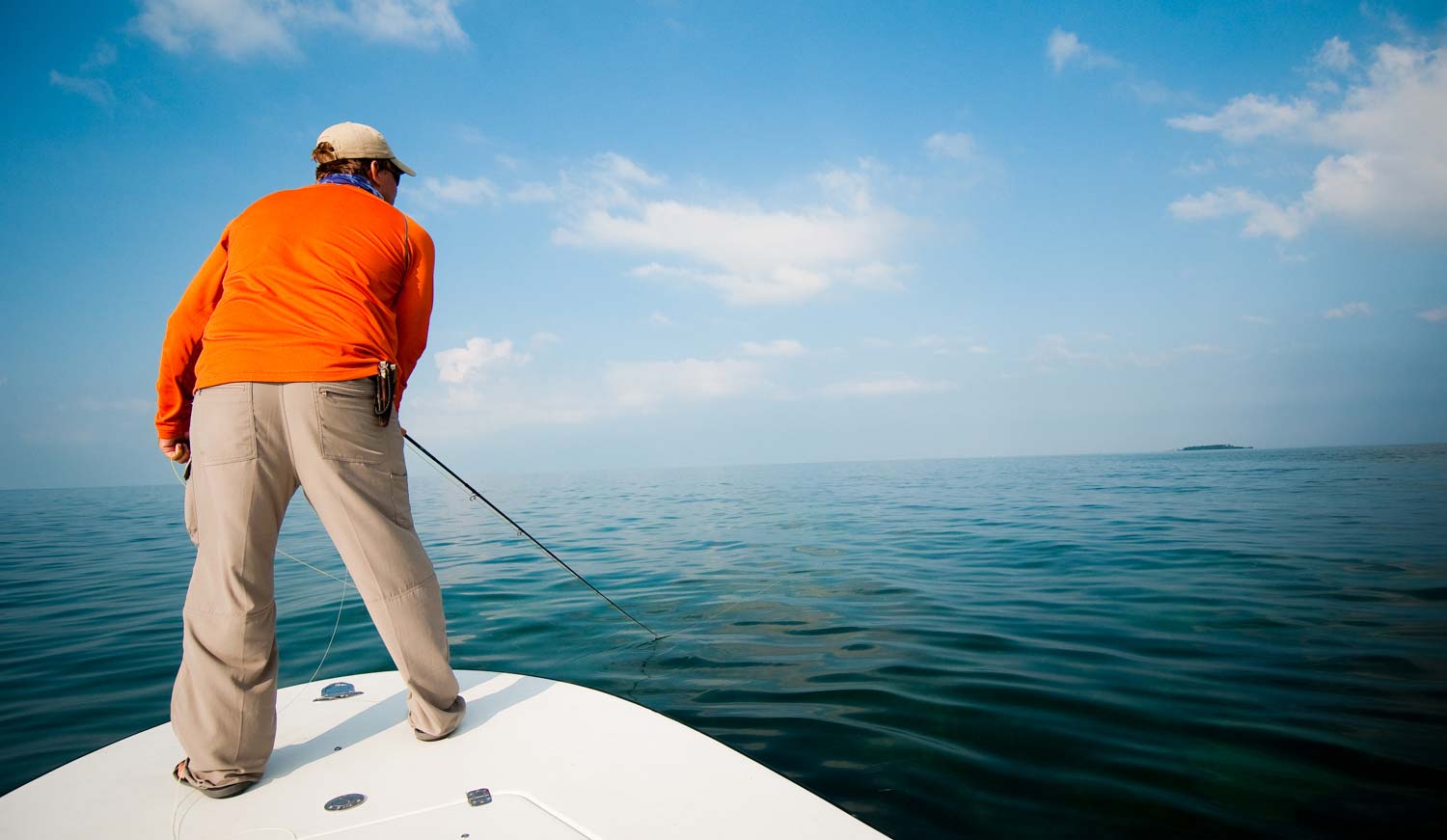
By Louis Cahill
You’ve spotted the bonefish and made the perfect cast, what now?
The retrieve is where the magic happens. It’s your sales pitch to the fish and if you want to seal the deal you have to make that fly act like food. It’s a simple proposition but there are a lot of things to keep in mind. Ultimately, your retrieve is determined by three things: the setup, the conditions and the reaction of the fish.
Every presentation to a bonefish is different. That’s what makes targeting these fish so much fun. To be really successful you need to have a good understanding of the fundamentals of the retrieve and be able to adapt when things change.
With that in mind, here are 8 tips for better bonefish retrieve.
Does the fly matter?
By this I mean, do we retrieve flies differently based on the critter they imitate? To be honest, I think bonefish are pretty forgiving on this one, but I do fish as if it matters. That means I try to swim the fly like the natural would swim. Shrimp patterns get a rhythmic pulsing retrieve, crab patterns scurry and dive, baitfish patters swim more fluidly.
Look scared
Your fly not only needs to imitate the natural, it need to appear to be in distress. Like all predators, bonefish will prey on the weakest. I like for my fly to appear to panic a bit when the fish sees it.
Speed is dictated by the presentation
The speed of your retrieve should vary depending on the setup of your presentation. Bonefish are not accustomed to having shrimp charge toward them. If the setup of your shot means that you have to retrieve the fly towards the fish, your retrieve must be slow, as if your shrimp is clueless. Bonefish like to chase, so quick retrieve can get their attention if the fly is off to their side, moving away. Sometimes you will have to
Read More »The Skwala Carbon Fishing Jacket: Review
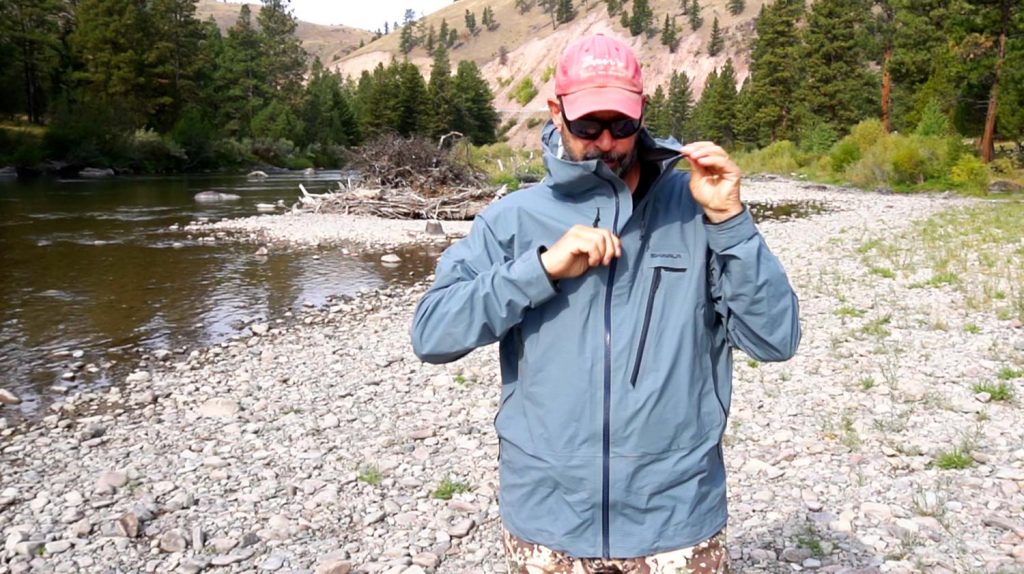
There’s been a lot of buzz about Skwala, the newest brand in fly fishing apparel. I was pretty excited to get my hands on the Carbon jacket to see if it lives up to the hype. An American brand, located in Bozeman MT, when Squalla introduced a line of fly fishing specific clothing, including waders, the obvious comparisons and speculations were rampant. It was nice to cut through the noise and actually use a piece of their gear. The Carbon jacket is not a disappointment. I took it to Belize, where it proceeded to pour rain for five straight days and night. I sat in a bout in the pouring rain every day so I got the perfect opportunity to see if the jacket delivered, and it did. It’s comfortable, great to fish in, durable, and most importantly, dry in the worst rain I’ve ever fished in. You can’t ask much more out of a fishing jacket. Watch the video for all the details on the Skwala Carbon Jacket.
Read More »Holding Your Bone
I WATCHED MY SHARE OF GUYS FIGHT TO GET HOLD OF THEIR FIRST BONEFISH AND I REMEMBER BEING THERE MYSELF. IT’S PRETTY PAINFUL FOR EVERYBODY CONCERNED INCLUDING THE FISH.
They aren’t trout and nothing will bring that hone for you like trying to tail one. Landing them and handling them is really pretty simple once you know how. Here are a few tips for getting a grip on these slippery little guys without anybody getting hurt, even your pride.
I will not go into the best way to land a bonefish because I’ve done a post and video on the topic with the help of my buddy Bruce Chard. It’ll save you a broken rod so if you haven’t seen it click HERE.
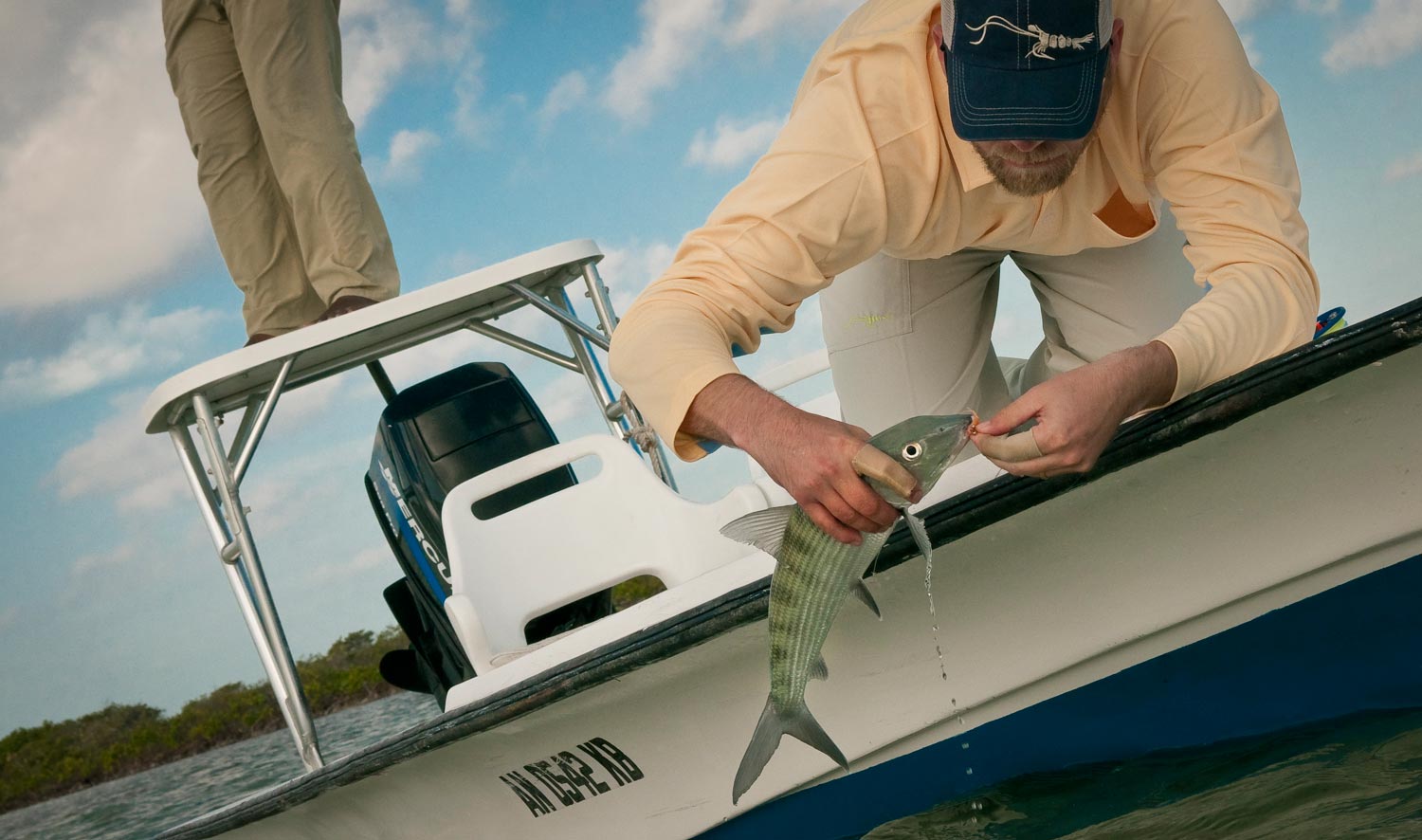
Once you have the bonefish to the boat and the leader in your hand, assuming that you want to hold the fish and are not content to pop the hook out without touching him (the best practice for the fish), you need to get a good grip on the fish that will let you control him without injuring him. The best place to do this is just behind the pectoral fins and gill plates. The bonefish is pretty firm here and not so tapered so you can get a grip without him immediately squirting out of your hand like a bar of soap. Kent is doing a good job in this photo. You don’t need a death grip. Like any fish, the harder you squeeze him the more he will struggle.
If the fish is too green to hold for a quick photo without him leaping out of your hands and flopping around on the deck there are a couple of things you can do to settle him down.
Read More »It’s All in the Heart
By Louis Cahill
Bill didn’t know anything about fly fishing.
That’s not my judgment; he told me so. In fact, it was the first thing he told me. Standing on the bow of the skiff, staring into a Bahamian flat, looking for a fish he’d only heard of, he was as out of his element as a cat on roller skates. A tire salesman from Wisconsin, he’d walked into the local fly shop and told the guy behind the counter,
“I want to catch a tarpon on a fly. What do I need?”
The shop guy told him you don’t just buy a fly rod and catch a tarpon. He knew about the Gink and Gasoline Bonefish School and said,
“Go on this guy’s trip. He’ll teach you what you need to know to catch a tarpon.”
When Bill told me that story, I thought, hell yes! I’ll fish with this guy any day. I don’t care if he doesn’t know which end of the rod to hold.
The first day Bill and I fished together was not a great day for a beginner. We had some sun but the wind was howling. I’m sure Bill had some thoughts about how much he’d spent on that new eight-weight rod, that must have felt worthless in that wind. When I stepped up and punched my clearing cast into the wind, he moaned,
“Jesus! Right into the wind,” and rested his face in his hands.
I’ve heard folks, mostly folks who know less than Bill about fly fishing say, “It’s all in the wrist.” Of course, it isn’t. It’s no more in the wrist than it is in the rod, the line or the fly. It’s not in a book or a video. It isn’t even in your head. Fly fishing is in your heart, and I didn’t have to spend much time with Bill to see that his was full.
Bill didn’t want to catch a tarpon because it would make him cool, or even because it was a challenge. He didn’t want to do it so he could post the photo on Facebook or brag to his buddies. His buddies wouldn’t even know what a tarpon was. Bill wanted to catch his tarpon for one simple reason. His doctor had told him he was going to die. Soon, and for what ever reason, catching a tarpon on the fly was the one thing he wanted to do first.
When Bill told me that,
Read More »Flynn’s Stonefly Nymph
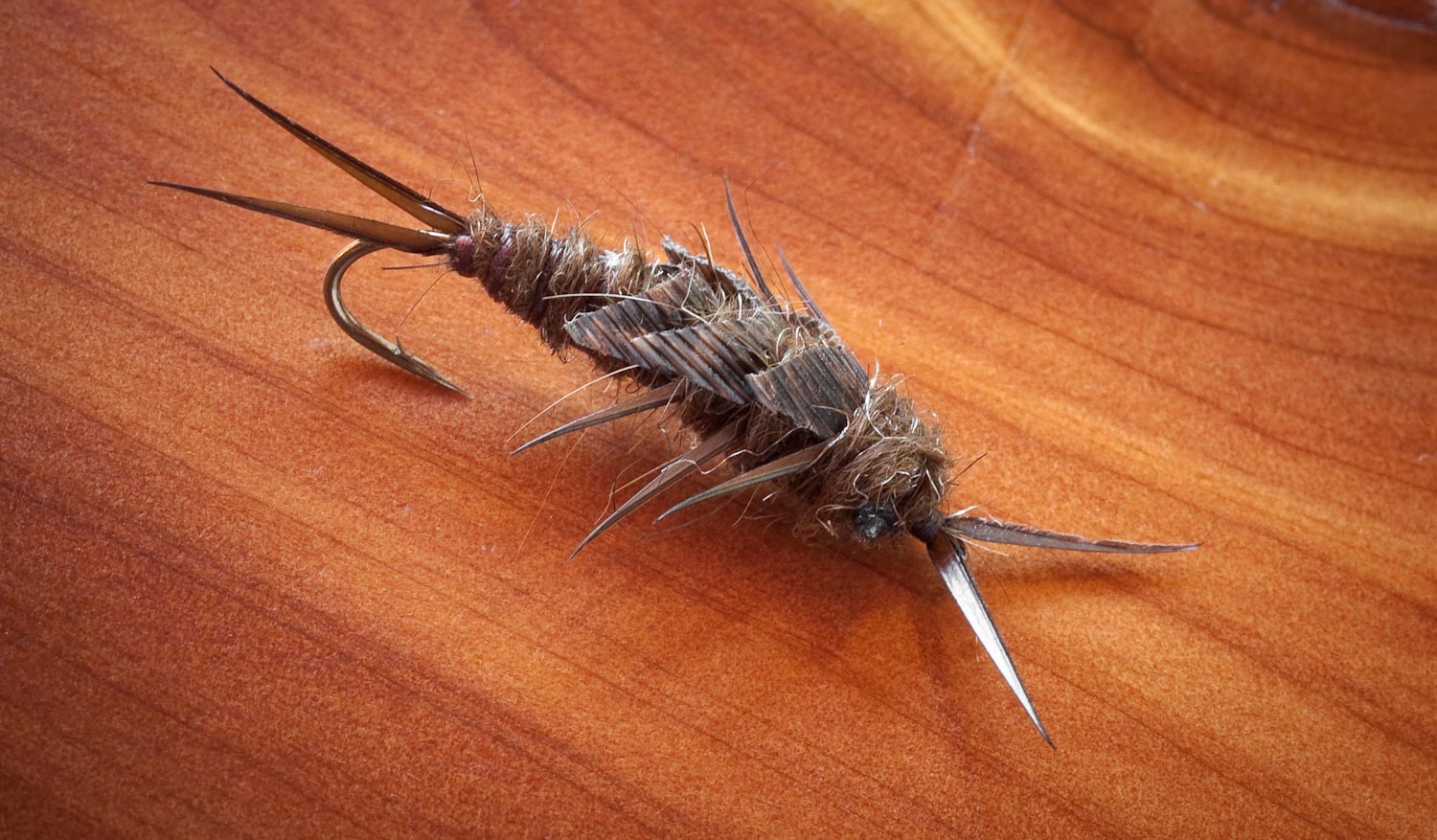
I HAVE SAID ON MANY OCCASIONS THAT, I DON’T CARE TO LIVE IN A WORLD WHERE TROUT DON’T EAT STONEFLIES.
My good friend Dan Flynn shares my obsession with the noblest of insects. Dan is a great tyer with an impressive repertoire of classic patterns. I have always admired his meticulous stonefly nymphs. I’ve also spent many days watching him crush trout on them.