
Dickey’s Tarpon Muddler
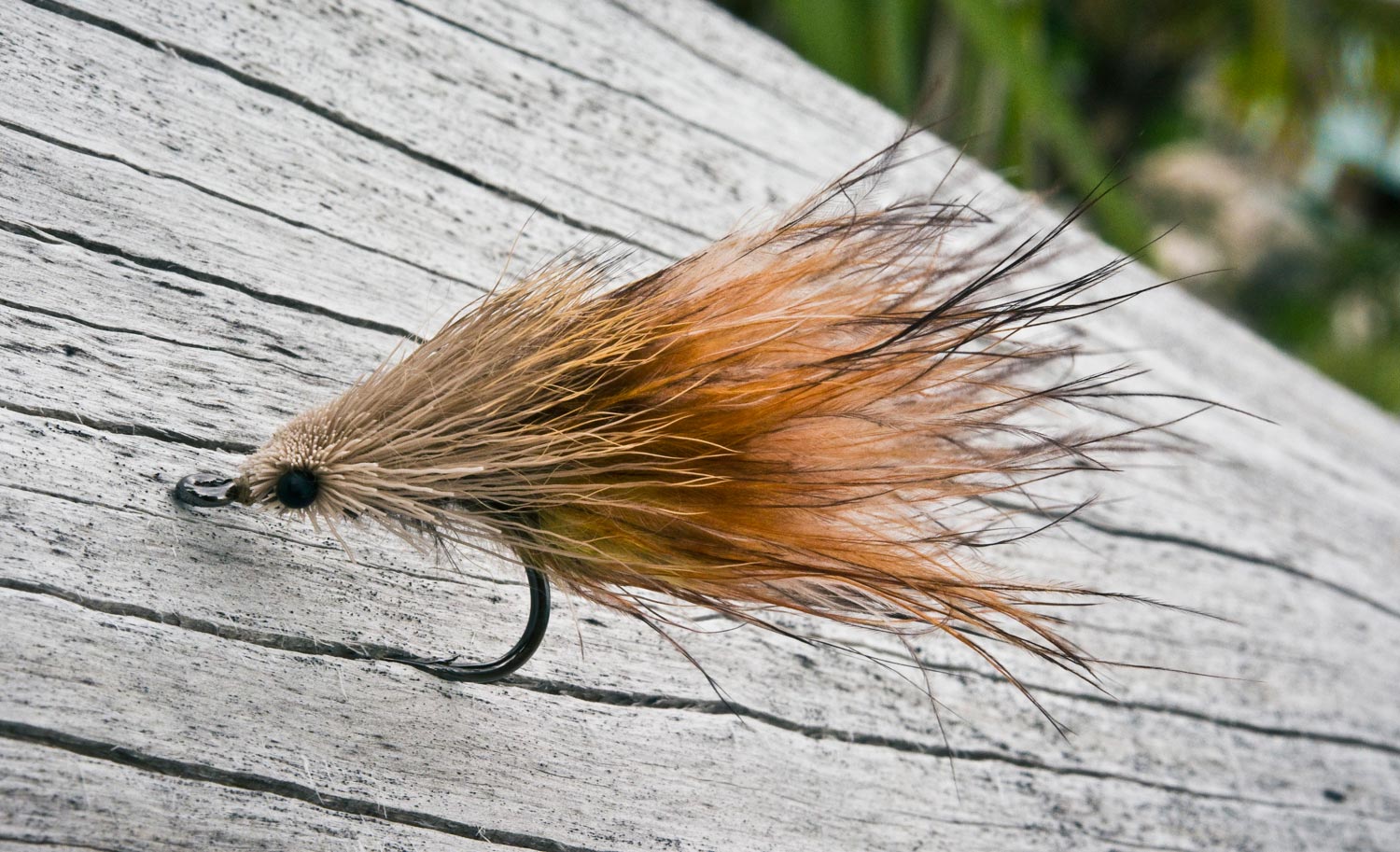
IS THERE ANYTHING MORE SATISFYING THAN CATCHING A FISH ON A FLY THAT YOU TIED YOURSELF? WHAT ABOUT WHEN THAT FISH IS A BIG, LAID UP TARPON?
Where going to spend a little time helping you do just that. A couple of my good friends are going to share some of their favorite saltwater patterns with you. Joel Dickey is going to kick it off with this great pattern of his. Dickey’s Tarpon Muddler.
This is a fly that Joel uses with great results for laid up tarpon and for rolling tarpon in the early morning. It’s a simple tie that uses some sexy materials and some traditional techniques. It has a great profile and an enticing action.
Watch the video and learn to tie Dickey’s Tarpon Muddler. It might just put you on the fish of a lifetime.
Read More »Fly Fishing Bass: 5 Tips for Fishing Frog Patterns Around Grass

SOME OF MY MOST MEMORABLE DAYS CHASING BASS ON THE FLY HAVE COME FROM ME SPENDING THE DAY POPPING AND WAKING FROG PATTERNS ALONG THE SURFACE.
I grew up fishing for bass, and although trout fishing has stolen the majority of my fly fishing attention over the years, I’ve always held a special place in my heart for catching bass on the fly. I’ve got friends that don’t see the coolness in fly fishing for bass, but that’s because most of them haven’t put in enough time on the water to experience perfect fishing conditions, and witness the thrill of bass smashing their fly cast after cast. Bass are amazingly acrobatic fish, and they provide more than enough pull and rod bend to justify fly fishing for them. If you haven’t explored this area of fly fishing, I highly recommend it.
The other day, Louis and I left our houses at 2:45 in the morning to drive across the Georgia State line, and fly fish for bass on Lake Guntersville. Louis was doing a shoot for a new bass lure company, and I was lucky enough to get invited to tag along. Normally, it would be a real challenge to drag me out of bed at this hour, but Lake Guntersville is considered one of the top bass fishing lakes in the entire country. More importantly, the lake is famous for its unbelievable frog fishing that generally starts in June, and runs through the summer months. Lake Guntersville hosts several professional bass tournaments throughout the year, and in 2014, it will host the most famous of all tournaments, The Bassmaster Classic.
During the tournaments on Lake Guntersville, it’s not uncommon for bass anglers to weigh-in five fish sacs, well over 35 pounds.
That’s right, we’re talking about an average fish weight of over seven pounds. If that doesn’t get you excited about visiting Lake Guntersville, I suggest you get someone to make sure you have a pulse. The reason this lake can grow and sustain such large
The Flats, Light Bottom vs. Dark Bottom
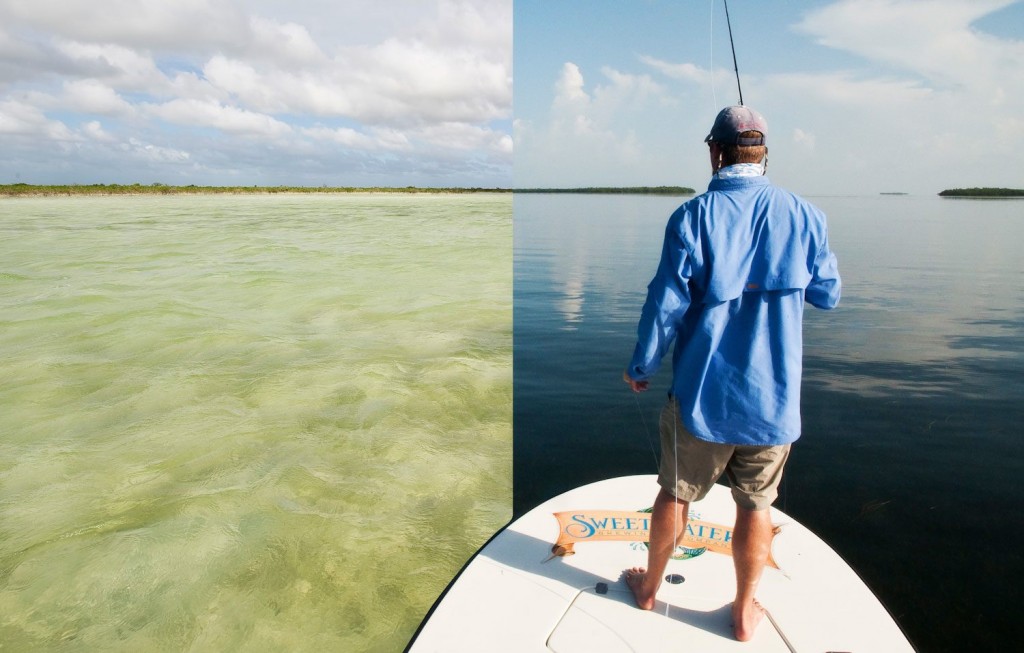
Water temperatures and seasons play an important role for fly fishermen fishing the saltwater flats.
Saltwater fish prefer to utilize different types of flats throughout the year to maximize their comfort and food intake. When I was new to the saltwater side of the sport, I never gave it much thought on why my guide was choosing to take me fishing on a light colored sandy flat, versus a grassy or dark bottom flat. It wasn’t my expertise, so I just went along with everything. Quite a few years have past since my rookie fishing days in saltwater. I’ve logged many more trips on the saltwater flats, and I’ve taken the time to pick the brains of the saltwater guides, so I could better understand why they choose one type of flat over the other during the year. Below is a quick recap of information on what I’ve gathered from numerous saltwater guides on this subject.
Fly fishing on saltwater flats is very similar to bass fishing on large reservoirs, in the fact that water temperature is critical in both for consistently locating fish and productive water. Both freshwater and saltwater fish strive to maintain stable underwater enviornments. When water conditions change, so does the habits and behavior of the game fish we’re targeting, as well as, the food sources they prey upon. Fly fisherman that understand this, are quick to match their fishing tactics with the present conditions on the water, because they know it’s critical for staying on top of the fish and in the action.
Light bottomed flats reflect a large portion of the sunlight. When water temperatures are at the extreme end of the comfort zone of saltwater fish, generally during the months of July, August and September, fish will often prefer to frequent light bottomed or sandy coral flats because the water temperatures will be a little cooler. When fly anglers have the option, it can be best to scout and fish these light bottom flats first, over other dark and grassy bottom flats.
On the other hand, when a strong cold front comes through, drastically dropping water temperatures or during the winter months of the year, when water temperatures are consistently colder, saltwater anglers should begin turning their attention more towards scouting and fishing the dark bottomed flats. These dark bottomed, grassy flats,
Read More »The Importance of Changing Flies on the Water
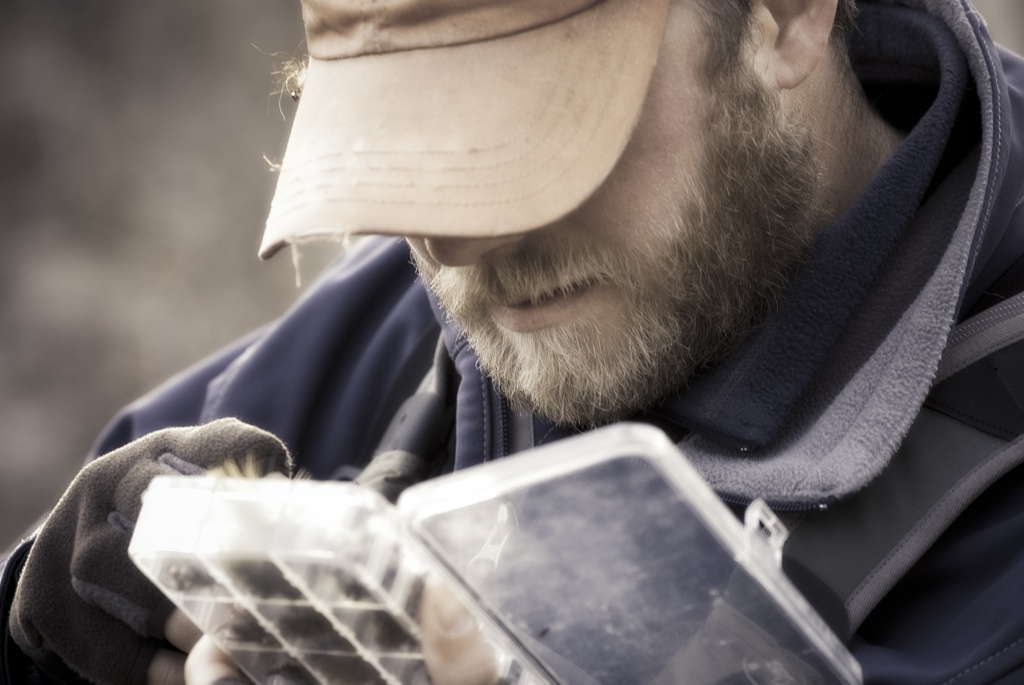
I’ll usually fish for about thirty minutes with my first rig of the day, and if I’m not getting any hookups, I’ll begin regularly changing my flies out until I find a pattern that works. The willingness to change your flies on the water when your not getting bites, is often the key factor in determining whether you have a good or bad day of fishing. I can’t tell you how many times I’ve had someone walk up to me in the parking lot at the end of the day and complain about how the fish weren’t biting. While I, on the other hand, had caught and released dozens of fish in the same section of water. Most of the time that discouraged angler stuck with a few patterns during the day, and didn’t change flies enough times to find out what patterns were really working. How do I know this? I know this because I was that discouraged angler many times early on, in my career.
It can be very obvious to us that changing flies is the answer when we’re able to sight-fish and see fish rejecting our flies. But many times you’ll find yourself fishing in conditions where sight-fishing isn’t an option. A few examples is when your fishing fast moving choppy water, water with significant glare, and stained water conditions. None of these will provide anglers the opportunity to get visual feedback. In these conditions, anglers should change their flies when they’re not getting bites for extended periods of time. If you know your rig is set up correctly (correct tippet size, fly size, split-shot amount, or indicator placement) for the specific water your fishing, and your making good presentations, a light bulb should be going off in your head telling you to change fly patterns if your not getting bites.
Sometimes you’ll find a single pattern will
Read More »Beating The Seasick Blues
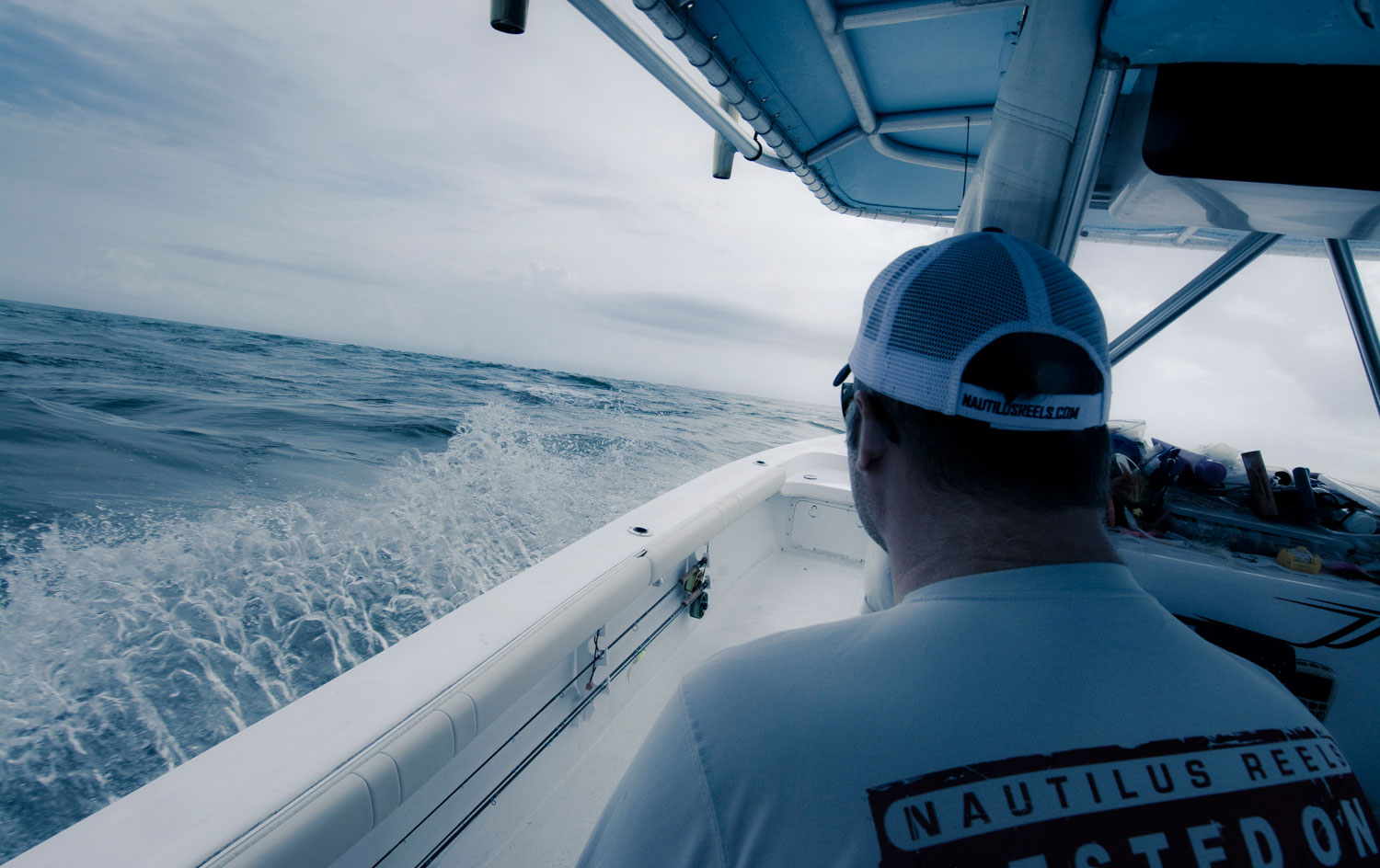
BLUE WATER FLY FISHING CAN BE A BLAST, IF YOU CAN GET YOUR HEAD OUT OF THE BUCKET.
I get seasick looking a pictures of the ocean. That might surprise you, seeing as I spend a lot of time on boats fly fishing in saltwater. I have significant damage to my inner ear as a result of a serious sinus infection and I can barely walk a straight line on dry land. It’s something I’ve learned to deal with and if you are prone to seasickness, so can you. Don’t let a little queasiness keep you from an epic fishing adventure.
If you don’t get seasick, I’m happy for you, but don’t stop reading yet. I have a little tip for you too. Don’t be an asshole! Seasickness flat out sucks. I can only compare it to food poisoning in misery. So if your buddy starts feeling bad on the boat, don’t give him a load of shit. He’s a man! Because he knows how bad it’s going to be and he’s out there anyway. Know this with absolute certainty, if you rip me when I’m sick I will make it my personal mission to cover every inch of you with my vomit. We’ll see who gets the last laugh.
I had the pleasure of fishing with Captain Ron Doerr out of Jupiter, FL the other day. Capt. Ron has been running blue water trips for about thirty years and for twenty of them he battled seasickness. He eventually beat it, but I can’t imagine what it must have been like to be sick every day for twenty years. That’s tough. Real man tough!
I did pretty well on my day with Capt. Ron and much of it was thanks to him. I can’t tell you what a difference it makes to fish with a captain who understands. How you handle the boat makes a huge difference and Capt. Ron understands that from personal experience.
Before I get into tips that will help you beat seasickness it’s good to understand why it happens. Seasickness is literally in your head. It’s a result of your brain receiving conflicting sensory input. When your eyes see the relatively still world of the boat and your inner ear senses the rocking of the ocean, the brain is confused. This confusion leads to an unconscious mismanagement of the digestive system. The stomach over produces acid while the rest of the digestive system is shut down, and voila! You’re puking.
SO IF YOU’RE A PUKER, HERE ARE SOME TIPS THAT MIGHT HELP YOU STAY UPRIGHT AND FISHING.
Read More »11 Tips for Spotting Tarpon
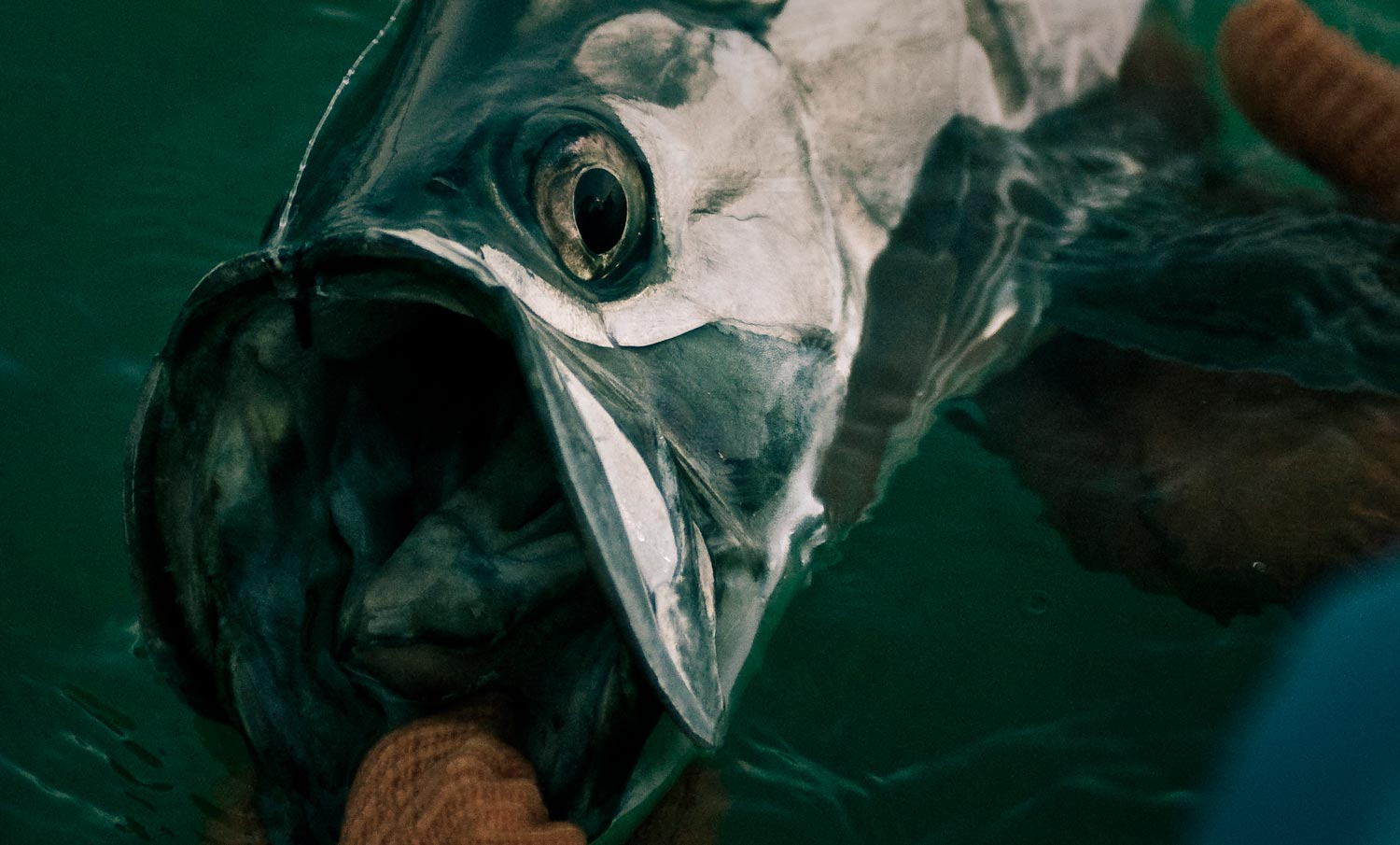
HOW DOES A SIX FOOT LONG FISH VANISH?
It’s hard to imagine, but they do. Even big schools of tarpon can sneak up on you with surprising regularity. Tarpon fishing is a game of strategy and the earlier you see the fish, the better your chances of success. Having the time to set up a good angle and make a plan are key. It’s also important to read the fish’s attitude and in the best case see the eat. Good eyes are as important as the right fly.
Like any flats fishing, good polarized glasses are a must and your guide will be a valuable resource. Even with the help of a guide, knowing what to look for and what it means when you see it will make the difference between frustration and elation. Here are some tips to help you succeed.
Know what to expect
Tarpon shots come in a variety of favors. Tarpon can be laid up, sitting still alone or in pairs. They can be in schools, from three or four fish to three or four hundred. Those schools can be milling around on a flat or on the move. They can move as a big group or a single file procession. These processions sometimes swim in a perfect circle called a daisy chain. Knowing what each of these options looks like will help you quickly identify the fish’s behavior and plan your presentation.
Scan the water
It’s easy to get tunnel vision when you’re on the bow of a flats boat. Fixating on a suspicious shadow or looking where you expect to see fish can blind you to approaching fish. Keep your head on a swivel and scan the water from side to side and near to far. Spend a little extra time studying water where visibility is poor. Fish can literally come from anywhere so don’t get caught staring a hole in the water.
Motion
The easiest fish to see are the ones on the move. The human eye picks up motion quickly and if you are scanning properly you will pick up moving fish from a good distance. Just be aware that you could be looking for a single fish, a line of fish or a big school. A school of several hundred tarpon looks like the shadow of a cloud moving on the water. Make sure you know which direction the clouds are moving.
Color
Like bonefish, tarpon have highly reflective sides which offer nearly perfect camouflage. What gives them away is
The Sharp End of the Boat
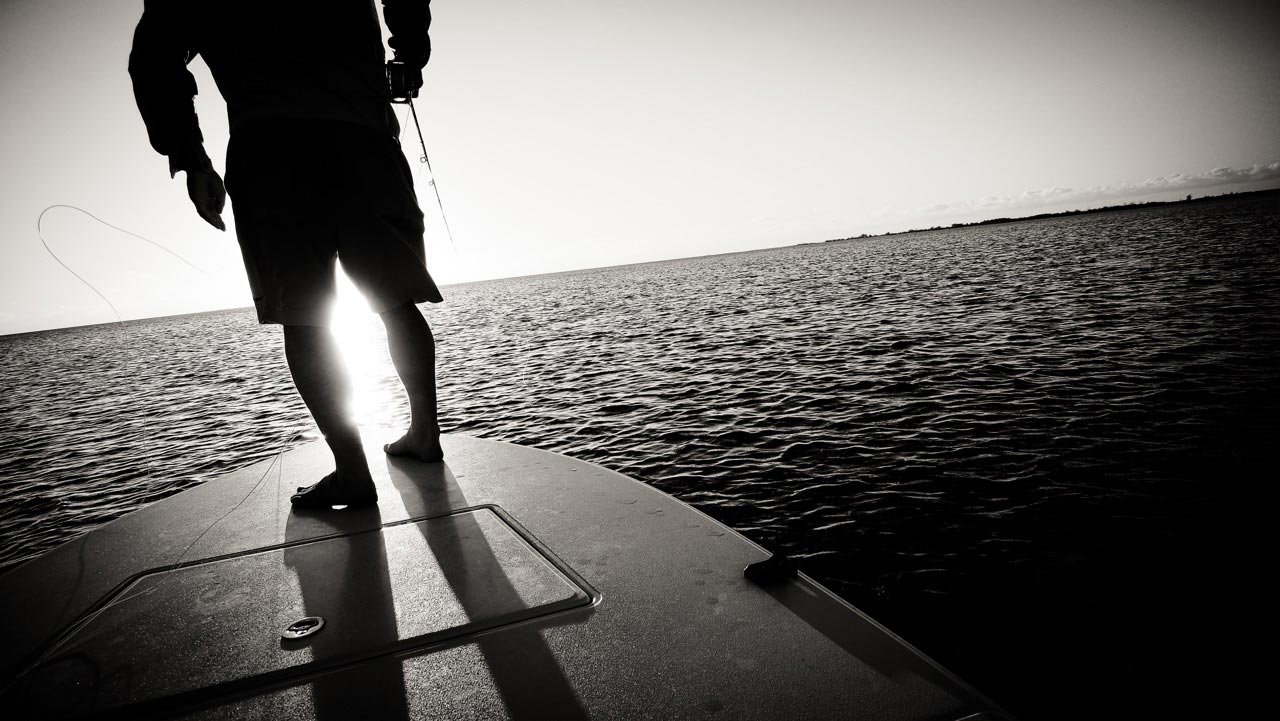
By David Grossman
LOOKING BACK ON MY FEW SUCCESSES AND MANY FAILURES, THE THIN LINE BETWEEN THE TWO WAS USUALLY MENTAL.
There are plenty of folks more qualified to talk about knots, casting, tides, and the thousands of other factors that go into becoming a proficient saltwater fly flinger. What I am qualified to write about at this moment in my saltwater career is the sharp end of the boat, and how you might be defeated before you even step up to it.
I don’t like casting under the focus of others. I don’t do casting ponds. I don’t like first shots. If my buddy gets up first and screws up a couple of shots, I feel the pressure to perform is off of me somehow. This is a horrible attitude to have. Over the years I have watched countless friends catch the only fish of the trip on that first shot. Saltwater opportunities come few and far between, and while I don’t advocate taking out your buddy with a lead pipe to the knee, you have to want to be on the front of the boat. In saltwater fly fishing, the meek will not inherit the earth, but they will spend days sitting on their ass in front of console watching other people get shots and catch fish.
My weird phobia of
Read More »A Simple Tip For Better Streamer Fishing
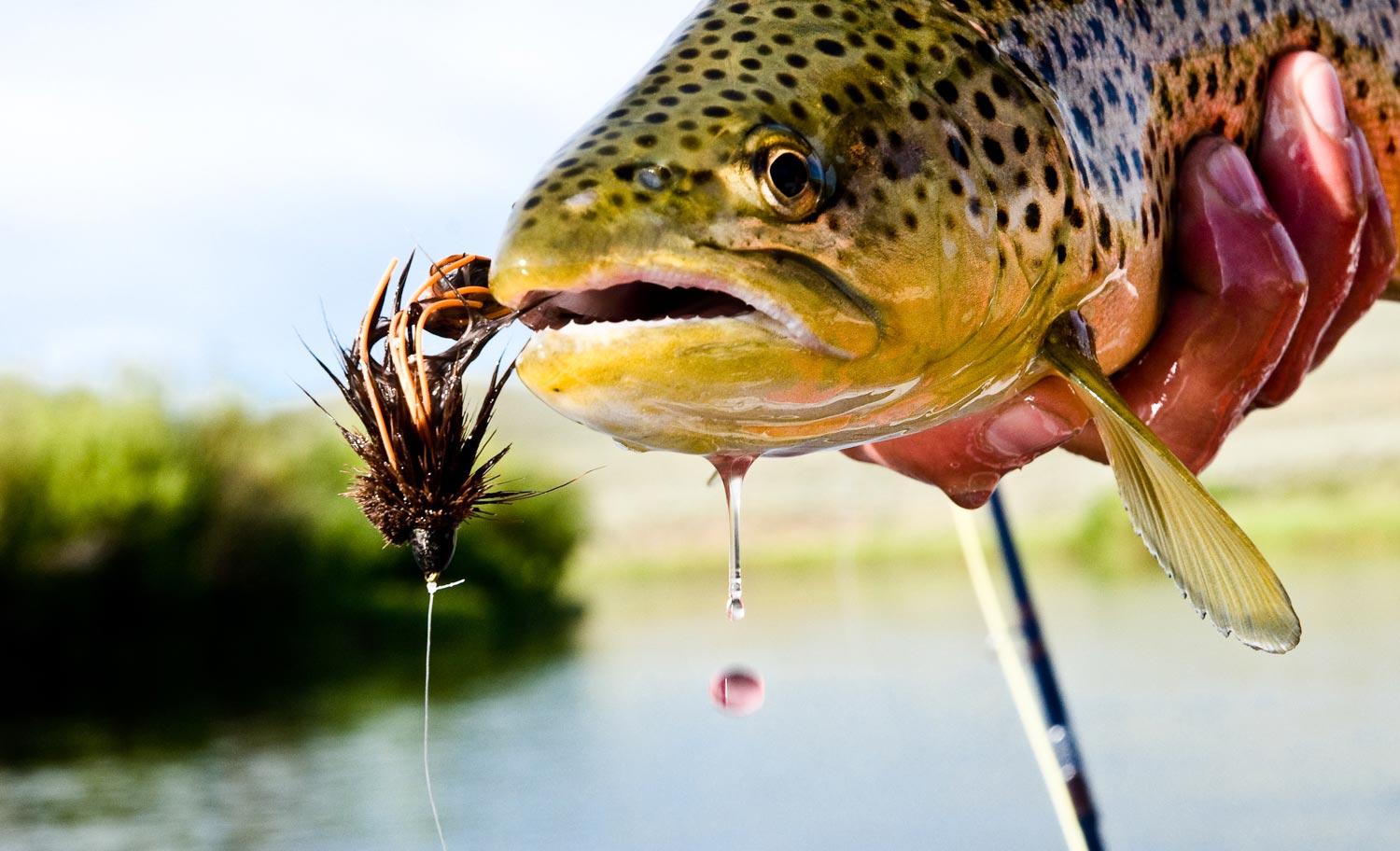
Here’s something simple you can do when fishing streamers, which will catch more fish and save you some pain.
I’ve been meaning to write this tip for years and haven’t because it’s just so simple. But I was reminded of it the other day and figured it was time. No matter what species you are targeting with a streamer, you’ll hook more fish and have a much more pleasant experience if you put your rod tip in the water. It’s a simple trick that accomplishes a couple of really good results.
First off, you’ll get better hook sets. Putting your rod tip in the water reduces slack in the line and uses the tension of the water to help you get a positive hook set. It’s a natural position from which to point the rod at the fly, insuring a solid connection when a fish eats. You’ll always get better hook penetration with the rod tip in the water.
The second benefit is for comfort, but it also leads to hooking more fish. Anyone who has fished a streamer knows about line burns. It’s crucial that you maintain control of your fly line by holding it under one or two fingers of your rod hand when stripping. A dry fly line, or worse a sandy one, can be fairly painful, especially on a hook set. Keeping you line wet by keeping the rod tip in the water lubricates it and keeps it clean. No painful burns or cuts. As a bonus, you will hold your line more firmly when it doesn’t hurt you. That will give you a better connection when the fish eats and you’ll hook more fish.
Thirdly, with the right kind of fly line, it actually
Read More »2022 Holiday Fly Fishing Gift Guide

Here are a list of the best holiday gifts for the fly fisher on your list! It’s that time again. Santa is harnessing those reindeer, Mrs Claus is baking Christmas goodies and all those elves are putting the finishing touches on that new 5 weight and those fresh waders. Forget about the elf on the shelf, these gift ideas will make you the G.O.A.T. on the Boat! Rods and Reels Recon Saltwater 6- $595 I’m a big fan of saltwater 6 weights and this one is my favorite. The Recon delivers the performance of a $1000 fly rod at about half the price. If you have a saltwater and/or on your list, it’s sure to please. https://www.orvis.com/recon-fly-rod/2YLB-Family.html Scott Wave- $675 Scott’s newest offering the Wave is another mid-price saltwater fly rod that delivers in a big way. In addition to being a great flats fishing tool, I find the Wave to be a great rod for streamer fishing in fresh water. Top notch quality and a great price. https://olefloridaflyshop.com/shop/fly-rods/hps-rods/scott-wave/?attribute_size=9+Weight+9Ft+4+Pc Superfine Glass- $498 Perfect for the stream angler the Superfine Glass fly-fishing rod series is built with S-2 fiberglass for smooth, slow casting with the strength to get the job done. Black type III anodizing aluminum reel seat with wooden insert (2-5 wt.) or aluminum tube (6 and 8 wt.). Hard chrome guide and double-foot striping guide. Matte olive blank with quick rod identifier. Nylon-covered rod tube and cloth storage sack included. https://www.orvis.com/superfine-glass-fly-rod/3BH5-Family.html Echo Boost Blue- $299 Echo’s new and updated fast action saltwater rod. The all-new actions are a result of Tim’s relentless tweaking to Echo’s Boost Salt Series. With its light tip section mated to a powerful bottom section, these rods pack the punch needed to fight the wind and other challenging conditions. https://www.chifly.com/Product/Details/6498/Echo-Boost-Blue Winston Air 2- $1195 When … Continue reading
Read More »Jesus Built My CCFX2
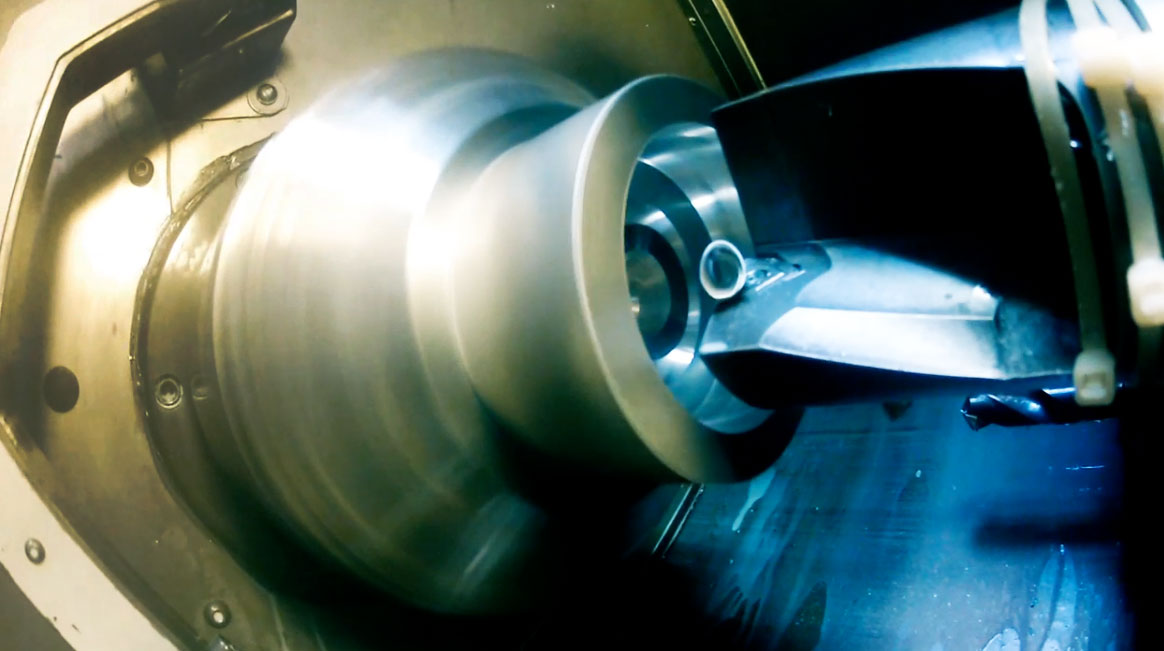
WELL, JESUS AND KRISTEN…AND THE REST OF THE CREW AT NAUTILUS.
Last month I while I was down in Miami I stopped in to see my friends Kristen Mustad and Jesus Marmol. My timing couldn’t have been better. In addition to doing a little fishing, I got to see the very first CCFX2 reel to come off the floor. To say it was impressive would be an understatement.
It was cool to get a first hand look at what goes into the making of a quality fly reel. The attention to detail was mind blowing at every level. The guys and gals a Nautilus have their heads in the game. But you don’t have to take it from me, because I shot video of the whole thing. Watch and see for yourself.
Watch, “Jesus Built My CCFX2”
Read More »