Understanding Leaders Means Better Fly-fishing

11 comments / Posted on / by

When it cones to fly-fishing leaders there are lots of right answers.

There has been an ocean of ink spilled over the subject of leader formulas. It’s pretty common for anglers who are learning to tie leaders to obsess over leader formulas, and the press has made the most of it. I’ll warn you now, I’m not going to give you any leader formulas. What I am going to do is try and help you understand how a leader functions and how to start designing leaders that will work best in a wide range of conditions.

What does a leader do?

To understand how to craft a leader that’s best for the fishing conditions, you need to understand what a leader does. A fly fishing leader has one purpose.

A leader translates the energy of the fly line to the fly in a way that creates the best presentation.

That’s it. Period. If, like me, you believe that there is nothing more important in fly fishing than presentation, you have to appreciate the importance of the leader. If you look closely at that sentence, you will also recognize that the term, ‘best presentation’ is highly subjective. What, exactly, the best presentation means is dependent on a factors like target species, fishing conditions and fly selection, just to name a few. It’s easy to see that no one leader formula can deliver the best presentation in every situation.

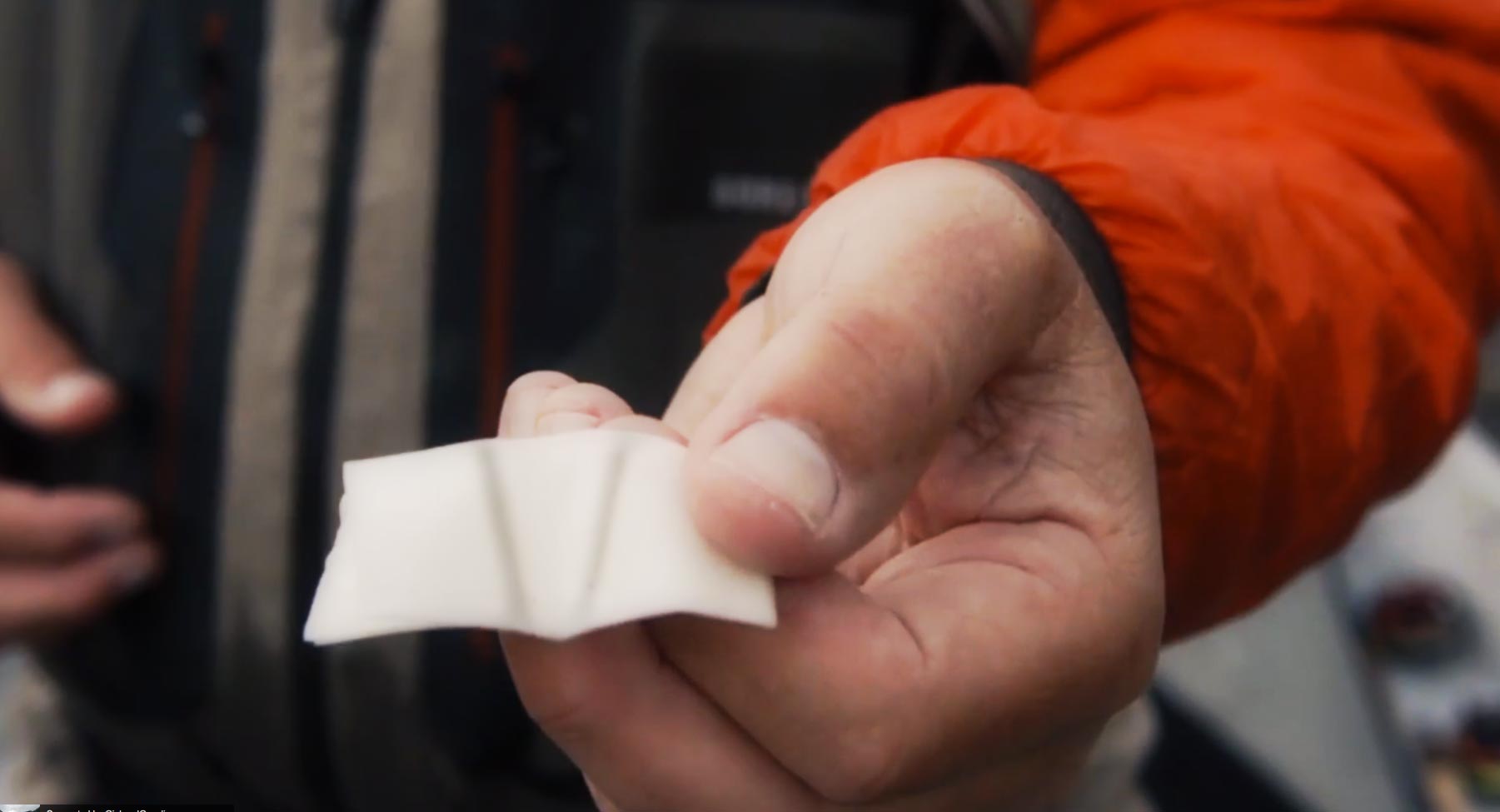
A word about store bought leaders. They are fine and you can get by with a store bought leader for most of your fly fishing. They will never work as well as a hand tied leader because there are limitations in the manufacturing. In general, pre-made tapered leaders all have hinge points and, in many situations, have butt sections which do not effectively transfer energy. Quite a few anglers will protest that the knots on a hand tied leader cause tangles. That’s simply not true. I’m not trying to be a wise -guy, but if you are having that issue, it’s a casting problem not your leader. Read this to fix it.

https://www.ginkandgasoline.com/fly-fishing-tips-technique/fix-your-tailing-loops-once-and-for-all/

What determines how a leader functions?

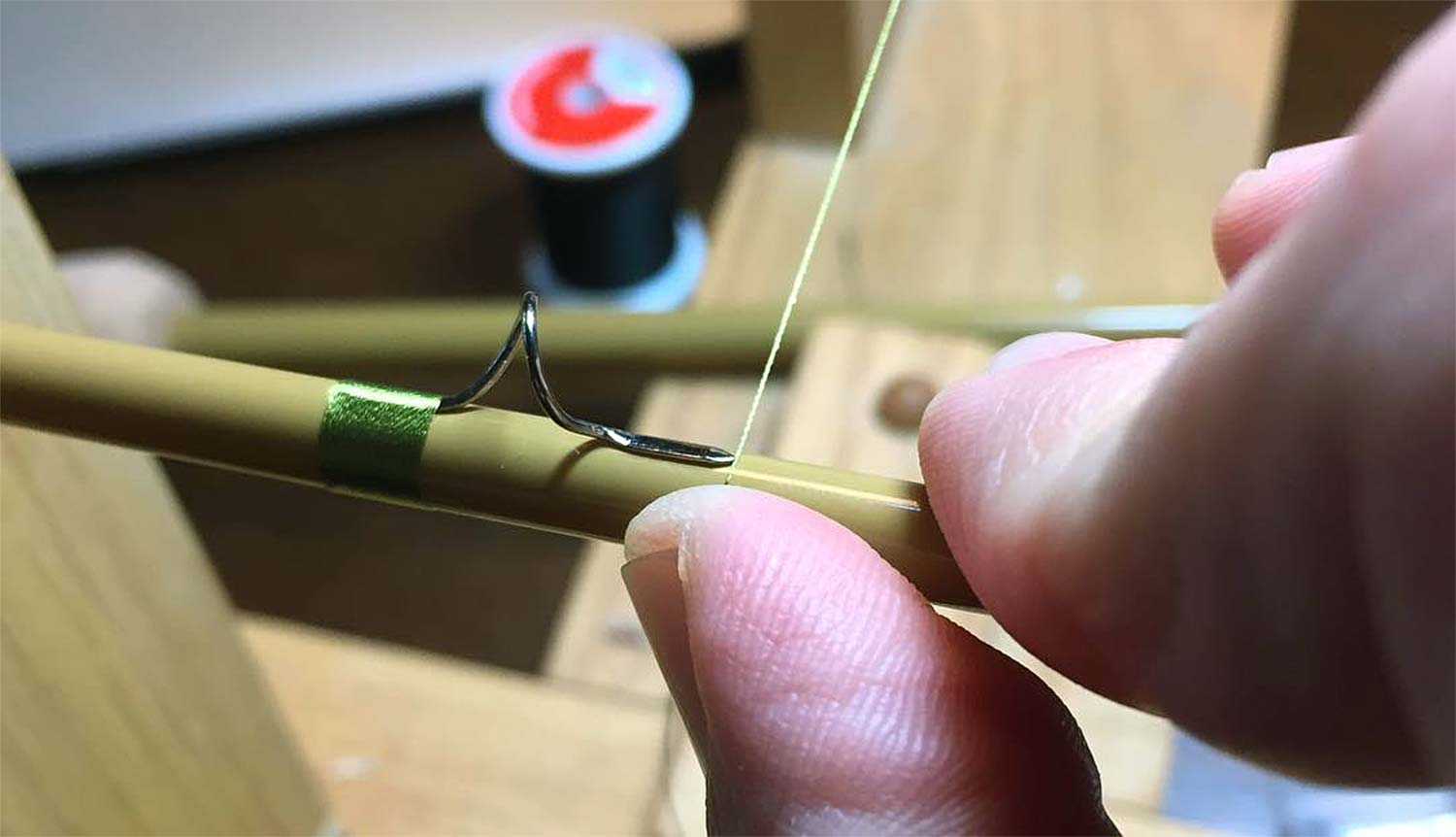
A hand tied leader is made up of short sections of conventional fishing line which transfer and dissipate energy from the fly line. There are several choices the angler makes about each section when crafting a leader that control how it functions. Let’s look at each of these choices and how it effects leader performance.

Read More »

Do weights and simplicity go together? A tenkara perspective

8 comments / Posted on / by

ABOUT FOUR YEARS AGO I VISITED CHEESEMAN CANYON FOR MY FIRST TIME.

Cheeseman is a renowned fly-fishing destination in Colorado; it is well known for sizeable fish that think they are too good for our flies. The canyon features deep pools with relatively slow moving water. The water is typically crystal clear, which means you can see the fish down deep. Sometimes you can even see the white in their mouths, which means they are laughing at you as your fly goes by. You can probably sense some of my disdain for the behavior of those snooty trout, huh?

But the reality is that I love fishing those “3 miles of gold medal fishing,” as the sign by the parking lot announces. The fishing there is challenging. And, that is a good thing. It serves as a place to learn and grow as a fisherman. That first visit also gave me something I have been reflecting on for the last several years: do I really need weight to get my fly down deep?

Weights are used to get the fly down to fish holding deeper. They can be either wrapped around a fly in the form of a metallic wire, or connected to the line above the fly in the form of split-shot, putties, or in new forms of which I can no longer keep track. They are useful. I won’t deny it, and I will preface the rest of this article by saying I have absolutely nothing against the use of weights, although I do find it a shame that so much of it gets left behind due to tangles with branches and snags on river bottoms.

I personally approach fishing from a different angle. For the last 7 years I have been learning the tenkara method of fishing from different teachers in Japan. Tenkara, as you may have read in this blog and other places, is a simple Japanese method of fly-fishing that uses “only a rod, line and fly.” Perhaps I should rephrase that, tenkara can be a simple method of fly-fishing. The method can quickly get more complex by adding accessories to the rig and moving from “only a rod, line and fly” to “a rod, line, fly, strike indicator, floatant, splitshot and the-latest-announced-fishing-gizmo”.

There is historical evidence of tenkara flies that were wrapped with copper thread to make them heavy. And, we also know of tenkara anglers in Japan using weights above the fly. I am not by any means shunning the use of weight for any purist or traditionalist reason. But, rather, I have decided to see what I could leave behind in order to hone technique.

As John Gierach put it in the tenkara chapter of his book, All Fisherman are Liars, “[tenkara is] a useful thought experiment in which you ask not, How much do I need? But, How little can I get away with?”

The interesting thing about this thought experiment is

Read More »

Guiding Tip: Set Your Client Free to Build Confidence

5 comments / Posted on / by

I’ve taken great pride over the years with my hands on style of trout guiding. When you take the time to explain the little details to your clients, and freely share what’s going on in your head, it really makes a big difference in them understanding the big picture. I’ve always believed catching fish should take a back seat to learning the how-tos of fly fishing. I’ve never seen much value in a client catching fish during a guide trip, if they can’t go out and replicate it on their own without me. It wasn’t until a few months ago, in fact, that I strayed away from my familiar guiding routine of holding onto the reigns.

Read More »

Improve Your Catch and Release Efforts

18 comments / Posted on / by

By Justin Pickett

Catch and Release has become almost a standard of practice over the past several years, even more so, it seems, in the fly fishing culture.

The ever-changing culture within the fly fishing world has put the squeeze on those that choose to keep certain species or fish from certain fisheries. Sustainability. Preservation. Conservation. The words resonate through numerous articles, meetings, and video productions, and for good reason. If we want these precious resources to be around much longer, we’re going to have to start giving a damn and taking care of our streams, rivers, lakes, oceans, and estuaries. So yeah, I’m a big proponent of catch and release. With that said, I believe there is still room for improvement even amongst those anglers that do practice catch and release.

Example:

It’s summer time in the Deep South. You’ve just landed a big, gorgeous, female rainbow on one of your favorite north Georgia streams. You’ve played her hard for several minutes. She’s given her all trying to free herself from your fly and she’s worn out. You’re intentions are the usual quick photo and then an easy release to ensure that she “lives to fight another day.” But…. What if that’s not enough?

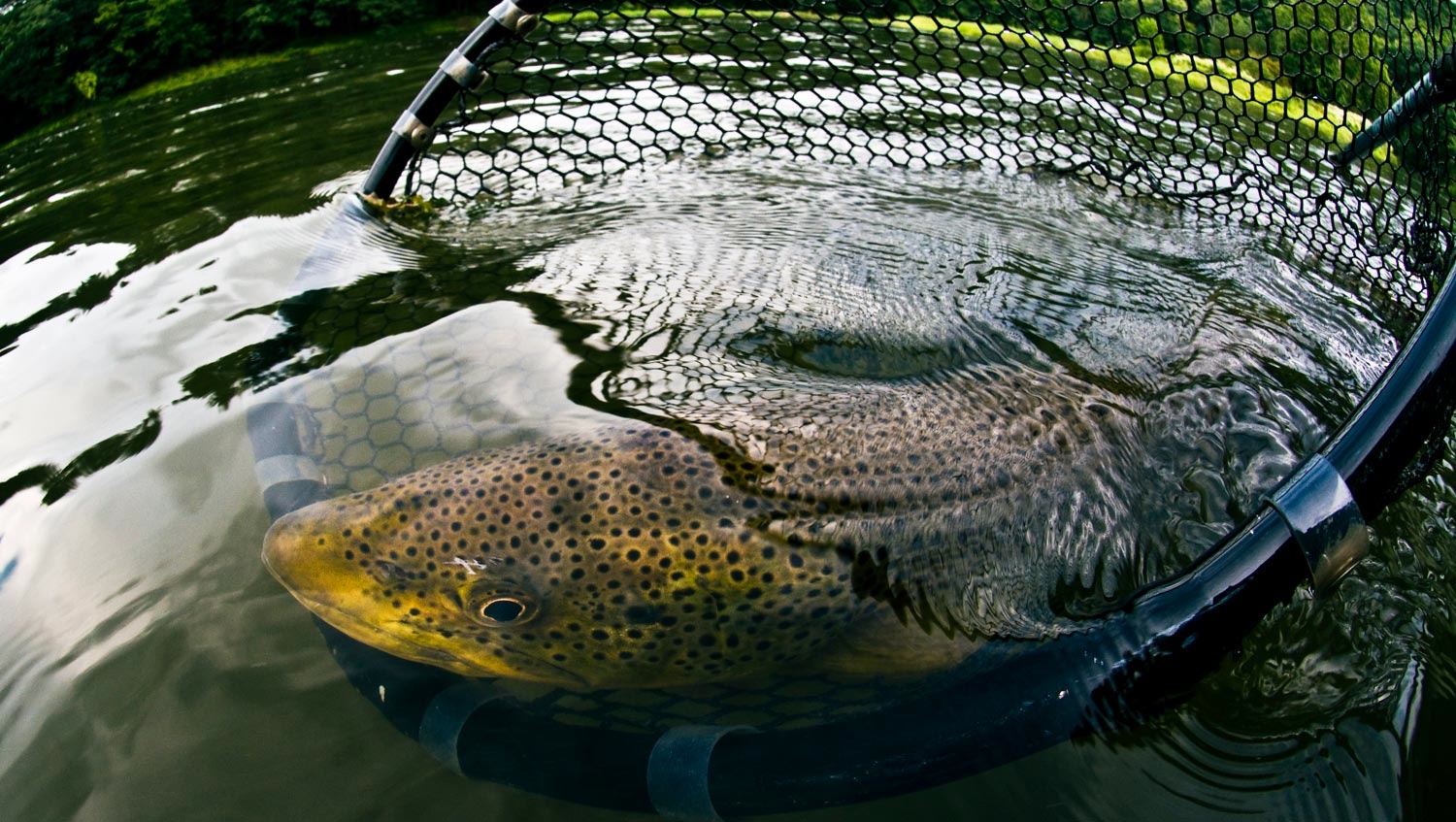
Come summer time, water temps are usually at the upper limits of a trout’s tolerance, especially in the lower elevation rivers and streams of the southeast, so making sure that a trout has been properly revived is of the upmost importance. In this situation, just making sure that you release the fish quickly may not be enough to ensure that it “lives to fight another day”. Bigger trout seem more susceptible to unrecoverable fatigue, to the point of going “belly up” if not allowed to recover before being released properly.

JUST LIKE IN OUR OWN BODIES, DURING EXTENDED PERIODS OF EXERTION, LACTATE LEVELS SPIKE RESULTING IN AN INCREASE IN THE ACIDITY LEVELS WITHIN THE MUSCLES’ CELLS.

To keep things short, the crazy process that is responsible for the increased production of lactate (lactic acid) during extended periods of strenuous activity temporarily prevents the muscle cells from using oxygen as the fuel for muscle contractions and causes the fish to become fatigued during a long fight, if not completely exhausted. In order to correct this temporary acidotic state, two things need to happen; 1. Rest and 2. Oxygen! For humans, the oxygen is an afterthought. When we get tired we just rest and the oxygen just comes naturally. We breathe air, so it is readily available to our bodies. However, for a trout, the oxygen is found in the water. And not just any water, but cold, preferably moving water. The longer a fish is kept out of the water after a fight, the more it becomes difficult to recover that fish. The temporary damage that occurs during this spike in lactate levels can become too overwhelming to overcome, causing the fish to be too weak to return to a river or stream’s flows.

So, as responsible anglers, what can we do?

Read More »

Bonefish Heaven

22 comments / Posted on / by

By Louis Cahill

This tiny key is the only dry land in sight. Just a rise in the sand with a little knee high vegetation, interrupting a seemingly endless white sand flat.

The skiff glides silently around it’s shore. The water is Coke bottle green and glistens in the bright Bahamian sun, a breath of breeze keeping it playful and light. In the distance, I can barely make out the dark stripe of deep water between us an Cuba. This is the southern keys. The place where South Andros breaks up into a complex of keys, shallow sand flats and, finally, faint sandbars before giving in to the sea. It’s bonefish heaven.

About a hundred yards ahead there is one sizable cluster of mangroves hugging the shore. Everything else is white sand and water. My eyesight, after seven surgeries to save my right eye, makes the whole scene resemble an impressionist painting. It’s beautiful and, at once, disorienting. Everything in my life now has an extra layer of challenge but I find that standing on the bow of a skiff, searching for bonefish is as comfortable an occupation for me as anything I do. Easier than driving and far easier than anything involving a computer screen. I know what bonefish look like, even if Monet or Dali are pushing the brush. I know how they behave and how they think. Perhaps most importantly, I know who I am standing on the bow. I don’t have to think to do this.

“I don’t care if you can see. You can point that rod and you can cast. We’ll catch fish,” Ronnie Bain told me when I stepped on the boat that morning. 

A year ago, when I was in much worse shape and really shouldn’t have been here at all, I fished with Ronnie the first day of the trip. I had been in bed for six months. Three months I was not allowed to roll over. I became so degraded I couldn’t walk without help. The doctor told me to sit on the couch and hold my head up straight for thirty minutes a day, and when that thirty minutes was up I was exhausted and had to sleep. It was so disorienting I thought I might puke the entire time. I’d only been back on my feet a couple of months when I stepped onto Ronnie’s boat. I wasn’t at all sure I could stand on the bow and I could nearly see my hand in front of my face. I put on a smile and made a good show but I was afraid. Afraid that fly fishing, and specifically bonefishing, was over for me.

We had run down south that day too. A long ride down and when Ronnie stopped the boat he beached it on the back side of a little key and told us to get our wading boots on. Quietly, I panicked. There was no way I was up to wading. Not only was I not going to catch fish, I could seriously hurt myself. I was slow getting my gear together and Ronnie got his other angler set up on a wade line and came back for me. He helped me out of the boat and, with my arm over his shoulders, carried me across the flat. The bottom was rough with coral and I couldn’t see where I was putting my feet. My legs shook with every step. Ronnie held the back of my shirt as I cast and guided me, his voice soft and calm.

“More left, more left, a little longer, put it down.”

Within a minute I was hooked up to a bonefish. In the two years of ordeal and pain and helplessness, no one but my wife had been as compassionate with me as Ronnie Bain was that day. I don’t know if he has any idea what a gift he gave me, or if he could see through my dark glasses that I was balling like a child when I released that fish. I’ve caught a lot of fish in my life, but none as dear to me as that one. 

“Ok Louis, we got two fish coming, a hundred yards out. Big boys. Coming by that big mangrove right now. You see them? Take your time.”

I look and I do see them. He’s not kidding, they are big fish.

Read More »

The 3 C’s of Trout Fishing – Current, Cover, and Cuisine

5 comments / Posted on / by

Here’s the Million Dollar Trout Fishing Question….
Are you putting enough emphasis on the 3 C’s in your trout fishing? The availability of Current, Cover and Cuisine most often dictate where trout decide to set up shop. Being able to consistently pick them out will ultimately determine how much success you have on the water. Furthermore, if you can find a spot that has all three C’s, you’re probably staring at a honey hole that holds the trophy of your dreams.

As a ignorant rookie fly fisher, I recall early on in my career, how I’d start out my day selecting a section of water, and go about mindlessly fishing its entirety from point A to point B. I had no understanding of trout’s survival instincts and how it influenced their whereabouts. All the water looked good to my untrained eyes, and I’d spend equal time fishing the entire stretch of water, regardless of the depth, where the current and food were located, or if the spot had any elements of cover. Back then I was completely clueless there was a reason 20% of the water held 80% of the fish, and in turn, I spent way too much time fishing in all the wrong places. It was amazing how long it took me to figure out why I wasn’t catching very many trout.

Don’t make this common rookie mistake, you’re better than that. Instead spend your time eliminating unproductive water, and locating and fishing productive water that has all three C’s. Doing so, you’ll find your catch numbers and size increase dramatically. Below are basic descriptions of current, cover, and cuisine, and why all three are equally important.

Current
Trout have a love hate relationship with current. They love the fact that current collects and funnels food to them, but it also requires effort for them to swim against it.  Because of this, trout prefer to hold in spots of the stream where they can feed and take in more calories than they’re burning. Trout accomplish this by directly avoiding current that is too fast and excessive, while still staying close to enough current, that they can take advantage of the best feeding lanes. I tell my clients all the time to look for current that flows over areas with deeper water. Examples of this are drop offs behind shoals, buckets, troughs or channels in the stream. It’s important to remember the deeper a trout holds in the water column the slower the current will be moving. Anglers should also look for soft seams where slow water meets fast water. These areas allow trout to save energy by picking off food drifting on the edge of the fast current.

Cover
Have you ever wondered why there always seems to be big fish located near cover in the stream? The fact is, you rarely

Read More »

Trout Utilize Shade Year Round and So Should Anglers

8 comments / Posted on / by

When fly anglers bring up the topic of targeting shade in conversation for catching trout, most of the time they’re talking about doing it during the dog days of summer. Although it’s true that trout will regularly seek out shade (for cooler water) when water temperatures are elevated, it’s not the only time nor reason trout utilize it. Trout also use shade to camouflage themselves from both predators and the prey they feed on. If you don’t agree with me, tell me if it’s easier to spot a trout in the sun or in the shade. Trout understand this, and that’s why they often gravitate towards it on sunny days, even during the colder months of the year. The third reason trout search out shade is to cut down on the glare in their eyes, so they can spot drifting food in the current more effectively.

I was on the water the other day guiding and it was forty degrees with water temperatures in the upper 30s.

Read More »

Cool Shots at Bonefish

2 comments / Posted on / by

WHAT MAKES A REWARDING BONEFISH TRIP.

It’s hard to fly off to an exotic location for a week of fishing without having a goal, or at least some expectations. The first can be dangerous and the second disastrous. Still, one or the other is generally present on a fishing trip and the more the trip costs, the higher they usually are.

I’ll never forget my first bonefishing trip. My expectations were to actually see a bonefish and my goal was to not make a complete ass of myself when I did. (It’s good to have goals, right?) That trip did so much more than exceed my expectations. It was an awakening of sorts and the beginning of a life long obsession.

On subsequent trips I adjusted my goals. I wanted to catch a lot of bonefish. I wanted to catch big bonefish. I wanted to increase my hookup ratio. I wanted to catch bonefish on my own. I wanted to develop my own fly patterns. Eventually I just wanted quality fishing with good friends. One by one, all of those things went in the done column and I kept going bonefishing.

There’s not a thing on that list that I don’t still enjoy doing. Who doesn’t want to catch a lot of fish, or a big fish, or have a great day with a good friend. With the exception of the friend however, they all become less important with time. Most days all I really need is to stand on the bow and glide across a beautiful flat.

So what makes a day of bonefishing exceptional?

Read More »

Fishing The Mangroves

5 comments / Posted on / by

by Rod Hamilton

“My fish is in the mangroves, now what do I do?”

One of the great things about having a website and blog is the interaction I have daily with fisherman from around the world. Sharing ideas, learning about the occasional secret spot and passing on tips (always learned the hard way) makes it fun to be a participant in the industry.

A couple of recent questions from subscribers about how to land fish when they are in the “bushes” had me reflecting on my own trials and tribulations regarding this common DIY scenario;

Their confusion about what to do in that situation originated from the same place that it had for me. They had received conflicting instructions about how best to fight a fish once it was in the mangroves.

I wasn’t with them and each situation tends to be a little different, but I can assume the tactical fighting advice ranged from “put the boots to it” to “give it slack and let it run.”

Before I tell you what I do, let me set the stage and walk you down the path I took which eventually led to a substantial increase in landed fish.

I started the same place we all did. On the front of a boat with a guide expertly poling me along, pointing out fish that I couldn’t see. But the reality was I seldom fished in tricky mangrove areas, its just not where guides take you. Mostly we were fishing flats in relatively open and benign areas.

Occasionally the guide would pole along a mangrove edge and the fish would elect to panic, swimming at warp speed back into the mangroves, but usually it stayed where the battle did not include obstructions.

I describe this typical scenario to point out that I, like most boat guided anglers, didn’t have that much practice extracting fish from deep in the mangroves. So it’s no wonder we tighten up, get anxious and are not sure what to do.

But for a walk and wade DIY guy it is just the opposite. I fish along edges and deep inside creek systems probably as much as on open flats. I mean how many flats are there where I can walk, bike, drive or kayak too?

My partners and I do not fish where guides and others go so edges, creeks and the “middle of nowhere” are much more the rule than the exception.

Since the tough places make up at least 50% of the locations, it became obvious I needed to get much better at, stalking, casting and landing fish in the mangroves. These became mandatory skills not just one-offs.

My usual fishing buddy and I made the decision to figure out how to increase our “landed” ratio and win the jungle battle. If you ask us now what percentage of fish we land, we can comfortably say fifty percent. In fact, he just returned from North Andros, went into the sticks the last afternoon and ended up with four of six. Which seems about right.

AFTER EXTRACTING OUT OF THE MANGROVES A FEW HUNDRED FISH BETWEEN US, HERE ARE THE THREE METHODS WE USE.

Yank and Crank
The title says it all, but let me explain. When I know I’m going deep into a creek system and am surrounded by roots and branches I make three significant equipment changes. I snip off my #12 tippet and tie on #20 pound. I tighten my drag to about as tight as it will go. And switch to a larger, flashier fly. What we have found is that deep within the protective cover of the mangroves the fish are not the least bit leader shy. No need for delicate presentations with small flies on light leaders. So I go with flies they can see, that make a splash when they hit and attach it to as strong a tippet as I have in the bag. Normally these are short pinpoint casts into tiny holes and pockets. When the fish hits, strip strike and then literally fight the fish right where you hooked it. It’s a hell of a battle, but you just don’t let it run. I’ve never landed a fish larger than 4 1/2 pounds doing this but then that takes into account 90% of all the fish you will see.

Walk the Dog
This one is crazy, it shouldn’t work and goes against all your instincts, but the results will surprise you. Use

Read More »

The Homemade Yeti Cooler

29 comments / Posted on / by

Don’t get me wrong, your Yeti is a great cooler and, yes, you can use it for a poling platform, sort of, and it does make you look very cool but if you’re like me and you travel a lot to fish it’s just not practical.
What I need is a cheap cooler that I can use for a week or two, then toss in the garbage on the way to the airport. I suffer a little guilt for landfilling a bunch of styrofoam, but the damage to my wallet is minimal.

I’ve used styrofoam coolers from grocery stores for years. On photo shoots I will sometimes have a half dozen of them. The problem is, they don’t hold up. You can buy cheap plastic ones but they are still twenty bucks or so and they’re not as good as the styrofoam at keeping ice. If you pitch six of them, you’re tossing $120. My frugal soul can’t stand that.

Five or six years ago I figured out this cool trick for making your styrofoam cooler bomber. A couple of layers of strategically placed duct tape on the sides, top and bottom make them surprisingly tough. Adding duct tape hinges and a lid helps to keep your ice longer by keeping the lid shut tight.

I’ve been doing this for years and I have

Read More »