
Use Birds to Quickly Locate Bait and Schools of Fish
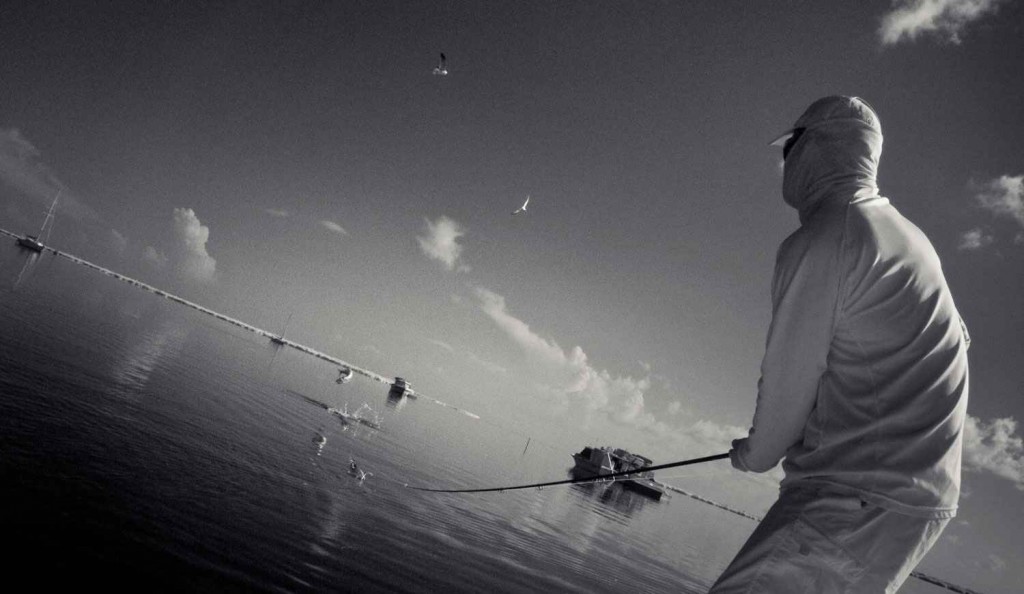
Certain times of the year in both freshwater and saltwater, anglers can use flocks of actively feeding birds to locate large concentrations of bait and fish.
This was the case during my recent fly fishing trip with Capt. Joel Dickey. First thing, early in the morning, we’d run a wide sweeping perimeter with the boat, as we searched for seagulls on the feed. Binoculars weren’t a necessity but they allowed us to be more efficient by eliminating large areas of water that would otherwise be too far off for the naked eye. Being patient, continuing to cover water, and keeping confidence were the key factors in us successfully locating feeding birds. Be prepared for it to take a little while some days. For us, each morning it took a little while to find the birds, but eventually things fell into place with each scouting attempt. As the sun begins to rise over the horizon, it creates a perfect contrast of light that turns seagulls a bright neon white. You’d be surprised how far off you can pick out feeding birds this time of day. Any birds you find on the water means there’s probably bait and fish near by, but when you find diving birds in good numbers, you know there’s a feeding frenzy in progress.
I’ve used birds many times in the past to locate schools of striped bass on my local reservoirs, but this saltwater trip was my first time using seagulls to locate tarpon. The seagulls and tarpon were feeding on a shrimp die off, that happens during the hottest times of the year in the evenings and at night. During these periods photosynthesis is not taking place, and with the lack of wind, oxygen levels in the water dropped below average. I have to say it was an adrenaline pumping way to fish for tarpon. We’d cruise in on plane and cut the engines at a safe distance, allowing us to coast in quietly to avoid alerting the feeding tarpon. Immediately following, Joel would jump on his platform and quickly pole us into the schools of rolling tarpon.
The key to getting bites was finding a rolling tarpon within casting range, and then firing a presentation quickly 3-5 feet in front of the tarpon. The hardest part for me
Read More »C&R Tips & Gear for Musky & Other Toothy Critters
I’ll never forget the first musky I landed on fly.
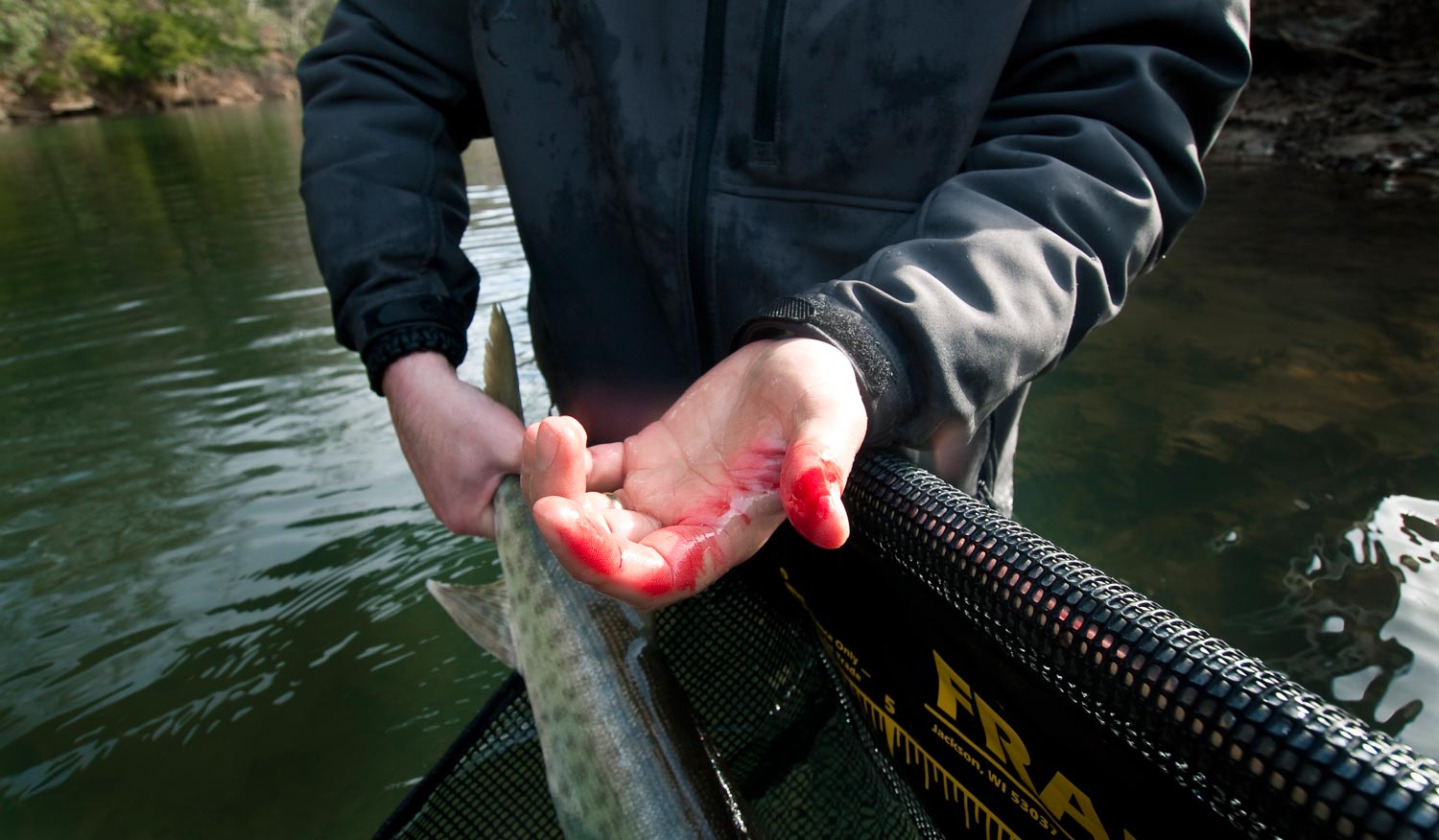
It was an extremely proud moment for me, but it quickly turned into a stressful situation after I got the musky to the boat. I had serious problems removing the deeply hooked fly. The musky had its mouth slammed shut and would not open it more than a couple seconds at a time. After a few minutes without making any progress, I became desperate, and used my hand to pry the mouth open (dumb I know, but the health of the fish was more important to me) and I ended up badly cutting my hand on the razor sharp teeth. The entire hook removal process took far too long, and that made it extremely difficult for us to revive and release the fish. It was an organized team effort to say the least. I held the fish in the water, Louis stabilized the net, and Murphy ran the trolling motor upstream to keep water running over the gills until we got the musky green again. Talk about a bummer that ended up overshadowing a proud angling moment. That’s not how I wanted my first catch and release of a musky to go down.
If you’re planning on going fly fishing for musky or any other toothy critters for the first time, I highly encourage you to read over these organized catch and release handling tips and gear recommendations. They’ll keep you and the fish safe, and you’ll greatly decrease the chances of ruining a great moment on the water like I did.
Read More »Getting the Big Picture On Brook Trout
By Jason Tucker
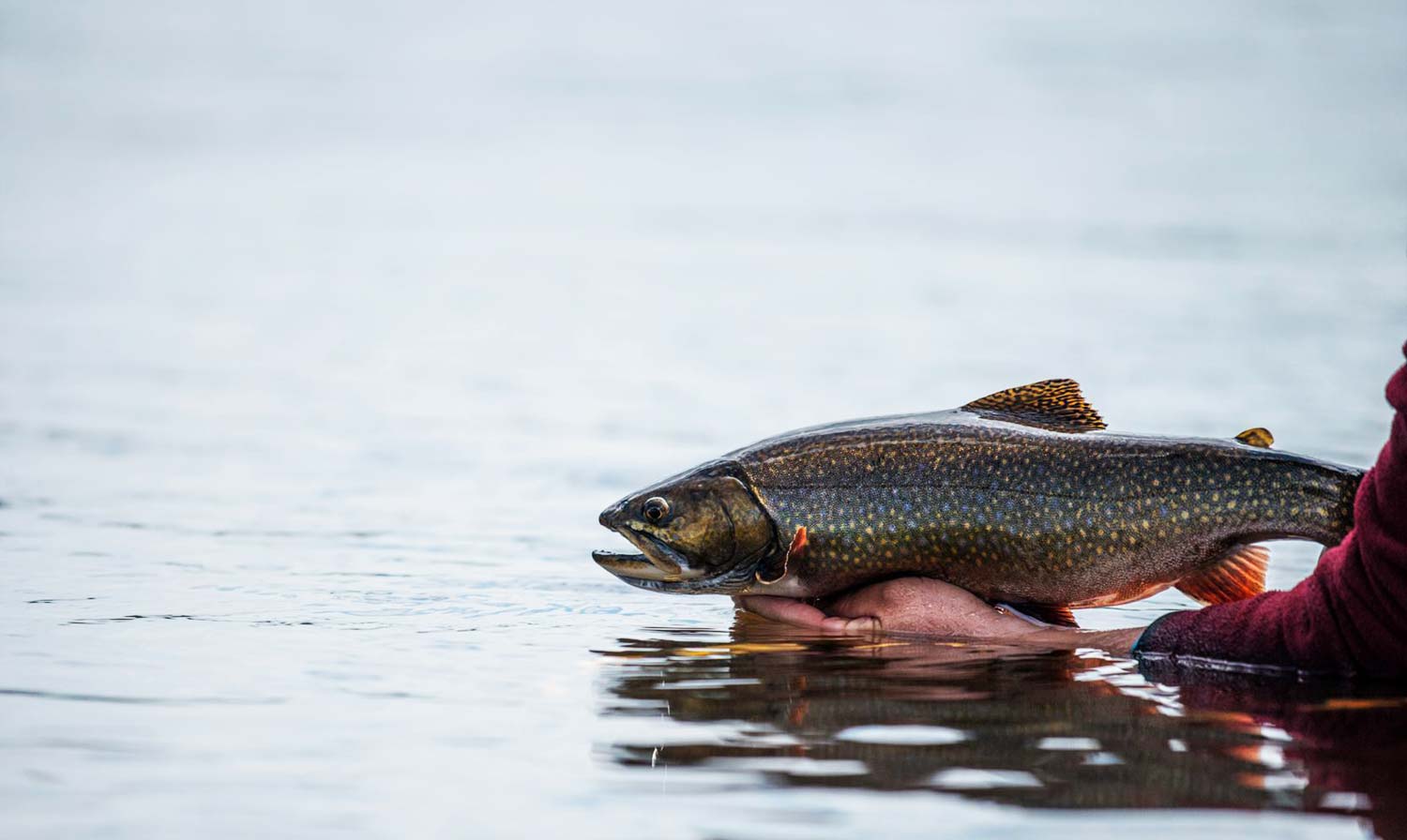
I recently read an article on brook trout, about what beautiful delicate gems they are. It’s true for a lot of us that brook trout are a small, colorful, feisty reward for a day’s fishing. They are often some of the smallest fish we seek. They normally live in the smallest streams and creeks, or in the headwaters of our trout streams where it is easier to step across than wade them. Yeah, we’ve heard of bigger fish in far off destinations, but surely these are the exception, fish that through a series of happy accidents go against the grain and get unusually large.
That would be a complete misconception, and the small fish that most of us see and catch, at least in the United States, are fish holding on at the margins of their range, in remnants of water barely suitable for their existence.
It is impossible to understand brook trout without fishing for them in their Canadian strongholds. The small, delicate looking gems we are used to seeing in the United States are only representative of one form of the species. It is a truly remarkable adaptation that extends their range far outside of what it could normally be, but it doesn’t fully represent the species.
Living in a small, headwaters-dwelling form has distinct ecological and evolutionary advantages, allowing them to hang on in areas that have generally become unsuitable for them. In effect, brook trout are superbly adapted to Ice Age cycles, in which their northern habitat becomes unlivable every ten thousand years or so due to encroaching glaciation. Brook trout colonize the leading edges of the glaciers, which have taken them south, all the way into the Smokey Mountains of northern Georgia, a place that is otherwise inhospitable for brook trout. When the glaciers retreat, remnant populations are left in the few waters that remain cold and clean enough to harbor them, usually high up on the mountains. These small stream trout are usually quite small themselves, rarely reaching a pound in weight, and often living only about three years.
Their prime range however, covers a vast area of Canadian Shield country that runs from western Ontario, Lake Superior in the south, on up to Hudson Bay in the north, across all of Quebec, and on east to Labrador. In this region
Read More »Want More Distance? Then Don’t Cast To The Fish!
By Kyle Wilkinson
Our shop offers free casting lessons once a month at a local park in town. These events are always a great way to interact with existing customers, attract new ones, and simply enjoy being outside in the great state of Colorado.
We had our first one of these events earlier this week and I had the opportunity to work with anglers of a variety of skill levels. We had a great time and I’ll never tire of seeing the excitement on an angler’s face when he sees his casts looking better than ever. Being able to help them connect the dots on what they’re doing wrong and why is always extremely rewarding.
That said, regardless of the angler’s skill level, one common mistake continued to be made by nearly everyone from the complete novice to the more advanced casters. I recently wrote about “My Number One Casting Tip” on this site a few weeks back. And while that is still a very valuable lesson (that we definitely implemented that night), here is another big mistake I continually see anglers make. The good news is, this is extremely simple to adjust and I’m confident it will make you a better caster.
Casting TO The Fish: The fish are in the water. I get that. I also get that we need our flies to get to the fish in order to catch them. Where this casting flaw comes into play then is when an angler makes two or three perfect false casts with loops so tight you could barely squeeze a toothpick through them and then when it’s time to set the cast down- BAM- the rod trip drops on the forward cast to point right at the target, the loop opens up so big you could drive a car through it, and all the power of the cast is lost. Oftentimes it may not even totally lie out or turn over the fly. Another quick way to tell if you’re dropping the rod tip a little too quickly is if the fly line is hitting the water (or grass in our situation) before the fly. It may even look like the fly line is “rolling out” on the surface of the water towards your intended target. If you’ve ever experienced the feeling of “why did my false casts feel so good and then my final cast had no power when I went to set it down?” this is likely the reason.
So, now on to the part of how to fix this casting flaw.
Read More »The Sugar Foot
I SPEND AS MUCH TIME AS POSSIBLE WATCHING BONEFISH CHASE FLIES.
If you do it long enough you’re bound to learn something. In the average presentation you want to lead and cross a fish. Therefore, when the bonefish first sees your fly, he sees its profile. If he likes what he sees, he generally follows the fly for a while before he decides whether or not to eat it.
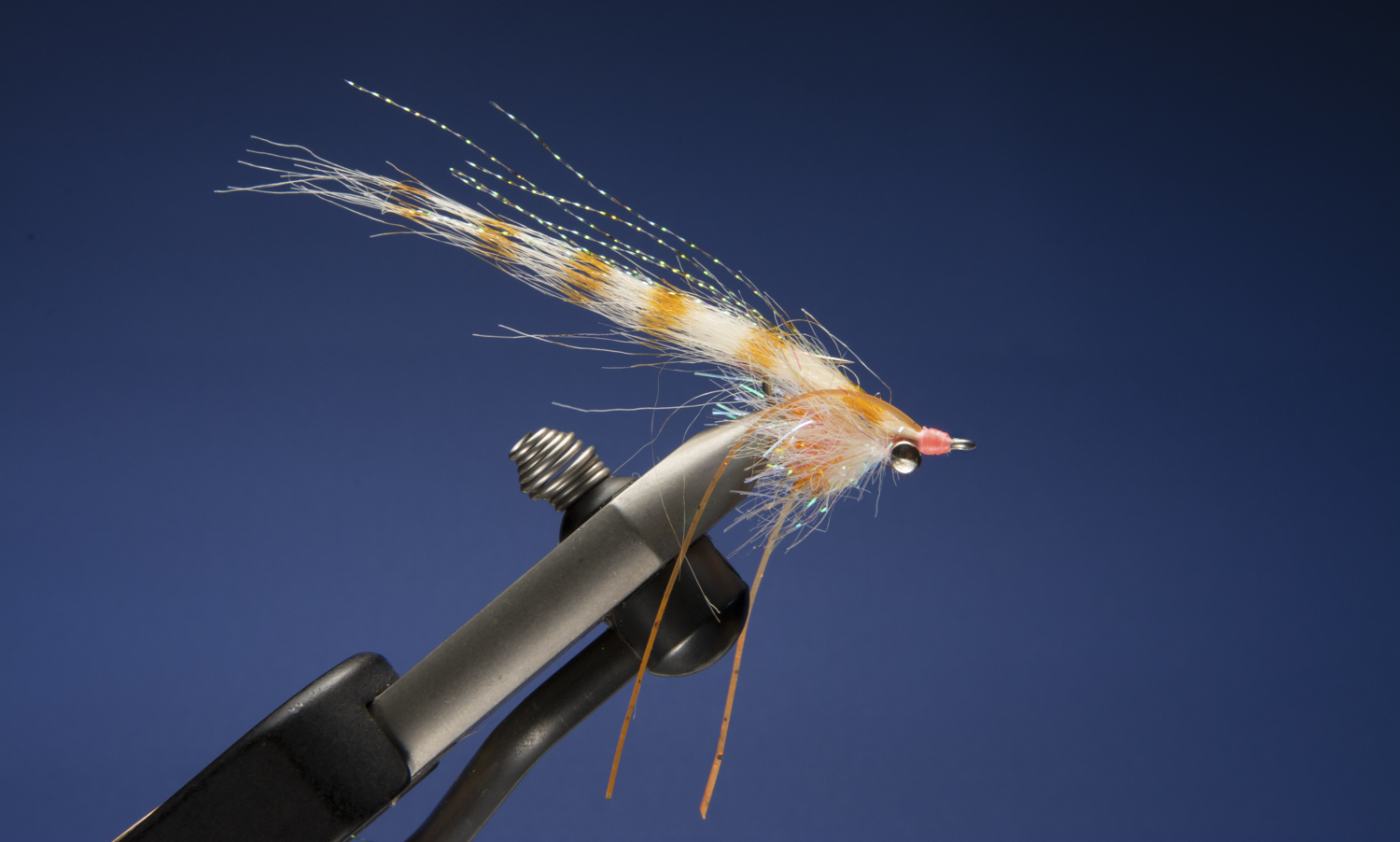
I wanted to create a fly that gave the bonefish an incentive to eat. I wanted a fly the would change its appearance as the fish pulled in behind it to follow. I wanted to give the fish a visual trigger to eat. The result of that effort (and a fair amount of rum) was the Sugar Foot.
This fly has a light flashy shrimp profile and great action. The body of the fly conceals a bright orange egg sack that becomes visible as the fish comes around from behind. Does it work? So well that I call it by the same name I call my wife.
Watch the video and learn to tie the Sugar Foot.
Read More »4 Worm Patterns I Always Carry In My Fly Box
Worm Fly Patterns That Consistently Catch Fish
It’s no secret worm patterns are super consistent most of the year for catching both stocked and wild trout. They work especially well for stocked fish, after a big rain, and during the spring, winter, and fall seasons. I’ve had days when the only thing I could get trout to eat was a san juan worm. There’s a bunch of haters out there that will not fish them, claiming it’s the next closest thing to fishing a real earthworm, but look in their fly box and I bet you’ll find a few. I on the other hand, have no problem fishing worm patterns, because they do a great job of keeping my clients rods bent, which in turn, pays my bills. To top it all off, worm patterns are among the cheapest and easiest fly patterns for me to tie. I can rip out about a dozen in less than ten minutes, for about $2.50 worth of materials. Choosing to put worm patterns in your fishing line-up, will almost certainly put more fish in your net. Below are four worm patterns I always keep in my fly box.
Click on Photos For Larger Views
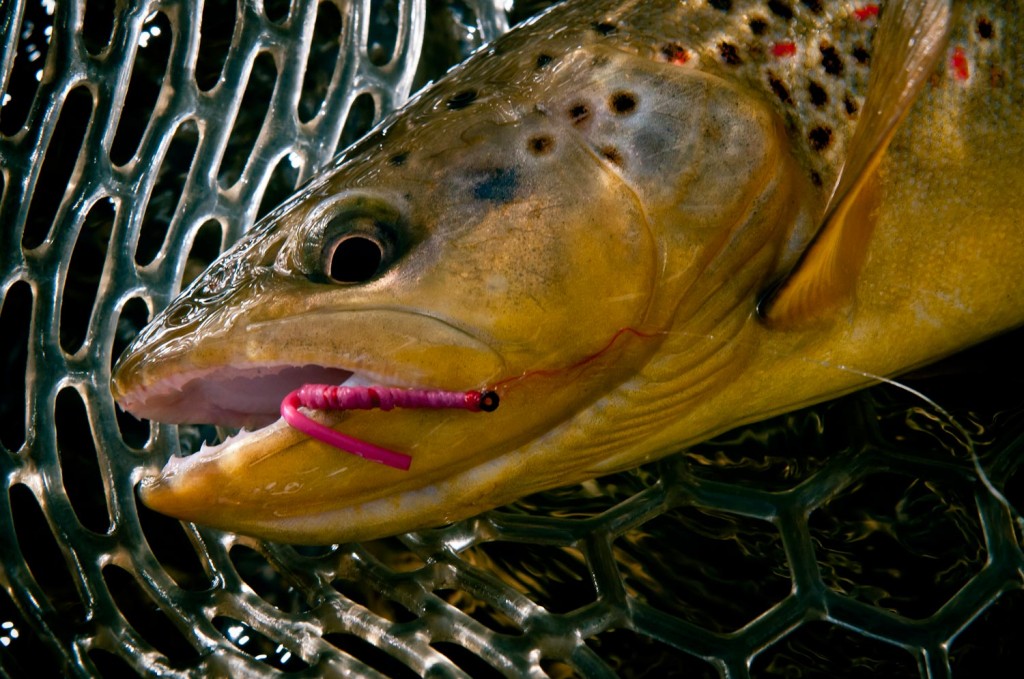
Fly Patterns Left to Right: Chamois Worm, Fl. Pink Flash San Juan Worm, Squirmy Wormy, Delektable Soft-Hackle Worm
The Chamois “Shammy” Worm
Yes, you read the name right, this fly is made out of a car drying chamois. For $10-14 you can buy one and tie about 100+ chamois worms with it. This pattern can be deadly after a fresh rain, when earthworms have been washed from
Never Give Up on a Bonefish
WE ALL KNOW THE HEARTBREAK OF SEEING A BIG FISH SPOOK AND RUN WHEN WE MAKE A CAST.
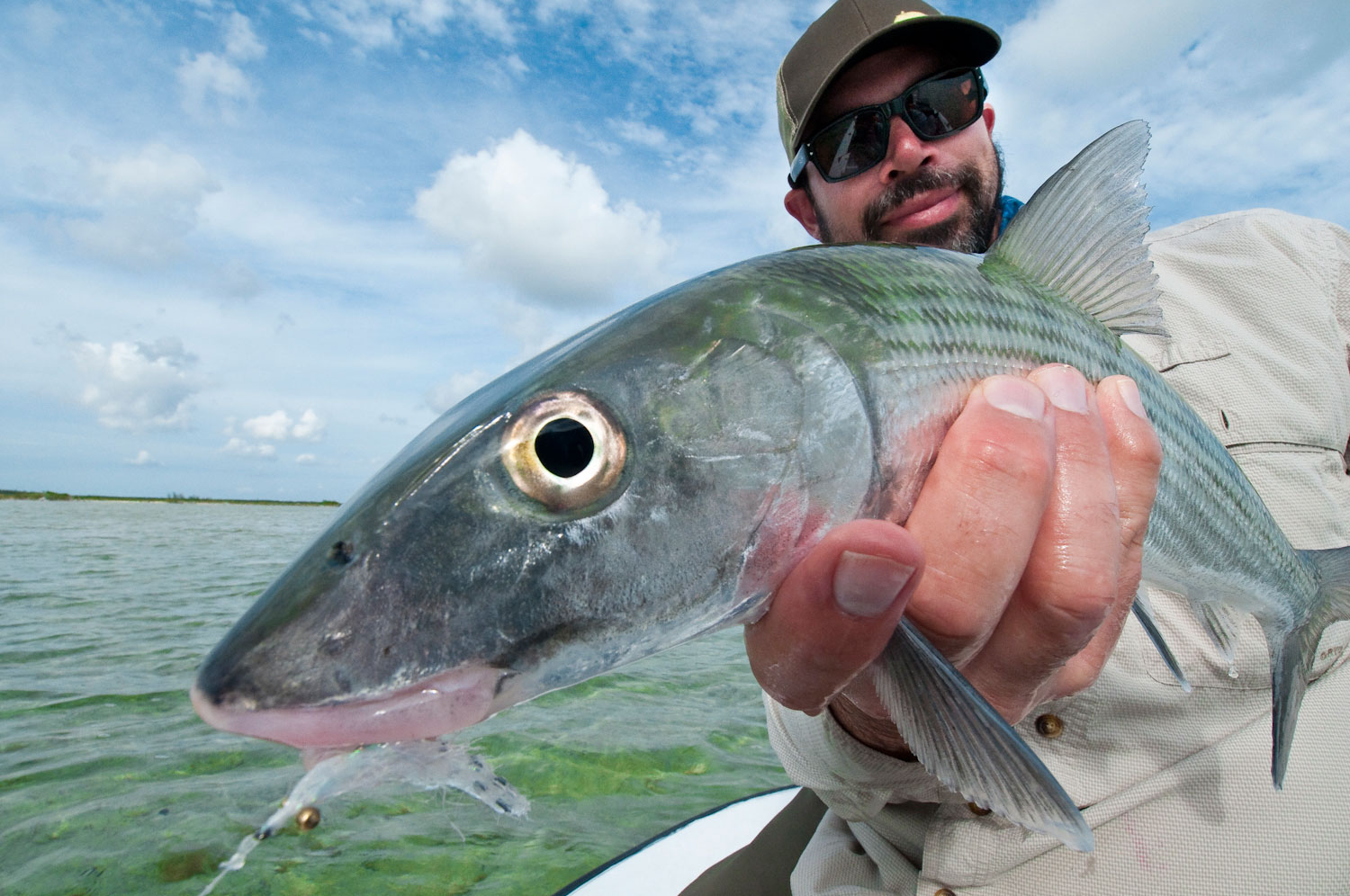
Whether its due to a poor presentation, the fish catching sight of us or something completely random and out of our control doesn’t matter. The pain is the same and it’s our natural reaction to consider that fish done and watch him swim away. For most species that’s the case, certainly for a wary trout but the bonefish is another subject.
Many times I’ve seen a bonefish spook and run or refuse a fly and turn away only to eat that same fly on the next cast. Maybe it sees the fly in a different light or from another angle that makes it more appealing or maybe it’s mood changes that quickly, I don’t know but it happens. What I do know is that as long as that fish is in range I will continue to show it that fly.
Read More »Dial In Your Dry Fly Game
By Jason Tucker
Dry fly fishing is all at once the foundation, Holy Grail, and most difficult aspect of fly fishing.
In a bygone day, fly fishing meant using a dry fly. Now it has come to encompass many things, including drifting nymphs under a bobber, or chucking a streamer fly that more closely resembles a lure than a dry fly. I embrace it all, but there is still no greater thrill than matching a hatch, getting a perfect drift, and seeing a trout rise to your fly. For most of us it was that image that drew us to the sport in the first place.
With the dry fly season being at its zenith right now, we want to share a couple tips with you to help you catch more fish. I asked a couple friends of mine what their best suggestions are and here is what they said.
Erick Johnson is a fly angler from Michigan who also happens to be a customer service rep at Scientific Anglers. We got to sit around the campfire this spring on a dry fly trip and here’s what he had to offer:
“If you’re anything like me, the sight of a good rising trout raises your blood pressure a couple notches. Inevitably, the first thing we do is reach down and start stripping off line, certain that he’s going to eat on that first pass. Frequently, that first cast will either land right on the fish or go well beyond and likely put them down. Before casting to that sipper, settle yourself with a couple breaths and start in close. By taking a couple extra moments and measuring your cast, you can dial in that drag-free drift. Once you’ve established the drift, you can then carefully work your way out to a wary fish for the best presentation.”
I also go to fish with my buddy Alex Cerveniak, an excellent fly fisherman who spent a few years guiding to the picky fish on Michigan’s famed Au Sable River system. He had some advice on how to refine your presentation.
“The #1 key to fishing dry flies is to make your fly
Read More »Choosing A Premium Fly Rod

By James Buice
The waggle. We all do it.
When you walk into a fly shop looking for that new rod (and yes folks, don’t even think about buying a rod before you cast it), the first thing you do after picking a prospective candidate from the rack is the waggle. Shaking the rod to check the flex, or stiffness, or…whatever. Some check the rod by placing the tip on the floor and observing the deflection. Some even hold the rod tip about a foot off the floor and raise the rod upward quickly to see if the tip touches the ground to see if the wand in question is “a fast or slow action.” Really!?!
Bottom line is no matter what you do in the confines of your favorite fly shop, you’re not going to be capable of making an educated rod buying decision until you line it up and “sling some string” as the kids say. But, there is a lot more to it than just casting blindly in a parking lot or casting pond. Have a game plan; a succinct list of criteria you deem necessary based on the rod’s purpose, your casting style, the type of gamefish you’ll be pursuing, and a realistic scenario in which the rod will be put to use.
THE LONG BALL DOES NOT ALWAYS WIN THE GAME
Having worked in a fly shop for years, I saw the same thing pretty much every time someone took a rod outside to cast. They would strip off all of the flyline at their feet and proceed to cast as much of it as possible. This would inevitably turn into the customer typically throwing tailing loops, snapping back casts, and throwing their arm out in an attempt to get the greatest distance they could muster. More accomplished casters would land the entire line straight, with graceful loops. This would be the extent of the test casting session.
“It threw the whole line.” “Wow, that rod has some power!” or “Feels like it doesn’t want to cast much past eighty feet.”
Great. These customers, no matter what their casting prowess, just showed their ability in casting a rod in parking lot for distance. Know what this told them about how the rod would fish in an actual, real life scenario? Zero. Zip. Nada. Sure it’s cool to bomb a long 100 footer, but aside from some very limited angling scenarios, simply throwing the entire fly line is about as useful as only practicing basketball shots from center court.
When you’re out shopping around, get the long cast out of your system and then focus on what really matters. Pick out a few spots on the ground at varying distances. If the shop has hula-hoops or something to use as a target, all the better. Place these at various distances ranging from 80’ to 10’. If it’s a trout pole you’re after, back it off to around 50 or 60 feet since you typically cannot control drag and fly line drift much past that in a river due to current breaks and such. This will put you in the ‘realistic’ casting ranges you’re going to encounter 99.9% of the time.
Now, don’t start out false casting and try to hit your targets. Begin each cast
Read More »Speyitis
By Jeff Hickman
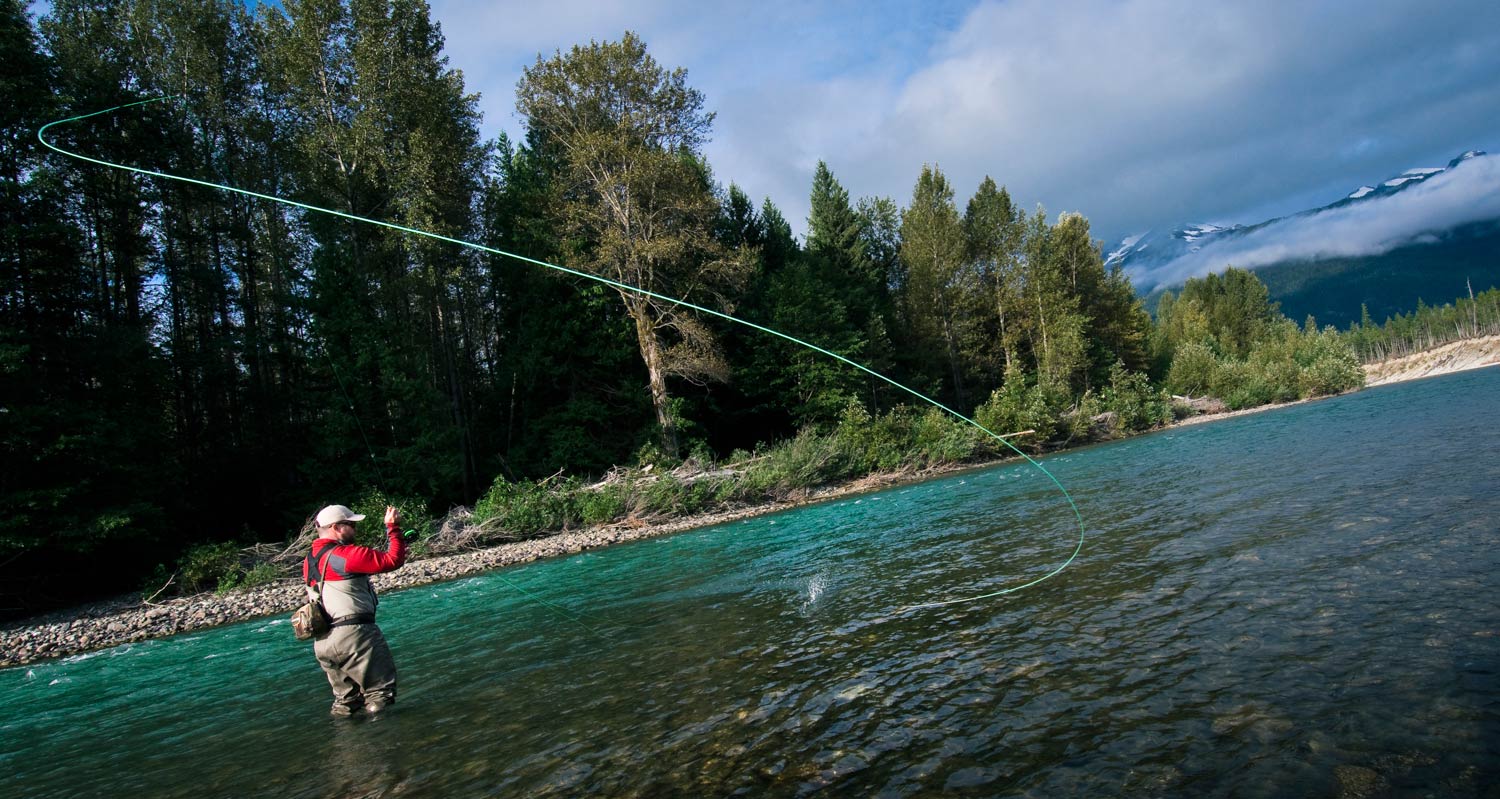
THE MOST COMMON FISHING PROBLEM I SEE AMONG SPEY FISHERS WHO CAN CAST WELL IS OVER CASTING.
I refer to this plague as Speyitis. Just because you can cast all the way across the river doesn’t mean that you should all the time. I know it is fun to throw a long line and its even more fun if you can get yanked way out there. For successful fishing it’s important to read the water and decide if a long cast is important there. Much of the time in many spots the fish is likely to be in the inside soft water. Casting across the seam way out into the heavy current you are wasting your time, not allowing your fly to sink and also not allowing it to effectively swing all the way in below you.
If fishing with sinktips, the question to ask yourself or your guide is
Read More »