
The Best Cup of Coffee Ever
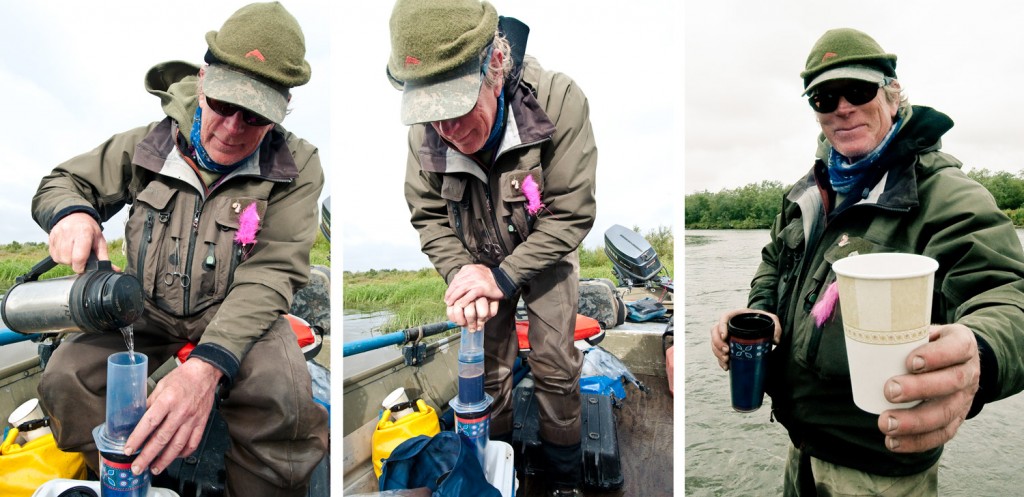
ON A COLD RAINY MORNING IN WESTERN ALASKA, WHEN YOU’VE BEEN UP SINCE FIVE AND YOUR ARMS ARE TIRED FROM FIGHTING FISH, A CUP OF HOT COFFEE GOES A LONG WAY.
The best cup of coffee I ever had was made by Jim Palmersheim on the Arolik River. Jim guides for Alaska West but he’s not going to let living on an island in the Alaska bush all summer get between him and a great cup of Joe. There’s a lot to be said for timing and location but the coffee really was amazing. Jim packs his beans in and heats his water like a chemist so that it’s the perfect temperature when it’s time for a coffee break. He has a high tech press like I’ve never seen before. I asked Jim to share his secret and here it is in his own words.
Ok, Thermos should be tempered with hot water before the coffee water is added. Temp of coffee water before adding to thermos is 200 degrees. This will make the water around 175-180 degrees around 10am for an AK coffee break. I like to use Sumatran beans. The beans are ground daily in a blade grinder(cuz that’s what I have in the AK bush) for 20 seconds. Two scoops of ground coffee are added to my Aero Press and the hot water following. Fill to the #3 mark on the side of the press. Stir with the supplied paddle for 20 seconds. This will give the perfect grind for the right pressure to leave a little crema after it is pressed. You can
Read More »Triple Trico Fly Pattern
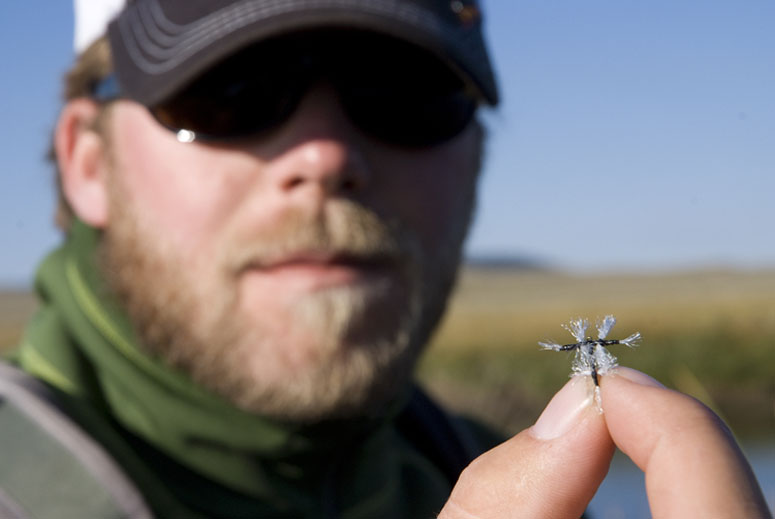
I tied this pattern up on the road when I was out fishing the Trico hatch on the South Platte River in Colorado with Louis.
The idea came to mind when I saw clumps of a dozen or more Trico’s floating down the river together. Trophy size trout weren’t feeding on single bugs floating down the river. Instead they were skimming the surface, mouths wide open, gorging on as many adults as they could eat per rise. I haven’t seen any patterns like this yet in the industry, just double trico fly patterns. Give it a try this year when you run into the morning trico hatch. The denser the hatch the better it will work. If the hatch is mild your better off using a single or double pattern. Anyhow, I thought it was something different that all you trout bums out there would appreciate.
Klewein’s Triple Trico
Read More »How To Hold Fish For A Photo: Video
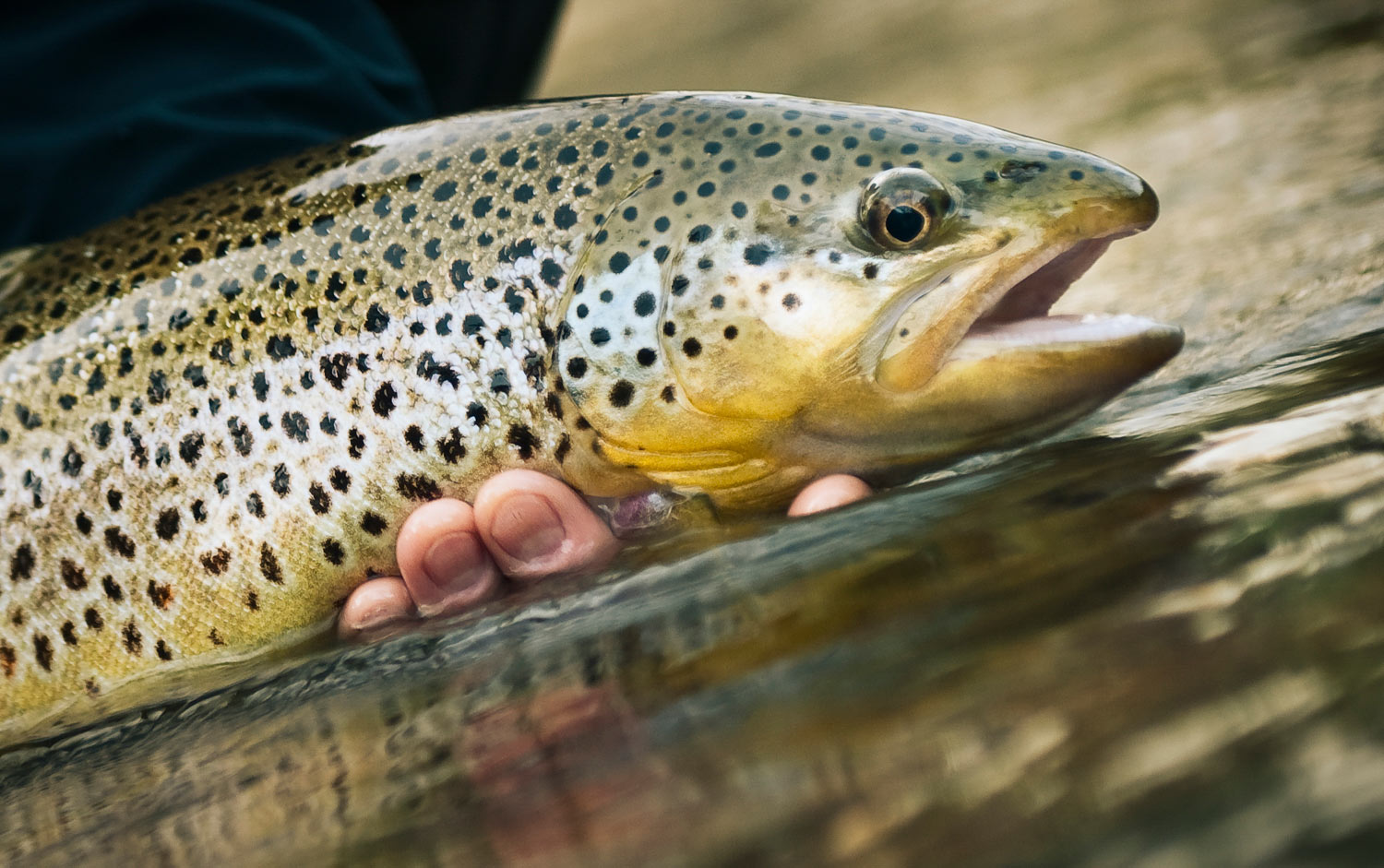
Here’s a few simple tips on how to best hold a fish and get a great photograph, without harming the fish.
There’s a lot of debate right now about photographing fish. Like most topics that get blown out of proportion on the internet, this debate is riddled with sensationalized accusations and disinformation. I’ve written about holding fish for photographs but I thought a short video showing how simple and noninvasive it can be would be a big help.
First, I’d like to clarify my stance on the subject. When done properly, I do not see any harm in photographing a fish. Fish are injured by poor handling, not cameras. I have two serious problems with the ‘no photo’ argument. First, it simply doesn’t address the problem. If anglers are mishandling fish, they are doing so while landing them and unhooking them with or without a photo. Demonizing the camera does nothing to stop this and doesn’t save fish. What we should be doing is educating anglers on ethical fish handling. Secondly, the photograph is the bargain that makes catch-and-release fishing work. Whether you like it or not there are simply a lot of anglers who require proof of their catch. It’s much better to give them a photo than a corpse. Like any right minded over reaction the ‘no photo’ movement will generate (and is generating) push back. People will kill fish because of it. If you don’t believe me, see the 2016 U.S. Presidential contest.
We are much better off teaching anglers to pinch barbs, wet hands, revive fish and limit their exposure to air than we are demonizing photography. In my experience the greatest danger in fish handling is panic. The average angler just needs to learn to calm down. When faced with a stubborn hook or an unruly fish, most anglers try to subdue the fish with force. This is the exact wrong reaction. It only panics the fish, making them struggle more. If you relax and keep the fish in the water, the fish will relax. Just watch how relaxed the fish in this video is. It works.
Lastly, all fish are not created equal. Some are more delicate than others and some species are more at risk. While I think it’s OK to lift a trout from the water briefly, the same thing doesn’t go for steelhead. The stakes are simply too high. What works for a trout in 50 degree water doesn’t work when the water temp is 70. A tarpon might seem tough but they are actually very fragile while a redfish or permit are surprisingly strong. Take time to know the fish you’re after and always ere on the side of caution.
Watch this video and see how simple it is to get a great photo of a fish and do no harm.
Read More »Choosing Flies for Tandem Nymph Rigs
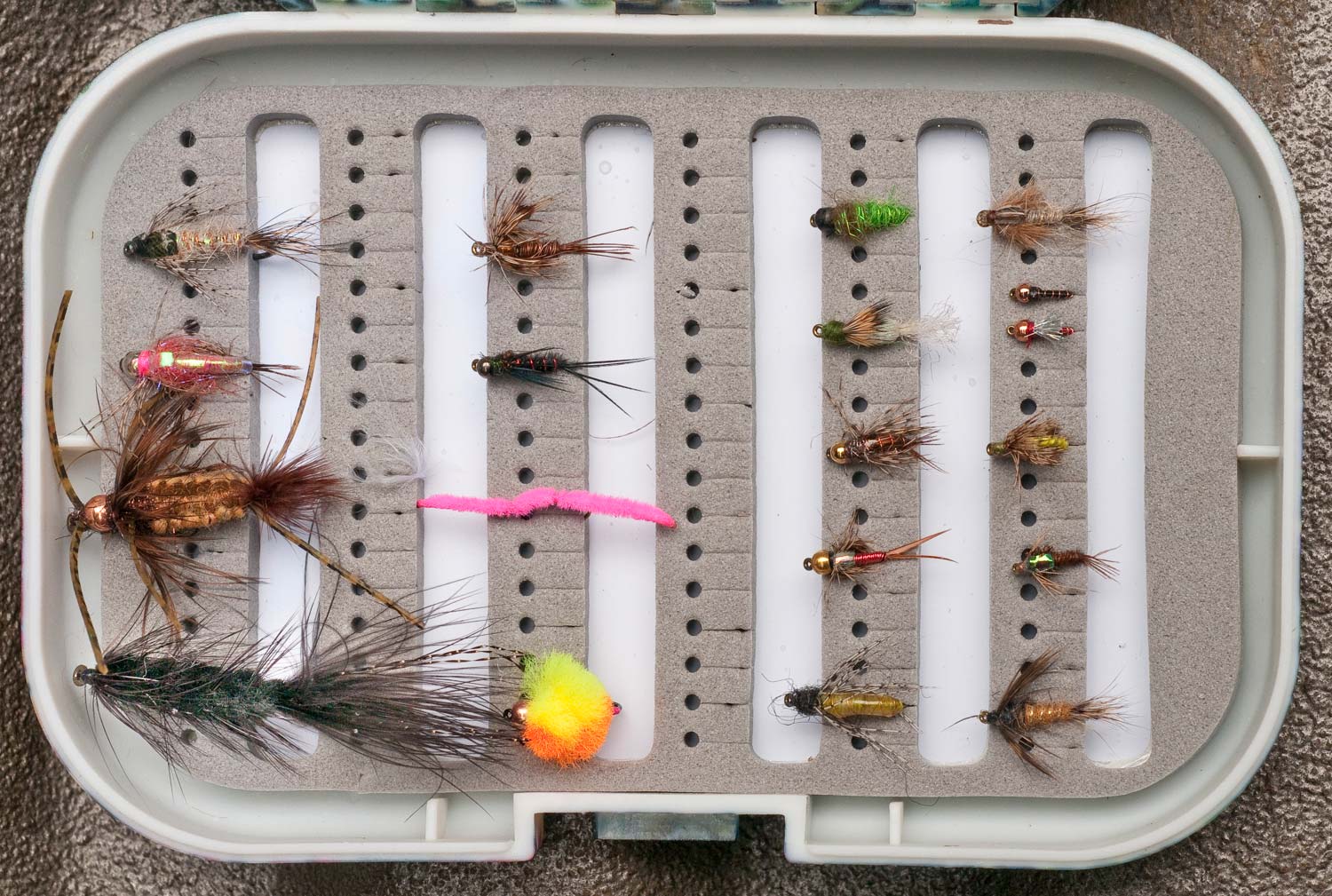
Today’s post is intended for beginner and intermediate fly anglers that struggle with choosing what fly patterns to tie on when they’re fishing a tandem nymph rig. Because most of our fly boxes are stocked with dozens of different fly patterns, it can be difficult at times to know where to start. I get the question all the time, “how do I know what flies to tie on?” The answer to that question is I don’t. Sometimes I can get a good idea by doing some bug sampling or observing the conditions on the water, but generally, I have to experiment with fishing different flies just like everyone else does until I figure out what the trout want. However, the key to my consistent success is treating my two-fly rig like it’s a buffet of food choices for the trout, and always fishing flies that imitate different types of food sources that the trout forage on. This increases the chances that the trout will like one of the food imitations in my rig and I’ll catch fish.
To make things easier for me, I categorize my nymphs into four different categories: Big flies, small flies, bright colored flies and natural colored flies. When I start out my day on the water, I begin rigging my two-fly rig with combinations of these.
Read More »5 Reasons Why I use the Uni-Knot for Trout Fishing
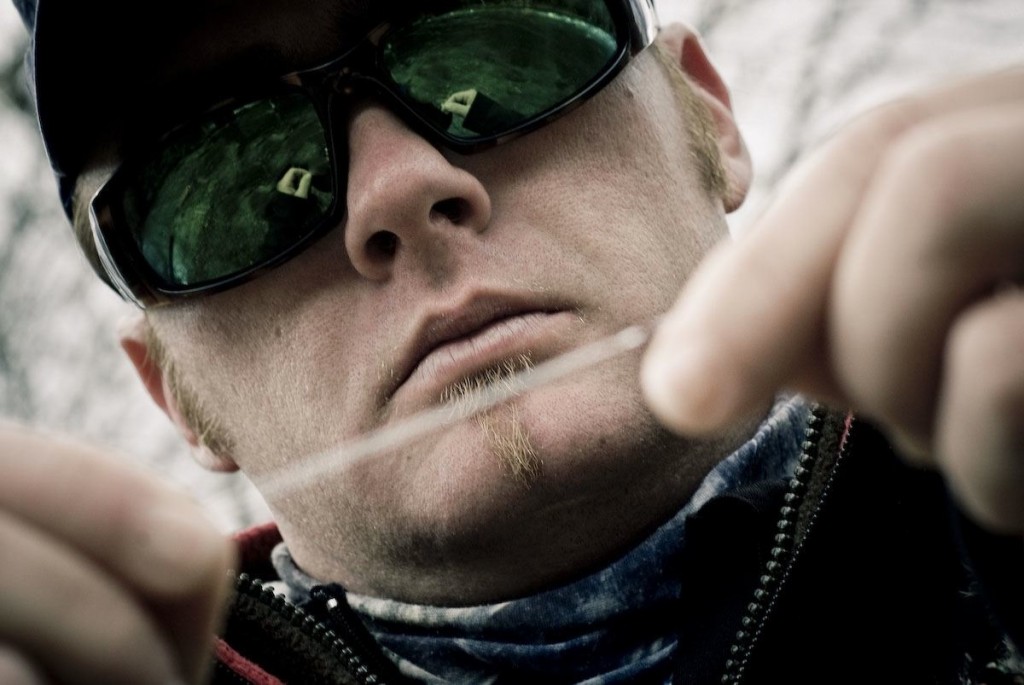
Why use the Uni-knot?
There’s plenty of other fishing knots out there that have better knot strength than the Uni-Knot, but that shouldn’t be the only factor you look at when you’re choosing what knot to use on the water. Reliability, how quick and easy it is to tie, type of rig your fishing, and functionality should all be weighed into the equation when deciding on knot choice. The decision to employ the Uni-Knot for my personal fishing and guiding has made my life easier on the water because of its versatility and ease of tying.
5 Reasons Why I use the Uni-Knot for Trout Fishing
1. The Uni-Knot is quick and easy to tie with fine tippet and small flies, particularly in low light situations.
2. The Uni-Knot is very reliable, is rated at 90% strength, and won’t slip (fail) like the improved clinch knot will if it’s tightened down incorrectly.
3. I only need a small amount of tippet to tie the Uni-Knot. That lengthens the life of my leaders, cuts back on tippet usage, and saves me money in the long run.
4. The Uni-Knot allows me to quickly change out my lead fly in my tandem nymph rig and also saves me time untangling knots on the water since it can be loosened and re-tightened on the go.
5. The Uni-Knot serves other purposes other than tying your fly onto your leader. It also can be used to join two lines and used to secure your backing to the reel.
The Uni-Knot Can Save You Time Untangling Knots
Untangling knots is a subject that I know far too well being a full-time fly fishing guide. These days I can often spot a tangle in mid-air or by the way the leader lays out on the water. I’ve grown accustom to having clients look at me with a bewildered look when I tell them to stop casting and strip in. Moments later, when they get their fly rig in, the confused look leaves their faces and the question of why is answered. Using the Uni-Knot in my fishing rigs often allows me to untangle a knotted mess and get back to fishing much quicker than with other fishing knots because I don’t always have to retie the knot. I often can
Sunday Classic / Light, Composition and Action
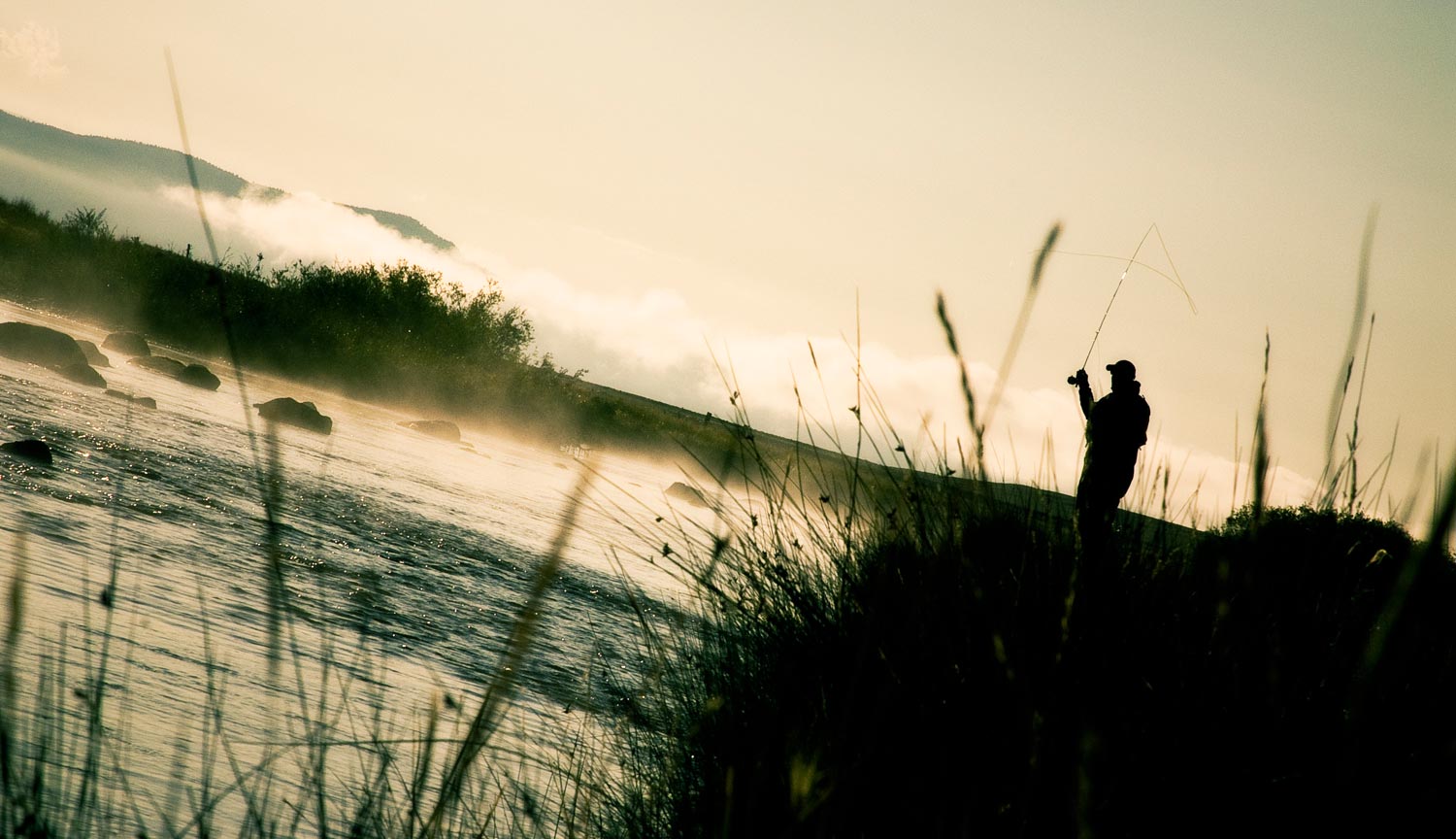
THERE ARE A LOT OF ELEMENTS TO A SUCCESSFUL PHOTOGRAPH. MANY ARE TECHNICAL, BUT THE MOST IMPORTANT ARE AESTHETIC.
A technically perfect image is worthless if it doesn’t capture the eye, and the imagination, of the viewer. Unfortunately, most new photographers get so wrapped up in the science of photography that they totally miss the art. There are as many aesthetic choices to be made when shooting a photo as when building a house but a hell of a lot less time to make them. It takes time and experience to master designing a photo on the fly but to help you get started there are three element so crucial to a great photo that they deserve your attention every time you lift the camera. They are: light, composition and action.
Light
Light sets the mood. When you sit down for a romantic dinner do you turn on the overhead fluorescents? No, you light a candle. When the police interrogate a suspect do they do it by candle light? Probably not. Of all the choices you make, light has the biggest impact on the emotional tone of the finished photograph.
You may be thinking, “How is light a choice?” I have been a studio photographer for more years than I like to discuss. In the studio I control my lighting by moving the position of my lights and changing their intensity. Shooting on the river you don’t have that luxury but you do still have choices. You can’t move the sun, but you can
Read More »Good news and bad for G&G readers
THERE ARE EXCITING NEW CHANGES COMING TO GINK AND GASOLINE, BUT FIRST WE’VE GOT TO GET OVER A LITTLE HUMP.
We’ve been working for some time on a new version of Gink and Gasoline. There’s going to be a lot of cool new stuff and even better content. I wasn’t going to talk about this quite so soon, but plans, as plans do, have changed.
Regular readers will probably know that back in the first of the year, I had cataract surgery. I have held off writing my final update, because things have not gone well. As it turns out, I now have a detached retina in my right eye which requires immediate surgery. The good news is, the doctors are confident they will save the sight in my eye, but the bad news is this will be a challenging recovery. I’m not allowed to read or look at a computer screen. It goes without saying, that makes my job a bit complicated.
SO HERE’S WHAT’S GOING TO HAPPEN OVER THE NEXT FEW MONTHS.
Read More »Move Quietly on the Bow
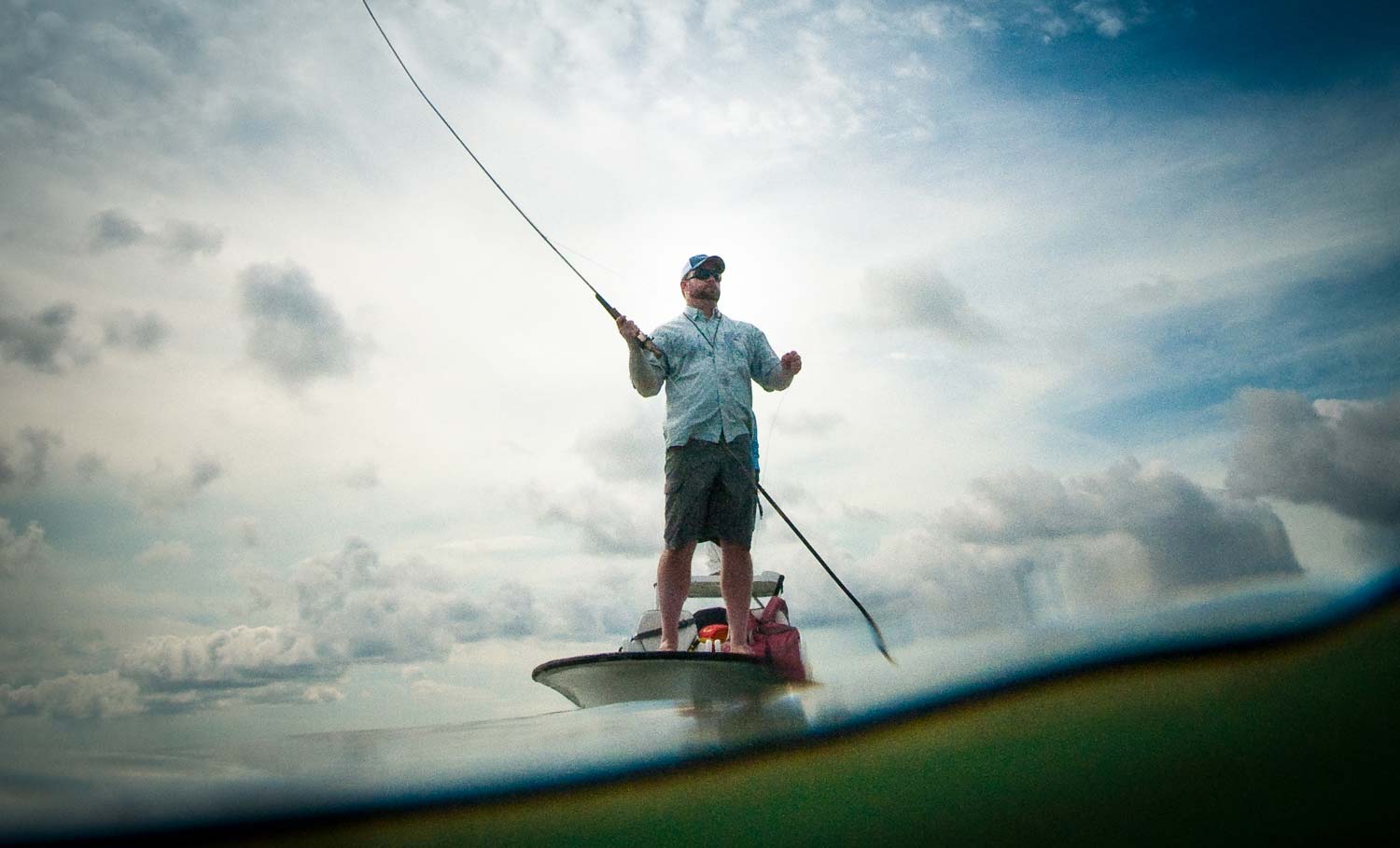
Bonefish have ears like rabbits.
There’s a picture! It’s true though, they can hear things you’d never imagine. Fish’s hearing is, of course, not the same as ours. Tiny villa in the cells along their lateral line pickup vibration and pressure in the water with remarkable perception. Among the things they hear are the sounds of your feet on the bow.
I always fish barefoot for that reason, but I’m still very careful about the way I move on the bow. Among the sounds that spook fish is the pressure of the boat’s hull in the water. If you rock the boat as you move and cast, you’re likely to spoil your shot.
WATCH THE VIDEO FOR TIPS ON BEING QUIET ON THE BOW.
Read More »Reece’s Glo Worm
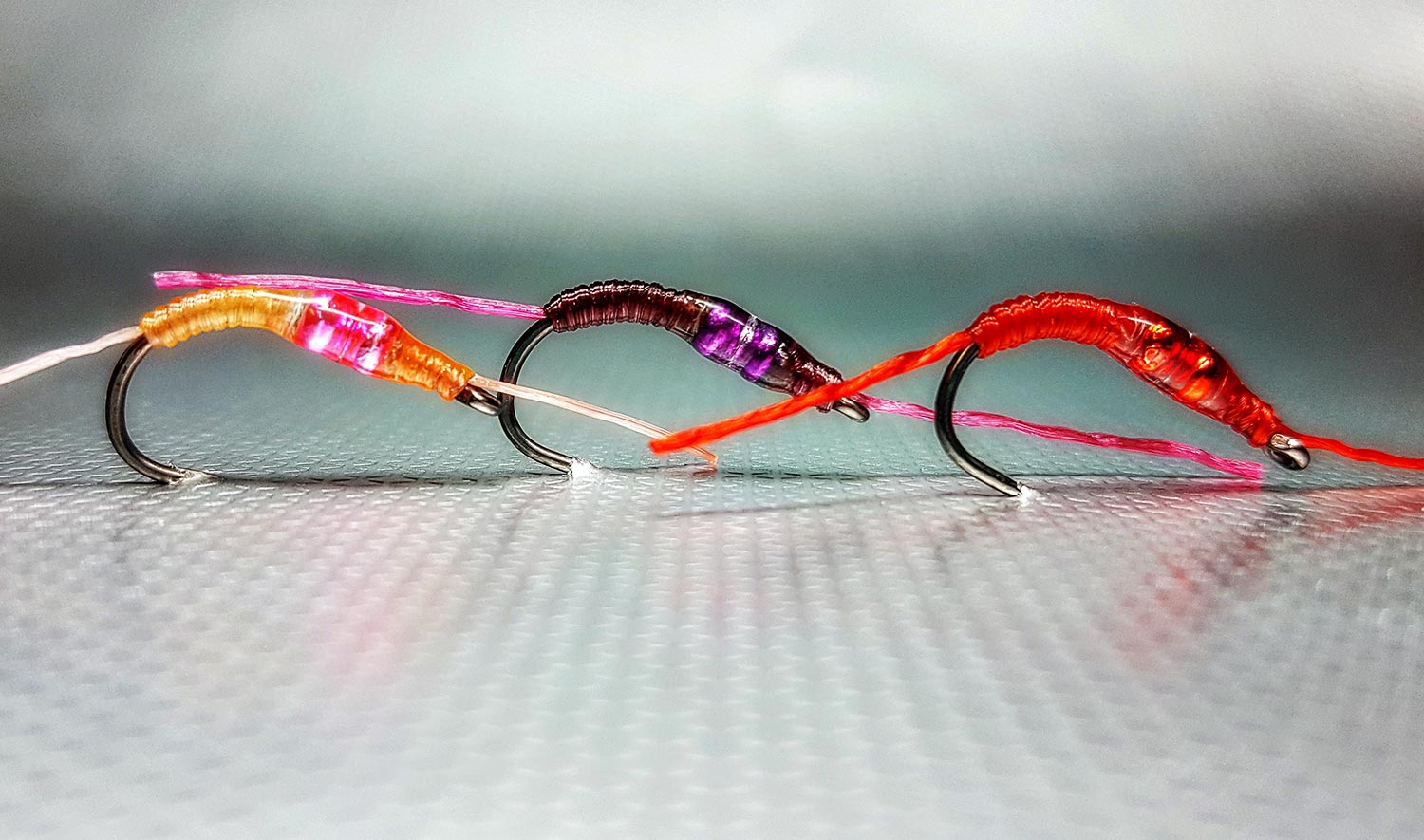
By Bob Reece
Whether you like it or not, fish eat worms.
This wiggly addition to fly boxes is adored by some and scorned by others. If you happen to be a fly fisher that embraces the application of annelids, this pattern is worth its weight.
When tying the Glo Worm, I use either the Tiemco C500BL or the 2499BL. Both hooks sport the slightly upturned hook point and strength required to hook and hold large fish. The addition of two tungsten beads rockets this pattern to the bottom, where it belongs. This quick descent puts and keeps the fly in the strike zone for longer periods of time. The combination of MFC Sexi-Floss and UV coat creates a natural translucency.
Worms work and some work better than others. Even among great simplicity, diversity and improvement exist. If you’re looking to step up your annelid game, light up your box with some Glo Worms.
Read More »Everything You Wanted To Know About Flyfishing Leaders But Were Afraid To Ask
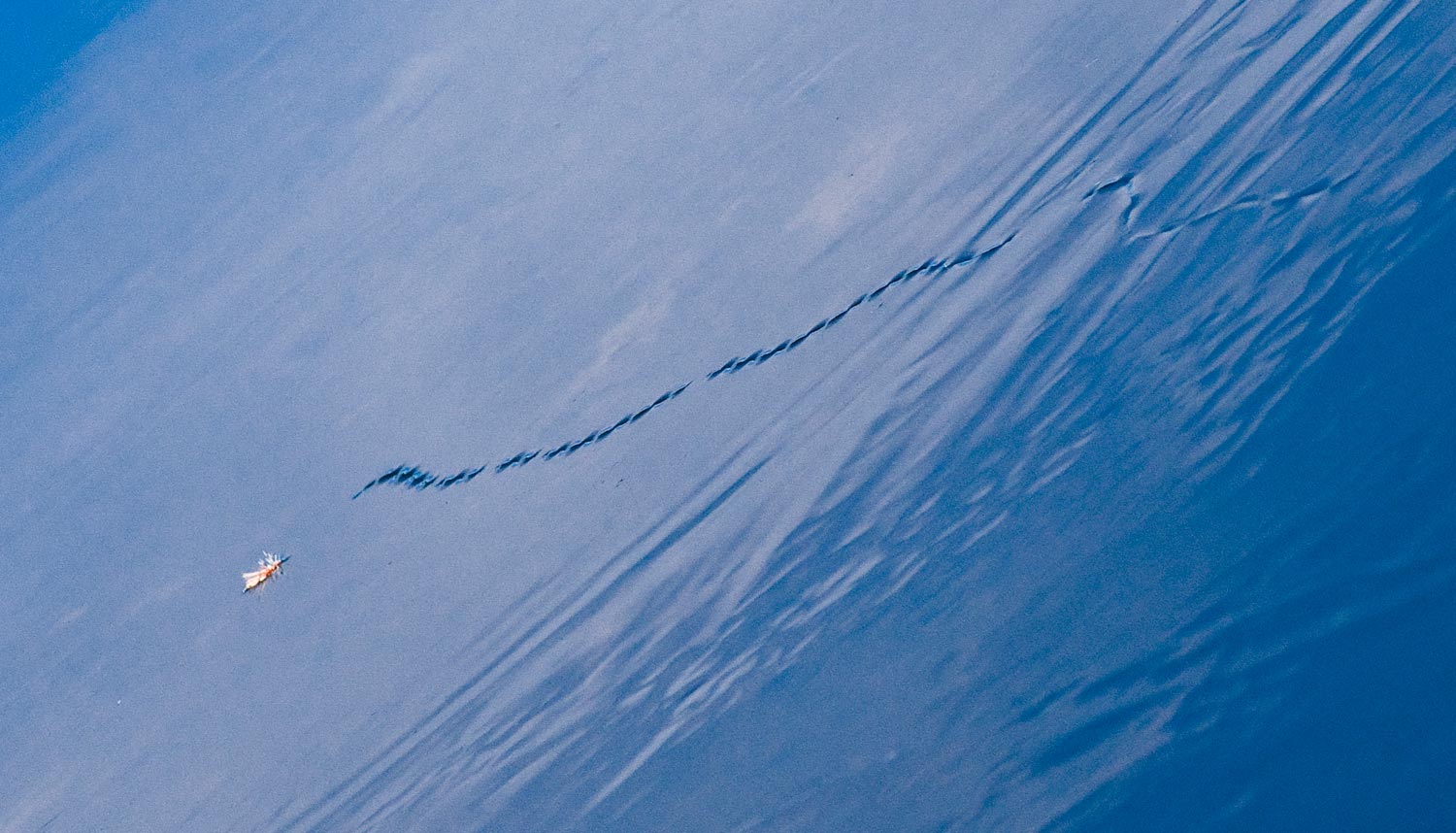
By Kevin Howell
When I began fly fishing, quality leaders were very hard to find.
The best leaders were hand tied by the Dan Baily Company in Livingston, Montana or the Orvis Company. The problem is that the tying process involved wetting the knots which, when stored over a period of time, made the knots weak and anglers would use a new leader only to have it break at the knot. Today there are countless options for anglers to choose from — not only do anglers have to choose a length and a taper design, but leaders are available utilizing Monofilament, Fluorocarbon, Braided and Furled technology.
The leader is responsible for transferring the energy from the fly line to the fly resulting in fly turnover and how it lands on the water. Leaders consist of three sections — the butt section, the midsection and tippet. The tippet is generally the last 18-24” of the leader where it connects to the fly. The midsection is the next two feet, and butt section is generally 4-5 feet and considerably stiffer. The leader should start about the same diameter as your fly line and then taper down gradually and continually until it reaches the tippet which will be a 18-24” section of the same diameter.
Of the four major types of leaders on the market, the Monofilament leader is by far the most common, with Fluorocarbon claiming second followed by braided and then furled. Today’s pre-drawn mono leaders are leaps and bounds ahead of previous mono leaders. They are strong, well designed with quality tapers, and are even starting to specialize. You will find leaders meant just for nymph fishing, leaders for dry fly fishing and everything in between.
The only downside to the mono leader is that when it gets abraded or a wind knot, it is going to break every time resulting in lost rigs or lost fish. Fluorocarbon leaders are available in the same tapers as monofilament and also very abrasion-resistant, but come at a much higher price– 2-3 times more expensive than mono. Fluorocarbon leaders are also denser than water, so they tend to sink slowly. If you are trying to fish dry flies or watch your leader for strikes, this becomes quite difficult with a leader that is slowly sinking.
Braided leaders offer excellent turnover and are almost indestructible; you simply replace the tippet when needed. However, if you are fishing over-spooky or pressured fish, they will spook the fish every time. Water sprays out of the braided leader on the forward cast and it slaps the water when landing. Braided leaders are also heavy and struggle to float especially after being fished a little. They pick up water scum and dirt, causing them to sink more than they float.
Furled leaders do not spray water as badly as a braided leader do but do spray some water on the forward cast. They also tend to sink as soon as they are fished a little bit and absorb dirt and water. Since furled leaders are not commercially produced you will have to find someone to make them for you or invest in the jigs and material to produce them yourself.
After twenty years in the guiding and outfitting business, I have found a quality monofilament leader with a fluorocarbon tippet to be the best all-around leader.