
Johnny’s Shark

A perfect cast right on the big shark’s nose gets nothing but a sniff and a refusal.
In a low and stoic voice the guide says, “the fish ain’t gonna eat if he don’t smell blood”. Johnny Spilane gives him a hard look, takes his fly from the water and jams the hook into his hand, then squeezes the blood onto his fly. The shark follows the fly almost to the boat, then charges and cuts left. We all thought it ate the fly. Maybe it did, and didn’t stick. Our guide was glad because he didn’t want to spend all day landing it. There were plenty of bonefish to catch but some people just aren’t happy doing what everyone else wants to do. That’s Johnny, and that’s why he brought three silver medals back from the Vancouver Olympics. It’s also why he’s a great fisherman.
WATCH THE VIDEO!
Read More »Eye Surgery Update: So Far So Good
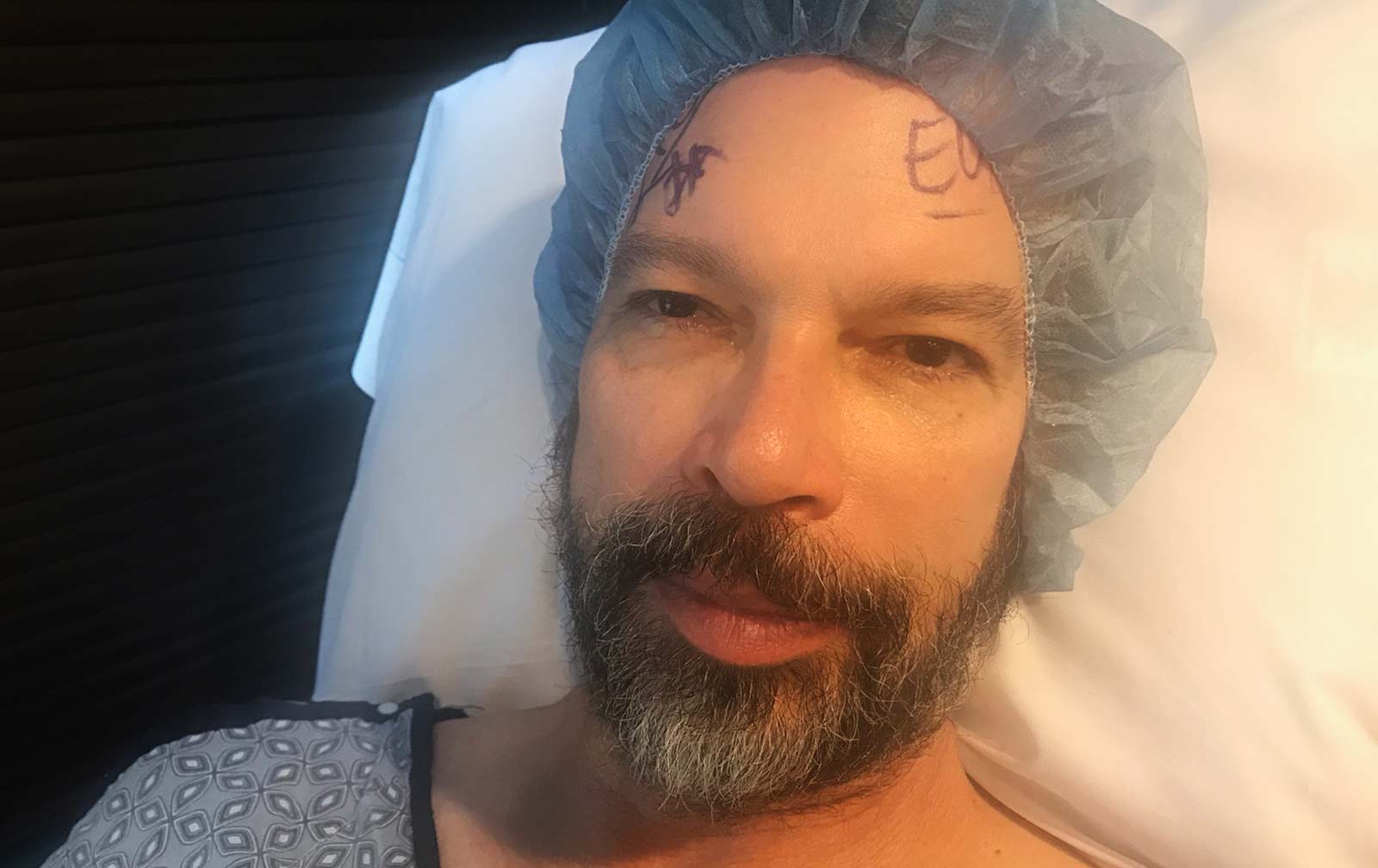
It’s way too early to call my last surgery a win, but for now, all the news is good.
It’s been five weeks since my last surgery and as of my last checkup we are all encouraged. I don’t want to oversell. I could get bad news any time but it will be the end of the year, at the earliest, before we can call it a success. To help readers understand, I’m going to get into some details about my condition. Please pardon me but I do have friends looking for updates.
I will talk a little about what’s coming up at G&G, so feel free to scroll down to that.
After my first retinal detachment surgery I developed a condition called PVR, short for proliferative vitreoretinopathy. In cases of PVR, excessive scar tissue forms between the retina and the eye. As that scar tissue matures, it pulls the retina like a scab might pull the skin nearby, until it detaches the retina again. In my case, the retina tore in four places and completely detached.
This second detachment was far worse than the first. The combination of permanent scar tissue, holes in the retina, and a detached macula mean that, even if the surgery is successful, the vision in that eye will never be good. Legally blind is about the best I can hope for. That sounds worse than it is. I have one good eye and enough vision in the other to have some depth perception, and that’s huge.
The problem with PVR is that it’s persistent. Most PVR patients have from three to eight surgeries before things are resolved and with each additional surgery the quality of the outcome gets poorer. The best case is poor vision, the worst is removal of the eye. I understand that second option is extremely painful and I think I’m a long way from that.
SO HERE’S WHAT RECOVERY LOOKS LIKE.
There are two stages to the recovery. The first six weeks we are just looking for the reattachment to hold. That looks really good right now. The second stage is a ninety day timeline where we are waiting to see if the PVR comes back and detaches the retina again. Because the scar tissue from the first round of PVR is permanent, that part of the retina is more prone to detaching again. If it looks like that is going to happen, the option is to go back in and cut away the affected part of the retina. Of course, that leaves black spots in my vision. That’s not great, and let’s hope it doesn’t happen, but the priority is keeping the macula attached. If the macula does not stay attached, the brain sees the eye as dead and will start trying to get rid of it. The only tool it has to do that is pain.
As of now there is some new PVR in my retina, but it’s not bad. My doctor
Read More »Fly Fishing Lights at Night
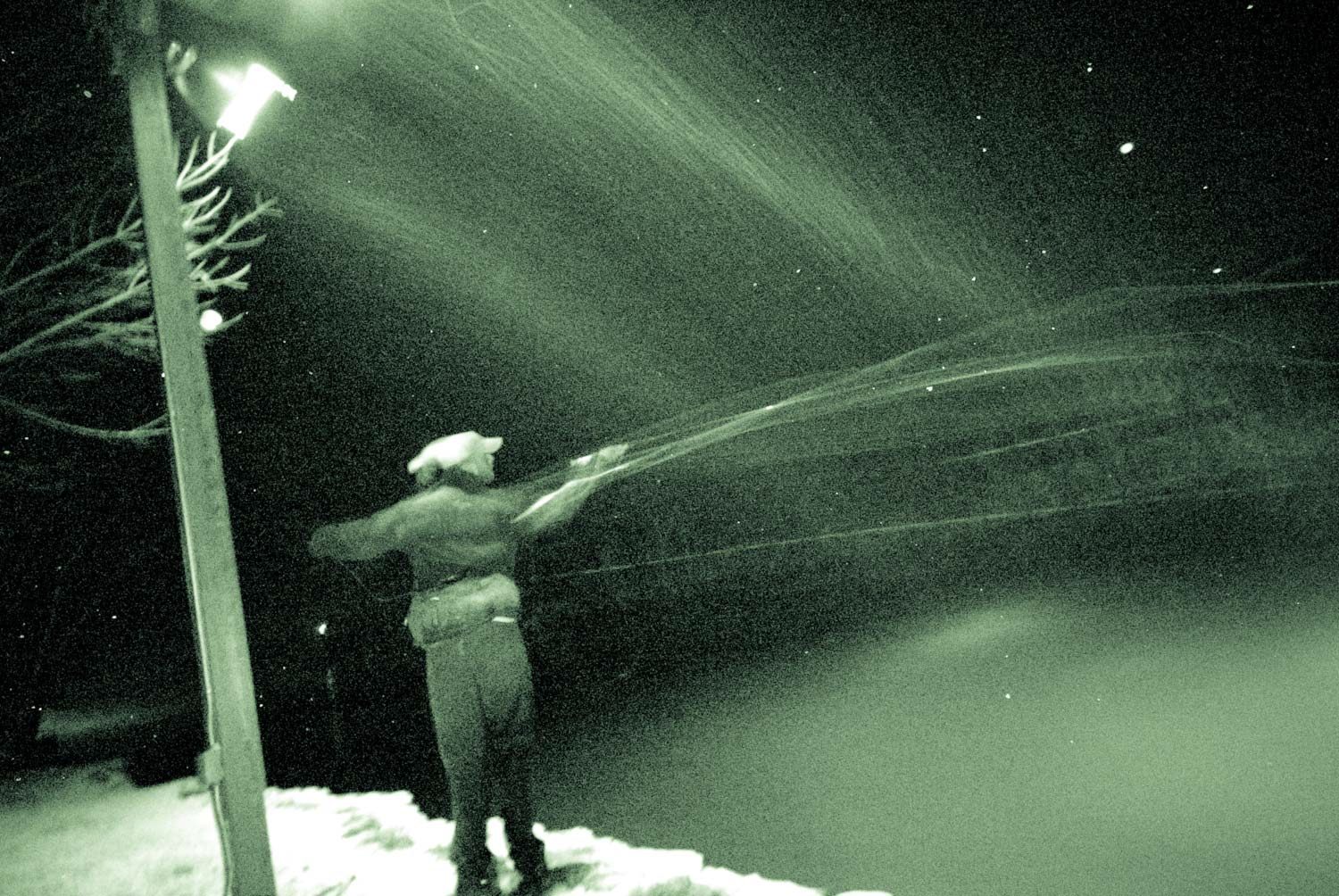
It’s long been known by fishermen, that bright lights shining on the water at night create fishing hotspots.
The lights attract plankton, which in turn, attracts the baitfish and other food sources that feed on them. Once you’ve got a good concentration of forage food hanging around the lights, it doesn’t take long before the larger predatory gamefish move in and begin making a feeding frenzy of the situation at hand. Using the lights as a perfect tool to coax and gather the food into a small area and the cover of darkness as camouflage, predatory gamefish will take turns darting into the light with mouths open to pack their bellies full. This feeding scenario reminds me very much of the relationship I have with my refrigerator. When I wake up in the middle of the night with my stomach growling, I know exactly where I need to head to get my quick food fix. The relationship gamefish have with lights on the water at night is no different. When available, gamefish will regularly utilize lights to locate and ambush food under the cover of darkness. Fly fisherman should always take the time to locate and fish lights on their home waters, because they will almost always provide consistent action.
If you randomly asked one of your fellow fly fisherman about targeting lights at night, they’d probably respond with success stories about either fishing lighted piers in saltwater or boat docks on freshwater lake impoundments. These are by far, the two most popular places fisherman prefer to utilize lights shining on the water at night, but it’s not the only places we should look. Fishing lights for trout don’t come up in conversation nearly as often, but where they are available, their equally productive. Notice the
Read More »Nymph Fishing, There’s Nothing Wrong With It
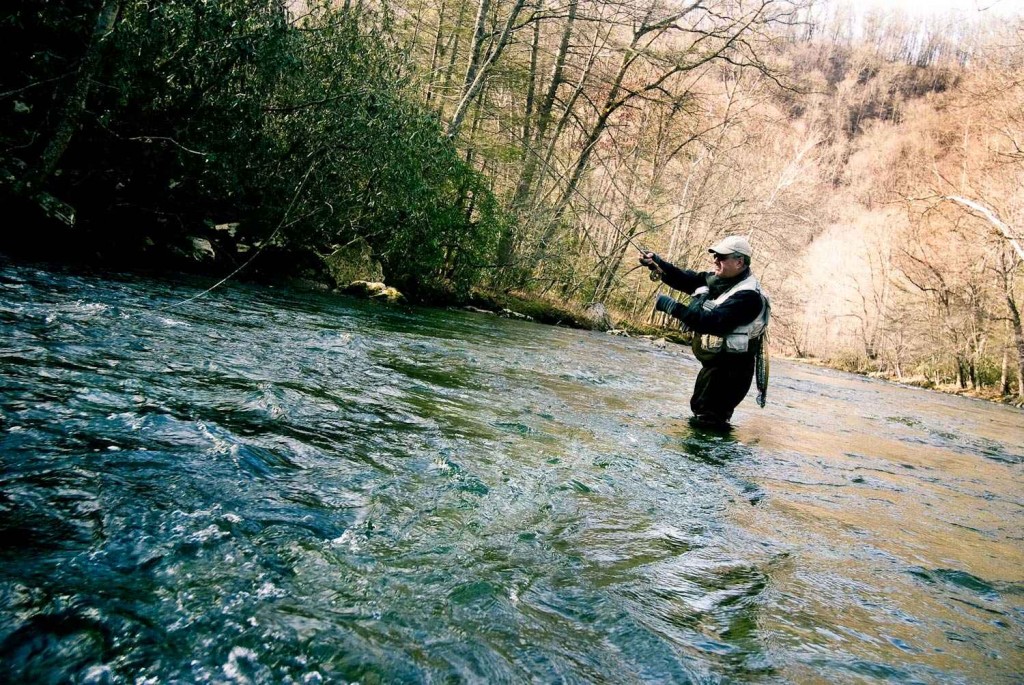
It seems like every where I look, I see blog posts all over the place chastising and bad mouthing nymph fishing.
I hear comments claiming nymph fishing is nothing more than mindless fly fishing. That watching indicators floating down the river all day is boring. So let me ask you this, does it make since to instead fish a dry fly if your chances of catching fish are slim to none? To me, that’s what’s boring and ridiculous. My objective on the water is always to decipher what the fish are predominantly feeding on, and then fish the appropriate rig and fly that allows me to imitate it to my best ability. Whether or not the fly pattern is a wet or dry fly has no bearing to me at all. All that matters is that it’s the right choice for the moment. To frown upon nymph fishing and purposely avoid it, even when it’s obvious it’s an anglers best bet for success, is like a golfer choosing to putt with a driver instead of a putter. It will work but it’s obviously not the best gear choice.
We don’t go through life purposely choosing to take the most difficult path in the off chance we’ll find success. Just as in fly fishing, it doesn’t make any sense to fish one method of fly fishing over another just because it feels more pleasing to the soul. I can stomach doing it every now and then, but to ignore fish behavior and throw away my adaptive fishing tactics, just because I dislike nymph fishing or any other method, seems to go against all the teachings that our fly fishing pioneers have worked so hard to pass down to all of us.
It doesn’t matter what type of fly pattern your fishing, whether it sinks or floats, they all predominantly are designed to imitate various stages of aquatic insects or other food that’s preyed upon by fish in the ecosystem. Nine times out of ten, fish will prefer to forage on the easiest and most abundant food source available to them at any given time. Fish aren’t prejudice towards their food or flies we throw at them. All they care about is
Read More »It Only Takes One Good Day of Fly Fishing to Make A Trip
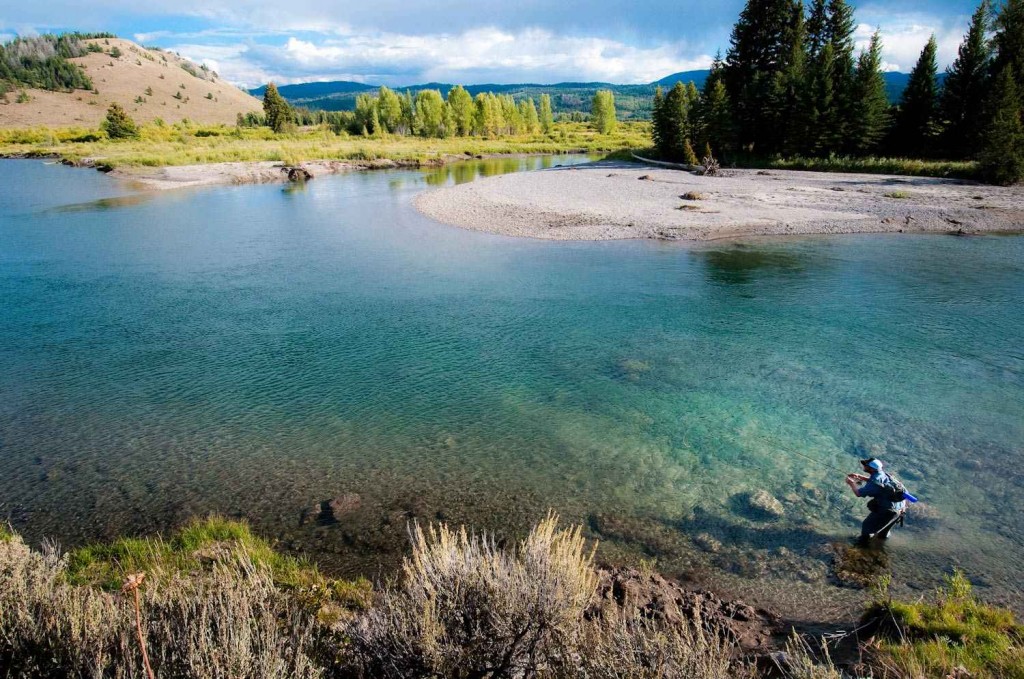
A while back, I wrote a post about how important it is to not put all your eggs in one basket (fishing only one river system) during your fly fishing travels.
What I didn’t mention in that post and should have, was how important it is to not give up when it seems like the entire universe is conspiring against you. My last trip to Wyoming with Louis was pretty awful. We had to overcome a car break down in the middle of no where, water levels so low we couldn’t float in the drift boat we rented for an entire week, and one of us was almost hospitalized by infection. We lost 2 1/2 days of fishing that trip and we were constantly at each others throats. Even the cold beer flowing over our lips wasn’t enough to raise our morale. I’ll leave it at that, because I’m sure Louis will be writing a very humorous piece down the road shortly, detailing the trip, and I don’t want to spoil it. Here’s the important point I’m I’m trying to get at. It only takes one good day of fishing to make a fishing trip meaningful.
Yeah, we’ve all had perfect fishing trips in the past. The problem with that is perfect fishing trips aren’t the norm, and we often find ourselves in the middle of a trip, complaining about the not so optimal fishing conditions, and then start passing judgment on the present trip by comparing it to our past epic trips. Wake up…., fishing all over the world is getting tougher each year, and we better prepare for it by resetting our fishing expectations accordingly, otherwise we’re going to be setting ourselves up for future disappointment. Again I’ll say, it only takes one good day of fishing to make a fishing trip meaningful. Live by this, and you’ll
Read More »Who Says Short Rods Are For Small Streams
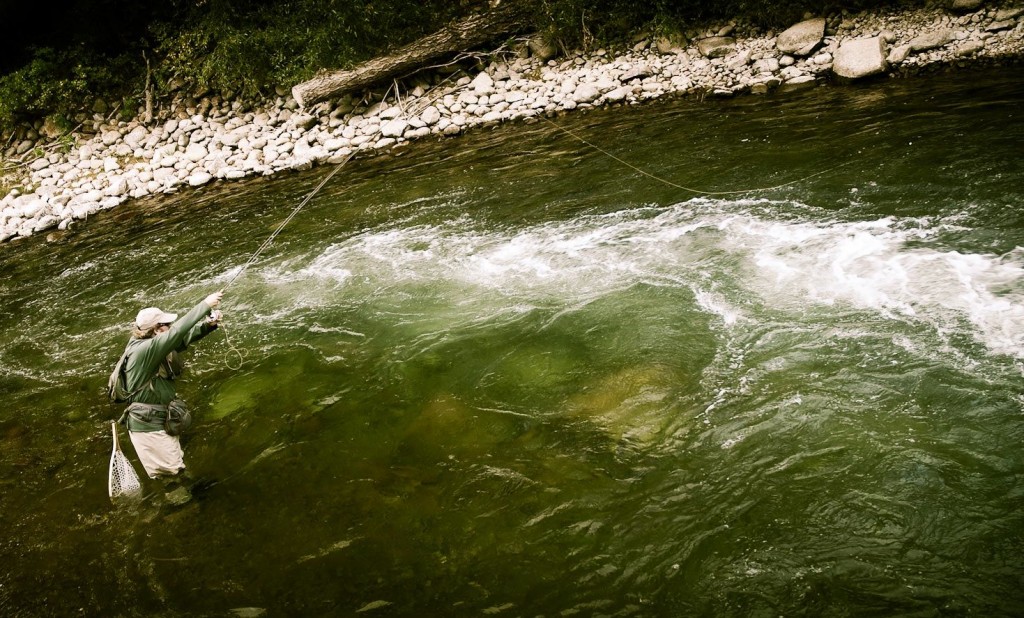
MY GOOD FRIEND DAVE GROSSMAN DECIDED TO TRADE IN HIS 9 FOOT BOAT RODS FOR 10 FOOTERS THIS YEAR.
So far, this fishing season he claims the extra foot of graphite has been working wonders for his clients on the water. Dave says, “I find that the ten foot fly rods make it much easier for my clients to mend their fly line, especially when they need to mend a lot of line. That translates into them consistently getting longer drag-free drifts. The longer rods shine when we need to high-stick across multiple currents, and they also allow my novice clients to squeak out a little more distance in their casts.”
After hearing those positive comments from Dave, I decided to give them a shot with my own clients, but I’d take it a step further. Instead of just incorporating them on float trips on the big rivers, I’d experiment using them on small to mid-size streams. The first trip out was a real eye opener and success with the ten foot fly rod on one of my 30′-40′ wide trout streams. To my amazement, the longer rod outperformed my standard 8 1/2-9 foot fly rods in almost all fishing scenarios in my clients hands. The only area the ten foot rod underperformed, were spots where the stream narrowed drastically or when it was really tight and cramped. The surprising thing about that, is it actually happened a lot less than I thought it would, and when it did, I’d just handed over the shorter rod I was carrying to my client. The key was positioning my angler in the correct spot, reminding him he had a longer rod in his hand, and then choosing the appropriate fly cast to present our flies.
I continued the experiment for several more guide trips, and it quickly became apparent, that all the fly fishing literature I’d previously read about matching the length of your rod to the size stream you were fishing, was actually just one way of looking at it. If there’s one thing I’ve learned over the years with fly fishing, it’s that there’s almost always multiple options (types of casts, types of rigs, types of gear, ect.) that are feasible for anglers to use when fishing any given situation. Most of the time we end up going with the status quo, which is the obvious and most popular method for the fly fishing situation at hand. Sometimes, however, if we’re not afraid to think outside of the box, and open to use an unorthodox approach, it has the potential to end up performing even better for us on the water.
BENEFITS THAT I NOTICED WITH MY CLIENTS WHEN I PUT A LONGER FLY ROD IN THEIR HANDS.
Read More »When In Rome…
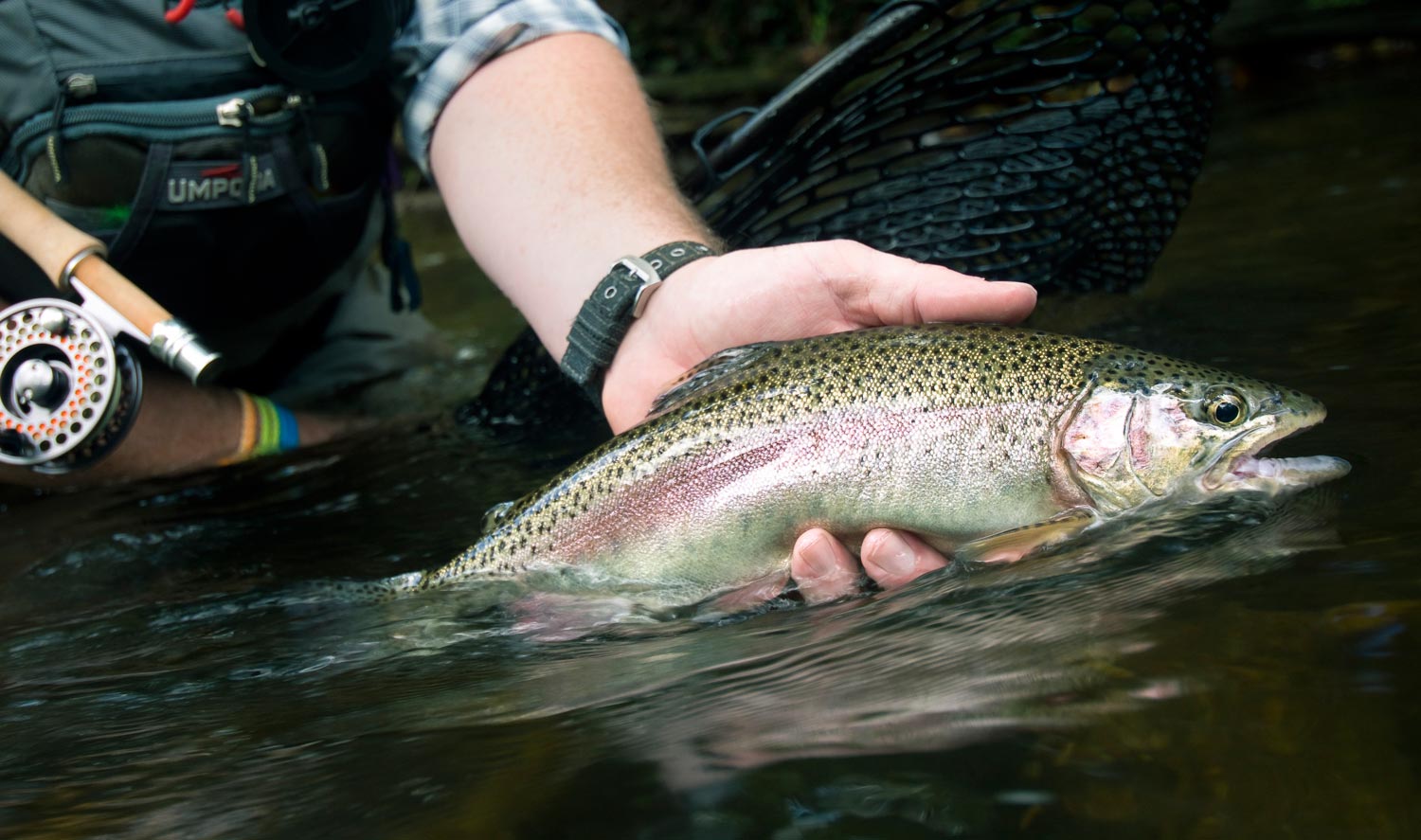
By Jason Tucker
The saying goes “When in Rome, do as the Romans do.” This can be good advice, both in travel and fly fishing. In fly fishing the locals often have knowledge of local hatches, runs and quirks of the local water, knowledge that is invaluable to your success on their water. But it doesn’t always hold true.
Several years ago my brother and I went up to Nipigon to see if it still lived up to its old reputation for producing big brook trout. When we arrived, the water was low and clear (still a raging torrent) the skies were clear and blue, and high pressure seemed to put a damper on the bite.
All the local guides were singing the blues, and no one seemed to be catching fish.
We had done our research and were hucking big sculpin and smelt patterns. We did this for two days with no results. The guides launched their boats where we were camping and every morning and evening we asked them how it was going and the reply was the same—slow.
No one was catching fish including yours truly, and then I got desperate. I started fishing the flies that work for me at home—Au Sable skunks, orange and copper foam hoppers, and of all things, mice. You know what?
Read More »DIY Fly Line Loop with Step-by-Step Instructions
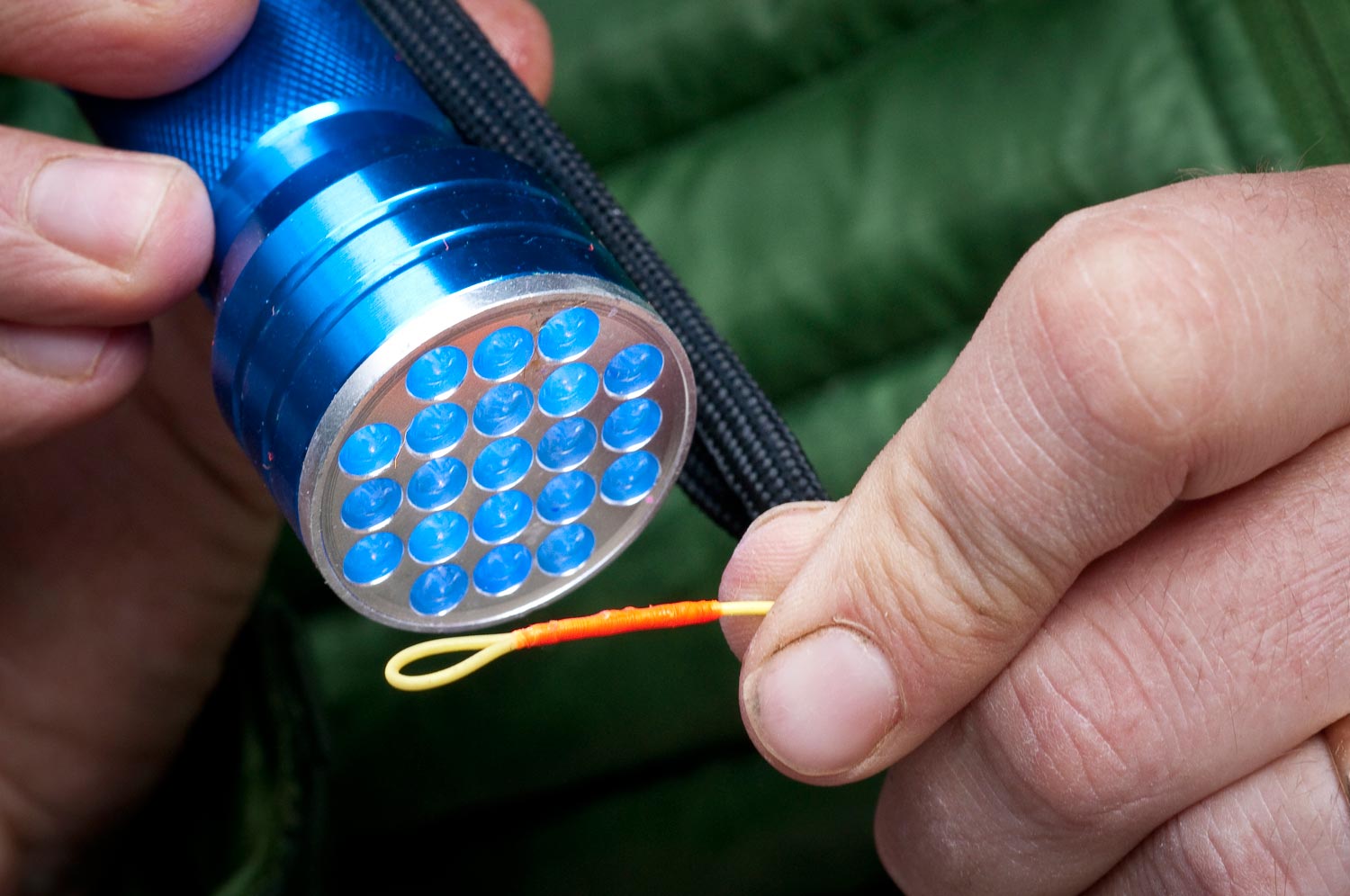
Most fly lines these days already come with welded loops at the ends for the easy attachment of backing and leaders. If you fish as much as I do though, eventually they get worn out and need to be replaced. Most anglers just use a standard albright knot or nail knot to fix this. It works perfectly fine, but I prefer instead to tie my own fly line loops with a fly tying bobbin and thread. Done correctly, it will provide a stronger connection to your leader than the manufacturers welded loops or knots you tie (this is important when fly fishing for big game species). The bright thread that you tie the loop with also works really well as a spotter. It comes in real handy when you’re fly fishing and you have conditions where it’s hard to keep track of your fly in the water. That bright spot on the end of your fly line provides a quick reference that your fly is a leaders length away. Below are step-by-step instructions for tying your own fly line loops.
Read More »More Eye Surgery News.
By Louis Cahill
WELL, HERE WE GO AGAIN.
I apologize for being a little self involved lately. I have posted updates because it’s the best way I have of letting friends and G&G readers know what’s up. Please bare with me. If you are not up to speed, three months ago I had surgery to repair a detached retina in my right eye. The recovery was long and complicated by scar tissue that formed under my retina, threatening to tear it loose once again.
Unfortunately, that is exactly what happened. In spite of a great deal of caution and eleven weeks in bed, my retina tore in multiple places last Sunday. As of now, I am totally blind in my right eye. I am scheduled for surgery on Tuesday, and doctors will try to put things back together. The odds of success are not great but it’s worth a try. Hopefully they will be able to salvage something.
I’m sure this is not the news any of us were hoping for. It will mean that for the immediate future Gink and Gasoline will continue to recycle some classic content. We have been working on the selection process and there are some of my all-time favorites coming up, so I hope you will all enjoy it. I apologize for the inconvenience and that this is taking so long.
G&G will still be represented at IFTD this year. Justin Pickett and probably a few others will be doing interviews and there will be new gear videos to enjoy. We are working on some fresh content up as well. The back end of the site is complicated, and unfortunately, I am the only one who knows which buttons to push. Hopefully I’ll be able to bring someone else up to speed before long.
I appreciate all of your support and well wishes! I know this sounds awful, and plenty of it is, but I will survive this and be back in action. I have a couple of friends who catch plenty of bonefish with one eye. This is just a little speed bump, and maybe a reminder that I sometimes take on a little too much. I am certainly learning to slow down. LOL! Way down.
You will not hear from me for a while, but stay tuned here at G&G. Theres lots of great stories, articles and videos coming up. Thank you, from the bottom of my heart, for your continued support. It means more than you can know.
Read More »Eye Surgery Update / What’s Up With G&G
By Louis Cahill
Ten weeks ago I had surgery for a detached retina.
Many of you will have seen the post I put up explaining that emergency surgery caught me with my pants down. I know that others have simply noticed that G&G has been recycling content lately. That was the best I could do on short notice. For those of you who have been wondering, here’s an update.
I’ll keep this short, as I am still in no hope to work. My recovery has been challenging. Everything looked good early on but I soon hit a set back. Ten days ago I was told that I would likely need additional surgeries, the likely outcome being that I would loose the site in my right eye. I have been fighting this with everything I have and, when I saw my doctor yesterday, she revised the prognosis. I am not in the clear, but I have a chance. If my retina hangs tight for another two weeks, I may not need additional surgery. I’ll take a chance.
As of this writing I have been in bed for ten weeks. I have at least another two, and who knows from there. I am remaining optimistic and expect to be back to work before too long. It is, of course, out of my control. I appreciate your patience and support while I, and my sainted wife who has been incredible, work through this challenging time. Rest assured that no matter what happens G&G will be back and better than ever.
Thank you all!
Read More »