
Changing Your Mind About The Off Shoulder Spey Cast
By Louis Cahill
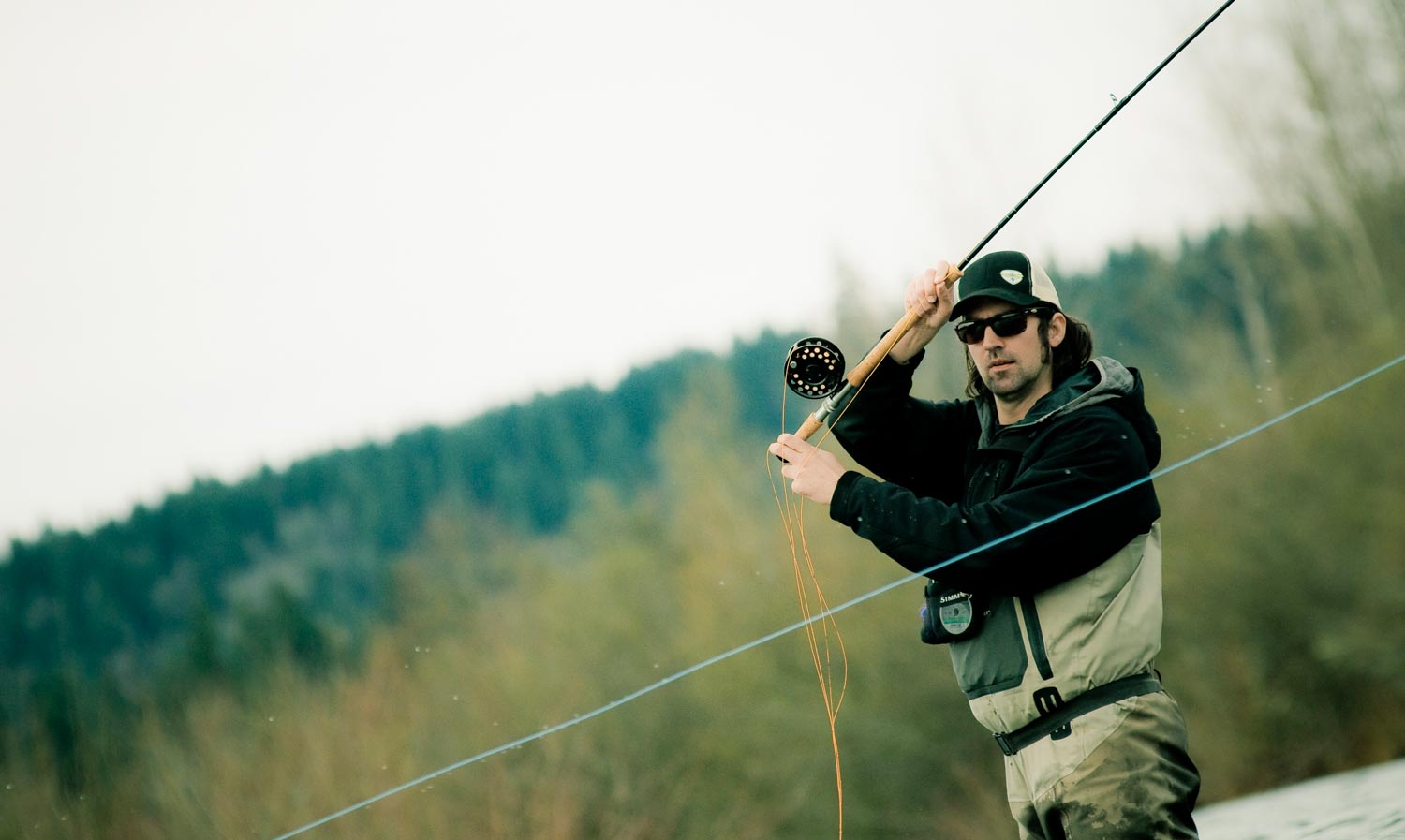
Most anglers, myself included, struggle with making a spey cast off their non-dominant side.
As a right-handed caster, it has always felt unnatural for me to cast off my left shoulder. It’s almost the two-handed equivalent of casting left handed. Because it feels awkward, I’ve never gotten quite as much distance off my left shoulder. I was fishing with guide Barrett Ames, on the Deschutes, recently when he mentioned that his off shoulder cast was his strongest. This peaked my curiosity so I asked for some details. Barrett’s answer was so simple, it made me realize that the problem, like so many, was in my head and not my hands.
“The off shoulder cast just puts my bottom hand in the right position naturally. Everything just lines up and the cast comes off great.”
If this doesn’t immediately make sense to you, pick up a spey rod, or a broom stick for that matter, and walk yourself through it. You’ll see quickly that when you make a cast off your dominate shoulder your bottom hand, which provides the power for the casting stroke, crosses your body, which limits its range of motion. When you cast off of your non-dominant shoulder, your bottom hand lines up perfectly with the elbow and the shoulder, making for a nice full range of motion. The rod naturally falls in very straight plane, which helps your cast land straight.
This simple piece of information made me realize that
Read More »Facebook, A Matter of Life and Death
“Gone Fishing! Great way to start the New Year with a little father / son outing.”
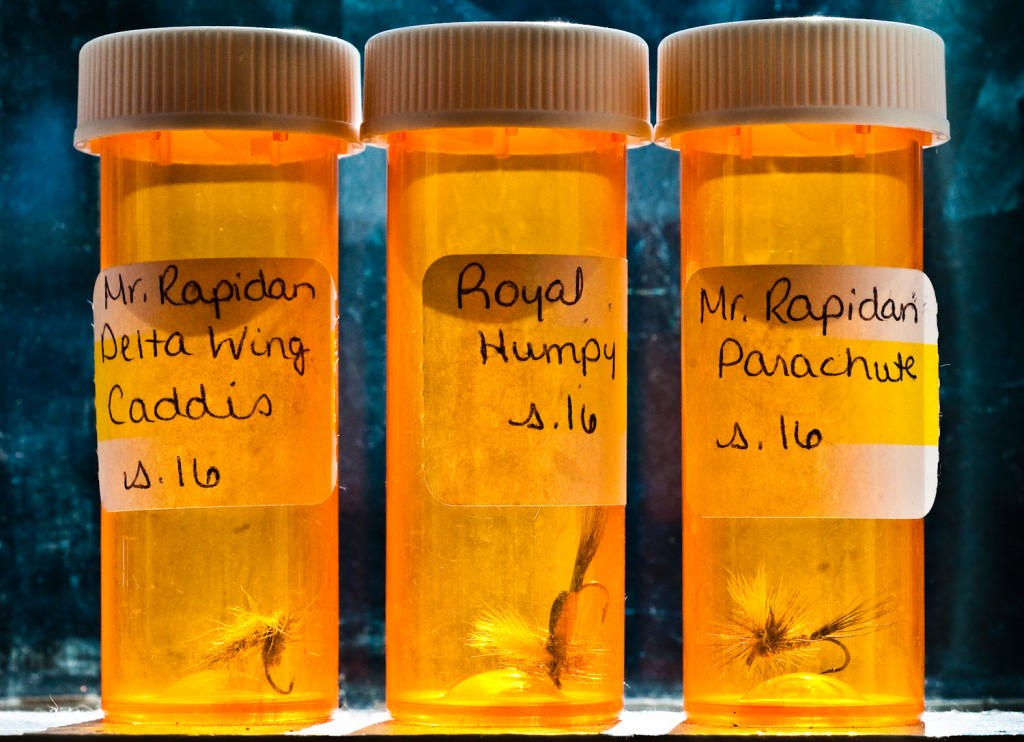
That’s what Harry Murray’s Facebook status read on New Year’s day. I was thrilled, and confused. You see, I had heard through the fly fishing grapevine the Harry had passed away. For those of you who do not know, Harry is the Dean of Virginia fly fishing. Although I don’t know Harry personally we have a lot of connections. His fly shop in Edinburg, VA opened in 1962, the year I was born. My grandfather knew Harry and frequented his shop back when it was a pharmacy. (Harry is a pharmacist who ended up in the fly fishing business.) I still have some of Harry’s flies in the old pill bottles he used to pack them in. It was Harry who introduced my good friend Gary Lacey to bamboo rod making. Gary is now one of the best rod makers in the world and taught me to make rods fifteen years or so ago. When I heard that he had passed I couldn’t believe it. I just wasn’t ready for a world without Harry Murray.
It made me think of the morning last year when I answered my phone at eight a.m. To hear my good friend Andrew Bennett, breathless on the other end. He wasn’t really talking and it was clear something was wrong. It spooked me because Andrew is as tough a guy as you are likely to meet. Not easily shaken up. “Are you alright?”
Read More »Hook Sets Are Free
By Justin Pickett
A FLUFFY, WHITE INDICATOR IS DRIFTING MERRILY ALONG THE CURRENT WHEN SUDDENLY IT IS YANKED FROM SITE, ONLY TO EMERGE A SECOND LATER TO CONTINUE ITS VOYAGE DOWNSTREAM BEFORE BEING LIFTED FROM THE WATER’S SURFACE.
Surprised, I look back at my buddy. “What was that?”
To which he replies, “What?”
“Why didn’t you set the hook?”
He came back at me with what many anglers often do in this situation, “I thought it was bottom.”
He THOUGHT he had just been momentarily stuck on the bottom of the streambed, so he didn’t feel the need in ruining his drift by setting the hook, when, in reality, he likely just missed out on hooking up with a trout.
Thinking and knowing are two very different things. Unless you can physically see your fly/flies drifting through the column, you certainly can’t assume that your fly is snagged on the bottom each time your indicator bobs under the water. So what should you do?
Set the hook!
Read More »Tie the Chard Choker Permit Fly
Permit fishing is as exacting as it gets.
When asked to list the top ten reasons permit will refuse a fly, Bruce Chard listed, among other things: a butterfly in Indonesia flapped its wings and because that’s what they do.
Getting a shot a a tailing permit is a test of an anglers resolve. Everything must be done perfectly. Even if everything is done perfectly there’s no guarantee of an eat. The first thing the angler must do is choose the right fly.
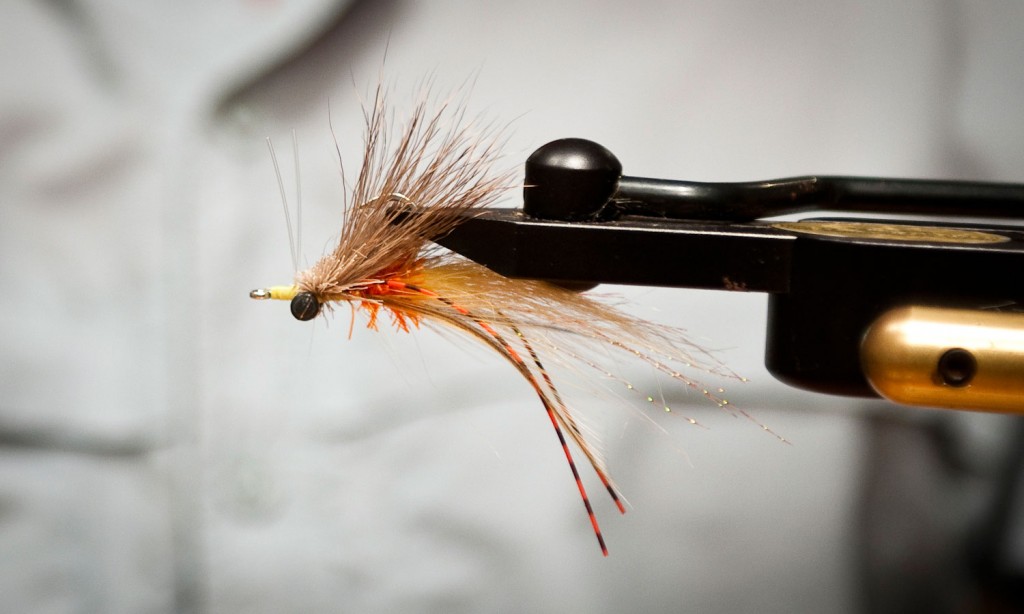
For tailing permit in shallow water the Chard Choker is a good choice. Check out the video to learn to tie this killer permit fly.
Read More »4 Ways To Catch More Tailwater Trout
By Kyle Wilkinson
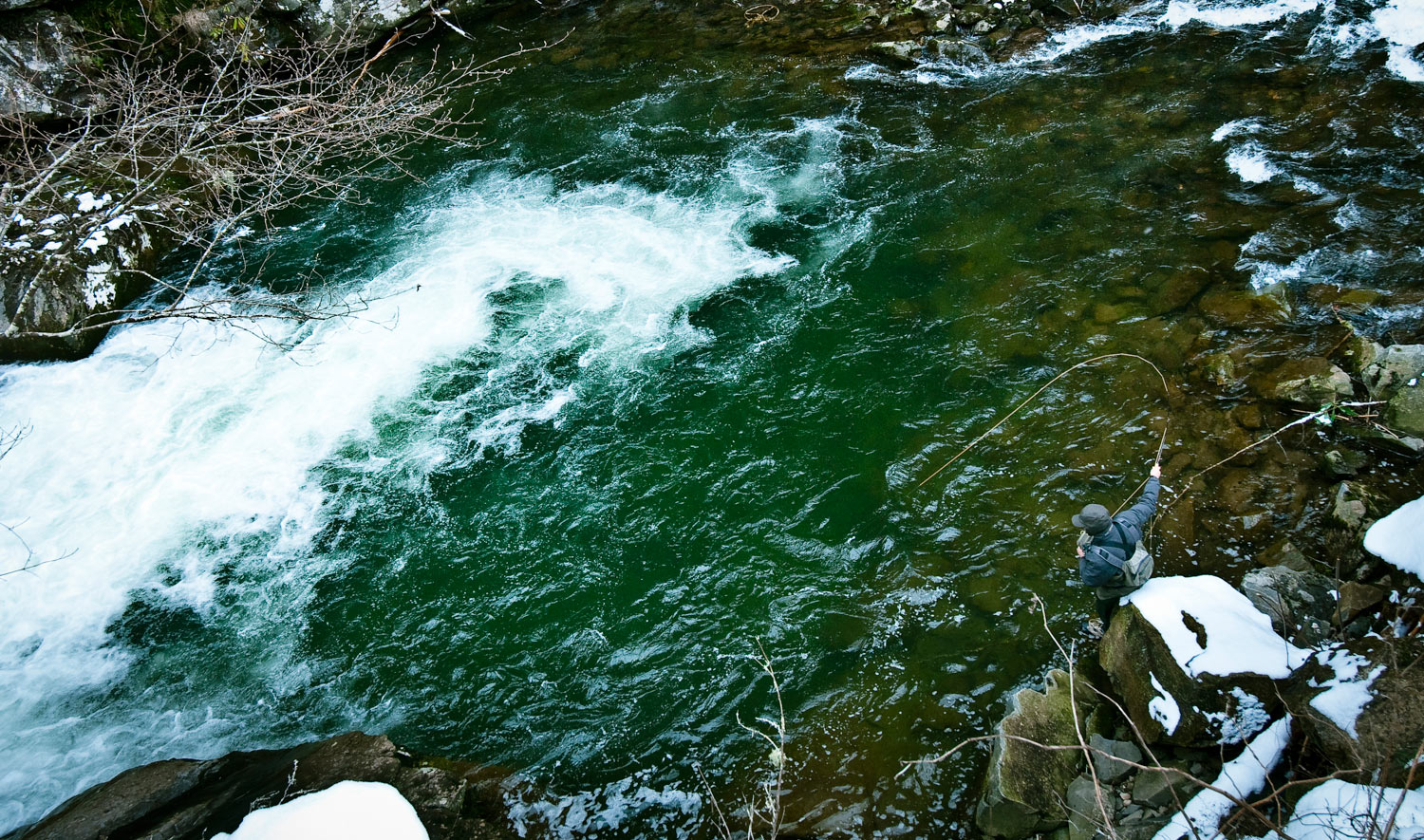
If the arrival of winter does not signal an end to your fishing, chances are good you’re going to be spending some time on a tailwater in the months to come.
While the issue of dams and rivers is clearly a topic for another day, the fact remains that dams have created some pretty incredible wintertime trout playgrounds for those willing to endure frozen fingers and guides. Aside from the fact that tailwater fisheries are known to grow incredibly large, in most places they are also known to grow incredibly intelligent trout. The reasons for this are two-fold. 1) The fish have a TON of natural food for them due to the consistent water temps and flows created by said dam. 2) Tailwaters typically receive quite a bit of angling pressure and as such, most of the trout swimming here are going to have a PhD in spotting a poor drift. Does this mean then that catching a tailwater trout or two should be a bonus, while heading home with a skunk on your back should be the norm? Absolutely not! Remember, big trout have to eat all the time to maintain their size and as such, are going to remain very catchable as long as we put the odds in our favor.
HERE ARE FOUR TIPS THAT I RELIGIOUSLY LIVE BY WHEN FISHING FOR TAILWATER TROUT. IF YOU DON’T ALREADY, PUT THESE TO USE NEXT TIME YOU HIT THE WATER AND I THINK YOU’LL BE PLEASANTLY DELIGHTED WITH THE RESULTS.
1. Tighten Up Flies. This is a big one for me and is something I promise will help put fish in the net. Do this: hold your hand out in front of you and make a fist. Now extend your thumb and pinky out in opposite directions. That distance between your two digits is the spacing to use for your flies. Depending on the size of your hands, you’re probably looking at 8-10” and this is perfect! I’m well aware this will seem very strange if you’re used to fishing your flies 18” apart (like I see people doing all the time out on the water) but I encourage you to give it a try. Remember, a tailwater trout -–particularly in the winter–is rarely going to chase down a meal. Giving that fish as many options as possible directly in front of their face is going to increase your chances of catching it dramatically!
Use Split Shot AND Putty. This is another non-negotiable for me on the technical tailwaters of Colorado. When rigging up in the morning, I’ll place one split shot 8-10” above my first fly– usually somewhere between a size 2-4. After this, I will use tungsten putty to make all my additional weight adjustments throughout the day. Using this type of putty couldn’t be easier and allows me to dial in my weight to a much greater degree than I could by pinching multiple split shots on and off my tippet throughout the day. When I come to a location that requires more weight, I’ll simply pinch off a bit of putty, flatten it between my thumb an index finger, and then roll directly on top of my split shot. Make a nice round ball and you’ll be good to go. If I realize the putty I added
Read More »Catch-and-Release Practices for Small Fish
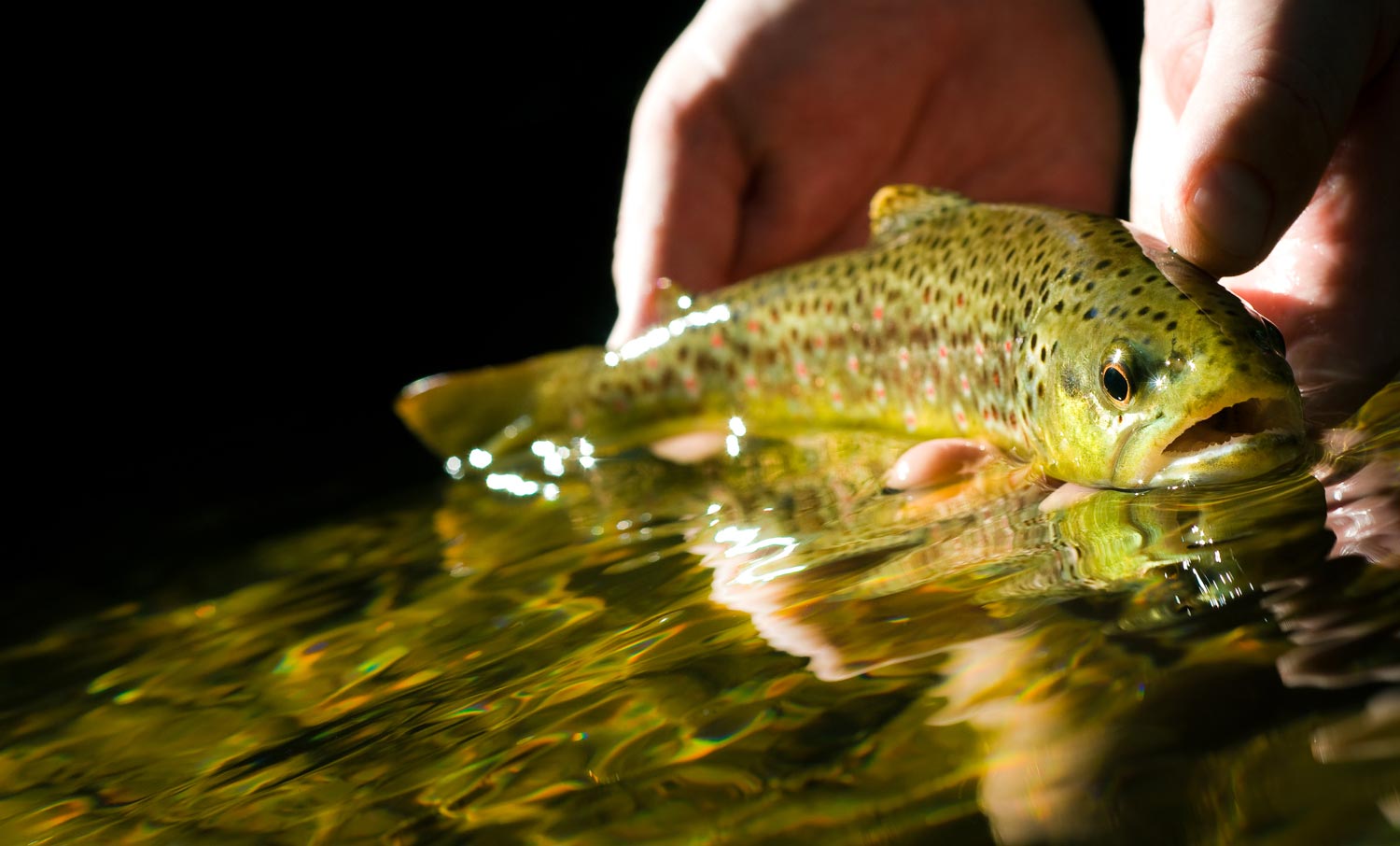
Handle the little guys with care if you want to catch them when they are big.
Catch-and-release practices among fly anglers are probably the best they have ever been. In part due to social media and the popularity of ideas like, “Keep ‘Em Wet.” More times than not, when you see a photo of someone holding a trophy size fish they have it cradled gently in the water. That’s great, but what about the little guys?
All of those trophy fish were small once and in order to get big they had to run a gauntlet of anglers and predators. Although there has certainly been improvement in the way the average angler handles fish, when I see one taking a beating, it’s usually a little guy. The thing is, these are the fish which are most vulnerable.
There are several common ways these small fish are mishandled.
The most common is time out of the water. While most anglers will net a big fish and let it rest in the net while they remove the hook, a net isn’t usually required for a small fish. Often they are simply snatched up to chest level by the leader. They are usually still pretty green so they squirm and make removing the hook a challenge and often spend way too much time out of the water.
There are a couple of other things that can go wrong when
Read More »Reece’s North Park Nasty
By Bob Reece
Terrestrial season is a high point in my angling year.
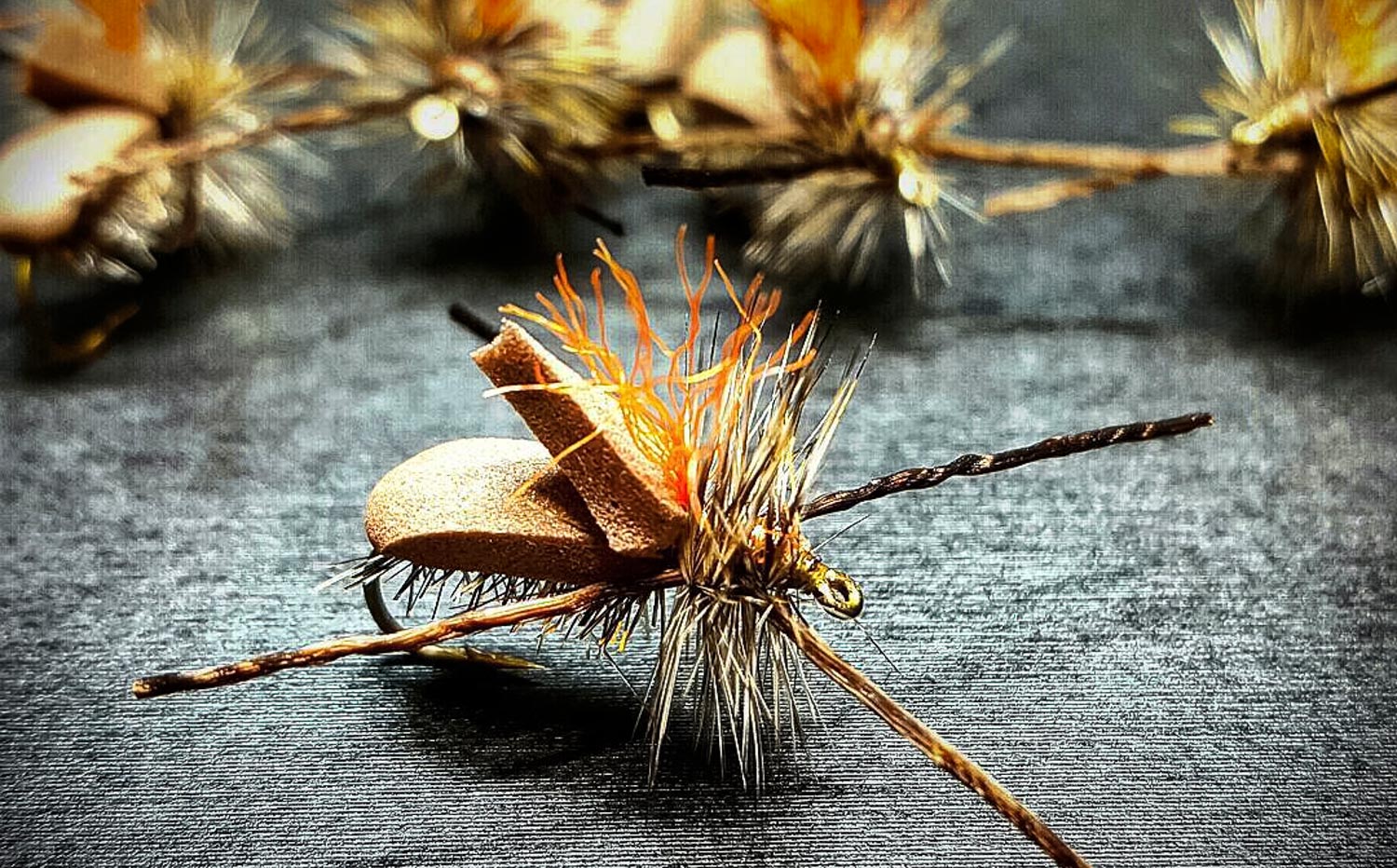
Some of the fisheries that I frequent require highly accurate imitations to achieve ultimate success. Others do not. For those bodies of water I created my North Park Nasty.
The marriage of buggy and buoyant always brings a smile to my face. This pattern has both. The simple use of a grizzly hackle and Sexi Floss legs create the underwater profile of this pattern. 2mm tying foam forms the top surface, greatly bolstering the ability of this bug to float.
With the chaos that forms the schedules of most tiers everyday lives, free time is a valuable commodity. The North Park Nasty compliments this fact by requiring a very minimal amount of time to create. In addition to this, the techniques used in its creation lend themselves to tiers of all skill levels.
When fishing this bugified creation, I keep it tight to the bank or available structure. While I sometimes run a small dropper off it, I prefer to fish it solo. Despite its larger profile
Read More »How to Fly Fish Straight Sections of Trout Water
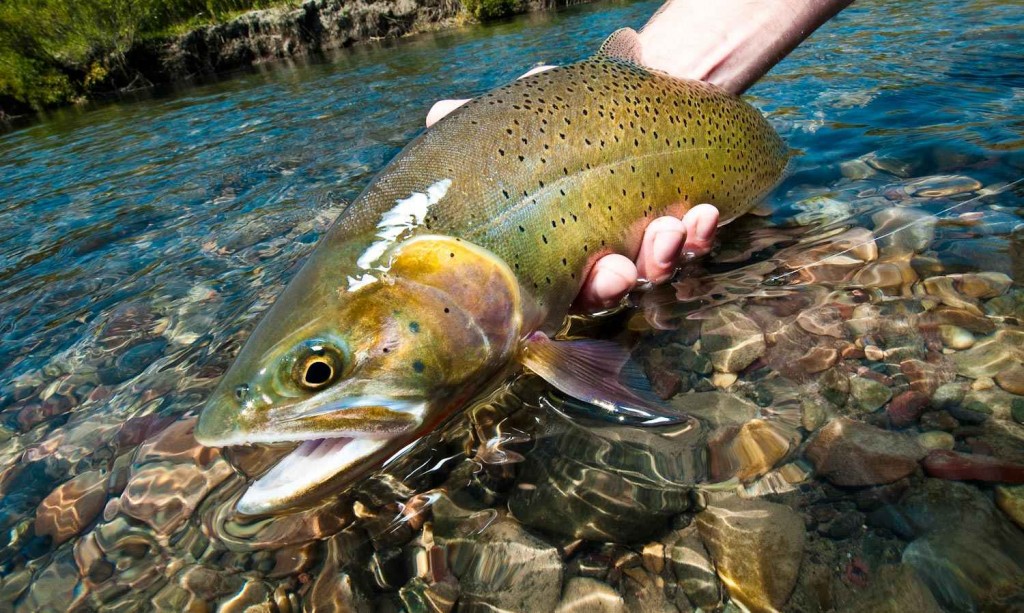
It’s your lucky day. You’ve somehow managed to get away from your busy work schedule and find time to spend a few days fly fishing for beautiful cutthroat trout out west.
You’ve brought several trout to hand fishing a series of S-bends, and you feel like a hero. Life is good, right? Unfortunately, the hot fishing is about to slow significantly as you round the bend in the river and notice the river flows straight as an arrow for the next several hundred yards. There’s very little mid-stream obstructions and no well defined current seams. Furthermore, the water depth is consistent bank to bank. You fish for a while, working your way upstream blind casting, but you’re not having any luck. You find yourself getting frustrated because you can’t figure out where the trout should be holding, and there’s no rising fish. What should you do?
When I find myself in this situation, I focus on presenting my flies against the banks. When there’s no obvious current seams or in-stream structure providing depth change or current buffers, cutthroat trout will generally prefer holding close to the banks. The water current running along the banks causes friction, and this friction slows down the current speed making it a much more efficient place hold and feed. Because all trout prefer to
Read More »Trophy Flies
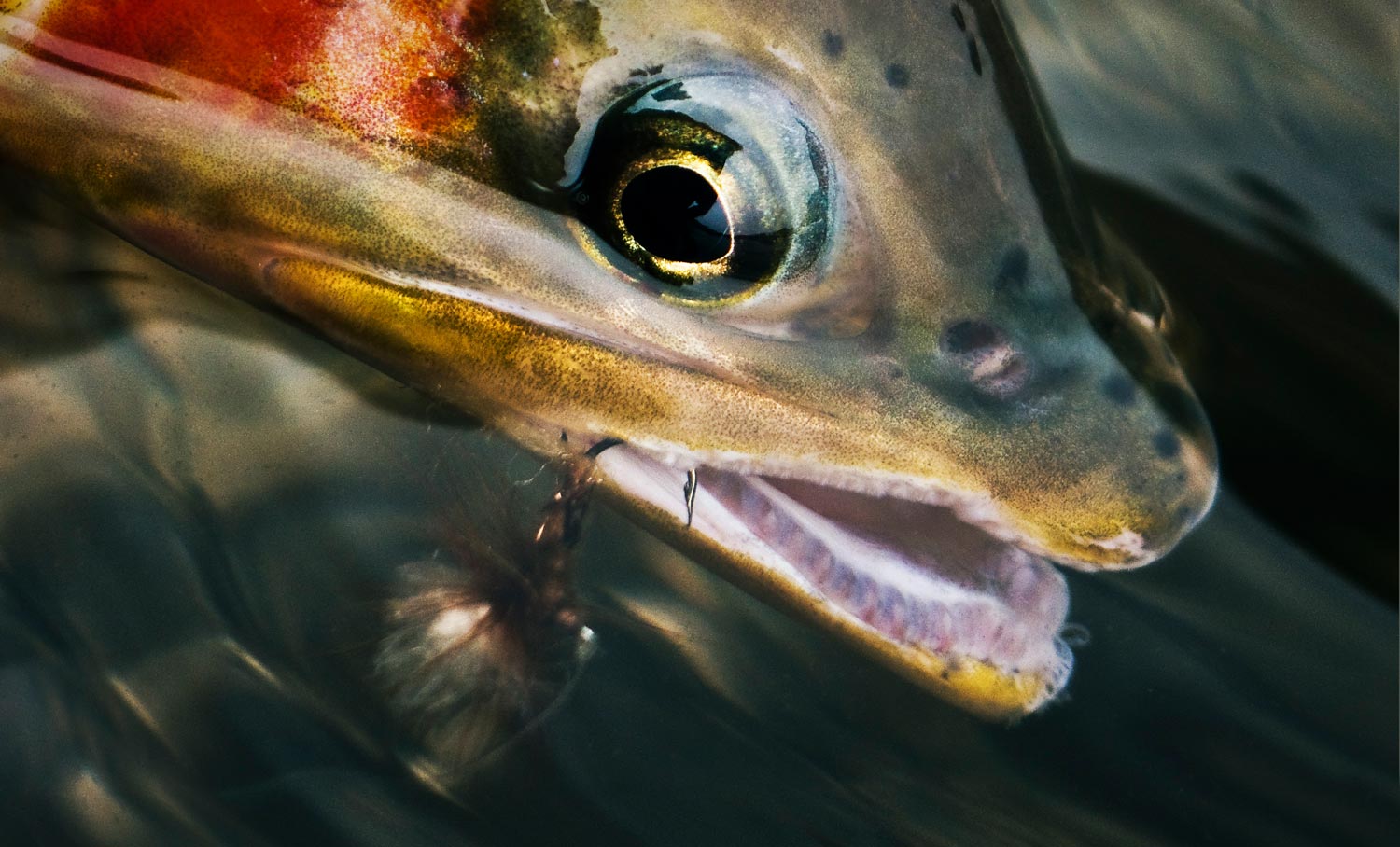
By Justin Pickett
AS FISHERMEN, AND FISHERWOMEN, WE ALL KNOW THE URGE TO GET THAT ALL-TOO-COVETED PHOTO OF OUR LATEST AND GREATEST CATCH. THE “GRIP N’ GRIN.” THE “KLEWEIN.” THE “LIP GRIP.” THE “LAP DANCE.”
Call it what you want, it’s not always possible. Whether it was because the fish wasn’t cooperative, you had too much Gink all over your hands, you left your camera at home, or you just wanted to release the fish as quickly as possible and skipped the photo-op altogether.
Sure, you’ll have the memory of that catch, or that epic day on the water, but sometimes the imagery gets lost. What I’ve been doing recently has been a great, and fun, way to remember my most memorable, and greatest, days on the water.
I don’t have a photo of every great fish, or a video documentary of every awesome day on the water. Documenting can take a lot of effort, time, and money. Things most of us would rather invest in the fishing. Instead, I’ve been saving the flies from those great catches, or those awesome days on the water. It’s just another way to glorify a great memory, and enjoy that feeling again.
Over the past few years I’ve collected flies from the most notable events in my fly fishing career. Their hook-points are buried in the shade of a lamp, made for me by my mother, which sits on my fly tying desk. It’s made from an old Knob Creek bourbon bottle. I’m a big fan. It honors milestones such as my first trout over twenty inches, the first trout I caught on a fly that I tied, and my first trophy brown trout.
image1Not only do I keep flies
Read More »The Cajun Spey Waltz
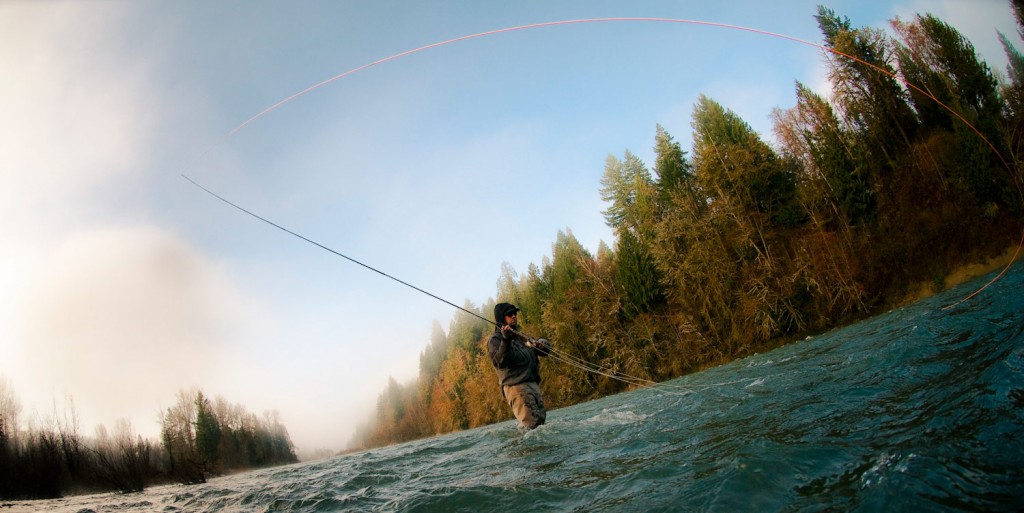
Snow is blowing in around the corners of my glasses and forty degree water is slowly making its way into my waders.
I haven’t seen the sun for several days and the river is full of chrome bright steelhead. It doesn’t feel much like Louisiana. Never the less the tune that keeps dancing in my head and eventually to my lips is an old Cajun waltz, “The Big Mamu”.
I have a deep and conflicted love for Louisiana. I almost moved there once. Like I said, I’m conflicted, but of the many things I love about the place, maybe I love the music best. The Blues, the Hot Jazz, the Zydeco and the beautiful and haunting traditional Cajun music. The sound of the accordion, the fiddle and the washboard pull at my heart strings. I don’t know why but I loved it the first time I heard it. But what does it have to do with steelheading? Apparently, everything.
I love Spey casting but I don’t get to do as much of it as I’d like and consequently it takes me a while to get into the rhythm. There are three basic parts to a Spey cast. The anchor placement, the sweep and the cast. Inevitably, when my casting goes to hell it’s the timing of my sweep that’s the problem. I’ve spent so much time developing speed and strength for my saltwater casting that it takes a while for me to remember that Spey casting is the exact opposite. Slow and easy.
I’m not a Spey Guru so I’ll keep it simple. The sweep is the part of the cast where you form a D loop and load the rod. Both very important. There is a direct relationship between the height of the rod tip and the speed of the sweep. As the rod tip is lowered the sweep must be faster to aerialize the head. A higher rod tip and slower sweep is easier to control, so that’s what I shoot for but I inevitably start to rush it and my casting gets sloppy. A friend told me to try and count to three during my sweep. I tried but I still rushed it and that got me thinking about how to count to three at a consistent speed. I struggled with it and then it dawned on me, the Cajun waltz.
The physicality of the music is perfect. It’s dance music, your body instinctively responds. The gentle, one-two-three, of the
Read More »