
Jesus Built My CCFX2
WELL, JESUS AND KRISTEN…AND THE REST OF THE CREW AT NAUTILUS.
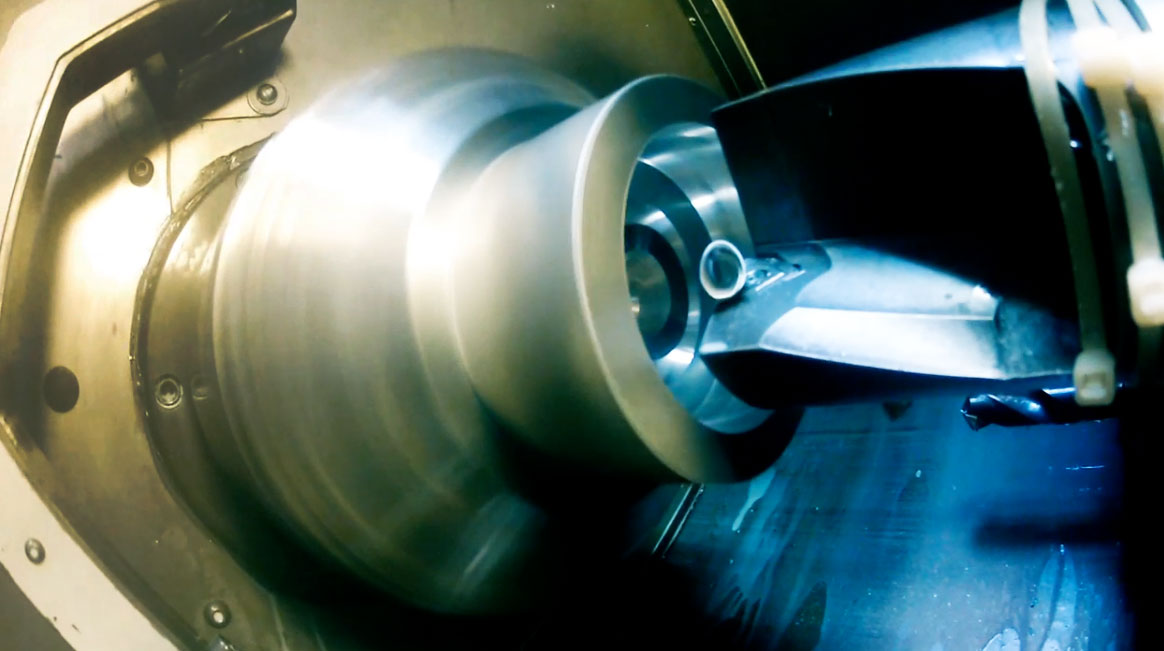
Last month I while I was down in Miami I stopped in to see my friends Kristen Mustad and Jesus Marmol. My timing couldn’t have been better. In addition to doing a little fishing, I got to see the very first CCFX2 reel to come off the floor. To say it was impressive would be an understatement.
It was cool to get a first hand look at what goes into the making of a quality fly reel. The attention to detail was mind blowing at every level. The guys and gals a Nautilus have their heads in the game. But you don’t have to take it from me, because I shot video of the whole thing. Watch and see for yourself.
Watch, “Jesus Built My CCFX2”
Read More »6 Reasons To Love And Fear The Barracuda
By Louis Cahill
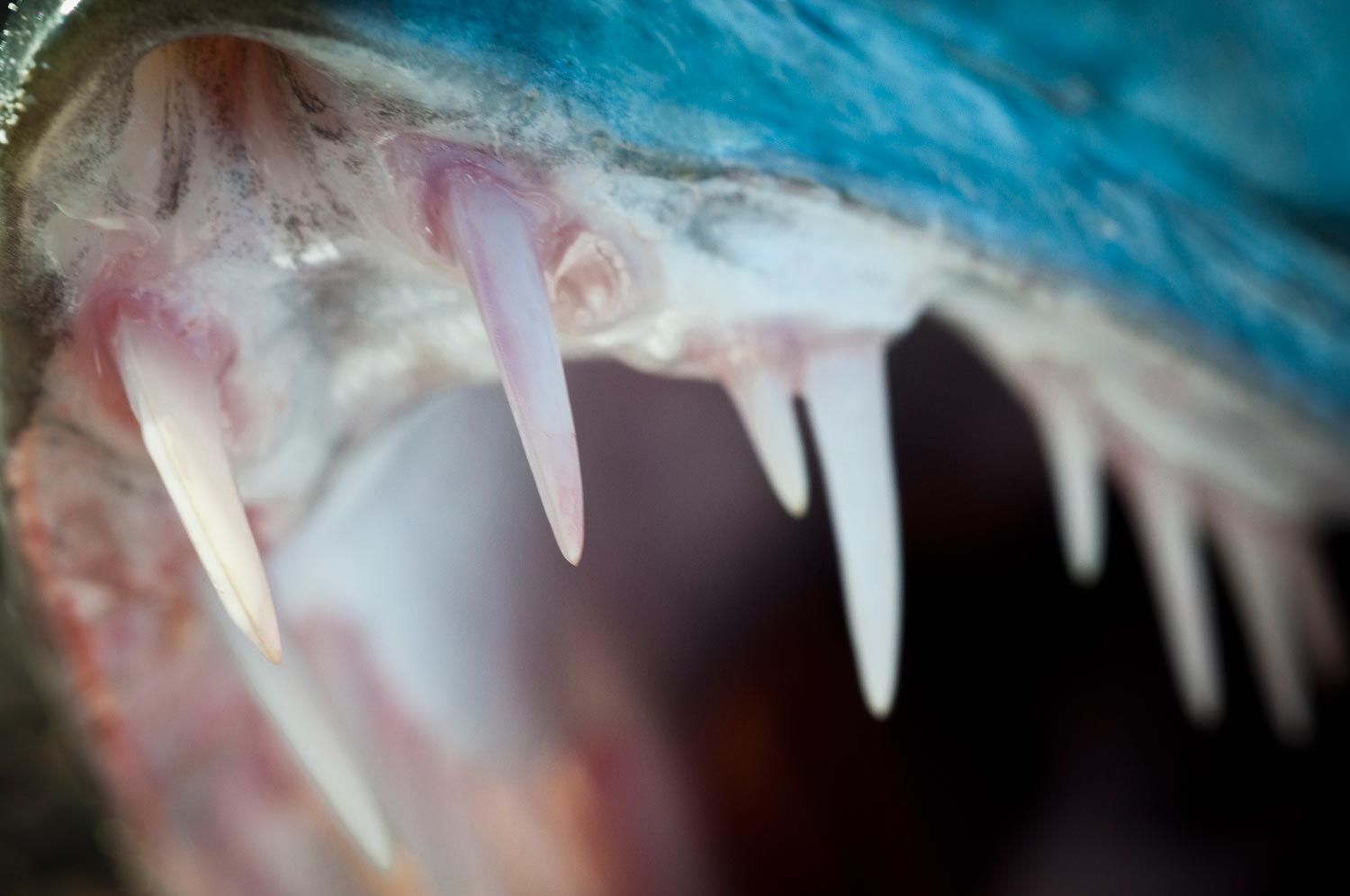
Every angler who catches a barracuda can’t wait to catch another, but if you aren’t a little afraid of these fish, you’re about to get bit.
I was fishing in the Bahamas with G&G videographer Charlie Murphy and I caught a nice ‘cuda about four feet long. Murphy is a dyed-in-the-wool musky fisherman and no stranger to toothy fish. When I got the fish to the boat he reached down with a handheld GoPro to get a closeup. Our guide caught him by the elbow.
“Don’t get your hand close to that thing,” he told Murphy.
“I’m not afraid of that fish,” Murphy answered.
“You should be,” I added. It wasn’t long before he realized that we were not dealing with a musky.
Barracuda are an awesome sport fish. Although they can be tough to catch on a fly, they are not a fish you pursue for the challenge of feeding. You cast to barracuda purely for the adrenaline rush. The barracuda in the Bahamas are the most fly friendly anywhere and I always carry a rod rigged with wire leader and a big fly so I can take a shot when a big boy shows up. I’m not a purist who thinks I’m above catching one of the most exciting fish on the flats.
I’ve written about ‘cuda fishing before, but that day on the boat with Murphy made me think. If I’m going to extol the virtues of the Barracuda as a sport fish, I should write a word of caution. As an advisory, I know of no more serious fish to land and handle. They can be more dangerous than sharks and if you’re going to put a hook in one, you’d better be prepared for what comes next.
I recommend ‘cuda fishing as a team sport. Having a friend—or better yet a guide—to help you land a big one is a real plus. Handling gloves are a great idea as well. You do not want this fish slipping out of your grasp. I very rarely cast to large cuda when wading. When they find they can’t run, they will often attack. If you do tie into a big one while on foot, it’s best to head for high ground.
Here are 6 reasons to love and fear the barracuda.
Unchecked aggression
Read More »The Bahamas is a State of Mind
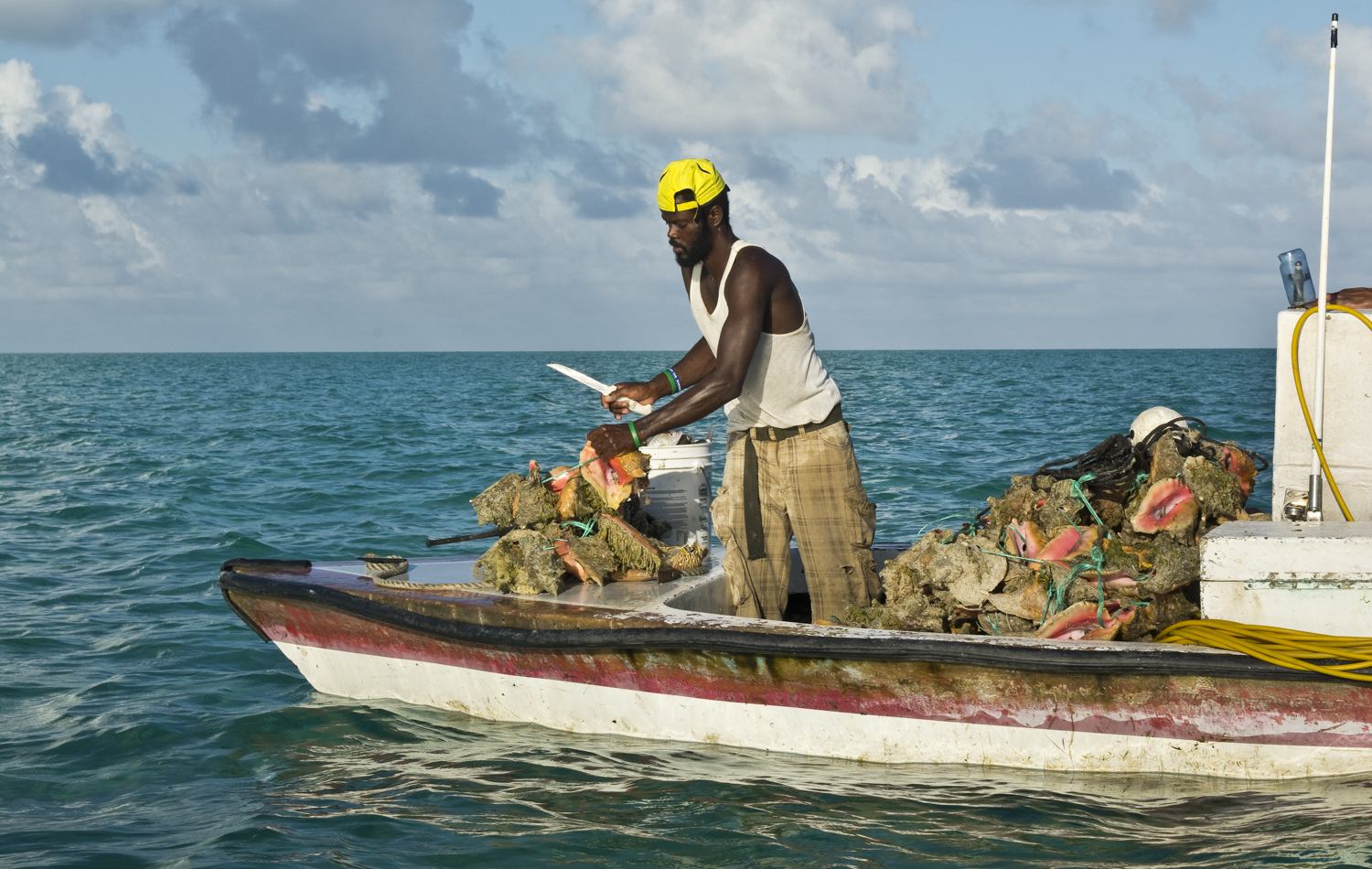
There’s nowhere I love to fly fish more than the Bahamas, but it isn’t all about the fishing.
I guess I’ve always been a cultural voyeur. Whenever I travel I can’t be satisfied just being on vacation. I have to try and immerse myself in the place. To try to imagine myself living there. Being part of the panorama. I’ve nearly taken it too far a couple of times and I’ve had friends and travel companions who have. In the 1980s I ended up leaving a friend in Thailand and the ramifications of that affect me today.
Truthfully, I’m my most relaxed when I’m far from home. At home the clock and the calendar hunt me like dogs. I’m a fitful sleeper, when I’m able to sleep at all. My head swirls with an endless to-do list. My inner soundtrack is like a Miles Davis LP on 45. But when I’m out there, way out there, like British Columbia or Patagonia, I sleep like a baby.
Even though it’s just an hour and a half by plane, I get the same relaxation. Just being on foreign soil I guess. It’s instant, no unwinding time necessary. A deep breath of salty air followed by a long drink of rum and I’m a local, in my head at least. Of course it’s hard to be uptight in the Bahamas, but once in a while I do see people pull it off.
This photo captures a moment. One of the moments that hangs with me as strong as any fish I’ve landed. It’s the end of the day and we’re riding back to the dock when our guide, Jose Sands
Read More »The Teardrop Cast
By Louis Cahill
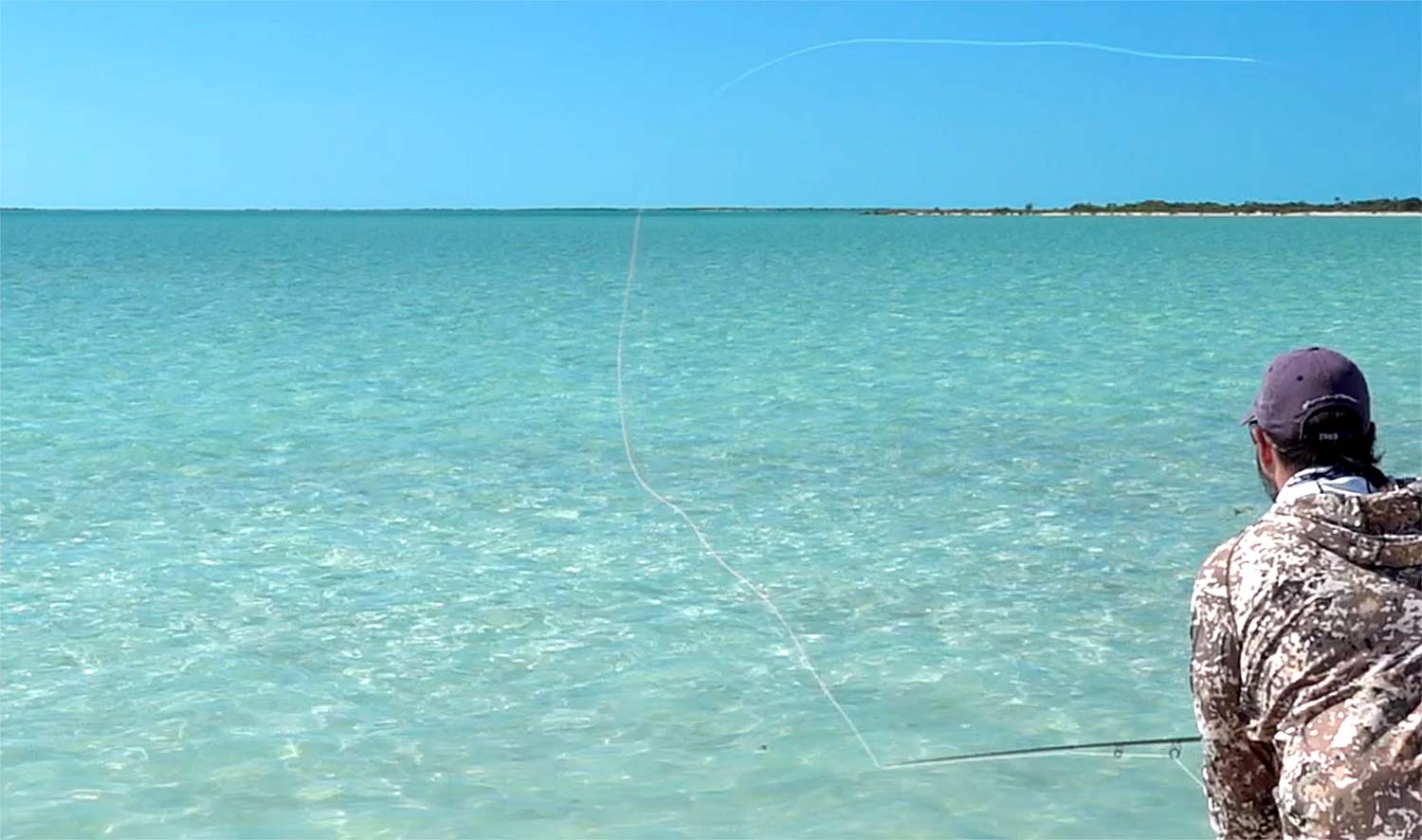
The Teardrop cast is a soft presentation fly cast that’s handy for targeting spooky fish.
I learned this cast from a guide in the Bahamas. It was a day I’ll never forget. It was a dark, cloudy day but there was no wind. We spent all morning stalking tailing bonefish in shallow water. The fish were feeding eagerly, but they were really spooky. I was getting a lot of shots but not feeding a lot of fish. When my guide, Ellie Rahming, showed me this cast, I went from zero to hero.
The name Teardrop cast is not commonly known. I’ve asked around but haven’t found anyone who knows another name for the cast. It’s not a secret among saltwater anglers but I don’t hear it talked about much. It sure does make a difference when you’re casting to spooky fish.
WATCH THIS VIDEO AND LEARN THE TEARDROP CAST.
Read More »Tenkara and the Sasaki Kebari
By Mark Roberts
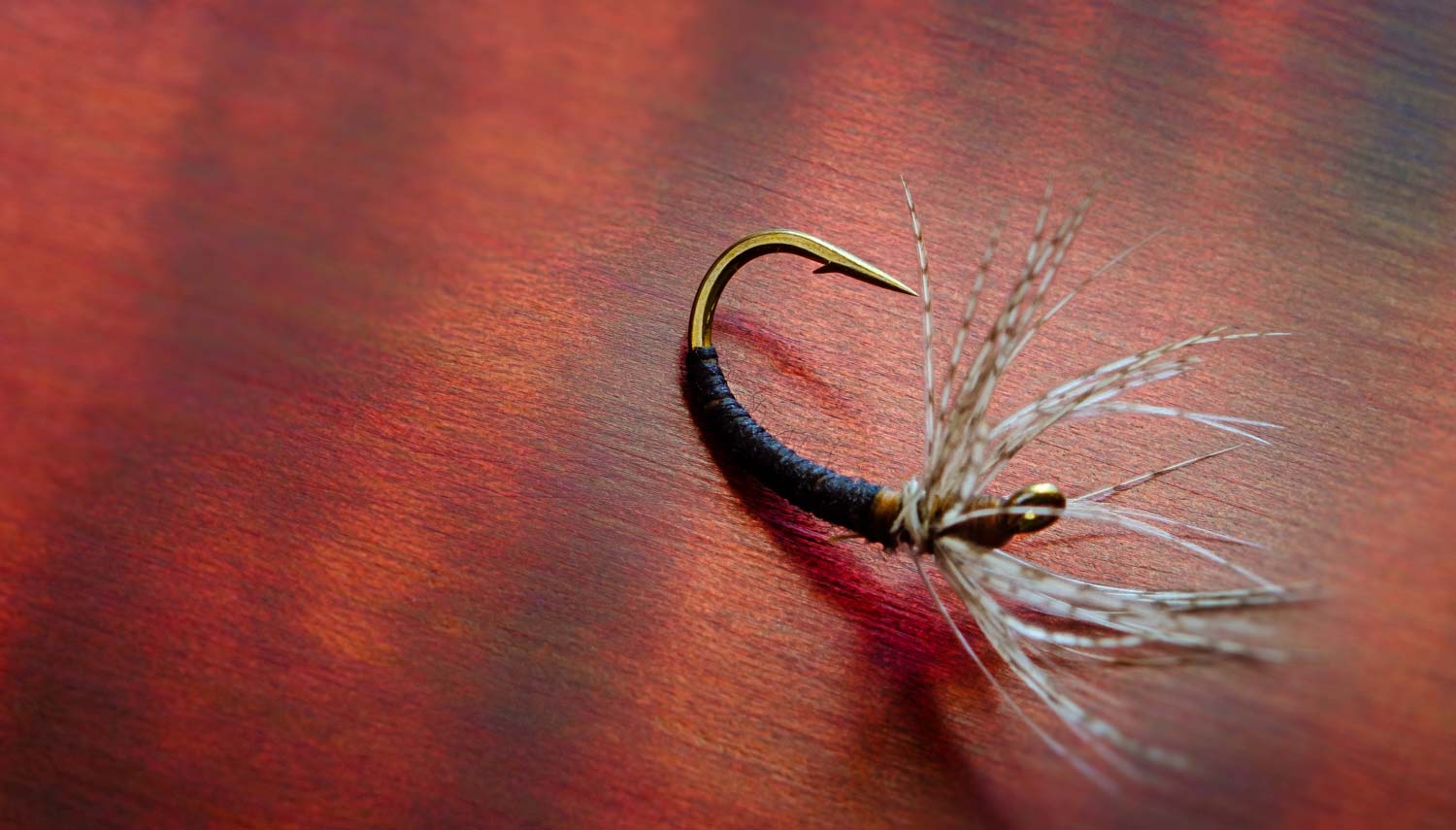
I’d like to share just a little my insight about the Sasaki Kebari as I have learned to use it in Tenkara.
I have been a Single Hand Spey, and Switch fly fisherman for many years and added Tenkara about five years ago for what it has to teach me to become a better fisherman. Simplicity. Learning to do more with what I have, to fish different conditions. The very first time I used my new Tenkara rod and Sasaki Kebari was on a lake. A buddy of mine and I fished the entire shoreline of that lake with our single hand rods and traditional flies and got nothing. I took out my brand new Tenkara and put on my first Sasaki Kebari I tied and caught my first trout in one minute. Caught five more in the next hour.
The Sasaki Kebari can be used as a surface dry fly, as a subsurface wet fly, or as a nymph. The mechanics are that as either a surface or subsurface fly, it is important to have a rod with a sensitive and quite flexible tip. My rod is a larger 13 1/2’ stiffer Tenkara USA Amago, and I use it a lot fishing on the Deschutes River here in Oregon for Redsides. Even with its size and stiff backbone, the Amago has a very sensitive tip.
Typically, just tapping your index finger on the rods handle will immediately transfers that vibration into the fly, as long as you have a line without slack in it. For a surface fly, it looks like a bug fighting for its life, and sending shock waves out into the water quite a distance, which does attract fish.
For a surface fly, the Sasaki Kebari has three benefits, as I see it. Viewed from beneath, it looks like a generic bug with its wings out fluttering fighting for its life. With most Western traditional dry flies, the fisheye view produces just a silhouette of what appears to be a dead bug.
While fishing the Sasaki Kebari subsurface, it helps to act like a mini sea anchor in the current to create a line without slack, making it easier to feel in your hand and see in the rod tip if a fish is mouthing, or taking, the fly. The same index finger tapping will make the Sasaki Kebari look alive and pulsating in clear water. In colored water it can be sending out shock waves to attract fish from a distance. In a drift in colored water, it can feel much more like live food to a mouthing fish.
There are numerous different Tenkara style flies that were used in Japan in different regions of the country. Sasaki Kebari style is
Read More »Leader Materials Revisited
By Louis Cahill
So which is actually stiffer, monofilament or fluorocarbon?
A while back I wrote an article on understanding leaders. While talking about the different materials used in fly leaders I mentioned that mono is stiffer than fluorocarbon and I got called out in the comments by a couple of readers. Rightfully so. One of my pet peeves is when people talk about fly fishing from a narrow perspective, forgetting that there are many different kinds of fly fishing, and damned if I didn’t do it myself.
So what’s the answer? Which is stiffer, mono or fluorocarbon?
The answer is, it depends.
When I wrote that mono is stiffer, I was thinking about casting and I was thinking as a saltwater angler. I totally ignored how most anglers use the material. One of the fundamental differences between the two materials is that mono
Read More »Small Stream Structure- Holes, Bends, Runs Etc.
By Jason Tucker
In the public mind there is probably no feature that comes more readily to mind than the Ole Fishin’ Hole.
A lot of non-fishers think that is what fishing is about- going to a big, well-known hole, soaking bait, waiting for the fish to bite. I certainly spent a lot of my childhood believing this was the way to fish.
Especially once you get into fly fishing, you realize those big holes don’t hold all the fish, and probably are some of the least interesting places for the fly angler. After all, fish on the bottom of that big hole aren’t likely to rise eight feet through the water to hit your fly. Learning to identify fish holding water and cover on a small stream is just as important as your casting and fly selection. It is especially important because you need to identify these spots from a distance, pick out the likely fish holding lies, so that you can stealthily approach the spot and present your fly. I can’t tell you the number of times I have (and still do) failed to properly identify fish holding structure and blundered into a spot that was a great opportunity just waiting for my fly.
Holes. After demeaning them at the outset, it is time to redeem them. Holes hold fish, lots of fish, but it’s not enough to approach one and start flogging.
The problem with holes is that a true hole will be too deep to fish a dry fly unless you see fish lingering near the surface feeding. This does happen, and if you run into that situation, by all means move into position and start casting. More often you will find yourself happening on a hole with no perceptible action and will need a game plan. There are four areas to concentrate on when you get to a hole: the tailout, the margins, the head, and the hole itself.
If you’re fishing from downstream, the tailout is what you want to concentrate on first. I spent many a summer day observing big holes in rivers as a child. There was a bridge on a hole that we always fished. The bridge was in the middle of nowhere, not even on a road. I believe that landowner had the bridge repaired at some point, as it was in good shape. It was originally a stagecoach bridge in Michigan’s logging days. It served an old hotel that used to be there. Nostalgia aside, I learned a lot sitting on that bridge soaking worms.
When we would walk out on the bridge it was common to watch thirty or more fish scoot for cover in the deepest part of the hole. The thing to do then was to sit still and wait for the fish to relax and return to their feeding lies. After ten minutes small fish would start to move back out into feeding positions. After twenty minutes they would start to feed again. After thirty minutes even the larger fish would become visible if they were going to feed. A lot of the prime lies were near the bank on the deep side, and also at the head of the hole, but a lot of fish would drift back to the tailout and wait to feed. So when you are approaching a hole this is where you want your first cast to go. You’ll want your fly to land where the color changes from dark to lighter. The fish here may be sensitive to being cast over, so you don’t want to cast too far into the center of the hole and line the fish. Make a few casts to the tailout and work the whole area from shallow to deep before moving onto your next target.
The next target is the margins of the hole. Typically at least one side of the hole has a gradual slope to the bank. Fish that want to feed will
Read More »We be Grubbin’
By Chris Dore
Things are hotting up in Southern NZ and to many Southern locals, this means Willow Grubbing time!
Willow grubs are the larvae of the Saw Fly (Pontania Proxima) , and pupate within those angry red blisters found on the leaves of willow trees. As they emerge from these leafy cocoons, many fall into the rivers and streams these trees line. To the trout, this is a terrestrial smorgasboard and they feed in frenzy like fashion on, in and below the surface. To the angler, this can mean a frustrating time as casts after cast goes unrewarded, and fly after fly is lost forever to low hanging branches. However this doesn’t have to be so.
The key to successful grubbing is to imitate the minute movement of the natural, but how can you imitate the tiny pulses of an often size 20 or smaller morsel in the film without overdoing it?
By letting the fish see the drop of your fly. It’s often that simple.
Now another problem is in seeing such a tiny, sparse imitation at 20 to 30 feet. My solution is to simply attach your grub pattern on a short dropper behind a hi-viz parachute, blowfly or beetle pattern. If the cast goes astray, the fish may even hone in on your indicator fly. Its a win-win really. You can also use a tiny yarn indicator, or a smear of strike putty on your tippet knot.
The final dilemma is how to get those flies beneath or behind low hanging willow branches. Places that grubbing fish like to feed. The answer to this is
Read More »Keep On Stripping!
By Justin Pickett
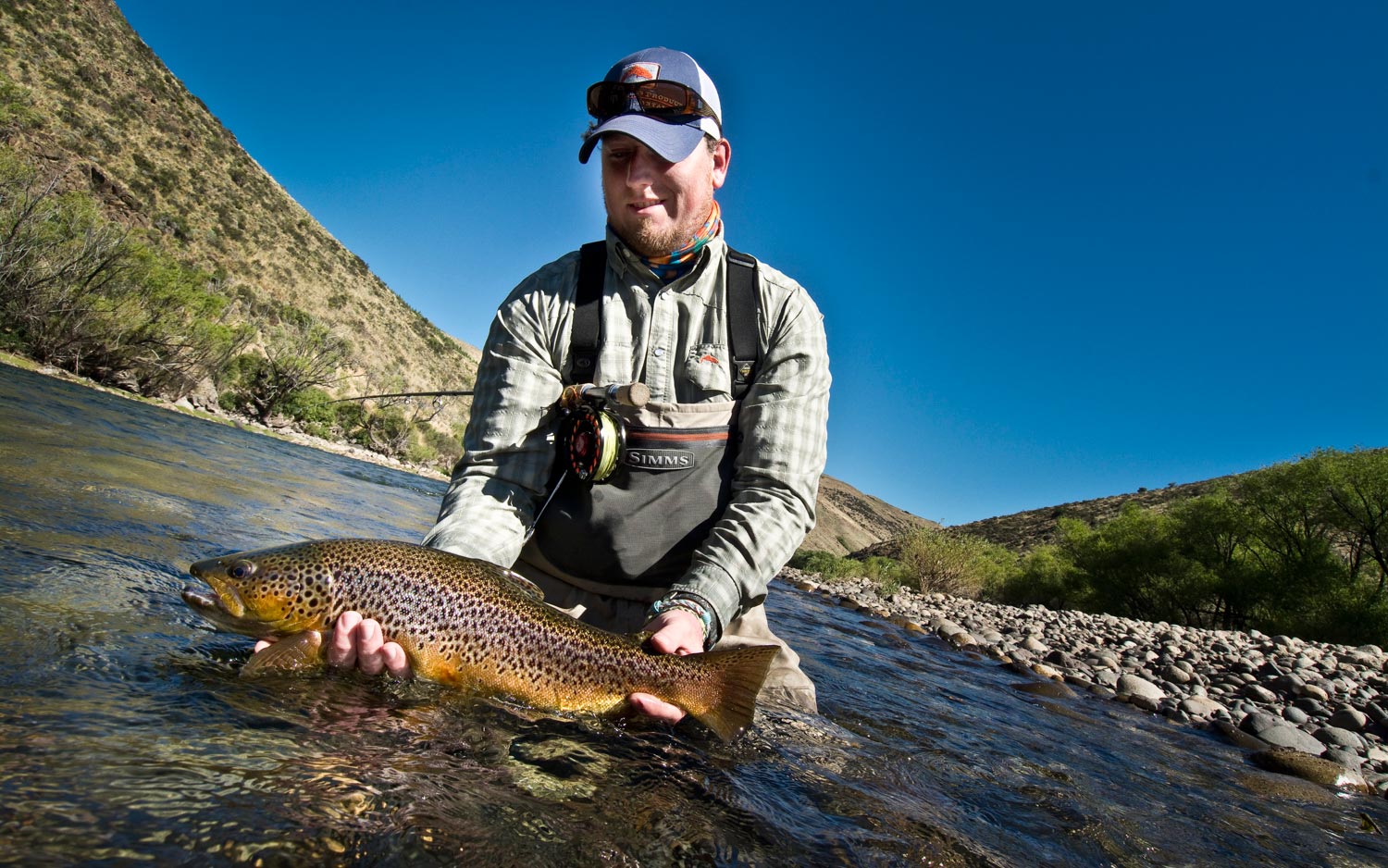
One of the things that I’ve learned over the years, and something that I stress to my clients, is to always, Always, ALWAYS finish your retrieve when stripping streamers.
I can’t begin to count the amount of times I’ve had a trout slam a streamer at the last second, right before the fly was pulled from the water. On the flip-side, I’ve also lost count of the times that I’ve had the water erupt at the fins of a trout trying to smash the streamer that I was pulling off the water. You just never know when you’ve caught some beasty’s curiosity… just not enough of it to entice an immediate eat.
Take musky for instance; these snaggletoothed dinosaurs are known for following flies all the way to the fly shop stickers, only to turn their discerning nose and head back to their underwater dwelling. To help those noncommittal musky, anglers developed the figure-eight technique in order to increase their odds of hooking up. They do it religiously, and out of habit, cast after cast. The reason they do this is simply because they never know when that musky they’ve been after the past 9,999 casts is following closely behind, just waiting for the fly to pause, wiggle, or jackknife just right. Now, I’m not saying that you need to start figure-eighting your trout streamers, but I’ll often strip my streamer until my leader is just shy of the tip of the rod and then pull the rod either in front of, or behind, the boat in a jerking motion. This gives you a little more water to work with, and might entice a strike from a trout that you may not have known was following your fly. Take advantage of all that water and work as much of it as possible!
If you’re fishing from a drift boat, make sure to keep that thing swimming well inside the oars.
Don’t stop, and keep your eyes peeled! I’ll never forget the day Louis and I went fishing with our buddy Jason Tucker. Jason, who writes the blog Fontinalis Rising, was twerking a black sex dungeon on
Read More »The Saltwater 6 Weight, Why I Love It!
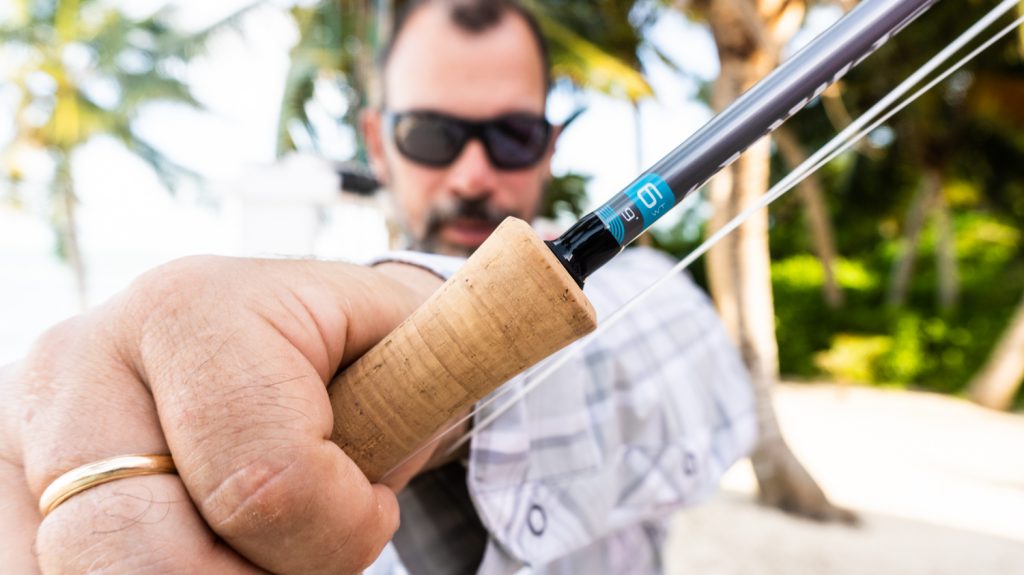
For years now, the saltwater 6 weight has been my secret weapon. The 6 weight sits right on the edge of what’s considered suitable for saltwater. Not every rod manufacturer makes one, and not every saltwater line is available in 6 weight but for those of us who love them, they are irreplaceable. When I fish my 6 weight for bonefish, I feel like I catch more fish and bigger fish. I also feel like the fish I cast too eat the fly more aggressively. It’s not often you come across a piece of gear capable of changing a fish’s attitude but that’s exactly what the 6 weight does. I’ve also found that the common perception that you can’t land big fish, or cast a 6 in the wind, is just not true. Granted, there is some technique involved in both but I fish my 6 wt on the flats in wind up to twenty MPH regularly and have landed plenty of bonefish in the ten pound range with it. I’ve landed redfish even larger and one juvenile tarpon. The extra effort you may put into landing a fish is well worth the results. Skeptical? Watch the video and I’ll explain why the saltwater 6 weight is my favorite fly rod.
Read More »