
One Fly, One Cast, One Tarpon
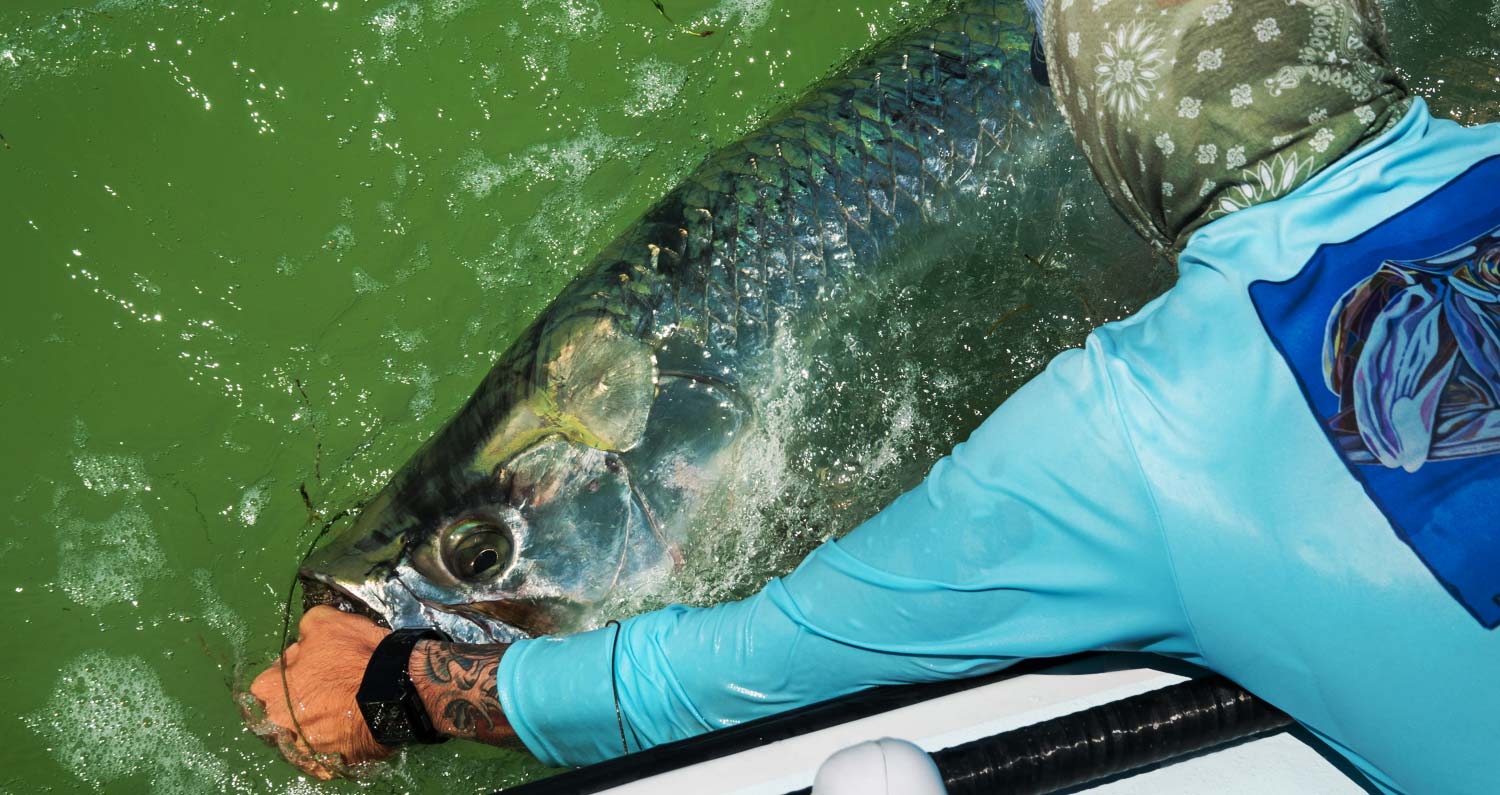
The bow of the skiff rises and falls under my feet as my eyes scan the vast expanse of blue and green.
We call this riding the bull. Balancing on a casting platform as the boat bobs and shifts in the surf. Out on the ocean side, that’s where you find migrating tarpon. These big fish push past in schools, often single file. It’s challenging fishing and today has been no exception. We’ve seen plenty of fish and plenty of refusals and disappearing acts but no open mouths or flared gill plates.
It’s late on the second day of fishing. We haven’t seen a fish in a while and haven’t fed one all day. My buddy Johnny Spillane and I each put a couple of nice fish in the air the day before, in spite of poor light. We had great expectations when we saw the beautiful blue sky this morning. Neither of us, or our guide Capt. Jessie Register, have an explanation for the attitude the fish are giving us, except that they are tarpon and that’s what they do.
A little red catamaran is cooking up the beach straight for us. It’s up on one hull and the guy is leaning out over the side. As he gets close, we are all wondering if we should be panicking. It really does look like he’s going to T-bone the skiff. It occurs to me that we are all watching the sailboat bearing down on us and that’s exactly the time a nice fish would swim by. I make a quick scan and, sure enough, there she is at two o’clock, and she’s big.
Read More »Hyperfocal Focus
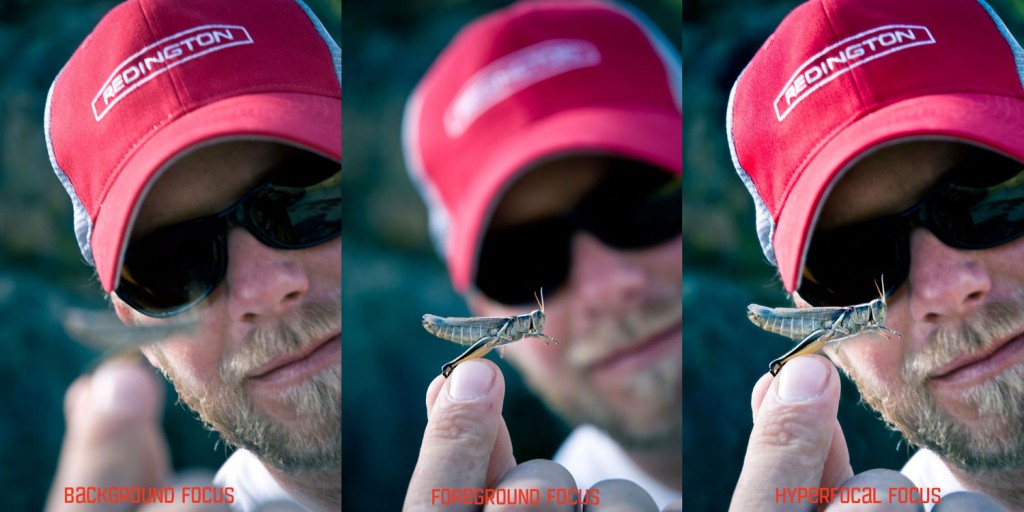
Sometimes to get it all in focus, it has to all be out of focus.
Shooting photos you often find yourself wanting an object in the foreground and an object in the background both in focus. This can be a frustrating situation. Inevitably, focusing on either the foreground or the background leaves the other out of focus. There is a way to make it happen but it requires putting on your thinking cap.
It’s called hyperfocal focus and yes there’s going to be math, sort of. You may have noticed that on the barrel of your DSLR lens there is a scale that shows how far from the camera your point of focus falls. That tool is handier than you might think. Here’s how you use it to get the shot.
First focus on the foreground object that you want sharp. At this point it doesn’t matter whether you use auto of manual focus. Take a look at the scale. Let’s say your foreground focus is at three feet. Now focus on the background object that you want sharp. Let’s say it’s at nine feet. We now know we need to carry six feet of focus.
That six feet of sharpness is called depth of field or DOF. Literally the depth of our field of focus. We control the DOF with our aperture. Smaller apertures like F16 or F22 carry a wider DOF. Larger apertures like F2.8 or F4 have narrow DOF. If you’re confused don’t panic. Stay with me. The higher the F# the smaller the aperture. It’s a mathematic formula and I could explain it but it’s not important for this exercise and it’s frankly too much information.
So what we need is an F# that will carry six feet of DOF. Now it’s time to set your camera to manual focus! if you spent a whole lot of money on your lens it may have a scale that shows you the DOF for each F#. If so, that’s great. Choose an F# and set your focus so that three feet and nine feet fall between the brackets. If you don’t have the scale, don’t panic, just set your lens for the highest F#. If you want to get really technical, consult this nifty DOF calculator.
OK, I promised math so here it is. The thing about DOF is it’s a geometric progression. That means that as you increase your DOF by stopping down your aperture, you get twice
Read More »Fish Floating Nymphs for Selective Trout
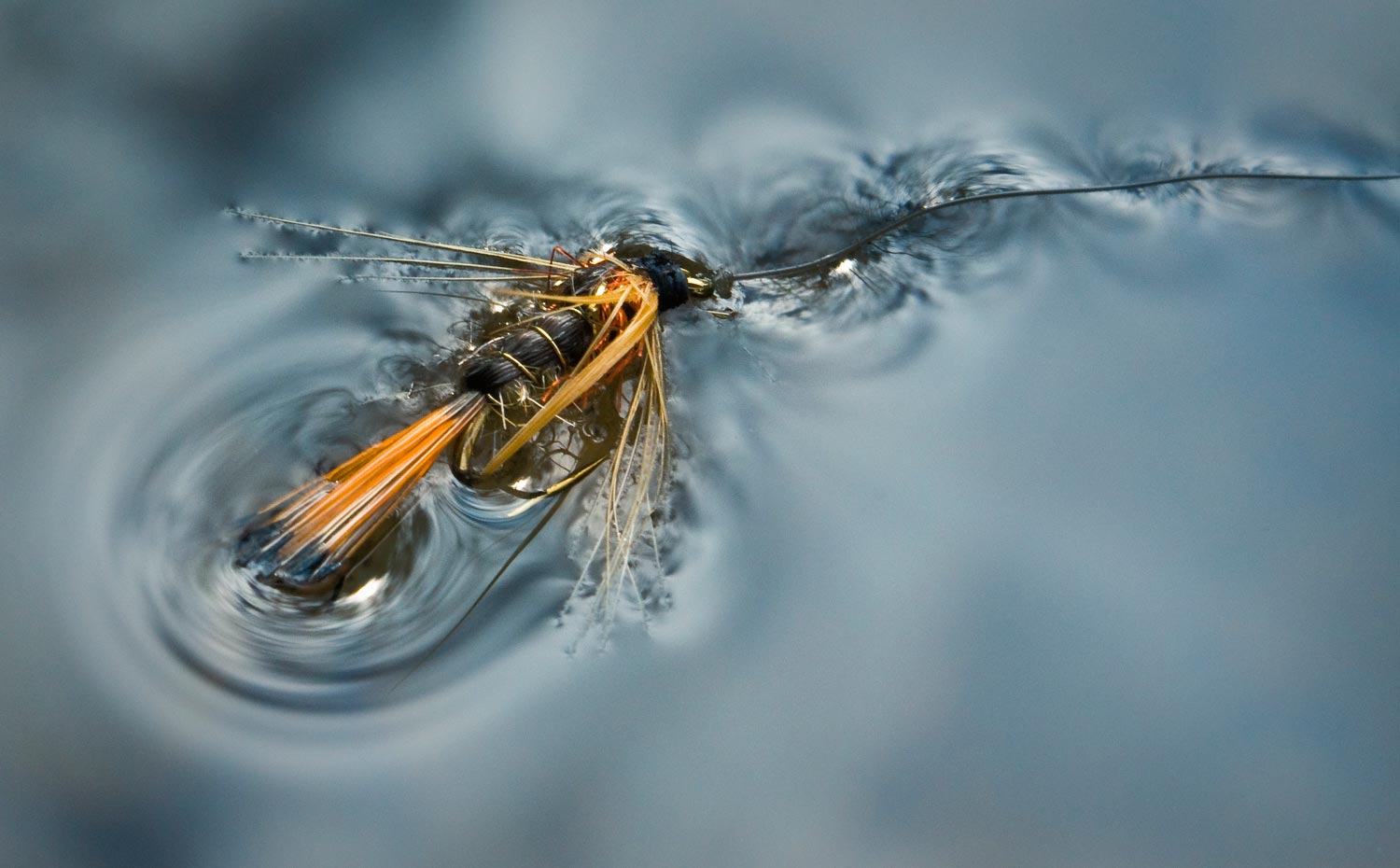
TELL ME IF THIS SOUNDS FAMILIAR.
You’re kneeling at the edge of a slow glassy pool watching several big trout inspect what floats above them. You change flies, again, and make yet another perfect presentation, only to watch the fish move three feet out of the way as your fly passes by.
It’s a common scene on heavily pressured, catch-and-release trout streams. Big educated fish who have seen a lot of flies don’t come to hand easily. Kent and I were in exactly this scenario just the other day and were able to turn it around using a simple but often overlooked technique. A floating nymph.
Fish see dry flies in a very different way than we see them. Before the fish inspects your thread color or how many turns of hackle you’ve used it sees the impression of the fly on the water. These slight dimples in the surface film are incredibly powerful triggers for feeding fish. The curved surface of the water, which supports the fly, focuses the light creating a bright spot that get the fish’s attention like a flashing light. This is why fish commonly eat Thingamabobbers.
Fish who live under constant pressure from anglers become very savvy at reading these impressions on the surface film. They eat only those items that make subtle, life-like impressions. The kind of impressions made by emerging insects struggling in the film. Nothing I know of is a better imitation than a floating nymph.
Start with the right nymph. It must be unweighted. A nymph tied with
Read More »Bruce Chard’s Key Lime Pie Tarpon Fly
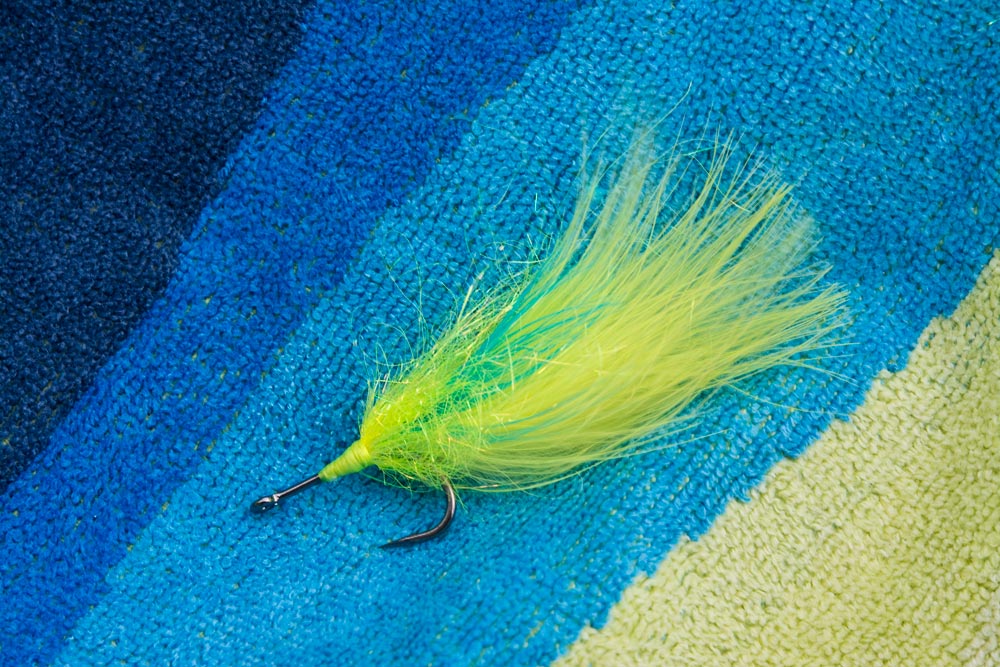
SPOOKY TARPON? NO PROBLEM.
Feeding tarpon a fly on bluebird days when the sun is high and the water is clear can be quite a challenge. It’s always a little mind blowing to see a six foot long monster run from a three inch fly bit it happens more times than not when conditions are tough.
When it comes to fooling tarpon, I don’t know anyone with a better track record than Bruce Chard. Today Bruce is going to share with us a simple fly that turns those tough days into hero shots. He calls it the Key Lime Pie, because it’s just that hard to resist.
Watch the video and learn to tie Chard’s Key Lime Pie.
Read More »The Magic Stonefly
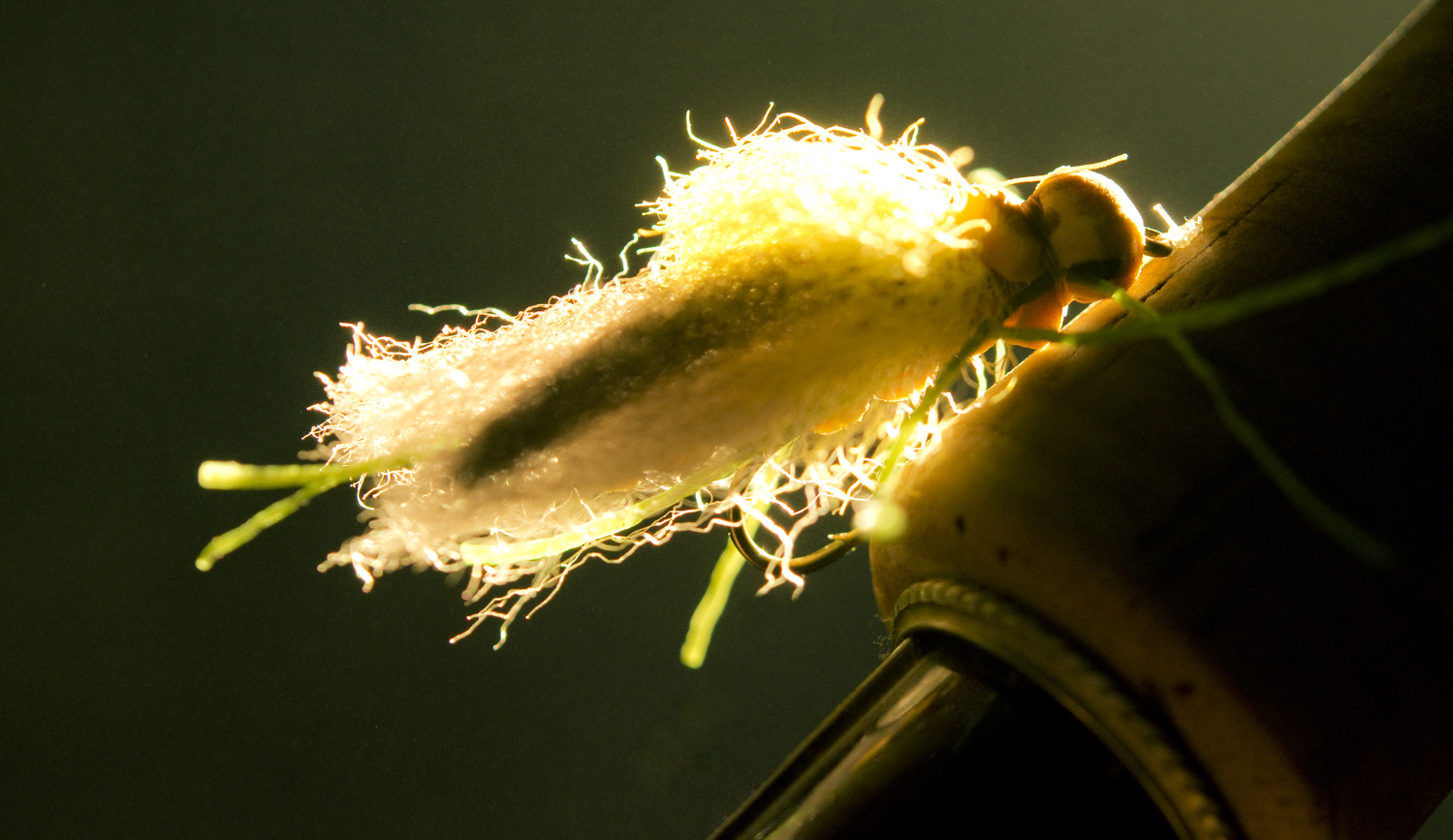
ON OF THE BEST LESSONS I HAVE LEARNED FROM FISHING WITH KENT IS THIS. IF THERE IS A SECRET TO ANGLING SUCCESS, IT’S CONFIDENCE.
A few years back I was on a photo shoot in Wyoming when the client wanted to stage a shot of an angler looking through a fly box. The box we had on hand was my own, but my fly selection was greatly depleted, as it almost always is by mid summer when I’m too busy shooting to tie. My good friend Rob Parkins was helping me out on the shoot and offered to fill out my box with some of his flies. After the shoot when I offered the box back so he could reclaim his flies, he told me to keep them.
I was stoked! Rob is one of the best fly tiers I know and I was stoked to have half a box of his flies. I was planning a couple of days of fishing at the end of the job and I knew these flies would insure that it was productive. I was right.
Among the flies were some very cool stonefly patterns. Several I had not seen before. One in particular caught my eye. A golden stone dry fly with sexy legs and a cool wing made up of layers of flash and different colored yarn. I held it up to the light and the wing had a lifelike glow that I knew would drive fish crazy. I remember thinking how clever Rob had been to think of it.
I wrecked fish with that fly while I was in Wyoming. When I got home I couldn’t wait to give it a try. I wasn’t surprised to find that it was just as effective in the east as it was in the west. It was just one of those fishy flies that works anywhere. When I got to the river I would tie it on and I knew it would produce.
I fished that fly with confidence because I trusted the guy who tied it. I knew that any fly Rob had tied was going to be a guaranteed producer and all I had to do was put in on the seam and hang on. I caught a lot of fish on that fly everywhere I fished it. Eventually I stashed it away. I was afraid I’d lose it and not be able to tie another.
I called Rob up and told him about the success I was having with the fly and asked him if he would share the recipe with me so I could tie up some more. He was happy to help but when I described the fly he wasn’t sure which fly I was talking about.
“Take a picture with your phone and send it to me,” he told me. So I did. This is the response I got.
Read More »Shooting Line In The Backcast Is A Skill Every Fly Angler Needs
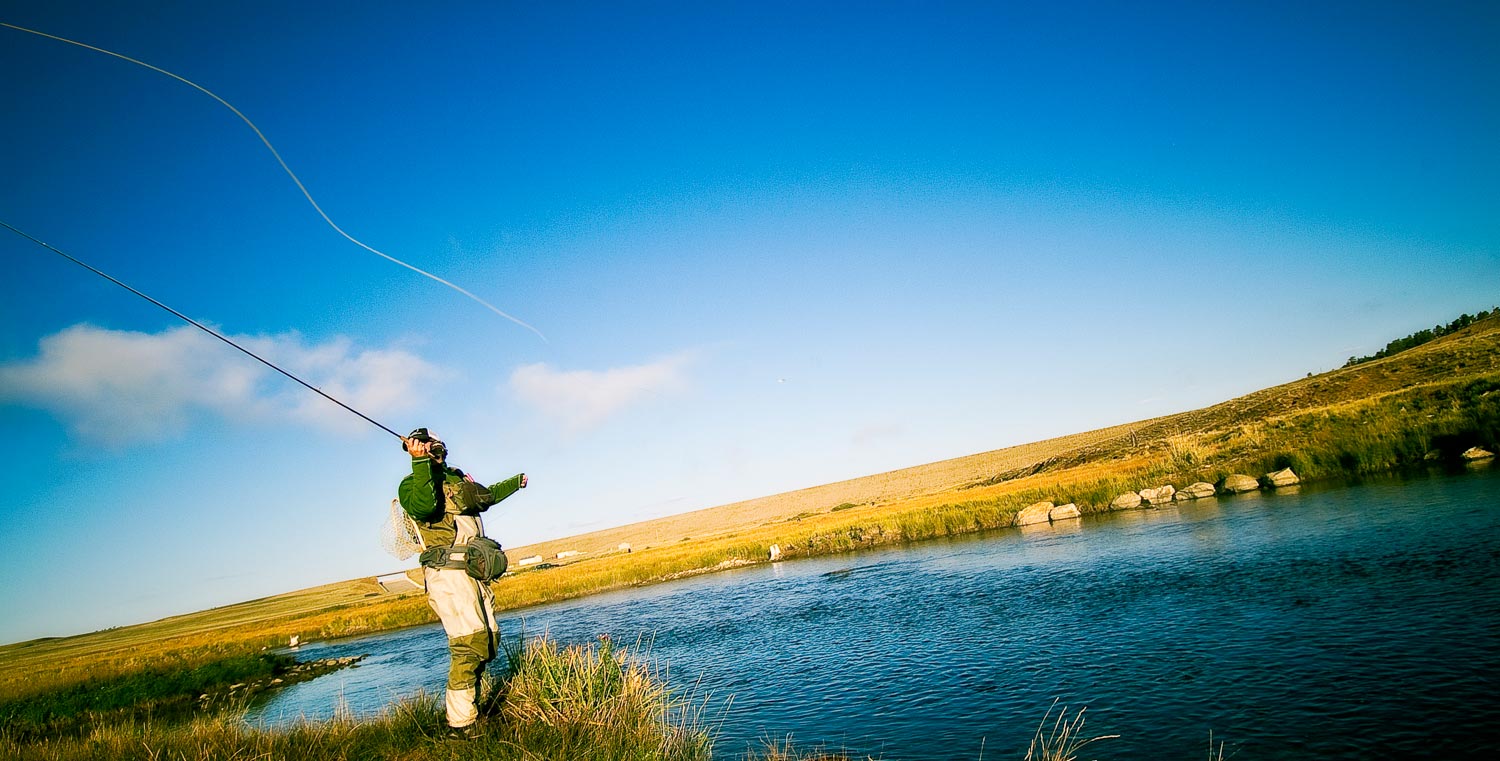
THERE ARE A LOT OF MOVING PARTS IN A FLY CAST.
There’s a lot of talk about the double haul and the tight loop, and there should be, they are hugely important skills that every angler should practice. It always surprises me, however, how many experienced anglers can’t, or don’t, shoot line in their backcast. I’m also surprised I don’t hear more about it.
I consider this simple technique essential for every type of fly fishing. The efficiency of working out line on both ends of the cast translates to more fish in hand in almost every situation. I don’t remember when I started casting this way. It’s a habit I’ve had for as long as I remember. I do remember when I became aware of its importance.
I was working with my friend Bruce Chard who was teaching casting to some anglers new to saltwater fishing. I picked up a rod and made a cast. Bruce stopped the group and pointed out that I was shooting twenty feet or so of line on every backcast. I wasn’t even aware of it but his point was spot on.
“He’s going to reach the fish in half the false casts,” he told the group. It’s nice to be told that you’re doing something right but for me it was just instinctive. The fly cast is symmetrical. It makes no sense to shoot line on your forward cast and not on your backcast.
Here are a few of the reasons you should practice this technique if you’re not doing it already.
Read More »Are You Actually Presenting The Fly?
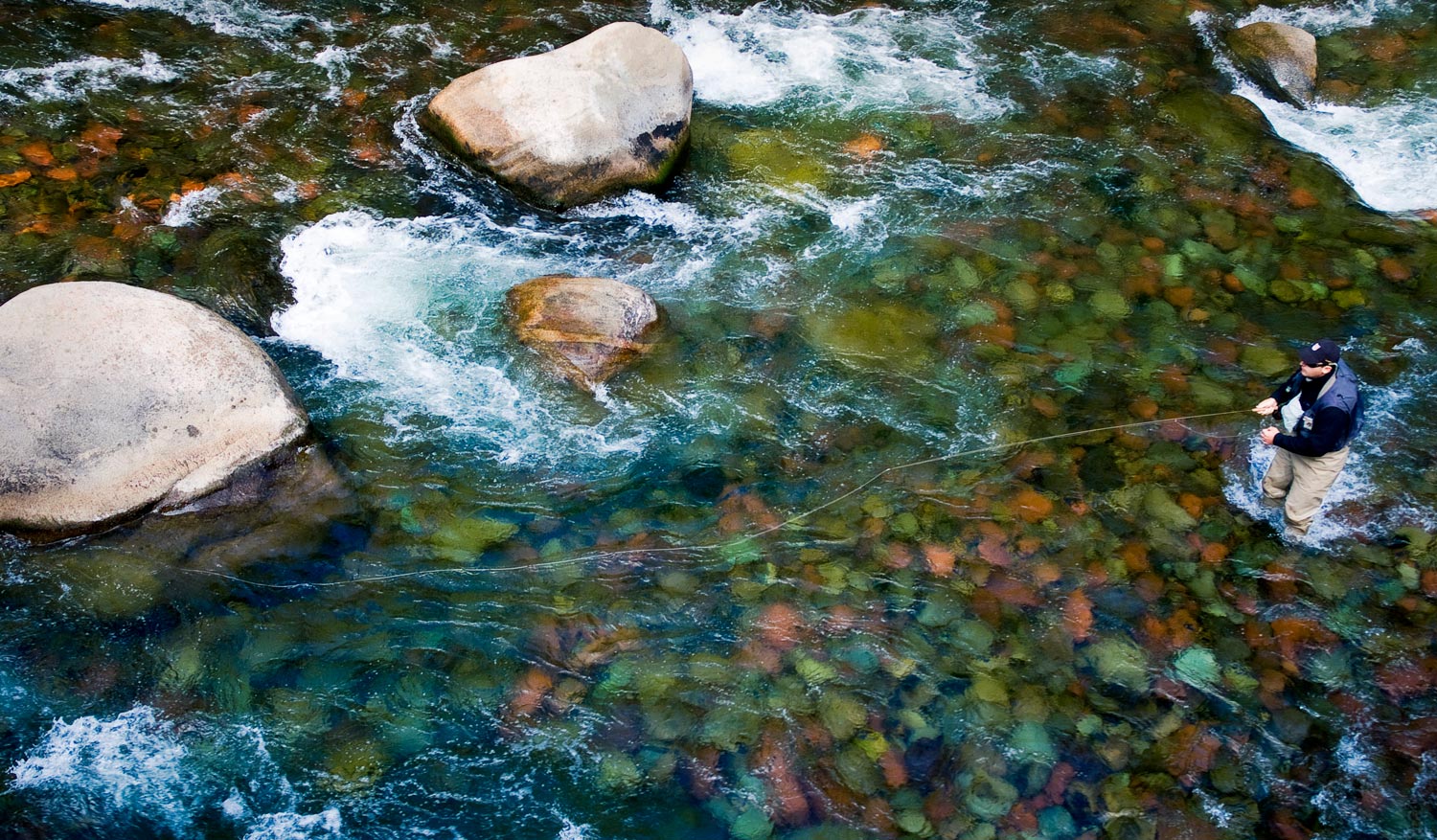
There is nothing more important, in fly fishing, than presentation. How’s yours?
The word presentation has been woven into the fabric of fly fishing lingo since the first fly fluttered to the surface of the water. We use it so often, and without thinking, that it’s dangerously close to losing it’s meaning.
I remember trying to explain fly fishing to a civilian neighbor once, at a party. “You have to present the fly to the fish in a way the fish can appreciate,” I told her. That got a laugh, and to the uninitiated I can see how that comes off. I still believe, however, that this idea is central to fly fishing.
There are a thousand different ways to fly fish, and as many species to pursue and some of them bear very little resemblance to the mainstream but they all have this one thing in common. It all comes down to presentation.
I think too many anglers forget that at some point. We focus way too much on the hot fly, or the holy water and at some point, at least for some portion of the day, our presentation gets put on auto pilot. We fall into the rhythm of cast, drift, repeat, or chock, duck, strip, or what ever it is we are doing and forget to think about the fish. I know I’ve done it plenty of times. Especially when I get to talking.
I’LL TELL YOU A STORY THAT STICKS OUT IN MY MIND AS A LESSON ON PRESENTATION.
In the 90s I was fortunate to photograph, and later become friends with
Read More »You went fishing where?
By Jesse Lowry
Slovenia! Who the hell goes fishing in Slovenia?
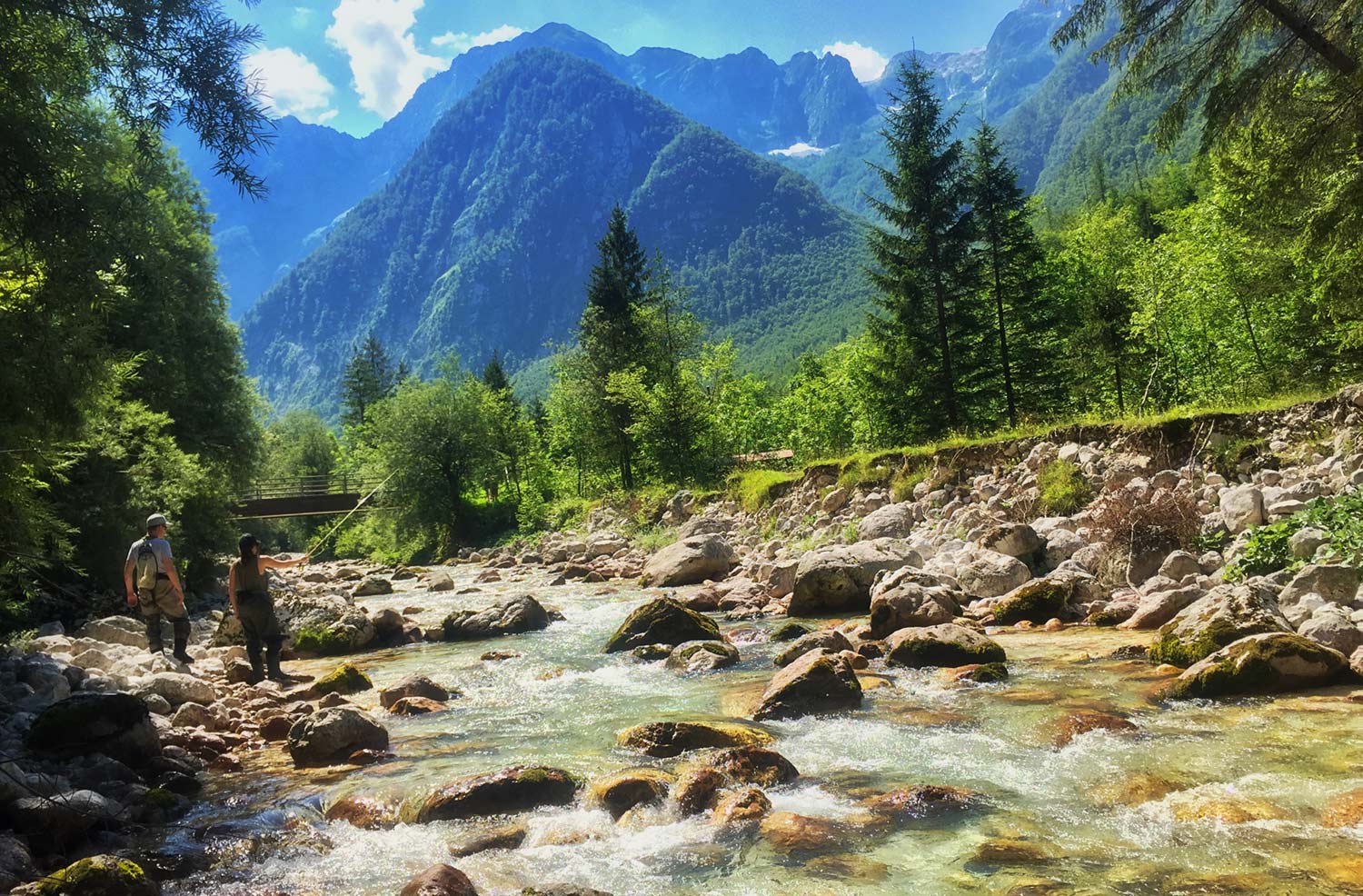
That’s the typical reaction I get when I start talking about my fishing trips to this little gem of a country that most people couldn’t point to on a map. I’ve been fortunate enough to visit Slovenia a handful of times and still am chomping at the bit to go back. It has a ton to offer anyone who makes the journey to this country of roughly 2 million people on the Adriatic Sea, at the cross roads of some very different cultures. Formerly part of the Yugoslavia (and numerous other empires prior) and now part of the EU, Slovenia has been influenced by Slavic, Germanic, and Italian roots. The people there are very proud, friendly and love the outdoors; hiking, rock climbing, white water kayaking, paragliding, and of course fly fishing. Many of the people I met would go fly fishing in the morning and then flying off the side of a mountain by noon once the thermals started to pick up, this worked to my advantage as the rivers were less busy in the afternoon, granted the fishing does slow down with the sun overhead and the gin clear rivers.
It truly is a spectacular place to visit, even if there were no fish in these rivers they are an absolute pleasure to wade through and hike along. Crystal clear turquoise waters, deep canyons, lush forests, gorgeous water falls, massive boulders sprawled throughout the river almost like they were placed there just for Fly Fishermen, old homesteads that have stood the test of time and blend seamlessly into the background, it’s like stepping back in time. Then add to all of this feisty Rainbows, Adriatic Grayling, Browns and the most sought after, Marble Trout (think bull trout head on a brown trout body, with feeding behaviour similar to browns). All these fish in sizes where you have to give your head a shake, given the water they are occupying. This is the total package, a sight fishing, upstream dry fly fishing mecca, accessible from your car, that seems like it was conjured from some of your fishiest dreams. Obviously, nymphing and streamers work great, but when sight fishing in gin clear water I find it hard to resist throwing a dry (probably to my detriment from a hook up perspective… hrrmmm I seemed to suffer from something similar during university days as well).
Fly selection wise I felt amply prepared with my usual western freestone go to’s, though some tail water selection would be a welcome addition. Dry Flys: Stimulators in Orange (lots of orange moths or Butterflys in July and August), Goddard Caddis, small tape wing black caddis, purple haze, green drakes, BWOs, ants and terrestrials. Nymphs: Hares ears, pheasant tails, stone flies, cased caddis, guides choice….you get the idea. I’m told streamers early hours in the dark in some of the big holding pools is the way to hook into the big meat eating Marbles, these pools are home to very tight lipped big fish during daylight hours, which people cast endlessly at and are mostly unsuccessfully. You’ll figure out which pools these are pretty quick, easy access to them, big fish stacked up, looks like shooting fish in a barrel, generally it ain’t.
In terms of finding the spots to fish, it’s pretty easy, a little Google Maps Satellite view and you’ll see most of the roads follow blue lines. Currently it seems the imaging was done in summer when flows are lower which allows you to identify pools and pocket waters quite easily. You will also notice there are lots of access points and turn outs along the road, mostly put ins and take outs for the kayakers and rafts, so bit of care needed when parking in these spots especially the raft access points. Note: satellite images make things look flat and seemingly easy to access, this definitely isn’t the case there are some very steep access points not ideal for the shaky legs, but they get you to some pretty stellar places. Also note all of my fishing in Slovenia has been done during Late June to Late August when flows are low and wading the river is relatively is easy.
Read More »You Can’t Go Home
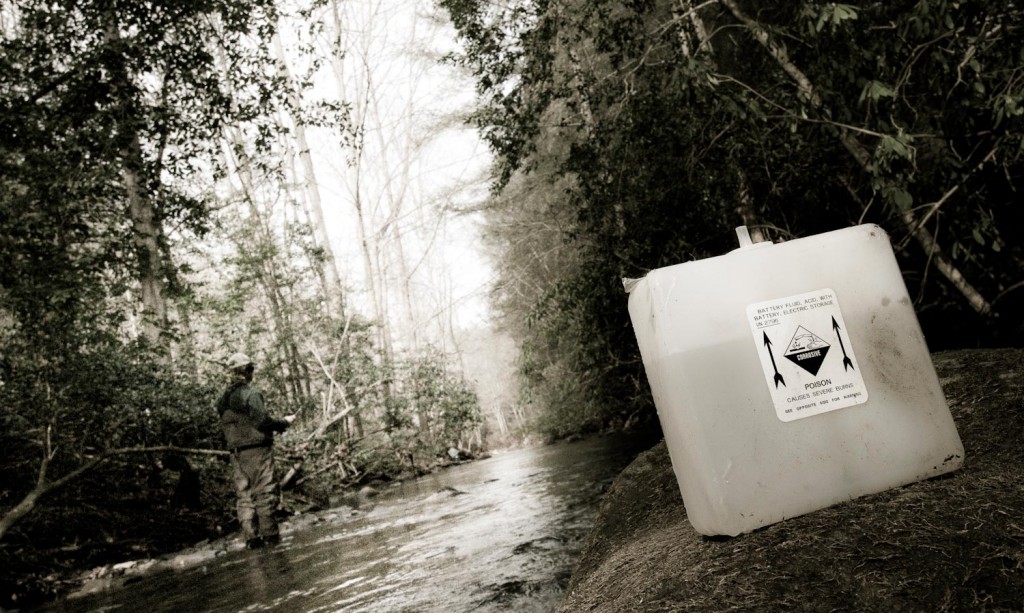
William S. Burroughs, in his essay “Dinosaurs” wrote, “biologically speaking the one direction you can’t go is back”.
He was, of course, making a social comment but I was reminded of that idea while fishing the other day with a good friend. Joel Dickey was up visiting family over the holidays and was excited to do some trout fishing. For weeks he had been telling me that he was going to take me to the best trout stream he’d ever fished. The little creek in Tennessee that he grew up on. A stretch of private water owned by his aunt. I was excited to see the water and to spend a day wetting my boots with Joel.
I knew this was either going to be really good, or really bad. Joel has been living and guiding in the Keys for a long time now and things change. Things always change and where trout streams in the southeast are concerned, usually not for the better. In Joel’s memory this little creek was gin clear and full of big wild trout. When we arrived we found a different stream altogether. There were no fish of any kind. Only old tires and garbage, including a battery acid bottle. A sad sign of an unloved stream.
We moved on to a local tailwater and got into some nice fish and even some surface action, which is great for December, but Joel was heartbroken. It’s tough to see a stream
Read More »Keeping it Clean
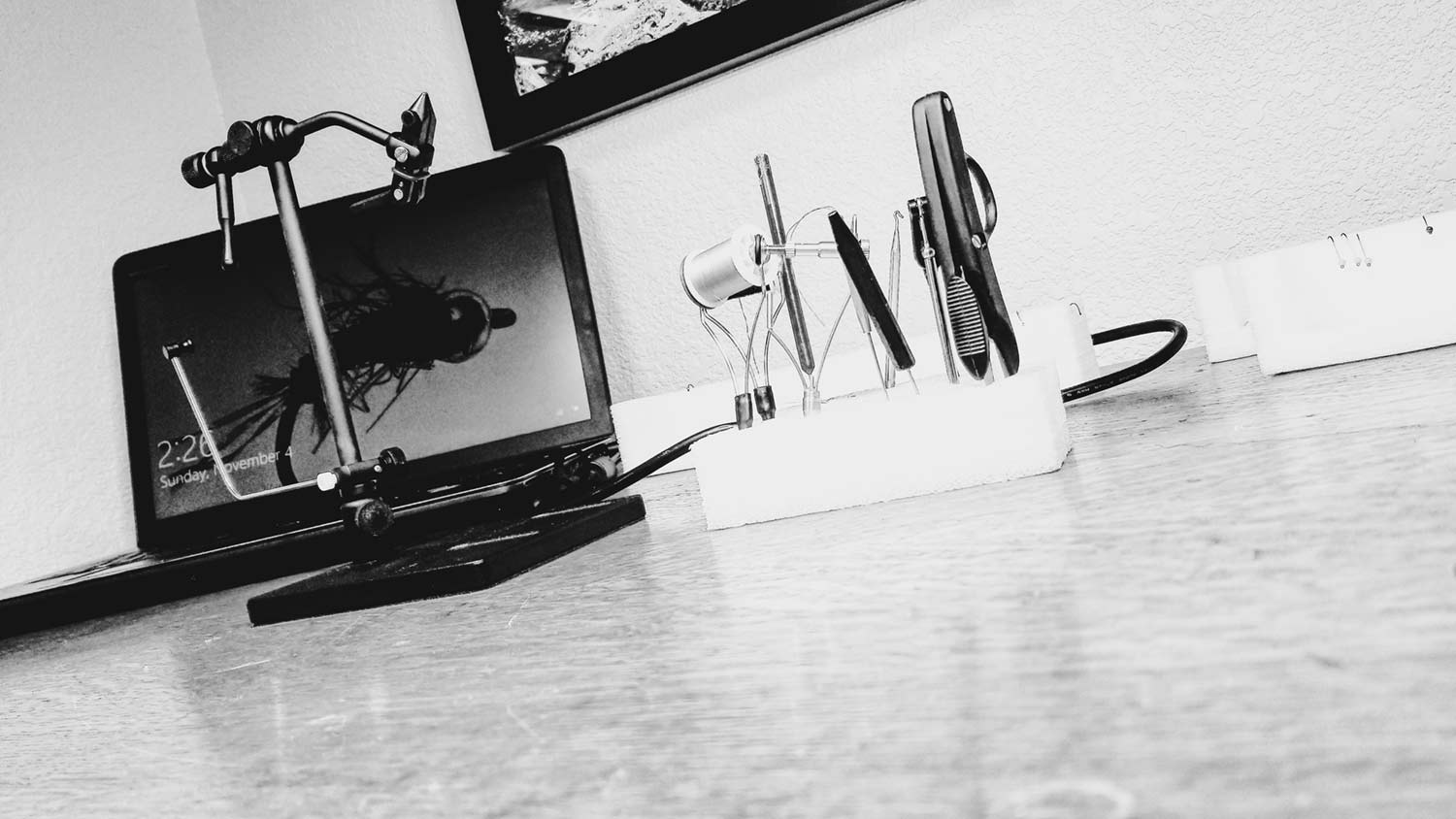
By Bob Reece
WINTER HAS ARRIVED IN MY HOME STATE OF WYOMING. FOR ME, THIS SIGNALS THE START OF MY “TYING SEASON”. AS A FIRST STEP ON THIS FIVE MONTH JOURNEY, I FOCUS ON THE CLEANLINESS OF MY TYING DESK.
This may be a sore subject for some and emotionally disturbing for others. I’ve seen the surfaces of enough tying platforms over the years to know that they can quickly turn into a chaotic heap of fluff and debris. I’m not here to judge, just to offer suggestions on how to prevent chaos and increase the number of flies that you tie.
I am huge believer in the fact that organization is the foundation of maintaining cleanliness on my tying table. When those two factors coexist, the number of flies that I am able to tie significantly increases. That organization starts inside the drawers of my desk.
In the past I maintained a typical setup of dedicating different storage compartments to different materials. Over the last couple years I’ve moved away from that focus. Instead, I now use plastic organizers and Ziploc bags to group the materials that I use for specific patterns. Every pattern that
Read More »