
14 Ways To Prevent Fish Mortality
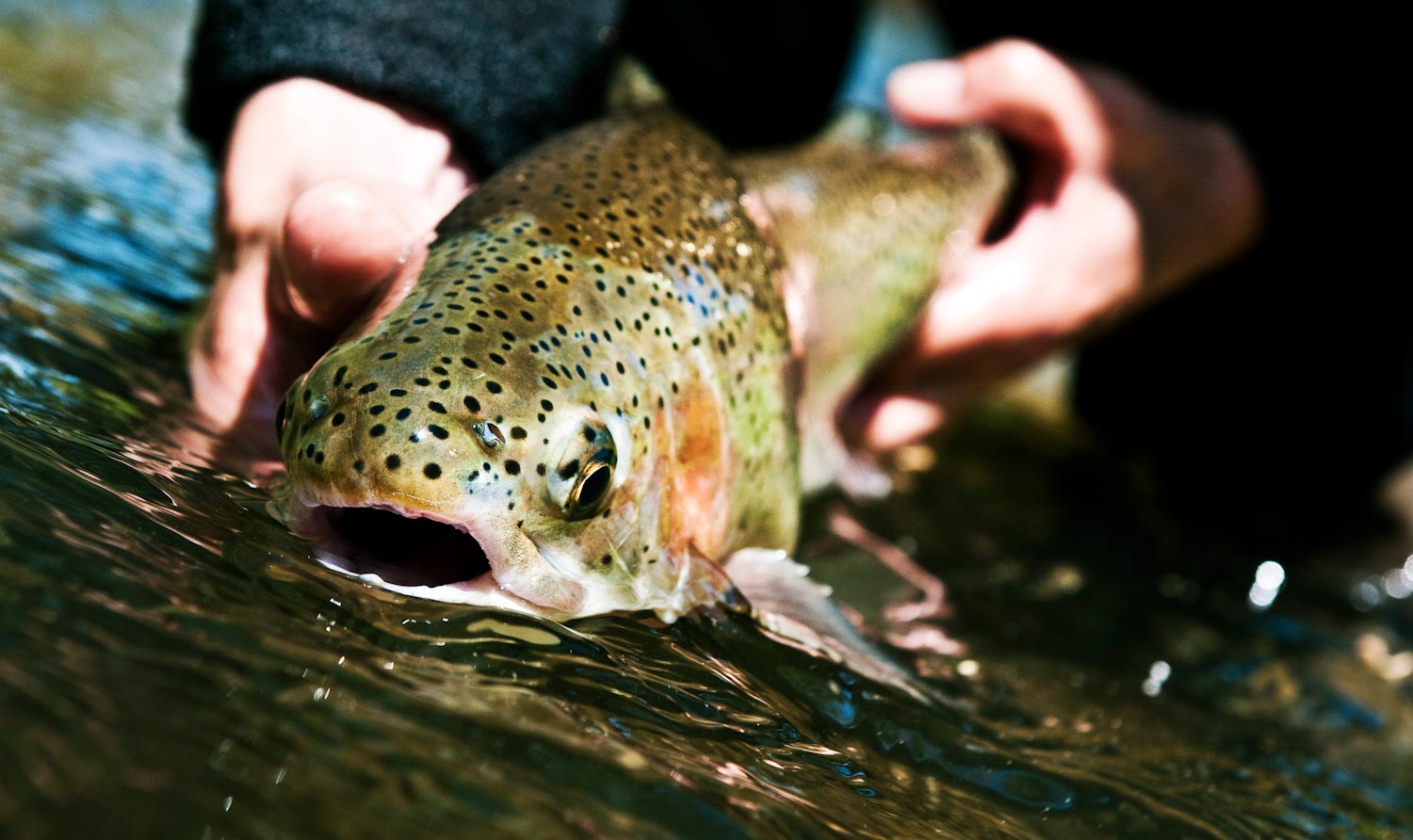
THE YEARS WE SPEND LEARNING TO CAST AND DRIFT A FLY OR THE THOUSANDS OF DOLLARS WE SPEND ON GEAR AND TRAVEL ARE ALL WASTED IF WE DON’T HAVE FISH.
With more anglers entering the sport every day, sport fish are heavily pressured and in grave danger. There are a lot of common mistakes that anglers make which contribute to fish mortality. Most are innocent and many don’t show an immediate risk. With that in mind here are fourteen tips to help keep our little friends happy and healthy.
THE 10 SECOND RULE
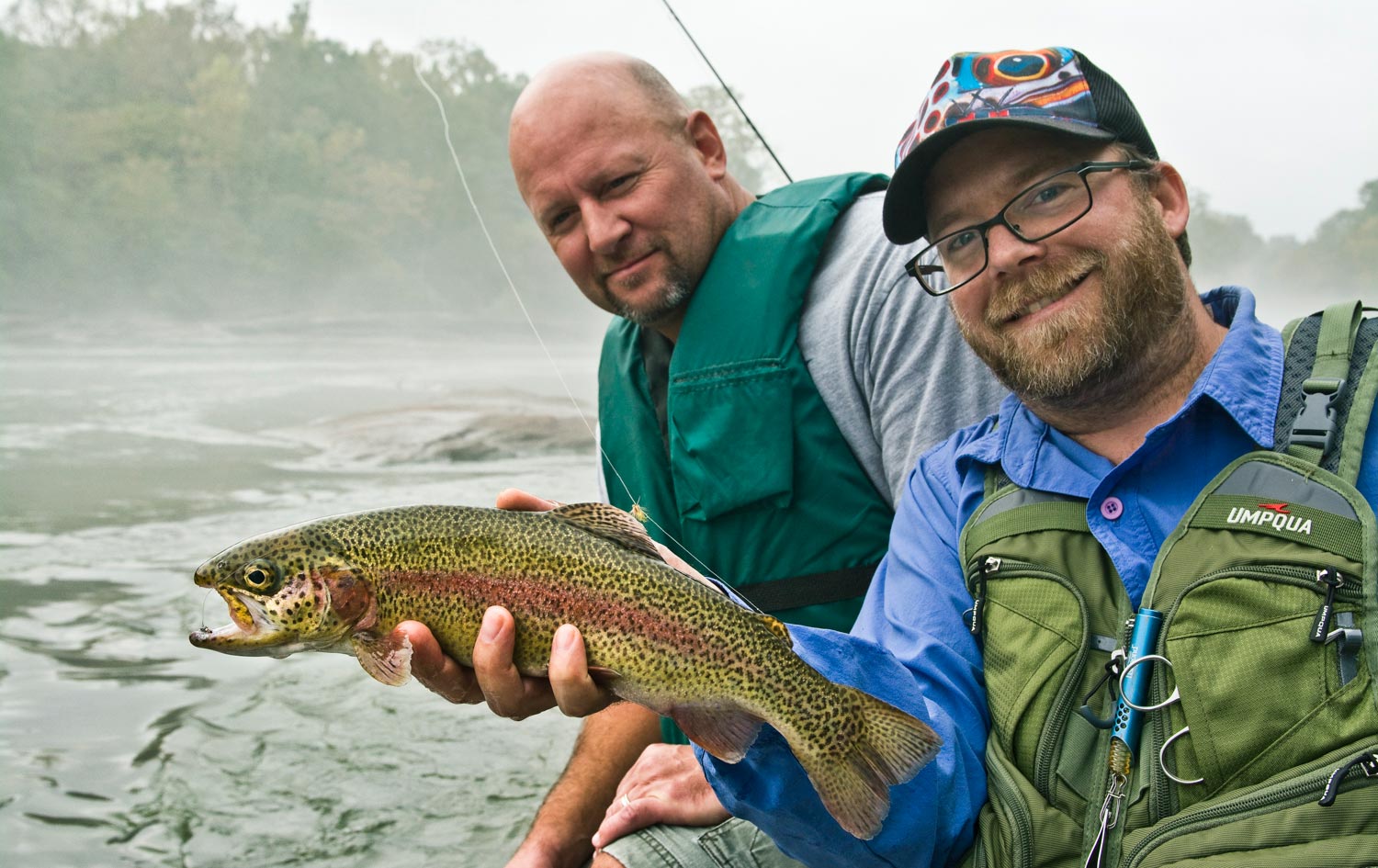
A fish’s gills are remarkably efficient at collecting oxygen but the delicate membranes that extract the oxygen molecules rely on their buoyancy to keep the collecting surfaces exposed. Out of the water they collapse and are useless. This is to say the obvious, fish can’t breathe out of water. It’s easy to over estimate how long a fish can hold its breath. The fact is, a fish can’t hold its breath at all because it doesn’t have lungs. He is out of air as soon as you lift him from the water. Add to this that his metabolism is raging because he’s been fighting for his life and you have a pretty desperate situation. While you are trying to get that hero shot, he’s dying. Use the 10 second rule and never keep his head out of the water for more than 10 seconds and give him a good 30 seconds before you lift him again.
HOLD ON LOOSELY
I can’t tell you how many times I’ve seen guys squeeze a fish until its eyes pop out. Some guys just get so rattled holding a fish you’d think they never saw one. This death grip can cause serious internal injury especially to the heart. The trick is a nice loose grip. The tighter you hold a fish the more he will struggle. To control one, properly grip him just in front of his tail where there’s nothing but muscle and let him just rest on a loose hand under the boney part of his pec fins and gill plates. He will relax and the whole vibe will be nicer.
BARBLESS HOOKS
Once in a while a fish will unbutton due to a barbless hook. That’s just a fact of life but most anglers understand that they will hold hundreds, if not thousands, of fish in their life. Decreasing that number by a few is not a crisis. The fact is that barbless hooks go a long way to reducing fish mortality from hook injuries. If you are fighting fish properly you will not lose many and if you aren’t, fishing barbless hooks will teach you to fight fish smarter and you’ll be a better angler for it.
FIGHT WITH AUTHORITY
The biggest mistake I see anglers make is not fighting fish with authority. Most of us are taught to play fish too long, exhausting them before they are landed. A fish that is fought with authority is landed fresher and released fresher. Keep a good
Read More »Don’t Be Like This Guy
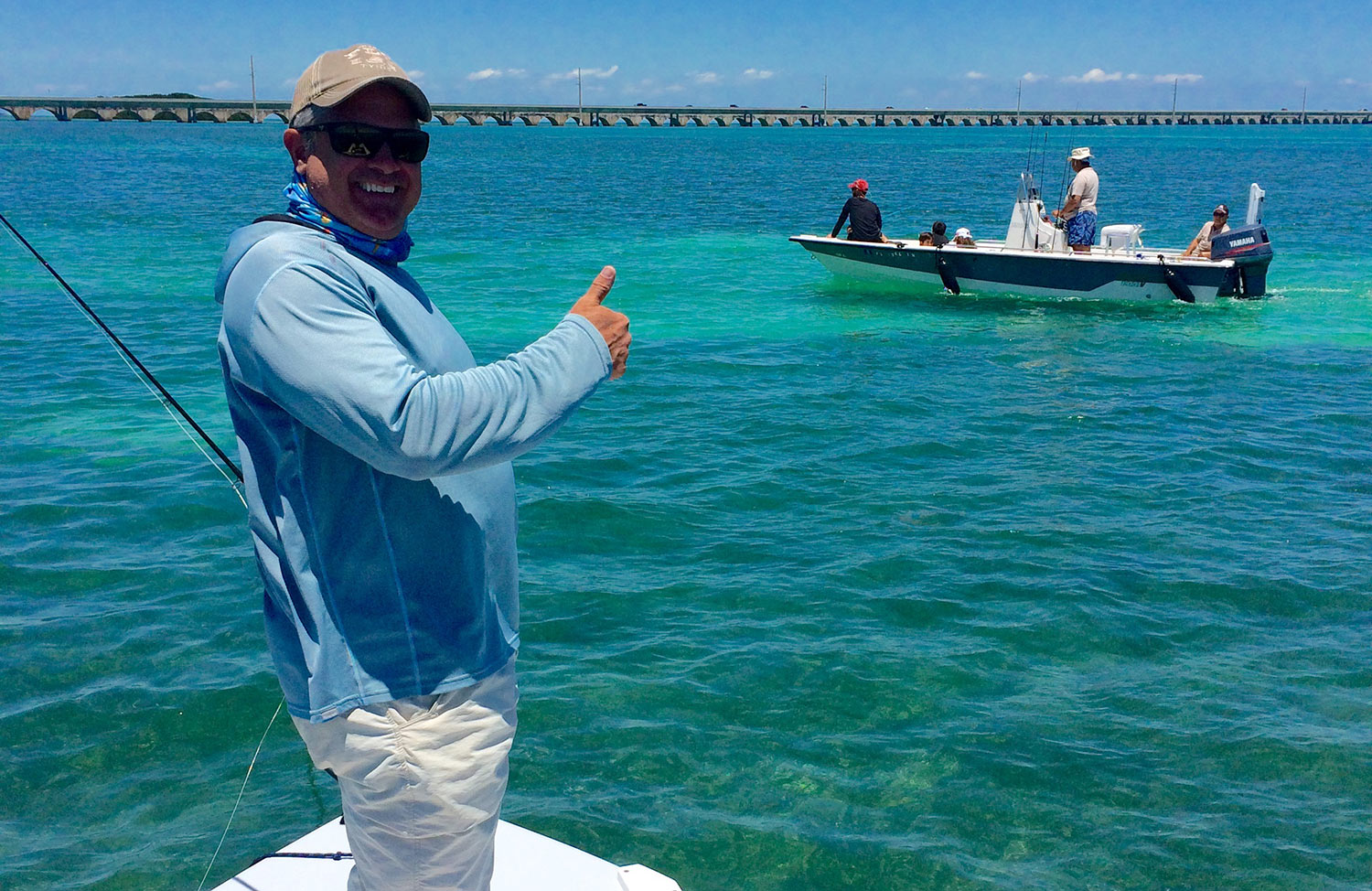
I hope this is so obvious it needs no explanation.
There we are staked up waiting for migrating tarpon when this guy rolls up, jig at the ready. I’m sure he thought we were on fish. His kids huddled down in the floor of the boat and he wouldn’t even look at us. His wife at least had the decency to say, “I’m sorry.”
On the bow my buddy Scott offers an enthusiastic thumbs up. One of the reasons I love fishing with that guy. Nothing ruffles his feathers. I’d have likely put a hook in his ear. Scott was paid back karmicly by jumping a 150 pound tarpon that afternoon. It broke him off but it was still awesome. Wish I had a photo. I was on the phone with my mother. If you’re a mother, you call at the wrong time. It’s what you do.
Anyway, a picture is
Read More »Fly Fishing for Trout In Black and White, Killer Flies For High Water
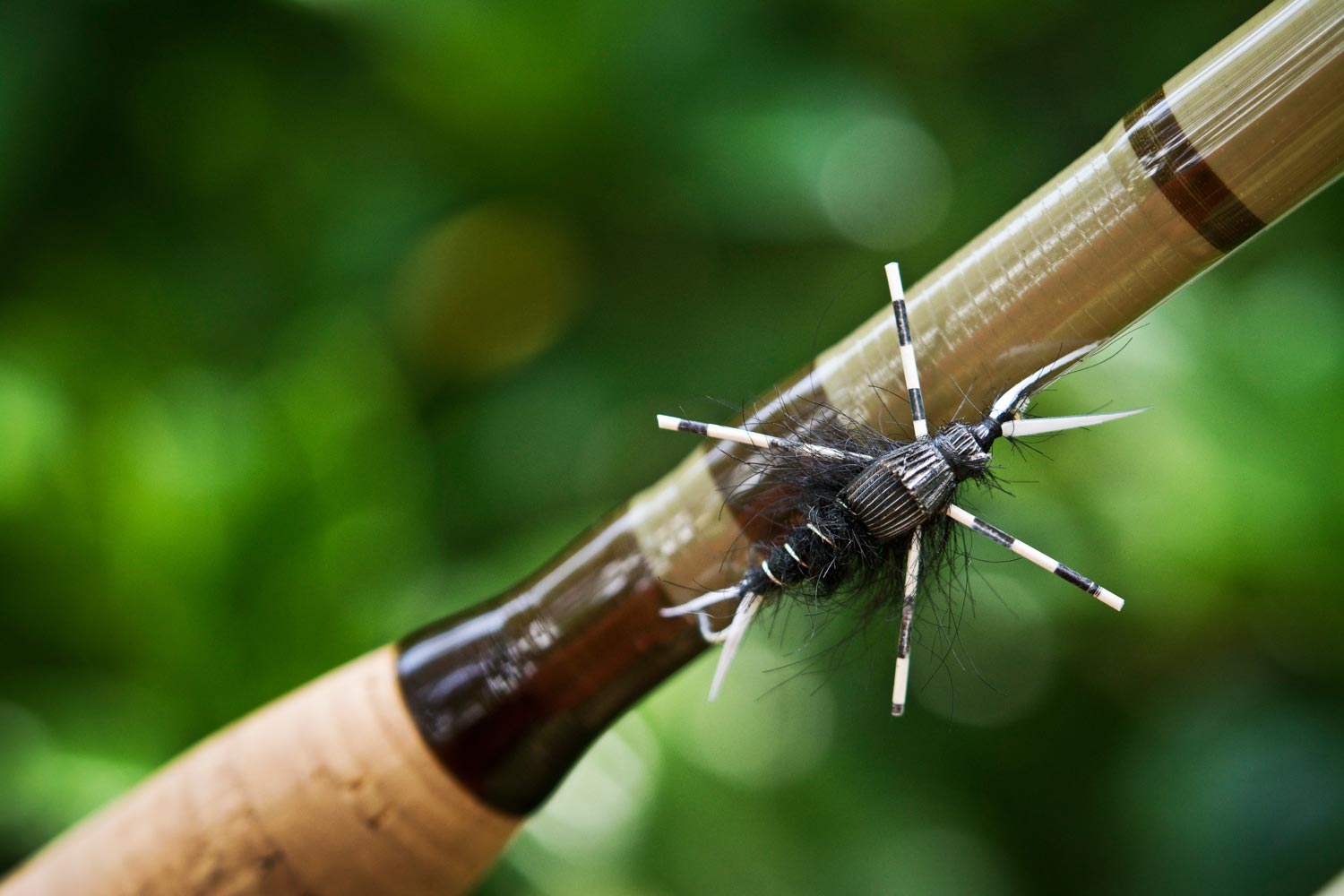
HAVE YOU EVER SPENT A RAINY AFTERNOON WATCHING TURNER CLASSIC MOVIES?
Would you have guessed that’s pretty much what trout do? Trout fishing can be pretty spectacular during high-water events. The combination of high water and the stain it brings with it give big fish the extra confidence they need to come out and feed. That’s your chance to catch fish that normally allude you. Your chances go way up if you understand how the trout’s world changes during these high-water events.
Stained water means things get pretty dark and gloomy down there where trout live. The silt in the water eats up much of the light, which is already subdued in foul weather. It’s like driving at night with a dirty windshield. What the fish see is dark and blurry.
If you read my article on how fish see, you know that fish see very well in the dark, however they lose their ability to see color. The world starts to look like those old black and white movies on TCM. Conventional wisdom is, when water is stained, fish brightly colored flies. That works to a point, but when fish lose their ability to see color altogether the logic breaks down. What does a bright pink fly look like in black and white?
When fish’s eyes are in black and white mode, they key on contrast. Contrast means clarity. Familiar silhouettes become identifiable when brought out by contrast. So why show a brightly colored fly to a fish who sees black and white? Why not
Read More »Swinging Tandem Flies For Steelhead
By Louis Cahill
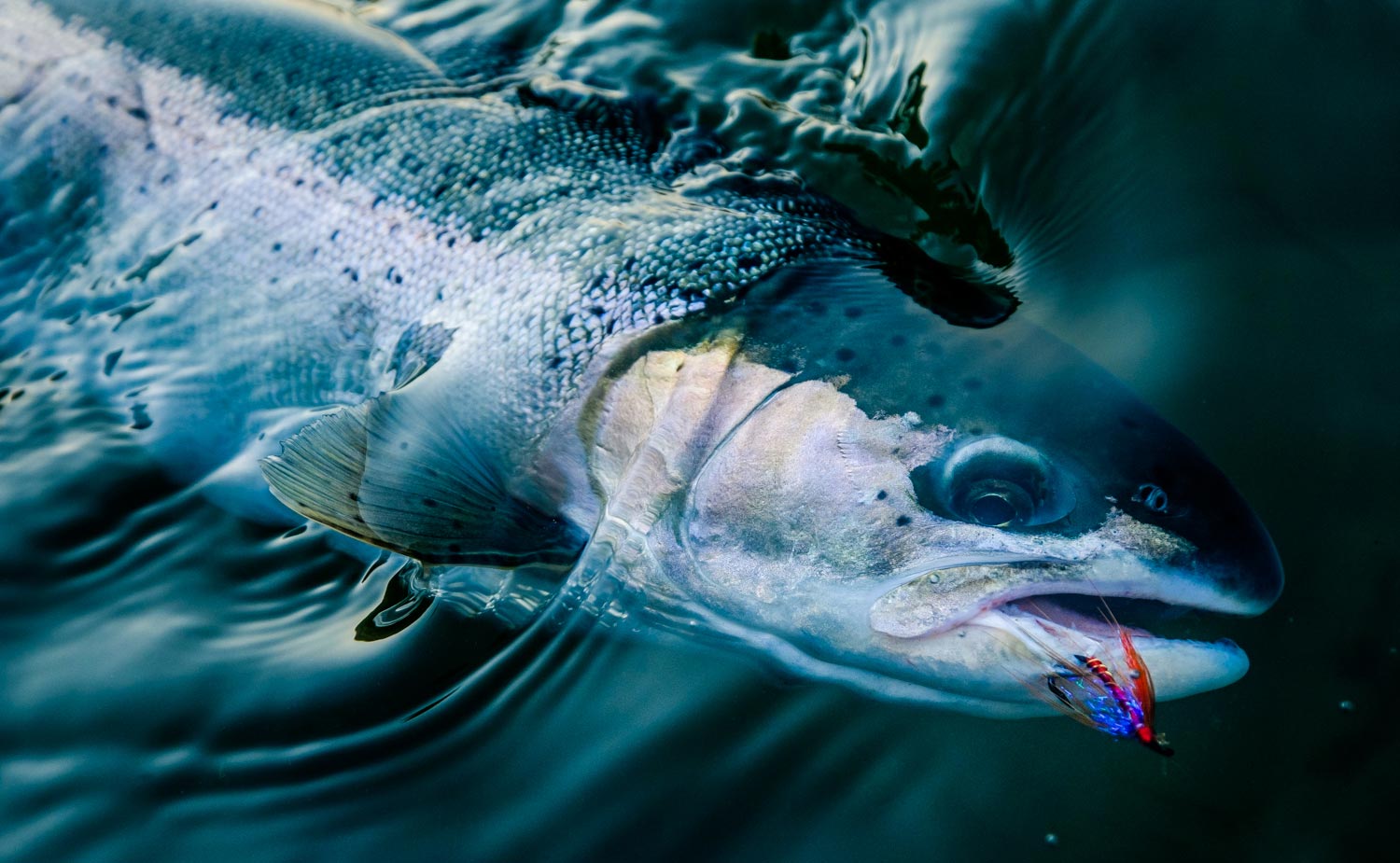
Most anglers successfully fish teams of flies for trout. Why not for their anadromous cousins?
I was introduced to this idea by a good friend who is one of the fishiest guys I know. When swinging traditional flies on a floating line he always fishes a team of two flies. He tells me he catches about a third of his fish on the top fly and he’s convinced that it boosts his overall numbers by that amount.
I almost never fish for trout with less than two flies so it’s easy for me to accept the idea that I should be doing it for steelhead. The idea behind tandem flies for swinging is a little different but the logic is compelling. But does it really work?
The Theory
My buddy explained it to me this way. When you are swinging a fly and a fish swirls on it without taking it, what would you do? You’d change flies and make the same cast, showing him another. Sometimes that fish will eat the second fly. My buddy’s idea is that we get looks and swirls all the time that we never see. I find that likely. He ties his second fly the length of his step above the first, so that as he steps he automatically puts two flies over each fish. That’s kind of brilliant.
So to be clear, it’s the fly at the end of the leader which the fish sees first and fly at the top which is seen second. The team functions a little differently than a team of trout flies. A team of trout flies gives the fish a more immediate choice of patterns or depths, covering a spread of what the fish might be keying on. The steelhead version offers the fish a second chance to take the fly, with time being the variable. This makes sense. Steelhead are not feeding so the take is an aggressive strike rather than a reaction to a chosen food type.
The Setup
First let’s be clear that we are talking about fishing a floating line in traditional summer steelhead fashion. This technique would be extremely difficult to pull off in a Skagit system with sinking tips.
Like any tandem setup there are several ways you could tie on your flies. For simplicity and function, I like the setup my buddy uses. I use an intermediate polyleader and at the end I attach a short piece of 15-pound Maxima and tie a loop at the end. I then use a loop-to-loop connection to attach my 12-pound maxima tippet. The lengths of leader and tippet vary depending on the line you are fishing and that’s another article.
Rather than tying the fly to this tippet
Read More »One Cast, Two Presentations
Each time you cast a fly, you’re actually making two presentations.
I had a conversation recently, with my buddy Bruce Chard, that got me thinking. Bruce is extremely precise when he talks about fly fishing and he religiously uses two terms I’ve only heard from very skilled anglers, and which I believe are not in the common lexicon of the sport. In spite of these terms being somewhat uncommon, after our conversation I agreed with Bruce that they hold real value to the average angler.
The terms are “primary presentation” and “secondary presentation.”
We very commonly speak of our presentation as the cast or delivery of the fly to the fish. We also refer to different types of presentations, like “dead drift” or “swing.” The terms primary and secondary presentation acknowledge that both the cast and the way we fish the fly are each a type of presentation. Whether we recognize it or not, each time we present the fly, both of those things are happening and each must be executed properly to catch a fish.
At first this struck me as a semantic argument, but after thinking about it, I believe the terms are helpful. Not only in letting us talk more specifically about our technique, but also in the way it forces us to think about it. I think our non-specific language serves as shorthand for skills we take for granted. Thinking of primary and secondary presentation as separate things helps us communicate finer points of presentation and helps us understand how the two work together.
For example, let’s say I am presenting the fly to a trout which is down and across stream from me.
Scenario one: I am fishing a dry fly. Primary presentation: I would drop the fly directly upstream of the fish, far enough to be
Read More »Forced Perspective In Fish Photos, What’s Right?
Is holding a fish up to the lens tantamount to Lying?
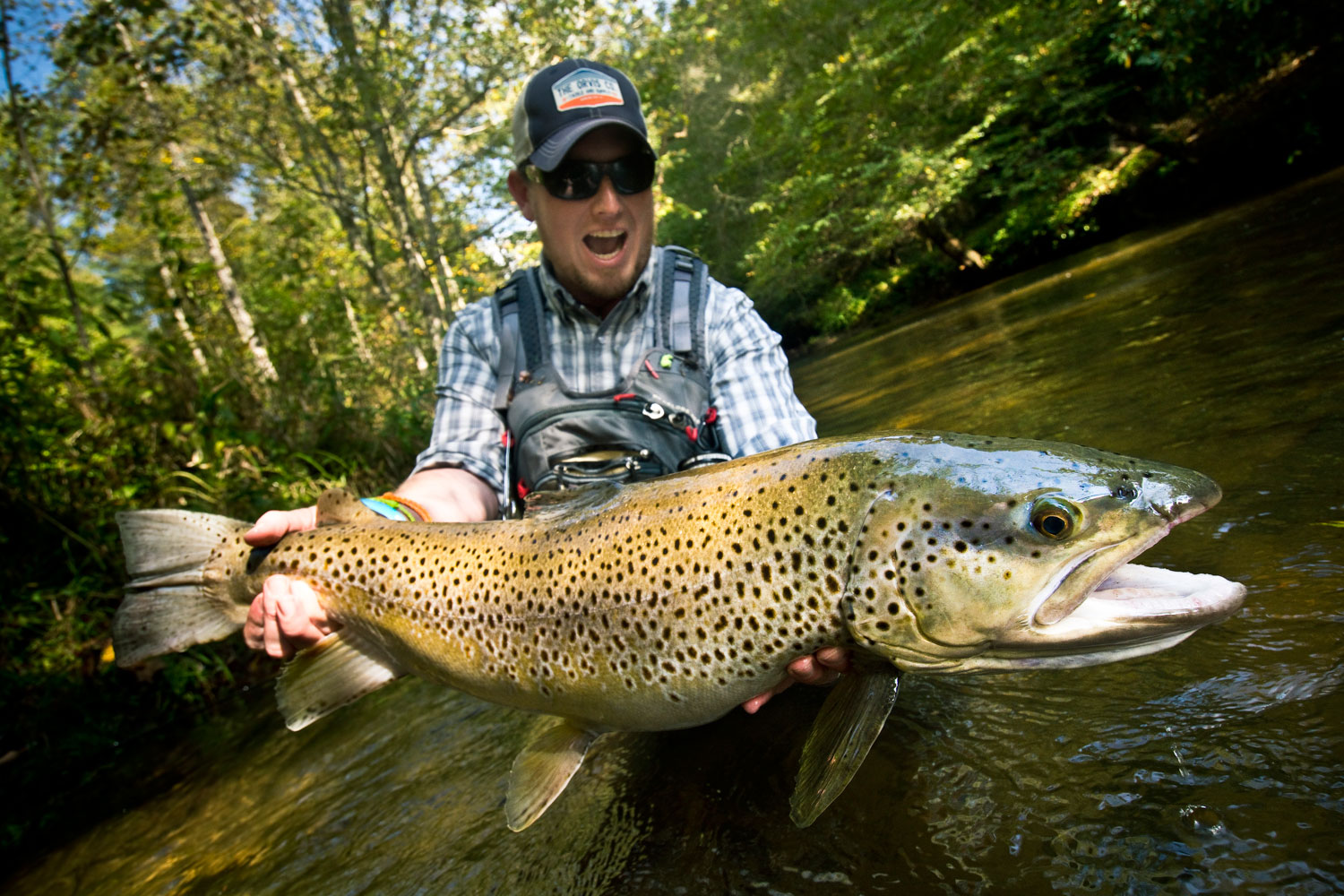
The other day I shared a photo of my good friend and G&G contributor Justin Pickett holding a huge brown trout with Orvis for use on their blog. The look on Justin’s face says it all. A fish like this could well be the fish of a lifetime. Since he landed it on an Orvis Helios 2, 4 weight, it seemed fitting that Orvis should share in the online glory.
Orvis shared the photo on their Facebook page and the comments lit up immediately. Lots of positive comments about what a great fish Justin had landed but a handful of trolls as well, claiming that the fish wasn’t big, just held out to the camera for forced perspective. Certainly, you’d expect that kind of juvenile behavior on Facebook, but it think it also says a lot about the fishing community.
Let’s get this out of the way. Justin had a tape in his pack and I measured the fish. It was 29 inches on the nose. I know Justin would have like it to be 30, fishermen are never satisfied, but I’d like to know where these trolls are fishing that a 29-inch brown trout isn’t big.
As a photographer who is in the business of photographing fish I think about this a lot. Pretty much every fish photo you see in the media is an example of forced perspective. It’s not at all unlike the photos you see in fashion magazines of rail thin super-models. If American women are having body image issues they should talk to the poor fish.
Just like in the fashion industry, the arguments about it aren’t going to change anything. You’re far more likely to see plus size models on the cover of Vogue next year than 9 inch trout held close to the chest on any fly fishing media. It’s frustrating to me for a couple of reasons. I’m much more interested in beautiful macro photos of colorful wild trout or creative images that capture the feeling of the moment, but nobody buys them. Trust me, I have hard drives full of them. Just like those Vogue photographers, I’m way more interested in paying my bills than arguing about whose fish is bigger.
I’m also frustrated that folks who know nothing about either the art or science of photography are instant experts on the Internet. Truth. What is that really? This topic of truth in photography got blown way out of proportion when digital cameras were invented. Suddenly publications like Time we’re making rules about how images could not be manipulated, AT ALL. Meaning no color correction or dust spots removed. The same things those same publication had been doing to every photo they printed for decades. All they accomplished was publishing a lot of bad photos.
The truth is that every photograph you have ever seen has been manipulated. Regardless of what you think is real or not real, a photograph is, by definition, a creative work. Someone made it and they imposed their idea of reality on it. It’s no different from a paining. If you are thinking that this isn’t true, it’s because you have had experience using some kind of automatic camera that someone has set up for you. It’s a black box, with a little artist inside. Just because you don’t understand it doesn’t make it truthful. Ask anyone who really understands how cameras work and they’ll tell you I’m right. The camera does lie. That’s all it’s ever done and I have made my living at it for over thirty years. In the end, the only reality is the one you make for yourself.
What I’m really interested in is not an existential debate on the nature of reality. The thing that gets under my skin about this is
Read More »Streamer Tactics for Small Trout Water
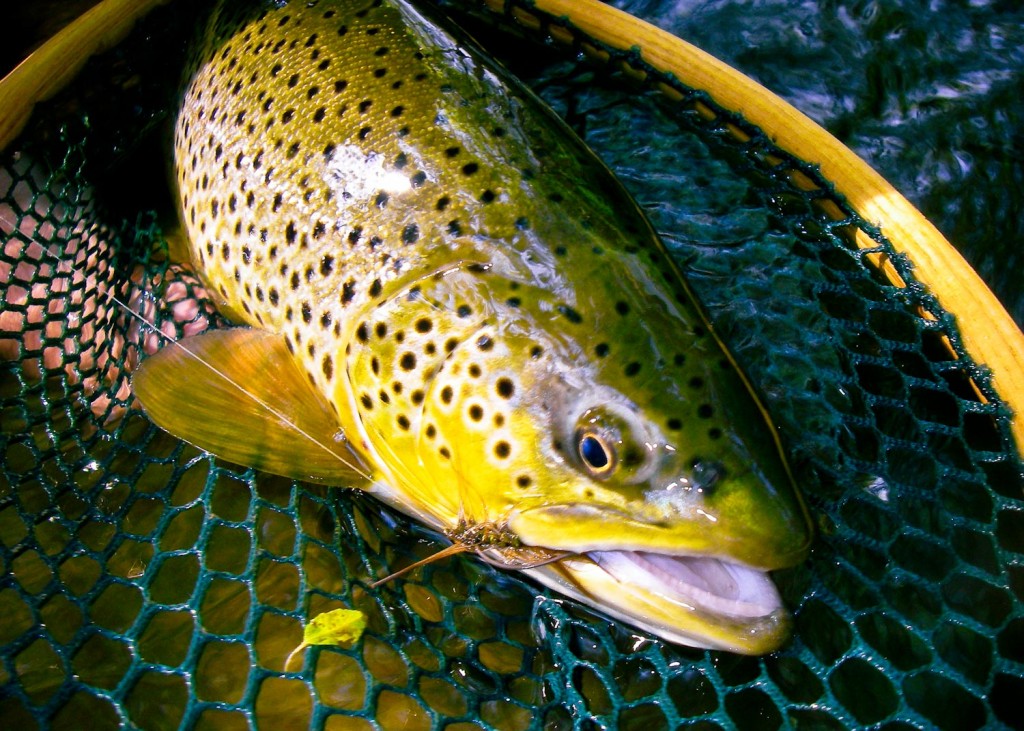
Successful Streamer Tactics for Small Trout Water.
Streamer fishing isn’t for everyone. I’ve known fly fisherman that would refuse to tie one on, even if you offered them a 20 dollar bill. But for those very few anglers that find fishing them repulsive, there’s plenty more of us out there that hold a deep love for streamers. It’s long been known by fly fisherman that streamers hold an uncanny ability to tempt the largest fish in our water. Streamers work on all types of trout water (rivers, streams and still-waters), but despite their wide range of effectiveness, most of the attention and information provided to fly fisherman in the past has been heavily skewed toward only promoting fishing them on our larger rivers and streams. To some degree, this favoritism has resulted in giving the impression to many beginner and intermediate fly fisherman that streamer fishing isn’t meant for small stream applications, and they should leave them at home. The truth is, that’s not the case at all. I’ve landed some of my largest trout on small streams with streamers when I couldn’t get them to eat a dry or wet fly.
It’s important for fly anglers to know they can have just as much success with streamers on small water as they can on larger water, and they shouldn’t overlook the opportunity to use them when conditions are right. Furthermore, if we lumped all of our trout water together in the region, the overwhelming majority of it would be considered small trout streams, creeks and high-elevation tributaries.
Small Stream Strategies for Streamers
The first thing you need to understand is that you need to fish streamers differently than you do on large trout water. Large water streamer fishing is all about making repetitive presentations and covering lots of high percentage trout water–you make considerably longer casts and stealth becomes less of a factor. On small trout water, stealth is huge and you don’t want to cover a high percentage of trout lies by carpet bombing it with a plethora of presentations. You’ll find it much more effective if you instead take a hunter’s approach that focuses on making a one-shot kill.
Start out by first locating where you think a large trout may be holding, approach the spot with a high degree of stealth, and lastly, strive to make a presentation that allows you to work your streamer through the highest percentage spots right off the bat. You want to accomplish this with as few casts as possible, preferably only one or two.
There’s no dissecting water with your streamers here, folks. We’re not trying to see how many fish we can catch out of each hole. Nor are we trying to cover every square-inch of water. The excitement that triggers a trout into chasing down or eating your streamer lasts only for a brief period. That’s why it’s so important that you take the time to pick and choose your first couple casts strategically. So always cast to the prime water first and the subpar or secondary water second. If you target the water in the opposite order, most of the time your fly will swim through the water out of the target fish’s feeding range, and you’ll greatly decrease your chances of surprising and triggering a reaction strike (your best case scenario for a hookup). You’ll also risk alerting and spooking the fish before you have a good shot at getting your fly in front of them.
Streamer Gear & Rigging for Small Streams
To be successful at streamer fishing, it’s critical that you choose the correct fly fishing gear for the type of water and location you’ll be fishing. Your fly rod, fly line and leader need to be handpicked so that they all work together. That being said, you can’t effectively streamer fish small streams with most of your big water gear. You don’t need a full sinking line or an eight or nine weight fly rod, and you don’t need to chuck giant streamers to catch trout either. If chosen incorrectly, it will keep you from fishing at your full potential, and you’ll find much less success.
Start out by choosing an eight to nigh-foot medium-fast action fly rod. I’m not talking about a stiff broomstick. We do want the rod to have some limberness so it can perform well at short casting distances, roll cast fairly well and allow us the ability to present the streamer reasonably quiet during a cast if needed. One of my favorite small stream streamer rods is a Thomas & Thomas Helix 9-foot 6wt. You’ll next want to choose a weight-forward floating fly line with an aggressive front taper that excels at turning over large and heavy flies (like a Rio Power Fly, SA Floating Streamer Express or Orvis Hydros Power Taper). So far, that’s relatively common sense for most, but I take it a step further by attaching an Airflo Poly 5-foot Leader (clear-floating or intermediate version) to the end of my fly line. It’s very similar to a smaller diameter version of your fly line that’s clear and turns over streamers effortlessly. By using a Poly Leader, you’ll find your loops won’t hinge and seldom will collapse from a heavy streamer at the end of your cast. I generally go with the clear intermediate version because its slow sink rate helps me to keep my fly a little deeper during the retrieve. However, I will use the floating version when I’m dealing with really low water conditions.
How many times have you had a trout follow your streamer to the boat and have it turn off at the last second because it spotted you? It’s happened to me plenty of times. On smaller streams we are constantly fighting to stay under the radar of fish. The smaller streams and shorter presentations put us close to the fish, and our bright fly line even closer. Plain and simple, the Airflo clear floating and intermediate Poly Leaders provide me with a little bit of extra stealth during my presentations when fishing streamers on small trout water.
The last component in my small trout water streamer rig is my tippet. I generally attach a short three to six foot section of fluorocarbon tippet (4x-2x) to the end of my poly leader and tie on my streamer with a non-slip loop knot. I’ve been using this setup for the last few years with great success. It casts way more graceful than your standard WF fly line and tapered leader setup, improves accuracy, helps keep my streamer in the correct depth and improves my overall stealth.
9 Tips for streamer fishing on small streams
Don’t make the mistake of thinking the larger or heavier the fly, the harder you need to cast your fly rod. Focus on timing and smooth
Snow Day
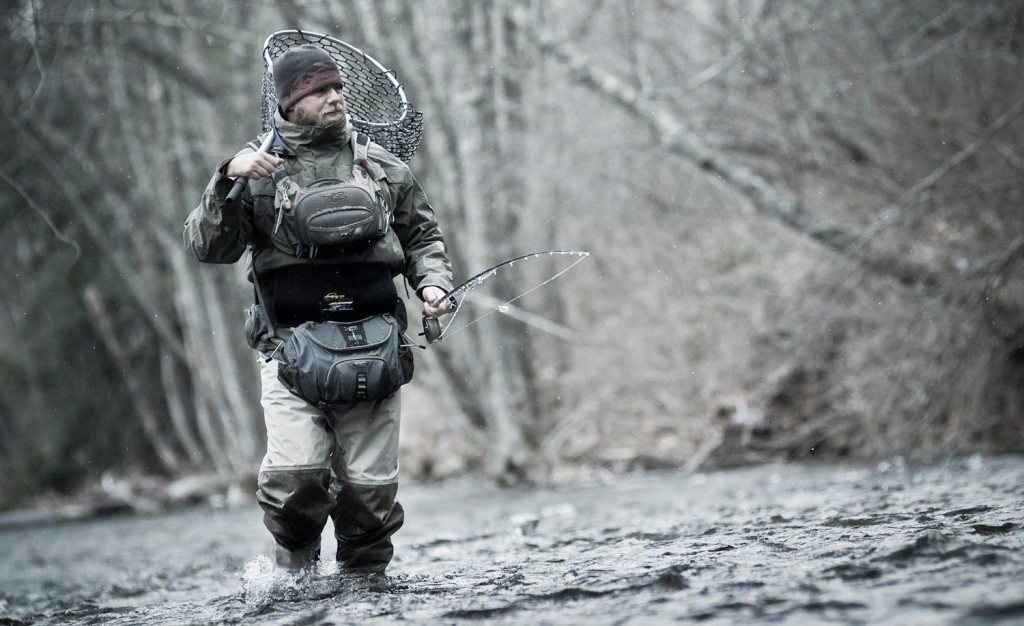
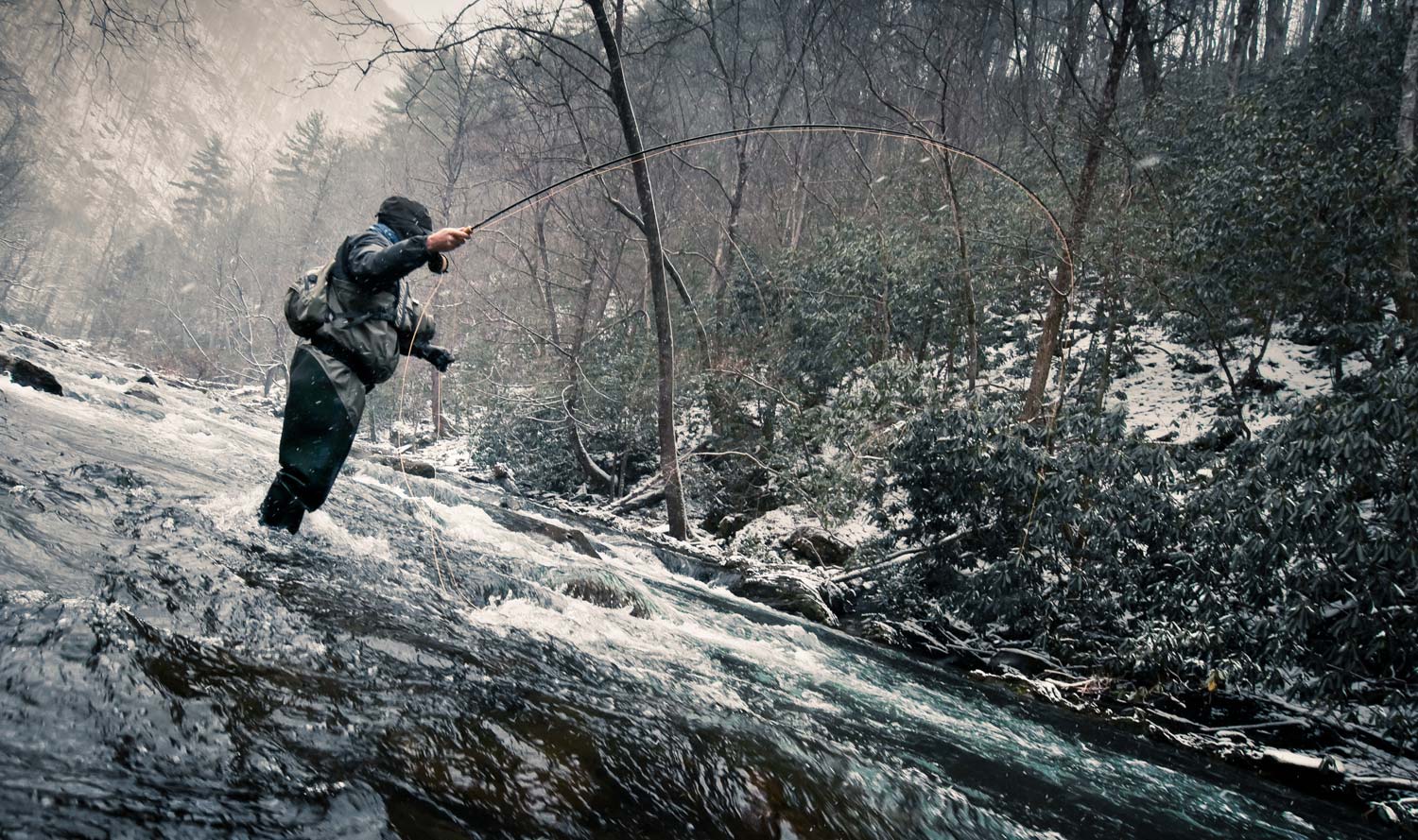
By Louis Cahill This story originally appeared in Fly Fusion Magazine Ice in my beard, fingers burning, I haven’t felt my feet for hours. I know from experience that it will be sometime around midnight, standing in my shower with the hot water running out, before I feel them again. My fingers are killing me, so I tuck my rod under my arm and work them into the fleece gator pulled up around my face. I’m a firm believer in global warming, but it’s a hard sell today. I have fished on some truly brutal days. Alaska in the fall, Maine at ice out in the spring. I fished in Colorado one day when it was ten below and I could watch the ice form around my boot freeze when I lifted it out of the water, but this day on the Nantahala river in the mountains of North Carolina may be the worst. You may scoff at this if you live somewhere like Wyoming or Michigan but if you’ve been here and seen it you know, when cold comes south, it comes holding a grudge. It’s about fifteen degrees at the truck. It feels colder on the water. The wind is howling and the snow has tapered off to flurries but what cuts right through the seven or eight layers I’m wearing is the humidity. It’s so humid that icicles form, right out of the air, on every surface that doesn’t have a constant source of heat. They hang grimly off of rods, and tree limbs, forceps and drying patches. I like days like this. I know that sounds crazy but any of the guys I fish with will tell you, the more miserable it is, the more I want to get at it. One reason is nobody else wants … Continue reading
Read More »Each One, Teach One
By Louis Cahill
I’VE GOT SOME HOMEWORK FOR YOU.
Last weekend Kent and I floated a local tailwater. I’ve been traveling like a demon all summer and it was a great chance to hang out, catch up, empty some beer cans and fish some local water. Days like that are chicken soup for my soul. Spending so much time on the road, I miss my friends and family. As you can imagine, there is a long list of folks looking to be in the third seat on that boat. Good friends who I don’t see enough of, hardcore anglers I always learn a trick or two from, guys who consistently put nice fish in front of my lens. It’s tough to make a choice.
This time out we made a great choice. Rather than rowing an old friend or badass angler down the river, we took Kent’s new neighbor. A great guy with very little fly fishing experience. I’m not sure if Heath knew what he was getting into when he stepped into that boat. Kent immediately slipped into guide mode. He told Heath to leave his rod in the truck and put his setup in his hands. Walked him through the fly selection and how to fish the team effectively. Taught him how to read the water and where to place the fly. Coached him on how to play fish and encouraged Heath at every step, praising every good cast. Before we had floated a mile, Heath had caught his biggest trout ever.
It was an awesome thing to watch. There’s nothing like seeing the lights come on for a new angler. Neither Kent or I spent as much time fishing as we might have but it was well worth it. We boated a real trophy. A new avid fly angler. And Heath’s appreciation was abundant and all the reward we needed.
I remember when I started fly fishing. I sucked for years, trying to figure it out on my own until
Read More »Bob Heads Downstream

DON’T WE ALL KNOW THE FEELING?
See more of Bob and the art of Andrea Larko on Etsy.
Read More »