
3 Bad Habits That Lose Big Fish
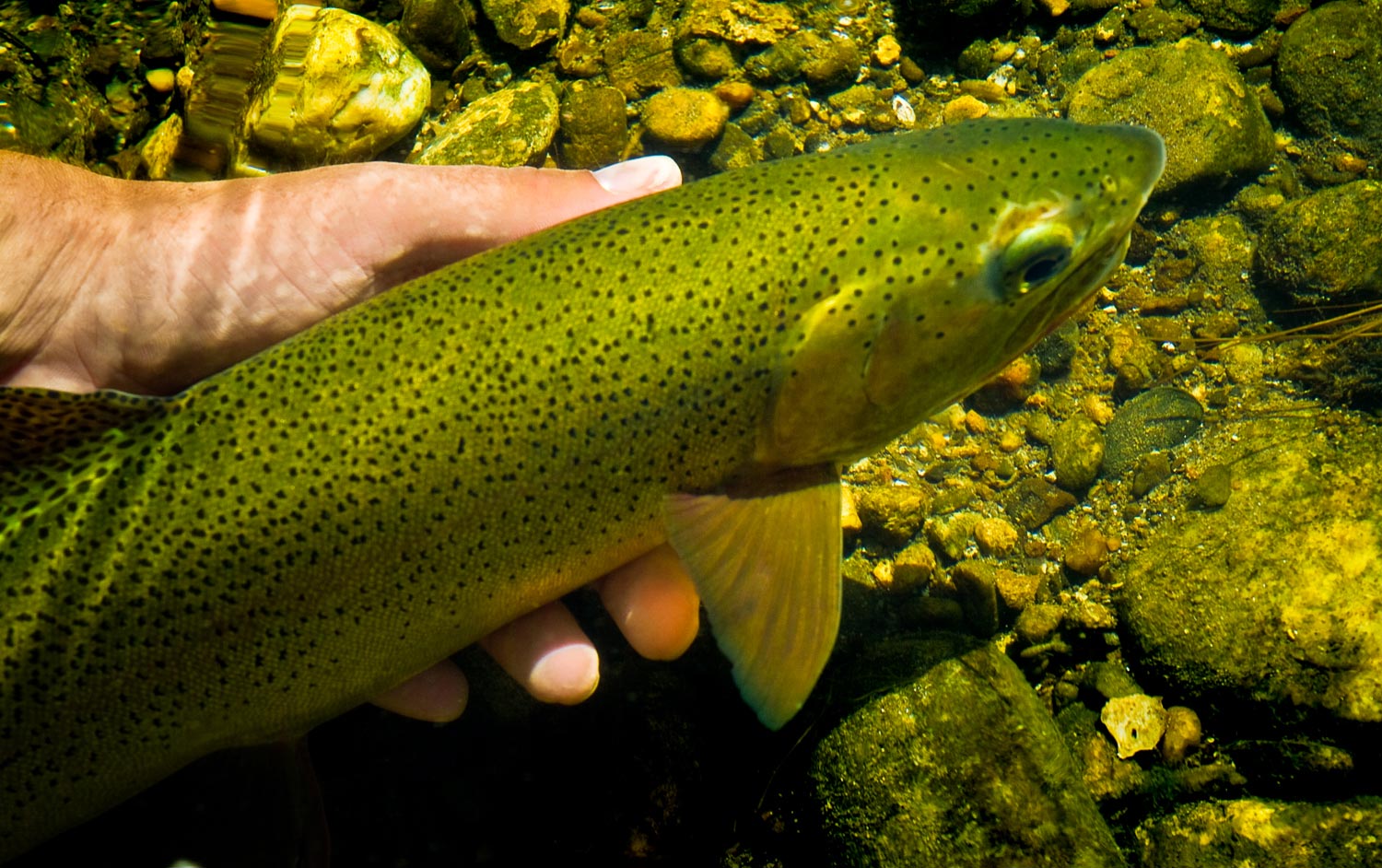
By Louis Cahill
Tired of hooking big fish just to lose them in the fight?
This came up the other day when I was fishing with a buddy. Like too many anglers, he’d been losing big fish, one after the next, over the same simple mistakes. It was a ‘face-palm’ moment when I pointed it out. In part because he actually knew better than to do any of these three things, and did them any way.
I’m not ragging on my buddy. I’ve seen plenty of anglers make these same mistakes and suffer the consequences. Simple habits you can get away with on the average fish become huge disasters when you hook a trophy. Have a look at this list and make sure you you’re not making the same mistakes.
3 BAD HABITS THAT LEAD TO LOST FISH
Ignoring wind knots
How many times have you felt a wind knot in your leader and thought, I’ll fix it next time? Maybe the fishing was hot and you didn’t want to miss any action. How many times did ignoring that wind knot result in breaking off a nice fish? The only time to fix wind knots is NOW. As soon as you find them, and it’s a good idea to check your leader often. If you find wind knots, chafing, nicks, or anything other than a perfect leader, fix it right away. You never know if the next fish to eat your fly will be a trophy.
A sloppy reel
Ever look down at your reel and see a sloppy mess of fly line poorly stacked on the reel? I know I have. Maybe things got hectic fighting the last fish or you just spooled up a bunch of slack line in a hurry when you saw a fish rising in the next pool. That sloppy reel is an invitation for disaster. Poorly spooled line can easily bind or knot when a strong fish starts ripping it off of the reel. When you see a bird’s nest in the making, stop, strip it all off of the reel and stack it neatly. It’s time well spent.
The statuesque angler
Like Fred McDowell said, “When the lord gets ready, you got to move.”
Read More »Look At It From The Fish’s Point Of View
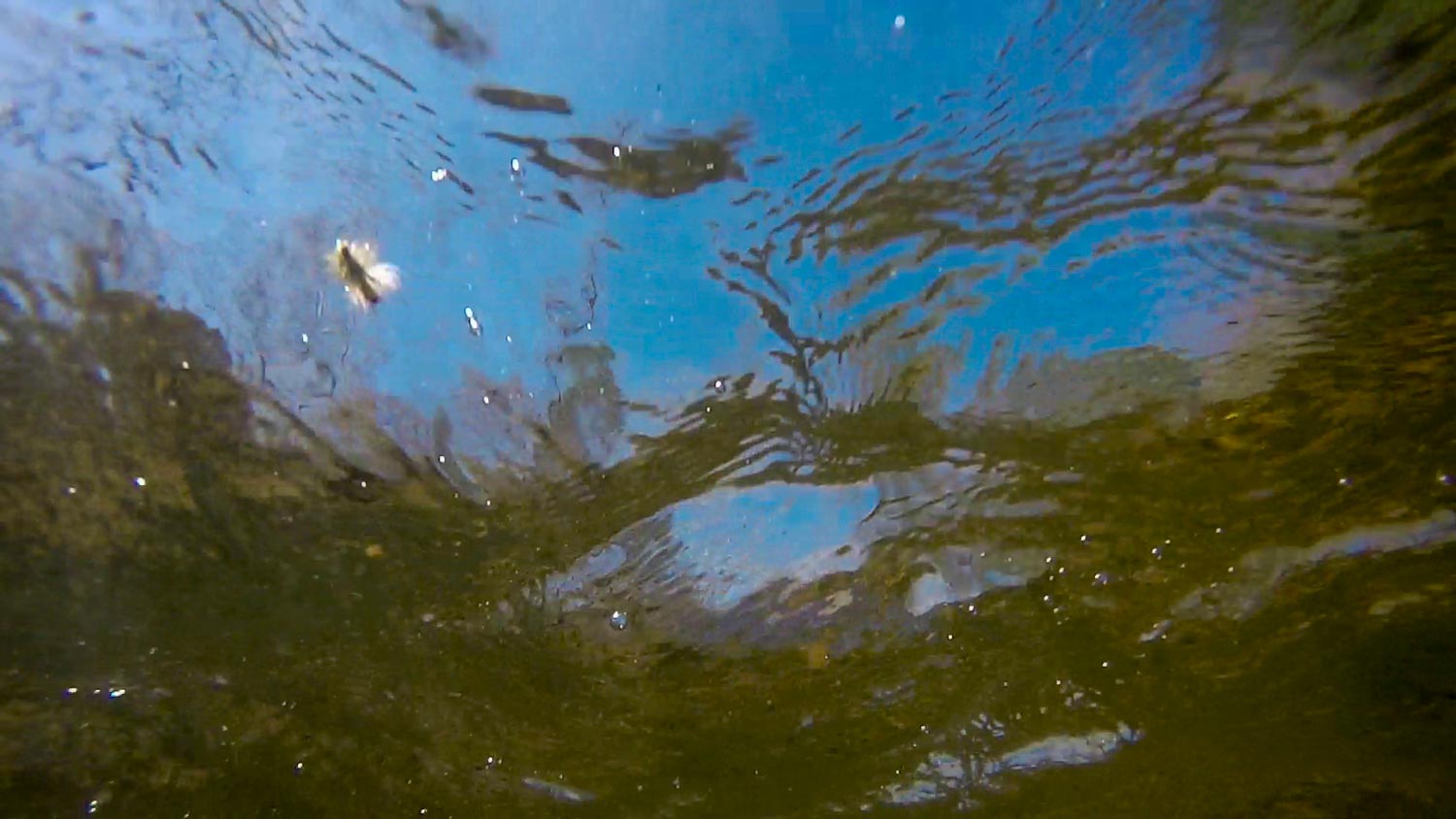
Light affects what fish see and how they eat.
I am teaching a young man to fly fish. We have fished well past sundown. There is only a band of warm red along the horizon giving way to a glowing blue sky. A bright moon and stars just beginning to show themselves. Forty feet away the surface of the water dimples and rings in rhythm as trout rise the the evening hatch. My student is frustrated.
“I don’t think they like this fly. Let’s change it.”
“It’s too dark to tie on another,” I tell him, “let’s try this one a little longer. Maybe a few feet longer cast.” I know this is the right fly. He just isn’t reaching the fish.
“I think it’s too dark. They can’t see it.”
“They can see it.”
“How? It’s totally dark. I can’t see it.”
I resist my smart ass nature. I don’t say, “Well they can sure as hell see the naturals.” In stead I tell him, “Look up. Can you see those swallows? That’s what the fish sees. Mayflies, like swallows flying above them.”
This is a simple idea, but one fly anglers don’t often think about. The fish looks at your fly from a different point of view. An almost exact opposite point of view than ours. The world looks a whole lot different from below. Light, and the where it’s coming from, play a huge roll in how you choose and present your fly.
Trout are always looking up.
Even when they are eating nymphs they look for food which is at their level in the water column or higher. Not all species feed in this way. Bonefish or carp for example feed on the bottom. Other species like tarpon look up for their food. The roll which point of view plays in their eating habits, and in your presentation, will vary from species to species. Let’s look at a couple of examples.
If you read the article, “What Does The Trout See,” you know that trout have very acute color vision when the light is bright. That doesn’t always mean that fly color is crucial in full sun. Let’s say it’s mid day and the sun is high in the sky. When fish look up at a dry fly, they are looking right into the sun. Not only is this uncomfortable for them, it seriously limiters their vision.
A fly floating on the surface with the sun directly above will appear
Read More »Presenting A Fly With Your Back Cast Is Like Being Ambidextrous
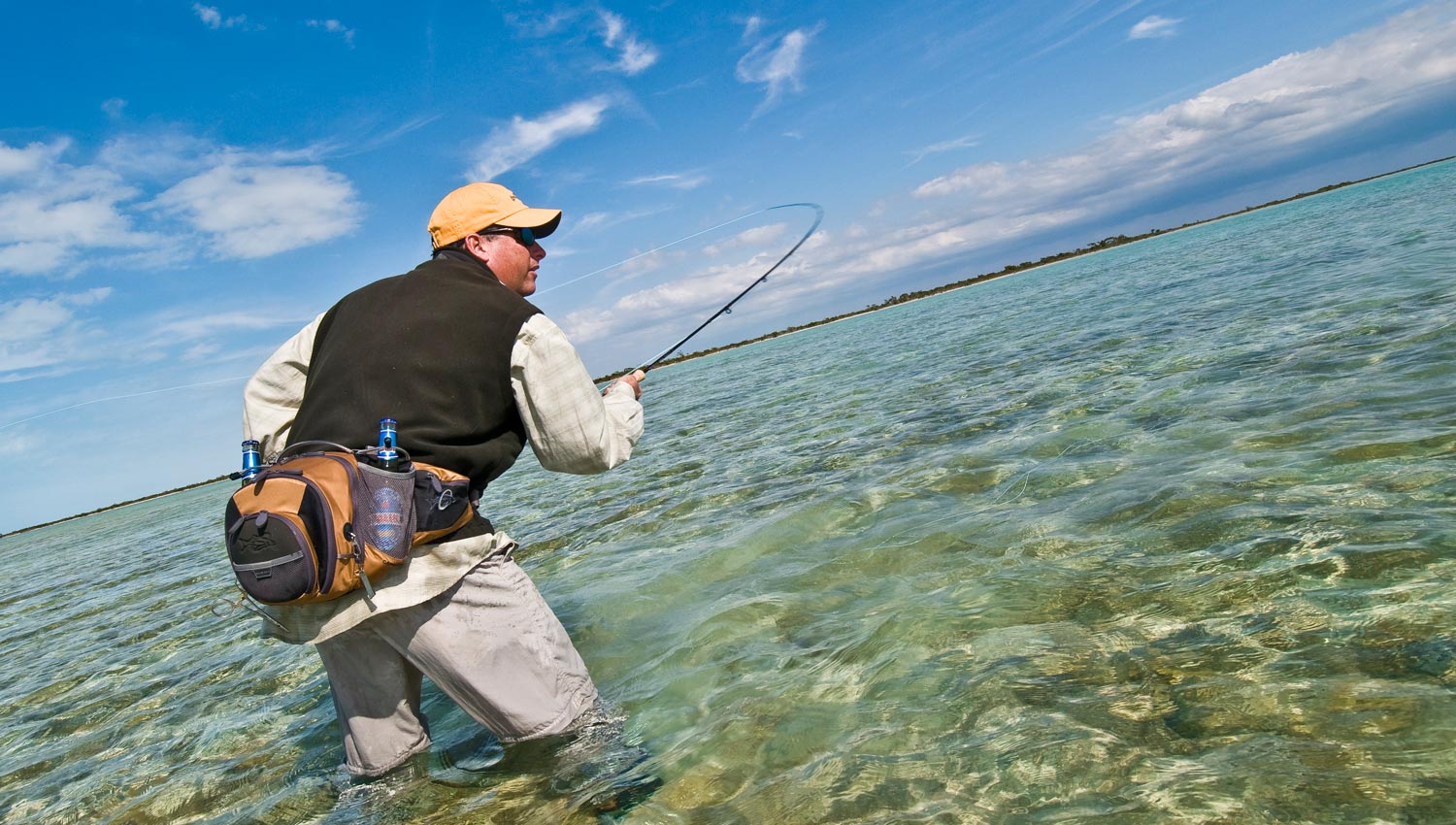
LET’S TALK ABOUT WHAT I THINK IS ONE OF THE MOST UNDER-RATED SALTWATER FLY CASTS. THE BACK CAST PRESENTATION.
Imagine being ambidextrous and never having to worry about what direction the wind is blowing. That’s what a back cast presentation can do for you. Using your back cast to present the fly to the fish is a key ingredient in the recipe for success in the salt.
We all know that taking advantage of every opportunity will increase your odds of catching more fish. If you can produce a nice presentation on your back cast you can take advantage of every opportunity, in any direction. Add speed and accuracy, and you will become a great saltwater fly angler.
Using the back cast as a presentation cast can be a foreign concept. Most anglers do not effectively utilize the incredible versatility of this cast, because they don’t even know to consider presenting the back cast to a fish. Everyone thinks a back cast is just a back cast and that’s all.
Let’s start looking at the many different uses for a back cast presentations. I will also explain how to use these tactics to help you catch more fish.
Angler Awareness
Your ability to have a constant awareness of wind direction is crucial. Whether you are wading or fishing from a boat, your orientation to the wind will constantly be changing. Spotting a fish will call for a quick choice of a forward cast or a back cast presentation. Your ability to know which cast will be best, ahead of time, is key. As you gain experience, this step will become automatic.
Loop Roll Over
Fully extending your line arm on your back cast presentation will help add much needed power to help roll over the loop, turning over the leader and laying your fly out straight. Lay your fly out straight and your odds of catching fish go way up.
Keep an Eye on Your Target
Since you are casting forward 180 degrees away from the fish during a back cast presentation, it’s difficult to keep an eye on the fish. Turning your body to the side a bit and opening up your stance will help you to swivel your head easier during casting to help keep your eye on the fish. Beware when you open your stance, you risk breaking your rod path off a straight line plane, causing your loop to open losing distance and accuracy.
Back Cast – Forward Cast
When presenting your fly on a back cast you should focus on all the same things you would when presenting a good forward cast. High line speed, tight loops, double hauling and a correct trajectory are all important for a successful back cast presentation.
Strip Quickly and Take Up Slack
Opening up your stance while presenting your back cast not only helps you keep an eye on the fish but will also
Tie Connor’s Jerk Minnow
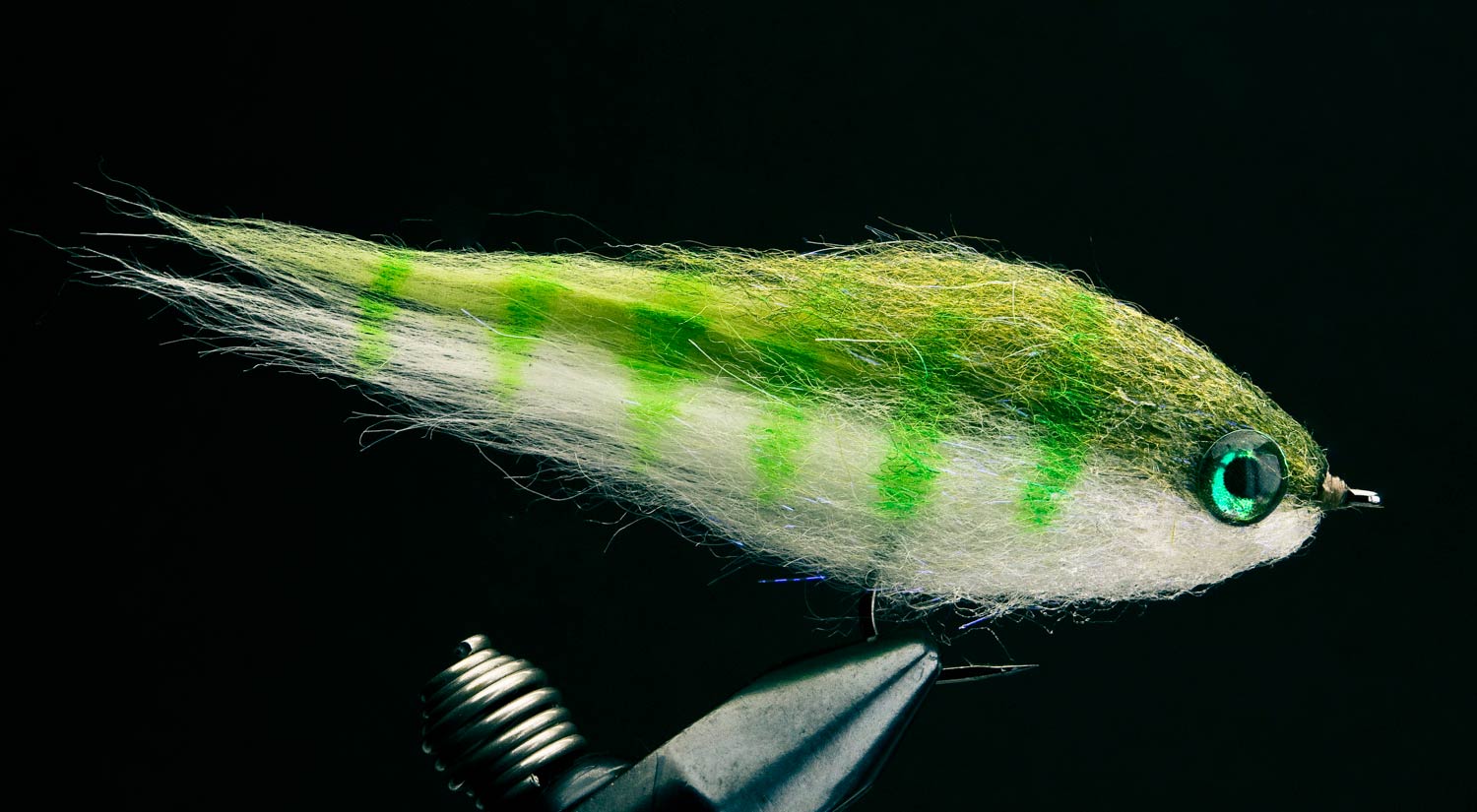
THIS DECEPTIVELY SIMPLE FLY IS ALL ABOUT THE ACTION.
Connor Jones, from Cohutta Fishing Company, ties this versatile baitfish pattern for bass and trout here in the southeast. It’s a simple fly with a clean profile and it’s easy to tie in a variety of colors.
The secret to the jerk minnow is it’s action. Connor builds a hard, hollow head, from Senyo’s Laser dub and Clear Cure Hydro, which captures air and gives the jerk minnow an erratic darting action, when stripped hard. Big predatory fish can’t resist it
It’s a fly that will produce fish on lakes and rivers. Tie it in the colors and size to match the forage species on your local waters. Strip hard and hang on tight!
Watch the video and learn to tie Connor’s Jerk Minnow
Read More »A More Effective Indicator Setup For Fast, Deep Water: Video
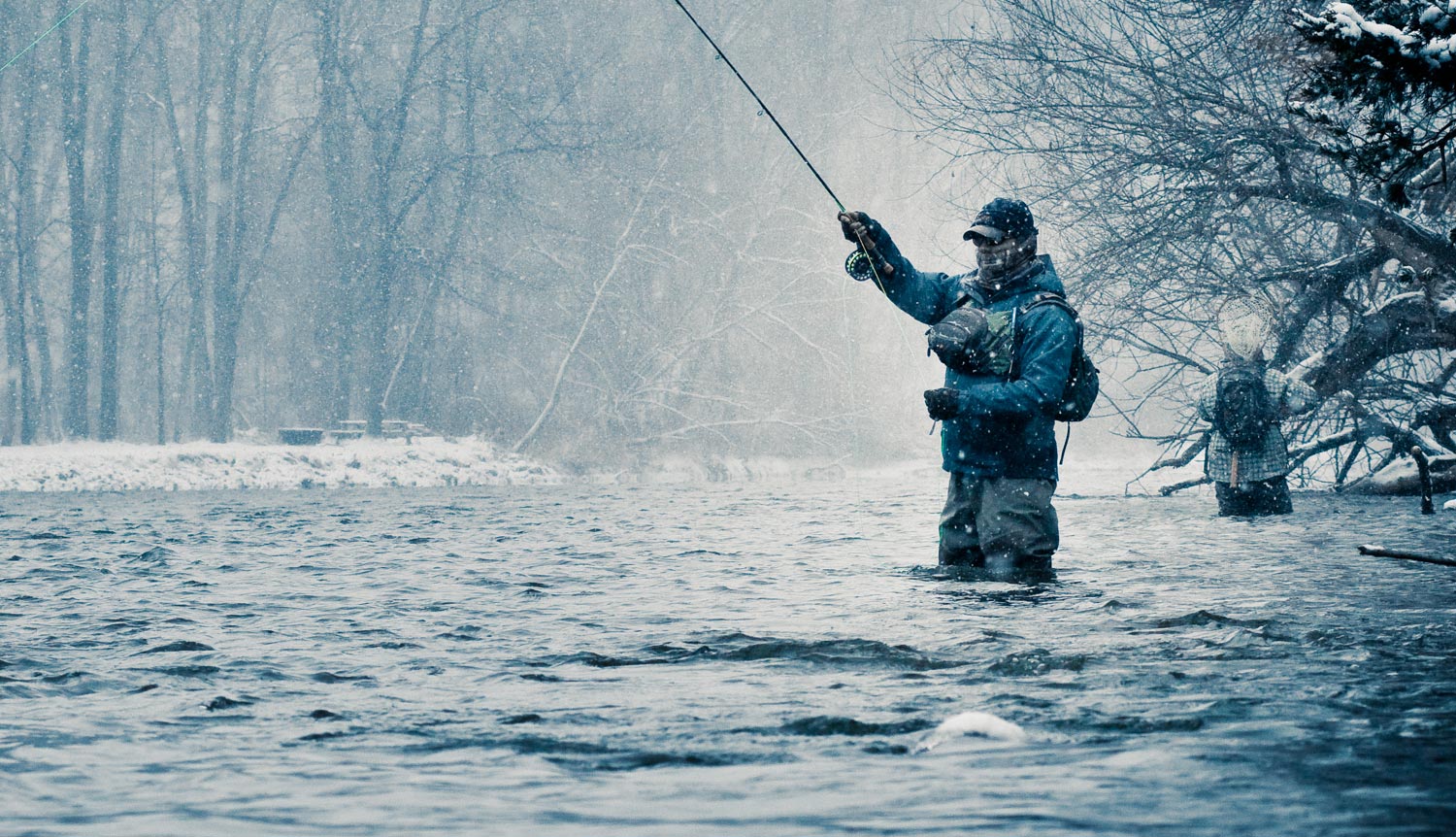
Here are two techniques for more effective fly-fishing in deep, fast water.
Indicator fishing with nymphs can be a very effective way to target trout in deep water. Still, it can be a challenge to get your flies in front of the fish, when the water is really deep and the current is moving quickly. During the colder months getting those flies down in the fish’s face is critical.
When I’m faced with these conditions, I like to use a weighted 90 degree indicator setup. It’s a simple trick but the results will shock you. When combined with a big initial mend, which moves your indicator upstream, your flies will rocket to the bottom. This setup is also more sensitive than a standard indicator rig. It will put you on fish in the deepest runs.
WATCH THIS VIDEO AND LEARN HOW TO RIG AND FISH THE WEIGHTED 90 DEGREE INDICATOR.
Read More »High Point
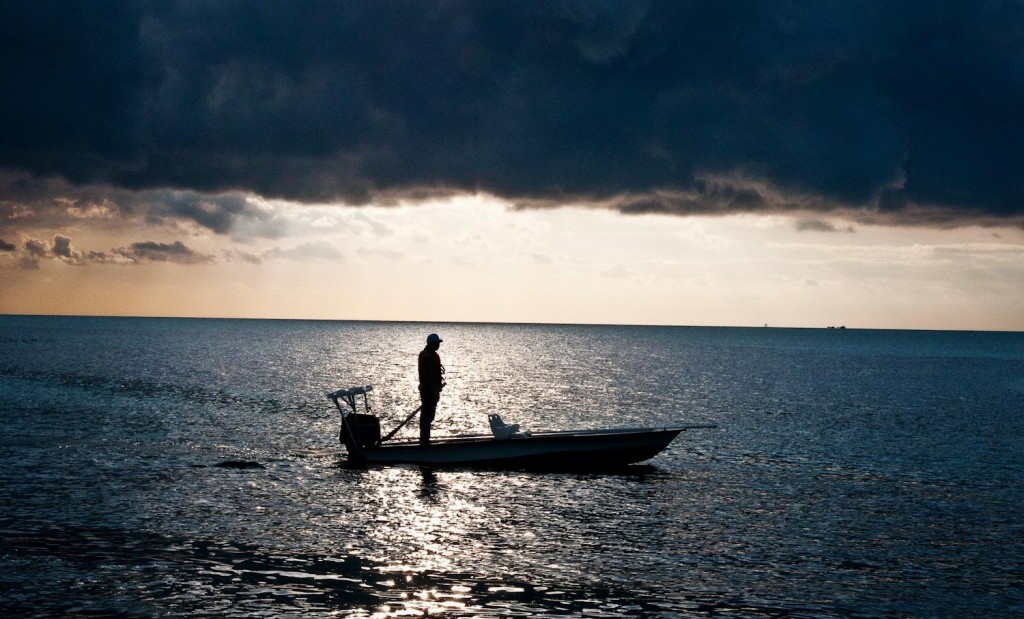
Tim looks like he has swallowed his tongue.
He’s pale, eyes dilated, the corners of his mouth twitching. He’s soaked in sea water, eyes burning and red. His fingers digging into his seat bottom, he squints and stiffens like a corpse preparing for the next wave which drops the little skiff hard. It sounds like a car crash and sends another five gallons of water into our faces. Nothing, it appears will stop the next navy blue, six foot wave from hurdling over the bow. It’s a fraction of an inch from doing just that when the bow lifts. The wave seems to ride the bow up, hovering literally an eight of an inch from crashing over into the cockpit for a few seconds. And then the whole thing starts again. Norman Rolle, our guide stands stoic in the back of the boat, a buff bearing the Rio logo pulled up over his face all the way to his Smith wraparound sunglasses. His left hand is on the back of Tim’s seat, his right gently twisting the throttle of the outboard, accelerating up the waves then coasting down, steering us carefully through the cross currents and surf crashing into, and back from the wall of jagged rock that the Bahamians call High Point. High Point is one of the most inhospitable places I’ve ever seen. It juts into the Atlantic like a knife blade for a quarter mile, huge rough hewn boulders guarding it’s coast. It separates the inhabited northeast coast of South Andros Island from the wild and isolated south. It can only be passed on a fairly calm day, and today is not so calm.
Tim leans over to me and says nervously, “Jesus, this is bad”. I’m suddenly aware that I’m grinning and quite possibly looking a bit out of my mind. “Oh no” I tell him, “I’ve seen it much worse”. “I did this once when the whole boat came out of the water on every wave, no shit, the whole boat dry every wave, you could hear the prop singing in the air”. He didn’t seem at all consoled so I quickly decided to have some fun with him. “Do you know how a flats boat sinks?” I asked. He shook his head. “Well, you see”, I continued, “when the first wave comes over the bow, it scares the hell out of you, but you think you’re going to be ok…you’re not, once that first wave comes over you’re fucked. The boat can’t climb the next wave with all that water in it, so the next wave fills it, then the third wave flips it over and if you’re still in it you’re dead, so what you want to do is, when that first wave comes over, pitch the cooler, then get out after it. That way you have something to hang on to.” For a minute I honestly thought he might puke, mulling over the idea of fighting me and Norman for a place on the floating cooler, but by then we were through the worst of it and Tim was clearly relieved to not be staring at a wall of water every ten seconds. I didn’t see any need in telling him I was messing with him, nor did I see any profit in telling him I knew a guy who’s boat had gone down exactly like that.
Read More »Don’t Lead Me On: Tippet Length For Dry Flies
By: Alice Tesar
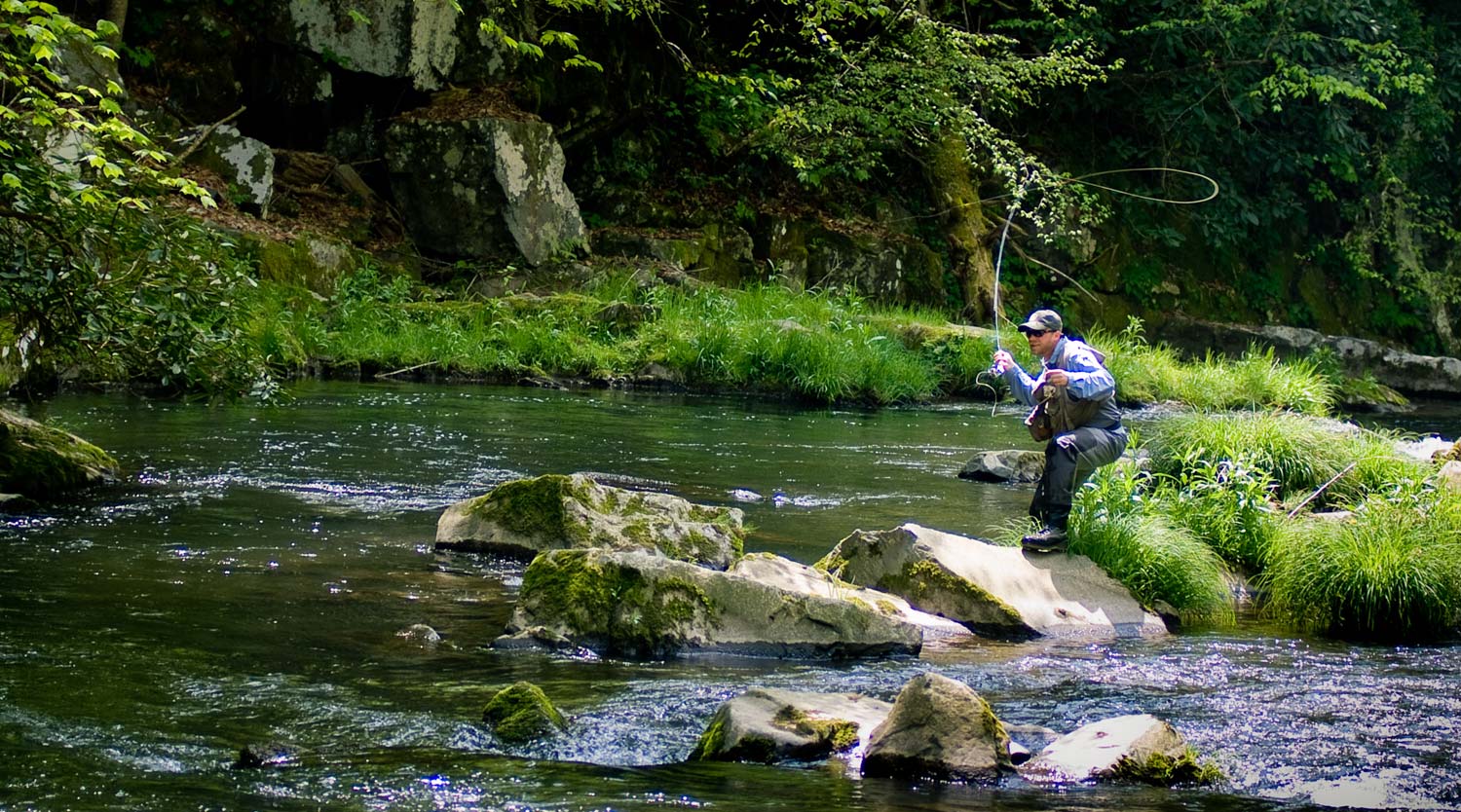
Dry fly season is upon us and the shop is filled with folks wondering why the fish aren’t interested in their dry flies.
Yes, it is important to get the correct flies but equally as important is your leader and tippet. The biggest mistake these people are making, one I made for years, is just switching out their nymph for a dry fly without addressing their tippet length.
Without giving you too much to work with, recognize that the evolution of tapered leaders has revolved around nymphing and streamer fishing. Engineered with a more aggressive taper to cut wind and cast greater distances. Most factory made tapered leaders ignore the long tippet section required for a dry fly presentation.
Adding one to three feet of tippet (*gasp* yes, your leader and tippet will now be close to 13’ long) will allow you to mend easier (if you need to mend at all) and will give you a more natural drift without the added weight of a tapered leader. Instead of fretting about turning over your fly in a long cast think about
Read More »Fly Casting Tip: Don’t Ride the Brakes During Your Casting Stroke
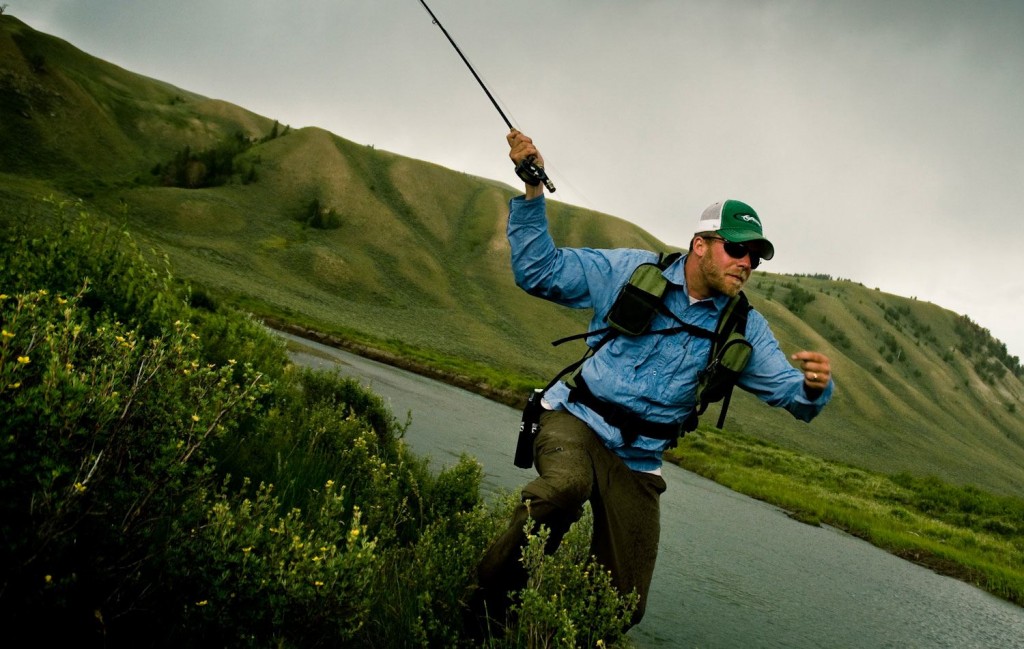
Are you finding that you’re lacking distance and falling short of your target with your fly casting? Is your power and line speed insufficient? If the answer is yes, I bet you’re also getting a fair amount of tailing loops or dreaded wind knots aren’t you? Come on, be honest. There’s absolutely nothing to be ashamed of if you’re periodically falling into this category with your fly casting. Believe me when I say, you’re not at all alone. I see it regularly on the water guiding, and most of the time anglers struggling with these problems usually are only doing one thing wrong with their fly casting. Nine times out of ten, in this scenario, anglers are decelerating their fly rod during their forward cast, back cast, or even both, in some cases. What you need to be doing to fix this problem is smoothly accelerating your fly rod during your casting stroke, making sure you’re stopping the rod at it’s fastest point. This will allow your fly rod to distribute the energy loaded during your cast efficiently, and you’ll have plenty of power (line speed) to reach your targets. Deceleration During Your Casting Stroke: Short Story & Case Study This past fall I was fishing big attractor dry flies with a client of mine. There were plenty of big fish willing to rise to our offerings, but to get them to eat, we had to stay far back and make long casts to them. Otherwise they’d spot us and spook. My client, a capable fly fisherman with strengths in short presentations and roll casts, developed a weakness for distance, when a head wind picked up. No matter how hard he tried, he couldn’t get the distance needed to present his dry fly ahead of the fish. Several minutes we … Continue reading
Read More »10 Tips For Spotting Permit
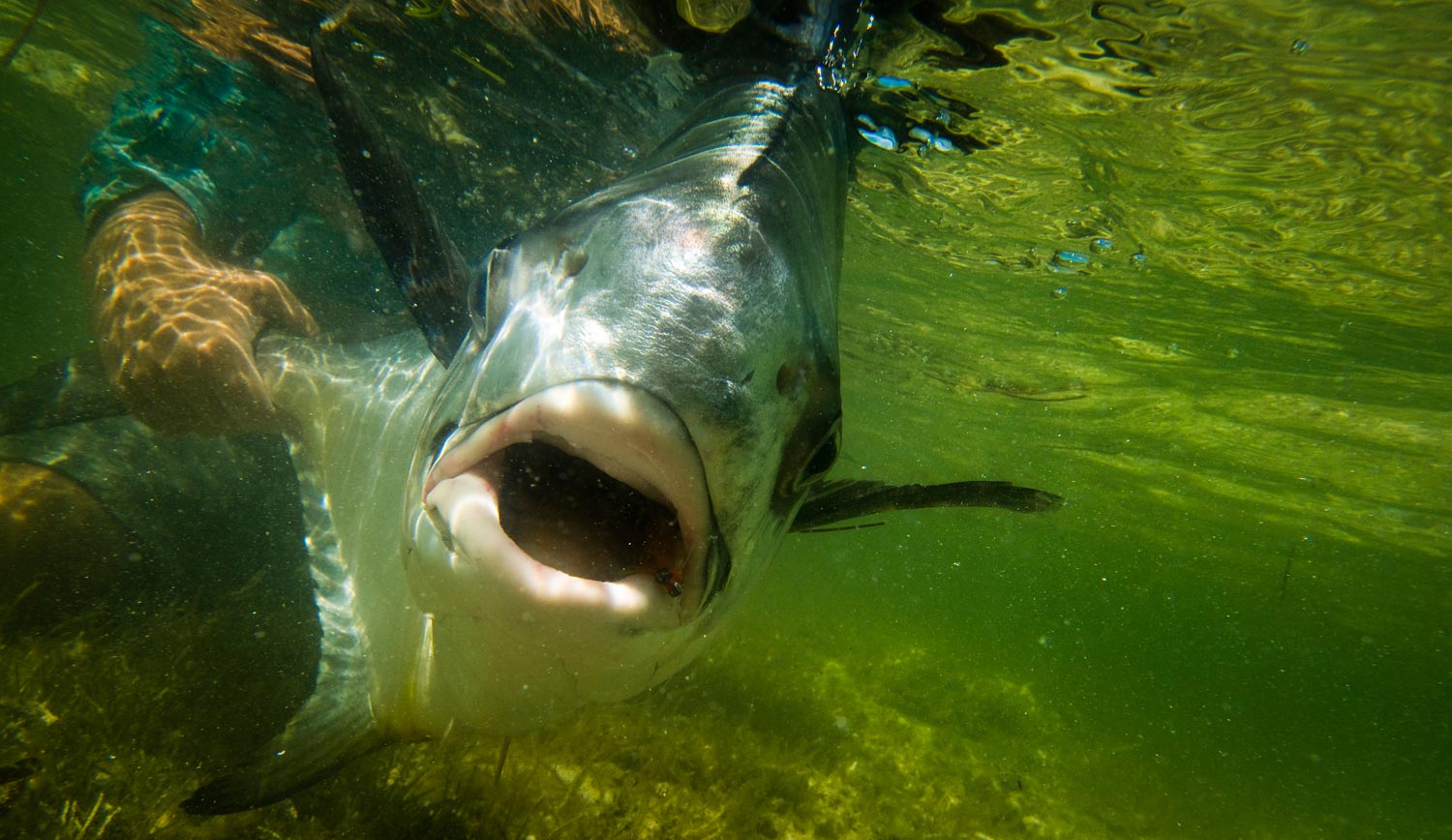
PERHAPS THE LOFTIEST GOAL IN FLY FISHING IS CATCHING A PERMIT.
Maybe it’s not your thing but if there truly is a fish of ten-thousand casts, it’s the permit. There is enough to catching permit to fill a bookshelf or magazine rack. It’s a complicated game, but where it starts is simple. To catch a permit, you must find a permit. And to find a permit, the angler must know what to look for. With that in mind, here are 10 tips to help you spot a permit.
Have the right glasses
This is stupid simple but it really is the most important piece of equipment for the saltwater angler. There is no replacement for quality polarized sunglasses. Good saltwater glasses have a rosy color to the lenses. Pass on green or grey. Copper, rose or brown will offer better contrast. A lighter tint to the lens is valuable on darker days and a frame that shade your eyes is a plus. Glass lenses offer the sharpest vision and, unless you have a heavy coke-bottle prescription, that’s what I recommend.
Tails
The long, graceful forked tail of the permit is its most distinctive feature. It is black in color and stands out when the fish shows its profile. Often the permit’s broad, silver body disappears completely and it is the black double sickle tail that gives him away. This sight is never more exciting than when the tail is held up out of the water. Called ‘”tailing” this happens when the fish feeds off the bottom in shallow water. This means that the fish is actively feeding and the chances of him eating your fly are good.
Spikes
The permit’s long, sickle-shaped dorsal fin will often give him away. When the fish is
6 Tips for Catching Suspended Trout
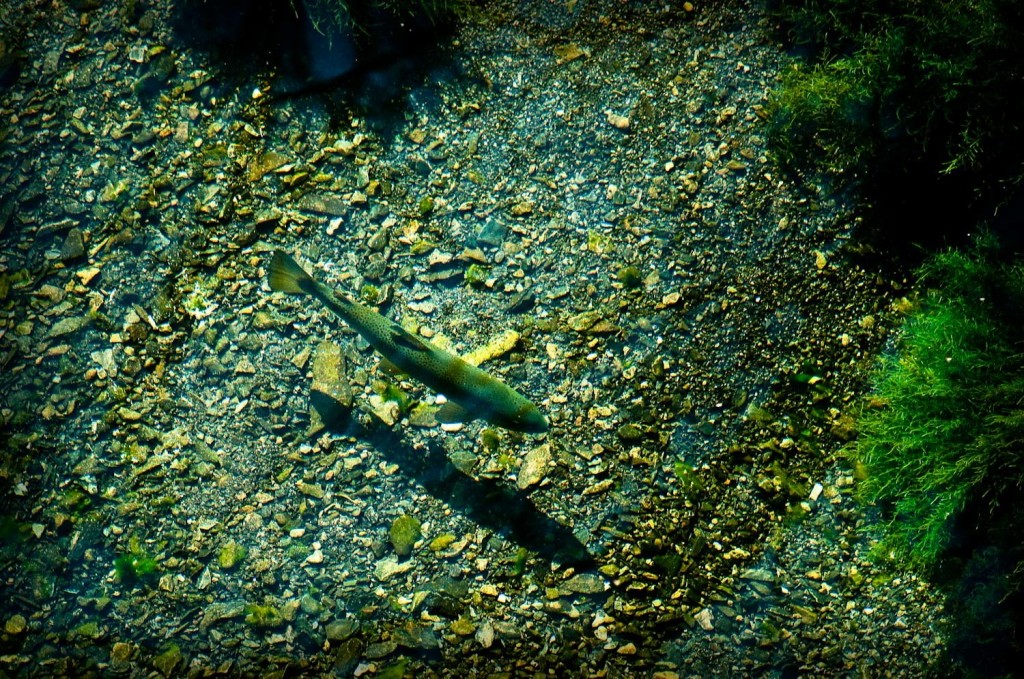
One of the toughest situations I’ve encountered trout fishing over the years, is when trout are suspended in the water column and feeding in a stationary position.
These trout are usually too deep to persuade them to rise to your dry fly on the surface, yet are also holding too far up from the bottom for you to easily dredge your tandem nymph rig in front of them. Most of the time, this is a frustrating sight-fishing scenario for the fly angler, where all you see is the trout occasionally open and close its mouth. You can see the trout you’re trying to catch, but no matter how hard you try, you can’t seem to get your flies to drift in the correct feeding zone of the holding trout and get them to eat. I see this situation a lot on deep clear pools or on long and slow flowing runs, but you can also find this same situation in pocket water where eddies and irregular bottom structure provides slower water holding stations/sanctuaries for trout as well.
Make no excuse, these trout are catchable. It just requires a more technical approach and increased awareness of where your flies are drifting for you to find success. For fly anglers to catch trout in this situation they need to correctly match their fly fishing rig with the water they’re fishing, and slow down and concentrate on making quality presentations not quantity.
Tip 1: Get as close as you can to the sighted trout without spooking it.
I’ve found the trout that are suspended and feeding stationary, usually are also lazy. They don’t want to have to swim out of their position to feed, and that means fly anglers will need to make accurate and precise presentations, since the strike zone is so small. By getting close to your target you’ll find it much easier to keep your flies consistently drifting at the correct depth and in-line with the trout. Often if you’re positioned too far away, you’ll find one presentation will be good, and the next three will be off target. This might not seem like a big deal, but you’re not only trying to get good presentations, you’re also trying to read the fish to see if it likes your pattern or not as well. Getting into proper position and keeping your casting distance to a minimum will allow you to accomplish both much quicker.
Tip 2: Take the time to look for drifting food in the water before you choose your fly patterns
In the last tip, I said, “usually these suspended fish are lazy”. They are in the big spectrum, but it’s important to understand that when trout are suspended and feeding stationary, most of the time it’s because the trout are keyed in on a specific type of aquatic insect, that is drifting at the level the trout is holding. Spend a few minutes watching the feeding trout and look for any drifting bugs. If you see the trout continuing to feed regularly, but you can’t see any drifting food with your naked eye, a light bulb in your head should be going off and telling you to tie on fly patterns that are small. Try using a size 18-22 pheasant-tail nymph or a midge pattern. Don’t expect your size 10 woolly bugger to get the job done in this situation. Sometimes it will work, but most times, these fish are selectively feeding on small micro-invertabrates, and you need to downsize your flies to fool the trout into thinking it’s eating the same stuff it’s been feeding on the last couple hours.
Tip 3: Try a dry fly with two nymph droppers
This won’t work all of the time, but in shallow water situations, I’ve found good success using a dry fly and then tying on a long tandem dropper (two nymphs off the back of the dry fly). Approximate how deep you think the fish is holding, and tie on your lead dropper at that depth. Let’s say the trout you are sight-fishing to, is holding at two feet of depth. Tie on