
Something For The Window Shoppers
By Justin Pickett
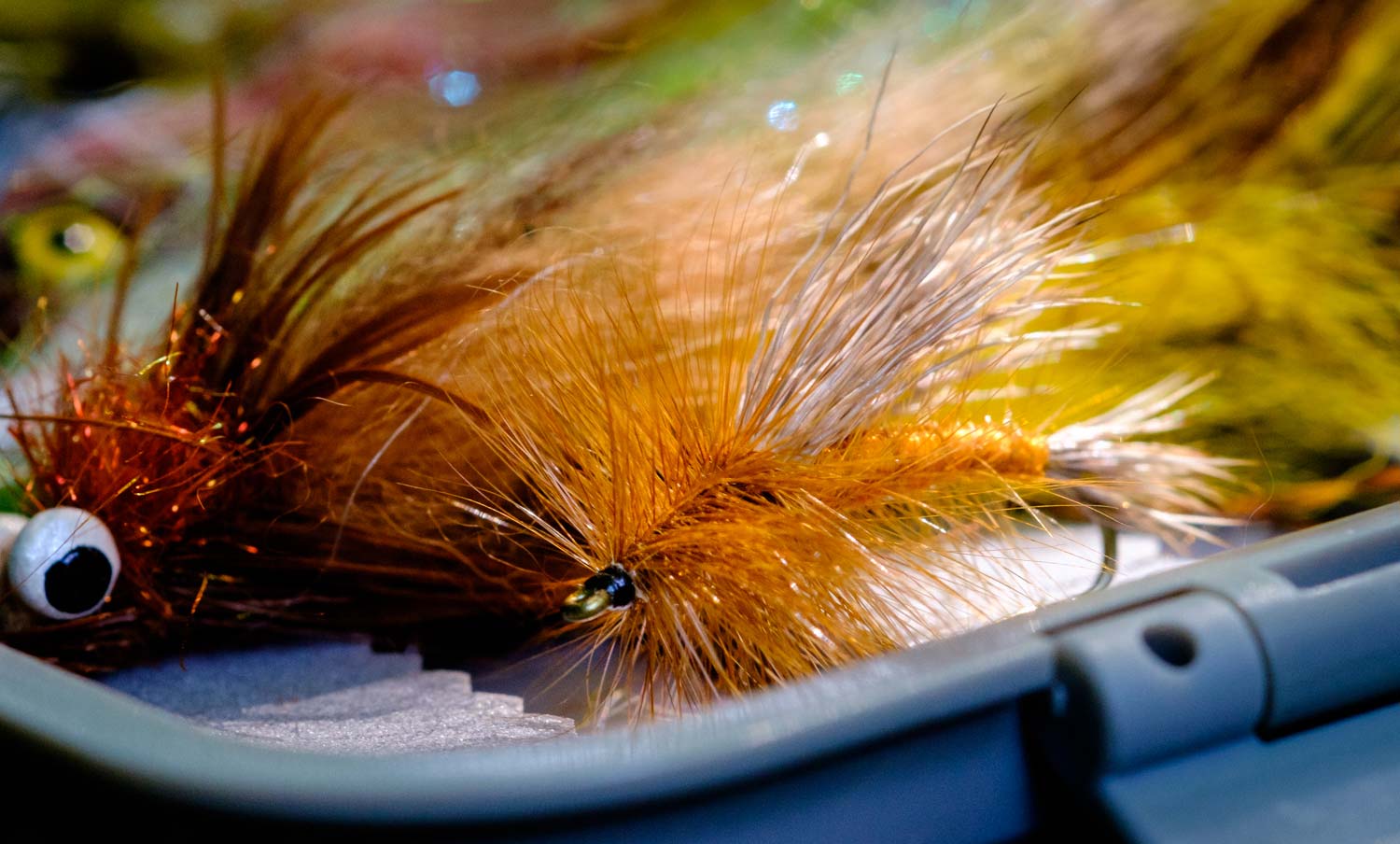
A little something to entice those “window shoppers” that appear and disappear behind your streamer.
Anyone who has thrown streamers for trout has likely experienced the exciting visual of seeing a trout appear behind your meaty fly… following, following, following… only to peel off just outside the oars and leave you empty handed. Yes, it’s better than not seeing anything at all, but it sure would have been awesome to have gotten that fish to eat instead, right?
Why that trout aborted their chase can be due to several reasons. Maybe the color just wasn’t the right shade of olive to entice a strike. Maybe it caught sight of the boat. Maybe the movement of the fly wasn’t just right. Maybe it was too big. Or maybe it just wanted to torture you, getting your hopes up only to squash your morale at the last second. However, one thing I have learned from these non-committal trout, is that one of the easiest things you can do to entice that strike is to offer them a second, smaller fly behind your streamer.
Smaller, unweighted flies provide trout that might be hesitant at striking a larger fly with another option. Tie these flies onto the bend of the hook with approximately twelve inches of tippet and chuck away. This can be accomplished with articulated streamers as well. Just tie the second fly onto the trailing hook. This may affect the movement of your streamer however, I haven’t noticed much difference so long as unweighted flies are used. This has worked for me tons of times and in numerous locations.
BUT, WHAT IF YOU DON’T HAVE AN ASSORTMENT OF STREAMERS ON HAND?
Read More »Shooting Trout With An Elephant Gun
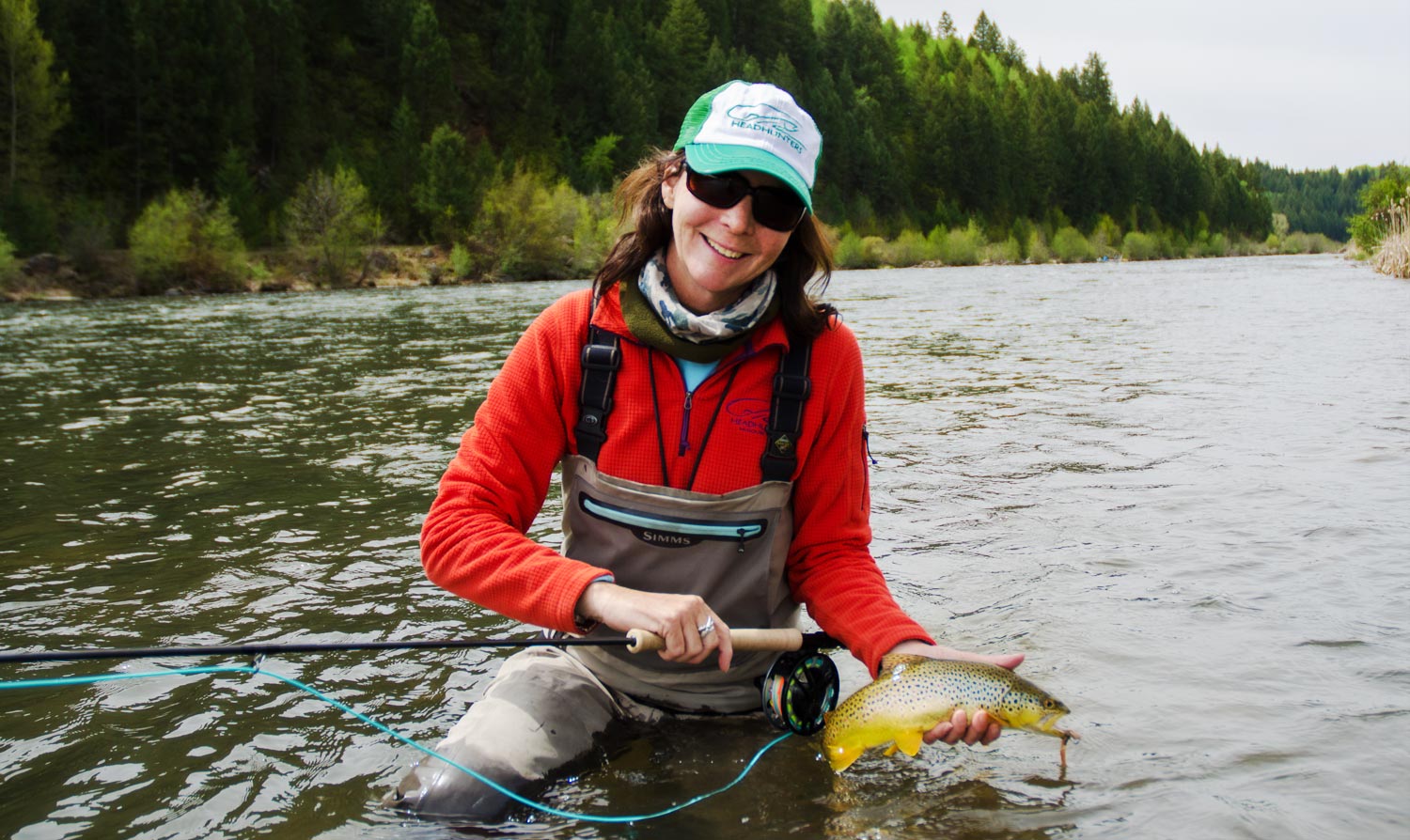
IF YOU’VE ADAPTED A SPEY OR SWITCH ROD TO SWING STREAMERS FOR TROUT YOU OBVIOUSLY DON’T CARE ABOUT THE NUMBERS.
You probably enjoy both the casting aspect and fishing for a grab. If you wanted to whack ’em and stack you’d have your indicator rod, or better yet, powerbait. I’m seeing more and more people swinging their spey and switch rods on trout rivers, especially in the fall. Those who’ve turned to the long rods for their anadromous fishing know how much easier it is to move a large streamer with a skagit line rather than a single handed rod.
Unfortunately the size of the trout we find seldom matches that of the steelhead we also target. Let’s face it, there’s not much of a fight with a sub 20” trout on a 5 or 6 weight spey or switch rod.
There are a variety of great truly trout-sized double handed rods on the market from the likes of Echo, Gary Anderson, Winston, and the forthcoming Sage rods. The ultimate conundrum being, when scaling down to trout sized (what I define as sub 300 grains) the lines have yet to catch up.
The skagit style heads and streamer specific lines available around and under 300 grains all have heads that are too long. This results in not having enough mass per foot to turn over a sink tip and desirable sized streamer.
Enter Mike McCune.
Mike is one of the original
Read More »4 Tips for Getting a Better Picture of Your Trophy
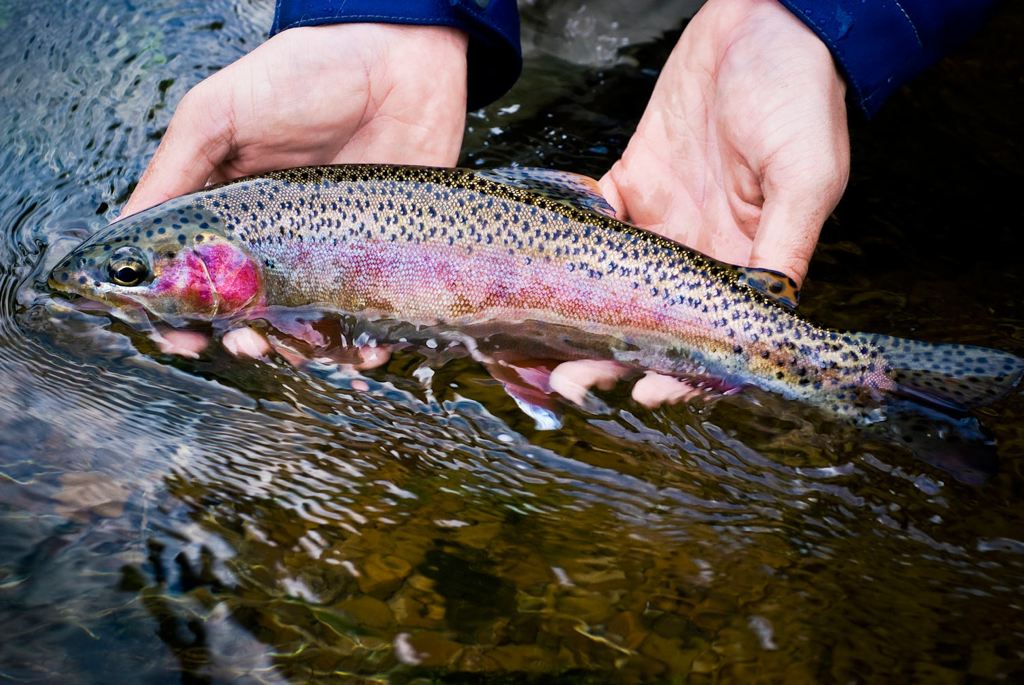
WAY BACK BEFORE WE HAD DIGITAL CAMERAS, I CAN REMEMBER HOW EXCITED I WOULD BE RACING TO THE CLOSEST ONE-HOUR PHOTO STORE TO GET MY FILM DEVELOPED.
The anticipation of waiting to review my big fish photos was almost as fun for me as catching the trophy. I wish I could say all those developed photos came out perfect but that’s far from the truth. Some came out great but the majority were blurry, had my head cut off, or I was holding the fish like a rookie. Nowadays we have the luxury of instant feedback with digital cameras, so we don’t have any excuse to not get good photo when the fish cooperates. Below are four tips for capturing better photographs of your trophies with examples of the right and wrong way to hold your fish. Keep in mind there is a learning curve for handling big fish. The more you do it the better you get.
1. Hold the fish with the tips of your fingers not your palms
Read More »RS2 – One of My Favorite Picky Trout Fly Patterns
There’s days when trout fishing is so slow, it seems like conditions couldn’t possibly get any worse.
You may find yourself questioning if any trout in the stream are willing to feed at all. At other times, you’ll have no problem locating pods of steady risers, but everything you throw at them is rejected. My buddy Brad in this situation usually volunteers to row the boat, opting for cold beer within arms distance and gazing at picturesque landscapes. The dude always has a Plan B ready to be put into action, ensuring he always has a good time on the water whether he catches fish or just a buzz, and I respect that.
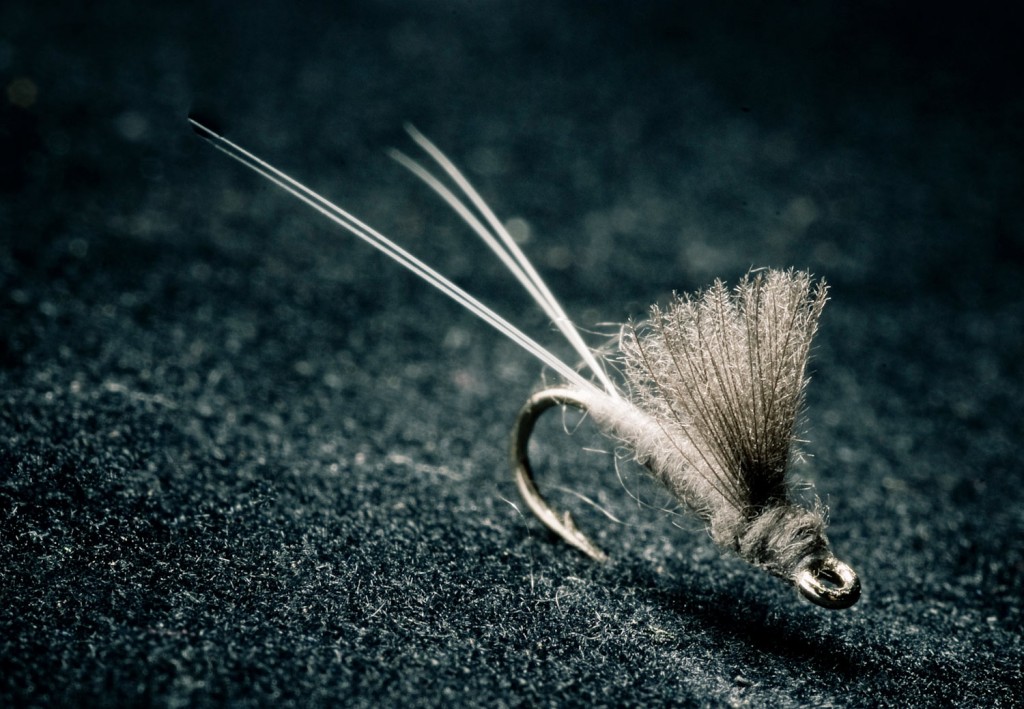
The RS2 fly pattern time and time again never fails to produce for me during tough fishing situations. And it really has the ability to catch fish just about any way you fish it. Fish it solo on fine tippet to wary sippers and you’ll fool a couple guaranteed. Drop it off the back of a larger and more visible dry fly if you’re having problems seeing it, and it will ride in the film, usually fooling fish on even the most technical trout water. I even have great luck fishing an RS2 as my dropper fly in a
Read More »Garner’s White Trash Bass Fly
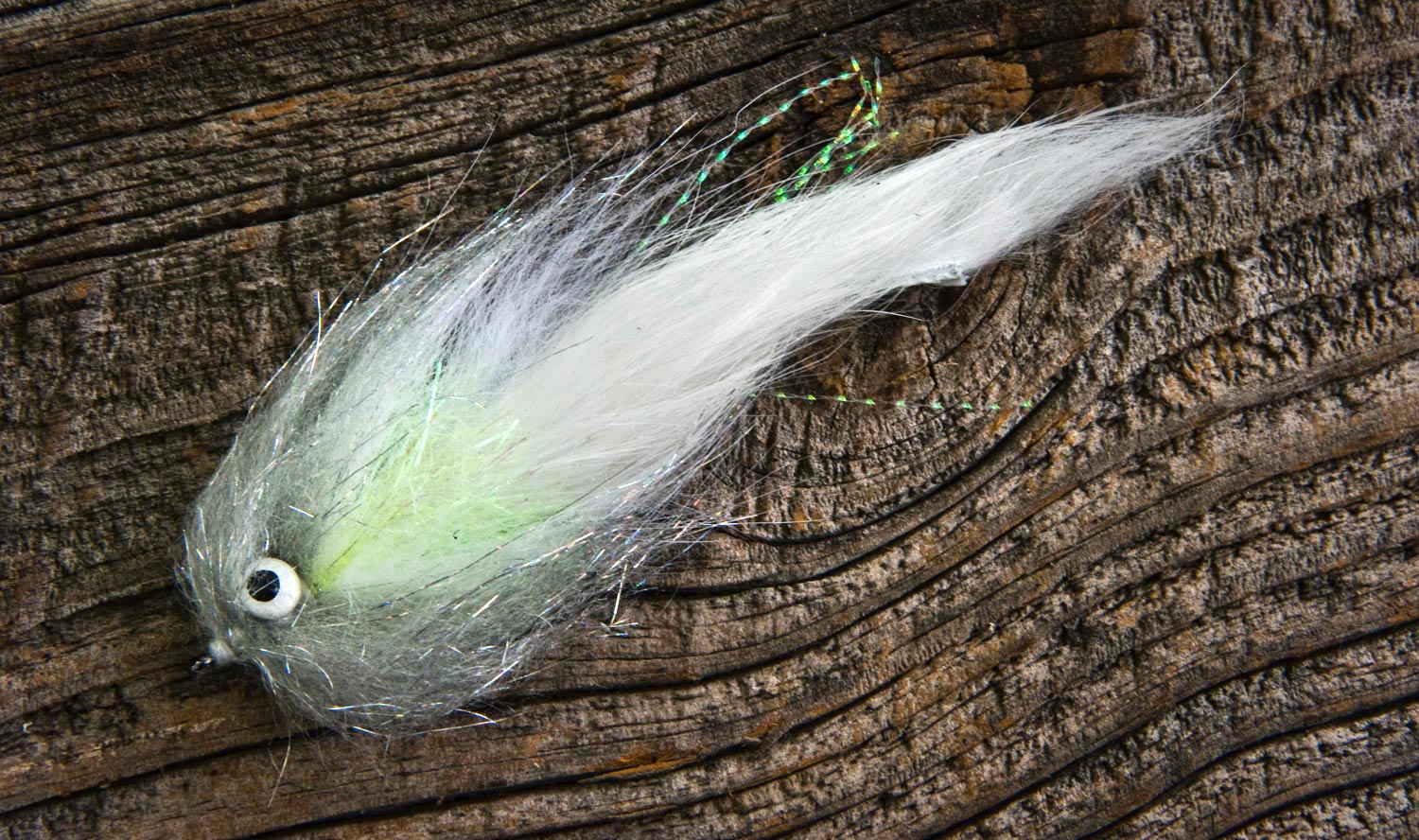
WANT TO CATCH BIG BASS?
How about really big bass? Striper fishing rivers in the south during the summer can be off the hook but it can also be challenging. Those big bruisers can get pretty damned selective and you a pattern that will get them moving.
Nobody knows this game better than Garner Reed. Today Garner is going to share a pattern he developed for catching big striped bass and spotted bass on the Etowah River. He calls it Garners White Trash and it gets the job done.
Watch the video and learn to tie this great bass fly.
Read More »The Hydropsyche With Peacock Quills
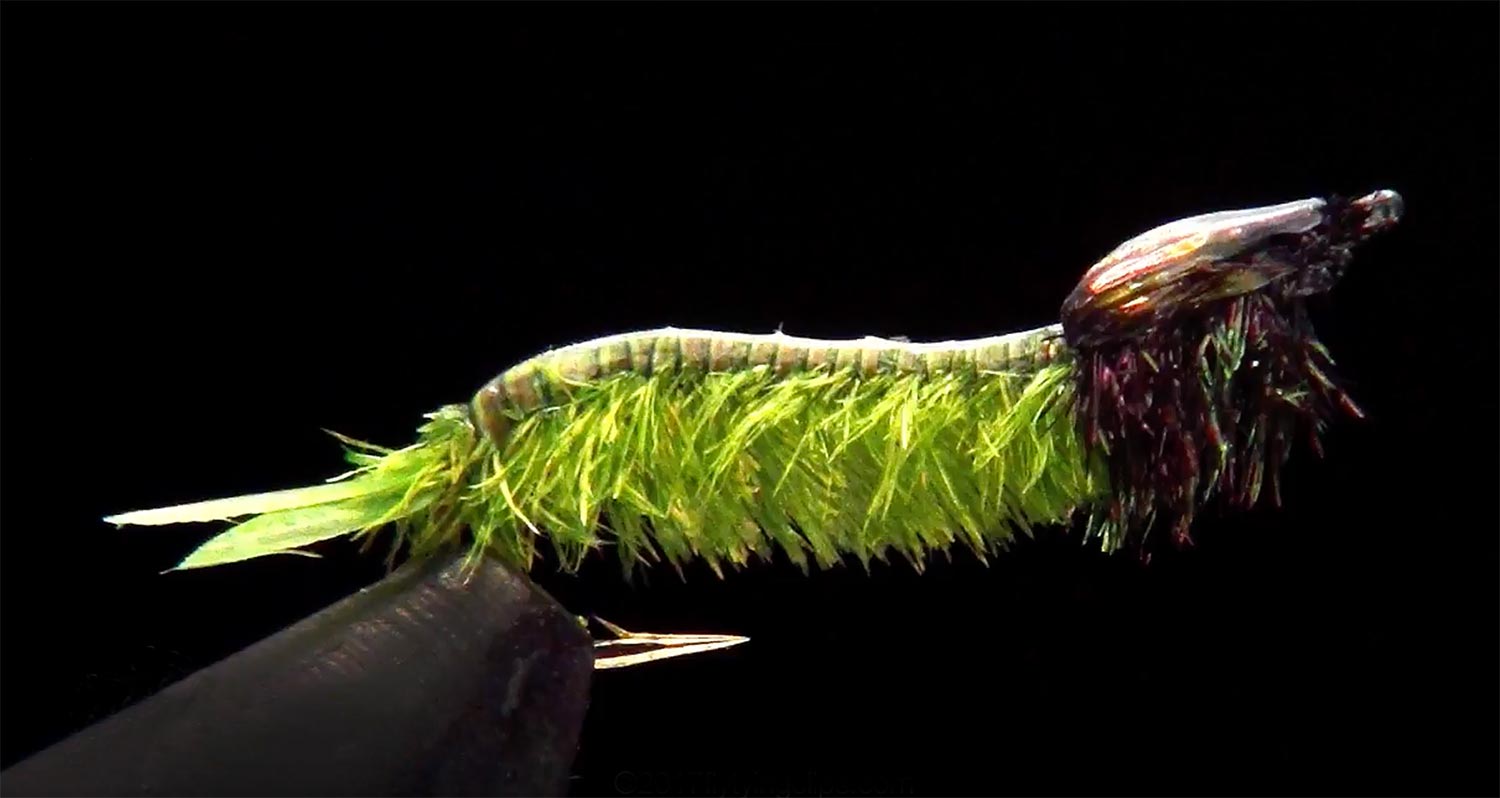
By Herman deGala
Here’s some advanced technique for tying flies with peacock quills.
Fly tying has always been the art of linking a series of techniques to achieve an overall design. Innovative techniques are often a result of problem solving.
I have always enjoyed the look of wrapped peacock quills and the beautiful segmented bodies they create with simple turns. I also enjoy the iridescence of peacock barbules and their fish catching attributes. I have come up with a simple way to combine both of these attributes.
I DEMONSTRATE IT HERE WITH A SIMPLE HYDROPSYCHE. I AM SURE YOU CAN THINK OF MANY MORE APPLICATIONS WITH YOUR OWN TYING.
Read More »Don’t Get Bold Feet!
By Justin Pickett
A few weeks ago I was sitting on the back of my jeep, getting ready to hit the water.
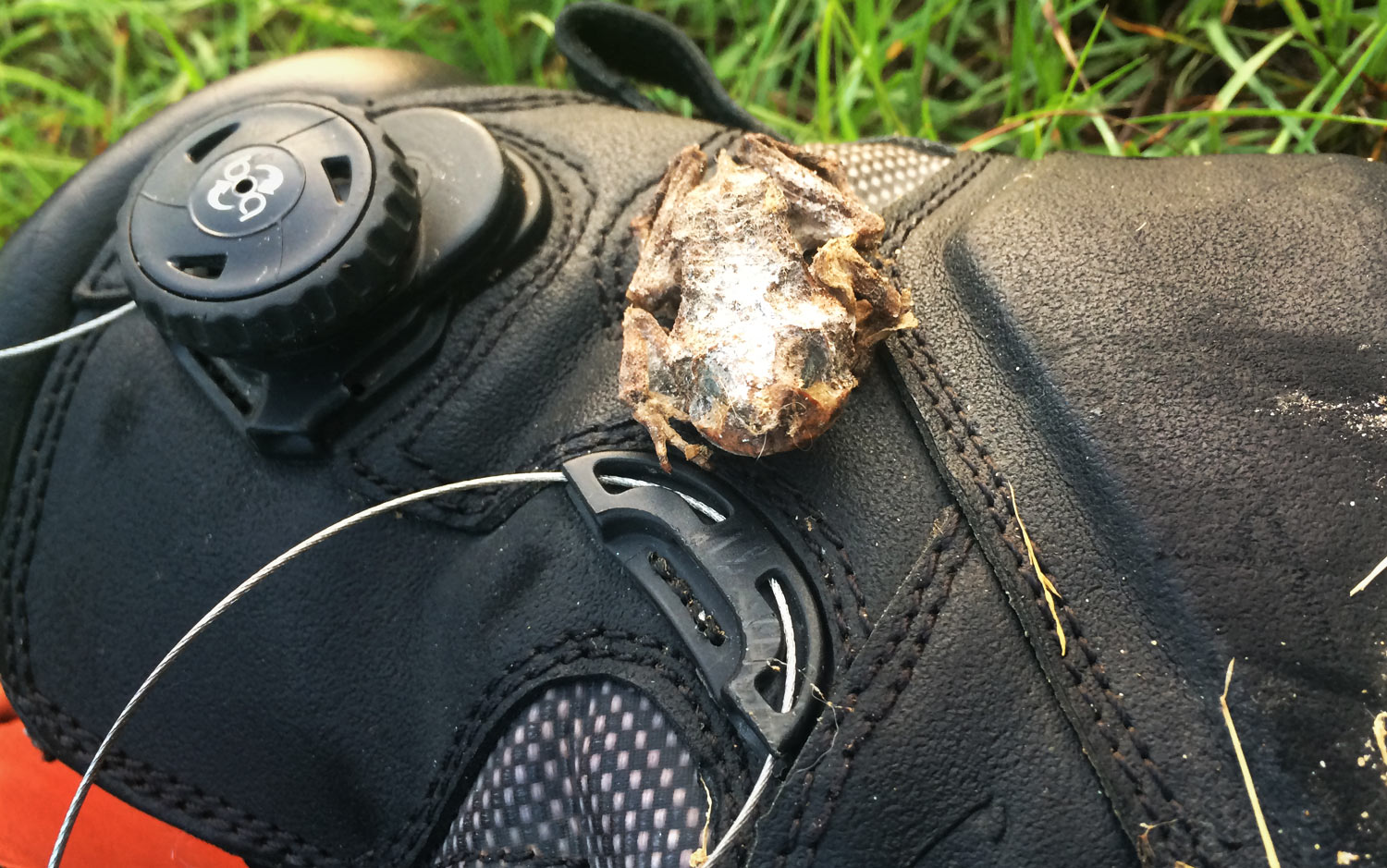
Just like any other day, I grabbed my rods and rigged them up first and laid them across the roof. I tossed my fly boxes in my chest pack and made sure I had all the tools and tippet that I needed. I jumped into my waders and buckled myself in for the day. Grabbed my left wading boot and slipped it on and tightened it up. Reached down for the right one and began to slide my foot into the boot. Before I could get my foot settled into the boot I felt quite the bulge in the toe of my boot. Not knowing exactly what it was, and knowing what it could be, I quickly kicked the boot from my foot. My wading boot landed on the grass, just a few feet in front of me. I waited a few seconds to see if anything crawled, hopped, or slithered out from it.
Nothing.
Cautiously, I picked up the boot and held it upside down, and, immediately, something fell from the boot
Read More »Joel vs The Shark
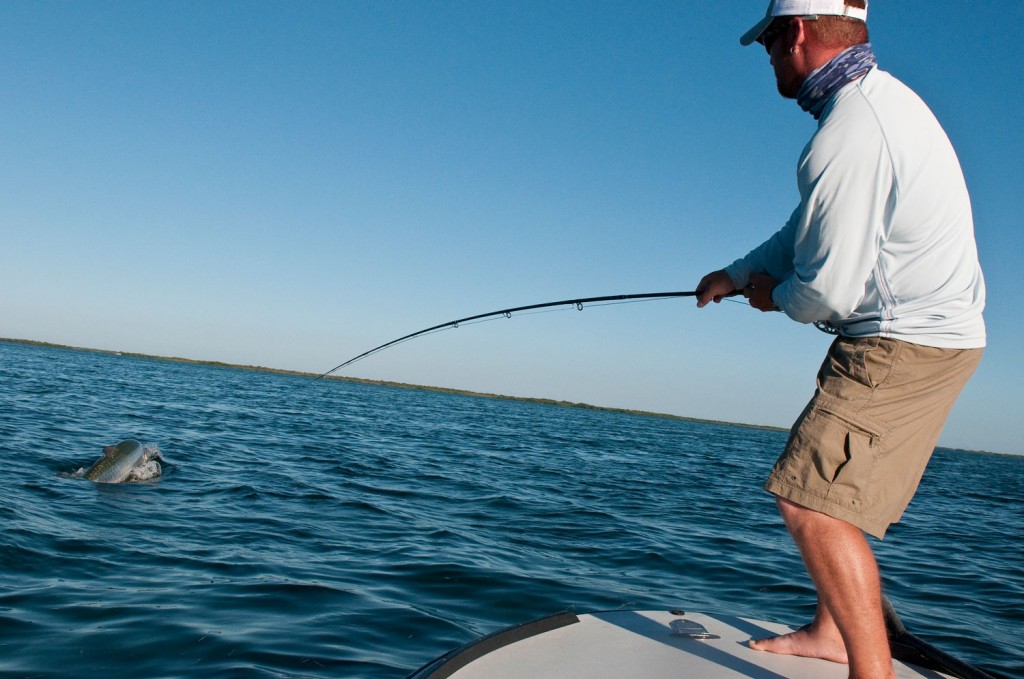
Max Pressure Photo by Louis Cahill
MY GOOD FRIEND JOEL DICKEY WAS NOT RAISED BY WOLVES, BUT YOU MIGHT NOT BELIEVE IT IF YOU’VE EVER SEEN HIM ANGRY.
With hair the color of a new penny and bright blue eyes that can be uncomfortably intense at times, the ruddy sun scorched complexion of a Bedouin, the build of a boxer and two gold hoops, one in each ear, Joel looks half Viking, half pirate. Born of a long line of Tennessee moonshiners and snake handlers, he has a great southern brogue that’s so deep you can hear the chicken frying when he talks. He has a heart as big as the Florida sky, and a temper to match. He caught his first rattle snake at age six. Joel has no fear. Fear is an important emotion. As humans, our fight or flight response has served us well, in evolutionary terms. Joel somehow missed out on the flight part of that, as well as the fear. He’s all fight. Any other person finding themselves face to face with a fifteen foot hammerhead shark might back down. Joel on the other hand…
The heat there in the Florida Keys that day had been like penance. So had the fishing. It was a perfect day for tarpon. The weather was hot with just a little wind, not a cloud in sight. It was mid May. The peak of the season. The tarpon that had been everywhere just a few days before had vanished. The few we saw had no interest in a fly. This was exactly what we had been waiting for. There was a huge falling tide in the evening and it had been unseasonably warm. We had been looking at the calendar and the tide apps on our phones for six months thinking that this was the day and now the fish were confirming our theory. All those tarpon that had been high and happy for weeks were lurking reclusively in the deep water. Staging up, preparing, for the worm hatch.
If you’ve been lucky enough to see a palalo worm hatch, you may have pinched yourself to see if you were dreaming. It’s hard to believe that a fish of a hundred pounds or more can get so worked up about a three inch worm, but when there are literally
Read More »Thank You God for the Terrestrial Season
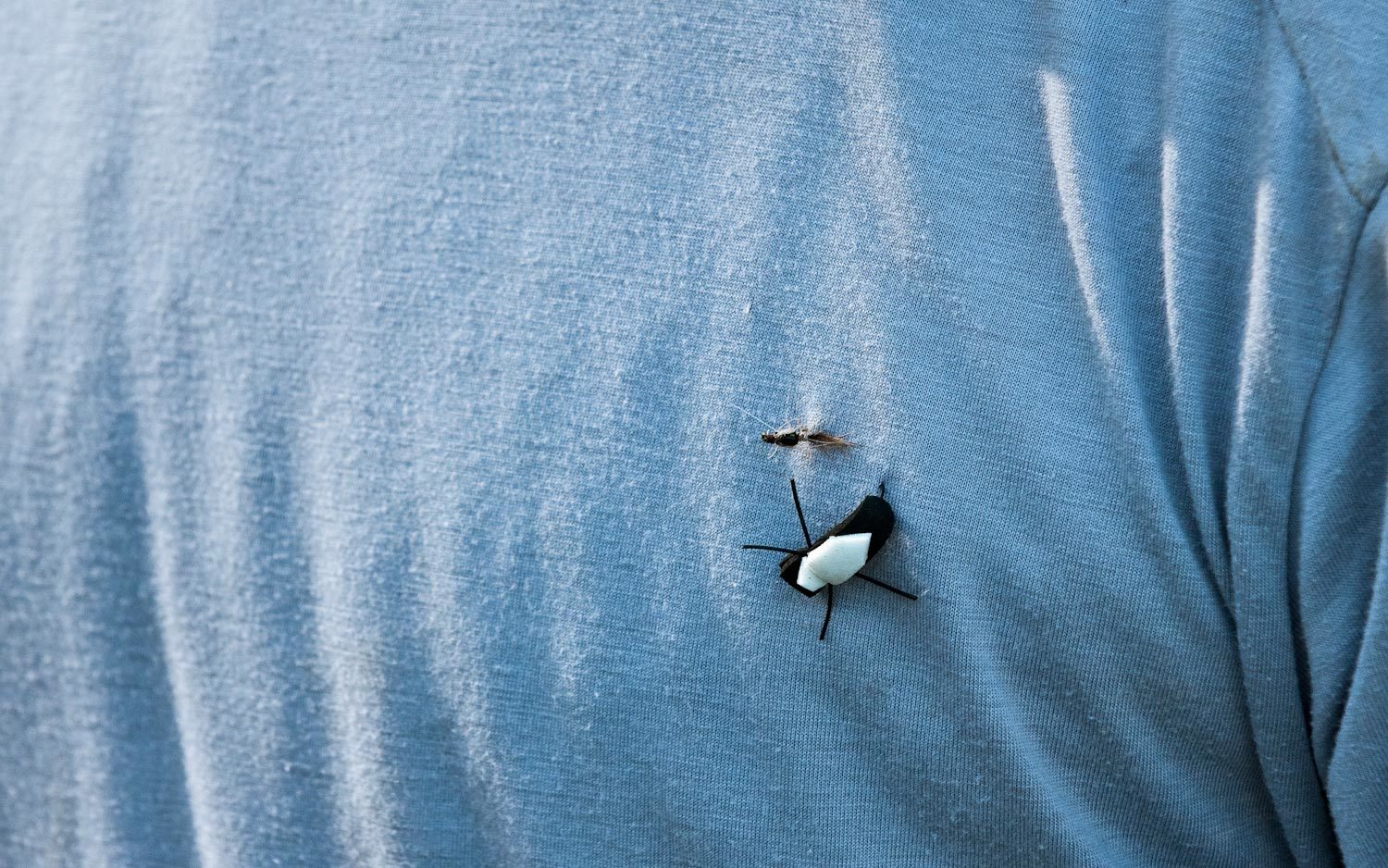
bout this time every year, when I’m starting to get run down from guiding, the terrestrial season arrives, and I’m blessed with a second wind. I’m always astonished at how the presence of terrestrials can make my familiar trout waters seem so fresh and new to me. Even after I’ve already spent hundreds of hours during the season drifting flies through the same riffles, runs and pools. Every day, I find myself more excited about fishing than the last, despite it being one of my busiest times of the year guiding. Thank God for the terrestrial season. I tip my hat to the creator, for he sure did a fine job of planning out the life cycle and timing of the terrestrial season. Yep, life is grand for the fly fisherman when the terrestrials are out. The water and air temperatures (at least where I live) are usually warm enough to leave those stinky waders at home, and the longer days allow us the luxury of staying on the water for a few extra hours.
Is it just me, or do trout seem to have the same look in their eyes as we do during the terrestrial season, pure addiction. I love the fact that it’s not the end of the world if we forget our strike indicators or split shot when the terrestrials are out. The trout often rise
Read More »Quality Flies
By Brian Kozminski
—SlluurpAH– “Set the Hook!”-exerts the guide.
“Ewp~ #$^@%!! Damn, I missed again!” casually disclaimers client.
“That’s the third trout you’ve missed today.” arm chair QB fishing buddy retorts from stern of the drift boat.
“Lemme check that fly, I know it’s your favorite ‘Lucky’ Adams, –BUT it is missing a hook.”
Never happened to you? Kudos, keep up the great work and spread your practices to all those who you may come in contact with. We need more vigilance like yours. Anglers who routinely check their fly and keep the hook sharp are a dying breed. Seems there is a trend in the fly market to buy volume ‘less expensive flys” from not so reputable sources. These days, I find it very hard to believe one would allow themselves to purchase a $600 reel, pair it with $800 rod and then continue to outfit and accessorize themselves in outrageous Monkey Logo’d shirts and fancy rubber pants, only to skimp on the single & most important partof the equation that actually connects them to the fish-> The FLY.
This passed summer, while waiting for clients, eating a delectable reuben sandwich, counting the number of Pine Grosbeaks, Siskins, and Purple Finches along side one of our more famous waterways, I overheard guys at a table next to me complaining about the price of flies. It was not the haughty Cherry Run Orvis store, but it was the height of big bug season, drakes were predicted tonight certainly on the North branch, possibly sections of the South, and inter-mitten log jams in between.
“$30 bucks a dozen! Thats a damn outrage!!” befuddled one guest.
Rightfully so, but when you hook a monster brown tonight, you must know a few facts about what goes into your $30/dozen flies versus the .80 per fly from Discount Fly Guy. The fly shop has a reputation to uphold, and it cannot be cut short at the terminal end of your line. The shop guys who tie flies all winter to pay the bills when rooms are not rented and few anglers make their way north for respite, only use quality hooks and materials provided by the shop owner. They in turn are paid on piece orders and quickly learn to tie a well proportioned Borchers Drake while not wasting materials nor thread wraps. I would bet my time on the water is going to be better spent using that fly versus a fifty cent knock of from Sri Lanka.
There was a guide, probably long gone now or working in Alaska, but he kept two distinct fly boxes in his boat.
Read More »