
6 Tips For Catching Spooky Bonefish
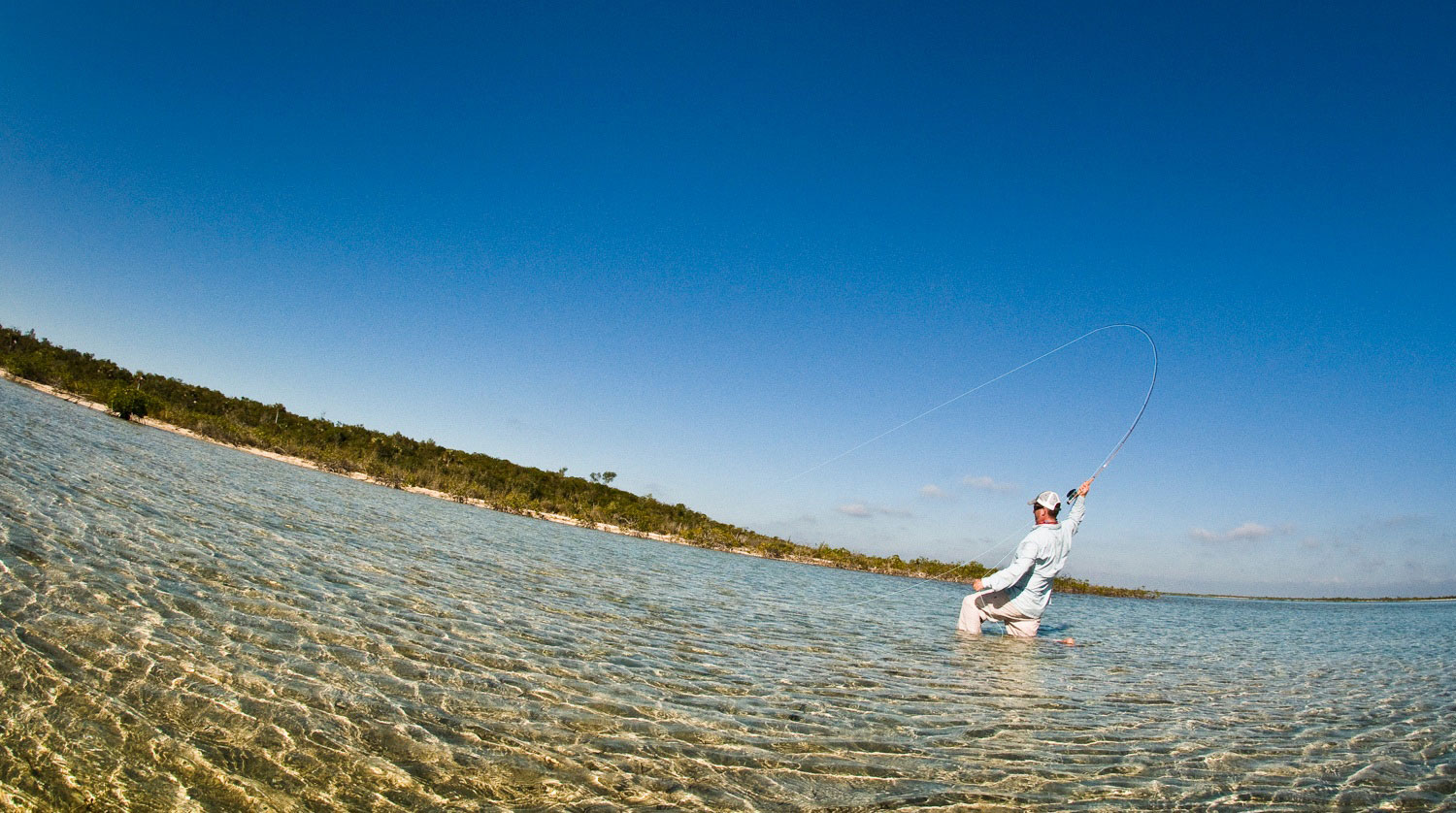
BONEFISH CAN GET SPOOKY. CRAZY, UNREAL, MADDENINGLY SPOOKY.
I found myself dealing with just this situation the other day. Wading for super spooky bonefish in skinny water. Not the easiest day of fishing to be sure, but I did pretty well. I thought I’d share some of the tactics that I use to bring spooky bonefish to hand. Some are obvious and some, not so much.
Wade quiet, or not at all
Bonefish are very sensitive to sound. Especially the sound of your legs pushing water. On days when the wind is still and the water calm, you can barely move without alerting them. Take special care that your steps do not push water. Go super slow! Be aware of pot holes and soft mud that may throw you off balance and cause sudden movements. Find ambush spots like inlets and points and just hang out for a while. Let the fish come to you.
Use light flies
Bonefish are extra spooky in skinny water. You don’t need a heavy fly when the water is shallow so switch to a lighter fly that will land softer on the water. Use bead chain eyes instead of lead eyes, and for extra quiet presentations wrap some hackle at the eyes to cushion their landing.
Keep a low profile
When bonefish are close, crouch or kneel to minimize your visibility. Wear soft natural colors that blend with the surroundings. This is crucial when fish are following your fly and swimming straight for you.
Lead ’em farther
If fish are blowing up on good presentations, or even before the fly hits the water, it’s time to lengthen your lead. The other day I
The Fish Of A Lifetime: Video
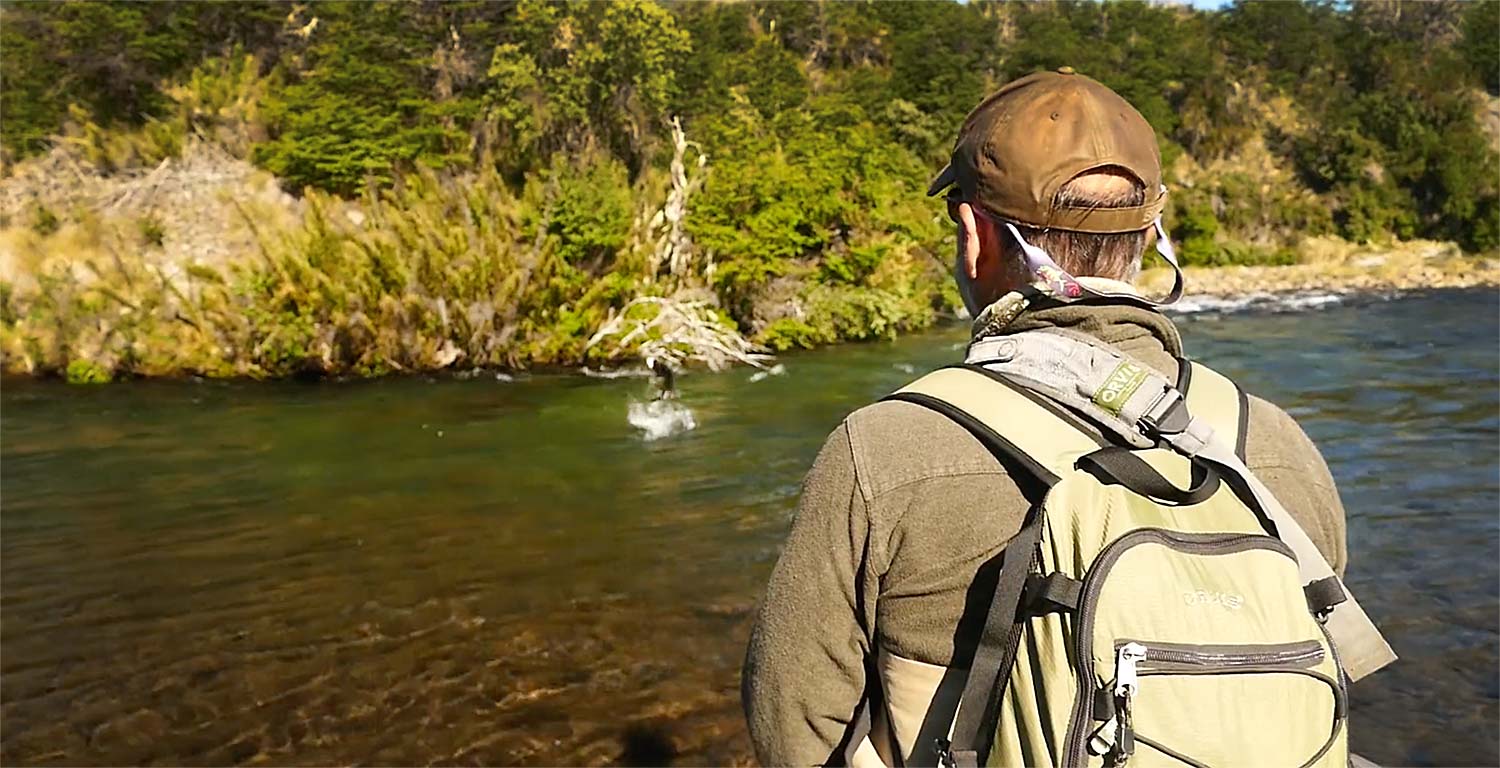
What happens when the fish of a lifetime refuses your fly three times?
If you are Jack Stephens, and you’ve spent half a century looking for a river no one has fished, and you’ve found it…you cast again. This is an amazing fishing story, and all caught on film. The kind of magic that only happens in Patagonia.
Read More »A Closer Look, Barracuda
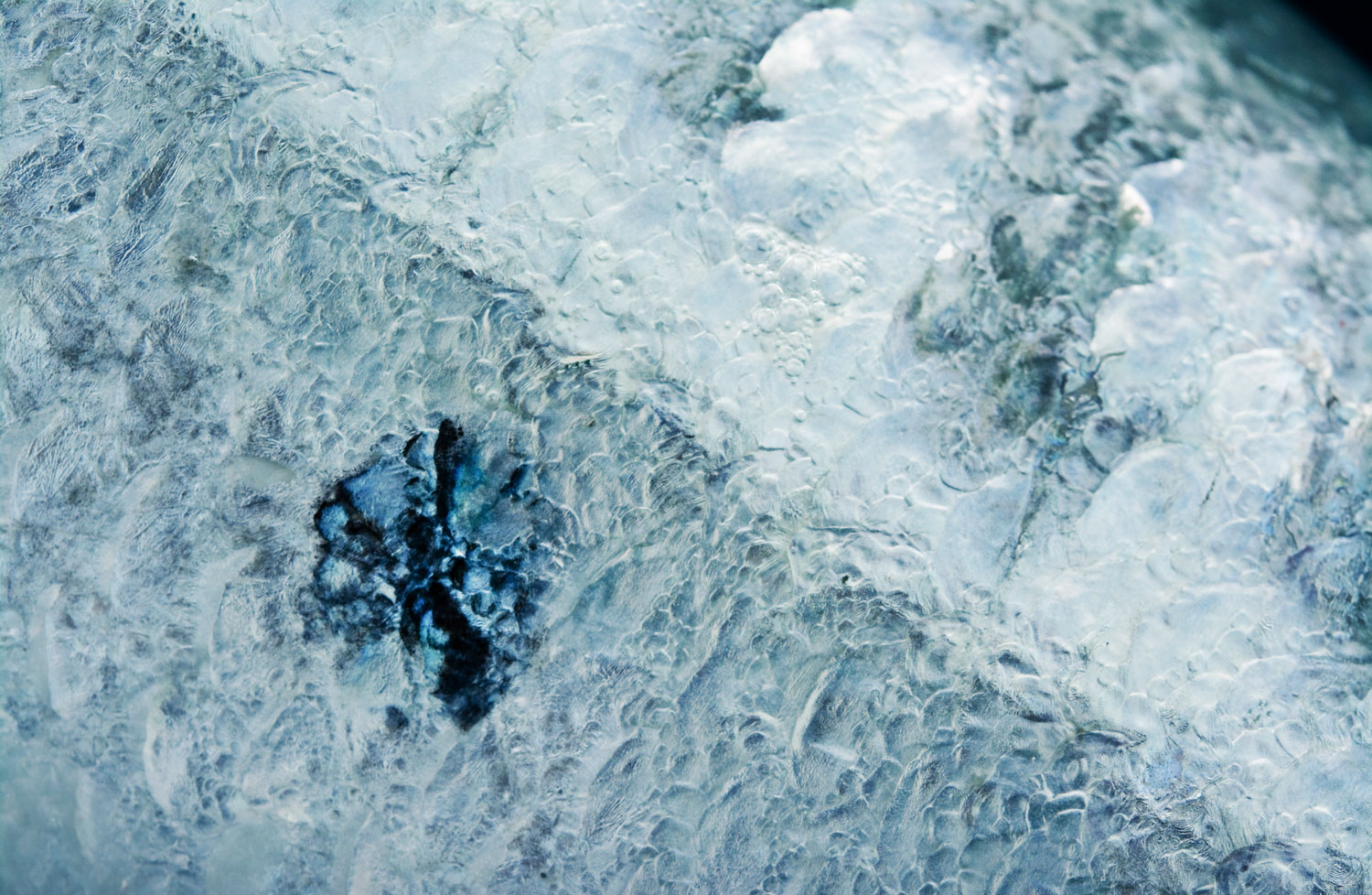
BARRACUDA GET A LOT OF ATTENTION FOR BEING SCARY.
Sharp teeth, warp speed, bad attitude. They deserve their reputation. They are an awesome and underrated sport fish. I love the adrenaline rush of catching them on the fly.
What they get very little attention for is what a beautiful fish they are. Their iridescent colors and primal markings make them worth a closer look.
Read More »Please Stay Off Your Phone!
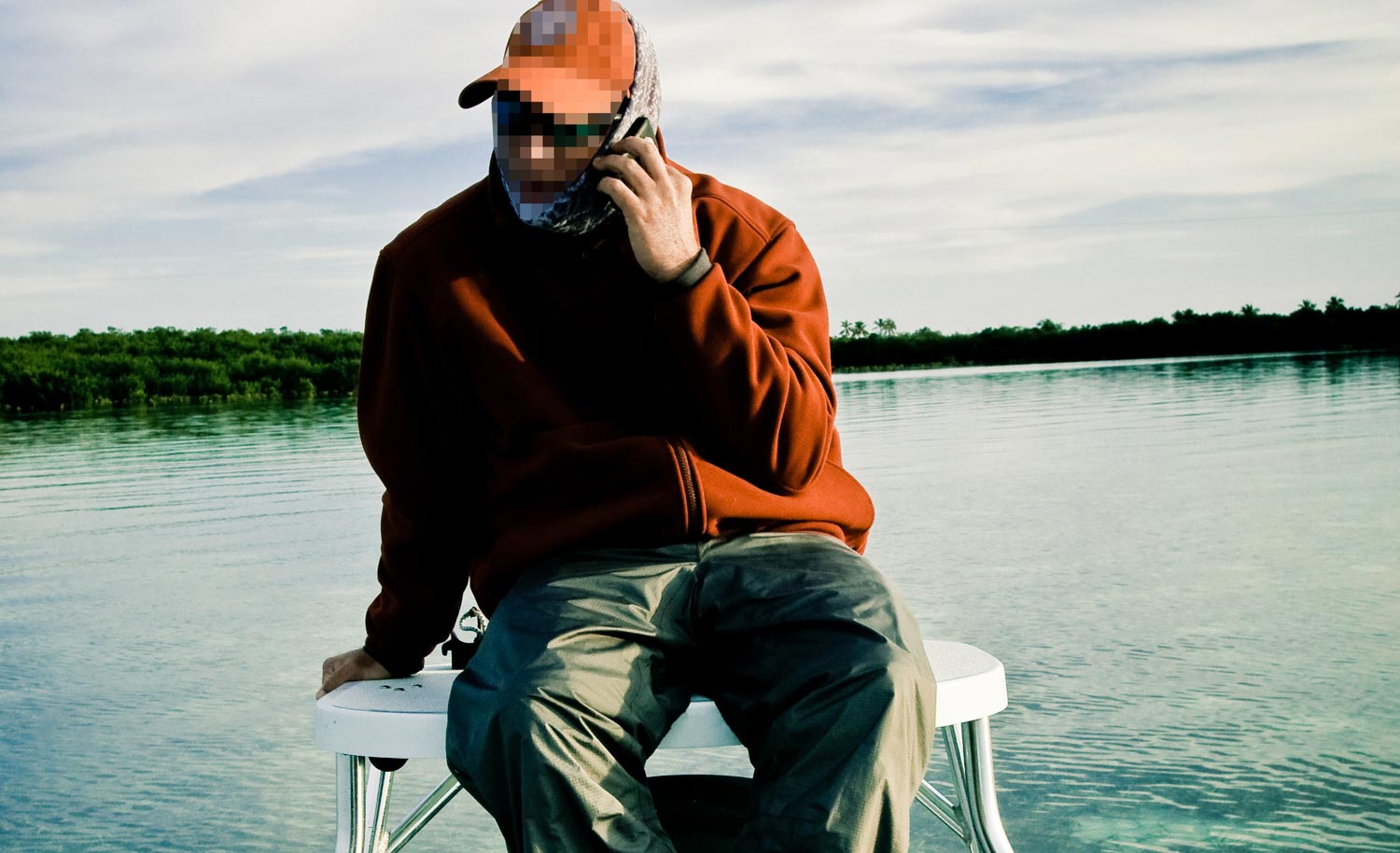
GUIDES, WHETHER FRESHWATER OR SALTWATER, DO YOURSELF A FAVOR AND DO THIS ONE THING WHEN YOU ARE WITH YOUR CLIENTS…
STAY OFF YOUR PHONE!
We have all become used to this “phones-that-do-all” culture. Cell phone technology has made things so convenient, that we forget what it’s like to function without one. I’m not bashing it. In fact, I’ve always got my phone on me. I use it to complete a load of daily tasks. Even when I’m on the water, it’s in my front wader pocket so I can get to it to take the occasional photo. However, when I’m on the water with clients, it stays on vibrate and I don’t take it out.
Nothing will make your client feel less important than looking over to his/her guide to find them engrossed in Facebook or talking with a buddy about their weekend plans. Anglers hire guides to guide them while on the water, not play on their phones and serve as a net man from time to time. Much of this will sound like some pretty common sense stuff to the majority of the folks that will read this, however, there are guides out there that do this exact thing. I’ve heard some pretty impressive displays of guides not giving a damn and it gets my blood boiling. Hiring a guide isn’t cheap. And when folks do hire a guide, they should expect the best from their guide, and to learn from their guide. No client should walk away from a guided trip without having learned something new, regardless of the fishing.
If the call or text conversation has some relevance to the trip that day, then be sure let your client know. Short of an emergency, any other phone calls or texts can wait until either the lunch break, or the end of the day. The only other reason
Read More »The Pregnant Scud: Tying Video
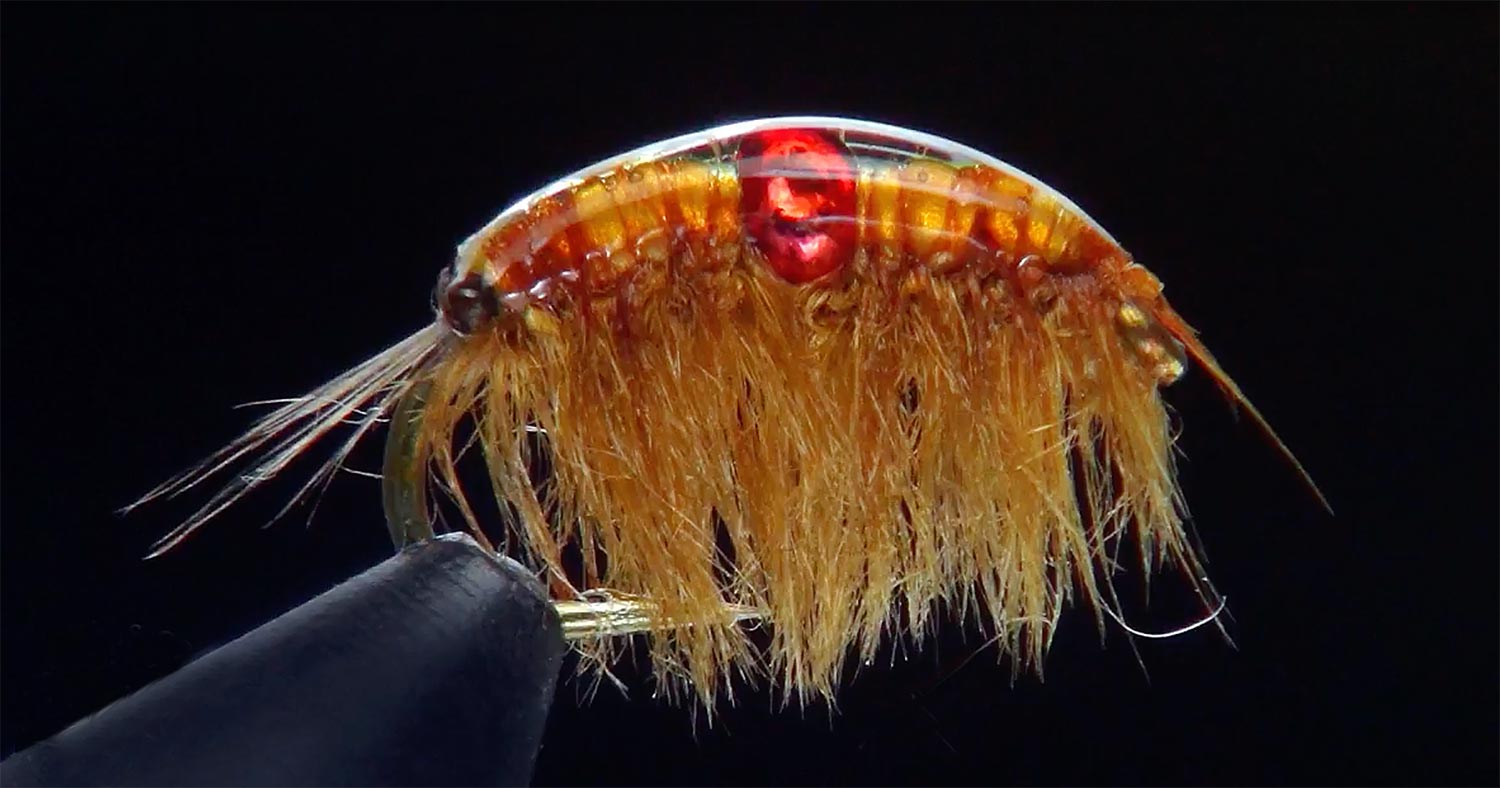
By Herman deGala
In the early 80’s I had a design professor by the name of Herb Kobayashi from Hawaii who tried to instill in us the concept of shibui.
Shibui has no direct translation into English but describes the aesthetic of simplistic, elegant beauty not only in design, art, processes and of course swordplay.
As I look at some of my favorite fishing flies they embody some of those same principles, Barr’s Copper John, Rim’s RS2, Mercer’s Twisted Nymph and of course Craven’s Jujubaetis. There are many more examples out there. They typically use very few materials and they mimic the behavior and profile of the natural. They are usually not very gaudy, but a good attractor has it’s place.
For my first post for Gink and Gasoline I share with you my favorite scud pattern. I kept in mind those concepts from Professor Kobayashi not only when I designed this fly, but also when I fish, produce videos, photograph and share good times on the water with friends and family.
WATCH THIS VIDEO AND LEARN TO TIE THE PREGNANT SCUD
Read More »Is There a Place for Electronics in Fly Fishing?
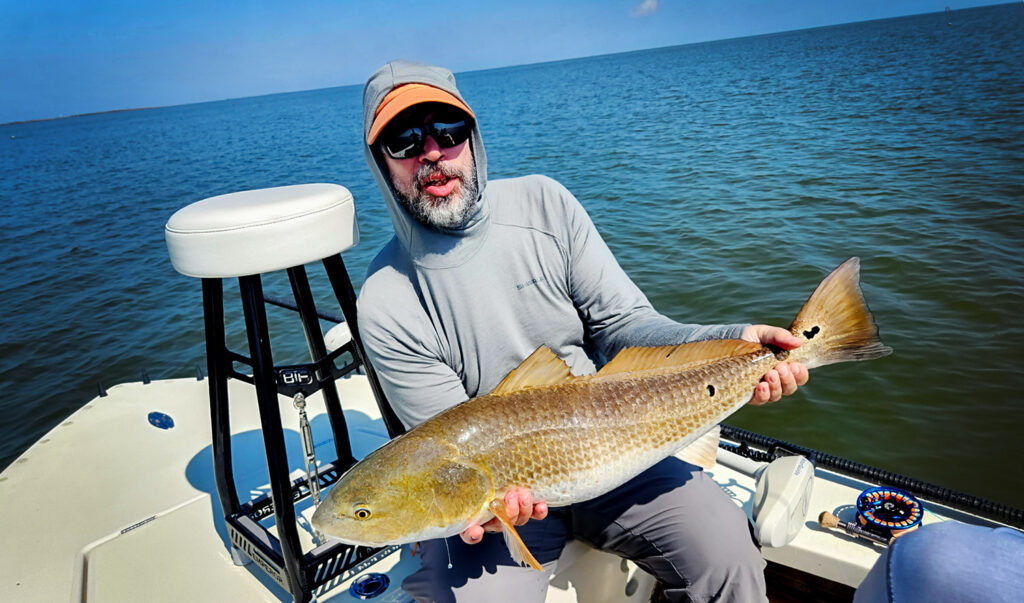
This is really a poll. I’d like to know what you think. I don’t often ask a straight question of my readers but I think this is a really good one. I’ll give you a little context. I recently went fishing for redfish with my brother. As often happens this time of year, we got dealt a tough hand by the weather. We had high wind, mostly poor light, and muddy water. A tough day for even a veteran flats angler but especially for my brother Tom as this was his first redfish trip. Tom is a bass guy and with all the difficulty we had spotting fish he was surprised that neither the guide or myself had every employed electronic sonar fish finders. A piece of equipment ubiquitous in bass fishing. I have bass fished with guys who use them, not that I can make heads or tails of it. I’ve never had the experience of seeing a fish on the graph and catching it. I know how I feel about it and, if you’ve been a G&G reader for a while, you probably do too but I’m not going to get into my opinions here. I want to hear yours. Is there a place for electronics in fly fishing? Do you personally use them? Do you see any benefit or risk, beyond catching more fish? Let me know what you think in the comments. Please keep the discussion civil and respectful. I will not approve any comments which attack other commenters or are simply intended to be hateful. Other than that, have at it. Thanks!
Read More »Bonefish VS Redfish
By Owen Plair
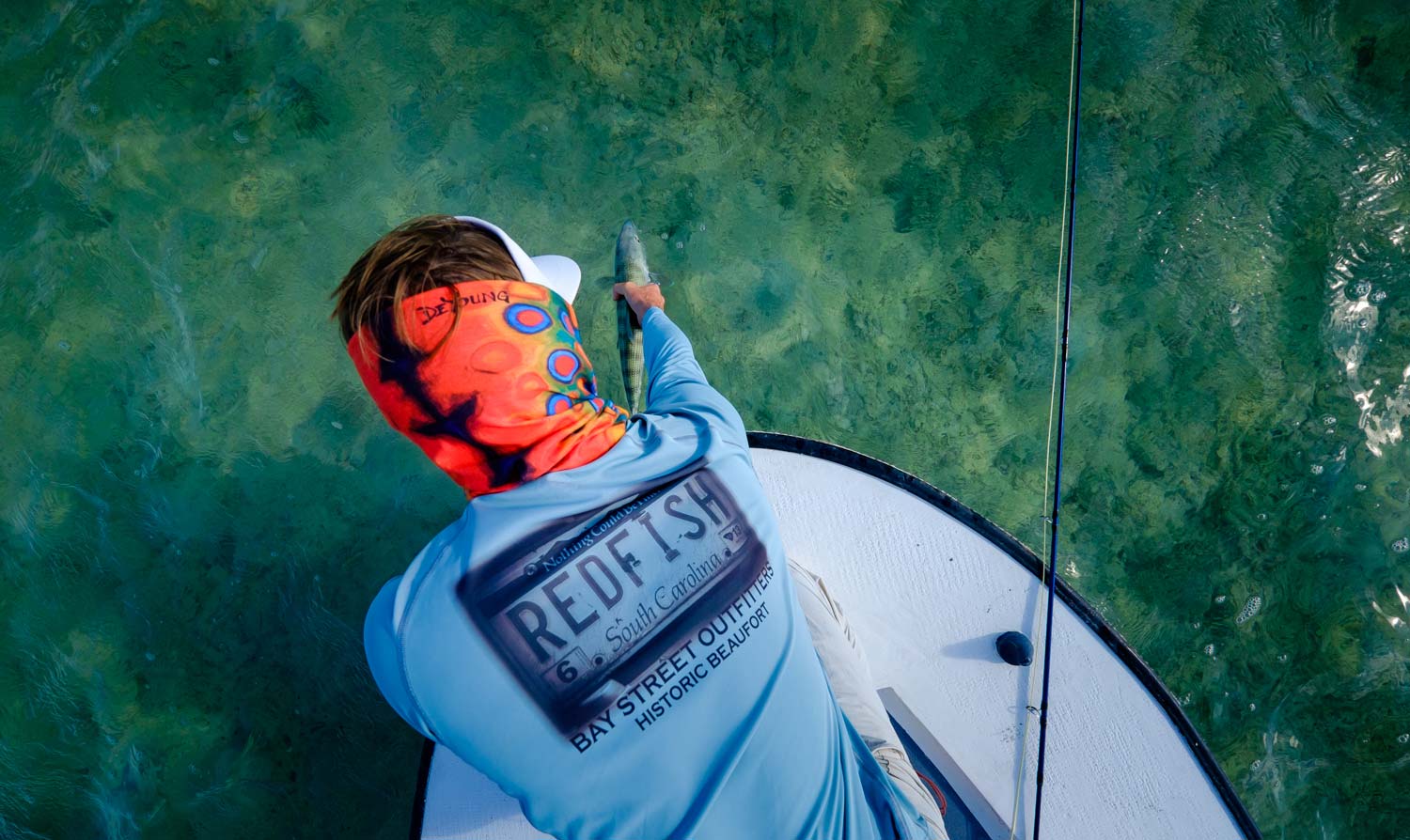
Over 12 years of working in a fly shop and 10 years of guiding for Redfish I have heard the comparison of Redfish and Bonefish more than any species out there.
They are so similar in many ways but also very different. You can target redfish on the coast of the Atlantic Ocean from Massachusetts to Florida and the Gulf Coast from Florida to northern Mexico. That is ton of area for Redfish to live and thousands of miles of flats which is why its such a favorite target species for fly anglers in the United States. Bonefish on the other hand are not as abundant in the U.S., because they inhabit warm tropical waters and can only be found in South Florida and Hawaii. There are a few myths of Bonefish going a little father north at times but not targeted. Bonefish can also be found around the world in countless other countries that have tropical waters, from the Bahamas all the way to the Seychelles, unlike the Redfish, which are only found in the US. I would say that bonefishing has a more exotic feel because in most cases you have to travel pretty far to fish for them. Redfish, on the other hand, can be caught in multiple states through out the year, in different weather patterns and completely different ecosystems. They are both amazing fish to target with a fly and offer great opportunities for sight fishing.
I fished for bonefish a few times down in Biscayne Bay and Islamorada, FL with my friend Capt. Honson Lau. Taking a break from Tarpon, I was fortunate enough to hook one nice fish, which broke off before we could land it.
I’ve been catching redfish since I was a 3 year old kid and have been a full time guide for Redfish in Beaufort, SC since 2009. I always had the urge to catch bonefish but just never found myself able to go on a destination trip for them. I always felt like it was so similar to Redfish, which I had spent countless hours targeting. Finally, the right opportunity came and I was on a plane down to South Andros to join Louis on his South Andros Bonefish School back in November 2016.
Man, what an incredible trip learning about bonefish. After 6 days of fishing the flats of South Andros I was very lucky to experience some amazing fishing. Everything from schools of fish, tailing fish, mudding fish, big singles coming in from the ocean, deep water schools, and fish weaving through the mangroves. I lost count of fish that week but did not lose count of all the memories and techniques learning through experience even after a few too many Kaliks. One thing I realized after years of Redfishing was that targeting the two species was
Read More »Fight Big Fish with the Butt Section of the Fly Rod Not the Tip

If you fly fish long enough and pay your dues, it’s just a matter of time until you hook into a giant fish and experience defeat.
I’ve always loved the saying, “It’s always the big ones that get away”, like it provides anglers a viable excuse for losing battles with big fish. I’ll admit there are times when we’re at complete mercy of big fish, and defeat is 99% inevitable, but most battles are lost due to angler error, specifically by fighting big fish incorrectly with the fly rod.
For many anglers, every time they lose a big fish, a portion of their fish-fighting confidence disappears with it, and they become more paranoid with each unsuccessful encounter. Overtime, this paranoia and lack of confidence distorts their fish fighting instincts, and they begin to play big fish too conservatively, thinking if they put more pressure on the fish, the tippet will break or the hook will pull free. What they end up doing most of the time is fighting the fish with their rod tip instead of fighting the fish with the mid-section and butt section of the rod. This seriously limits an anglers ability to apply power and steer the fish during a fight, because all the power comes from the butt and mid-section of the rod, not the tip. It also will keep the leverage in the fish’s court, which will take it far longer for you to tire out a big fish. Fight times can be doubled, sometimes even tripled, and that’s bad news for a trophy specimen if the battle is taking place during the year when oxygen levels are low (you can play a fish to death). Furthermore, the longer the fight is prolonged, the better the chance something could go wrong, resulting in a fish being lost during the fight (teeth wearing through tippet, fish raking you across rocks and breaking line, fish snapping you off in a snag, ect).
Fight a big fish the right way
First, set your drag precisely before you wet a line. Doing so, you’ll be confident if you begin applying too much pressure on a big fish, your reel will smoothly let out fly line. Second, when applying side pressure (to flex the mid and butt sections
Easy Bug Sampling For Trout Fishermen Video
Ever have one of those days where you just can’t figure out what the trout are eating?
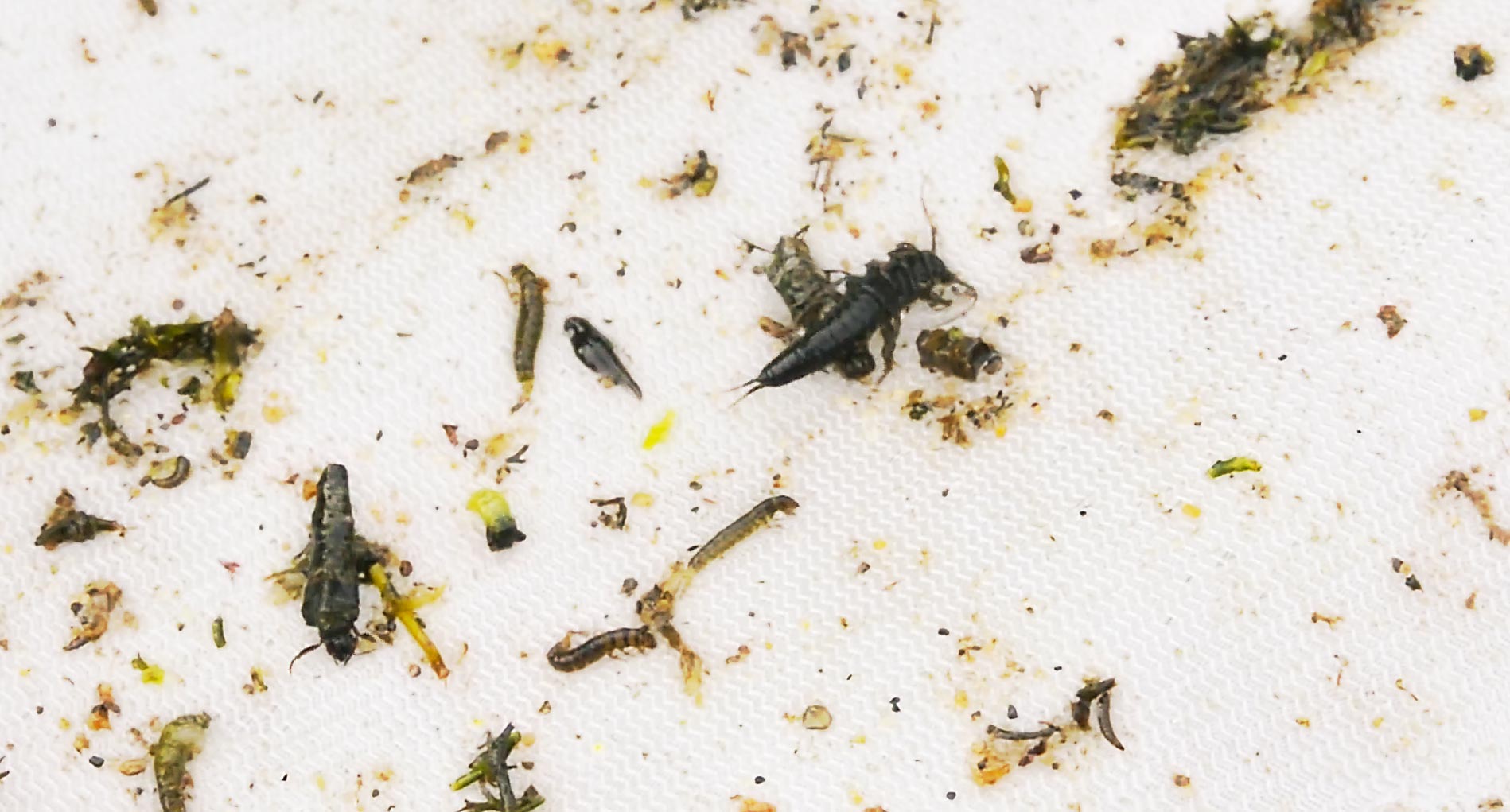
Selective trout can make you crazy but there is a way to figure out for sure what they’re keyed in on. Taking a stream sample is quick and easy and it really gives you a leg up on the fish. With a bug seine you can sample nymphs from the bottom, emergers from the film and spinners or adults from the surface. Match the size, color and profile of your fly to the insects you find and you’ll be into fish.
Paint strainers make great bug seines. They’re cheap and easy to store in your pack or boat. Stretch one over your net and you’re in business. You can get yours HERE.
CHECK OUT THIS VIDEO AND LEARN TO SAMPLE BUGS ON YOUR WATER.
Read More »Bring Enough Line Holder
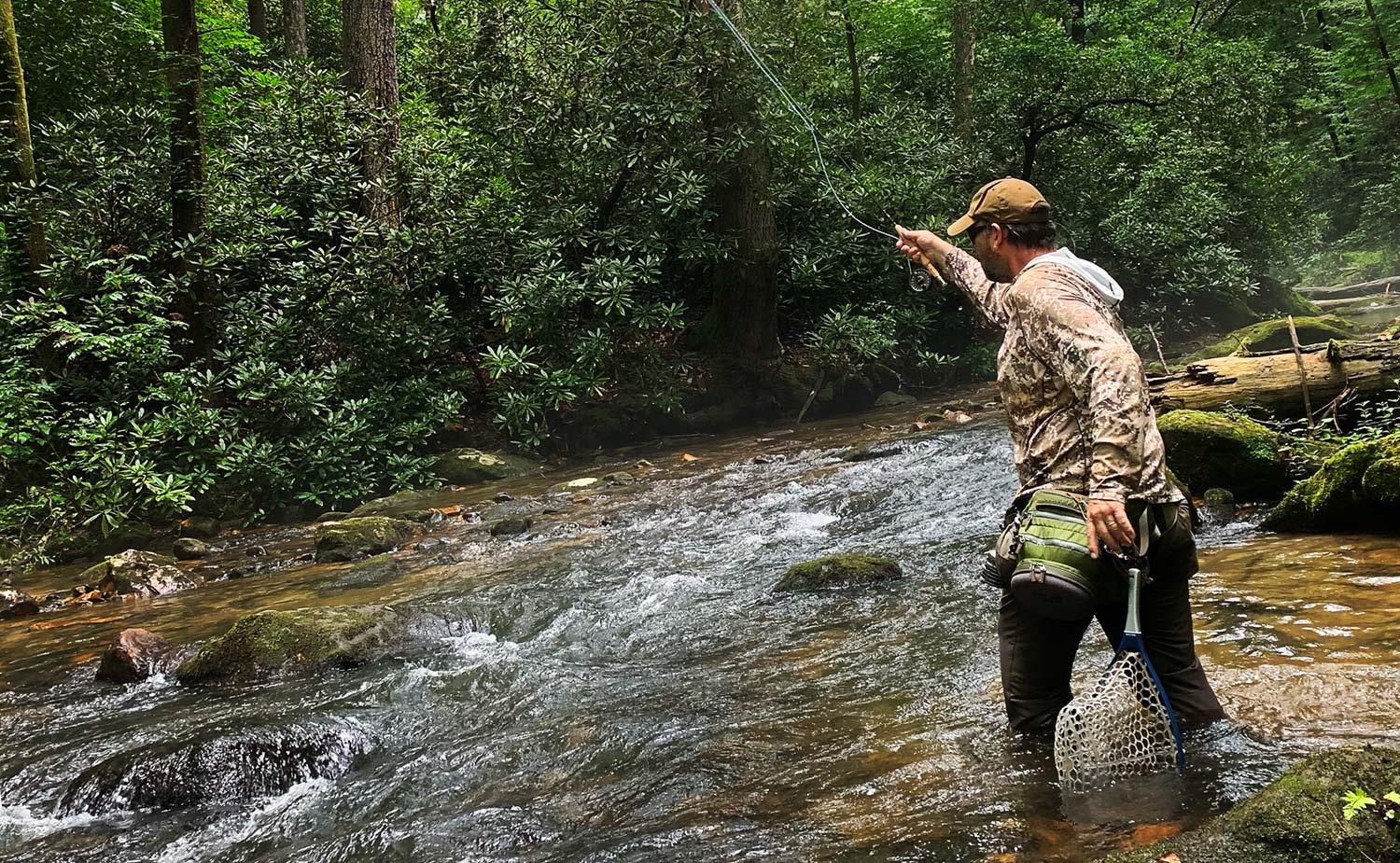
By Louis Cahill
I got to feeling nostalgic the other day and it bit me in the ass.
Last week Jason Tucker and I slipped out for a little small stream fly fishing. Our destination was a little mountain gem I have fished for more than twenty years. As pretty a stream as you’ll find anywhere and full of wild trout. Like most streams this size, it offers an average fish size of eight to ten inches. While those little guys are beautiful, fun, and no pushovers, anyone who has devoted serious time to this stream knows there are much bigger fish lurking there. Every now and then a skilled angler will tangle with fish over twenty inches. You have to be good and lucky but they’re there.
Those of you who follow closely know that I am still recovering from multiple surgeries and am really just getting my boots wet for the first time in well over a year. I’m still not too sure on my feet and have just been enjoying getting out with friends and not putting much pressure on myself to perform, which is honestly pretty awesome. I had a new line I wanted to try out and, not being sure how I’d like it, I scrounged around for an empty reel to put it on, rather than strip off my trusted four weight line.
I came across an old classic click and pawl reel I haven’t fished in decades. I got to thinking about all the fish I’d put on that reel in the years I fished it hard. Back when I was fishing exclusively homemade bamboo rods, I used old classic reels like this one, many of them handed down. This was the first one I bought for myself. Maybe my first significant fly gear purchase. It’s a great old reel. An Orvis Battenkill from the old days, with plenty of life left in it. A simple trout reel with click and pawl drag. Plenty of reel for eight to ten inch fish, right? I’m guessing you can see where this is headed.
“A TROUT REEL IS JUST A LINE HOLDER.”
I’m sure you’ve heard that plenty of times. Maybe you’ve even said it.
Read More »