
Handling Trout in Cold Weather
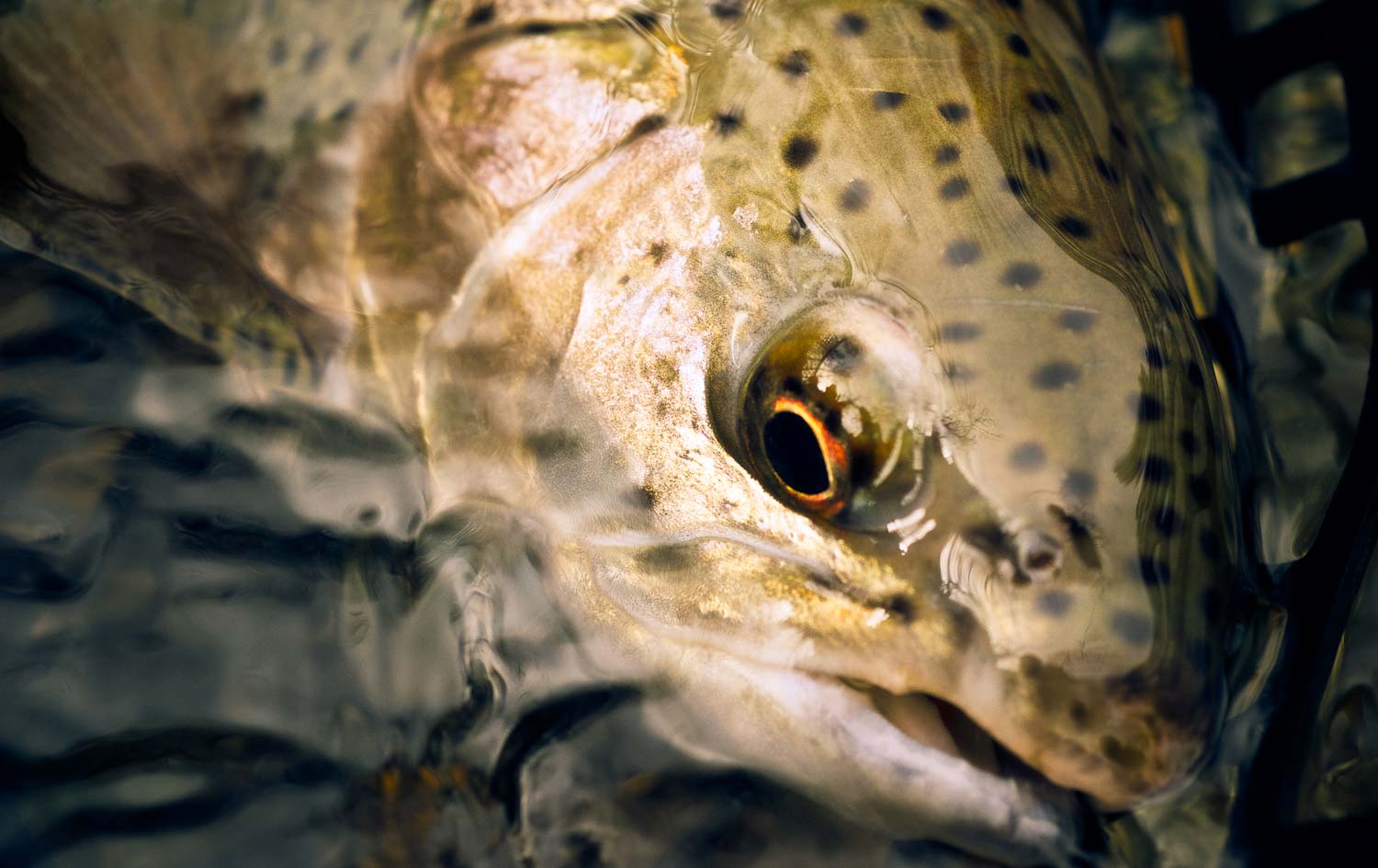
Handling trout in cold weather requires special care.
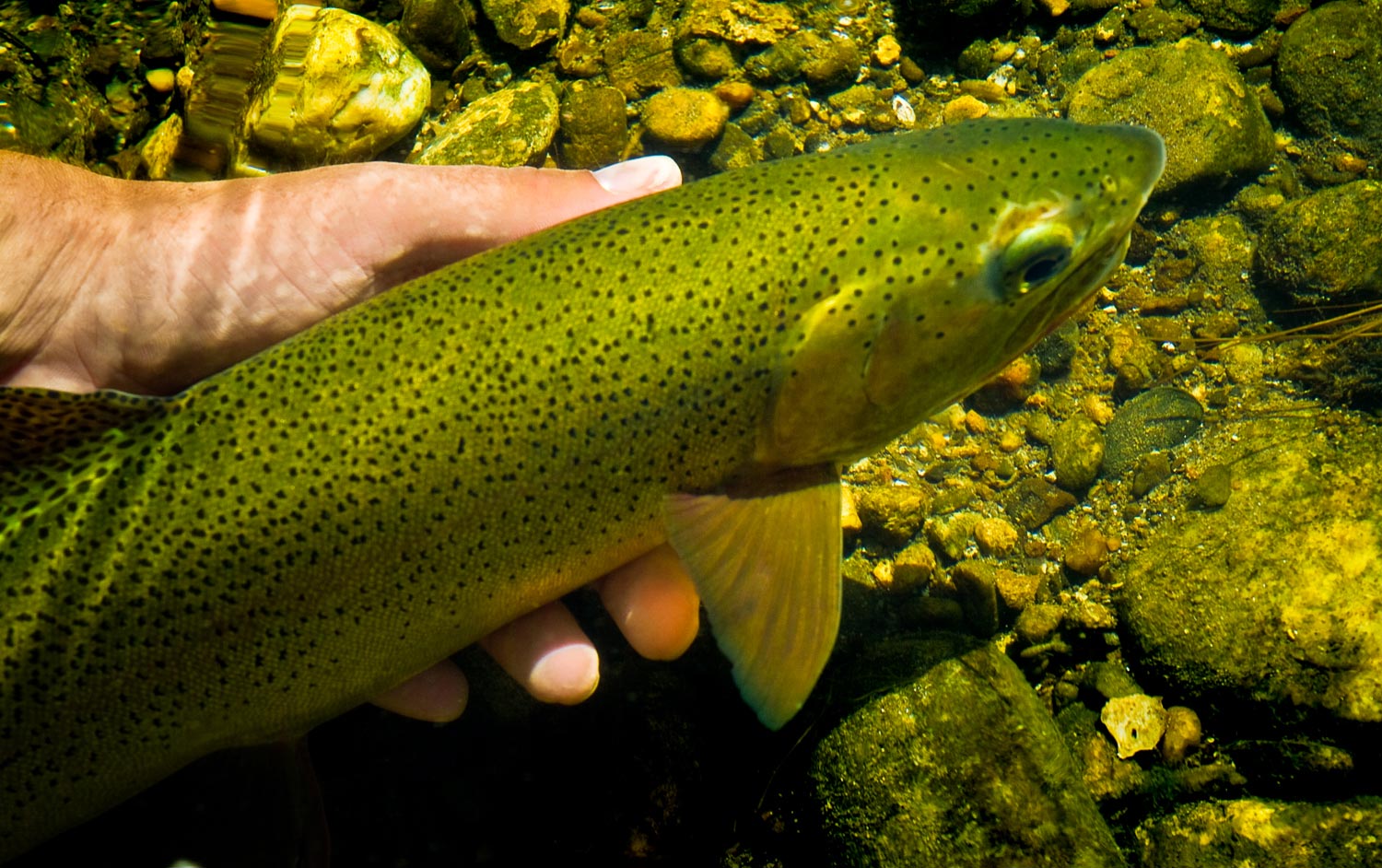
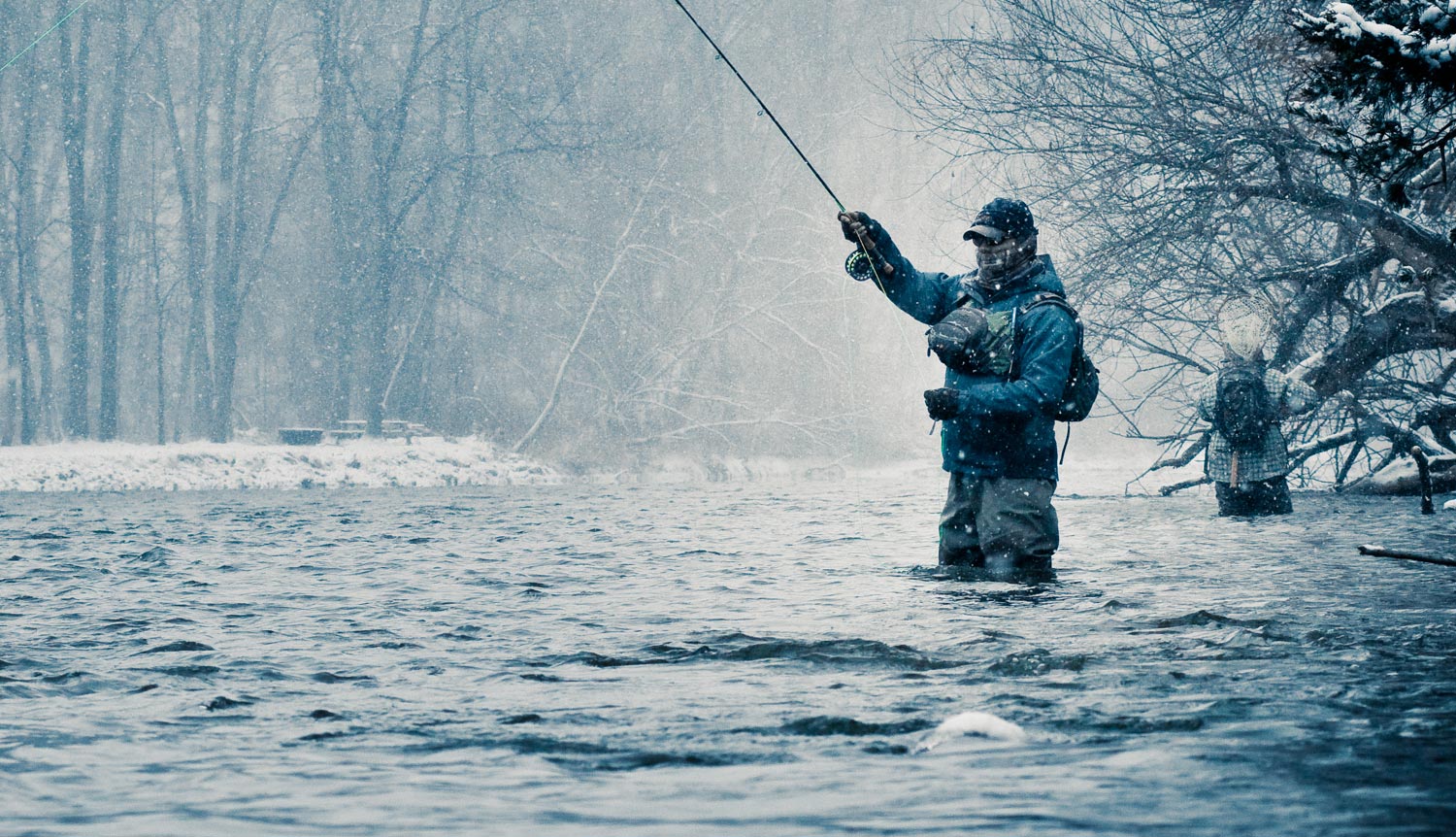
When temperatures drop below freezing good catch-and-release practices become critical. We think of trout as needing special handling care when water temperatures are high, but fish are just as vulnerable when air temperatures are low. Mishandling fish in cold weather can easily be fatal.
Fish are, of course, cold blooded. They’re bodies do not produce heat like ours do and this leaves them especially vulnerable to frostbite. The fragile tissues of their gils can freeze in an instant when air temps are below freezing. Again, they have no body temperature to stabilize their cells, so it happens quickly.
We adapt very well to cold temperatures. We have evolved to survive wide temperature swings. Fish on the other hand have evolved in a world which never drops below freezing, so taking them out in the cold air is as alien to them as dropping us on the surface of Mars.
The solution is simple.
Read More »Stealth For Trout- Stand Still
By Jason Tucker
I used to spinner fish for trout a lot.
Much of it was done as a scouting tool in preparation to come back and fly fish, and at times I even clipped the hook off and simply took note where the fish were. It was a great scouting tool, one I have long since abandoned.
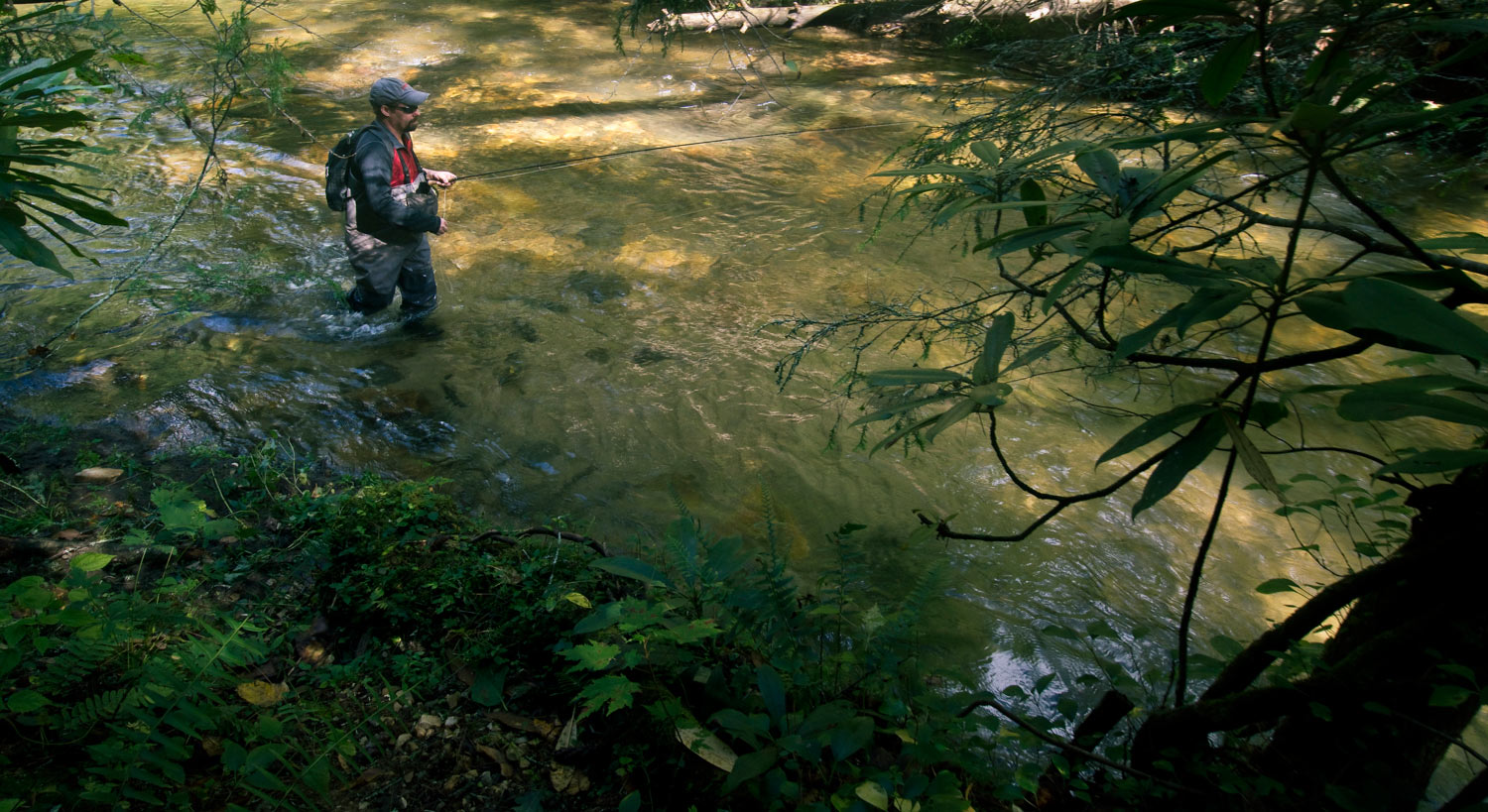
In several years of this kind of fishing I began to notice a trend. In my haste to cover water, I often kept wading as I cast. At times I was puzzled as to why a particularly good spot did not yield a fish. I would stop and cast some more, and very often come up with a fish.
Over time a pattern emerged. If I was in motion, I came up blank; if I stopped moving, a fish would strike. I even began to experiment and count the fish I caught while moving and standing still. There was no comparison. Oftentimes fish would follow and not strike if I was in motion, and then strike once I stood still.
I later tested this while fly fishing, using a skunk pattern. I often fish up a stretch of river with dries, and then fish skunks back downstream. Skunks work best with a down and across presentation. Again the pattern emerged– if I was in motion I caught nada, if I stood still, even in a pool I had already disturbed, then I at least had a chance at fish.
Sound moves faster and more efficiently through water than air–it’s science.
We as angler’s also tend to
Read More »The Perfect Gamefish
By Justin Pickett
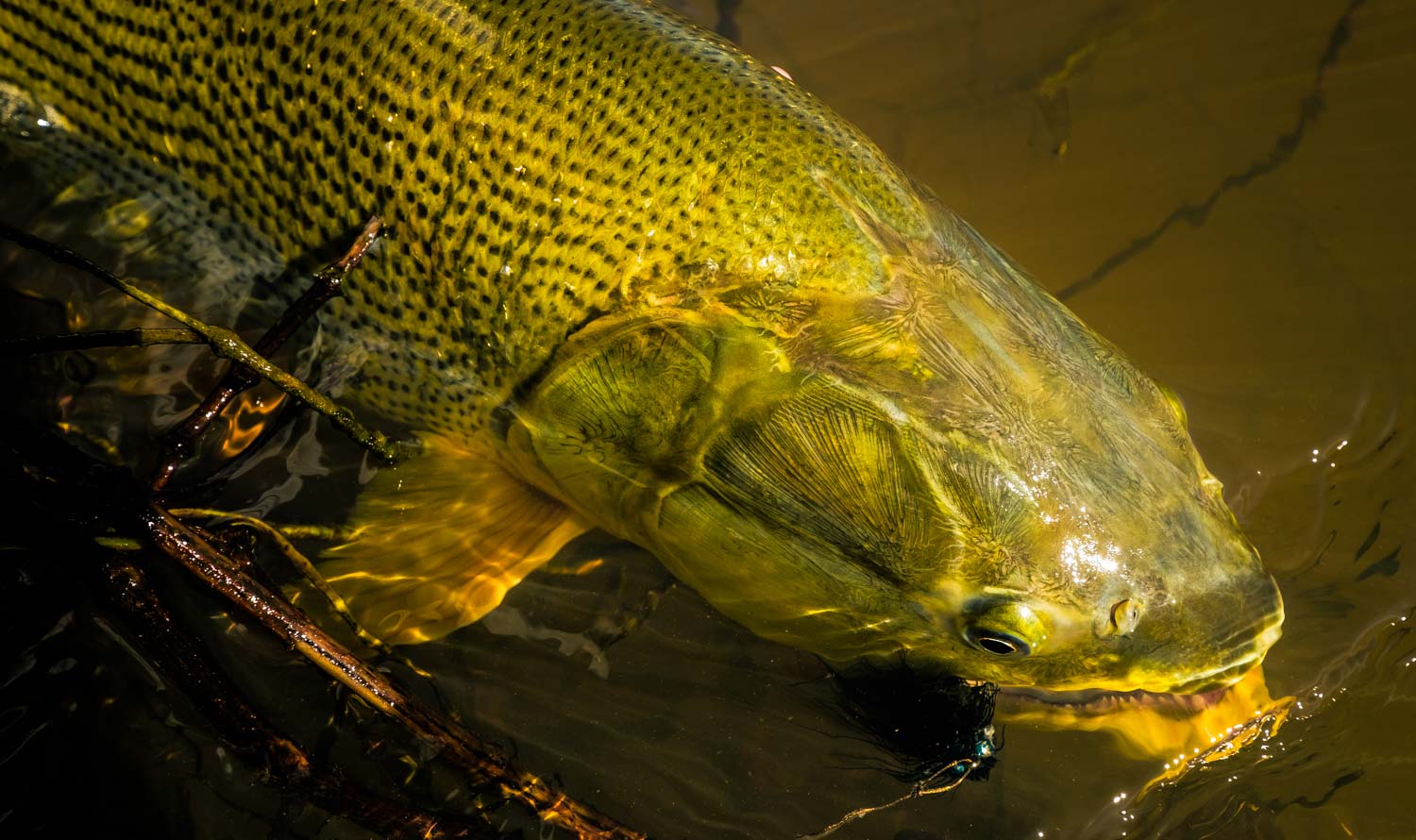
All hype aside, golden dorado may be the perfect gamefish.
Prior to my trip to Parana On The Fly Lodge, I had my own preconceived ideas of what fishing for Golden Dorado might be like. Everyone knows they have teeth. You’ve no doubt seen them in photos, jumping and thrashing in the water. But what you don’t know about them, and what I didn’t know about them, will make them even more badass than you ever thought.
First off, they are some moody little bastards. Chucking hundreds, and sometimes thousands, of casts between fish is common. Not because the fish are scarce. There are plenty of fish living within the Parana’s waters. The Goldens just seem to have a particular set of requirements that must be met before they strike. Even the little guys can get picky and will inspect your fly all the way to the boat before turning away. I remember thinking to myself on the second day that this type of fishing reminded me of fishing for musky. Constantly pounding the banks and structure, over and over, fighting the urge to “zone out” from the repetitive nothingness of empty retrieves. Sometimes the only break in the monotony would be the occasional hang up in the bushes or trees, or maybe the hideous, haunting sound of howler monkeys blasting through the jungle. It took me a day and a half to land my first Golden Dorado. In other words, you have to work for them a little bit. You have to earn your stripes a little, and pay some dues. You’re not just going to step onto a boat, sling some line, and yank one in the boat. It takes a little bit of grit, and I like that.
Another thing that makes these apex river monsters awesome is where and how they hold in the river. Like many of our favorite gamefish here in the states, they are ambush predators. Hiding amongst submerged trees, bushes, rocks, sand banks, and cut-banks, the mean-muggers blend in to the powerful, turbulent waters of the Parana, despite their golden flanks. They hold on the
Read More »Flat Water Nymphing
The past few years, Louis and I have grown very fond of one specific pool tucked up in mountains of the southern appalachia. We visit it regularly because of the bounties of trout that it sustains and nurtures year round. We nicknamed it the “lazy boy pool”, because it constantly has food entering the pool and its slow moving water and deep water cover requires little energy for fish to feed round the clock. It’s loved by lazy trout and they in turn grow big and fat. Despite the large numbers of trout the pool holds, angler won’t find it to be a cake walk for catching them. To have success in this pool you have to bring your A-game. The fish have grown wise to fly anglers and the glass calm and crystal clear water adds further to the overall challenge. Trout here, get to examine your flies for long periods and they regularly dish out more refusals than eats. It’s had Louis and I pulling our hair out on multiple occasions. If we need our ego’s checked, this is the perfect place for us to do that. It never fails to reminds us we are far from having it all figured out. The slightest mistake by an angler will send wakes across the water alerting all the trout in the pool, and when that happens, the fish get lock jaw.
Read More »3 Bad Habits That Lose Big Fish
By Louis Cahill
Tired of hooking big fish just to lose them in the fight?
This came up the other day when I was fishing with a buddy. Like too many anglers, he’d been losing big fish, one after the next, over the same simple mistakes. It was a ‘face-palm’ moment when I pointed it out. In part because he actually knew better than to do any of these three things, and did them any way.
I’m not ragging on my buddy. I’ve seen plenty of anglers make these same mistakes and suffer the consequences. Simple habits you can get away with on the average fish become huge disasters when you hook a trophy. Have a look at this list and make sure you you’re not making the same mistakes.
3 BAD HABITS THAT LEAD TO LOST FISH
Ignoring wind knots
How many times have you felt a wind knot in your leader and thought, I’ll fix it next time? Maybe the fishing was hot and you didn’t want to miss any action. How many times did ignoring that wind knot result in breaking off a nice fish? The only time to fix wind knots is NOW. As soon as you find them, and it’s a good idea to check your leader often. If you find wind knots, chafing, nicks, or anything other than a perfect leader, fix it right away. You never know if the next fish to eat your fly will be a trophy.
A sloppy reel
Ever look down at your reel and see a sloppy mess of fly line poorly stacked on the reel? I know I have. Maybe things got hectic fighting the last fish or you just spooled up a bunch of slack line in a hurry when you saw a fish rising in the next pool. That sloppy reel is an invitation for disaster. Poorly spooled line can easily bind or knot when a strong fish starts ripping it off of the reel. When you see a bird’s nest in the making, stop, strip it all off of the reel and stack it neatly. It’s time well spent.
The statuesque angler
Like Fred McDowell said, “When the lord gets ready, you got to move.”
Read More »Look At It From The Fish’s Point Of View
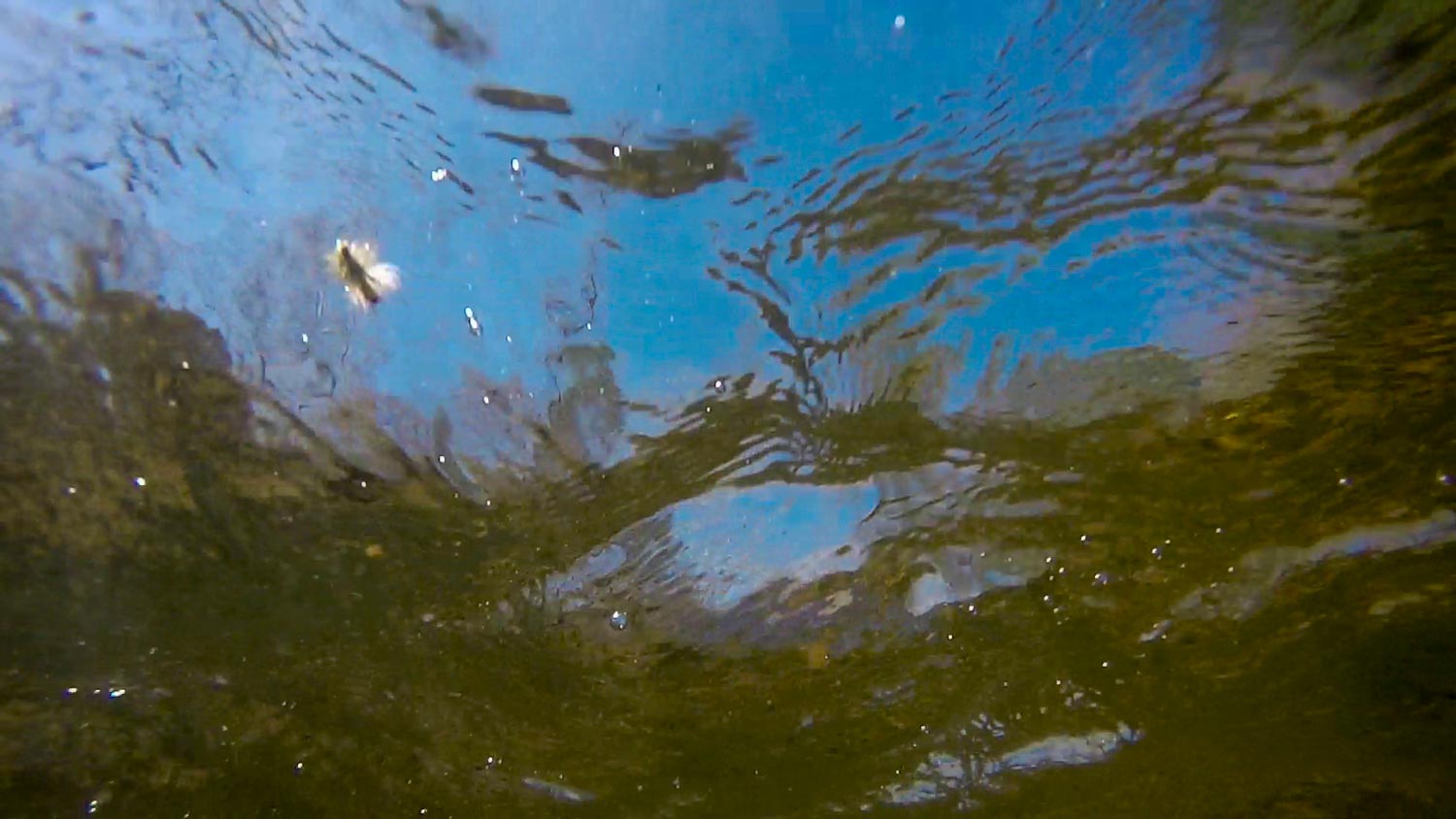
Light affects what fish see and how they eat.
I am teaching a young man to fly fish. We have fished well past sundown. There is only a band of warm red along the horizon giving way to a glowing blue sky. A bright moon and stars just beginning to show themselves. Forty feet away the surface of the water dimples and rings in rhythm as trout rise the the evening hatch. My student is frustrated.
“I don’t think they like this fly. Let’s change it.”
“It’s too dark to tie on another,” I tell him, “let’s try this one a little longer. Maybe a few feet longer cast.” I know this is the right fly. He just isn’t reaching the fish.
“I think it’s too dark. They can’t see it.”
“They can see it.”
“How? It’s totally dark. I can’t see it.”
I resist my smart ass nature. I don’t say, “Well they can sure as hell see the naturals.” In stead I tell him, “Look up. Can you see those swallows? That’s what the fish sees. Mayflies, like swallows flying above them.”
This is a simple idea, but one fly anglers don’t often think about. The fish looks at your fly from a different point of view. An almost exact opposite point of view than ours. The world looks a whole lot different from below. Light, and the where it’s coming from, play a huge roll in how you choose and present your fly.
Trout are always looking up.
Even when they are eating nymphs they look for food which is at their level in the water column or higher. Not all species feed in this way. Bonefish or carp for example feed on the bottom. Other species like tarpon look up for their food. The roll which point of view plays in their eating habits, and in your presentation, will vary from species to species. Let’s look at a couple of examples.
If you read the article, “What Does The Trout See,” you know that trout have very acute color vision when the light is bright. That doesn’t always mean that fly color is crucial in full sun. Let’s say it’s mid day and the sun is high in the sky. When fish look up at a dry fly, they are looking right into the sun. Not only is this uncomfortable for them, it seriously limiters their vision.
A fly floating on the surface with the sun directly above will appear
Read More »Presenting A Fly With Your Back Cast Is Like Being Ambidextrous
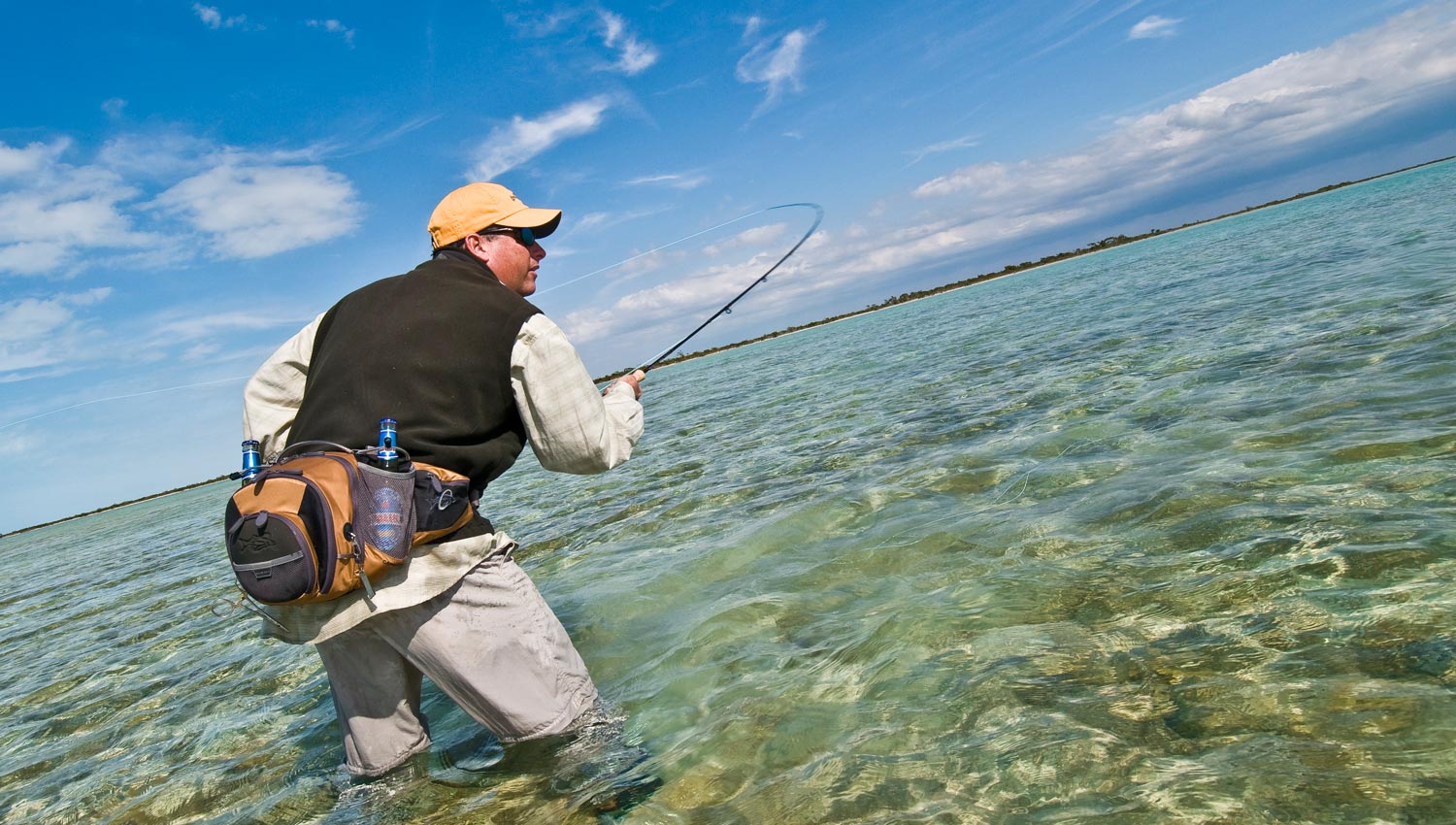
LET’S TALK ABOUT WHAT I THINK IS ONE OF THE MOST UNDER-RATED SALTWATER FLY CASTS. THE BACK CAST PRESENTATION.
Imagine being ambidextrous and never having to worry about what direction the wind is blowing. That’s what a back cast presentation can do for you. Using your back cast to present the fly to the fish is a key ingredient in the recipe for success in the salt.
We all know that taking advantage of every opportunity will increase your odds of catching more fish. If you can produce a nice presentation on your back cast you can take advantage of every opportunity, in any direction. Add speed and accuracy, and you will become a great saltwater fly angler.
Using the back cast as a presentation cast can be a foreign concept. Most anglers do not effectively utilize the incredible versatility of this cast, because they don’t even know to consider presenting the back cast to a fish. Everyone thinks a back cast is just a back cast and that’s all.
Let’s start looking at the many different uses for a back cast presentations. I will also explain how to use these tactics to help you catch more fish.
Angler Awareness
Your ability to have a constant awareness of wind direction is crucial. Whether you are wading or fishing from a boat, your orientation to the wind will constantly be changing. Spotting a fish will call for a quick choice of a forward cast or a back cast presentation. Your ability to know which cast will be best, ahead of time, is key. As you gain experience, this step will become automatic.
Loop Roll Over
Fully extending your line arm on your back cast presentation will help add much needed power to help roll over the loop, turning over the leader and laying your fly out straight. Lay your fly out straight and your odds of catching fish go way up.
Keep an Eye on Your Target
Since you are casting forward 180 degrees away from the fish during a back cast presentation, it’s difficult to keep an eye on the fish. Turning your body to the side a bit and opening up your stance will help you to swivel your head easier during casting to help keep your eye on the fish. Beware when you open your stance, you risk breaking your rod path off a straight line plane, causing your loop to open losing distance and accuracy.
Back Cast – Forward Cast
When presenting your fly on a back cast you should focus on all the same things you would when presenting a good forward cast. High line speed, tight loops, double hauling and a correct trajectory are all important for a successful back cast presentation.
Strip Quickly and Take Up Slack
Opening up your stance while presenting your back cast not only helps you keep an eye on the fish but will also
Tie Connor’s Jerk Minnow
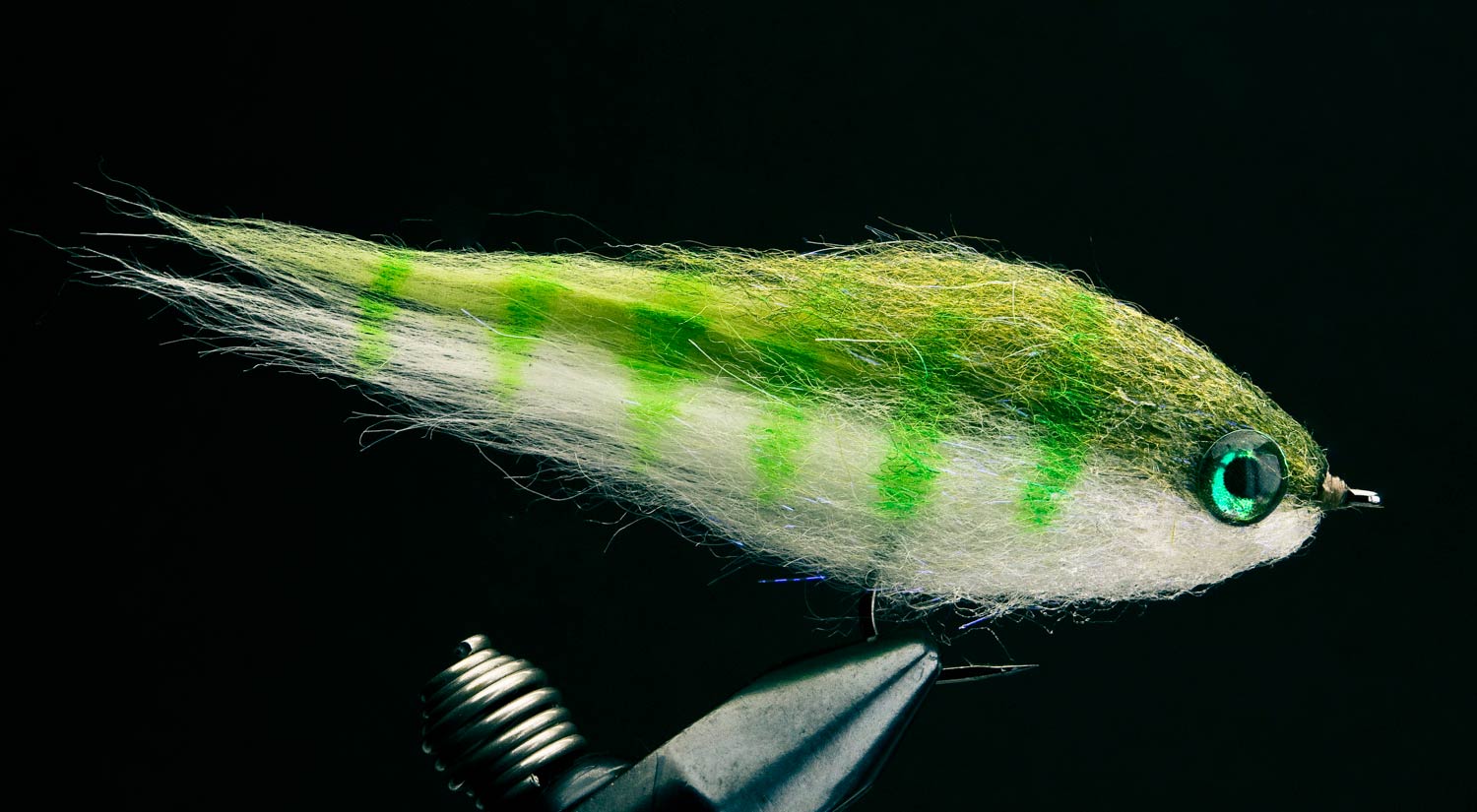
THIS DECEPTIVELY SIMPLE FLY IS ALL ABOUT THE ACTION.
Connor Jones, from Cohutta Fishing Company, ties this versatile baitfish pattern for bass and trout here in the southeast. It’s a simple fly with a clean profile and it’s easy to tie in a variety of colors.
The secret to the jerk minnow is it’s action. Connor builds a hard, hollow head, from Senyo’s Laser dub and Clear Cure Hydro, which captures air and gives the jerk minnow an erratic darting action, when stripped hard. Big predatory fish can’t resist it
It’s a fly that will produce fish on lakes and rivers. Tie it in the colors and size to match the forage species on your local waters. Strip hard and hang on tight!
Watch the video and learn to tie Connor’s Jerk Minnow
Read More »A More Effective Indicator Setup For Fast, Deep Water: Video
Here are two techniques for more effective fly-fishing in deep, fast water.
Indicator fishing with nymphs can be a very effective way to target trout in deep water. Still, it can be a challenge to get your flies in front of the fish, when the water is really deep and the current is moving quickly. During the colder months getting those flies down in the fish’s face is critical.
When I’m faced with these conditions, I like to use a weighted 90 degree indicator setup. It’s a simple trick but the results will shock you. When combined with a big initial mend, which moves your indicator upstream, your flies will rocket to the bottom. This setup is also more sensitive than a standard indicator rig. It will put you on fish in the deepest runs.
WATCH THIS VIDEO AND LEARN HOW TO RIG AND FISH THE WEIGHTED 90 DEGREE INDICATOR.
Read More »Fly Fishing Provides Great Health Benefits

I tell my clients, all the time, that I’m grateful for all the benefits fly fishing provides anglers. It provides us with one of the funnest ways to exercise, and it has the ability to completely wash away the stress of everyday life, from its therapeutic entertainment. We really should be thankful that this passion of ours provides us with so much more than just the reward of catching fish. Each and everyday we fly fish, we should take a minute to sit back and reflect on this fact. What other exercise activity can you think of that allows you to burn tons of calories during the day, and not have the faintest clue your even working out? Most of us aren’t extreme athletes, and even if we were back in the day, many of us have gotten older and are no longer. The great thing about fly fishing is you can tailor it to your own abilities and needs. It’s a great activity for maintaining your long term balance, dexterity and muscle strength, and it does a very good job of keeping your brain sharp.
I really think we could boost the growth of the fly fishing industry if more people were writing about all the great health benefits it provides, both mentally and physically? I’d love to see Yahoo, or one of those other giant headline news websites (that most of us visit daily) post on its home page, a fly fishing picture with the headline, “Lose 15 pounds and have a blast doing it.” We need to start thinking outside the box to promote and attract newcomers to fly fishing, and I think this could be one area most of us have been overlooking.