
The River Is Full Of Want
By Louis Cahill
“I DON’T DESERVE THAT FISH. I DON’T DESERVE THIS DAY ON THIS BEAUTIFUL RIVER. I DON’T DESERVE TO FISH WITH THESE GOOD MEN.”
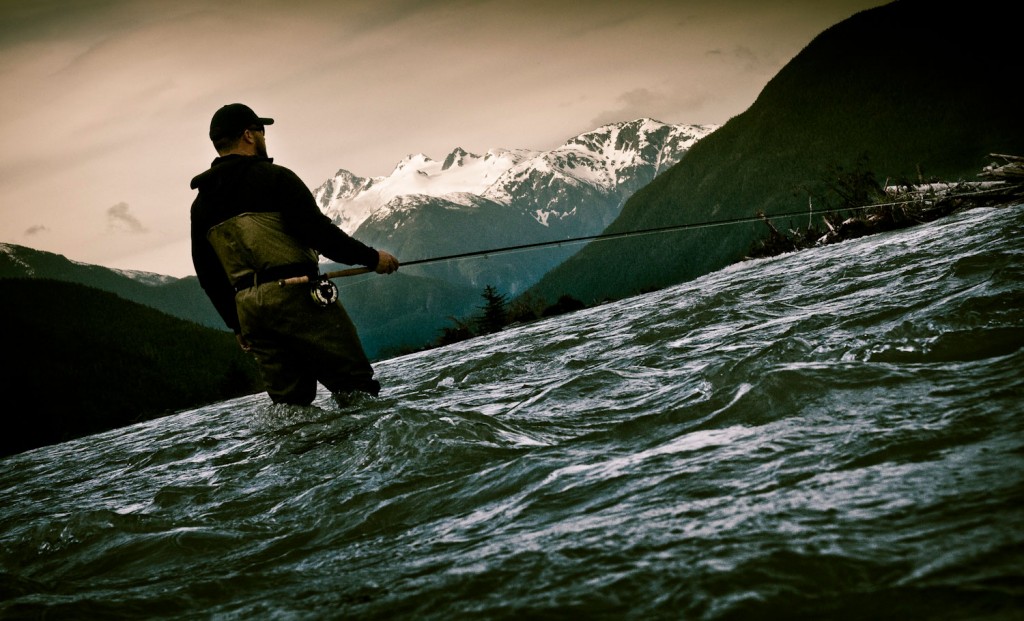
I wade out into the rushing water of the Dean, farther than I should. The cold of the water grabs me around the waist. The current tugs at my footing. I feel the pebbles washing out from under my feet as they slide softly downstream against my will, looking for a home. I gather my running line and tuck it under my index finger, then I lift my thirteen-foot rod high into the air, anchoring my fly in the swift current in front of me. The wind blows and a cold mist creeps around my glasses and down my neck. I sweep the rod round, making a big D loop, watching the rod, keeping it loaded, then draw the butt back hard to my chest. I roll the grip clockwise so that the guides face upstream and watch the bright green running line draw shapes in the air against a backdrop of dark clouds, like a kid writing his name with a sparkler on a summer night.
The line disappears through the guides and nearly a hundred feet away I see the splash as my weighted fly meets the river. I mend the line and tell myself that my feet will find something solid as I step with the rush of water, once, twice, three times. On the horizon, just over the big log jam, I can see the silver band of salt, the Pacific. Below the next run and the next, maybe four-hundred yards. The river hasn’t far to go and it’s impatient, running like children to the tree on Christmas morning. They call this run Instant Backing and I know that if my fly finds its mark, I’ll see why. I carry my rod tip upstream until I feel the weight of the river on my line. Slowly I swing the fly, I feel the strength of the water, I wait for the pull, I stare into the river and I want.
***
The Atlantis Restaurant, in Cherry Grove, South Carolina, between Myrtle Beach and Cape Fear, is a stark little beach town pancake house. It is completely unremarkable. Shabby, in fact, but it has always been special to me. Every year, on my family’s Labor Day beach trip, my father and I would slip out to the Atlantis while everyone else was asleep for breakfast. He would have eggs, over easy and bacon and I would have pancakes. Since I was little I loved having breakfast out with my father. Just the two of us in the quiet of the morning. Our complicated relationship worked well, within the simple framework of breakfast.
My father has been gone a long time now but I still find walking into that pancake house comforting. For that reason and to share my memories, I took my wife there a few years back. I got more than pancakes.
The Atlantis is an odd place at best. It doesn’t suffer from any sort of interior decoration, let alone design. The walls are glossy white with blue trim. There are a few photos from some foreign country, maybe Greece, and an aquarium next to the register containing nothing but water and a few turtles. There are some hand drawn signs with a vaguely religious theme. My favorite is a dolphin with a voice bubble that says, “I love Jesus!”
The employees seem to be from somewhere far away too, but I don’t think it’s Greece. There is a young girl, sixteen maybe, who seems particularly distant. Thin and strawberry blond with freckles she has, what combat veterans call, a thousand yard stare. Not vapid exactly but not entirely present. She waits on my wife and me that morning. After my wife orders the girl turns to me. “I want pancakes,” I say smiling. “Really?” she replies as if truly puzzled. After a long pause in which she stares at me as if I were a painting in a museum, she asks,
“What’s it like to want?”
I was completely unprepared for such an existential question before I’d even had my coffee. Not that coffee would help me find the answer, but it does make me a nicer person. I consider the question briefly, on several levels ranging from, “is this the meaning of life” to “are you out of your fucking mind” before deciding on my answer.
“You know, it’s like when you want a tip.”
The pancakes are tasty, in spite of having surely been spit on and I want to think that I’ve put that question to bed, but I haven’t. Far from it. That annoying little teenager had done something to me. I couldn’t get it out of my mind. “What’s it like to want?” For the next few years I carry that question around in my head as a litmus test. I conjure up every blown decision in my life, every misstep that lead to unhappiness and asked myself, “why did I do that?” The answer is always the same. Want.
I look around me and suddenly I see it everywhere. Want. It’s like the air we breath. We are all consumed by want. It’s like the strings on a marionette, once you see them you can’t blot them out. They’re all you see. That little red-headed waif in the apron had looked right through me and knowing only that I like pancakes had said, more or less,
“Here’s your problem, stupid.”
***
The Dean River is moody, the kind of river that kills fisherman, at least one that I know of. It’s fickle and has a temper, not like the elder rivers where I’m from, that found their channels long ago. The Dean is young and impulsive. This week it has leapt from its banks, coming up six feet the day my group arrived. It has decided
Read More »Developing Your Target Picture Means Catching More Fish
What does skeet shooting have to do with fly fishing?
MORE THAN A DAY OF CAST AND BLAST, FOR SURE.
Target picture is a term skeet shooters use to describe the visual cue a shooter uses to tell him when to fire. Since the shooter is leading the clay, rather than firing directly at it, it’s important to visualize the lead for a given shot and fire when you see that “picture.” It’s a skill that separates a real shooter from a novice.
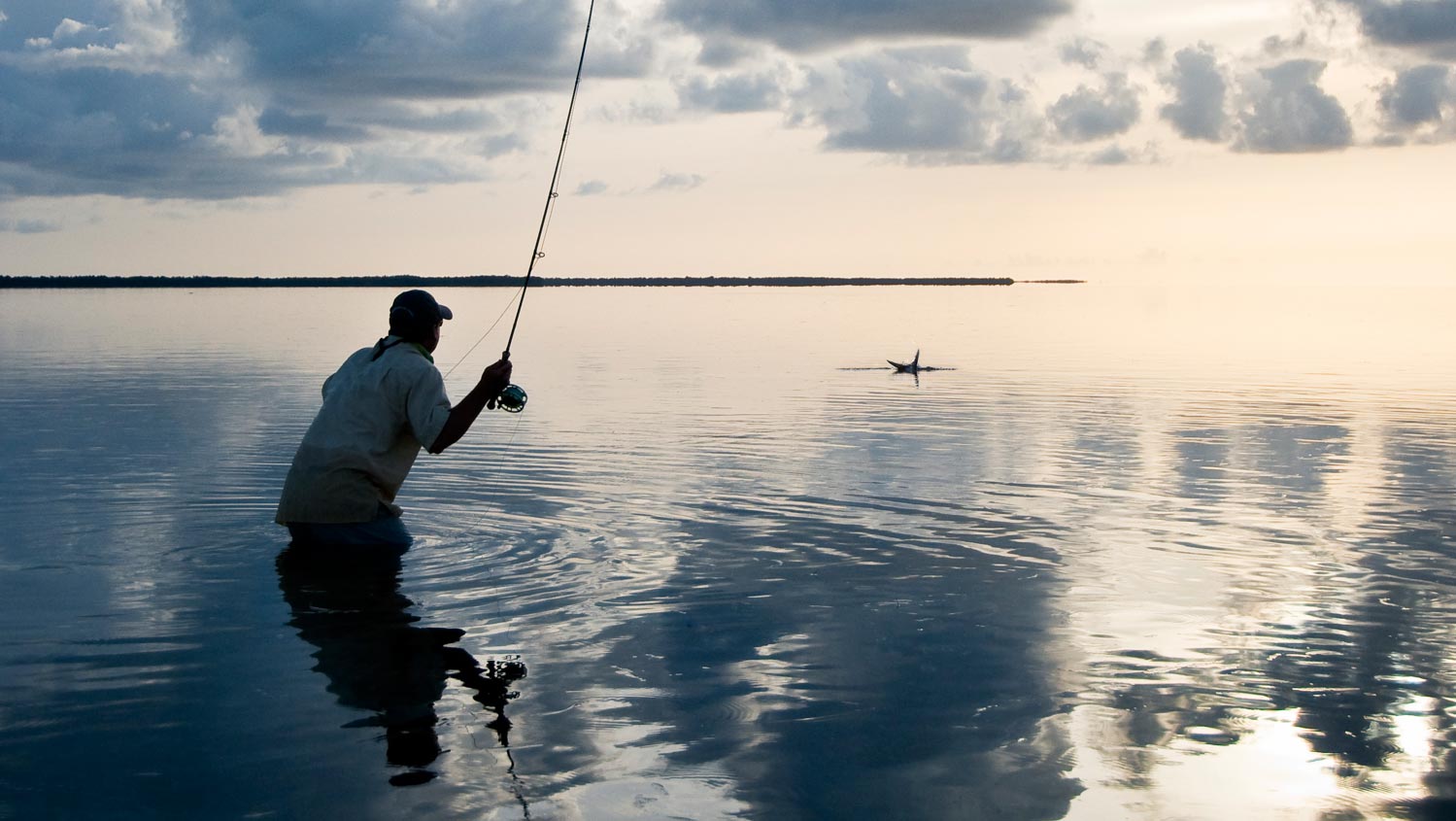
The same principal works in fly fishing. Being able to visualize the presentation before making it pays off big. It’s a simple idea when you are casting a fly to a rising trout. The actual target is well up stream of the rise form, since the fish will actually be holding upstream of where you see him rise. The current carries him downstream as he comes for the fly so, depending on the current speed and how deep the fish is holding, it can be quite a difference. Of course, your goal is to land the fly just outside of the fish’s field of sight, so you may need to lead him upstream a good ways.
What is simple on a trout stream usually becomes devilishly complex in the salt and leading a fish is no exception.
When casting to saltwater species there are a lot of variables to take into account. The fish’s speed and behavior, of course, but also the movement of both tide and boat. The angle and intensity of the light and wind come into play too. All that is to say that you never cast directly to the fish. Like a skeet shooter, you need a picture in your head of the right lead for a given situation.
DSCF3588-2bI’m not going to dig into the minutia of figuring every variable. The truth is it’s mostly gut feeling when the time comes to make the shot. Doing it right consistently only comes with
Read More »Improve Your Stance for Casting Accuracy
A good fly cast starts with your feet.
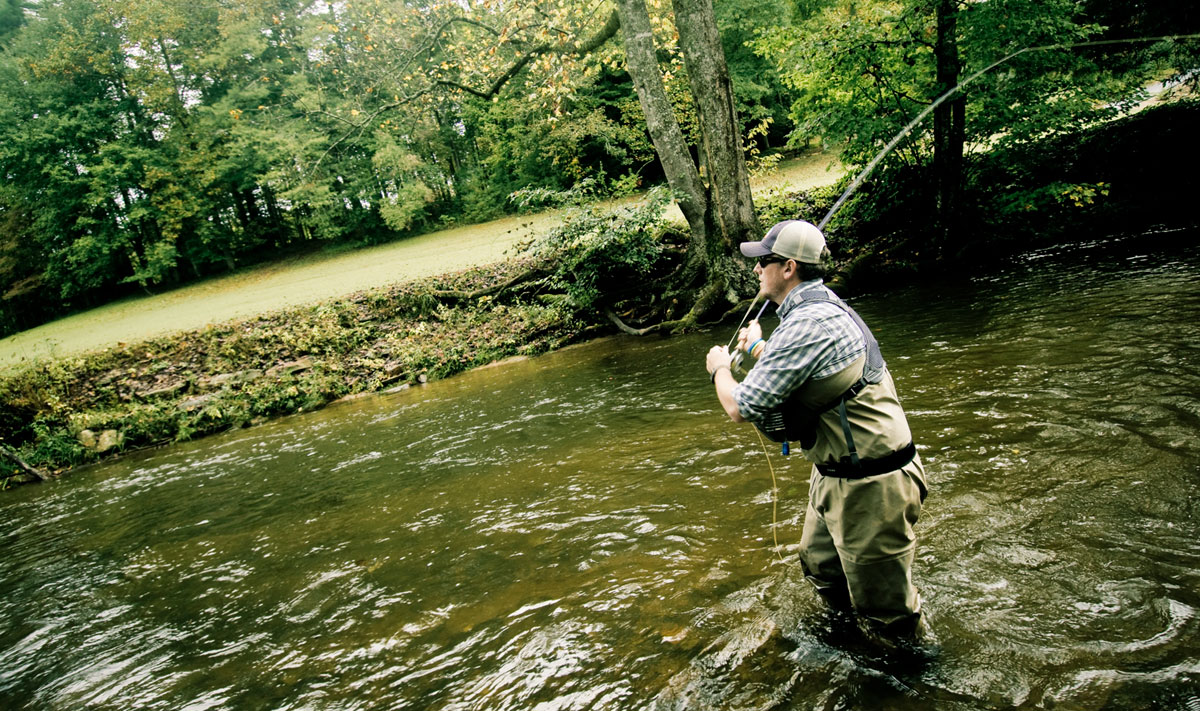
Why is that golfers talk so much about stance? All of the energy you apply with your hands starts with your feet planted firmly on the ground. It makes perfect sense that your stance would effect your cast.
Personally, I use a different stance for different kinds of casts. When I am casting for distance I put my left foot forward. Being a right handed caster this lets me use the rotational force of my body. It gives my cast a ton of power but if I don’t do everything exactly right, my accuracy suffers. But when I’m making a hundred foot Hail-Mary cast to cruising bonefish, I’ll take my chances.
When I’m making a short accurate cast, I put my left foot forward. This closed stance restrains the rotation and keeps my rod moving in a straight line. It makes a remarkable difference.
Watch this video for more on casting accuracy.
Read More »Atonement
By Louis Cahill
The following was written for, and originally published in, Southern Culture on the Fly.
It was the mid of summer, and the old people said they could not remember one hotter. The man’s work was hard and honest. He toiled like a revenant with the pressure washer as if, along with the soot and grime, he might also wash away his sins and be clean. He thirsted but he did not drink. He hungered but he did not eat.
He had spent the whole of the night before arguing with the woman. She was angered by his fishing and could not understand his helplessness in the situation nor that fishing was a thing he must do and had no choice in. Today he would fish again, and tonight the woman would again be angry.
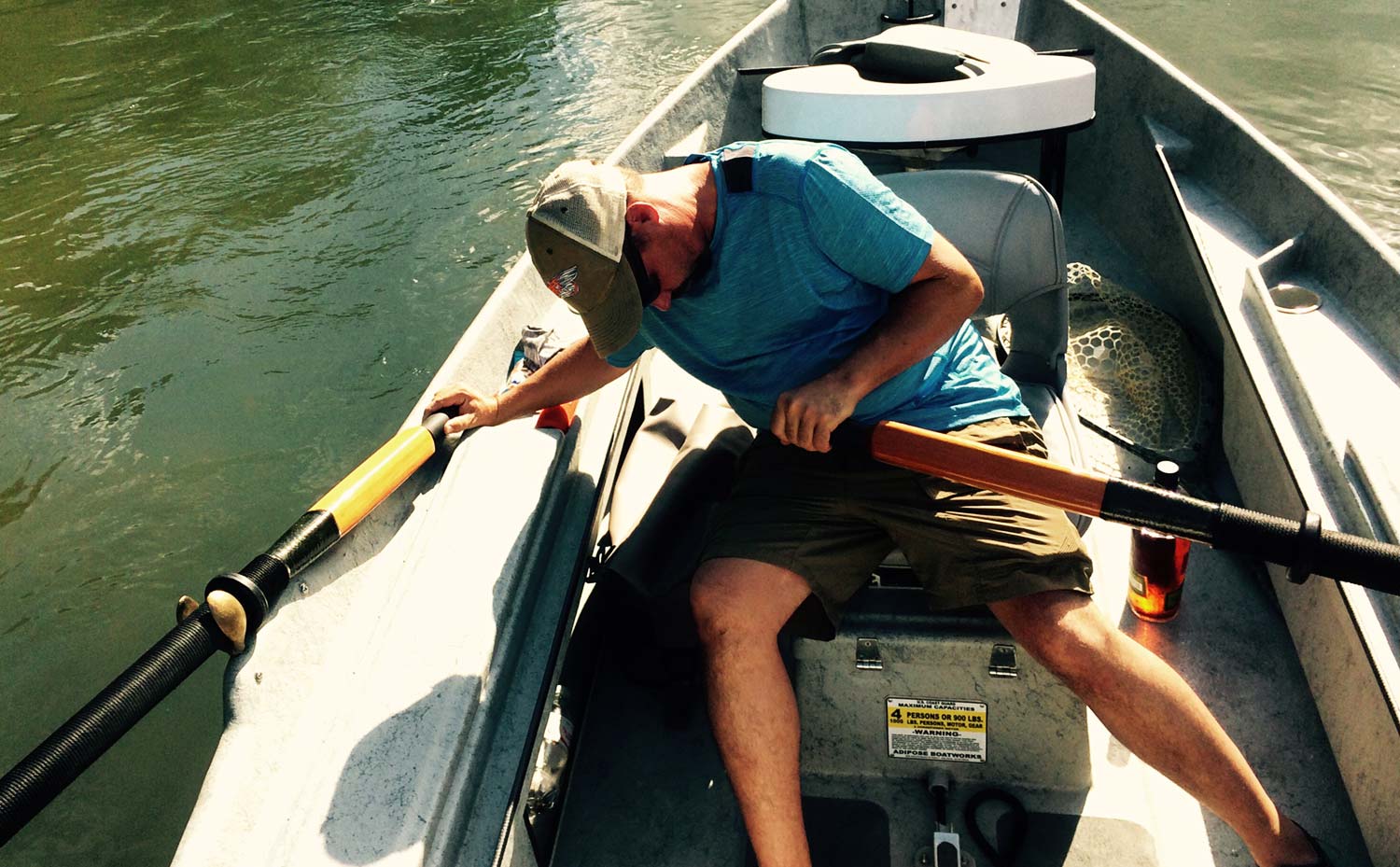
On the boat his stomach growled and was empty but only whisky did he offer to quiet his troubled gut. He explained, at great length, to his companion about the woman’s unreasonable nature and how she loathed the fishing, and the more he explained the less he understood and the more he looked to the whisky for answers.
There came a time when he had done so much explaining that he could no longer cast the rod he held and thought his drunken hands best put to work pulling the oars. He sat the rower’s seat with the whisky and he pulled both on the oars and the bottle until all was black, and in fear of his life,
Read More »Steelhead Flies, Half As Much
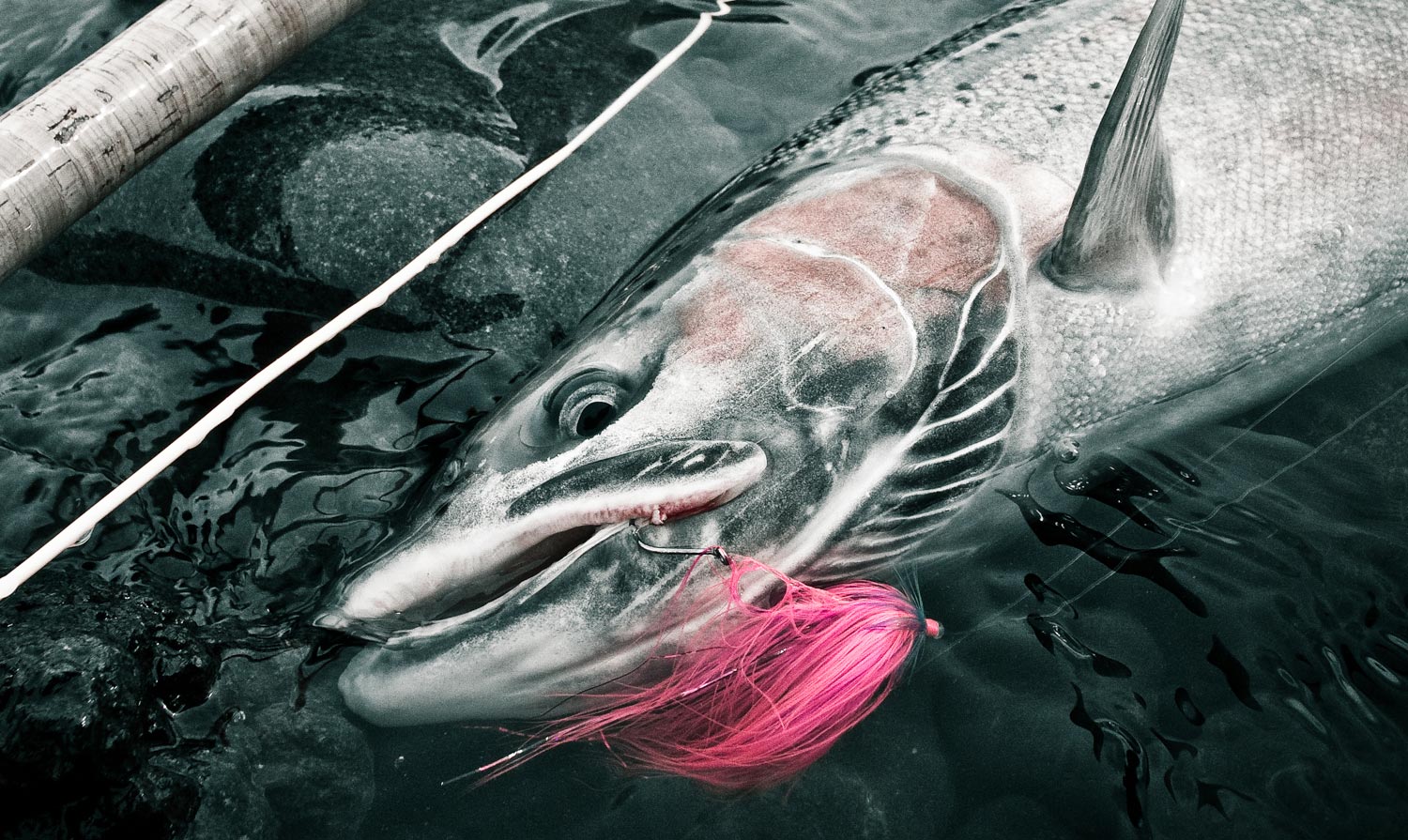
By Louis Cahill
WHEN THE RAIN WON’T STOP, THE LIGHT IS FAILING AND THE RIVER SWELLING, STEEL HEADERS DRINK WHISKY AND STARE DARKLY INTO THEIR FLY BOXES.
Maybe that’s a bit dramatic, but we all do it. I spent an evening like this with a group of friends recently. One of the guys had just started tying his own steelhead flies and they were pretty nice. Beautifully tapered, undulating forms with ostrich hurl and marabou and jungle cock eyes. They looked pretty deadly.
He would sort carefully through the box, selecting the perfect specimen, and passing it to Barrett, our guide. Barrett would give each fly a brief glance and toss it carelessly back across the table.
“Half as much,” he’d say and go back to his drink.
“They’re great flies,” he went on, “and they’ll catch fish, just not as many fish.” The reason is pretty simple. Bulky flies with lots of materials look great, but they don’t sink as quickly or as deep as sparse flies do. That’s one of the reasons simple flies often catch the most fish.
This is never more true than when swinging flies for steelhead. A fly with just enough material to create a
Read More »Wiggle Bug For Silver Salmon
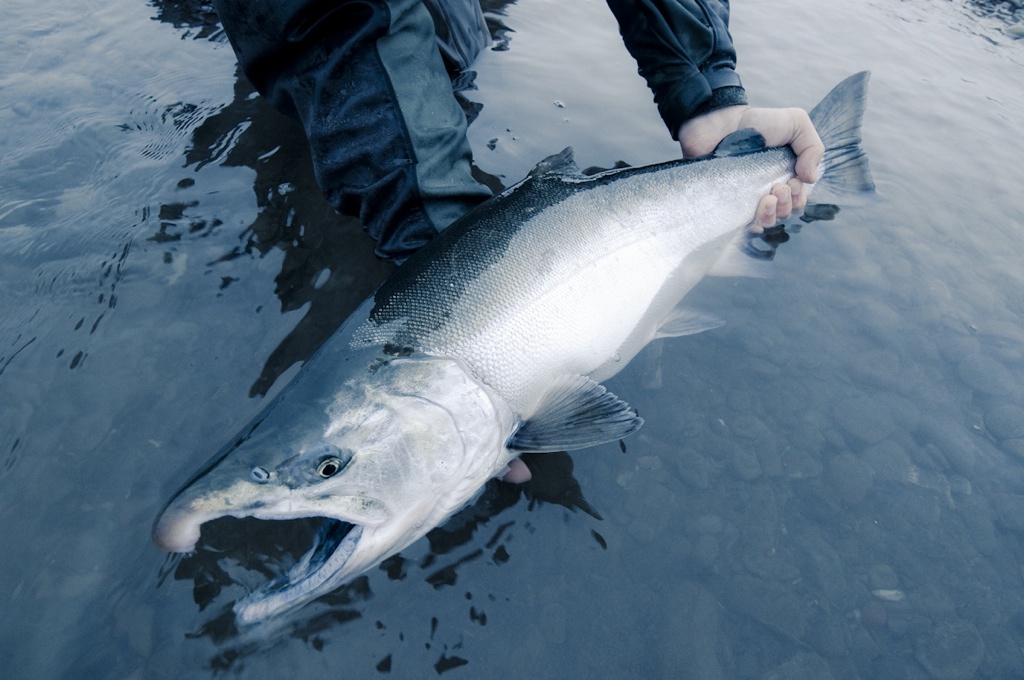
Who doesn’t love watching a big silver salmon rushing towards a fly and crushing it?
I’ll tell you who, an Alaskan guide who’s already unhooked three dozen of them for the day.
I used to really enjoy guiding first time silver clients in Alaska. You wouldn’t believe the praises you’d get as a guide after they landed twenty or so. It was sometimes hard keeping a straight face, smiling and saying, thanks man! But in my head I’m thinking, it’s not brain surgery, this is about as easy as Alaska fishing gets. Seriously though, I really did enjoy the high fives and genuine remarks I received during those trips. Silver fishing did get a little monotonous at times but it was always an easy day of guiding, something guides cherish after months in the bush. Silver salmon are super territorial and aggressive during the spawn, making them eager to chase and attack flies that enter their field of vision. It’s not technical fly fishing by any means but a lot of fun for fly anglers wanting action all day long. The only thing I truly hated about silver salmon fishing was the beating my hands took from trying to handle them death rolling in the net. If you ever get a chance take a good hard look at an alaskan guides hands. It’s not a pretty sight. I never thought my hands would look the same after that season in Alaska. Thank God for utter cream.
Read More »Don’t Hate the River
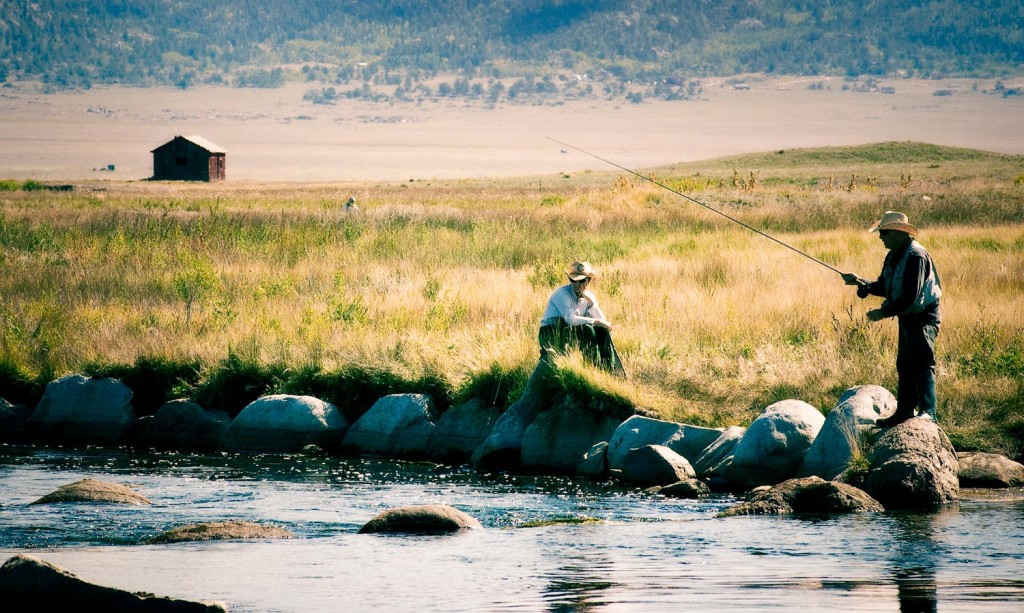
I was talking with a friend the other day about doing some fishing in Colorado, his home state.
This is a good topic to bring up if you are trying to lure me into an extended conversation. Colorado is near to my heart. He was throwing out places we might fish and said “I know you love the Dream Stream, but I hate that place”. This really took me off guard. How could anyone hate that place? If you’ve never fished it, trust me, the name says it all. A gorgeous high elevation tailwater, this section of the South Platte snakes thru a quant little valley between two reservoirs, bending back on itself time and time again, each glass clear bend stacked with big, beautiful, educated trout. What’s so terrible about that?
I do love that place and I’ve had some great days there the best being the first. Kent and I showed up with one of the S. Platte’s famous trico hatches in full swing. Glass calm runs turning into boiling caldrons of rising fish. Kent’s triple trico was born that day. The hatch was epic but we caught great fish all day using everything from dries to streamers. How can you hate a place like that? The answer is pretty simple, pressure.
You can’t put a stream like that a couple of hours drive from a major metropolitan area and not expect the word to get out. It’s true that the Dream Stream sees a ton of traffic but I’ve always had good experiences there and on a lot of other highly pressured rivers and I think it’s more than luck. Some of it is strategy and some of it is outlook.
Read More »Redneck Driftboating
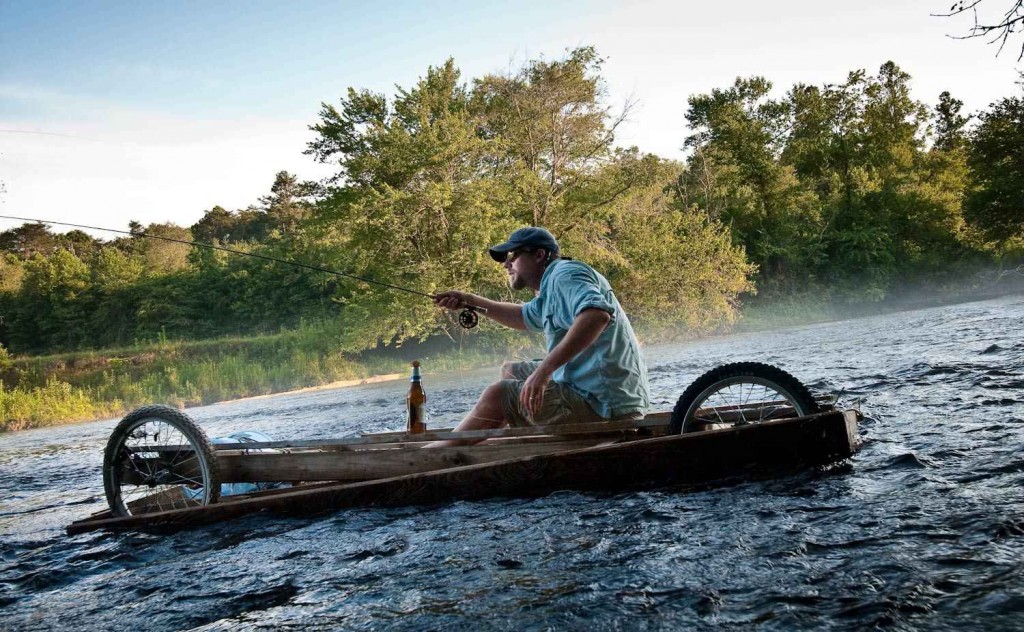
Yes, someone actually took the time to build this pathetic hybrid driftboat/soap box derby car.
Louis and I found it snagged on a shallow riffle and abandoned on my home tailwater the other day. It was comprised of two ten gallon sealed water canisters at the bow and stern. The hull was built with a two-by-four frame and plywood deck, and bicycle tires were fastened at the corners. I’m guessing the redneck engineering idea was that the design would be much easier to roll over shallow shoals while drifting the extreme low water flows. Here’s the scary part, whoever captained this boat/car, actually made it two miles down stream before it fell apart. I only wish I would have been there to witness it’s maiden voyage, and then force them to burn it into a pile of ashes along the riverbank.
I really can’t blame whoever built this thing though. My driftboat doesn’t do much better with the pathetic 120-150cfs of water the TVA blesses me with annually. Right now, 50% of the United States is in severe drought for 2012 and many trout seasons on watersheds across the country will be cut short significantly this year. I feel sorry for all the fly fishing guides and fly shops that will suffer this year because of the drought. For all you out there that fall into this category, here’s something positive to be grateful for. Just be happy you’re not me.
Read More »Windy Days and Playing Fish
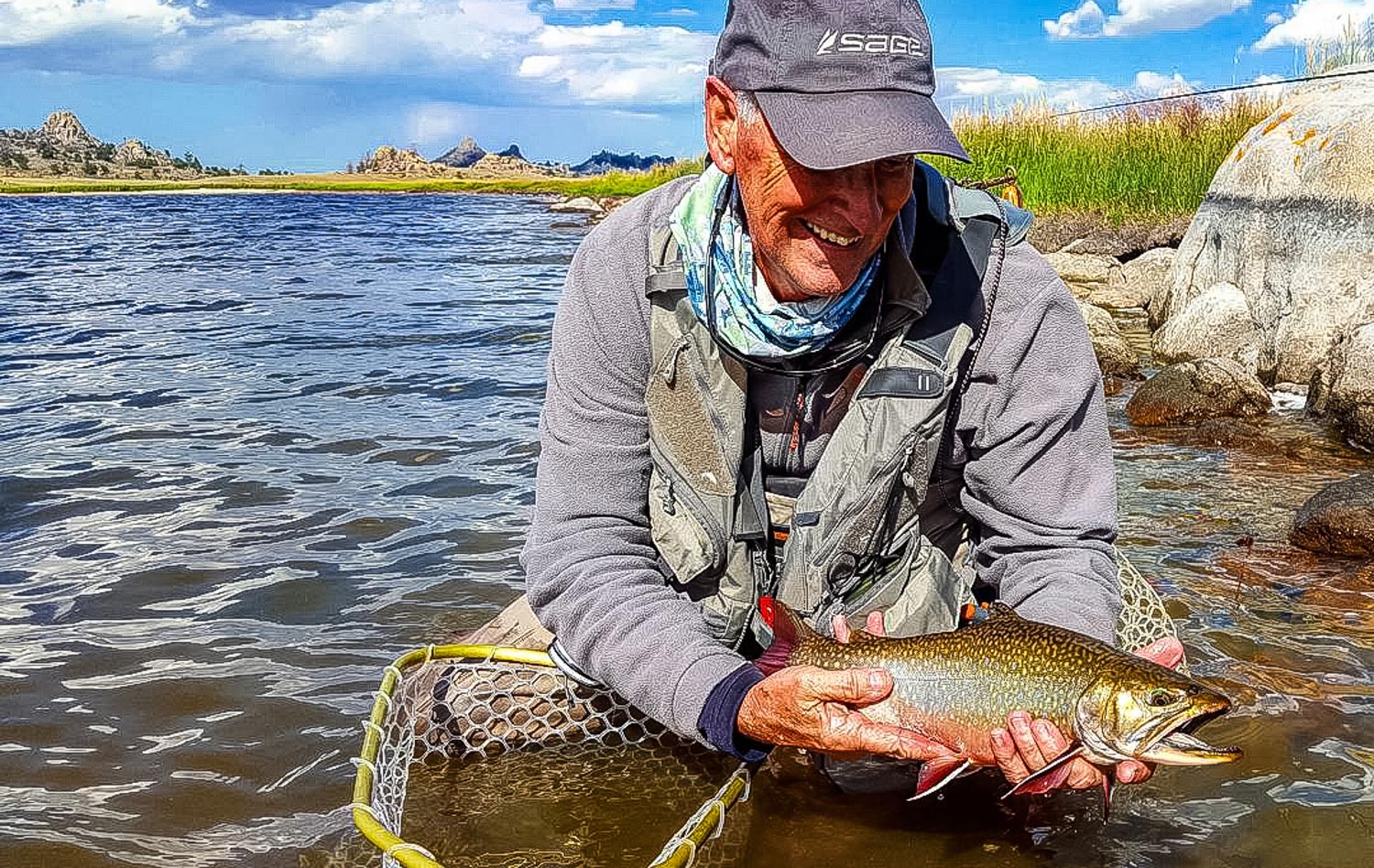
By Bob Reece
On my home waters in Wyoming, wind is a nearly constant factor.
This weather altering force can also act as a source of frustration for many anglers. However, this seemingly negative nemesis can be used as a casting ally.
While I spend most of my free time fishing moving water, my days of guiding are now spent entirely on still waters. Several of these lakes and ponds lie in open areas that are subject to frequently changing winds. In an effort to help my clients maximize their time on the water, I must be able to provide them with the instruction needed to persevere in these conditions.
Long casts are not always needed on our waters but sometimes they are. In these situations it’s easiest to position the fly caster so that the wind is blowing from their left to right for right handed casters. The opposite is true for left handed fly fishers. By positioning their hips and line movement perpendicular to the wind, its force helps elevate the line while simultaneously keeping it safely away from the angler. Using this stance and range of motion, the final cast can be delivered on either the forward or backward stroke. This process allows the angler to dictate their casting location as opposed to the wind dictating that for them.
With or without the element of wind, constant
Read More »Confessions of a Fish Counter
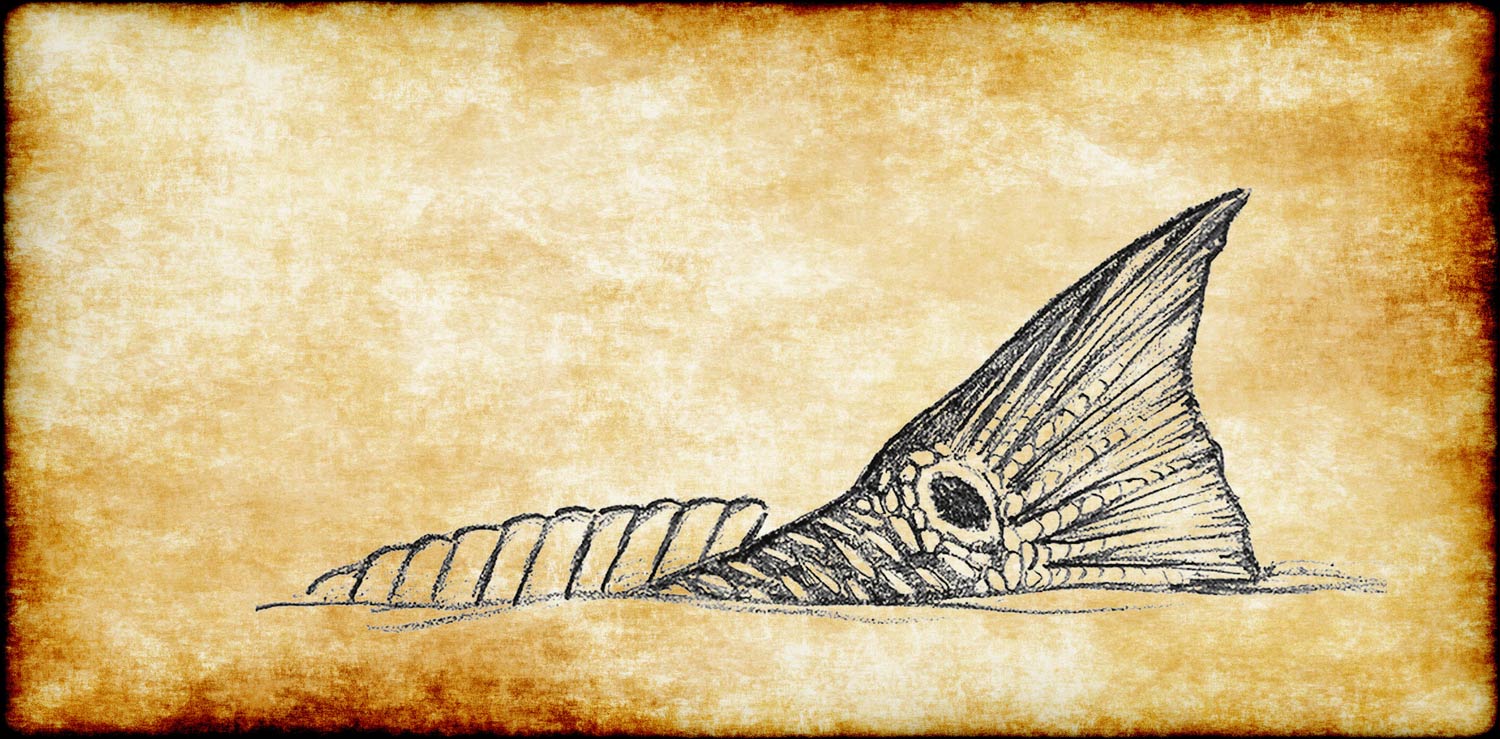
I’m really excited to share a chapter from from Tosh Brown’s new book “Top of the Flood, halfway through a fly fishing life”! I received and advance copy and I can’t say enough about how much I like it. Here’s my quote from the book jacket.
“From the Conch Republic to the northern tundra, via bushplane, kayak, and Mexican ambulance, Tosh Brown takes us on a vicarious thrillride from home waters to storied waters. The subtitle of this book is a modest tag; this could easily be a life and a half.”
Sit back and enjoy, “Confessions of a Fish Counter” by Tosh Brown
THE AFFLICTION STARTED AS A BENIGN QUEST FOR KNOWLEDGE.
NO, REALLY, IT DID.
____
In the fall of 1990, I caught my first redfish near Port Mansfield, Texas. There was a small knot of gulls hovering over a pod of tailers. Shrimp were jumping and tails were flopping and gulls were squawking, and when my line came tight I thought: this is really fun and I need to do this more often.
For the next few years I booked guides up and down the Texas Coast and caught more redfish. Though pricey, that program was working pretty well until my friend Will Myers said, “Hey, I’ve been fishing a few flats near Port Aransas by kayak. They’re covered with redfish, come check it out.” The word “kayak” immediately spawned images of seal skins and harpoons. I had no clue what Will was proposing but I was game to give it a try.
A few weeks later, in June of 1994, I met Will before daylight on the causeway near Port Aransas. Strapped to the roof of his Suburban were two long, skinny 14-foot plastic boats. They were a fairly new breed of roto-molded craft called “sit-on-tops.” No spray skirts required. We slid them off his truck, strung up our rods, and paddled across the Shrimp Boat Channel to a system of shallow flats behind the Lydia Ann Lighthouse. About 20 yards into the first lake, Will slowed to a stop, motioned me forward, and pointed with his paddle.
“There.”
“What?”
“Redfish.”
“Where?”
“There.”
“Oh…dang.”
Thirty feet off his bow was a pile of waggling redfish in a foot of water. Twenty feet beyond that was another group. As I looked out across the flat I could see more pods tailing up. It was almost as if someone had flipped a switch marked “DIG.”
The lake we were fishing had a soft mud bottom laced with oyster reefs. It was too mucky for wading, so the kayaks provided a simple and stealthy means of approach.
For the next six hours Will and I paddled from one tailing pod to the next. When I got back to Austin I stopped at the local paddling shop and bought a sit-on-top kayak and a paddle and a roof rack for my truck. A week later I went back to the same flat and again found it crawling with redfish.