
Beating the Winter Blues
By Kevin Howell
AS I TRAVEL AROUND TO FISHING SHOWS I OFTEN HEAR PEOPLE TALKING ABOUT WANTING TO GET ON THE STREAM AND GO FISHING ONCE IT WARMS UP.
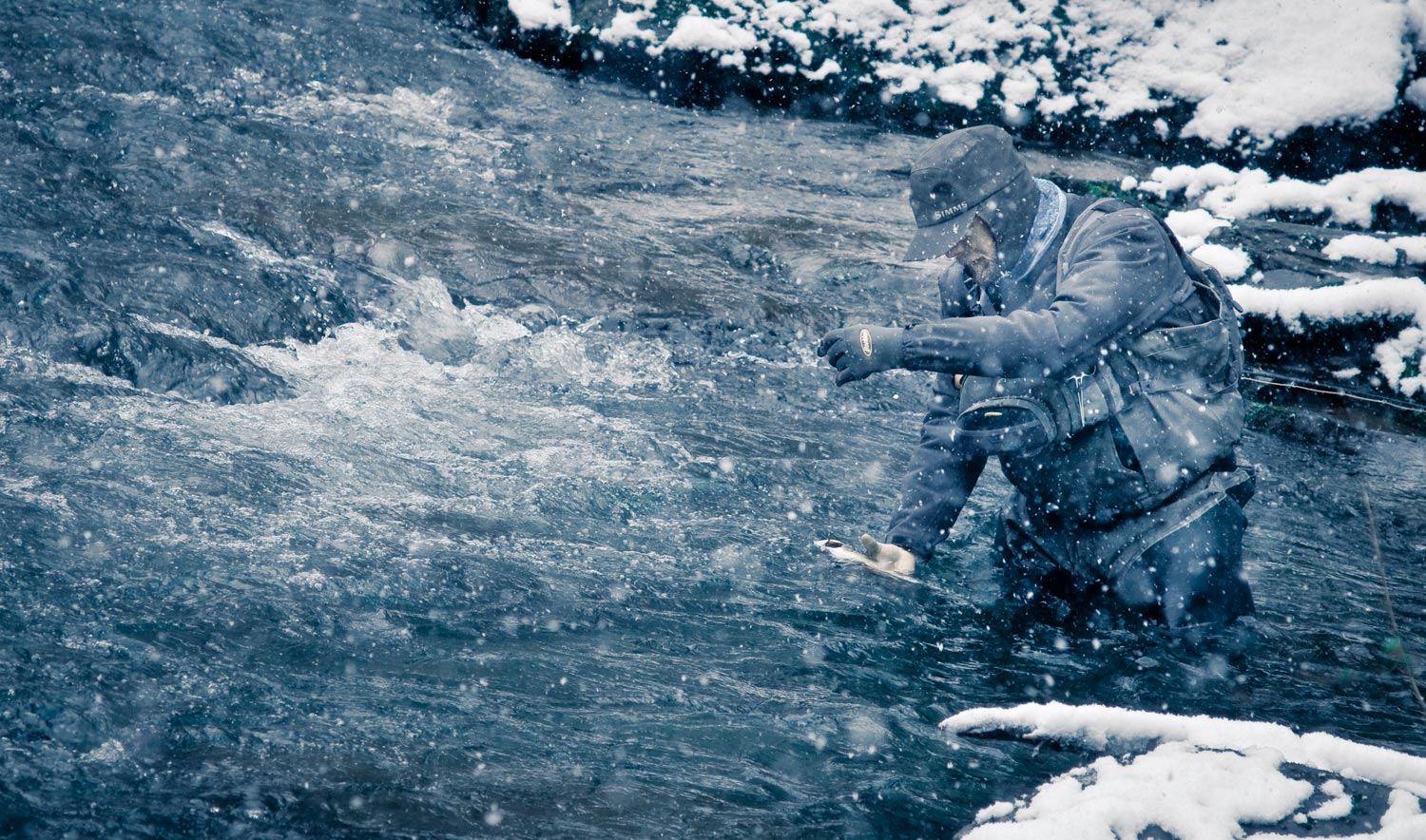
In reality, some of the best fishing of the year, here in the Southern Appalachians, takes place in the winter. Here are some ideas to help you get through the winter blues.
Fish in the winter. Winter fishing in our part of the country is fabulous. I agree, on days when it is 22 degrees and blowing blue snow, you probably do not want to go fishing. However, we have plenty of days when the air temps will hit the high 40’s to low 50’s and it makes a nice day to get out of the house. Remember a trout has to eat to survive, and you can not catch him if you are sitting on the couch.
Tie Flies. Another great way to pass the time is to tie flies. If you are new to tying or want to learn how to tie, then hang out at your local shop and take some tying classes. A lot of stores like Davidson River Outfitters even offer free or low cost classes or nights you can just come into the shop and hang out and tell fish stories.
Build a rod. Again if your local shop or fly fishing club offers a rod building class you can build your own rod and customize it in any manner you like, except for Tarheel Blue (sorry, I went to NC State).
Take a Trip. If you can afford it, take a trip. It does not have to be a $10,000 around-the-world trip. You could go to south Florida or Louisiana for a day or two and go Redfishing. You could go to south Texas and fly fish for bass. You could go to North Georgia and fish the Toccoa tailwater and camp overnight in a public campground for $2. If you want to go to Argentina or New Zealand, or the tropics like the Bahamas or Christmas Island, you can find a lot of good deals at the moment due to
Fly Fishing Tip: Mend Your Strike Indicator to Increase Your Drag-Free Drift
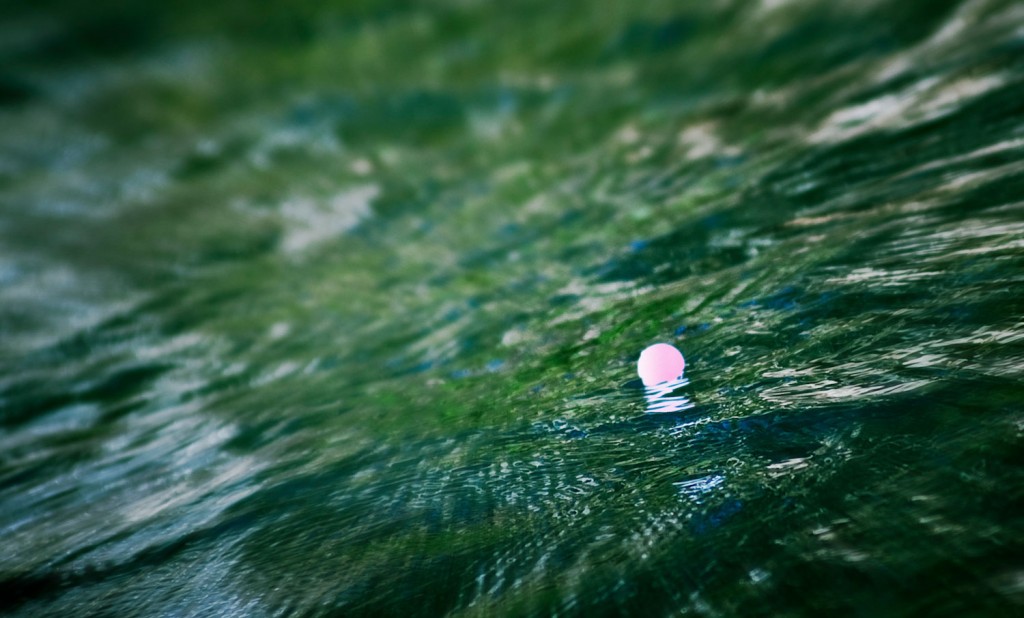
IS THERE EVER A TIME, WHEN NYMPHING, THAT IT CAN BE BENEFICIAL TO LIFT THE STRIKE INDICATOR OUT OF THE WATER DURING A MEND?
When I first started learning the art of mending fly line, I constantly struggled with keeping my striking indicator and dry fly from moving across the surface of the water. Quite often, I not only moved them during my mends, I even lifted them completely out of the water in the process. Most of the time that wasn’t a good thing, because it usually caused my flies to be pulled off my intended drift line, and that greatly hindered my ability to catch fish, no matter how accurate my initial presentation cast happened to be. I learned quickly, that poor mending, and sloppy line management, were the two main factors in keeping me from getting my rod bent with trout. There was no doubt that my problem with mending fly line laid in the fact that my technique was awful. I thought I was a whole lot maturer than I really was as a fly fisher, failing to realize that I had just begun to skim the surface of learning the intricacies of fly line mending. Such as, determining when or when not a mend was called for during a drift, mend timing and form.
Read More »Learning to Spey Cast
By Owen Plair
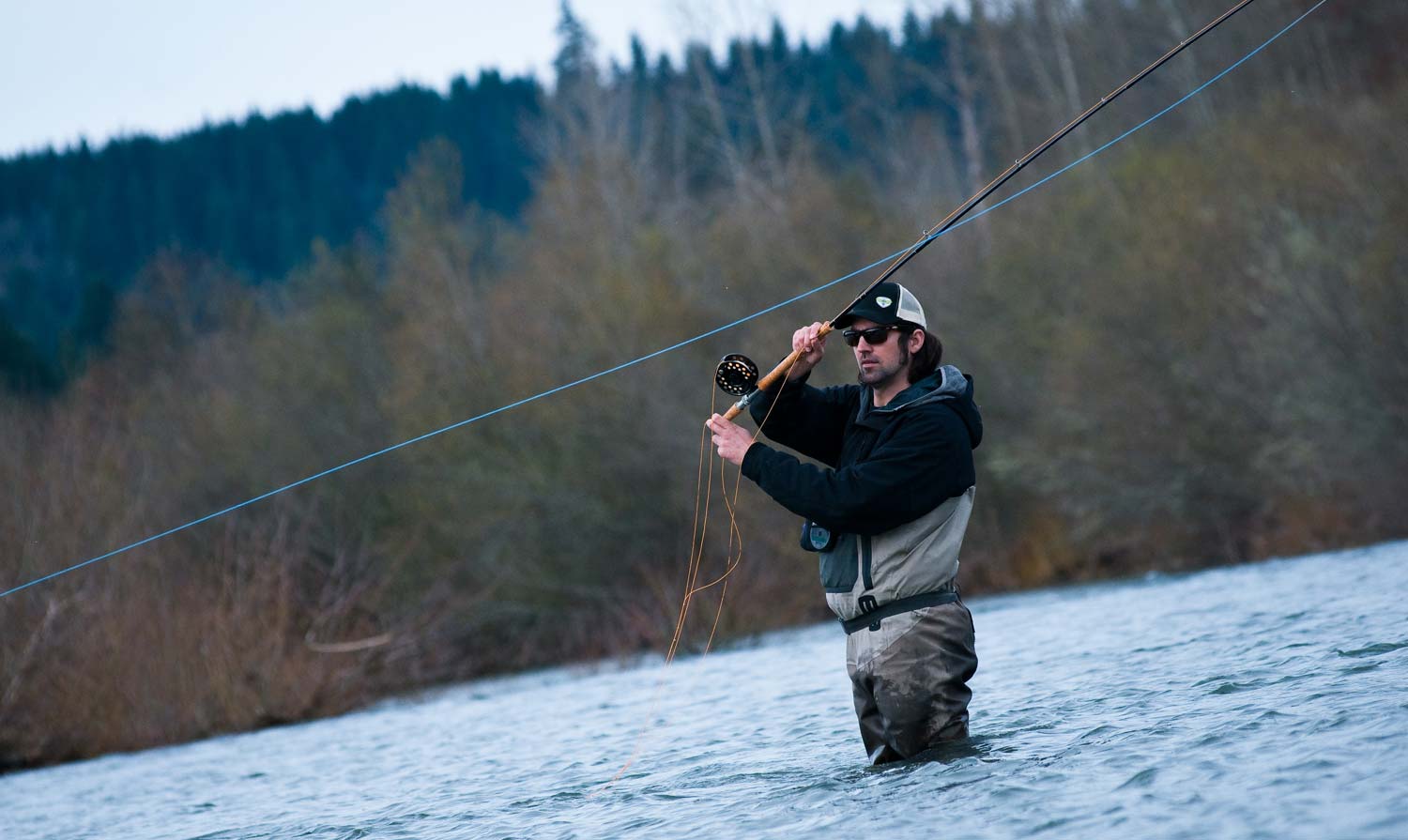
In the world of Fly Fishing there was always one style of casting that I never quite understood.
It was some sort of foreign language. An art of casting I’d only seen in videos and photos, but it always seemed so magical. Not to mention how far they could throw a fly line. Why do you use two hands? Why are the rods so long? Whats with these crazy motions on the waters surface to make this giant roll cast? Spey Casting was always a mystery to me, because I never found myself in a fishery where it was needed. Still, I was always curios about it.
That all changed very fast when I stepped off of a helicopter in the middle of the Russian Tundra, in May of 2013. I pursued a once in a lifetime opportunity guiding on the World Renowned Ponoi River, in the Kola Peninsula of Russia. The Ponoi is one of the best Atlantic Salmon Rivers in the entire world and can only be reached via helicopter from the city of Murmansk. What got my attention about the Ponoi was not just the world class fishing but the desire to experience a completely new style of fly fishing. The best way of targeting these Atlantic Salmon on fly is, of course, swinging flies with a two handed rod or Spey Rod. Spey Casting has been very popular in Europe for hundreds of years and has slowly made its way over to the united states, with steel head and salmon anglers using switch rods and spey rods. The rods, lines, leaders, flies, and even reels were all so different than what I was used to. I was stepping into an entirely new world. Thats why I decided to go to Russia.
Before I left for Russia a friend let me borrow his spey rod to get a feel for spey casting and man was I blown away when I put together his 15’ 9wt. The thing felt like a flag pole in my hand! Waving it around on my pond, false casting, roll casting, and having no Idea what to do with a spey rod made me realize I had a lot to learn. I watched youtube videos, read articles, and even talked to some of my clients about spey casting. It was so much harder than I thought it would be and way more technical. One thing I did learn through fly casting, instructing clients, and teaching the National Orvis Fly Fishing School was that fly casting has so much to do with muscle memory and that if you don’t learn correctly from the beginning you are setting yourself up for failure in the end. So after attempting to teach myself I decided to wait until I got to Russia to really perfect the different spey casting techniques and man was that the right move.
The first thing I learned was that moving water is key and truly helped set up your line for the cast. My first instruction came from Matt Brewer who was the camp manager at the time and a long time guide. Matt could throw a spey rod beautifully. He made it look effortless shooting 70 to 80ft casts. The sound of the fly line ripping through the water as Matt threw the first cast was something I will never forget. Matt taught me the double spey and man was it a humbling feeling, learning how to fly cast from scratch again. That awkward feeling when your muscles and mind are asked to do something they have never done and you feel almost hopeless. Matt was very patient with me and in between the laughs, and sarcasm, I started from the beginning with how to hold the rod, how much line to start with, and most importantly understanding the D loop. Crossing my arms, folding over the line, and swinging back. It all felt odd compared to what I was used to but it also felt pretty awesome learning something completely new in fly fishing. Matt was a true professional and had me casting in no time which led to my first Atlantic Salmon on fly soon after.
The D loop is the most important part of the spey cast, because that is how
Read More »A Guideline To Accuracy in Fly Tying
By Bob Reece
Good fly tying is all about accuracy.
One aspect of fly tying that often creates frustration is tying in materials in the desired location. As hook size decreases, this task can becomes even more difficult. While time spent tying helps to conquer this issue, there is a technique that expedites the process.
From a young age, I’ve had larger than average hands. While this is great in many aspects of life, it’s not always beneficial in fly tying. As a young tier I often struggled to secure many materials to the hook in the location where I knew they should be. My hands either blocked my field of vision or were simply too large to work with the smaller sizes of the hook range.
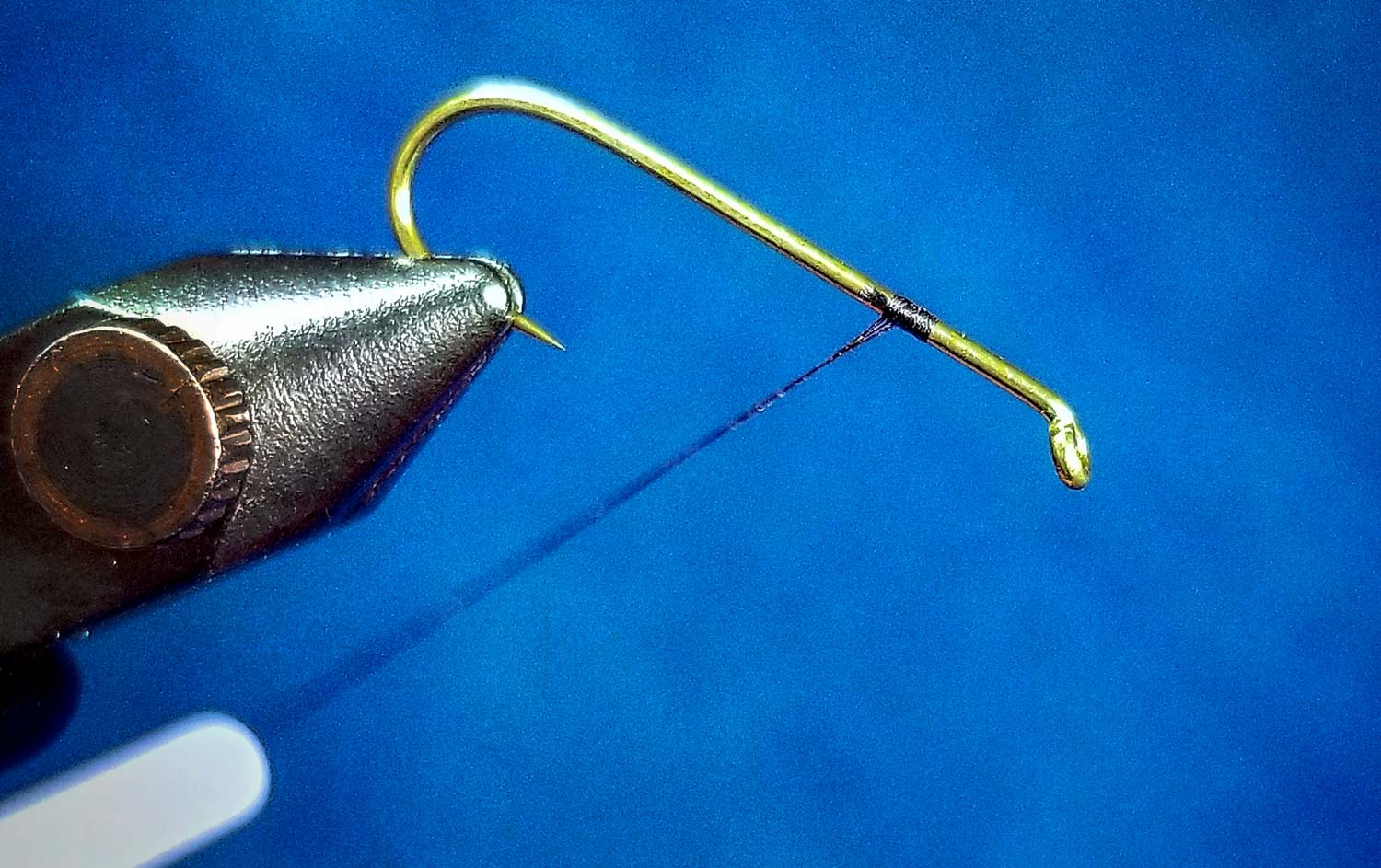
One day I wandered into a fly shop on a cold snowy spring day. There was a man at a tall table tying streamers. As I watched him tie, he did something that I had never seen before. He folded several of the materials over or under the thread, to some degree. Then he simply slid the materials down the thread, using it as a guideline to the exact location of the tie in point.
While I’m sure that this man did not invent this technique and that it’s undoubtedly been used by tiers the world over, it had a huge impact on my development as a tier. By using the thread as a guideline to the hook shank, the tier eliminates the possibility of lateral movement by the materials. This system ensures that the material lands exactly at the base of thread strand. The location of the bobbin in the three hundred and sixty degrees of one wrap determines which side, top or bottom of the shank the material ends up on.
Read More »Choosing a line for your switch rod Part 2: Choosing a line
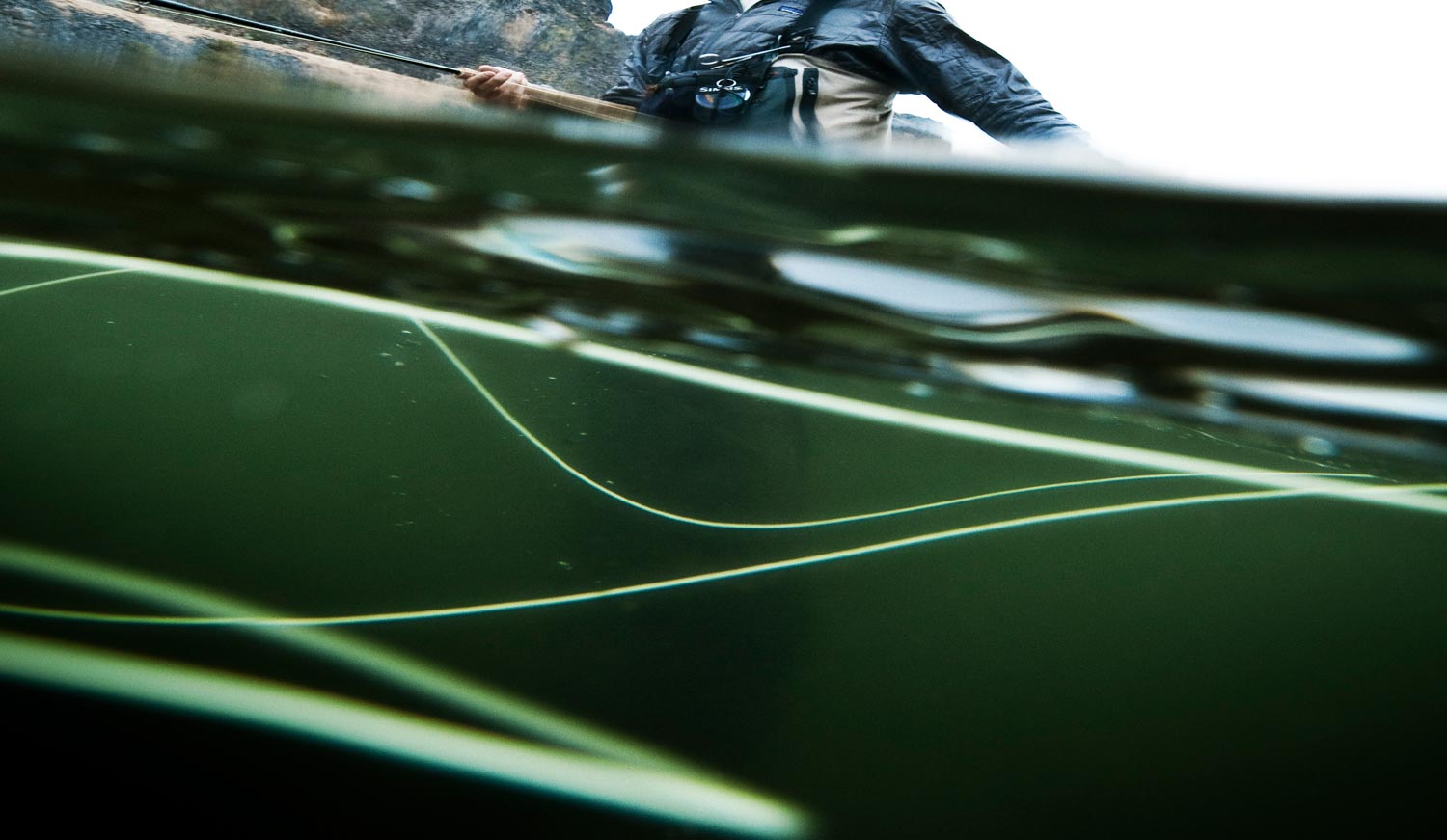
Before we talk about specific lines and how they fish, let’s take a minute to understand the switch rod. If you have not read “Part 1: Understanding lines and line tapers” you can find it HERE. I think you will find the information helpful. The switch rod is a product of evolution. A decade ago the average length of a two- handed rod was 14 feet and the average line weight was 9. As two-handed casting has become more popular and its application more varied, the average two-hander has become shorter and lighter. The modern two-hand rods are less fatiguing, beautifully balanced and more versatile, allowing Spey-style casting in tighter casting situations. The switch rod adds to this adaptation the option of single-hand casting and high sticking. Things that couldn’t be accomplished with longer heavier rods. This makes the switch rod the most versatile rod ever made and the most confusing. It is a rare angler who uses their switch rod in every application it can handle. A switch rod is really a short, light weight Spey rod. Although it will accommodate overhand casting, even with traditional lines, its taper is designed for two-handed Spey casting. Therefore, in most applications, it will perform its best with a line designed for two-handed casting. When matched with the right line switch rods are not only versatile but incredibly effective. A lot of switch rods spend their lives in the closet because they got matched with the wrong line. Often, folks coming from a single-hand casting background will set their switch rod up with a traditional line for single-hand overhead casting and find that it performs poorly. This is because the rod is under lined and it’s an easy mistake to make. Switch rod and Spey rod weights are rated on the AFTTA … Continue reading
Read More »Getting a Grip on Spey Casting
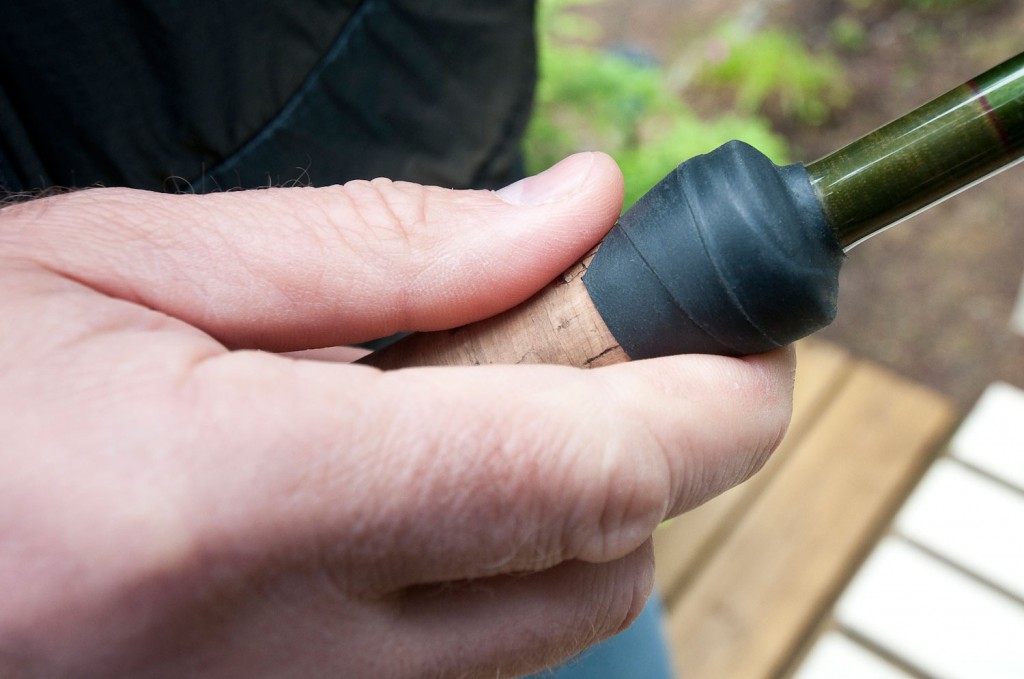
I love casting mono running line on my Spey rods.
At present, I’m using Rio Slick Shooter. It lives up to the name. I saw a big improvement in my distance when I made the switch. It casts like a dream and fishes well but the down side of any mono running line is that it gets slick and hard to hold when you’re casting.
There’s nothing more disappointing than losing your handle on a cast. That’s when the running line slips from between your fingers and the cork just as you make your forward casting stroke. The rod unloads and your cast piles up in a useless heap. Fortunately my buddy Andrew Bennett showed me a cool trick to solve this problem.
Simply wrap the end of your grip with
Read More »Setting up Skagit Heads and Other Spey Lines
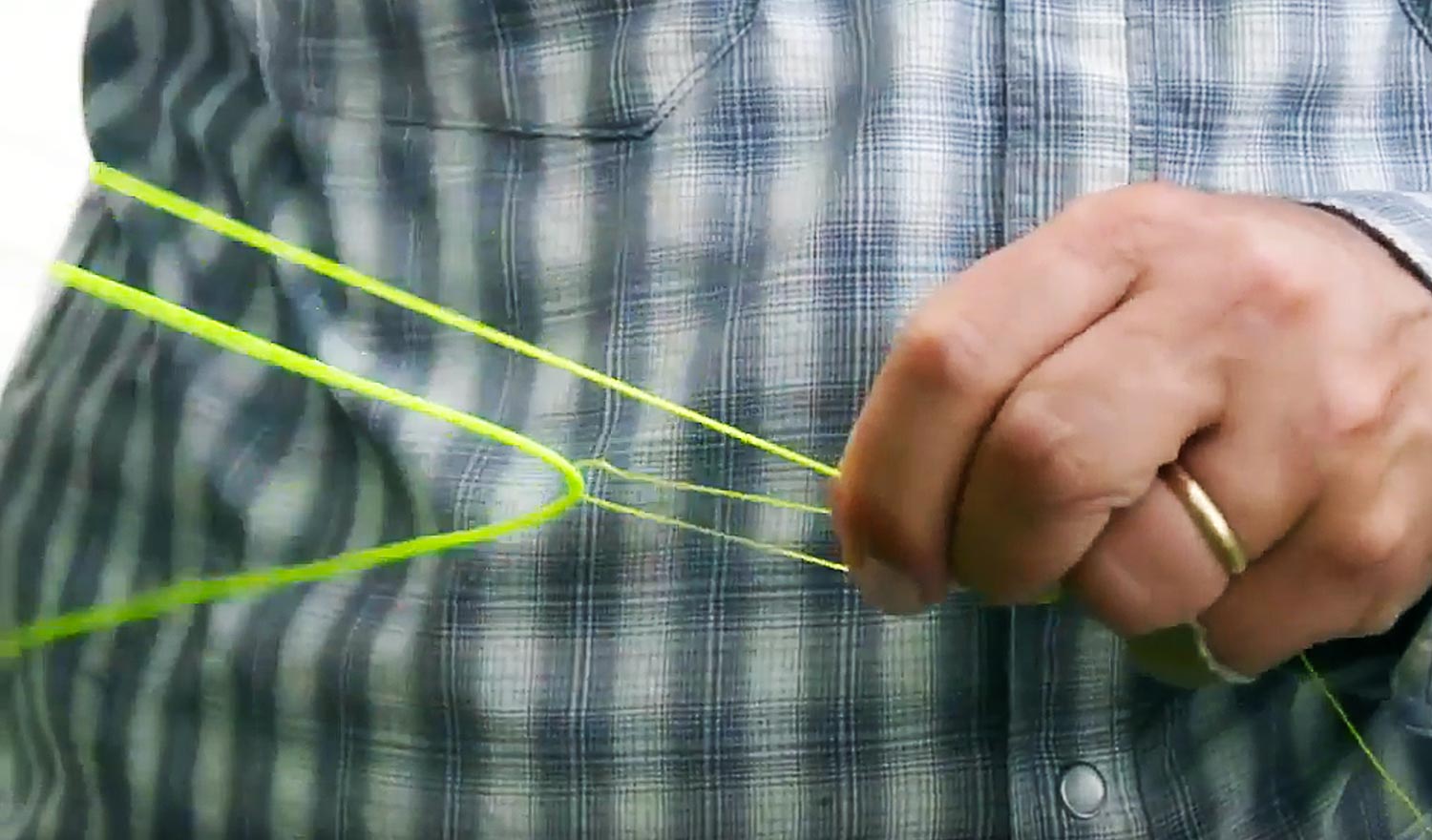
If you are just getting started in two-hand fly casting, you may be confused about how to set up the lines.
Spey lines are intimidating to the uninitiated with their many parts, options and loop to loop connections but there’s no need for alarm. Spey lines, in both form and function, are much the same as traditional fly lines. Think of them as traditional lines that have been cut into sections with scissors.
What their design offers to the Spey caster is instant flexibility on the river. In a Spey system the running line, the head and sometimes the tip are separate. They serve all the same functions as their counterparts in traditional lines but the caster is free to choose from interchangeable heads and tips to meet his or her immediate needs.
WATCH THIS VIDEO AND LEARN TO SET UP A SKAGIT HEAD.
Read More »The Bowen’s Baitfish Minnow
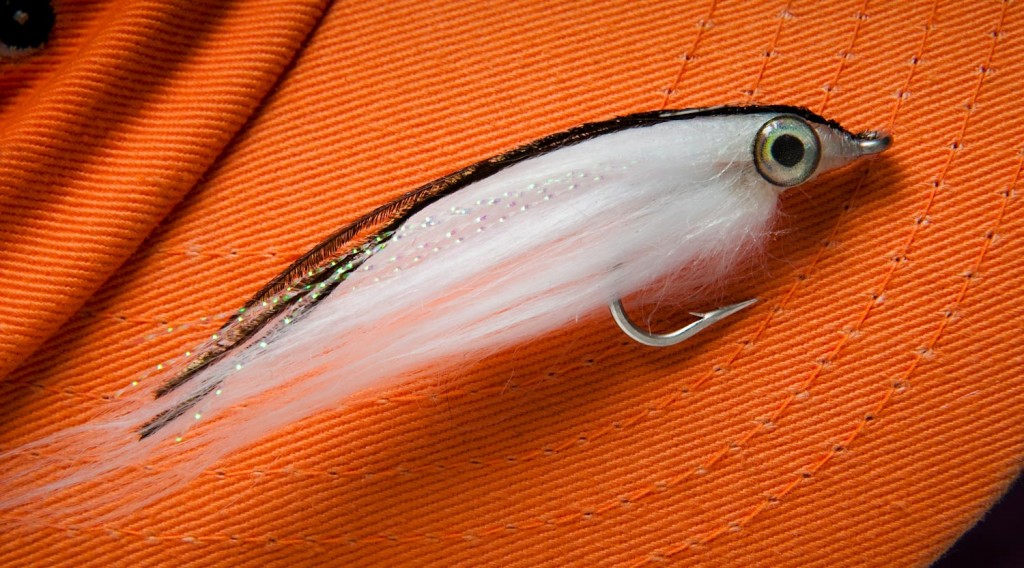
HYBRID, WHITE AND STRIPED BASS ARE AGGRESSIVE PREDATORS AND CATCHING THEM HIGH IN THE WATER COLUMN CAN BE A WHOLE LOT OF FUN.
These large bass are found in lakes all over the southeast. Early in the morning these feisty bullies will push schools of baitfish to the surface and feed with abandon. This presents a great opportunity for the fly angler.
The water explodes as bid schools gorge themselves and you would think that any fly you put in the zone would get shredded but not so. Just like trout, keyed in on a hatch, these fish can be surprisingly selective. Fishing the right fly at the right depth is crucial. Anglers tossing top water baits are frequently frustrated with refusals, not realizing that the fish are feeding several inches below the surface. The splashes they see are the fish’s tails as they turn and dive.
Andy Bowen, owner of The Cohutta Fishing Co, has this scenario dialed in. Andy fishes a simple but effective baitfish pattern on an intermediate line. The intermediate line carries the fly to just the right depth and the silhouette of the fly triggers the predatory response. Andy generally out fishes the gear guys with this setup.
Here’s Andy to show you how he ties the Bowen’s Baitfish Minnow.
Read More »Fly Fishing Q&A – What Would Kent Do
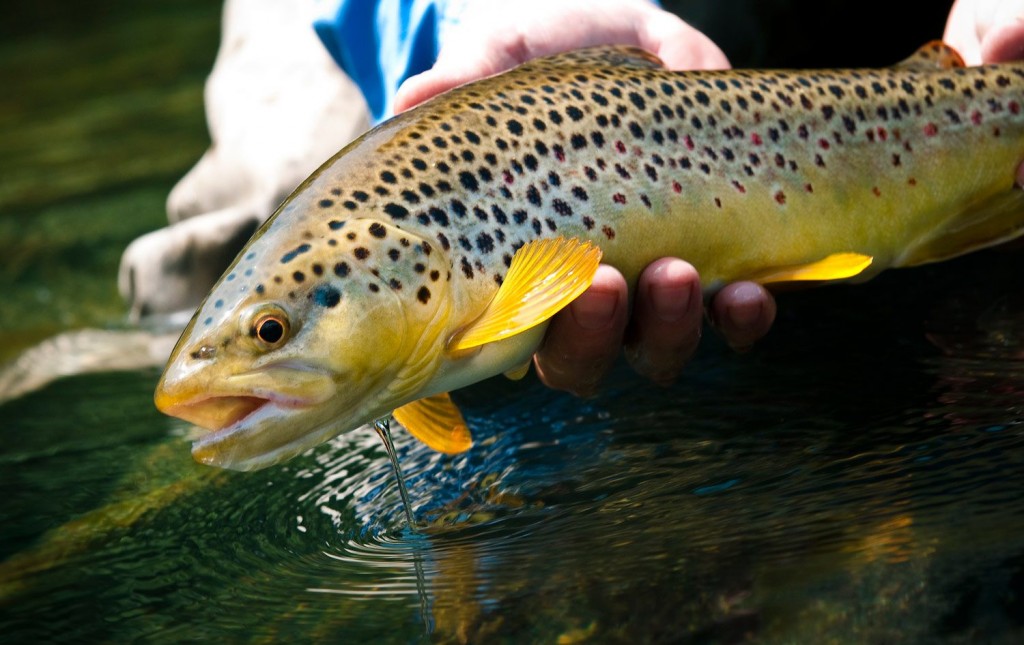
WE RECENTLY EXPERIMENTED WITH ASKING OUR G&G FACEBOOK FANS TO PROVIDE US WITH FLY FISHING TOPICS/QUESTIONS THEY WOULD LIKE US TO ANSWER AND GET MORE INFORMATION ON.
Louis coined the concept WWKD (What Would Kent Do) and it’s been very successful thanks to all of your participation. I picked out three inquiries from the participants and have provided my answers. Let us know how you like this Q&A platform and we’ll continue to use it in the effort to provide you with the content you desire.
Lance Lynch asks:
“You drive a hundred miles to a pristine river. You are so excited to get out and fish but you snap the tip off your rod. No spare rods, a full day ahead of you. WWKD?”
This is a great question because many of us have found ourselves in this situation before. You know how I always talk about carrying extra gear? This is why folks. Stuff like this happens all the time to us. It’s very easy to snap the tip off your rod getting it in or out of your vehicle, or even drop your fly reel on the ground and bend the spool. If you’re a serious fly fisherman, you should always take the time to pack extra gear, especially if you’re going to be traveling long distances to fish. Consider purchasing a inexpensive rod-tip repair kit and keep it in your vehicle and if you have a back up fly rod, pack it as well.
Fuji Rod-Tip Repair Kit
To answer your question, this is what I would do if I didn’t have a rod tip repair kit or a back up fly rod with me. It’s a quick fix, just carefully snip off the broken section as close as possible to your next rod guide with a pair of nippers or pliers. Keep in mind the fly rod won’t cast as nice, and it will catch the fly line some, but you’ll still be able to cast it well enough to make satisfactory presentations and land fish.
Kim Brock asks:
“What is the most important advice that you would give to a new trout angler. WWKD?”
This is a pretty broad question but here are seven tips I stress most with my novice clients.
One, take the time to learn the fundamentals of fly casting so you can learn proper technique. Always watch your backcast when your practicing fly casting and fishing on the water. It will shorten your learning curve, help keep you out of the trees and minimize tangles on the water. You’ll also improve your skill level much quicker overtime by doing this. If you don’t fish all that often, it can be very beneficial for you to practice fly casting a couple of times for 10-15 minutes in the yard before you head out on your fishing trip. Doing so, you’ll feel more comfortable and confident in your fly casting and you’ll have worked out many of your casting flaws.
Two, when you’re trout fishing don’t
Read More »Tarpon On The Clock
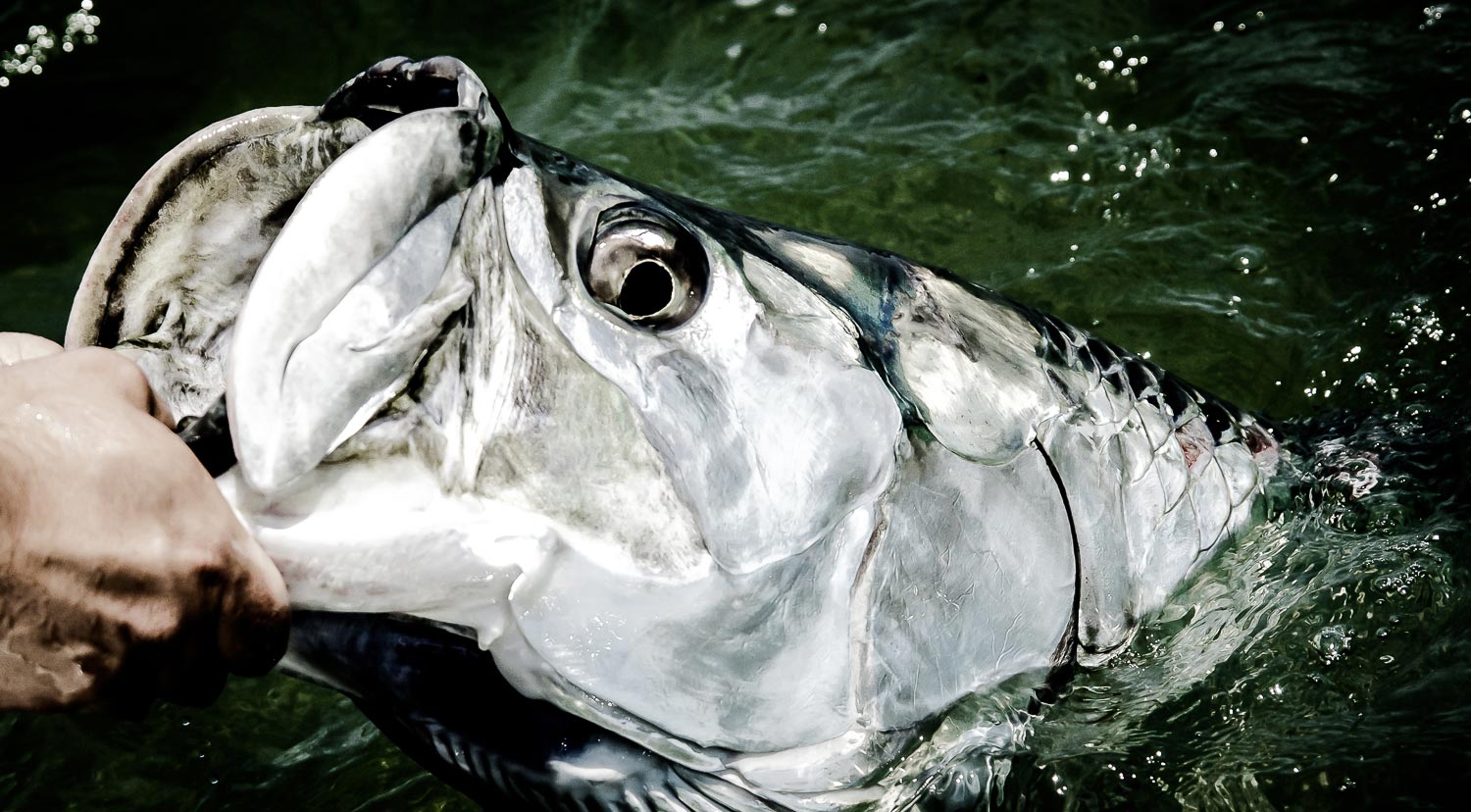
A Photo Essay By Joel Dickey
It’s 5:30 a.m. and my alarm pierces that beautiful thing, called sleep, which all guides miss so much this time of year. I jump out of bed and I’m quickly reminded I’m not 25 anymore.
My joints pop and crack and muscles, that I didn’t know I had, ache. However it’s calm and my adrenaline soothes my body better than Advil ever would.
I jump into my clothes, give my sleeping wife a kiss and head to the fridge for my morning Mountain Dew, hoping that the caffeine will clear the fog, left from only 5 hours sleep.
Off to the dock. I only have another 100 consecutive days left until my next day off. Why do I book so many consecutive days?
I guide for the greatest gamefish in the world. I guide for tarpon and I don’t want to miss a single second of it.
Read More »