
Trout Fishing The Low Warm Water of Summer
By Kevin Howell
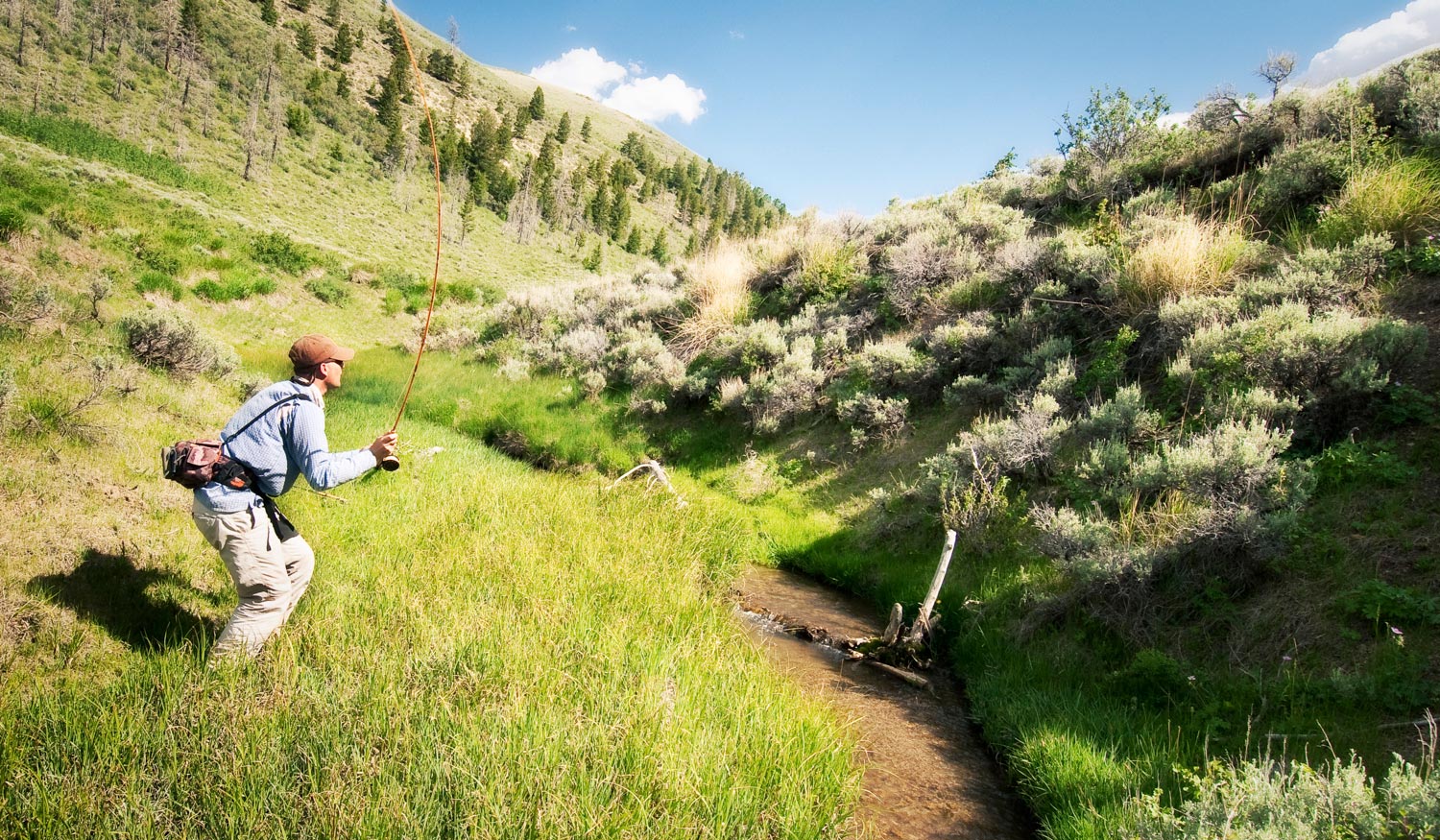
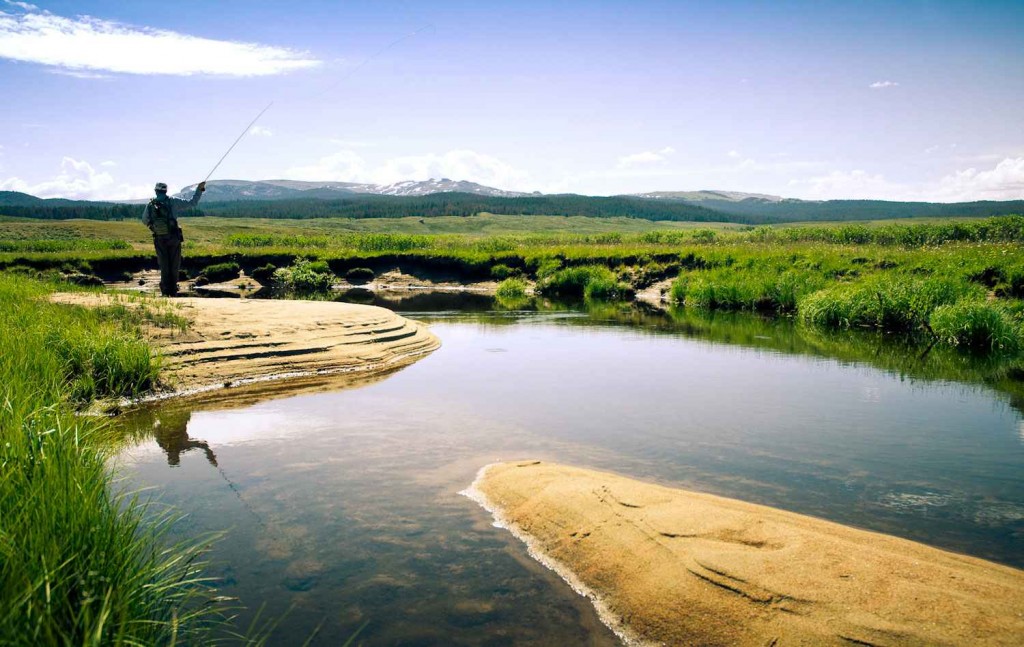
Low, warm water is tough on trout and anglers.
Over the years I have been forced to fish for trout in some of the worst possible conditions, from high water, to days that the ice freezes instantly on your guides. The absolute hardest fishing of all though is the low hot water of late summer. Not only do the fish not want to feed but you have to worry about killing them when you hook them.
When water temperatures reach 70 degrees, it’s time to chase carp or bass. The main thing to remember is that you as an angler have an ethical responsibility when trout fishing in low, warm water. Use as large a tippet as you can, so you can land the fish as quickly as possible. If you are struggling to land a fish, break it off, so that you don’t stress it and kill it.
Spend as much time reviving the fish as you spent landing, if you spent 10 minutes (which is way too long) landing it, then spend 10 minutes reviving it. In low hot water you should not spend more than 1-2 minutes to land any fish, regardless of it size. The other big issue in the summer is taking pictures; in this low hot water do not take the fish out of the water. It is kind of like you running a half marathon and the very second you are done, someone holding your head under the water.
HERE ARE SOME OF MY BEST SUMMER TIPS:
Fish are reluctant to feed in times of warm water, or low water. They are just trying to survive so you need to draw a reaction or impulse strike. Your flies should have extra life added to them, rubber legs, soft hackles, Emu feather gills etc. The more annoying the motion of the fly the better your chance of getting a reaction strike.
Trout will not move a great distance to feed in low, warm water; your presentations will have to be almost in a direct line with the fish. This may require more sight fishing and/or multiple cast to the same area.
Be exceptionally careful of making waves in slow or shallow water. This will spook fish quicker than an errant cast.
Fish any decent
Read More »DIY Fly Line Loop with Step-by-Step Instructions
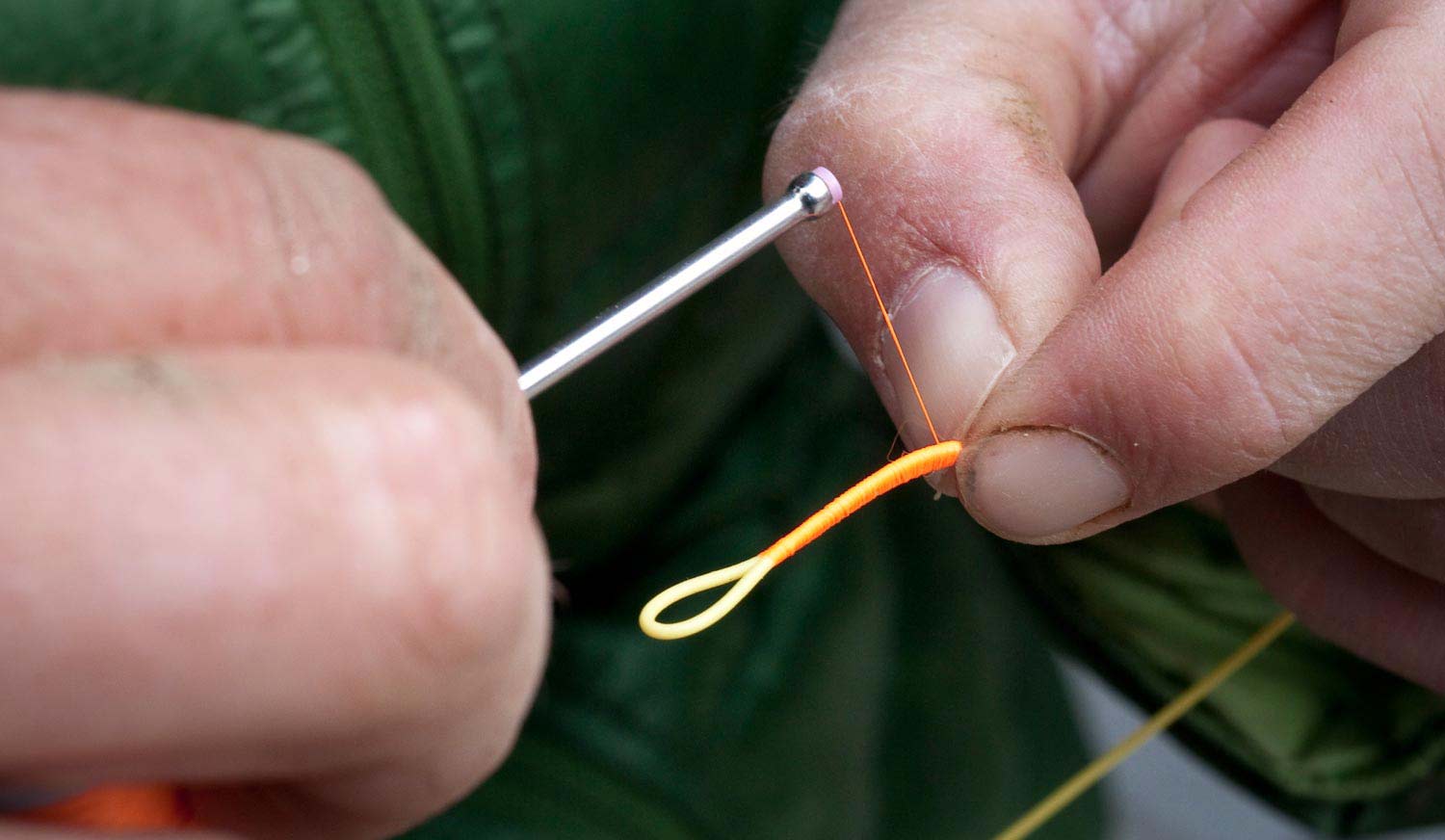
Most fly lines these days already come with welded loops at the ends for the easy attachment of backing and leaders. If you fish as much as I do though, eventually they get worn out and need to be replaced. Most anglers just use a standard albright knot or nail knot to fix this. It works perfectly fine, but I prefer instead to tie my own fly line loops with a fly tying bobbin and thread. Done correctly, it will provide a stronger connection to your leader than the manufacturers welded loops or knots you tie (this is important when fly fishing for big game species). The bright thread that you tie the loop with also works really well as a spotter. It comes in real handy when you’re fly fishing and you have conditions where it’s hard to keep track of your fly in the water. That bright spot on the end of your fly line provides a quick reference that your fly is a leaders length away. Below are step-by-step instructions for tying your own fly line loops.
Read More »Tell a Story

By Louis Cahill Here’s another tip on taking better photos on you next fishing trip. Everyone wants a hero shot with that monster fish but lots of people don’t think about all the details that go into a fishing trip when they are shooting pictures. These kind of detail shots tell the story of how you got to that fish. That’s what will really make your buddies who didn’t make the trip jealous. Take the time to get shots of the flies, the gear in the back of the truck, your buddies getting off the plane. When you get home, make a slide show and show it off. You will be surprised how many more invitations you will get for fishing trips. Louis Cahill Gink & Gasoline www.ginkandgasoline.com hookups@ginkandgasoline.com
Read More »Baby Tarpon, Little Monsters
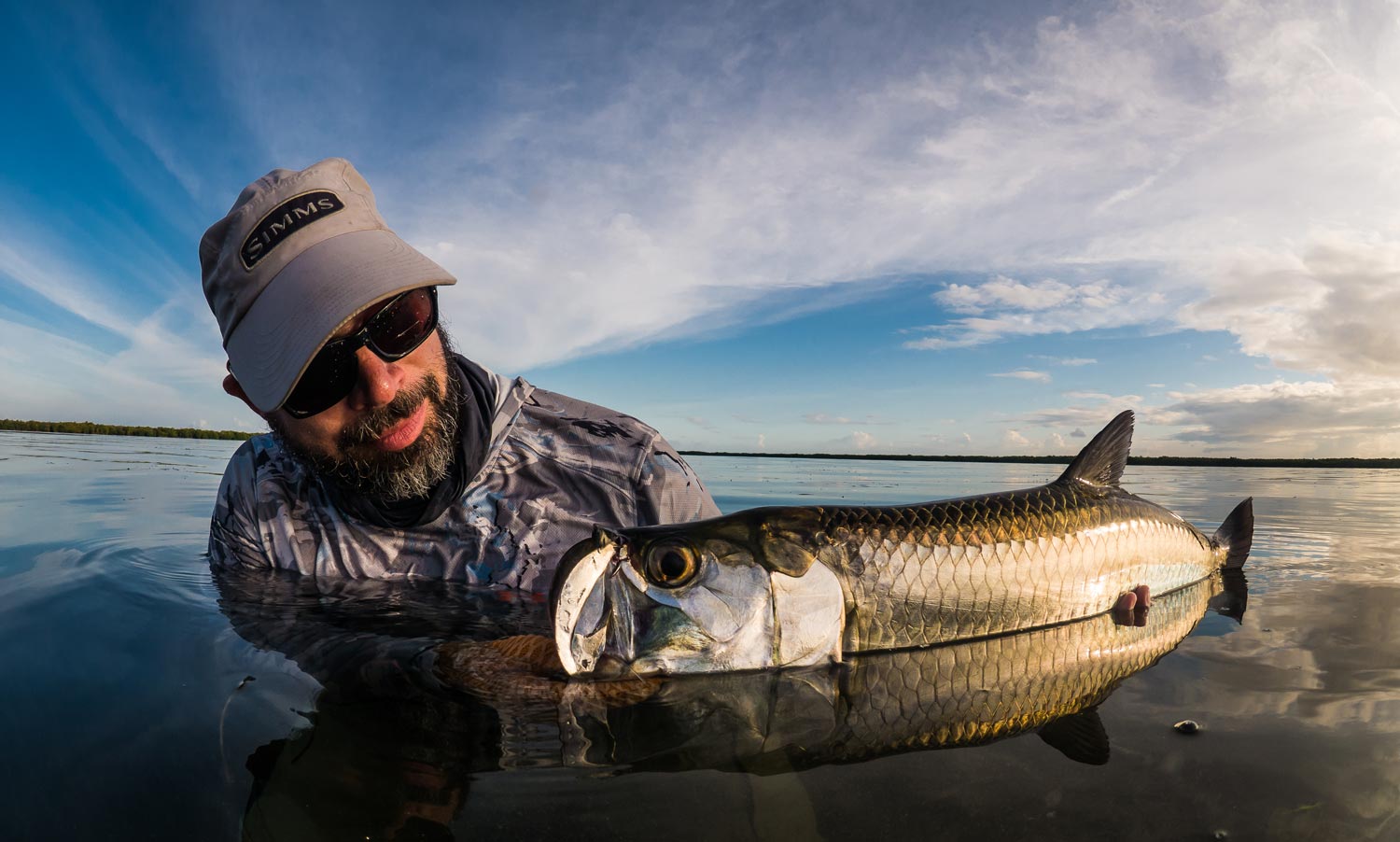
Tarpon are the king of Sport fish, even when they’re only ten pounds.
Standing on the bow of a flats boat at dawn, looking into a perfectly symmetrical sunrise reflecting on the glass-calm water, I can’t think of anywhere I’d rather be. When a pair of juvenile tarpon roll, they are so vivid that I’m momentarily surprised when their reflection does not appear in the sky. Rugged and chrome bright, they are perfect miniatures of their Goliath brethren. They may be only ten or twenty pounds but my heart beats just as quickly for them as it might for a world record fish.
When I first started tarpon fishing I had no interest in babies. I think that’s a common thing. I wanted to catch a ‘real tarpon’ and that meant a fish over a hundred pounds. Those monsters are truly amazing creatures. There’s no rush I know like hooking one. The moment when that first behemoth eats your fly and you bury the hook for all you’re worth and suddenly think,
“Oh shit! I’ve pissed it off. WTF am I going to do now?”
For years that was all of tarpon fishing to me, along with the brutal learning curve, the heartbreak of fickle conditions, the blistered hands and sore shoulders. Then my buddy Joel Dickey talked me into going out early one glass-calm morning to fish for baby tarpon. I had no idea how cool these little monsters are.
They are a total anomaly. On the one hand, they are tarpon in every way that matters. Stern and striking to look at. They catch more air than the Romanian gymnastic team. Their mouths are just as hard as the adults, making hook sets a privilege, not a right, and they fight like Hell’s Angels. I’ve broken 10 weights on them. They are tarpon to the bone.
On the other hand, they are completely different from those sulking bruisers you find migrating up the beach. They are aggressive. They like the fly stripped hard. They are competitive with each other, often racing to the fly. They move and hunt in packs like bonefish. They will sometimes explode violently on a fly dropped right on their nose. They are boney little badasses in every way and a blast to catch on a fly. There is a reason tarpon anglers say “baby tarpon” with a tone of reverence.
THERE ARE A COUPLE OF WAYS TO TARGET BABY TARPON.
Early on calm mornings they can be found
Read More »Patagonia Dream Stream: Video
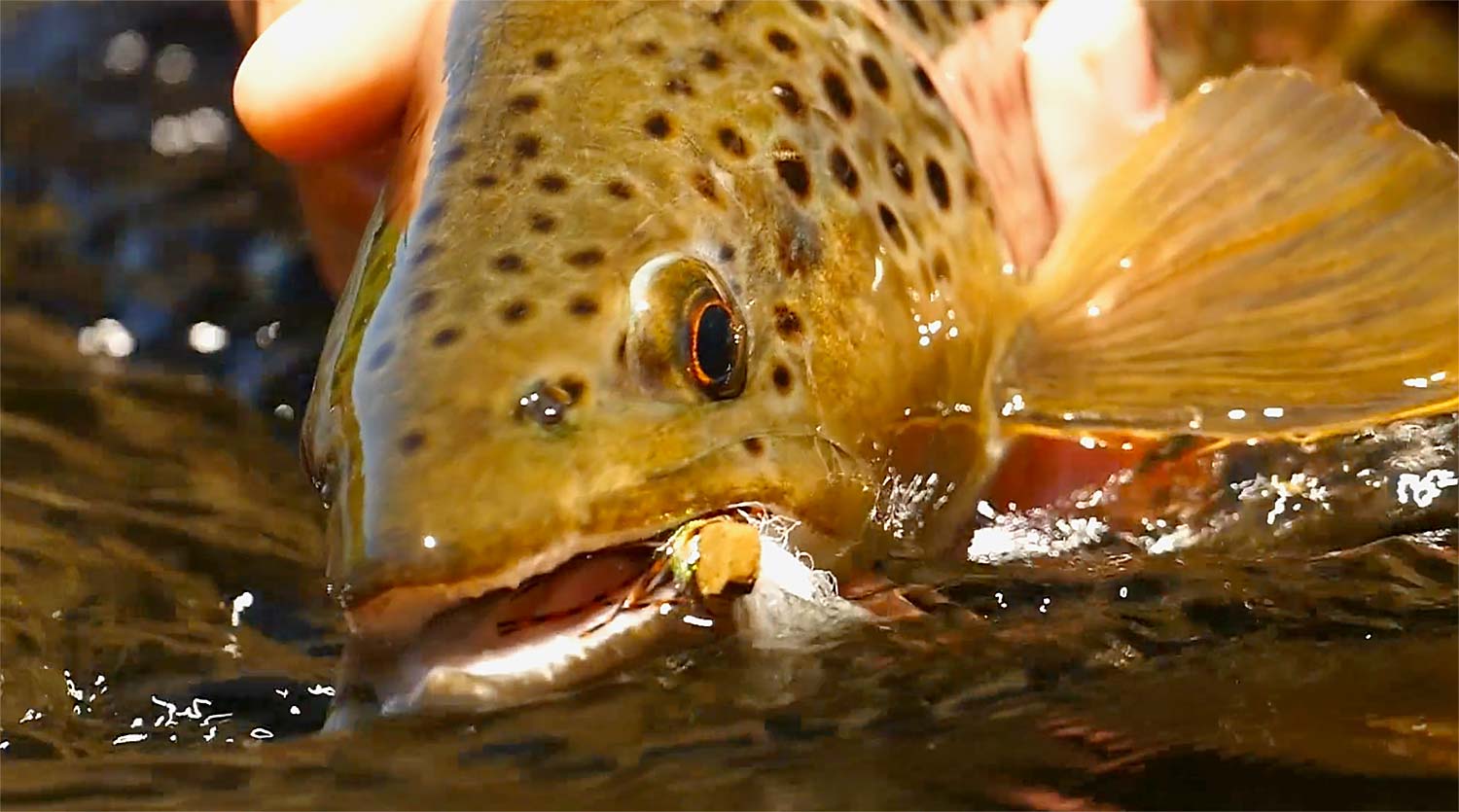
It’s time for a little walk-and-wade trout fishing in Argentine Patagonia.
My buddies at Andes Drifters have been killing it with their video content recently. Not to mention their fishing! This video is a great example. Beautiful footage and heart stopping action from one of the prettiest places on earth.
The river in this video is one I will be scouting in November, and I couldn’t be more excited. It’s just one of the cool, untapped resources Andes Drifters has at hand. It’s hard to believe that rivers like this go un-fished, anywhere in the world. If you have never experienced fly fishing in Argentina, put it on your to do list.
If you’s like to see it for yourself, we still have spots open for our Feb 2019 trip, where we fish for trout in Patagonia and golden dorado on the Upper Parana. It is absolutely a trip like no other. Shoot me an email at hookups@ginkandgasoline.com if you’re interested.
Read More »Cool Shots at Bonefish
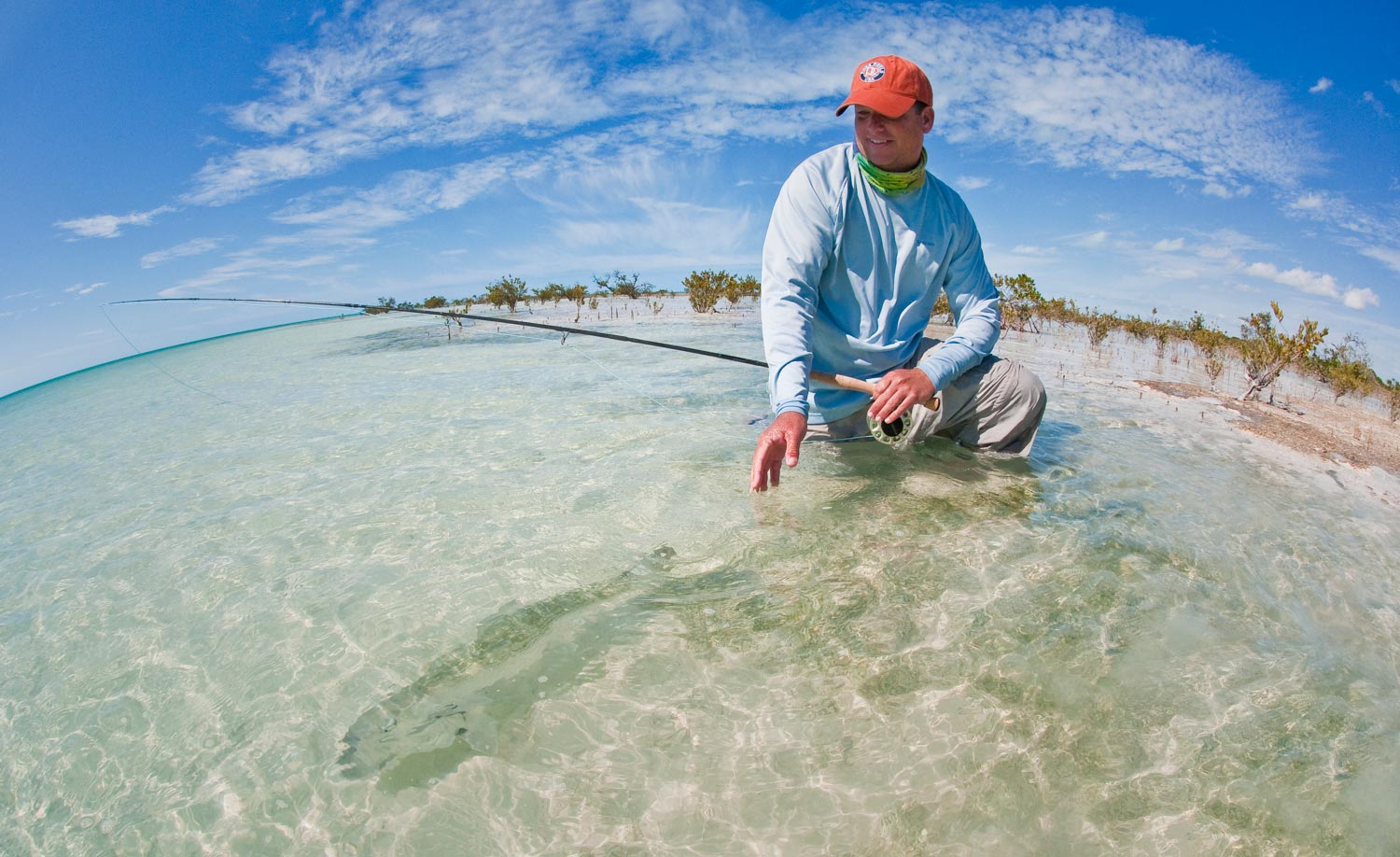
WHAT MAKES A REWARDING BONEFISH TRIP.
It’s hard to fly off to an exotic location for a week of fishing without having a goal, or at least some expectations. The first can be dangerous and the second disastrous. Still, one or the other is generally present on a fishing trip and the more the trip costs, the higher they usually are.
I’ll never forget my first bonefishing trip. My expectations were to actually see a bonefish and my goal was to not make a complete ass of myself when I did. (It’s good to have goals, right?) That trip did so much more than exceed my expectations. It was an awakening of sorts and the beginning of a life long obsession.
On subsequent trips I adjusted my goals. I wanted to catch a lot of bonefish. I wanted to catch big bonefish. I wanted to increase my hookup ratio. I wanted to catch bonefish on my own. I wanted to develop my own fly patterns. Eventually I just wanted quality fishing with good friends. One by one, all of those things went in the done column and I kept going bonefishing.
There’s not a thing on that list that I don’t still enjoy doing. Who doesn’t want to catch a lot of fish, or a big fish, or have a great day with a good friend. With the exception of the friend however, they all become less important with time. Most days all I really need is to stand on the bow and glide across a beautiful flat.
So what makes a day of bonefishing exceptional?
Read More »The Single-Hand Snap T Cast: Video
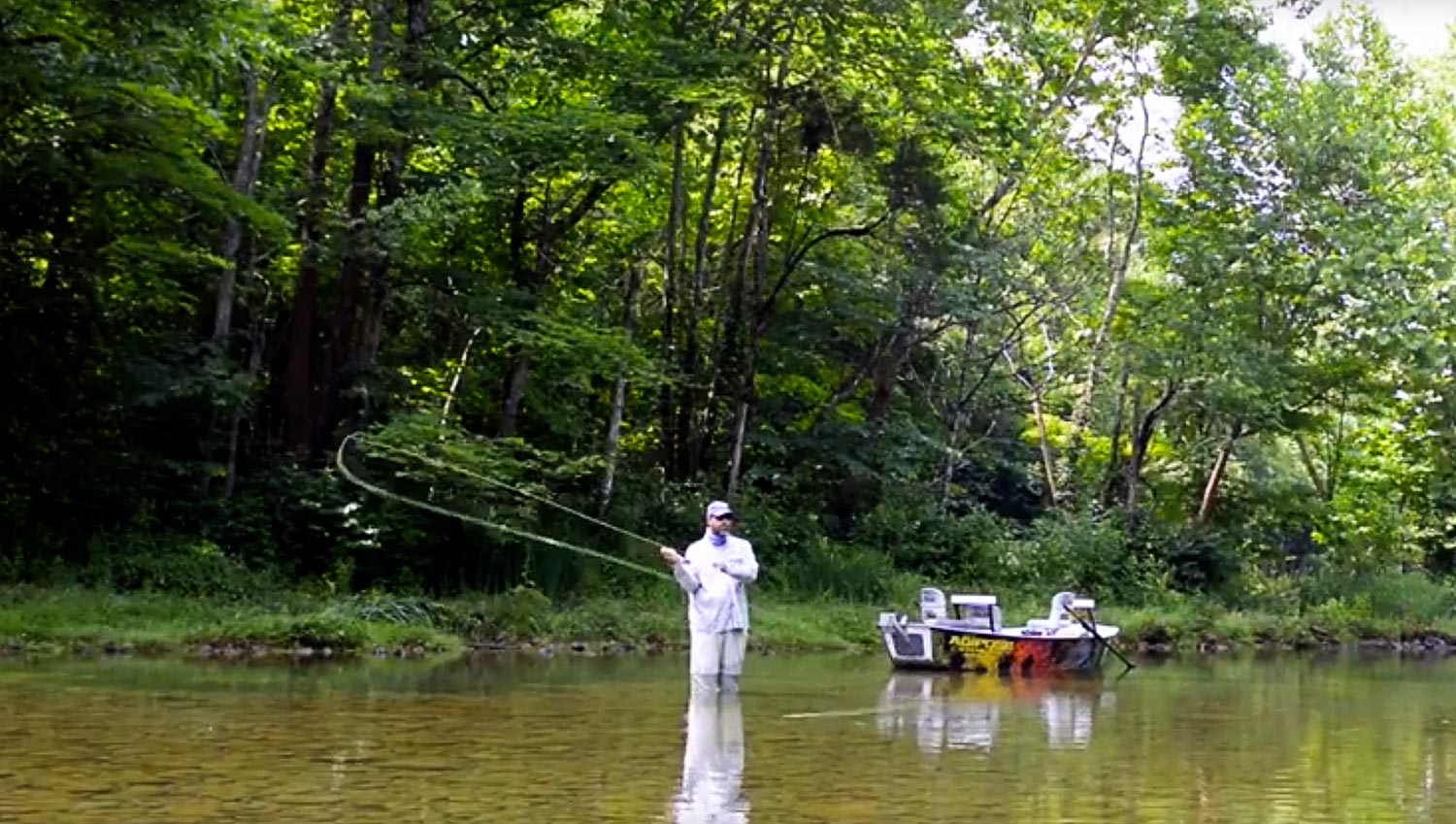
Here’s a powerful spey cast you can make with your single-hand fly rod.
The snap T is a familiar cast to any two-hand angler. It’s one of the essential spey casts, but its not just for the long rod. In fact, once you start using this cast with your single-hand rods, you’ll be shocked how often you use it.
The beautiful thing about the snap T is that it requires virtually no room for a backcast and is remarkably powerful. It will have you fishing water you’d never reach with a roll cast.
WATCH THIS VIDEO AND LEARN TO MAKE THE SNAP T CAST WITH A SINGLE-HAND FLY ROD.
Read More »The Economy of Wraps in Fly Tying
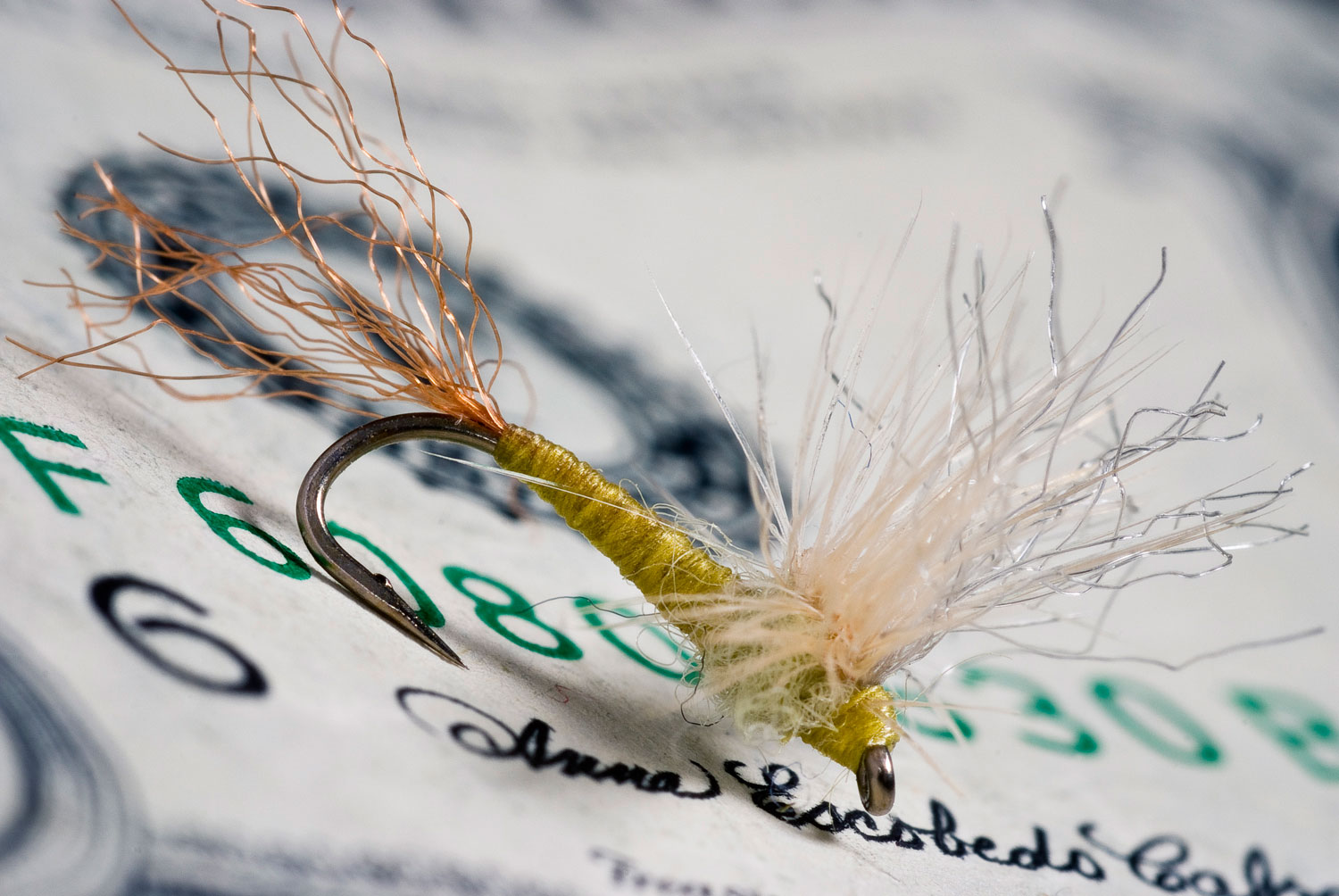
THE HALLMARK OF WELL-TIED FLIES IS NATURAL PROPORTION.
This is never more true than when tying tiny trout flies. Trout are visual feeders and there are three primary criteria that a fly must meet to elicit a positive response. It must match the natural in size, color and profile. Of these three, the hardest to match in tiny flies is profile.
There are several elements to a fly’s profile. It must have the appropriate style of wing and the right size hackle, for example, but where most of us miss the mark is in the proportion of the body. Primarily because most tiers, often including myself, use too many wraps of thread.
Using too much thread builds bodies that are too thick and often lumpy and awkward. It always matters but when tying patterns smaller than size 16 every wrap is critical. Using too many wraps to secure a material will cause awkward lumps in the tiny profile which make the fly look unnatural. That can cost you a discerning fish.
HERE ARE SOME TECHNIQUES THAT WILL HELP YOU TIE MORE NATURAL FLIES BY SPARING THE THREAD.
Make a plan
It’s easy to become task oriented when tying. When you focus only on the material you are tying in, you end up doing repetitive tasks. Plan ahead. Think of the fly as a whole and take a minute to think it through before you tie. You can often catch in several materials with a single wrap each, then secure them together as you wrap up the hook shank.
Catch materials in early
Materials like ribbing wire can be caught in as you first wrap your thread down the hook shank. This conserves an entire layer of thread. There’s no need for a thread base to tie the wire into, because once it’s wrapped around the body, it can not be put under enough pressure to be pulled free.
Lock materials with alternating wraps
Once you’ve wrapped a hackle or body material it’s common to use too many wraps to secure it. The most effective way to lock material in is
8 Tips On Photographing Fish Without Harming Them
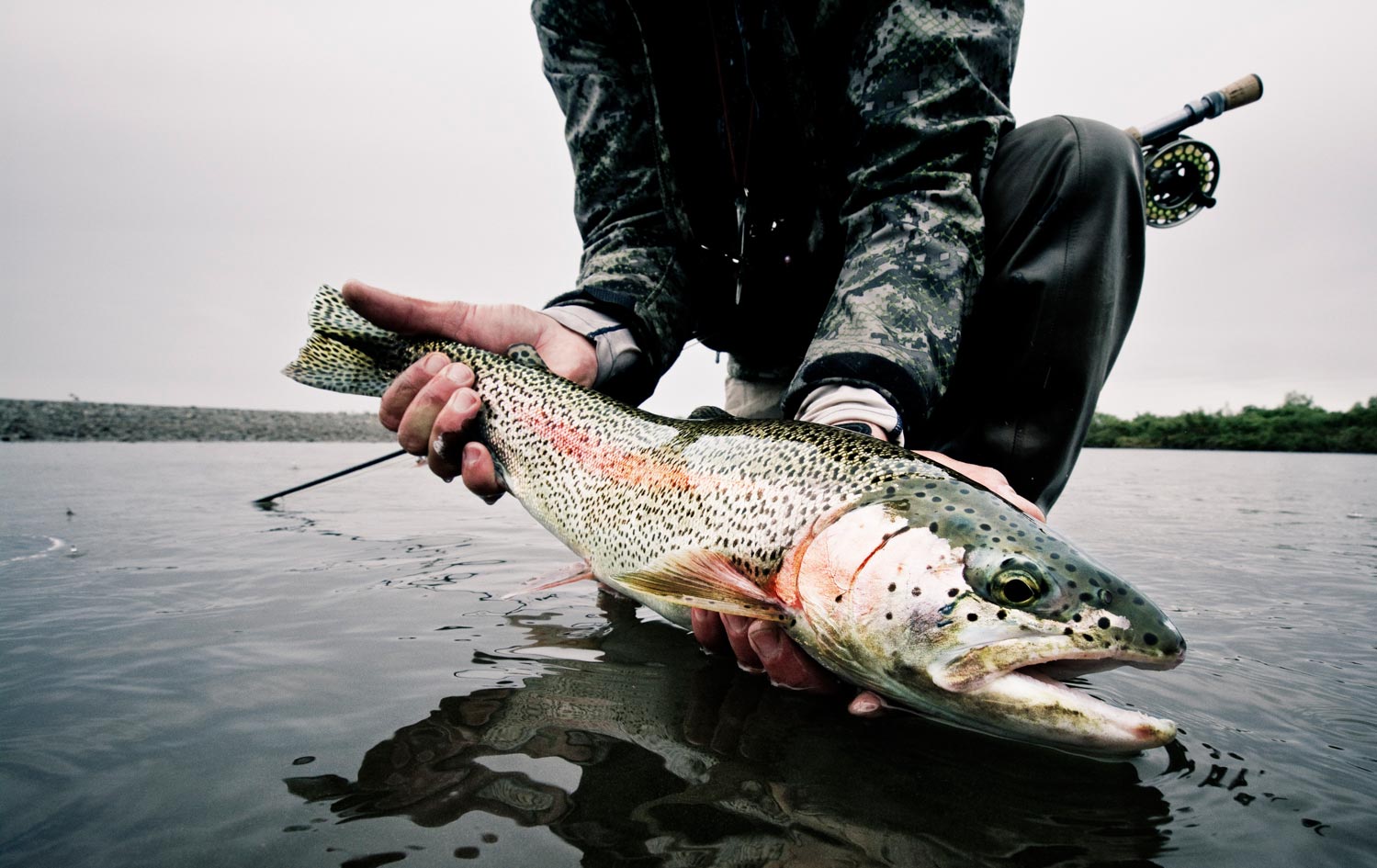
You can take better photos of the fish you catch and still practice good Catch-and-Release.
Is the fly fishing media turning anglers off to catch-and-release? I received a pretty agitated email form a reader the other day. Thankfully, he was not responding to anything written here on G&G but from this excerpt you can see he was pretty fired up and honestly, so am I.
“All of the blogs and articles I am beginning to see pop up everywhere telling me that catch and release is harmful to the fish, and I’m doing it wrong, and I’m killing all the poor fragile little
fishies, and I should never take the fish out of the water, and blah, Bah, BLAH!!!! AAARRRGGGGHHH!!! Are you kidding me? Now I can’t even take a quick cheesy grip and grin photo with a fish without being ‘that guy?’ ”
Our friend suggested that he releases 99% of the fish he catches and I gather from his email that his heart is in the right place. I have no way of knowing how good his actual catch-and-release practices are but he’s clearly trying to do the right thing. It’s also clear that he’s feeling a little harassed.
Catch-and-release is a topic that’s dear to my heart and it’s been a while since I have written about it. I thought I’d take this opportunity to try and put a friendlier face on what the fly fishing media is trying to accomplish.
THIS IS NOT A SERMON!
So what’s going on in the fly fishing media?
I imagine that a lot of writers in the field feel the same way I do. We spend a lot of time as ambassadors of the sport and we introduce a lot of new folks to the water we love, and share. While I firmly believe in that mission, I do feel morally obliged to do everything in power to not screw it up for everyone. It’s a topic I lose sleep over. If I have a hand in creating more, and more effective, anglers then I am duty bound to make them more responsible anglers.
So the result is that you, the reader, get preached to a whole bunch about how you handle fish. Recently a lot of that preaching has been aimed at demonizing the photographing of fish. That’s not really fair. Do a lot fish get injured in the process of saying cheese? You bet they do, but it doesn’t have to be that way.
If you are not going to photograph a fish, and every fish does not need to be photographed, then it’s always best to release it without taking it from the water or even handling it. I use the Rising Crocodile toll for just this purpose. But it’s not realistic to expect anglers to release every fish without a photo. That’s the bargain that makes C&R work.
Rather than take the, currently popular, stance that you can’t photograph fish without killing them, I’m going to give you some pointers that will not only help you protect fish but take better photos.
8 TIPS FOR TAKING GREAT PHOTOS WHILE PRACTICING GOOD CATCH-AND-RELEASE
Read More »10 Tips to Keep You Catching Fish During Your Fly Fishing Travels
It’s easy to get out of your game when you’re traveling and fly fishing a new piece of water.
It has happened to me plenty of times, where I find myself fly fishing and going against all my fishing catching principles. Stick to what works for you on your home water and keep your confidence, and you’ll be landing beautiful fish in no time. Below are ten principles that I always make sure I live by when I’m fly fishing abroad on unfamiliar waters.
1. Spend your time fishing productive water, don’t waist your time fishing subpar water.
2. Look for the 3 C’s (Cover, Current, Cusine) to locate the hotspots.
3. Always position yourself where you can get your best presentation and drift.
4. Have your fly rig setup correctly for the water you’re fishing (nymph rig set correctly, long enough leader for spooky risers, correct tippet size, ect).
5. Take the time to figure out the food source the fish are keying in on. Take regular bug samplings throughout the day and keep an eye out for aquatic insects on the water.
6. Always fish with confidence and fish hard. Persistence usually pays off.
7. Don’t be afraid to move on if the water your fishing is slow. Even pack up and
Read More »