
Clearwater Drifter by NRS
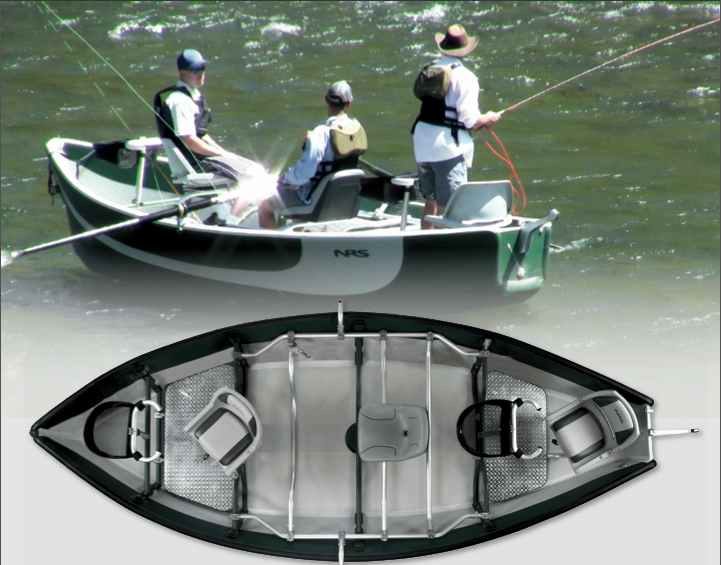
Clearwater Drifter by NRS NRS had a very strong showing at the 2012 IFTD show in Reno this year with it’s newest boat model, the Clearwater Drifter. It won the best in show award for watercraft and created quite the buzz among the shows attendees. I personally was stopped dead in my tracks when I saw the Clearwater Drifter’s super innovative design. I couldn’t help myself from thinking, “this is the perfect boat for my guiding and recreational fishing”. The Clearwater Drifter is the world’s first inflatable dory style boat of its kind to hit the market. It’s self-bailing, drafts only 2 inches of water with three people in the boat, and it’s more responsive than cataraft and other rafts on the market. The total package can be purchased for $5995. That’s a price point we like. Three years in product development in the field, NRS has run through its design and all the boats features with a fine tooth comb, making sure the boat is loaded with functionality, durability and quick adjustability. Take for instance its solid transom that can be equipped with a kicker motor, or it’s beefed up rowing seat that’s ergonomic and features a drain hole for water. The entire NRS frame can be adjusted in just a few moments on the river if you’re trading off oar time with your buddies, and I think everyone will appreciate the diamond plated floors in the bow and stern. Another great feature you don’t regularly see in drift boats is a stripping basket in both the front and back of the boat. Weighing in at only 315 pounds the Clearwater Drifter puts itself in the same weight class of most fiberglass drift boats on the market. It’s inflatable design allows the boat to be packaged and shipped anywhere … Continue reading
Read More »The Bigger the Tail the Bigger the Bonefish

I know, you’re probably thinking, “it’s Monday, and there should be a long detailed post written on Gink & Gasoline, right”? That’s usually the case, but today’s post only requires a short paragraph of words to get the point across, and pay close attention everyone, because the information in it could help you catch your biggest bonefish ever. The theory of the larger the tail, the larger the size of the fish, holds true for many species of gamefish. Unfortunately, fly fishermen aren’t always in situations on the water where they have the opportunity to benefit from this notion. Nonetheless, one instance where it can be very helpful to pay attention to the size of a fish’s tail, is when you’re fly fishing to a school of tailing bonefish on the flats. By paying attention to the size of the individual tails of the feeding bonefish, an angler can quickly determine and pick out, which fish in the school is the largest. If one tailing bonefish in the school is considerably larger than the others, you should see a noticeable difference in size, by how far the tail sticks out of the water. Remember this tip when you’re on the saltwater flats and find yourself staring at multiple bonefish tailing out in front of you. Find the largest tail in the school and present your fly to that fish first. It’s a trick many veteran bonefish and redfish enthusiasts use all the time to help them target bigger fish. Keep it Reel, Kent Klewein Gink & Gasoline www.ginkandgasoline.com hookups@ginkandgasoline.com Sign Up For Our Weekly Newsletter!
Read More »Sunday’s Classic / Strategies for High Water Streamer Fishing
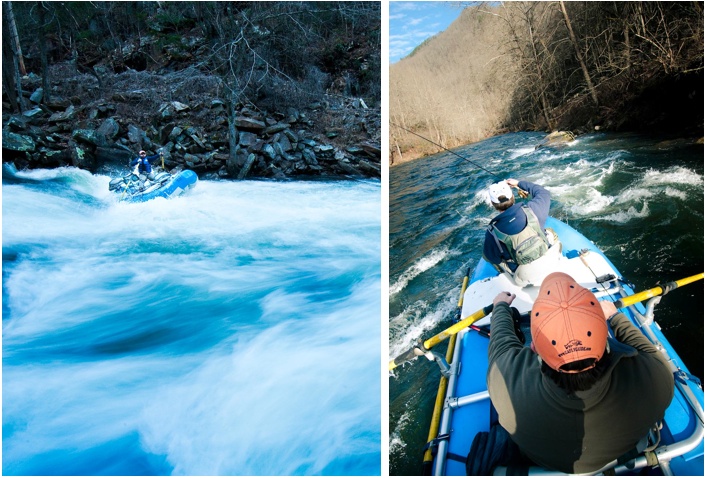
It’s really hard to beat streamer fishing high water on tailwater’s from a drift boat, especially when your wanting to target trophy class fish. Although numbers of trout caught during high water flows usually are lower than fishing during low water flows, the size of your catches generally are much larger. In my opinion, the biggest fish in the river prefer to feed during high water because it’s easy for them to ambush their prey, and they feel camouflaged and protected by the high water flows. For those of you that fish tailwater’s you probably understand water flows change significantly during generation and non-generation periods. Some tailwaters during minimum flow periods have water releases under 100 cubic feet of water per second (CFS), and when generation is taking place, water flows can be 10-20 times higher. Because of this, it’s very important for anglers fishing high water to outfit themselves correctly, otherwise they may find themselves coming off the water fish-less. Below are some tips and strageties I use on tailwaters when I’m fishing high water conditions. Tip 1. Leave your 4-5 weight fly rods at home and pack your 7-9 weight fly rods. Your best bet for going after the big boys during high water flows is fishing streamers. There are some tailwater’s out there where you can still dry fly and nymph fish effectively, but most of the time, if you want to target the largest trout in the river, you’ll want your flies to imitate the larger food sources. Some examples of these food sources are: sculpins, daces, crayfish, and fingerling size trout. These guys are the food choices that trophy class fish prefer to hunt down and forage on during high water flows. Since you’ll be fishing a variety of sinking fly lines and large profile … Continue reading
Read More »Saturday Shoutout / Sipping Emergers – Invasive Control
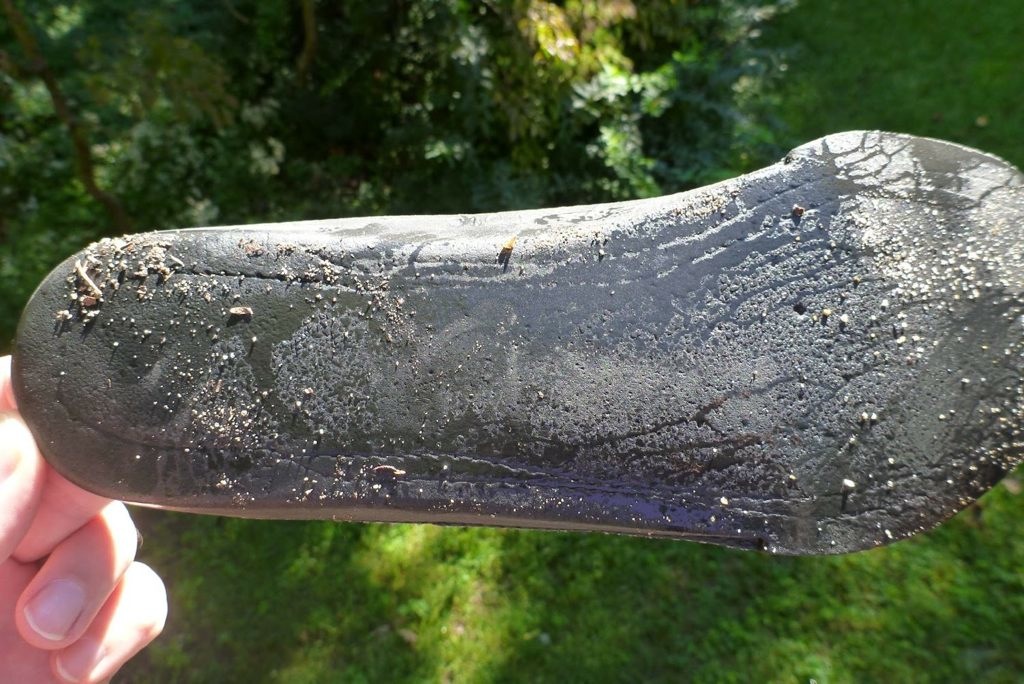
This week’s Saturday shout out goes to the Sipping Emergers Blog with Steve Zakur’s tip on limiting the spread of invasive species by making sure your gear is completely dried out in between fishing trips. Sipping Emergers – Dry Gear Sipping Emergers, points out that fly fishing gear that is 100% dried out in between fishing trips, kills most of the invasive species, and greatly reduces the risk of introducing them on other watersheds you travel to. The picture above is from an insole of a wading boot that still remaines saturated with water after several days of drying. Steve Zakur points out that the wading boots looked completely dry from the outside, and that it was only after he pulled out the insole, that he noticed this hidden risk that’s often overlooked by fly anglers. Just like Steve Zakur, I to have never thought to remove my wading boot insoles, and I thank him for pointing this important high-risk area out. Pass on the word and when possible always wash your wading boots with a clorox/water mix after fishing trips to help eliminate the risk of spreading invasive species on our watersheds. Keep it Reel, Kent Klewein Gink & Gasoline www.ginkandgasoline.com hookups@ginkandgasoline.com Sign Up For Our Weekly Newsletter!
Read More »New Gear From Redington

In the past two years Redington has proven to be a real trail blazer. They have turned much of their focus to developing great new products for folks new to fly fishing and for women. Redington’s mission seems to be one of accessibility. Their new Topo outfit includes a rod, reel, line, tippet, flies and best of all a QR code that takes you to casting lessons on your smart phone! They’ve done everything but hook the fish for you. Their specialized women’s products, including their award winning women’s waders, offer value to the fastest growing and most underserved demographic in fly fishing. As Redington reaches out to these important demographics they also commit themselves to improving the quality of every product in their line. I’ve been really impressed with the changes made at Redington. I wear their waders and fish a couple of their rods. Good job guys…and ladies! Check out the videos for some great new stuff from Redington for 2013. Louis Cahill Gink & Gasoline www.ginkandgasoline.com hookups@ginkandgasoline.com Sign Up For Our Weekly Newsletter!
Read More »Has Distance Casting Hijacked Rod Design?
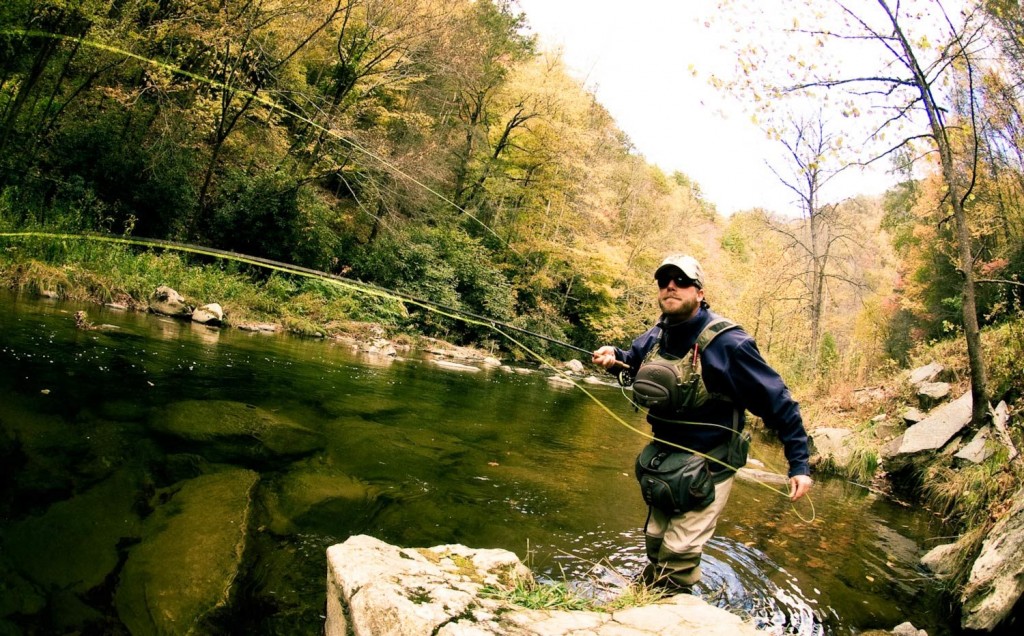
EVERY TIME I VISIT A FLY FISHING TRADE SHOW AND WALK BY ONE OF THOSE 100′ CASTING PONDS FILLED SHOULDER TO SHOULDER WITH ANGLERS ALL TRYING THEIR BEST TO LAND THEIR FLY ON THE FAR END OF THE CASTING POND, I ASK MYSELF, “IS THAT REALLY WHAT THE MAJORITY OF ANGLERS TODAY THINK FLY CASTING IS ALL ABOUT”?
A part of me thinks we should shorten those casting ponds all together, and instead throw out a bunch of target rings at random distances starting out at 20 feet. Maybe that would paint a clearer picture of what fly casting is about and how a fly rods performance should be judged. Casting a 5wt and shooting backing through the tip of the rod is hard to do, and something to be proud of, but is it really what we find ourselves doing when we’re out on the water trout fishing?
Furthermore, have we all become so tunnel visioned that we feel it’s correct to judge a fly rods performance and craftsmanship based on how much fly line it can pick up and carry, and how far we can cast a fly with it? That’s not how I judge a fly rod. It’s about a fly rods ability to drop a dry fly perfectly into the feeding lane of a rising trout, it’s about effortlessly making a nice side-arm roll cast along the far bank under the overhanging foliage. It’s about having a rod in my hand that gives me the confidence to feel like
Read More »Sunday Classic / The Slack Tide Bar

I’ve spent a lot of evenings with my feet in the sand and a glass of rum in my hand at the Slack Tide Bar at the Andros South lodge. The Slack Tide is just a tiki hut on the beach, but it’s the best place I know to listen to tales of woe and exaltation and bone fishing. The house cocktail goes like this: One parts Anejo rum, one part coconut rum, two parts orange juice, one part good tunes, one part great conversation, two parts lasting friendships. Add warm sand and cool breeze and enjoy. Try that cocktail, it really is good! Louis Cahill Gink & Gasoline www.ginkandgasoline.com hookups@ginkandgasoline.com Sign Up For Our Weekly Newsletter!
Read More »Saturday Shoutout / Deeter V Block
Do you care too much, or too little, about how many fish you catch or how you catch them? This week two of my favorite writers get to thinking about the numbers. Whether it’s the number of fish or the number of casts, greed or too much of a good thing, what matters to you? Erin Block on, “Derivations of Insanity: or, On Carping, Casting, and Chocolate Cake” Kirk Deeter on, Do Most Anglers Care Too Much About “How Many,” and Not Enough About “How?” Louis Cahill Gink & Gasoline www.ginkandgasoline.com hookups@ginkandgasoline.com Sign Up For Our Weekly Newsletter!
Read More »Cheeky Reels – Gettin Cheeky With It
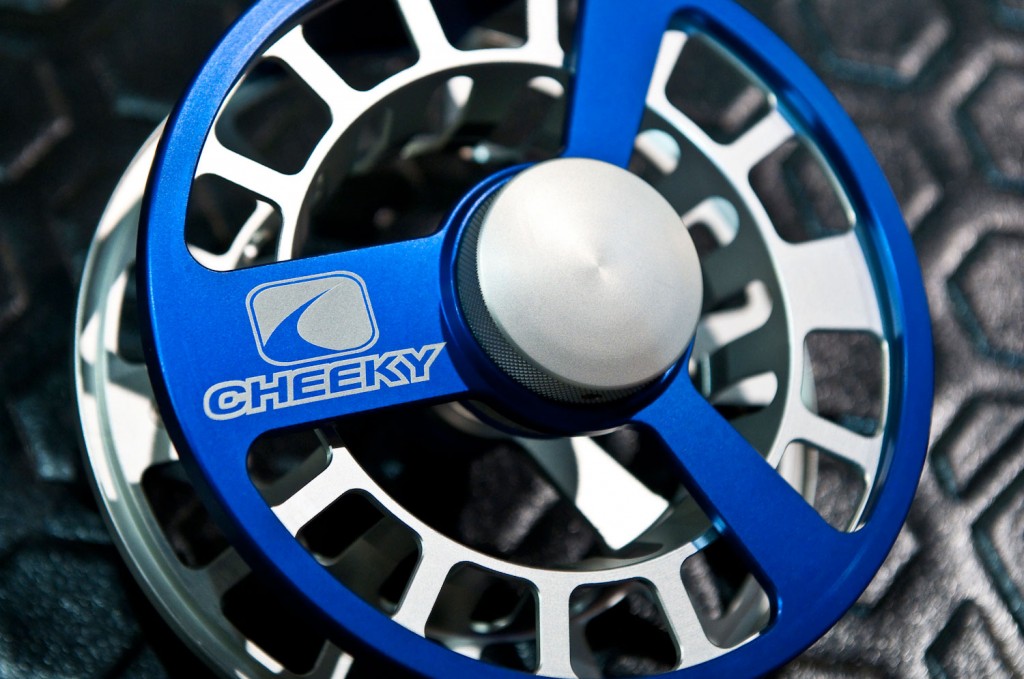
Many of you probably did get the correlation between the post title and Will Smith’s 90s rap hit, “Gettin Jiggy With It”. I just couldn’t help myself. This Friday we interview Ted Upton from Cheeky Reels about their new reel models for 2013. Cheeky Reels Cheeky Reels focuses on upholding four primary elements in all their reel designs. These four elements are durability, simplicity, affordability and style. Cheeky reels are built to stand up to the toughest fishing conditions, while being assembled with the least amount of parts possible. The less working parts you have, the less opportunity you have for failure on the water. With the tough economic times we’ve been dealt the last five years, it’s great to see a reel manufacture in the market that’s offering both quality and affordability to fly fisherman for both saltwater and freshwater reels. No matter where it swims or how big the fish, Cheeky Reels has a model that’s ready for the fight. For more information about Cheeky Reels please visit their website. Keep it Reel, Kent Klewein Gink & Gasoline www.ginkandgasoline.com hookups@ginkandgasoline.com Sign Up For Our Weekly Newsletter!
Read More »Don’t Gink it, Sink It
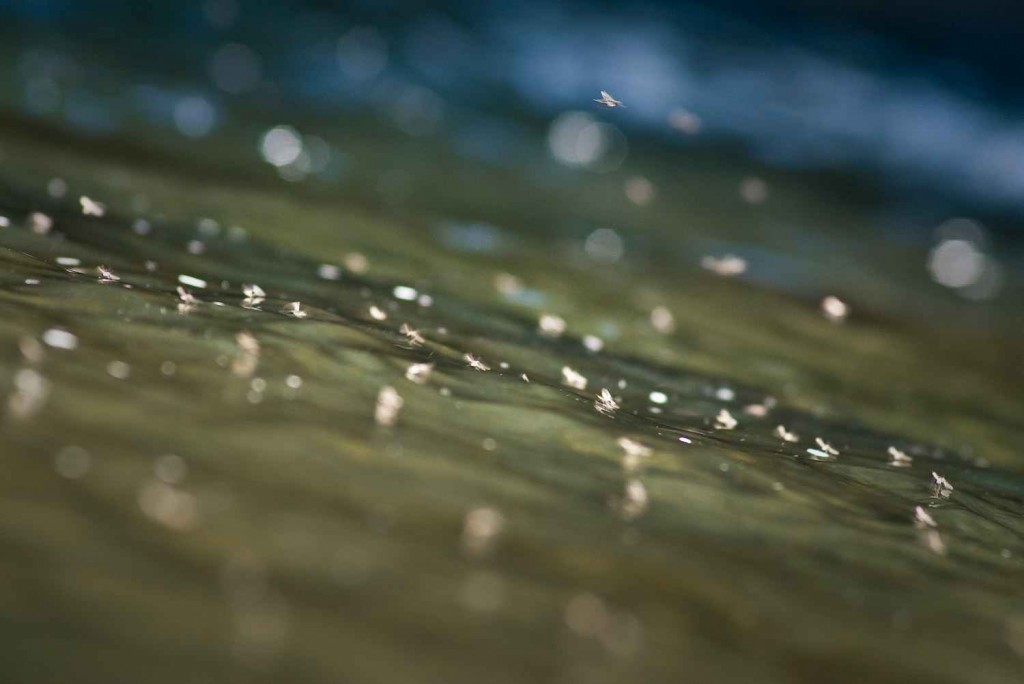
Ever been on a trout stream during a blanket hatch and no matter how many times you drift your floating imitation over the rising fish, it’s ignored?
I’ve experienced this frustrating situation many times on the water. When this happened in the past, I used to think I was using the wrong pattern, or I was getting micro-drag during my drift or maybe my tippet was too large. Although one or more of these can often be the culprit of failing to get bites during a heavy hatch, it’s actually more common that you’re problem lies in the fact that you’re choosing to fish your fly on the surface instead of below the surface.
When hundreds or even thousands of bugs are on the water it makes your fly pattern very difficult to distinguish itself apart from all the other naturals on the water. Take for instance a trico spinner fall in late August or September. When in full swing, it can seem like almost every square inch of the water is covered with these tiny guys at times. Although many of them float long distances on the surface, eventually they will sink. Not all at once of course, just a portion of them here and there. When you choose to sink your fly pattern instead of floating it, you’re going to increase your chances of catching those feeding fish for three reasons.
1. You decrease the amount of competition between your fly and all the naturals.
By sinking your fly pattern below all the naturals on the surface your giving you’re pattern a much better chance of the fish spotting it. Below the surface there’s going to be far less naturals packed in close proximity to each other than on the surface.
2. The closer your fly is to the fish the easier it is for them to eat it.
By sinking your fly pattern, you’rr positioning your fly closer to the feeding fish. This gives you an advantage, because it makes it easier for the fish to eat your fly, and they don’t have to expend as much energy swimming all the way to the surface.
3. Smart fish often feed below the surface out of sight.
There’s always going to be a percentage of really smart trout, often the biggest, that prefer to feed below the surface, because it’s safer. They may not