
This Land is Your Land
By Mia Sheppard
In the West, we are blessed with endless access to public rivers, mountains, forest, grasslands, and backcountry areas. These places are every American’s playground.
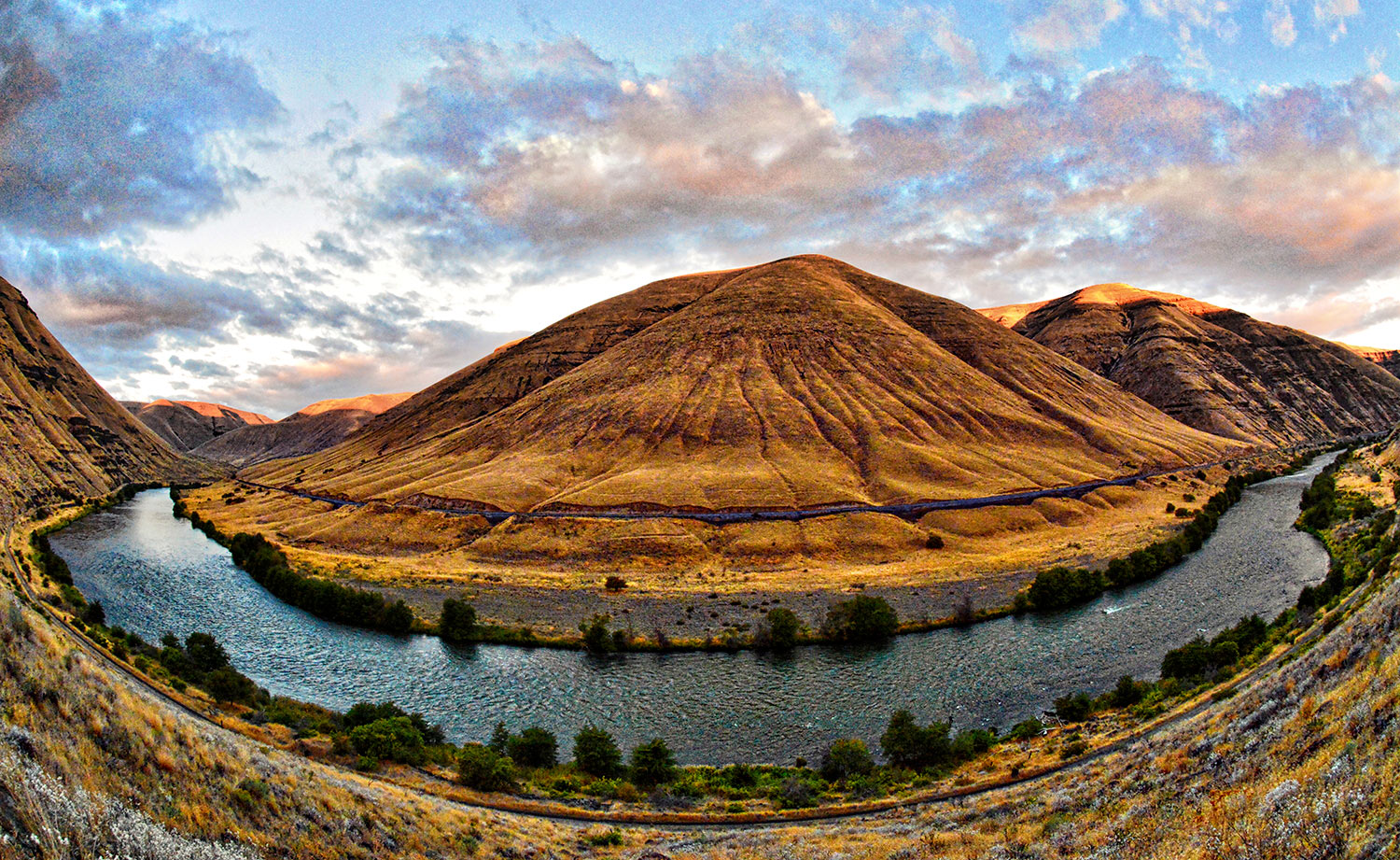
As a steelheader, mother, and outfitter who relies on public access; I’ve made central Oregon, and the rivers that flow through its basalt outcroppings and sagebrush foothills, my playground. Like most steelhead and trout rivers, the ones I fish and float are held in a trust for the American people by the federal government and managed, along with the rest of our country’s 640 million acres of federal public lands, by the Bureau of Land Management, U.S. Forest Service, U.S. Fish and Wildlife Service, and National Park Service.
These are lands that give us access to fish whenever we want, at minimal cost. In Oregon, I have the freedom to explore and find new water to over 200 public rivers and creeks. I can’t imagine fishing a river where I had to pay a premium to do what I love, go fishing and hunting.
Have you ever wondered where you would go fishing or hunting if you didn’t have public access? We can’t just take this lifestyle for granted.
There’s a movement afoot to transfer public lands that fuel our sports. Harkening back to the homesteaders of the 1880s and the Sagebrush Rebellion of the 1970s, this group is rallying around the idea of taking back federal lands that supposedly belong to the states. This modern-day sagebrush rebellion, which is well-funded and well-organized in places like Oregon, Idaho, Utah, and Montana, advocates for the transfer of millions of federal acres to the states that claim to be able to manage them better.
In 2012, the Utah state legislature passed the “Transfer of Public Lands Act and Related Study,” demanding that 31 million acres of federal land be given to the state by December 31, 2014. (This demand was never met.) As futile as Utah’s effort may sound, a total of 37 bills were introduced in 11 Western states promoting the transfer of federal public lands to state holdings during the 2015 state legislative season.
And the fight has moved to Washington, D.C.: In 2015 the U.S. Senate passed a non-binding budget resolution that encourages Congress to “sell, or transfer to, or exchange with, a state or local government any Federal land that is not within the boundaries of a National Park, National Preserve, or National Monument.” Read that again—your Senators passed this symbolic measure 51-49. Idaho’s Senator Mike Crapo and Senator James Risch both voted for it. This is such an important issue that the presidential candidates are talking about it and the newly approved Republican platform supports turning over federal land to
Read More »Sunday Classic / Let Your Guide Decide
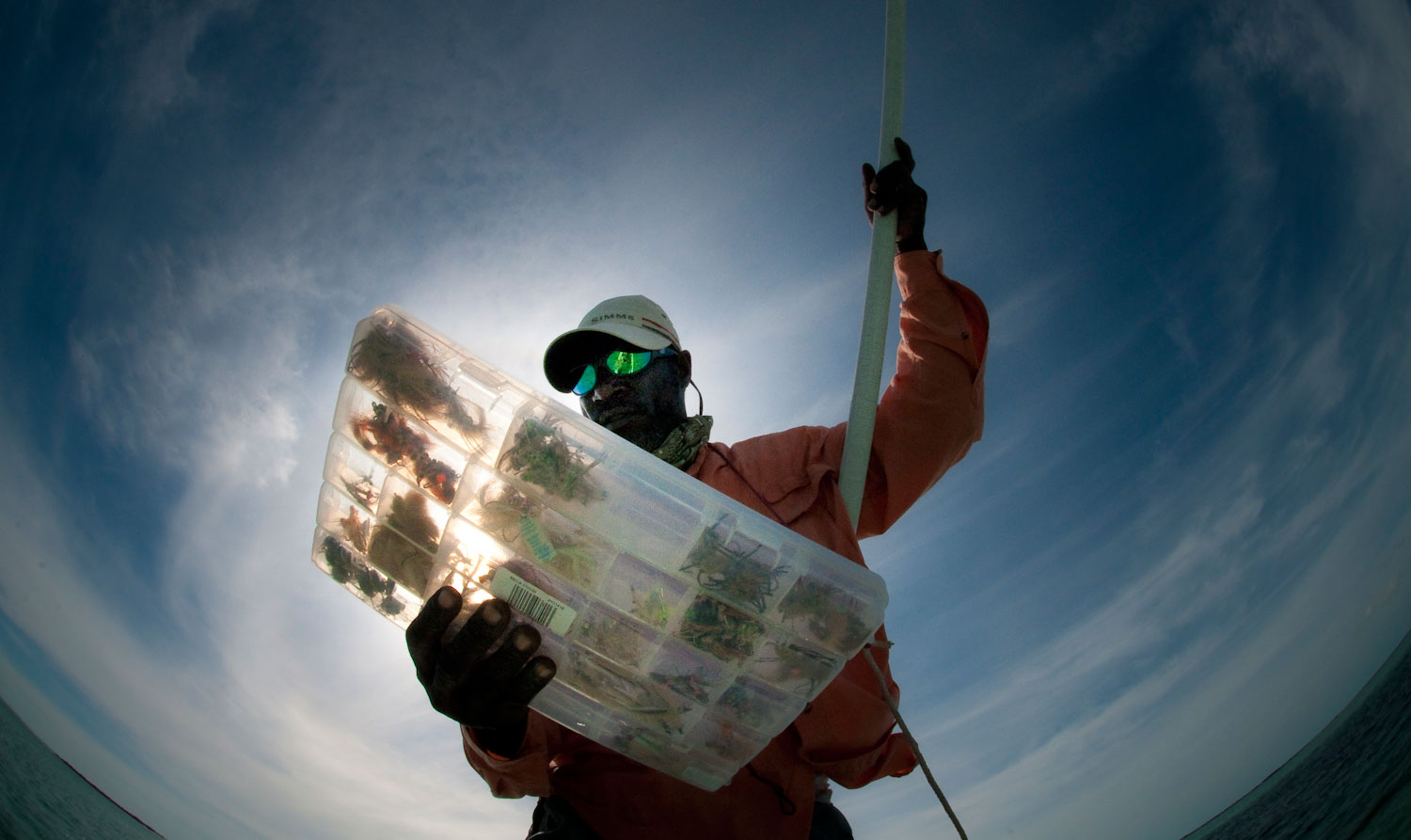
IT’S CRAZY TO ME BUT I SEE IT ALL THE TIME. GUYS WILL SPEND A FORTUNE TRAVELING TO SOME FAR FLUNG FISHING DESTINATION AND WHEN THEY GET OUT ON THE BOAT THEY’LL TIE ON THE FLY THE GUY IN THE SHOP AT HOME RECOMMENDED INSTEAD OF ASKING THEIR LOCAL GUIDE.
Guides behave differently in different locations. A Florida Keys guide would never let you tie on a fly from your box with out approving it first. He’d more likely just cut it off and tie on one of his own, but guides in other places can be a lot more low key. In the Bahamas for example the guides are very laid back and if a client ties on a fly, they will likely not question it. They of course have an opinion, an informed one at that, and if you ask for it you’ll get it.
I was on the boat one day with, Andros South guide, Jose Sands and an angler who will remain nameless. This fellow is a great fisherman and a guide at home. He had selected a fly from his box and when the time came made a perfect presentation to a huge bonefish
Read More »Saturday Shoutout / Thinking One Through
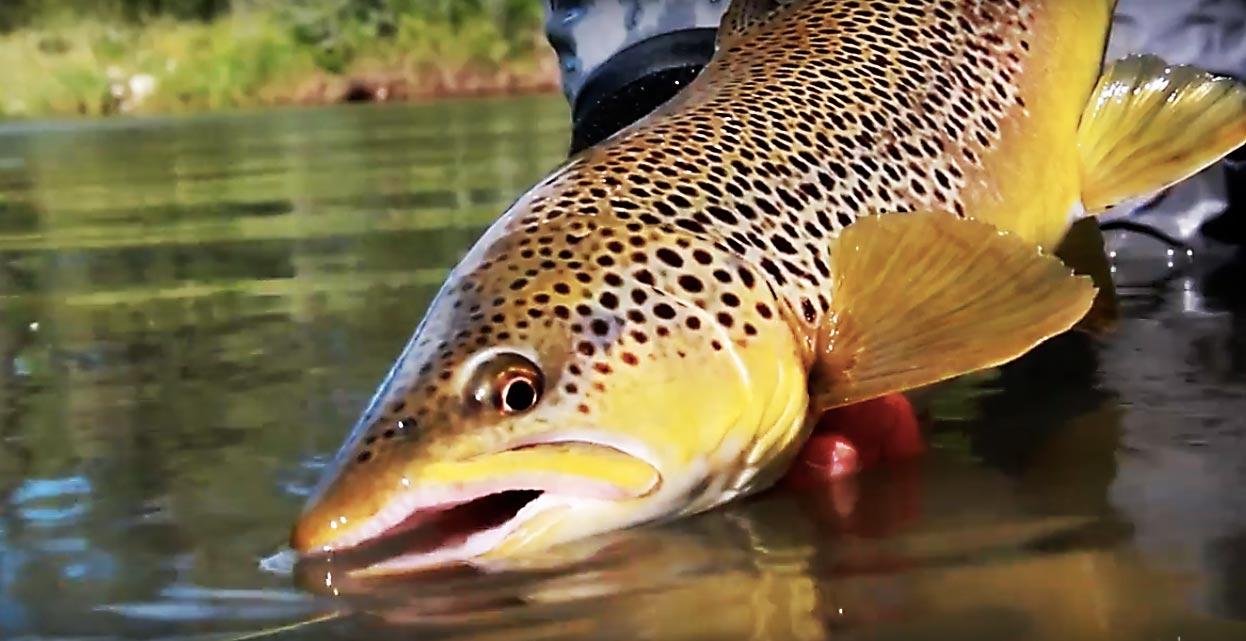
Here’s a video every trout angler will want to see.
There’s nothing more fun than sight fishing to trout. Beyond being enjoyable and visually rewarding, it’s also how you will catch your biggest fish. Sight fishing allows you to target quality fish and make informed presentations. It’s a real art.
This great video from Jensen Fly Fishing (sourced via Orvis News) is a textbook example of educated angler vs educated fish. It’s highly educational and just plain fun to watch.
ENJOY, “THINKING ONE THROUGH.”
Read More »Looking Good With Fish On
Fish On Energy delivers cool designs and quality materials in Fly Fishing apparel.
I met these guys about 2 years ago when they were just getting into the apparel game. They weren’t really product designers, just fishy guys with an eye for what’s cool. They had a couple of cool T-shirts and hats and a great attitude. Two years later, the product line has expanded, and the designs have evolved. Now there’s cool apparel for on and off the water. Pretty cool stuff from Fish On.
WATCH THIS VIDEO TO SEE NEW DESIGNS AND TECHNICAL WEAR FROM FISH ON ENERGY.
Read More »C&R Tips & Gear for Musky & Other Toothy Critters
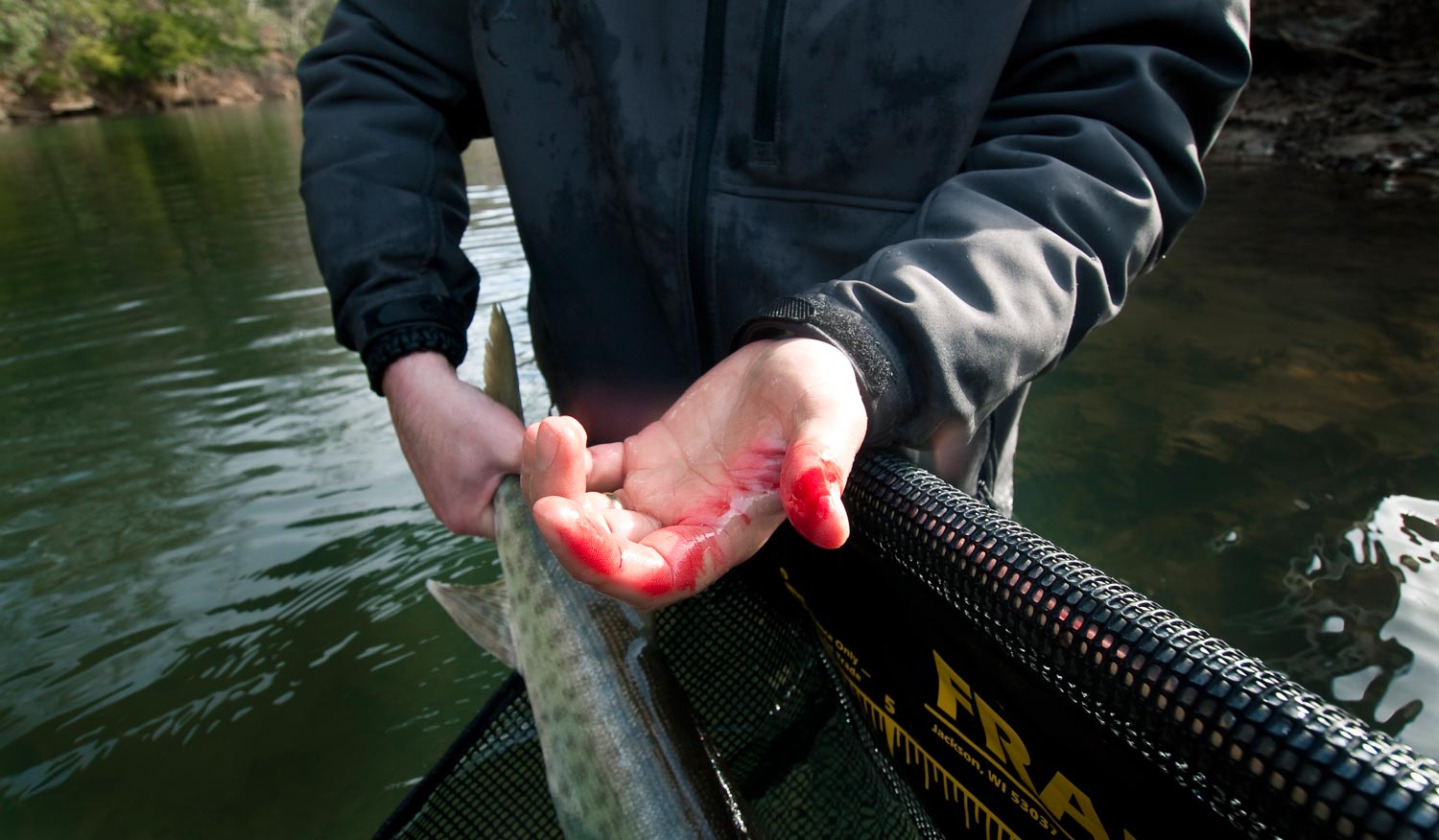
I’ll never forget the first musky I landed on fly. It was an extremely proud moment for me, but it quickly turned into a stressful situation after I got the musky to the boat. I had serious problems removing the deeply hooked fly. The musky had its mouth slammed shut and would not open it more than a couple seconds at a time. After a few minutes without making any progress, I became desperate, and used my hand to pry the mouth open (dumb I know, but the health of the fish was more important to me) and I ended up badly cutting my hand on the razor sharp teeth. The entire hook removal process took far too long, and that made it extremely difficult for us to revive and release the fish. It was an organized team effort to say the least. I held the fish in the water, Louis stabilized the net, and Murphy ran the trolling motor upstream to keep water running over the gills until we got the musky green again. Talk about a bummer that ended up overshadowing a proud angling moment. That’s not how I wanted my first catch and release of a musky to go down.
If you’re planning on going fly fishing for musky or any other toothy critters for the first time, I highly encourage you to read over these organized catch and release handling tips and gear recommendations. They’ll keep you and the fish safe, and you’ll greatly decrease the chances of ruining a great moment on the water like I did.
Read More »Sunday Classic / Some Say I’m an Intense Fly Fishing Guide
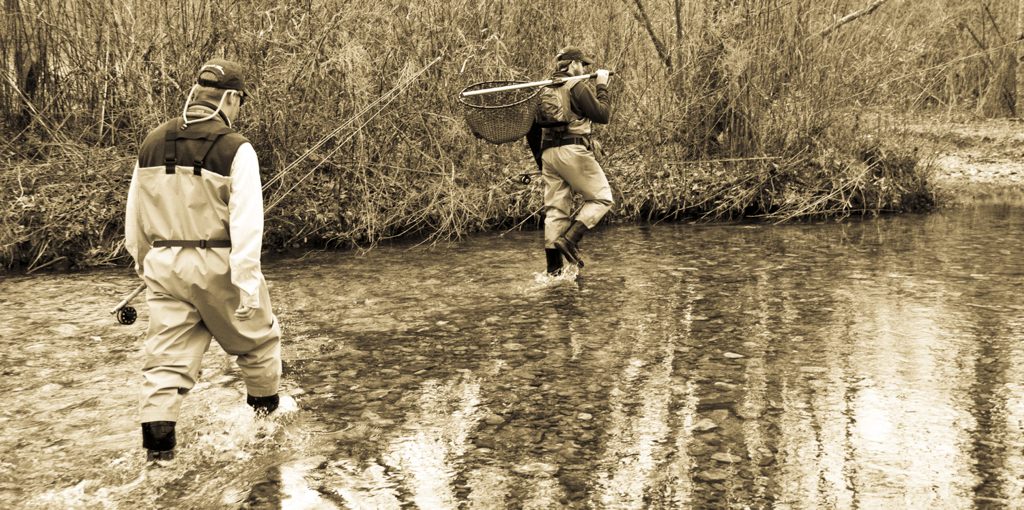
I’m sort of a blabber mouth on the water when I guide.
Similar to a sports radio announcer that’s calling a game play by play, so the listeners can easily follow and visualize what’s going on. It’s a hands-on style of guiding that’s served me well over the years. Nintey-seven percent of my clients would have it no other way, but every once in a while, I’ll get a comment defining my guiding as being too intense. When it happens, I’ll back off and give them some breathing room, but I always chuckle, because it tells me I’m upholding a promise that I made to myself many years ago.
When I was a kid and had the dream of becoming a full-time fishing guide, I promised myself, if I was ever fortunate enough to become one, I would give my clients my absolute best every day on the water. And if the time came when I was unable to do so, because I lost my love for guiding or simply just got too old, I would promptly hang it up as a guide.
Beginners make up the bulk of my clients, and I’ve found the best way to teach them is by constantly communicating what’s going on in my head, and how I would approach and fish the water if I was doing so on my own. I’ll talk them through every cast and fishing spot throughout the day, if that’s what it takes for my clients to learn how to do it the right way and find success. The way I see it, if I can teach my clients to think like a guide when their out with me, when their on their own, they’ll catch fish like a guide.
I can be nit-picky at times, but its not done in a negative way. I’ll say things like, “your high-sticking this spot 90% correctly and that’s great, but there’s 10% of your technique that’s wrong and it’s keeping you from catching fish. Let me fine-tune you a little bit and show you how to do it 100% correctly. That way, when you find yourself in a situation like this during your next fishing trip, you’ll catch more fish.” I’ll instruct clients to walk behind me and follow my foot steps when we’re approaching a fishing hole. This teaches them how easily success can be jeopardized if they wade in the wrong places. “See how if you walk downstream of this shoal in the shallow riffle, you won’t send shock waves upstream to the trout holding in that flat water upstream?” Some may look at this as being too intense, but I see it as
Read More »Saturday Shoutout / Save The Grand Canyon
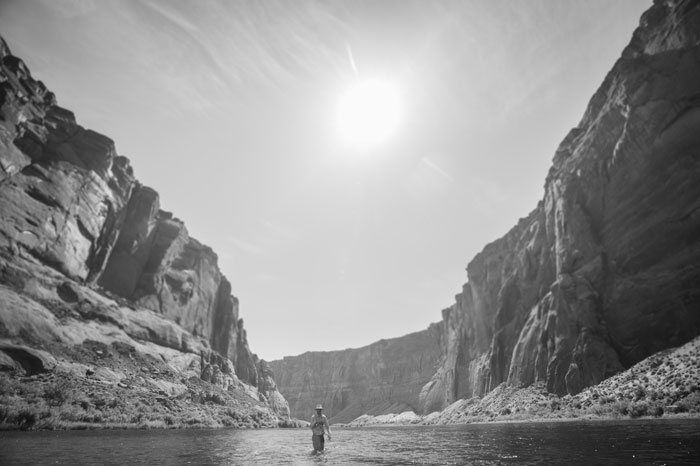
It seems that every day development threatens yet another national treasure, but the Grand Canyon is actually in trouble today, September 3rd.
Tim Romano, at Angling Trade, make a last minute plea for support to stop some highly invasive development in Grand Canyon National Park. Please take a moment to watch this video, read his article and sign the petition.
The deadline is today!
ACT NOW TO SAVE THE GRAND CANYON
Simms Challenger Jacket Doesn’t Break The Bank
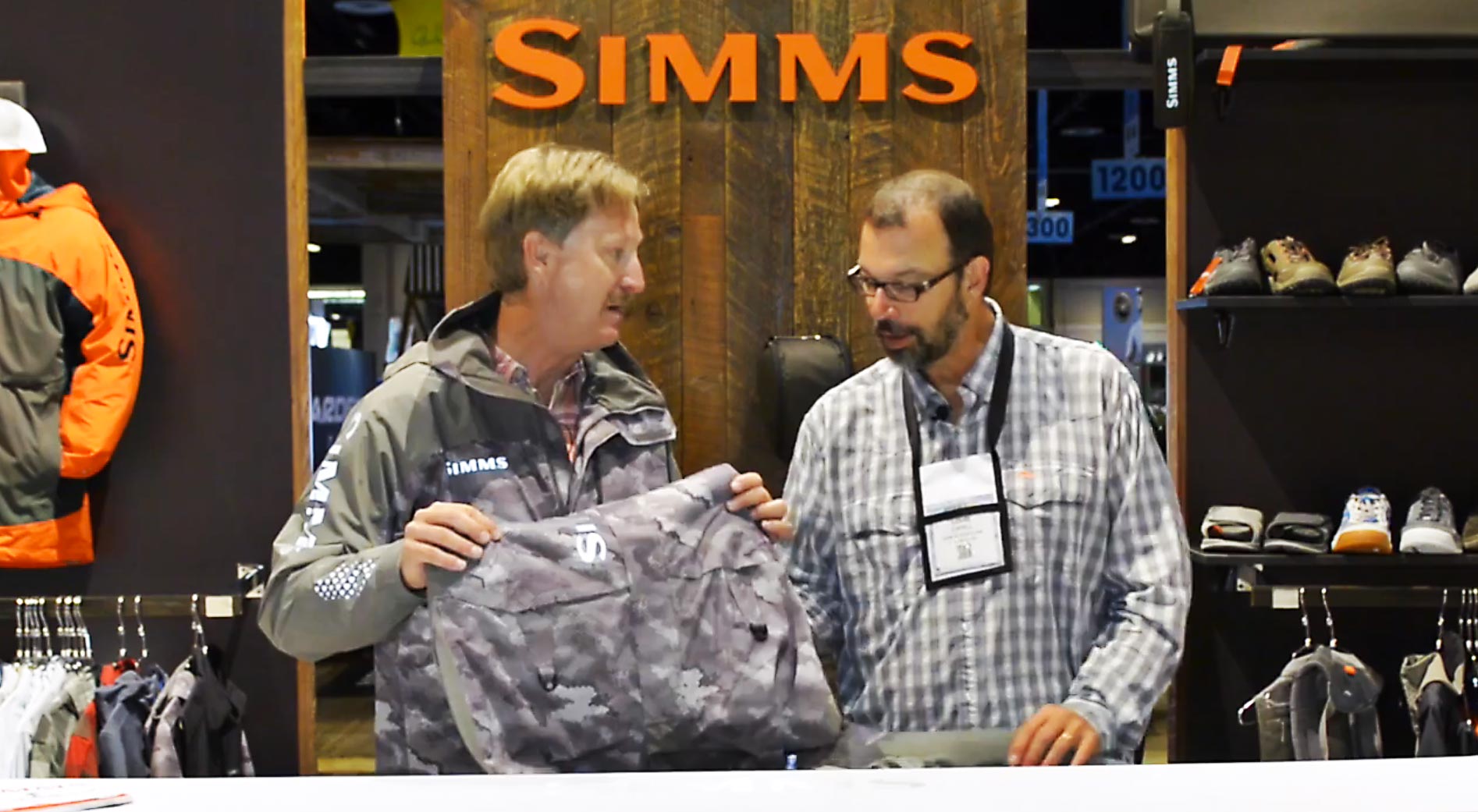
The new Simms Challenger jacket and bib deliver Simms quality outerwear at half the price.
This is a huge offering from Simms. I can’t tell you how many times I’ve heard, “I’ll never pay $500 for a rain coat!” That’s fair. Simms outerwear has never been cheap, though it’s always been the best. The price tag has simply put it out of reach for a lot of anglers, and they have complained. Well, Simms heard you.
The new Challenger series Jacket and bib offer much of the design you get with the Pro Dry products at less than half the cost. $199 for the jacket and $199 for the bib. This should make a lot of anglers very happy.
WATCH THE VIDEO TO SEE THE NEW CHALLENGER JACKET AND BIB FROM SIMMS.
Read More »SA Sonar Titan Triple Density Sinking Fly Line
By Louis Cahill
The Scientific Anglers Sonar Titan Triple Density, Intermediate/Sink 3/Sink 5, Sinking Fly Line is a true game changer.
I’ve been fishing this fly line for a couple of months now. I’m generally pretty skeptical of fly lines which claim to be totally new. In many cases I feel like fly line choices have gotten way too complicated and innovation is often marketing in disguise. While I certainly appreciate what a sinking line can do for me, I’ve never enjoyed fishing one and I’ve written them off as being all the same. I’m pretty pleased to have changed my mind.
The new triple density Sonar is a real solution to a real fishing problem and has changed my mind about sinking lines. It casts like a floating line, turns over big flies, gets my fly deeper, faster than other sinking lines, gives me positive hook-ups and doesn’t turn into a bird’s nest on the floor of the boat. Its performance is amazing. So why do I not see more anglers using it? Because it’s confusing as hell, I imagine. I’m going to try to simplify what makes this line work.
Let’s start with the name.
Seriously, they should have just given this line a new name. Although it’s descriptive if you understand it, it’s a mouthful and doesn’t mean much to the average angler. I know the first time I heard it, it didn’t register. That’s my only negative comment on this line and it’s pretty minor.
The taper makes the difference.
Most sinking lines are level tapers. The tip sections of sink-tip lines (which are what most of us use) are level as well. With no taper to ease the transfer of energy, they are difficult to cast. They like to pile up and they struggle to turn over heavy flies. This means you work harder to cast then and you make less accurate presentations. Not awesome.
The Sonar Titan is a fully tapered line. It is built on the Titan taper, designed to turn over heavy flies, and coated with tungsten like any sinking line. Because it has a powerful taper, it behaves like a normal fly line, delivering weighted flies on target with a nice energized loop. That’s a huge improvement. That explains half of the name. Sonar is the family of sinking lines, Titan is the taper.
Why does triple density matter?
Read More »FLORIDA BAY…FOREVER?
By Alex Woodsum
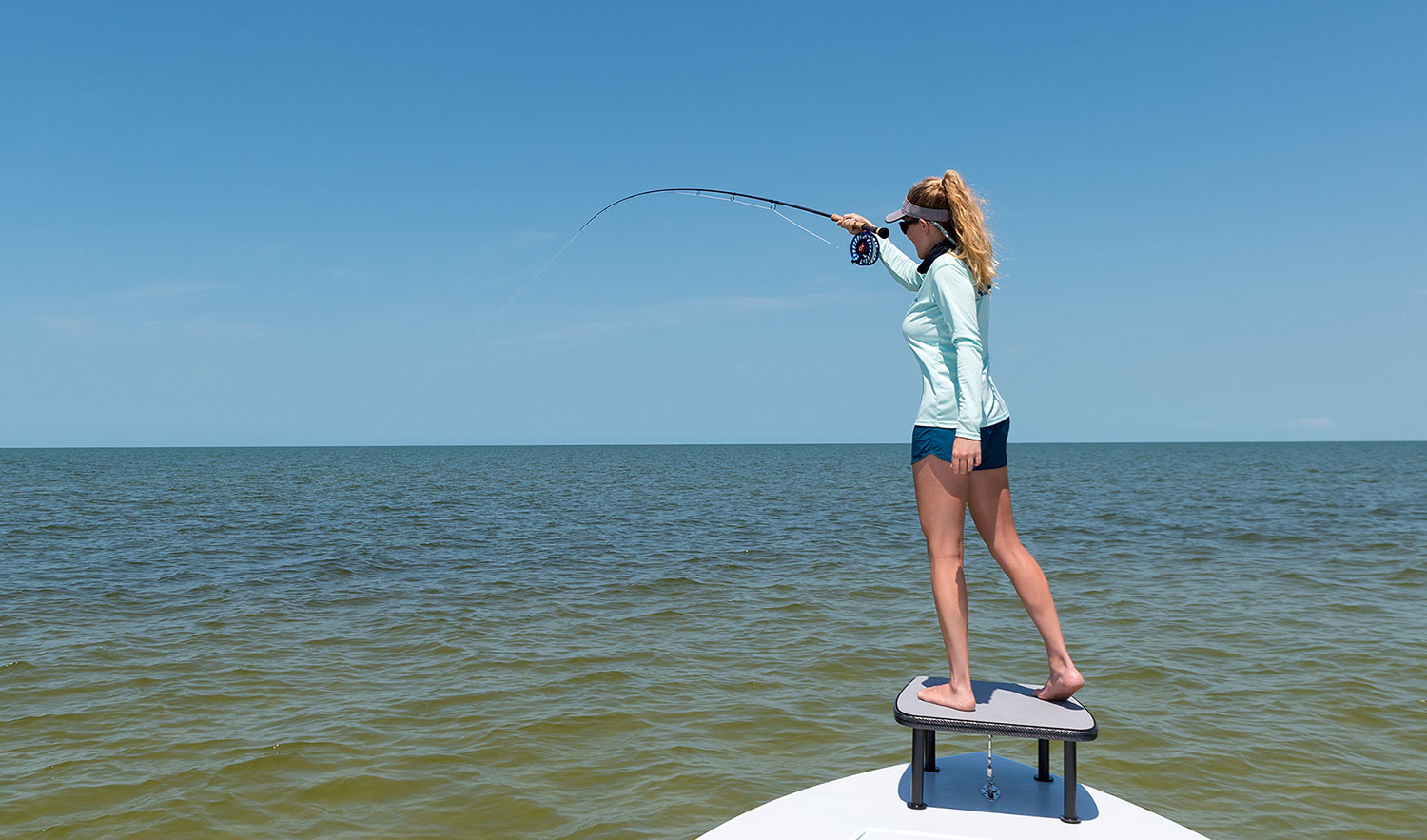
In the four years since I moved to Miami it has become a frequent ritual on my precious days off (particularly in the summer) to pay a visit to Flamingo, the outpost of Everglades National Park at the southernmost tip of Florida’s mainland. A successful trip requires rising hours before dawn—filled with momentary regret when the alarm goes off—and driving close to an hour and a half to reach the boat ramp. The latter part of the journey winds through Florida City, past agricultural lands bursting with vegetables and fruit trees and little else aside from a state prison, and through the gates of Everglades National Park. Nearly an hour on a long, dark road surrounded by barely tamed vegetation and you finally reach the ramp.
There is a distinct advantage—beyond getting your desired fishing spot—to getting there before dawn, fighting through the swarm of summer mosquitoes and thick blanket of humid air to be one of the first boats out of the small marina. For a brief moment, you get to experience a magical, otherworldly place in its undisturbed state. The sunrise, unencumbered by buildings, takes over the whole sky. Thousands of birds are engaged in their morning rituals. Heron methodically wade the shallow flats in search of prey, their elegant bodies and sharp beaks outlined by the glowing sun. Pelicans gently bob in the current. Osprey perch on channel markers, clutching lifeless mullet in their sharp talons. When boats approach, the birds glare angrily over the disruption. Their bodies tense before they lazily launch into the air, headed elsewhere in pursuit of peace and quiet.
The fishing and habitat are diverse. On a good day, the whole place feels alive, teeming with life. On the shallow grass flats, the water is undisturbed other than the nervous wake of aimlessly milling schools of mullet and the occasional redfish tail gently breaking the surface, sending delicate ripples outward. These fish aren’t a sure thing, but if you can approach and drop a fly quietly right in front of one, you will generally be rewarded. Large tarpon roll in deeper water, their broad backs reflecting the early morning sun like mirrors. Once the sun is high enough, they sometimes lay up and can be spotted by the well-trained eye. In the creeks and hidden lakes, snook and juvenile tarpon use mangroves for cover and safety until they are large enough to venture into bigger water. Present a fly in their vicinity and they will hungrily jump on it. It can be very gratifying fishing after a spring tarpon season filled with rejection and heartbreak.
Flamingo has always been
Read More »