
Louis Goes Fishing
By Louis Cahill
IT’S BEEN A WHILE SINCE I POSTED AN UPDATE ON MY CONDITION.
Most of you know that the last year has been a rough one for me as I am in an ongoing struggle with PVR, which has impacted my vision and much more. Things change all the time but I’m hesitant to post updates. Folks would get tired of hearing about it and, frankly, I get tired of talking about it. I’m writing this because I actually do have some news and I honestly don’t have much else to write about, since this has been my life lately.
I expected to be in bed recovering from my seventh eye surgery this week, but I’m not. I saw the doctor a little over a week ago and he says I’m stable (that’s kind of a big deal) and there is no rush, so we rescheduled the surgery for October. That’s a huge relief! Being on my feet for a while is really going to help me recover from some of the unexpected side effects of my condition.
I knew going in that my vision was not going to be great. There was a good stretch there where they thought I might lose both eyes but, knock wood, that concern seems to have passed. My left eye seems to be in ok shape. There are no guarantees but with PVR but my doctor seems pretty confident about it. It’s been a while sine there was any talk of physically losing the right eye, which is awesome, but I am legally blind in that eye. Visually, for now at least, that’s very challenging. If the right eye were gone my vision would be better. The bad signal from the right eye makes a mess of everything. If, however, things were to go badly in the left eye I’d be damned glad to have it.
I didn’t know going in that this thing would wreck me in so many other ways. Recovering from multiple surgeries, I was in bed for a solid six months. Three months of that I couldn’t even roll over. That caused all sorts of other problems. Muscle atrophy, balance issues and nerve damage being the worst. Long story short, I had to learn to do simple things like walk, sit up and feed myself without a bib all over again.
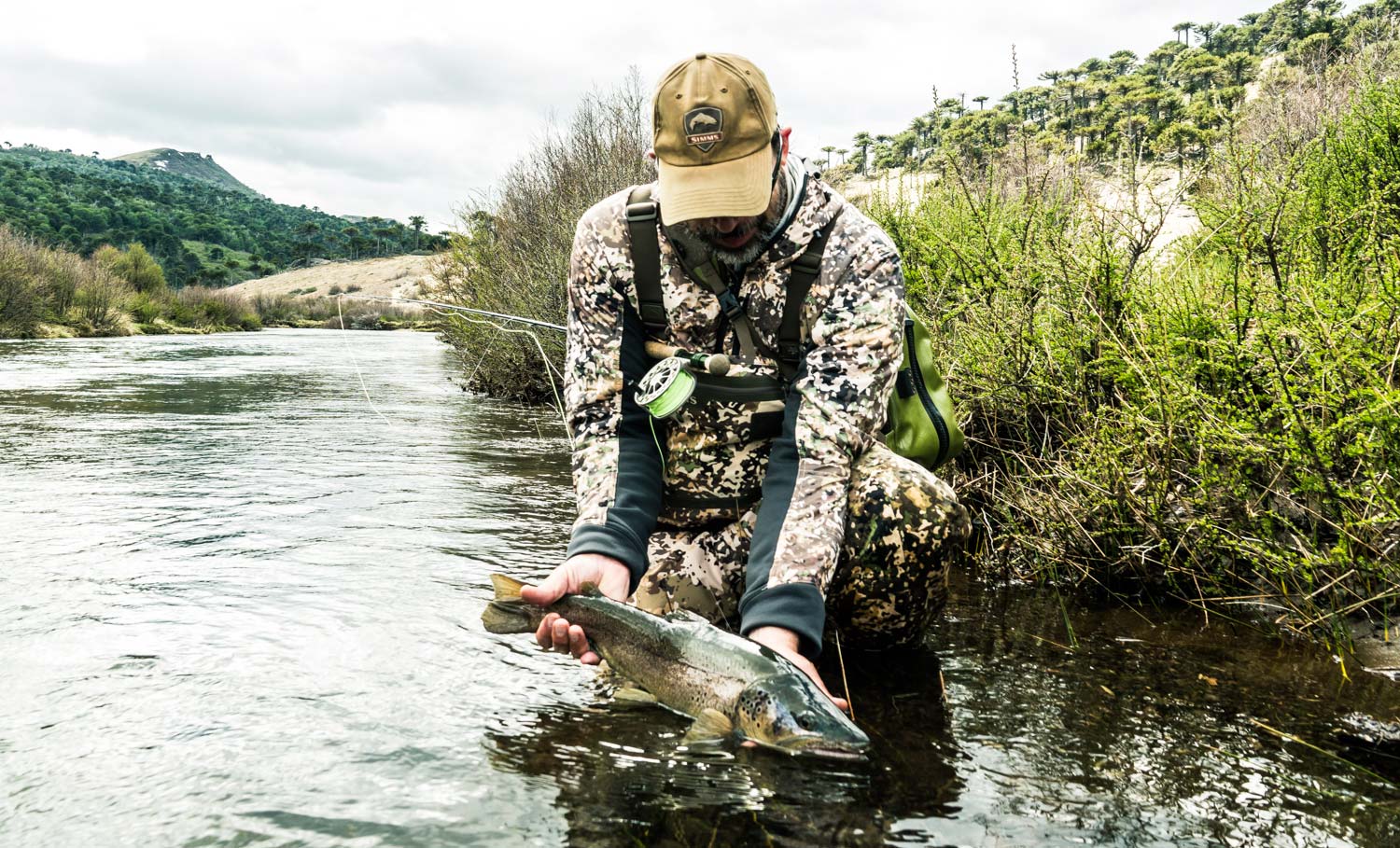
I’m doing great now. I’m still very weak with some ironic pain but I am driving (which is huge) and doing pretty much whatever I want. I have fished twice in the last month. Ok, I know that doesn’t sound like a big deal but it is. I used to put in over 250 days a year but four hours on Sunday morning wiped me out. This week I’m fishing two days and for the first time I’ll be wading. Again, doesn’t sound like a dig deal, but just a few weeks ago the idea of standing in a stream seemed impossible. I’m incredibly excited. Hopefully next week I won’t be telling you about new cast on my leg!
For the casting geeks.
I was very afraid that I would be learning to cast a fly rod from scratch. Fortunately, some part of me remembers, at least, which end of the rod to hold. Thats not to say I’m
Read More »Laying the Smack Down
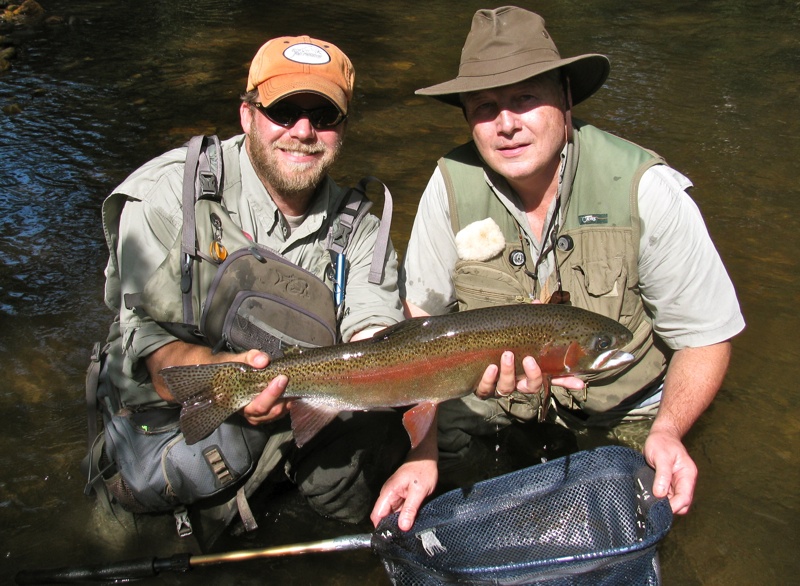
Sometimes you just have to lay the smack down on the water with your terrestrial fly patterns during the summer months to entice fish to eat.
This trophy rainbow trout turned on our flies repeated times only to veer off at the last second. I changed flies and rigs multiple times and then this trout completely shut down on us. It wouldn’t budge even when the fly drifted the perfect line over the fish.
I was about to give up when I told my client to scoot up a few feet closer and smack his dry fly down hard on the water right on the trout’s nose. He did so, and this big hen came up with no hesitation and inhaled his fly. It was a really cool fly fishing experience and my client was thrilled. Next time this summer you spot a trout and a regular drift doesn’t get the job done, try laying the smack down with your fly to imitate a bug flying into the water. Often it’s like ringing the dinner bell for trout.
Check out this video link below of some epic terrestrial fishing on my home water, shot by Bent Rod Media. The giant fish at the end required a “Smack Down” to entice it to eat.
Read More »Fly Fishing: Is Your Fly Swimming Right Side Up?
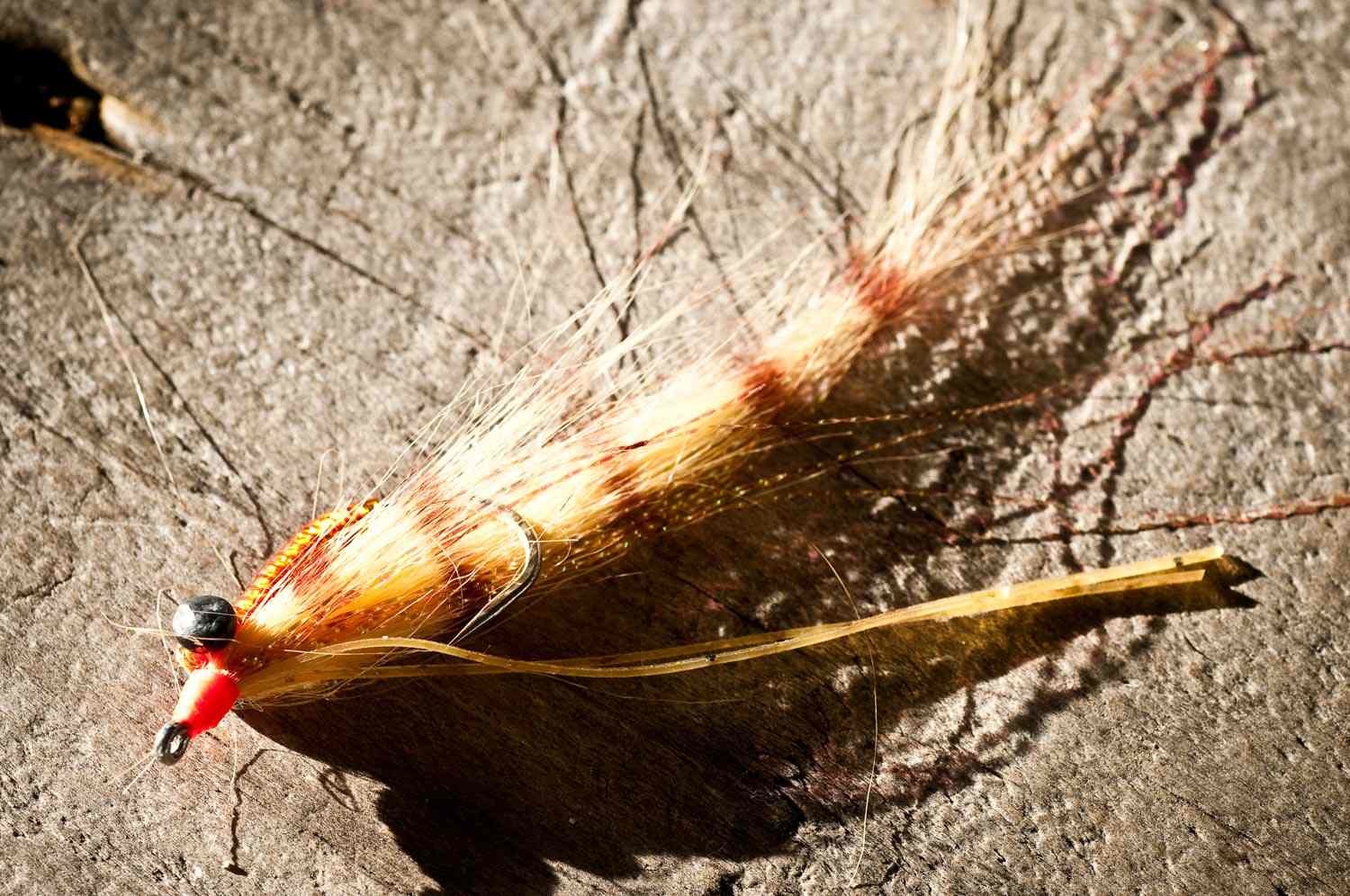
A FLY FISHING HERO OF MINE, CAPT. BRUCE CHARD, ONCE TOLD ME, “IT’S NOT HOW PRETTY YOUR FINISHED STREAMER IS AT THE VISE THAT MATTERS, BUT RATHER HOW IT’S GOING TO SWIM IN THE WATER?”
Until about the last ten years, I gave very little thought with regard to how I tied my fly tying materials on the hook for my streamer patterns. Nor did I think about how those materials being tied on the hook would in turn, influence how the streamer would keel in the water during the retrieve. This especially was true with fly patterns of mine that I intended 100% to ride hook point up in the water, for example, many of my saltwater fly patterns. It turns out that I was very ignorant, all of those years, thinking as long as I tied my dumbbell eyes on the correct side of the hook, that the weight of the dumbbell eyes would always flip my fly right side up in the water. For those of you who are veteran fly tiers, you most certainly understand this is not at all a guarantee, and you’d quickly point out that the buoyancy of the materials being used in a fly pattern, should always be carefully tied in on the hook in the correct position. The reason for this, is because the side of the fly that holds the most buoyant materials, will almost always end up on top in the water, regardless of whether or not weighted dumbbell eyes were used.
Read More »The Woman Behind The Feel
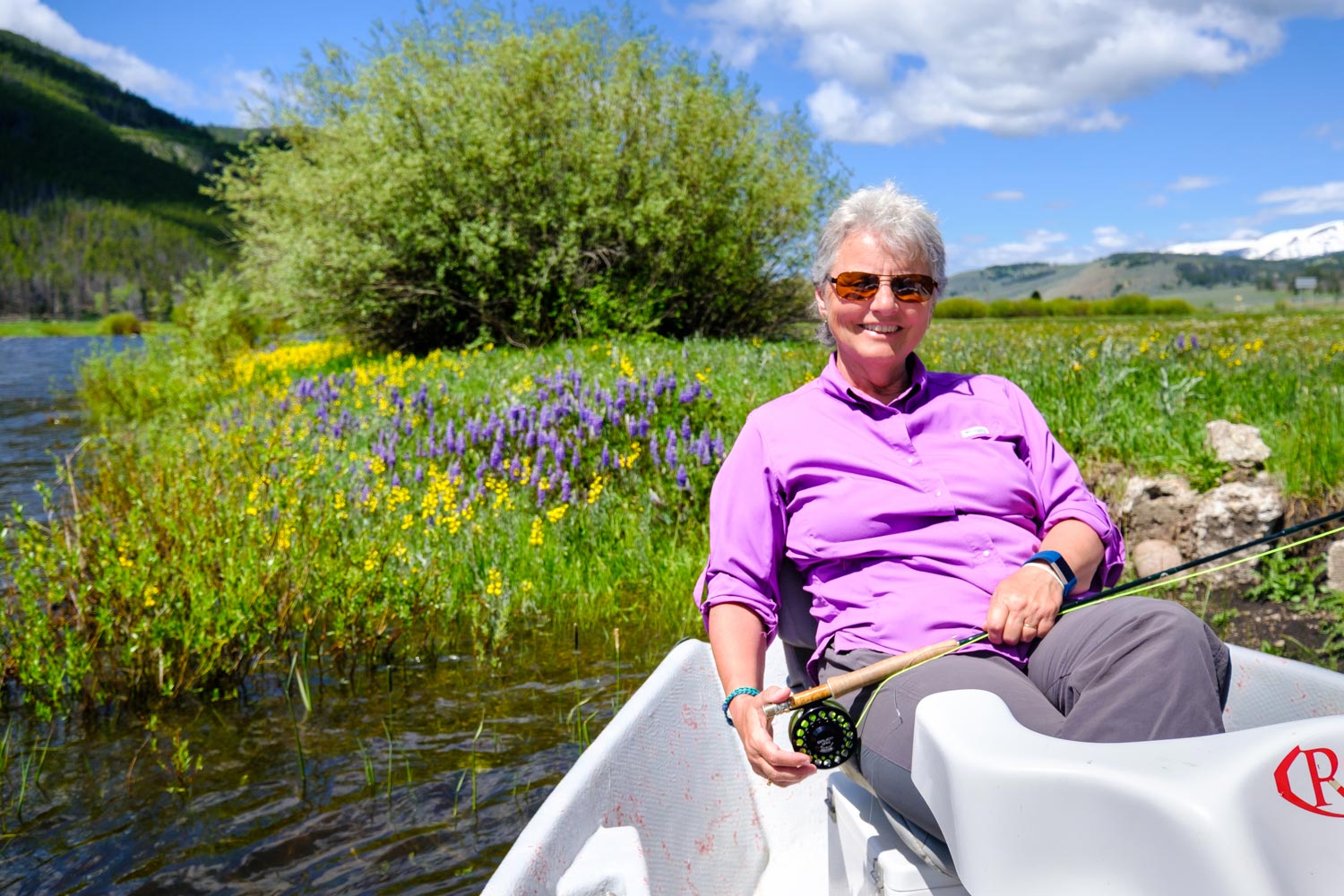
IF SHE WAS A MAN, SHE MIGHT HAVE BEEN A COWBOY.
The kind of quiet, earnest character Gary Cooper played in his old westerns. Raised on a Montana ranch with five brothers, she stands as if she were always ready to get to work. You wouldn’t be the least surprised to see her saddle a horse or mend a fence. She is serious, thoughtful, and when she speaks she gets straight to the point. And you’d better believe people listen.
Soft spoken, humble, completely unassuming and a bit on the quiet side, with short silver hair and perfect posture, Annette McClean doesn’t immediately stand out in a crowd. If you saw her at the grocery store you might think of her as someone’s mom, or grandmom, and you’d be right. She is those things, as well as being a great angler, a good friend and civicly involved neighbor. As it happens, Annette is also one of the most brilliant minds in fly rod design.
There’s no point in writing around it, Annette is unique in that she is the only woman to design fly rods for a major manufacturer. As far as I know, she is the only woman rod designer period. Not that it matters and it certainly doesn’t to Annette. There is a rich history of women in the fly fishing industry and though she is the first to hold this position, I’m sure she will not be the last.
“I never felt devalued at Winston because I was a woman,” she tells me.
Annette was working for a local conservation organization in the 1980s when she walked through the front door of the R.L.Winston Fly Rod Company. She wasn’t looking for a job, or even a fly rod. She was there to ask then owner, Tom Morgan, if he’d sell a piece of land.
“No,” Tom replied, “But I’ve got a job for you if you’re interested.”
The job was polishing reel seat hardware, and she took it. Not a glamorous position but she didn’t care. She enjoyed the work and before long Annette was doing a couple of other jobs around the plant, including working on bamboo rods with Glen Bracket.
Winston is the kind of place where employees take pride in their work and feel an ownership in it. Any employee can, at any time, take any part out of production if they find it to be anything other than perfect. They are expected to do it, and what’s more they are expected to take it back to the person responsible for the imperfection. It’s the kind of place where if you do your job well, you get more responsibility. The kind of place where your work ethic matters more than your resume and before long Annette McClean found herself in charge of operations, and then design.
Winston is one of the oldest and most storied brands in fly fishing, so it’s fitting that when you walk through the front door you find yourself in a museum. Glass cases hold old bamboo rods, many with world records attached to them. Old machinery and hand tools from the company’s early days line the walls. Black and white photos cover the walls. Photos of men who shaped fly fishing as we know it and most recently a photo of Annette McClean. None of them are
Read More »RIO Slick Cast Coating and Technical Trout Fly Line: Video
By Louis Cahill
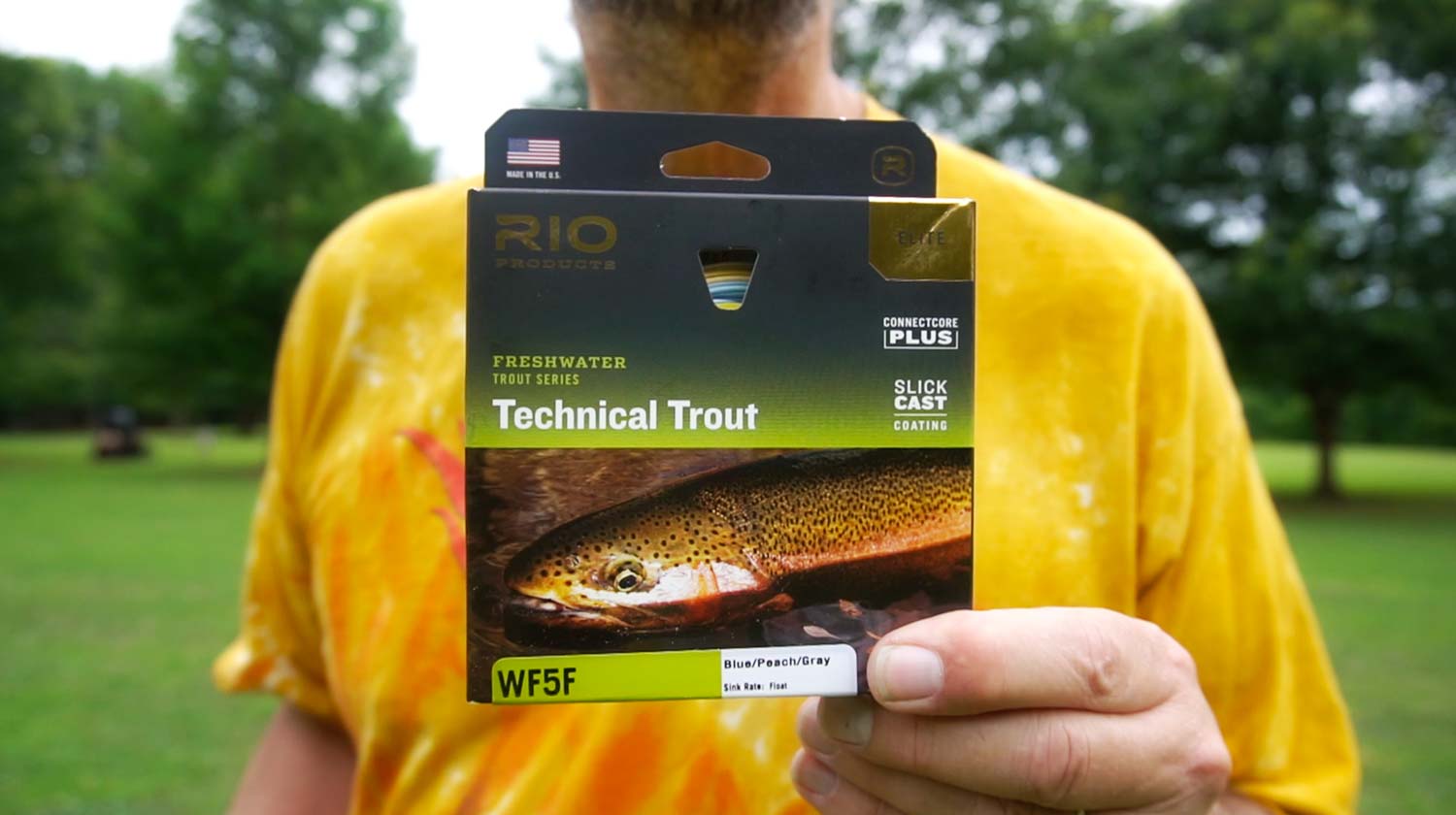
Here’s an unboxing and video review of the new RIO Slick Cast Coating and Technical Trout fly line.
When I do product reviews, I generally test a product for months before writing the review. That insures that the review is thorough and thoughtful, but it takes a while and often, by the time it’s done, a lot of folks have just bought the thing, So, today I’m trying something different. I’m testing the RIO Technical Trout fly line with the new Slick Cast coating live on camera. You’ll get to see me take it out of the box and cast it for the first time. You’ll get a frank and spontaneous opinion of it’s performance. Let me know what you think of the format and maybe I’ll do it more often.
WATCH THE VIDEO FOR MY FIRST IMPRESSIONS OF THE NEW RIO SLICK CAST.
Read More »Clean Your Rod Right, After Fishing The Salt
By Bruce Chard
IT’S A BAD FEELING TO PULL YOUR ROD OUT OF ITS SOCK ALL CRUSTY AND GREEN.
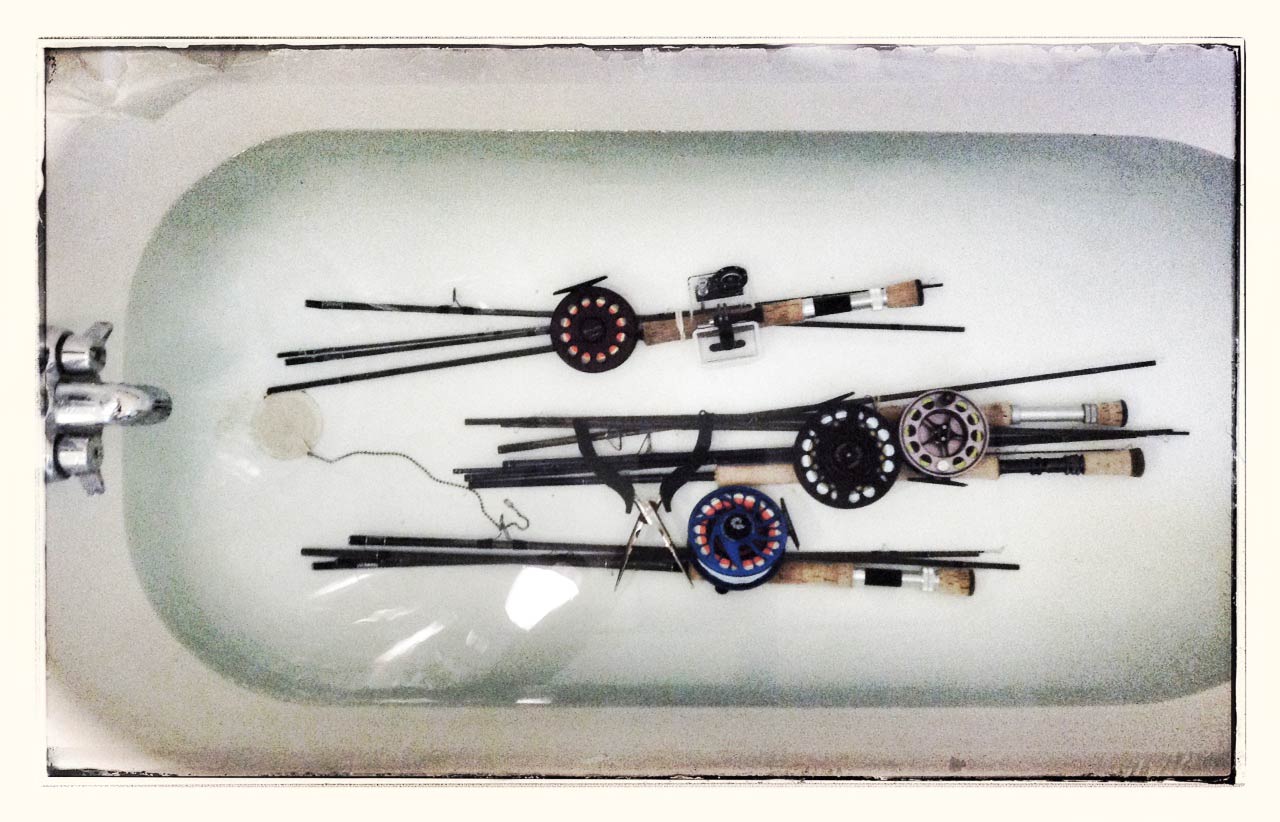
Most anglers know to soak their reels after fly fishing in saltwater but too many guys forget to wash their rod. When heading home from a saltwater fishing adventure it is important to properly clean your rod. Leaving any salty residue on your rods can create corrosion on the guides and reel seats.
Proper cleaning insures that, the next time you pull your rod out of its sock, you don’t have corrosion dust all over, a locked up reel seat or a broken or weakened stripping guide.
Make sure to wash your rod with soap and fresh water. Many saltwater destinations in the Bahamas, Belize or Mexico don’t have the best tap water. It can be somewhat brackish. This will leave salt on your rods during storage. Use soap, then wash with fresh water to remove all the salt.
Make sure to wash your rod sock as well before
3 Reasons Fly Fisherman Should Consider Wearing A Long-Bill Hat
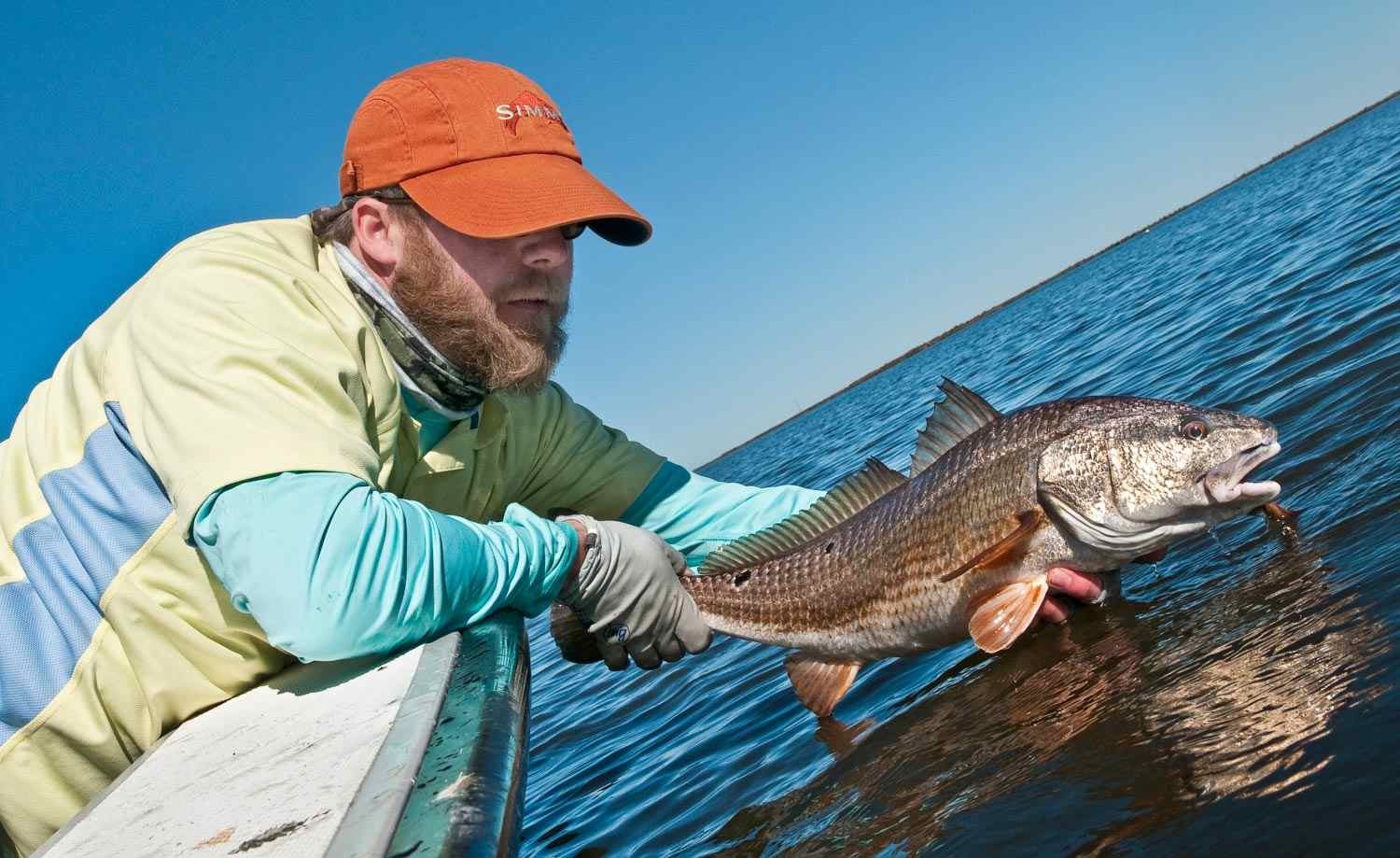
When I look at a long-bill hat, images of Ernest Hemingway, swinging wet flies on one of his favorite trout waters pops into my head. Next, I see the silhouette of the legendary fly fisherman and guide, Flip Pallot, with his masculine beard protruding beneath his long bill cap, as he stands on the platform of his skiff, pointing out a pod of tarpon to his client, at 11’oclock. There’s something really macho about dudes that can pull off wearing this type of hat. For the record, I’ve never seen myself capable of pulling off this machismo look, and in turn, I’ve spent the majority of my fly fishing career, opting instead for wearing the conservative short-bill cap. Plus, there’s no doubt that I look like a complete tool in a long-bill hat. That said, looking good on the water doesn’t help any of us catch more fish, it only helps the photographer looking through his/her lens shooting us. I’ve learned that performance is really what fly fishers, that get it at least, are really after when it comes to searching out what gear they use. For this reason, I made the decision recently to set aside my biased stance on long-bill hats, and actually wear one during a recent fly fishing trip of mine to the salt. Thank you Louis for being the friend that loaned it to me for the day, because it opened my eyes to how special and functional long-bill hats can be for not only me but to all fly anglers. Below are three reasons fly fisherman should consider purchasing and wearing a long-bill hat on their next fishing trip.
REASON #1: LESS GLARE AND SUN IN THE EYES, EQUALS BETTER VISION ON THE WATER.
Polarized sunglasses work great for allowing anglers to see into the water they’re wetting their flies in, but they will perform twice as good if they stay in the shade. The extra roofing area atop your head that a long-bill hat provides, is substantially larger than what traditional or short-bill hats provide. No longer will you need the sun high in the horizon before the bill of your hat begins to block out the suns rays. Wearing a long-bill hat will give you an edge, helping you to keep your vision acute and your presentations accurate.
Read More »The Trifecta For Fishing Solitude
By Kent Klewein
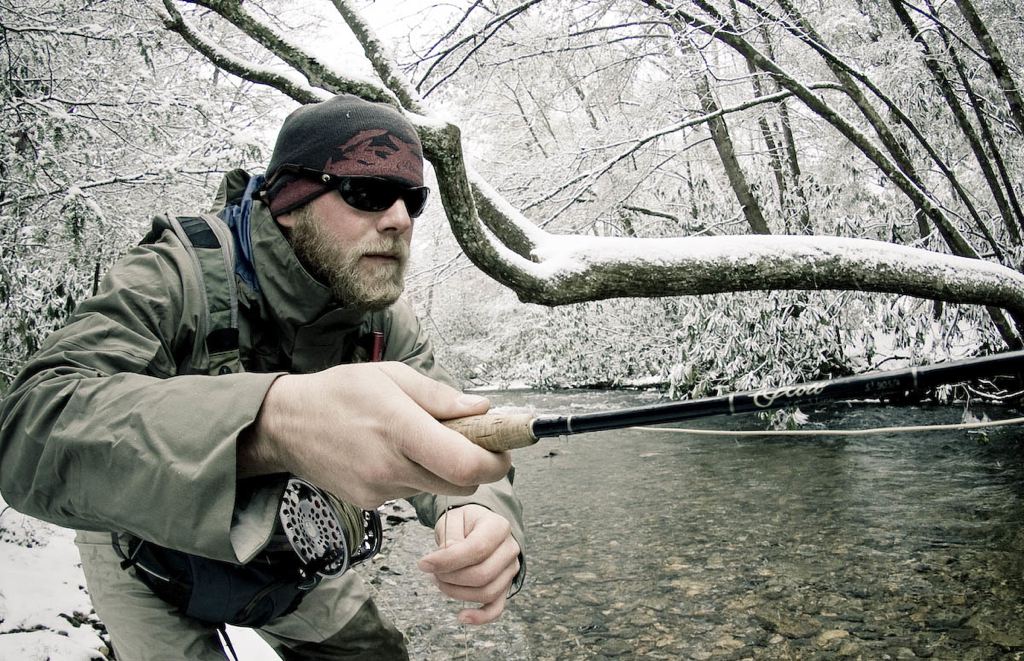
It seems like every year it gets harder and harder for me to find complete solitude on the river.
Solitude is not a necessity for me by any means, but when I’m blessed with it, I find it does wonders for purifying my soul and improving my fishing game. Time seems to stand still when I’m in complete solitude on the water. Every fish I land with no one there to confirm it but me, seems to add further reward and satisfaction. There’s no competition from other anglers, it’s just me and the fish. This allows me to open my mind, think clearly, and get in a zone to fish at my best ability. I don’t care what pace I’m fishing or how much water I cover while I’m out. I just take one fish at a time, like I’m challenging each of them to a game of chess. But to be frank, it’s not even about winning or losing. It’s more about taking in the big picture and understanding why I’m out there in the first place; I love to fly fish.
Over the years I’ve developed a betting strategy I call the “Trifecta for Fishing Solitude”. Although gambling never offers us sure win bets, searching out and placing these three bets in order when possible, usually pays out plenty of solitude on the water.
Bet #1. Fish off the beatin path
Being lazy and choosing to fish water that’s easily accessible generally will bring you company instead of solitude in your fishing. Hiking into difficult terrain is great but you don’t always have to go that far. Sometimes all you have to do is search out stretches of water with steep banks/canyons, thick foliage or even spots where the road moves away from the stream. Fishing off the beatin path can offer you solitude even on some of the most heavily fished waters, so don’t overlook it.
Bet #2. Fish During Weekdays
Find time in your schedule when possible to go fishing on a week day when
A Truckvault Offers the Ultimate in Function, Convenience and Security
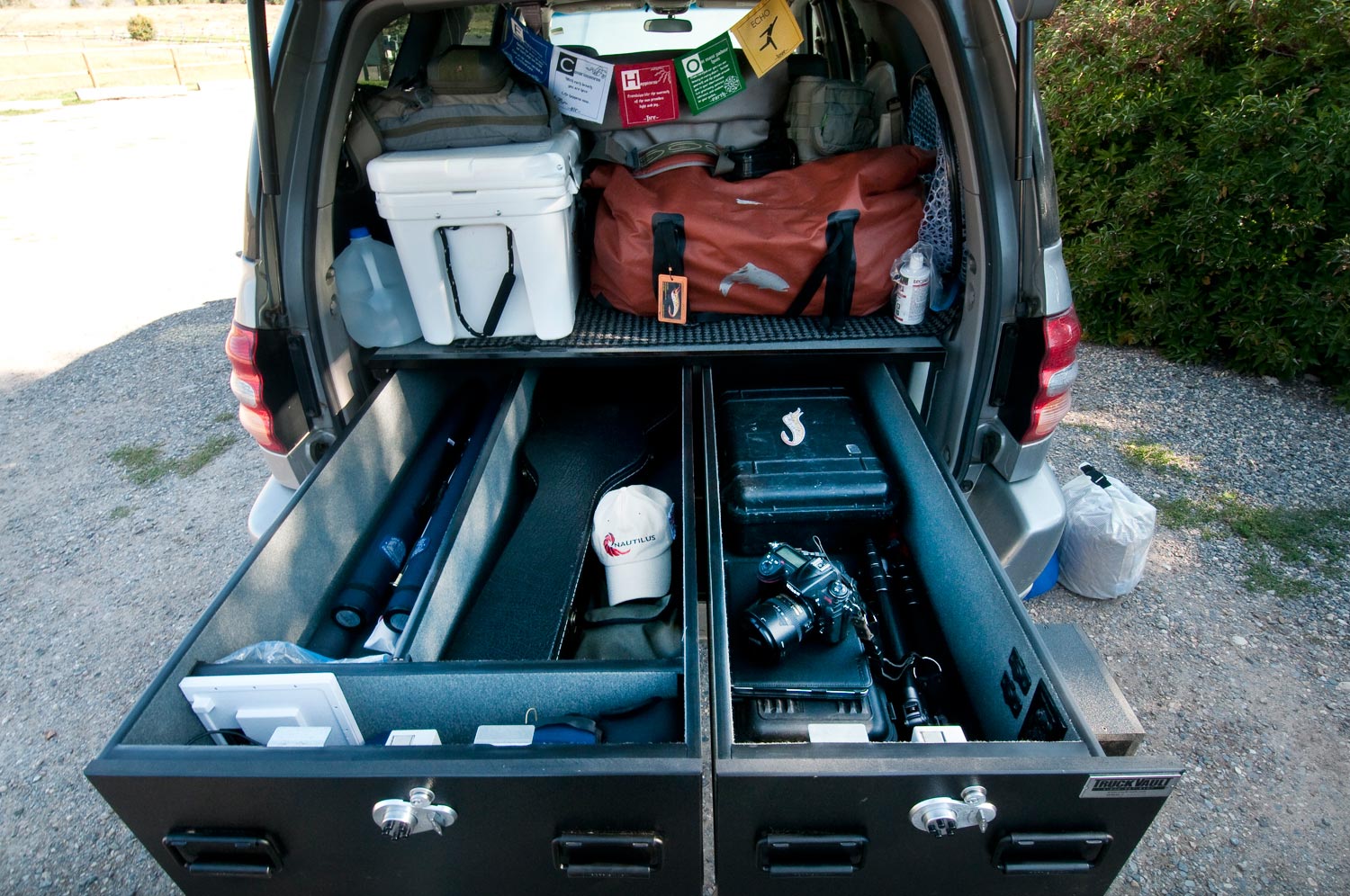
THIS MAY BE THE SINGLE GREATEST PIECE OF GEAR A FLY ANGLER CAN OWN.
As I have said on many occasions, it’s called Gink and GASOLINE for a reason. I live in my truck. Last week alone I drove over 5000 miles with my Adipose skiff in tow. This year I have driven from Atlanta, GA to Idaho, twice! I camp, I fish, I float and most of all I drive.
I’m not complaining. It’s a hell of a lot of fun, but take a minute and think about the logistics of it. A single road trip may last two or three weeks away from home. It’s going to involve photography, video, writing, online publishing, camping, cooking, boating and fishing of every imaginable type. It requires a mountain of gear.
Much of this gear is really expensive. Cameras, microphones, lights, computer, iPad, not to mention better than a dozen fly rods and reels and, of course, I have to have a guitar. All of that expensive, and fragile, gear rolling around in the back of my truck for weeks on end. Baking in the sun. Sitting in plain view at put ins and sketchy roadside pull offs. My life savings in an unlocked truck waiting for a shuttle driver. It has been a nightmare for years.
Well, not any longer. I recently upgraded from a ’98 Subaru Forester to a 2002 Toyota Sequoia. When I did, I knew it was time to get a Truckvault. I have wanted one since I saw my buddy Michael White’s Truckvault, which I wrote about last year. I had spent plenty of time drooling over the Truckvault site and knew that they made custom units for SUVs as well as pickups. I knew the time had come.
I logged on and started the process of designing my own Truckvault. The site makes it easy and some of the options are mind blowing. Anything is possible. Mine is a two drawer unit ten inches deep and fifty inches long. It spans the width of the vehicle and is covered in carpet which matches the truck. When you look in the window, you don’t even know it’s there. It has combination locks with key backups. The drawers pull out to full extension and are lined with foam and have customizable dividers. The unit is rated to hold three-thousand pounds on top and is fire safe.
Read More »Thoughts on the Killing of George Floyd
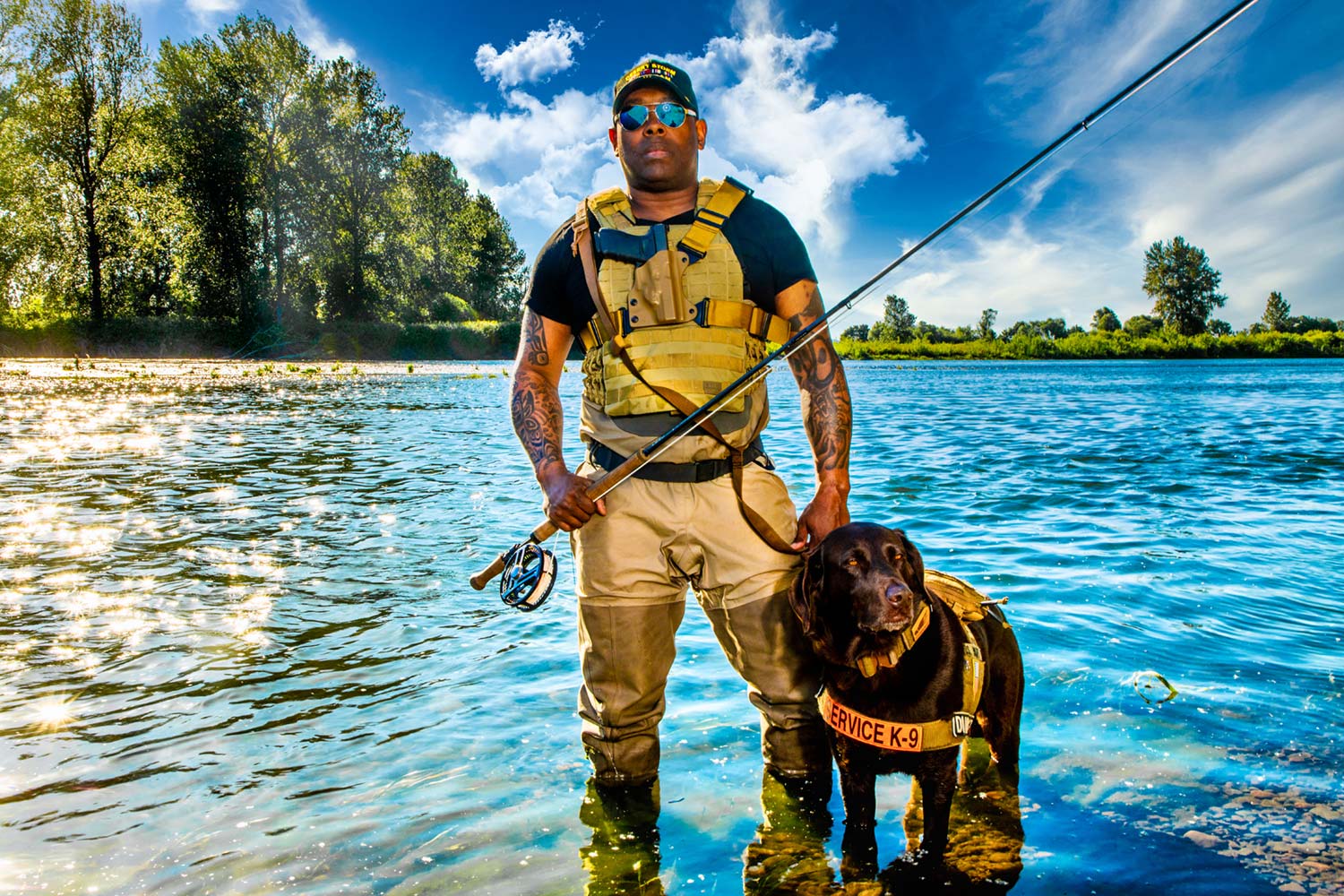
By Chad Brown
Editors Note: I am sharing this piece because I think it’s important, it’s brave, and it’s something you need to hear. I am sharing it today, in observance of Juneteenth, to honor those Americans who were victims of slavery, and their ancestors who live with it’s legacy.
Let me make two thing clear.
This is not political, it is moral. Share your morality but keep you politics to yourself.
I know from personal experience there will be negative feed back to this posting. There are racist among us. I do not have the power to change that, nor do you. All we can do is stand up and have hope for the future. I am counting on those who have hope to stand up. Please share a message of support in the comments so that our voices are heard above the hate.
Thank you, Louis Cahill
WAIT BEFORE YOU JUDGE. TAKE A DEEP BREATH. BECAUSE YOU CAN.
In the wake of the murder of George Floyd, I’ve seen countless people on social media expressing their rage — not about George’s death or about the underlying problem of inequality in our country — but about looting and physical damage to property.
I don’t support property destruction, but when there is a riot, there is no rule book.
As Dr. Martin Luther King said, “A riot is nothing but the voice of the unheard.”
The death of George Floyd is a horrific loss that has shined a spotlight on the systemic racism present not just in our nation’s police departments, but in our day-to-day lives, in our schools, offices, court systems, and elsewhere. It has highlighted the tension between white and non-white people in the United States. It has offered us a moment to pause and listen to the unheard voices of America — the voices of indigenous women missing and murdered on their own land, indigenous tribes fighting for their water rights (and losing), Hispanics facing the challenges of maintaining their identity and making a living through low-paid jobs, African Americans asking for equality and justice while seeing black boys and girls getting killed by merciless cops.
The reality of being black in America is being born with a target on you. You can’t separate from this target. It follows you wherever you go. Every time you step outside, your target is visible. You’re judged, spat on, called “nigger” time after time. You walk into a store or office and are falsely accused of a crime. You’re subject to traffic stops simply for being in the “wrong” neighborhood, and then you get harassed by the cops.
Once, when I was pulled over, the cop asked me if I was a U.S. citizen even though my driver’s license clearly indicates that I’m a United States veteran. My car tires have been slashed while fly fishing. Once, while I was fishing on Veteran’s Day, my brake lines were ripped out of my truck.
On social media, I have been publicly accused of “taking” fly fishing from white people. I’ve been told “This is our sport not yours!” and “You need to ask permission to fish my river!” I have received threatening phone calls where I was told I will be drowned the next time I try to fly fish.
We all love the outdoors and, as Americans, nature is free for us to enjoy. But nature is not free for me the same way
Read More »