
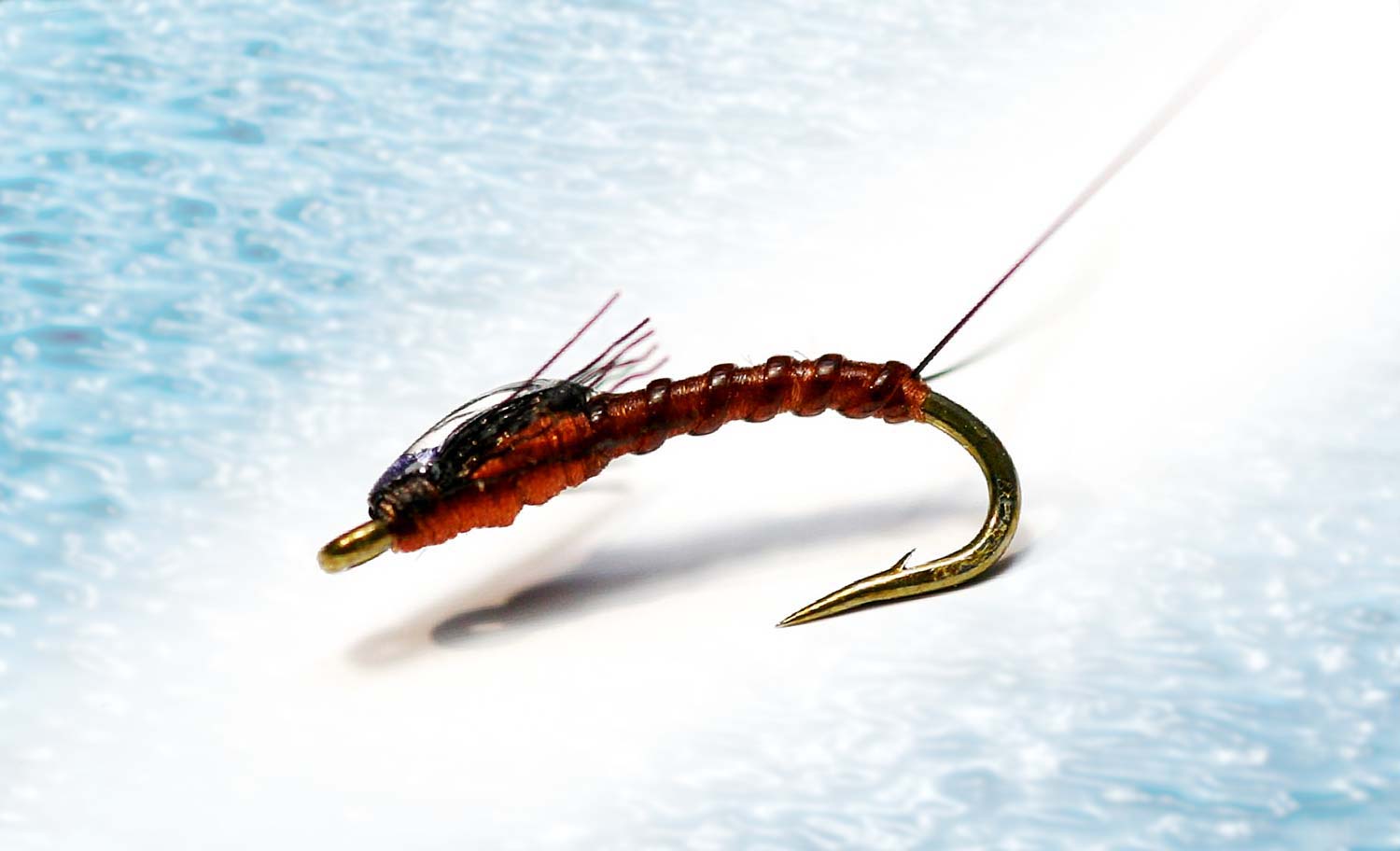
Slim Shady Baetis
By Bob Reece
A baetis pattern with a secret.
“Hopper” Juan Ramirez is full time guide on Colorado’s South Platte and Arkansas Rivers. His years of experience on these water have allowed him to build an on-the-water knowledge base that is second to none. One of his recent creations, the Slim Shady Baetis 5.0, is testament to his understanding.
When I asked Juan about his Slim Shady 5.0, he shared the following thoughts with me. “The Slim Shady 5.0 was a pattern that I worked on for several years before I finally found the right material to set it apart from other great patterns that already existed. It took several versions, but I finally settled on a pattern that utilized a “secret” material. “Slim Rib” is a micro stretch material that I use to make a wonderful segmentation on this pattern. No one else is using it and that’s what sets this pattern apart from all the other Mayfly Nymph patterns. The pattern sits on a 200R hook. The 200R is a hook that is 3x long, giving it a wonderful mayfly shape. As the name states, it’s a slim pattern, matching the small mayflies in the Southern Rockies as well as elsewhere. It’s been thoroughly tested on the South Platte, Animas, Piedra, Dolores and Arkansas Rivers and has accounted for some really fine fish for my clients and me. “
While proper presentation is integral on highly pressure water, accuracy of
Read More »12 Smallmouth Bass Patterns For The Fall
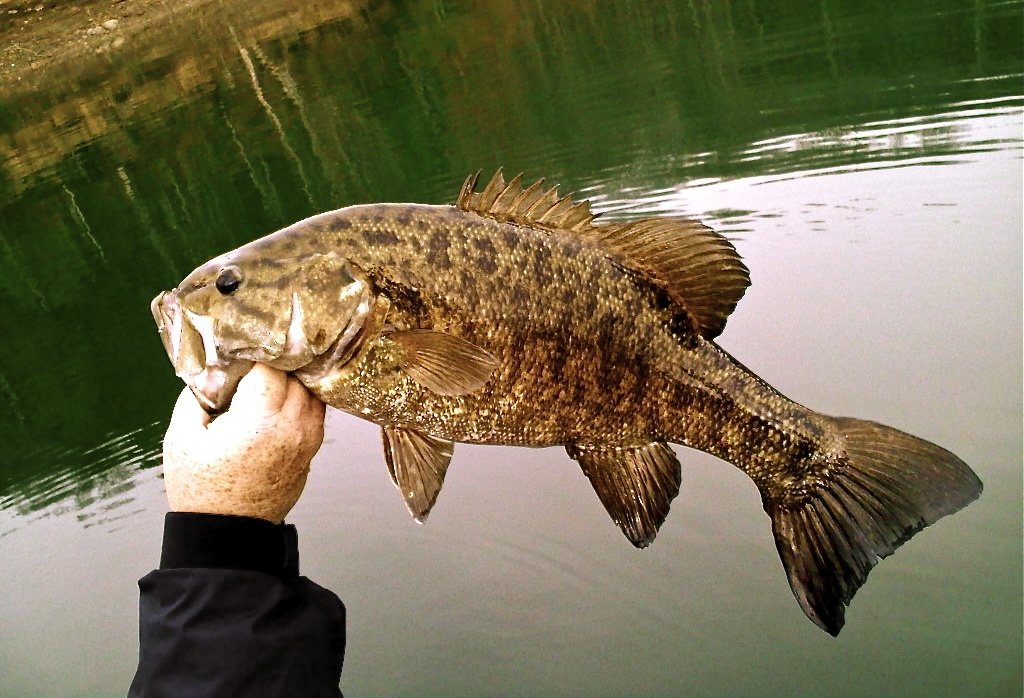
Fall is one of the best times of the year for fly anglers wanting to target big smallmouth bass on reservoirs.
Particularly if the lake impoundment has good populations of shad, blueback herring, or other native baitfish. Fly fisherman fishing surface poppers and subsurface baitfish patterns to these schools of bass can be rewarded with big bronzebacks. The fall brings positive changes in fish behavior and fishing conditions from cooler air temperatures and increased rainfall. For the first time in several months, water temperatures drop significantly on reservoirs which triggers an increase in baitfish activity. Smallmouth bass counter offensively by congregating themselves into schools and driving the baitfish into shallow water where they’ll ball the bait up for easing feeding.
Smart anglers will search out smallmouth bass and the baitfish around the same spawning grounds they visited in the spring during the pre-spawn and spawn. The only difference is during the fall smallmouth bass aren’t’ spawning, they’re instead using these shallow areas of the lake to ambush and corral baitfish. Anglers should also concentrate on main lake points and flats located close to deep water, since smallmouth bass will use these areas to feed as well. It’s best to get on the lake early when the topwater bite is hot. Daylight until ten o’clock in the morning is generally the best for breaking fish, but the evening until dusk can be very good as well.
After the sun gets up
Read More »Summer’s Over
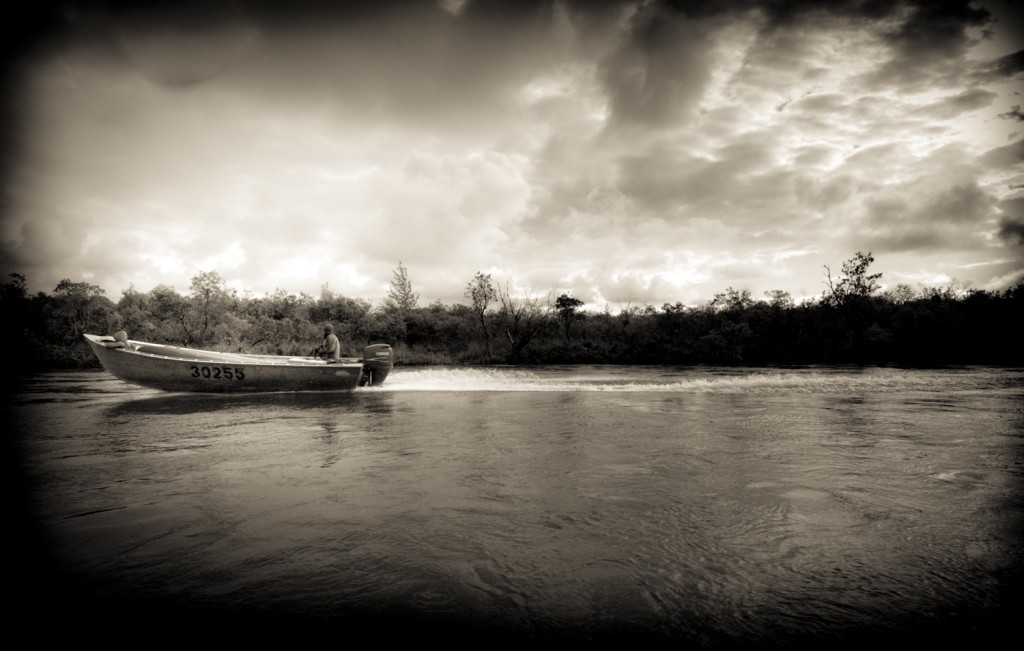
HERE’S ONE IMAGE AND AND A BRIEF STORY FROM AN ESSAY I DID FOR HATCH MAGAZINE.
TO SEE THE REST OF THE IMAGES VISIT HATCH. YOU’LL BE GLAD YOU DID.
In August of 2010, at he end of a hectic and exhausting summer, I found myself in western Alaska for a week at the Alaska West Lodge. Frankly I was a little burned out. The weather, which can be a formidable challenge in Alaska, complicated my travel arrangements. From Anchorage I was still two bush planes a bus and a boat ride from the camp which rest on an island in the Kanektok river. I fully expected to be spent by the time I got there. I found quite the opposite. By the time I reached the camp I was recharged with excitement by the place. Western Alaska is quietly beautiful. The travel it’s self had been visceral. I recall flying low over deserted wetlands, looking down and identifying parts of an airplane on the ground below. I remember thinking, “yes, you are in the bush now”.
While the other guests were unpacking, having a snack or smoking a cigar, I was getting into my waders and lining up my rod. I just couldn’t wait to see what this place had in store for me. I waded into the Kanektok and within a few cast my indicator disappeared and I was tight to a big rainbow. There I was in heavy water with no net playing a big fish. Clearly, I had not thought this through. About that time a boat rounded the bend.
Read More »A Year Fishing The Everglades Special, Half Way Through A Bad Decision
By Paul Pucket
FISHING WISE, I HAVE NEVER HAD A YEAR LIKE THIS ONE.
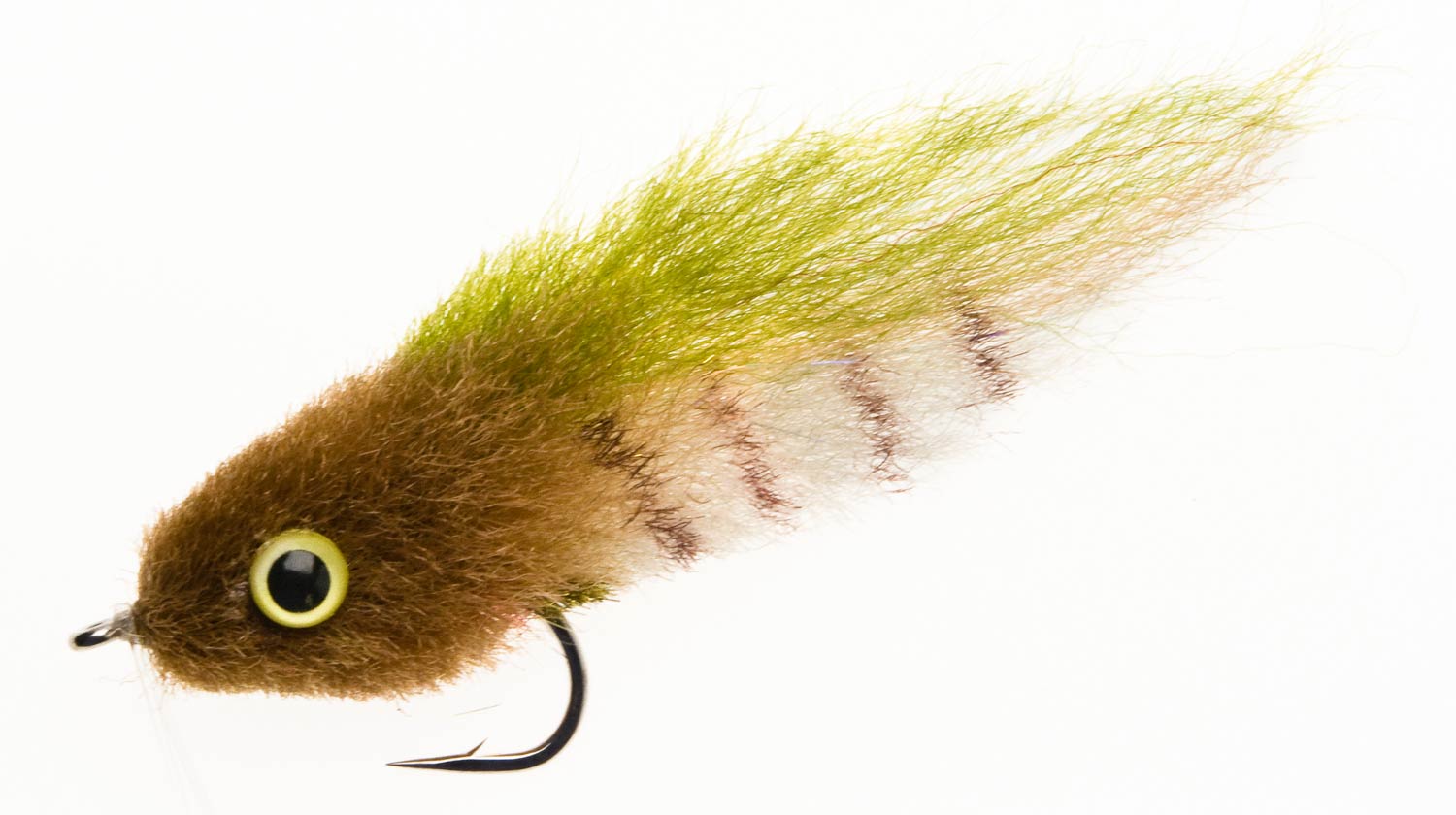
I am fishing in places I have never fished and feel very lucky to have the opportunities. The main difference between this year, and the prior years spent chasing these mindless, slimy, instinctual creatures, is that I am limited to one fly. All year. The Everglades Special.
I have now reached the halfway mark, and have a few thoughts about this adventure. Working in the Lowcountry Flyshop in Charleston, I have heard a few people discuss the idea that you could use the Everglades Special for any species of fish, especially the redfish that swim in our parts. So I took on the challenge, without really even thinking it through, and here I am, with one flybox containing a single pattern.
My first few would-be angling conquests were big goose-eggs. Winter here in Charleston means slow, lethargic, picky reds. It also means clear water and huge wads of fish. The fishing can be really great.
Winter was cold here. I chose my fishing days wisely. Well, as wisely as I could, not having a boat and depending on friends to get me out. One day in early March, with Harry Tomlinson and Doug Roland, I got my first redfish on the Everglades Special. If felt good, like I’d accomplished something. I’d caught a largemouth bass a few days before, so now I had scored two species. I fished a few more times in February and March. A couple of fish were caught, nothing out of the ordinary, but I had my eyes on the biggest test I would face all year, a permit.
Looking past the permit for a second, down the line I had Florida tarpon, Utah trout, Alaska kings and rainbows, Tennessee carp and Jackson Hole trout. Maybe fall in Montana and definitely fall reds. A lot to accomplish, for me and my Everglades Special. As I read this back to myself, I’m thinking, I have the best year of fishing I may ever experience, all around this continent, and I am stuck with one damn fly! Wow, am I stupid?
So, back to the permit trip to Punta Allen’s Palometa Club. Not just permit, of course. Bones, snapper, and jacks –I’m counting these species too. Stick to the plan, that was the only plan. I had tied some small versions of the Everglades Special for bones and snapper on a size six hook and also had tied a weighted version to get down quick. I figured if I was gonna use this fly for permit, I could find a loophole. Nobody said I couldn’t.
Imagine having to explain to your Mexican/Mayan permit guide that you can only use one fly. They do speak pretty good English. Think about how stupid you must sound, coming all the way here to fish for the hardest fish you can get to eat a fly, and you have a baitfish pattern, with dumbbell weight eyes, meant to mimic a crab but looks like a baitfish. Dumb.
The first day, I had this weighted Everglades Special. in front of a few fish. They never really gave it a second look. After all I had heard about permit fishing, this sounded normal. I never flinched, never thought about defeat. On day two, we saw a little more action, right out of the gate.
Read More »Making The Connection- Saltwater
By Louis Cahill
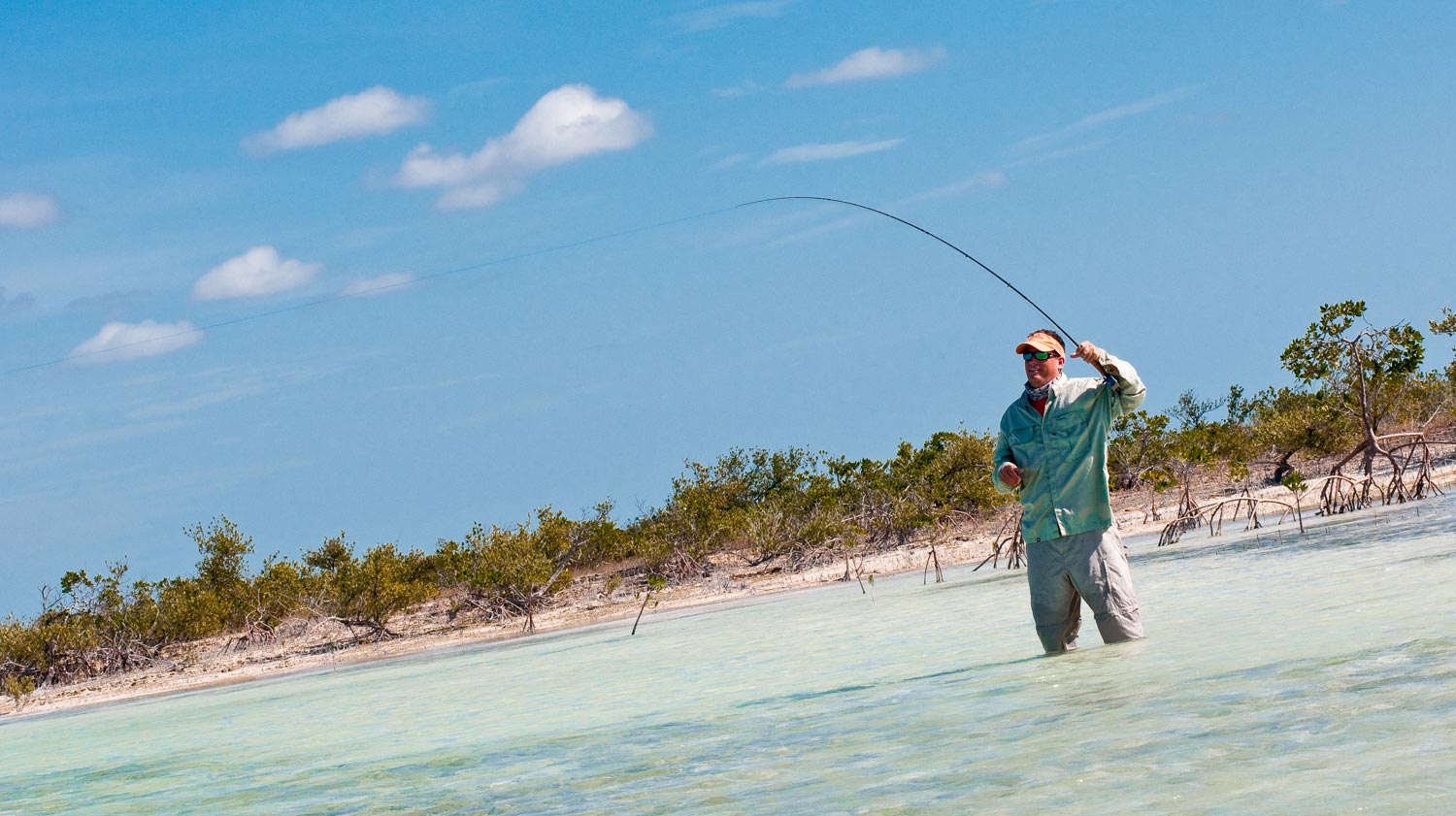
How do you connect your leader to fly line when the pressure is really on?
This is sure to be a lively topic. I wasn’t aware this was such a hot button topic until I published an article by Devin Olsen titled, “Making The Connection,” and watched the comment section light up. Unfortunately a couple of readers missed the point completely. All too often, anglers are more interested in talking about how they do things than they are in learning something new.
Well, talking about how I do things is my job so here we go, I guess. I got to thinking about this after I made the mistake of responding to a post on Facebook. I know, what was I thinking? An angler was puzzling about the coating of his fly line separating from the core. He was using a nail knot to connect his leader to the fly line for bonefishing, and I made the comment that a nail knot was not a good choice for saltwater.
He responded, “I’ve been using a nail Knot for 20 years and never had a problem before now!”
Well, now he’s having a problem. Sure you can get away with lots of choices that aren’t the best choices, but when do you think the problem is going to happen? When you hook a half-pound schoolie or when you stick a 10-pound bruiser? I don’t know about you, but I want everything working in my favor, every cast.
Your fly line is a composite of two materials. A coating formed over some kind of core. The material of each varies depending on the line and the manufacturer. Think of your fly line as an electrical wire with a copper core and plastic insulation. A nail knot pinches the coating to the core. When you apply pressure to the leader, you’ve made a wire stripper. Pressure from the fish stretches the coating and not the core. You’re asking for a failure.
A nail knot is fine for species like trout.
Your tippet will generally fail long before your nail knot. Regardless, I believe in always making the best choice when it come to rigging. For my money, there are two good options for attaching line to leader in saltwater, where your connection is really going to get tested.
One good choice is
Read More »The Fish In-Between
By Louis Cahill
Are you walking past the fish of the day?
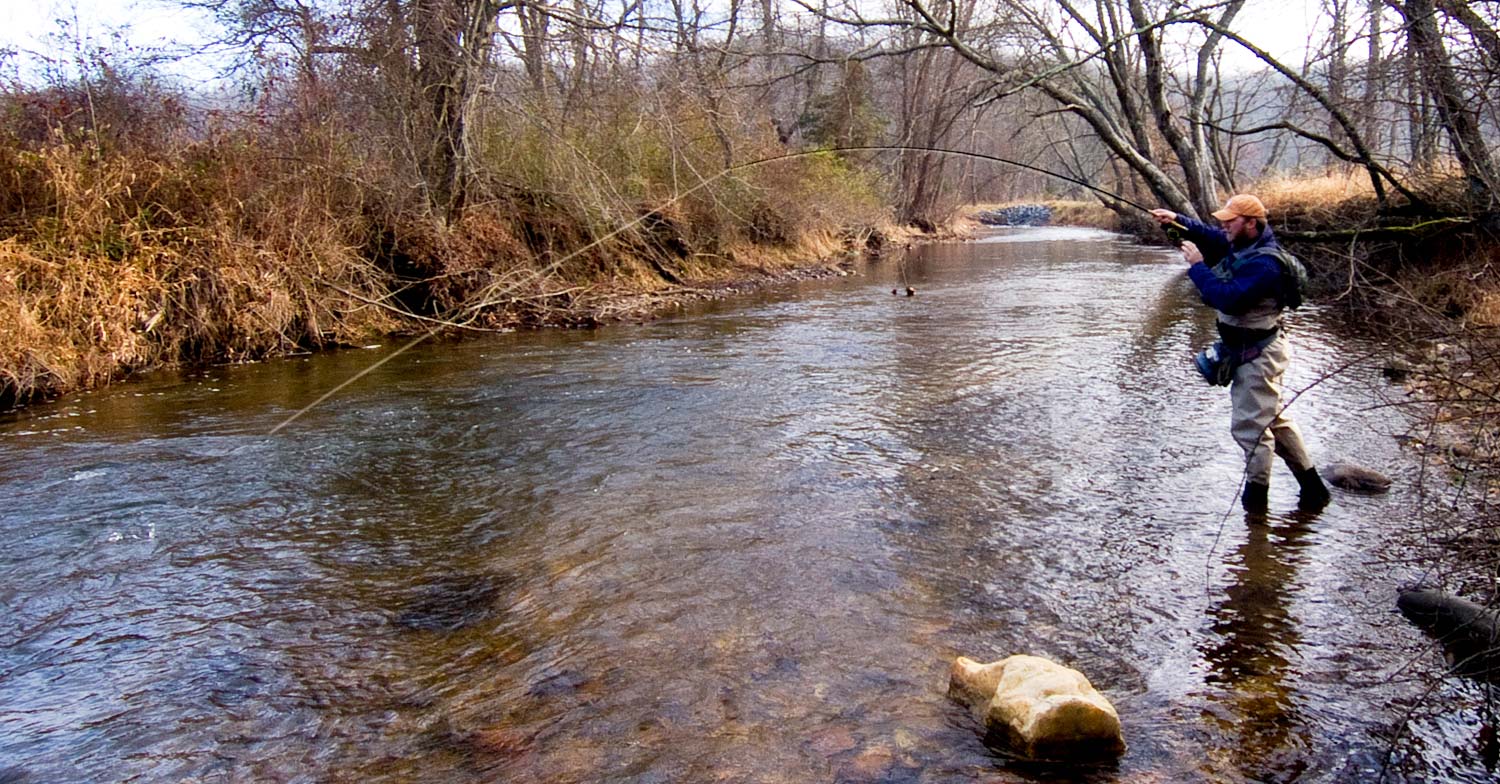
From where I’m standing, in water that barely covers my boots, I can see the next pool. A beautiful bend, dark green and lazy, with a big submerged log on the outside edge. A little riffle at the head, pouring into a deep pool. It’s the perfect picture of the old fishing hole. I know there is a big brown in that dark green water. I literally know. In fact, everyone who fishes here knows. He’s not a secret and yet, to my knowledge, he’s never been caught. Hooked, for sure, but never landed. Still, you have to try with a fish like that.
There’s another beautiful run below with a handful of nice fish in it. I fished it without reward. Those fish, as well as the big brown, see plenty of flies. For all I know I’m the third angler through here today, but where I’m standing, a shallow, straight run with no obvious fish holding features, I’m pretty sure is virgin water. I’ve watched plenty of guys fish through here, and with the exception of the one standing to my left, they all fish the lower hole, then walk straight up the bank to the big bend, ignoring this littler piece of water.
Directly across from me is a clump of stream-side rhododendron, it’s leaves nearly brushing the water. It’s as un assuming a spot as you might find on a trout stream but I know from experience not to disregard stream-side cover, no matter how humble. There’s a spot under those leaves, about the size of a shoe box, you can’t see into. If I were a trot, in such a well trafficked piece of water, I’d like to be where no one could see me. I make a roll cast just upstream and let my fly slide under the branches.
Read More »Small Wonder, Middle Georgia’s Shoal Bass
By Justin Pickett
THE SETTING SUN IS WARM AT MY BACK AS I STAND AT THE REAR OF MY JEEP.
I slip on my guard socks and wrench down on my boots until I’m happy with the fit. No need for waders today. The deep south humidity is smothering as I place my Buff around my neck. I dig through the mess that is my gear bag, and pull out my reel and place it on my six weight rod. I’m anxious as I slip the fly line through the guides, but I know that haste often does not lead to happiness. “Slow it down, take your time,” I remind myself.
I peer into my fly box, looking at all of its different inhabitants. Flies I’ve either bought, tied, found, or that have been gifted to me. The colors, the variety of materials. The unique purpose each pattern serves. There are several flies that have not so much as kissed the water, and a select few that have some serious frequent flyer miles. I don’t know why I stare for so long. It’s almost comical. I knew what fly I was going to fish with before I left the house.
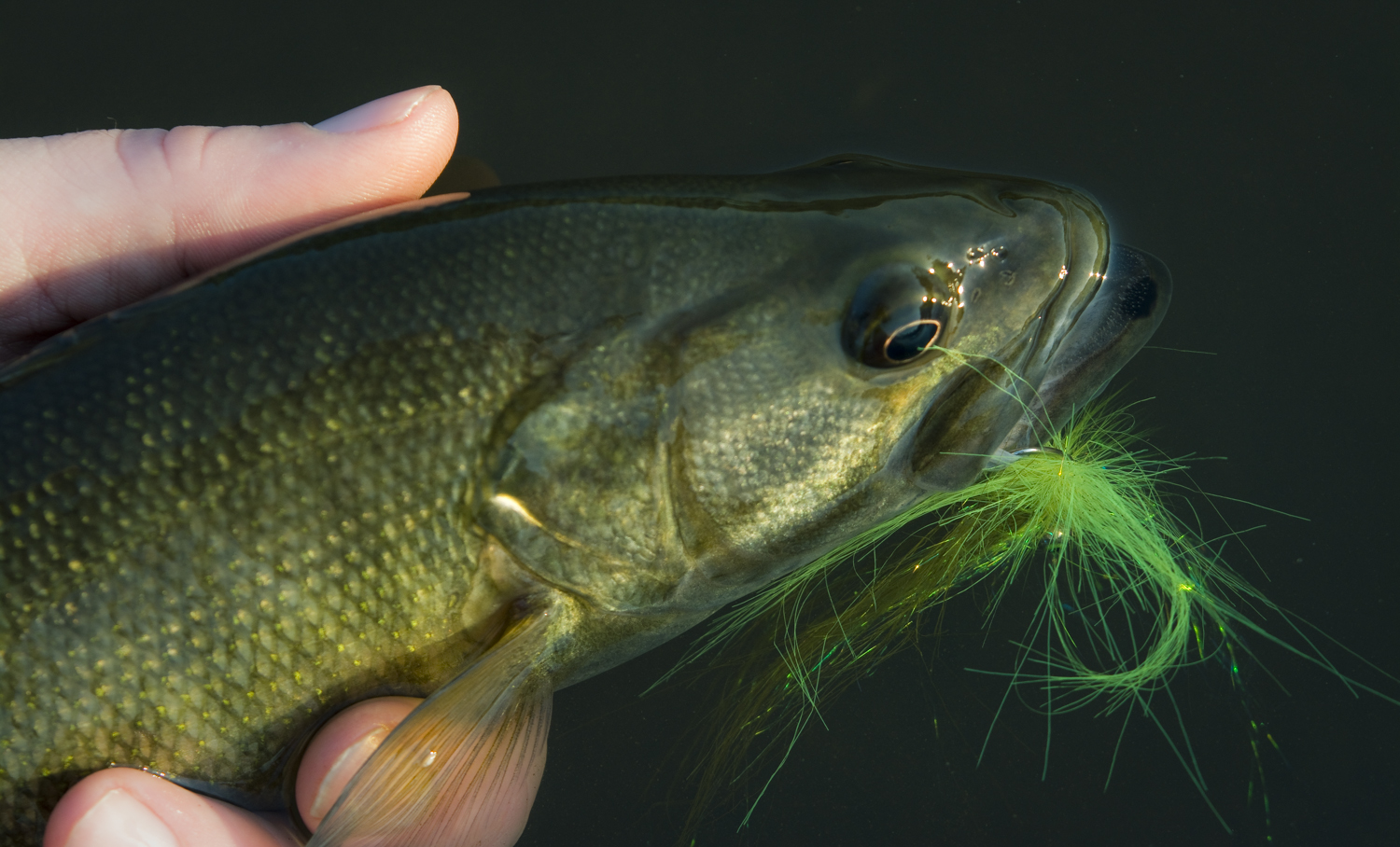
I smirk and shake my head as I grab and inspect my go-to fly. It’s a simple fly, but a deadly one. It is a variant of an old, tried and true pattern. The materials reside around a size #4 streamer hook and are dark olive in color. The free flowing, marabou tail has just a bit of flash added to aide in piquing the interest of the fish that I seek. The body is wound with hackled feathers, and within the body are several rubbery legs, protruding from each side just before the nickel conehead. Ah, that’s where the life of this fly exists. The long, webby schlappen and the speckled tentacles breathes this fly to life. It is not prey. It is a seeker, and find, it does. My quarry just can’t seem to resist it once it is swung through their space. Add a little dash of confidence and a pinch of mojo, and how could one go wrong?
As I look over the bridge I can see fish rising, splashing at the surface each time they take a mayfly that has perilously drifted into their feeding lanes. Topwater isn’t my game plan though. The river is running at the perfect flow, just a touch high, and that’s just how I like it. I know this is going to be a great evening. The “magic hour” is approaching as I cinch down on my loop knot and hang my fly on the hook keeper. I set my drag. I grab my sling pack and clip my hemostats to the shoulder strap. I check again to make sure that I have my fly box and the few tippet spools that I need.
For those that fish within its banks, this location is endearingly known as “The Promised Land.” It is a
Read More »Three Proven Options For Deep, Deep Nymphing
By Louis Cahill
IT’S TIME TO MAKE LIKE CAPTAIN NEMO AND GO 20,000 LEAGUES UNDER THE SEA.
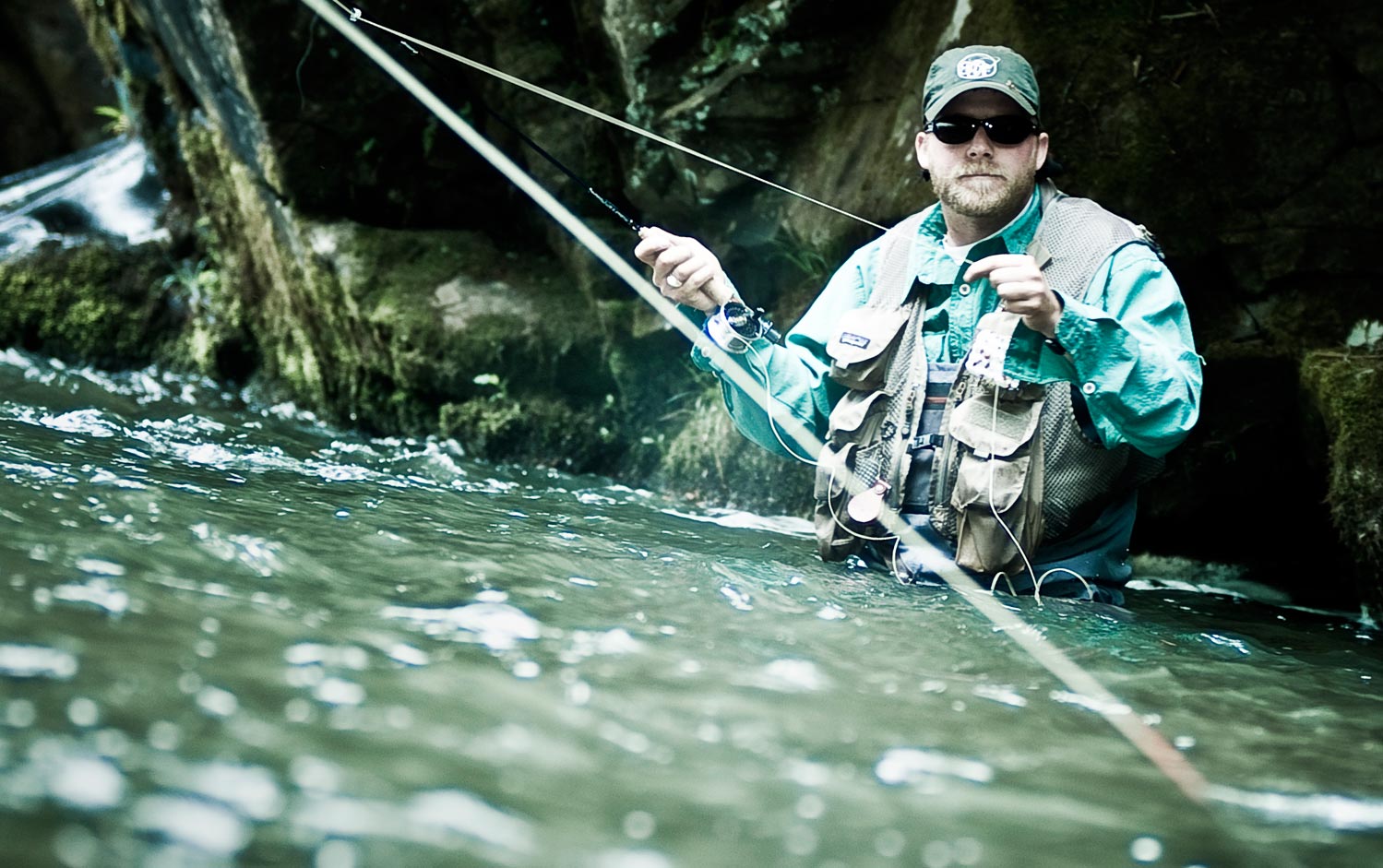
Sometimes the only trick to catching fish is getting the fly down to their level. When you’re nymphing and you’re not catching fish it’s always a good idea to add weight before changing flies. Often one split shot is the difference between fishing and casting.
I have fished with friends who were shocked at how much weight I use on my nymph rigs. They always end up following my lead and catching more fish. Especially in the heat of summer or cold of winter, weight is usually the answer. But just because you’re fishing heavy doesn’t mean you can’t fish smart.
Here are three rigging options that will help you make the most of the weight you use.
THE STRING OF PEARLS
The struggle in fishing deep is not sinking your flies. They are usually weighted and sink pretty quickly. It’s your leader that needs the weight. You can pile up a couple of #7 shot or a half dozen size BBs just above your tippet and it will drag that leader down but there’s a smarter way to use the weight.
I use hand-tied leaders and
Read More »Spey Casting Diagnostics Checklist
By Jeff Hickman
SPEY CASTING IS A PROCESS REQUIRING SEVERAL STEPS TO BE FULLY COMPLETED IN A SEQUENCE.
To effectively and consistently make good spey casts you need to focus on these steps, especially when learning. But even veteran and advanced two-handed casters also need to focus on the important steps. Everyone who has Spey fished has had a meltdown at some point where their cast completely falls apart. In my experience these meltdowns are triggered by one small element changing. That one element starts a chain reaction that wrecks the entire cast. The cause could be external such as a change in the wind direction or wading depth or the change could be internal — you got lazy on your anchor placement or started dipping your rod behind you.
Recently while presenting at the annual Sandy River Spey Clave in Oregon, I jokingly made a reference to a fictional Spey Casting Diagnostics Checklist that I printed on waterproof paper and kept in my wader pocket. I was simply trying to make people laugh as Spey casting presentations can be a bit on the dry side. After the presentation many people came up to me and asked if I could give them one of my checklists. Since I did not actually have one, I told them I could email a checklist over. But it occurred to me that this is something that people want, so here is my short checklist that you can print and bring with you to the river next time:
Read More »The CDC Blood Midge
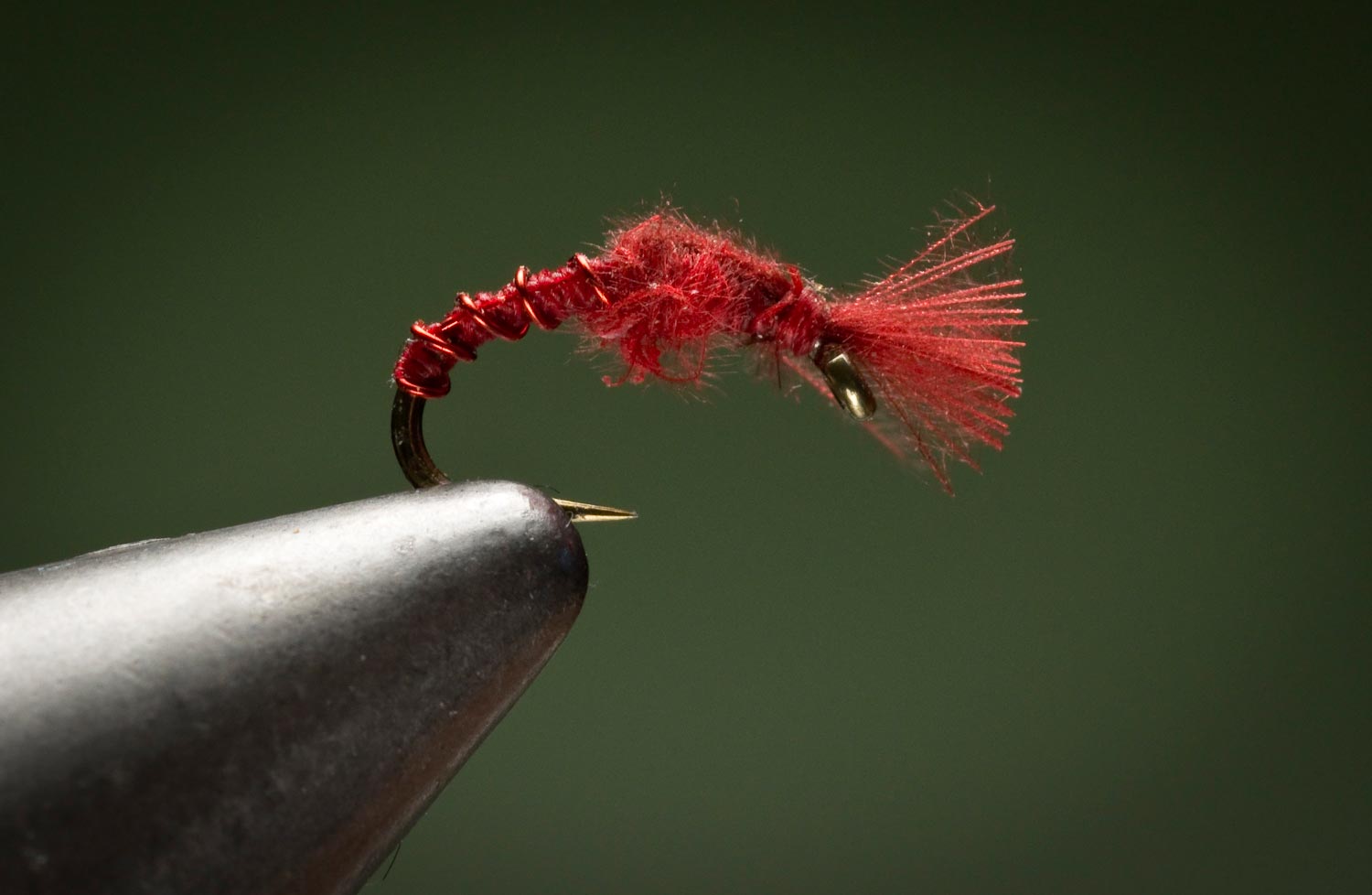
MIDGE PATTERNS CAN BE REMARKABLY EFFECTIVE FOR TROUT.
Depending on how you count them there could be over a thousand species of midge. That’s a lot of choices for the discerning trout. There are almost as many choices for the angler and a midge obsession can easily get out of hand.
I find that more times than not a Blood Midge will do the trick. I spent a morning on the Colorado River one April and caught twenty-four brown trout on a blood midge without moving my feet. Trout are naturally attracted to these red patterns even when they are not an exact match for the naturals. I’ve tied many different Blood Midge patterns but my current favorite is the CDC Blood Midge. The power of CDC can not be overestimated. This is a great pattern and very easy to tie.
Watch the video and learn hoe to tie The CDC Blood Midge.
Read More »