Bonefish The Hard Way, Deep In The Mangroves

Photo by Louis Cahill

Photo by Louis Cahill

When you are planning a DIY bonefish trip, it’s important to check the tides.

If you are wading or using kayaks to navigate the flats your mobility may be limited and timing the tides becomes crucial. Bonefish will be most accessible on low tides. Late in a falling tide when they are forced out of the mangroves to early rising tide when they work the edges. It’s important that these tides fall during the time of day when the light is good for catching fish.

That said, I did the exact opposite on a recent trip to Cat Island, Bahamas. It was a vacation, not a fishing trip. The distinction is important to my wife. It means I don’t fish all day, every day. You can read my recommendations on how to make that work, (HERE). On this particular week, low tide came very early in the morning and after dark. Most mornings were compromised by rain. It was a tough set up, but I was determined to catch some bonefish, so I tried something crazy. And it worked!

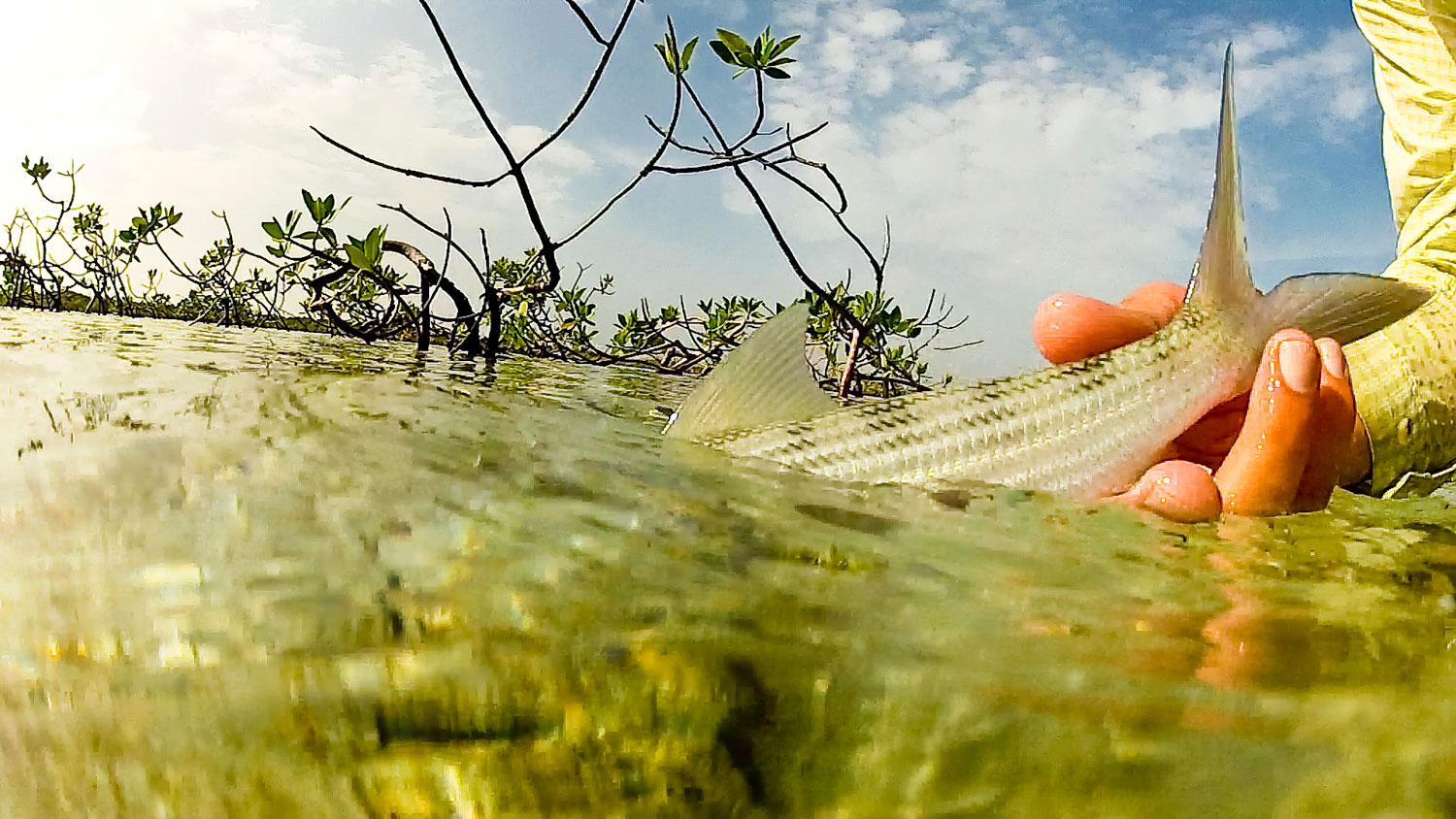
At high tide the bonefish were feeding deep in the mangroves. In some spots, a hundred yards or more from the edge of the flats. So, I went in after them. It wasn’t long before I was catching bonefish and learning a lot about this new way of fishing. It’s not ideal. In fact it’s damned hard to do, but surprisingly fun.

Here’s what I learned.

Stay in the mangroves

When you’re hip deep in mangroves those big open areas that occur in the groves look inviting. Don’t get lured in. The bottom is usually soft and you’ll be waist deep in mud before you know it. Stay on the firm soil where the mangroves grow. Look for the sandy places to wade.

It’s all about line control

Nothing else matters if your line is so woven in the mangroves that you can’t cast. Take forty feet or so off your reel and fold it carefully into loops that you can manage. Hold the loops high to keep them free. Keep a short leash. Five feet of fly line plus your leader out of the tip top. When you get a shot, it will be short. Don’t struggle with more line than you need.

Pick your shots

Strategy becomes really important. Don’t rush. When bonefish are hunting in the mangroves they work at a slower pace. They poke around and meander. Wait until you get a shot you can make. Look for openings in the brush where you can drop the fly. Try to land it when the fish is a couple of feet away. Even if he isn’t looking the sound will get his attention. It’s less about what’s ideal and more about what will work.

Don’t be afraid to cast over brush

You will not be making long retrieves. Bonefish working the mangroves will strike decisively. Inevitably, you will take shots where your fly line lays over the mangroves and your fly drops in a clear piece of water. Just be sure you have 3 or 4 feet of open water to move the fly. Don’t worry about what will happen when the fish eats you fly. You’re already screwed there.

Pick your battles

Landing a powerful bonefish in heavy mangroves seems impossible. It’s actually far more doable than you think. You just have to be open minded about the battle. Your instinct may be to over power the fish. That’s not going to happen. You have to fight smarter, not harder. Loosen your drag way up. When you set the hook the fish is going to head for the nearest cover, which in this case is inches away in every direction.

Let him go. The most important thing is that you have managed your stripping line and it is not tangled in the brush. Keep just enough pressure on the fish to keep him hooked as he weaves your line through mangroves into a hopeless mess. He will eventually tie himself up. Drop your fly rod, (Like I said, keep an open mind) and chase him, following the line until you find and land your fish. Once he has been released, cut off your fly, find your rod and reel the line back through the roots and retie. You will be amazed how well this whole thing works.

Admittedly, this is a crazy way to catch bonefish and I’d have never tried it if I wasn’t desparate for a fish. The thing is, it was really fun. Exhausting, but fun. It’s a whole different kind of hunt and a different set of challenges. That’s what I like about fly fishing. Overcoming the challenges. So, if bonefishing ever feels like its getting too easy, give this a try! You’ll feel challenged, I promise.

Come fish with us in the Bahamas!

Louis Cahill
Gink & Gasoline
www.ginkandgasoline.com
hookups@ginkandgasoline.com
 
Sign Up For Our Weekly Newsletter!
 

Low Flow Streamers

Photo by Bob Reece

By Bob Reece

Low Fall flows don’t mean an end to streamer fishing.

I blessed to live in the great state of Wyoming.  However, in my region of the country, flow levels on many of the watersheds that I fish are far below average this fall.   Even with these challenging conditions, fall streamer fishing is still an option!

This past weekend I headed out to one of my favorite pieces of water.  I was surprised to find the flows even lower than I expected.  I had originally planned on fishing large streamer patterns on a heavy shooting head line.  The water conditions forced me to call an audible and abandon that setup.

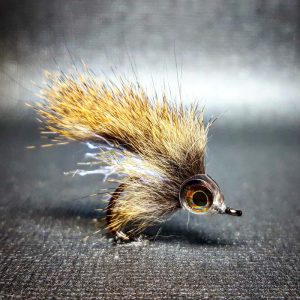
Knowing that there were large fish in this watershed, I simply altered my streamer setup and proceeded with a mini meat approach.   I rigged up a floating line with a twelve and a half foot leader tapered to 2x.  To the end of this I attached one of my Masked Bandits.  This is my smallest streamer pattern and has no weight added to the hook shank.   Due to this lack of weight it’s important to completely saturate the pattern prior to fishing it.  During this process, I also rub it into the mud and sediment along the water’s edge to give it that “part of the ecosystem scent”. 

The strength of this setup in shallow water conditions lies in the fact that, when stripped, the fly remains in the top four to six inches of the water column. 

The Masked Bandit

This significantly increases the distance of retrieve that can be used in low flow conditions compared to that of weighted lines and heavy streamers. 

On the piece of water that I fished this weekend, the only significant depth that remained was in spaced out buckets, bends and cut banks. The average length of these lies, runs from ten to fifteen feet.  With my light weight set up I was able to distance myself from these locations, making casts that ranged from thirty to fifty feet.  This spacing, along with my lengthy leader, was beneficial due to the low clear water and subsequently spooky fish.   

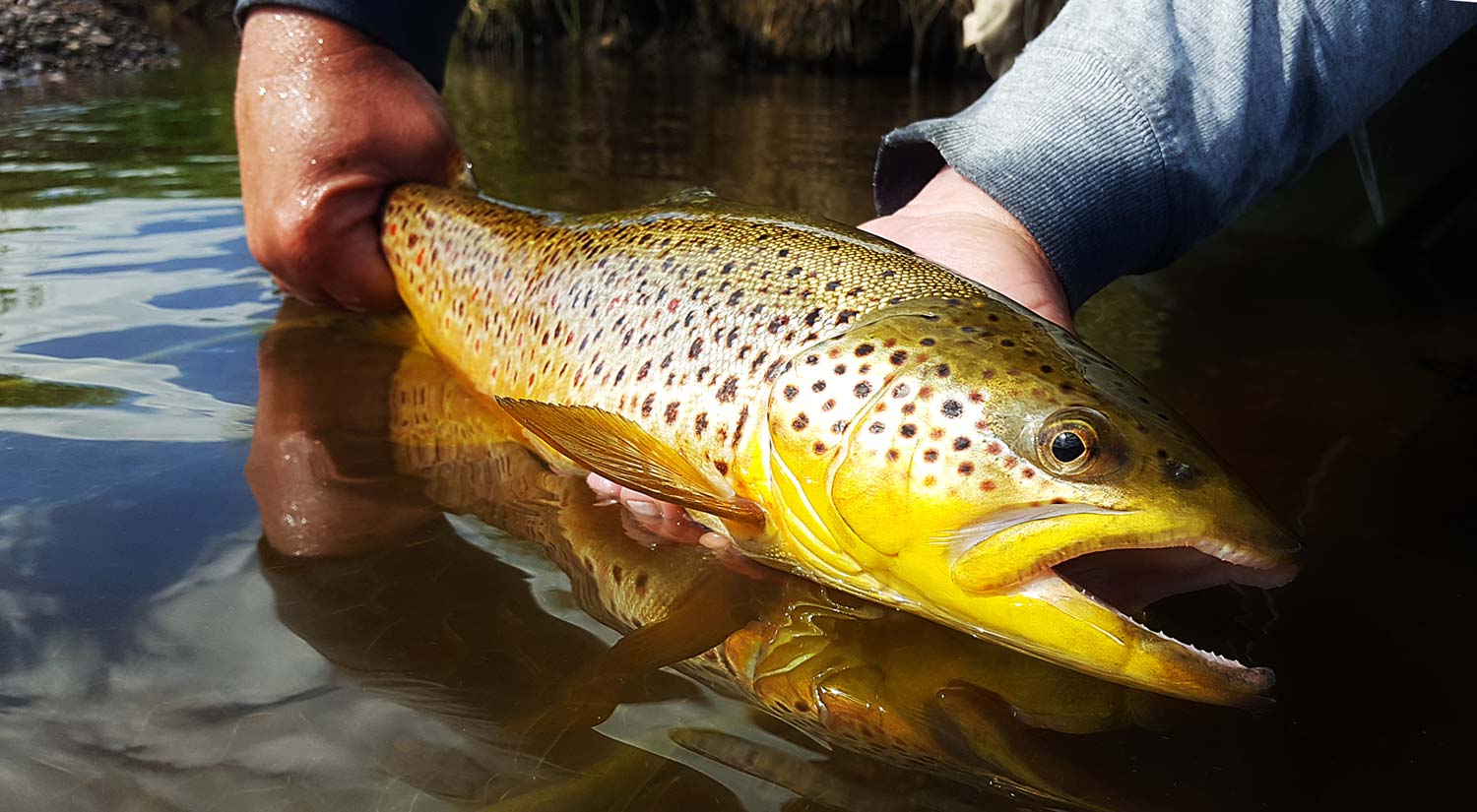
I did hook some fish in the deeper water of the bends and buckets.  However, the vast majority were caught running down my Masked Bandit in six to twelve inches of water after leaving the safety of those areas.  The visual of these takes is more than engaging due to the wakes that the fish make through the shallow water.  In tandem with this presentation, it is also important to impart movement to the fly as soon as it hits the water.  With the high level of visibility, this technique instantaneously puts a “living” target into the trout’s field of senses.  

Change is a constant in all aspects of our life.  No two seasons on the water are ever the same.  As a result it is imperative to have the skills needed to adapt to a plethora of conditions. As you move through your life long journey as a fly fisher, add this low flow streamer setup to your arsenal.  The payoffs can be large and the pleasure invaluable. 

To see Bob Reece fly tying videos, click on the link below:

http://www.thinairangler.com/tying-videos

To shop for Bob Reece’s current Umpqua Fly Patterns, click on the link below:

http://www.thinairangler.com/flyshop

To explore connect with Bob Reece as your personal Fly Coach, click on the link below:

http://www.thinairangler.com/fly-coach

Bob Reece
Gink & Gasoline
www.ginkandgasoline.com
hookups@ginkandgasoline.com
 
Sign Up For Our Weekly Newsletter!
 

Leave Your Cowboy Hat at Home

Photo by Louis Cahill

By Bob Reece

In Cheyenne, Wyoming we host Frontier Days, the world’s largest outdoor rodeo. 

That folks, is a great time and place to wear a cowboy hat.  On the other hand, spotting and stalking fish in glassy water is not.  Whether on still or moving water, the clothing that you wear can have an impact on the success of your fishing day.  This is especially true when stalking fishing in water with high levels of clarity.  In both my personal and guide days on the water I’ve seen this impact fish-to-net success. 

While I guide entirely on still waters, many of those days are spent spotting and stalking fish with clients.  During those experiences, two different people stand out in my mind.   One arrived in a fluorescent pink sweatshirt.  To start the day off, we fished indicators.  With the morning dry fly activity, we began to slowly move down the shoreline in search of rising fish.  As soon as I told her we would be trying this method, she removed the sweatshirt and wore a drab colored under shirt. 

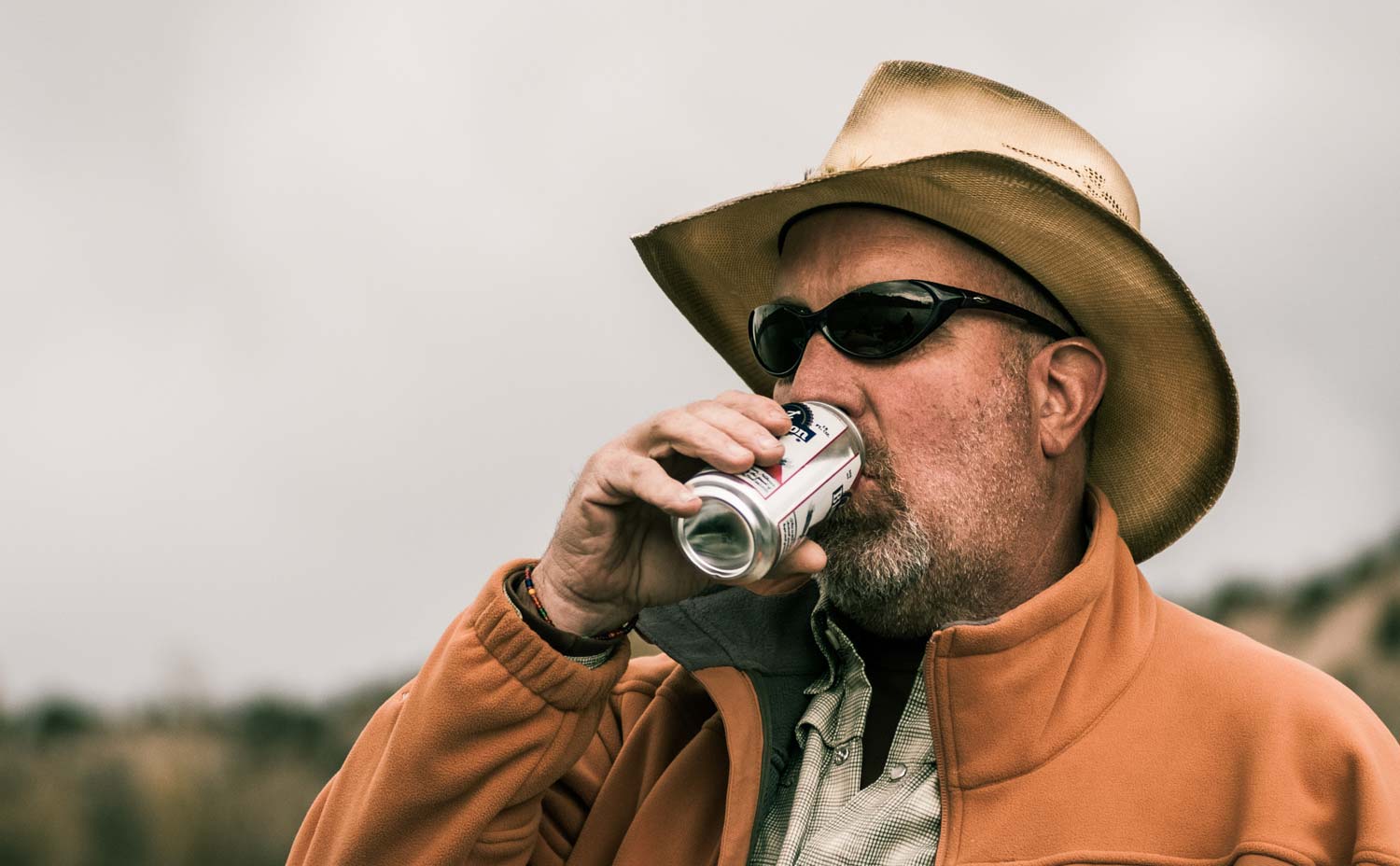
The other client wore a bright white cowboy hat. 

After briefly removing it, he placed it back on his head and refused to take it off for the remainder of the day.  Standing at a height of six feet and five inches, this proved to be a problem during our attempts to pull the sneak on various trout.  

Although a less polished angler, the sweatshirt client drastically out produced the owner of the hat.  Visible indicators to your movement in these situations are important and should be considered by fly fishers.  Trout frequently experience predation from above and any clear display of movement often sends them skittering for cover.  

Before heading out on your next angling adventure, consider where you’ll be fishing.  If I know I’ll be working a piece of water with significant bank structure, I dress to match the vegetation and landscape for that time of year.  Conversely, if there isn’t sufficient cover; I frequently wear mottled or camouflage blue in an attempt to blend with the sky scape.  Taking these steps gives you a better chance of increasing your fish-to-net success during your angling ventures.  

To see Bob Reece fly tying videos, click on the link below:

http://www.thinairangler.com/tying-videos

To shop for Bob Reece’s current Umpqua Fly Patterns, click on the link below:

http://www.thinairangler.com/flyshop

To explore connect with Bob Reece as your personal Fly Coach, click on the link below:

http://www.thinairangler.com/fly-coach

Bob Reece
Gink & Gasoline
www.ginkandgasoline.com
hookups@ginkandgasoline.com
 
Sign Up For Our Weekly Newsletter!
 

Stream Etiquette, Two Stories About How To Share The Water

Photo by Louis Cahill

Photo by Louis Cahill

Two experiences in two days left me with two very different feelings.

I spent a couple of days fishing in North Carolina a couple of weeks ago. A dear friend came in from Colorado and gave me the chance to share some of our eastern rivers. We had two close encounters with other anglers which proved to be lessons in stream etiquette. One a great example of how to share the water, the other not so much.

Stream etiquette is often complained about but seldom taught. What’s expected on the river changes from place to place but there are some simple ideas of respect and tolerance that are universal. If you’re not sure what’s cool and what’s not, I hope these two examples are helpful.

Encounter #1

My buddy and I arrive at a favorite piece of water with about an hour and a half of light left. The run is down in a gorge and we inspect it from above before hiking down. There’s no guarantee that it hasn’t been recently fished but no one is there now, so we head to the water. We are both fishing tenkara rods and my buddy is ready to fish but I want to make a fly change before fishing this new spot. I line up across from the first pool and start rigging while my buddy heads to the next pool upstream. Just then another angler rounds the corner and calls out. He has hiked up from down stream and was out of sight when we inspected the water.

To my mind, this is his water. As I see it, any angler already in the water has the right of way. I immediately apologize. I tell him we didn’t see him and will move on. He asks where we’re from, we talk a bit and he asks about the tenkara rod. I insist that he try it. After the briefest possible introduction, he catches his first fish on tenkara. Again, I insist that we will leave and he insists that we stay. Everyone catches fish and we part friends.

Encounter #2

The next day my friend and I arrive at a different stream. We park in a pull out on the forest service road and follow a trail about 200 yards to the creek. There is a beautiful bend with an obvious honey hole. My buddy, who is still a fairly new angler, makes a couple of casts and catches a fish but he has questions about his presentation. In order for me to give a little instruction we move about 40 feet downstream, below the run. This way he can practice a few drifts without spoiling the run.

In the middle of our lesson another angler appears, having come down the same trail as us. He asks how we are doing and I tell him we just arrived and haven’t really started fishing yet. He doesn’t reply and feeling sure he will move on, I get back to my lesson. Having spotted the camera around my neck, the the fellow interjects, “My granddaughter is a photographer.”

I will admit that this innocent comment set my teeth to grinding. No one who makes their living with a camera wants to hear about your granddaughter’s photography unless she’s Annie Leibovitz. I respond politely though and return to my lesson. Then the old fellow says, “Well, I’ll just be here fishing,” and when we turn to look he is beating a froth on the water of the honey hole. We rig up our rods and head back to the truck to find new water, a little steam rolling from my ears.

Stream etiquette isn’t rocket science. It really just boils down to showing some respect and taking the time to think about what the other guy is doing. I don’t think the angler in the second story meant to chase us off. I think he was just clueless and self involved. Had he taken the time to ask what our plan was, we could have shared the water just fine. Instead, he saw a choice piece of water and he took it. Never mind that there were two anglers 40 feet away who were clearly working towards the hole.

The best way I could think to handle it was to move on. I guess I could have given the old dude a piece of my mind. But what would that accomplish? He needs to be taught better but I’m not in the habit of teaching unless I’m asked. That’s just condescending and doesn’t usually take. So we left.

To my mind, the proper thing for him to do would be to ask where we planned to fish and then find some water that accommodated us all as best as possible. That’s what I’d have done anyway. Tell us what stream etiquette issues you run into and how you handle them.

Louis Cahill
Gink & Gasoline
www.ginkandgasoline.com
hookups@ginkandgasoline.com
 
Sign Up For Our Weekly Newsletter!
 

Bonefish Fly Lines: Beyond The Cast

DSCF1834

By Louis Cahill

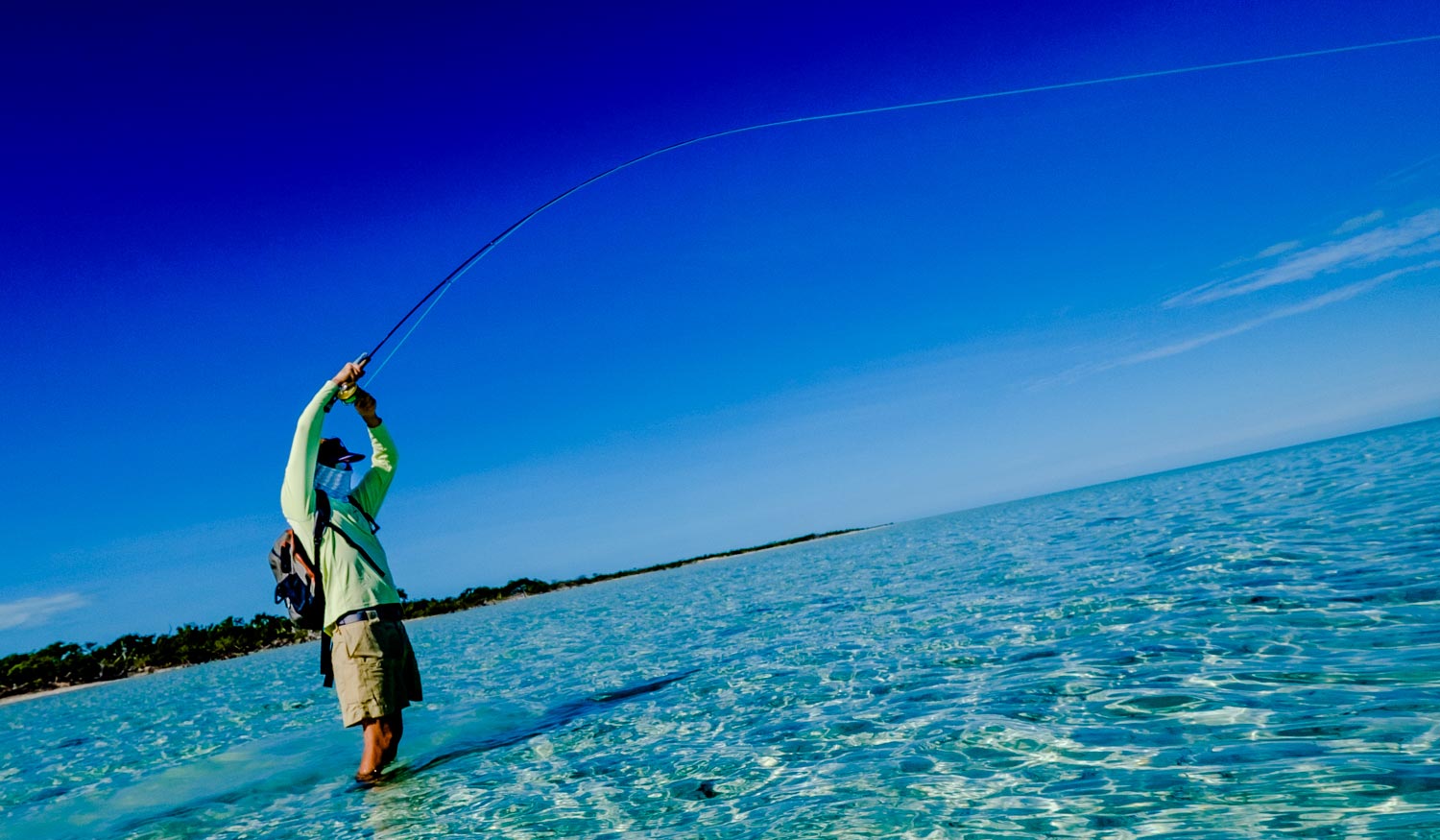
Does having the right fly line mean catching more fish? Absolutely.

Having the right fly line for the species you’re targeting and the conditions you’re fishing is key for a successful day of fishing.  You can buy a line from almost any manufacturer bearing the name ‘Bonefish’ but that doesn’t mean it will be the best line for the day you are on the water. It may do a great job of loading your fast action saltwater fly rod, but not catch you a lot of fish.

When shopping for a fly line, we focus almost completely on how the line casts. Of course it’s important to have a good cast but often it’s too late when we stop to think about how the line we chose fishes, and there are some big differences. This, of course, applies to all types of fishing but is especially pertinent to bonefishing, so I’m using that as an example.

It’s very common these days to see anglers over-line their fly rods.

Putting a 9-weight line on an 8-weight rod absolutely makes it easier to load, but that ease of casting may come at a price. I fished recently with an angler who had paired his Sage One 8-weight with a 9-weight RIO Outbound Short. He liked it because it felt like his Winston trout rod. The only problem was, he couldn’t catch a fish.

There are three things wrong with this setup. First, the head diameter on that line is huge! It casts a huge shadow and makes a thunderous racket every time it lands on the water. It spooked every fish on the flat. Secondly, the short head meant that he had to strip the line in completely every time he recast. There’s no time for that in bonefishing. You need a line you can pick up and recast quickly. Lastly, by slowing the action of his rod down to that of a trout rod, my friend had lost all of the benefits of having a fast action rod.

I’ve seen this problem go the other way, too. I tarpon fished with a buddy a while back who had chosen a RIO Technical Tarpon line. A great line, with a long, fine taper belly, for calm days when fish are spooky. Not so great for fishing the ocean side in five foot swells and howling wind. He was frustrated and ended up fishing my rod.

Like everything in fly fishing, chasing the right line and rod setup boils down to experience. It’s smart to try out several setups before you buy and it’s crucial that you understand the fish you are pursuing and the conditions you’ll be fishing in. Base your choice on knowledge, not marketing.

Start by choosing a rod you can cast. If you find yourself going way out of the norm on line choose to make your rod cartable, it’s not the rod for you. I carry two rods. One technical setup for calm days and one that’s a wind tamer. If you are only carrying one rod, a general purpose, saltwater line is probably a better choice than a specialty line, unless you are dead certain what the conditions will be. In my opinion, you are best off avoiding shooting head style lines. These lines promise distance, but deliver less casting control. Casting distance comes from practice, not purchase.

I hope this helps you be a more effective angler. If you have a rod and line setup you love, or hate, please share it with us in the comments section.

Louis Cahill
Gink & Gasoline
www.ginkandgasoline.com
hookups@ginkandgasoline.com
 https://www.ginkandgasoline.com/hosted-trips/
Sign Up For Our Weekly Newsletter!