
Hemostat Hacks For Fly-Fisherman
By Justin Pickett
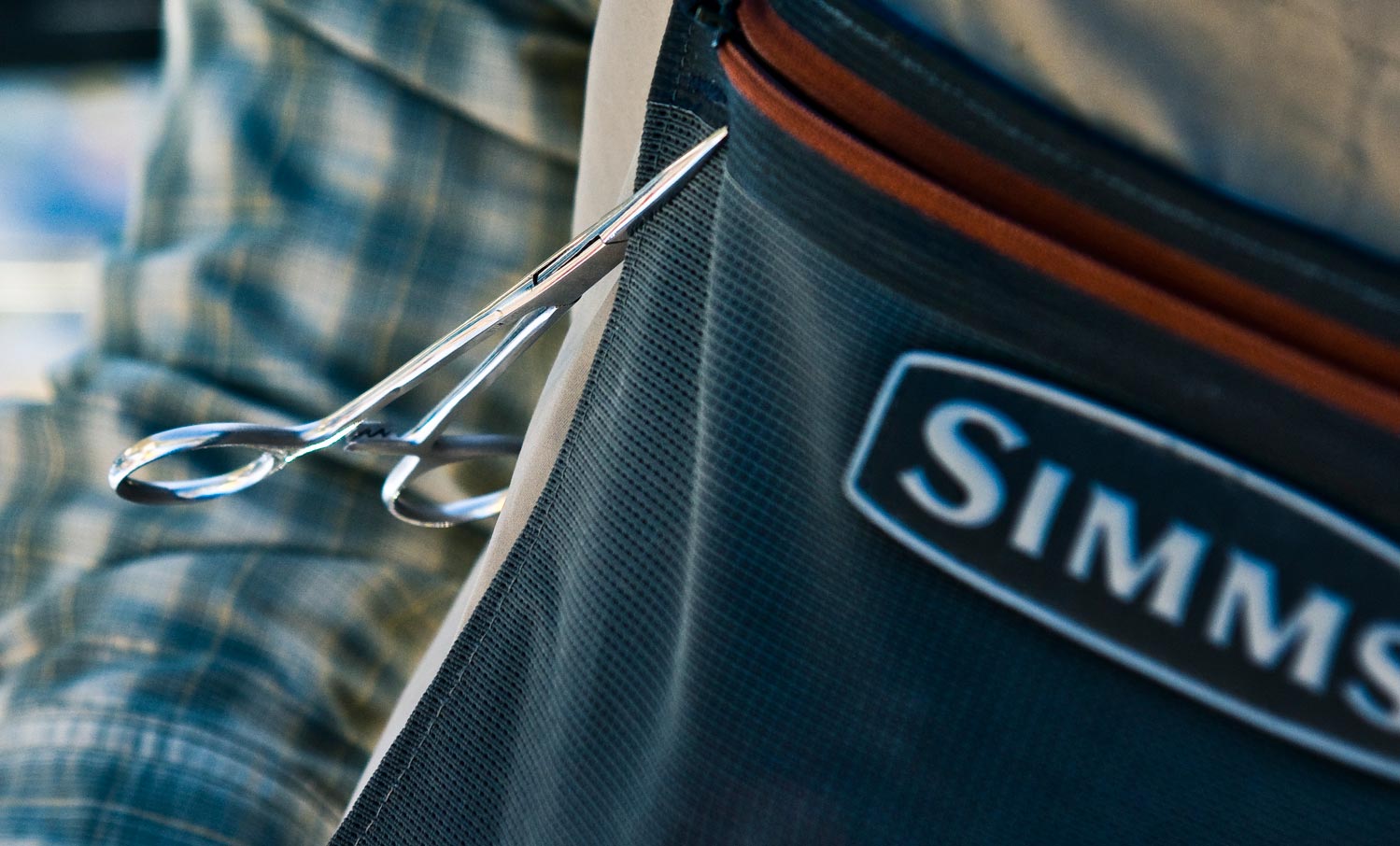
A pair of hemostats can save a fly fisherman serious time on the water!
If I were asked what one tool, or accessory, I absolutely have to have with me on the water, I would have to say it is, without a doubt, my trusty pair of hemostats.
Not my sunglasses, nippers, or my net, but hemostats. All of my tools are useful, but I can’t stand it when I find out that I’ve left the house without my hemos. When I do, I immediately start thinking of where the nearest drugstore might be, hoping that they’ll have a backup pair on the shelf.
In my opinion, they are an invaluable tool to a fly angler. I use them for so many things when I’m on the water. Of course the most common use is to aid in removing the fly from a fish’s mouth. However, one of the main reasons why I love my hemostats so much is that they help me tie the knots I use the most while I’m on the water, the triple surgeons, and the clinch. These easy tricks save me tons of time re-tying my rig while on the water, and are extremely helpful during the winter months when dexterity is hindered by the frigid temps.
Having a hard time holding on to that size #22 zebra midge? Using hemostats makes tying on small flies easy as pie. If I break my entire rig off on a snag, it doesn’t take me ten minutes to get re-tied. It keeps my flies in the water longer, which increases my chances of catching fish.
It’s no secret folks. You have to have your flies in the water in order to catch fish. So if these tips and tricks help save you a few minutes re-rigging, that’s easily gaining you at least a few more casts and presentations each time!
Here’s a video that demonstrates how to tie the Triple Surgeons and Clinch knots using a pair of hemostats.
Read More »Fly Fishing Tips for Stocked Trout
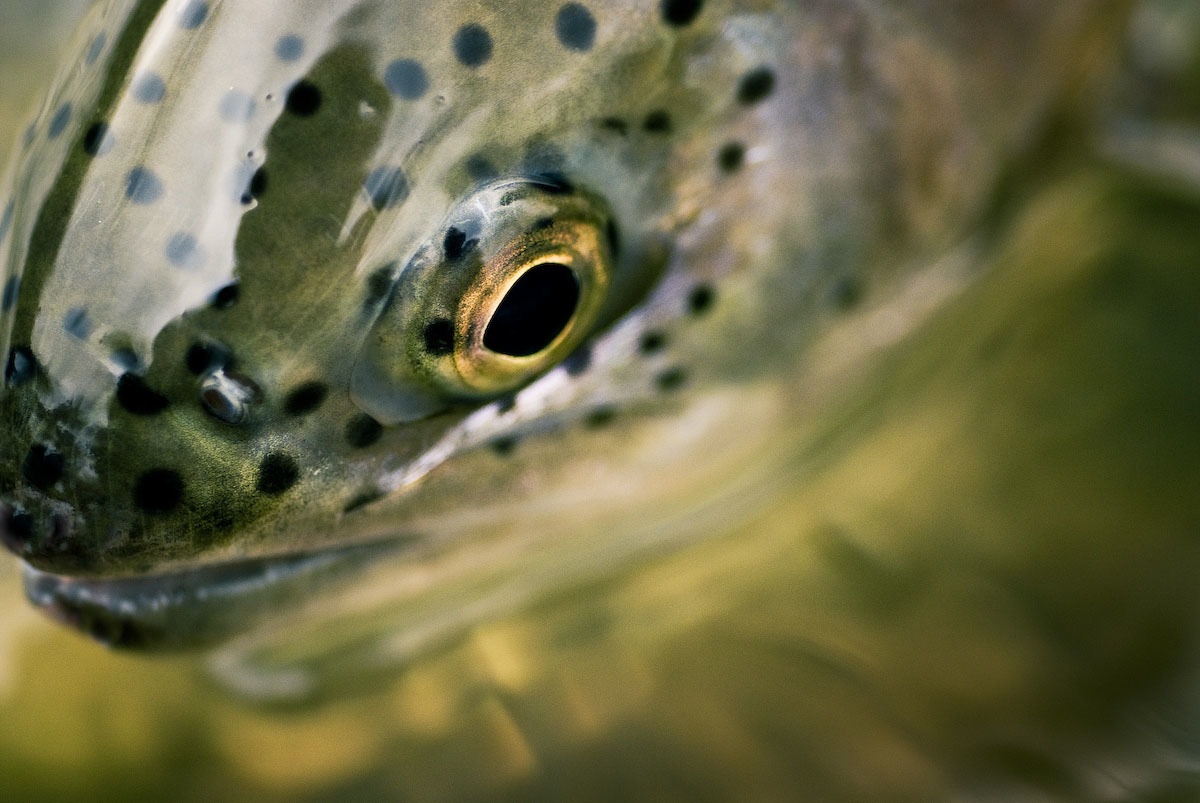
My first memory of bringing a trout to hand with a fly rod took place back in the spring of 1990, on a seasonal trout stream, located 45 minutes north of Atlanta, GA. It was a far cry from a trophy trout at 10-inches, but that freshly stocked rainbow trout, touched my eleven year old fishing soul to the core. I’ll never forget the excitement I felt watching that stocker chase down and eat my olive woolly bugger at my feet. It felt really good for a change, not relying on that plastic blue can of worms to get the job done. From that day forward, I never looked back, and I’ve moved on to become a respectable trout guide in my area and I’ve fly fished for trout all over the world.
A lot of fly fisherman would laugh at me if I brought that fishing memory up in conversation. Many wouldn’t be able to look past the fact that I was fly fishing for stocked trout that weren’t naturally born in a stream or river. If you happen to be reading this post and you’re one of those fly anglers that I’m referring to, just remember that we aren’t all blessed to have easy access to wild trout. For many of us, wild trout populations are so low (because of poor conservation and land management), it’s not even feasible for us to strategically target them, and if it wasn’t for stocked trout, we’d have no trout at all. If you’re fortunate to be blessed with wild trout populations where you live, don’t forget how that special that is, and please don’t make fun or belittle others who take pride in catching stocked trout. You just make yourself look ungrateful and worthy of having wild trout.
Before I get into my fly fishing tips for stocked trout, I’d like to take a moment to mention a couple of reasons I feel stocked fisheries can be good for the sport. For one, they’re a great place to introduce kids and newcomers to fly fishing for trout. Timed correctly, an angler with zero experience can have great success catching trout. Secondly, put and take trout waters provide great locations for anglers who like to harvest trout, to do so without having to illegally poach on special regulation or wild trout fisheries.
Read More »Sacred Fishing Holes
By Alice Tesar
It might have been the coyotes that kept me awake the night prior.
More likely it was thoughts about the section of river we planned to visit that day. I’d heard a lot about the spot and debated it’s worthiness. I had heard that those who wander this stretch of river alone rarely find success, that it was imperative to partner fish, where one person spots the fish from a vantage point and the other casts from the hole below or further down river from the bank. My fishing partner had fished here many times and I was forced to swear secrecy.
“Don’t tell anyone about this spot you wouldn’t mind running into out there,” he told me.
The cool wet morning was filled with anticipation — I sipped my coffee and watched the sunlight peeking over land making everything shimmer. After loading up the truck, my fishing partner and I drove down the dirt road to the river. Pulling off at a nondescript field, we rigged up, took a swig of Fireball (hair of the dog), and hopped the fence startling the nearby grazing cattle. Off to a remote bend in the river we went.
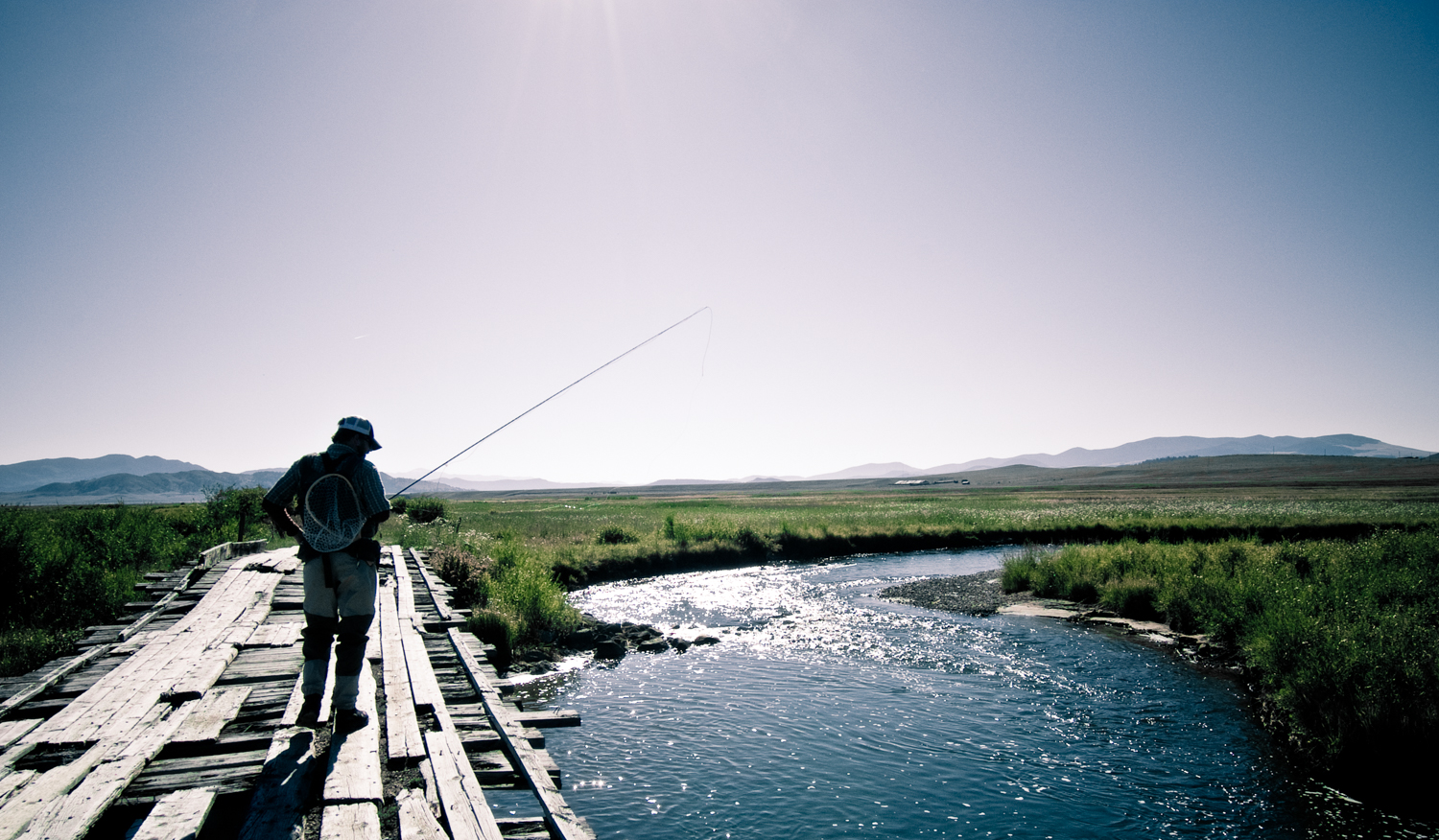
We stumbled through the lumpy pasture to the river, where a drop created by a large fallen cottonwood made a deep pool in the otherwise shallow river. Standing far back on the shore, careful not to scare off any feeding trout in the pool, I cast in.
My indicator drifted along to a tangle of sticks that had accumulated where the river shallowed. Releasing the snagged fly proved difficult without disturbing the water and I feared I’d ruined our chances of catching anything in this hole. A few more casts and my bright orange indicator sunk fast and hard.
Read More »Why You Should Invest In Your Casting
By Justin Pickett
I have never met anyone who could pick up a five-weight fly rod and make consistent, accurate fifty-foot casts without ever having prior experience with fly casting.
I used to play a ton of golf. So much so that at one point, much earlier in my youth, I could hold my own on any given course and typically shoot Par. Nothing to really brag on, but I wasn’t bad. During my time around golf courses, I never met anyone who could walk up to the 1st tee on any given course and drive the golf ball 300yds down the middle of the fairway without ever having swung a golf club before. It takes a considerable amount of learning and practice to develop the skills needed to be able to hit a golf ball with accuracy, control, and distance. And then there are the many other skills, such as putting, chipping, and bunker shots, requiring different strokes, techniques, and timing that must be practiced in order to put an entire round of eighteen holes together. For the vast majority, it’s a large investment in one’s time and effort to become a decent golfer and get the most enjoyment out of your day on the course. On a side note, I have also yet to meet anyone who enjoys looking for golf balls in the woods all day.
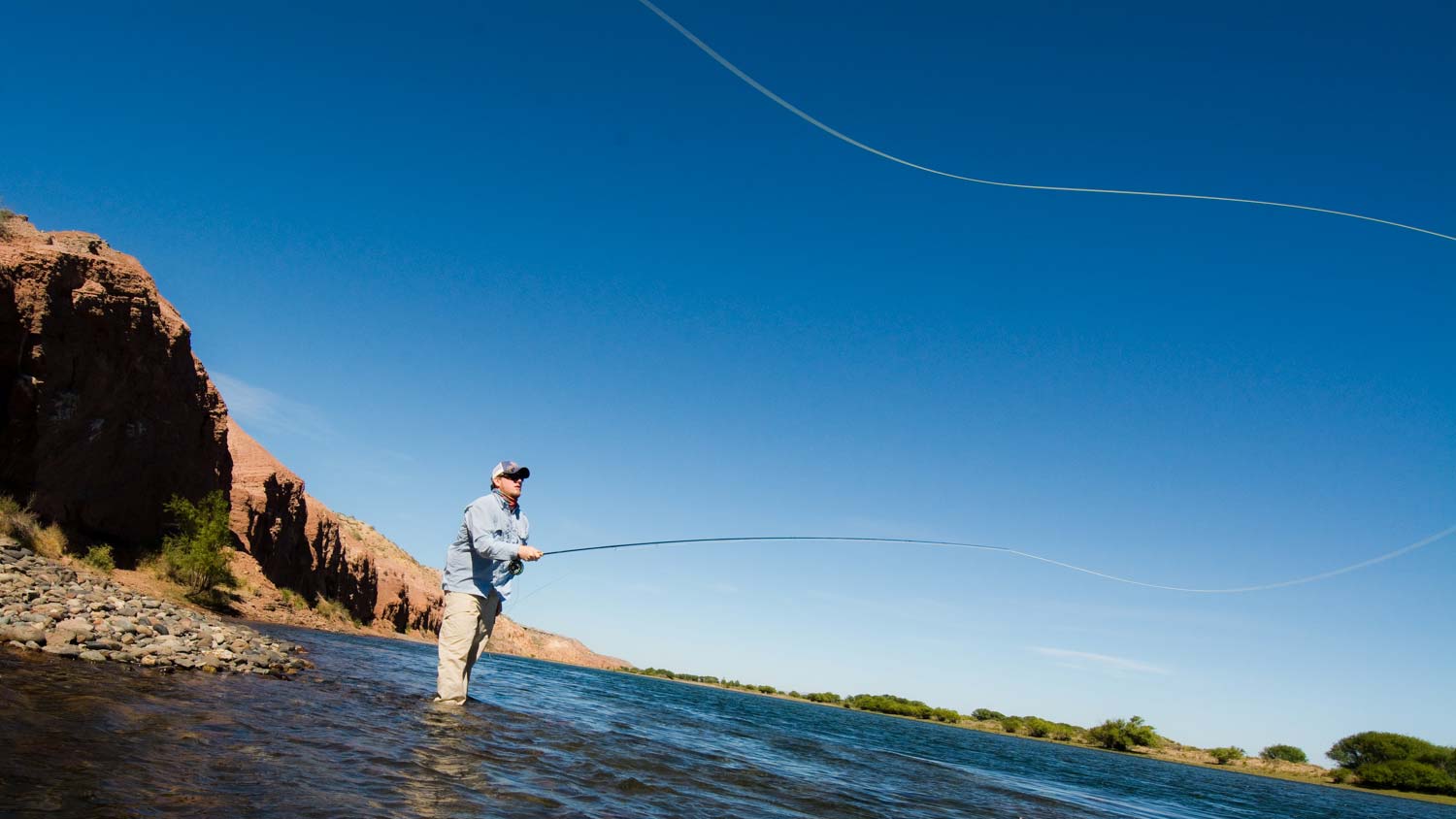
I have been fly fishing since the young age of ten. In my thirty-something years, I have fished way more than I ever golfed, and I have to say that I have never met anyone who could pick up a five-weight fly rod and make consistent, accurate fifty-foot casts without having prior experience with fly casting or fly fishing. Just like with golf, it takes a considerable amount of learning and practice to develop the skills needed to be able to consistently complete an accurate fly cast of any distance. Throw in roll casts, water hauls, the double haul, and reach casts and it’s starting to get a little overwhelming for the beginning angler. We haven’t even begun to talk about all the other little pieces, such as mending, hookset, fish fighting, etc. It’s a lot of info and a lot of factors that have to all come together fluidly for the angler to successfully bring fish to hand on a consistent basis, which adds to the enjoyment of our time spent on the water.
I wanted to place a focus on casting, though, because it is the first skill we need to learn in order to place a fly effectively in or on the water, and it is
Read More »Not Today
“WHEN I SAY I LOVE TO FISH, THAT’S THE KIND OF LOVE I’M TALKING ABOUT. THE KIND OF LOVE THAT COMES WITH PAIN AND STRUGGLE AND DEATH. THE KIND OF LOVE YOU EVENTUALLY WISH YOU HAD NEVER KNOWN.”
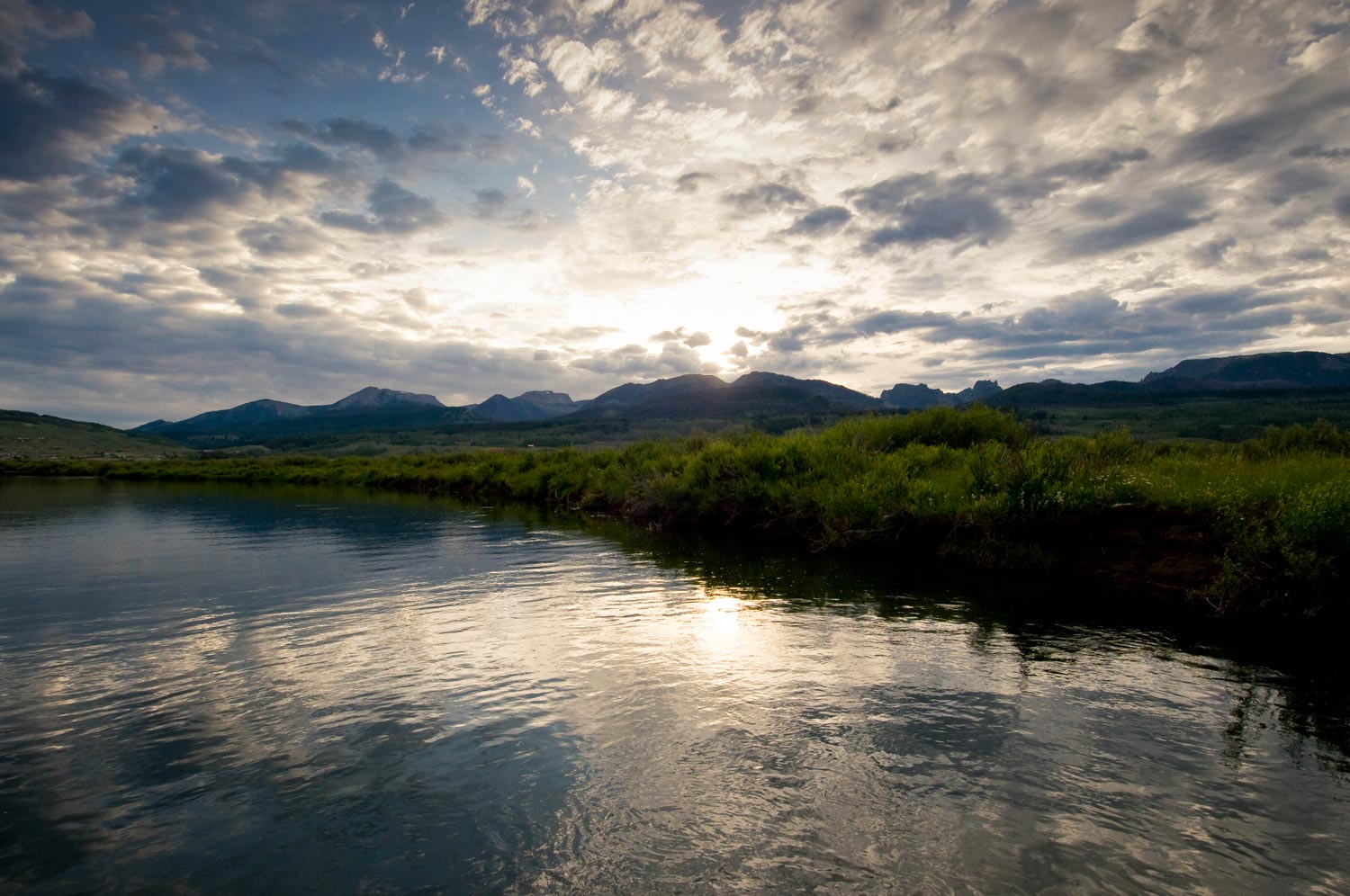
The night sky is just opening its eyes. The first bright pin pricks in the cold blue firmament slowly twinkling to life. Like shining snowflakes falling on a glass dome they multiply, forming a blanket of heavenly light over the Wind Range.
There is no moon. The only real light is coming from the last sliver of white along the horizon. The sage brush fades from dusty green to black and the ribbon of pale dirt road that stretches as far as I can see, both ahead and behind, takes on an eerie glow. I feel the first bite of night air and hear the rustlings of nature’s second shift punching the clock. It’s a beautiful Wyoming twilight.
I’m twenty miles, if I have my bearings, from the nearest paved road, a few more to the nearest house. Thirty miles from the nearest cell tower or tandem truck moaning down the highway. Fifty miles from the nearest town. This is what I love, the kind of thing I live for, work for, go way out of my way for. To be alone under the night sky with a trout stream near by and the promise of another day. A perfect ending, to any other day.
Read More »The World’s Best Blood Knot
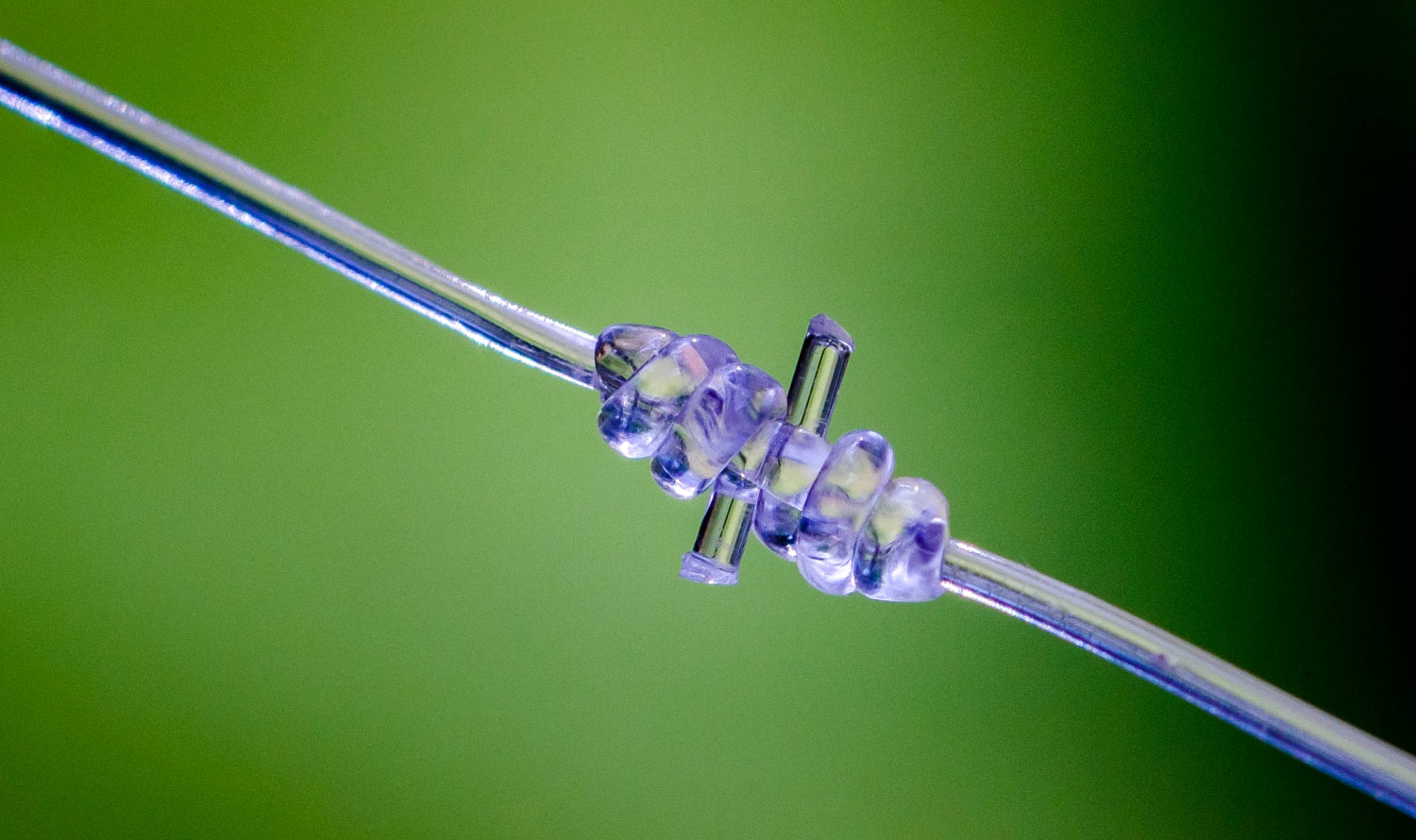
Chris Fave ties a lot of blood knots. About half a million a year.
You’d expect him to have a trick or two up his sleeve. I saw this video he put on Facebook and immediately asked him if I could share it. Chris uses a toothpick to tie a blood knot perfectly in seconds. It’s a pretty sweet trick.
Chris’s hand tied leaders are available in fly shops or on his site. He has tapers for every ovation. Check them out HERE. Thanks for sharing Chris!
WATCH THIS VIDEO AND LEARN TO TIE THE WORLD’S BEST BLOOD KNOT!
Read More »Fly Fishing Tips for Stocked Trout
My first memory of bringing a trout to hand with a fly rod took place back in the spring of 1990, on a seasonal trout stream, located 45 minutes north of Atlanta, GA. It was a far cry from a trophy trout at 10-inches, but that freshly stocked rainbow trout, touched my eleven year old fishing soul to the core. I’ll never forget the excitement I felt watching that stocker chase down and eat my olive woolly bugger at my feet. It felt really good for a change, not relying on that plastic blue can of worms to get the job done. From that day forward, I never looked back, and I’ve moved on to become a respectable trout guide in my area and I’ve fly fished for trout all over the world.
Read More »Save Your Night Eyes With The Right Headlamp
By Justin Pickett
Having the right headlamp makes a world of difference.
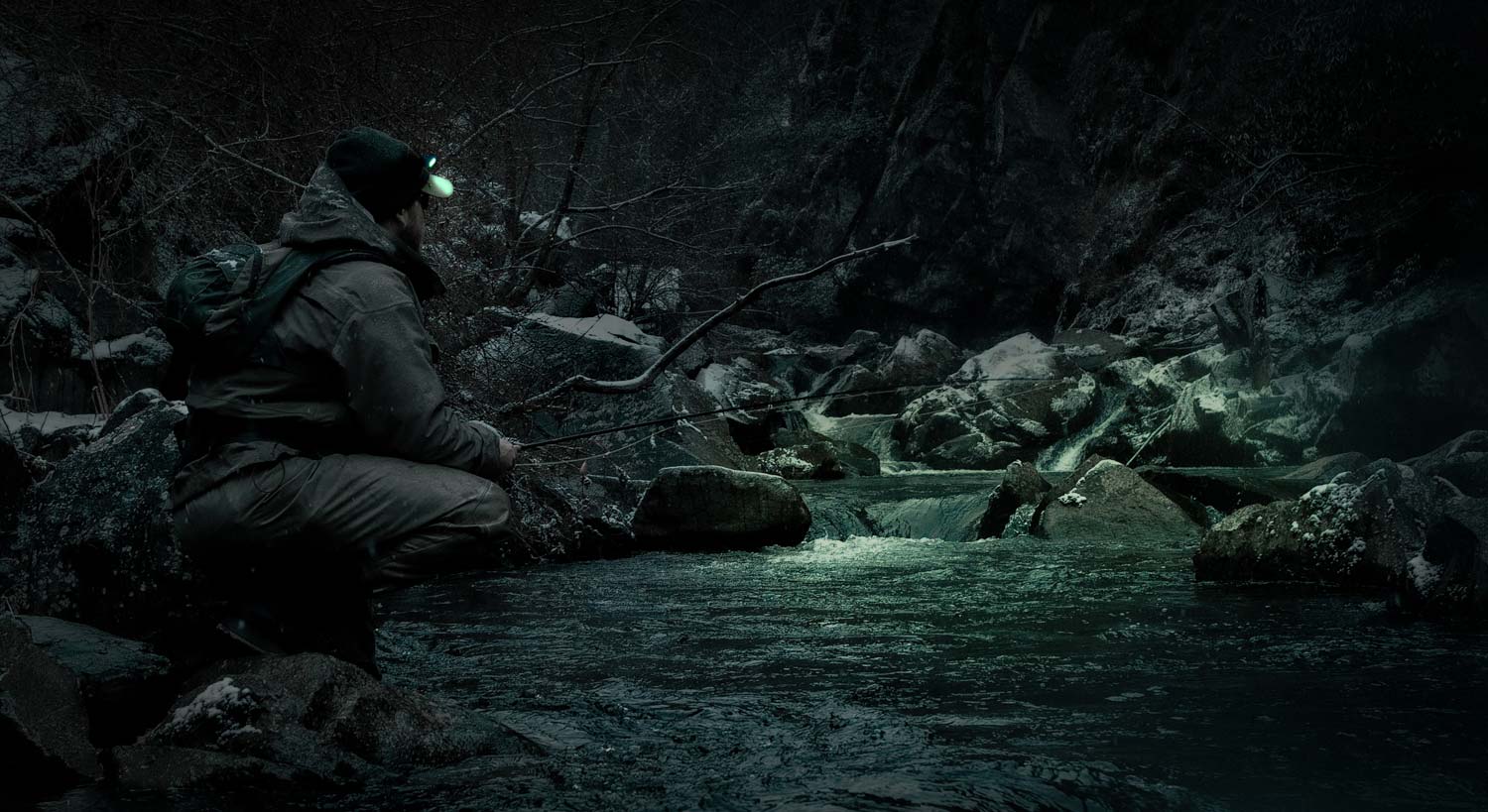
Whether you are floating the river at night or find yourself tying knots in the twilight hours of a spinner fall, one piece of gear that you’re likely to have with you is a headlamp. And if you don’t, you should. During the twilight and moonlight hours, a headlamp can be an invaluable tool to make tasks, such as knot tying, navigating, and casting, much easier. Having said that, the most important piece of gear is still your eyes.
Even on the darkest nights, there is usually enough ambient light to find your way around. The human eye is an amazing thing and is designed to react to lighting conditions and optimize your vision. Your eyes are vulnerable, though. At night, just one quick flash of a flashlight or headlamp in the eyes can take you out of the game.
High intensity light (especially white light) bleaches the chemical held inside the rods of our eyes (rhodopsin), which allows us to see at night. Once hit with high intensity light, it can take several minutes for this chemical to regenerate allowing you to see and function, and up to a half hour for your night vision to completely recover.
On the river, losing your vision for only a few seconds can be disastrous, several minutes is not an option. Treading around water after dark can be a risky endeavor. Falling off of a boat or losing your footing and taking a dive into any body of water can certainly put an end to your trip, or worse.
To avoid ruining your night eyes, and crippling your vision when you need it most, make sure to
Read More »Why Are We Out There?
By Kyle Wilkinson
It’s a question as old as this great sport. Why do we fly fish?
Why do we make the sacrifices—whether it be time away from family, perhaps less money in your bank account, the risk of possible injury (I could go on)—just to catch a fish and let it go?
Now, I don’t typically do this sort of thing but I had a guide trip the other day that I haven’t been able to stop thinking about since. And trust me, I’m not trying to sound all preachy or holier-than-thou in the paragraphs to come. Like I said, this day has simply remained on my mind.
I had a 3-person guide trip with a good, repeat customer of mine. Our destination was the Dream Stream section of the South Platte and the group consisted of a father/son duo, and the father’s friend. As seems to be a resounding theme in Denver, the son lives here and his dad/his dad’s friend were in visiting from the Midwest.
We met up early and hit the river. Both dad/son are good anglers, however the dad’s friend had never touched a fly rod. (which happens to be one of my favorite customers to be dealt). I got him up to speed and within the first 5 minutes we were staring at a chunky 18” rainbow wiggling in the net. This was his first fish ever on a fly rod and we were all excited! As the day went on, he brought many more fish to the net, however
Read More »4 Flats Accessories From Simms That I Can’t Live Without.
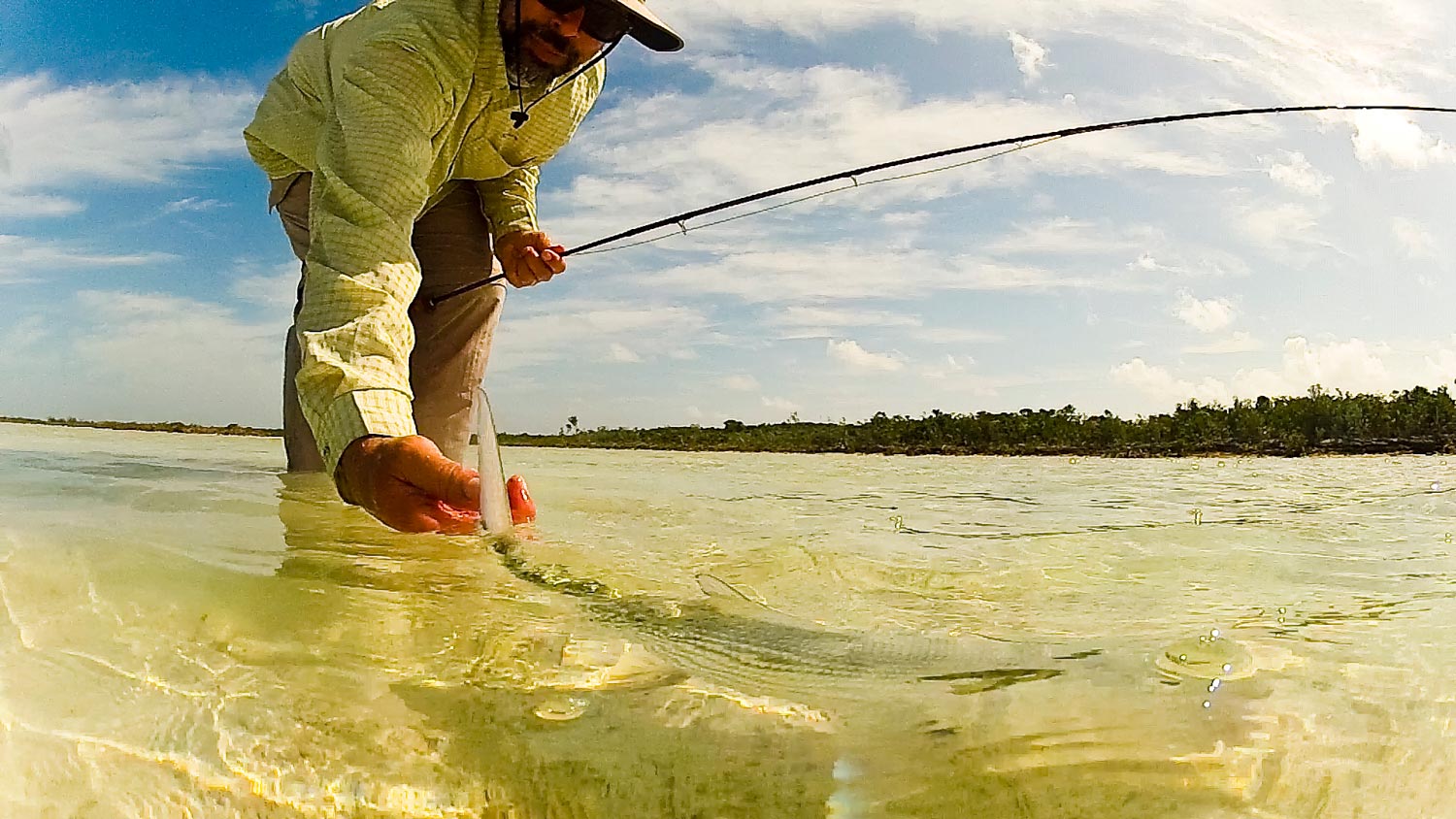
When you set off on a trip to an exotic location for a little flats fishing it’s important to have the gear you need. Islands known for great saltwater fly fishing aren’t usually known for having great fly shops. It’s often a major ordeal just to come up with some sun screen or batteries. It’s smart to take what you need. Being stuck on an island for a week without essential gear really sucks. Here are four pieces of inexpensive flats gear that I love and count on, that all happen to come from Simms. Simms Sunsleeves $29.95 I am dead serious about sun protection. When I am fishing in the tropics keeping safe in the sun is job #1. I was skeptical about the Sunsleeves at first but after a couple of my buddies started wearing them and raving about them I decided to give them a try. They’ve become one of my favorite pieces of gear. With Sunsleeves you get the protection of long sleeves while you enjoy the comfort and range of motion you get from a short sleeve shirt. Plus, you can go without them in the mornings and evenings and put them on when the sun is at its worst. It’s great! And from a dollars and cents point of view it’s cheaper than sleeves. Long sleeve flats shirts cost $10 more than short sleeves, so the Sunsleeves pay for themselves. (GET ‘EM HERE) Simms sun gloves $24.95 Sun gloves are absolutely essential for me. Being able to keep the sun off of my hands when the sun gets high is not a luxury, it’s mandatory. I’ve used several styles of sun gloves and these are my favorites. Cool and well fitted with open palms these gloves have abrasion-resistant pads where you grip the rod and … Continue reading
Read More »