
Fixing A Twisted Fly Line In Seconds
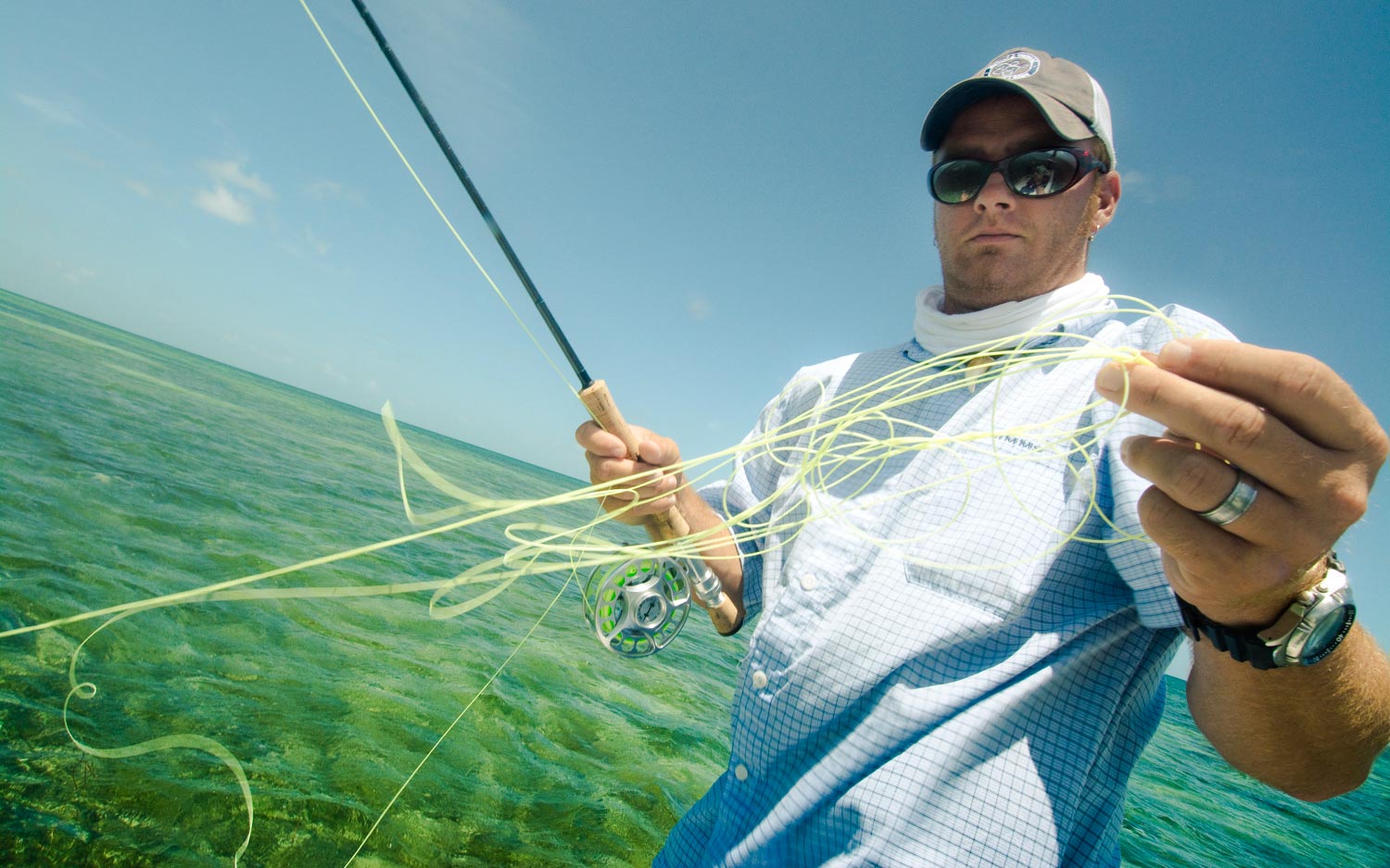
Every fly angler has experienced a wicked twist in their fly line causing it to tangle and knot at their feet.
It may be caused by a flawed casting stroke, a big fly twisting in the wind or it may be God punishing you for masturbating. Regardless of why it occurs, it’s frustrating at the least and heartbreaking at the worst. There’s nothing worse than taking a shot at the fish of a lifetime, only to have your cast cut short by a knot in your guides.
Fortunately, a twisted fly line is easy to fix. You don’t have to lose valuable fishing time, while stripping the entire line off the reel and towing it behind the boat or letting it hang in the current. You can fix that twist in seconds.
In this video, our good friend Zack Dalton from RIO Products shows you how.
Read More »Swing For The Fence On Every Cast
By Louis Cahill
After four days swinging flies in dirty water without a pull it’s easy to lose faith.
I faced some pretty tough conditions on a recent trip to the Dean River in British Columbia. Heavy rain turned the river into a raging mess of mud and floating trees. It was not a pretty sight, but I turned it around.
High water tactics can be laborious. Fishing long heavy sink tips and weighted flies makes casting a chore and swinging your fly a downright pain in the ass. You have to put the fly where the fish are and in high water they are hunkered down on structure or hugging the bank. Getting down to submerged structure in fast water means weight and lots of it. That means lots of hanging up on the rocks, especially at the end of your swing.
After four days with no action and hanging your fly up on every cast it’s easy to start avoiding the water that you know is going to give you trouble. Little things like picking up your fly just before it reaches the end of its swing or not giving that sink tip quite as long to sink makes robotic fishing easier on your nerves. The problem is, it doesn’t catch fish.
The worst is when, after days of toil without a fish, you snag that rock and immediately throw your line over it only to see it turn and bolt downstream without your fly in its mouth. We’ve all done it. I learned long ago that big fish often eat like rocks. I always hold pressure on a rock for a few seconds at least. It’s paid off many times and it paid off again in BC.
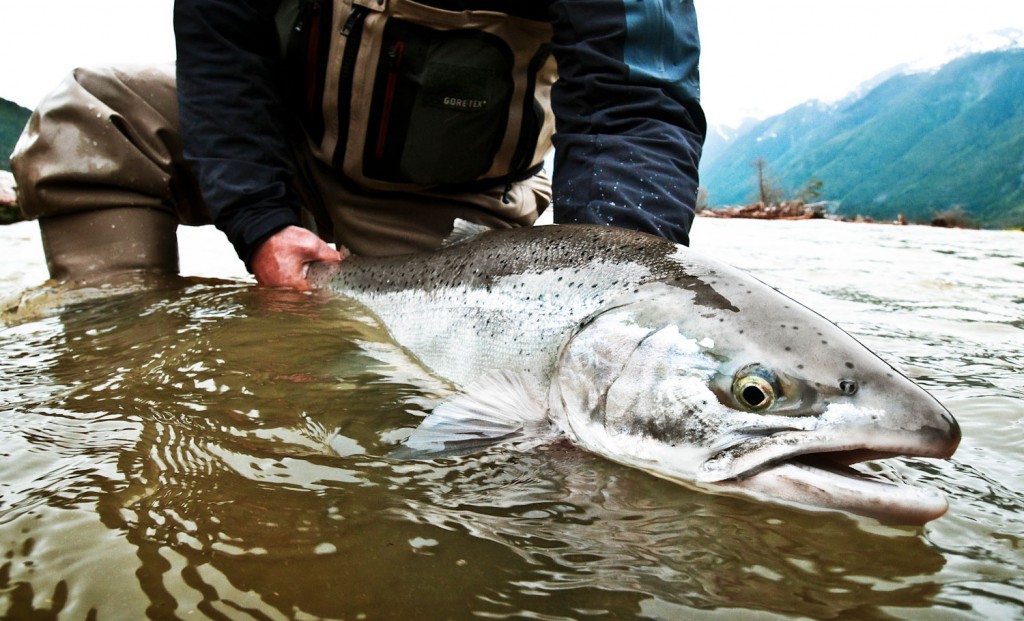
After four days of fishing and clearing ten thousand snags, when my fly stopped I held on, maybe ten seconds, before a beautiful bright steelhead gave me a sign of life. Ten seconds feels like an eternity at the end of four days but it’s like Lou Reed says, “You need a bus load of faith to get by.”
Kent calls it fishing with confidence. Faith or confidence, either way a good fisherman always believes in his heart that, this is the cast. Eventually he’s right. My numbers were
Read More »The Tequeely Streamer
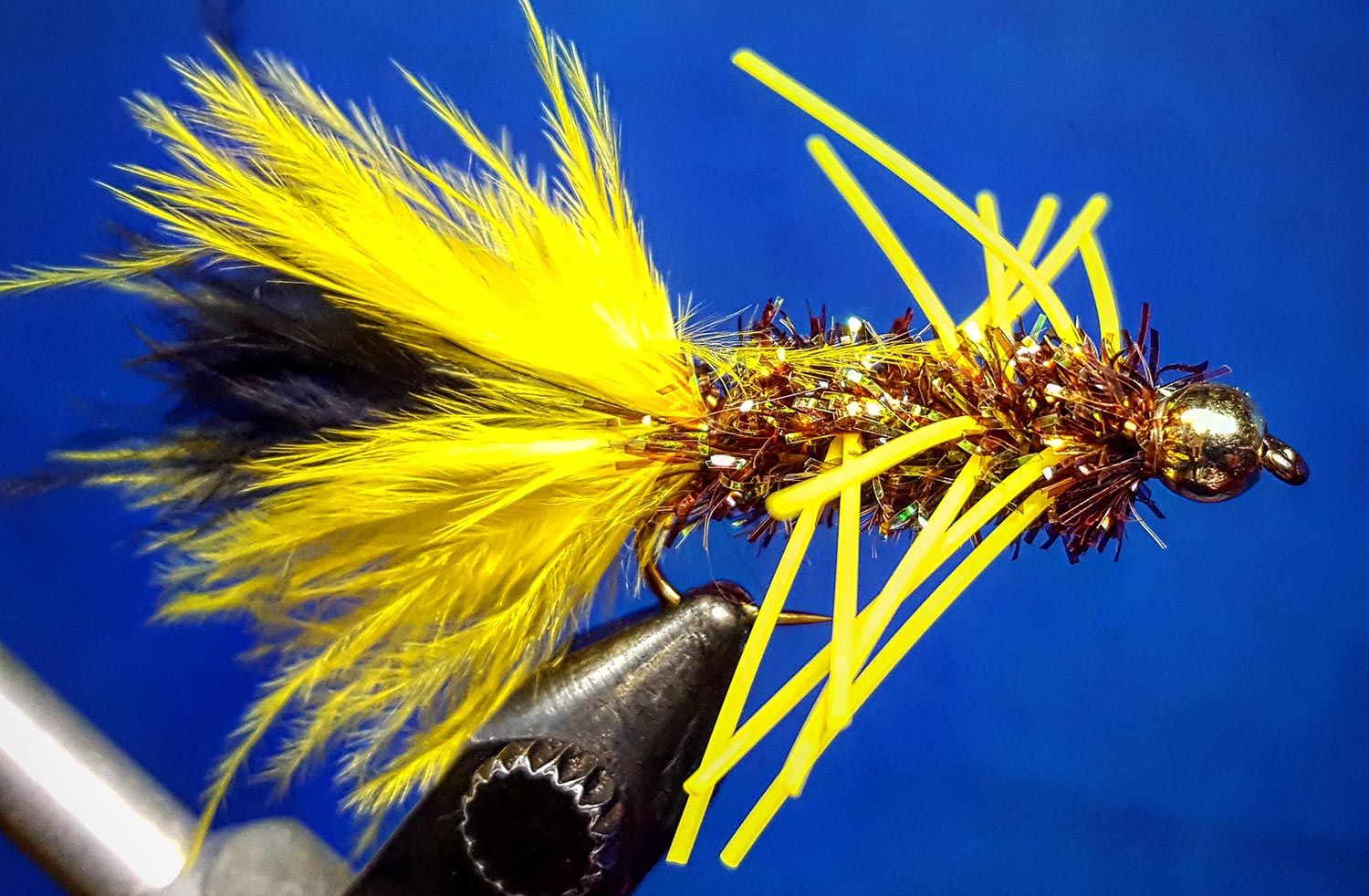
By Bob Reece Some patterns simply brighten up a fly box with their aesthetics. Hopefully, if they’re in your box, their visual appeal is matched by their effectiveness. This tandem of traits is true for the Tequeely streamer. After extensive research I was unable to find the creator of this pattern. I’ve heard stories of it originating in Montana as an imitation of newly hatched baby birds that would frequently fall from their streamside nests. Regardless of whose mind it came from or its original purpose, the fact remains that it works. On the freestone waters of Colorado and Wyoming that I fish, May through early July typically produces higher water that carries some color. Flash reigns supreme in these conditions. Yellow marabou and rubber legs along with a reflective body, turns this streamer into an underwater beacon. The gold bead only adds to this and provides the needed weight to punch this pattern through the surface film. While its imitational intentions remain clouded, the results that this streamer produces do not. Its combination of traits trigger a response in dominant fish, particularly large browns. However, its uses since inception have reached numerous species of fish. If you’re in search of a flashy producer for you streamer arsenal, add this bling filled bug to your box. Watch the video and learn to tie the Tequeely: To see more tying videos by Bob Reece, click the link below: http://www.thinairangler.com/tying-videos To connect with Bob Reece as your personal Fly Coach, click the link below: http://www.thinairangler.com/fly-coach Bob Reece Gink & Gasoline www.ginkandgasoline.com hookups@ginkandgasoline.com Sign Up For Our Weekly Newsletter!
Read More »Dicky’s Tarpon Silencer
WHO’S AFRAID OF THE BIG BAD FLY?
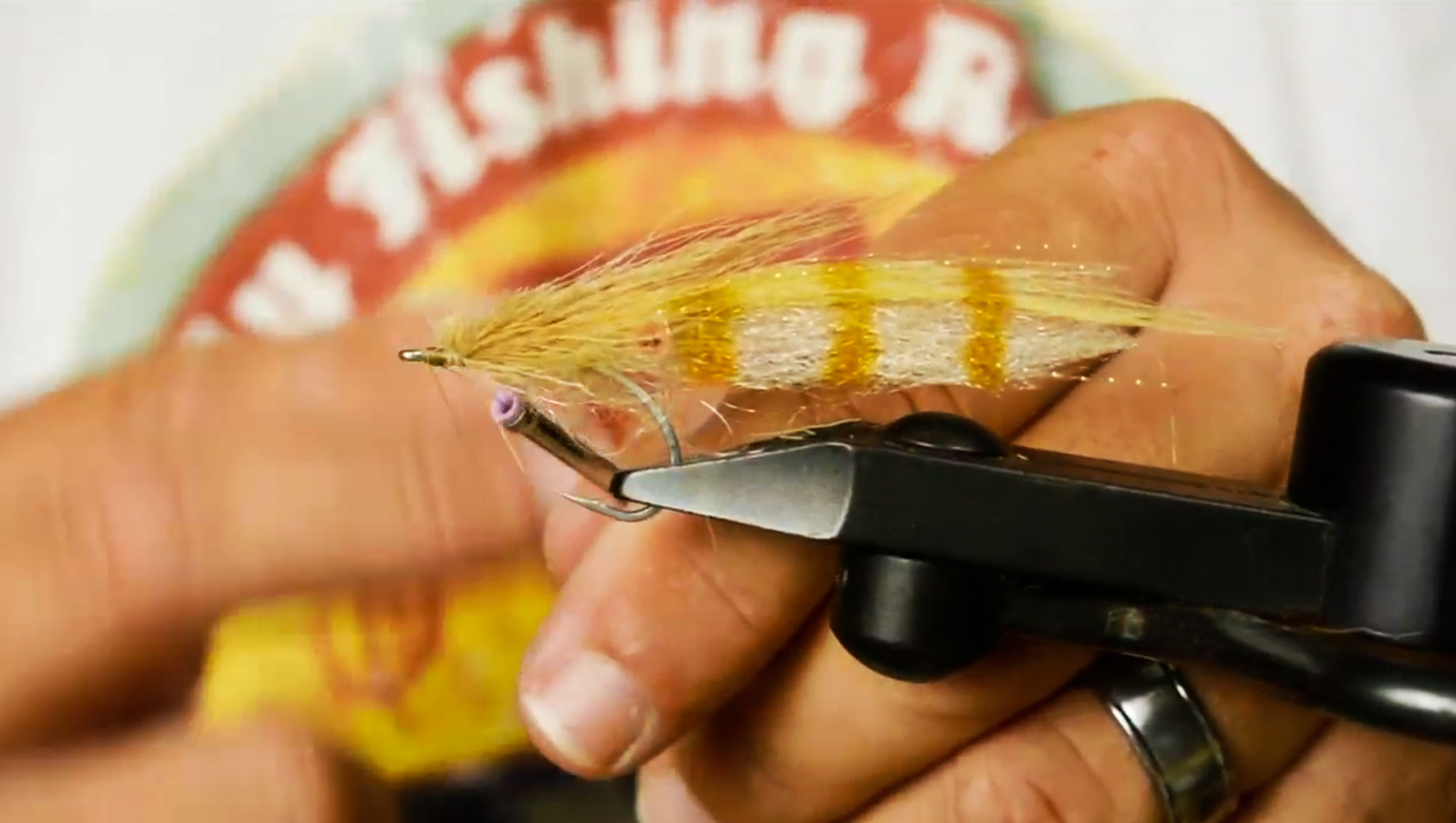
On dead calm days in the Florida Keys the silver king can be afraid of his on shadow. I’ve seen plenty of big tarpon vanish at the sound of the fly landing on the water. As a flats guide, so has Joel Dickey. That’s why he came up with this fly that the calls the Tarpon Silencer. The Silencer lands so softly that even the most skittish tarpon keep their cool and it’s shrimpy profile is irresistible.
If you’re planning a trip to the Keys, or any tarpon fishing destination, this is a fly you want in your box.
Watch the video and learn to tie Dicky’s Tarpon Silencer.
Read More »Fight The Good Fight, in Saltwater or Fresh

MY FRIEND KIRK DEETER SAYS FRESHWATER AND SALTWATER FLY FISHING ARE, “TWO ENTIRELY DIFFERENT SPORTS PLAYED WITH THE SAME EQUIPMENT.”
In essence that is true and Kirk’s point is doubly true. Anyone who’s tried both can attest to that, but some of that equipment looks more similar than it is.
Reels, lines, leaders, hooks, tying materials are all different but there is likely no piece of equipment more different than the rod. There are a lot of differences between freshwater and saltwater rods and in several ways their use is quite different. This became readily apparent while giving a good friend, who guides for trout, a quick lesson before is first bonefish trip. He’s a great fisherman and caster but I could see from the look on his face that the eight weight I was lending him was strikingly unfamiliar.
We’ve talked a good bit about saltwater casting, the double haul and line speed but for those who are making the switch from trout to saltwater fly fishing, I’d like to offer some pointers on the techniques that I feel are the least intuitive. The fighting of fish.
When it comes to the fight, the trout rod and the saltwater rod are truly two different tools and they require different techniques. The divergence of those techniques starts with a fundamental element, the fish. It is the difference in the fish that dictates both the design of the rod and the tactics employed in its use.
Read More »Winter Steelhead on the Fly: Video
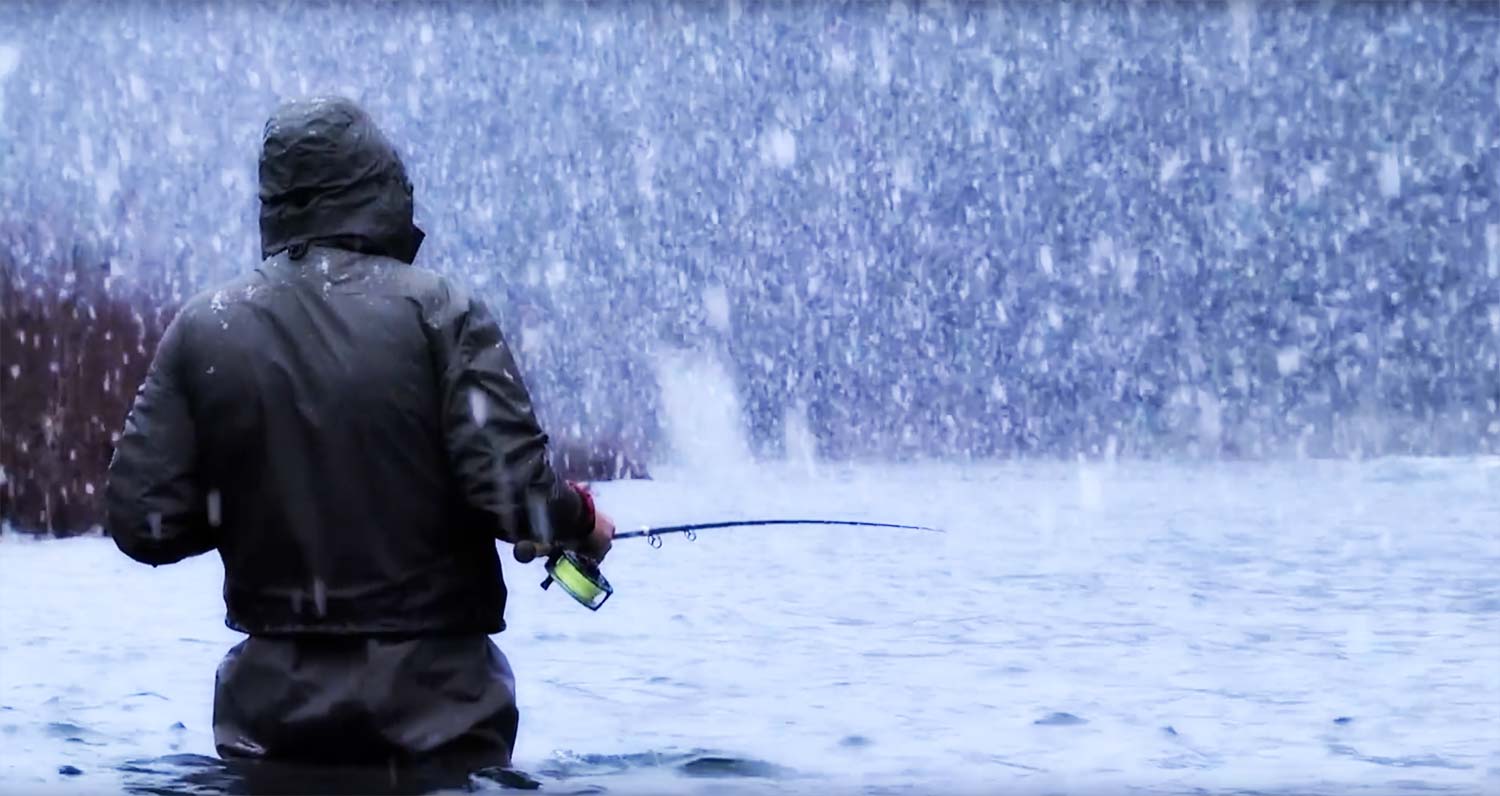
Winter is here and, for those willing to brave the elements that means big winter steelhead.
Unfortunately, there will be no steelhead for me this winter. That doesn’t mean they aren’t on my mind and if I can’t get after them myself, I can at least watch my buddies do it. This great video by Todd Moen from 2014 features my buddy Jeff Hickman and is one of my favorites.
ENJOY, “WINTER RUN, PACIFIC NORTHWEST WINTER STEELHEAD FLY FISHING”
Read More »Add Some Fish Appeal To Those Old Flies!
By Justin Pickett
We all have one…..The box full of rejects, misfits, oddballs, freaks…. deplorables.
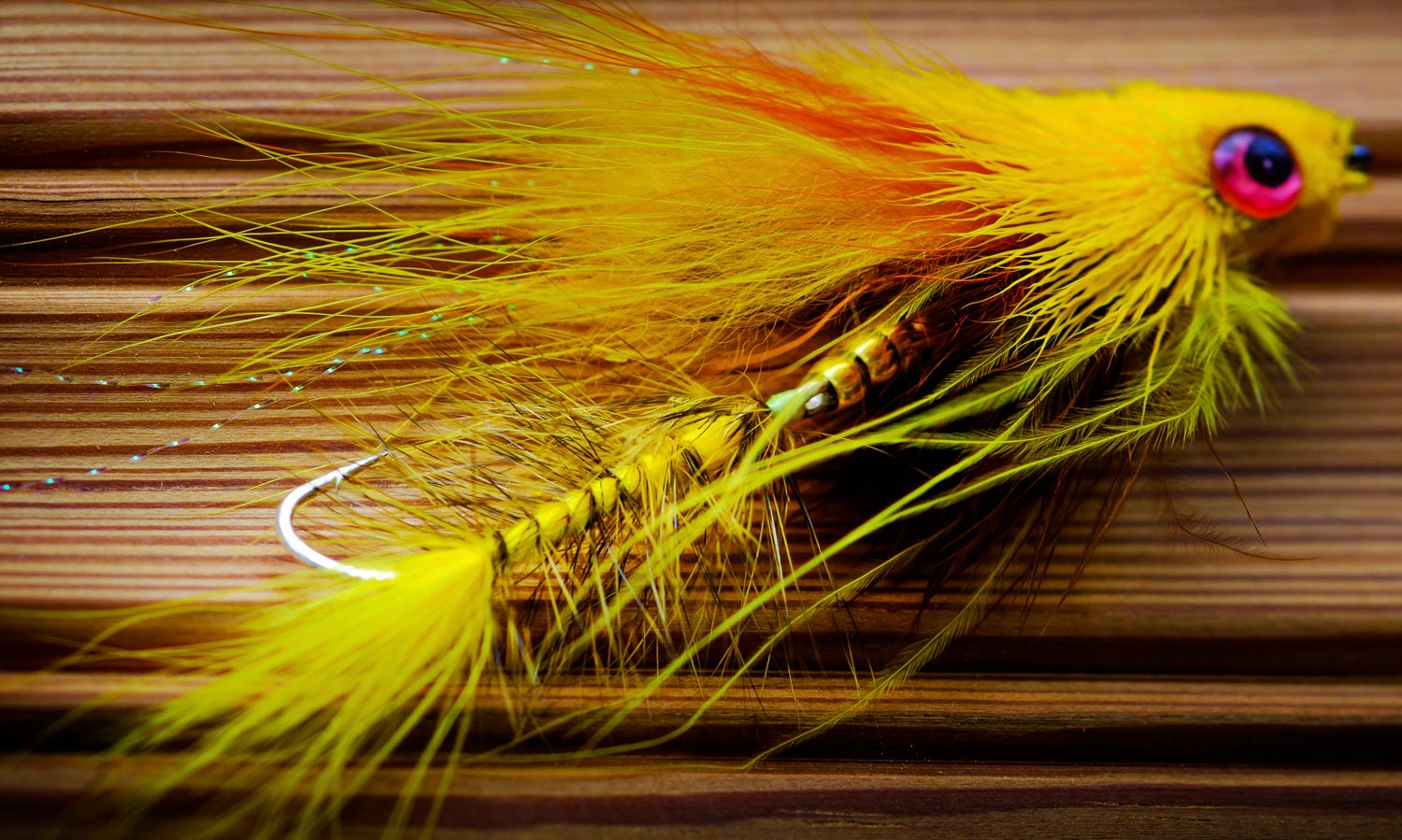
These are the flies that have been bought by you. Given to you. Found by you. Or, likely, tied by your own hands… possibly in a bourbon-fueled rage the night before a trip while listening to some OCMS. Or maybe that’s just me… As I scanned through one of these very fly boxes one day, I wondered if there were any flies that might be salvaged, and, if there were, how might they be resurrected? I was looking at dozens upon dozens of flies that weren’t being used. Hooks that were being wasted. Some of them were surely defunct and irredeemable, but I knew I could modify many of them enough to make them fly patch worthy. And, as it turns out, there are several ways to turn an old, dull looking pattern into something new-ish, and might even put some fish in your net!
“Pop” Your Collar – This is a simple modification you can make to most nymphs (beaded or non-beaded), and even some dry flies. For collars, you can add some pizazz by simply tying in a “hot” collar with some fluorescent orange, pink, or red thread. You can add dubbing in a contrasting color, or maybe some CDC or partridge feather to add some movement. The same can be done to small streamers as well. I’ll often tie in a hot spot on the nose of my clousers and woolly buggers, especially when I know I’ll be fishing off-colored water. The same applies to the thorax. Switch up the dubbing. Hackle some feathers. Experiment! Just make sure to keep the correct profile and proportions as you add material. You’ll likely need to remove the existing material to be sure things don’t get too portly. I can’t tell you how many flies I’ve done this to, and it can really make a big difference in the appearance of a fly.
Show Some Leg – Another thing that I’ll do to a “boring” fly is add some legs. This is another quick and easy way to add some attention getting features to an otherwise uninteresting fly. On beaded nymphs, I’ll tie in the legs just behind the bead and add a small pinch of dubbing to help keep the legs separated. I tie legs into dries quite a bit as well. Mostly on terrestrial-type flies, and typically only because the original legs were chewed off by ravenous trout. This gives you a plethora of color and material options while providing some wiggly deliciousness.
Light It Up –
Rob Smith’s Musky Sucker
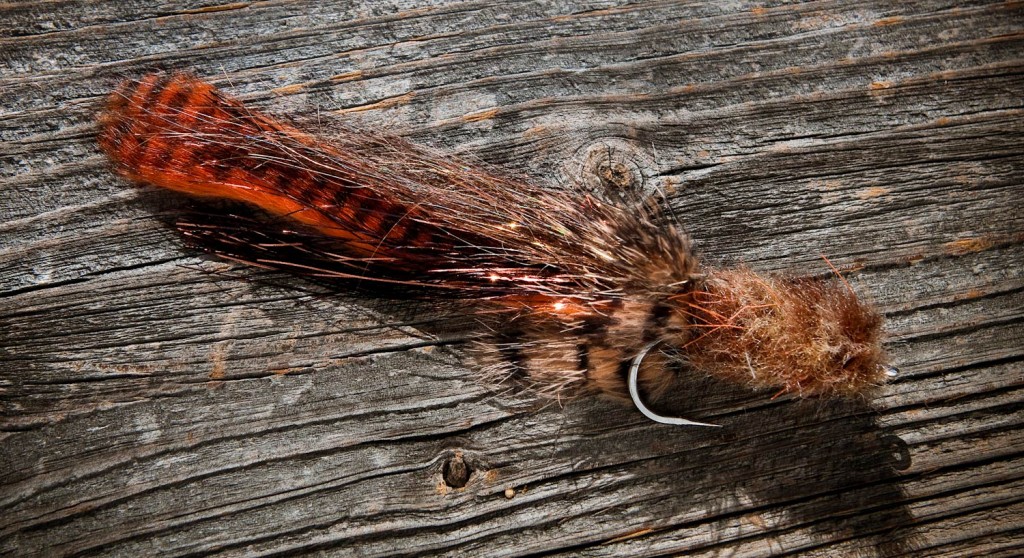
Rob Smith is nothing, if not colorful so when I asked him to tie a fly for my readers I expected something bodacious, and I got it! Rob likes his fish the way he likes his mustache, big and scary. He’s our local authority on striped bass and musky. When it comes to putting pounds of fish in the net, Rob has you covered. This fly has been a proven producer for musky. It imitates the suckers that are prevalent in musky rivers. It’s a beefy fly and you’ll need to eat your Wheaties to throw it, but you’ll like the results. Check out the video! http://youtu.be/rwAGO-dJiJ4 I’d like to say thanks to the guys at The Fish Hawk for helping out and sharing their favorite flies. We’re lucky to have such a great fly shop and such a knowledgeable staff. Come fish with us in the Bahamas! Louis Cahill Gink & Gasoline www.ginkandgasoline.com hookups@ginkandgasoline.com Sign Up For Our Weekly Newsletter!
Read More »It’s Good To Be The Hero…I Guess?
By Louis Cahill
Everybody wants to catch the big fish.
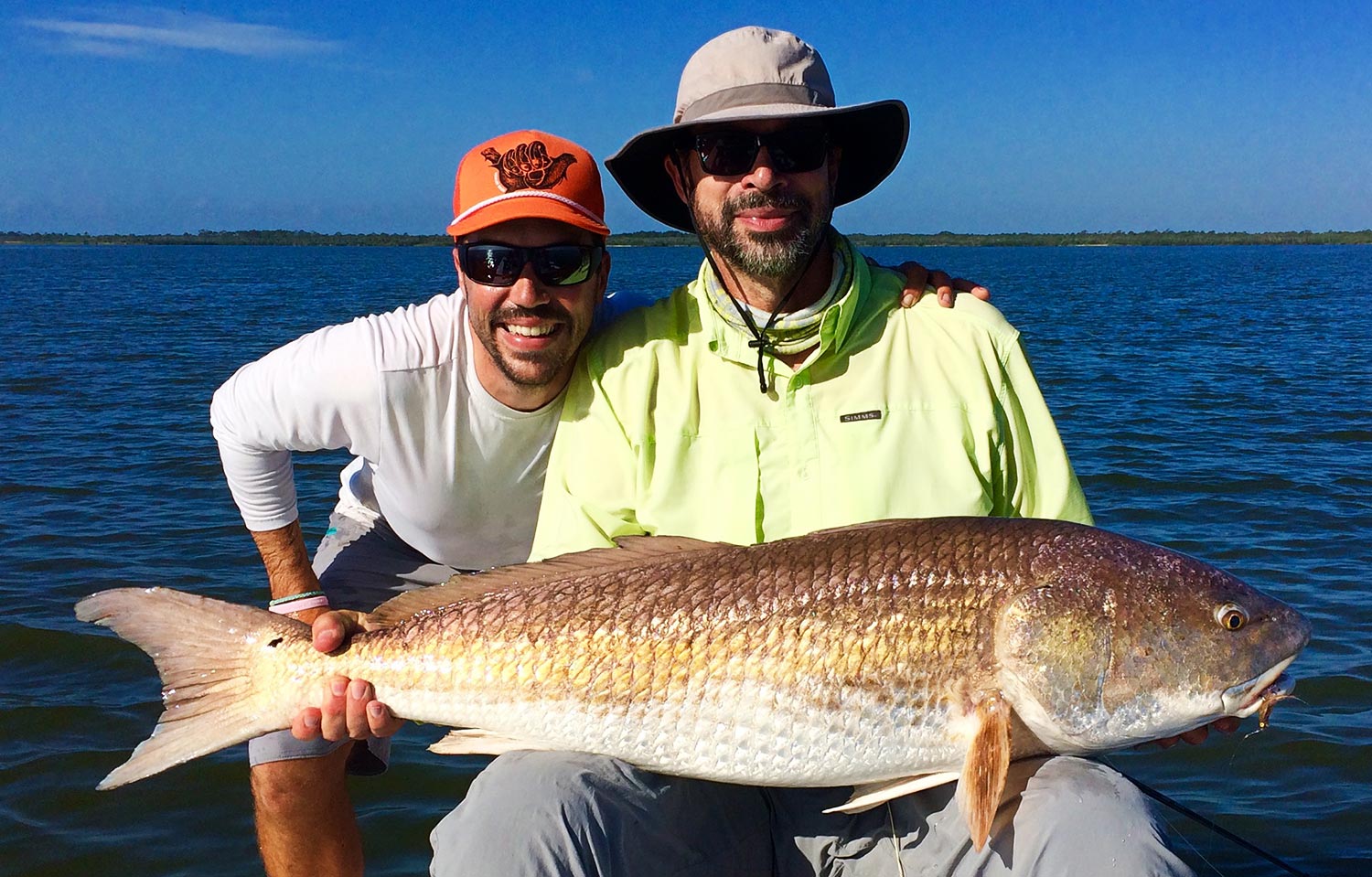
The skiff glides over the flat calm water, running from the dark of night into the blue and pink Rorschach test of the coming dawn. Every few minutes Jessie Regestor, our guide, kills the throttle and makes a hard turn when a big push of water breaks the perfect symmetry ahead. The lagoon is full of life, including a good number of sleeping manatees, wakened by the whirring propeller.
This is my first trip to Mosquito Lagoon. I likely would not have taken the time to fish, the day before the IFTD show in Orlando, if my buddy Johnny had not invited me. There are few folks I enjoy sharing a boat with as much and with him running two successful fly shops, we don’t get to do it enough. I’m always excited to see new water and, of course, I’ve heard all of the stories about how educated the lagoon redfish are. I’m looking forward to a challenge.
I live near the coast, so I insist the guy from Colorado take the first shift on the bow. The sun is just creeping up so we pole an edge looking for pushes and tails. Johnny gets a couple of shots but they aren’t easy ones and he’s met with the response we’ve been told to expect. Refusal. He makes a few more perfect presentations without a hookup and puts me on the bow.
Not long after, Jessie spots a group of tailers directly in the glare of the morning sun. He takes his time and poles us into position where we have the sum from our left, where I have good visibility and can make a cast without my line making a shadow over the fish. This is the first time Jessie and I have fished together but I’m already a fan. That kind of strategic fishing gets results.
These fish are all big, but a couple of them are downright beasts. Their big tails waving like fans at country church in August. I make a couple of casts, which go ignored, before putting the fly right in front of one of the better fish. The fish sees it and turns on it. I strip short and quick as the fish moves but the line comes tight on something small. A ladyfish has cut him off and grabbed my fly. I horse the little guy out of the water and go for the hook but he’s swallowed it.
“Give him to me,” Johnny says, reaching for the fish with his left hand, pliers in his right.
The big fish is still happy, doing headstands about fifty feet off the bow. Johnny gets my fly back and I make another cast. Perfect presentation, except the lady fish had trashed my leader and the fly sailed away on the first false cast. I land an empty leader in front of the fish and let go with some colorful language.
“Give me your leader,” Johnny calls from behind me.
He pulls a fly out of my box and ties it on. I don’t even look at it. I’m watching the big tail, keeping track of the fish. When he hands me the fly I see what he’s chosen. It’s an experiment I tied after a couple of beers. Something I thought was genius at the vise and later viewed with scepticism. I’d never had enough confidence to fish it.
Read More »Finding the Hidden Carp
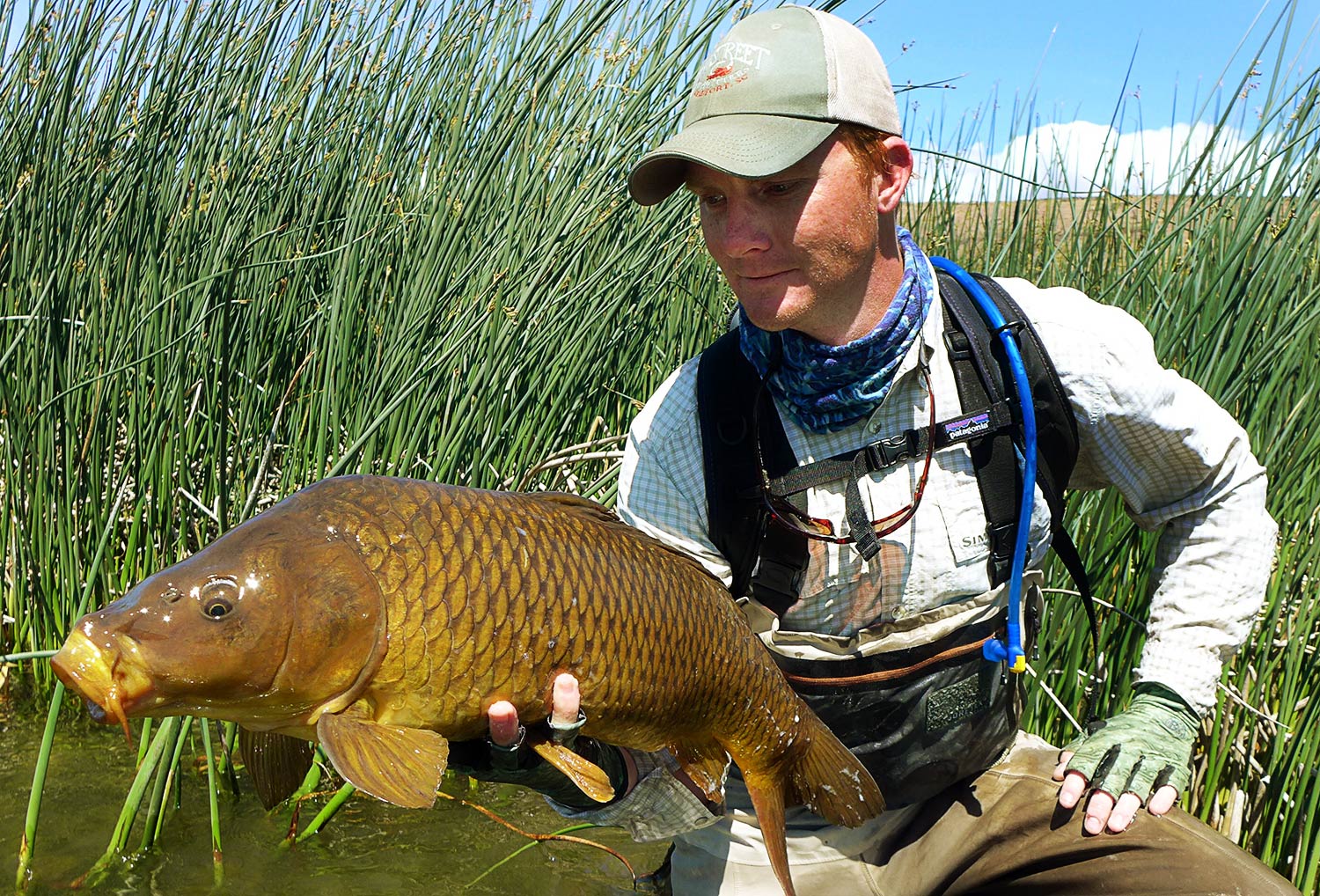
By Dan Frazier
“FLASH YOUR BREAK LIGHTS A THOUSAND TIMES BEFORE WE TURN OFF OR THE CAR BEHIND YOU WILL SMASH INTO YOUR REAR END,” TREVOR YELLED THROUGH MY PHONE.
I was following him through downtown Denver at 50 mph on our way to a second spot to fish for the day. All of a sudden, his break lights lit up like a strobe light at a rave and I begin tap-dancing on my brake pedal. In what looked like a scene from a heist movie, Trevor suddenly veered off the road, not at an intersection, and comes to a screeching halt on a tiny patch of concrete under a construction sign. I put my rental car to the test, swerved without slowing and then laid on the brakes before I climbed up Trevor’s tail pipe. Had I not had antilock breaks the screeching tires and blue smoke would have made the slide-stop that more dramatic. Instead, I came to a quick but reasonable halt behind Trevor’s car. The black BMW missed rear ending me by inches and the driver screamed out the wind at me as he flew past.
We geared up and waited for traffic to clear, eventually bounding across the 4-lane road to get to the top of the wall. The water was 25 feet down as we hiked along, but it wasn’t directly below us. Ten feet down was a dirt ledge and another 15 feet from there was a sloping shoreline. The ledge was littered with the encampments of Denver’s homeless. We walked along, looking for carp. When we saw our first tailer, Trevor started taking off his gear and handed me his rod. He then lunged over the ledge into the crotch of a tree and shimmied his way down to the lower ledge. From there he could get a presentation on the fish.
Trevor isn’t the only master carp-on-the-fly angler that has taken me to spots that are insanely difficult to access; places that leave you scratching your head and thinking, “how the hell did he figure out how to get access here?”
John Montana has put me (and anyone that fishes with him) through the same paces. We’ve parked under overpasses and on unfinished off-ramps, slid down 60-foot scree slopes and bounded along railroad tracks. Both he and Trevor have taken me to spots that either currently were illegal to fish, or had been when they’d first been busted. Most you can sweet talk your way into getting permission… some you just get sneakier. Hell, I have places that involve crossing electric fences or parking at marginal pull-offs and hoping your car isn’t towed when you get back.
Until I was screeching to a halt with Trevor, however, this commonality had never occurred to me. We talk about carp being accessible to everyone and within walking distance of your house. And that’s true… carp are. But the guys putting up real numbers and big fish have spent hundreds of trips and thousands of hours scouting for both location and access. And they can be fiercely protective of these spots and access points. You
Read More »