
Rob Smith’s Rusty Enema
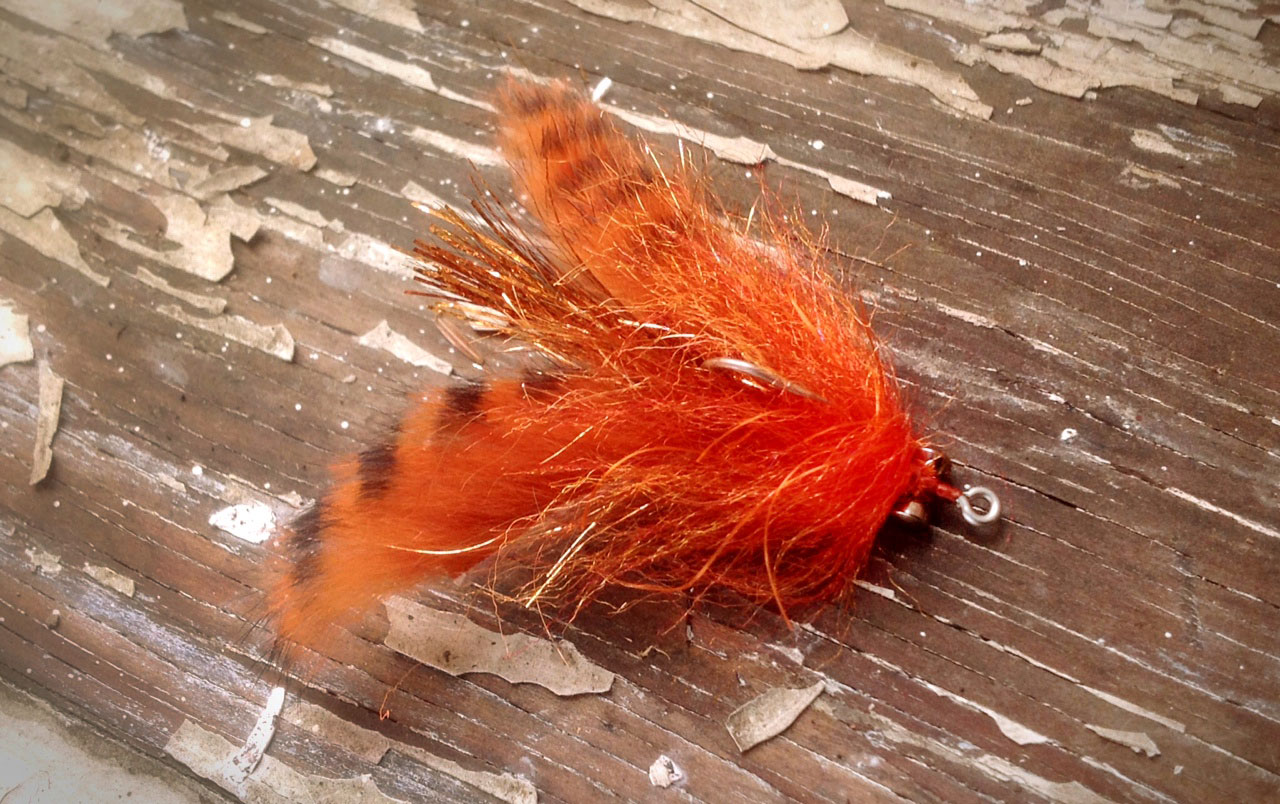
THE STASH IS BACK!
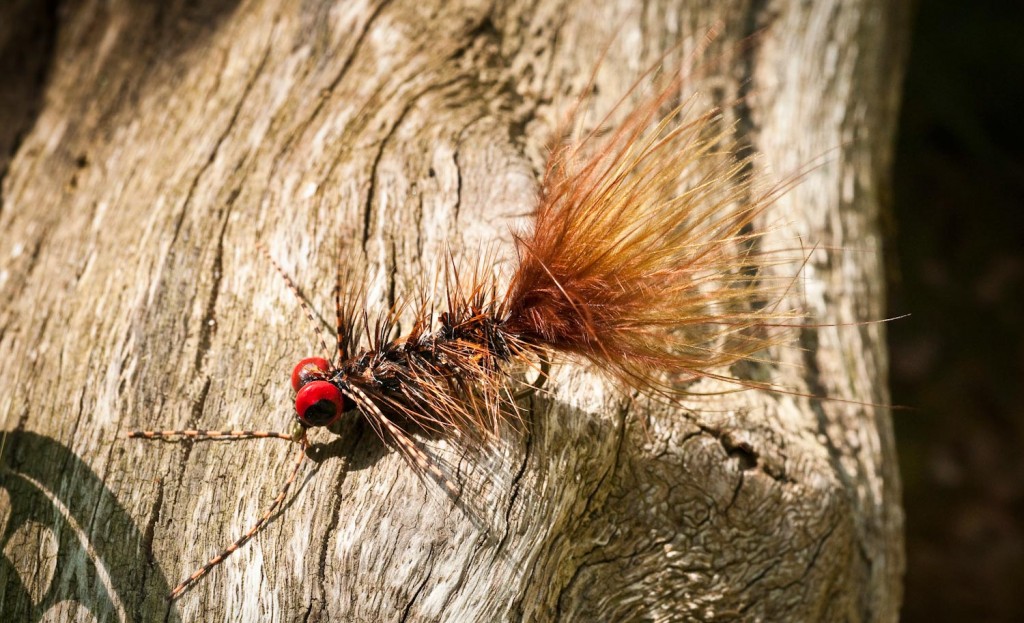
Rob “The Stash” Smith is back to share one of his favorite redfish flies with us. The Rusty Enema is a proven producer anywhere redfish are found. It’s a great attractor pattern that pushes a lot of water, which is like ringing the dinner bell for redfish in dirty water. Put a couple of these in your box to keep you catching redfish on a regular.
Watch the video to learn how to tie this fly and find out how it gets it’s name.
Read More »Bruce Chard’s Palolo Worm
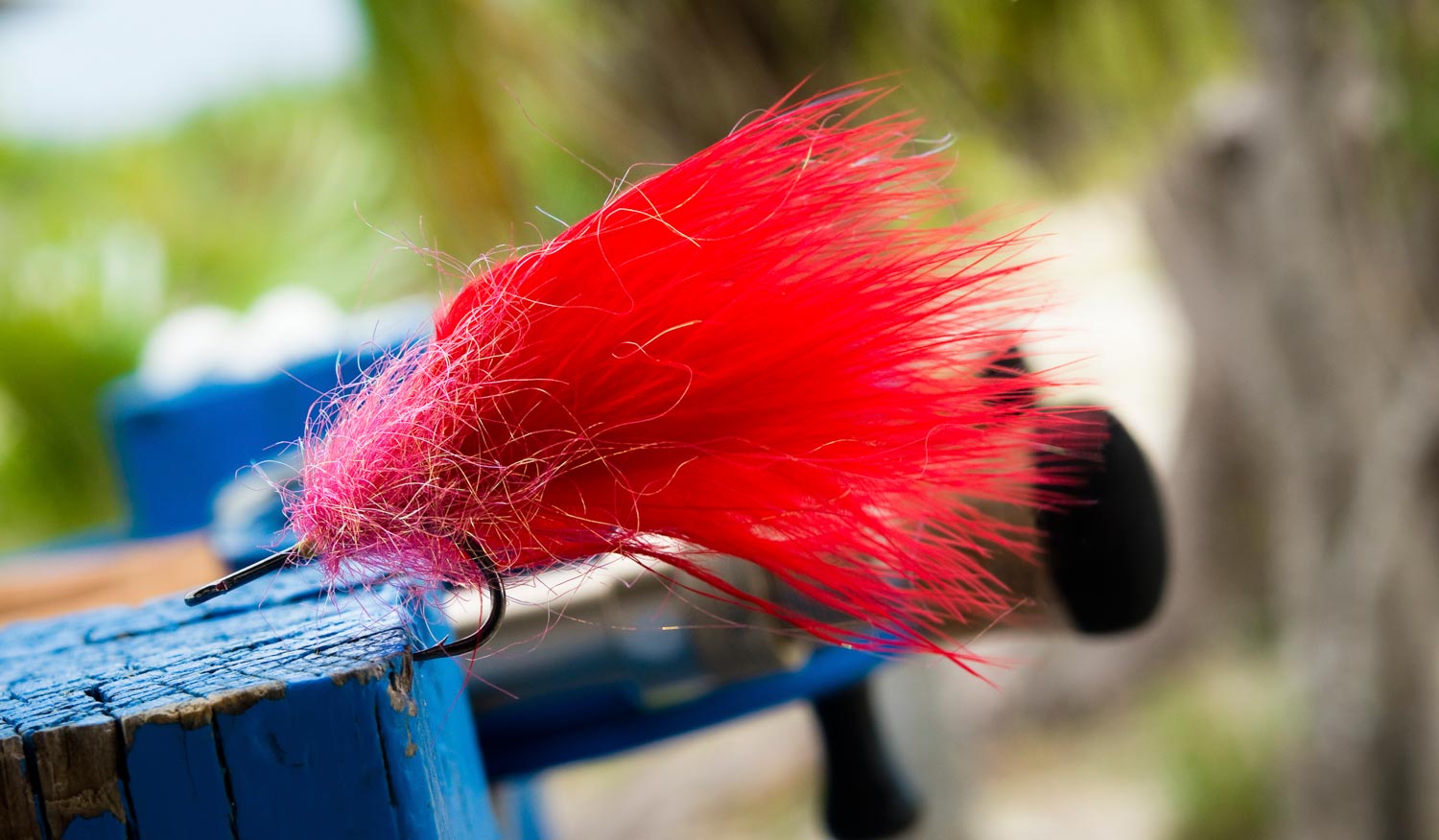
THE PALOLO WORM HATCH IN THE FLORIDA KEYS TRULY MUST BE SEEN TO BE BELIEVED.
Tarpon go completely crazy when these bright red worms pour out of the sand by the millions. The fish gorge themselves on worms and quite a few of those worms are cleverly tied imitations. It’s the fishing opportunity of a lifetime.
My good friend Captain Bruce Chard has this hatch wired. I’ve fished the hatch with Bruce and his success rate is astounding. Today he’s going the share the simple but effective fly that makes it happen. There’s not much to the tie. Anyone can pull it off, but when you see it in action it looks like a million bucks.
Watch the video and learn to tie Chard’s Palolo Worm.
Read More »How’s your double haul?
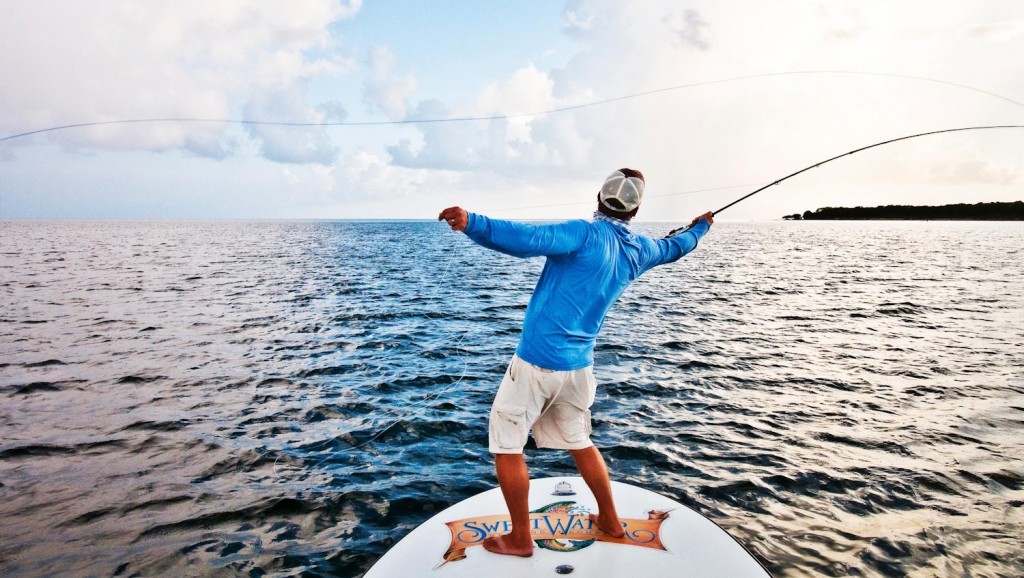
Whether in saltwater or fresh, most experienced casters employ the double haul.
It’s possibly the best technique for creating line speed and generally energizing your line during the cast. It’s also a great way to create casting problems when done incorrectly.
One of the fundamentals of the double haul that commonly causes problems is the ratio of the haul to the line being carried by the caster. On a short cast where you may only carry thirty or forty feet of line, the length of your haul, that is the amount of line you pull through the guides with your line hand, may only be a couple of feet. On a cast of seventy or eighty feet be prepared to spread your wings.
Tall casters with long arm spans hold a decided advantage here. When it comes to casting the whole line it’s good to be well over six feet but the truth is that most of us don’t take advantage of the reach we have. If a picture is truly worth a thousand words, this photo should make my point.
My friend Joel Dickey has a powerful and athletic double haul. Better than
Read More »Die With a Human Heart by Jon Tobey

Today, we are pleased and honored to bring you an amazing work of fly fishing fiction by Jon Tobey of Gointothelight. Jon is an accomplished writer and his story “The Very Cruelest Thing” was a huge hit as a Saturday Shoutout. We knew you wanted more.
Die With a Human Heart
I
Nathaniel hated re-entry. It was the same endless elevator free-fall feeling he had when they pulled him off the bottom. It was the last thing he remembered before he died, lungs crushed to the size of fists. He longed for the clean pure air of a high meadow won after a long hike. The trees lit up with alpenglow as soft and bright as an artist’s brush. The patient, patient trout waiting through the decades to rise to a well-presented fly. For one moment to be bound together – these living things in a bouyant dance, and to hold one in his hand as hydraulically perfect and functionally timeless as the monstrosity in his chest.
The red rocket came down fins first, lowering itself on a pillar of flame. It was the most stupendous thing Izaak had ever seen. Rockets left every day, but only a few came back every year. He held his mother’s hand and looked out the window. “Grandfather is here!” Mother looked down at him and smiled her worried smile. It seemed the rocket had barely hit the ground when a ramp opened and a group of rough-looking men tumbled down the ramp. A few went off alone or with other men, but most looked around expectantly. Izaak let go of his mother’s hand and raced out the door. “Be careful, no running!”
Nathaniel recognized his grandson from the ever-rarer vid chats, but was flummoxed when the boy ran up and threw himself at him, not having touched another human in what, thirty years? When he saw Clare across the apron, shimmering in the heat, a vision of her mother, he wrapped his arms around the boy and lifted him off the ground, dropping his bag.
“You look so much like your mother,” he said when she walked up.
“Space will do that to you,” she replied. They looked at each other and he smiled. He knew what it was like to be bursting to say the right thing and say the wrong. It conveyed so much more information.
He held out his hand to the man to her left, “Daniel.” Of course he’d “met” him on chat, but this was the first he’d personally met the man who married his girl, the father of his grandchild.
“Nathaniel.” Nathaniel found Daniel’s grip offensively limp. “It’s so good to meet you.”
“Do you want to go fishing? I’ve been practicing, I have just the spot. I know everything: how to pick a fly and tie it on and cast and spot the fish and everything.” Izaak seemed to speak without breathing.
“Aren’t you tired, Nathaniel?” asked Clare. He would have preferred “dad,” or even “father.”
“Hell, no.” His eyes were still on Clare’s. “I’ve been sleeping for three months, and dreaming about fishing the whole time. You coming, Daniel?”
Daniel looked a little lost. “Um, well, not much of a fisherman, and besides,
Hard Driving
By Jason Tucker
“A little humor folks”
It’s Friday at last.
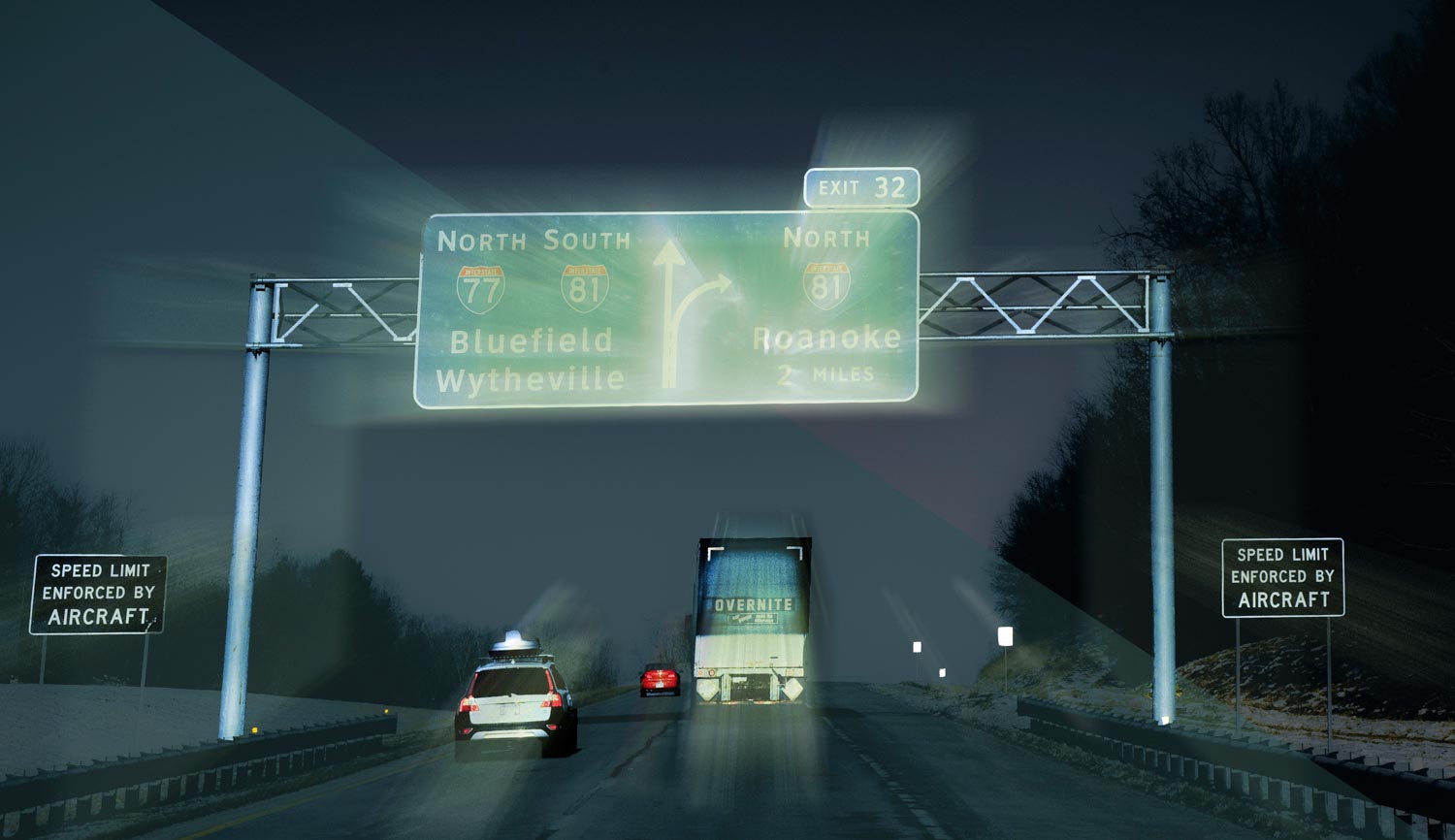
You have worked hard, saved up, finagled the time off from job and family obligations for this trip and now it’s here. The bite is on, the vehicle is loaded and you are making the long trek to trout country.
When you start out everything is ok. Spirits are high, the radio blares and the adrenaline flows. But after a few hours reality sets in. This is going to be a long drive. You are tired out from a long week of work, packing, and March Madness. Three hours into the drive is when your eyelids first start to drift south. You are barely halfway there. You turn up the radio and hope for the best, but in the monotonous white noise of the road you can see it all clearly in your minds eye- you slumped over the wheel, your SUV slowly arcing in a barrel roll, followed slowly by your drift boat, your eyes opening as a Slim Jim hits you in the face, followed by a ton of wreckage.
Such tragedy, and it doesn’t have to be this way. Here’s some tips for staying awake on those long drives to hot fishing, late at night.
Music: Radio, CD’s (as if), your iDevice, or satellite radio, all can be a good source of good road energy, but when the rubber really hits the late night road and the eyelids are drooping it can fall short.
Suggestion: Comedy channels on satellite radio- the ever changing comedy keeps you engaged, and it’s hard to nod off during a belly laugh.
Drinks: not alcohol, we’re talking cold energy. You could go old school- Coke, Mountain Dew, or my favorite, Dr. Pepper. New school is the vast array of energy drinks. Red Bull is the Cadillac of these judging by the price. Monster is more authentic for the majority of us fly guys- less expensive, lots of choices, and a good zip for the dollar. Are you really pushing the night driving envelope? Top off with a 5-Hour Energy or Fish On.
Snacks: crunchy snacks can keep you engaged and your mind alert, at least for a while. I’ve heard of everything from mint gum to sour candy to Doritos. The ultimate however are sunflower seeds, which are appearing in a growing variety of flavors. The combination of flavor, the work it takes to hull a seed in your mouth, spit the hull, and the ultimate but tiny reward work together to engage the taste buds and mind, keeping you awake.
Talk Radio: That’s right. It takes two forms. Don’t go for your comfort zone, unless sleep at 70 mph is your thing. I’ll break this down into two forms.
Jesus Radio: There is no shortage of religious programming in America. It encompasses everything from prosperity gospel types like Joel Osteen, to your basic bible pounding, to the most vehement hellfire-breathing screed- pick your poison, examine your soul, and stay awake. Whether you totally agree, or are a philosophy student who likes to argue, Jesus radio can keep you awake for at least a hundred miles. More if you’re in the South. Caution:
Read More »A Team Approach To Landing Big Fish

WHEN LANDING A BIG FISH YOU NEED THE DECK STACKED IN YOUR FAVOR.
On my recent trip to Alaska West, I hade ample opportunity to practice big fish landing skills. We fished from the boat a good bit and it seemed like every five minutes we were battling another huge rainbow. Landing big Alaska rainbows in a river full of snags and very heavy current is no cake walk. With a little teamwork and cool head though, you can stack the deck in your favor.
Ultimately, you want to be out of the boat when you close the deal. Being on firm footing with both the angler and the net-man able to move independently is crucial. This allows you to fight the fish strategically and take advantage of every opportunity to put him in the net. In order for everything to go smoothly, everyone on the boat should be on the same page and know their roll.
Generally, when you stick a big fish, you know it. Even if you haven’t seen him, his behavior should give you a clue. If he bulldogs you right from the start, feeling like a throbbing log on the river bed or begins to move calmly upstream, you’re in for a long tussle. If he goes ballistic, jumping or making a big downstream run, you’re in crisis mode from the word go. As an angler, it’s in your best interest to let your buddies know what’s happening on the other end of the line so they can react accordingly.
As the oarsmen, you want to try and stick with the fish in the crucial first moments of the fight. If he’s bulldogging, try to hold your angler just downstream of the fish. That will help him keep a good ninety degree connection to the fish without getting a bunch of line off the reel. Once the fish starts to move downstream, go with him. If he makes a big downstream run, it will be easier to close the gap while still in the boat. In either instance, it’s important that the oarsman move the boat to keep the fish away from hazards that might catch the line.
If you are the second angler in the boat and you are not also hooked up
Read More »Fly Fishing: The Woolly Bugger Isn’t all that, Or is it?
This isn’t Montana, Your Not Norman Maclean, and the Woolly Bugger isn’t all that.
This was a bumper sticker a guide buddy of mine had printed up a few years back. It was prominently displayed for his clients to read when they pulled up to greet him. That’s one hell of an ice breaker for checking fishing egos at the boat ramp, let me tell you. I give my boy J.E.B. Hall props for his comedic humor and gutsy style. For those of you who don’t know J.E.B., he’s a veteran Western North Carolina guide, Author of Southern Appalachian Fly Guide, and has spent multiple seasons guiding at Alaska West. Meet him one time and you’ll say to yourself, “this guy is the funniest guy I’ve ever met in my life”.
Most anglers fall into one of two categories when it comes to their perception of woolly buggers. They either love them or despise them. I love the fly pattern for two reasons. First, for its impressionistic design that’s capable of mimicking many different trout foods, and second, for its versatility in how the pattern can be fished. It’s rare for me to not break out a woolly bugger at some point during the day. When trout aren’t biting, I almost always can find fish willing to snack on them. The only time I keep woolly buggers out of the game and sitting on the bench, is when I’m fishing water where dry flies are the only thing required.
I believe in the woolly bugger so much, If I only had one pattern that I could take with me fishing, that would be it. Why the woolly bugger, you ask? Because it has probably caught more species of fish on this planet than any other fly pattern created since fly fishing was born. Now if I asked Jim Teeny, he would probably argue with me on this one, but what can I say, 90% of the time Jim strictly fishes his signature Teeny Nymph. And why shouldn’t he, the man has caught everything from steelhead to 100lb. tarpon on that fly. But if the tables were turned, and Jim Teeny would have invented the woolly bugger, I’d lay out a strong bet that’s what he’d be fishing instead. I meant no disrespect towards Jim Teeny, the man is a fish catching machine and a pioneer of the sport. He was just the perfect person to make my point on how effective woolly buggers are at catching fish, and I honestly couldn’t help myself.
Read More »The Wife And The Mistress
By Ethan Smith
A lesson on accuracy and line speed in saltwater fly fishing via infidelity.
Note: The following is a bit of “local wisdom” from a Belizean guide. It is intended for educational purposes only. It’s premise is largely chauvinistic, misogynistic, and generally in bad taste. But it works!
In sight fishing for bonefish there is no more important component than accuracy. When the guide calls out a shot, you better be able to hit it, and quickly. “9 o’clock, 60 feet” — hit it. If you don’t, there is a good chance he will jump off the platform, run up to the bow and slap you silly. Saltwater shots are far too precious to blow. His tip and your fish of a lifetime depend on you being accurate and timely with presentations.
Before my most recent trip to Belize my accuracy was fairly poor. I’ve fished salt in the Keys a few times, and I’ve fished Beaver Island for carp quite a bit. I’ve learned that my best shots on Beaver were to laid up fish not the big cruising 30 pound monsters that hang out in deeper water and require 80’ casts, right on the button, from the deck of a moving boat. Those weren’t my fish, and I was okay with that. But in Belize after we wore out the schooled up smaller bones we went super skinny to chase the bigger fish and sight fished for them in gin clear water. To hook up, I needed accuracy, and I needed it quick.
I was fishing out of a great lodge and the fishing director at the time was an experienced local guide and fantastic teacher. Everyday at 3pm he hung out on the dock and gave casting instruction. As soon as he saw my first cast to a target from the dock, he said
“You want accuracy? Think about your wife and your girlfriend.”
Read More »Fly Fishing Bass: 5 Tips for Fishing Frog Patterns Around Grass

Some of my most memorable days chasing bass on the fly have come from me spending the day popping and waking frog patterns along the surface.
I grew up fishing for bass, and although trout fishing has stolen the majority of my fly fishing attention over the years, I’ve always held a special place in my heart for catching bass on the fly. I’ve got friends that don’t see the coolness in fly fishing for bass, but that’s because most of them haven’t put in enough time on the water to experience perfect fishing conditions, and witness the thrill of bass smashing their fly, cast after cast. Bass are amazingly acrobatic fish, and they provide more than enough pull and rod bend to justify fly fishing for them. If you haven’t explored this area of fly fishing, I highly recommend it.
The other day, Louis and I left our houses at 2:45 in the morning to drive across the Georgia State line, and fly fish for bass on Lake Guntersville. Louis was doing a shoot for a new bass lure company, and I was lucky enough to get invited to tag along. Normally, it would be a real challenge to drag me out of bed at this hour, but Lake Guntersville is considered one of the top bass fishing lakes in the entire country. More importantly, the lake is famous for its unbelievable frog fishing that generally starts in June, and runs through the summer months. Lake Guntersville hosts several professional bass tournaments throughout the year, and in 2014, it will host the most famous of all tournaments, The Bassmaster Classic.
During the tournaments on Lake Guntersville, it’s not uncommon for bass anglers to weigh-in five fish sacs, well over 35 pounds. That’s right, we’re talking about an average fish weight of over seven pounds. If that doesn’t get you excited about visiting Lake Guntersville, I suggest you get someone to check your pulse. The reason this lake can grow and sustain such large numbers of trophy bass, comes from the high fertility of its waters, and that’s provided by it being located in an interconnected series of flowing lakes. This feature provides a constant fresh supply of inflowing water and food throughout the entire lake chain, and Lake Guntersville happens to lie smack dab in the middle.
In June, Lake Guntersville is completely transformed, as large areas of the lake are taken over by aquatic vegetation (hydrilla and milfoil) growing to the surface. So much in fact, that it’s not uncommon to find your self fishing the lake where there’s more grass than open water. Bass fisherman come from all over the country to cast their frog and rat patterns around the grass mats to coax bass into crushing them. This was exactly my plan with Louis for our day on Lake Guntersville. Unfortunately, the unusually cold nights of April and May had the grass behind schedule. We were still able to find grass and catch some good bass on our frog patterns, but the frog bite was nothing like it’s going to be in a month from now. For those of you interested in getting in on this amazing grass bite on Guntersville or any other reservoir that has good grass concentrations during the summer, I’ve provided five tips below that should help you increase your success.
Read More »Lowcountry Meets The Louisiana Marsh
By Owen Plair
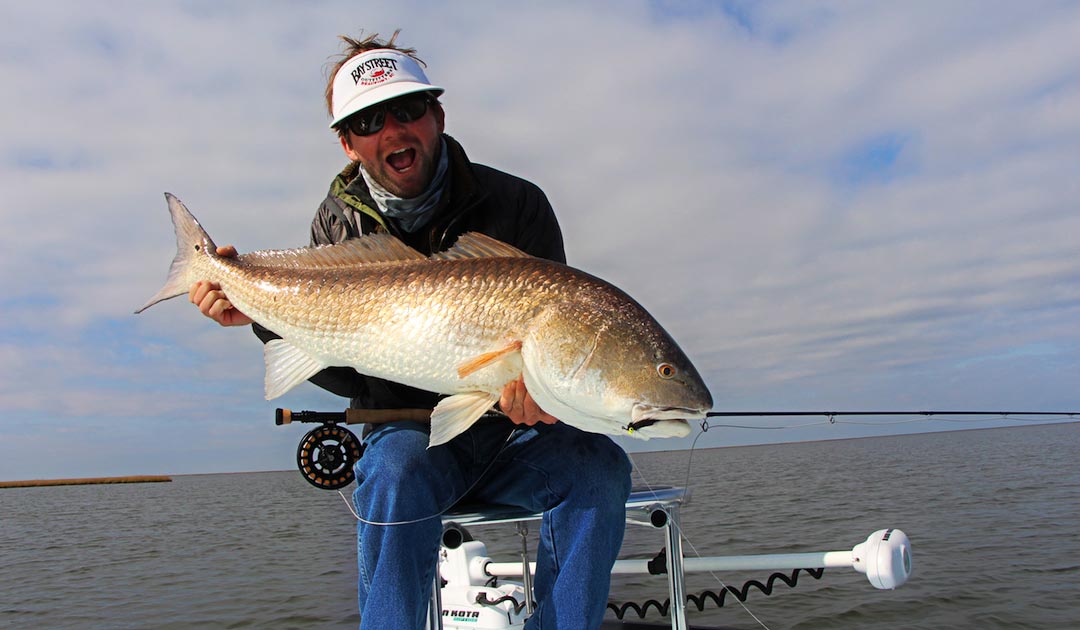
I could see this monster redfish laid up, just waiting for a fly.
As a full-time redfish guide in South Carolina, over the years it has been kind of hard for me to justify spending money to travel and fish the Louisiana marsh for a species I spend over 180 days year targeting. The two things that have always intrigued me about Louisiana are how big the redfish are in these shallow waters, and how insanely aggressive these big fish are. Not to mention the overall numbers of fish and amount of water in this world class fishery. Over the years I have heard countless stories from clients and friends and watched tons of videos about the Louisiana marsh, which have me very eager to experience this big fish destination first hand.
Back in December, I finally made the trip to the bayou in search of a monster redfish on fly. Most of the fly fishing guides in Louisiana are seasonal guides from other states including Florida, Texas, and in my guide’s case, North Carolina. These guides travel to Louisiana every year for the prime fall months when the big bull redfish swim and feed inshore on the cooler shallow water flats. My good friend Capt. Allen Cain is based out of Hopedale, Louisiana. Allen spends 3 to 4 months a year in Louisiana targeting these big fish with anglers from all over the U.S. After several seasons of sending me pictures of 20- and 30-pound redfish on fly, he finally talked me into making the trip.
New Orleans is one of my favorite places to visit and I had spent time there a few years ago for Mardi Gras. Yes, I do remember being in New Orleans in spite of a few fuzzy nights. Nola is an awesome city with tons of great restaurants, bars, history, and culture surrounding the city. The great thing about New Orleans is that it’s just a short drive to Venice and Hopedale, one of the largest redfish estuaries in the entire world. Whether you’re inshore for giant redfish or offshore for tuna, Louisiana hosts some of the best saltwater fishing around. If you like to eat, drink, and fish, this place is a must.
The town of Hopedale is
Read More »