
Presenting Your Fly to Migrating Tarpon
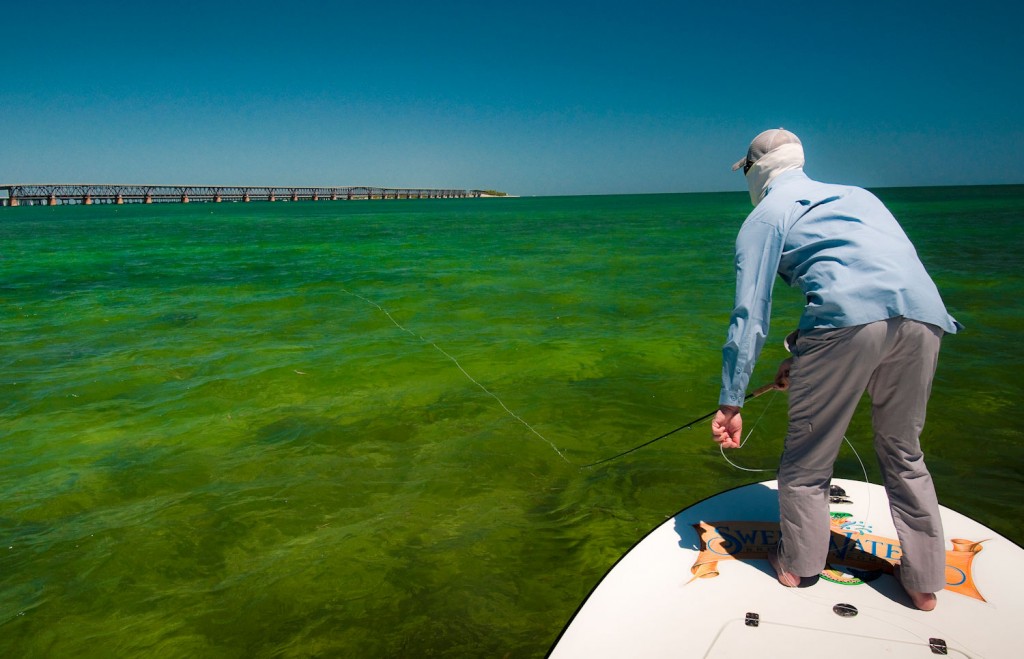
There’s definitely some strategy involved in tarpon fishing.
Migrating tarpon offer the fly angler a great opportunity for a close in counter with the silver king, but you have to play your cards right. Many anglers have watched big schools of tarpon vanish right before their eyes, leaving them to shrug and ask, “what’d I do?”
Often there is nothing wrong with the fly,or the cast, except that it was shown to the wrong fish. Migrating tarpon play a curious game of “follow the leader.” when you see that school coming its tempting to lose your patience and cast to that big lead fish, but that’s not the way to go.
That lead fish is out there on her own, blazing the trail for the whole school. She’s wary and quite cautious, that’s her job. Almost anything will spook her and the school will follow her lead. Her followers however are a different story. Generally male, they are focused almost completely on her. Sound familiar guys? Ever made a bad decision while you were focused on a female?
Those males feel secure because the lead fish is their lookout. If she isn’t spooked they feel like everything is as it should be and if a careless bit of food gets past her they have no problem scarfing it down. Those are the fish you want to target. It’s possible to get many shots at a school of tarpon as long as the lead fish keeps her cool and the more shots you get, the better your chance at a hookup.
CHECK OUT THE VIDEO AND OUR BUDDY JOEL DICKEY WILL SHOW YOU THE BEST PRESENTATION FOR A MIGRATING SCHOOL.
Read More »Reach, Don’t Rip!
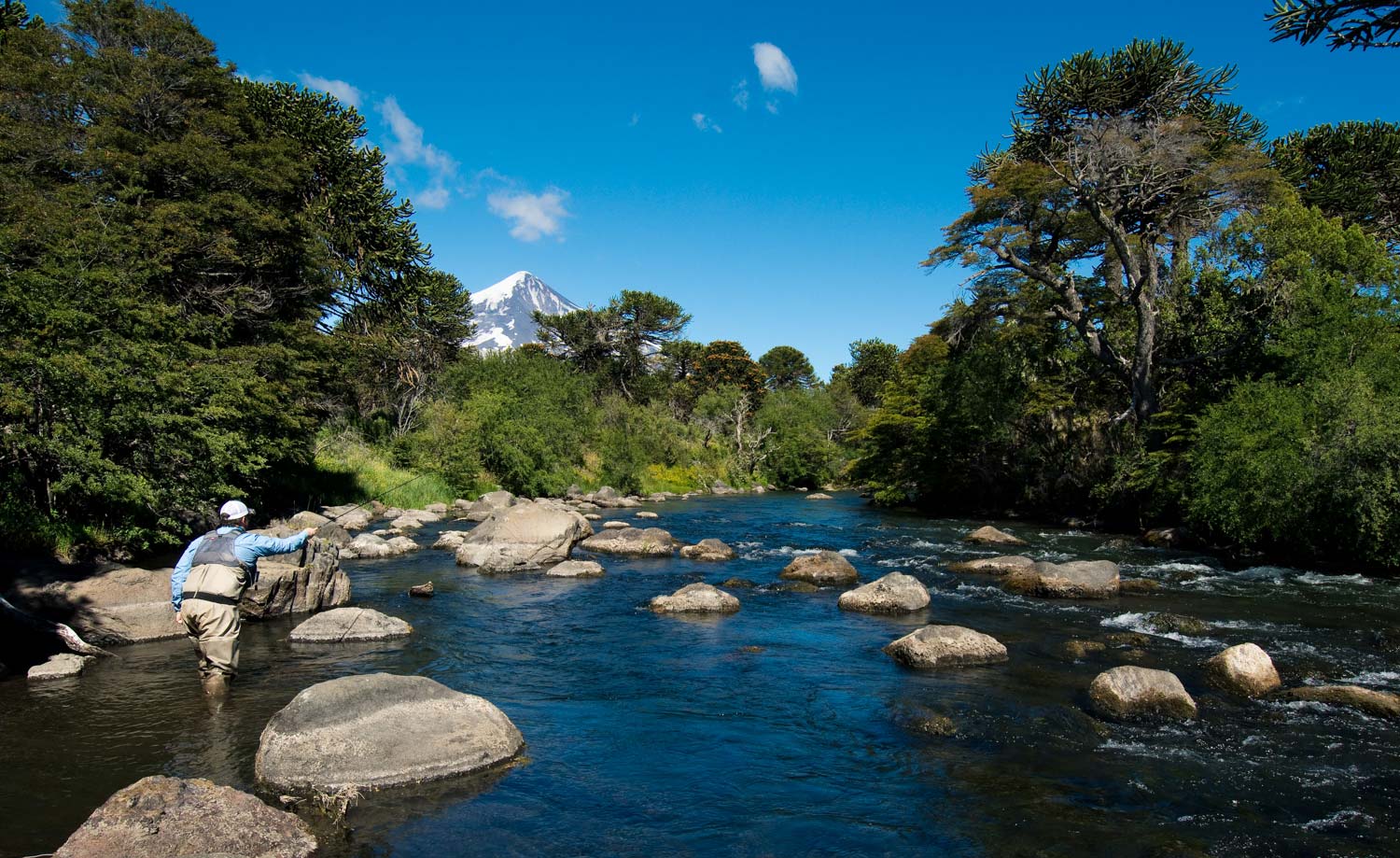
One of the most common areas of needed improvement that I see with many anglers is line management.
In fly fishing, line management is a big piece of the puzzle, and to be consistently successful you must improve upon these skills and develop good habits. One particularly bad habit that I see more than any other when I’m on the water with clients and other anglers is having an unnecessary amount of line stripped off the reel. This is problematic for numerous reasons.
One obvious reason is that your fly line could become entangled while fighting a fish and cause you to lose a fish. Laying a ton of line on the ground invites a host of gremlins to grab on and ruin your efforts. Most trout lines are also very supple and thin, making them even more prone to tangle and knot up when being taken from the ground quickly, whether it be a fish on the run or from the act of shooting line. Fly line left on the ground, or even in the water, also lends itself to damage. You can easily shred a fly line and even cut through a line by stepping on it. I’ve had one of my lines severed in half when a client of mine wearing aluminum barred boots stepped on it, leaving that rig useless until we stopped to grab another reel. Dirt and grime also loves to stick to fly lines, especially textured lines, which will greatly hinder your fly line’s ability to float effectively on the water’s surface. Problems, problems, problems.
Often, a situation doesn’t call for more fly line, but rather for the angler to get out of their “box”.
For example, there was a morning I was setting up a client to make the first presentation of the day, which required about a thirty-foot cast. Nothing crazy. As he set his feet and prepared for his cast, I turned to pull my net from my pack in an act of optimism. As I did this all I could hear was the sound of the intermittent outgoing clicks of the drag on his reel. A lot of them. When I turned back to him,
Read More »Fly Fishing Provides Great Health Benefits
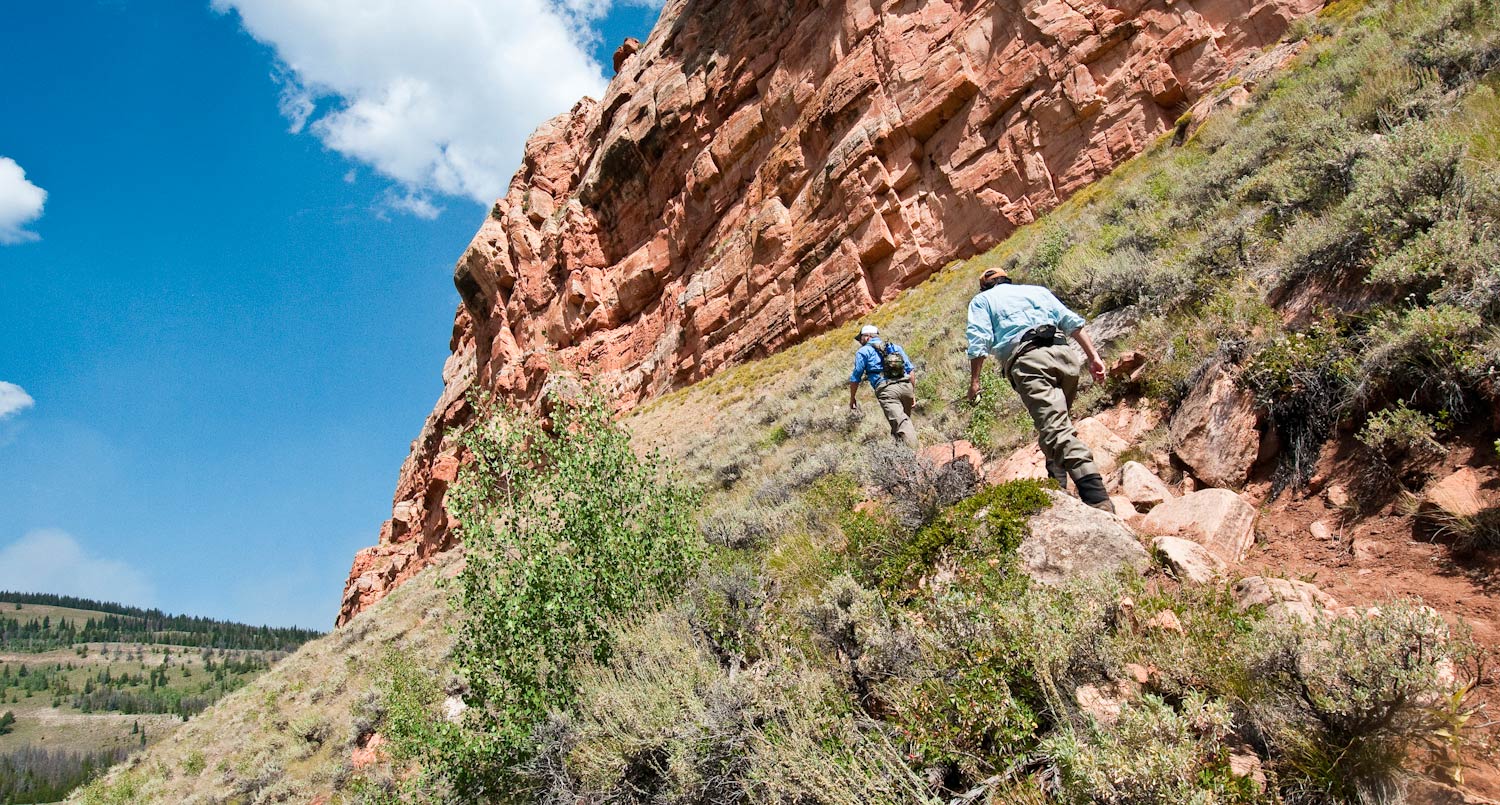
I tell my clients, all the time, that I’m grateful for all the benefits fly fishing provides anglers.
It provides us with one of the funnest ways to exercise, and it has the ability to completely wash away the stress of everyday life, from its therapeutic entertainment. We really should be thankful that this passion of ours provides us with so much more than just the reward of catching fish. Each and everyday we fly fish, we should take a minute to sit back and reflect on this fact. What other exercise activity can you think of that allows you to burn tons of calories during the day, and not have the faintest clue your even working out? Most of us aren’t extreme athletes, and even if we were back in the day, many of us have gotten older and are no longer. The great thing about fly fishing is you can tailor it to your own abilities and needs. It’s a great activity for maintaining your long term balance, dexterity and muscle strength, and it does a very good job of keeping your brain sharp.
I really think we could boost the growth of the fly fishing industry if more people were writing about all the great health benefits it provides, both mentally and physically? I’d love to see Yahoo, or one of those other giant headline news websites (that most of us visit daily) post on its home page, a fly fishing picture with the headline, “Lose 15 pounds and have a blast doing it.” We need to start thinking outside the box to promote and attract newcomers to fly fishing, and I think this could be one area most of us have been overlooking.
Lock your forceps
By Dan Frasier
For all you flats guys and bank fishermen out there.
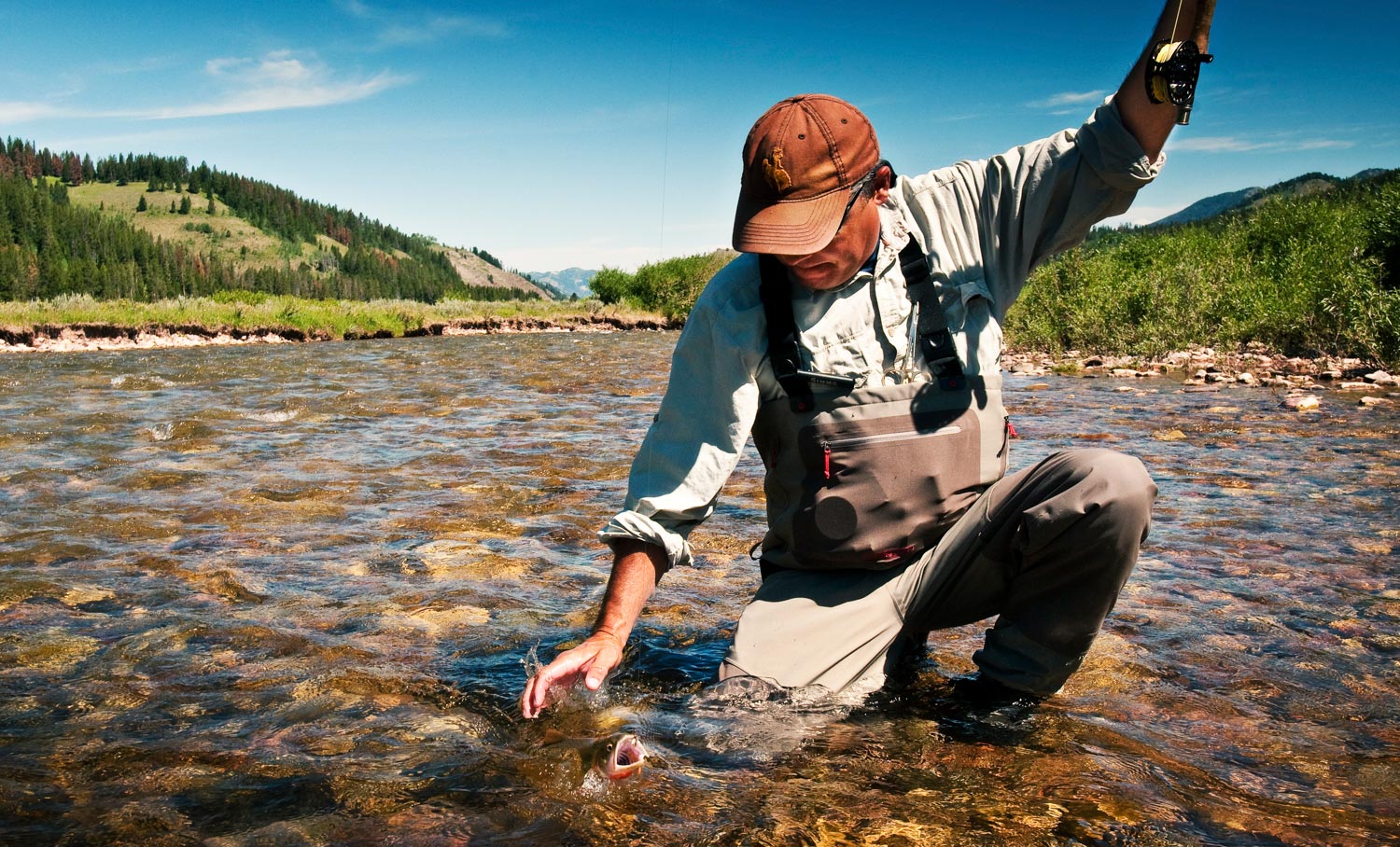
Landing, unhooking, wrangling, getting a picture, and releasing a fish can all turn into a giant goat rodeo. Nothing makes it worse than having a bare hook connected to a nearly invisible line which is tied to your very expensive rod; flailing about. One trick I love is to use my forceps to unhook the fish, and then lock them onto
Read More »What is Recovery Rate and How Does It Affect Fly-Rod Action?
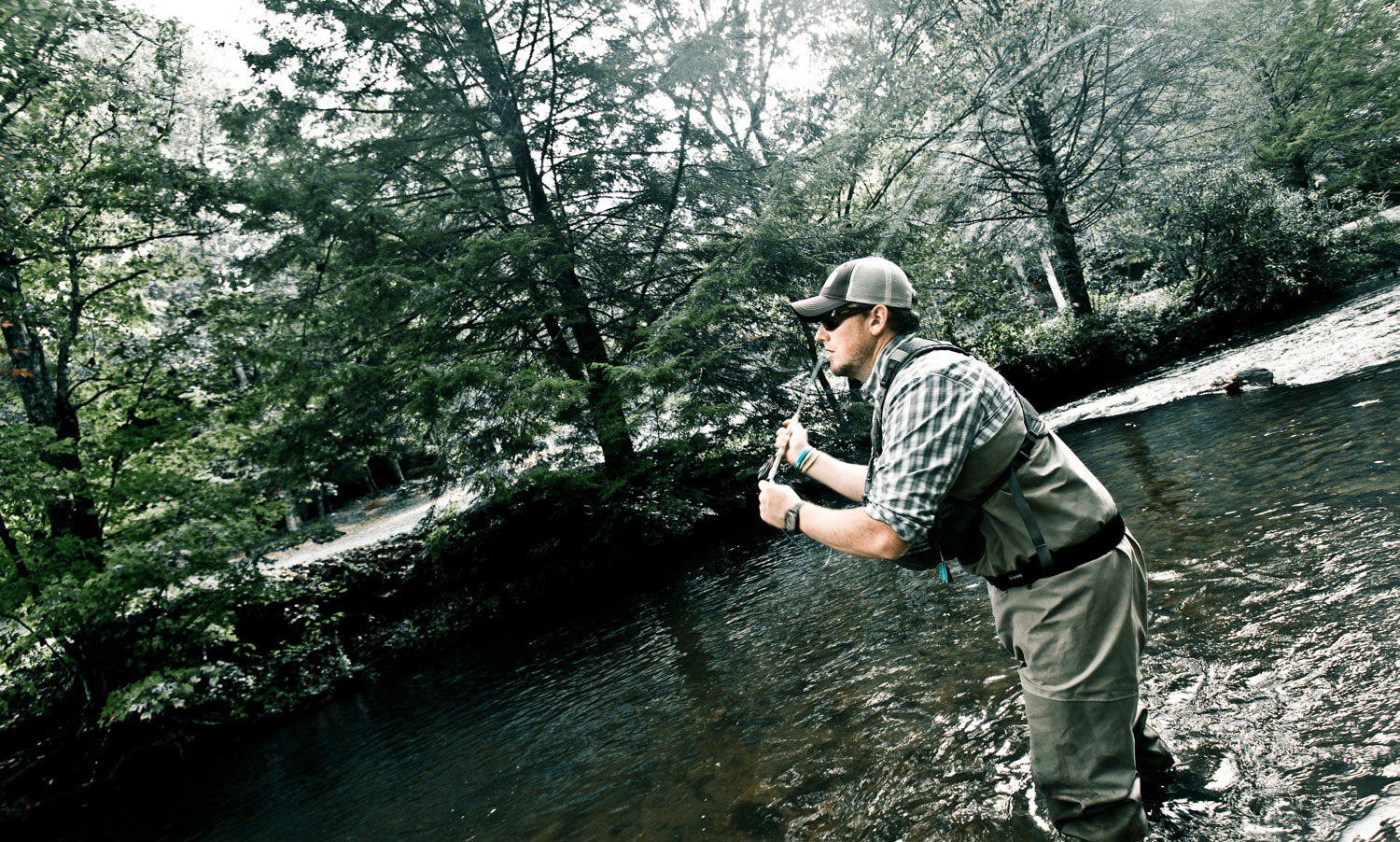
When we refer to a fly-rod as being fast or slow, what we are talking about is recovery rate.
Recovery rate simply means how quickly does the bent rod return to its natural, straight position. This recovery rate is inherent to the rod and can be observed whether the rod is under a load, as in casting a fly line, or just getting a good wiggle at the fly shop. The wiggle, however, is not a good test of recovery rate and even casting a rod it can be hard to judge the recovery against another rod without being pretty thorough about it.
So how do you quantify the recovery rate of a fly rod?
One method which is informal but better than the wiggle, is to grip the rod in your hand and punch that hand into the palm of your other hand. This gives the rod a very positive stop and if you pay attention you can judge how long it takes for the rod to flex down and back up. It works but is still pretty unscientific.
Steve Greist of Sage showed me a very cool trick for judging recovery rate and I asked him to share it. Steve has a pretty unique job at Sage. He is a materials designer and a pretty impressive dude. His job is to create new ways of combining carbon fiber and resins to create new materials, and those materials, more than anything else, determine recovery rate. When you hear about Sage’s Konnetic technology, thats what they are talking about, Steve’s material. He works directly with the companies who produce the fibers and his lab produces materials which sometimes go on to be used by companies like Boeing.
So to judge the recovery rate of his material, Steve does something interesting. He drops it. He makes untapered blanks and drops them on a hard surface. The impact sets off a vibration in the blank. This vibration is transferred into the air as sound waves, just like a guitar string or wind chime. The higher the pitch, the faster the recovery rate. Simply brilliant.
So if you want to judge the recovery rate of a fly rod, try dropping a mid section on the counter top at the fly shop. I’m not suggesting you simply buy the rod that sounds best but you will gather some good information to help you decide.
Here’s a question for you to think about. What was I doing in the Materials Lab at Sage? You will be finding out soon.
WATCH, AND LISTEN, TO THIS VIDEO TO SEE STEVE GREIST PERFORM A RESONANCE TEST IN THE SAGE MATERIALS LAB.
Read More »Fly Selection- as explained though a bag of Doritos
By Kyle Wilkinson
What’s more important, fly choice or presentation?
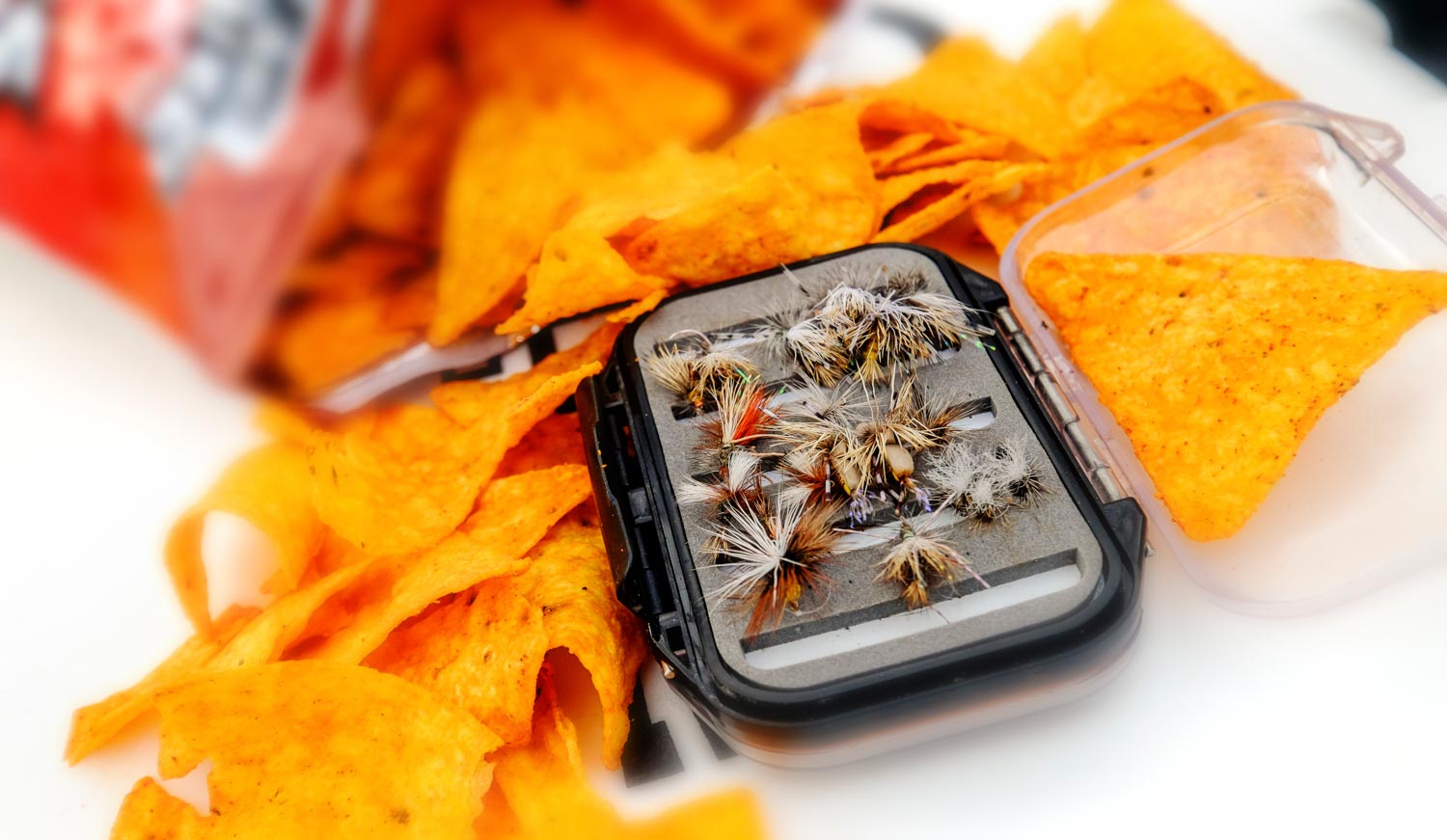
I’ve said it before and I’ll say it again, when it comes to trout fishing (in my opinion) most fish are going to care WAY more about a perfect drift than the exact ‘perfect’ fly- and this is coming from someone who makes a living on the pressured waters of Colorado’s Front Range. The analogy I use for this is with a Doritos chip. See if you can follow me on this one.
You’re hungry and thinking some chinese food sounds pretty good. While waiting on the chinese food to get delivered, someone shows up at your house with a bag of Doritos, opens them up and sets them on the table in front of you. Are you going to eat a few?
I’d say the answer is probably yes.
Even though Doritos might have been the last thing in the world you were thinking about eating, the fact that they were presented in such a way that you: A) had to essentially expend zero effort to eat a few; B) ‘make sense’ as a food source to us; and C) based off of memory taste darn good; the decision to dig in becomes an easy one.
So how does this relate to fly selection, you ask? Simple.
On the waters I fish, throughout the year we see all the standard Western hatches- BWO’s, PMD’s, Caddis, Stoneflies, Tricos, etc. With the wealth of information available online these days, figuring out what bugs are hatching during a certain time of the year has been made pretty simple. What I encourage you all to do – particularly the newer anglers reading this – is to turn down the dial on fly selection and turn up the dial on learning how to fish your flies perfectly.
Right now in Colorado, it is basically a midge and BWO game from a hatch standpoint. Read any local fishing report and you’re going to see many of the same flies being recommended – jujubaetis, Barr’s BWO emerger, Stalcup’s Baetis, Rainbow Warrior, Two-Bit Hooker, Pheasant Tail, etc. (There will also be a bunch of midge recommendations, but for now we’ll focus on the mayfly side of things.) So which one do you use? My answer:
Read More »Guiding Tip: Set Your Client Free to Build Confidence
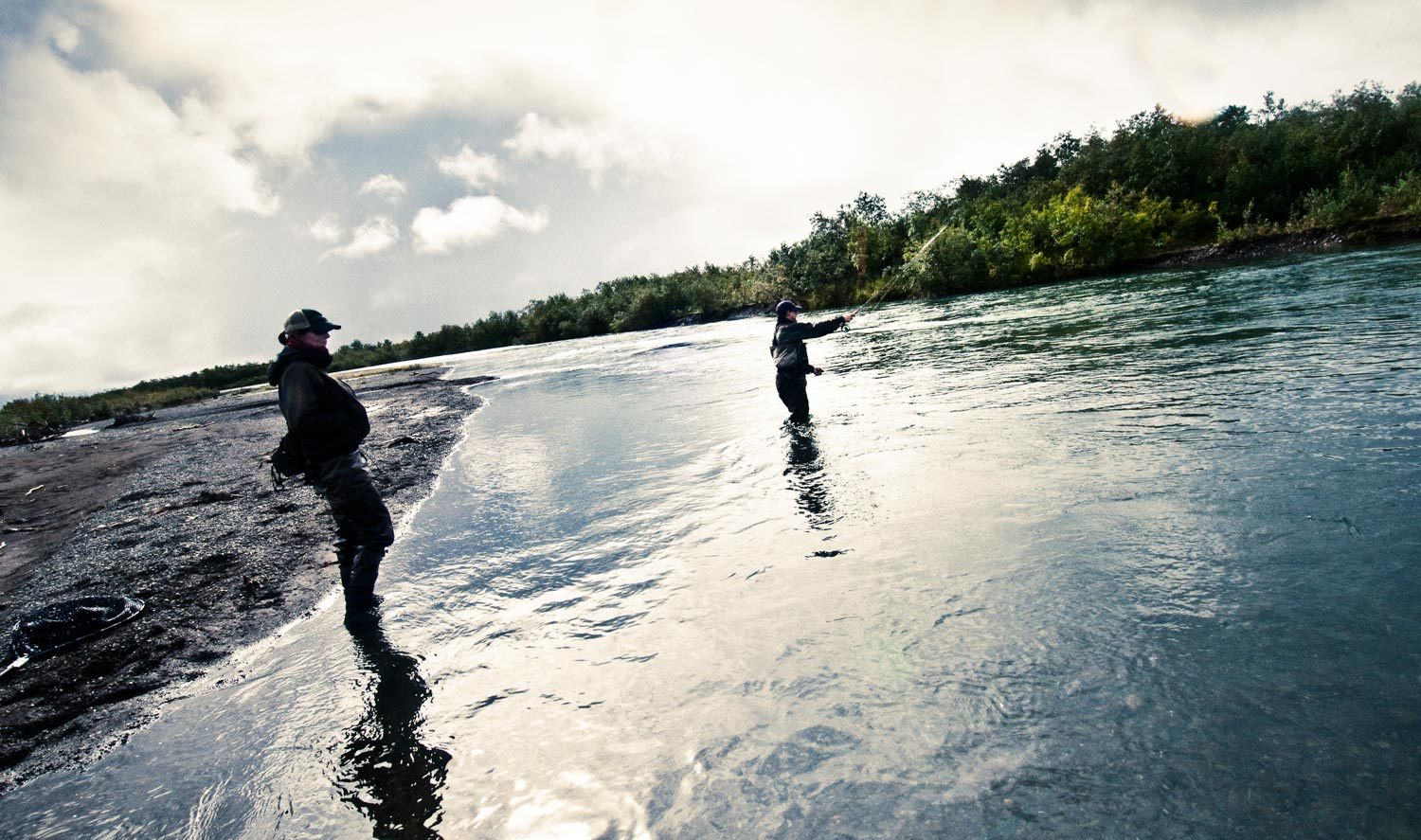
THIS POST IS FOR ALL THE PROFESSIONAL GUIDES OUT THERE WHO GIVE THEIR CLIENTS EVERY THING THEY’VE GOT EACH AND EVERY DAY. IT’S FOR THE PERFECTIONISTS, WHO TRULY BELIEVE FLY FISHING CAN NEVER BE 100% MASTERED AND ALWAYS SEE ROOM FOR IMPROVEMENT IN THEIR OWN PROFESSIONAL TEACHING SKILLS.
I’ve taken great pride over the years with my hands on style of trout guiding. When you take the time to explain the little details to your clients, and freely share what’s going on in your head, it really makes a big difference in them understanding the big picture. I’ve always believed catching fish should take a back seat to learning the how-tos of fly fishing. I’ve never seen much value in a client catching fish during a guide trip, if they can’t go out and replicate it on their own without me. It wasn’t until a few months ago, in fact, that I strayed away from my familiar guiding routine of holding onto the reigns.
Read More »3 Tips For Netting Trophy Trout From a Drift Boat
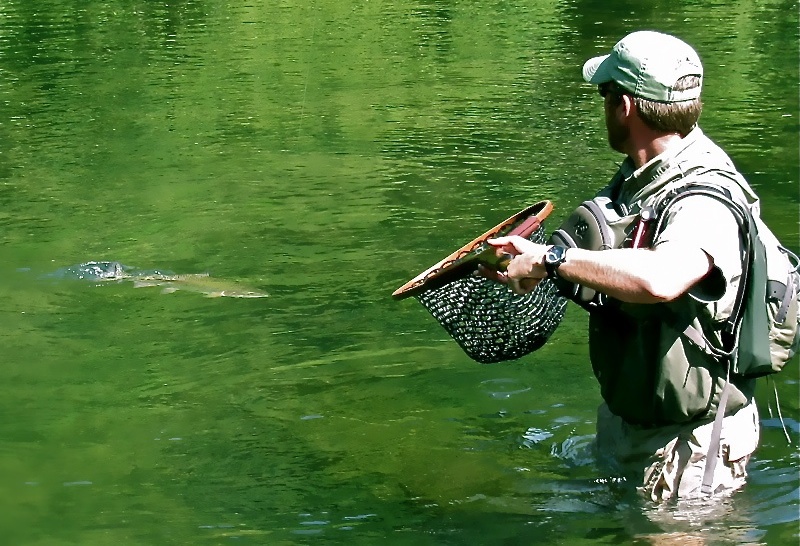
So you’re floating the river in a drift boat and your buddy just hooked into a trophy trout. What should you do next to ensure you land that trophy? Below are three tips for increasing your chances at netting that fish of a lifetime.
1. WHEN THE OPPORTUNITY PRESENTS ITSELF GET ALL YOUR FLY LINE ON THE REEL.
After you’ve set the hook, made a few strips to keep tension, and your jaw has dropped to the ground after seeing the giant beast at the end of your line, your next objective will be to find a good time to get all that excess fly line onto the reel. The last thing you want is the trophy fish making a blistering run, and your excess fly line catching on your boot, thigh brace, or rod butt resulting in a break off. When the trophy settles down and holds in a stationary position during the fight, this is when you should take the opportunity to reel in and get all of your fly line on the reel. Doing so you can let that $300 fly reel with a butter smooth drag to do its job.
2. USE YOUR DRIFT BOAT TO BLOCK DANGER ZONES DURING THE FIGHT.
Don’t keep your boat anchored up during a battle with a trophy fish expecting the angler to do all the work. Often the trophy will make a big run downstream or upstream, which will drastically lower the ability of the angler to control the fish. If you’re on the oars
Read More »Using XL Trout Beads As Attractors In Your Tandem Rig
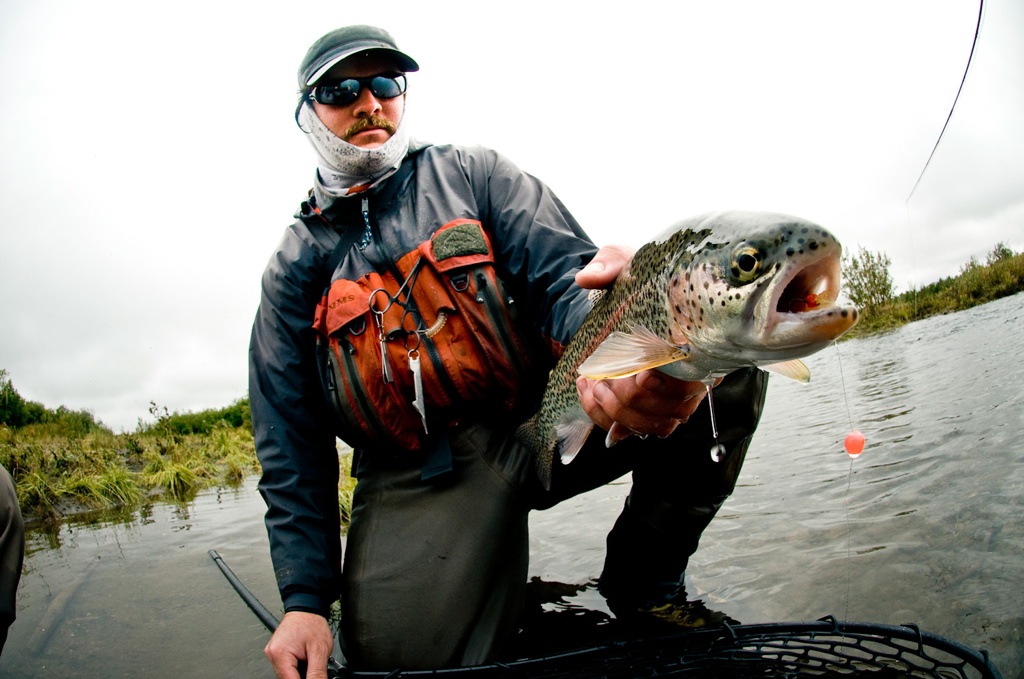
Back in 2006, I spent a season guiding in Alaska at Mission Creek Lodge.
It was a great experience and a hell of a lot of hard work, but I held my own and ended up representing well for Southeastern fishing guides. That doesn’t make me an expert on Alaska fishing by any means, particularly when compared to bad ass veteran alaskan guides like Andrew Grillos, TJ Zandoli, and Nathan Cornelius. That season in Alaska I was blessed with the opportunity to pick the brains and learn from some of the best bush guides in the area. One lesson I learned right off the bat was using an extra large attractor trout bead as my lead fly in my tandem bead rigs. Point being, matching the hatch and size of the eggs isn’t the only factor that plays into getting big trout to eat. The attraction factor you get by using a 10-12mm trout bead often sparks initial interest from big bows, persuading them to move in for a closer look. In most cases they’ll end up eating the smaller more appropriately sized bead, but it became very obvious to me how important a role, big attractor beads played in creating hookups.
Since then, I’ve experimented using big attractor beads on other trout waters in the United States. I often fish a 10mm trout bead in the top position with
Read More »Fly Fishing Bass Ponds 102
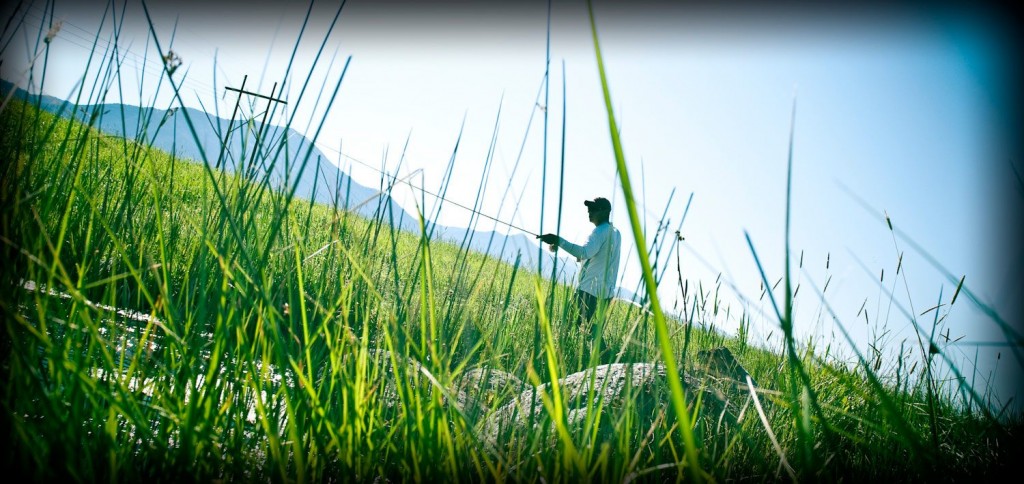
UNDERSTANDING DIFFERENT TYPES OF STRUCTURE AND HOW TO FISH THEM
I promised everyone I’d write a Fly Fishing Bass Ponds 102, if people showed enough interest from my 101 post. I was blown away from the emails and comments that flooded in, after the first post went live. I covered quite a few topics in the first post but here’s a few more tidbits of information for all you warm-water fly fishing junkies out there.
As a little kid, I was a bass fishing maniac. A good friend of my Father’s fished a lot of tournaments for fun and he took it upon himself to take me under his wing, and teach me the skills I’d needed to become a proficient bass fisherman. One of the greatest things he did during his mentorship was take me to several professional bass fishing seminars. On several different occasions, I had a front row seat to listen to Hall of Fame bass fishing legends like Bill Dance, Denny Brauer, Rick Clunn, and Larry Nixon. Notepad and pen in hand, I wrote as fast as I my fingers would move as the pros talked about how they consistently caught bass. It was at these seminars that I learned the behavior of bass and how to catch them. If you want to improve your warm-water fishing, I highly recommend attending a seminar in your area. Most are reasonably inexpensive, and If you don’t walk away with more knowledge afterwards, you either have an ego that needs to be checked, or you weren’t listening. Most of what you’ll find the professionals talking about is catered towards fishing large lakes, but almost all of the information can be converted and used for fishing on bass ponds.
One recurring theme I noticed is that everyone of those bass fishing legends talked in great detail about how important it was to understand and locate structure. Talking about bass structure is no different than me talking to my clients about reading trout water. Both are critical for anglers, because it allows them to quickly locate hotspots, but more importantly, it allows anglers to distinguish productive water from unproductive water. Structure is anything in the water that fish are drawn to that allows them to live comfortably and feeding efficiently. Structure serves two purposes for bass. One, it provides habitat that becomes a magnet for their forage food, and bass always live close to their food sources. Two, it provides highly efficient ambush points for bass to camouflage themselves so they can feed easily. Structure can be above the surface, on the surface or below the surface. Just remember that there’s two main types of structure. The first is cover, such as lily pads, weed beds (ex. hydrilla or millfoi), overhanging foilage along the banks, docks or floating or submerged wood cover. The second form of structure is irregularities of the bottom and composition of the water you’re fishing. Examples of this would be creek channels, flats adjacent to deep water, edges (sand or mud bottom substrate changing to rock or deep weed beds meeting open water). If you’re lucky enough to ever find both types of structure together you’ve hit the jackpot. It should be loaded with a high concentration of bass, and should also hold fish pretty much year round. Search out, locate and spend your time focusing on fishing these two types of structures, and you’ll eventually find success. Again, this concept is just like trout fishing, where I instruct my clients to pass over empty or dead water and search out prime habitat that provides trout what they need to survive. The only time structure can be thrown out the window is when bass are chasing baitfish out in open water. It’s not really a problem in bass ponds though, because there’s usually not enough water available, but keep it in mind, if you’re fishing larger water in a boat, and you see bait fish activity on the surface and sporadic topwater bites, it should be a clue that bass are chasing baitfish. However, even in this scenario, there’s a good chance structure will be located near by because bass use it to corral and concentrate the schools of baitfish to feed on them more efficiently. In ponds bass usually corral forage food to structure or to the banks.
Aquatic Vegetation
Generally, there’s two kinds of aquatic vegetation you should locate and fish. The first type are weed beds that root from the bottom and grow to the surface, forming mats. Examples of this kind of aquatic vegetation would be lily pads, hydrilla or milfoil. You’ll want to be fishing fly patterns here that have good weed guards so you can retrieve your fly without snagging or picking up vegetation every cast. I focus first on presenting my fly to the edges of the surface vegetation, where the weeds stop and the open water begins. After I do that, I’ll then cover the vegetation with follow up presentations inwards. Working my way farther and farther into the vegetation, with each consecutive cast. Don’t make the mistake of thinking, that just because the weeds are thick that the bass can’t see your fly well enough to eat it. I’ve caught some of my largest bass on ponds in places like this. I’ll never forget a nine pound bass I landed, that busted through a solid foot of hydrilla to eat my fly. There’s no way it could have seen my fly, but it utilized its inner ear and lateral line together and that allowed it to pickup enough subtle high and low frequency vibrations to track my fly in the water, just like state of the art radar or sonar equipment. Lastly, look for openings or pot holes in surface vegetation mats. Work your fly over the mat and when you get to the open spot, let it rest or sink into the hole. Bass often will hold close to the locations, but it’s also one of the few spots you can present your fly below the vegetation in these areas, and that will allow you to get your fly closer to the bass and increase your chances of hooking up. My two favorite flies for fishing surface vegetation are weedless frog patterns and long weedless worm style flies (long zonker or palmered chenille flies). One main tying material I use for these worm patterns are wide shoe lace strings that you can purchase at your local sporting goods or foot locker store. They usually have them available in most colors, even fluorescent and chartreuse. One day I’ll showcase the fly pattern on the blog. For now, hopefully it will spark enough interest for you to experiment tying a similar version yourself.
The second form of aquatic vegetation you’ll run into is deep water weeds. You won’t be able to see it but you’ll notice tidbits of it fouled on your fly after retrieves. They usually are found in five to ten feet of water. Sometimes more or less depending on how clear or muddy the water is. Theres always a little space between the weeds and the bottom, and that’s where the bass like to hold. A tungsten cone head long worm style fly does a great job of working through the grass without picking it all up. It’s tedious fishing, but there are times when the bass will be concentrated in this deep water vegetation on ponds and you’ll find great success if you
Read More »