
Saturday Shoutout / A Dog Named Kalik
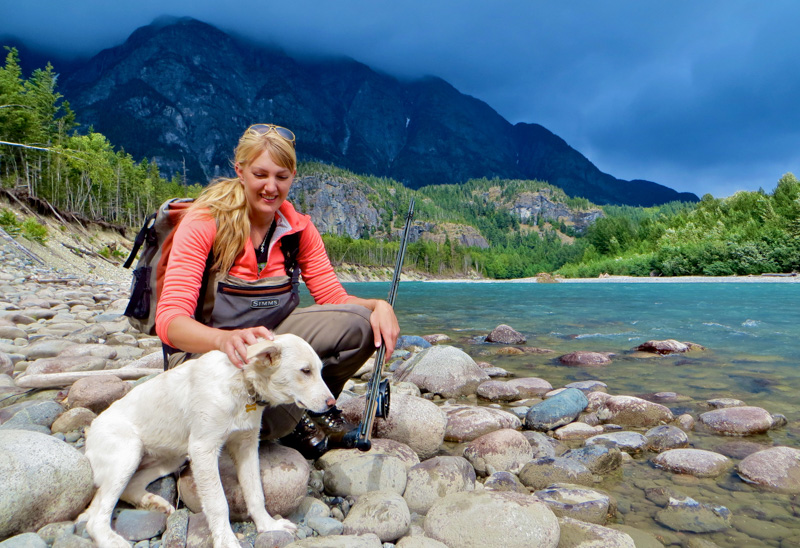
THIS WEEK’S SHOUTOUT IS NEAR TO MY HEART.
Anyone who knows me knows that I’m a sucker for dogs, especially Bahamian Potcakes. They also likely know that my two favorite place to fish are South Andros and The Dean River in B.C. What everyone doesn’t know is that I am truly, madly, deeply in love with a certain little potcake named Kalik.
I was there on South Andros when Kara Knight adopted this awesome little puppy. It’s a truly great story and far too modestly told. Kara saved this sweet little dog, who was very sick, from a certain end. Now she’s Kalik The Steelhead Dog, and princes of The Dean.
Potcakes are the worlds best dogs. If there’s room in your home for one you should not hesitate. Check out Kara’s story and follow the link to learn how you can adopt a Bahamian Potcake.
A Dog Named Kalik
Read More »The Land Before Time
By Carter Lyles
THE UNITED STATES GOVERNMENT IN 1867 BOUGHT THE 49TH STATE,
twice the size of Texas, for two cents an acre from the Russian Empire, who feared that it could be seized by Britain if war were to break out. The territory officially became part of the United States on January 3rd of 1959 under the Eisenhower Administration.
If you have ever been to the great state of Alaska, then you would know that it is literally like taking a step back in time. With just 1.2 persons per square mile (quickfacts.census.gov) you are truly in complete touch with the good Lord’s work. Tremendous mountains with snow capped tips, astonishing rolling green valleys as far as the eye can see, a plethora of the most startling plant life on the Earth, an astronomical wonder of breathtaking lights in the sky that indicate you are far away from human intervention… The rivers wind their way throughout the mystic grounds carrying large populations every summer of big, fat, healthy salmon who travel miles up river to spawn.
If this proposed plan, known as “Pebble Mine,” were to take affect, it would pollute Bristol Bay tremendously, one of the worlds, and Alaska’s, most productive wild salmon strongholds.
The Pebble Limited Partnership, consisted of Anglo American (whom recently backed out) and Northern Dynasty Co., discovered that The Pebble deposit, located in the headwaters of the Kvichak and Nushagak Rivers, holds massive amounts of gold, copper and molybdenum. The Kvichak and Nushagak Rivers are two of the eight major rivers that run into Bristol Bay. Their proposal is to construct a Pebble Mine complex on these rivers that would span twenty square miles in the Bristol Bay watershed.
The Pebble Mine would also demand the world’s largest earthen dam, 700 feet high and several miles in length, be built. This dam would hold back a 10-square-mile containment pond that carries from 2.5-10 billion tons of
Read More »Using XL Trout Beads As Attractors In Your Tandem Rig
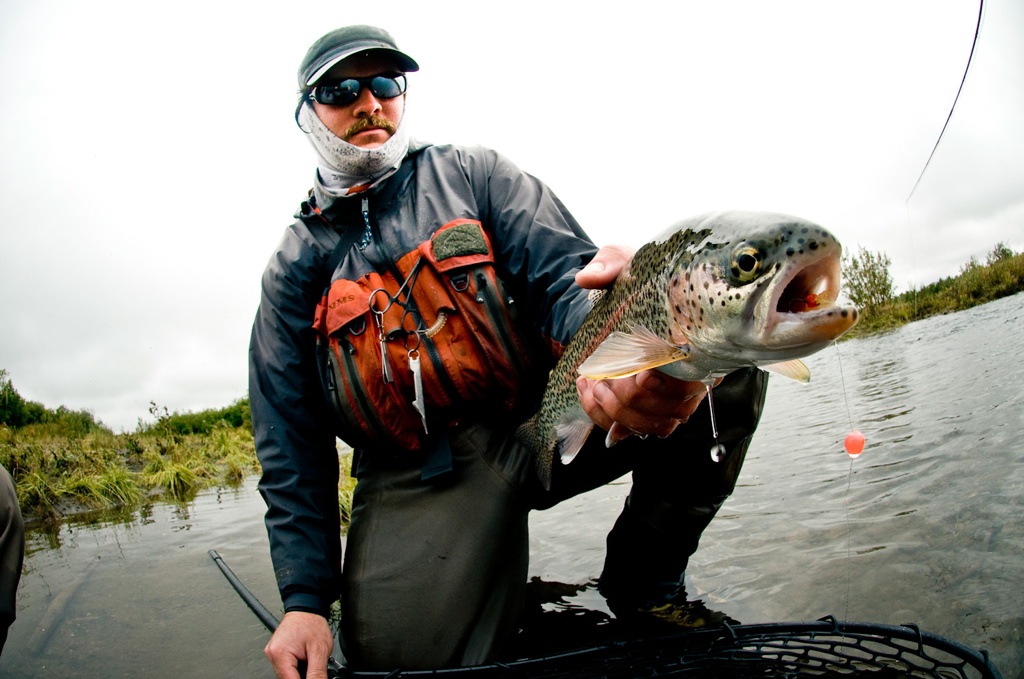
Back in 2006, I spent a season guiding in Alaska at Mission Creek Lodge. It was a great experience and a hell of a lot of hard work, but I held my own and ended up representing well for Southeastern fishing guides. That doesn’t make me an expert on Alaska fishing by any means, particularly when compared to bad ass veteran alaskan guides like Andrew Grillos, TJ Zandoli, and Nathan Cornelius. That season in Alaska I was blessed with the opportunity to pick the brains and learn from some of the best bush guides in the area. One lesson I learned right off the bat was using an extra large attractor trout bead as my lead fly in my tandem bead rigs. Point being, matching the hatch and size of the eggs isn’t the only factor that plays into getting big trout to eat. The attraction factor you get by using a 10-12mm trout bead often sparks initial interest from big bows, persuading them to move in for a closer look. In most cases they’ll end up eating the smaller more appropriately sized bead, but it became very obvious to me how important a role, big attractor beads played in creating hookups.
Since then, I’ve experimented using
Read More »Johnny’s IFTD Rundown: Fly Fishing Gear You’ll Love
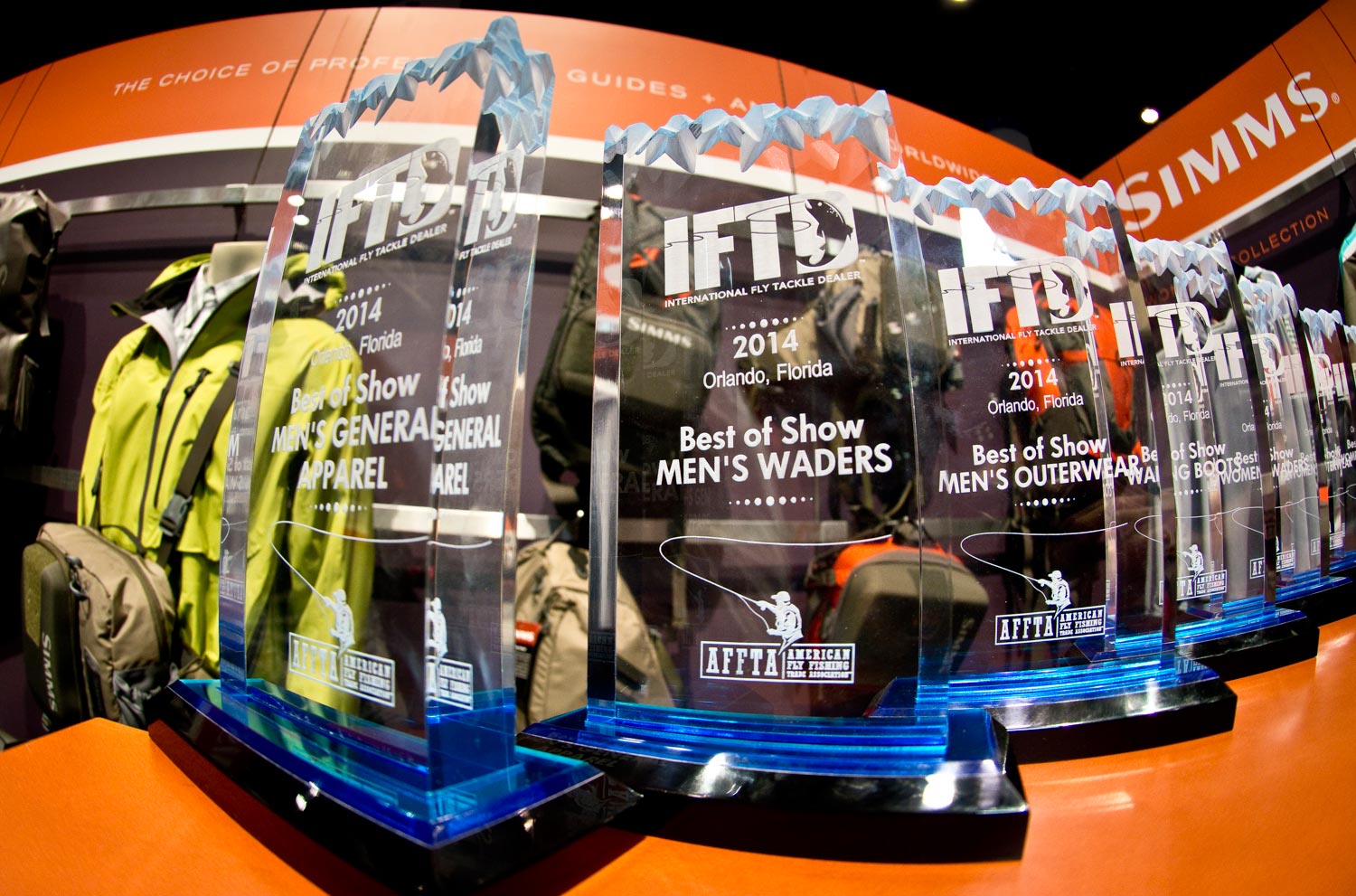
I JUST GOT HOME FROM IFTD AND I’LL TELL YOU ONE THING, FLY FISHERMEN ARE GOING TO HAVE SOME PRETTY SWEET STUFF TO TRY OUT NEXT YEAR. HERE IS A BRIEF OVERVIEW OF WHAT I SAW AND WHAT I LIKED.
Fly Lines
There were a ton of new fly lines from companies like Scientific Anglers, Rio and Airflow. There were a lot of innovative and specialty trout lines that should help you get more and more out of one fly rod. While I’m in the business of selling rods, its pretty cool to be able to switch out fly lines and make one rod much more versatile. I’m really excited to get some of these lines on the water for a real test and I’ll hold off on judgment until then.
Rods
I was very impressed with a few new rods at the show. One of my favorites was the Winston Nexus. The Nexus is a 100% American made rod that casts beautifully and only costs $475. For all of you who are familiar with Winston, this rod is a steal. I cast most of them, but my favorite was the 8’ 4wt, it was deadly accurate and I can’t wait to put it to a real test on the river and not in a casting pool.
I was happy to see Sage using their Kinetic Technology in their saltwater rods. The appropriately named “Salt” is a flats fishing beast. Its light in the tip, super accurate and has the backbone to really put the wood to our saltwater friends. This rod is a home run in my opinion and I can’t wait to put it to the test.
Tippet
Hatch has expanded from reels into fly lines, tippet, shock tippet and leaders. Further testing needs to happen, but if their lines are anything like their reels, they will kick ass.
Packs and Bags
Fishpond continues to be an innovative force in the fly fishing world. Their new sling packs and waterproof bags look great and are both functional and environmentally friendly. It’s worth mentioning that the sling pack is made to hold a pistol. That’s different.
Vedavoo is a pretty kick ass company, specializing in high end, American made packs and bags. Their well thought out design fits like a glove and its customizable features give you the option to make any kind of sling pack, hip pack or chest pack perfect for you. Check them out. Its good livin.
Sunglasses.
I’m sure you all know this, but eye wear is important. Very important. I would rather sell someone a $250 pair of sunglasses and a $600 dollar rod then a $800 rod and a $50 dollar pair of glasses. Why? It is very hard
Sunday Classic / Keeping a Buffer Between You and the Fish
By Kent Klewein
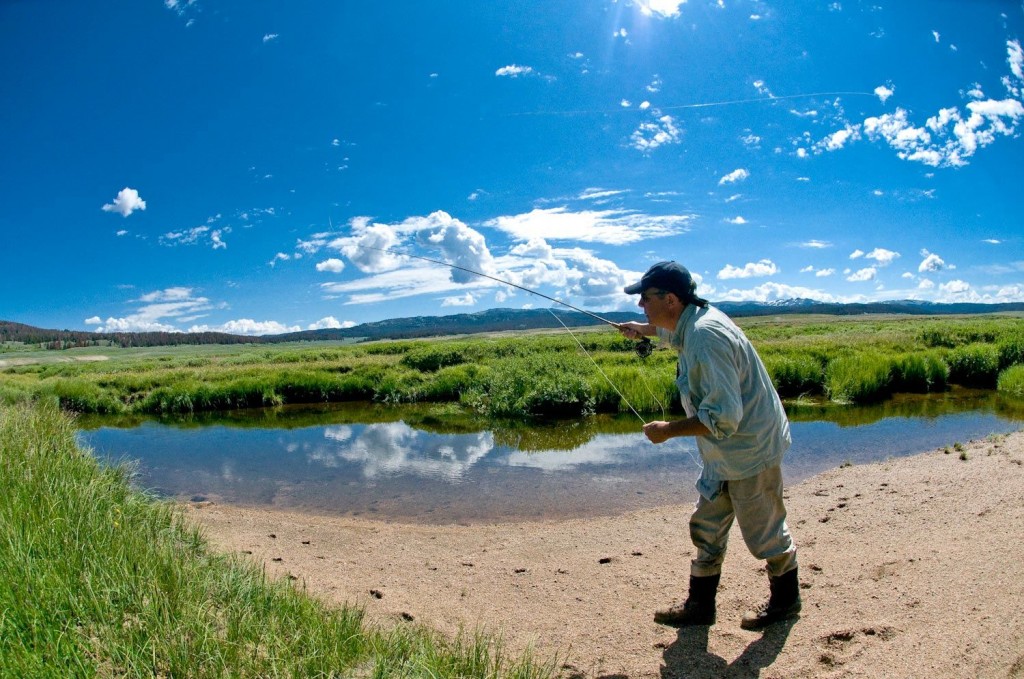
MOST FLY ANGLERS WOULD AGREE THAT SUCCESS IN FLY FISHING IS OFTEN DETERMINED BY HOW WELL THEY CAN STAY OUT OF SIGHT FROM THE ASTUTE FISH THEIR TRYING TO CATCH.
If your finned adversaries are able to put a bead on you (identify you as a threat), there’s a good chance they’re going to ignore your flies or even worse, run for cover. Your ability to maintain a small signature on the fish’s radar should always be high on your objective list when you’re on the water fishing. Failing to do so, you’re going to be setting yourself up for defeat before you even make your first cast. So make a point to keep a sufficient buffer between you and the fish when you’re working water, and it usually will yield you higher catch rates.
There’s several variables anglers should look at and weigh-in to determine the size of the buffer they should maintain. Fast moving riffles (choppy water), freshly stocked fish, dingy water, overcast skies or fish positioned deep in the water column, are all variables that generally shrink the size of the buffer needed by anglers. Trout in these conditions usually feel relatively comfortable and safe, and therefore you can get away with moving in order to make precise presentations. On the other hand, if you’re dealing with flat water (slow moving or calm water), crystal clear water, wild educated fish or fish holding closer to the surface, anglers should keep as large of a buffer as they can, without losing their ability to execute a good presentation and drift.
It’s important to note that I think
Read More »Saturday Shoutout / Romano X 8
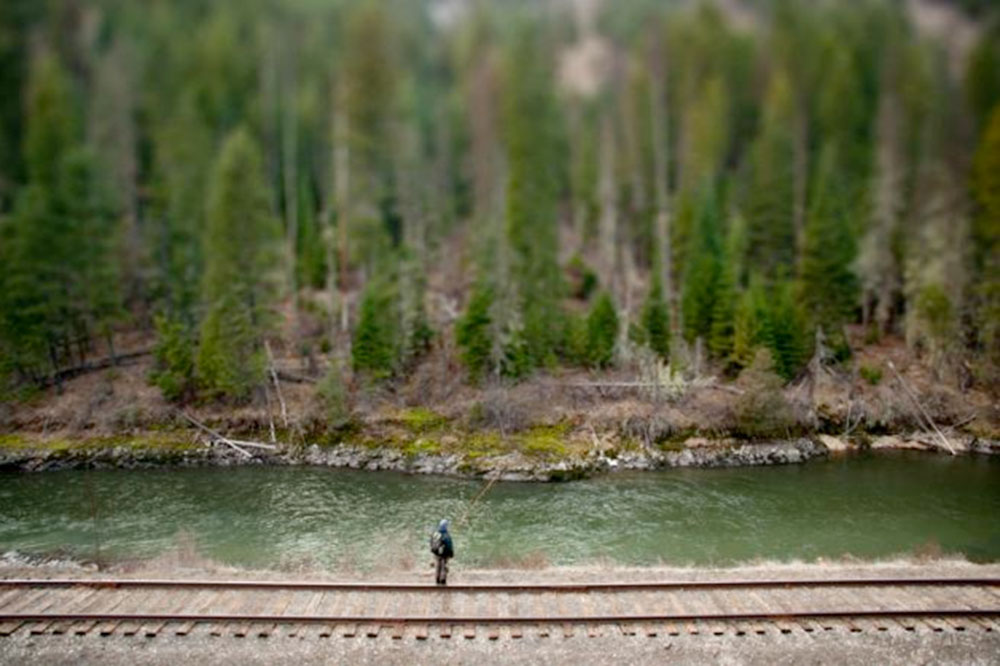
THERE ARE A WHOLE LOT OF GUYS OUT THERE SHOOTING FLY FISHING IMAGES.
Many of them are doing a really good job of it. However, and I don’t mean this to sound cocky, there are not a lot of them who’s work I covet. I seldom look at another photographer’s work and think, “I wish I shot like that.”
The one guy that consistently happens with is Tim Romano. It’s not because of Tim’s technique or because of the amazing places he visits. Both are pretty damned impressive but that’s not what I love about his work. It’s his eye.
That is to say that Tim just sees things I feel like I miss. Subtle things. Beautiful things. Things that when tied together tell a story that is greater than the sum of its parts. When Tim Romano writes a pot on Fly Talk titled “The 8 Best Fishing Photos I’ve Ever Taken,” you bet it gets my attention.
Tim writes;
As Kirk Deeter once said to me 11 years ago: “Understanding that it isn’t about the fish – it’s about the miles you travel and people you meet in order to find them.”
Some of you might object to this selection of my 8 favorite fishing photos as there’s more birds in the photos than fish, but that’s the beauty of such a subjective art. These are what I feel are my most finely crafted, fondest memories on the road and what I consider to be some of my best images that tell the story of some fishing adventure.
If you’re interested in that adventure, travel on over to Fly Talk and check out Tim Romano’s
The 8 Best Fishing Photos I’ve Ever Taken
Read More »Fly Vines
By Carter Lyles
IFTD WAS AN AMAZING OPPORTUNITY FOR US TO SEE ALL THE DIFFERENT FLY-FISHING PRODUCTS OUT THERE.
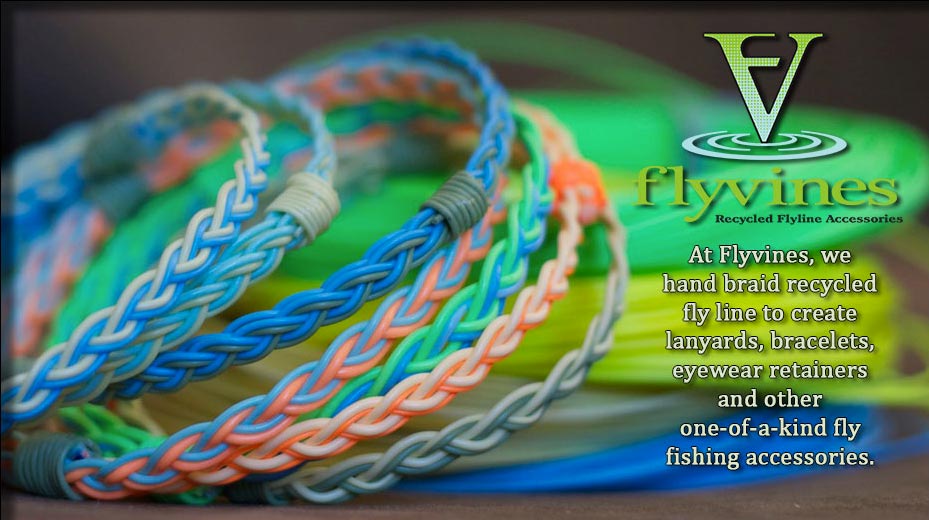
One business that stood out to me was a company called Fly Vines. Based out of Missoula, Montana, Fly Vines was started by Erin Kane who saw the potential in using recycled fly line to create accessories that she could turn around and sell. She currently makes bracelets, lanyards, and eyeglass retainers out of fly line. How freaking cool is that?
I took five bracelets home with me from IFTD and within the first day I was back in St. Simons, friends took them all. Thankfully I still have mine on my wrist as well as a pair of eyeglass retainers for my Chromapops! It has almost been a week and I have received so many compliments on my Fly Vines accessories that I’ve actually saved their website on a tab on my phone so that I could show people where I got it from!
Why do I like Fly Vines so much? Because first of all anything made with fly line is cool and secondly it is something totally new, innovative and upcoming. Each accessory comes in an array of different colors and I’m surprised Erin can make them as fast as she does! Take the time today to check out their website and place an order for some really awesome products!
Read More »Trout Streamers And The Problem With Pushing Water
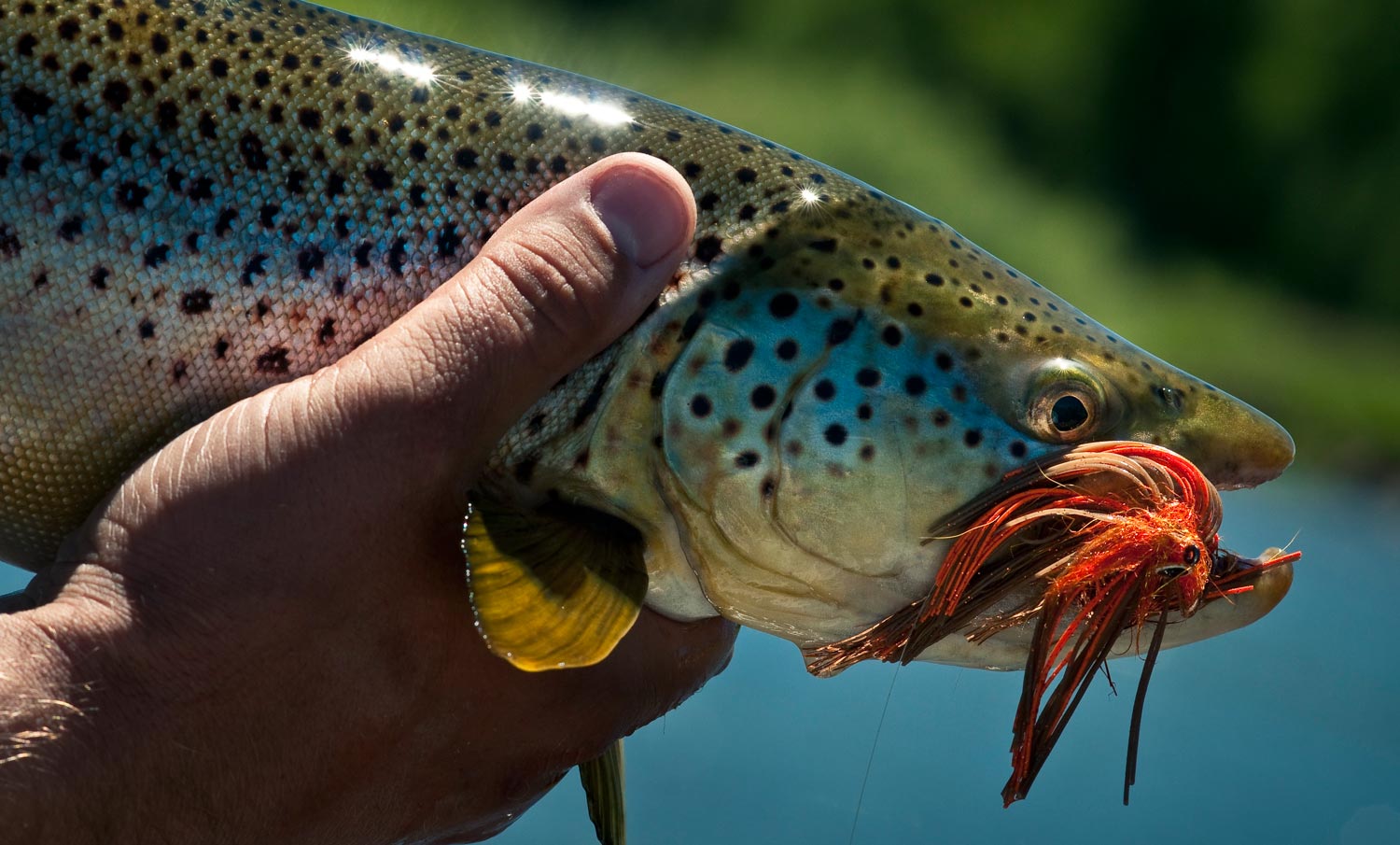
THAT FLY PUSHES A LOT OF WATER, BUT DOES IT CATCH A LOT OF FISH?
Like most human endeavors, fly fishing is subject to fads. One of the latest fads in the sport is flies designed to push water. Largely fueled by the increased popularity of musky fishing with the fly rod, fly tyers are pushing the boundaries like never before. Streamer patterns commonly resembling something Tina Turner might have worn in Mad Max are the norm and nothing is off limits. It’s the Wild West.
The mantra of most folks tying these flies is “push more water.” The idea behind pushing water is simple. A large fly with a blunt head displaces a lot of water when stripped. Fish “hear” this water displacement through their lateral line and it helps them key in on the fly. Nothing wrong with that logic. It’s all true.
When fishing for species like musky or redfish which rely on sound more than sight to hunt, it’s a truly important principal and flies that push water produce. But it’s not always the most important element of a fly’s design. In fact, when this idea that a fly must push water makes it’s way into trout fishing it often causes more problems than it solves.
Trout are predominantly visual feeders. They live in clear water where their excellent vision is their greatest asset. This is not to say that they pay no attention to what they hear or smell but they do not aggressively eat midges because they push water.
It’s much more important that a trout see your fly than hear it. When streamer fishing for big trout, the fly needs to get in their face. Like a small fish invading their space. That’s what triggers his predatory response. The biggest challenge In showing a trophy trout your fly is getting it down to his depth. That’s a hugely important task. The trout feels safe in his holding zone. Asking a big experienced trout to show himself is asking a lot. Think about the really big fish you’ve caught. Did you see the eat, or did it happen in that zone just below where you could see?
There is a very popular idea that fishing unweighted streamers on sinking lines is the only way to catch big trout. Kelly Galloup, who I both like and deeply respect, has pushed this idea to the forefront of popular thinking but Kelly lives on and fishes the Madison, a ninety mile riffle where this technique works well. It’s not the best method on every river.
In most rivers, the largest fish live
Read More »Choosing The Right Color Lens For Your Fishing

By Kent Klewein
POLARIZED SUNGLASSES ARE ONE OF THE MOST CRITICAL PIECES OF GEAR AN ANGLER CAN EQUIP THEMSELVES WITH ON THE WATER.
They significantly cut down the glare on the water so you can spot fish and read water more effectively. Without them an angler can feel naked and ill-equipped. Polarized sunglasses play so many important roles in everyday fly fishing, and making a point to choose the right lens color before you hit the river can end up adding or subtracting to your overall success on the water. I carry two different pair of sunglasses with me at all times. Depending on the fishing location, time of day, and available light, I’ll choose one over the other.
Yellow Lens (Low Light Conditions)
Early morning and late evening hours when the sun is low in the horizon and off the water I prefer to wear polarized sunglasses with yellow lens. They increase the contrast and brighten everything a couple notches. I also prefer yellow lens when I’m fishing heavily canopied streams. Sometimes even in the middle of the day, there are many places where the sun doesn’t penetrate the canopy, and you’ll find yellow lens are the only way to go for these shady low light conditions. Nasty weather days when its cloudy and rainy, yellow lens perform well. The winter brings with it limited sunshine on the water, since the sun doesn’t move across the horizon as high, and wearing yellow lens solves this problem. You don’t want to go 100% with a yellow lens for every day fishing though. During high light levels you won’t get the contrast you’ll need, but they do perform extraordinarily well in niche low light situations.
Amber Lens (Moderate to High Light Conditions)
If you only had the luxury to choose one color lens for fishing, there’s no better color choice than amber
Fly Fishing Gear Trends For 2015
WE JUST GOT BACK FROM IFTD AND THERE ARE SOME PRETTY CLEAR TRENDS FOR THE COMING YEAR.
The IFTD show is an exciting event. A great opportunity to have a look at what’s coming up in fly fishing gear. This was my 10th IFTD show and it only gets more fun every year. Sometimes products seem to come out of nowhere and other times there is a definite zeitgeist. This was one of those years. There are some trends that I’m pretty excited about and I think you will be, too.
The big news is that fly fishing is about to get a lot more affordable. I’ve been saying for years that what the industry needs is a mid-priced American-made fly rod. In 2015, I’m getting what I asked for in spades. Several rods for both freshwater and salt will be hitting the market for about $425 from the likes of Scott, Winston and Orvis and the Accel from Sage at $595. Quality, made-in-America rods from some of the best manufacturers in the business. I can only see this trend growing and that’s good news for fly anglers.
Asian rod prices seem to be on the fall as well. Echo is bringing some very good rods to market for as little as $89! Rod manufacturers who are already in the mid price range are expanding their offerings. Mystic has some very interesting Spey rods and a women’s rod for the coming year.
Fly rods are not the only gear that’s getting more affordable. One of the most exciting things coming next year are some truly affordable waders from Simms. The new headwaters wader line is pretty impressive. You will now be able to buy Simms Zipfront waders for $399.
There’s also good news on the way for women and kids. A few more women-specific rods and waders are on the way as well as some nice technical apparel from companies like Mavin Fly. One of the coolest things I saw are the kids sling packs from Veedavoo. These packs are just as technical as the adult packs but scaled down for anglers who are small but serious.
Several of the big name rod companies are making a move to
Read More »