
Packs And Storage From Umpqua
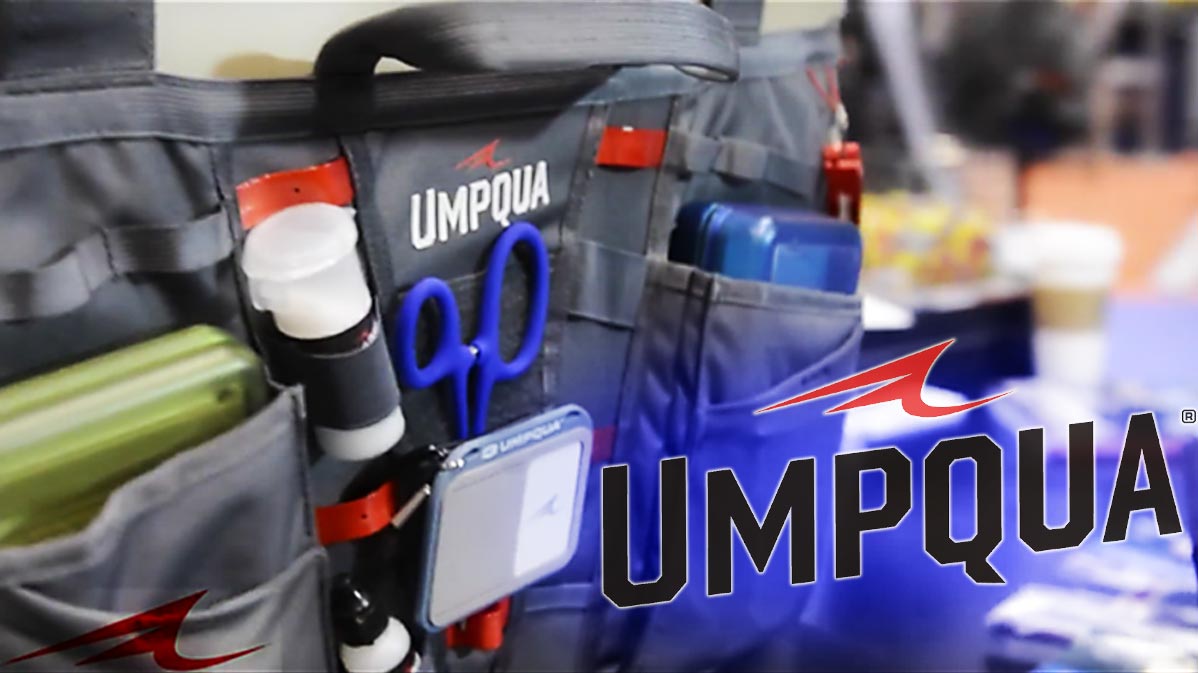
EVERY ONCE IN A WHILE A NEW PRODUCT MAKES YOU ASK, WHY DIDN’T I THINK OF THAT?
Umpqua’s new Tailgater Organizer is one of those brilliant idea that makes us all slap our foreheads. Made to fit an inexpensive Rubbermaid container this organizer and workstation makes getting on the water faster and more efficient. It’s one of the coolest ideas I’ve seen this year.
Umpqua has a few more tricks in its bag this year. A new line of fully waterproof fishing packs that are super tough and packed with features, including a pretty cool rod holder that lets you go hands free or even carry a second rod, rigged and at the ready.
WATCH THE VIDEO FOR ALL THE DETAILS.
Read More »Fix Your Tailing Loops Once and For All
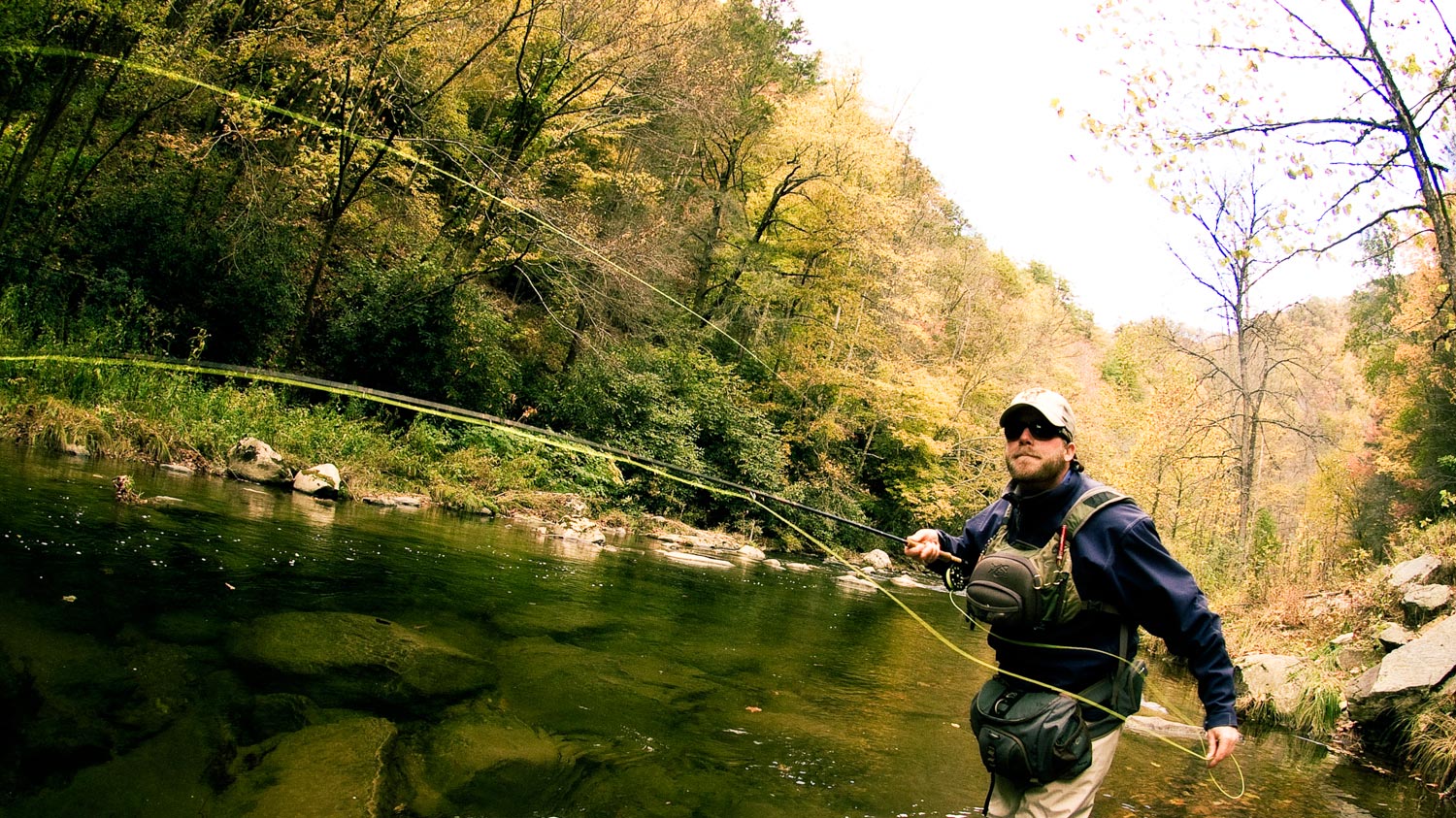
Tailing loops are maybe the most common problem in fly casting and they are remarkably easy to fix.
During our last Bonefish School in the Bahamas we had a great conversation about tailing loops with good friend Michael White. Whitie’s approach to fixing tailing loops is so concise and on point, you could watch our anglers’ casts improve before your eyes. Guys who had been plagued by tailing loops for years seemed cured like the faithful in a revival tent.
Tailing loops are simple, if you don’t get mired down in the physics. There are two things that cause them and most anglers who throw tailing loops do both. The real key to solving the tailing loop quandary is to relax and take a deep breath.
THE TWO CAUSES OF TAILING LOOPS
The Jackrabbit Start
The casting stroke requires a smooth application of power to an abrupt start. We’ve all heard that but for some reason it goes straight out of our heads when we start trying to add distance to our cast or turn over our leader. We revert to the first thing our muscles ever learned about throwing something farther. Throw harder and faster. That works with balls but not with fly lines. We end up trying to fix problems with our technique by adding power and more bad technique. You can see where this is headed, right?
I like Lefty Kreh’s analogy for a good casting stroke. It’s the same action you would use if you were trying to throw wet paint off of a brush. You’d start smooth, no jarring motion to slop the paint back on you, then you’d speed up once the whole thing is in motion. Finally you’d stop hard to send the paint flying. This is nothing new but it’s a brilliant metaphor. Your arm understands it.
Creep
The second cause of tailing loops is creep. Creep is when you start inching your rod forward before your line fully straightens out behind you. Ironically, creep is often caused by anxiety about your jackrabbit start. Creeping leaves you with a shortened stroke once your line does straighten and, in an effort to power the line, most anglers return to the jackrabbit start. This is what make tailing loops such a devilment. It turns into a vicious cycle.
Fixing creep is easy.
Read More »Fly Fishing and Tapping into your Subconscious
OUR SUBCONSCIOUS STAYS TWO STEPS AHEAD OF OUR CONSCIOUS THINKING, PUTTING US IN A ZONE ON THE WATER.
One of the most stimulating and interesting TV shows that I take the time to watch every chance I get is “Through the Wormhole” on the Science Channel. Go ahead and call me a geek, I find the show inspiring and can’t help to think if I’d been forced to watch this show as a kid I’d probably be three times as smart as I am today, and would have made it much further in my advanced education. “Through the Wormhole”, is hosted by the great actor Morgan Freeman, and it runs segments on all facets of life, discussing such topics as advanced science and mathematics, space travel and the human brain. The other day couch surfing and flipping through channels on the TV, I stumbled upon the show and quickly found myself glued to the screen as it talked about the mysteries of our subconscious, and how it’s used every waken moment of our lives.
Neuroscientists have prooved that the human brain constantly uses our subconcious to guide us and sway our decision making. The show talked about how it’s our subconscious that allows musicians to memorize and perform extraordinarily difficult pieces of music perfectly by keeping their mind and muscle control in harmony. I assume it’s very similar to how professional athletes are able to put themselves in a zone during a game by using their subconscious, then making game winning plays. It was explained that our subconscious always stays two steps ahead of our conscious thinking, and that it’s a major driving force that keeps us out of danger and allows us to use our gut feelings to make spontaneous decisions correctly when we lack the information needed. The show went on and on, in great detail about how humans benefit from their sub-conscious, and then backed it all up by doctoral research and testing. In the end, the show concluded that in the future, if humans can learn to regularly tap into their subconscious we’ll be able to be more healthy, become significantly smarter and more creative than we can possibly imagine.
After I finished watching that particular episode of “Through the Wormhole”, I began thinking about what degree our subconscious plays in our fly fishing. For years, I’ve felt like my subconscious has allowed me at times to put myself in a zone on the water. Allowing me to amplify my senses and get extremely focused when the fishing conditions demanded it. I now believe
Read More »Opening Day
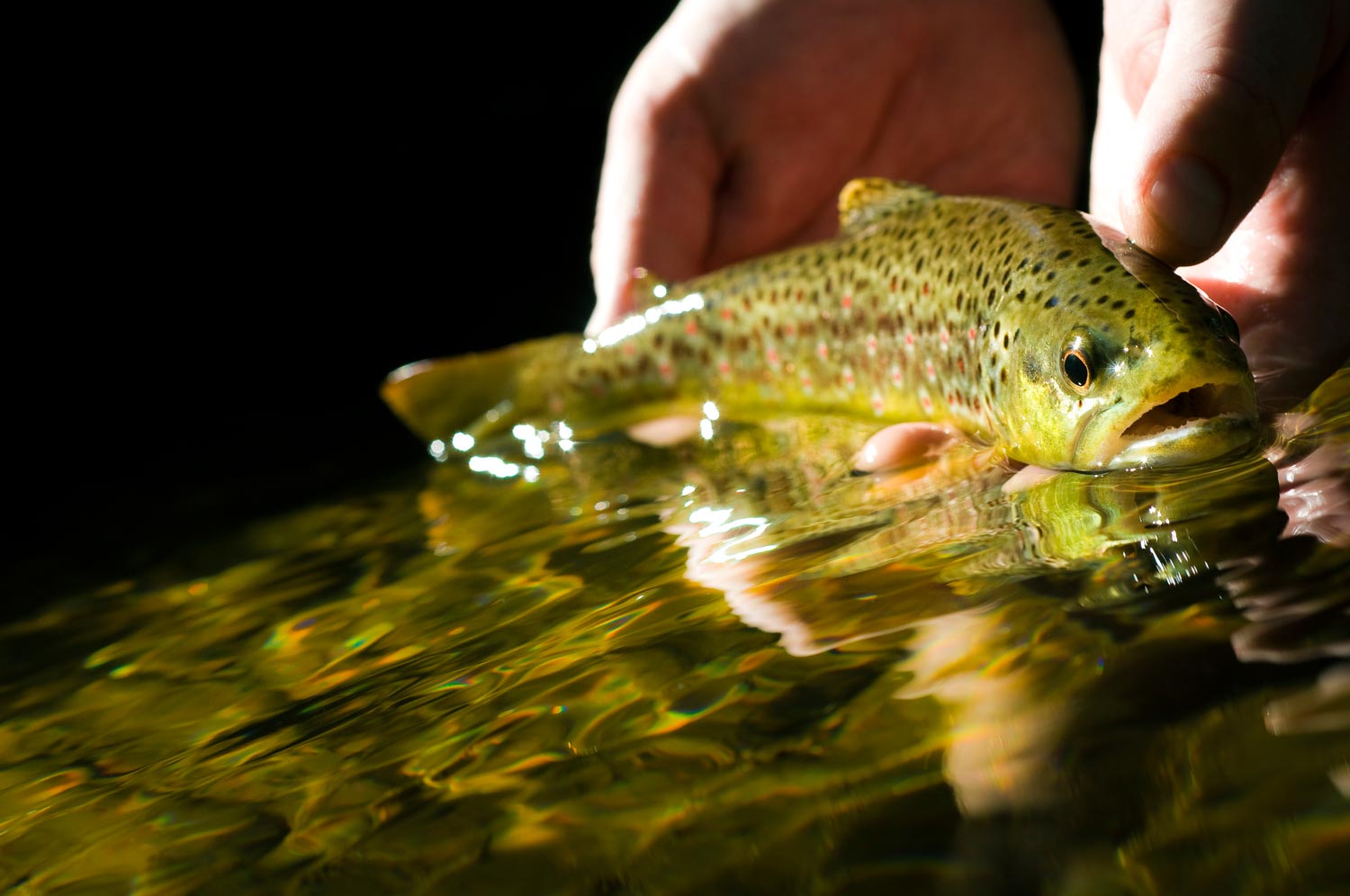
Is the end of the beginning the beginning of the end?
For years, maybe decades, my buddy Dan and I have kept a tradition. To be on Dan’s home water together on opening day of trout season. This is a high point on the calendar for me. Special in a lot of ways. The fishing is always epic, as the trout have had the cooler months to rest and forget what flies look like, but there’s much more to it.
For me it’s a chance to get on the water with a dear friend who has done more for me than I can list, and also a chance to remember where I come from. I am so fortunate to make my living in fly fishing. I get to fish some amazing places with some amazing anglers, and that was kind of the plan, but the fly fishing world I live in now is nothing like what I pictured when I started carrying my camera on the river.
I don’t want to sound like I’m complaining. Far from it. I’ve kind of won the lottery. It’s just that a lot of the things that drew me to fly fishing are very hard to come by now that it’s a job. When I fish with Dan there is no agenda, no expectations, no shot list. We just fish. From the looks of it however, this will be our last opening day and there’s a whole lot more at stake than my and Dan’s tradition.
The Georgia trout season is a little complicated. There are streams which are designated as seasonal and some which are year-round. Seasonal streams are open to fishing from the last weekend in March thru the end of October and may only be fished sun-up to sun-down. Year-round streams are always open and may be fished at night.
These are old regulations and good ones. The seasonal streams were clearly chosen as important waters where wild trout reproduction is at its best. The closure protects these streams during the spawning seasons of all three trout species which live here. It’s a good regulation in a state known for bad management. A relic put in place by men who understood the importance of these wild fish. Something our current officials have forgotten.
In two weeks all of that is about to change. The Georgia DNR is poised to change the regulations, doing away with trout season. When this happens all trout streams in Georgia will be under the regulations previously used for year-round streams. It’s a ill conceived plan, which makes no allowances for the increased fishing pressure and will likely have dramatic consequences. A management style we have become too familiar with in recent years.
When asked, by a concerned angler, if Georgia could implement some regulation to protect the Southern Appalachian Brook Trout, our only native trout, a DNR regional supervisor gave this mind numbing answer.
“What’s the point? Those fish only live four or five years.”
What does the future look like for wild trout in Georgia when the supervisor overseeing the region containing all of the state’s trout water doesn’t understand the difference between the lifespan of an individual and the perpetuation of a species?
HERE’S THE PROBLEM WITH THE CHANGE IN THE TROUT SEASON.
Read More »Sunday Classic / Traditional Old-School Nymphs Catch Trout, Don’t Forget It
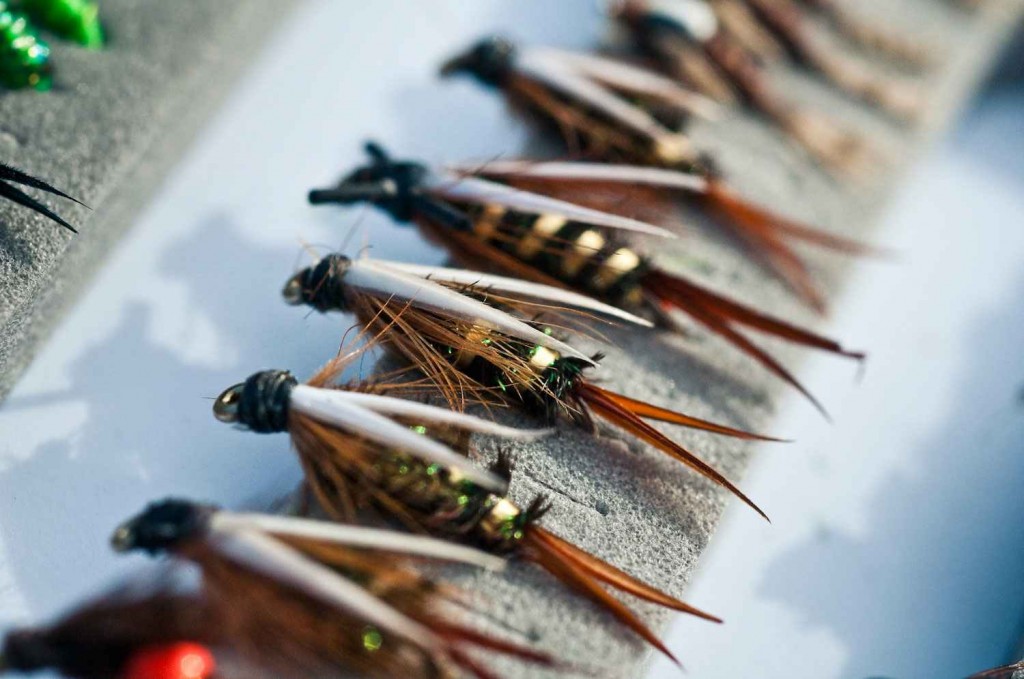
GREAT ISN’T GREAT ENOUGH, OR IS IT?
Every year, I spend quite a bit of time scouring the interweb and flipping through numerous fly company catalogs, all in the effort to stay up to date with the latest new fly pattern creations. Many are just variations of already existing fly patterns, but quite often it’s a new fly tying material that’s created, manipulated, or that’s managed to stay under the radar and discovered, that’s used to develop these new fly patterns. I usually spend my time reviewing the new flies and their recipes, and hear my inner-voice chattering over and over, “why didn’t you come up with that fly pattern, dumby”. But even after purchasing and tying several dozen of the new fly patterns, many of them ultimately fall short on the water of producing trout numbers like my traditional old-school standby nymphs do. Why is that?
I think the the fly tying world is very similar to the rod manufacturing world, where a company builds a great fly rod that 90% of fly anglers love, and then a couple years down the road they discontinue the rod line, to make room for the introduction of the next innovative fly rod. Quite often, in my opinion though, that new rod design’s performance falls short of its predecessor. I know this process is called product life cycle, and it will continue to happen again and again, but it sure seems like we’re in way too much of a hurry to move on, and should instead be more content with sticking with a great product longer. It’s the notion that great isn’t great enough, and that we should retire the greats, in the hopes we can find something, for lack of a better word, that’s perfect. The problem is, there’s no such thing. No one product will work perfect for the infinite number of situations it will encounter on the water. My point being, in the target zone and scope of fly patterns at least, it may benefit many of us if we stop getting lost in creating and searching for the next best fly pattern, and instead spend more time just fishing the fly patterns that have proven to catch fish for us consistently for the past century.
Read More »Saturday Shoutout / Waisted Youth

ONE OF MY BEST FISHING BUDDIES WRITING ABOUT ONE OF MY FAVORITE GUIDES. HOW CAN I PASS THAT UP?
I was in the Bahamas recently for the G&G Bonefish School. My good buddy Rich Hohne was along representing for the folks at Simms who generously donated some sweet gear for all of our anglers. Rich got the chance to spend a day on the boat with resident badass, Jose Sands. That’s always an experience.
Anyone who guides saltwater, and does it well, has my respect. If they are willing to go out of their way to teach their clients, that respect is doubled. I have learned much of what I know about Bonefishing from Jose and the many hours spent on his boat have developed a deep respect that flows both ways.
On his blog, “A Wasted Youth” Rich looks at his day on the water with Jose through new eyes and he takes away some lessons that each of us can stand to learn. Rich Hone is one of the smartest guys I know and a fine writer to boot. Take a ride on a flats boat with him and Jose.
FISHING WITH AN OUTLAW
Read More »New Rods From Winston
One of the best known names in fly rods makes some interesting moves in 2015.
Winston is known for smooth powerful action and made-in-America quality. Neither of those things has changed but the the new Nexus and Micro Spey rod are both departures of a kind. Both rods show Winston’s commitment to quality while proving they are looking ahead.
The Nexus is Winston’s entry into the mid-priced American-made market. It’s a departure from the norm in two ways. First, it’s a fast action rod. That’s one thing Winston has never been known for and they’ve done a nice job of it. The Nexus steps up the pace without losing the feel Winston rods are known for. Second, it retails for $475. Some troll will make a snarky comment about it but that’s a great price for an American made rod with a lifetime warranty.
The Micro Spey rods are based on a very cool idea. Spey caster want light weight spey rods, not switch rods. While switch rods are basically small Spey rods, their action is usually a compromise. What the gain for single hand casting is taken away from two hand performance. These little beauties are true Spey rod tapers made for two hand casting. Actual Spey rods for trout. Pretty cool.
I’ve always loved Winston rods. If you do too, these are worth checking out. In this video Johnny Spillane talks with Adam Hutchison and Tom Larimer about the new Nexus and Micro Spey fly rods from Winston.
Read More »Don’t Keep Staring in One Place if You’re Seeing Nada
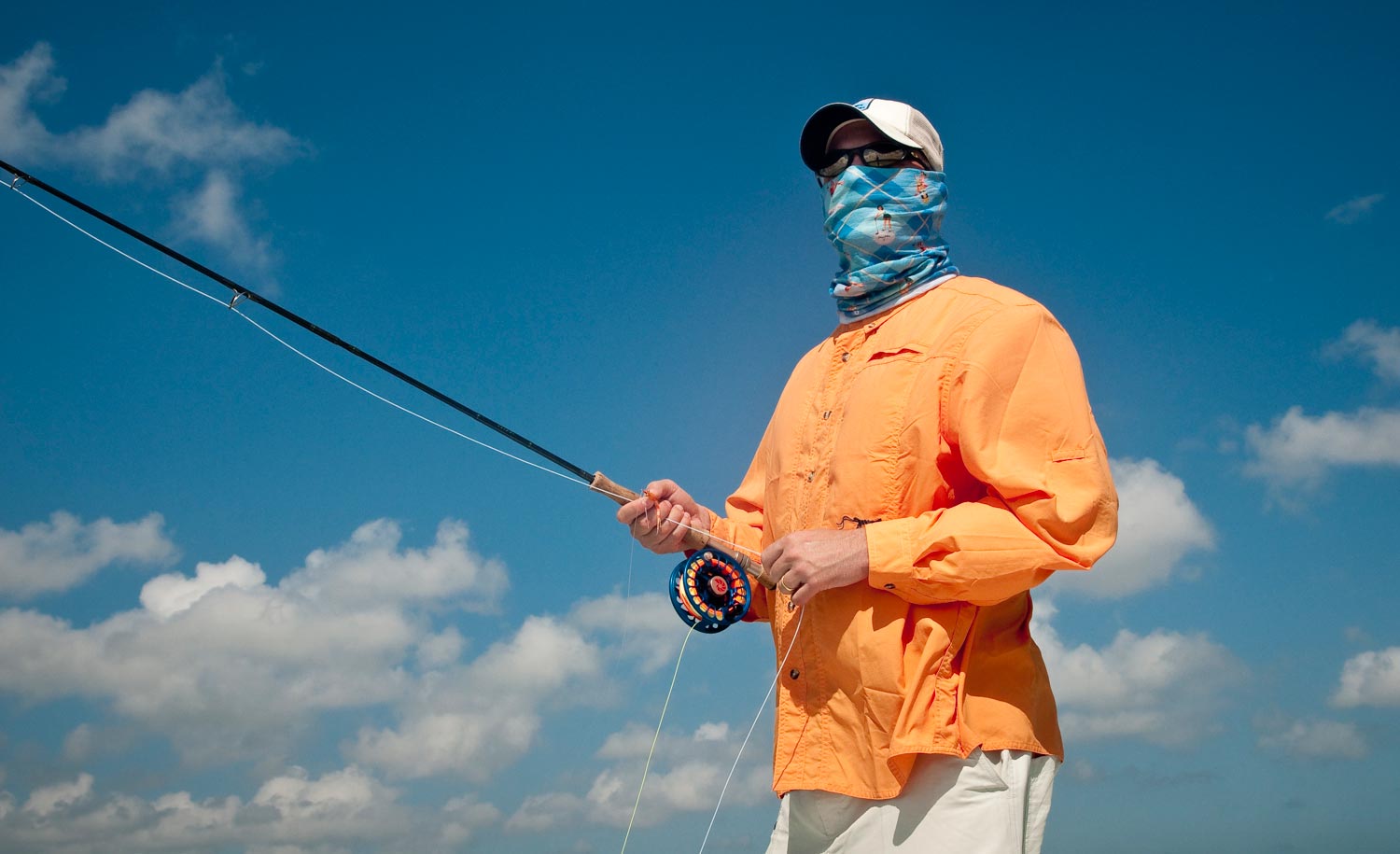
“IT’S VERY RARE THAT ANY TWO PEOPLE, MUCH LESS A GUIDE AND CLIENT, WILL SEE EYE TO EYE”
My recent trip to the Bahamas, fly fishing for bonefish at the wonderful Andros South Lodge, I got a chance to work out a bunch of kinks in my flats fishing. From the help of my buddies, the helpful staff on hand and the fantastic bahamian guides, I eventually got to the point where I could respectfully hold my own on the flats. Despite me being in paradise there were a few times during the trip when I found myself hanging my head.
The first problem I had was letting my mind get in the way of my fishing. That was to be expected though, since I’m most comfortable on the cold water streams and rivers, and it had been several years since I’d last chased the grey ghost on the flats. When I trout fish, I don’t have to think about my casts much these days and my confidence is through the roof. This is because I do it day in and day out. Take me to saltwater though, where I only make a few trips a year, and my confidence drops and the first couple days I find myself constantly battling my inner thoughts and nerves.
I’m sure many of you out there no where I’m coming from. Anytime you’re lacking confidence and dealing with nerves you’re going to fish at half your potential. And there’s no place this holds true more than standing on the bow of a skiff on the saltwater flats. Lesson learned, if you want to fish more effectively and maximize your success when fishing locations that aren’t your norm, you have to stay relaxed, keep your confidence no matter what, and learn to let the bad casts roll off your back.
My next problem I had during the trip, and the point for writing this post, was learning how to quickly spot the bonefish my guide was calling out to me. I missed countless shots during the week because
Read More »Give It A Chance To Fail
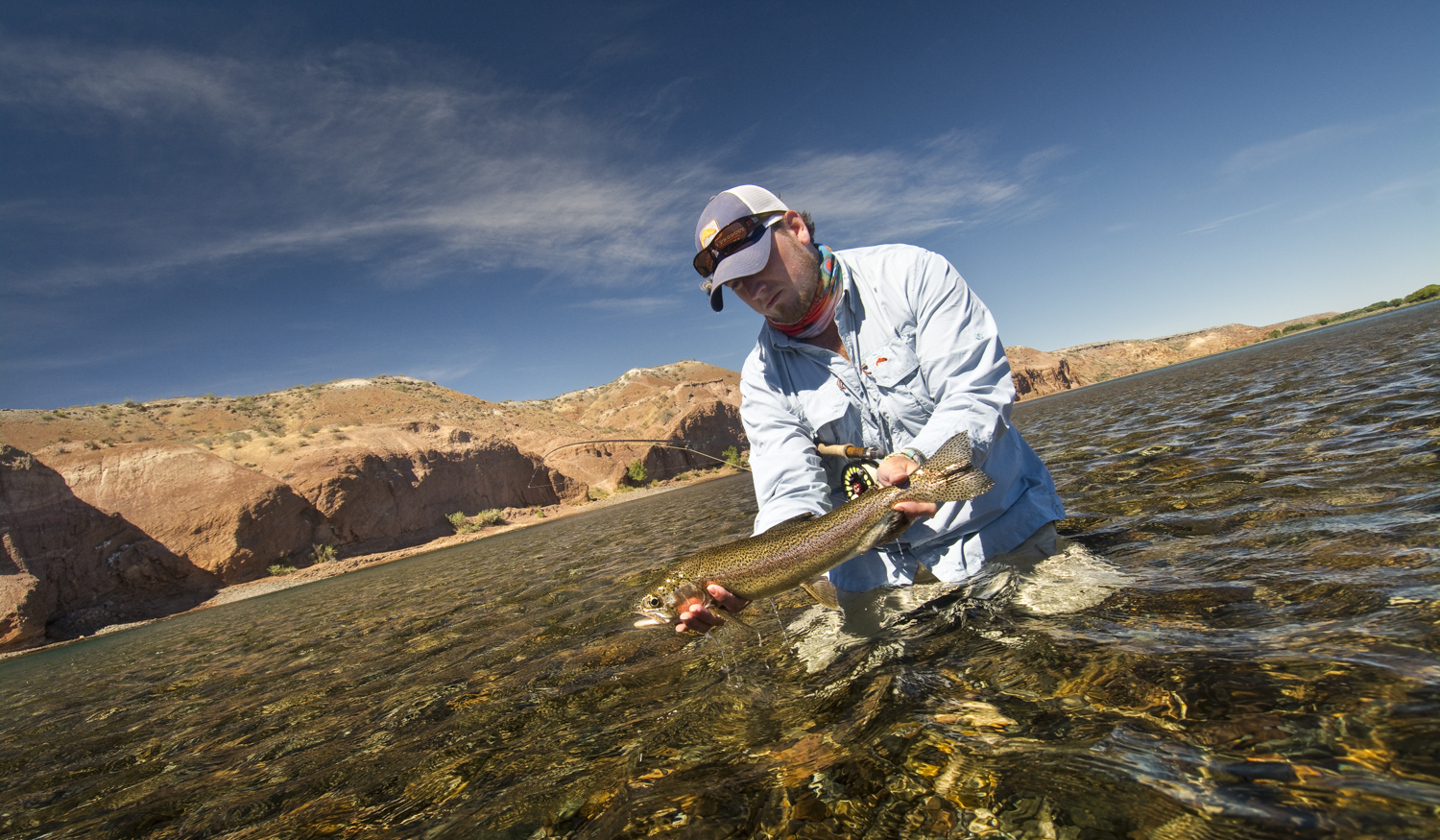
By Justin Pickett
ON A RECENT FLOAT TRIP, LOUIS AND I WERE EXCITED (A.K.A. DROOLING) ABOUT THE OPPORTUNITY TO THROW OUR FAIR SHARE OF STREAMERS ON A PIECE OF WATER THAT IS MORE ACCUSTOMED TO SEEING DRY/DROPPER AND INDICATOR RIGS.
This river is full of big fish that lurk among its banks, and, to me, the probability of catching a trophy-size brown trout on a larger streamer pattern was high. So I made sure to bring with me my “meat locker” as I call it… A Cliff Bugger Beast slap full of streamers of all sizes big.
I also brought along a stout 9ft 8wt, a big reel with an aggressive tapered floating line, and plenty of sink tips to adjust for different flows and depths. My leader is hand-tied by yours truly, tipped with 15lb fluorocarbon, and could turn over a wet dishrag. As I rigged my rod at the truck, our guide checks out my other rod and approves of the dry/dropper rig I have tied on for now.
“Are you fishing a streamer today?” he asks.
With a friendly smirk on my face I reply, “Yes I am.”
My guide picks up my case o’ carnivore candy and scans through all of the patterns. After only a few seconds or so he shuts the case and immediately reaches for one of his fly boxes, leaving me standing there thinking to myself, “well, there must not have been anything in there that he liked.” Interesting….
It’s interesting because my streamer box is slap freakin’ full of nothing but sexy, fish catching strips of deliciousness. (At least I think so anyways). If a pattern doesn’t produce, then it doesn’t take up space in my box. Period. How did he not find something that he thought would work???
So he whips out this “streamer” and hands it to me. I admit, I liked the color combo. A burnt orange dubbed body with an olive rabbit strip laid over the shank serving as the wing and tail. The deer hair head would likely push some water. So what was the problem with this fly? It was a size #8… It was smaller than half the stuff I had in my dry fly box.
Negative. No Bueno.
I kind of chuckled and held this fly up in front of Louis and said, “this is the one huh?”
Read More »Sunday Classic / Poonshine

It’s sunny and sixty-eight degrees. Just a little breeze. It’s mid-April. A perfect day for fishing in Bozeman, Montana.
The trouble is, we’re not in Bozeman. It’s actually ten degrees warmer in Bozeman. I know this because my buddy Rich is looking at the weather on his iPhone instead of fishing. And why not? When it’s sixty-eight degrees in the Florida Keys in mid-April you’re about as likely to see Santa Claus as a tarpon.
At least that’s how our first day had gone. Beautiful day for a boat ride. That’s how fishing in the Keys is, you book your days and take your chances. I’m used to it. I do a lot of off-season fishing with friends in Florida and I have had some phenomenal days but I’ve taken a lot of boat rides too. For Rich it’s a little tougher. When you fly all the way from Montana to the Keys in, what should be, peak tarpon season it fair to have some expectations but as all fishermen know, expectation is a tricky business.
It’s about nine-thirty on our second day. It should be pushing ninety and we should be hip deep in tarpon but the weather has screwed us. Rich is already stressed over some issues at work. A dozen emails on his phone and the bad weather aren’t helping. If we are lucky it’ll make it to seventy today. Lacking tarpon, we have chosen to be hip deep in beer. We were clearly all thinking the same thing this morning because we all brought beer and lots of it, even our guide. That should tell you something. In fact we were so focused on the beer that we forgot to bring lunch so we’re on a liquid diet since early in the morning. We may not see a fish but we’re going to have fun.
The day before, we had some how gotten on the subject of moonshine. Rich is a westerner and has preconceived notions about southerners. That’s fair, I guess but he had confided in us that he had always suspected that moonshine was a southern legend and didn’t really exist, at least not these days. That was as good as a dare. For all of its tropical flavor, the Keys are still very much the south and it had been a simple thing for our guide to produce a quart jar as evidence.
We’re staked out on an ocean-side flat having a grand time. The conversation is lively. It would be lunch time if we’d brought lunch. I was on the bow and seeing as we had no lunch, or fish, I didn’t see the point in waiting any longer to open that jar. The cold homemade liquor was sweet and smooth with a hint of apple and cinnamon. It warmed my body like Georgia sunshine.
“Hot Damn! That’s what I needed!” I took another drink and felt a tingling numbness along the back of my neck and down my spine. “That is definitely real,” I told Rich as I passed him the jar. The expression on his face told me he was prepared for the worst. Some kind of half turpentine devil’s fire water from an old radiator, not this sweet well- crafted spirt. The south was looking pretty good right about now.
Proud that he had provided such a quality sample on such short notice, our guide is busy telling us about the care that goes into making good moonshine when he pauses, lowers his stance a bit and, reaching blindly for his push pole, says, “oh my fucking God!”
I wheel around and
Read More »