
AFFTA – Making Fly Shops Great

By Rob Parkins
WHAT DO GREAT FLY SHOPS HAVE IN COMMON WITH JOHN F. KENNEDY AND MARTIN LUTHER KING? I’M SURE YOU CAN COME UP WITH A FEW INAPPROPRIATE COMMENTS, BUT THE ANSWER IS “VISION”.
Last week, Bozeman, Montana, saw 100 owners, managers and employees from 40-plus of the best fly shops in the country come together for the American Fly Fishing Trade Associations (AFFTA) second annual Dealer Summit. Wednesday’s speaker, Dan Mann, of the Mann Group, explained how successful businesses must have a compelling vision in order to differentiate themselves from the many other companies in the same industry.
As a specialty fly shop employee, we have a unique opportunity to create an experience for the angler—from beginner to veteran—that is unmatched in the outdoor industry. We are able to share our love for the sport, appreciation of the beautiful places we fish and our commitment to protecting the environment. At a time of political turmoil in Washington, where politicians from both sides of the aisle cannot even agree to renew the Land and Water Conservation Fund, it is more important than ever to introduce more people to the fly fishing experience.
After the three-day series of speakers and roundtables were over, there was an overwhelming response from the dealers that they can go back to their shop and implement ideas into their business that will benefit the customer. With support from the Dealer Summit sponsors (SAGE, Simms, Yellow Dog Fly Fishing, Scott, Hatch, Hardy, Patagonia, Orvis, Costa, RO Drift Boats, Umpqua, Angling Trade magazine, Trout Unlimited the Ocean Conservancy and the city of Bozeman) your local fly shop will be more prepared to share the story of fly fishing with its customers.
One of the highlights of the event was
Read More »8 Elements of Fly Design to Follow for Imitating Trout Food Sources
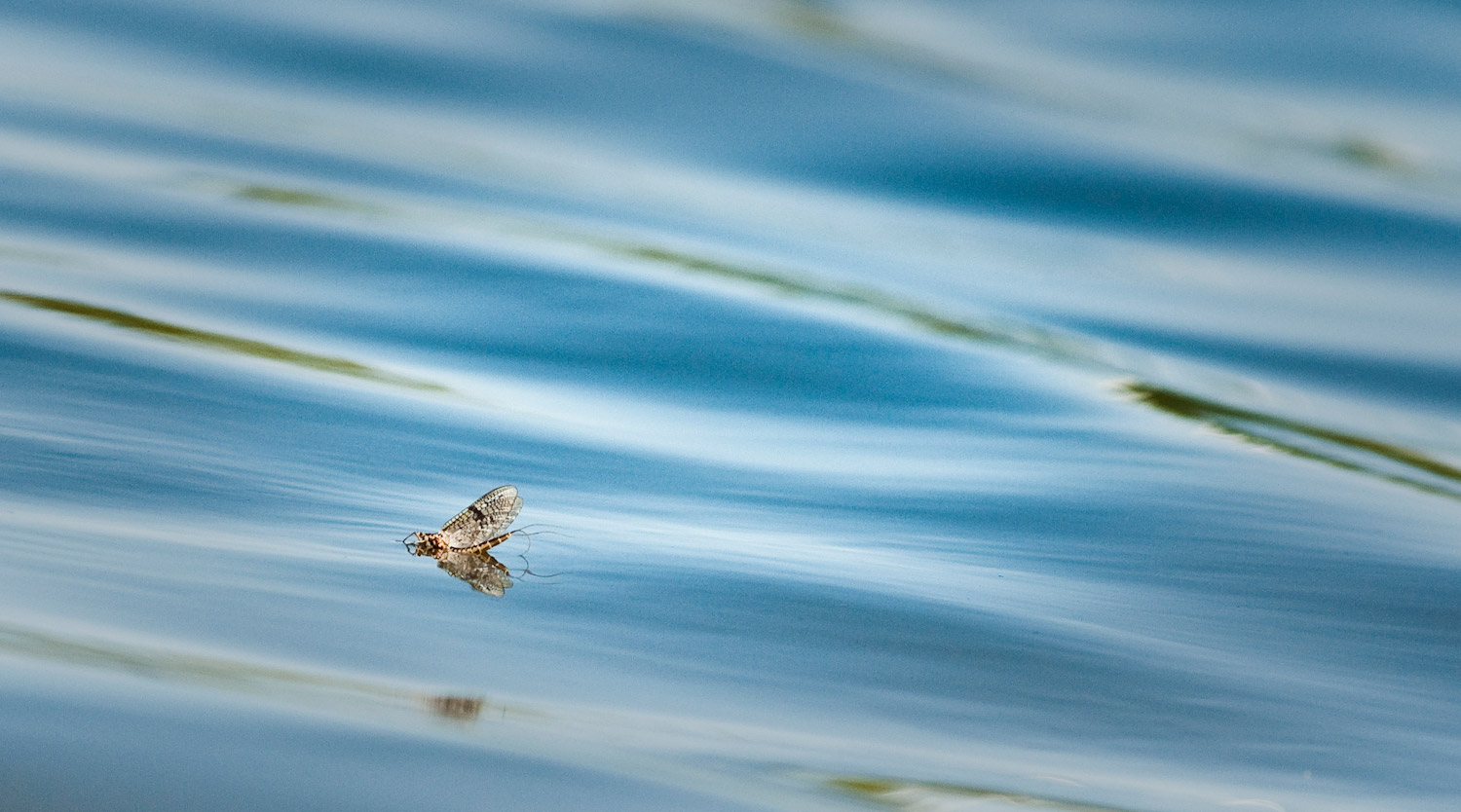
When tying fly patterns, it’s very important that you try your best to incorporate several different elements of fly design to increase their effectiveness. No one knows with complete certainty what order or priority trout rank each element of a food source or fly pattern, but most anglers agree that the value or ranking of the elements often change depending on how long a trout has been selectively feeding on a specific food source, at what frequency the specific food source is being eaten, and how diverse or consistent a trout’s diet is at the present moment. The order of the elements that I will talk about in know way ranks the importance of the elements. Instead, fly tiers should look at them together as a whole, and try to include as many as possible or as a check list of the features a fly pattern should have when completed. Doing so, they should find there fly patterns more effective on the water for fooling and catching trout. In this post, I will specifically talk about eight different elements of fly design that fly tiers should pay close attention to when tying fly patterns at the vise.
Read More »Understanding Fly Line Tapers and Diagrams

Buying a fly line doesn’t have to be a leap of faith.
For many anglers, fly lines and their characteristics are a huge mystery. They know that different fly lines cast differently and that some suit their needs or casting styles better than others but they have no idea why. What’s worse, when it’s time to buy a new line they aren’t able to make an informed choice. They just go to the fly shop and ask for the best line. Thank God for knowledgable fly shop guys, but do you really want to rely on someone else’s guess at what you will like?
If this sounds like you, I have good news. There is an easy way to get a sense of how a fly line will cast before you ever take it out of the package, and with a little experience you can quickly choose the line that’s right for the way you fish.
Fly lines have become really complicated in the last five years or so. Specialty lines have multiplied like rabbits and line companies have created lines to match every species, water condition and casting style. If you’re confused, you’re not alone. Fortunately, almost every manufacturer publishes line diagrams which show you, in detail, the taper of each line. If you know how to read the diagram, you’ll know how the line will cast.
BASICS
There are three basic types of line tapers. Weight forward, double taper and triangle taper. Looking at the diagram, it’s pretty clear how they get their names. The double taper line is a very traditional style of line which has a long level belly and a symmetrical taper on each end. Weight forward lines shift the weight to the front of the line and were developed to match modern fast action carbon fiber rods. Triangle tapers are a kind of hybrid of the two.
Think of the diagram as a picture of the fly line in profile with the thickness of the line exaggerated. The thickness of the line indicates two things. Where the weight is and the relative stiffness of the line. Where the line is thicker, it will be heavier. Different line materials have different stiffness, but within a given fly line, the line will be stiffer where it is thicker. Knowing where the weight is in the line will tell you how it loads the rod and the stiffness, as well as the weight, will tell you how it presents the fly.
ANATOMY OF A FLY LINE
To understand the information the diagram gives you, first you have to understand the different parts of the fly line and how they affect the line’s performance. Most modern fly lines have five parts. From front to back they are the tip, front taper, belly, rear taper and running line. Each one performs a specific function and its weight and length determine how the line casts.
THE TIP
The tip is the final word in fly presentation. The longer and lighter the tip, the more delicate the presentation. A long light tip will work to your advantage when
Read More »Sunday Classic / Don’t Gink it, Sink It
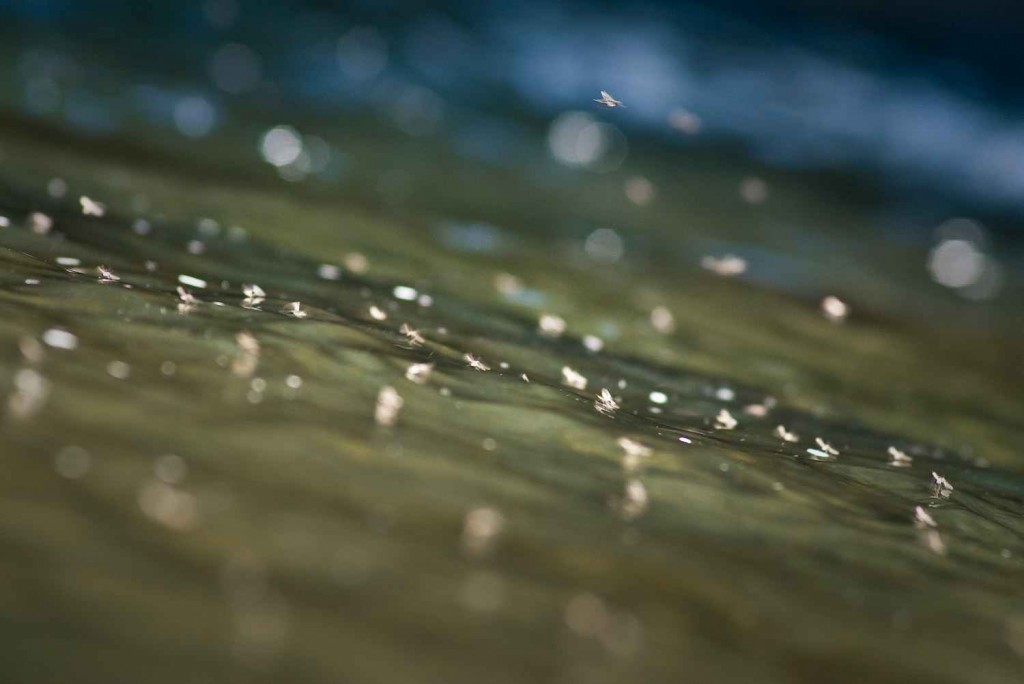
Ever been on a trout stream during a blanket hatch and no matter how many times you drift your floating imitation over the rising fish, it’s ignored? I’ve experienced this frustrating situation many times on the water. When this happened in the past, I used to think I was using the wrong pattern, or I was getting micro-drag during my drift or maybe my tippet was too large. Although one or more of these can often be the culprit of failing to get bites during a heavy hatch, it’s actually more common that you’re problem lies in the fact that you’re choosing to fish your fly on the surface instead of below the surface.
When hundreds or even thousands of bugs are on the water it makes your fly pattern very difficult to distinguish itself apart from all the other naturals on the water. Take for instance a trico spinner fall in late August or September. When in full swing, it can seem like almost every square inch of the water is covered with these tiny guys at times. Although many of them float long distances on the surface, eventually they will sink. Not all at once of course, just a portion of them here and there. When you choose to sink your fly pattern instead of floating it, you’re going to increase your chances of catching those feeding fish for three reasons.
1. You decrease the amount of competition between your fly and all the naturals.
By sinking your fly pattern below all the naturals on the surface your giving you’re pattern
Saturday Shoutout / Dharma Works
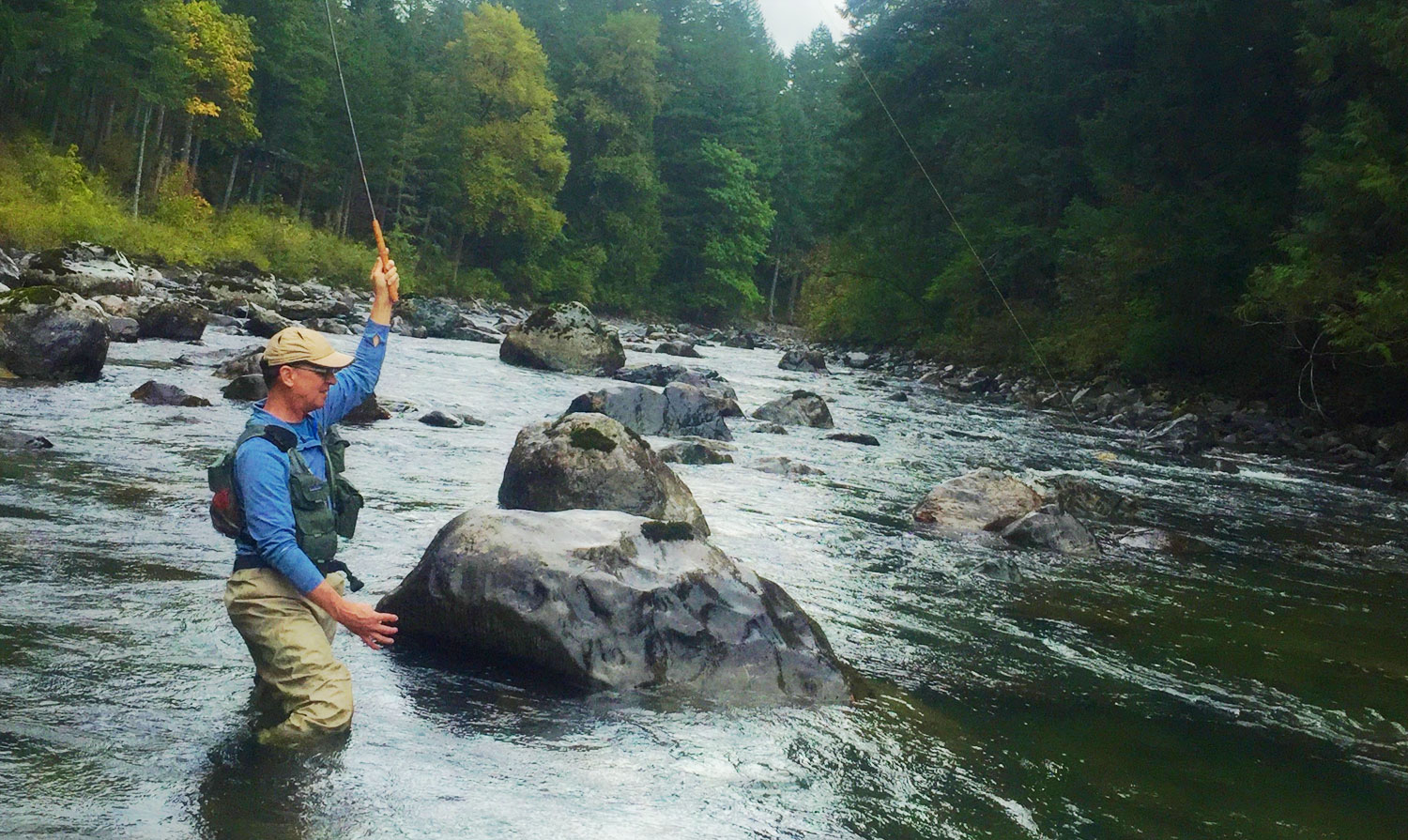
Steelheading is never a sure thing. You want to catch fish and when you haven’t been able to take a fishing trip in a couple of years, due to life threatening illness, the pressure is really on. That’s exactly the spot my buddy Tim found himself in. You may recognize Tim Harris as a regular G&G contributor. You probably don’t know that he has battled SIBO for the last several years. An avid angler in saltwater and fresh Tim is particularly fond of steelhead. His illness has separated him from the fish he loves for far too long. With some trepidation he decided to join me on this years steelhead camp trip to the Deschutes River in Oregon. He wrote a great story about it on his own blog, Dharma Works. Check out DESCHUTES STEELHEAD AND YAKIMA TROUT Louis Cahill Gink & Gasoline www.ginkandgasoline.com hookups@ginkandgasoline.com Sign Up For Our Weekly Newsletter!
Read More »New Airflo Fly Lines For 2015
Airflo is always innovating fly lines.
There are a bunch of new lines from Airflo this year. A little something for everyone. New Super Dri skagit heads and running lines for steelheaders. Two new single hand lines specificly for Atlantic salmon. A new competition euro-nymphing line and a stealth taper trout line that’s actually camo printed.
I took a few minutes with Tim Rajeff at IFTD 2015 to talk about the new offerings from Airflo. Watch the video for all the details.
Read More »Fly Fishing the Trico Hatch & Spinner Fall
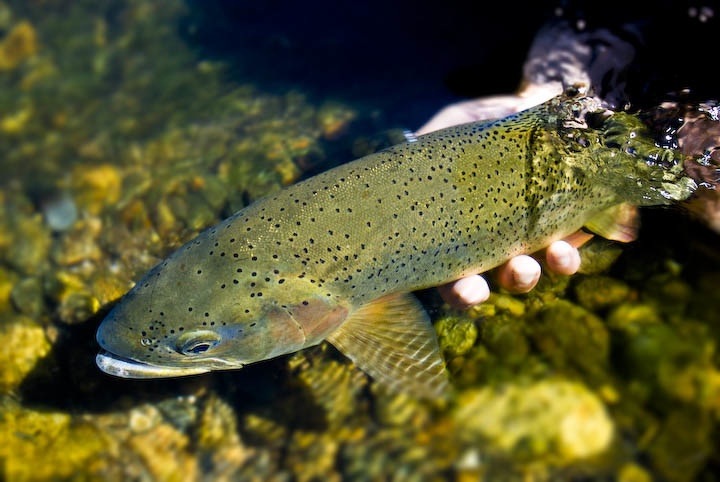
The first major spinner fall that I ever witnessed and had the pleasure of fishing took place many years ago on the South Platte River in Colorado. I’ll never forget the excitement I felt as I watched countless trico spinners floating downstream in the surface film. Never in my life had I seen so many bugs on the water. With one scoop across the surface of the water with my hand, I held dozens of tricos. I was so amazed by the density of bugs on the water that it put me in a frozen trance. Unable to wet a line, I remember thinking to myself, “This must be what fly fishing in heaven is like.” Growing up in the Southeast, I’d never seen a spinner fall of such magnitude. I’d only read about them in books. Looking back on that day now, I believe my reluctance to start fishing that morning had a lot to do with me just taking it all in, and appreciating the true beauty of nature at work. Only after I took the time to pay my respect to the bugs and wild trout, did I feel worthy enough to begin fly fishing such a beautiful place.
Read More »The Tacky Fly Box
By Justin Pickett
IT’S BEEN QUITE SOME TIME SINCE THERE HAS BEEN ANY KIND OF ADVANCEMENT IN THE FLY BOX.
From the wool patches and Wheatley fly boxes of older times. To the eventual march towards foam lined plastic and other gadgets like Fishpond’s Sushi Roll, and Cliff’s numerous offerings. While all of these companies make great fly boxes and fly storage options (I own many of them and have enjoyed them all), one thing persists….. Foam eventually wears out, breaks down, and has to either be replaced or you have to buy a new box altogether.
Then the Tacky Fly Box hit the scene.
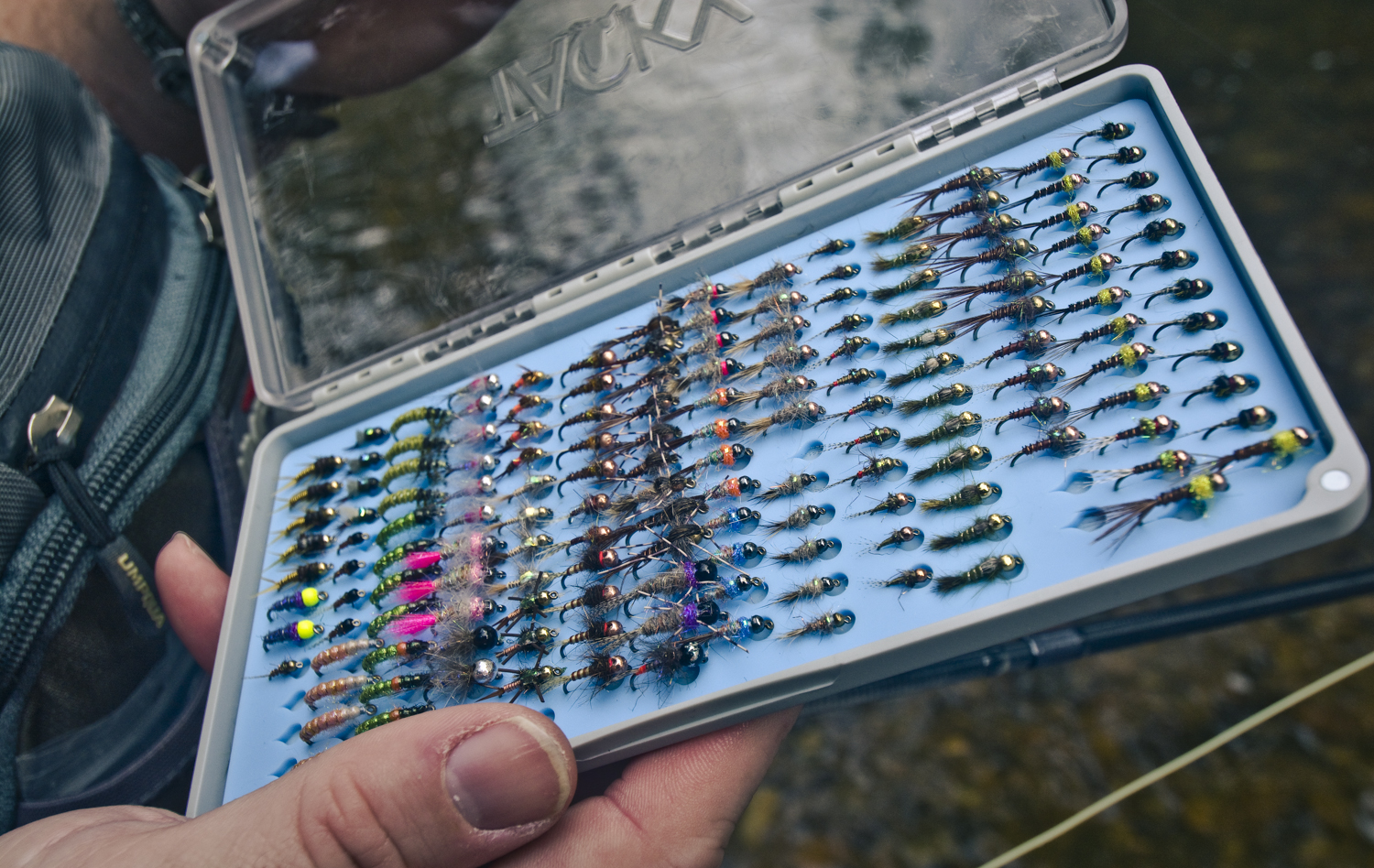
The guys at Tacky Fly Fishing have developed a very durable, slim fly box with a very different material that hopes to change the game when it comes to holding onto your bugs. Instead of using the usual slit foam, they have taken the time to perfect a silicone material that is said to hold flies better, and be more durable. Sounds good, right? But how does it compare the competition?
The Tacky Fly Box currently comes in the three sizes; The Original, The Day Pack, and their newest offering, the Big Bug Box. All three are slim and functional, making it easy to slip into a pocket, or if you’re like me, it’s incredibly easy to store numerous boxes in your pack. Just this past week I was out on the water and had five Tacky Fly Boxes in my Umpqua Overlook chest pack and I still had room for my iPhone and some streamers. The tops of the boxes are held tightly by a couple of strong magnets and are clear, making identification easy.
The ONLY thing that I wish this Tacky box had is a water tight lid, but it certainly isn’t a deal breaker for me. It’s the silicone inserts that sets this box apart from others. The silicone holds flies firmly in their position. In my experience it does not wear out, and isn’t as susceptible to “injury” from hook points/barbs, as well as being resistant to fatigue and flaring. Foam, of course, is easily destroyed by hooks and its elastic properties aren’t its strong suit. This leads to flies rattling around in the box, or worse, falling from the box at inopportune moments once the foam is damaged and becomes fatigued causing the slit to flare out. The silicone in the Tacky Fly Box has been less susceptible to “injury” and has kept its elastic characteristics. I have had one of my Tacky boxes since they came out and if you set it next to the Tacky box I bought a few weeks ago, you can’t tell the difference. It still holds flies like it did on day one. I can’t say the same for my foam boxes.
So how well do these boxes hold on to flies? I decided to do a drop test with two different boxes.
Read More »Sunday Classic / The River Is Full Of Want
By Louis Cahill
“I DON’T DESERVE THAT FISH. I DON’T DESERVE THIS DAY ON THIS BEAUTIFUL RIVER. I DON’T DESERVE TO FISH WITH THESE GOOD MEN.”
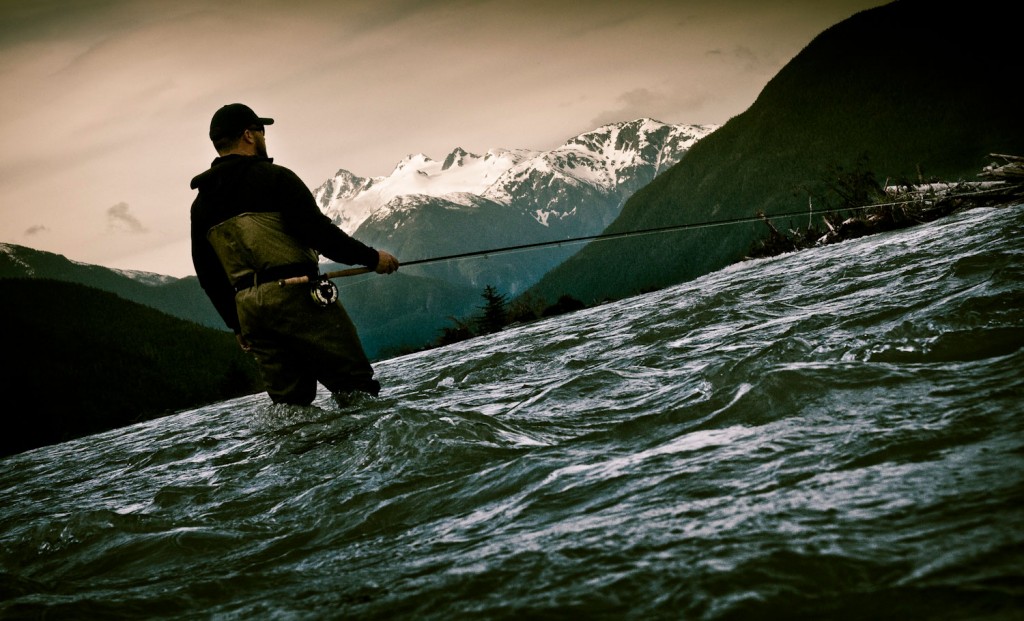
I wade out into the rushing water of the Dean, farther than I should. The cold of the water grabs me around the waist. The current tugs at my footing. I feel the pebbles washing out from under my feet as they slide softly downstream against my will, looking for a home. I gather my running line and tuck it under my index finger, then I lift my thirteen-foot rod high into the air, anchoring my fly in the swift current in front of me. The wind blows and a cold mist creeps around my glasses and down my neck. I sweep the rod round, making a big D loop, watching the rod, keeping it loaded, then draw the butt back hard to my chest. I roll the grip clockwise so that the guides face upstream and watch the bright green running line draw shapes in the air against a backdrop of dark clouds, like a kid writing his name with a sparkler on a summer night.
The line disappears through the guides and nearly a hundred feet away I see the splash as my weighted fly meets the river. I mend the line and tell myself that my feet will find something solid as I step with the rush of water, once, twice, three times. On the horizon, just over the big log jam, I can see the silver band of salt, the Pacific. Below the next run and the next, maybe four-hundred yards. The river hasn’t far to go and it’s impatient, running like children to the tree on Christmas morning. They call this run Instant Backing and I know that if my fly finds its mark, I’ll see why. I carry my rod tip upstream until I feel the weight of the river on my line. Slowly I swing the fly, I feel the strength of the water, I wait for the pull, I stare into the river and I want.
***
The Atlantis Restaurant, in Cherry Grove, South Carolina, between Myrtle Beach and Cape Fear, is a stark little beach town pancake house. It is completely unremarkable. Shabby, in fact, but it has always been special to me. Every year, on my family’s Labor Day beach trip, my father and I would slip out to the Atlantis while everyone else was asleep for breakfast. He would have eggs, over easy and bacon and I would have pancakes. Since I was little I loved having breakfast out with my father. Just the two of us in the quiet of the morning. Our complicated relationship worked well, within the simple framework of breakfast.
My father has been gone a long time now but I still find walking into that pancake house comforting. For that reason and to share my memories, I took my wife there a few years back. I got more than pancakes.
The Atlantis is an odd place at best. It doesn’t suffer from any sort of interior decoration, let alone design. The walls are glossy white with blue trim. There are a few photos from some foreign country, maybe Greece, and an aquarium next to the register containing nothing but water and a few turtles. There are some hand drawn signs with a vaguely religious theme. My favorite is a dolphin with a voice bubble that says, “I love Jesus!”
The employees seem to be from somewhere far away too, but I don’t think it’s Greece. There is a young girl, sixteen maybe, who seems particularly distant. Thin and strawberry blond with freckles she has, what combat veterans call, a thousand yard stare. Not vapid exactly but not entirely present. She waits on my wife and me that morning. After my wife orders the girl turns to me. “I want pancakes,” I say smiling. “Really?” she replies as if truly puzzled. After a long pause in which she stares at me as if I were a painting in a museum, she asks,
“What’s it like to want?”
I was completely unprepared for such an existential question before I’d even had my coffee. Not that coffee would help me find the answer, but it does make me a nicer person. I consider the question briefly, on several levels ranging from, “is this the meaning of life” to “are you out of your fucking mind” before deciding on my answer.
“You know, it’s like when you want a tip.”
The pancakes are tasty, in spite of having surely been spit on and I want to think that I’ve put that question to bed, but I haven’t. Far from it. That annoying little teenager had done something to me. I couldn’t get it out of my mind. “What’s it like to want?” For the next few years I carry that question around in my head as a litmus test. I conjure up every blown decision in my life, every misstep that lead to unhappiness and asked myself, “why did I do that?” The answer is always the same. Want.
I look around me and suddenly I see it everywhere. Want. It’s like the air we breath. We are all consumed by want. It’s like the strings on a marionette, once you see them you can’t blot them out. They’re all you see. That little red-headed waif in the apron had looked right through me and knowing only that I like pancakes had said, more or less,
“Here’s your problem, stupid.”
***
The Dean River is moody, the kind of river that kills fisherman, at least one that I know of. It’s fickle and has a temper, not like the elder rivers where I’m from, that found their channels long ago. The Dean is young and impulsive. This week it has leapt from its banks, coming up six feet the day my group arrived. It has
Read More »Saturday Shoutout / S.C.O.F. 17 DTH
SCOF is back with the 17th issue of southern fried goodness.
#17 is chocked full of attitude with dangerous smallmouth floats, permit videos, redfish flies and lots more. Still my favorite online mag. If you’re not a SCOF reader, get with the program!
GET SCOFED HERE!
More good stuff is headed your way.
The Orvis Down The Hatch Film festival is on the road with dates in Denver, Nashville and Atlanta. Get your tickets early, they always sell out!
Atlanta Oct 22
Nashville Oct 28
Denver Oct 29
Get the details here.
Read More »