
Yellowhammers and Specks
“I thought you might like these,” my brother Tom holds out an old yellowed envelope. “I found them going through some of Pete’s things.”
William Starling Cahill, who preferred to be called Pete, was my Grandfather and the man who taught me to fly fish. He’s been gone for many years now but from time to time little gems that he left behind will turn up. My brother now lives in Pete’s old house which puts him in a good position to uncover relics.
I open the envelope and into my hand spill two feathers, dark down one edge and bright yellow along the other. “Ooooohh,” I exclaim and catch Tom’s eye, “Unobtainium.”
Yellowhammer is what we call them here in the south. The Yellow Shafted Flicker, a delicate little woodpecker who’s hammering used to echo off the hills of the Southern Appalachians. He’s almost completely silent now, shotgunned to the brink of extinction. Just having those two little feathers now could land me in jail. The Yellowhammer is heavily protected, now that it’s pretty much too late.
Yellowhammer is what we call the fly too. The one that’s tied from those feathers. It’s a wild, buggy looking thing. You wouldn’t expect a trout to eat it, but they do, like there’s no tomorrow. It’s a pattern as old as the little abandoned country church I pass on the gravel mountain road that leads to the stream I don’t tell anyone about. It’s as old as the graves there in the church yard and just as forgotten, but I still fish it.
It’s the perfect fly to catch Southern Appalachian Brook Trout. The Brookie, or Speck as they used to call them, is our only native trout. Forced south from New England by the ice age long before there was an England, new or old. When the ice retreated, like lots of folks who visit the south, the brookies stayed. They evolved, adapted to their new home and, like the Scotts and Irishmen who came to these mountains, they ended up just a little different from their northern cousins.
They are as scarce as the yellowhammer now, but with none
Read More »Add A Little Life To Your Flies
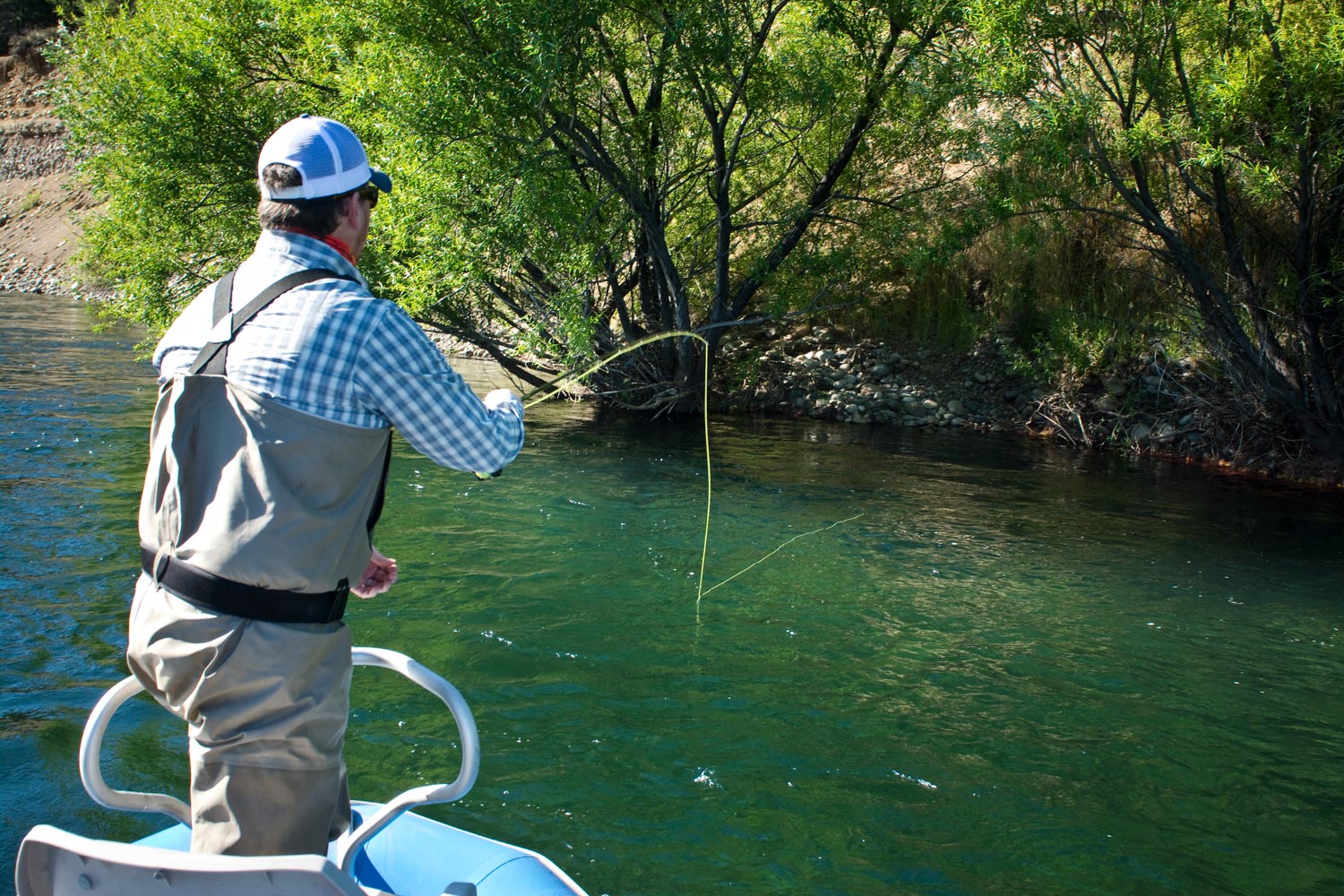
“TWITCH, TWITCH, STOP!”, EXCLAIMS MY GUIDE, EDUARDO.
I’ve heard these words all week and now it’s just become second nature for me as soon as my dry fly hits the water. I have to admit though, it’s been extremely effective.
We’re taught as newbies to focus on presenting our fly on a drag free, dead drift and that’s great. It’s good to start with the fundamentals. It’s one of many pieces of the puzzle that sets a foundation for us to build from as we progress as fly anglers. Sometimes the situation calls for a little persuasion. A little twitch, jiggle, shake, or twerk is just want we need in order to entice a strike.
Movement helps imitate life. Think about it for a second. How often do you
Read More »Trout Deformities

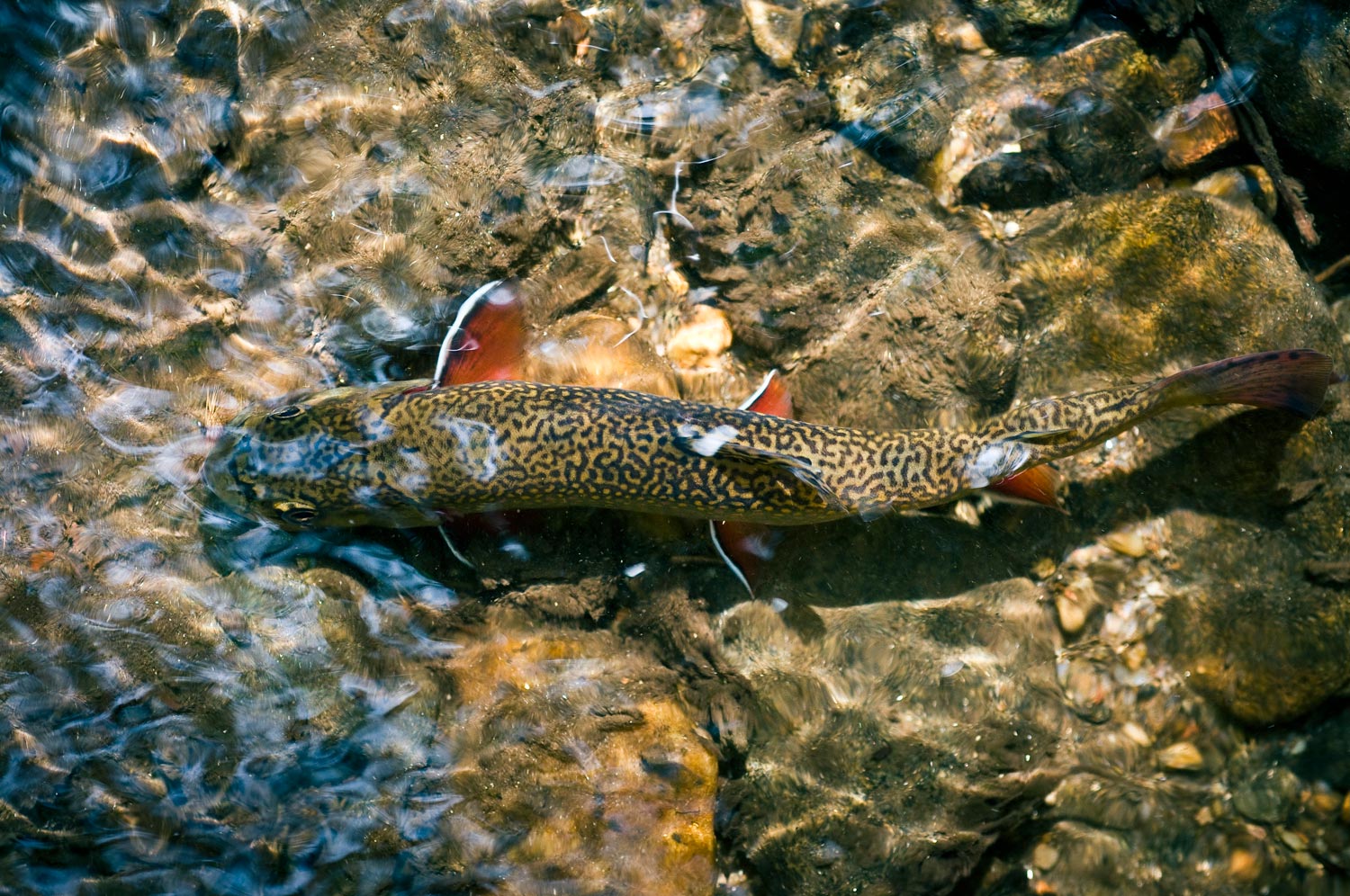
I SPOTTED THIS LITTLE GUY IN A HATCHERY SUPPORTED STREAM IN NORTH CAROLINA AND FISHED TO HIM UNTIL I CAUGHT HIM SO I COULD GET A PHOTO.
While not common exactly, deformities like this are not unusual in either hatcheries or in the wild but you seldom see a ‘special’ fish like this in a wild stream. Nature deals with this sort of thing in short order. In a hatchery, however, a fish like this will do fine and grow to maturity.
This brook trout would have been a solid 16 inches if he were normal. A buddy suggested I bank him. There was no need. This kind of deformity stems from injury to the fish’s spine early in life. There are no defective genes or disease to pass along so I released him. After all, he plays an important role in the ecosystem, at least from the otter’s perspective.
There can certainly be problems with hatchery raised fish. Disease and poor genetics can wreak havoc on wild populations. On the whole, I think North Carolina does a good job and it’s important to remember that this is a regional issue that is best evaluated by region. What’s right for a trout stream in North Carolina is not right for a steelhead river in Oregon. That’s another topic worth some considerable ink, but not just now.
It did get me thinking about some more troubling fish deformities. Specifically Idaho’s two-headed trout. There was a little bit of excitement about it when the New York Times published photos, in February of 2012, of the deformed fish which were
Read More »Fly Fishing: Belly Crawling My Way to Big Beautiful Trout
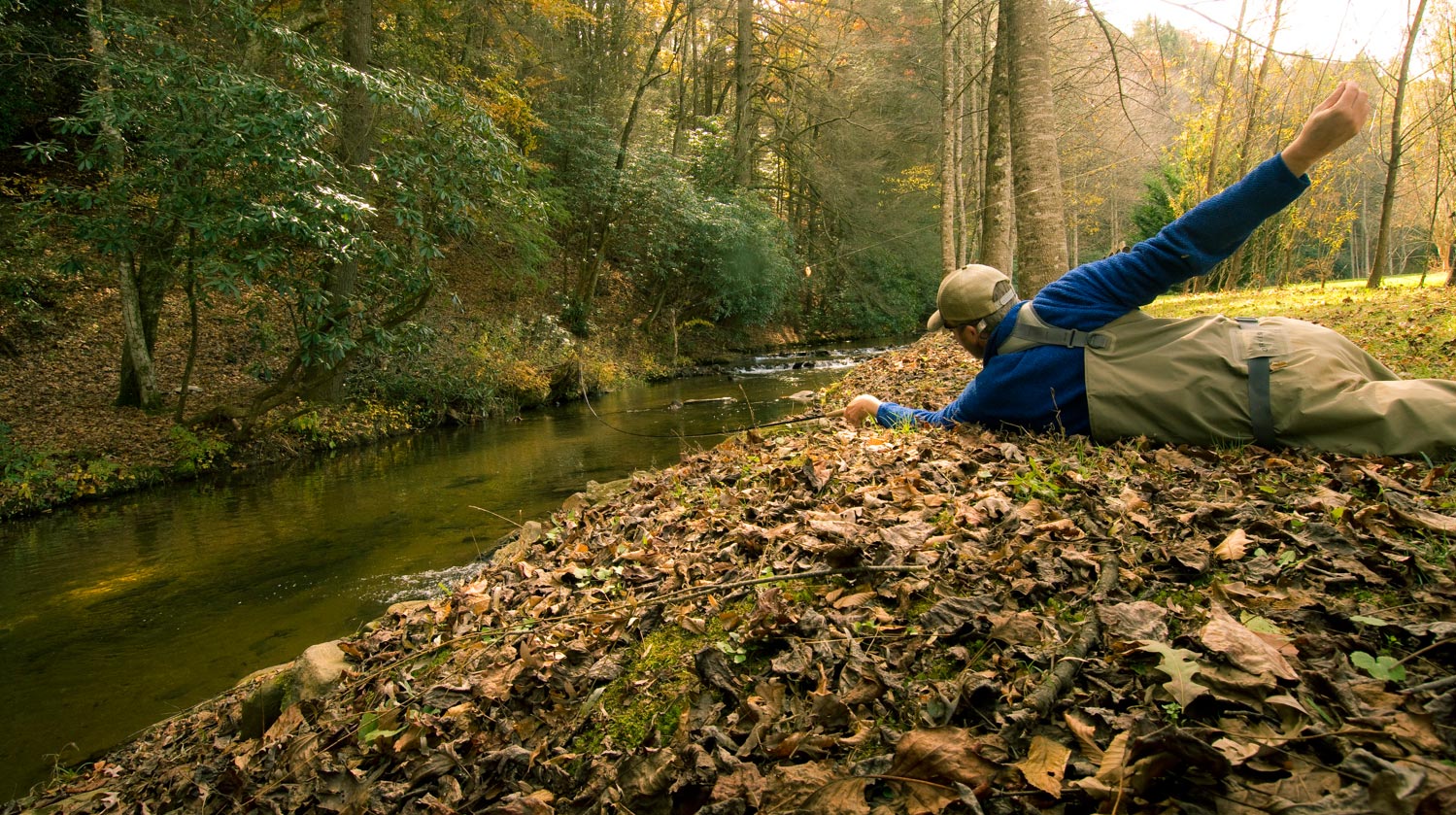
I know what you’re probably thinking, “Come on Kent, you wrote another freaking post about the importance of stealth for spooky trout? Yes, I did, but this isn’t your average stealth post. Most of us already know spooky trout require anglers to move slow and quietly. We understand how important it is to pay attention to our shadows, to work fish with our leader and fly only, and that delicate presentations are critical. Last, but not least, we’re smart enough to realize that even when luck is on our side, all we’re probably going to get is a couple good shots before the game is over.
Most of the time, if we maintain our stealth in all of the above areas, catching trout isn’t a problem. But from time to time, we do find ourselves on trout streams, when fly fishing conditions are so damn challenging that our standard everyday stealth tactics aren’t enough to get the job done. In order for us to find success in the toughest of conditions, we have to be willing to push our stealth efforts a step further. And that means going above and beyond what other anglers are too lazy or physically unable to do to catch trout. That’s right, I’m talking about dropping to the ground, and crawling on all fours into position to make a cast.
Read More »Low Viz

The air around me is hot, still and thick enough to breathe with a knife and fork. The edges of my hair are damp with sweat. The bow of the boat bobs gently under my feet to the steady “bloop, bloop” of the push pole. All around me the world is a blue-white cyclorama. The sky sopping up the sea without a trace of horizon. Like the view from the center of a light bulb.
I scan the glare for any sign of life. A small window at my feet reveals scurrying crabs and the occasional sponge but as soon as I lift my head I am back in the world of milk. A glare so complete as to turn the world to stone. An impervious shroud covering my eyes, leaving me blind to the ways of the world with no way to distinguish fact from fantasy. Guessing only at what is and what might be.
How many days of my life have I squinted into this abyss? Endless hours with the ferryman at my back, poling me across this void, searching the nothingness with no mooring in sight. How many hours have I stared into this mirror with no one looking back? The coin pinched between my fingers, some ancient fetish, a bit of wing and wire into which, with all of my dreams and aspiration, I have breathed the last of my life. A wish, a prayer, an offering to cast upon the water should some god show himself there.
Read More »Tom Rosenbauer’s 8 Tips to Becoming a Better Fly Fisher
THERE ARE FEW GUYS OUT THERE SQUEEZING CORK WITH THE ANGLING CHOPS OF TOM ROSENBAUER.
Tom is the author of nearly two dozen books on fly fishing and too many articles to count. Add to that his podcast and posts on Orvis News and it’s fair to call him one of the leading educators in the field. Tom’s been an angler his whole life and was tying flies commercially when he was just fourteen. He has fished all over the world, including the English chalk streams, Christmas Island, and Kamchatka. He invented stuff you use every time you fly fish, like the magnetic net keeper and tungsten beads for fly tying.
Tom is now the Marketing Director for Orvis and a driving force in the rejuvenation of that great brand. A few people know that he also makes his own chocolate from the beans, which is incredibly technical not to mention amazingly delicious. He’s a hell of a nice guy and a good friend.
Tom has a lot to share on the subject of fly fishing so we asked him for some broad strokes. Some basic tips that will help you be a better and more satisfied angler. Here’s what he got back to us with.
Tom Rosenbauer’s 8 Tips To Becoming a Better Fly Fisher:
1. Observe everything. Look around every time you catch a fish and figure out why it was there and why it ate at that particular time. Look at the sun angle, the surrounding terrain, current threads in rivers, or highways on the flats.
Read More »Dead or Alive

by: Landon Mayer
On many Colorado tailwaters, such as the Fryingpan, Blue, or Taylor, a good Mysis pattern is money.
With so many Mysis shrimp patterns on the market, finding the best one can be problematic. Many lack the movement and color of the natural crustaceans. You need movement from the fly that imitates the natural movement of both live shrimp and dead shrimp. Similar to scuds, shrimp especially those that are alive will extend and move horizontally in the water.
My Mysis is designed on a 200R hook to mimic the natural’s length in its profile, and the white ostrich herl on the thorax imitates the active legs of the real shrimp. I tie the antennae out of clear dady long legs that wiggle while the current moves the fly. These materials are extremely supple to maximize movement of the fly in water both fast and slow. In addition to matching movement, you want a fly that can match the translucent look of a Mysis that is alive and the opaque color of one that is dead. I prefer to match live shrimp, knowing this is the version most commonly seen by trout and it is a whole meal.
Mysis are commonly released below different tail water dams, or swept downstream from the vegetation on the river bottom. In high flow the live shrimp have a chance to drift downstream while remaining alive, possessing a translucent appearance. In low water many of the shrimp trout see are dead and torn apart from their previous high water journey. These shrimp are opaque with crippled bodies. An effective but ugly pattern in this situation is a Candy Cane shrimp size 14-18. Before each adventure to these high protein fisheries, check flow to match the food supply accordingly.
Mayer’s Mysis
Hook: TMC 200R or 2302 #14-20
Thread: 8/0 White UNI
Abdomen: Pearlescent Hairline flat tinsel (Large)
Thorax: White Ostrich Herl (Large)
Antennae: Hareline Clear Dady Long Legs
Eyes: Permanent Marker black/red
WATCH THE VIDEO AND LEARN TO TIE MAYER’S MYSIS
Read More »How to Fly Fish Straight Sections of Trout Water
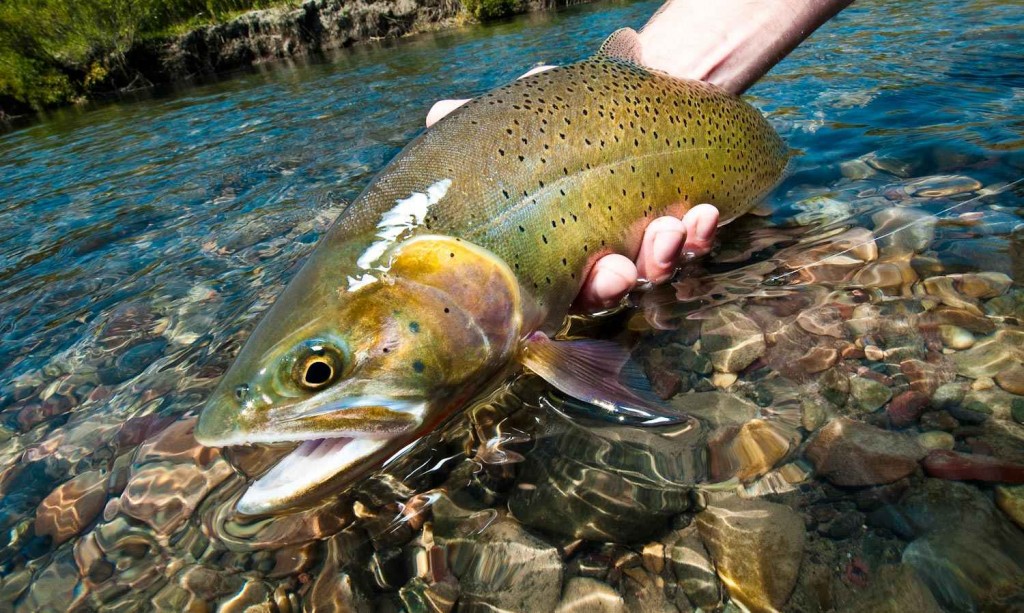
It’s your lucky day. You’ve somehow managed to get away from your busy work schedule and find time to spend a few days fly fishing for beautiful cutthroat trout out west.
You’ve brought several trout to hand fishing a series of S-bends, and you feel like a hero. Life is good, right? Unfortunately, the hot fishing is about to slow significantly as you round the bend in the river and notice the river flows straight as an arrow for the next several hundred yards. There’s very little mid-stream obstructions and no well defined current seams. Furthermore, the water depth is consistent bank to bank. You fish for a while, working your way upstream blind casting, but you’re not having any luck. You find yourself getting frustrated because you can’t figure out where the trout should be holding, and there’s no rising fish. What should you do?
When I find myself in this situation, I focus on presenting my flies against the banks. When there’s no obvious current seams or in-stream structure providing depth change or current buffers, cutthroat trout will generally prefer holding close to the banks. The water current running along the banks causes friction, and this friction slows down the current speed making it a much more efficient place hold and feed. Because all trout prefer to
Read More »8 Tips for Fighting Bonefish Out Of Mangroves

By Louis Cahill
When you hook a big bonefish in the mangroves, you only get one shot at landing him.
Half the reason we target bonefish is that they are such powerful fighters. A relatively modest bone can put you in your backing several times during a fight. That’s reason enough to love them, but when you’re faced with big tides and the big fish they bring to the flats, you can get in trouble in a hurry. When you hook that big fish on the edge of the mangroves, you’d better know what to do.
I’ve seen a lot of anglers miss their chance in this scenario, either breaking fish off immediately or losing them in the mangroves. Bonefish are too powerful to simply beat in a game of force. You have to fight them hard to be sure, but you also have to fight smart. There is a window of opportunity and if you exploit it you can land those tough fish that might seem hopeless.
HERE ARE 8 TIPS FOR FIGHTING BONEFISH OUT OF MANGROVES.
Lead the fish to open water
Often when fishing around mangroves you are presenting the fly into openings in the structure. Places where you can intercept a fish who is working among the roots of the brush. Your best chance at landing a fish in this situation is to lead him out of cover. If the fish moves aggressively on your fly, you can strip it quickly enough to lead him into the open before he eats. This is a huge advantage.
Have a plan and act fast
Once the fish eats your fly, your window of opportunity opens and it isn’t open for long. It takes a second for any fish to figure out that he’s hooked. After all, he’s expecting a meal, not a fight. You can use that split second to set the tone of the argument, and there are two things you need to accomplish quickly.
Raise the head
You need to raise the fish’s head. This is key. If the fish gets in a ‘tail up’ orientation, you’re done. He’s rigged for towing and you will not beat him. Remember, fish have
Read More »Fly Fishing: The Popper-Dropper Rig
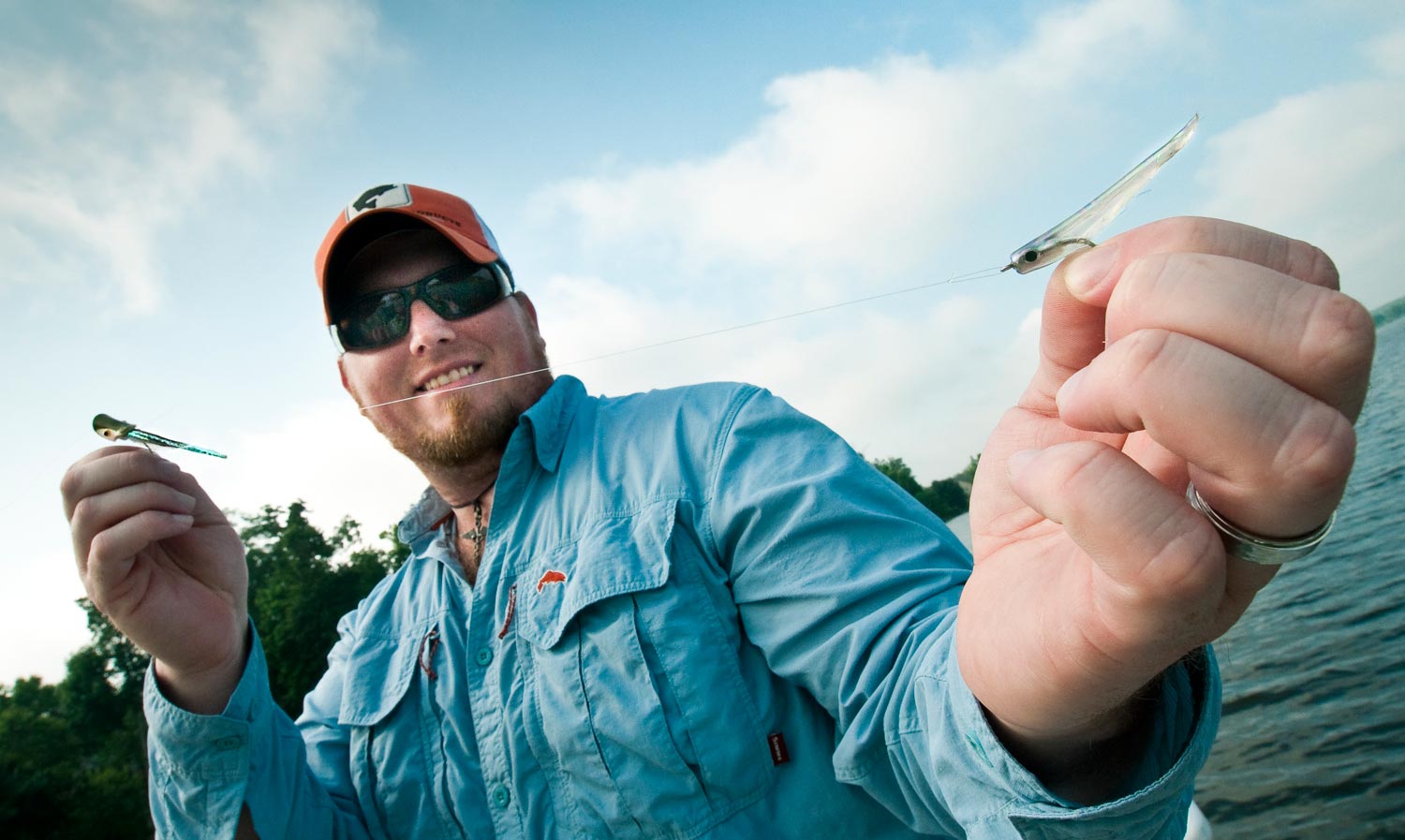
Like a lot of kids, I spent most of my adolescent summers chasing bass and bream on the local creeks and ponds in my area.
Most days, a single rubber-legged popper tied to the end of my leader, was all that I needed to catch fat bream and the occasional lunker bass. On days when the bite slowed, I’d put down my fly rod and head to the neighborhood pool with my best friend Ryan Evans. It didn’t take long for us to get labeled the Huckleberry Finn boys of the neighborhood. We got plenty of strange looks walking through those pool gates, fishing rods in hand, and both wearing cargo shorts with boxers hanging out the tops. Those dirty looks were well worth it, and we learned to shrug them off, because that pool was the perfect place for us to cool down in between our fishing adventures, and it also happened to be one of the best places for us to keep track of the older females. We learned reflective polarized sunglasses weren’t just good for fishing, they also were great for inconspicuously eyeing the older females, walking by in those skimpy bikinis. It was a time in my life when I was relatively stress free, and I had not yet taken on very many responsibilities. Those were the days.
It wasn’t until I started dabbling in trout fishing that I found a way to improve my warm water popper fishing.
Read More »