
Simms Freestone Waders: Video
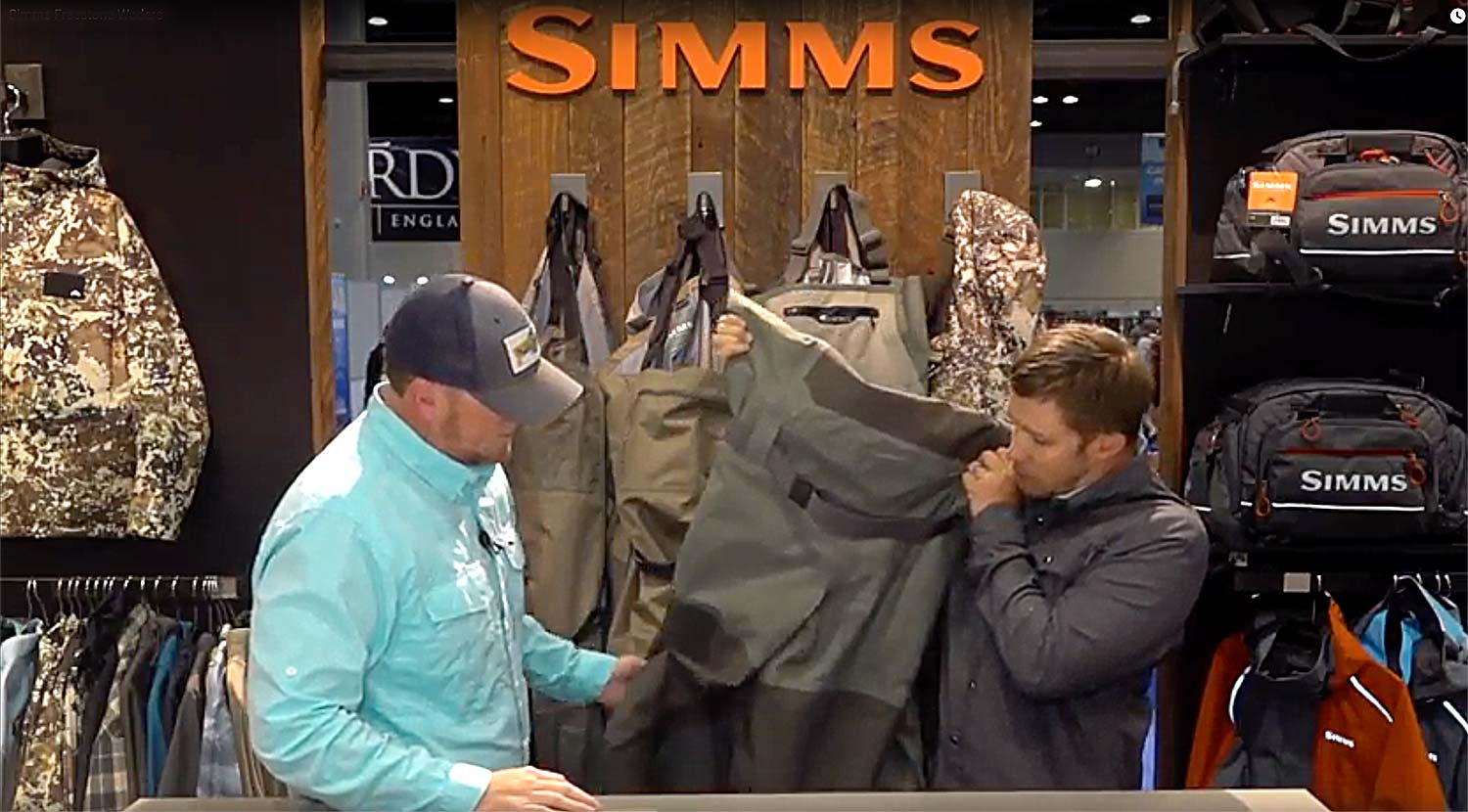
Simms Freestone Waders offer quality, fit and performance at a great price.
The Simms Freestone waders are a great choice for anglers who want Simms performance at $279. I have a pair that I travel with and I love them. While they may not be as bombproof as my G4Zs, they are lighter and easy to pack. On the water, they don’t feel like a compromise.
This years Freestone waders have a few nice upgrades and include mens, women, and kids waders, as well as a pant wader. Theres an economical wader in the lineup for every anglers needs.
CHECK OUT THE VIDEO FOR ALL THE DETAILS ON THE SIMMS FREESTONE WADERS.
Read More »Making the Bobber Better
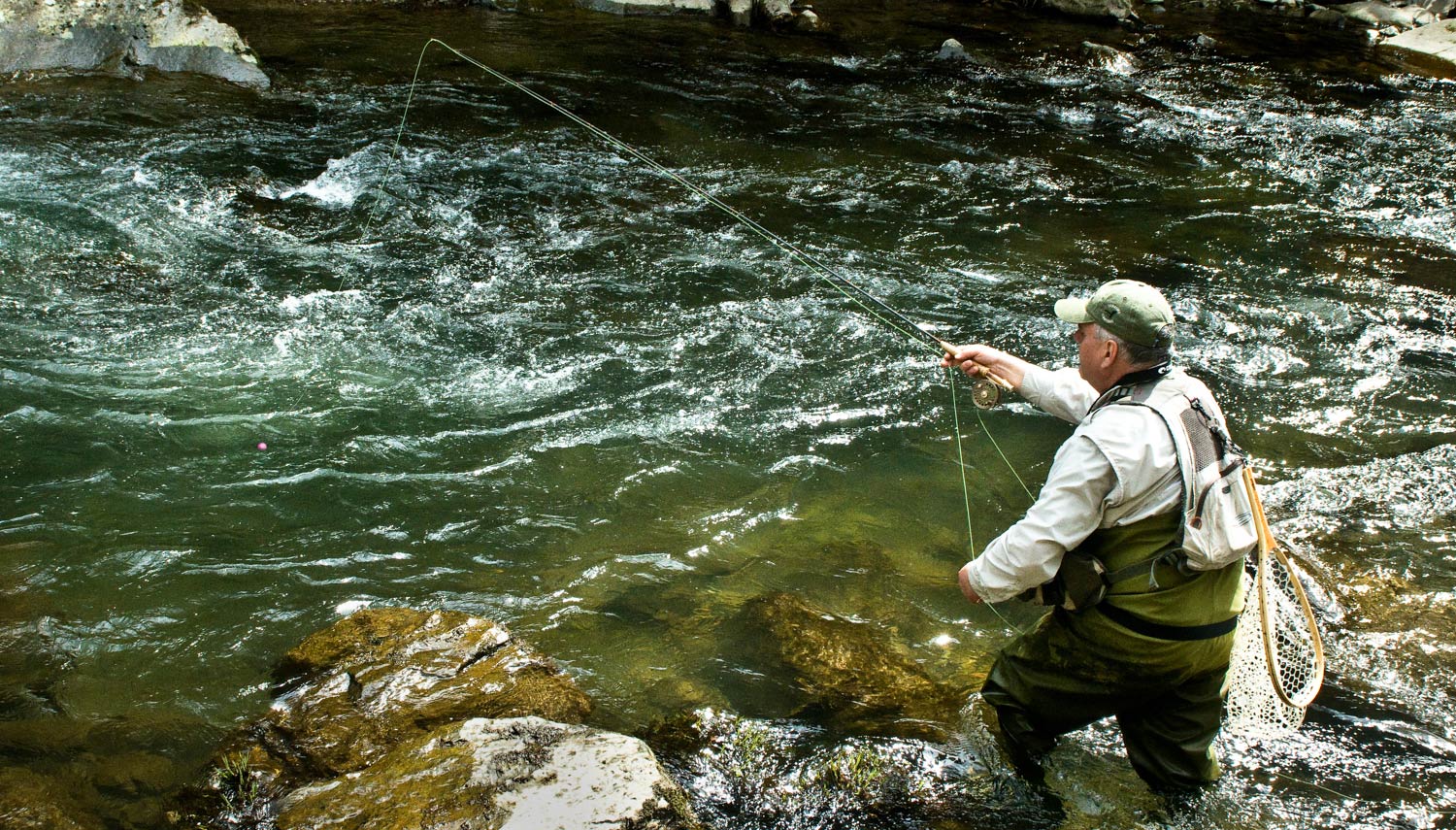
IF YOU’RE GOING TO FISH A BOBBER, YOU SHOULD MAKE YOUR BOBBER BETTER.
I’ve written a little lately about my growing discontent towards bobber fishing. I’m going to say again, on the record, that there is a time and a place for a big gaudy bobber and when it’s time to fish one, you want it to work at its absolute best. Right?
There are two common problems with the way a bobber functions. They are both a matter of drift. On the one hand, a bobber can negatively impact the drift of your fly, pulling it up in the water column and causing an unnatural drift. On the other hand, there can be too much slack between the bobber and the fly, causing your bobber to react slowly when a fish eats.
I was talking about this with my friend Whitney Gould the other day and she showed me a cool trick that solves both problems. This is ironic because Whitney is a renowned Spey caster who will not fish a bobber under threat of death and openly makes fun of anyone who does, including me. I don’t mind, because I’m not too proud to learn something and this trick is so simple I’m shocked I’ve never seen it before.
Read More »A Fly Angler Journey Through ICAST

By Dan Frasier
“If IFTD is a charming antique shop, well maintained with some really neat stuff in it, ICAST is Mardi Gras, complete with floats and fire eaters.”
This year, for the first time, I decided to make the long trek from Sioux Falls, SD, to Orlando in the heat of summer to attend the International Fly Tackle Dealers Convention. For those of you that aren’t familiar, this is the largest Fly Trade Show in the United States. Every year companies gather to introduce the world to the new and wonderful products that will be gracing the fly shop shelves in the coming year; all vying for a pocket in your chest pack. The show is really a pretty good time, getting to see people you haven’t seen in years and getting a sneak preview of some really cool and innovative stuff. That said, two and a half days is a long time and the fly industry is rather small. So I found myself bored. Enter ICAST.
ICAST is the trade show to which IFTD is attached. It’s the show for the fishing industry in its entirety. Bikini-clad ladies staff booths and entire RV’s and lineups of boats grace the floor. It’s a real spectacle to behold. If IFTD is a charming antique shop, well maintained with some really neat stuff in it, ICAST is Mardi Gras, complete with floats and fire eaters. So naturally, I wandered over there. You know, just to check things out. Not because of the girls or anything.
Anyway, I saw some pretty astonishing things that the gear world is bringing out and I wanted to share a few of those with you. I’m sure you’ve seen some of the cool and innovative new products on the fly side. Tacky’s breathable fly box stands out in particular. Now step with me onto Bourbon Street for a look at what the other side is up to.
While having lunch one day one and talking with a friend, a tall and very loud man pulled up a seat next to us. He asked who we were and what we were at the show for. As my buddy and I explained who we are, he loudly cut us off and started talking about what he does. Immediately he reminded me of a carnival barker. I hung with the conversation for a few minutes and the man slid a package across the table to me like some kind of surreptitious spy dossier. I looked down and realized he’d given me a Bill Blade.
A Bill Blade is a knife “system” which allows you to cut off the corner of your hat and install what amounts to a metal sheath that a knife blade slides into. That way you have quick access to your blade at all times by just grabbing the corner of your hat and whipping it out. You know, like if you’re with your buddies the Sharks and suddenly the Jets are snapping and prancing their way down the alley. You’ll be able to stick a fool in the time it takes to tip your cap. Just don’t try and REPLACE the blade into the sheath/bill of the cap without taking the cap off. That’s surely a recipe for an eye patch.
As I wandered the floor of the convention center a particularly large wall caught my eye
Read More »On this day….. Veterans day
By Aleks Renshaw
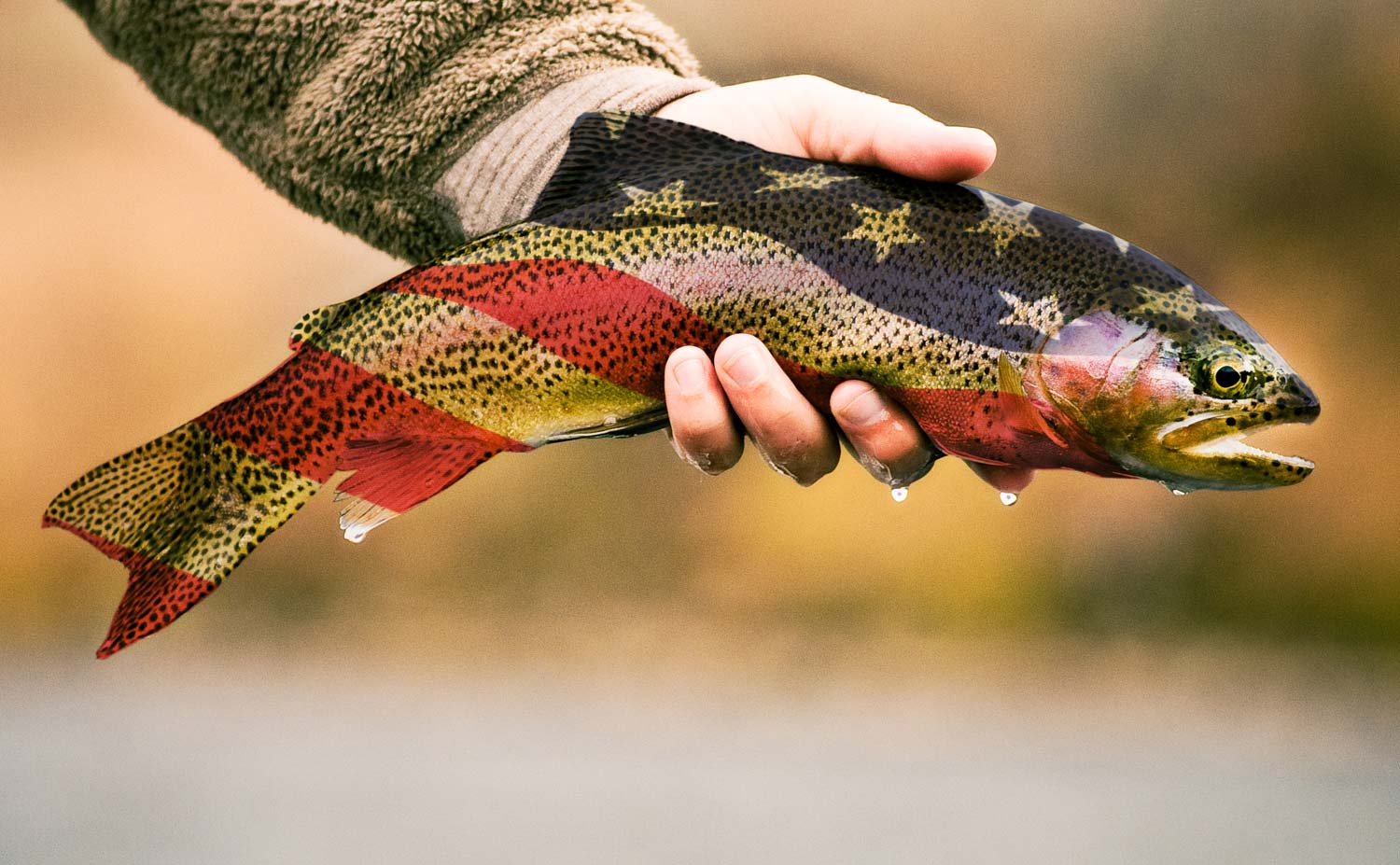
IN TODAY’S AMERICA, ONLY ABOUT 0.4 PERCENT OF OUR NATION DEFEND US FROM ALL ENEMIES, FOREIGN AND DOMESTIC.
“The veterans of our military services have put their lives on the line to protect the freedoms that we enjoy. They have dedicated their lives to their country and deserve to be recognized for their commitment.”
-Judd Gregg
If asked, It would be virtually impossible for any single one of them, who currently serve, to say that their military service has not changed them in some way. Boot camp changes you, the brothers and sisters you serve with change you, and public perception of who you are and what you represent takes hold and changes you. Those are just the basics that I encountered. Add in the factors of serving during war time and tours of duty in war torn areas in the world and the fabric of a man, or woman, changes for ever.
“The soldier above all others prays for peace, for it is the soldier who must suffer and bear the deepest wounds and scars of war.”
-Douglas MacArthur
It is impossible to un-see things. To rationally understand the things you are encountering, and erase the scars of war, visible and invisible. As individuals, we internalize and process things differently. Guilt, depression, anxiety, memory loss, and shame. Reactions, unique to ourselves and the experiences we encounter. It’s hard to help with something that, in most, has yet to show its self or they are unable to outwardly explain.
To exacerbate this, only about 7.3 percent of all living Americans have served in the military at some point in their lives. So, about 92.7 percent of Americans can’t begin to relate to those men and women just out of boot camp, let alone returning home from a tour of duty. As these men and women fade back into society, we see an average of 20 veterans commit suicide daily. This number may fluctuate but, any number for our war hero’s is unacceptable. I personally faced a sailor who found herself wanting to end her life and another who I could not stop. I just could not get my head around the numbers that were being published or the two sailors I personally encountered. They left me wanting to do more.
“There is certainly something in angling that tends to produce a serenity of mind”
-Washington Irving
So, I began by donating my monthly reserve pay to a National Veteran Organization and volunteering my time with several other Veteran Organizations. After a national scandal with a well-known charity I was sending money to, I found myself looking for a more genuine organization. An organization that has a more specific approach. A one on one program with a multi level approach that I could focus my efforts on.
I found it in Warriors and Quiet Waters. A Montana charitable Organization that is privately funded, volunteer-based that offers programs to post 9/11 Combat Veterans and their families.
Read More »Sunday Classic / 6 Tips For Catching Spooky Bonefish
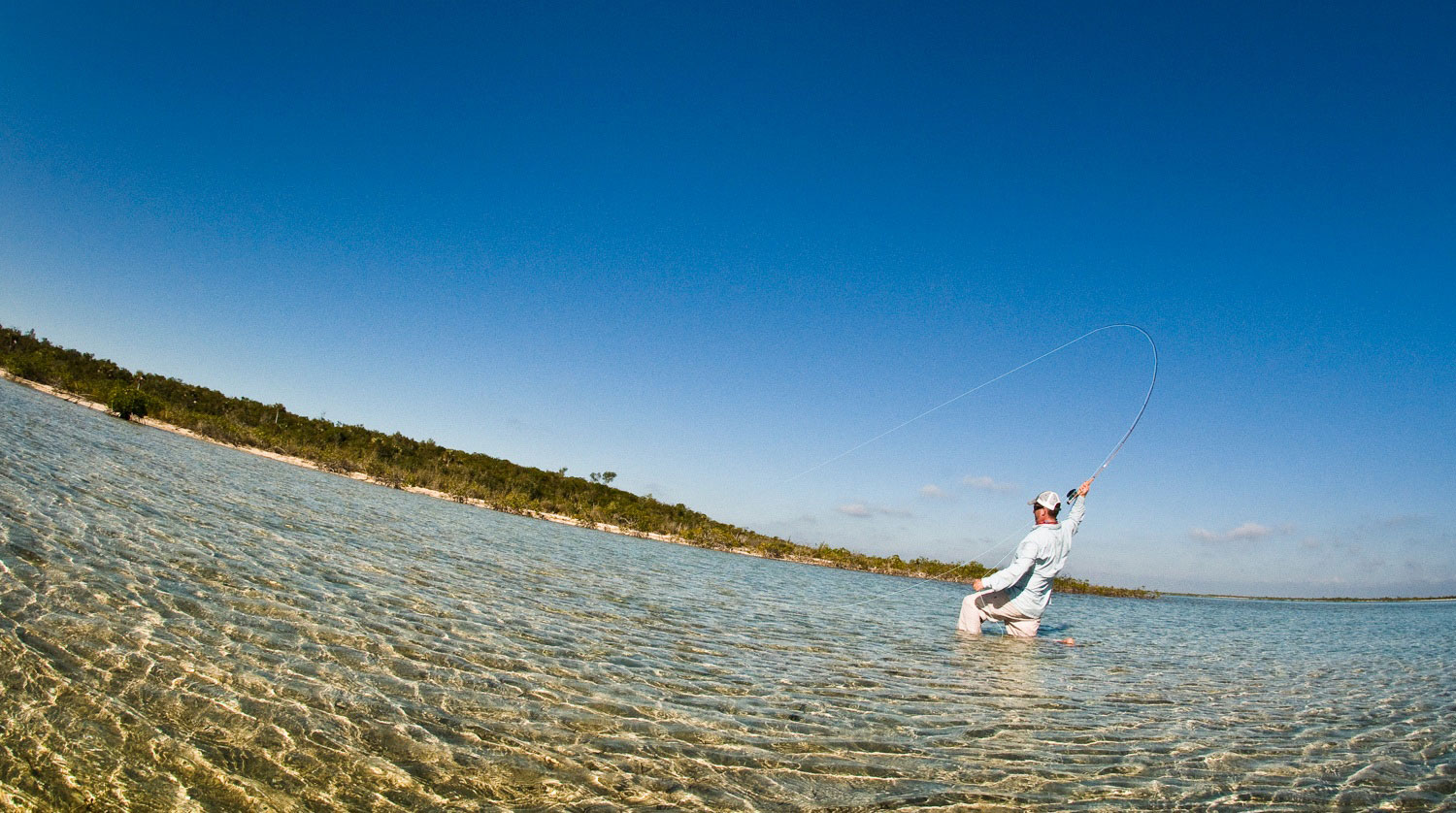
BONEFISH CAN GET SPOOKY. CRAZY, UNREAL, MADDENINGLY SPOOKY.
I found myself dealing with just this situation the other day. Wading for super spooky bonefish in skinny water. Not the easiest day of fishing to be sure, but I did pretty well. I thought I’d share some of the tactics that I use to bring spooky bonefish to hand. Some are obvious and some, not so much.
Wade quiet, or not at all
Bonefish are very sensitive to sound. Especially the sound of your legs pushing water. On days when the wind is still and the water calm, you can barely move without alerting them. Take special care that your steps do not push water. Go super slow! Be aware of pot holes and soft mud that may throw you off balance and cause sudden movements. Find ambush spots like inlets and points and just hang out for a while. Let the fish come to you.
Use light flies
Bonefish are extra spooky in skinny water. You don’t need a heavy fly when the water is shallow so switch to a lighter fly that will land softer on the water. Use bead chain eyes instead of lead eyes, and for extra quiet presentations wrap some hackle at the eyes to cushion their landing.
Keep a low profile
When bonefish are close, crouch or kneel to minimize your visibility. Wear soft natural colors that blend with the surroundings. This is crucial when fish are following your fly and swimming straight for you.
Lead ’em farther
If fish are blowing up on good presentations, or even before the fly hits the water, it’s time to lengthen your lead. The other day I
Saturday Shoutout / Anchored With Oliver White
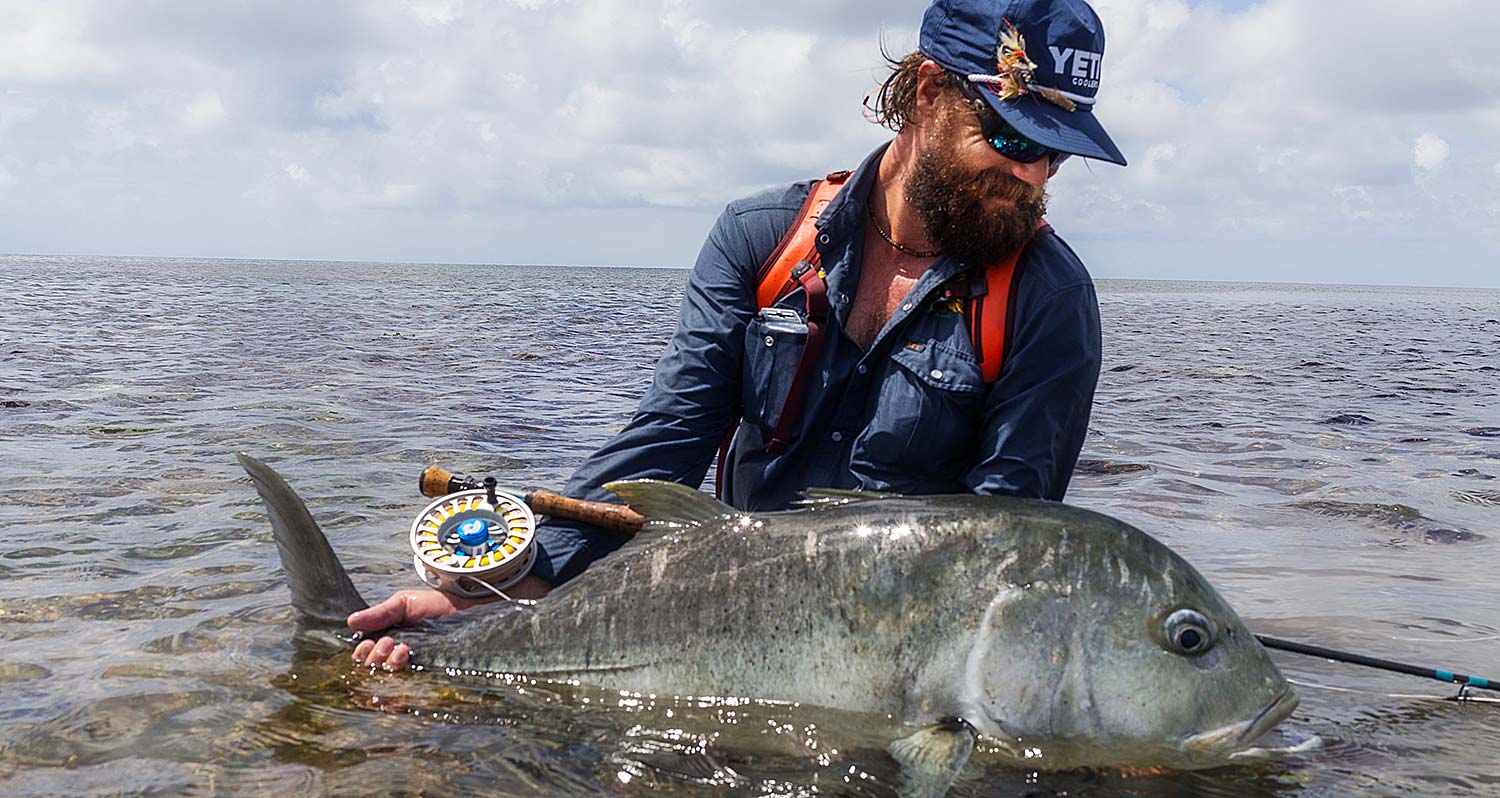
Oliver White is one of the most interesting people I’ve ever met.
I was super excited to see that he has sat down with April Vokey to record an episode of her podcast, “Anchored.” I consider both Oliver and April friends, but I’ve never actually been in a room with them together. This conversation did not disappoint. Two remarkable folks having a remarkable conversation.
Oliver White’s story reads like the plot of a movie. A movie with a plot that isn’t at all realistic. A whirlwind ride from the mountains of North Carolina to the flats of the Bahamas and the jungle of Guyana, by way of Wall Street. Take a few minutes and get to know one of the most unique folks in fly fishing.
ANCHORED WITH OLIVER WHITE
Read More »New Gear From Fishpond
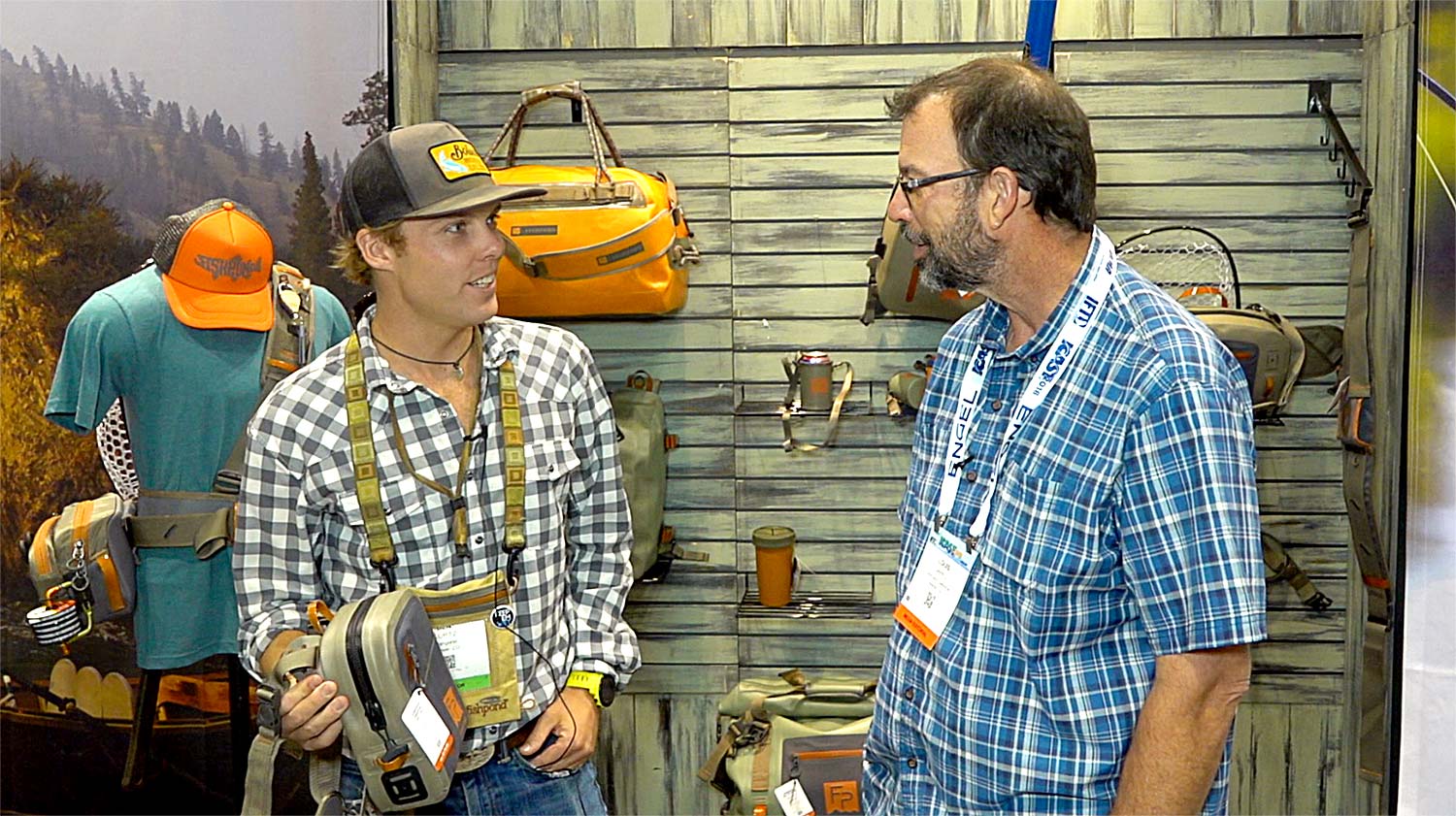
You can always count on Fishpond for fly-fishing gear on the cutting edge.
Fishpond leads the industry in fishing gear made from recycled materials. What’s awesome about that is, you don’t sacrifice function while you’re helping out the environment. Every piece of Fishpond gear I’ve ever owned is as rugged as they are innovative.
All of this applies to the new gear this year. There are tons of new products but in this video we focus on a chest pack, a duffle and the new reach and tippet keeper.
WATCH THE VIDEO TO SEE NEW PRODUCTS FROM FISHPOND.
Read More »3 Classic Flies For New Tyers
By Bob Reece
Three points of contact provide stability.
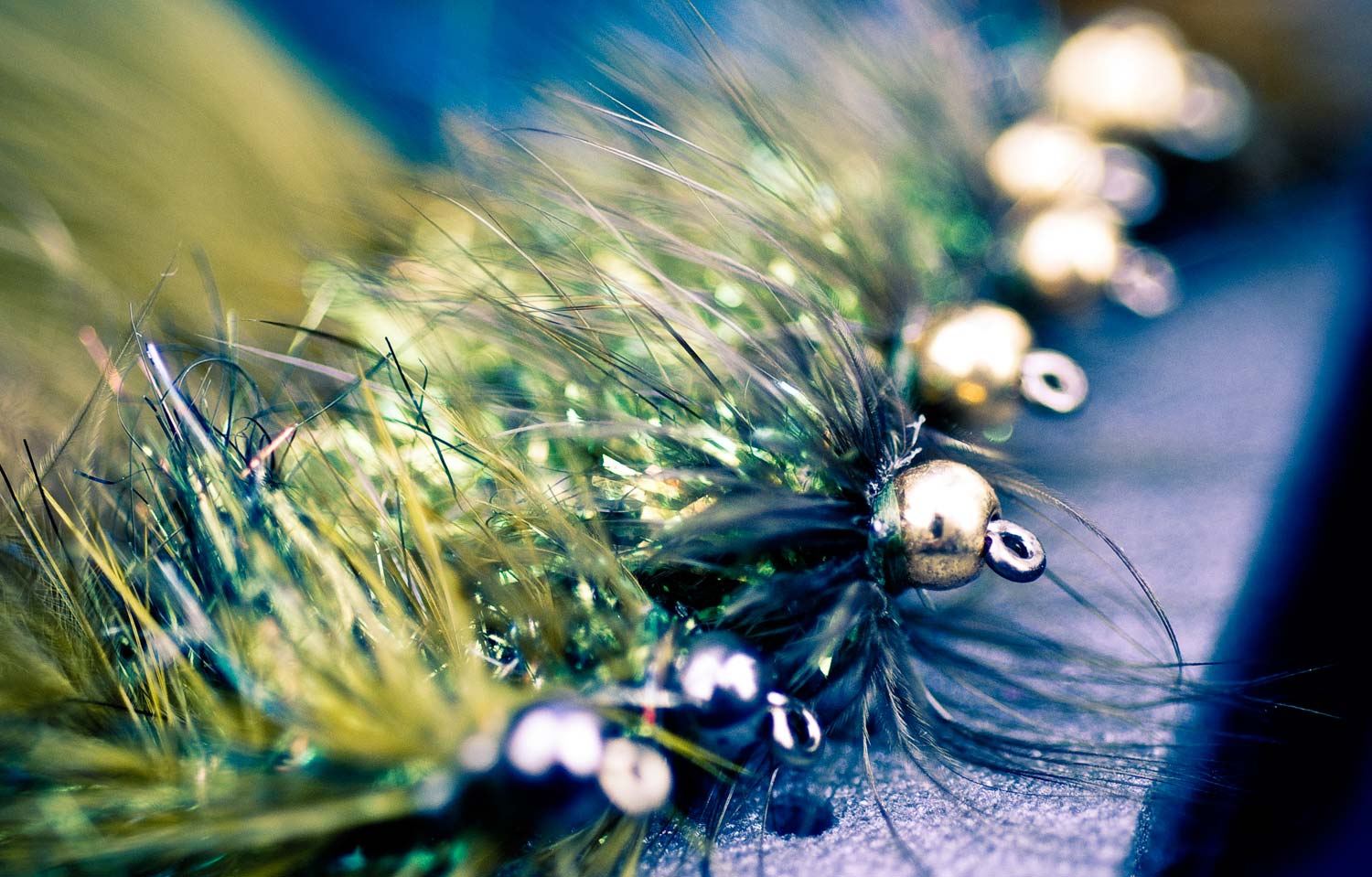
There are a plethora of patterns that new tiers could begin with. Yet three in particular lay out the fundamental techniques needed to create a stabile foundation for your fly tying future.
The Woolly Bugger, Pheasant Tail and Elk Hair Caddis have all proven their worth. The results that these patterns have produced for anglers around the world are undeniable. Yet equally as important, but often overlooked, is the value of these three bugs to beginning tiers.
Successful fly tying stems from mastering techniques. Once these techniques have been mastered they can be applied to additional practices and the subsequent patterns that are created through their use. While constructing the Woolly Bugger, tiers work with tailing materials, chenille and wrapping hackles. The Pheasant tail provides a practicing ground for proper nymph proportions, feather bodies and ribbing materials. Lastly, the Elk Hair Caddis introduces the tier to dubbing, more precise hackle use and hair wings.
By learning and mastering these three patterns, new tiers can anchor themselves to a successful starting point. The skill set created through the creation of these bugs reaches far and wide in its application throughout the fly tying world.
WATCH THESE VIDEOS AND LEARN TO TIE 3 CLASSIC FLIES FOR NEW TYERS.
Read More »Why ask why? Try dry flies for Steelhead
By Jeff Hickman
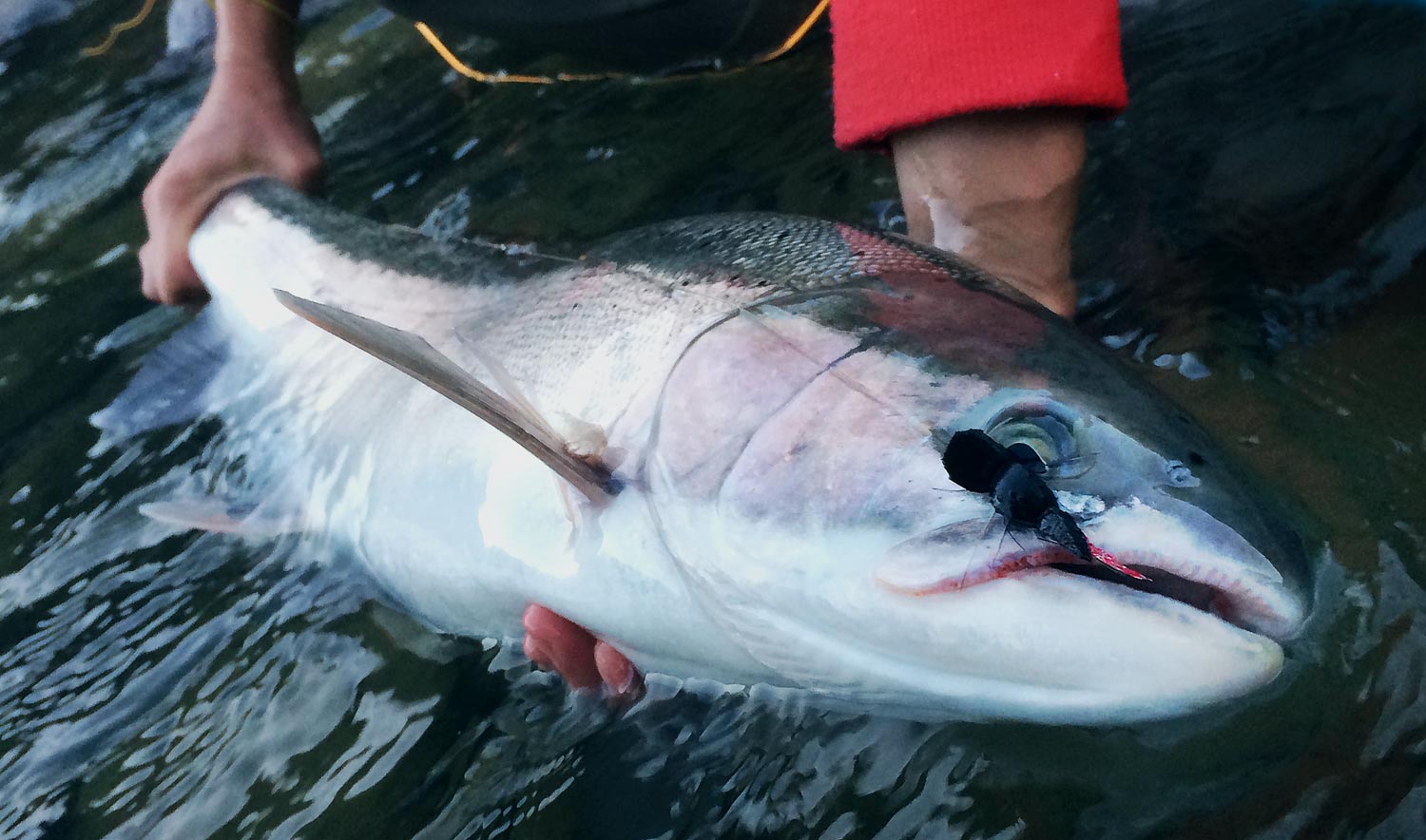
CATCHING A STEELHEAD BY SKATING A DRY FLY IS THE COOLEST WAY TO CATCH THEM.
I always have said that one fish on the dry is worth ten on wet flies…but why? It’s not like it’s impossible to catch them on dries. It can actually be quite productive at times but people are often just too afraid to try. If you only have one day to fish there’s a lot of pressure to catch fish, so why opt for the most challenging method? Well, there is, in fact, only one way to catch a steelhead on a dry fly and it start with tying it on your line!
Is a steelhead eating a fly off of the surface that much more unbelievable than a fish eating a fly swung just under the surface, or for that matter, a fly swung deep with a sink tip? It’s not. In fact, I think that there are times when a dry fly can work better. The disturbance and wake it cuts through the water’s surface can excite fish and elicit savage grabs.
The visual display you get when watching the fly skate across the surface is super fun and you can learn a lot by seeing where your fly actually is. Watching a fish come airborne for it, slap it, thrash at it, boil on it or just gently suck the fly down is one of, if not the single, most exciting experiences there is in fishing. Seeing them come for the fly is super exciting even if you don’t hook them. It is that extra element of playing with the fish that is the coolest for me!
photo2But what is even better
Read More »The G Loomis IMX Pro Short Spey: Review
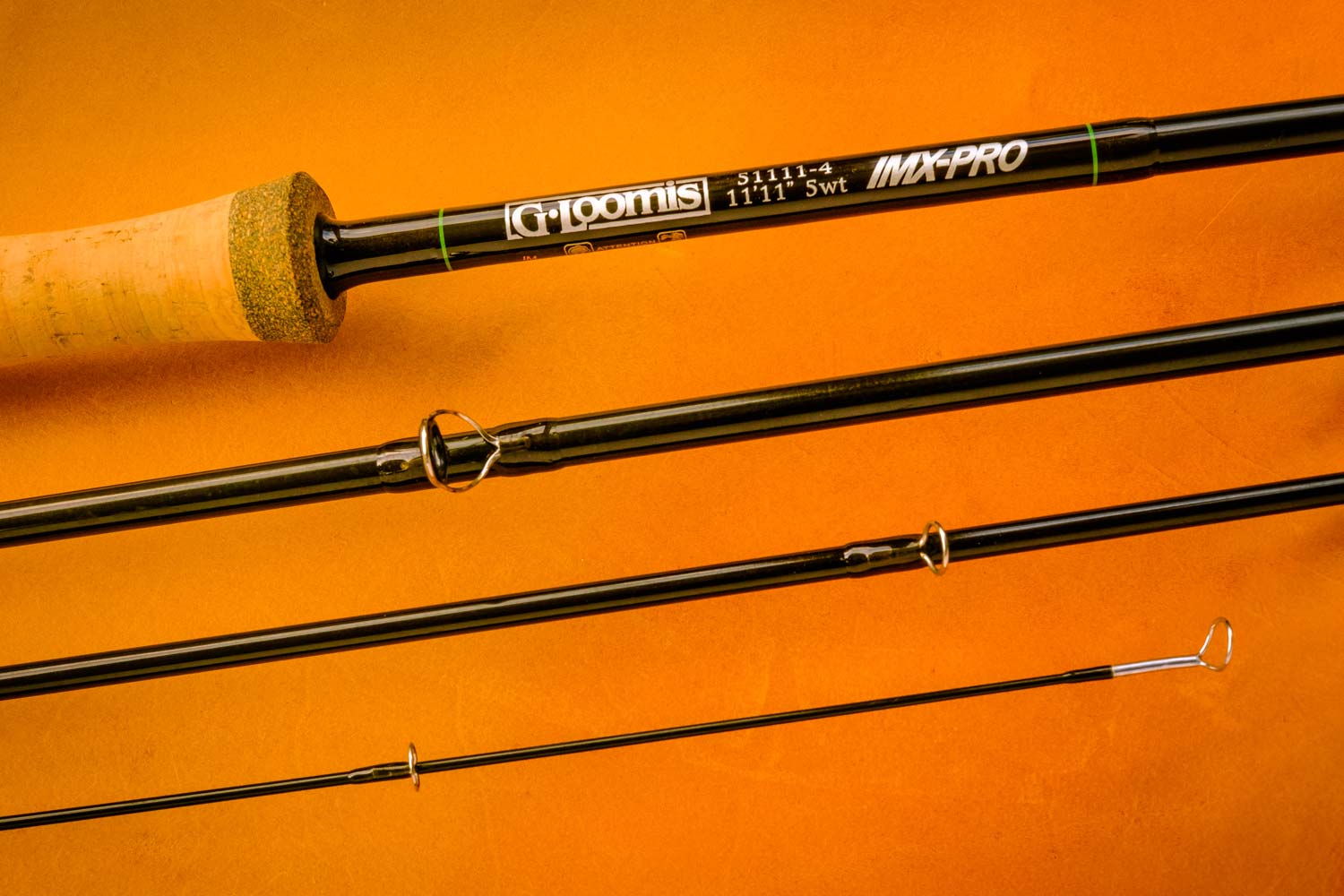
By Louis Cahill
The IMX Pro Short Spey may be the best bargain in fly-fishing.
Every one of the IMX Pro fly rods I’ve cast has been a joy, but the 11-foot 11-inch two-handers really stand out. I cast the 3 weight on the pond at IFTD last year. I was immediately impressed but I’ve learned not to judge a rod solely on the casting pond. I got my hands on a 5 weight short spey and did some trout fishing with it. Last month I took the 5 weight to the Deschutes for steelhead and I’m blown away by the performance and versatility of this rod.
Before we go any further, let’s talk about the price. Too many times I find myself reviewing great fly rods that I know are out of reach of a lot of anglers. The truly amazing thing about the IMX Pro Short Spey is the price. At $575 it’s literally half the price of much of the competition and with no compromise that I can find. Speaking specifically about the 5 weight, a quality rod that covers the gambit from trout spey to summer steelhead, is astounding at that price.
The second thing you should know about the IMX Pro is that it is not a switch rod. Although it is just under 12 feet in length, which would classify it as a switch rod, it was never intended for overhead casting. It’s a classic, medium-fast spey action. It has a softer midsection than a typical switch rod which means it loads like a dream and casts effortlessly, as a spey rod should.
The rod is light and crisp in the hand. This means that it is not only a joy to cast but to swing. Holding line off the water and leading the fly into the swing is effortless. I have bad shoulders and this kills me with a 13-foot 7-weight. The light weight and easy casting of the IMX Pro Short Spey reduces fatigue and makes the whole fishing experience relaxed and enjoyable, as it should be.
When I carried the 5 weight out for steelhead, I expected to be under gunned. Typically, a 6 weight is my choice for summer steelhead. I was pleasantly surprised by the IMX Pro in both casting and fish fighting. Set up with an Airflo
Read More »