
3 Ways to Make Your Wiggle Minnow Fish Better
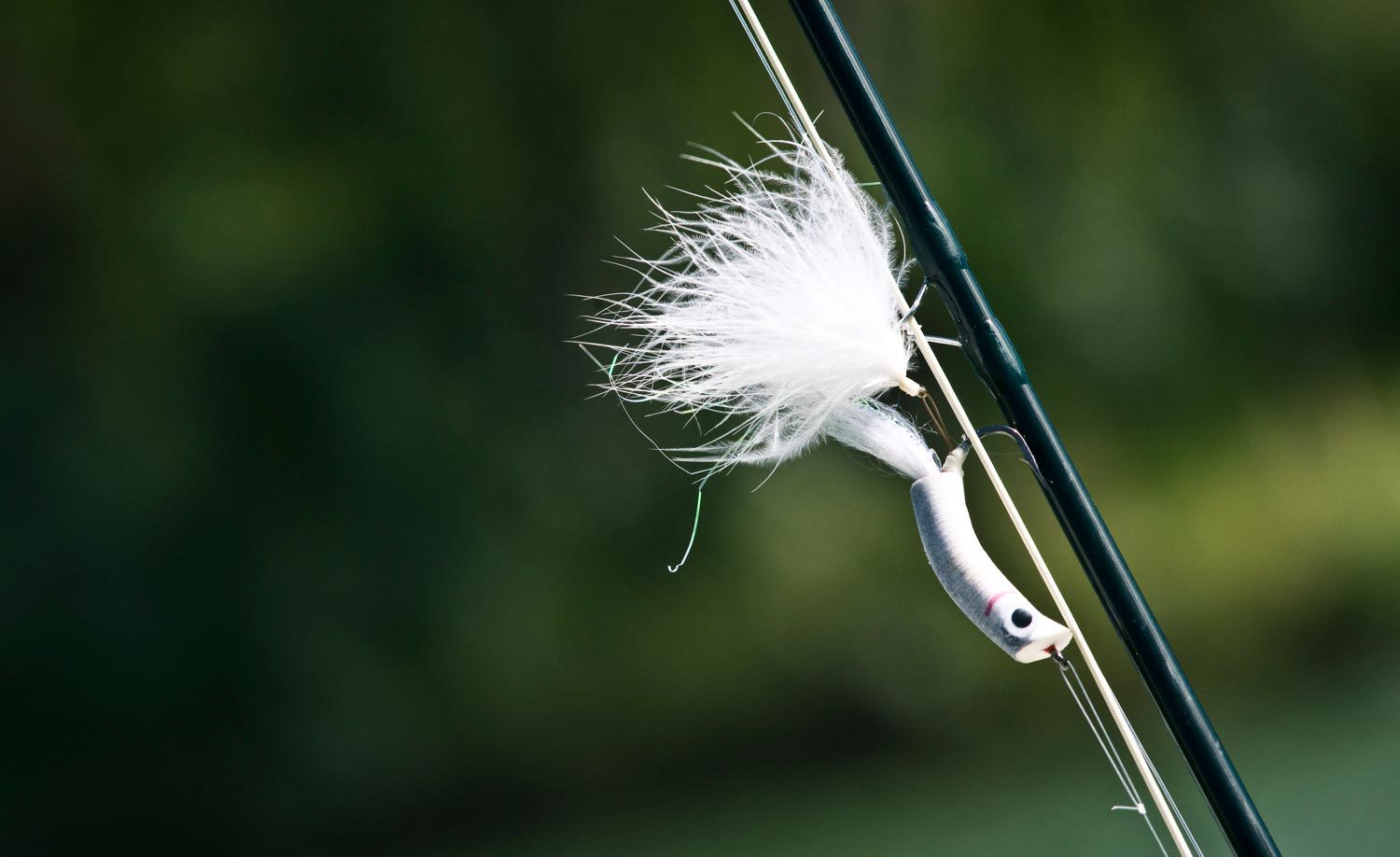
The foam wiggle minnow has been a mainstay streamer for me for trout and other predatory game fish for several years now.
When you combine its realistic swimming action and the significant water it pushes during the retrieve, its one of the best streamers I know of for calling in fish from great distances to eat. Plain and simple, the wiggle minnow will catch fish just about anywhere you visit in both fresh or salt, regardless of the water conditions you may find yourself fly fishing. Furthermore, it also fishes well on all types of fly lines (floating, intermediate, sinking) and on a wide range of rod weights. This can prove to be very valuable if you find yourself on the water with limited gear options. The last few years, I’ve been experimenting with modifications to my wiggle minnows in the effort to improve their fishability.
Read More »3 Ways to Improve Your Fly Casting on the Flats

About ten years ago, I embarked on my first international saltwater fly fishing trip, with a couple Texas boys I’d previously met while chasing peacock bass in the Amazon. The saltwater trip took place down in Mexico, specifically the Ascension Bay area. Our primary target fish were bonefish but we kept a constant lookout for permit and tarpon. The two born and raised Texas boys had grown up fly fishing in the salt, and they both had more than enough testosterone, ego and skill to handle the demanding fishing conditions. I on the other hand, had never experienced first hand the difficulties that saltwater fly fishing brings. I really struggled with spotting fish in an unfamiliar environment and managing my presentations in 25 mph winds. I’ll never forget the humbling feeling of defeat after our first day of fly fishing on the flats. My counterparts landed a dozen bonefish a piece while I only managed to catch one. Just about the entire trip I was plagued with the feeling of being under-gunned on the water. The wind totally kicked my butt and I missed numerous opportunities because I couldn’t cast far enough to consistently get my fly to the targets my guide was calling out.
At the time, the only problem I saw in my fly casting was I didn’t seem to have nearly as much power in my casting stroke as my buddies. That was true, but the real problem was I didn’t have the competency to diagnose what I was doing wrong and neither of my buddied did either. All they kept saying, over and over to me, was that I needed to work on my double-haul.
Read More »Fishing Streamers Is Still All About Presentation
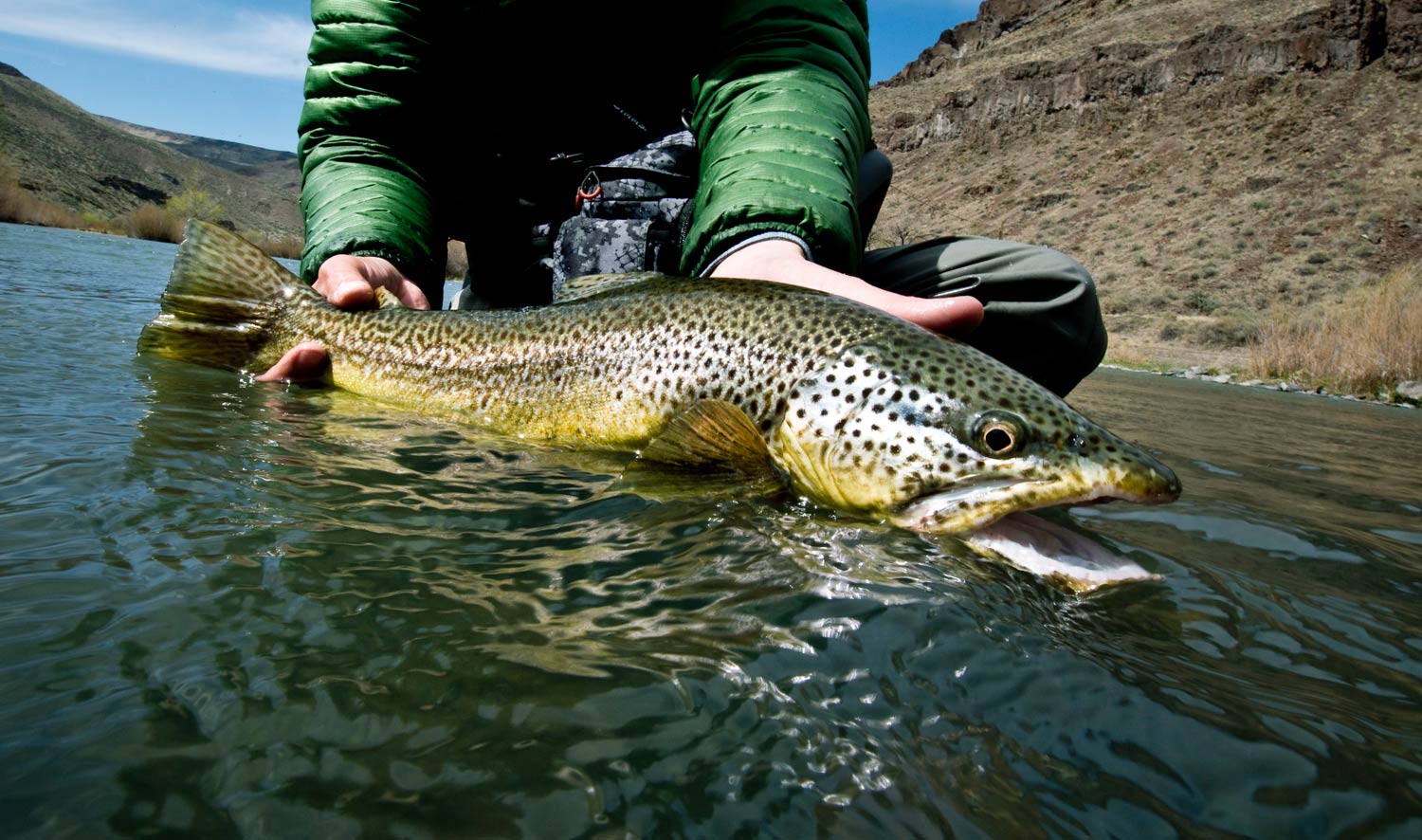
STREAMER JUNKIES, AND I INCLUDE MYSELF, GET A BAD RAP FROM THE DRY FLY CROWD.
In some places they even go so far as to call them lures, rather than streamers. The dyed-in-the-wool purest would portray those of us with the nerve to fish a four- or six-inch fly as neanderthals. The mantra of the dry fly purest is this.
“Imitation and presentation, that’s fly fishing.”
When I hear those words, I think to myself, “Is there a better description of streamer fishing?”
That’s what we’re doing, isn’t it? Imitating a type of forage food and presenting that Imitation in a manner that makes it believable. The fact that the forage food we have chosen is not an insect makes it no less artful. If your streamer is not presented in a way which the fish can appreciate, it’s still not going in the mouth.
I was reminded of this the other day when fishing a great Tailwater river with my friends Dan and Garner. Water conditions were perfect for streamer fishing and we were working the banks, buckets and blow downs hard. Each of us, streamer fishermen but each with his own style.
I worked my big articulated patterns and snaky sculpins on a long leader and intermediate line, while Garner fished a Sex Dungeon in full Galloup style with a short leader and sinking line. Dan tossed his beautiful classic Maine style streamers. All of us caught fish, but none of us caught the fish we wanted.
I’m not complaining
Read More »Reading The Body Language of Highly Aggressive Trout
By Bob Reece
As we move into the fall months, the use of streamer patterns typically increases for many fly fishers.
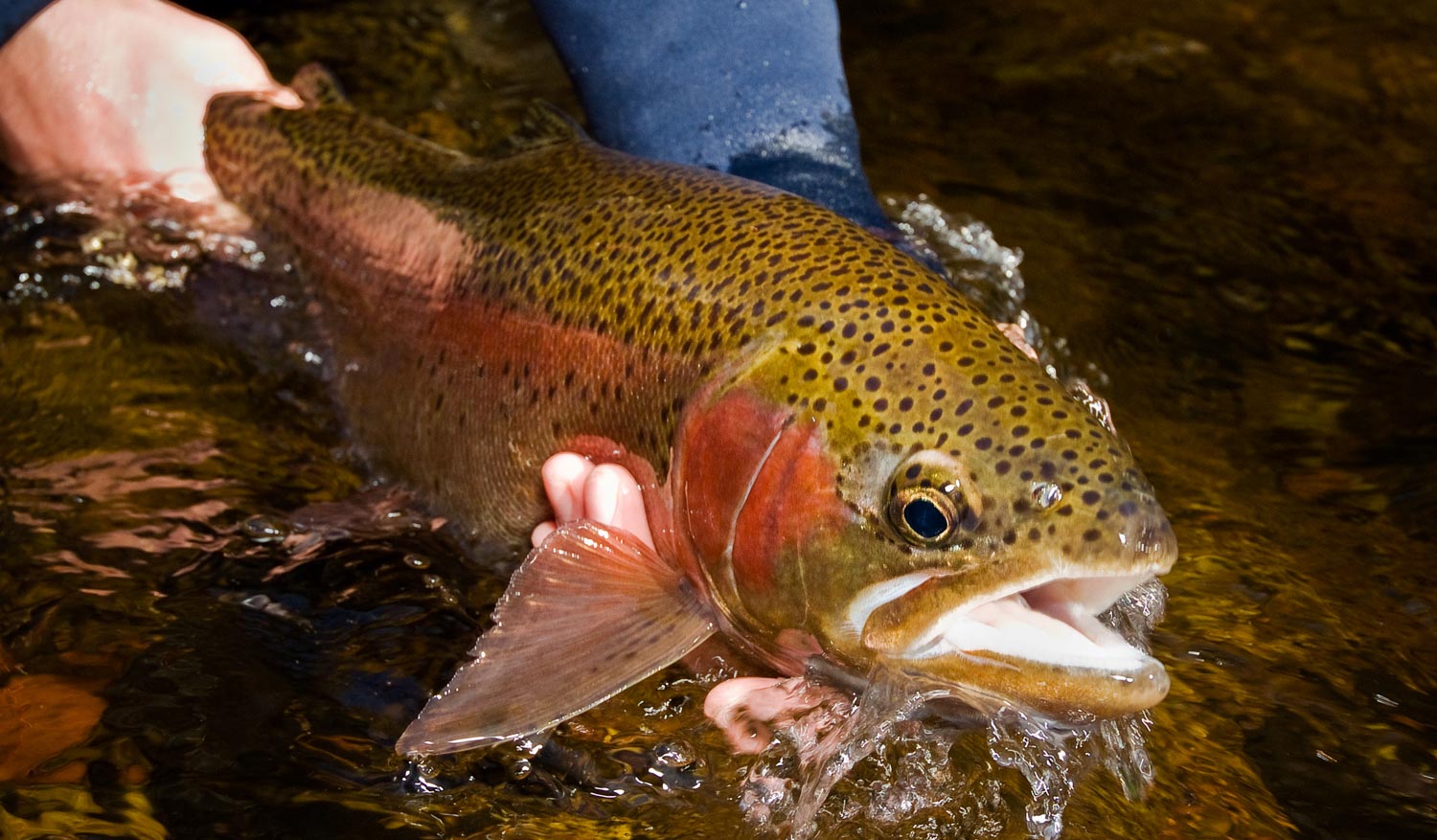
There are many factors that lead to success when pursuing trout with these beefy creations. Evaluating the body language of the aggressive fish that chase these flies can improve your odds of hooking up.
Throughout the course of the year I have countless conversations with other fly fishers. When these discussions are focused on streamer fishing, a common tale arises. I’m repeatedly told stories of “missed” opportunities or last chance swipes from aggressive fish at the end of a retrieve or as the pattern is lifted from the water for another cast. The excitement and emotion of these encounters is often evident in the eyes of the story teller.
While this story is common, its ending can often be avoided. The end of a retrieve does not always mean the end of an opportunity to hook that fish of your dreams. If an aggressive trout pauses where you finished your retrieve or actively searches the water or substrate, you should immediately place that offering back in its field of vision. When I encounter these situations, I attempt to quickly place the fly in front of and off to either side of the fish. As with many other fly fishing situations I avoid
Read More »3 Classic Flies For New Tyers
By Bob Reece
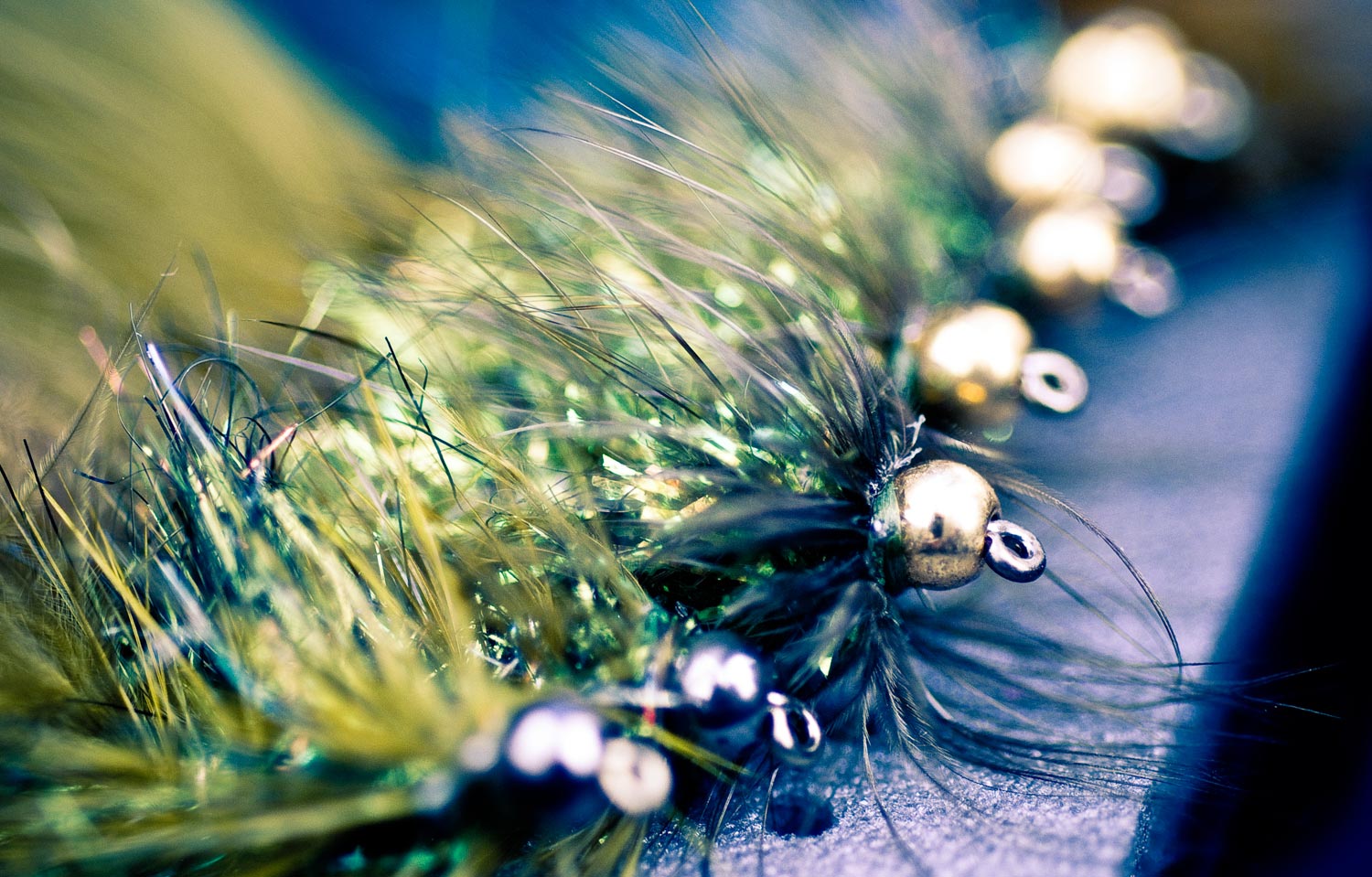
Three points of contact provide stability. There are a plethora of patterns that new tiers could begin with. Yet three in particular lay out the fundamental techniques needed to create a stabile foundation for your fly tying future.
The Woolly Bugger, Pheasant Tail and Elk Hair Caddis have all proven their worth. The results that these patterns have produced for anglers around the world are undeniable. Yet equally as important, but often overlooked, is the value of these three bugs to beginning tiers.
Successful fly tying stems from mastering techniques. Once these techniques have been mastered they can be applied to additional practices and the subsequent patterns that are created through their use. While constructing the Woolly Bugger, tiers work with tailing materials, chenille and wrapping hackles. The Pheasant tail provides a practicing ground for proper nymph proportions, feather bodies and ribbing materials. Lastly, the Elk Hair Caddis introduces the tier to dubbing, more precise hackle use and hair wings.
By learning and mastering these three patterns, new tiers can
Read More »Keep Your Hands on the Cork
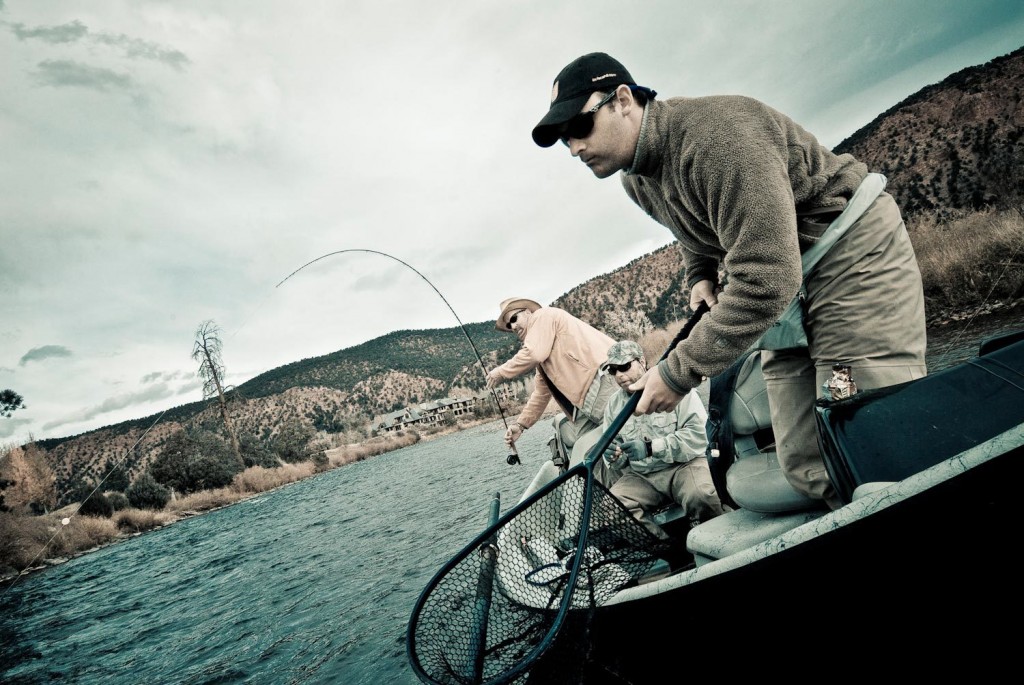
Like so many others out there, I’ve broken my fair share of fly rods over the years.
I’ve slammed them in tailgates, stuck them in ceiling fans and I’ve squashed quite a few trying to get in and out of my cataraft to quickly. It took me awhile to figure it out, but I finally realized I was the problem, and I’ve since learned to slow down and not worry about being the first angler on the river all the time. It’s kinda funny how just slowing down a few steps and taking a couple extra minutes to get organized, keeps those negligible acts of snapping fly rods to a minimum.
One overlooked fly rod handling mistake I see all the time by fly anglers, is taking their hands off the cork during the final stages of the fight, and moving one hand high up on the butt section of the rod in the effort to get extra leverage to land the fish. You never want to do this, because when you do, you change the fulcrum point of the fly rod and eliminate the fly rods ability to
Read More »Flies That Catch Big Trout, The Truth Might Surprise You
I HAVE DEFINITE IDEAS ABOUT HOW TO CATCH BIG TROUT. APPARENTLY THEY ARE ALL WRONG.
Like every other guy or gal with a fly rod, I have some pretty strong opinions about the kind of flies that catch big fish. These opinions are based on years of experience and experimentation. I have theories about the behavior of big predatory trout and they influence my tying and my fishing. These ideas are proven out by countless hours on the water. At least that’s what I thought.
Regular G&G readers will know that I am a confirmed streamer junkie. I make no apologies for it. I love fishing streamers and I believe wholeheartedly that big flies catch big fish. Here’s the problem: without knowing it, for the last eight or ten years I’ve been proving myself wrong.
I am not a fish counter. I’m not a trophy hunter. I like catching big fish but I do not possess a single mount or even a catch-and-release painting. Not surprisingly, I don’t even have a lot of photos of myself with fish. Most of the fish I catch, if they are photographed, are in someone else’s hands. The truth is that I am just fundamentally more interested in the next fish than I am the last fish.
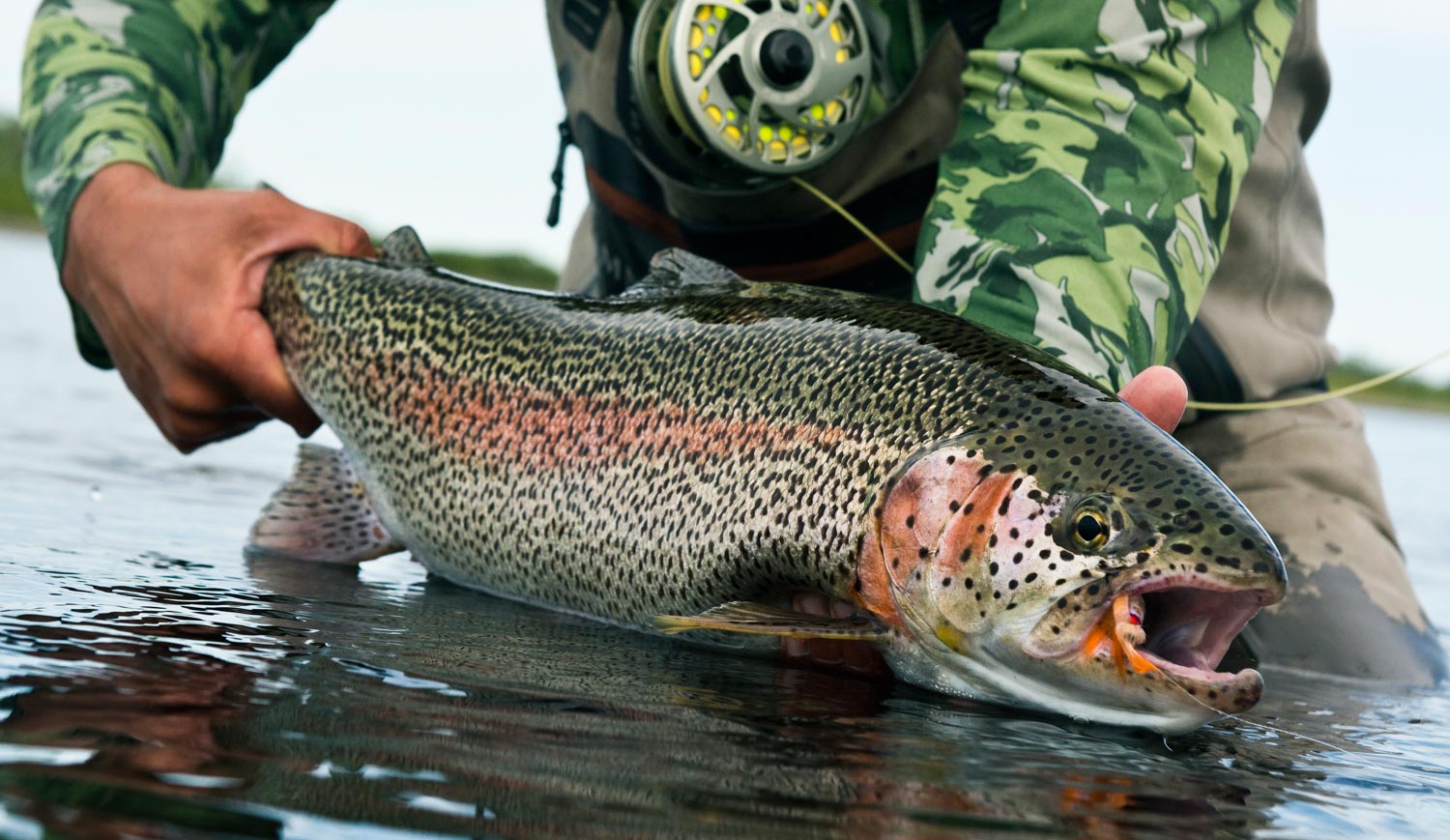
What I do, on very rare occasions, is keep a fly. Once in a while I’ll catch a fish that’s special. It’s always a big fish but there’s usually something extra that makes it special. The color or fins, or maybe where I caught it or who I was with. It happened the other day in Alaska. I was fishing with my good buddy Bruce Chard and guide Jeff Forsee on the Kanektok river at Alaska West. On literally the last cast of the day I hooked and landed a rainbow in the ten- to twelve-pound range. A beautiful and perfect Alaska rainbow.
It was a great fish by any standard but
Read More »Rubber, Above & Below
By Bob Reece
Round rubber and spandex are two members in the vast tide of synthetic materials that have washed over the fly tying world in recent years.
They have both been used to create numerous surface and subsurface patterns. However, I would argue that one is better suited for the world above while the other thrives below.
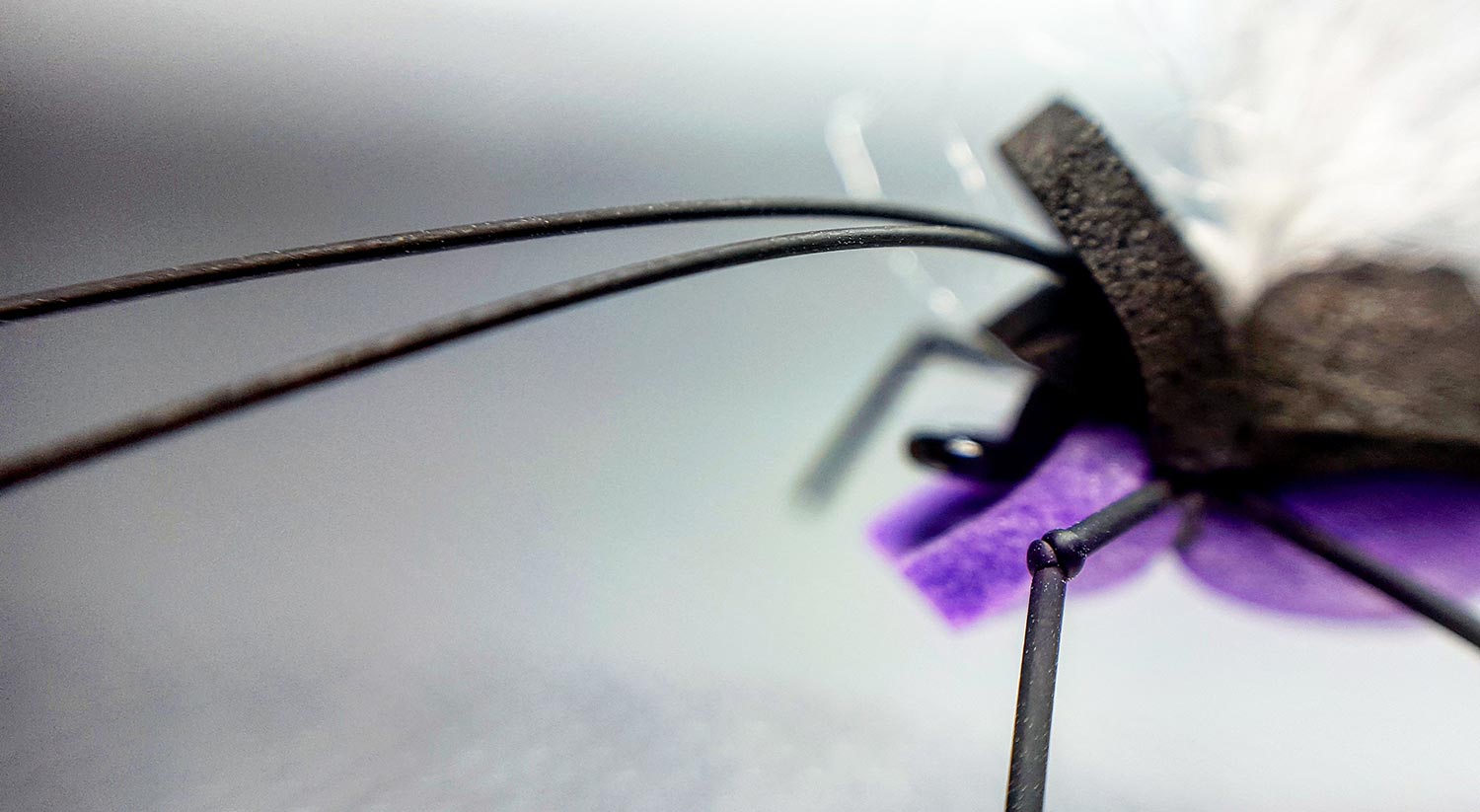
Round rubber comes in a wide array of colors and sizes. While this material has been used on numerous subsurface patterns, I would argue that it’s most effectively put to use on the water’s surface. In comparison to the structural makeup of spandex, round rubber is a rigid material. Due to this comparatively stiff makeup, its motion is produced at a longer wave length. This trait is beneficial in the creation of appendages for terrestrial patterns both large and small. The legs and antennae of terrestrial insects are typically much longer than those of aquatic insects. As a result, those appendages often extend significant distances away from the body and the rigidity of round rubber is ideal for imitating this trait. Its structure allows for the creation of longer hopper, beetle, spider and other terrestrial appendages that will maintain their dimension while still providing movement. Conveniently, the rounded shape of medium round rubber also results in a more consistent and controllable knot. These knots can be used to imitate prominent leg joints. This consistency eases the process of creating the approximate right angle in these legs, resulting in a bent leg look that more effectively imitates the natural.
Moving below the surface of the water, I
Read More »Fly Fishing, Always Have a Plan B
Just about every fisherman out there is probably familiar with the saying, “never leave fish to find fish”. I live religiously by this common sense fishing advice. It’s saved my butt many days on the water guiding, and keeps me from straying away from productive water when I find myself being drawn away to fish other spots upstream that look great. Always remember that fly fishing is full of hot periods and cold periods of catching. So when fishing it’s hot, you want to capitalize on it as much as you can before it goes cold. Sometimes it can be hot fishing for several hours, while other times you may only have one hour of hot fishing, such as when a hatch is in progress. Quite often anglers can have more success sticking around fishing one area throughly, when it’s producing, than fishing a bunch of spots partially. Every stream is different of course, but it’s generally safe to say that some sections of water always will be fishing better than others througout the course of a day. A fly fishers job is to determine where those hot sections of the water are and fish them.
Read More »5 Flies For Labrador
By Jason Tucker
Having recently returned from Labrador, I got to try a lot of different tactics, techniques and flies. It’s the benefit of being able to fish all day, every day, for a week. We fished everything from dry flies to streamers to nymphs.
Labrador had it all—copious hatches of both mayflies and caddis, with fish rising steadily or cruising and taking flies. They hit streamers aggressively, and they took mice on top as well.
You would think fish that see so few anglers would take anything you threw at them, but that assumption is dead wrong. They were picky about what caddis fly you presented. Mayfly patterns had to be the right size. Even the pike wouldn’t hit an olive streamer.
We both brought every fly box we owned and a huge pile of flies. Here is what caught fish.
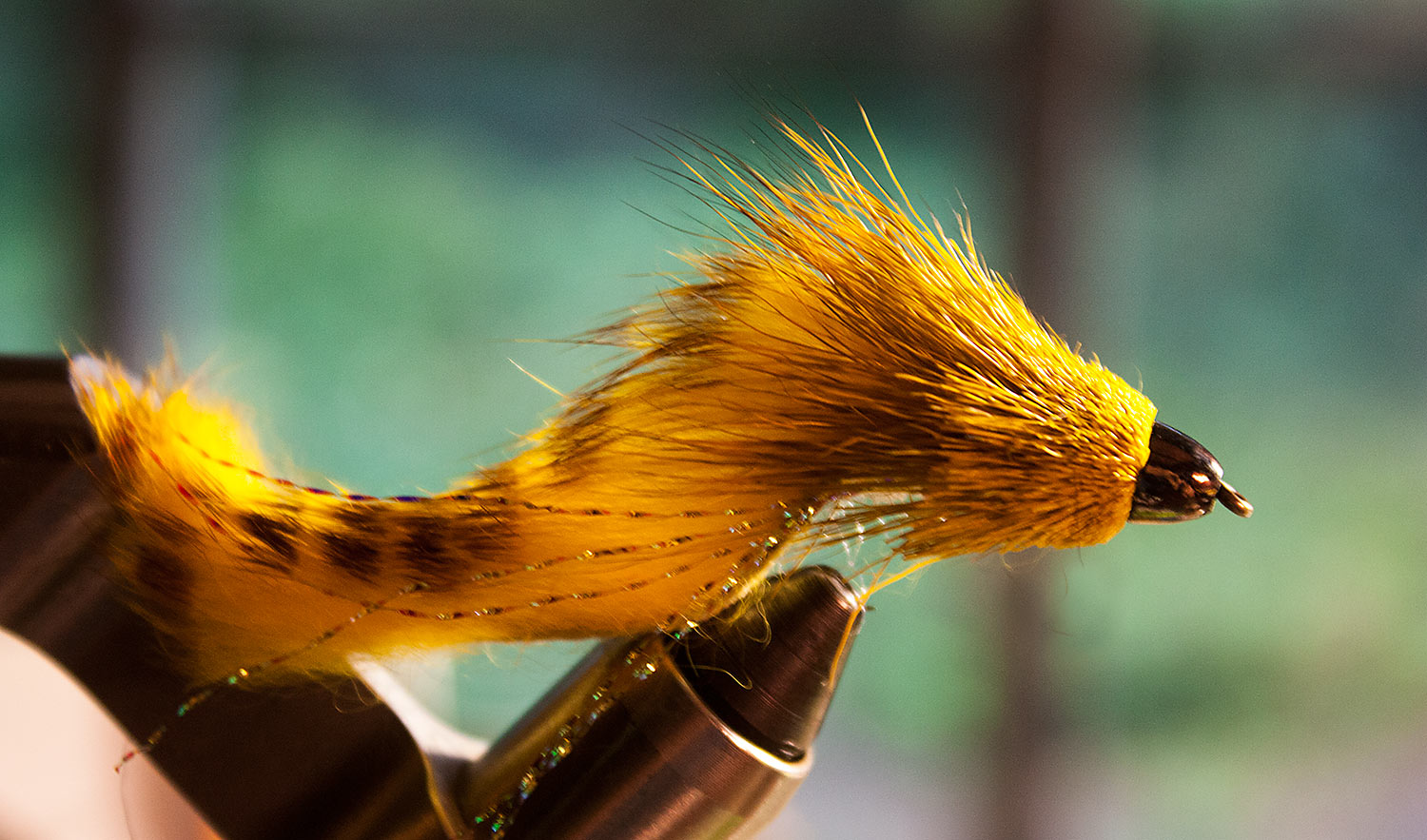
Cone Head Madonna in Yellow
Like most places in North America, sculpins are found in Labrador in abundance. I know there’s a plethora of great and traditional patterns out there. This is a great pattern and easy to tie. I tied a variety of colors for the trip, but yellow with a white body out-fished every fly on the trip. It caught pike, the Atlantic salmon pounded them with abandon, and I got my biggest brook trout, a four-pound male, on this fly.
Goddard Caddis
I tied up a bunch of these in size 14 before the trip. Caddis are a big deal up there, hatching daily, and at times achieving
Read More »