
How To Fish A Mouse Pattern: Video
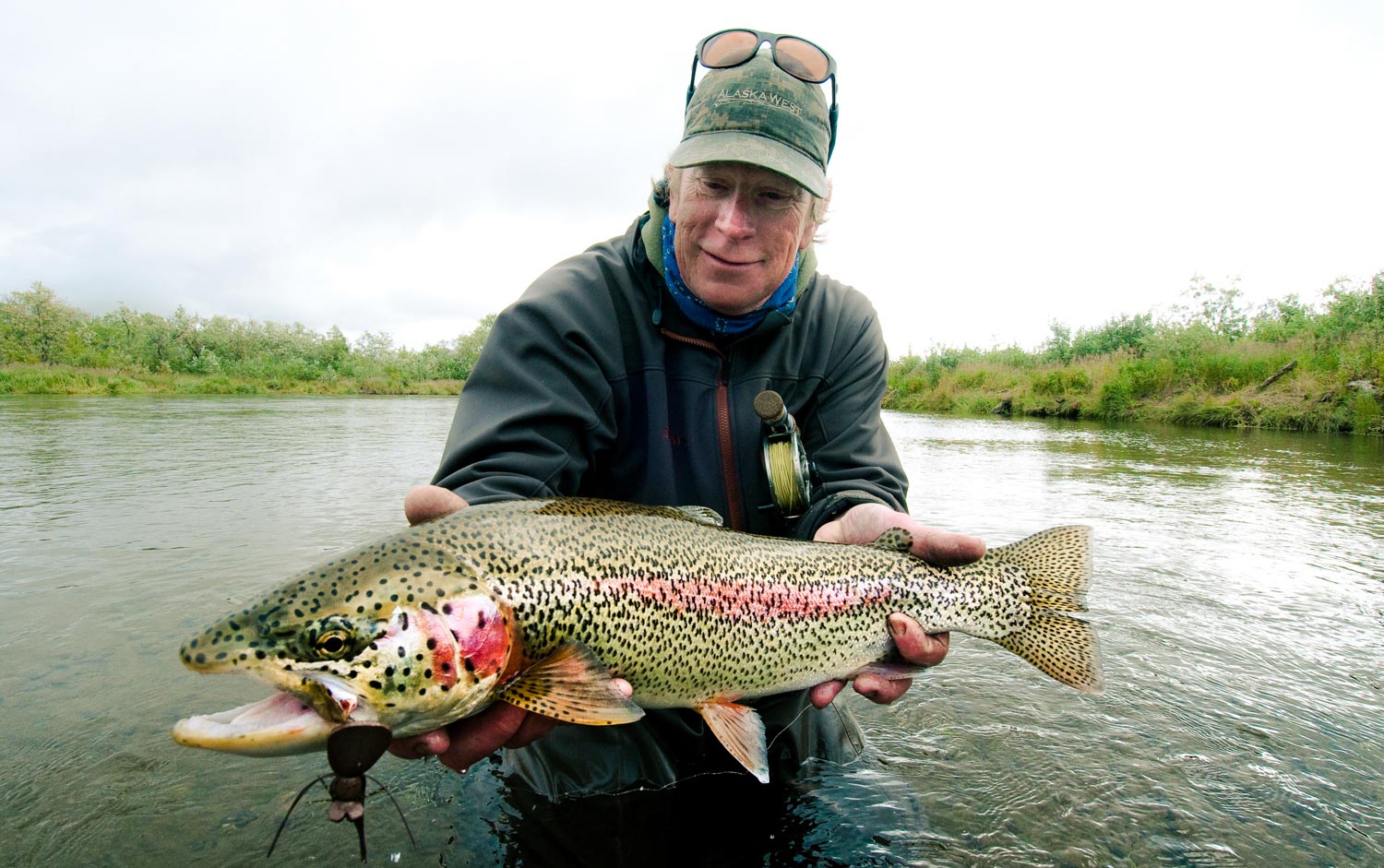
There’s no more exciting way to catch trout than on a mouse pattern.
Mousing is exciting and incredibly visual. The only thing cooler than watching a fish charge your mouse pattern is the explosive eat. It’s a productive way to target big trout, and it works more often than you might think.
Lots of anglers are intimidated by the idea of fishing mouse flies. It’s really not difficult. It just requires that you learn a couple of techniques and have some faith. Give it a try and I’ll bet you’ll be hooked.
WATCH THIS VIDEO AND LEARN TO CATCH TROPHY TROUT ON A MOUSE FLY.
Read More »Deadly Ice Off Duo
By Bob Reece
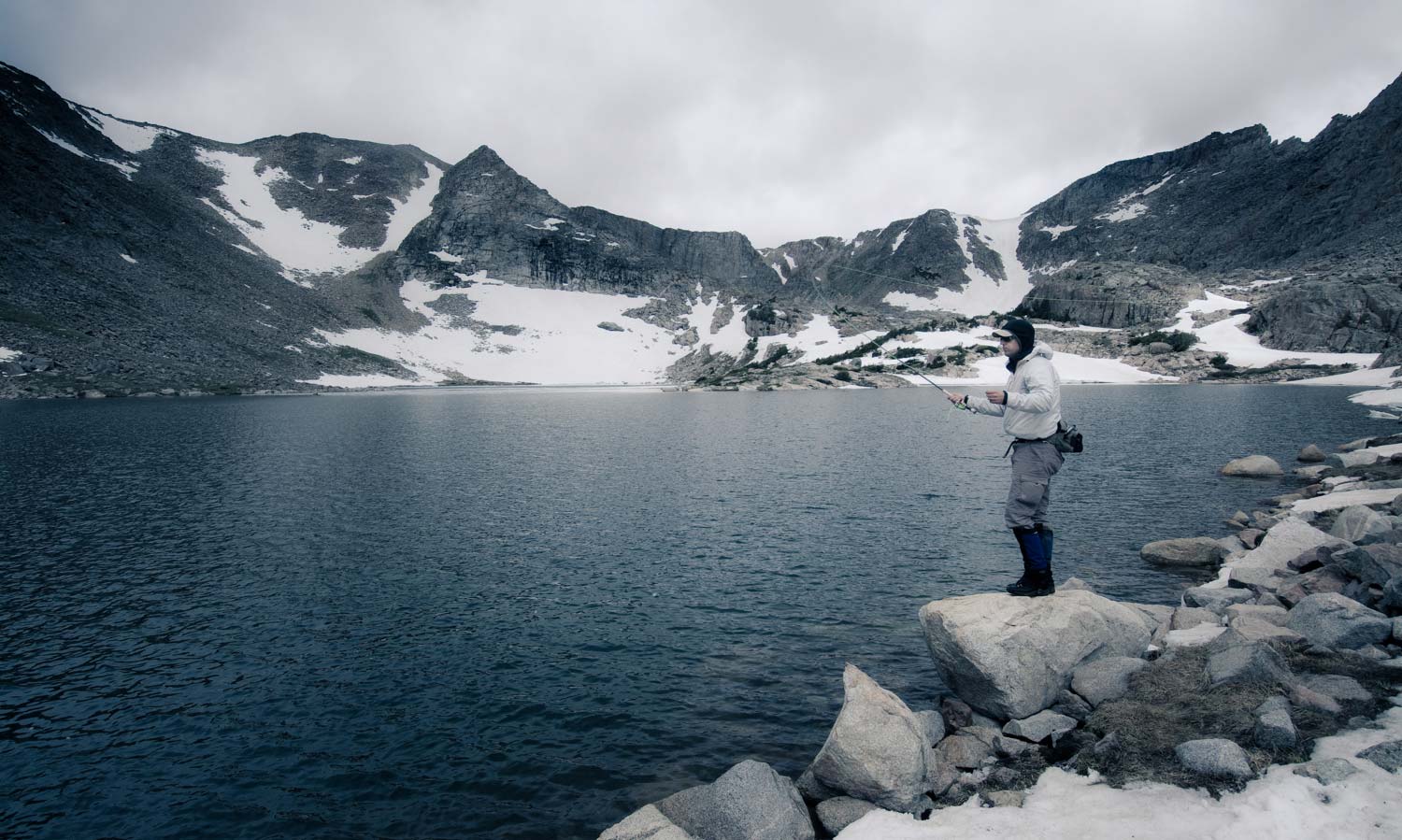
Ice off on lakes in the Rocky Mountain region can be dynamic.
It can also be extremely challenging. Tim Drummond’s extensive knowledge of still water scenarios led to his creation of two highly effective still water patterns. These two patterns have a proven track record and can help crack the code to Ice Off success.
Tim has worked professionally as a guide for well over a decade in Northern Colorado. His experience with both moving and still waters has led to a dialed in understanding of these aquatic environments. I’ve known Tim for several years and was able to ask him about his thoughts behind the creation of his Chromie and Water Boatman patterns.
“My Water Boatman was originally tied to imitate the abundant boatman we see here on the Delany Buttes lakes and other stillwaters. The fly is tied with a metallic plastic bead versus a metal bead because I did not want the fly to sink fast, only gradually. Water boatman are divers going from the surface to just below the surface as they move across the water. This fly is best fished on an intermediate line just below the surface with a slow retrieve or hand twist retrieve. I have had the most success with this fly in the spring and fall when boatman are active. Sight casting to a cruising fish is how I have hooked most of my big fish on the boatman. The fly can also
Read More »Cool Shots at Bonefish
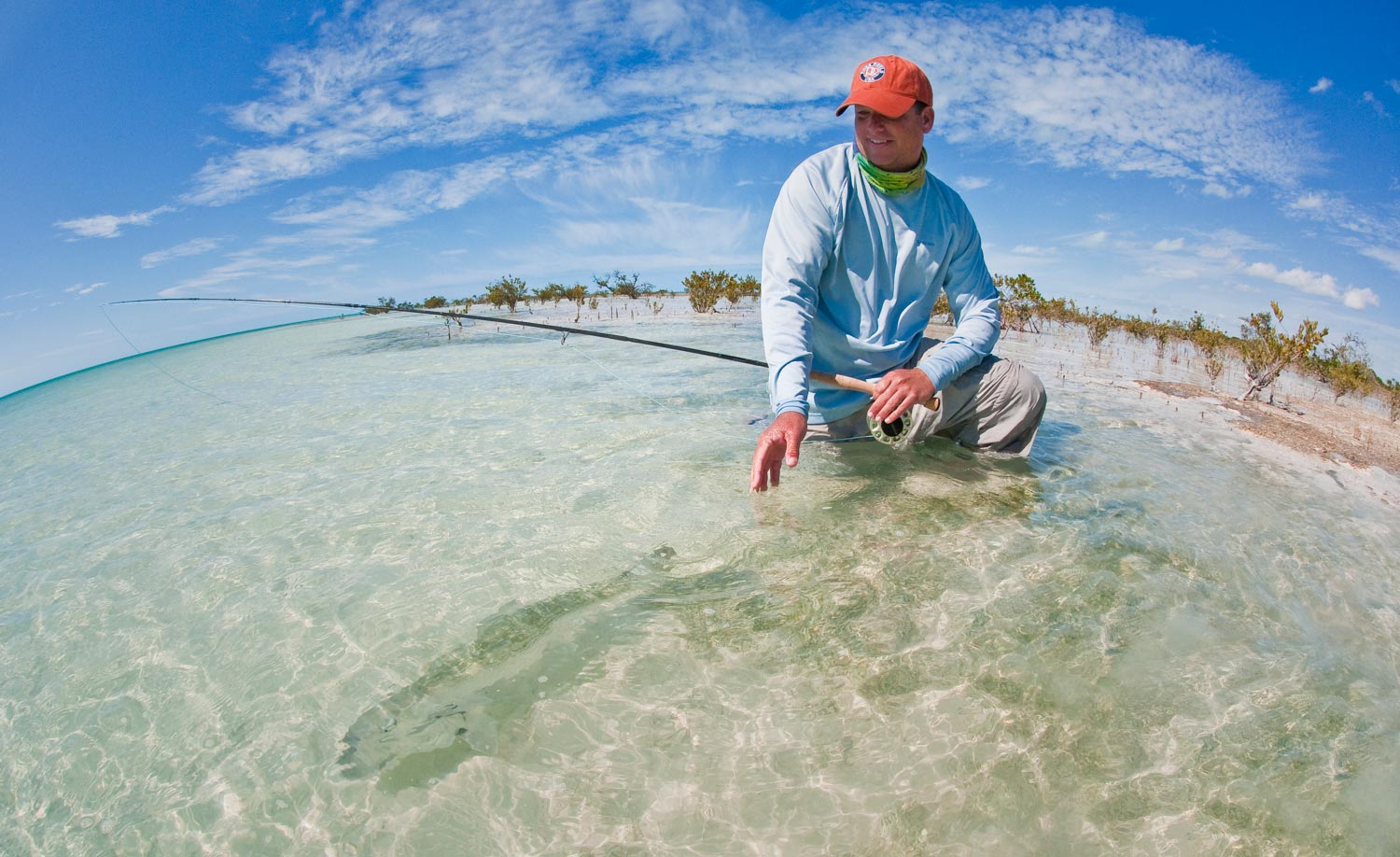
WHAT MAKES A REWARDING BONEFISH TRIP.
It’s hard to fly off to an exotic location for a week of fishing without having a goal, or at least some expectations. The first can be dangerous and the second disastrous. Still, one or the other is generally present on a fishing trip and the more the trip costs, the higher they usually are.
I’ll never forget my first bonefishing trip. My expectations were to actually see a bonefish and my goal was to not make a complete ass of myself when I did. (It’s good to have goals, right?) That trip did so much more than exceed my expectations. It was an awakening of sorts and the beginning of a life long obsession.
On subsequent trips I adjusted my goals. I wanted to catch a lot of bonefish. I wanted to catch big bonefish. I wanted to increase my hookup ratio. I wanted to catch bonefish on my own. I wanted to develop my own fly patterns. Eventually I just wanted quality fishing with good friends. One by one, all of those things went in the done column and I kept going bonefishing.
There’s not a thing on that list that I don’t still enjoy doing. Who doesn’t want to catch a lot of fish, or a big fish, or have a great day with a good friend. With the exception of the friend however, they all become less important with time. Most days all I really need is to stand on the bow and glide across a beautiful flat.
So what makes a day of bonefishing exceptional?
Read More »Improving Fly Tying Efficiency
By Bob Reece
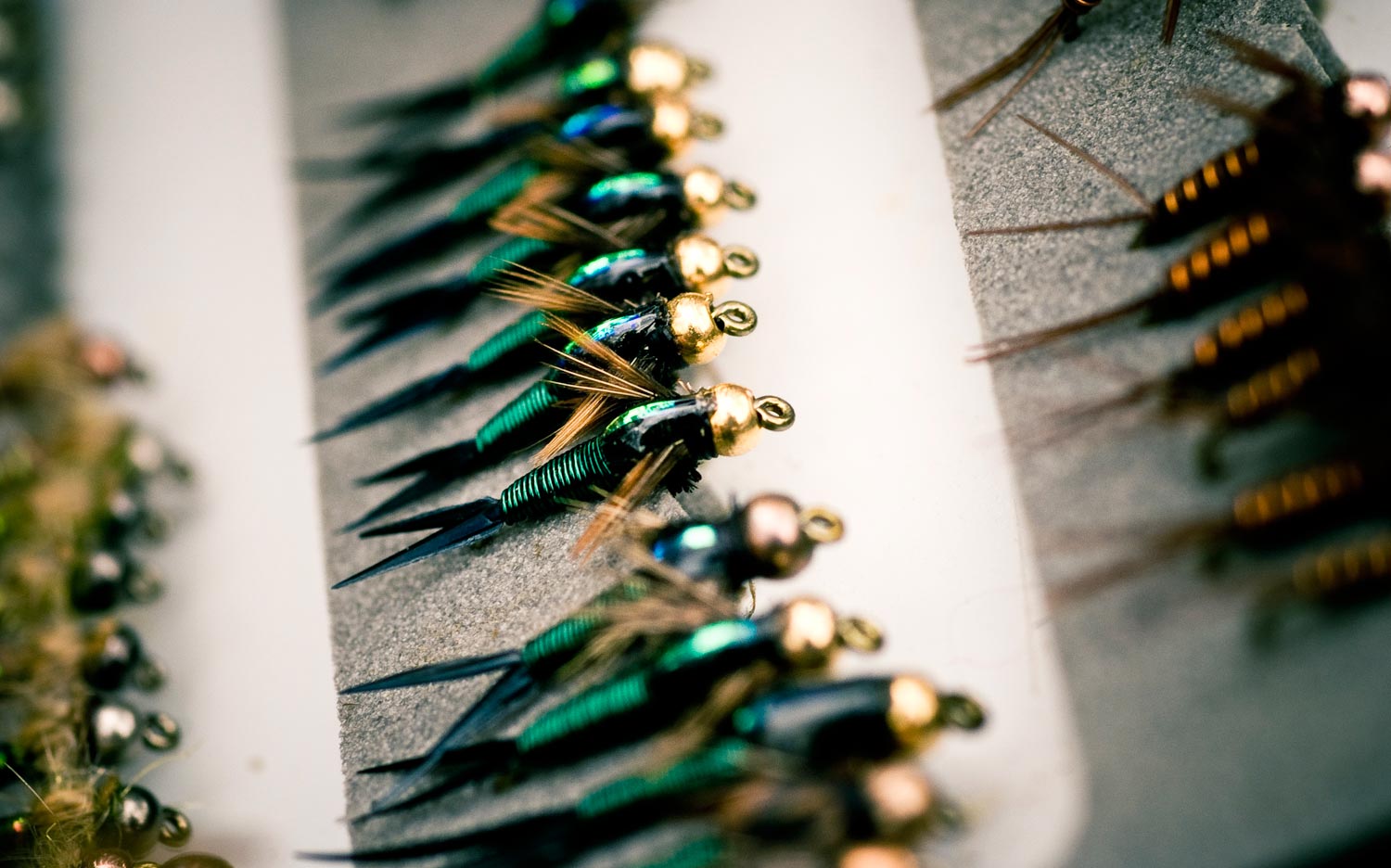
Many beginner and novice tiers that I’ve talked to equate improved efficiency at the vise with rushing through the tying process. While applying the techniques below can speed up pattern creation, that result is not their sole purpose. The main focus of these tips is to help tiers get the most out of whatever amount of time they do spend behind the vise.
Material Prep Work
Some patterns require very little in terms of prepping materials. Others, however, involve shaping foam bodies, knotting rubber legs, cutting wing cases or beading hooks. For these flies it is highly beneficial to prepare the materials in bulk before you start tying. When I tie foam terrestrials, I cut all of my foam bodies and the knot rubber legs that I might need. With bead head nymphs, I bead all hooks that I’ll be using as well as cutting any strips of material that I’ll be using for wing cases. If all of your materials are fully prepped before you start tying, you’ll be able to create a larger number of flies in a shorter amount of time. Prepping your materials in mass also increases the consistency and subsequent quality of the bugs that you’ll be offering up to your favorite fish.
Hook/Bead Storage
Hooks and beads can be two of the hardest materials to handle and keep track of on the surface of a tying table. Hooks of all sizes can easily be brushed under other materials or into the abyss of carpet fibers that sit below some of our tying platforms. Beads are also shifty and hard to handle once they leave the confines of their plastic packaging. To prevent these happenings, I store all of my beads and hooks in plastic compartmented organizers like the one in the picture above. The clip down lids of these containers ensure that nothing escapes. Each compartment also has a curved bottom which makes it easy to retrieve the desired items. The containers that I use can be purchased in the sewing section of Walmart for less than two dollars apiece.
Pattern Material Kits
How materials are stored matters in terms of efficiency. I use plastic organizers, like the one pictured above, to create material kits for all of the patterns that I tie. Always knowing where specific ingredients are saves a tier the time of searching though bins, drawers and baskets. This type of setup also
Read More »Situational Awareness and Flats Fishing
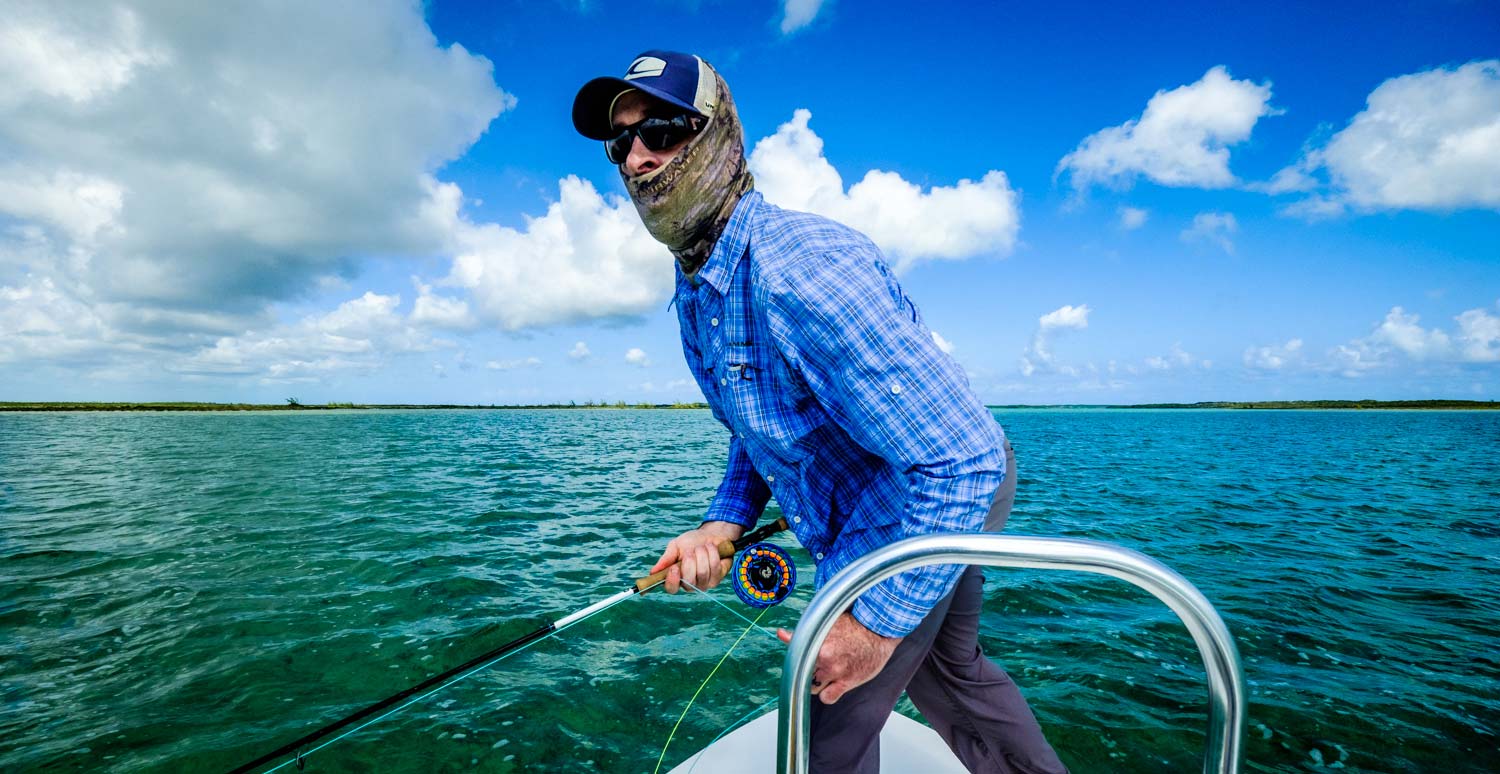
Fly-fishing saltwater flats requires many specialized skills, but none are as important as situational awareness.
Trout anglers revel in taking their time, analyzing the feeding patterns of fish and planning a successful presentation. That’s a luxury saltwater anglers can’t often afford. Things happen quickly on the flats, and it’s the prepared angler who catches fish. Flats fishing is hunting fish. Generally, the fish you are pursuing are hunting as well. They are constantly on the move and highly aware of changes in their environment. For every fish you see, there is a window of opportunity where you have a chance to make a good presentation. That window opens and closes quickly, and when it closes, it rarely opens again. An angler’s timing is often the single most important factor.
Standing on the bow of a skiff looks peaceful, and once you are comfortable with the process, it is. Below the surface, a good angler is keeping up with a laundry list of variables, planning, and calculating their best response to every possible scenario. Keeping up with current speed and direction, boat movement, water depth, lighting and the changing structure of the flat. When a fish appears, their may not be time to think about whether you should cast forehand or backhand, or how far you should lead the fish. You may need to react quickly and instinctively. It sounds more difficult than it is. With time it becomes second nature.
I spend a lot of time on the boat with anglers who are new to flats fishing. The thing I see kill opportunities more than anything else is a lack of situational awareness. While keeping up with light and water movement is somewhat advanced skill, it’s the simple things that are the most common problems. Simple stuff like line management often spoils shot after shot. A guide told me last week that he had a client who had a thirty foot shot at a school of permit. The client false casted wildly with no idea that his fly was hooked in the stripping mat. Nobody wants to be that guy.
Another simple error I see ruin a lot of good shots is anglers who never move their fly. It sounds crazy but it happens with startling regularity. A fish appears, the angler makes the cast and starts to strip, anxiously waiting for the tug that never comes, because the fly is sitting dead on the bottom because the boat is moving toward the fly faster than they are picking up line. Then when the guide calls for another cast, the pickup is loud and spooks the fish, because of all the slack.
Often it’s as simple as having your fly and leader in good shape when it’s time to make the presentation. An angler may stand on the bow for twenty minutes with wind knots in their leader or trash on their fly. It’s too late to check your setup after a fish refuses the fly or breaks the leader. These kind of simple mistakes can be heartbreaking on days when opportunities are limited. Fortunately, they are easy to avoid by simply paying attention.
Here are 10 things you should always be aware of when fly fishing saltwater.
Read More »Restore an Old Bamboo Fly Rod #3: Video Series
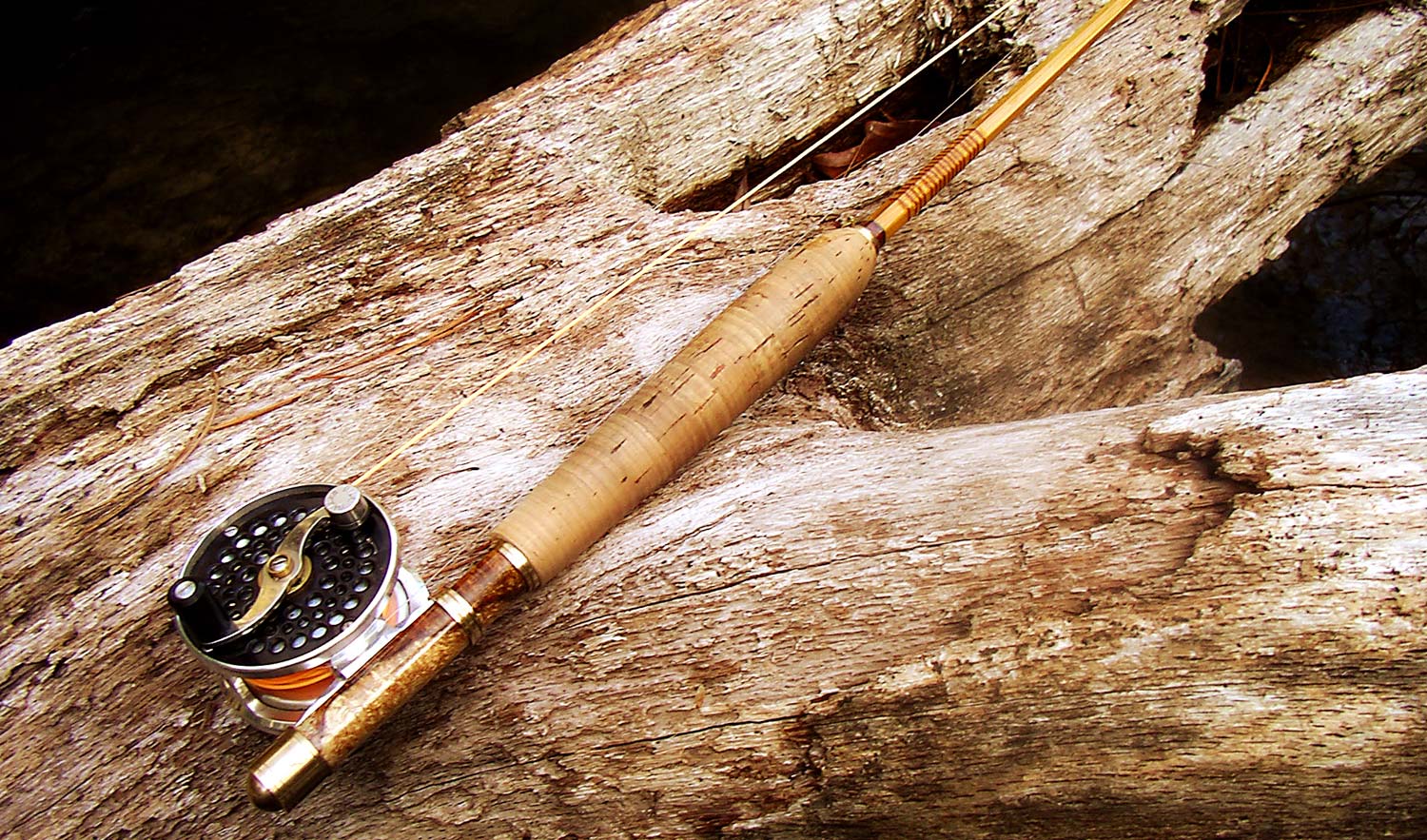
Matt Draft is back for part three of our video series on how to restore an old bamboo fly rod.
Today Matt goes over removing old components like guides, wraps and reel seats. He takes on a worst case reel seat removal before stripping the old varnish and prepping the rod for new parts and finish.
RESTORE AN OLD BAMBOO FLY ROD $3
Check out https://www.proofflyfishing.com
Read More »Expedition GRAYLING
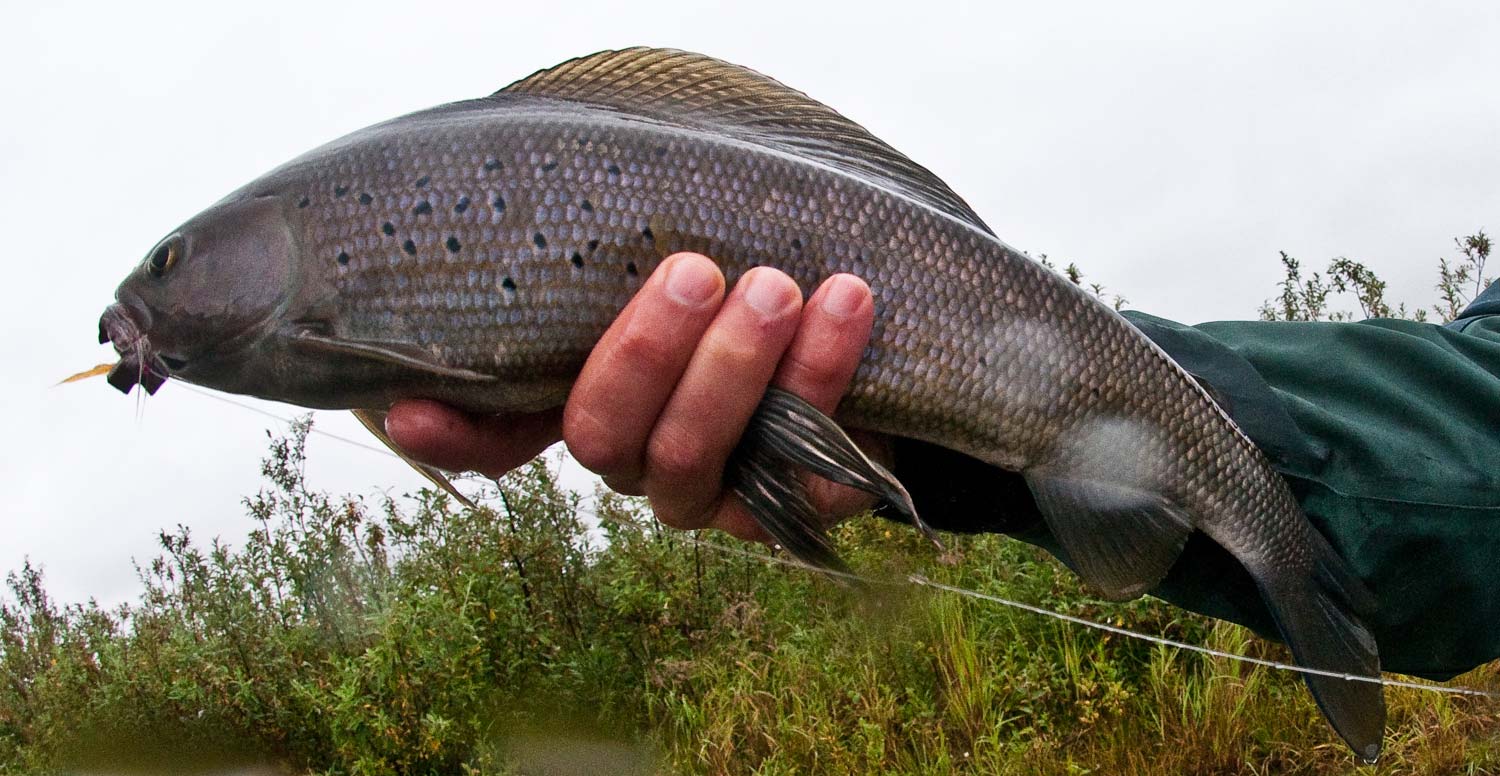
By Brian Kozminski
In the not too distant future, there is the real possibility of anglers who wade in Northern Michigan’s cold waters to have the opportunity to catch a once native Arctic Grayling. Imagine the potential. Rewriting history in our lifetime. This is truly Epic.
Walking through a dense fog in early morning, you can feel the dew brush off the ferns as you meander through poplar, birch and cedar fens, the aroma of promise and wet forest floor meet your anticipation of fish rising as you reach the river. As early as 2025, one may have the opportunity to catch brook, brown, rainbow trout and Grayling in the Jordan, Maple, Pigeon or Manistee Rivers.
This Project is one part science, one part fantasy and two parts funding. The research is being conducted at MSU fish rearing facility where Nicole Watson, PhD, is doing what she claims to be her dream job. It is better to see her face in person as it lights up when she talks about how she went to the Chena River, Alaska, to fish and pick up her babies to bring back to Michigan. Small trials as they packed a couple hundred eggs in a small cooler with gels packs thats should have been ‘cool’ to go through TSA, but not once they melted and turned to liquid, jeopardizing the livelihood of a yet future char offspring. She is a very intelligent, bright, personable scientist, as well as a very fishy chick- you can tell that in a few moments just by chatting with her. We met a few years ago on the Upper Manistee when her then finance and her were about to embark on a midnight mousing trip and we exchanged benevolent wishes and steelhead migratory research she was working on at the time. This Grayling Project is like a dream come true. Think about it- we are hoping to find a river that can suitably sustain a species that has been extirpated from its once native waters. A few factors made this happen nearly 100 years ago. As the lumber era boomed and white pine stands were toppled and shuttled down the rivers each spring, we eroded naturally protected banks and introduced more sediment to the watershed. Combined with loss of habitat and spawning grounds, the Grayling were reportedly very easy to catch, often, three or four at a time on one line. The last Grayling was reportedly caught in 1936 in the Otter River of the Upper Peninsula. The Michigan Department of Natural Resources has attempted to re-introduce Grayling back in the 80’s. Some dozen kettle lakes and small rivers near Pigeon River Country were used to rear 145,000 yearling for control sites, but disease and infection, perhaps predation wiped them out in a couple years. What makes this attempt more valid? Where is the funding coming from? Why is the DNR behind it?
First things first. This began as a collateral research project for Michigan Tech and Little River Band of Ottawa Indians as a re-introduction of Native Species Grant, it has gained attraction and momentum in the passed five years. The DNR is working with LRBOI and money has been set aside from various donors – Petoskey-Harbor Springs Community Foundation, Traverse City Rotary, Oleson Foundation, Michigan Trout Unlimited, Consumers Energy, and Henry E. and Consuelo S. Wenger Foundation have graciously donated to the cause. The biggest hurdle was
Read More »I’ll Have The Fish
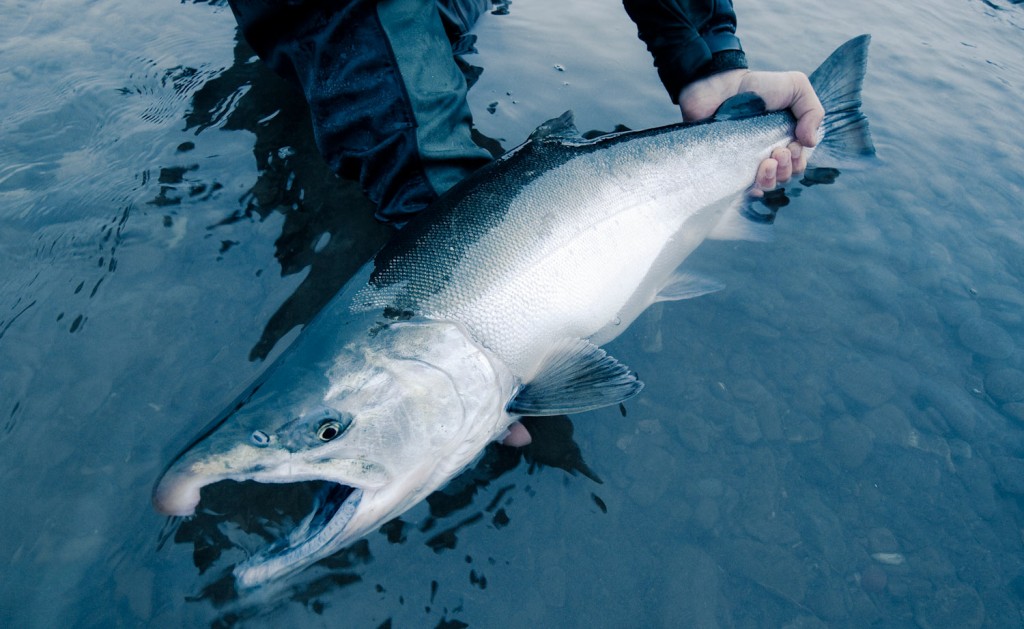
Is Aquiculture Wrong?
I got into a discussion with a friend the other day that put a burr under my saddle. We were talking about what fish is OK to eat and what isn’t. Not in the way that I refuse to eat a catfish from the Chattahoochee but rather how no one should be eating wild steelhead. My friend, who is not a fisherman, asked “what about farm raised fish?” Without thinking about it I said, “sure, that’s fine”. He then went on to explain that he did not eat farm raised fish because it was cruel to take a fish that was meant to be free and confine it in a pen. ( I’m not going to dwell on this idea for too long for reasons that I think are obvious. If that’s the story you want to hear, click here! ) I am unashamedly opposed to the idea of causing unnecessary pain and suffering to any living thing but I also understand what these teeth were put in my head for. I could write a couple of thousand words on this but instead I’ll leave it at this. I remember standing on a gravel bar in Alaska watching a salmon struggling in the current. The fish’s tail was missing along with the last eight inches of him. Two trout were following taking turns eating him while he was still alive. My point being, if we are going to get into the business of attaching human emotions like happiness to fish, let’s be sure we’re choosing the correct emotions. Nobody cares about fish more than me, but that’s their nature. If you hold still long enough, they’ll eat you. I’m really not sure what happiness is to a fish but most of them will choose to stay in one spot if there is plenty of food so I’m not worried about the pen.
Still, this got me thinking. Did I give the right answer? Is fish farming OK? With recent outbreaks of Infectious Salmon Anemia in the Pacific Northwest spreading from fish farms and threatening wild Pacific salmon I had to wonder. Hundreds of thousands of farm raised fish escape into the ocean spreading, not only disease, but their scientifically altered genes, wreaking god knows what kind of havoc on wild populations. Sometimes these escapees are non-native species that out compete native fish. In fact, these fish don’t even need to escape to do their damage. With massive fish farms at the mouthes of some of the world’s best steelhead and salmon rivers wild salmon, steelhead and smelt must run a gauntlet of disease every year to spawn. And what of the impact of all those penned up fish on the ecosystem? It’s clearly a mess but what’s the answer?
The world’s rapidly expanding demand for seafood is greater than the oceans can sustain. Popular species like tuna are under immense pressure. Fish size and numbers are way down in the open ocean. Clearly we can’t all eat wild fish. I spoke to
Read More »Low Flows
By Jesse Lowry
Late summer out here in the Kootenay’s of British Columbia means hot days and low flows.
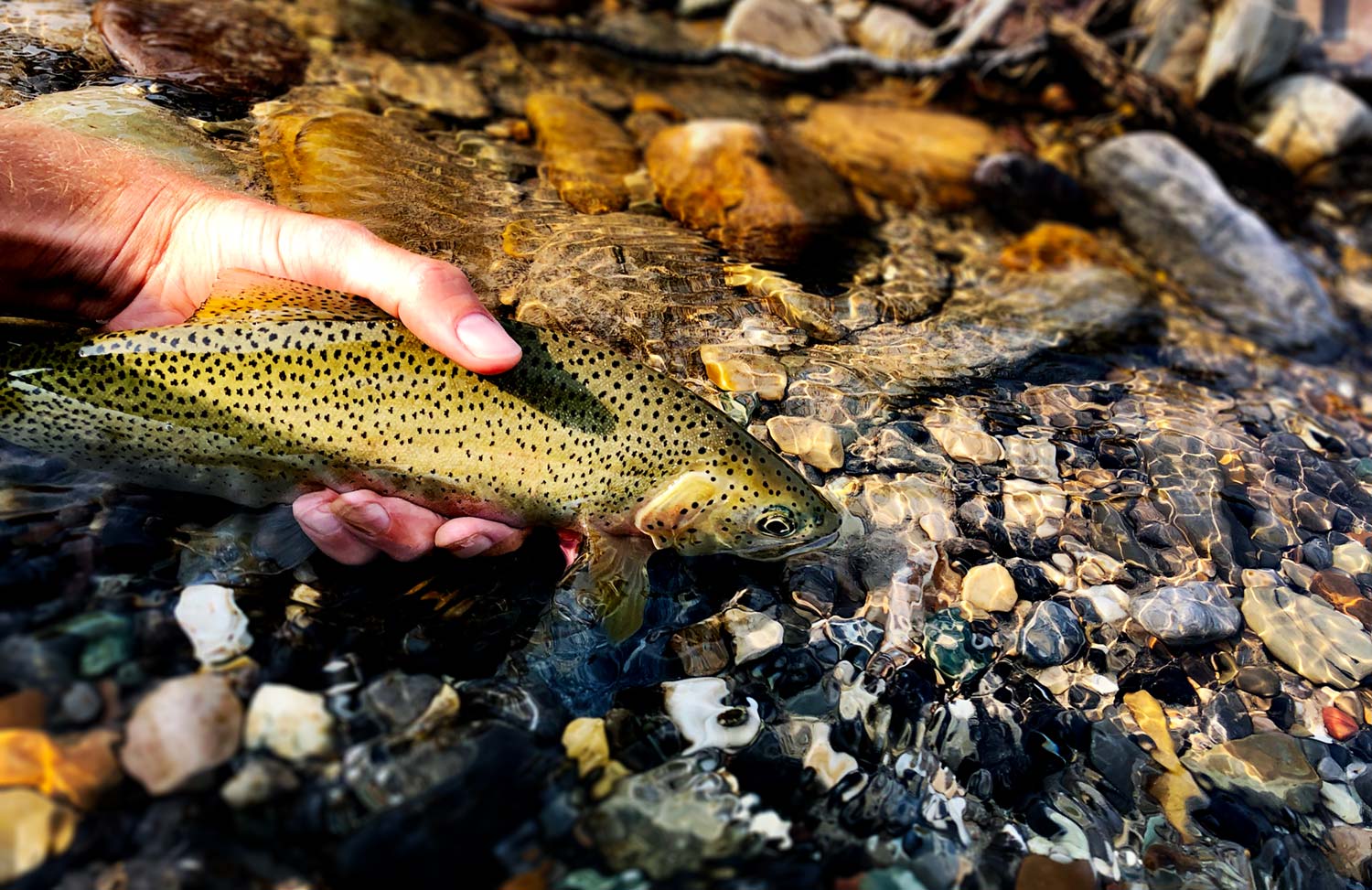
Despite the recent heat wave, water temperatures this year managed to stay in safe ranges thanks to a solid snow pack in the alpine. These type of conditions are some of my favourite to be out on the water. It’s still safe for the fish, as the rivers are hanging well below 20c (68f in Murica). The weather’s fantastic, a lot of the rivers are too boney to float, which reduces pressure, makes wading across the entire river a breeze, and you can cover a lot more river on foot as a result.
These western freestone rivers tend to get pretty channelized this time of year, which you would think concentrates the fish into smaller more obvious areas and it does, but that doesn’t necessarily translate into making them easier to catch. Log jams, downed trees, tight deep corners with tricky currents and all sorts of obstacles that make clean drifts a tall order, are where the fish tend to hang out. If you want to catch them you’ve got to put your fly into some sketchy places, and a lot of the time they aren’t coming back out. Losing flies out here is just part of the game, and if you’re not losing them, chances are you’re not fishing some of the best water…. or you’re a Jedi.
I also tend to lose more flies as I do something a little different with my leader/tippet. I use lighter tippet than I typically would and I don’t make a smooth transition as I don’t actually want my fly to turn over completely. In these situations I want the tippet to pile when it lands, so I can get that extra foot or two of clean drift which can make the difference in these tight conditions. To achieve this, I tie my tippet to a thicker leader (i.e., 5x tippet to a 3x leader) to create a bit of a hinge point. A bit of curl in the tippet helps as well. Also throwing a size 8 hopper on 5x adds to this tippet pile, as the 5x has trouble transferring enough energy to turn a chunkier fly over. This way when you get to the end of your drift, the piled tippet and your fly can continue to go with the flow for a little bit longer and maybe get you into that pocket deep in the rhubarb where the big guys hang out.
As well, another added benefit with piled tippet is that your fly
Read More »The Importance of Changing Flies on the Water
How long do you fish with flies without success before you decide to change them?
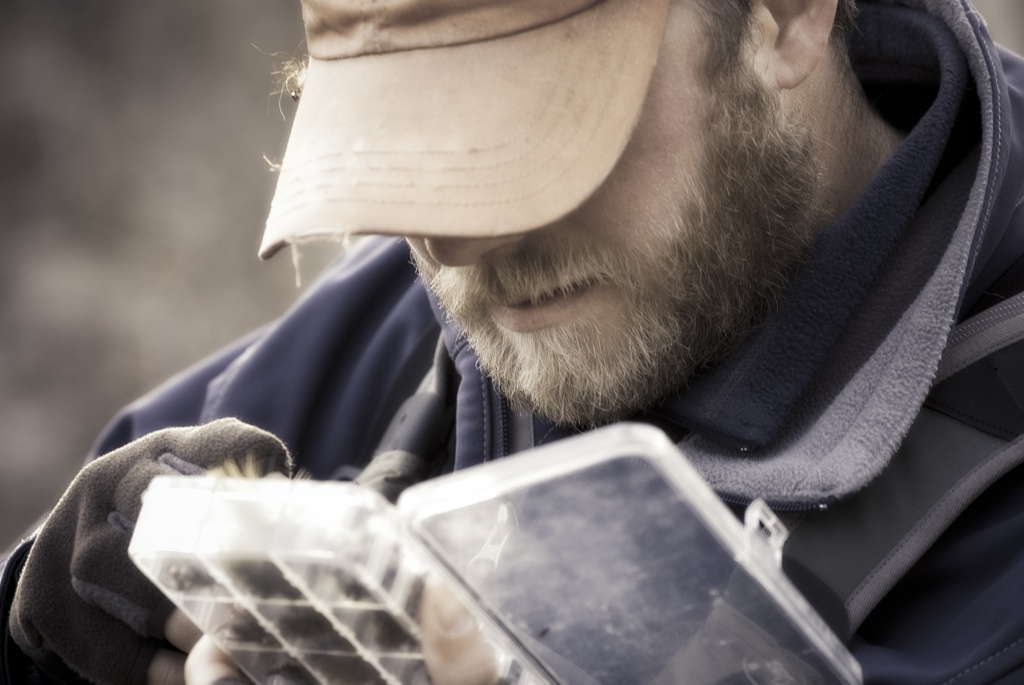
I’ll usually fish for about thirty minutes with my first rig of the day, and if I’m not getting any hookups, I’ll begin regularly changing my flies out until I find a pattern that works. The willingness to change your flies on the water when your not getting bites, is often the key factor in determining whether you have a good or bad day of fishing. I can’t tell you how many times I’ve had someone walk up to me in the parking lot at the end of the day and complain about how the fish weren’t biting. While I, on the other hand, had caught and released dozens of fish in the same section of water. Most of the time that discouraged angler stuck with a few patterns during the day, and didn’t change flies enough times to find out what patterns were really working. How do I know this? I know this because I was that discouraged angler many times early on, in my career.
It can be very obvious to us that changing flies is the answer when we’re able to sight-fish and see fish rejecting our flies. But many times you’ll find yourself fishing in conditions where sight-fishing isn’t an option. A few examples is when your fishing fast moving choppy water, water with significant glare, and stained water conditions. None of these will provide anglers the opportunity to get visual feedback. In these conditions, anglers should change their flies when they’re not getting bites for extended periods of time. If you know your rig is set up correctly (correct tippet size, fly size, split-shot amount, or indicator placement) for the specific water your fishing, and your making good presentations, a light bulb should be going off in your head telling you to change fly patterns if your not getting bites.
Sometimes you’ll find a single pattern will work for you the entire day when there’s a hatch that fish are keying in on. However, when there’s not a hatch or specific bug that the fish are keying in on, you may find that one pattern will work in one hole and the next spot it won’t work at all. In this situation, you should be prepared to change flies from one hole to the next to consistently catch fish. The best advice I can give
Read More »