
I’ll Have The Fish
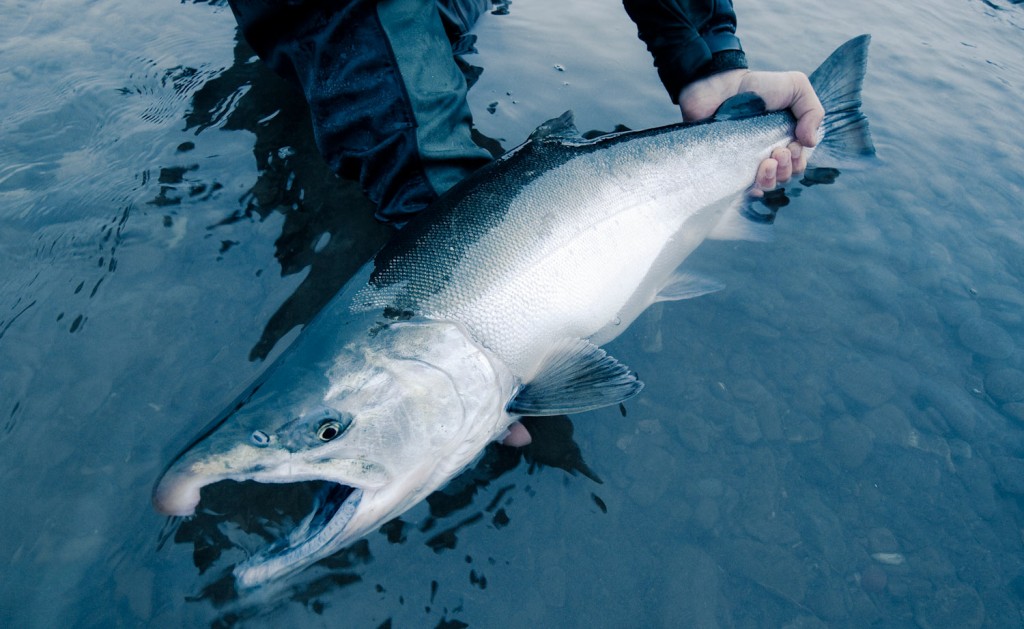
Is Aquiculture Wrong?
I got into a discussion with a friend the other day that put a burr under my saddle. We were talking about what fish is OK to eat and what isn’t. Not in the way that I refuse to eat a catfish from the Chattahoochee but rather how no one should be eating wild steelhead. My friend, who is not a fisherman, asked “what about farm raised fish?” Without thinking about it I said, “sure, that’s fine”. He then went on to explain that he did not eat farm raised fish because it was cruel to take a fish that was meant to be free and confine it in a pen. ( I’m not going to dwell on this idea for too long for reasons that I think are obvious. If that’s the story you want to hear, click here! ) I am unashamedly opposed to the idea of causing unnecessary pain and suffering to any living thing but I also understand what these teeth were put in my head for. I could write a couple of thousand words on this but instead I’ll leave it at this. I remember standing on a gravel bar in Alaska watching a salmon struggling in the current. The fish’s tail was missing along with the last eight inches of him. Two trout were following taking turns eating him while he was still alive. My point being, if we are going to get into the business of attaching human emotions like happiness to fish, let’s be sure we’re choosing the correct emotions. Nobody cares about fish more than me, but that’s their nature. If you hold still long enough, they’ll eat you. I’m really not sure what happiness is to a fish but most of them will choose to stay in one spot if there is plenty of food so I’m not worried about the pen.
Still, this got me thinking. Did I give the right answer? Is fish farming OK? With recent outbreaks of Infectious Salmon Anemia in the Pacific Northwest spreading from fish farms and threatening wild Pacific salmon I had to wonder. Hundreds of thousands of farm raised fish escape into the ocean spreading, not only disease, but their scientifically altered genes, wreaking god knows what kind of havoc on wild populations. Sometimes these escapees are non-native species that out compete native fish. In fact, these fish don’t even need to escape to do their damage. With massive fish farms at the mouthes of some of the world’s best steelhead and salmon rivers wild salmon, steelhead and smelt must run a gauntlet of disease every year to spawn. And what of the impact of all those penned up fish on the ecosystem? It’s clearly a mess but what’s the answer?
The world’s rapidly expanding demand for seafood is greater than the oceans can sustain. Popular species like tuna are under immense pressure. Fish size and numbers are way down in the open ocean. Clearly we can’t all eat wild fish. I spoke to
Read More »Low Flows
By Jesse Lowry
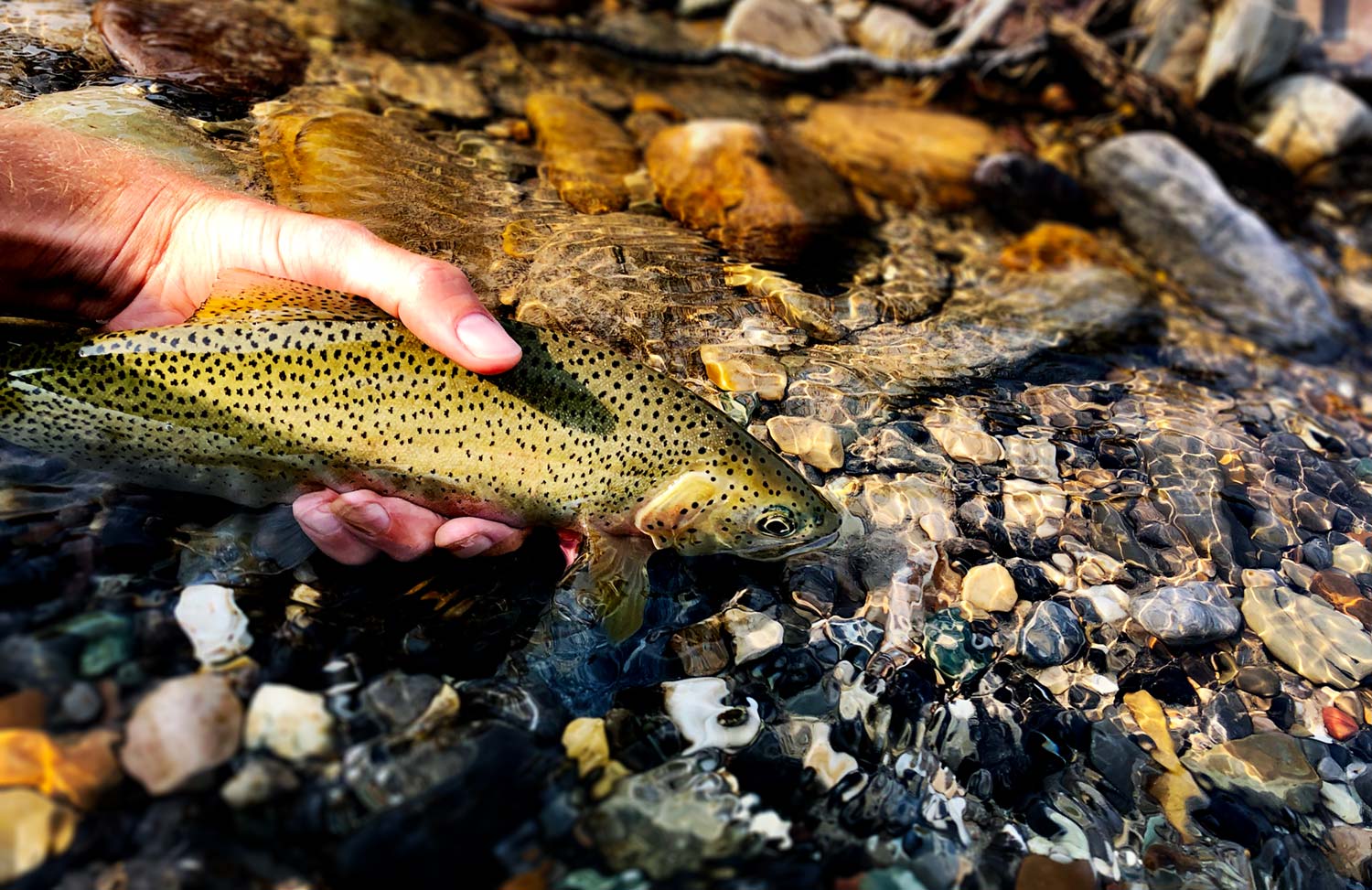
Late summer out here in the Kootenay’s of British Columbia means hot days and low flows.
Despite the recent heat wave, water temperatures this year managed to stay in safe ranges thanks to a solid snow pack in the alpine. These type of conditions are some of my favourite to be out on the water. It’s still safe for the fish, as the rivers are hanging well below 20c (68f in Murica). The weather’s fantastic, a lot of the rivers are too boney to float, which reduces pressure, makes wading across the entire river a breeze, and you can cover a lot more river on foot as a result.
These western freestone rivers tend to get pretty channelized this time of year, which you would think concentrates the fish into smaller more obvious areas and it does, but that doesn’t necessarily translate into making them easier to catch. Log jams, downed trees, tight deep corners with tricky currents and all sorts of obstacles that make clean drifts a tall order, are where the fish tend to hang out. If you want to catch them you’ve got to put your fly into some sketchy places, and a lot of the time they aren’t coming back out. Losing flies out here is just part of the game, and if you’re not losing them, chances are you’re not fishing some of the best water…. or you’re a Jedi.
I also tend to lose more flies as I do something a little different with my leader/tippet. I use lighter tippet than I typically would and I don’t make a smooth transition as I don’t actually want my fly to turn over completely. In these situations I want the tippet to pile when it lands, so I can get that extra foot or two of clean drift which can make the difference in these tight conditions. To achieve this, I tie my tippet to a thicker leader (i.e., 5x tippet to a 3x leader) to create a bit of a hinge point. A bit of curl in the tippet helps as well. Also throwing a size 8 hopper on 5x adds to this tippet pile, as the 5x has trouble transferring enough energy to turn a chunkier fly over. This way when you get to the end of your drift, the piled tippet and your fly can continue to go with the flow for a little bit longer and maybe get you into that pocket deep in the rhubarb where the big guys hang out.
As well, another added benefit with piled tippet is that your fly
Read More »The Importance of Changing Flies on the Water
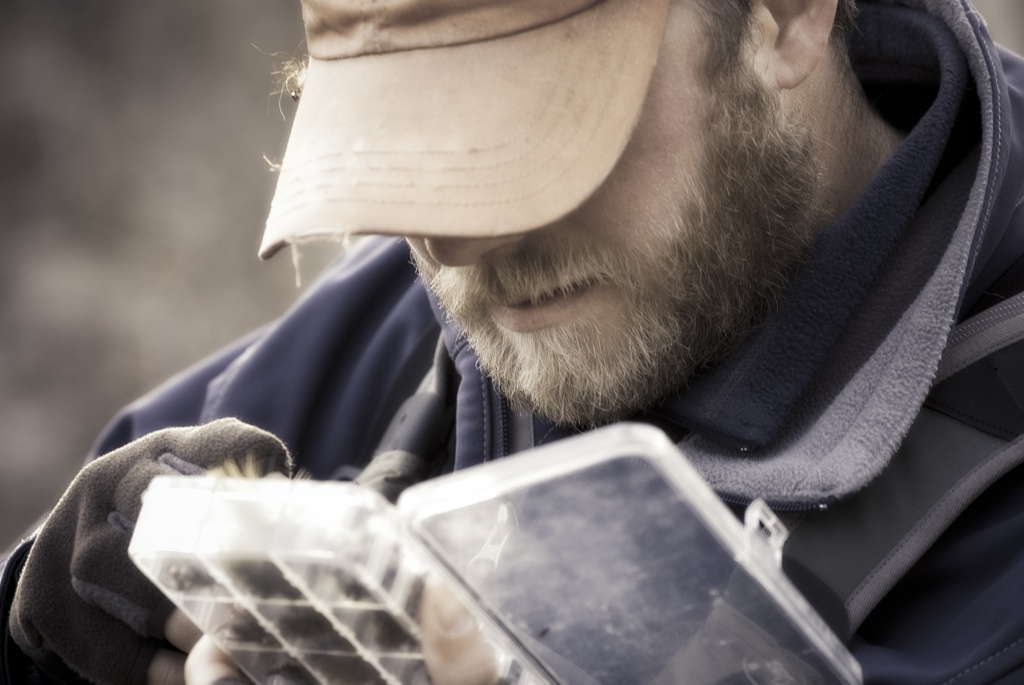
How long do you fish with flies without success before you decide to change them?
I’ll usually fish for about thirty minutes with my first rig of the day, and if I’m not getting any hookups, I’ll begin regularly changing my flies out until I find a pattern that works. The willingness to change your flies on the water when your not getting bites, is often the key factor in determining whether you have a good or bad day of fishing. I can’t tell you how many times I’ve had someone walk up to me in the parking lot at the end of the day and complain about how the fish weren’t biting. While I, on the other hand, had caught and released dozens of fish in the same section of water. Most of the time that discouraged angler stuck with a few patterns during the day, and didn’t change flies enough times to find out what patterns were really working. How do I know this? I know this because I was that discouraged angler many times early on, in my career.
It can be very obvious to us that changing flies is the answer when we’re able to sight-fish and see fish rejecting our flies. But many times you’ll find yourself fishing in conditions where sight-fishing isn’t an option. A few examples is when your fishing fast moving choppy water, water with significant glare, and stained water conditions. None of these will provide anglers the opportunity to get visual feedback. In these conditions, anglers should change their flies when they’re not getting bites for extended periods of time. If you know your rig is set up correctly (correct tippet size, fly size, split-shot amount, or indicator placement) for the specific water your fishing, and your making good presentations, a light bulb should be going off in your head telling you to change fly patterns if your not getting bites.
Sometimes you’ll find a single pattern will work for you the entire day when there’s a hatch that fish are keying in on. However, when there’s not a hatch or specific bug that the fish are keying in on, you may find that one pattern will work in one hole and the next spot it won’t work at all. In this situation, you should be prepared to change flies from one hole to the next to consistently catch fish. The best advice I can give
Read More »Winter Fly Fishing – Midges 101
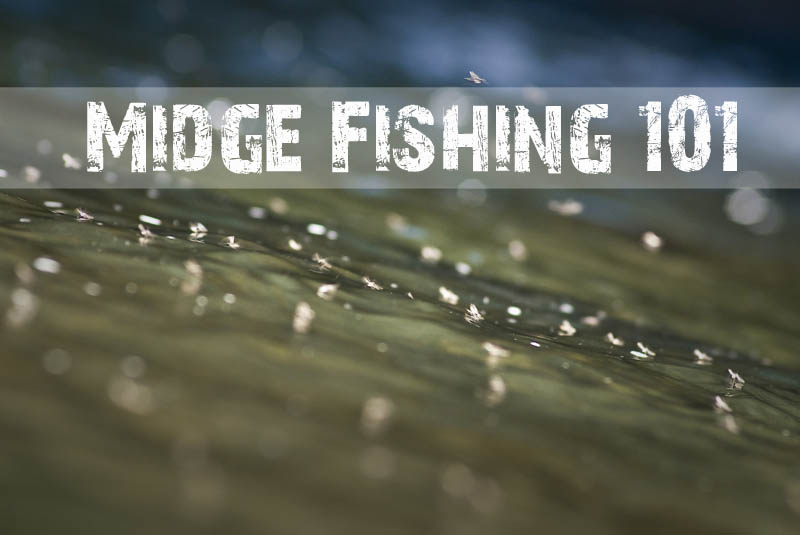
Sometimes smaller flies mean bigger rewards.
There’s no doubt there are times when big flies are the ticket for catching big fish. However, when you find yourself fly fishing on technical trout water and the bite is extremely tough, in many cases, it can provide you with big rewards if you put up those big gaudy fly patterns and break out your midge box. This especially holds true during the cold months, when you’re fly fishing to educated trout on technical spring creeks or high-pressured tailwaters. As fall passes, and we find ourselves smack in the middle of winter, most of our larger bug hatches will have long faded. This time of year, most trout will transition into consistently feeding on the most abundant food source that requires the least amount of energy to consume. On many of our trout waters during the winter, the most predominant aquatic bugs available for trout to eat, day in and day out, are midges.
Now, it’s true that the colder the water, the lower a trout’s metabolism will be. It also is true, that the lower a trout’s metabolism is the less calories it is required to consume daily to survive. That’s because a lower metabolism burns off less calories. But what’s not true, and a very common misconception among trout anglers, is that all trout feed in less frequency when their metabolism is lower in the winter. What many anglers don’t realize is there’s a direct correlation between the feeding frequency of a trout and the food value of what it’s foraging on. For example, one could argue that big mature trout that primarily feed predatorily on large food sources (crayfish, sculpins, baitfish, mice, and juvinille trout), do feed in less frequency during the winter. However, that’s probably because the food sources they are targeting and foraging on have a much higher overall caloric value, which in turn, allows them to meet their food requirements faster. All it takes for the predatory feeding trout to meet their survival food requirements during the winter is to eat one or two big ticket prey items a day.
Small trout however, and even most mature rainbow trout for that matter, spend most of their lives as drift feeders (eating food that drifts downstream in the current–mostly aquatic bugs), not predatory feeders . The food sources of drift feeders are much smaller in size than the predatory trout food sources, and also worth far less in food value. This requires them to feed on a much high number of food items over longer periods, so they can meet the same caloric requirements of the foraging predator trout. Furthermore, during the winter, the most abundant drifting food sources, in most instances, are midges. The caloric value of a single midge is only worth a tiny fraction of an average sized aquatic bug, and those larger aquatic bugs are still only worth a small fraction of what a large predatory foot item is worth. This unfortunate fact, gives drift feeding trout no choice but to search out water that provides them shelter from the excessive current and look for
Read More »Reece’s Big Bandit
By Bob Reece
THE COMBINATION OF SIMPLICITY AND EFFECTIVENESS ARE APPRECIATED BY MANY FLY TIERS.
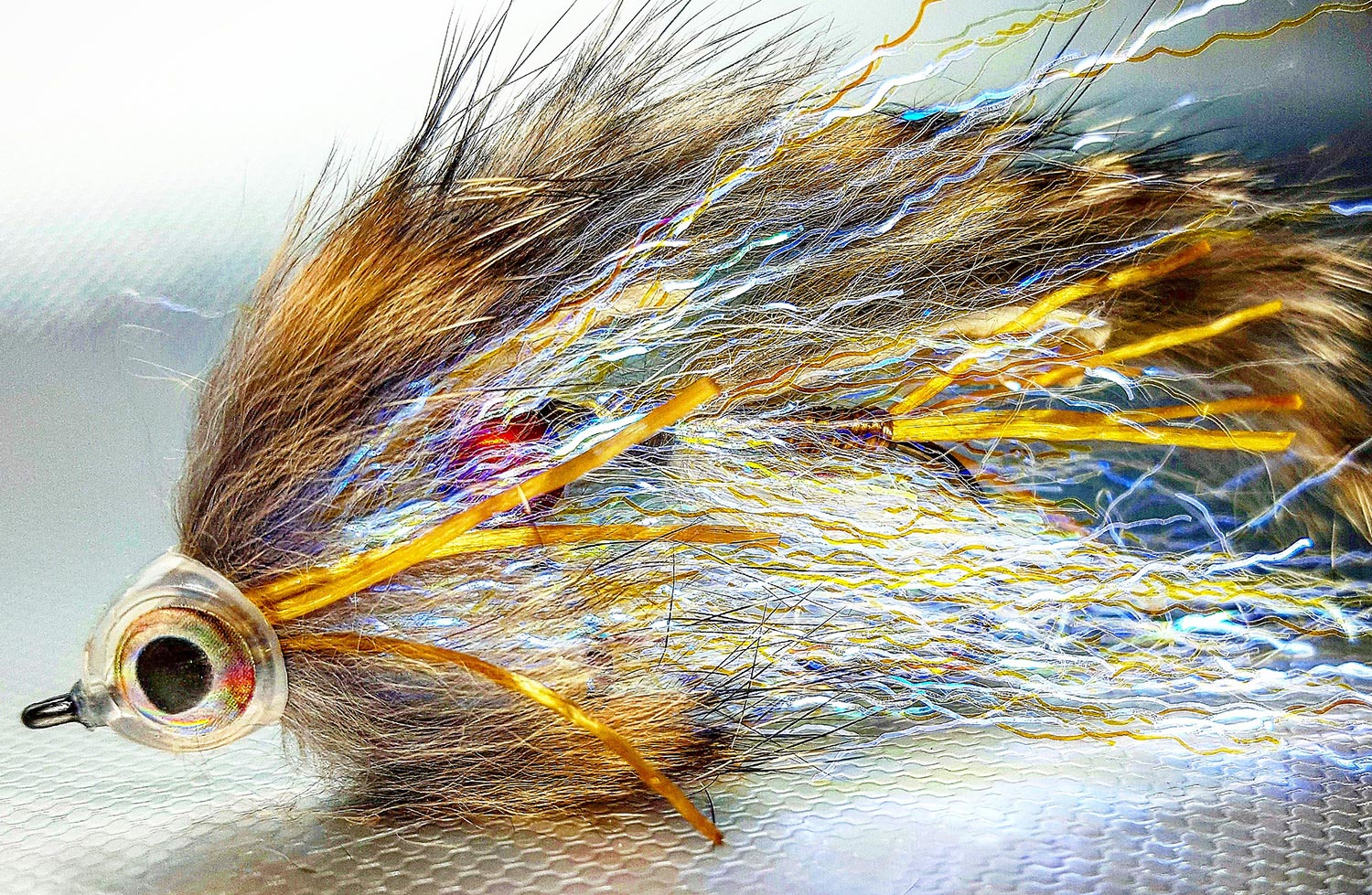
Constructed from three major body materials, the Big Bandit epitomizes this concept. Its simple construction eases the time invested in the tying process while its effectiveness on the water justifies a place in your streamer box.
In the world of double articulated streamers, the Big Bandit is a mid-sized model. Its profile effectively imamates creek chubs, young sucker fish, shiners and more. The ingredients of rabbit strips, MFC Sexi-Floss and Hareline Ripple Ice Fiber; create a realistic and reflective pattern. Capped off with a Fly Men Fish Mask, this streamer has the capability to match numerous bait fish species and subsequently draw large fish.
Long shanked hooks have frequently been used in the creation of streamer patterns. While they may not impact the effectiveness of the fly in in terms of takes, they do reduce the likelihood of fish-to-net success. The foundation at the heart of this pattern helps to turn the odds in the angler’s favor. Owner Mosquito hooks are designed with a short shank and offset hook point. The short shank reduces the leverage that the fish can apply during the fight. This reduction in leverage also reduces the chance of the hook coming lose. In addition to this, the offset point increases the likelihood of connecting with the fish on the set.
I’ve never spoken to a fly fisher that is opposed to bringing more large fish to net. As long as you as you fall into that category, the Big Bandit should find its way to the foam lining of your streamer box. Mix and match the material colors of this pattern to the norms of your local waters and begin reaping the rewards.
WATCH THE VIDEO AND LEARN TO TIE REECE’S BIG BANDIT.
Read More »Fall Is The Time For Big Brown Trout
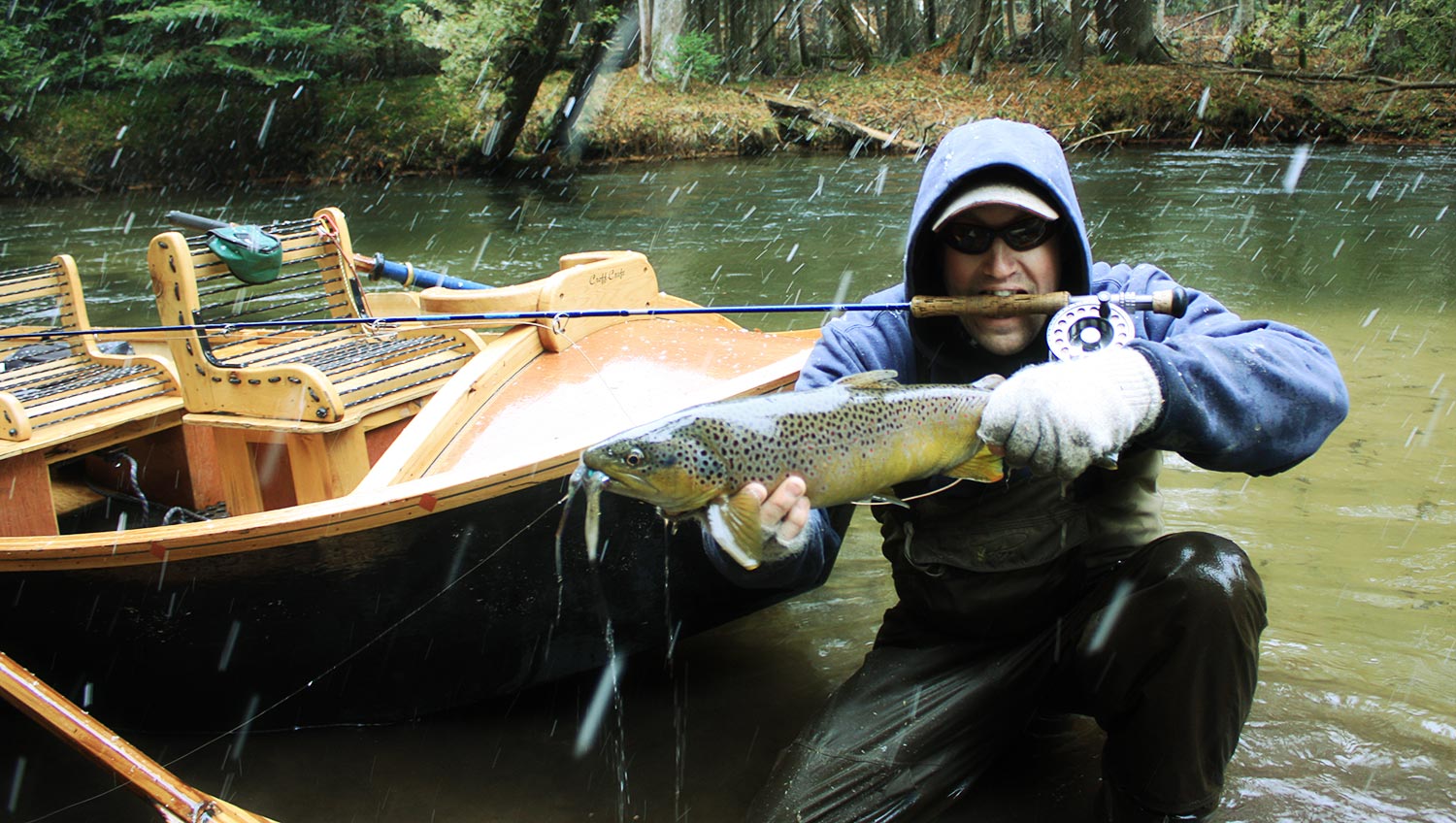
If you’ve been wanting to catch that trophy brown trout, now is the time.
It was a cold overcast November morning when we launched Phil’s custom cedar drift boat that he had built lovingly with his own hands. We put in on the Jordan River in Northern Michigan, a stream this little boat was built for, wearing blaze orange hats to hopefully avoid being shot by any deer hunters still in the woods. Phil rowed while I cast streamers, ducking and dodging the canopy of cedar limbs and the occasional tree downed by recent wind storms.
We arrived at a large pool where the river exited to the right. Phil dropped anchor, got up and traded me places at the front of the boat. He tied on a 7-inch smelt pattern that we had nicknamed the Private Dancer and stripped out some line. He cast to the heavily cut bank and began stripping back. A large dark shadow followed, and just after we saw it, a white mouth opened and inhaled his fly. After a tough battle in the tight, wood-choked stream he brought in a two-foot long solid brown. It was a great start to a great float.
Fall is well underway, and it is perhaps the best time of the year to target BIG brown trout. There are a lot of reasons to love fall fishing, but you definitely must change up your game to be successful. Here are some reasons you should get out this fall yet and pursue big browns.
-The dry fly season is over, and a lot of anglers hang up their gear.
-The summer tourist season is over and the kids are back in school. This removes even more people from the river, leaving you more elbow room.
-Hunting seasons and other fall activities (football) take that many more people off the water.
-Because of cooling temperatures, less daytime human disturbance, the need to feed because of the upcoming spawn, or a combination of all three, big brown trout become more active during the day and are willing to feed.
-Throughout their range, big browns in lakes and reservoirs move out and run up tributary streams to spawn, putting them within reach of fly anglers.
Those are just some of the reasons, but let’s move on to tactics.
Read More »Is Our Thinking About Flies All Wrong?
By Dan Frasier
What if I were to tell you there is no such thing as a trout fly?
A few days ago my good friend and fly designer Steve Martinez posted a link to one of his flies that Orvis carries; his Frankenstein Sculpin. I love this fly, but his comment intrigued me. He wrote; “Although I designed this fly for carp, it has been a killer smallmouth fly this year here on the Great Lakes.” No doubt that’s a true statement. It’s a killer fly. But my first thought was, “Well, duh. It’s a fly that intends to look like a Goby, the major baitfish on his part of the Great Lakes. Of course it works for anything eating them.” And that is when it occurred to me; We’ve been doing it all wrong.
In my book, The Orvis Beginners Guide to Carp Flies, I emphasize repeatedly that there is no such thing as a carp fly. There are flies, designed to look like certain foods, that work where carp eat those things. If you don’t match the pattern with the food in the area that carp are eating, you’re SOL. Carp aren’t special in this way. Trout flies work under the same premise. An Elk-hair Caddis works where trout are eating caddis and doesn’t where they are eating scuds. And, an Elk-hair Caddis works on carp that are eating caddis and doesn’t where they are eating Gobies. So, is the Elk-hair Caddis a trout fly? Or is it a fly that works on fish eating caddis? I think the answer is obvious.
Yet when I look through any fly catalogue from the major manufacturers, the overriding theme seems to be to segregate flies by species. Wanna catch a pike? Better check out the pike flies. Fishing for smallies? Turn to the bass section. We ignore the fact that these species key on certain foods at certain locations just as much as trout do. We also ignore that many different species in that location will be all eating the same food organism; that a hex fly will work on smallies eating hexes just as well as it does for trout eating hexes. That’s why flies created for one species are frequently used by experienced anglers for others.
The experimentation and expansion of the species anglers chase with the fly seems to be increasing at an exponential rate. No longer do you hear talk of certain fish species being lesser than others. People celebrate catching panfish without apology. Carp are the obvious poster child but all species seem to be looked at as something worth chasing. From gar to whitefish to musky, the world of opportunities is evolving within flyfishing, and for that reason we need to change the way we categorize flies. It’s time to
Read More »Your Guide Is Your Dog
I’m a big believer in DIY destination fishing, but I’m not a fool.
I traveled with a good friend to the Florida Keys recently. It was my buddy’s first time fishing the Keys. He’s a great angler, resourceful and all about DIY fishing. He’s turned me on to some great water and it was my turn to return the favor.
We fished for three days with Captain Joel Dickey. Joel and I are old friends, having spent a lot of time trout fishing together in North Georgia and North Carolina before he moved to the Keys and became a full time flats guide. He’s one of the fishiest guys I’ve ever known and within a decade became one of the best in the game. Fishing with Joel is a treat I always look forward to.
The Florida Keys is one of the most amazing fisheries anywhere. It’s also one of the most demanding. It’s a place where you can witness pure magic and utter despair. I’ve had some amazing days and some brutal boat rides. This trip turned out to be neither. The fishing had been great for several weeks and, as happens all too often, things changed.
Fishing in the Keys, more than anywhere else I’ve ever fished, is condition dependent. The day we arrived the weather turned, ever so slightly, for the worse and the fishing became very challenging. We caught fish every day, but we worked for them.
My buddy had come down with me hoping to catch his first tarpon. We checked that off the list early in the trip. It wasn’t a big fish but I assured him it was a good start. Better to land a small tarpon on your first shot than make a hundred unsuccessful presentations to the local submarine fleet. Get that fish under your belt before they have a chance to get in your head.
He also fed a permit. Even though he missed the hook set, it was a great visual eat close to the boat. We even saw the gills flair. That’s the one that will get inside his head, I’m sure. He had another agenda.
Read More »The Persistent Angler
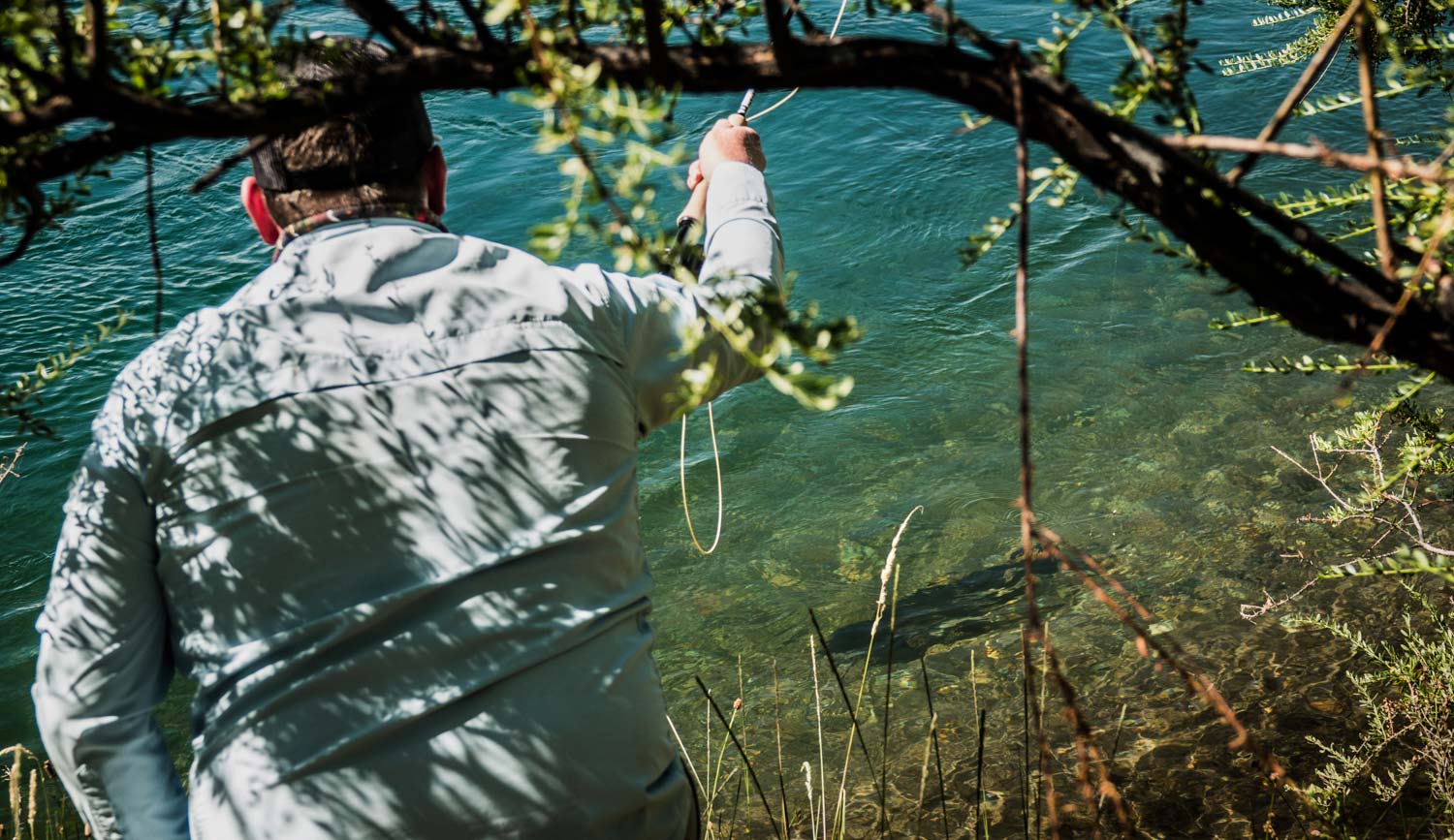
By Louis Cahill
Is there any point in continuing to pound a fish who just won’t eat?
The cool thing about fly fishing is that it offers such diversity. There is a species or a style of fishing every angler can enjoy. If you don’t like trout fishing, you may like bass or bonefish. If drifting dry flies isn’t your thing, stripping streamers may be. There is no wrong answer to the question, how should I fish? We all get something different out of fly fishing and, as long as you’re having fun and being respectful of the resources and your fellow angler, I say go for it!
Over the years, what I get from fly fishing has evolved, and it hasn’t evolved in the same way for every kind of fly fishing. I freely admit that, in some ways and for some fish, I’ve gotten lazy. I’m not proud of it but I don’t apologize for it either. Trout fishing specifically has become more of an excuse to hang out with my friends or my dog more than a goal oriented pursuit. I’m admittedly more interested in having fun than I am catching huge fish or a lot of fish. I guess that’s why I often find myself just as happy watching a buddy fish a run. I think it’s also why I’m perfectly happy walking away from a stubborn fish. The thing is, I admire anglers who don’t.
I’ve known a lot of anglers who really enjoy catching the uncatchable fish. A couple of them so focused they could care less about the other fish happily rising in a run and spend the bulk of the day butting heads with the stubborn fish who won’t eat.
The cool thing is that these guys, the really good ones, usually get that fish.
One of those anglers is Justin Pickett, no stranger to regular readers. Justin is one of those guys who almost always gets that problem fish to eat. I’ve watched him work a single fish for three hours. Like a sniper, dug in and waiting for a shot. When he gets locked in like that you may as well get comfortable. Have some lunch, take a nap, read a book, or just clip a walkie-talkie to his belt and go see the rest of the river. It’s going to take a minute.
You may think that’s cool or you may think it’s crazy but the results are hard to argue with. That fish he spent three hours on, while the rest of us had lunch, was a 32 inch brown trout and, yes, he landed it. There were four of us and no one thought that fish would eat, except Justin. I’ve never seen a more deserved fish.
The thing I think makes the case for persistence is
Read More »How To Caych A Trophy Brown Trout
by Jason Tucker
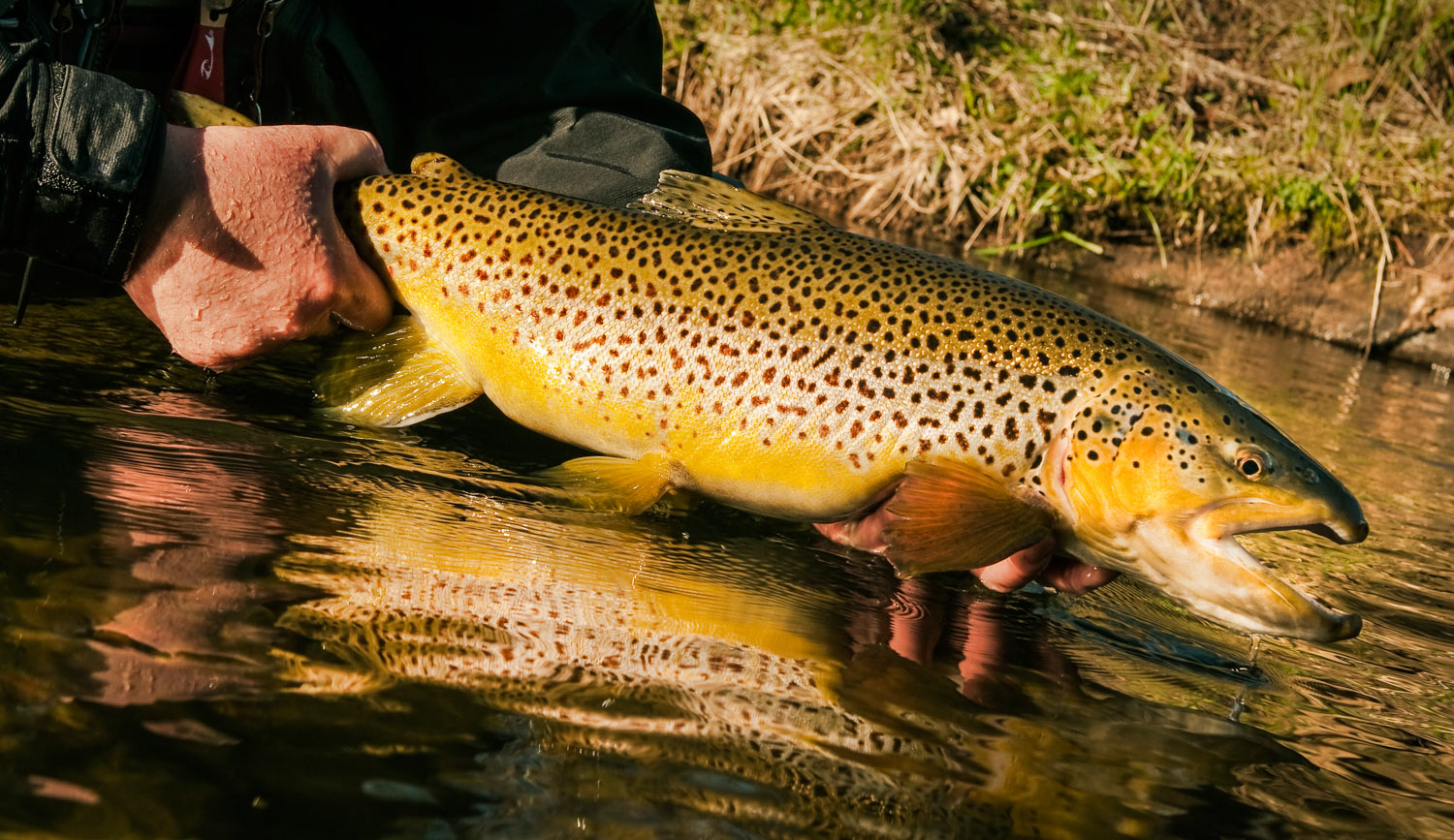
I’ll never forget my first brown trout over 20 inches.
It was about 1:30 am after a very long float down a tiny stream. It had been a slow night with only a couple half-hearted tugs on our mouse imitations. We got down to one of the last holes with a feeding run above it and parked the boat. On my first cast the water erupted with a loud take but the fish missed. I placed my next cast where the fish had hit, made a couple of strips and let it coast. The strike was unmistakable, and I waited that extra half beat until I felt the fish before setting the hook. After a vigorous fight on my 5 weight we slid a 21-inch hook-jawed male into the net, took a couple of quick pics and let him go. It was a magical moment to be sure.
Since then I’ve caught several dozen fish over 20 inches, my biggest being over 28 inches long and about ten pounds. I’ve caught them at night and during the day by a variety of methods. That first 20+ inch fish was like flipping a switch for me. Which is why I’m surprised how often I still hear even experienced anglers express that they would love to catch a brown over 20 inches. Here’s a few tips to make that dream a reality.
KNOW THY TROUT
Brown trout have the potential to get big– really big. The world record is over forty pounds, and in lakes and reservoirs they commonly average ten to twenty pounds. In good water the only limiting factors are mortality and food abundance. River environments tend to limit brown trout growth more than lakes, but most streams will still hold good numbers of browns over twenty inches.
While young trout mostly feed on insects and larvae (think mayflies and nymphs) as they reach that magical twenty-inch mark, insects no longer serve to curb the appetite. At this point they become largely piscivorous, or fish eaters, according to researchers. While this is true, brown trout make the most of any opportunity, and this includes seasonal abundance brought about by the larger fly hatches. In midsummer they shift their diets to include mice and frogs eaten at night.
Another factor to consider is the changed social/dominance status that increasing size lends to them. Small trout have to fend for themselves as best they can, while large trout will always take up the best, most secure lies in a system, and defend them from other fish. This is often deep under a cut bank, or at the bottom of a log jam in a deep hole. As they grow larger they also prefer to feed after dark as long as available food sources permit this. You end up with a situation where smaller fish are forced to feed during the day and in positions easily fished to, while the largest fish feed only at night or in spots impossible to reach.
Don’t despair. Under the right circumstances those big fish will come out and feed. A prime example is
Read More »