
Three Tips for Casting in the Wind
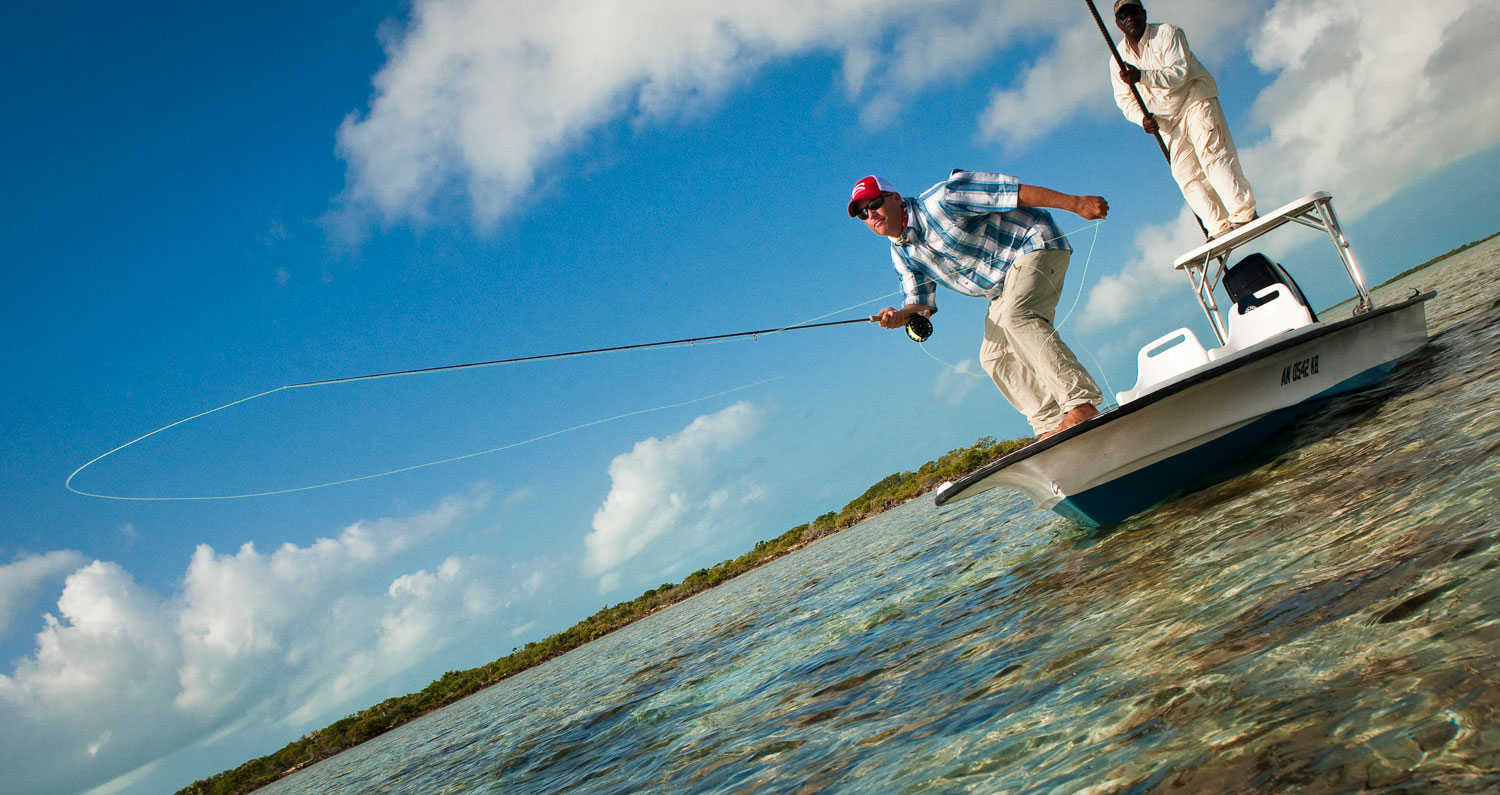
By Bruce Chard
WHEN YOU’RE FLY FISHING IN SALTWATER THERE IS ALMOST ALWAYS WIND.
Saltwater fly fishing demands your A-game. Your presentations have to be spot on and when the wind is howling, it will test your angling mettle. If you’re new to the game, it’s intimidating but having and practicing the right skills can give you the confidence you need to deliver.
Here are three tips that will help you tame the wind
Make tight loops
Having the ability to form tight loops while casting in the salt will help in many ways.
Tight Loops help:
•Control line in the air for better accuracy
•Increase line speed
•Reduce slack in the line during casting and presentation
•Increase distance
•Fight the wind
•Lay your leader and fly out straight with no slack
Whether you are wading or in the skiff, a tight loop is vital to success in the salt. To form a tight loop you need to do the following:
•Keep your rod tip traveling
Read More »Kiss the Bank with Your Terrestrials
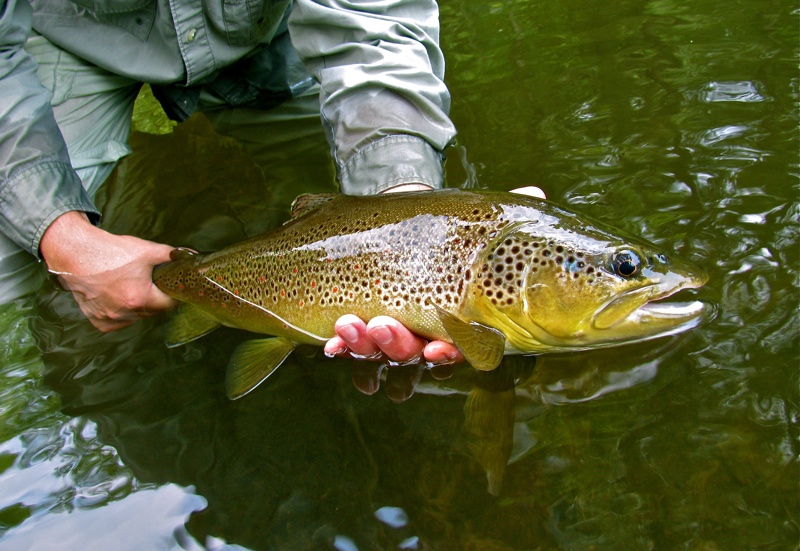
One of the best times of the year to catch big brown trout is during the summer months.
When the terrestrial bite is in full swing, brown trout will often tuck up under overhanging foliage super tight to the banks. Often they’ll be in less than a foot of water waiting patiently for the land born insects to fall to the water for an easy meal. Targeting this habitat on the water will increase your brown trout catch ratio over rainbow trout. Although rainbow trout will utilize overhanging foliage, they still prefer foam lines with current and deeper water for the most part.
Target Overhanging Foliage
This beast above devoured a beetle pattern that was placed perfectly in the strike zone. Kiss the banks with your terrestrials targeting undercut banks and overhanging foliage, and you could land a trophy like this. Just because they’re isn’t current doesn’t mean it won’t hold a good trout. The main factor is
Don’t Tread on my Redd
THIS IS THE TIME OF YEAR WHEN TROUT, AS WELL AS OTHER COLD WATER FISH, PUT ON THEIR BARRY WHITE RECORDS, OPEN A BOTTLE OF COURVOISIER AND GET BUSY.
Brown trout and brook trout spawn in the fall and rainbow and cutthroats in the spring. Exact spawning times vary a bit from region to region and year to year but that’s the gist of it. Chubs, suckers, shiners, sculpins and other baitfish that make up an important part of the trouts diet are spawning all through the cooler months as well.
Trout lay their eggs in gravel. This gravel is key to the fry’s survival. They will find a spot where there is a consistent flow of well oxygenated water with a consistent depth of a foot or so, out of direct sun. The female will use her tail to clean the silt from a patch of gravel creating a redd where she will lay her eggs.
Fish do not hatch like birds or reptiles. They sort of pop out on top of the egg which stays attached to their belly and serves as a source of nutrition until the fry is big enough to forage for food. These sack fry are quite vulnerable. They hover over the redd and when predators approach they disappear into the gravel for protection.
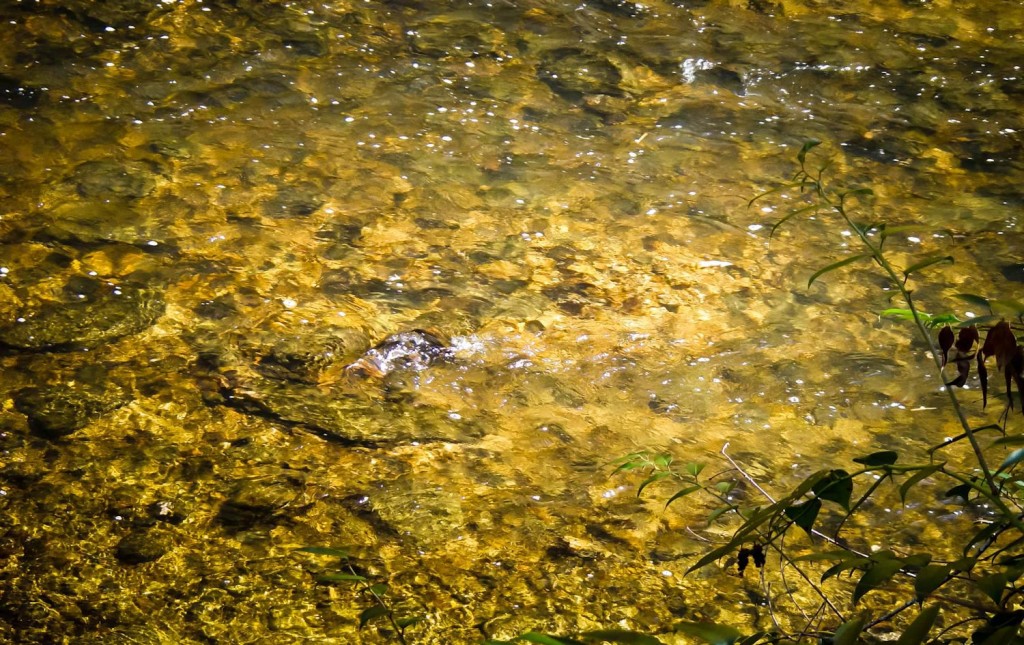
Trout will generally move to the headwaters of streams to spawn but redds can be found anywhere the conditions are right. They appear as bright spots of clean gravel from one to three feet in diameter. Some are pronounced when surrounded by silt. In places where the gravel is clean they can be subtile depressions in the stream bed.
As anglers we must be aware of the presents of redds and wade with care. Stepping in redds can spoil eggs or crush sack fry hiding in the gravel and seriously effect trout reproduction. Even baitfish redds should be
Read More »Just Another 20-Inch Rainbow
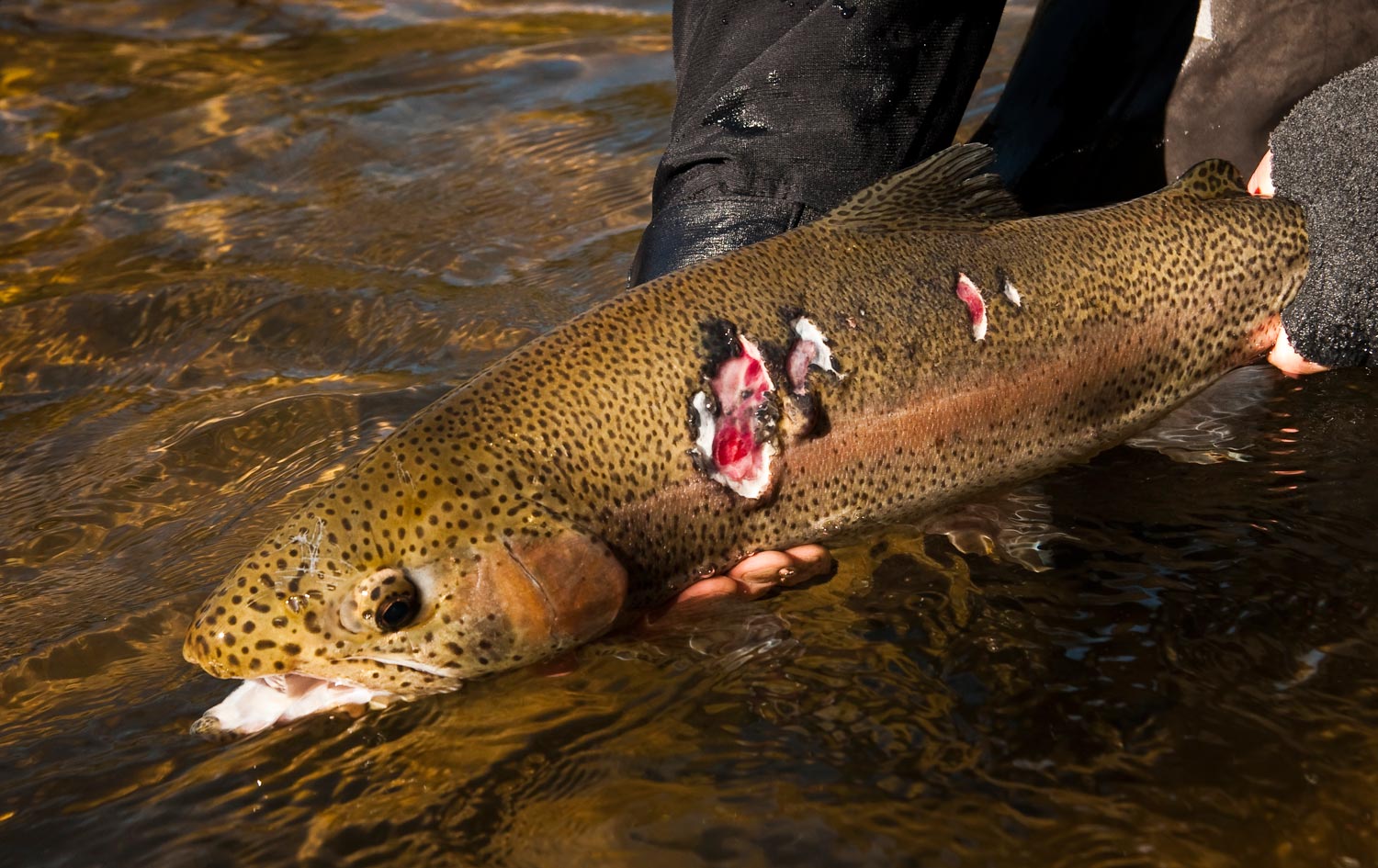
IT’S FUNNY HOW QUICKLY WE BECOME SPOILED.
My buddy Dan takes photos a lot of fish. Not hoisted hero shots or epic scenes, just a quick shot of fish in the net or in his hand, held gently in the water. They aren’t trophies exactly, just documents. Records of fish from different streams at different times of year. A sort of long term study of trout. A visual history.
He has photo albums, stacked hip deep, stuffed with prints from the days of film. These days they go into meticulously organized folders on the computer. Some go into an endless screen saver, which I’ve never seen repeat.
It might seem a little odd at first but once you get him talking about fish, you quickly see what’s going on. You’ll get to talking about a certain stream or species and how they might be affected by some event and Dan will pull out an old album and turn to the exact page and show you a fish caught twenty years ago. Then he will scroll through the computer and show you a fish from the same stream, caught in the same month last year.
Maybe I’ve seen too many Sci-Fi flicks but it’s easy to imagine a scenario where fish have become extinct and all that’s left is Dan’s visual archive. We may thank him one day.
Louis Cahill PhotographyThere is a period of time, about ten years ago, that Dan and I refer to as, “The good old days.” Dan had bought a piece of land on a trout stream in the mountains and the little creek was loaded with beautiful wild fish. Most of the surrounding land was old farm land, which had been let go and almost no one fished the creek. Dan and another neighbor started throwing a little trout chow in the creek and the next thing you know, it was Jurassic Park.
The farm was sold and it all went to hell, like ‘good old days’ always do but for a while it was a remarkable piece of water. Fishing that little creek made you feel like a rock star. Every time your line came tight, you were tied into a trophy. Dan wore out a couple of cameras down there in the creek.
On one especially epic day, I noticed Dan releasing a toad without shooting a photo.
“What, no photo?” I asked.
Reece’s Masked Bandit
By Bob Reece
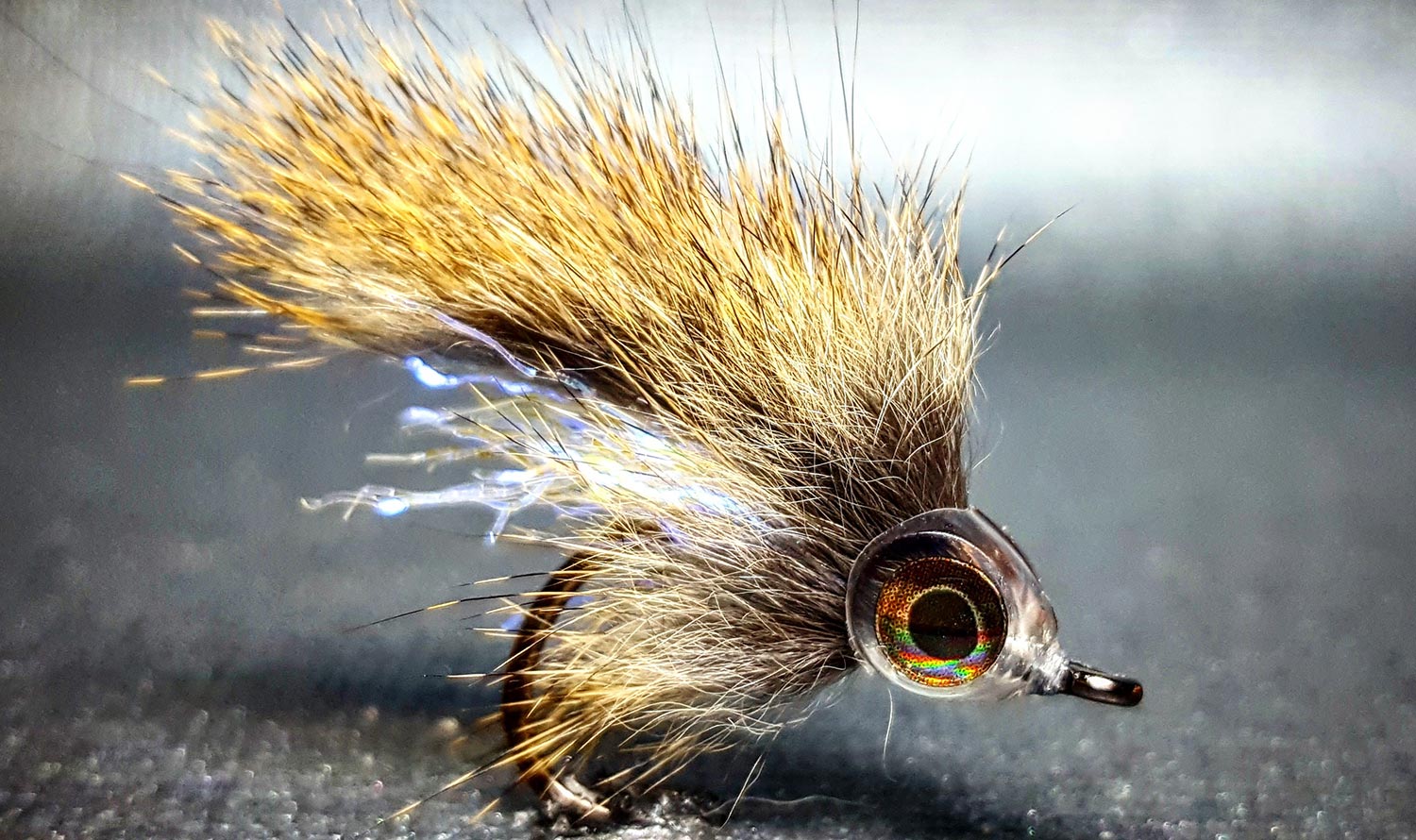
In the world of streamers, bigger is not always better.
The majority of forage fish found in flowing or still waters are quite small. I believe that to optimize the success of streamer fishing, a fly fisher must make some adjustments to their typical streamer selection.
Good foundations are essential to highly effective patterns. For this reason, I chose the Gamakatsu Octopus hook. Its combination of short shank and offset point result in an exceptional ability to penetrate and hold in the jaws of large fish. A tapered head and large eyes are perhaps the most prominent feature of the shiners, chubs, dace and other species that this fly can imitate. The Fish Mask and Living Eyes provide a perfect representation of these. They also save valuable tying time at the vise compared to creating heads with epoxies and glues. Equally as important to the effectiveness of this pattern are the pine squirrel strips. The mottled color of the fur provides an accurate imitation of scales and fins of the naturals.
I’ve never hear a fly fisher complain about catching more fish or big fish. When properly presented, the Masked Bandit will lead to both of these outcomes. While smaller than its typical streamer companions, this pattern is more than capable of producing big results.
Watch the video and learn to tie Reece’s Masked bandit.
Read More »10 Inexpensive Fly Fishing Life Hacks From The Home Depot
By Louis Cahill
EVERYONE WANTS THEIR LIFE TO BE EASIER AND EVERYONE LIKES TO SAVE MONEY.
Here are 10 handy and inexpensive items you can repurpose to accomplish both. You can pick all of them up at the local Home Depot or order them online. I’ll supply links to each. Some of them are so obvious you’re probably using them already, but I guarantee there’s at least one thing on the list that you haven’t thought of and will love.
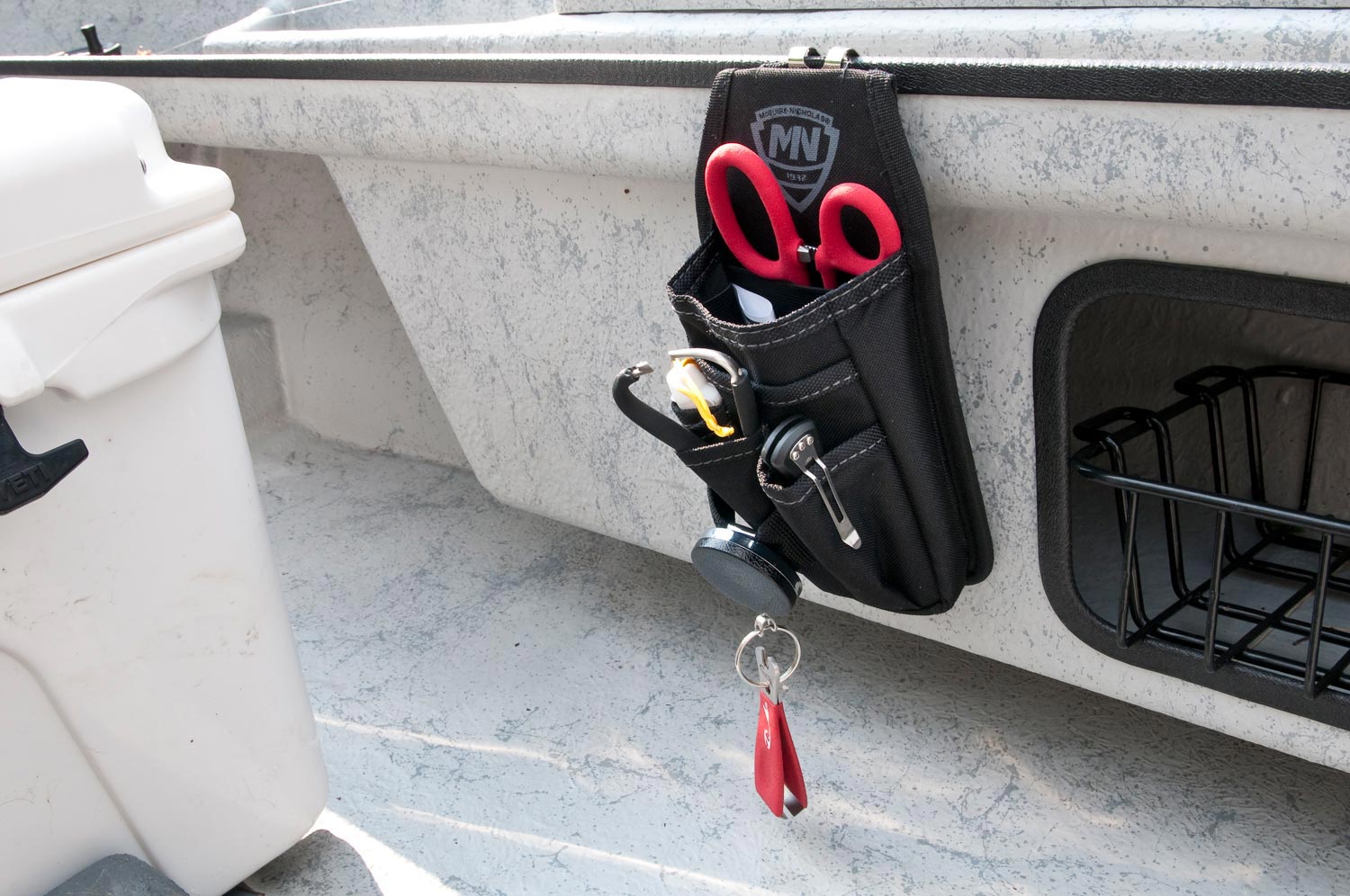
TOOL HOLSTER $10
This tool holster by McGuire Nicholas is made for a tool belt but is right at home when clipped to the edge of a drift boat or boat bag. It holds all of your frequently used fishing tools and supplies and can be easily moved around the boat so your stuff is always handy. There are endless variations so it will be easy to find one to hold whatever you need. I outfitted mine with a superintendent’s keychain for my nippers.
ANCHOR KEEPER $3
This oversized carabiner is made by Husky for drop chords. It’s the easiest way I’ve found to handle a boat anchor. You can clip it into the anchor ring and carry it easily by the padded rubber handle. The real benefit cones when you get to the car. If you drive an SUV like I do, having an anchor in the truck is a real hazard. If you crash, that hunk of metal is coming up to the front seat in a hurry. Use the Husky carabiner to secure it to a seat belt or tie down and you’re rolling safe.
EASY DRY ZIP POCKET ORGANIZERS $7
These handy zippered pouches from Husky can be used to keep up with anything. I really like them for Spey heads. The mesh panels allow the contents to dry quickly and you can see what’s inside without opening the zipper. A tab with a grommet allows them to be stacked on a carabiner.
FLY TYING TRAVEL BAG $38
This canvas tool bag, made by Husky, is great for taking your tying kit on road trips. It will hold a ton of feathers and fur as well as your hooks, tools and leader material. It has handy pockets for special items like the Clear Cure UV flashlight.
GOPRO BOOM $19
This five foot painters pole, made by Shur-Line is the bomb for shooting fishing photos and video with the GoPro. It collapses to about two feet and extends effortlessly. Submerging it in water doesn’t hurt it so go for the underwater shot or the overhead. A GoPro mount is easy to attach via a 1/4-20 bolt.
Read More »10 Tips For Spotting Permit
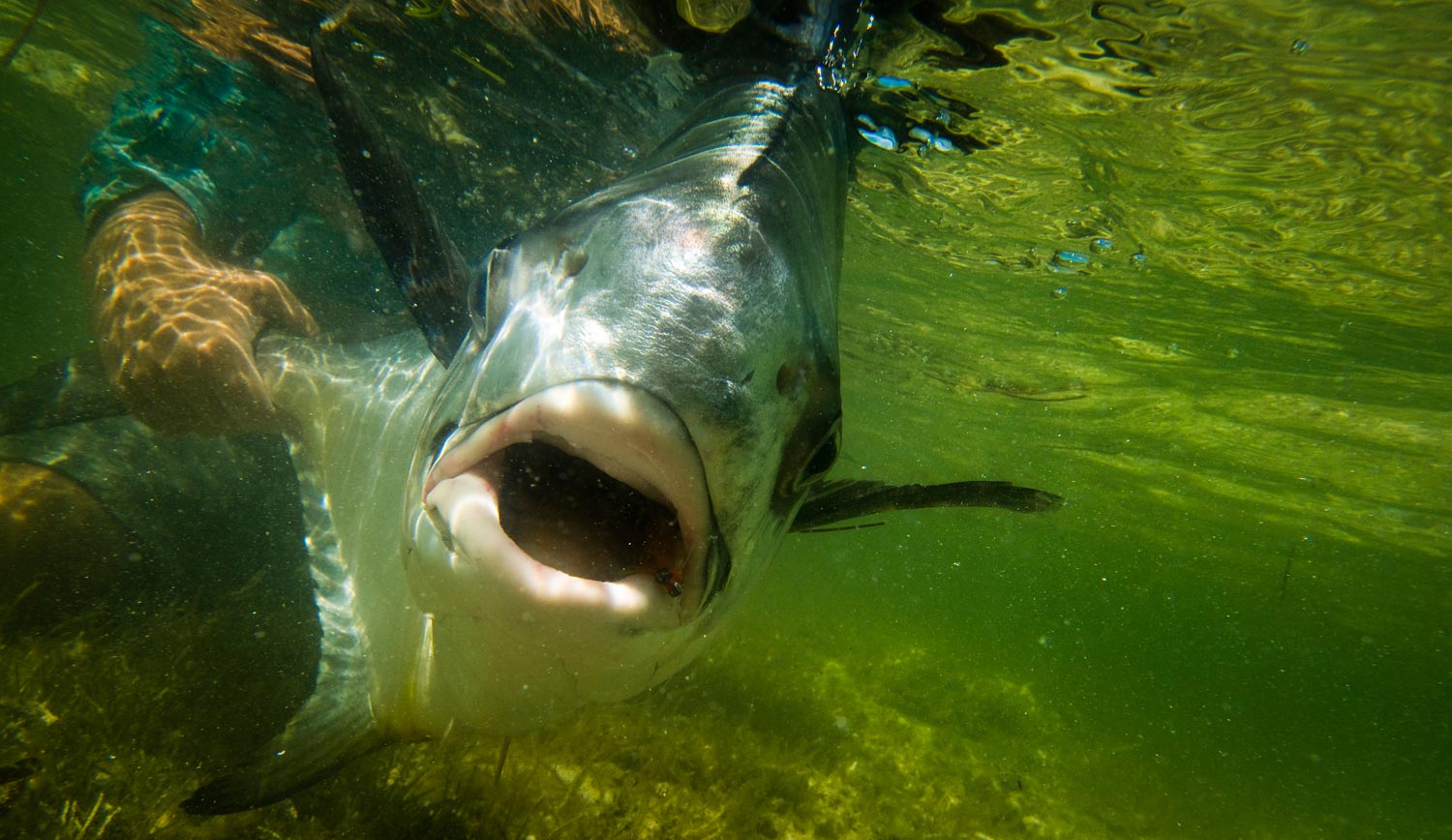
PERHAPS THE LOFTIEST GOAL IN FLY FISHING IS CATCHING A PERMIT.
Maybe it’s not your thing but if there truly is a fish of ten-thousand casts, it’s the permit. There is enough to catching permit to fill a bookshelf or magazine rack. It’s a complicated game, but where it starts is simple. To catch a permit, you must find a permit. And to find a permit, the angler must know what to look for. With that in mind, here are 10 tips to help you spot a permit.
Have the right glasses
This is stupid simple but it really is the most important piece of equipment for the saltwater angler. There is no replacement for quality polarized sunglasses. Good saltwater glasses have a rosy color to the lenses. Pass on green or grey. Copper, rose or brown will offer better contrast. A lighter tint to the lens is valuable on darker days and a frame that shade your eyes is a plus. Glass lenses offer the sharpest vision and, unless you have a heavy coke-bottle prescription, that’s what I recommend.
Tails
The long, graceful forked tail of the permit is its most distinctive feature. It is black in color and stands out when the fish shows its profile. Often the permit’s broad, silver body disappears completely and it is the black double sickle tail that gives him away. This sight is never more exciting than when the tail is held up out of the water. Called ‘”tailing” this happens when the fish feeds off the bottom in shallow water. This means that the fish is actively feeding and the chances of him eating your fly are good.
Spikes
The permit’s long, sickle-shaped dorsal fin will often give him away. When the fish is
A Closer Look / The Pacific Steelhead
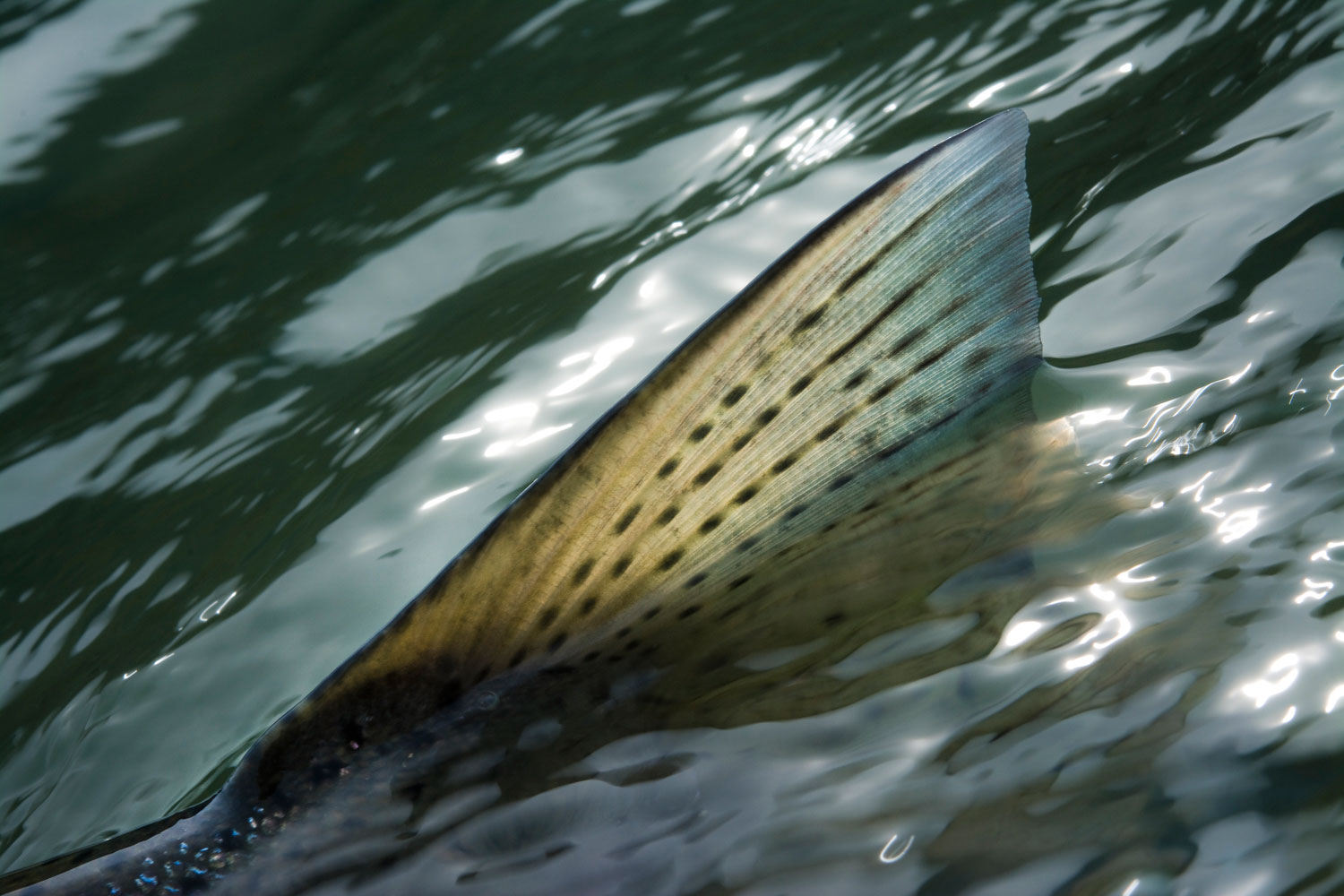
I DON’T KNOW IF THERE IS A FISH I GET MORE WORKED UP OVER THAN THE STEELHEAD.
What remarkable creatures they are, bridging the gap between freshwater and saltwater fly fishing. This fish was caught about a half mile from the salt in the Dean River. What a beauty.
Read More »Pothole Fish With John I Missed
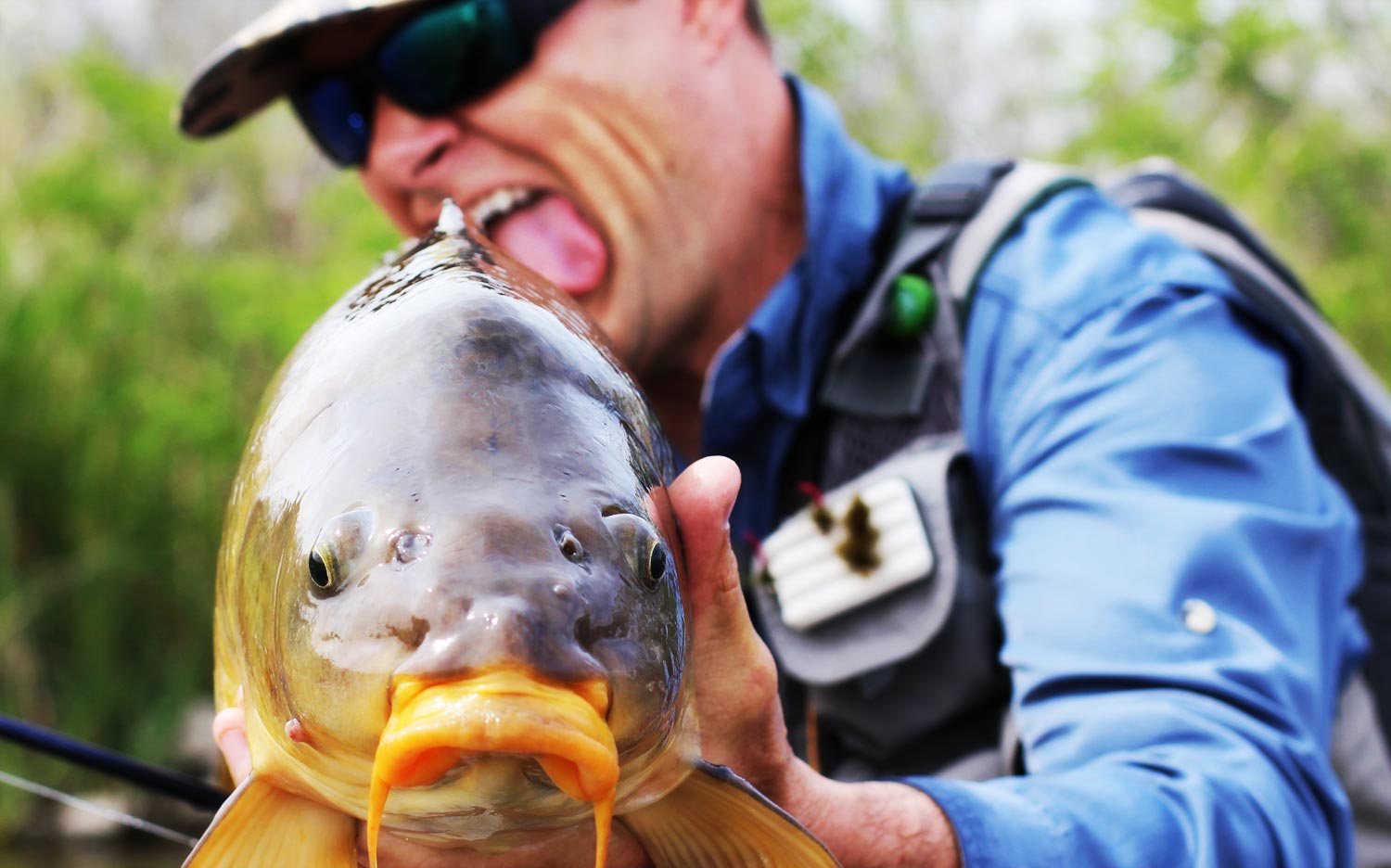
By Dan Frasier
IN SOME WAYS IT WAS THE SECOND DAY OF MY FOUR-DAY TRIP TO THE COLUMBIA RIVER.
In a more meaningful way, this was early on day one. My first day in Portland was spent doing one of those things that seemed worthwhile at the time, but in hindsight was just a day of fishing that didn’t happen. You know how priorities seem different in hindsight? Yeah, one of those deals.
Anyway, John “Montana” Bartlett had displayed his renowned graciousness and now we were on the water. I was ready for big fish and plenty of them. I’ve been known to catch a carp or two and, despite John’s warnings, it seemed pretty obvious that the Big C was just another carp-laden body of water waiting to be conquered.
We hit the road from John’s house early. He had a vague plan that involved a lot of “if they aren’t there then we’ll move onto the XYZ spot”. To be honest, I’d quit trying to keep a mental map. John speaks about the Big C like you do with an old lover; using allusions to past events, pet names for places known only to him and broken references to memories that are more feeling than fact. It didn’t matter anyway. If I ever repeated the names of the spots we fished, John would have hunted me down like Seal Team 6 and people would be left to ask, “Hey, whatever happened to that Dan guy?”
My first bout of nerves started as we entered the water on the first flat. Things here were different, but in an eerily recognizable way. My brain immediately grasped that the water looked like a carp heaven. Like something I’d seen before and recognized. Good water, good clarity, obvious feeding areas. And yet it was wholly different than what I was used to. The bottom was more like a moonscape than the mud flats I fish; piles of cobble and sharp volcanic rock with divots and craters in between.
The water itself looked like those translucent aquamarine glass shower doors. You could see through it very well, but it wasn’t colorless. It was colored with an opacity that you had to consciously try to look through instead of at it. It was like the Columbia gave you enough to make the carp fishing reasonable but no more.
A few steps in and the nerves subsided. We were thigh deep in good-looking water with fly rods. For me it seems that the familiarity of the activity of fishing quickly overcomes the unfamiliarity of a new location. This time was no different. It was just fishing, albeit in a storied and strange location.
John and I walked this submerged moonscape with the confidence that is natural at the beginning of a long fishing trip. John new he could catch every fish he saw and I felt confident that I’d either get my share now or learn quickly enough and have plenty of time left in the trip to get it later. We saw a few fish, had shots at a couple (which John let me take) and landed none on that first pass. That was alright, lotta fishing left to do.
We hit the end of the flat and John was ready to move. The Big C has more fishable carp water than a person can cover in a lifetime so there is no point dallying at a spot that you’ve already walked. We hopped out of the water and up the riprap. This is the steep riprap of large sharp stones that indicate significant human modification to a river. Great chunks of granite rise from the water’s edge at a steep angle for twenty feet. It’s treacherous walking and difficult fishing. From that position an angler can get great visuals on a fish, but that’s about all he has going for him. Casting from riprap that steep means your line sags and moves the fly well farther in than you expect. The fish tend to be very attuned to any movement above them on the rocks and the angle makes hooksets VERY difficult. Elevated fishing is a strange and diabolical kind of torture. It lets you identify more targets that are nearly impossible to catch.
Hell isn’t fishing without finding fish. Hell is fishing and finding huge numbers of uncatchable fish.
Read More »The CDC Blood Midge
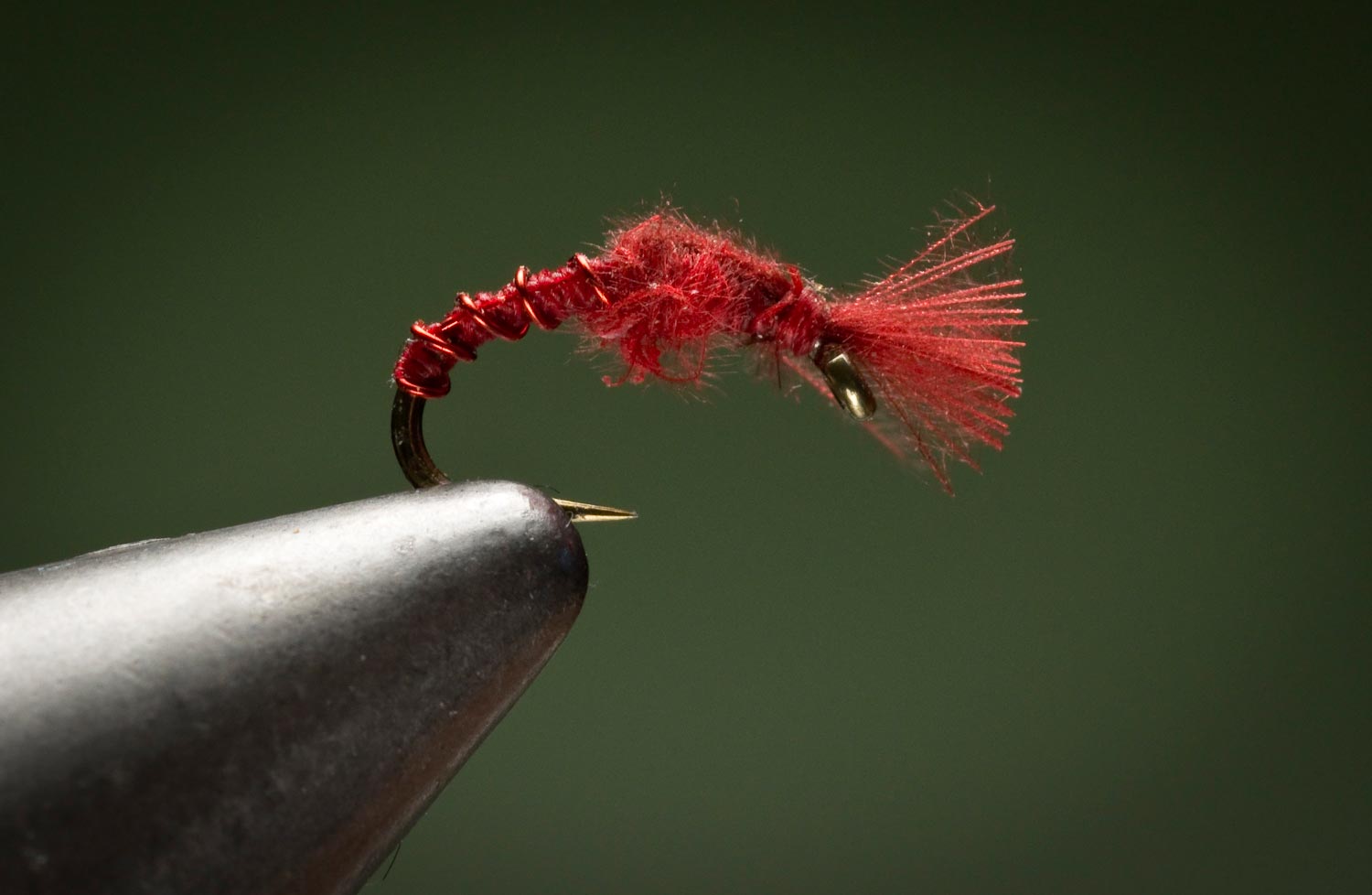
MIDGE PATTERNS CAN BE REMARKABLY EFFECTIVE FOR TROUT.
Depending on how you count them there could be over a thousand species of midge. That’s a lot of choices for the discerning trout. There are almost as many choices for the angler and a midge obsession can easily get out of hand.
I find that more times than not a Blood Midge will do the trick. I spent a morning on the Colorado River one April and caught twenty-four brown trout on a blood midge without moving my feet. Trout are naturally attracted to these red patterns even when they are not an exact match for the naturals. I’ve tied many different Blood Midge patterns but my current favorite is the CDC Blood Midge. The power of CDC can not be overestimated. This is a great pattern and very easy to tie.
Watch the video and learn hoe to tie The CDC Blood Midge.
Read More »